Industrial Scandinavian interior design pulls off something most hybrid styles fail at: it stays coherent. The raw exposure of concrete, steel, and reclaimed wood sits next to pale birch, linen throws, and soft diffused light without either side cancelling out the other. I’ve visited a lot of apartments doing the scandi industrial thing, and the ones that actually worked shared one specific habit — they let the industrial structure carry the room and let the Scandinavian softness carry the mood. Pull that off and you have something most living rooms spend years accidentally avoiding.
Scandi industrial isn’t just a Pinterest aesthetic. It started as a pragmatic answer to postwar Nordic housing, where function had to come before ornament, and it collided with the warehouse conversions of the 1990s that left steel beams and exposed brick in spaces people actually had to live in. The result is a design vocabulary built on necessity — which is exactly why it photographs so well and ages better than trends built on decoration alone.
Quick read — what this covers:
- Why a scandi industrial living room needs a neutral wall, not a feature wall
- The bedroom mistake that makes this style feel cold instead of calm
- Which kitchen materials survive the style — and which kill it
- Exact prices on the pieces that define scandi industrial on a real budget
- FAQ answers to the most specific questions about mixing these two styles
A Scandi Industrial Living Room Lives or Dies by Its Neutral Foundation
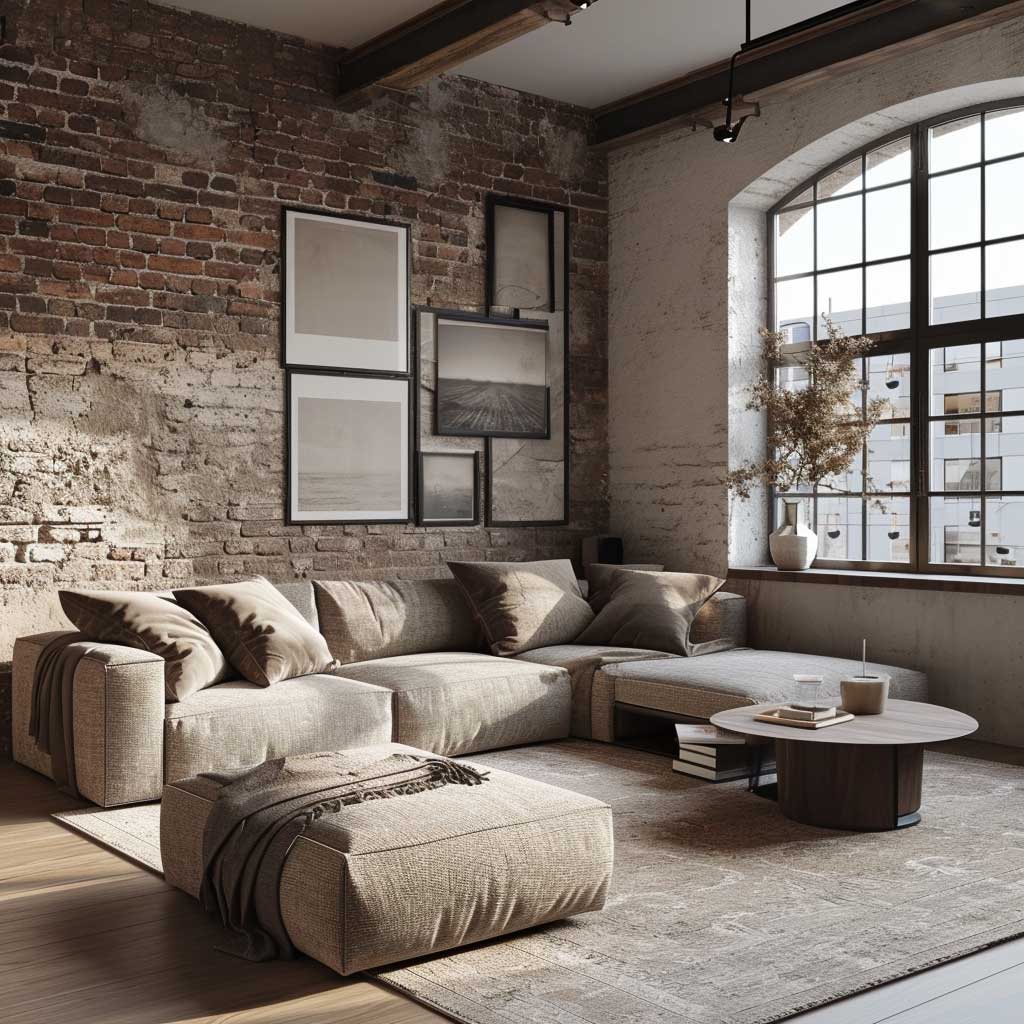
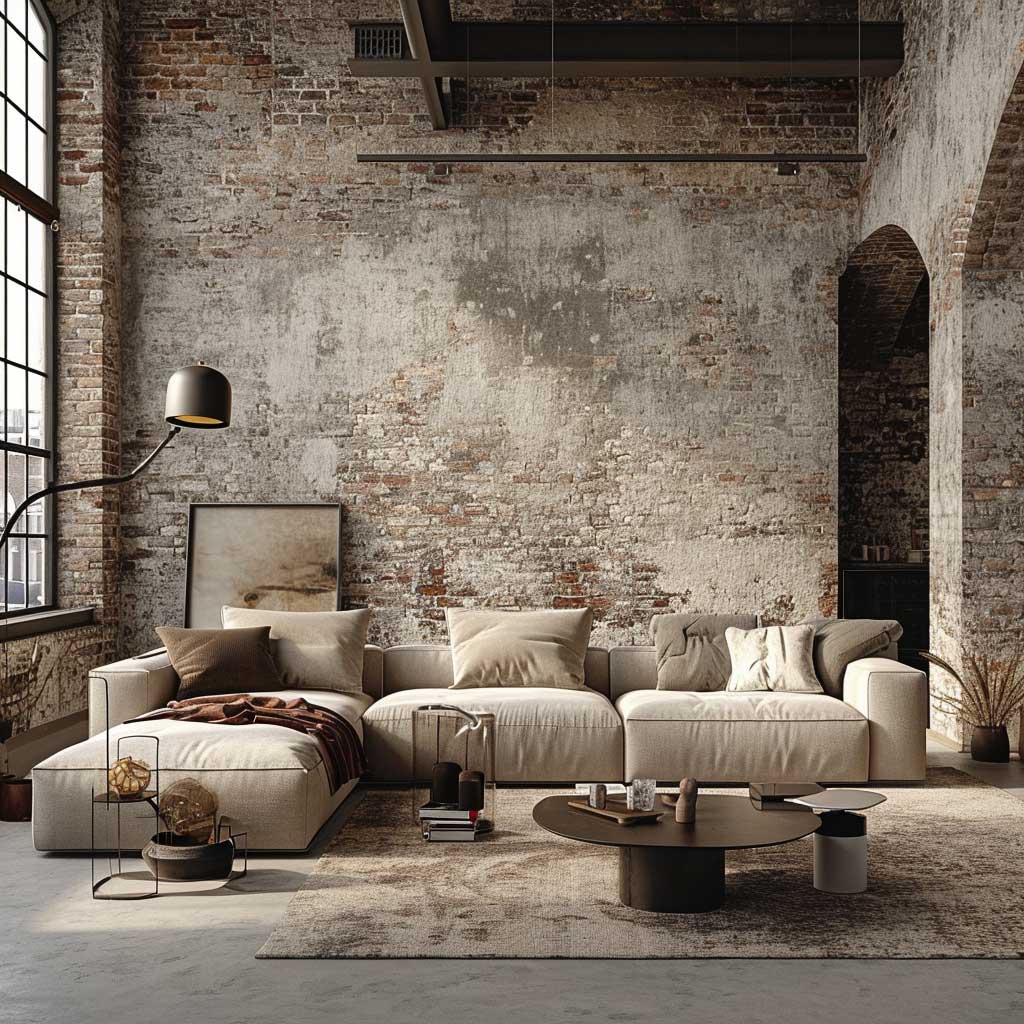
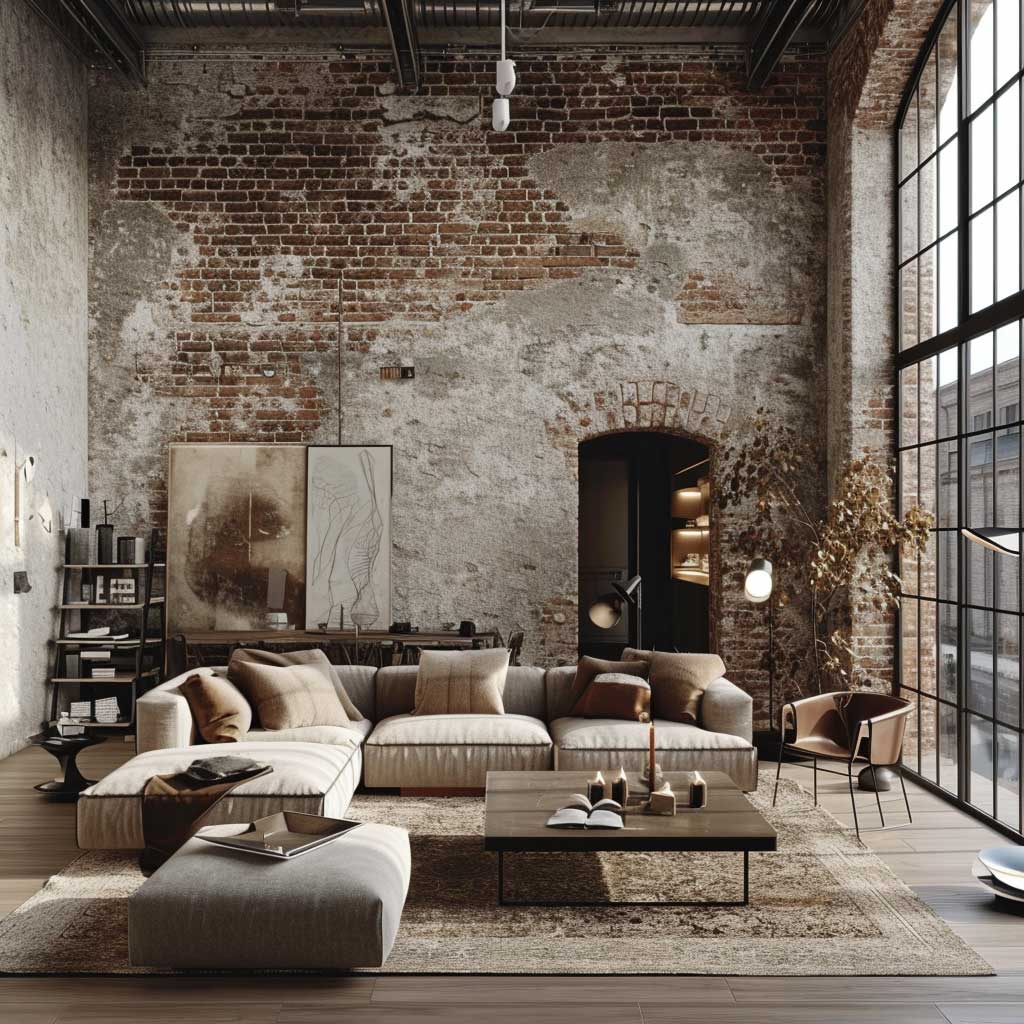
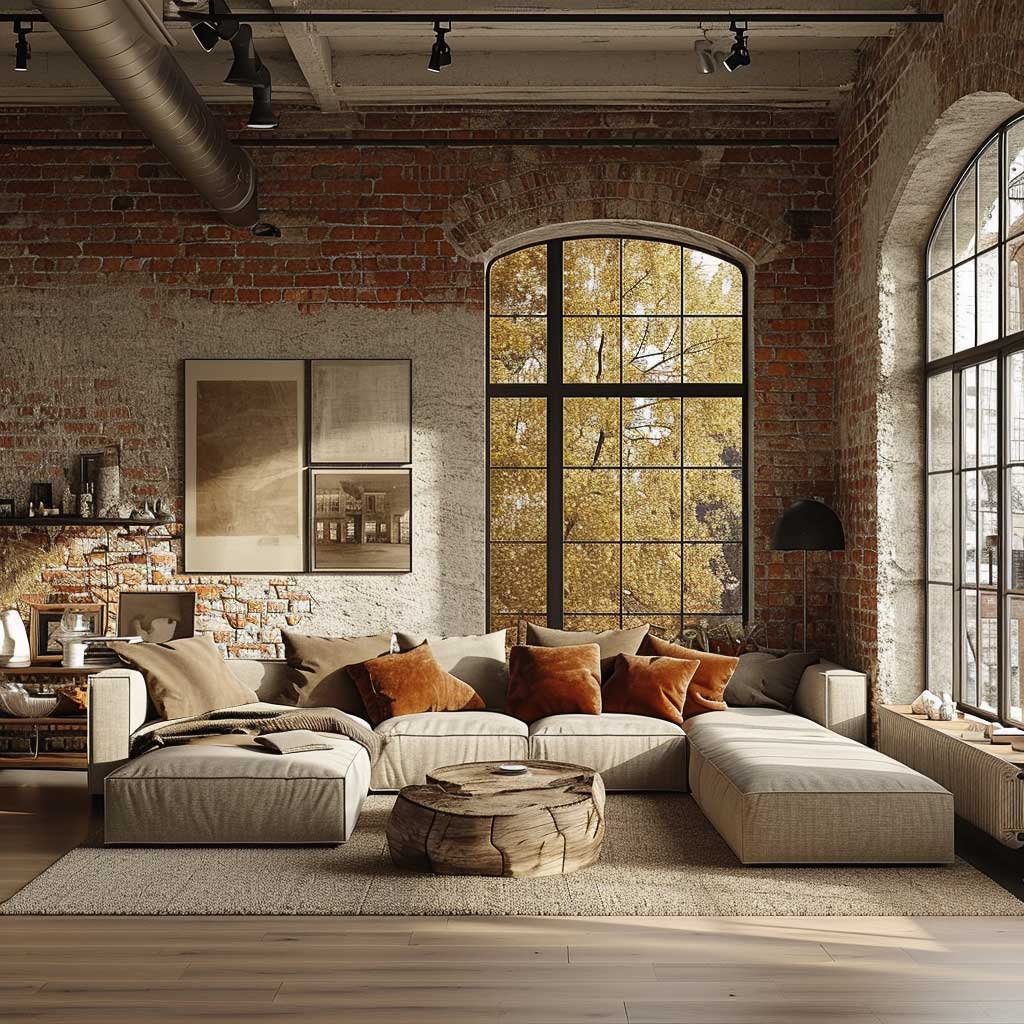
Gray, off-white, and charcoal are the three colours doing the work here. You need them on the walls before you add anything else. My go-to is a matte off-white — something like Farrow & Ball’s Strong White at around $120 per 2.5L tin — because it reflects the light without reading as stark or clinical. Paint exposed brick if you have it; leave raw brick if you don’t. The brick does about 40% of the styling for you.
Sofas in a scandi industrial living room should go gray or stone — never beige, which reads too country, and never black leather alone, which reads too masculine and kills the Scandinavian warmth. I’ve bought two HAY sofas over the years; the Mags modular in light gray runs around $2,400 and holds its shape long enough to be worth every cent. Pair it with a matte black or raw steel coffee table and you’ve hit the formula. Nothing in the room needs to match; everything needs to feel like it came from the same cold-but-cosy planet.
Lighting is the variable most people underestimate. A single bare Edison bulb on a braided cable — don’t. It’s 2014. You need a proper pendant in black powder-coated steel with a shade, or a cluster of three smaller pendants at different heights. Industrial living room colour palettes explore exactly why the light fixture should anchor the palette, not just fill it. I stole this trick from a Copenhagen apartment tour: hang the pendant so the bottom of the shade is at sitting eye level, not ceiling height. It makes the room feel smaller and more intentional in the best possible way.
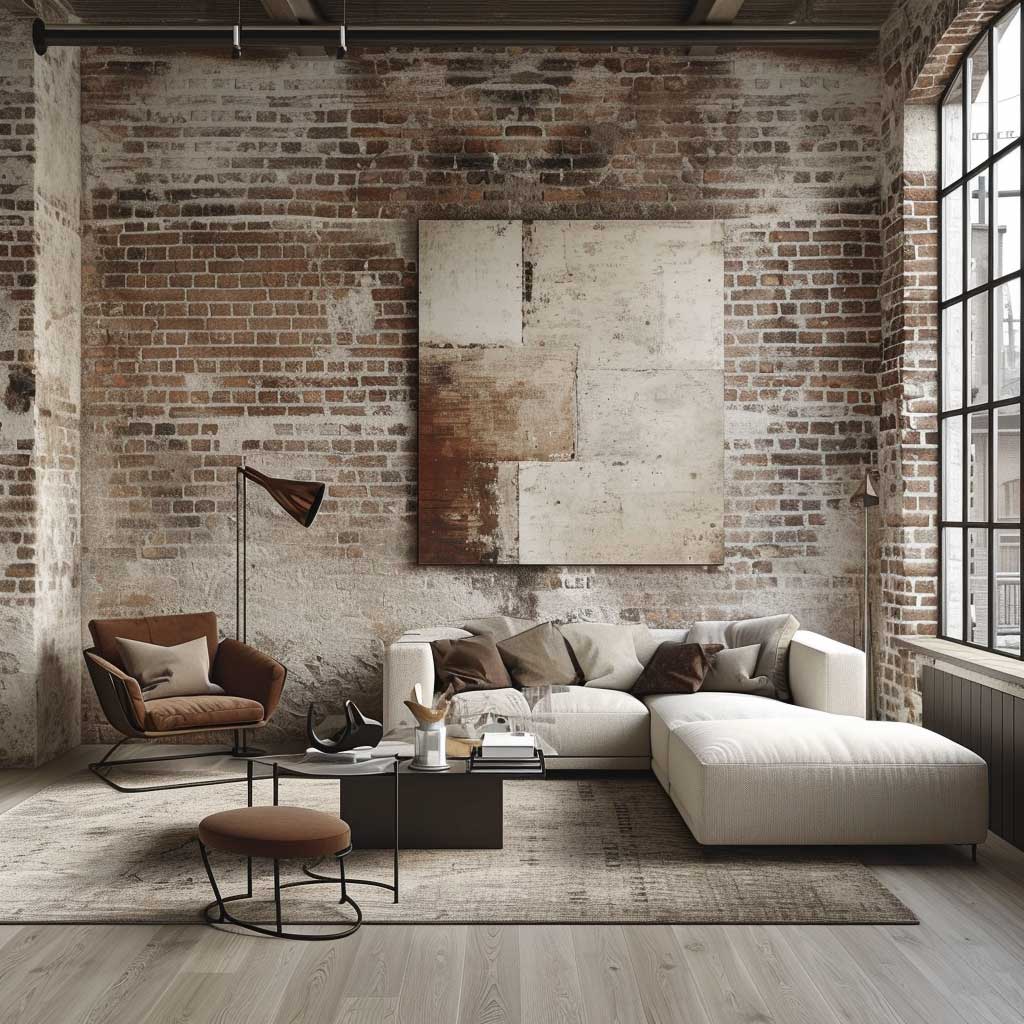
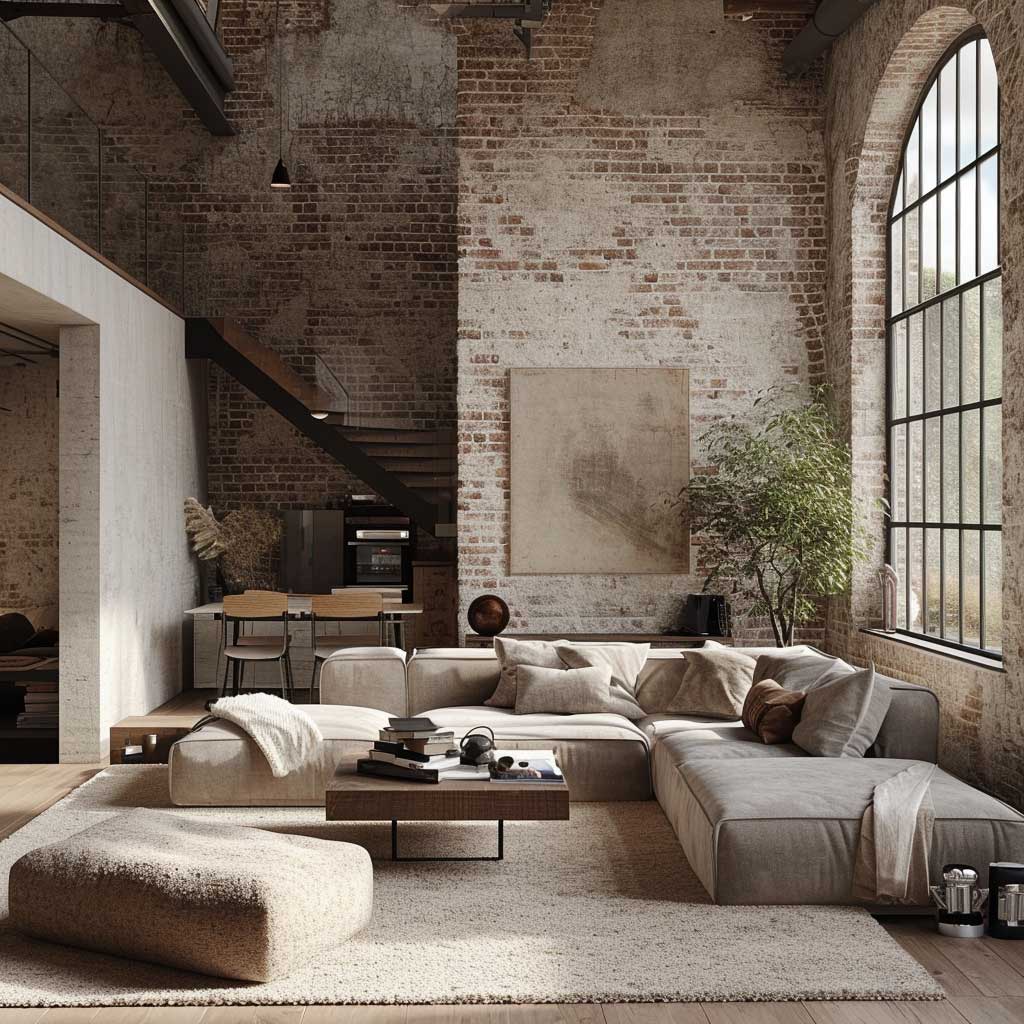
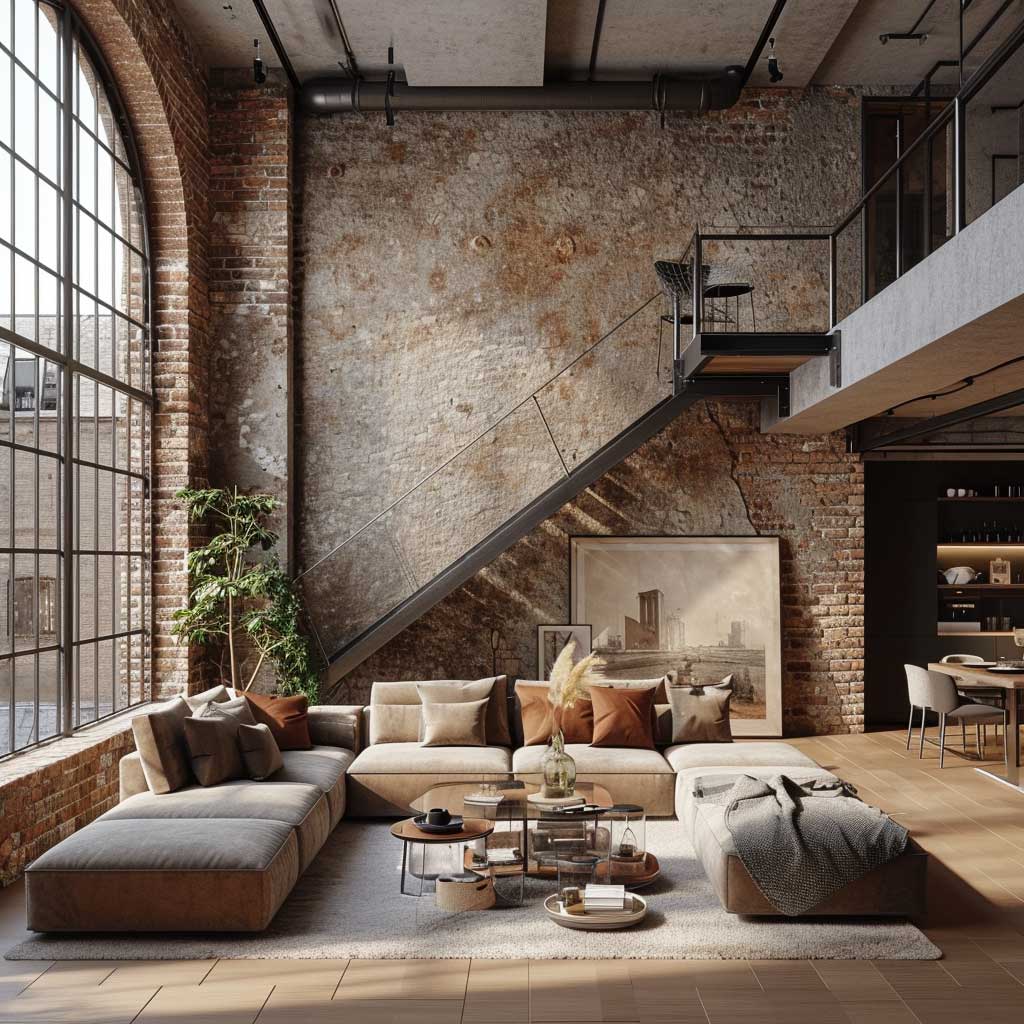
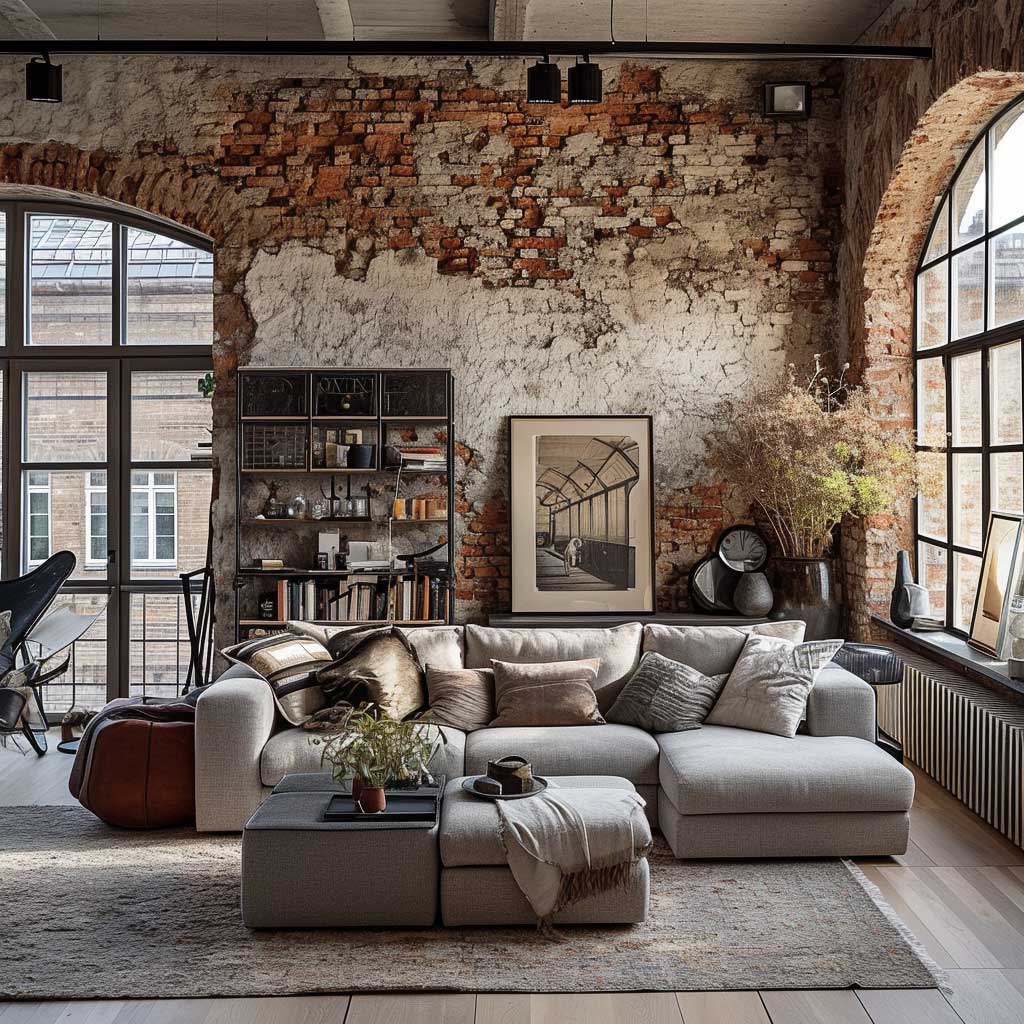
Decor in a scandi industrial living room is minimal by design. Pick one piece of abstract art — not a gallery wall, not a motivational print, one piece — and hang it low enough that it relates to the sofa. A flat-weave rug in charcoal or ivory adds the softness the floor can’t provide on its own. Everything else in the room should earn its place or get cleared out.
What doesn’t work: coloured accent walls in terracotta or sage. I know they’re everywhere right now, and they kill the scandi industrial mood immediately. The style needs the walls to disappear so the materials take over. One accent colour is fine — as long as it’s a textile or a single art piece, not paint on four metres of wall.
The Bedroom Version of This Style Runs Cold Unless You Add One Layer
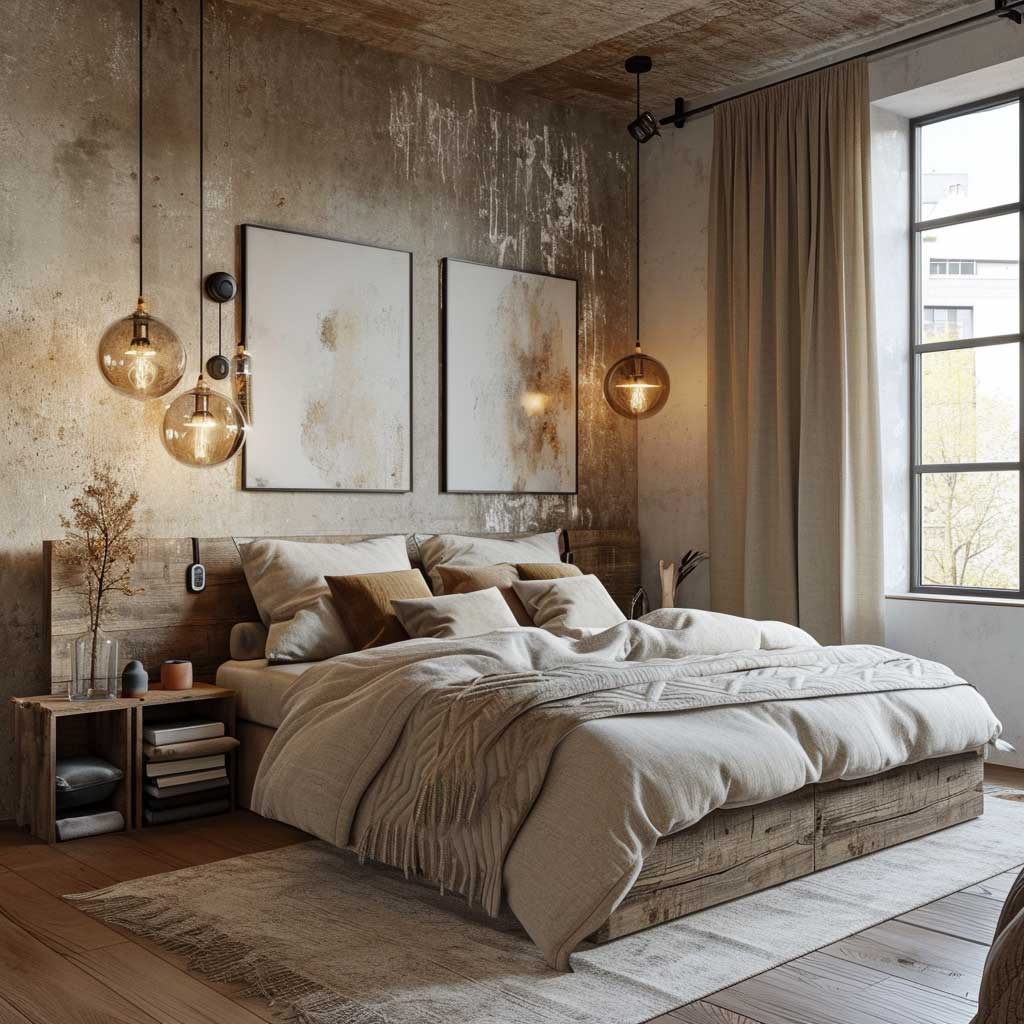
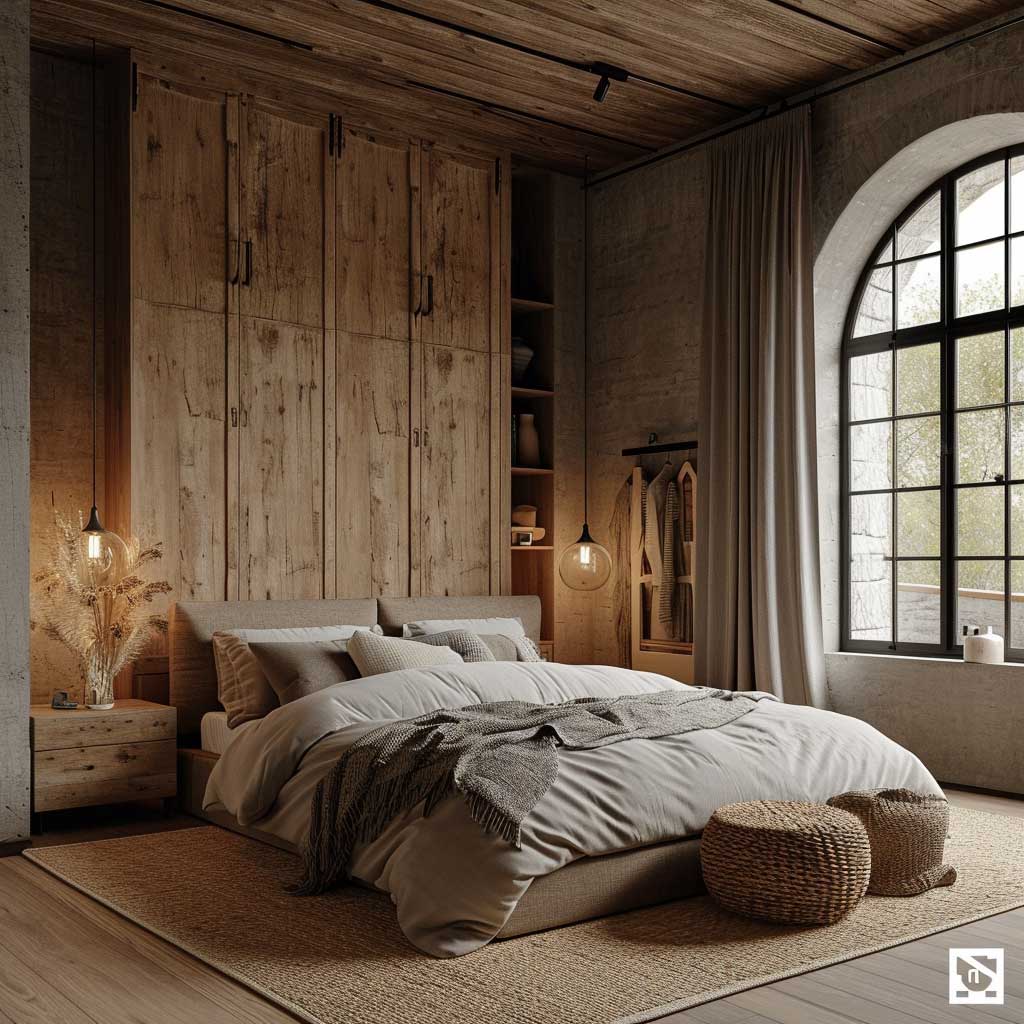

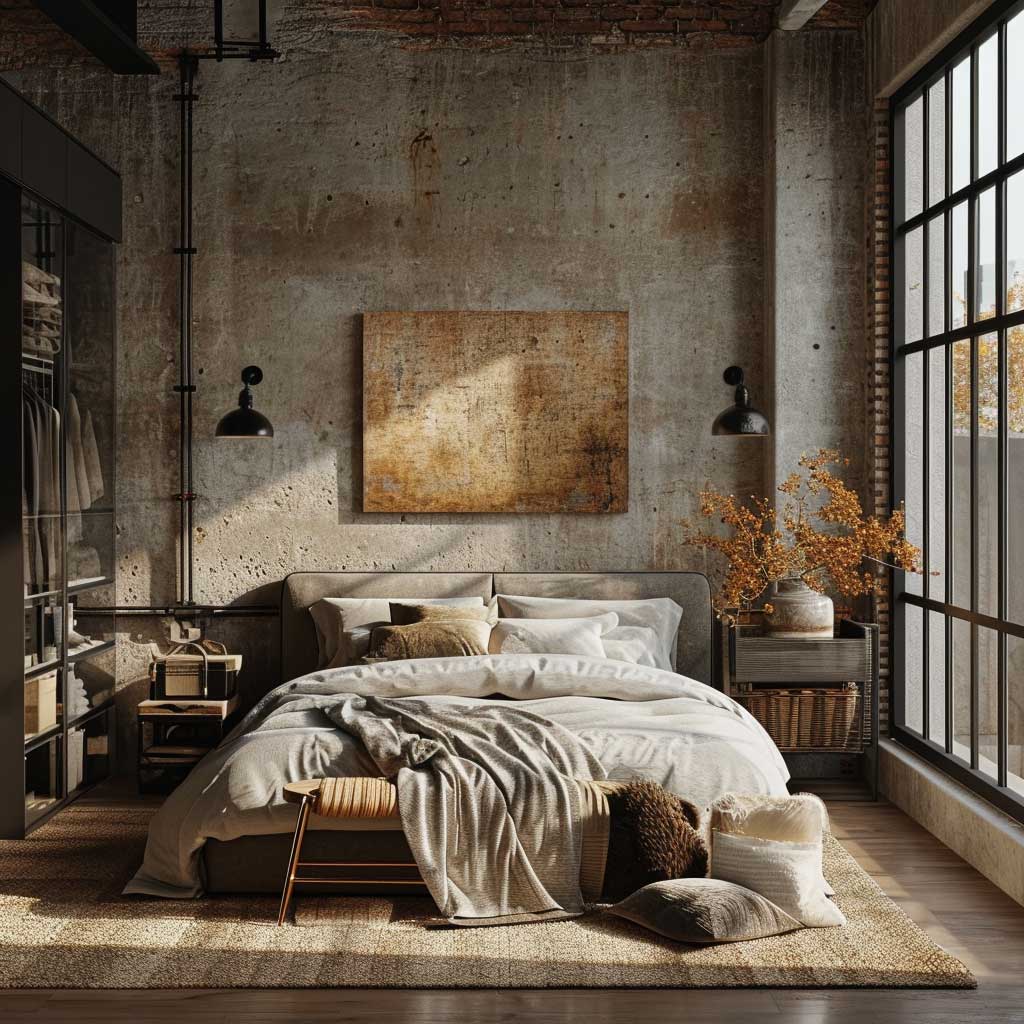
The bed frame is load-bearing in this style. A low platform frame in oak or walnut — somewhere in the $600–$900 range from brands like Article or IKEA’s Björksnas — does what no amount of throw pillows can do. It grounds the room without adding visual weight. Avoid upholstered frames in this context; the fabric reads too soft and erases the industrial edge you need to make the hybrid feel intentional.
The one layer that saves a scandi industrial bedroom from feeling like a hotel in a city you don’t want to be in: a chunky knit throw. Not faux fur, not velvet, not the thin cotton blankets that look good in staging photos and feel useless in February. A genuine merino or lambswool throw from Faribault Woolen Mill (around $195) adds the hygge weight that makes the room feel like a choice, not a compromise. You’ll notice the difference in every photo you take of the space too — the texture reads on camera in a way that flat fabrics simply don’t.
Don’t do this in the bedroom:
Wall-mounted industrial pipe shelving above the bed. I know the Pinterest boards are full of it. The visual weight of steel pipes directly over where you sleep creates a subconscious tension the Scandinavian side of this style is supposed to eliminate. Put the pipe shelving on the opposite wall or in the hallway — save the wall behind the bed for one framed piece or nothing at all.
Also: exposed concrete ceilings without acoustic treatment. Bare concrete bounces noise in a way that makes even a quiet apartment feel loud. A simple linen panel across part of the ceiling, or even a wool rug on the floor below, absorbs enough to make the room liveable. Function first — it’s the most Scandinavian thing you can do.
Storage in this bedroom is invisible or honest. Either hide everything behind flat-front wardrobe doors in matte white or charcoal, or go open shelving with real order — folded textiles, books spine-out, nothing piled. Half-open shelves with random accumulation is the fastest way to make a scandi industrial bedroom look like a student apartment. Dark Scandinavian bedrooms handle this problem by reducing the visual field altogether — worth reading if you’re torn between light and moody.
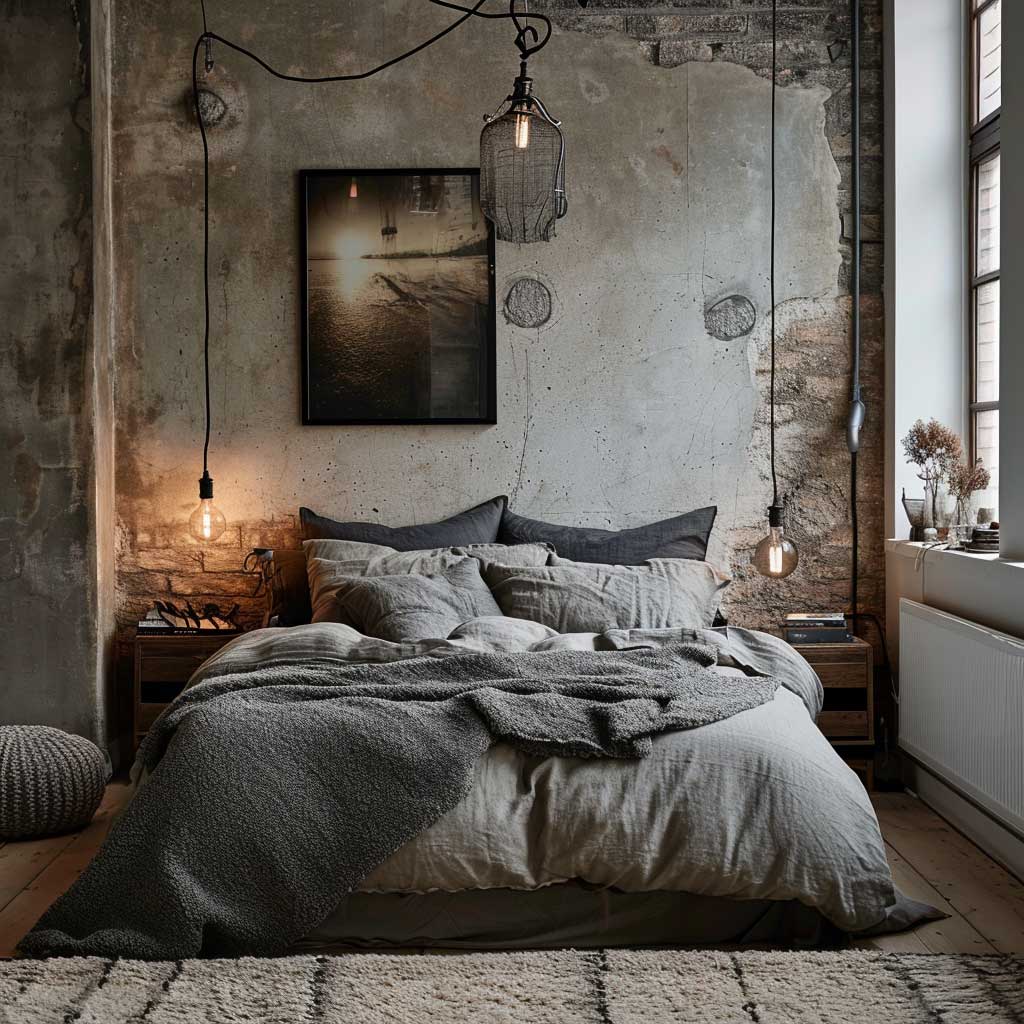
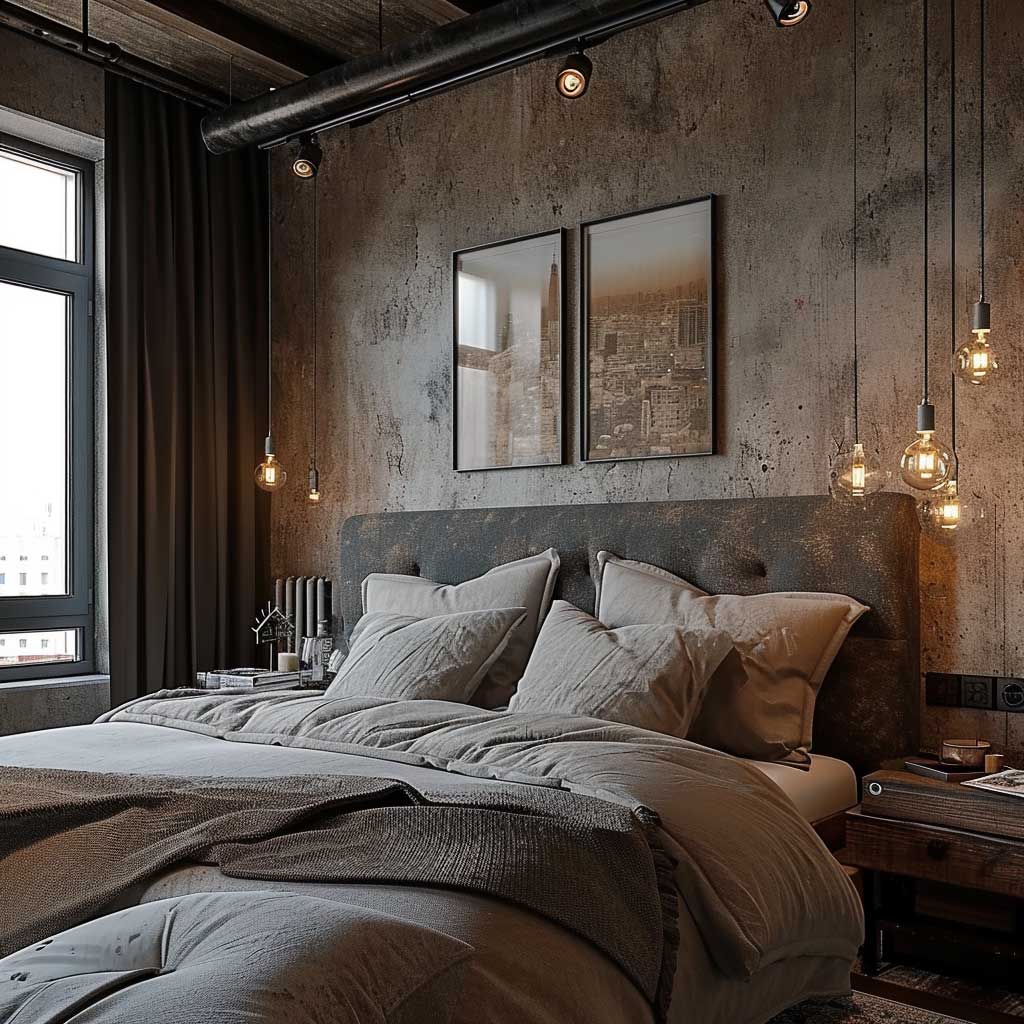
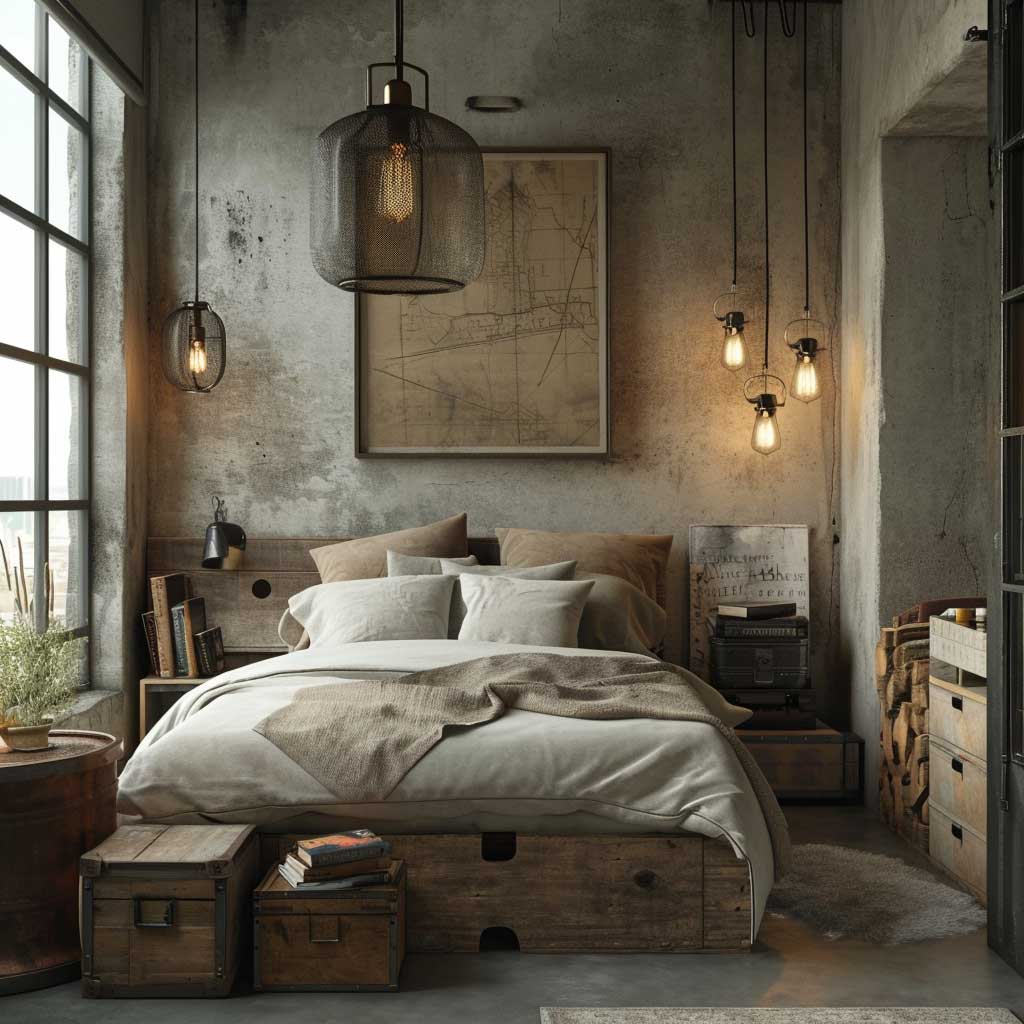
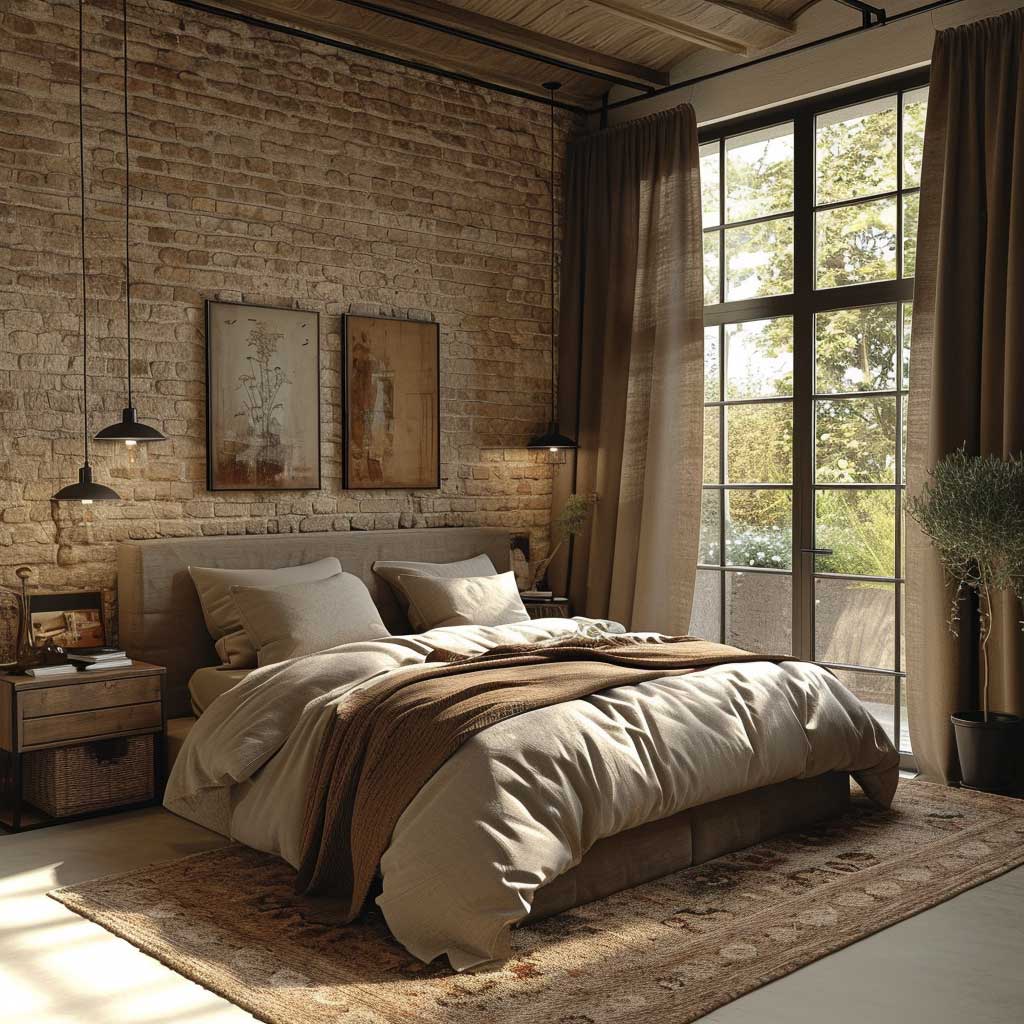
Lighting follows the same logic as the living room, but quieter. A single wall-mounted matte black sconce per side of the bed beats a pendant every time in a bedroom. It’s a reading light, a mood light, and an object that pulls the eye toward the wall rather than the ceiling. Flos and Muuto both make wall sconces in the $180–$350 range that hit the style precisely. Dimmability isn’t optional — it’s the whole point.
Kitchen Countertops Are Where Most Scandi Industrial Rooms Fall Apart
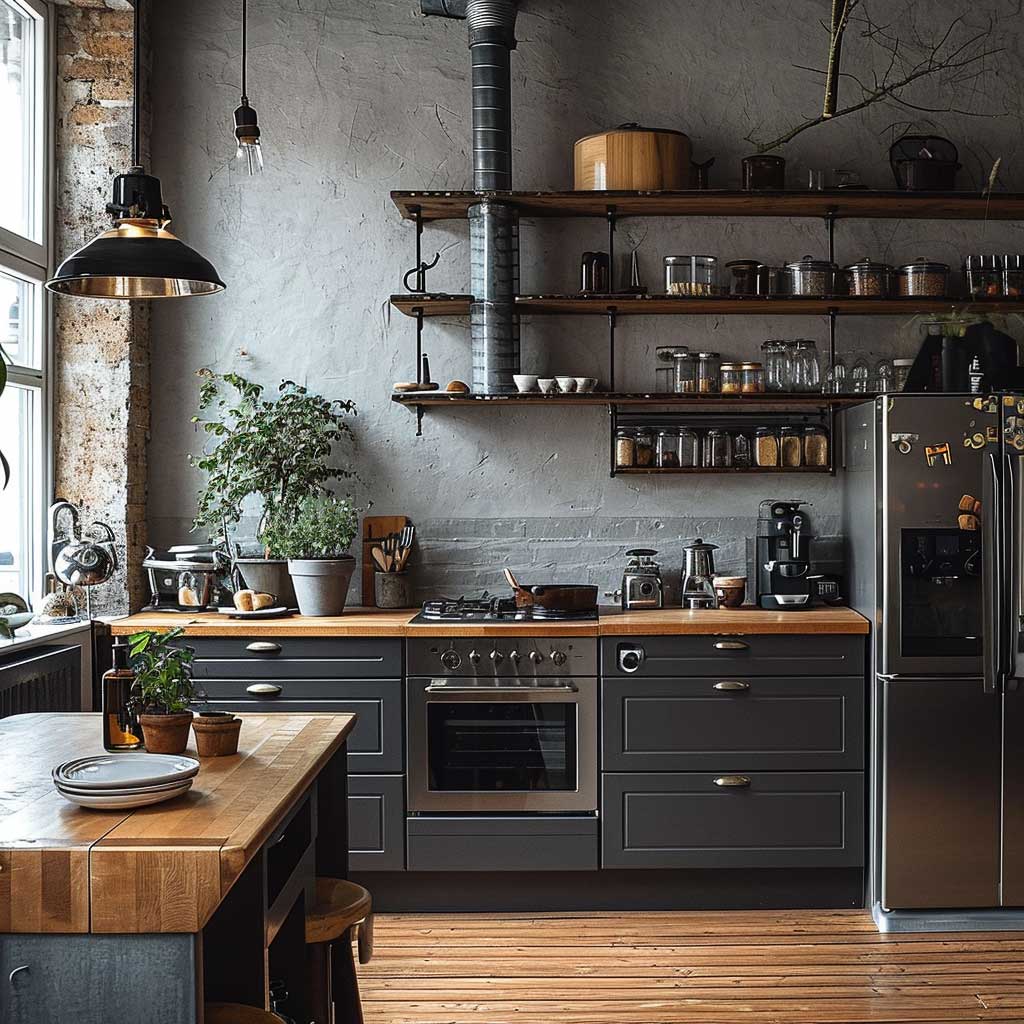
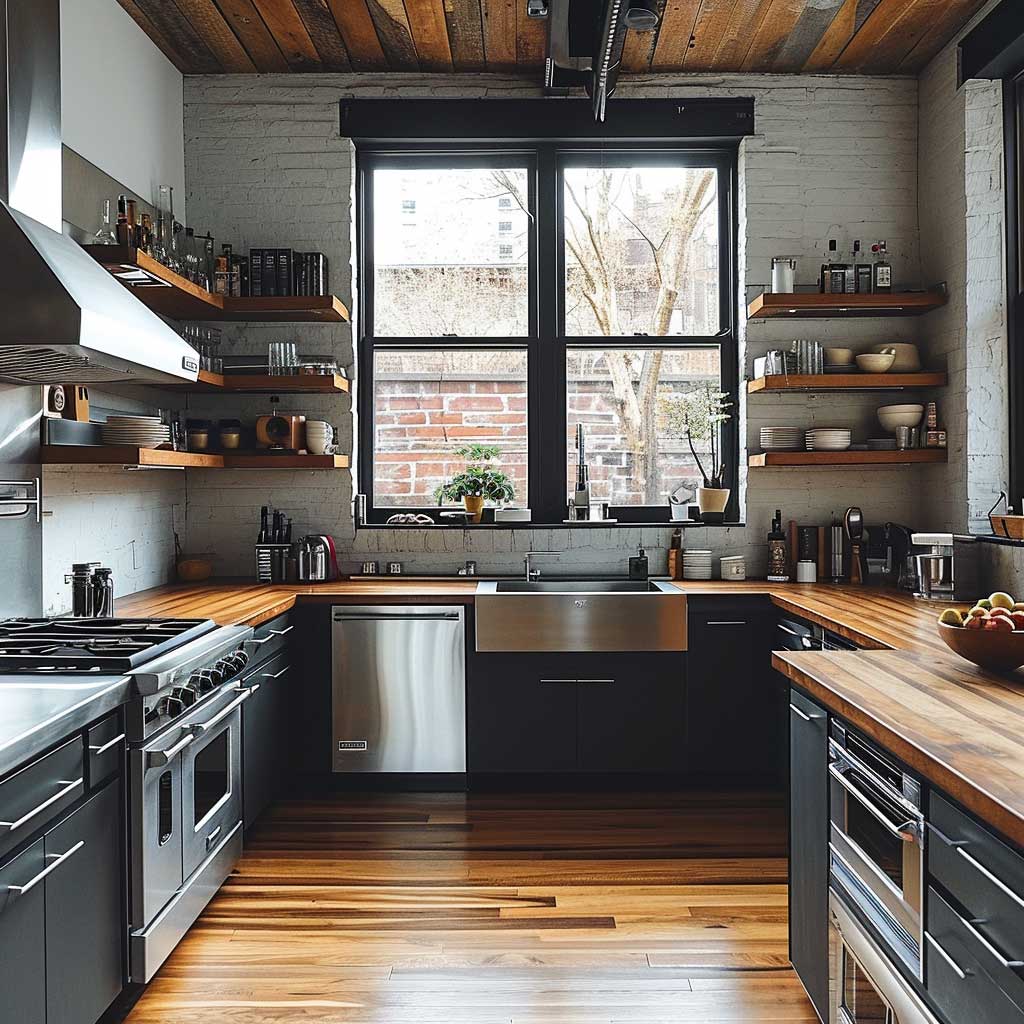
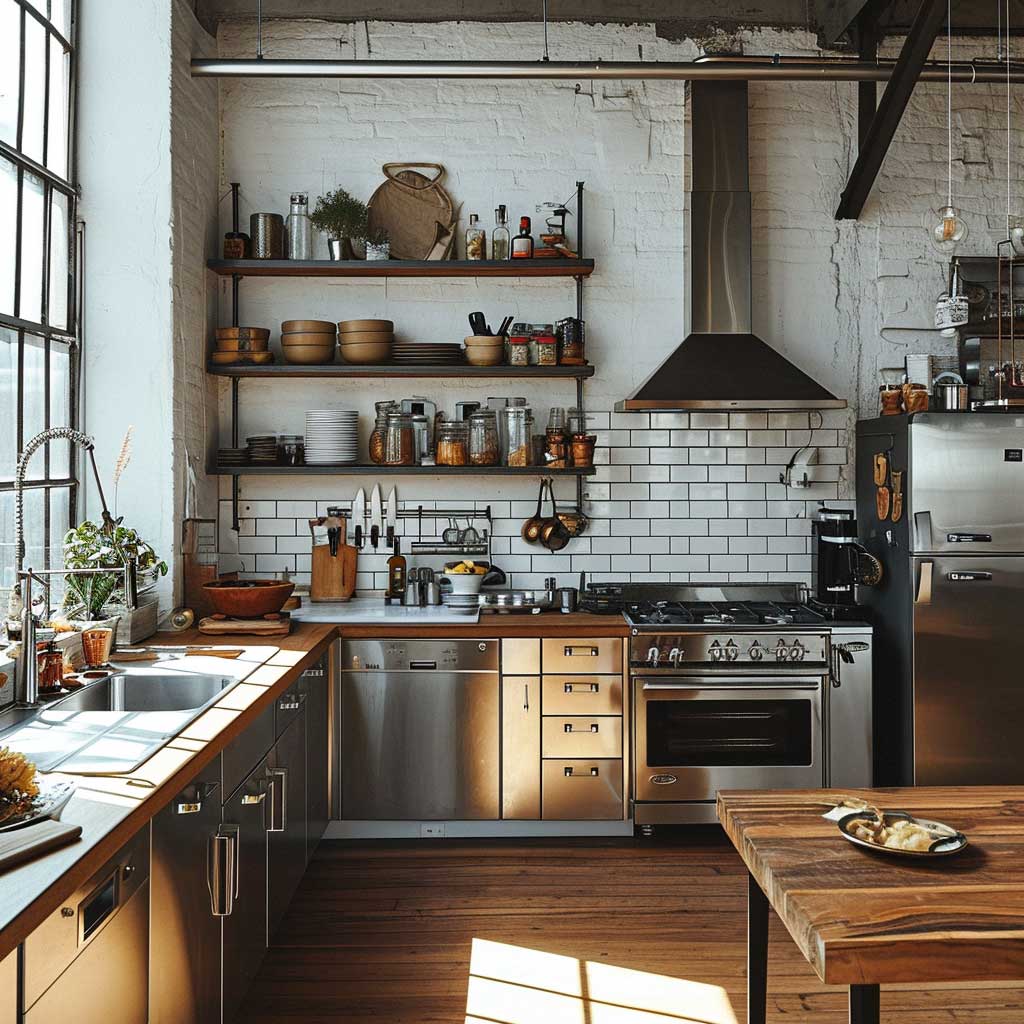
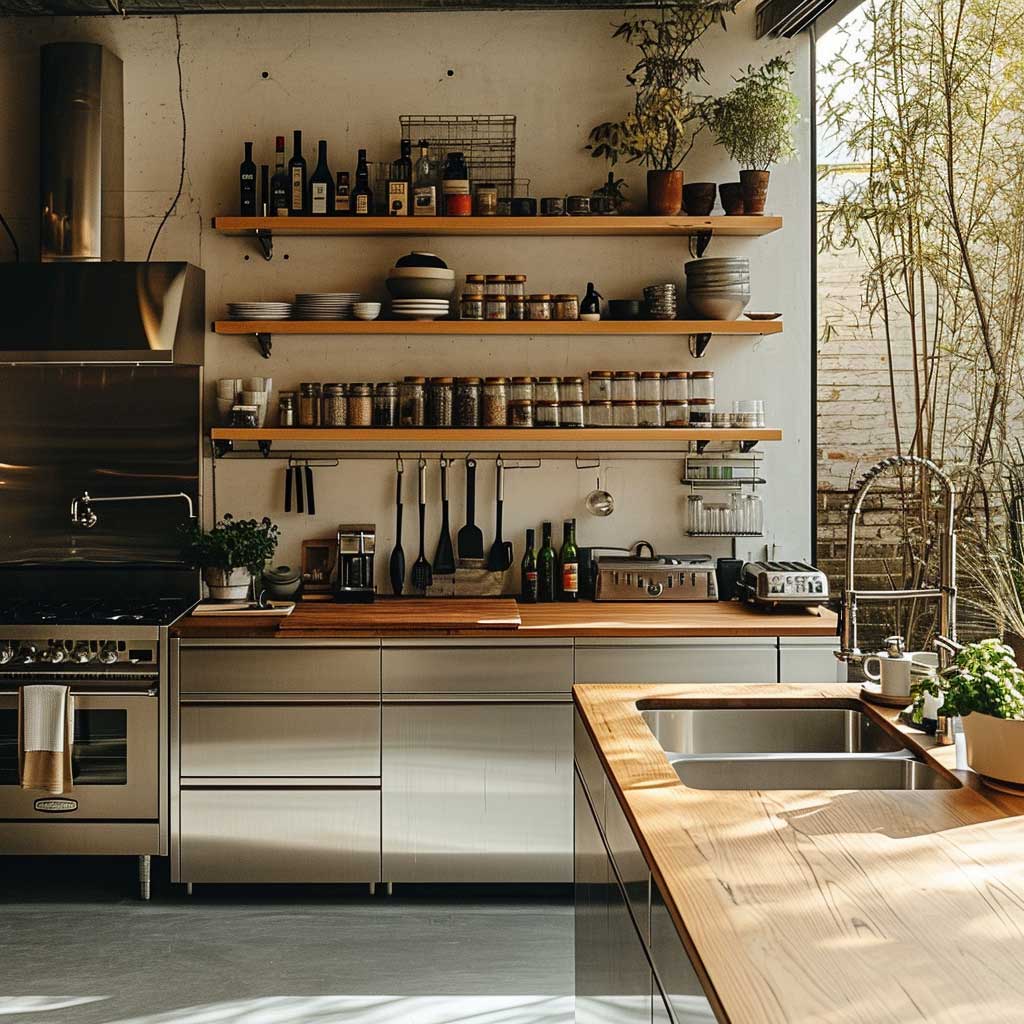
Cabinetry in a scandi industrial kitchen goes flat-front, full stop. No shaker profiles, no raised panels, no ornate handles. Flat doors in matte white, charcoal, or a warm light oak — those are your three options and they’re enough. IKEA’s Kungsbacka fronts in anthracite run around $50–$80 per door and nail the industrial edge without the custom price tag. Pair them with a bar-pull handle in brushed steel and you’ve spent under $100 on hardware that looks like $400.
The countertop question is where most scandi industrial kitchens either commit to the style or lose the plot. Real concrete is beautiful and expensive to install correctly — budget $80–$120 per square foot and accept that it will stain. Reclaimed wood is warmer but needs sealing every 18 months. My practical recommendation: Caesarstone’s Concrete range. It mimics the visual of poured concrete at around $55–$75 per square foot installed, doesn’t stain from red wine, and doesn’t need annual maintenance. Aesthetics that work with your life, not against it — that’s the most Scandinavian principle of all.
Open shelving above the counter is the make-or-break element for this style in the kitchen. Done correctly — raw steel brackets, oak or pine shelf boards at around $40–$60 per shelf — it opens the room and displays the functional objects (ceramics, cast iron, glass jars) as part of the decor. Done incorrectly — overcrowded, inconsistent heights, plastic containers — it looks like a storage problem rather than a design choice. What’s the rule? Everything on an open shelf should be something you’d put in a photo. If it doesn’t pass that test, it goes in a cupboard. For more on how industrial kitchens handle the material mix, this industrial kitchen roundup covers 30 real spaces worth studying.
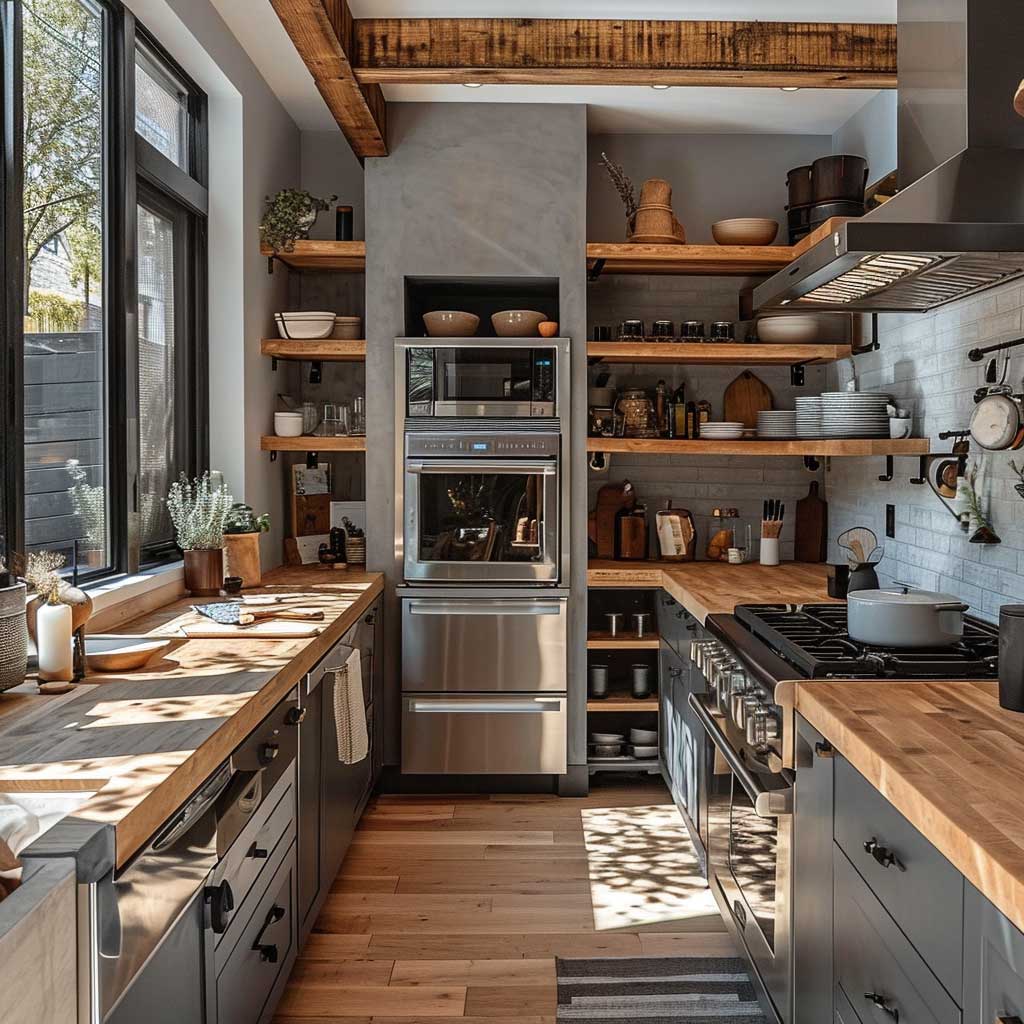
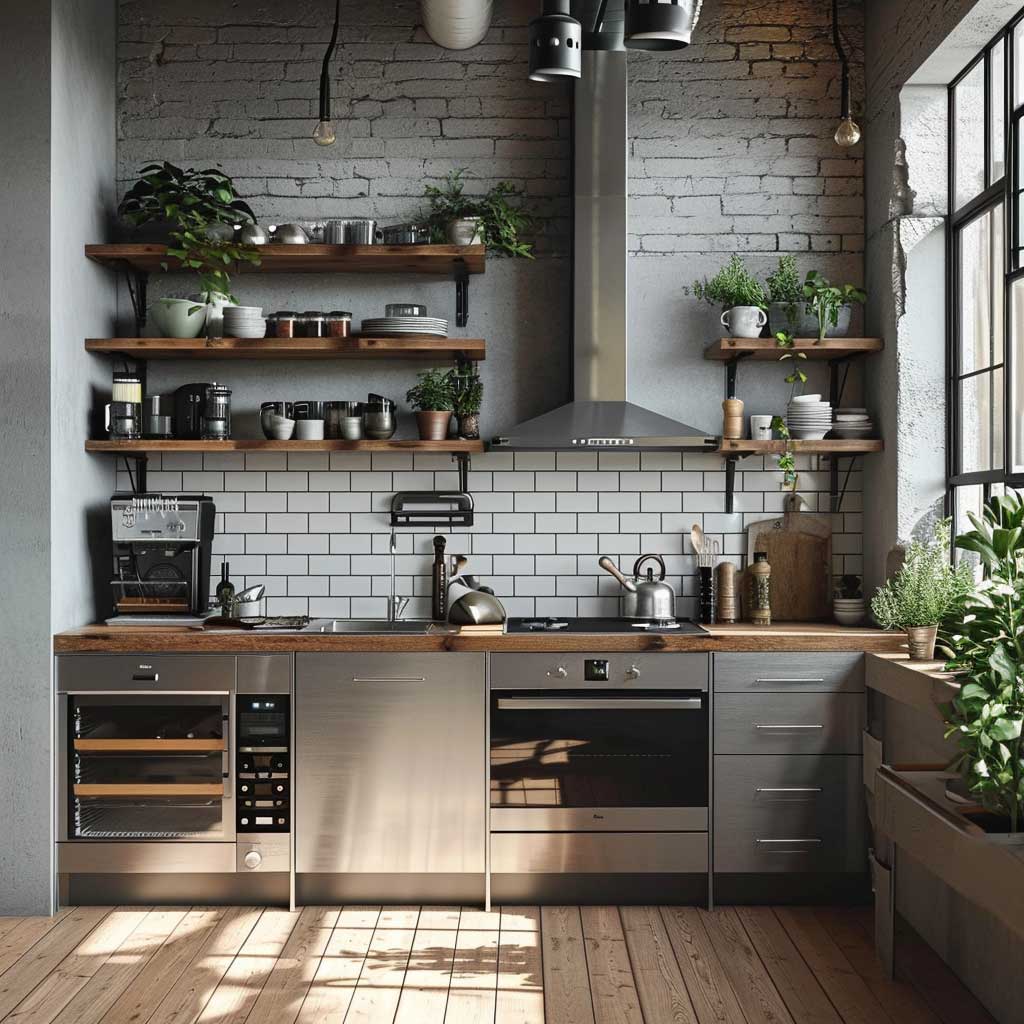
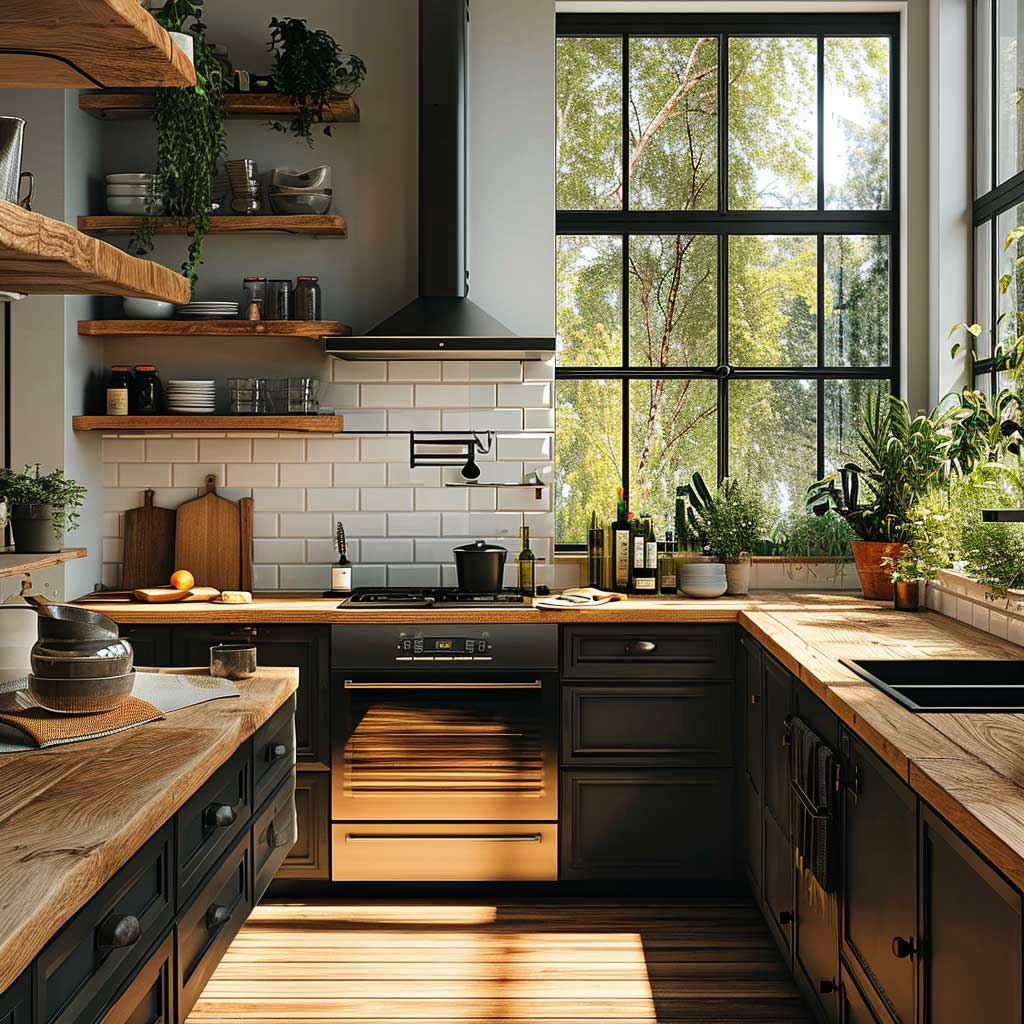
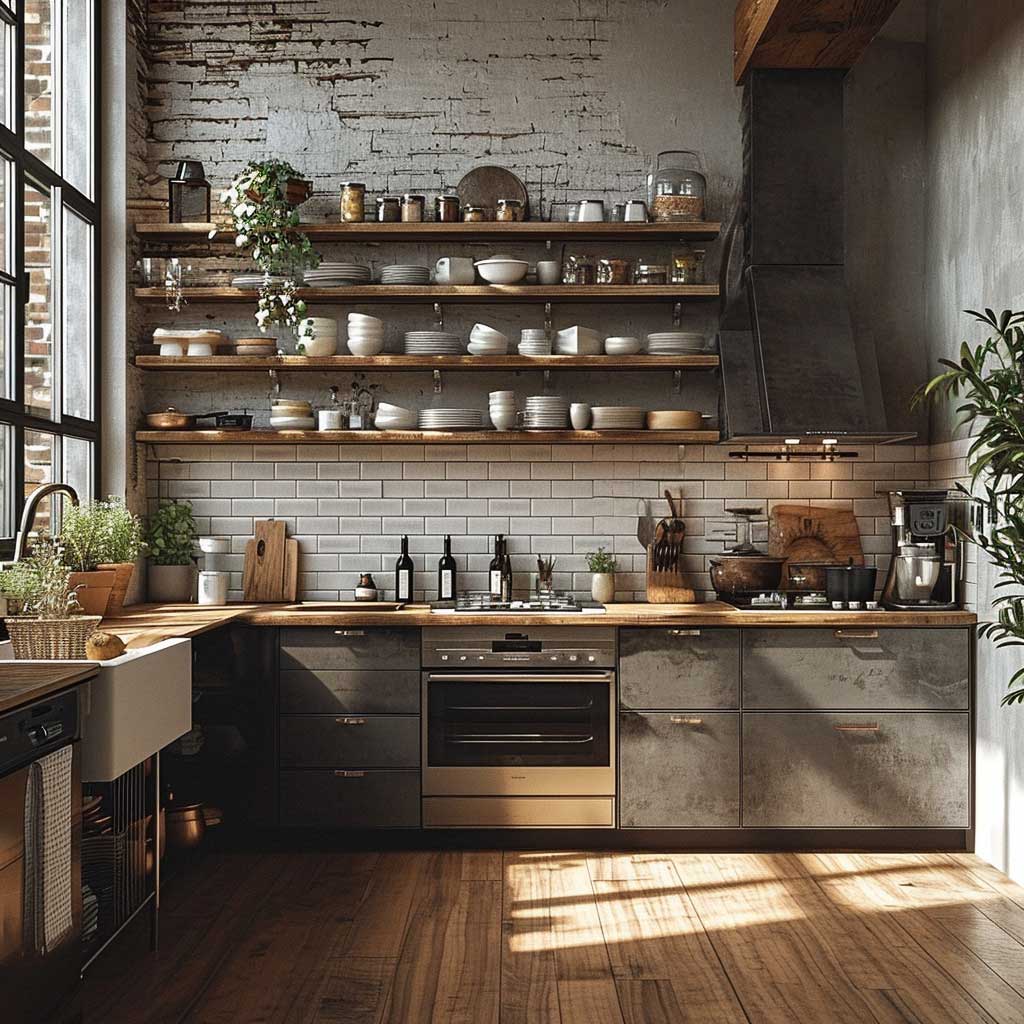
Appliances are easier than people expect. Stainless steel is the obvious choice — every major brand from Bosch to Smeg offers ranges that sit comfortably inside this aesthetic. But you don’t need stainless steel everything; you need stainless steel on the things that show. Built-in oven and refrigerator panels in the same finish as the cabinetry keep the kitchen quiet. Reserve the exposed stainless for the range hood and the sink — they’re the industrial anchors, and they’ll do the job without turning the room into a professional kitchen display showroom.
Lighting in the kitchen follows industrial logic with Scandinavian restraint. A pair of factory-style pendants over the island — black metal dome shade, E27 bulb, warm white at 2700K — covers both functions. You’ll notice that warm-white bulbs are non-negotiable here; cool-white light at 4000K turns a scandi industrial kitchen into something closer to a hospital corridor. Track lighting works for the work surface if pendants aren’t feasible. Algedra’s breakdown on mixing these two styles goes deep on how large windows factor into the light equation — relevant if you’re working with a north-facing kitchen.
| Material | Cost per sq ft (installed) | Maintenance | Scandi Industrial Fit |
|---|---|---|---|
| Real poured concrete | $80–$120 | Sealing yearly; stains | 10/10 visual, 6/10 practical |
| Caesarstone Concrete range | $55–$75 | Minimal; stain-resistant | 9/10 visual, 10/10 practical |
| Stainless steel | $70–$120 | Scratches visible; wipe clean | 9/10 industrial, 6/10 warmth |
| Reclaimed oak | $60–$90 | Oil every 12–18 months | 8/10 warmth, 7/10 industrial |
| Laminate (wood print) | $20–$35 | Very low | 5/10 — edges give it away |
The short version
Industrial Scandinavian works because neither style needs to win.
The steel and concrete give the room its spine. The linen and birch give it its warmth. Strip out either side and you’re left with something too cold or too bland to hold your attention past a Pinterest scroll.
The rooms that actually live well in this style share one discipline: they chose materials that earn their place, then stopped adding. Every shelf, every textile, every light fixture is there on purpose — not as decoration, but as argument.
Save this post before your next design decision.