Quick Summary
Three sofa back wall design approaches that actually work: textured panels (wood slats from $3.50/sq ft, stone veneer from $70/panel), oversized art (cover two-thirds of sofa width, bottom edge 6–8 inches above sofa back), and floating shelves with LED strips (full setup under $180 with IKEA LACK + Govee lights). Best budget move: three LACK shelves + warm white LED strips for $45 total. Biggest mistake: hanging a small canvas on a big wall — it makes the room look emptier, not fuller. Total project range: $45–$500 depending on the look.
That blank wall behind your sofa is probably the most wasted space in your living room right now. I stared at mine for two years before doing anything about it. Beige paint. Nothing else.
Then I spent $320 on wood slat panels from Home Depot and the room looked like it belonged in a different house. My neighbor asked if I hired a designer. I didn’t.
Sofa back wall design is the single fastest upgrade you can make to a living room. Faster than new furniture. Cheaper than new floors. Three approaches work best right now: textured panels, oversized art, and floating shelves with LED strips. I’ve tested all three. One took a weekend. One took two hours. One I finished before lunch.
Here’s exactly what each sofa back wall decoration approach costs, where to buy the materials, and the mistakes that will make your wall look like a Pinterest fail instead of a Pinterest pin.
Textured Sofa Back Wall Design: Wood, Stone, and Fabric Panels That Actually Work
⏱ Quick Scan: Textured Wall Costs
Peel-and-stick wood panels → $4–$6/sq ft (skip near radiators)
Real wood slat panels (Acupanel) → $8–$12/sq ft
MDF slats (Weaber, Home Depot) → $3.50/sq ft
Stone veneer (GenStone) → $150–$200 per sofa-width wall
DIY fabric panels → $55–$100 total
Time to install → 4–8 hours for a beginner
In the realm of interior decoration, the wall behind your sofa presents an unmissable opportunity for creativity and style expression. The concept of sofa back wall design has evolved significantly, transforming this space into a focal point of the living room. One of the most striking trends in this domain is the incorporation of various textures. This approach not only adds depth and dimension to the room but also infuses it with personality and warmth.
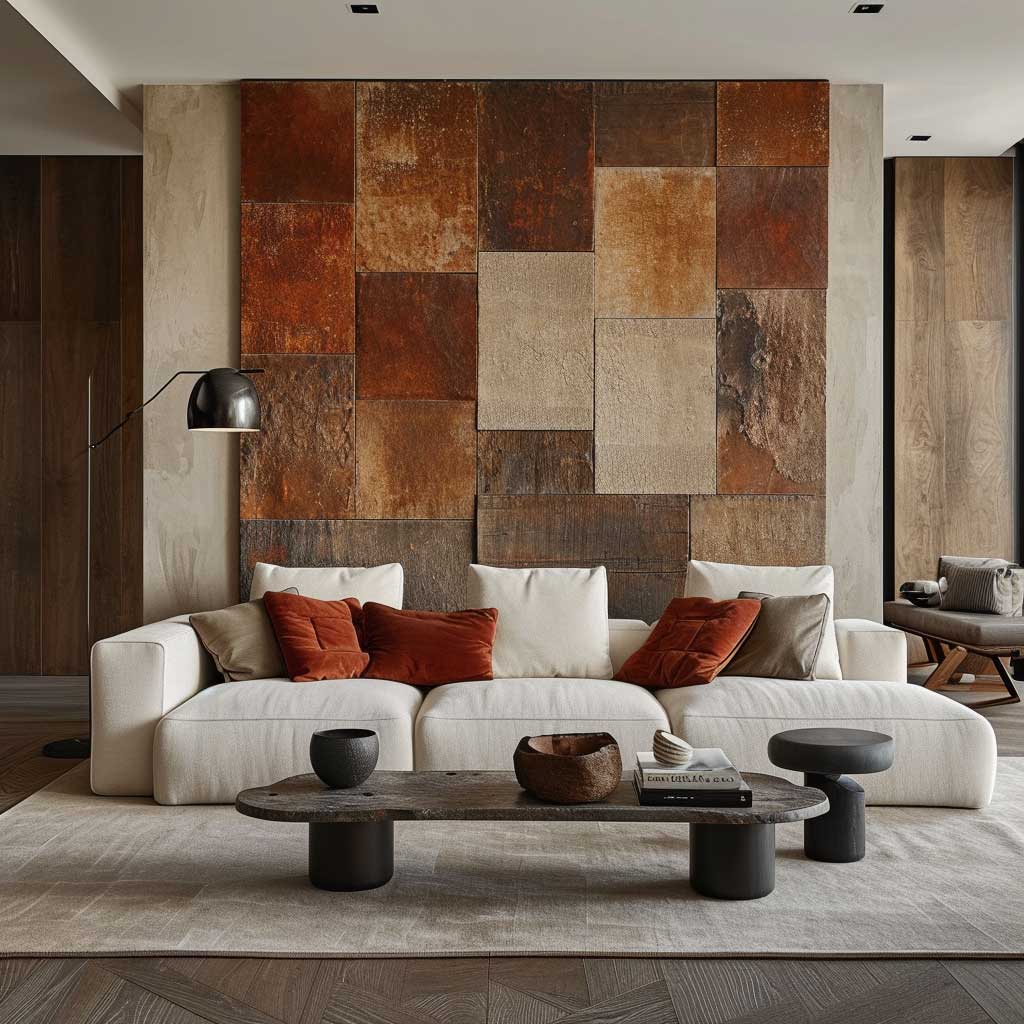


The beauty of texture play lies in its versatility. By combining different materials such as wood, stone, and fabric, one can achieve a look that is both eclectic and harmonious. Imagine a wooden panel running the length of the wall, interspersed with stone accents and fabric panels. The wooden element brings a touch of nature and warmth — and if you’re specifically drawn to wooden wall decor ideas for your living room, there’s an entire category of vertical slat and reclaimed wood options worth considering. Stone adds a rustic, earthy feel. Fabric panels, on the other hand, can add a softness and a splash of color or pattern.
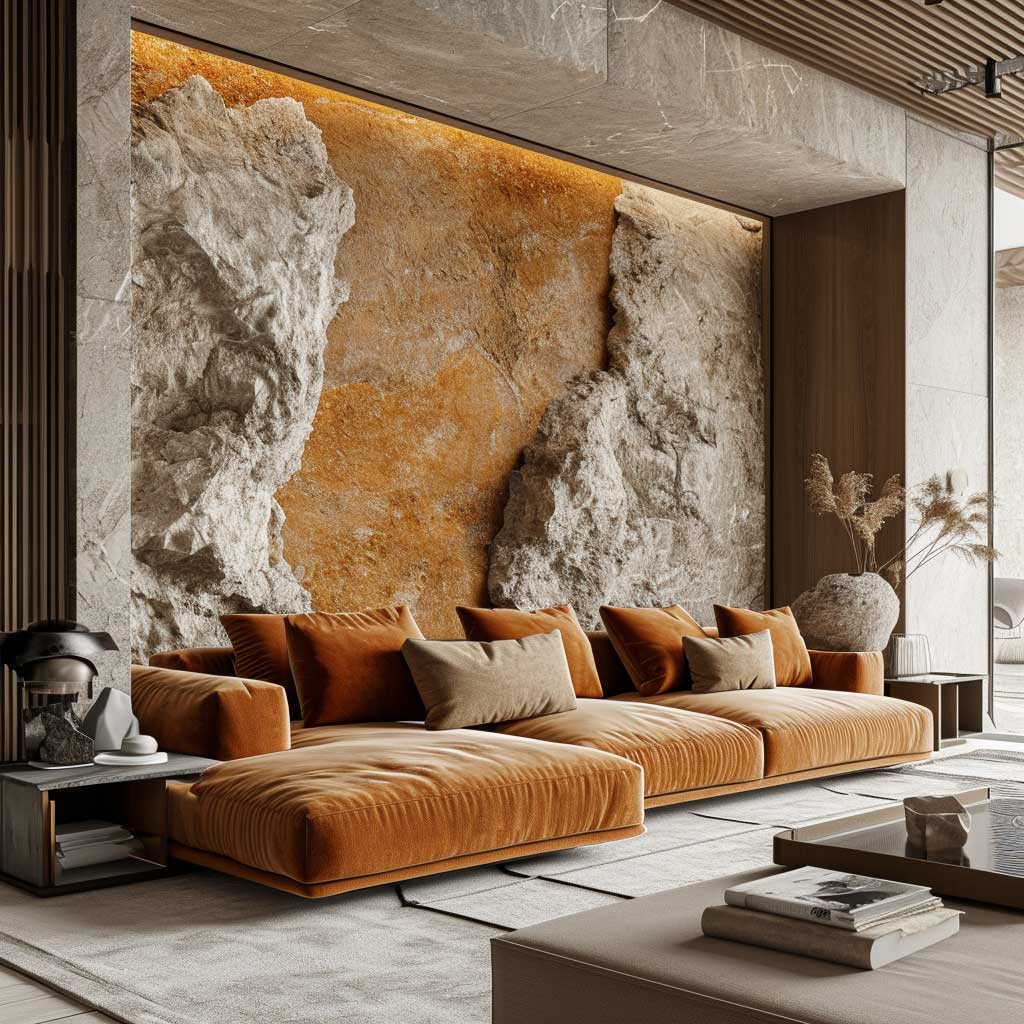


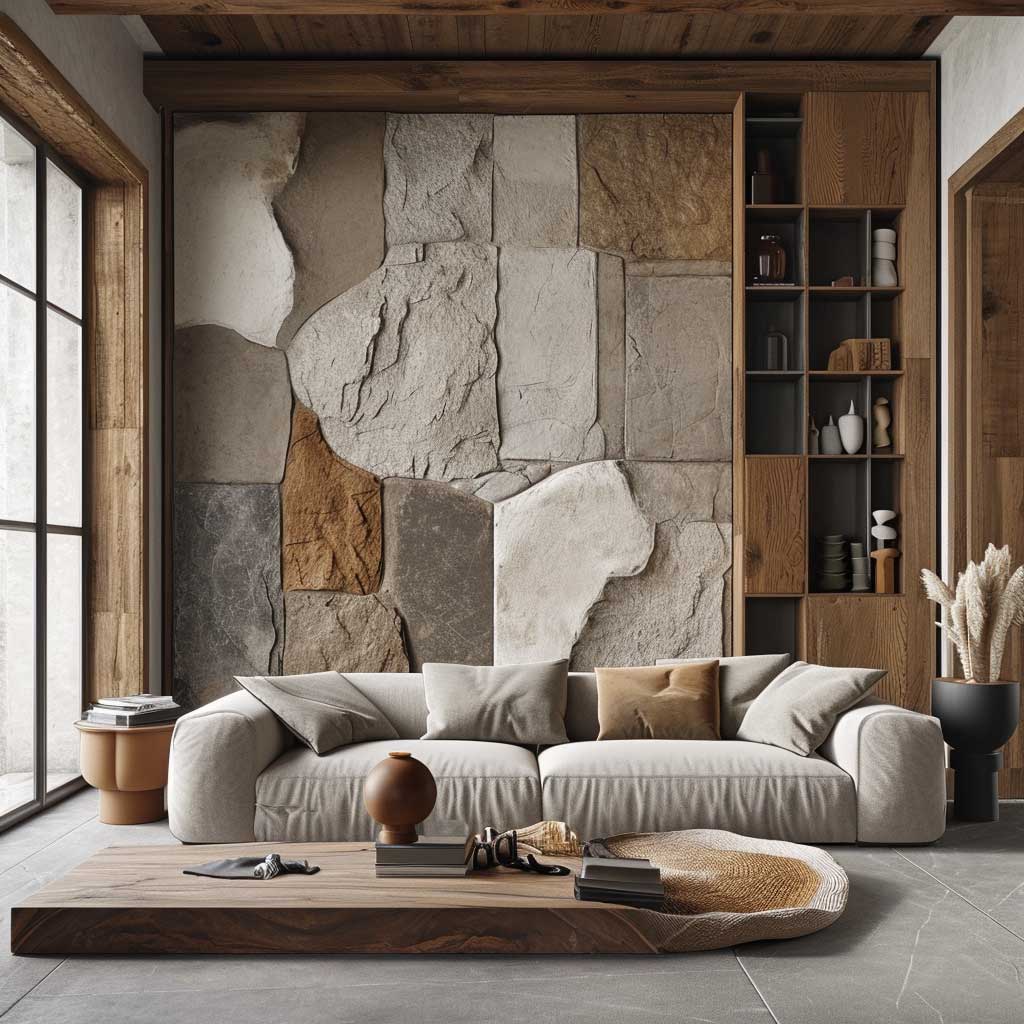
Integrating different textures also allows for a play of light and shadow, giving the living space a dynamic quality. The natural grains of wood and the irregularities of stone interact uniquely with both natural and artificial lighting, creating an ever-changing ambiance throughout the day. Additionally, these textures offer a tactile experience that invites touch, making the living space more inviting and comfortable.
The key to mastering this trend is balance. While it’s tempting to go all out with multiple textures, it’s crucial to maintain a cohesive look. The textures should complement each other and the overall theme of the room. For instance, a minimalist living room might benefit from the subtle integration of smooth stone and fine-grained wood, while a more bohemian space could experiment with rougher textures and bolder fabric patterns.
I bought my first set of peel-and-stick wood panels from Wayfair for $4.50 per square foot. Looked great for three weeks. Then the edges started curling near my radiator. Heat kills adhesive-backed panels. Don’t skip the construction adhesive if your wall gets any warmth at all.
Real wood slat panels from brands like Acupanel run about $8–$12 per square foot. Pricier, but they stay put. MDF alternatives from Home Depot’s Weaber line sit around $3.50 and look nearly identical from five feet away. I have Weaber panels in my guest room and nobody has clocked the difference.
Stone veneer is a different animal. A single 8×4 panel from GenStone costs about $70 and covers 32 square feet. Sounds cheap until you realize you need trim pieces, corner wraps, and adhesive on top. Budget $150–$200 for a typical sofa-width wall. Skip anything marketed as “ultra-lightweight” under $40 per panel. I tried one from Amazon and it looked like a Halloween prop.
Fabric panels are the sleeper pick. IKEA’s BESTÅ shelf system with fabric inserts runs under $100 for a full wall arrangement. My friend upholstered four foam panels in leftover linen from Joann Fabrics. Total cost: $55. The room went from cold apartment to boutique hotel lobby.
Sofa Back Wall Design Cost Calculator
Select your wall approach and size to get a material cost estimate.
Wall Width (feet):
Wall Height (feet):
Design Approach:
Sofa Back Wall Decoration with Oversized Art (and the Sizing Mistake Everyone Makes)
Moving from the textured elegance to the realm of color and expression, another innovative trend in sofa back wall design is the use of bold, artistic statements. This approach transforms the wall into a canvas, allowing for personal expression and a dramatic enhancement of the living space.
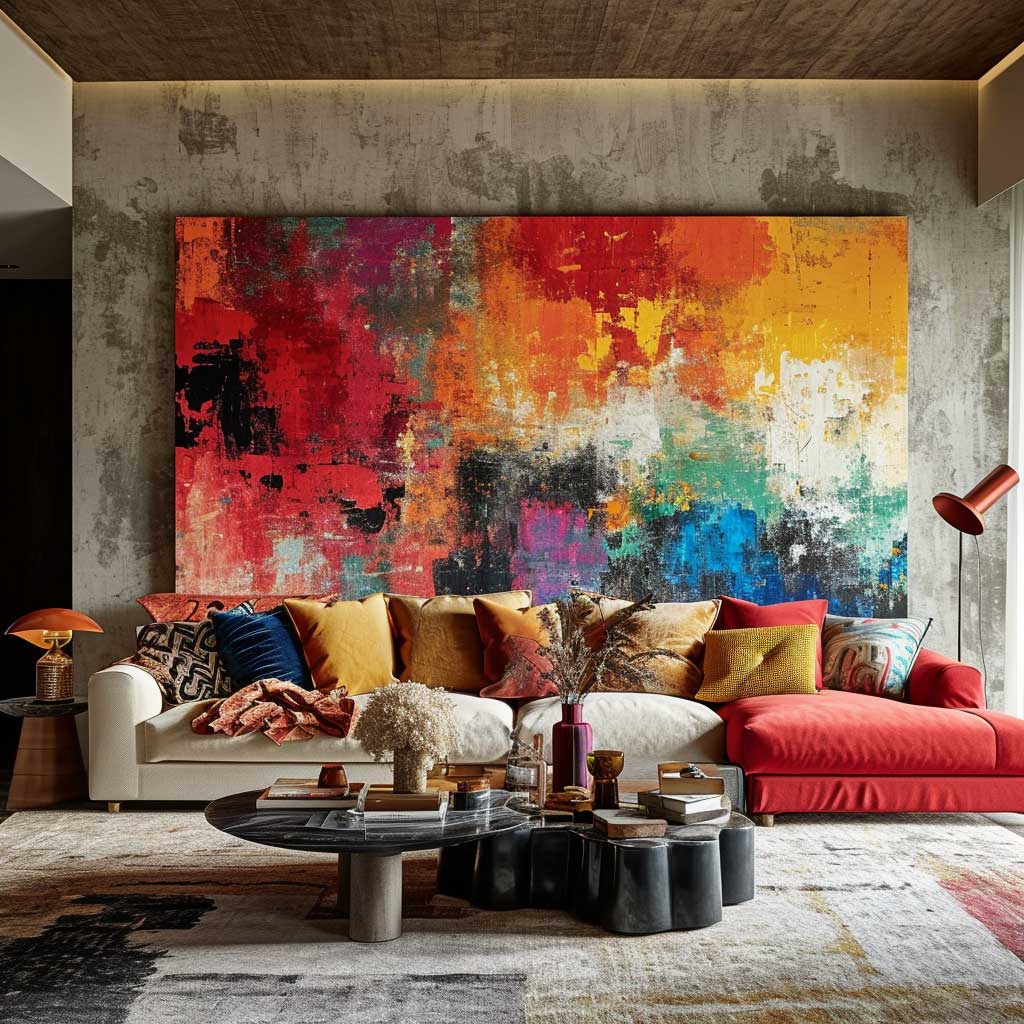


The incorporation of large-scale art pieces behind the sofa can instantly elevate the aesthetic appeal of the room. Whether it’s a single oversized painting or a collection of smaller pieces arranged thoughtfully, art has the power to set the tone of the space. Abstract pieces, with their undefined shapes and multitude of colors, can add a contemporary edge to the room, while traditional paintings can bring a sense of classic elegance.
The choice of artwork also offers a glimpse into the homeowner’s personality. A vibrant, colorful abstract painting might suggest a lively, energetic spirit, while a monochromatic or minimalist piece might indicate a preference for simplicity and order. This personalization makes the living room not just a space for relaxation, but also a reflection of the self. If you’re drawn to unique wall decoration ideas for your living room, abstract and mixed-media pieces are where personality shows the most.


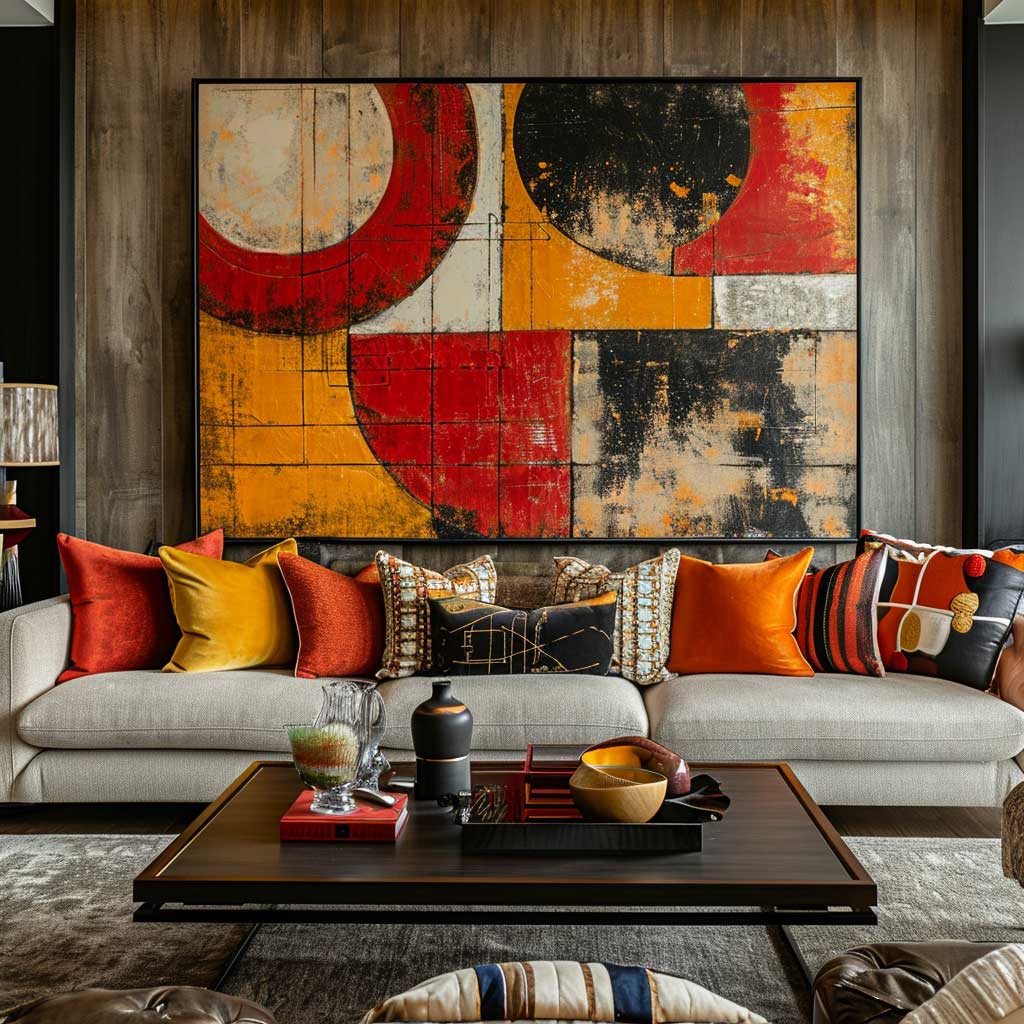
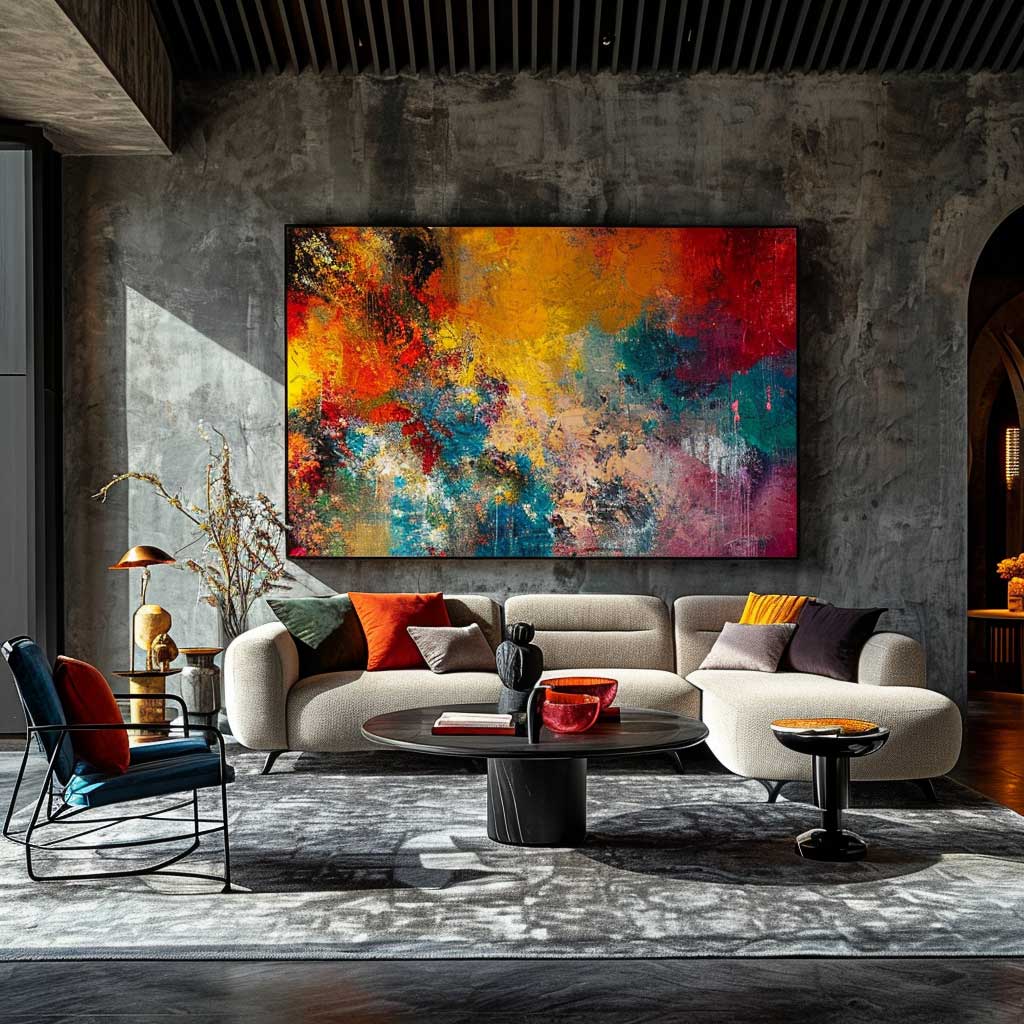
Art isn’t just about visuals; it’s about evoking emotions and creating a conversation. A bold piece of art can become a focal point, drawing attention and serving as a conversation starter for guests. It also has the ability to influence the mood of the room – vibrant colors can energize the space, while softer hues can create a calming atmosphere.
When incorporating art as a sofa back wall design, scale and positioning are critical. The artwork should be proportional to the sofa and the wall it occupies. It should be hung at eye level to ensure optimal viewing and to create a sense of harmony within the space.
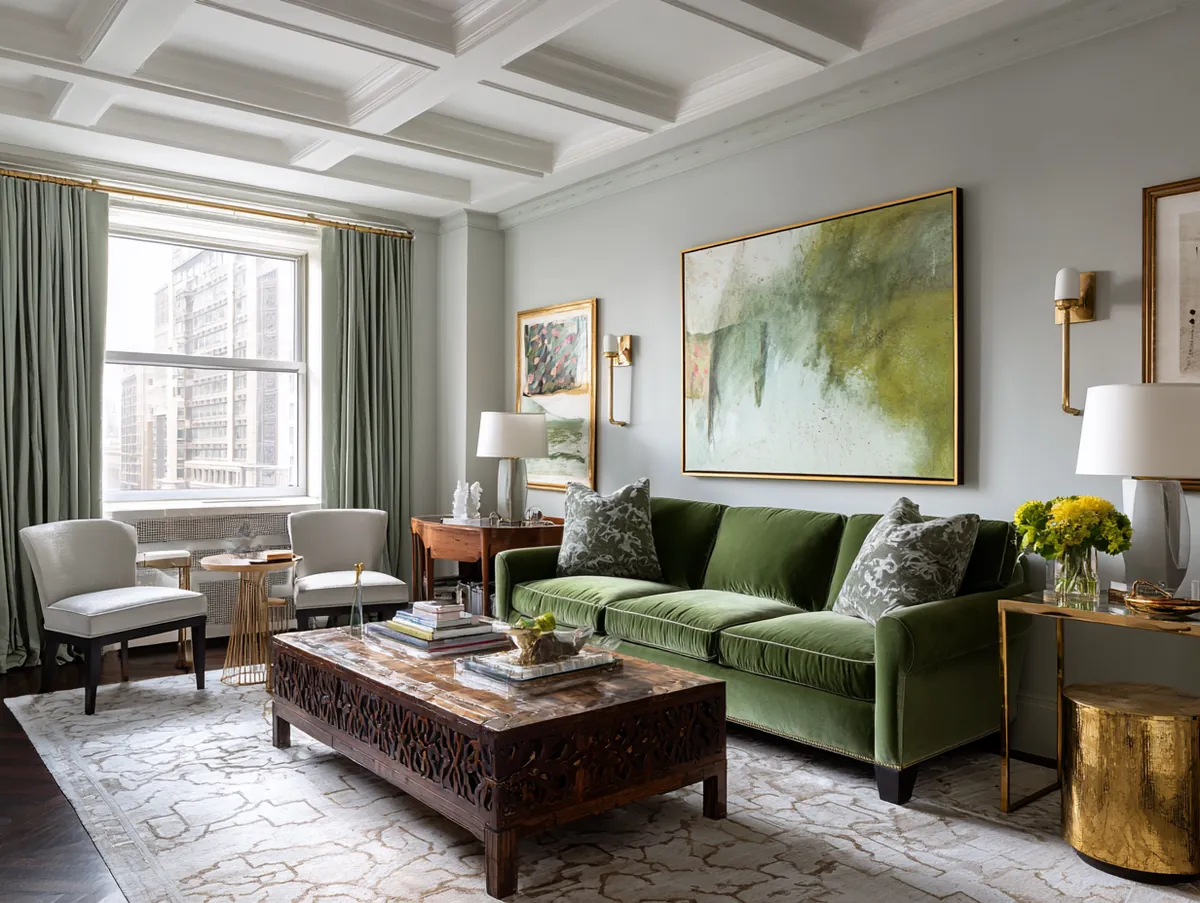
Here’s the rule most people break: your art should cover two-thirds of your sofa’s width. Not half. Not a third. Two-thirds. I hung a 24-inch canvas over my 84-inch sofa and the wall looked emptier than before I started. Replaced it with a 48×60 piece from Minted ($349) and the whole room clicked.
Budget options exist. Society6 sells oversized prints starting at $45 for a 40×60 unframed canvas. IKEA’s BJÖRKSTA line offers 78-inch-wide canvases for under $50. Frame them in a $30 floating frame from Amazon and you’ve got a $400 look for $80. I have a BJÖRKSTA behind my bedroom sofa. Guests always ask where I got it “framed.”
Don’t hang at “eye level” the way every blog tells you. Eye level is for galleries with track lighting and concrete floors. In a living room, the bottom edge of your art should sit 6–8 inches above the top of your sofa back. Any higher and you create a gap that makes the art and sofa feel like strangers. I measured this wrong twice before getting it right.
Diptychs and triptychs are trending for good reason. Two or three panels with 2-inch gaps between them make a small collection look intentional. Target’s Threshold line sells coordinated sets of three for $89. The quality is fine for anything under 24×36 per panel.
🚫 Don’t Do This
Small canvas on a big wall. A 16×20 print over a 90-inch sofa looks like a postage stamp. Go 48 inches wide minimum.
Centering art too high. “Eye level” means gallery eye level — 57 inches to center. Behind a sofa, drop it to 6–8 inches above the sofa back instead.
Matching art to your pillow color. This makes the room look staged for a catalog shoot in 2009. Let the art contrast, not coordinate.
Gallery wall with identical frames. Use 2–3 frame styles max but vary the sizes. Uniform grids only work if you have 6+ identical prints.
Floating Shelves + LED Strips: The 0 Sofa Backside Wall Design That Looks Custom
Shifting gears to a more functional yet equally stylish trend in sofa back wall design, we explore the integration of sleek shelving and lighting. This approach combines aesthetics with utility, adding both charm and practicality to the living room.


Sleek, floating shelves behind the sofa offer a perfect blend of form and function. They provide a platform for displaying cherished mementos, books, or decorative items, contributing to the room’s decor while also serving a practical purpose. The minimalist design of such shelves ensures that they don’t overpower the room but rather complement the existing furniture and style. As House Digest notes in their wall-behind-the-couch guide, wall sconces and shelving are among the most effective ways to add both function and visual texture to this space.
The addition of LED lighting takes this design a step further. Strategically placed lights can highlight the displayed items, creating an inviting ambiance. It can also bring attention to the wall itself, making it a standout feature of the room. The lighting should be soft and indirect, providing a warm glow that enhances the overall coziness of the space.


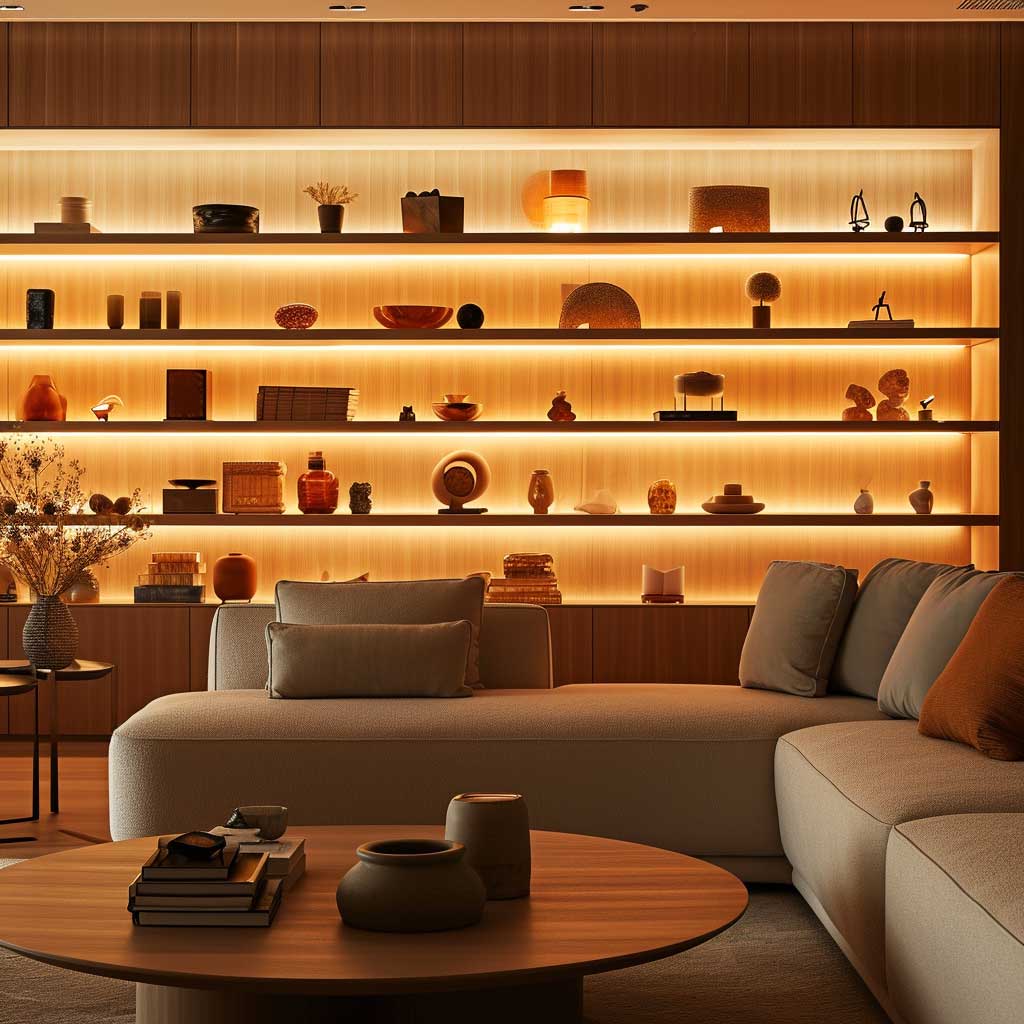
This combination of shelving and lighting is not just about aesthetics; it’s about creating an environment that is both functional and relaxing. It allows for personalization through the display of items that have sentimental value or aesthetic appeal, making the living room a true representation of the homeowner’s tastes and experiences.
IKEA’s LACK shelves cost $10 each. Buy three in white or walnut, space them 14 inches apart, and you’ve got the bones of a sofa back wall decor setup for $30. Mount them with toggle bolts if your wall is drywall — those plastic anchors IKEA includes are garbage and I’ve had a shelf crash at 2 AM to prove it.
LED strip lights changed everything about my shelf wall. I used Govee RGBIC strips ($15 for 16 feet on Amazon) and stuck them along the back edge of each shelf. Warm white at 2700K makes books and ceramics glow. Cool white makes the whole thing look like a dentist’s office. Stick to warm.
The styling is where most people fail. Don’t fill every inch of shelf space. The rule I follow: one tall object, one short object, one leaning object per 3-foot section. Leave 30% of the shelf empty. I used to cram my shelves full of every candle and plant I owned. Looked like a garage sale. Pulled half the stuff off and suddenly it looked like a Restoration Hardware catalog.
West Elm’s floating shelves run $80–$150 each if you want something heavier than LACK. They hold more weight and come in brass-bracket versions that photograph extremely well. But honestly, painted LACK shelves with LED strips behind them look 90% as good for 10% of the price.
In each of these trends, the emphasis on sofa back wall design underscores its importance in the overall aesthetic and functional scheme of the living room. Whether it’s through the play of textures, bold artistic statements, or the practical elegance of shelving and lighting, this space offers endless possibilities for creative expression and design innovation.
Sofa Back Wall Design Options: Cost, Time, and Difficulty Compared
| Approach | Cost Range | Time to Install | Difficulty | Best For |
|---|---|---|---|---|
| Wood Slat Panels | $120–$400 | 4–8 hours | Medium | Modern, Japandi, Scandinavian rooms |
| Stone Veneer | $150–$300 | 6–10 hours | Medium-Hard | Rustic, farmhouse, transitional |
| DIY Fabric Panels | $55–$120 | 2–4 hours | Easy | Rental-friendly, boho, soft spaces |
| Oversized Canvas Art | $50–$400 | 30 minutes | Easy | Any style, fastest impact |
| Floating Shelves + LED | $45–$250 | 2–3 hours | Easy-Medium | Small rooms, renters, book lovers |
| Gallery Wall (multiple frames) | $80–$300 | 1–2 hours | Easy | Eclectic, personal, family-focused |
How to Create a Sofa Back Wall Design with Floating Shelves and LED Lighting
Tools needed:
- Drill with drill bits
- Level
- Tape measure
- Pencil
- Stud finder
Materials needed:
- 3 floating shelves (IKEA LACK or similar)
- Toggle bolts or drywall anchors
- LED strip lights (warm white 2700K)
- Decorative objects for styling
Measure and mark shelf positions
Place the bottom shelf 6–8 inches above your sofa back. Mark positions for the remaining shelves 14 inches apart. Use a level to draw horizontal guide lines with a pencil. Use a stud finder to locate studs — hitting at least one stud per shelf makes mounting much stronger.
Install mounting hardware
Pre-drill holes at your marked positions. Use toggle bolts for drywall sections (they hold 50+ lbs) and wood screws for studs. Attach the shelf brackets or mounting rails according to manufacturer instructions. Double-check level before tightening.
Attach LED strip lights
Stick LED strips along the back edge of each shelf (adhesive side down), facing the wall. Route the power cable behind the bottom shelf and down the wall to the nearest outlet. Use cable clips to keep wires flush with the wall. Set the color temperature to 2700K warm white.
Mount shelves and style
Slide or click shelves onto the mounted brackets. Place one tall object, one short object, and one leaning object per 3-foot section. Leave 30% of each shelf empty. Turn on the LED strips and adjust brightness. Stand back and check from the sofa’s seating position — that’s the view that matters most.
FAQ
What is the best material for a sofa back wall design on a budget?
How wide should art be behind a sofa?
Can I do a sofa back wall decoration in a rental apartment?
How high should I hang art above a sofa?
Do textured accent walls work in small living rooms?
What LED color temperature looks best on floating shelves?
Your Sofa Back Wall Design Game Plan
Three options, three price points, one weekend. Textured panels if you want the room to feel like a boutique hotel. Oversized art if you want drama without demolition. Floating shelves with LED strips if you want the biggest transformation for the smallest budget. I’ve done all three in different rooms and the shelf wall gets the most compliments per dollar spent. Pick one. Buy supplies Saturday morning. Finish by Sunday dinner. Your living room will thank you.