$35 a roll. That’s what a good black and white wallpaper design costs from Graham & Brown or York Wallcoverings — and it will make your room look like it had a $5,000 designer consult.
Black and white wallpaper designs have been on every mood board from Milan to Manhattan for a reason. The contrast is absolute. No second-guessing whether the undertone clashes with your sofa, no seasonal fading, no “this looked better in the store.” Just geometry, stripe, or brushstroke — sharp and final.
You’ll notice three things happen when you put up contemporary black and white wallpaper: the room reads immediately as designed, natural light gets more interesting, and everything else you own starts to look intentional. I’ve seen it work in a 90-square-foot New York bedroom and a sprawling dining room with 14-foot ceilings.
Black and white modern wallpaper isn’t a trend. It predates trends. What follows are the three design moves that actually deliver — plus the mistakes that make a room feel like a crossword puzzle.
Quick Scan
3 Black and White Wallpaper Design Styles at a Glance
- Geometric — Best for living rooms. One accent wall only. Go large-scale.
- Striped — Best for bedrooms. Vertical only. Minimum 1.5-inch stripe width.
- Abstract / Textured — Best for dining rooms. Pairs with minimal furniture. Changes look under candlelight.
Budget reference: Graham & Brown ~$42/roll · York Wallcoverings ~$38/double roll · Schumacher ~$195/roll
Bold Black and White Geometric Wallpaper for Living Rooms
Black and white geometric patterns are a powerful statement in modern wallpaper designs. The sharp, angular shapes and clean lines bring a structured, modern feel to any room, making it the perfect choice for a sophisticated, minimalist interior. Geometric designs often create an optical illusion, drawing attention and adding depth to the space. For example, a living room with sleek furniture and minimal decoration can be elevated with bold, black-and-white geometric wallpaper, creating a dynamic focal point without overwhelming the room’s simplicity.


Graham & Brown’s Oblique line runs about $42 per roll and tiles a standard accent wall for under $130. That’s the reality of geometric black and white wallpaper design — it punches like a custom installation at a fraction of the price. I’ve used it behind a floating media console where a gallery wall would have felt cluttered, and the geometry did all the heavy lifting.
Don’t wallpaper all four walls with a high-contrast geometric. Done that. The room felt like standing inside a QR code. One feature wall, ideally the one your eye hits from the doorway — that’s all you need.
Scale matters more than pattern type. A 2-inch tessellation on a 12-foot wall is visual noise. A 10-inch hexagon repeat, like Tempaper’s Hex in Onyx, gives the geometry room to breathe and registers as deliberate rather than busy.
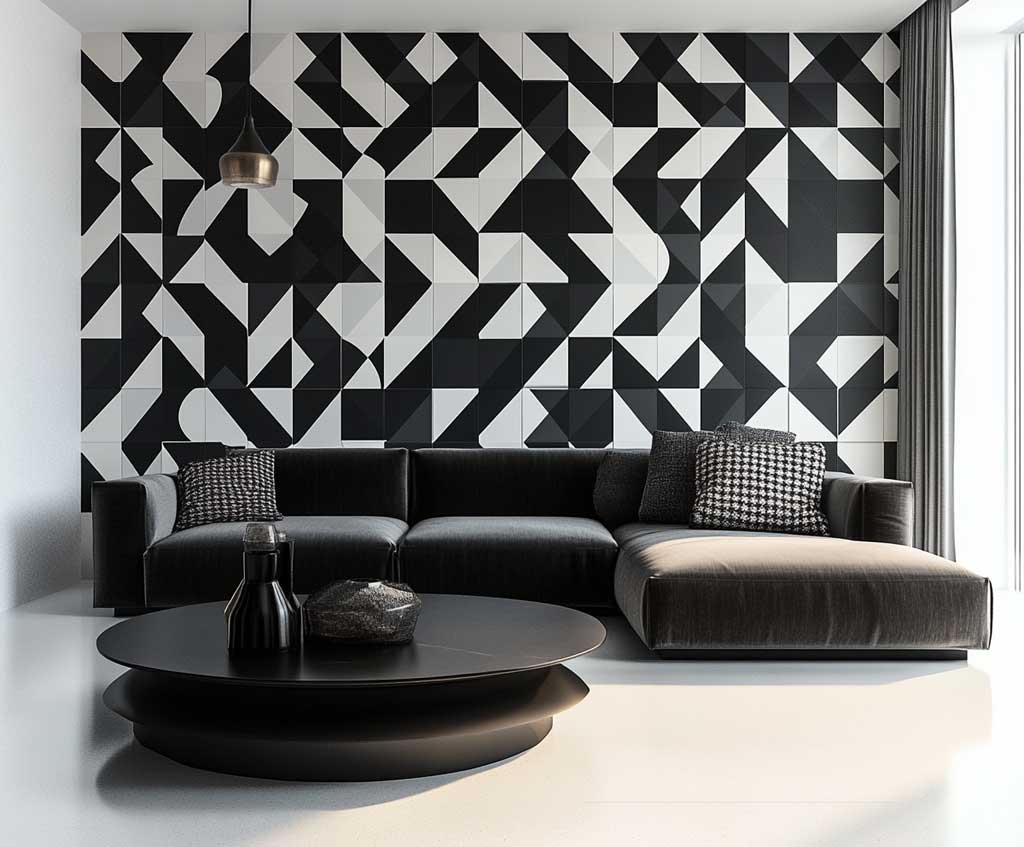

The beauty of black and white lies in its versatility, and geometric patterns allow these colors to shine. Whether in large-scale shapes or intricate tessellations, this combination delivers a striking visual impact. In smaller spaces, the design can elongate walls or make a narrow room feel more expansive, thanks to the directional lines and bold contrast. For a broader perspective on how the monochrome palette functions across different room types, interior design resource Wallpaper from the 70s covers the key styling rules for black and white wallpaper in detail.
Don’t Do This
- Don’t paper all four walls with high-contrast geometric. One feature wall maximum — full-room coverage kills the effect and makes the space feel like a waiting room.
- Don’t use pinstripe-width stripes in a bedroom. Anything under 1.5 inches reads as visual agitation, not elegance.
- Don’t pair abstract wallpaper with patterned rugs. Two competing patterns fight. The wallpaper loses. So does the room.
- Don’t skip the lighting test. Matte black wallpaper in a north-facing room with cold LED lighting looks flat and grim. Check under your actual bulbs before ordering rolls.
Incorporating black and white geometric wallpaper into a modern living room creates a dynamic interaction with natural light. The stark contrast between black and white amplifies the light’s effects, whether it’s natural sunlight or strategically placed lamps. The patterns can also be customized to suit the mood — smaller, repetitive shapes create a busier, more active feel, while larger, more open patterns create a sense of calm and space. For more ways the monochrome palette transforms interiors, see classic black and white interior design ideas for every room.


Pairing this wallpaper with sleek, minimalist furniture, such as low-profile coffee tables or linear shelving, maintains the room’s modern aesthetic. The room can remain functional while achieving a polished, high-end look. Whether the focus is on subtle geometry or large-scale designs, black and white geometric wallpaper is a timeless yet trendy choice for any modern interior.
Worth Knowing
“One accent wall of black and white geometric wallpaper does more for a living room than $2,000 of décor accessories.”
Scale up. One wall. Done.
Black and White Striped Wallpaper: The Pattern That Makes Any Room Taller
Striped wallpaper in black and white is a classic design element that never goes out of style, seamlessly blending traditional and modern aesthetics. The clean, alternating lines of black and white stripes can create a sense of order and symmetry in any room, making it a favorite choice for bedrooms, living rooms, and even hallways. Wide stripes evoke a sense of grandeur, making walls appear taller and rooms more spacious, while narrow stripes offer a more subtle, refined elegance.
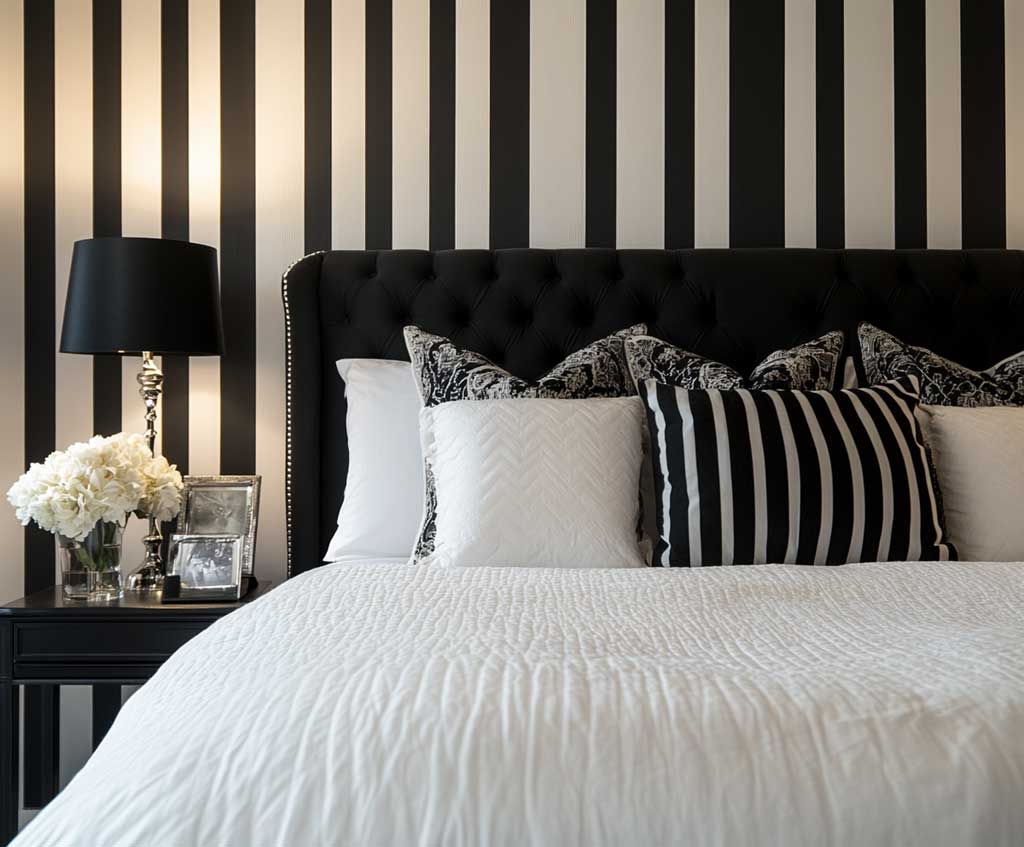

Vertical stripes on a bedroom wall with 8-foot ceilings will make the ceiling feel like it’s at 10 feet. That’s not a design opinion — it’s optics. York Wallcoverings’ Classic Stripe in matte black and bright white, around $38 per double roll, is my go-to for bedrooms where the proportions feel a little flat.
The mistake I see constantly: going too narrow. Pinstripe-width black and white stripes read as agitation at scale. You want a stripe that’s at least 1.5 inches wide. Anything thinner looks like the wallpaper is vibrating.
Horizontal stripes are a different animal entirely. They widen a room but compress the ceiling height. Skip them in any space under 9 feet — you’ll make a cozy bedroom feel like a bunker. Stick to vertical unless you’re working with a lofted space that needs grounding.
| Pattern Type | Best Room | Visual Effect | Mistake to Avoid | Price Range |
|---|---|---|---|---|
| Geometric | Living room | Depth, optical movement | All-four-wall application | $38–$65/roll |
| Striped | Bedroom / Hallway | Height illusion, order | Narrow stripes under 1.5 in. | $28–$55/roll |
| Abstract / Textured | Dining room | Organic warmth, art-like | Pairing with patterned rugs | $65–$195/roll |
| Pattern Wallpaper (general) | Any accent wall | Focal point, statement | Skipping lighting test | $28–$195/roll |


A bedroom with black and white striped wallpaper as the focal point can feel both cozy and refined. For instance, placing this design behind a bed, with its crisp contrasts of matte black and bright white, adds depth and texture to the room. The combination of black and white creates an ambiance that is sophisticated without feeling overly formal, especially when paired with modern furnishings like a tufted headboard or minimalist bedside tables. The stripes can give the space a chic hotel-like atmosphere, transforming the bedroom into a stylish sanctuary.
Striped designs are particularly effective in adding a sense of movement to the space. Vertical stripes draw the eye upward, emphasizing the room’s height, which can make a room feel more expansive and airy. This effect works especially well in smaller spaces, where the added illusion of height can change the entire dynamic of the room.


Fast Fact
Vertical stripes make an 8-ft ceiling read as 10 ft.
York Wallcoverings Classic Stripe (~$38/double roll) is the most-pinned black and white wallpaper pattern for bedrooms for a reason. The math works.


With the right lighting, black and white stripes can shift from bold and eye-catching during the day to softer and more muted at night. Warm brings out the matte black elements while casting gentle shadows that create a cozy and inviting atmosphere. Overall, black and white striped wallpaper offers a timeless design solution, combining modern sensibilities with classic elegance.
Contemporary Black and White Wallpaper: Abstract Textures for Dining Rooms
Abstract textured designs in black and white offer a sophisticated yet artistic approach to modern wallpaper. These designs often feature hand-drawn patterns, flowing brushstrokes, or organic shapes that break away from rigid geometric lines, creating a unique and dynamic backdrop. In a dining room setting, abstract black and white wallpaper can transform the space, adding depth and character to an otherwise minimalist décor.


Abstract black and white wallpaper is the one pattern that actually improves under candlelight. The organic shapes — brushstroke lines, soft ink washes — shift as the light moves. A dining room with Schumacher’s Feather & Fern in black on white at $195 per roll (yes, that price is real, and yes it’s worth it for a dining room you entertain in) reads as a different room at 7pm than at noon.
The pairing rule here is simple: when the wallpaper is complex, the furniture must be minimal. A linen-covered chair and a bare walnut table will make the abstract pattern feel like art. Add a printed tablecloth and a patterned rug and you’ve got a fight on your hands.
Abstract black and white contemporary wallpaper does one thing wrong in small dining spaces: it can compress a room that’s already tight. If your dining room is under 120 square feet, go mural-style — cover only the wall behind a built-in banquette and leave the rest white. The contrast does the work without the claustrophobia.


The textured finish of the wallpaper provides a tactile element that elevates the visual appeal. The subtle textures create dimension, making the room feel more layered and complete. In this context, black and white tones allow the texture to shine, highlighting the interplay between light and shadow. For example, a dining room flooded with natural light will see the black and white tones shifting throughout the day, as sunlight accentuates the design’s peaks and valleys.
Abstract designs also bring a sense of creativity and movement to a space. Unlike geometric or striped patterns, abstract textures are unpredictable, offering an organic flow that can soften the edges of a modern interior. This makes the wallpaper an ideal choice for dining rooms, where the goal is often to create a comfortable, relaxed atmosphere without sacrificing elegance. The flowing, abstract patterns evoke a sense of calm and can make a dining space feel more welcoming and less formal, perfect for family meals or casual gatherings.


Designer Shortcut
Abstract black and white wallpaper is the only pattern that actually looks better at night.
Candlelight and warm Edison bulbs interact with brushstroke textures and ink shapes in ways no paint color can replicate. Your dining room becomes two rooms for the price of one.


Pairing abstract black and white wallpaper with sleek, modern furniture, such as a minimalist dining table and simple, elegant decor, ensures that the room stays balanced. The wallpaper serves as the primary feature, while the rest of the space remains clean and uncluttered. This contrast between simplicity and intricate texture allows the room to feel artistic yet sophisticated, blending modern design principles with a timeless black-and-white palette. If you’re working room by room, the same principle applies to wall decor — explore stylish wall decor ideas for modern living rooms for coordinating approaches.
People Also Ask
What is the difference between contemporary and modern black and white wallpaper?
Contemporary black and white wallpaper reflects current design trends — right now that means abstract brushstroke textures, organic shapes, and oversized-scale patterns. Modern black and white wallpaper refers to a specific design era (1920s–1970s) defined by clean geometric lines and minimal ornamentation. Both use the same palette; the difference is form and structure.
Should black and white wallpaper go on all walls or just one?
One feature wall is standard for high-contrast black and white wallpaper designs. Full-room application works only with subtle patterns — like a fine linen texture or a very light geometric — where the contrast is low. Bold geometric or stripe on all four walls creates visual overstimulation in rooms under 200 square feet.
How do I choose between black and white pattern wallpaper styles for a bedroom?
For bedrooms, the pattern weight matters more than the style. Vertical stripes (York Wallcoverings Classic Stripe, ~$38/double roll) and low-density geometrics read as calm and ordered. High-density tessellations or strong abstract shapes create energy, which works for a home office but fights restful sleep. Go lighter on density for bedrooms.
Is black and white designer wallpaper worth the price over budget options?
For a living room or dining room feature wall, yes. Schumacher and Farrow & Ball black and white wallpapers ($120–$195/roll) use thicker substrate, more complex ink layering, and tighter pattern registration. The visual depth is noticeably different at close range. For a hallway or powder room, Graham & Brown at $35–$45/roll delivers comparable impact.
FAQ
How much black and white wallpaper do I need for one accent wall?
Does black and white wallpaper make a room look smaller?
What furniture works with black and white pattern wallpaper?
Can I use black and white wallpaper in a bathroom?
Is black and white contemporary wallpaper hard to match with décor?
The Takeaway
Black and White Wallpaper Design Works Because It Refuses to Age
Geometric, striped, abstract — every version of black and white modern wallpaper earns its place because the palette has no expiration date. Interior trends come and go every 24 months. This combination has been on walls since the 1920s Art Deco era and is still landing on the cover of Architectural Digest. That’s not longevity. That’s a law of design.
What changes is scale. What changes is texture. A 2026 contemporary black and white wallpaper might be a hand-painted ink wash at $195 a roll. A 1985 version was a tight stripe at $12. Both worked. The contrast does the heavy lifting — always has.
Pick your pattern, commit to one wall, and pair it with furniture that stays quiet. Save this post. You’ll come back to it when the room finally needs a decision.