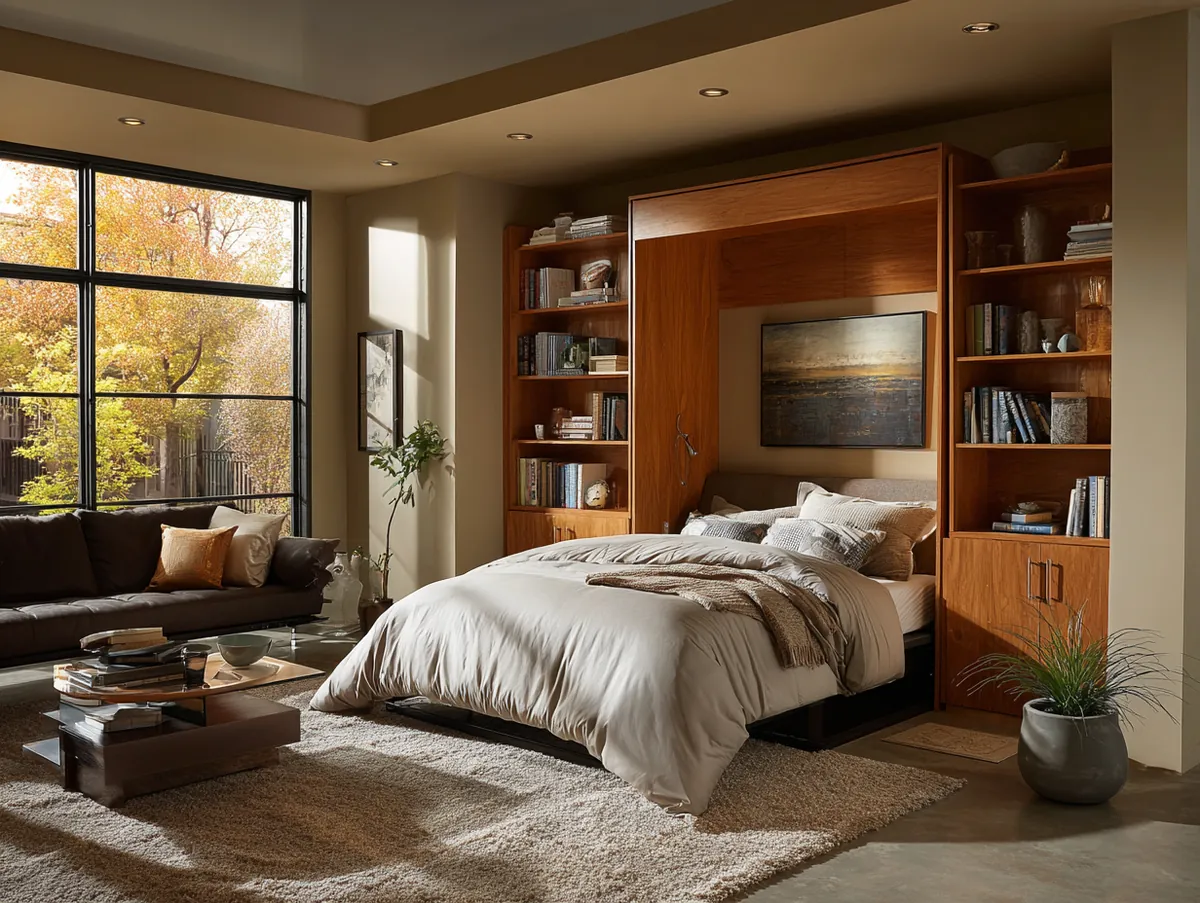
Your small living room layout has more potential than you think — and the first thing I’d tell you to do is stop pushing every piece of furniture against the wall. Small living room furniture arrangement is where most people make the same five mistakes, and the fix costs nothing. I’ve rearranged my own 11-by-14 lounge three times in two years, and each time the room felt bigger not because I bought less furniture, but because I moved it differently. The difference between a room that feels like a waiting area and one that actually works is almost always about proportion, not square footage.
You’ll notice in every layout below that the seating floats. Nothing is shoved against drywall. That 6-inch gap between sofa back and wall is the single cheapest trick I’ve ever stolen from an interior decorator — it reads as intentional space, not wasted inches.
Quick Scan
- Layout #1: Compact sofa + armless chairs — best for rectangular rooms under 130 sq ft
- Layout #2: Corner sectional — frees up the center, works for L-shaped rooms
- Layout #3: Open-plan with sofa-as-divider — works when living meets kitchen or dining
- Key rule: Coffee table 14–18 inches from sofa edge. Never closer.
- What to skip: Matching furniture sets — scale variety reads as more intentional
- Budget anchor: IKEA EKET wall cabinet ($35–$65) beats a bulky bookcase every time
Small Rooms Where Every Inch Has a Job Description
Small living room furniture layout only works when each piece earns its place. My go-to starting point is the sofa — I pick a size that leaves at least 36 inches of clear walking path between it and anything else. In this first set of rooms, the layout pairs a compact two-seater with armless accent chairs instead of a traditional three-seater-plus-loveseat combo. Armless chairs take up roughly 30% less visual weight. That’s not nothing in a 120-square-foot lounge.
The coffee table is scaled to match, not the room — match the sofa. A 48-inch table for a 72-inch sofa. West Elm’s Terrace Coffee Table at $299 is my reference point for right-sized glass tops that don’t eat floor space visually. Round edges matter too — you’ll stop bruising your shins within a week.
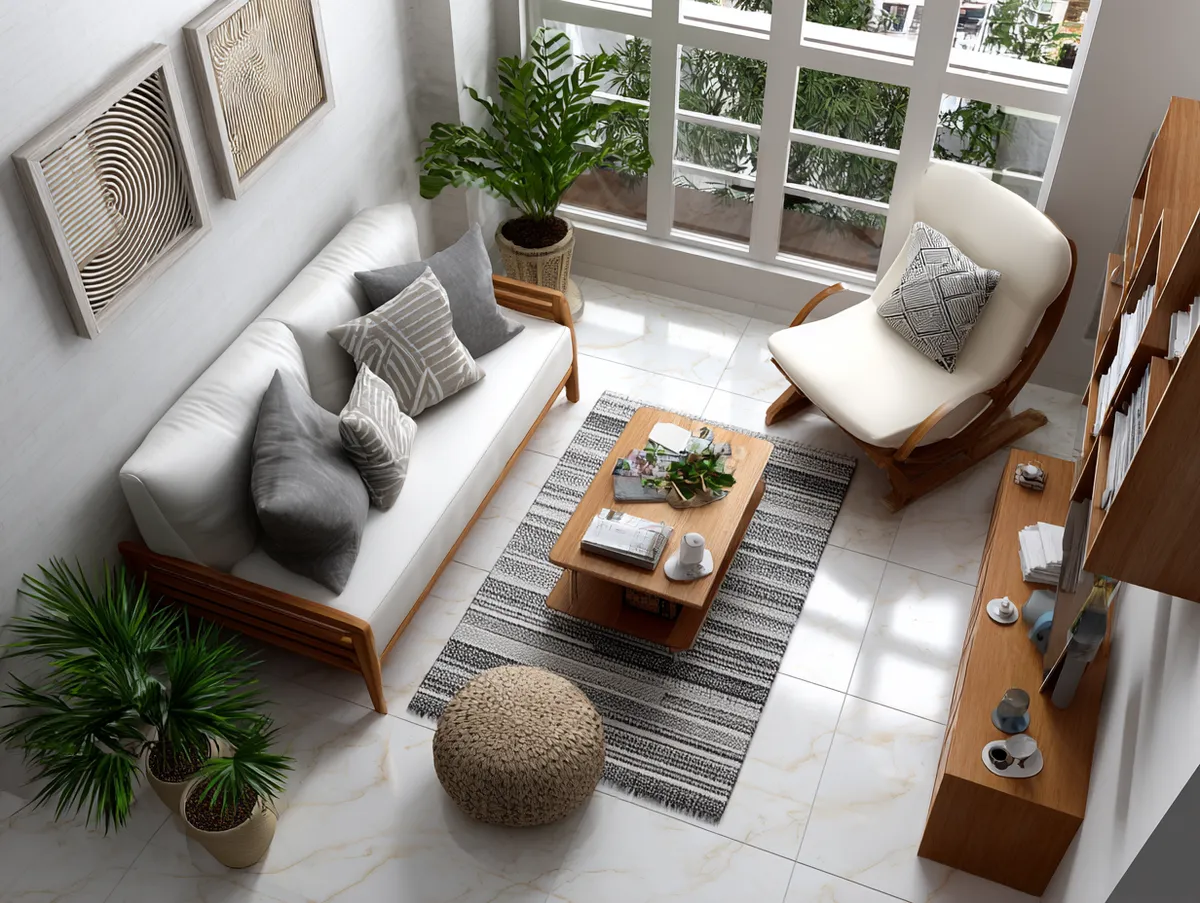
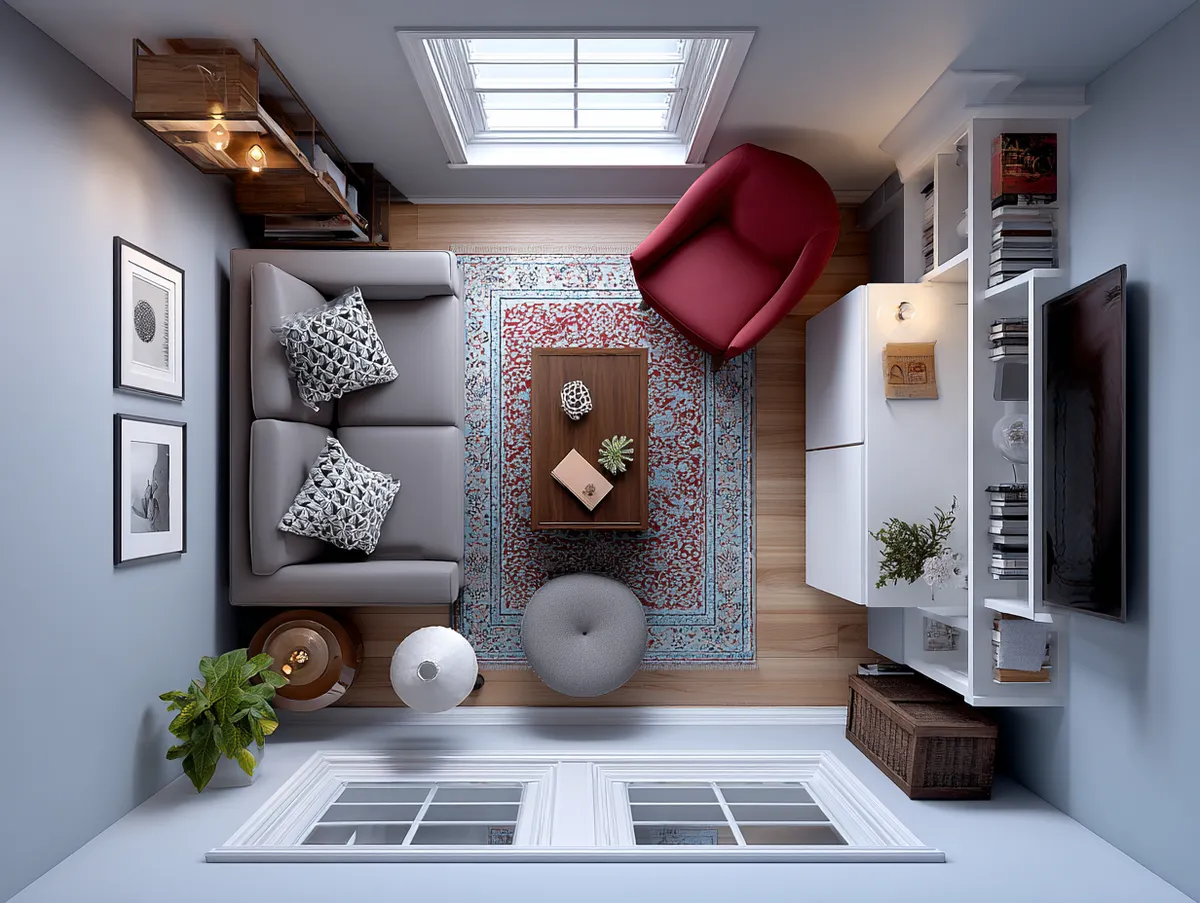
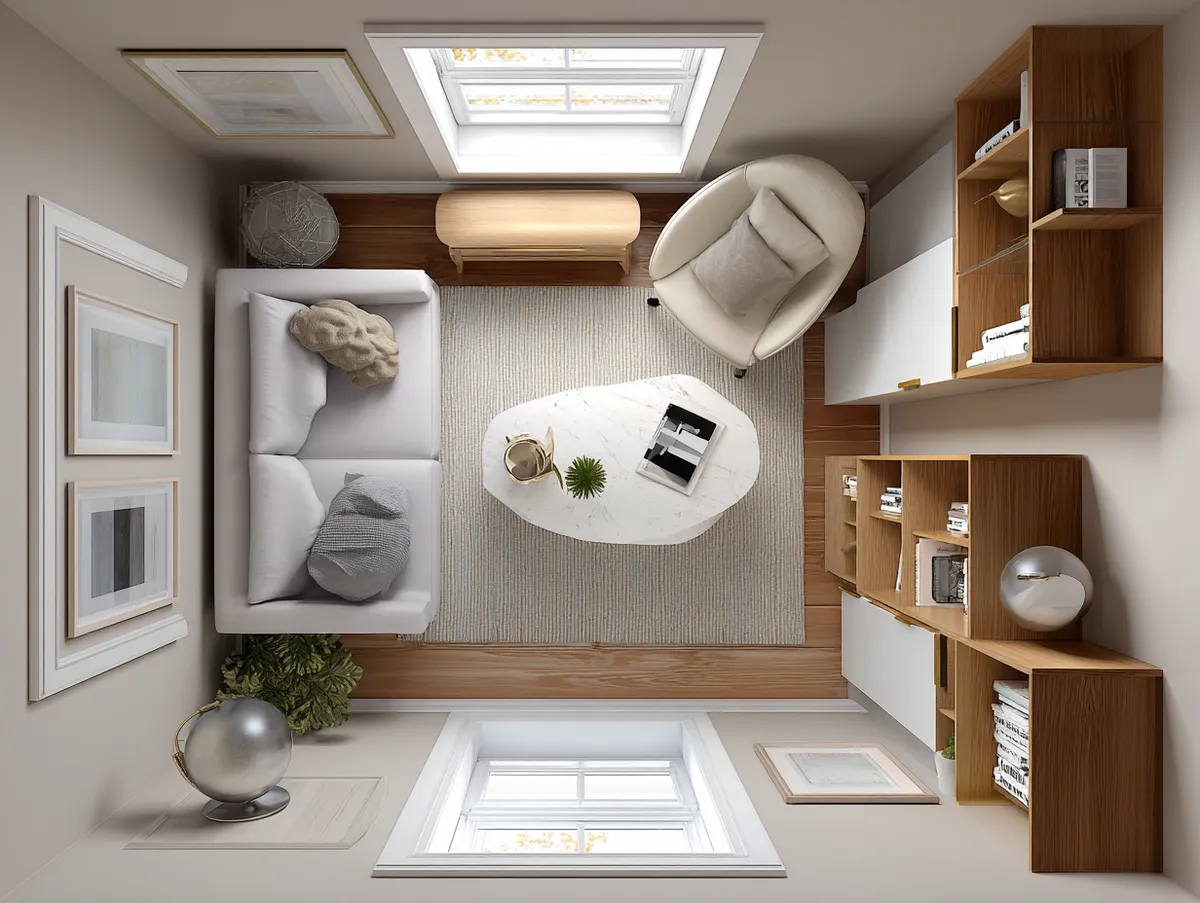
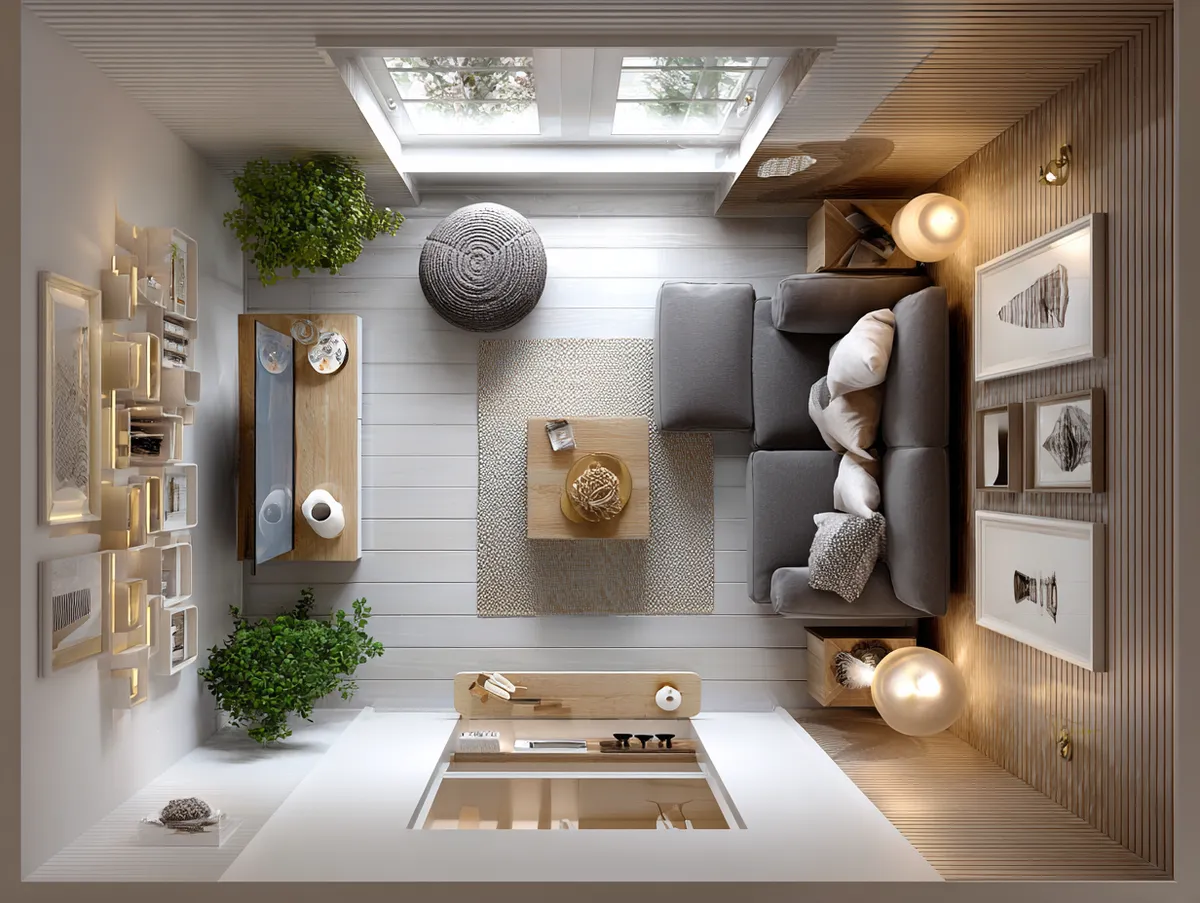
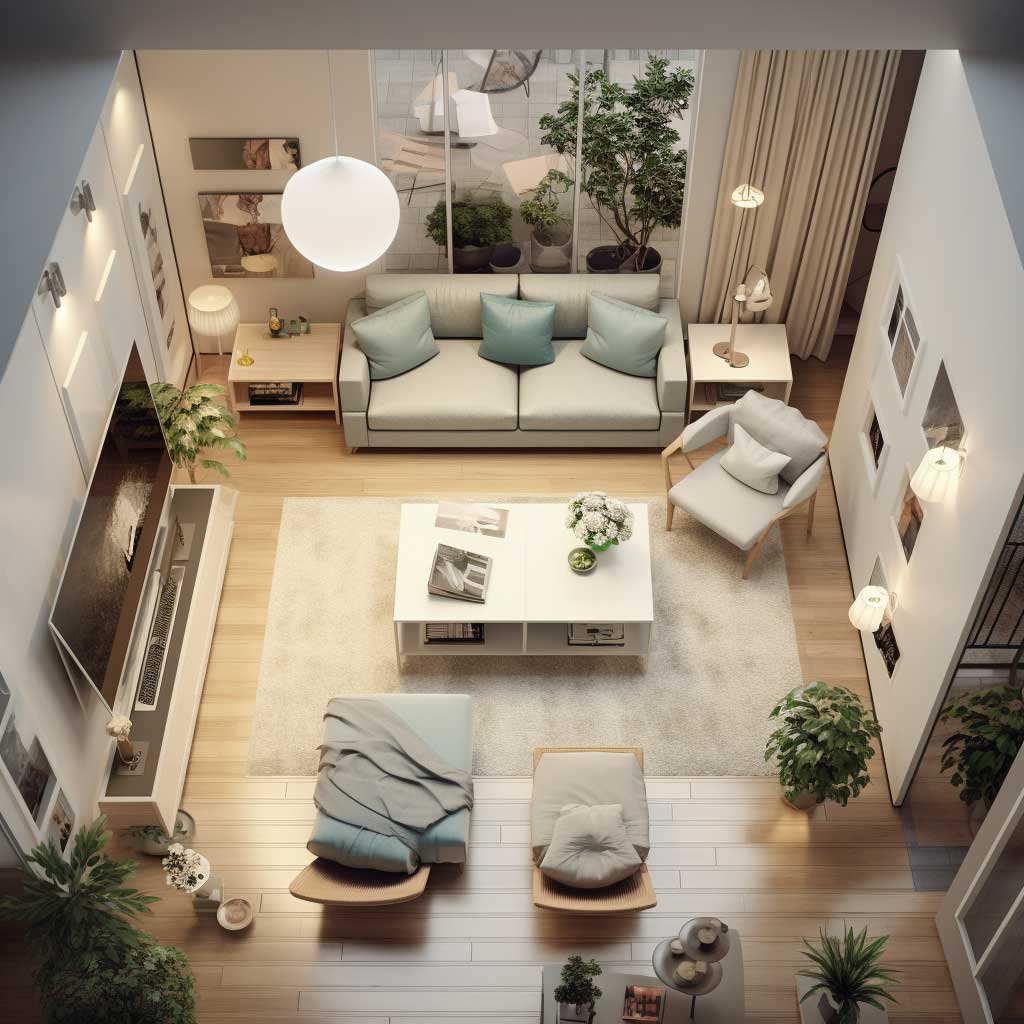


Storage in a small living room has to be invisible from across the room. Built-in shelves on either side of a window alcove are the gold standard — they use dead space and the symmetry tricks the eye into reading the wall as wider. A Threshold storage ottoman from Target ($89–$129) gives you a coffee table surface, extra seating, and a place to hide the throw blankets your guests inevitably drag across the floor. Don’t buy a storage ottoman larger than 24 by 36 inches for rooms under 150 square feet — it becomes an obstacle course after midnight.
Color is where most people overthink it. Walls in Benjamin Moore White Dove OC-17 or Sherwin-Williams Accessible Beige SW 7036 — that’s it, that’s the list. What you add in cushion fabric and a single accent chair does the heavy lifting. I’ve seen rooms ruined by painting an accent wall a deep navy in a 110-square-foot space. It doesn’t feel dramatic. It feels like standing inside a shoebox.
Lighting is the final layer and the one most people skip. A floor lamp behind and slightly beside the sofa gives ambient light without stealing floor space. Pair it with a table lamp on a side surface. That combination — one arc lamp at $120–$180 and one table lamp at $40–$60 — costs less than a rug and does more for the room’s mood than any candle arrangement ever will.
Corner Sectional Configuration That Stops Eating the Room
Sectionals get a bad reputation in small living rooms, and most of it is deserved — but only when people buy the wrong one. The IKEA KIVIK three-seat sofa with chaise runs about $799 and fits into corners under 100 inches per wall. That’s the ceiling. Anything larger and you’ve built a sofa maze, not a living room. I own one of these, and the key I learned the hard way is to keep the chaise pointing toward the window, never toward the door.
Corner placement does two things at once: it uses perimeter space efficiently and leaves the center of the room clear for movement. You’ll notice in this layout that the central floor area is completely unobstructed. That openness is what makes the room feel twice its actual size. Place a low-profile rug — 5 by 8 feet maximum — under the coffee table to define the zone without crowding it.

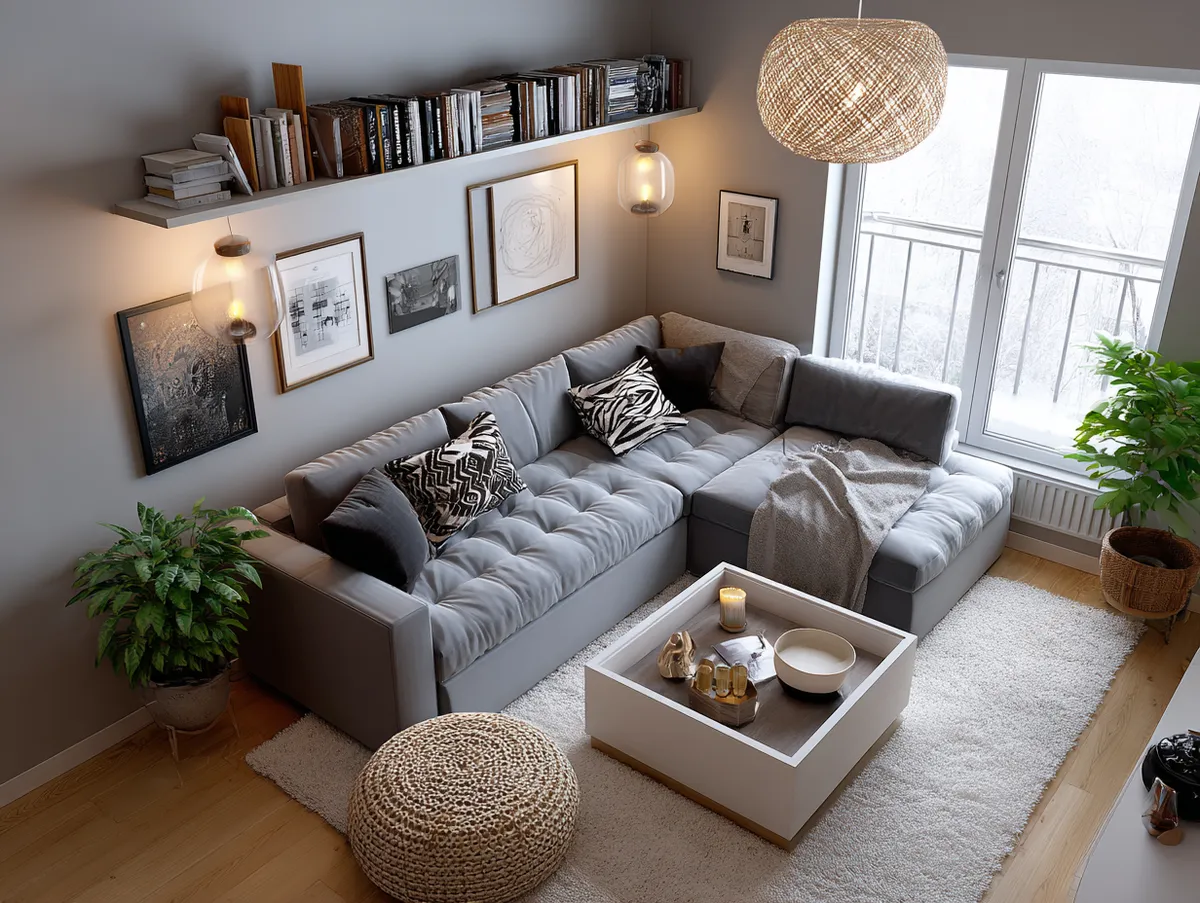
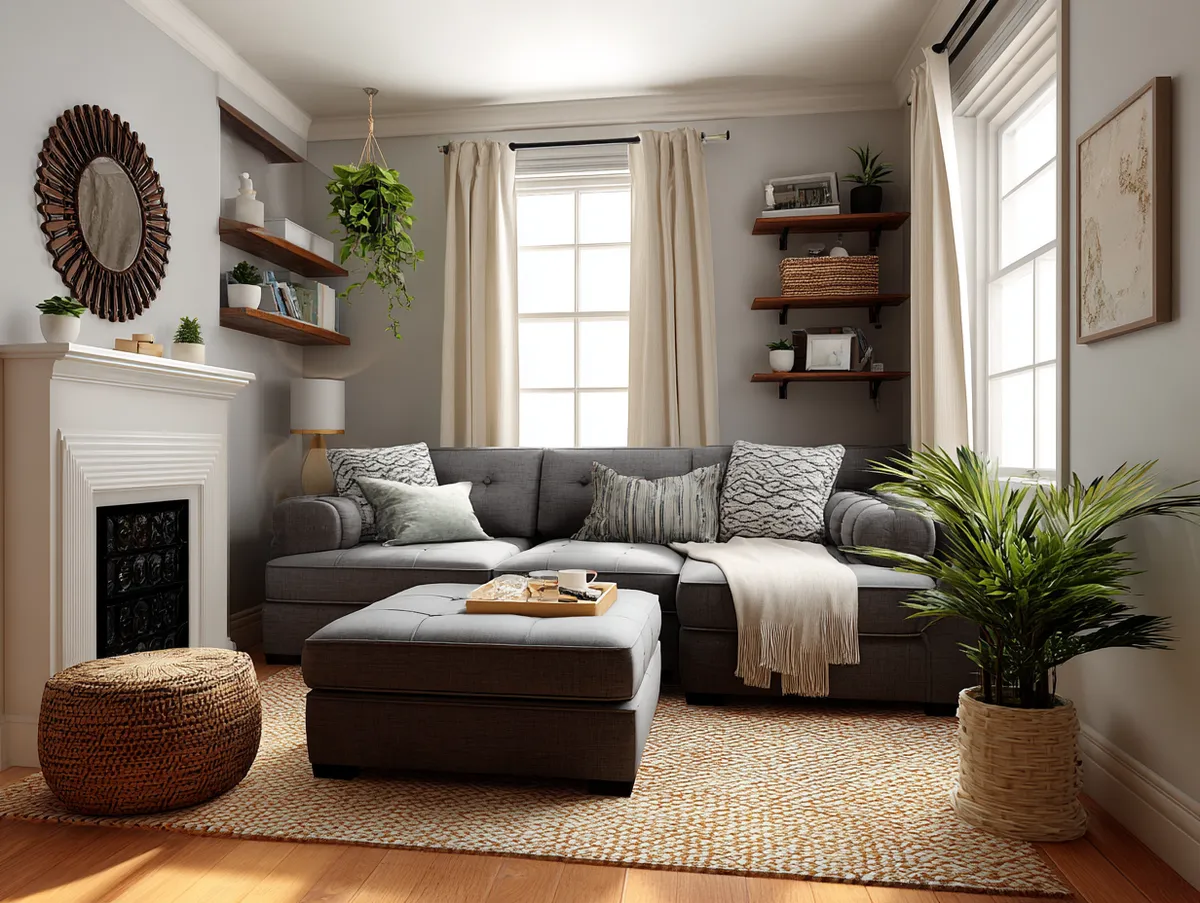
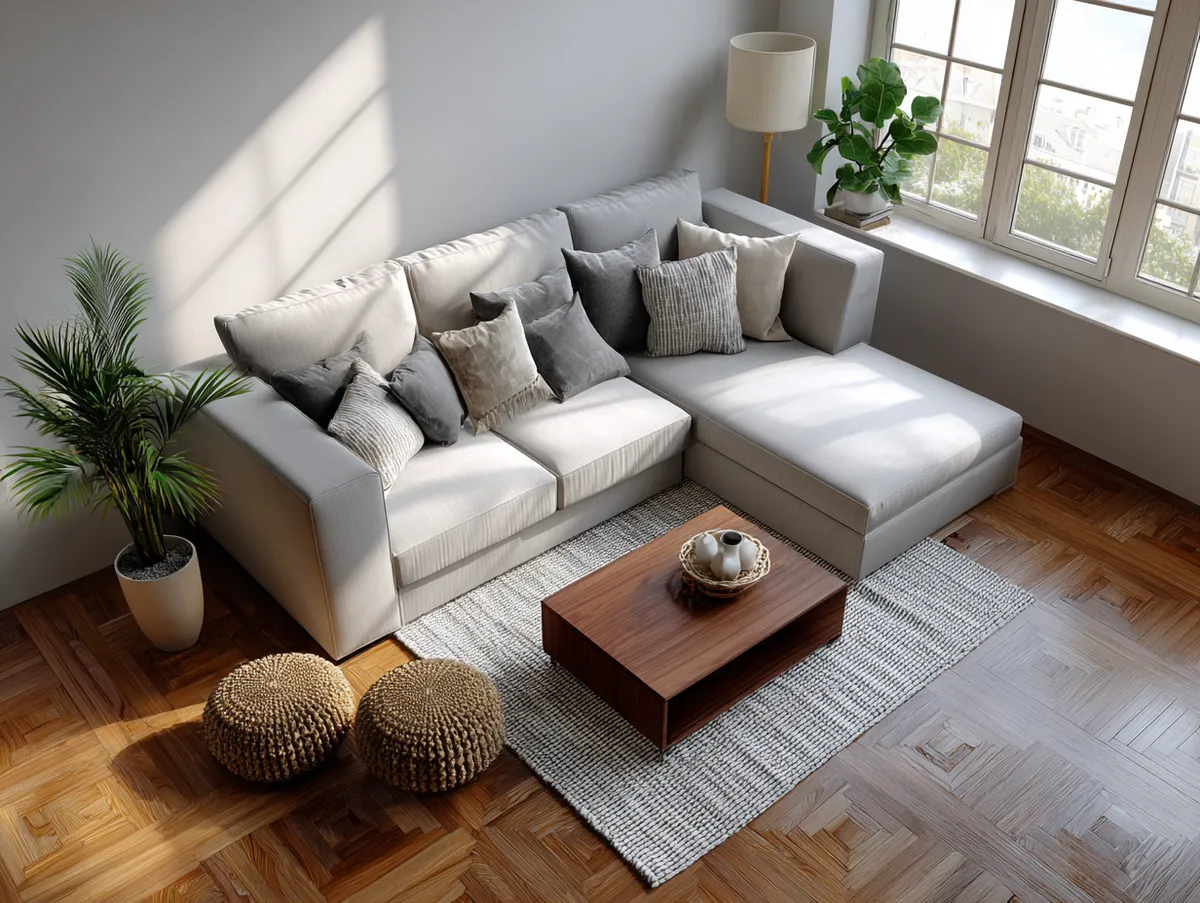
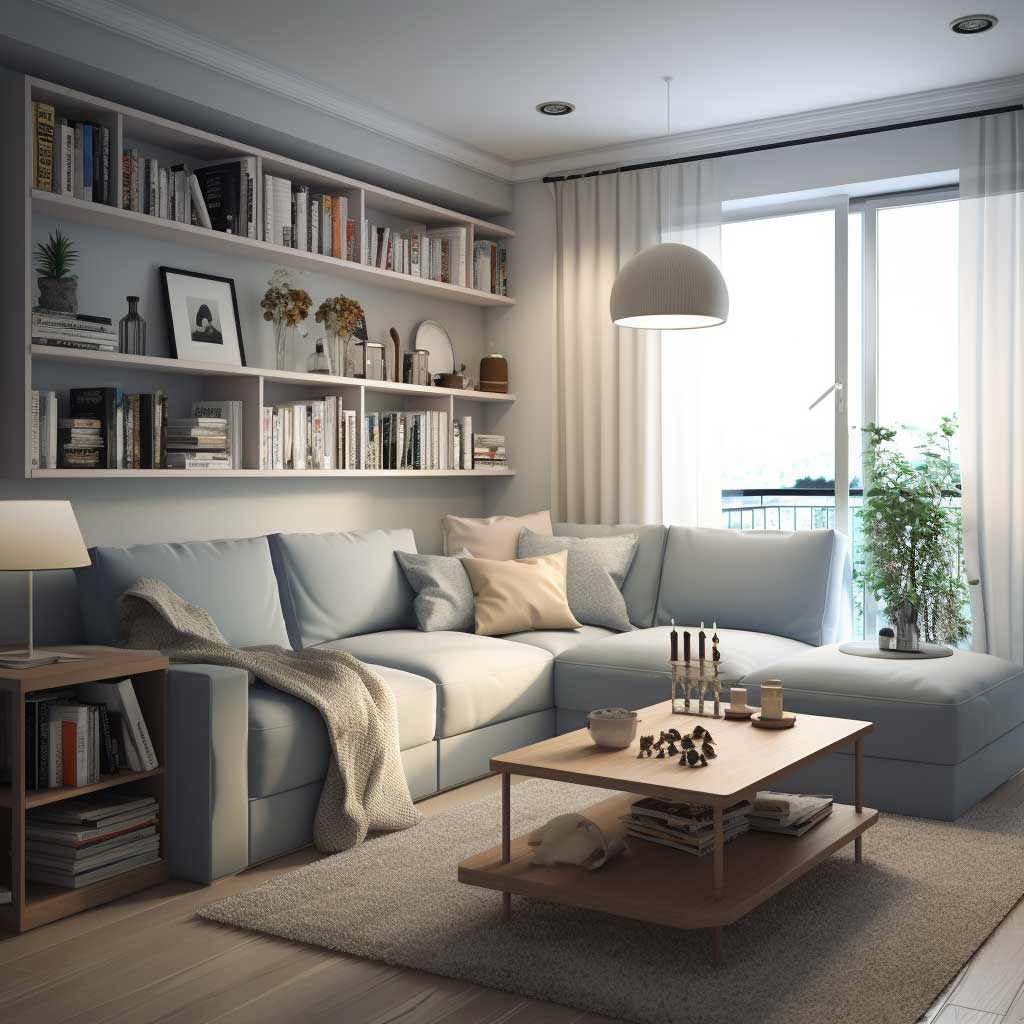


What fails in this configuration is a dark sectional in a dark room. Charcoal velvet sounds appealing in a store. At home in a 12-by-12 room, it absorbs light and makes the ceiling feel lower. Go with a light fabric — oatmeal, sand, ivory — and save the dark tones for throw pillows. The Castlery Hamilton sectional at $1,899 in their Warm White linen is my current recommendation for this exact layout type. More multifunctional furniture ideas for small living rooms cover this tradeoff in depth if you need to see it in different room shapes.
A slim console table against the back of the sectional — facing toward the open floor area — pulls triple duty. Surface for a lamp, display shelf for two or three objects, and a visual boundary that signals “living room ends here.” The IKEA LACK console at $79 is exactly the right depth for this (11 inches — it doesn’t protrude). Add a round tray on top to group things and stop them from looking like abandoned clutter.
Don’t Do This
Don’t buy a sectional sofa longer than 100 inches per side for a room under 160 square feet — even if the floor plan technically fits it. You’ll have furniture, not a room. Also avoid placing the sectional so the open chaise end faces the main door. Visitors walk in and immediately see the underside of the chaise frame. It looks unfinished and directs traffic into a dead end instead of into the seating area.
Sofa-as-Divider in an Open-Plan Small Lounge Room Layout
Open-plan small lounge room layouts have a specific problem: nothing stops the kitchen from visually eating the living area. The fix I keep coming back to is using the sofa back as a room divider. Place the sofa perpendicular to the kitchen zone with its back facing the cooking space. This is the single most decisive thing you can do in an open-plan arrangement — it creates a zone without using a wall, a curtain, or any actual divider. The room reads as two rooms. Your guests stop standing awkwardly in the middle.
Point the seating toward whatever view the room has — window, art piece, TV. What matters is that you’re pointing it away from the kitchen. A compact two-seater and two accent chairs facing a view creates a conversation cluster that reads as an intentional living room, not a leftover corner of a studio apartment. Add a low round coffee table — CB2’s Terrace Round at $199, 28 inches diameter — and you have a complete arrangement.
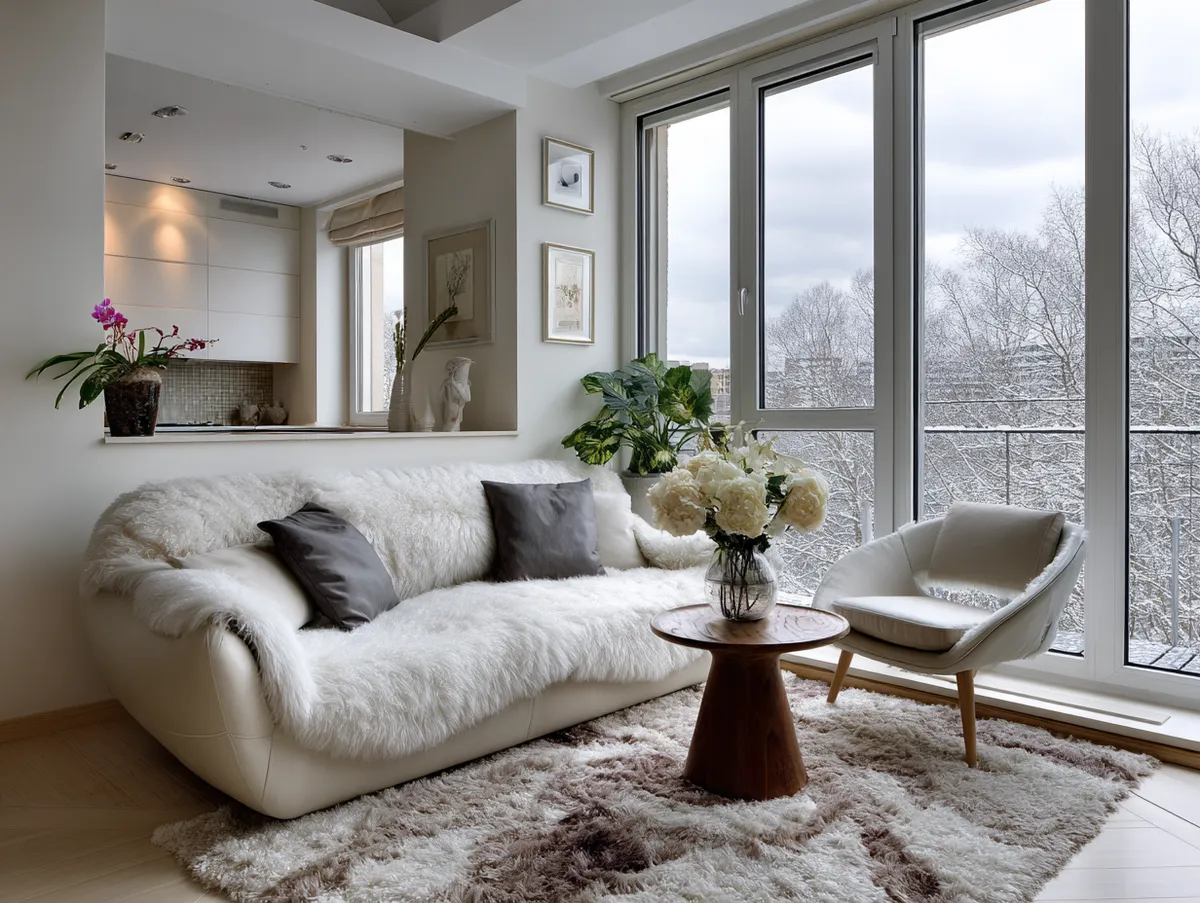
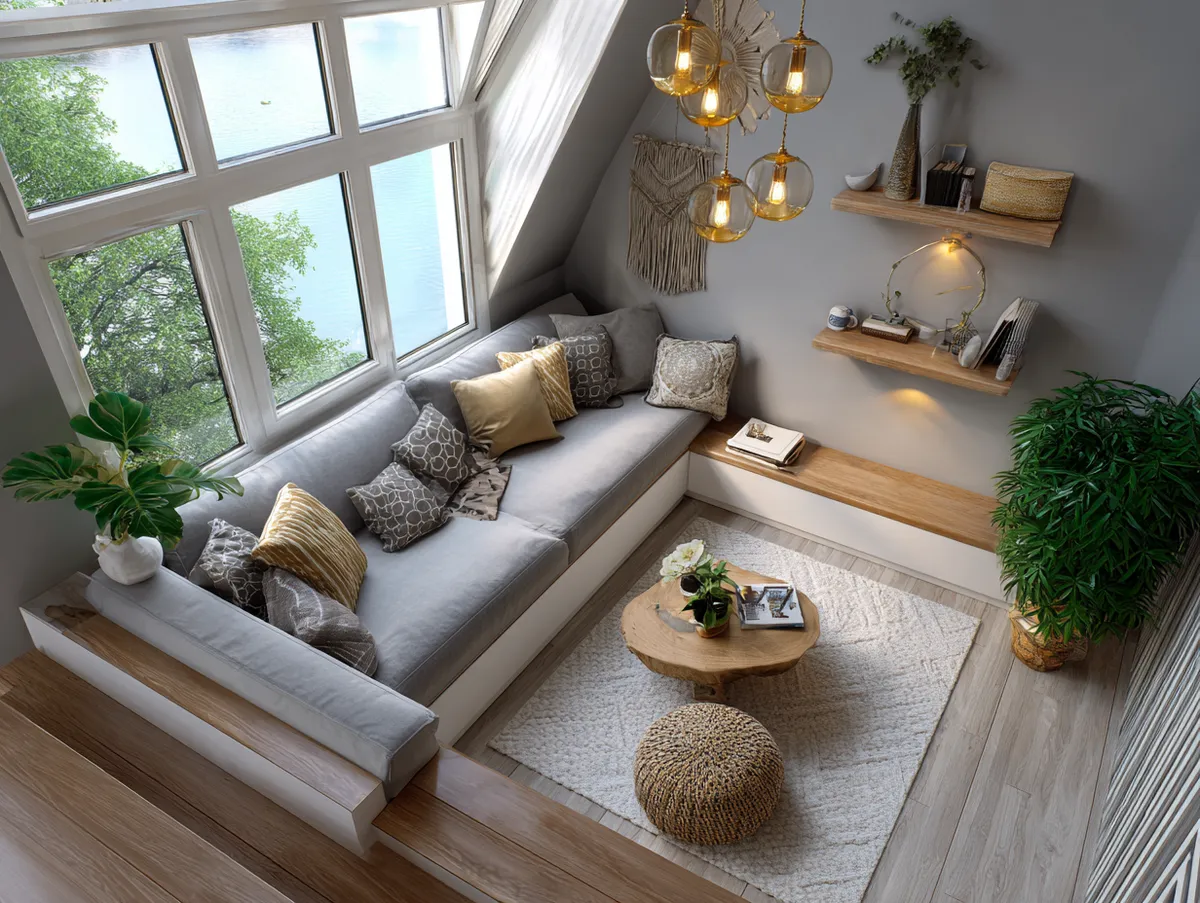
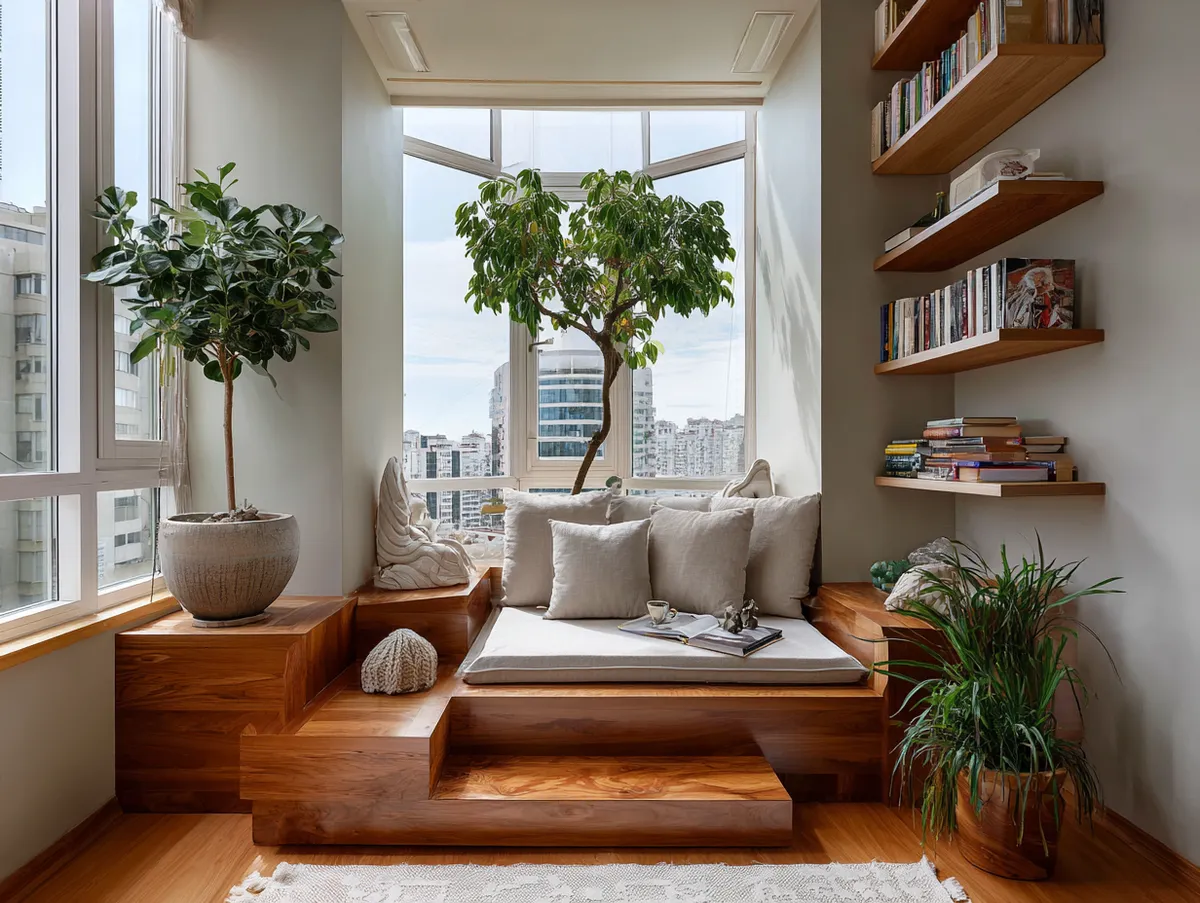
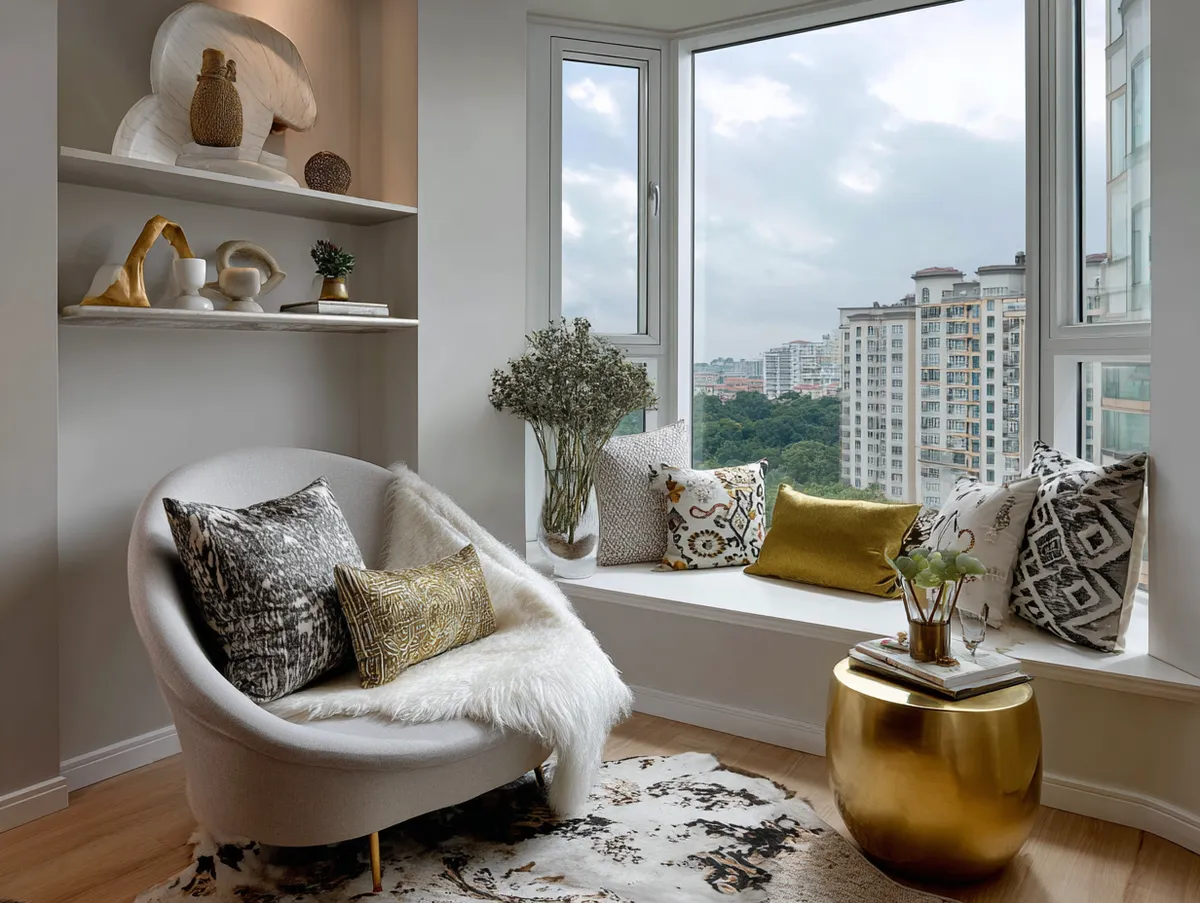


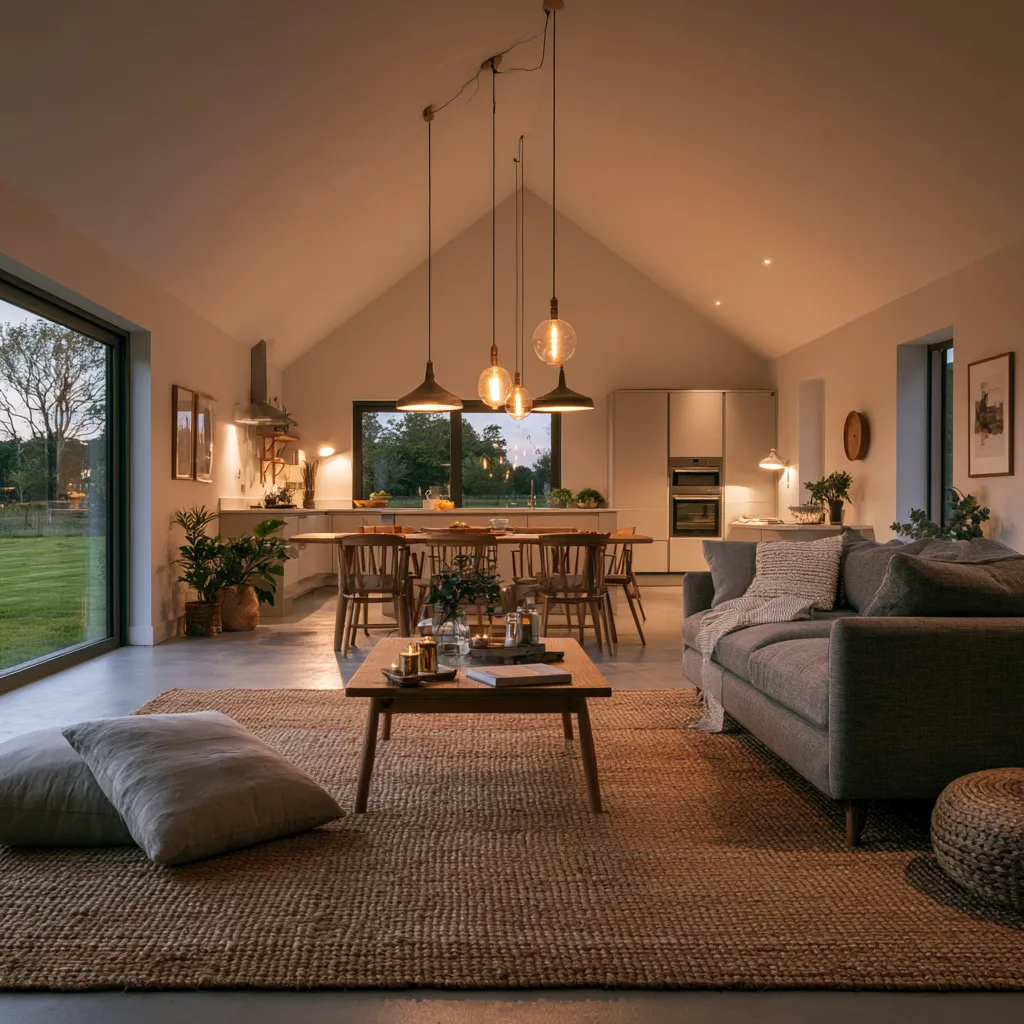
Multifunctional objects belong in this layout more than any other. A bar cart tucked into a corner next to the sofa serves drinks without requiring a sideboard. A floor lamp behind the accent chair handles lighting for the entire seating cluster. The room in these photos does exactly this — and it fits entertaining for four people in a space that looks like it should seat two. More tiny living room ideas cover the color layering in open-plan setups if you need that piece of the puzzle.
Color in an open-plan arrangement must span both zones or the room looks cut in half. White and warm beige on the major surfaces — walls, sofa, rug — unifies the space. Accent color comes only through objects: a blue throw, a terracotta pot, one green plant. That’s the formula. Three accent colors in three different materials is the visual maximum before it starts reading as a storage unit rather than a room. According to Castlery’s living room layout guide, floating furniture away from walls and using rugs to define zones are the two highest-impact layout moves in any small space — and it matches every room I’ve ever tried it in.
Layout Comparison
| Layout Type | Best Room Shape | Max Room Size | Seats | Avoid If |
|---|---|---|---|---|
| Sofa + armless chairs | Rectangle | 130 sq ft | 4–5 | No natural focal point |
| Corner sectional | Square or L-shaped | 160 sq ft | 5–6 | Dark walls or small windows |
| Sofa-as-divider | Open plan | 200+ sq ft total | 4 | No window in living zone |
Final Word
The size of your living room is never the problem. The arrangement usually is.
Stop letting walls make decisions. Float the sofa, match the coffee table to the sofa not the room, and pick one color story across both zones if you’re open-plan. These three moves cost nothing and fix 80% of what makes a small living room feel cramped.
Every layout above works in rooms between 100 and 160 square feet — the difference is what you lead with. Lead with the sofa as an architectural decision, not just a comfort purchase.
Save this post before you move a single piece of furniture — you’ll want to come back to the layout table.
Related Topics
FAQ
What is the best furniture layout for a small living room?
How do you arrange a sofa and loveseat in a small living room?
What is the best small living room configuration for an open-plan space?
How do you furnish a small living room on a budget?
Does a sectional sofa work in a small lounge room layout?
How do you make a small living room feel bigger without renovating?
Complete guide
The Living Room Design Ideas Vault Every Home Needs Right Now
Color, walls, furniture, layouts, styles, smart tech — 300+ ideas in one place
Complete guide
Small House Design Ideas That Make Every Square Foot Feel Intentional
Exteriors, layouts, kitchens, bedrooms, bathrooms, outdoor — all in one place