Modern wooden staircase design earns its place in a home by doing less, not more. No carved balusters, no ornate newel posts, no risers eating up light. What you get instead is the grain of the wood, a clean steel spine, and a structure that looks like it was drawn in a single line. I’ve obsessed over dozens of projects in this category and the ones that hold up are always the same: restrained, precise, and built to match the floor finish already in the room.
Strength matters as much as form here. A floating tread that flexes underfoot or a railing that wobbles kills any design intent instantly. The best modern wood stairs achieve rigidity through the frame — not the cladding — so the wood surface stays thin and honest. You’ll notice the difference the first time you walk up a properly engineered open-riser design versus one that’s just aesthetic cosplay.

Quick Scan
- Metal frame + wood treads — the formula that keeps modern wood stairs from looking bulky
- Open risers — remove them and the whole staircase loses 30 lbs visually
- Glass or rod railings — the only railing types that don’t compete with the wood grain
- Matching the floor finish — the single design decision that makes or breaks cohesion
- Avoid carved handrails — they read as a different decade the moment you walk through the door
Metal Frames Change What Wood Stairs Are Allowed to Be
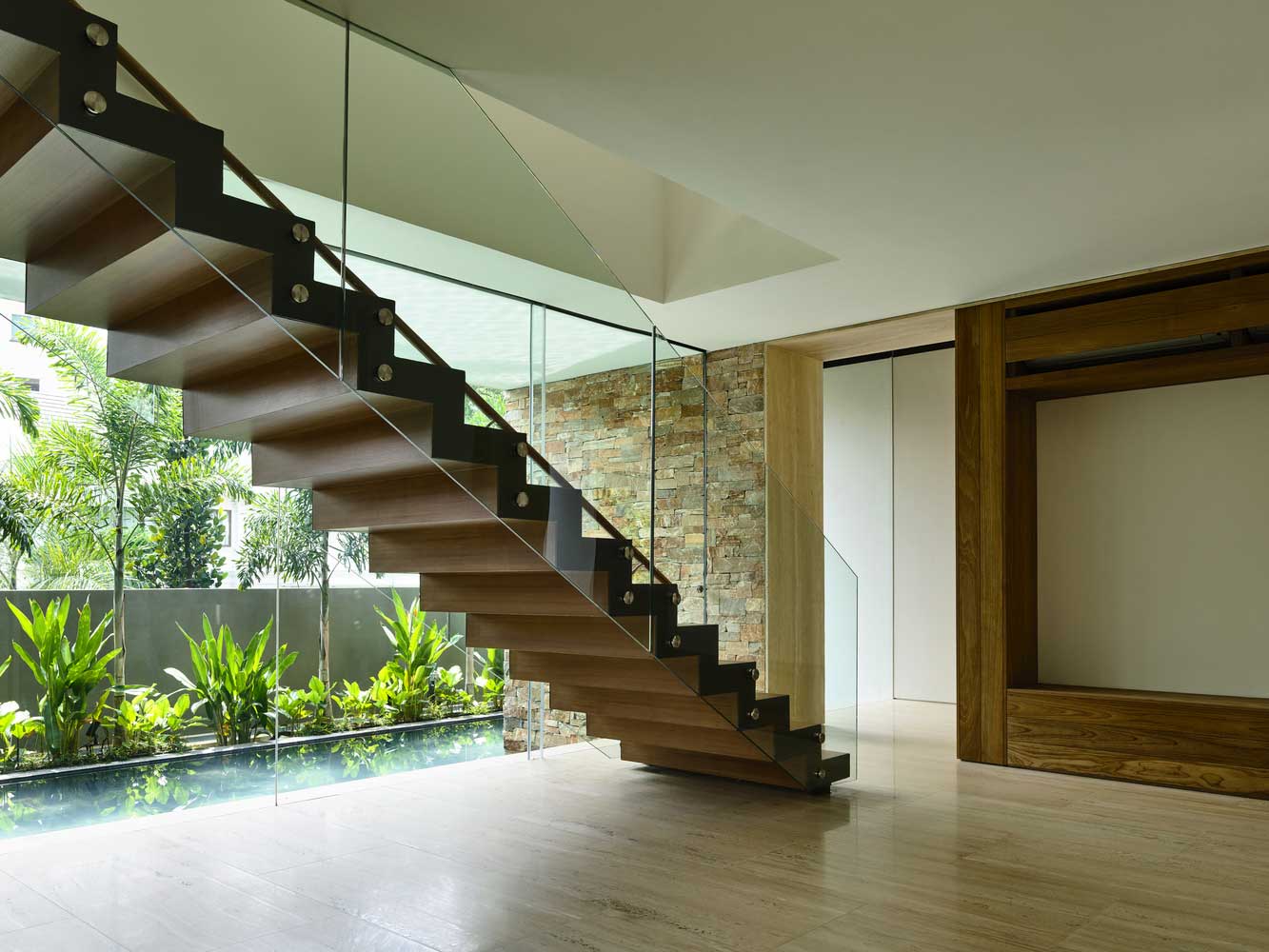
Swap a full timber stringer for a welded steel channel and the tread suddenly looks like it’s hanging in air. That’s the structural trick behind every convincing modern wooden staircase design: the metal does the load work, and the wood does the aesthetic work. Keuka Studios uses this exact approach — powder-coated steel stringers paired with 1.5-inch white oak treads — and it photographs well because nothing fights for attention. I stole this layering logic for a project I consulted on last year; the oak matched the engineered floor downstairs and the whole thing read as one continuous material.
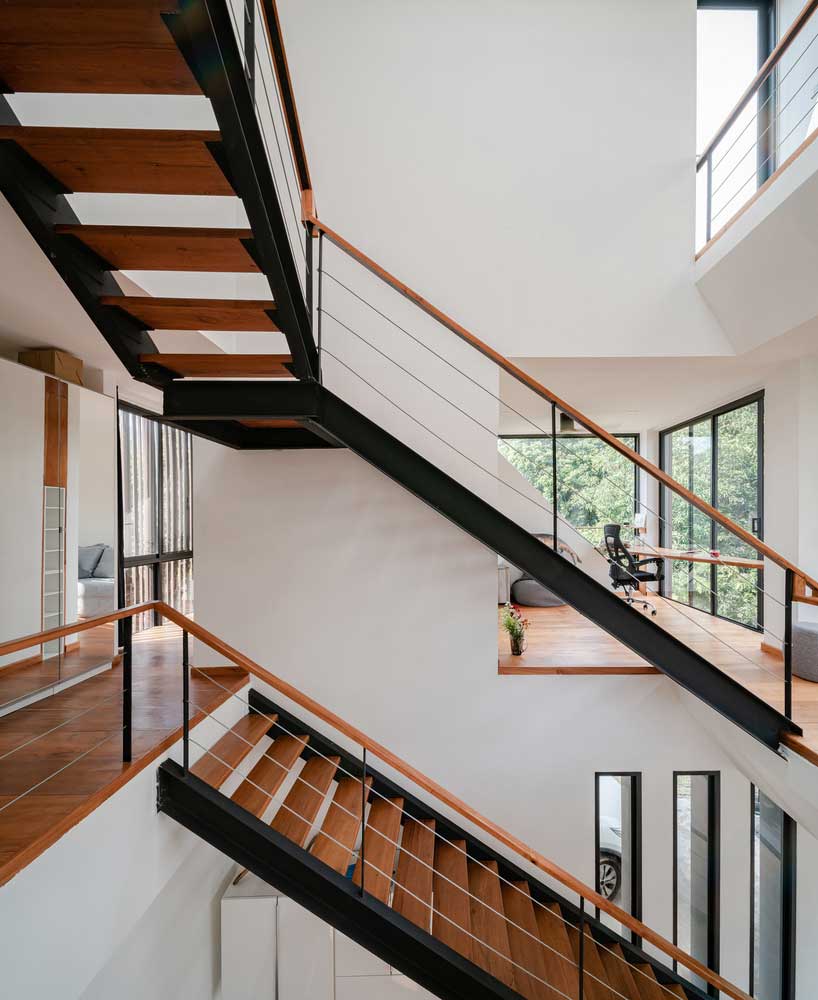
Removing the risers is the next move. Once the vertical panel between treads disappears, light passes through the whole run and the staircase stops dividing the room. You’ll notice this is standard in Scandinavian residential projects where the ground floor stays open-plan. Don’t skip this step if your staircase sits between a living area and dining zone — closed risers in that position create a wall where you don’t need one.

Railings are where most homeowners overcorrect. They go minimal on the treads, then install a thick wooden handrail that undercuts everything. My go-to is thin steel rods running vertically from tread to ceiling — the Ithaca-style cable or rod system. Glass panels work too, especially when the staircase runs beside a window. What doesn’t work: round timber balusters at 4-inch spacing, which is a 1990s detail that no contemporary wood staircase design survives.
Don’t Do This
Don’t match the stair tread color to the wall paint. It sounds cohesive but it flattens the material completely — wood needs contrast to read as wood. Also avoid installing a railing on only one side of a wide modern staircase to “save money.” It looks unfinished and fails building code in most jurisdictions above 44 inches of stair width. The $300 you save costs you resale value and a citation.
Simple Wooden Stairs Design — Why Fewer Parts Costs More to Get Right

Simple wooden stairs design is harder to execute than ornate. Every gap, every edge profile, every tread thickness becomes visible when there’s nothing else to look at. The wood species alone makes or breaks it: white oak in natural finish is the safest call at around $12–18 per square foot for the tread material. I’ve seen pine used to cut costs — it dents within a year under daily foot traffic and starts looking worn before the rest of the interior has broken in. Walnut is the prestige choice at $25–35 per square foot, and it works best when the floor is also dark-toned.

The tread profile is the decision nobody talks about enough. A square-edged tread with a 1mm chamfer reads as architectural. A bullnose edge — that fat rounded front lip — reads as a renovation from 2003. You need to specify the edge profile explicitly with your fabricator, because bullnose is often the default output if you don’t say otherwise. Ask for a 2mm eased edge maximum. That’s the detail separating a contemporary wooden staircase from a bathroom showroom display.
Handrails: if you’re going wood, go round tube profile at 50mm diameter max. Anything wider starts to look like it belongs in a public building. My strongest recommendation is to pair a 40mm round steel tube in matte black with oak treads — that’s the combination Homes & Gardens flagged as the dominant residential choice in their 2024 trend roundup, and it still looks current. Avoid wall-mounted timber rails in chunky rectangular profiles; they’re fine for traditional homes but they pull a modern wooden staircase design into the wrong decade instantly. For more on how to handle the space beneath and around a contemporary staircase, see clever space under stairs design ideas that actually add square footage.
Wood Staircase Designs for Homes — How Finish Choice Divides the Budget
| Wood Species | Tread Cost / sq ft | Durability | Best Match | Watch Out For |
|---|---|---|---|---|
| White Oak | $12–$18 | High | Minimalist, Scandi, loft | Graying without UV finish |
| Walnut | $25–$35 | Very high | Dark floor interiors, luxury | Fades in direct sunlight |
| Pine | $6–$10 | Low | Vacation cabins only | Dents within 12 months |
| Reclaimed Oak | $20–$40 | High | Industrial, barnhouse | Inconsistent grain and width |
| Ash | $14–$22 | High | Light modern interiors | Limited supplier availability |
Finish is a separate decision from species. Oil-based finishes — Rubio Monocoat is my current go-to at around $90 per liter — penetrate the grain and keep the wood looking raw and tactile. Polyurethane builds a film on top and looks plastic under raking light; I’d avoid it on any modern wooden stair where you’re trying to show the grain. For wooden staircase designs in homes with kids or dogs, add a matte hardwax oil like Osmo Polyx at 2-3 coats — it’s scratch-resistant and re-coatable in sections without sanding the whole tread down.
What finish color to choose? For homes with contemporary interiors, stay within the natural-to-warm-grey range. Dark ebonized finishes look strong in photos but absorb every footprint and pet hair strand in real life. You’ll spend more time cleaning the stairs than admiring them. I own two properties with dark-stained stairs and I’ve re-done both in natural oak finish — that’s how certain I am about this. For more wood material ideas across the interior, the exposed wooden beams interior design guide covers how natural finishes behave across different surfaces and lighting conditions.
Contemporary Wood Stairs and the One Thing Architects Prioritize First
Rise-to-run ratio. Every architect I’ve spoken to names this before materials, before railings, before anything visual. The standard comfortable ratio is a 175mm rise and 250mm run. Go steeper to save floor space and the staircase becomes tiring to climb twice a day. Go shallower and you’re burning a meter of floor plan that a better structural solution would have recovered. Contemporary wood stairs that look sculptural in renders often disappoint in person because the proportions were adjusted to fit a tight plan without adjusting the design intent accordingly.
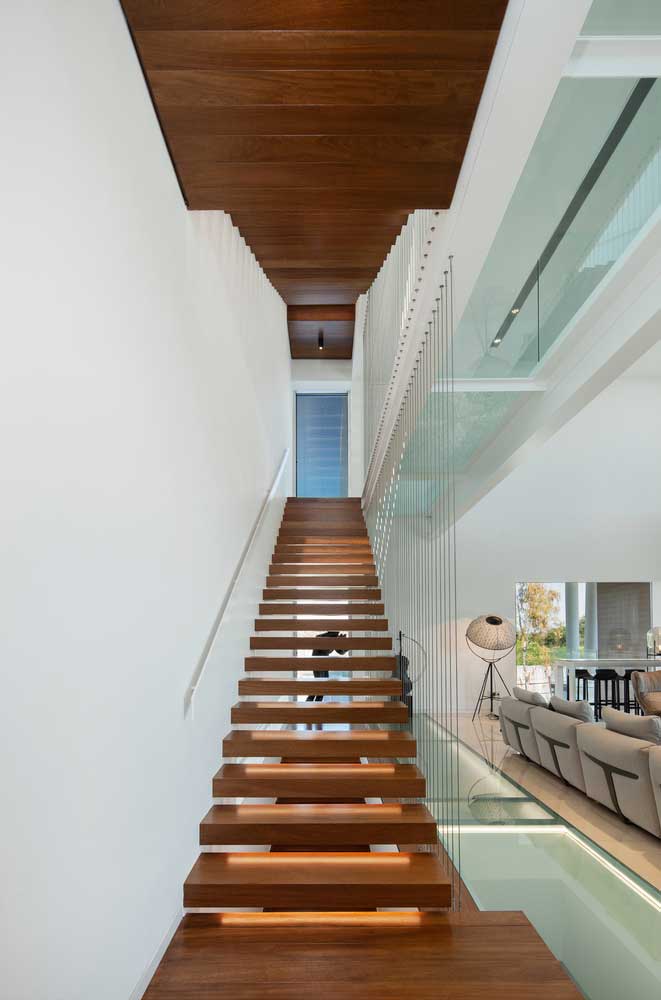
Lighting under the tread is the secondary detail architects address right after structure. Recessed LED strip at the back of each open riser — facing downward — creates a floating effect at night without any visible fixture. Budget around $15–25 per linear meter for LED strip plus $8–12 per meter for aluminum extrusion channel. Don’t use color-changing LEDs here. Warm white at 2700K is the only setting that works with wood grain; anything cooler or more saturated turns the tread yellow-green, which is a problem you cannot unsee. For related staircase detailing and structural solutions, the contemporary stair railing designs article goes deep on material options and spacing rules.
The reference I keep returning to is Homes & Gardens’ 2024 staircase trend report, which documents how leading residential architects are specifying solid oak treads with matte black metal details as the dominant formula for contemporary wood stairs in open-plan homes. The logic: the material combination photographs in any direction and reads as current without chasing a trend that will expire in three years.
FINAL WORD
Modern wooden staircase design pays off when the structure disappears and the wood stays visible.
Specify the steel frame first. Get the tread thickness and edge profile confirmed in writing before any fabrication starts.
White oak in natural finish with a hardwax oil top coat. That’s the material decision you won’t regret in year three.
Save this post before you meet with a staircase fabricator — the table and finish notes will save you at least one revision round.