A concrete staircase design done right stops being infrastructure and becomes the reason a room works. I’ve walked through enough residential projects to know the difference: in one house, a raw monolithic flight gives the entire ground floor a reason to exist; in another, a poorly considered slab just makes the space feel heavy. The material casts directly on site in private construction, so you’re never stuck with factory presets — every curve, cantilever and tread depth is a deliberate choice. Architects working in minimalism, loft and high-tech have made interior concrete stairs the default architectural statement, and the outdoor applications are even more compelling for hillside or split-level plots.
You’ll notice concrete staircase ideas branch hard into two territories: the ones that disappear into the house’s geometry and the ones that fight for attention. Both work. Neither is a mistake. The mistake is treating the staircase as an afterthought and then wondering why the interior never feels resolved.
Quick Scan
- Concrete stairs cast on-site — never the same shape twice
- Spiral and curved monolithic forms for loft and minimalist interiors
- Floating cantilevered treads for interior and exterior use
- Exterior staircase designs for sloped sites and hillside plots
- Concrete + wood combos that pull industrial warmth into family homes
- Small house cement stair design — wide low steps that don’t shrink the plan
- Reinforced concrete staircase structural basics — what actually holds those steps up
Concrete Spiral Staircase — Form That Can’t Be Prefabricated

Cast-in-place concrete is the only staircase material that lets you do this. High-rise buildings use prefabricated reinforced concrete flights — standardized, repetitive, shipped from a factory. Private residential construction throws that rulebook out entirely. My go-to comparison: ordering a spiral stair in steel means working with catalog dimensions; ordering one in site-cast concrete means handing the architect a blank page. The resulting structure can twist, float, or cantilever in ways that look like a physics violation until you understand the reinforcement inside.

Monolithic technology is why you see those “floating” stairs that seem to hang mid-air — the steps are cantilevered off an internal spine wall, the whole mass engineered so the load travels down through compression rather than tension. Outwardly, you’d trim the surface in natural stone or plaster to a smooth finish. You’ll notice the most spectacular examples always get that secondary finish right — bare gray concrete on a spiral reads unfinished, not raw. The distinction matters.
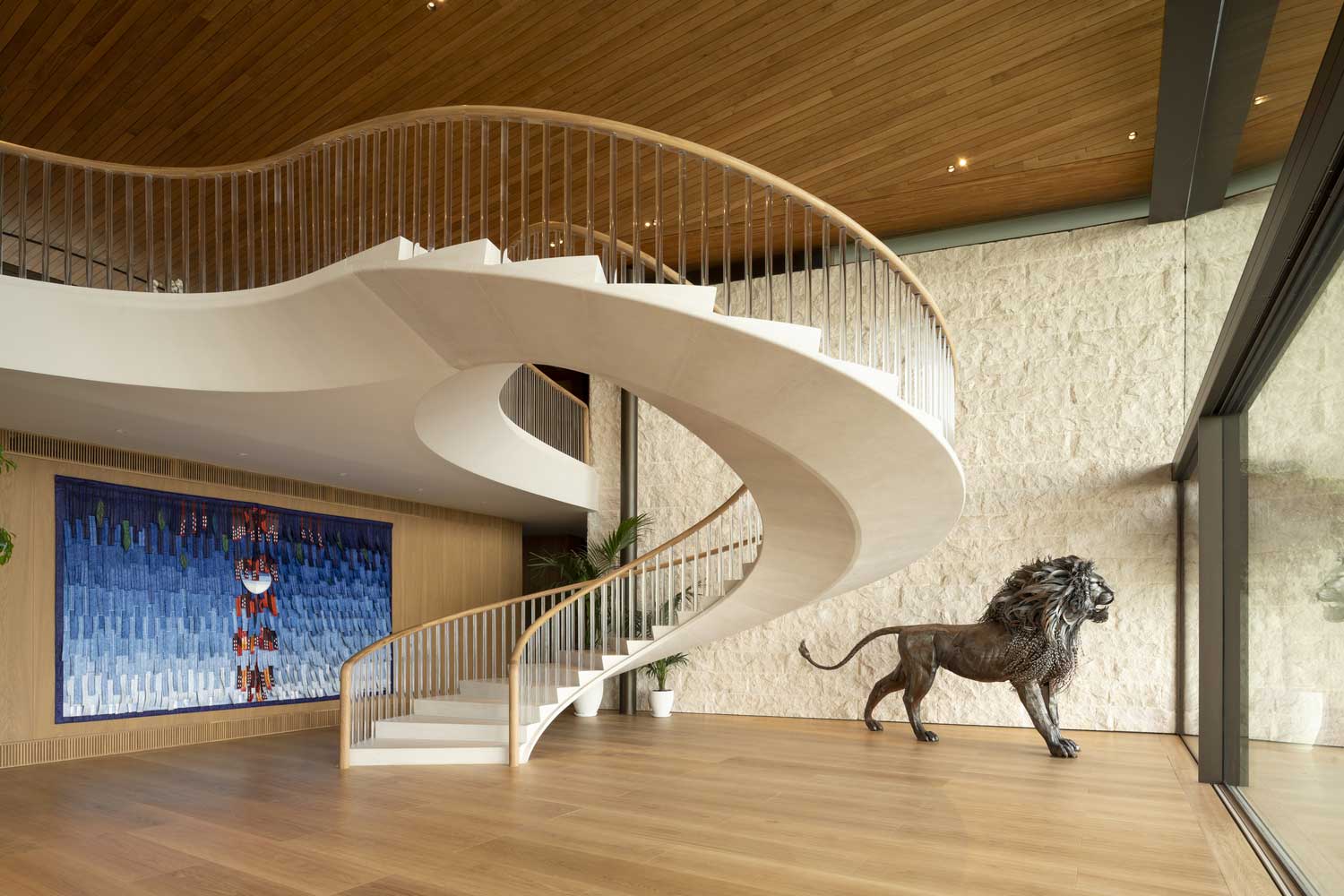
Wide-radius spiral forms soften brutalist interiors faster than any piece of furniture can. I stole this trick from a São Paulo residential project: a concrete helix with no visible riser, finished in white microcement, turned what was a stark double-height loft into something that felt almost warm. Skip the spiral if your floor plate is under 20 square meters — it will dominate and shrink the plan below it visually, no matter how thin you pour it.
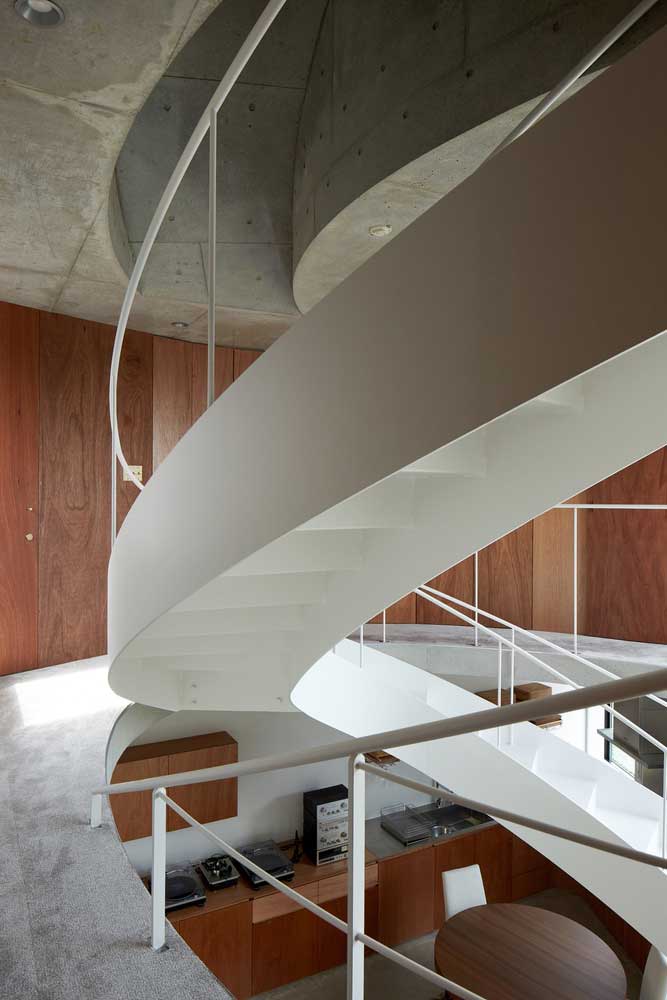
Lighting is load-bearing in the visual sense here. Recessed LED strips under each tread cost around $12–18 per linear foot installed and change the spiral from a daytime sculpture into a nighttime anchor point. Don’t mount a pendant overhead — it competes with the geometry and usually loses.
Floating Tread Concrete Stairs — Indoor and Outdoor Both Work

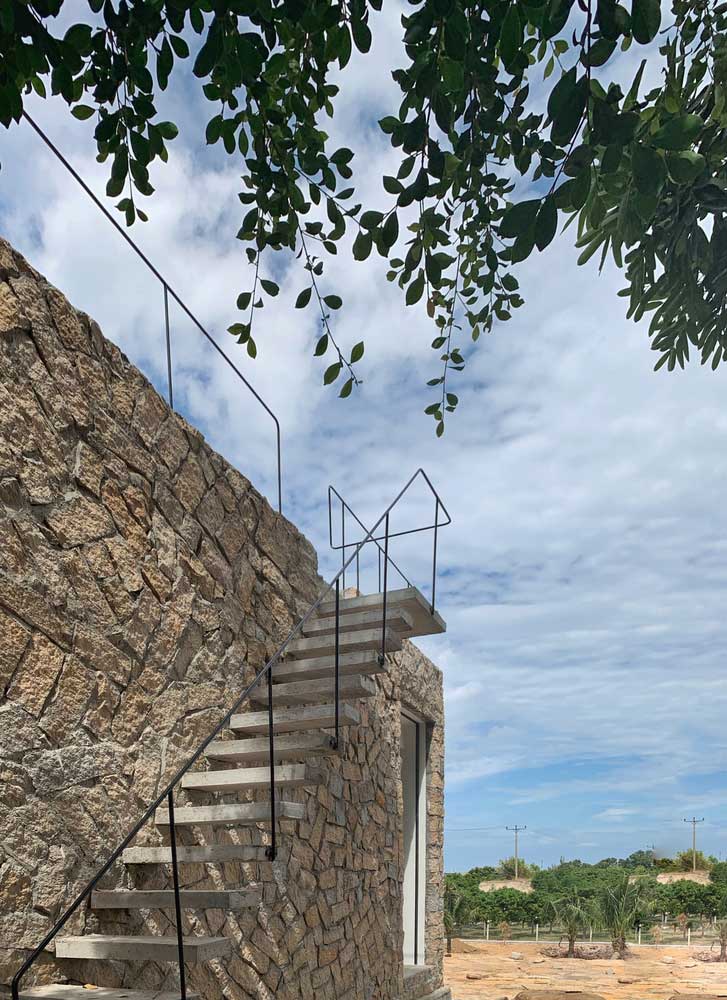
Floating tread concrete stairs work by embedding one edge of each step into a structural wall — the tread is cast as a cantilever, no visible support underneath. You’d see this detail inside progressive interiors and, increasingly, on exterior facades leading up to roof terraces. The effect is architectural drama at a lower cost than it looks: a flight of 14 cantilevered concrete treads runs roughly $8,000–$14,000 installed depending on span width, versus $18,000+ for the same visual effect in steel plate.
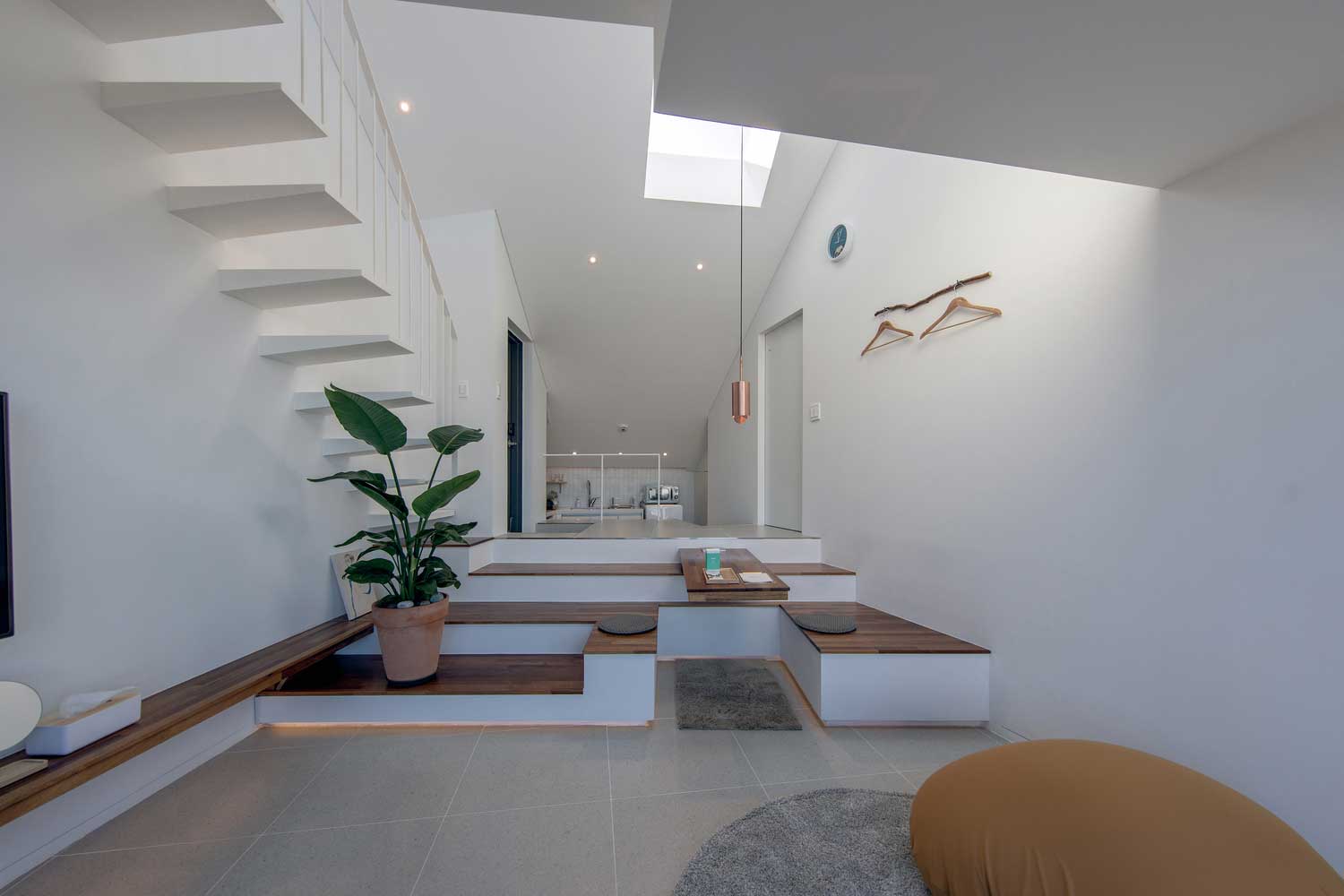
Outdoor cantilevered steps leading to a second-floor terrace or attic access require a different reinforcement schedule than interior ones — moisture cycling and freeze-thaw stress demand higher rebar density and a waterproof topping coat. Architects I’ve spoken with spec Sika Ceram or similar penetrating sealers at around $80–120 per application to protect the nose of each tread from spalling. What nobody mentions: unsealed outdoor concrete steps develop a particular kind of erosion around the front edge that looks architectural for about two years and then just looks neglected.
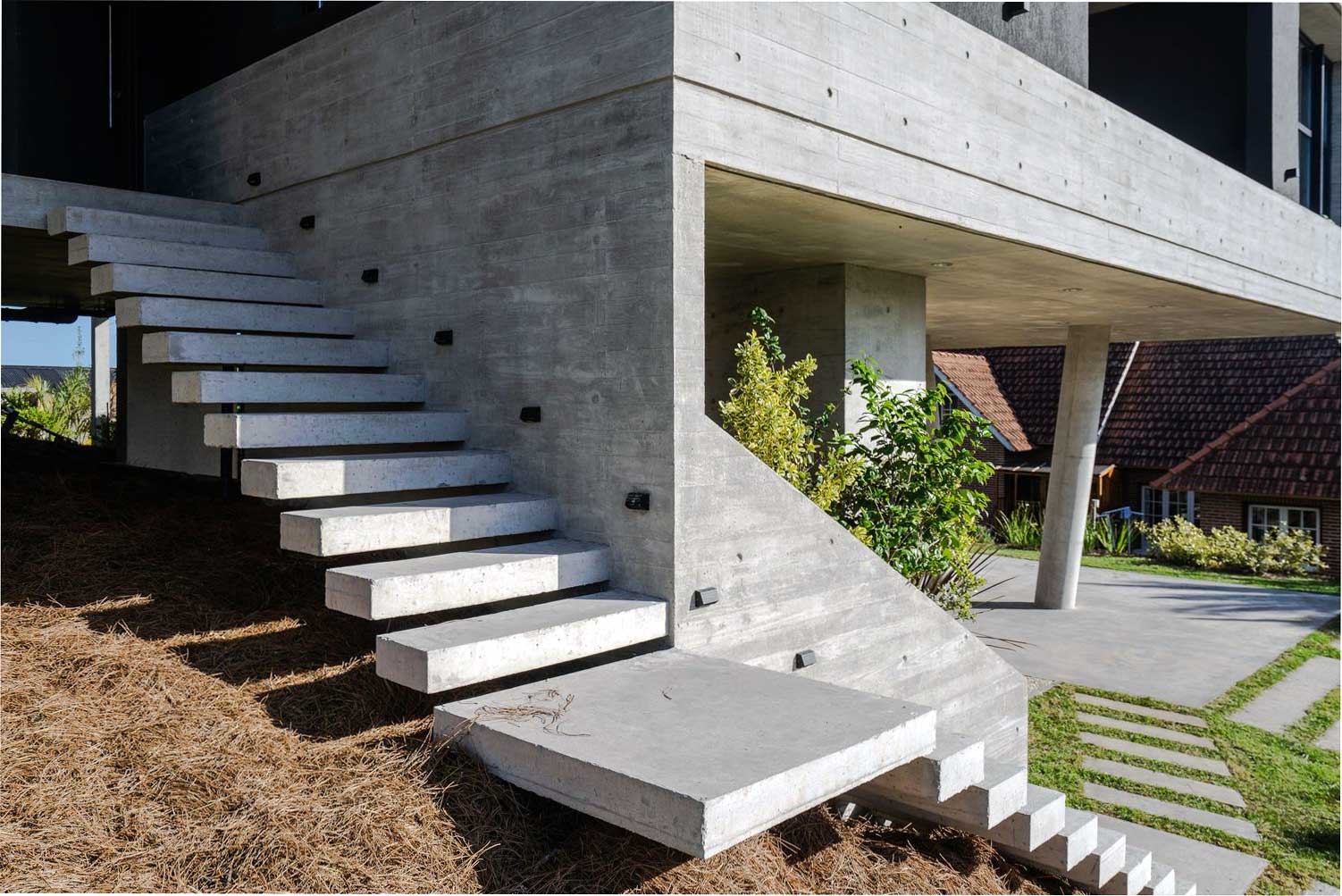
The integration piece is where most people get it wrong. You need to decide before the structural pour whether the staircase reads as part of the building mass or as a separate inserted object. The first approach — monolithic with the wall — looks deliberate and architecturally resolved. The second, where the treads appear clipped onto a finished facade, always looks like a revision. Make the decision at the design phase, not after the shell is poured.
Exterior Concrete Stair Design on Sloped and Hillside Sites
Sloped residential plots produce the most interesting concrete staircase work because the terrain forces creativity. When a building sits three meters above grade and the approach path drops on a natural incline, your exterior staircase isn’t decorative — it’s structural landscaping. I’ve watched architects treat this as an excuse for generic straight flights and I’ve watched others embed the whole approach sequence into the slope as something genuinely worth photographing. The budget difference is usually $3,000–6,000 in additional formwork cost. Worth it every time.
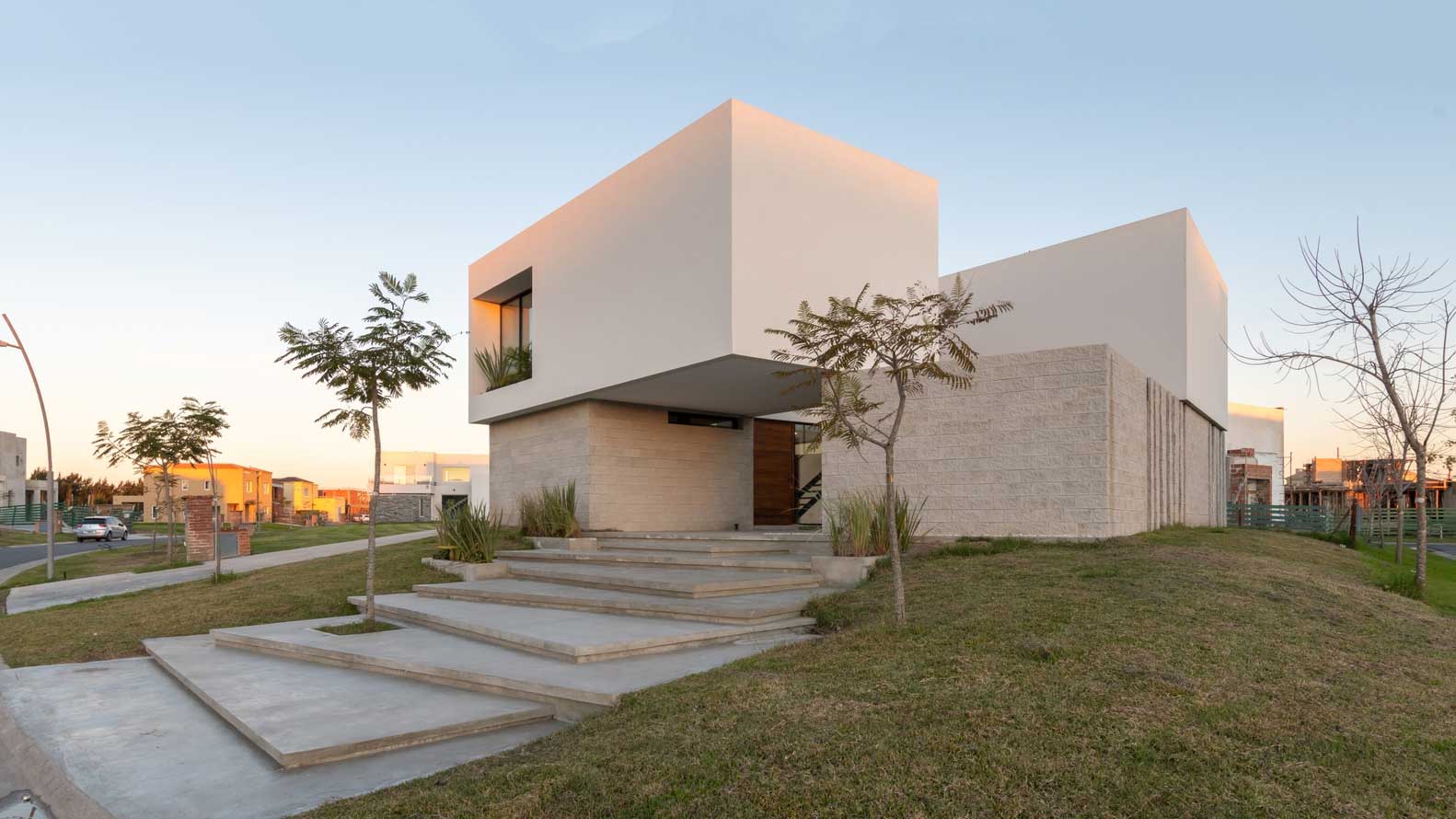
For accessible family use, wide low-rise steps are the correct answer regardless of how compelling the steep cantilevered option looks in renders. A 180mm riser with a 350mm tread suits children, elderly residents and grocery runs equally. Keep it to a maximum 150mm riser for exterior flights that get wet. Any steeper and you’re building something that looks dramatic in dry weather and becomes a liability claim in rain.
Don’t Do This
Avoid pouring exterior concrete steps directly onto uncompacted fill. The step slab will settle independently from the building foundation over 2–3 years, creating a gap at the junction point that cracks cladding and opens a water infiltration path. Always tie the exterior stair foundation into the building’s footing system or pour a separate pad on engineered fill minimum 300mm deep. A $400 soil prep cost prevents a $4,000 remediation job later.
The outdoor concrete staircase connects the building to the land — that sounds obvious until you see a house where nobody bothered and the approach path feels like a back exit. Outdoor stairs design ideas that work treat the descent as landscape architecture, not just a code compliance item. Greenery on either side of the flight — grasses, low shrubs, even a lawn edge — anchors the concrete into the site rather than leaving it sitting on top of it.
Sloping Site Cement Stairs — The Asymmetric Slab Method
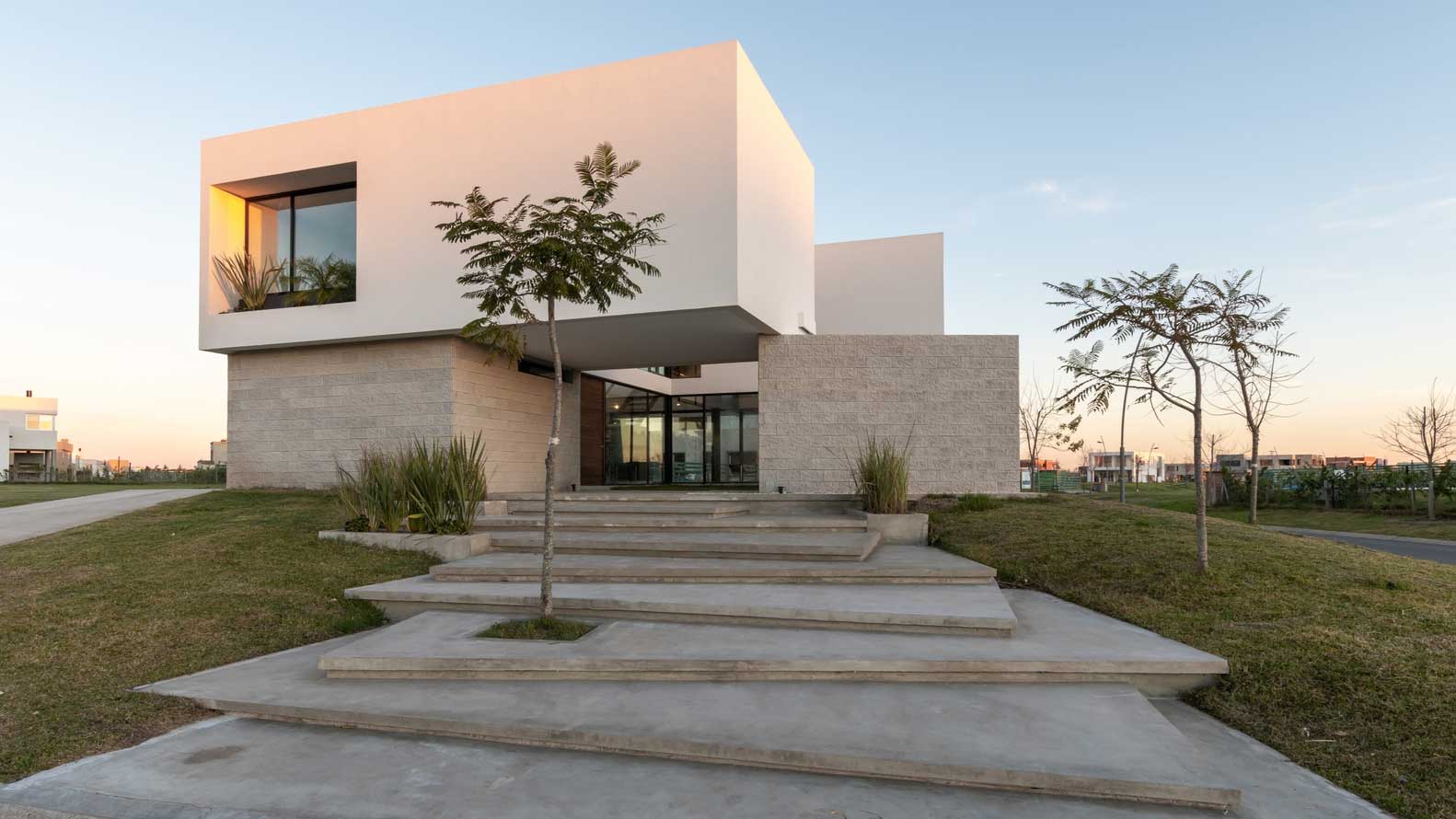
The asymmetric slab approach works on gradual slopes where you want maximum visual interest without sacrificing comfort. Concrete plates are embedded at staggered depths into the incline so that the completed structure reads as chaotically stacked planes — close-up it feels improvised, from the street it looks intentional. This is one of those concrete staircase ideas where the budget is almost entirely in the formwork design, not the material — the concrete pours are simple; the geometry of the forms is what takes time.
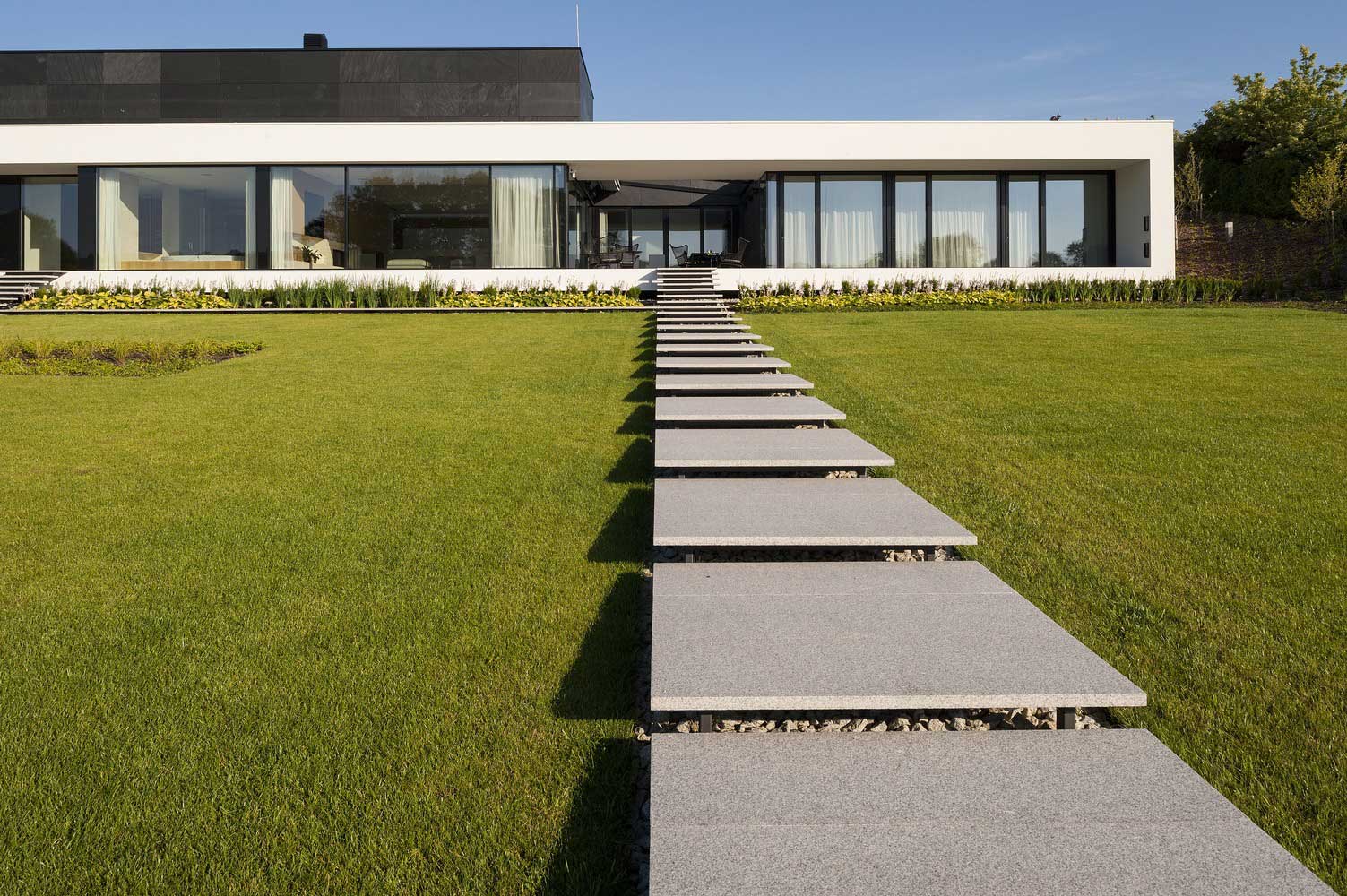
Wide thin slabs on an elevated frame are the practical alternative for sites with a lawn you want to keep. The steps sit above grade level entirely, so rainwater drains underneath and the grass survives. You’ll need powder-coated steel support frames at around $180–260 per linear meter, which is the only real cost premium over a direct-pour design. The maintained lawn edge below each step adds about $0 in material and makes the entire approach look like a landscape architect got involved.

Three-section flights work when a building is embedded in a hill rather than sitting above it. Each section handles a level change of roughly 600–800mm, with a flat landing between flights that doubles as a rest point and a visual break. One side runs against a retaining wall; the other opens to lawn or planted slope. It’s the structural detail that looks most resolved when the surrounding landscaping is dense — a good plant palette turns the retaining wall into a backdrop.
Outdoor Concrete Stairs That Reach the Second Floor From the Courtyard

Monolithic concrete construction gives you a detail that no prefabricated system matches: a spiral flight rising straight from the courtyard surface to a second-floor terrace, with the concrete mass doubling as an outdoor wall for one side of the terrace. I’ve seen this executed at around $22,000–28,000 for a two-story external spiral in cast concrete, which sounds steep until you compare it against the full stair-plus-railing packages in glass and powder-coated steel, which often reach $35,000–45,000 for the same floor height.
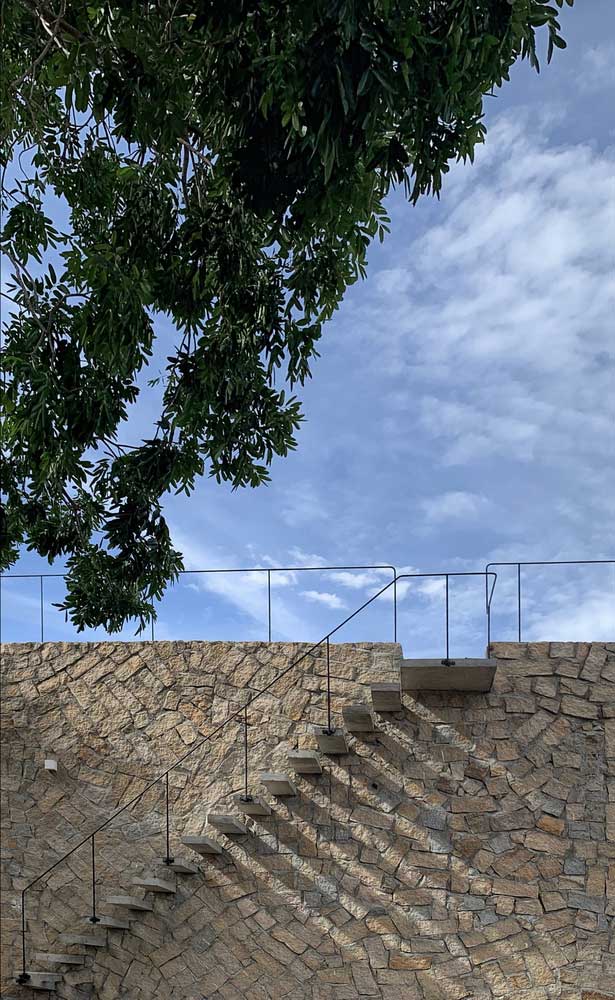
Single-edge cantilevered exterior treads embedded in the support wall deliver the most minimal exterior staircase profile. You’ll notice this detail shows up almost exclusively in houses where the architect controlled the wall reinforcement from the foundation stage — retrofitting cantilever steps into an existing wall is structurally messy and expensive. Plan it in from the beginning or choose a different approach.

Straight flights with minimal handrail systems remain the most-built outdoor concrete design globally, and for good reason: they photograph beautifully against a planted landscape, require the least maintenance, and age the most gracefully. The laconic step-on-grade approach ages like a good coat — it never dates because it never tried to be fashionable in the first place. Outside entrance stairs design ideas compiled from actual built projects confirm this: the quieter the staircase, the more the house facade gets noticed.

Interior Concrete Staircase Design — Minimalism and Loft Without the Gloom
Monolithic concrete interior stairs are the structural backbone of loft, minimalism and techno-style interiors — and the most misused. The problem isn’t the material; it’s the assumption that raw equals resolved. I own two apartments with interior concrete stairs and the one that works is the one where every surface adjacent to the flight was thought through: the wall finish, the floor material at the base, the ceiling height above. The one that doesn’t work is a flight of raw grey steps dumped into a white-painted box, which just looks like a parking garage access shaft.

Shape and finish determine mood more than anything else in a concrete interior stair. A straight flight in rough board-formed concrete with visible tie-hole marks reads industrial, hard-edged, uncompromising. The same structural volume cast in smooth self-compacting concrete and ground to a polished surface reads more like sculpture than construction. Your finish choice costs roughly $25–60 per square meter more for the polished option, and it changes the character of the entire floor.
Straight Concrete Stairs in an Industrial Interior — What Saves Them From Looking Grim

Raw, straight, board-formed concrete stairs are the correct move for an industrial or urbanized interior. They anchor the loft aesthetic and make the industrial detailing look intentional rather than accidental. The thing that kills these interiors is not the material — it’s insufficient light. A raw concrete staircase in a dark interior becomes oppressive fast. You need the southern or western facade heavily glazed, plus artificial light positioned at soffit level to wash the underside of the flight. Without that, the stair reads as a bunker feature.

Glass balustrades solve two problems simultaneously: they provide the required safety enclosure without adding visual weight, and they allow light to pass through the flight rather than blocking it. Frameless tempered glass panels cost $280–420 per linear meter installed in the UK and Europe — more than a steel cable system, less than a frameless structural glass balcony system. The result is worth the premium specifically because it removes the visual density that makes concrete stairs feel heavy from below.
The mistake I see repeatedly: owners who buy a loft specifically for the raw concrete aesthetic and then soften every other surface in the room — warm oak floors, beige plaster walls, upholstered furniture — before panicking that the concrete staircase now “doesn’t fit.” It always fits. What doesn’t fit is the indecision about which direction the interior is going.
Concrete Stairs With Wood Treads — The Detail That Solves the Temperature Problem
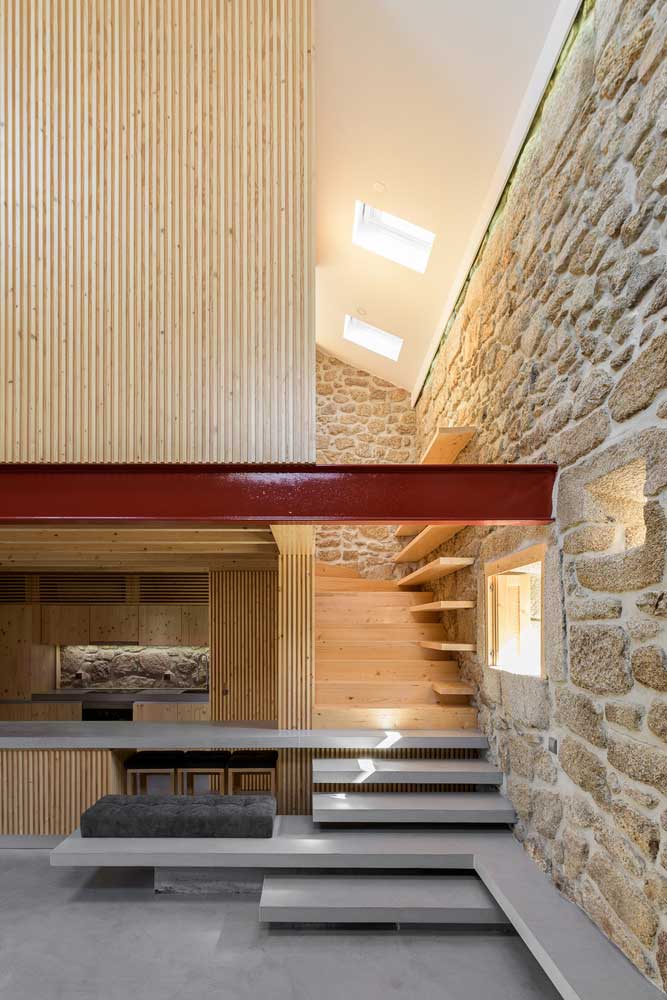
Concrete and timber is the combination that made interior concrete stairs acceptable to the portion of the market that finds raw industrial interiors cold — which is most people, regardless of what they say at the design meeting. The structural monolith stays; the surface of each tread gets a hardwood or engineered wood overlay. My preferred spec: 20mm solid oak treads, oiled finish, mechanically fixed with countersunk stainless screws into cast-in inserts. Materials cost approximately $90–140 per tread depending on timber species.

The safety argument for wood overlays is real and underappreciated. Polished or sealed concrete becomes genuinely slippery underfoot when wet — anyone who has carried laundry down a bare concrete stair in socks will confirm this immediately. A timber overlay with a brushed finish provides friction. It also reduces impact noise on each step, which matters in open-plan loft configurations where a concrete-on-concrete footfall sound travels across the entire floor plate. For households with children, this isn’t an aesthetic upgrade — it’s a structural necessity dressed as a design choice. An article on choosing staircase materials from ArchDaily covers the technical performance comparison across concrete, wood, steel and glass in more depth if you’re at the specification stage.
Reinforced Concrete Staircase in Smooth Forms — Luxury Without Marble

Reinforced concrete cast in smooth, dynamic forms produces something that reads as luxury without reaching for marble or travertine. The key is the formwork precision: self-compacting concrete poured into a machined plywood or GRP form leaves a surface finish that, once lightly ground and sealed, looks like it belongs in a high-end residential project rather than a construction site. My go-to reference is the curved monolithic staircase work coming out of Brazilian and Portuguese residential practices — sinuous flights that make a 200-square-meter floor plate feel like a designed object rather than a plan.

The more complex the geometry, the higher the formwork cost as a proportion of the total — for an intricate helical stair, formwork and falsework can represent 40–60% of the overall budget. That’s the number architects don’t always lead with. But the concrete itself is cheap; it’s the skill of shaping it that carries the cost. You’re essentially paying for a one-use mold that produces a permanent piece of architecture. It’s the only structural material where the cost is almost entirely in the craftsmanship rather than the raw input. For spiral staircase design specifically, see the interior spiral staircase design ideas gallery for executed residential examples across price points.
Final Word
The staircase is the one element that makes your concrete decision permanent and visible every single day.
Cast it right and it becomes the reason the rest of the interior resolves. Get the form wrong and no furniture arrangement, no paint color, no lighting scheme will compensate. Concrete forgives almost nothing after the pour.
Exterior flights on sloped sites need a structural engineer in the brief from day one. Interior floating treads need the wall reinforcement sorted at foundation stage. Concrete-and-wood combinations need properly cast-in mechanical fixings, not adhesive applied to a finished slab.
Save this post before you get to the specification meeting — the details above are exactly what contractors don’t volunteer.