Quick Scan
- Pinterest's 2026 Parenting Report shows searches for vintage kids' bedrooms up 100% — this trend has real momentum, not just aesthetics.
- Authentic sourcing from flea markets and Facebook Marketplace produces better results than reproduction pieces from big-box stores.
- Choose one era — 1970s, early 90s, or early 2000s — and curate around it. Mixing decades creates clutter, not nostalgia.
- Classic toys like the View-Master, Mr. Potato Head, and Rubik's Cube serve as display-worthy decor objects, not just playthings.
- A dedicated analog activity corner — art desk, art supplies, no screens — is the functional heart of a retro kids' room.
Retro kids room decor has become the single most searched kids’ bedroom category on Pinterest heading into May 2026 — and if you’ve been feeling the pull toward something warmer, more tactile, and less screen-forward for your child’s space, you’re not imagining things. According to Pinterest’s 2026 Parenting Trend Report, searches for vintage kids’ bedrooms jumped 100% year over year, driven by parents who want to recreate the grounded, analog magic of their own childhoods in their children’s rooms.
What the Throwback Kid Trend Actually Looks Like on a Real Bedroom Wall
Pinterest officially flagged ‘Throwback Kid’ as a major rising trend in 2026, and the numbers behind it are staggering. Searches for nostalgic toys are up 225%, searches for 1970s childhood toys specifically are up 125%, and the resurgence of 2000s classics is being tracked separately. This isn’t a fringe aesthetic. It’s a mass cultural correction.
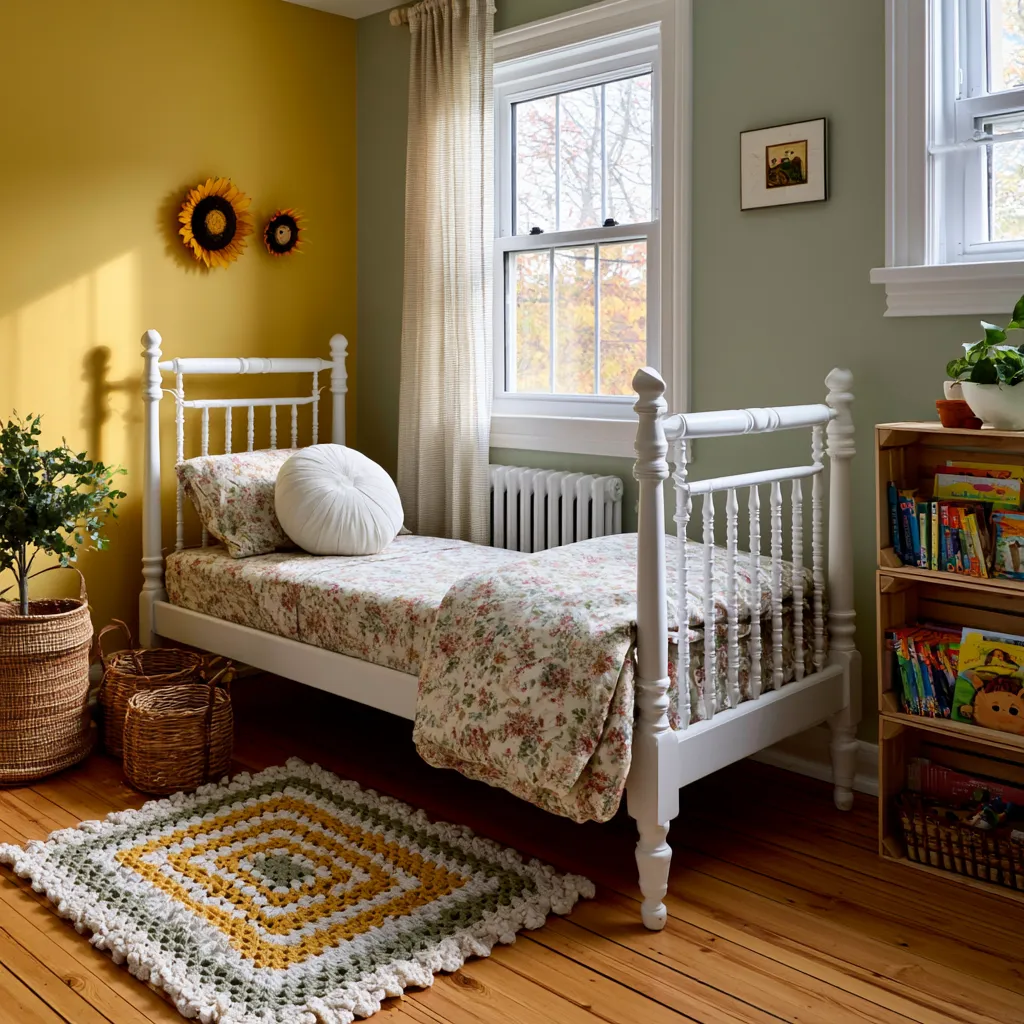
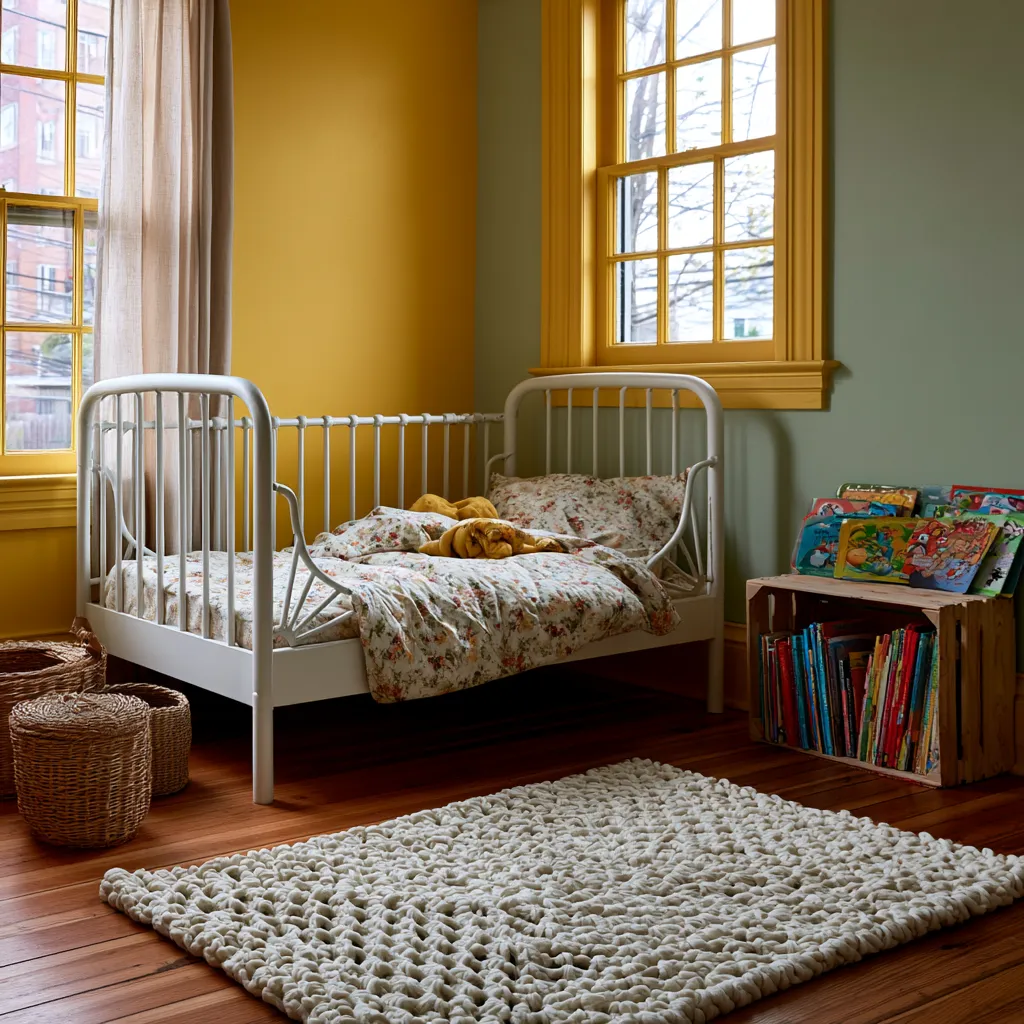
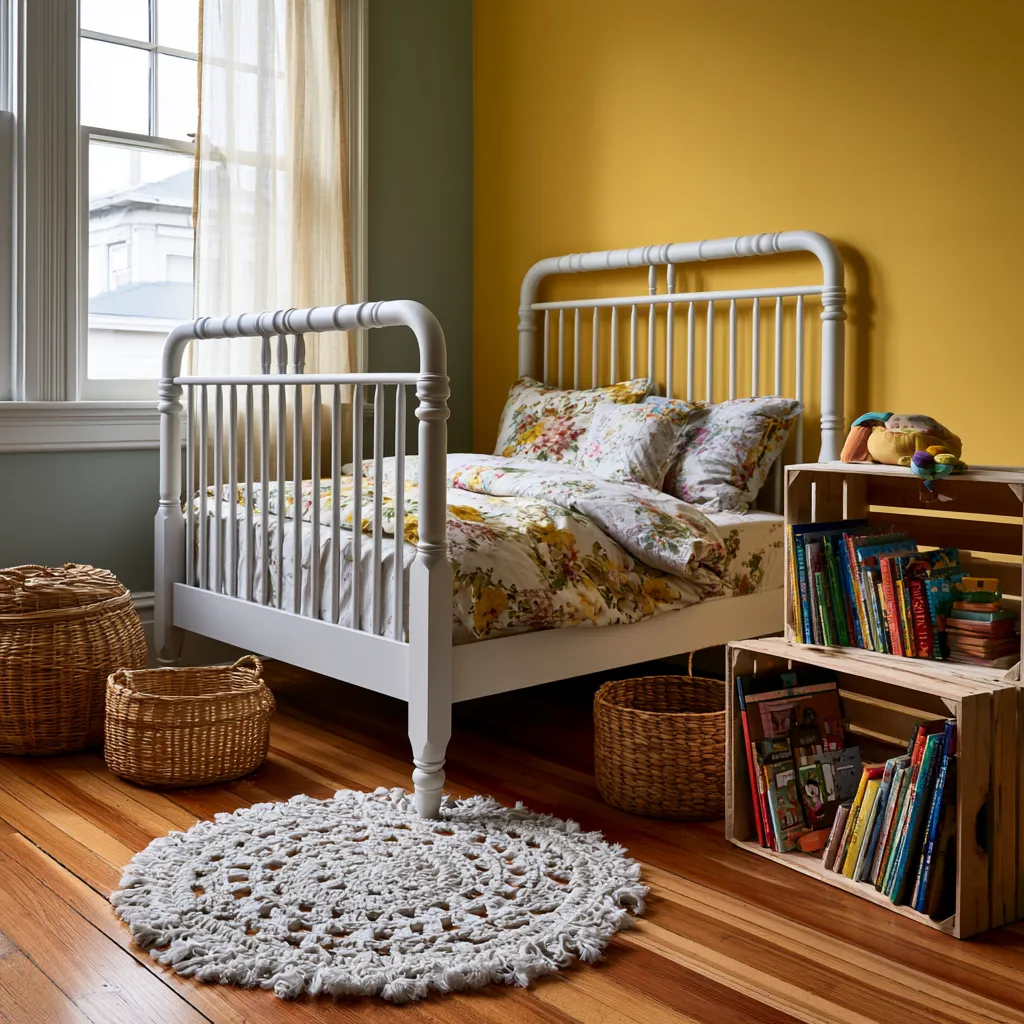
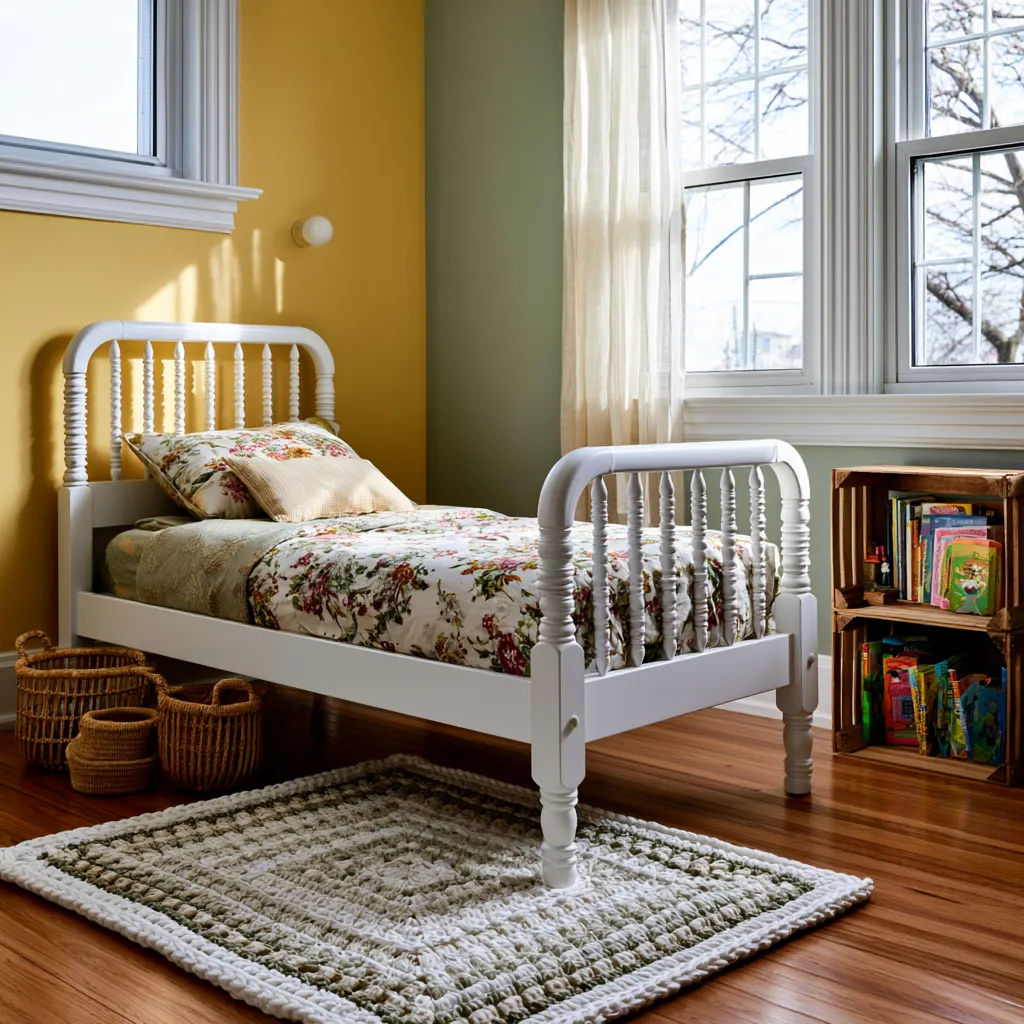
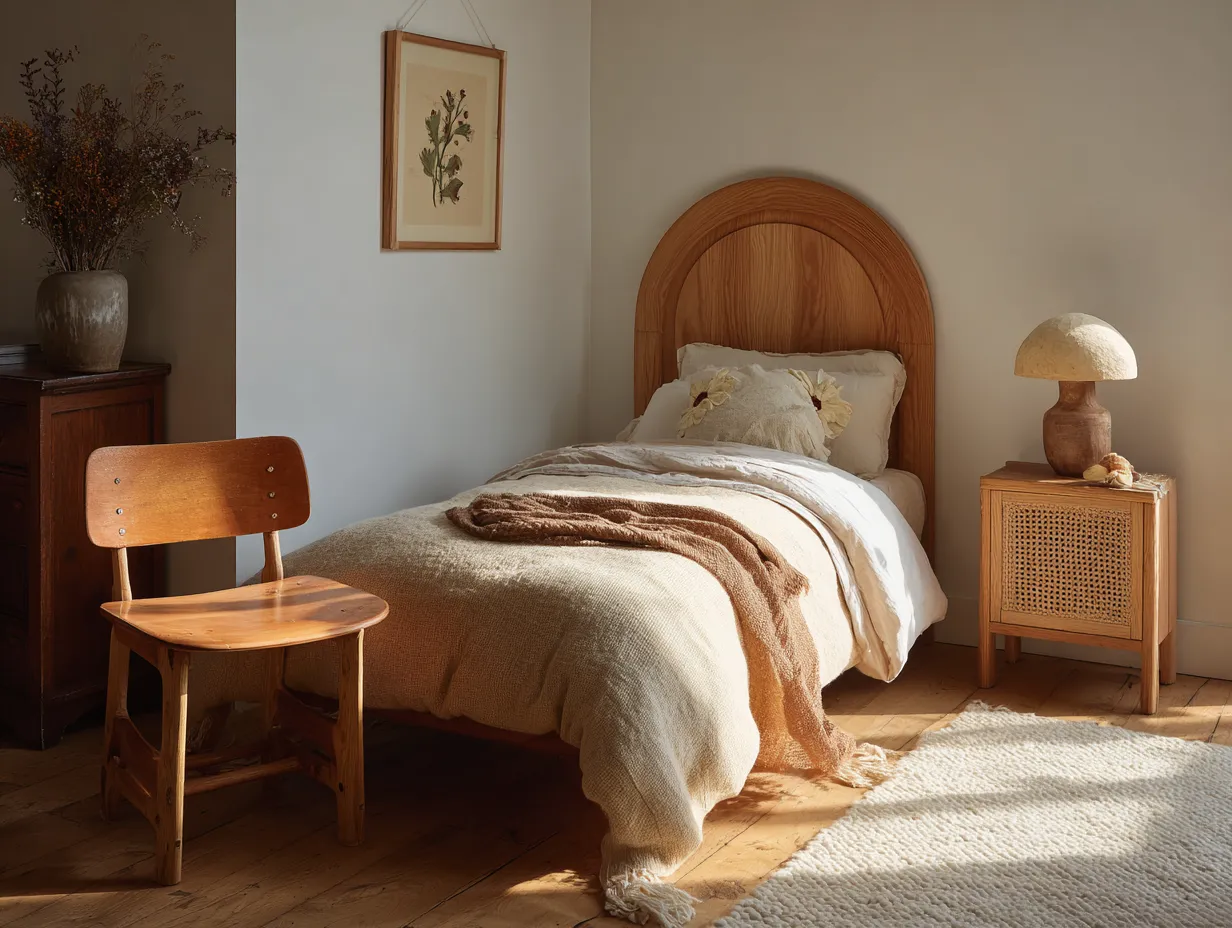
The look itself is warmer than most parents expect. Real 2026 retro kids’ rooms lean on Jenny Lind beds — those classic turned-spindle wooden frames that defined mid-century nurseries — paired with vintage floral print bedding sourced from Etsy shops like Wild Prairie Rose or scored at estate sales. The palette tends toward sunflower yellow, burnt sienna, and dusty sage rather than the washed-out pastels of recent minimalist nurseries. Walls feel lived-in. Nothing is too coordinated.
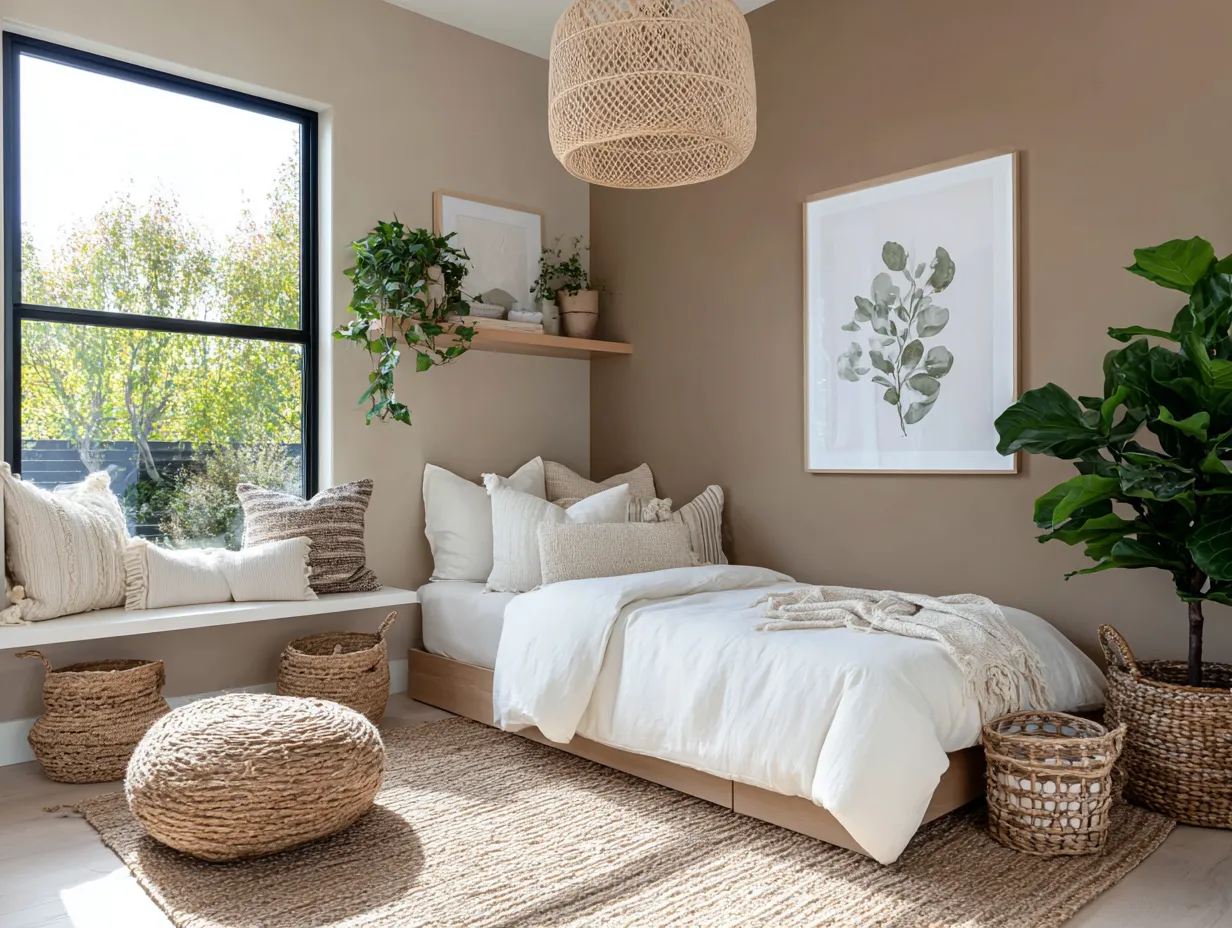
What textures actually work here? Crocheted play mats are a key detail Pinterest specifically named for 2026 nurseries, and they translate well into toddler and early-childhood rooms too. A handmade granny-square blanket draped over a reading chair does more atmospheric work than any peel-and-stick wallpaper panel. Macramé wall hangings, braided wool rugs in earthy tones, and rattan storage baskets all reinforce the analog warmth without requiring you to hunt down hard-to-find pieces. Nature-Inspired Kids Room Non-Toxic Materials Parents Are Choosing Now covers how to keep these natural textiles safe for small children.
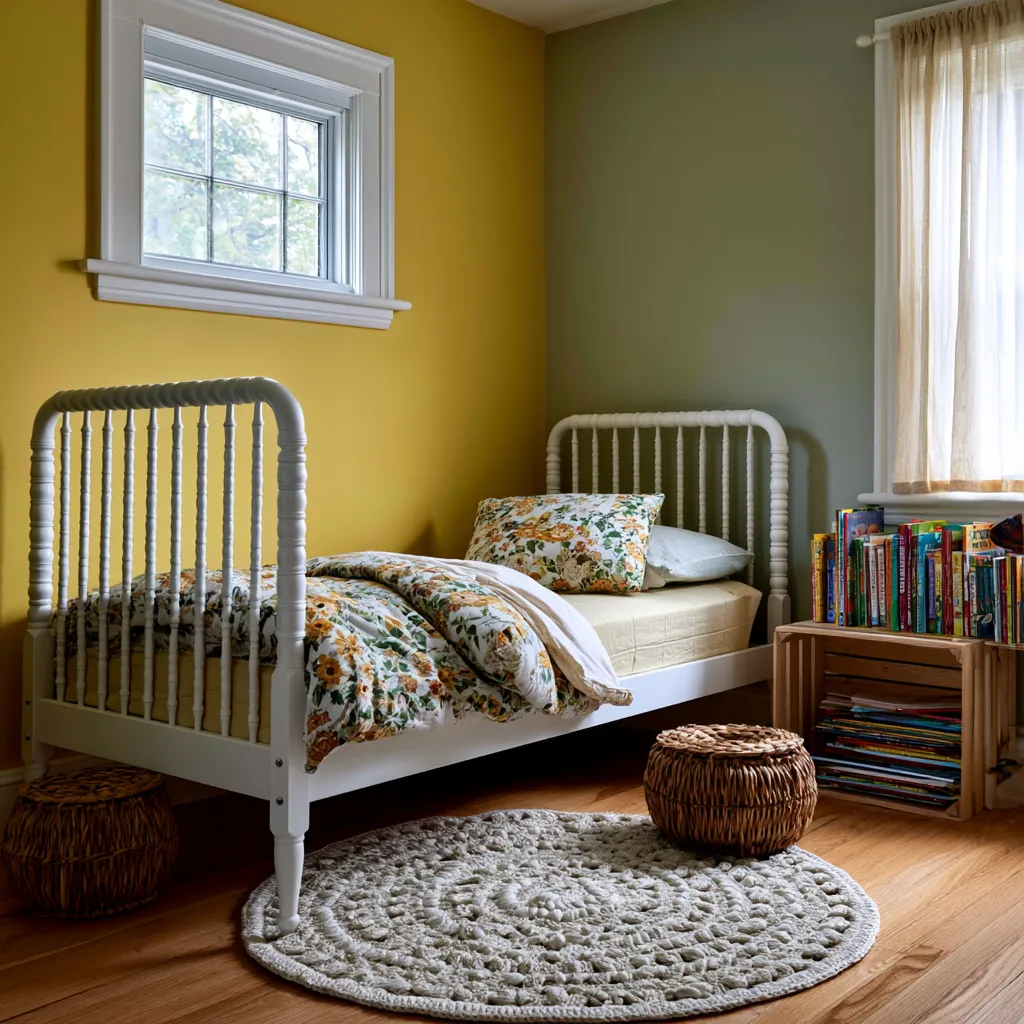
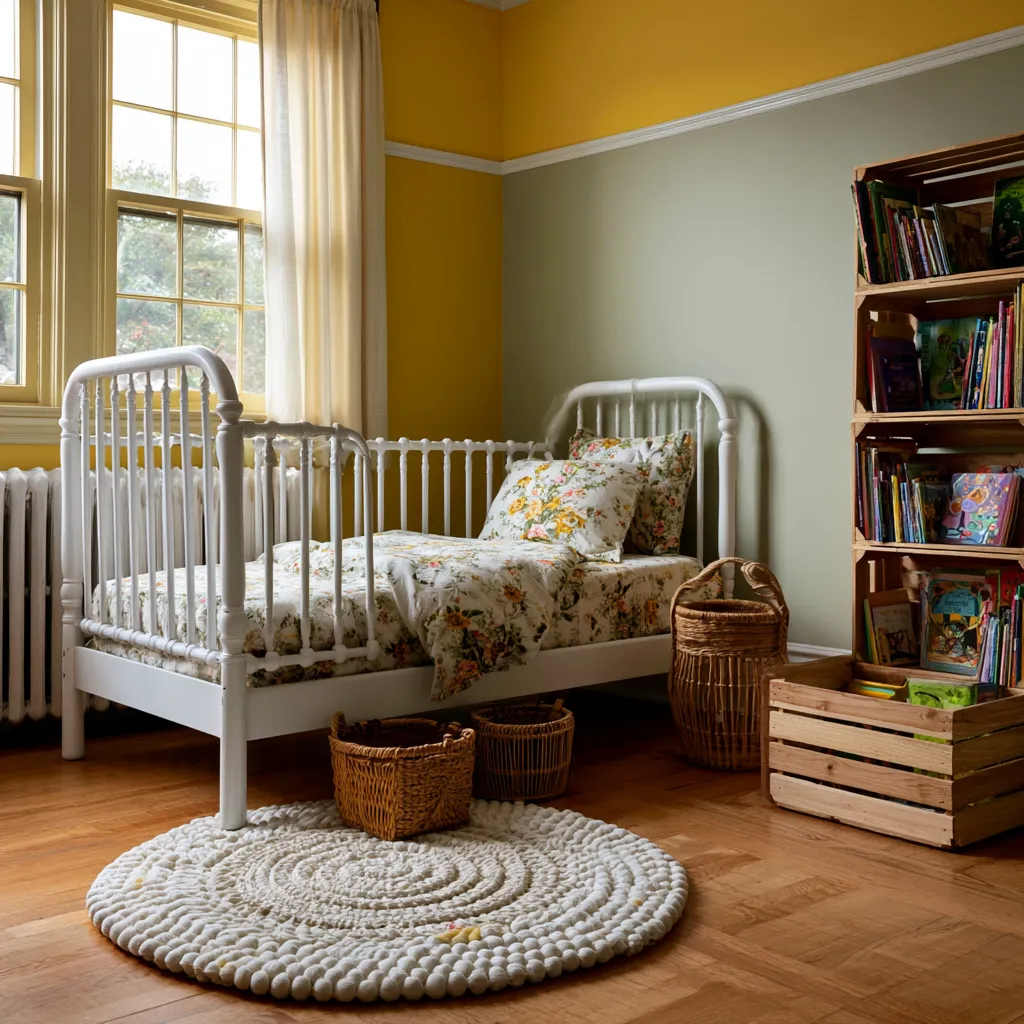
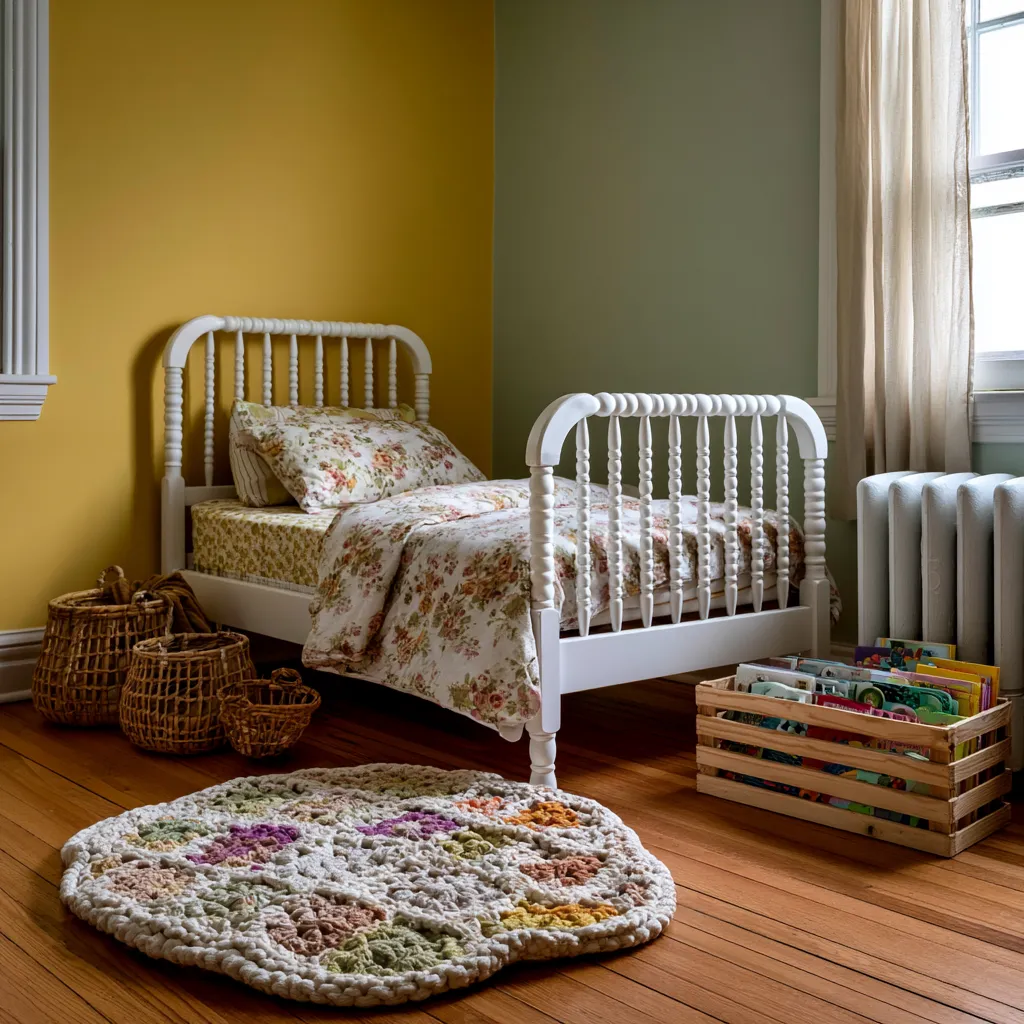
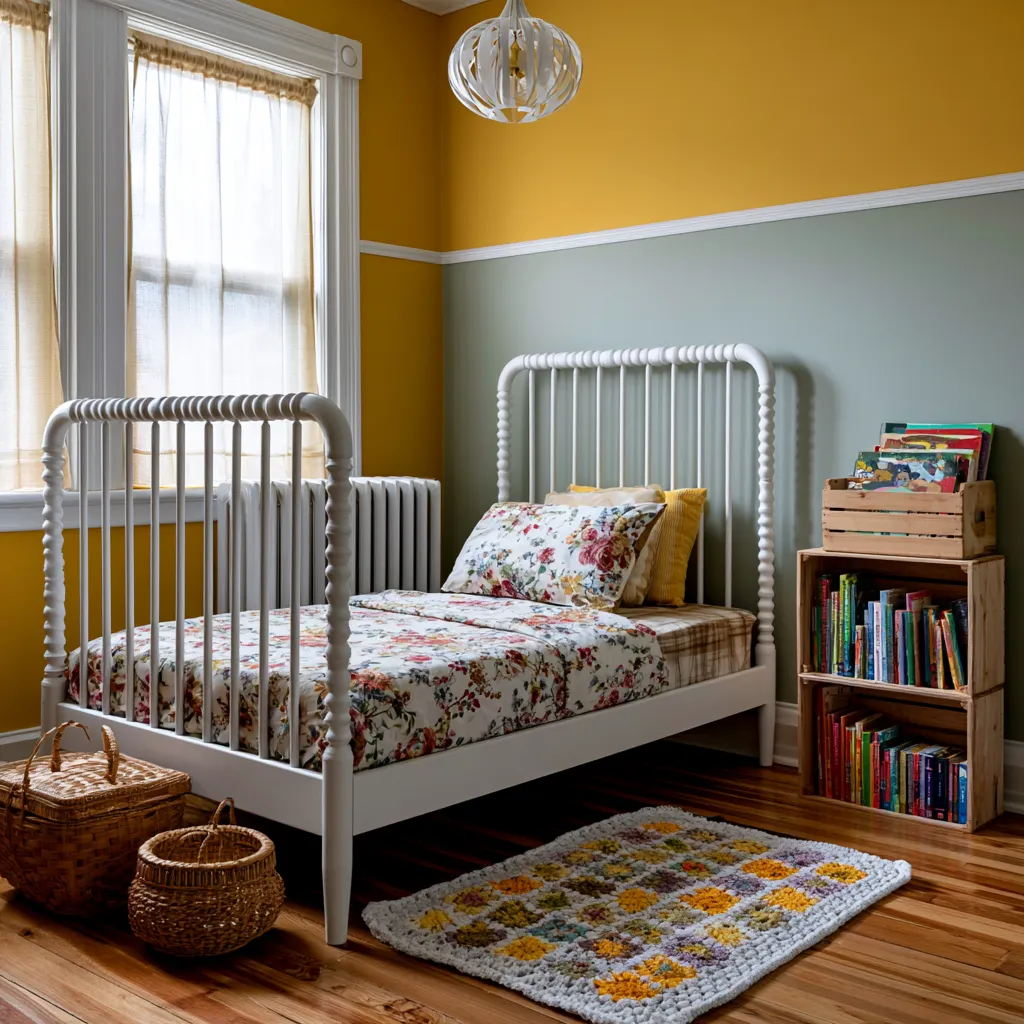
The single most common mistake parents make here is chasing “vintage” through brand-new reproduction pieces that arrive wrapped in plastic. A brand-new farmhouse-style crate from Target’s Hearth & Hand line for $24.99 will always read as a prop. An actual wooden crate from a weekend flea market — sanded, sealed with a non-toxic finish — reads as a story. Authenticity is the entire point of this trend, and it cannot be faked with fast-furniture shortcuts.
Repurposed wooden crates as bookshelves and vintage trunks as toy chests are appearing in nearly every top-performing retro kids’ room on Pinterest right now. A classic steamer trunk — the kind you can find on Facebook Marketplace for $30 to $80 depending on condition — becomes a toy chest that your child will actually remember decades from now. That’s the design goal: creating objects that outlast the trend and become part of a personal mythology.
Don’t Do This
- Don't buy brand-new reproduction 'vintage' pieces from fast-furniture retailers — they arrive as props, not stories, and the inauthenticity reads immediately in photos and in person.
- Don't mix visual languages across three different decades on the same four walls — pick one era and commit, or the room reads as a flea market rather than a designed space.
- Don't try to complete the room in one trip — the rooms that feel genuinely magical were assembled one meaningful object at a time, and rushing produces a costume.
- Don't over-accessorize — fifty nostalgic objects cancel each other out. Six carefully chosen pieces create more emotional impact than a packed shelf ever will.
Classic Toys as Decor — How Nostalgic Objects Transform a Child’s Space
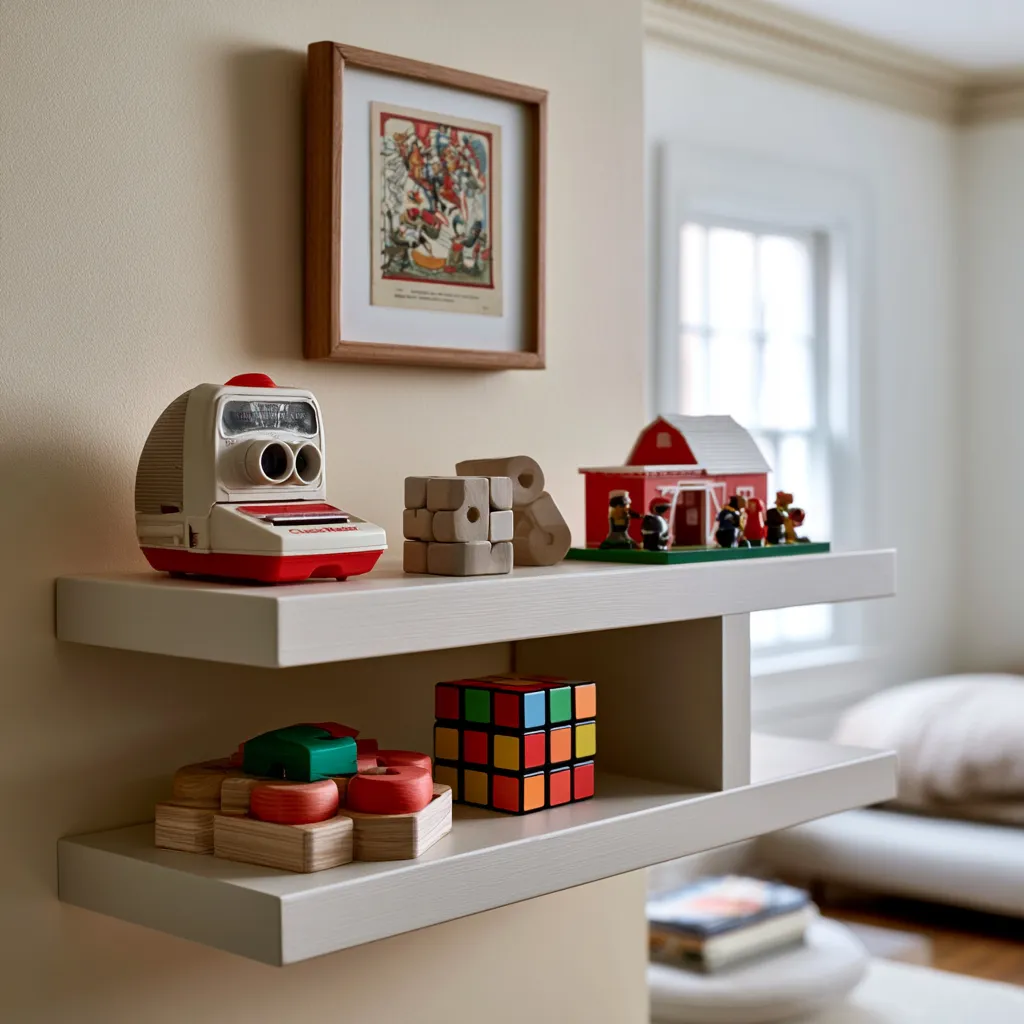
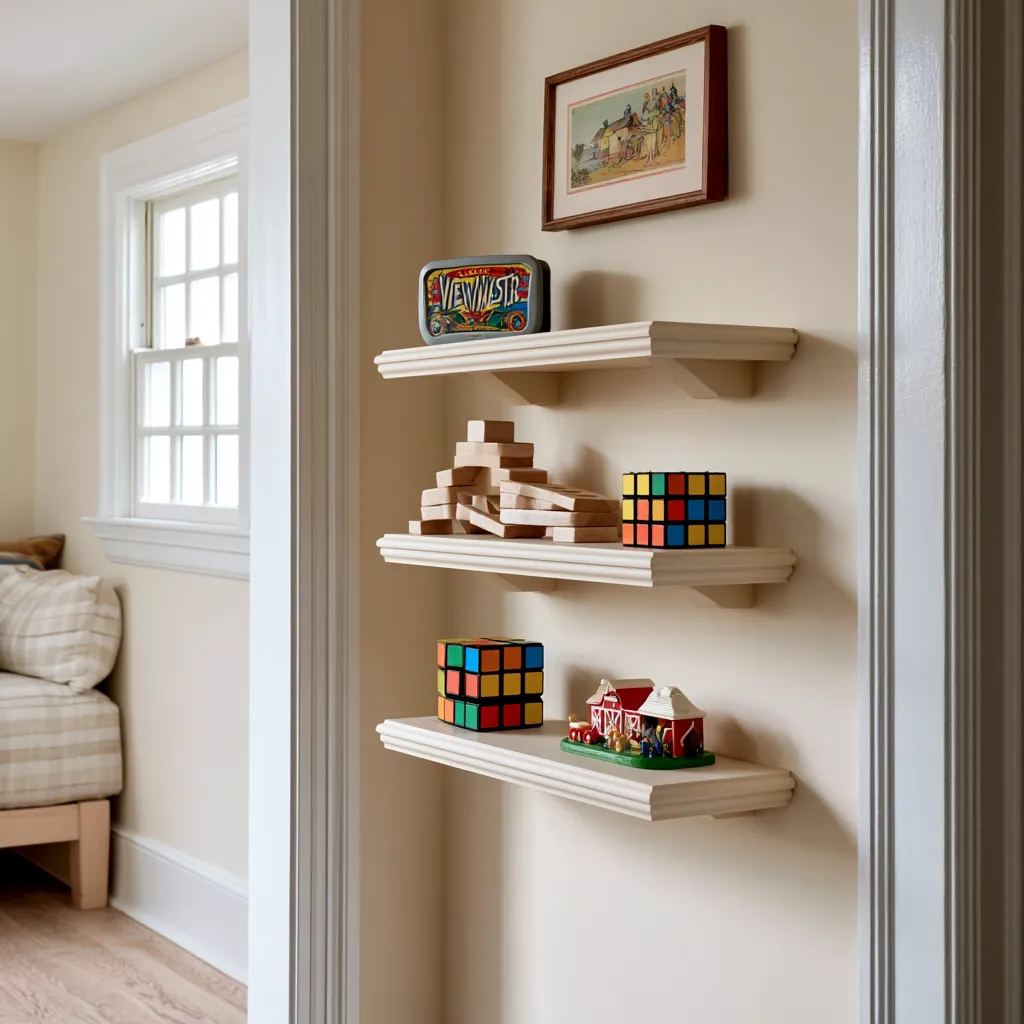
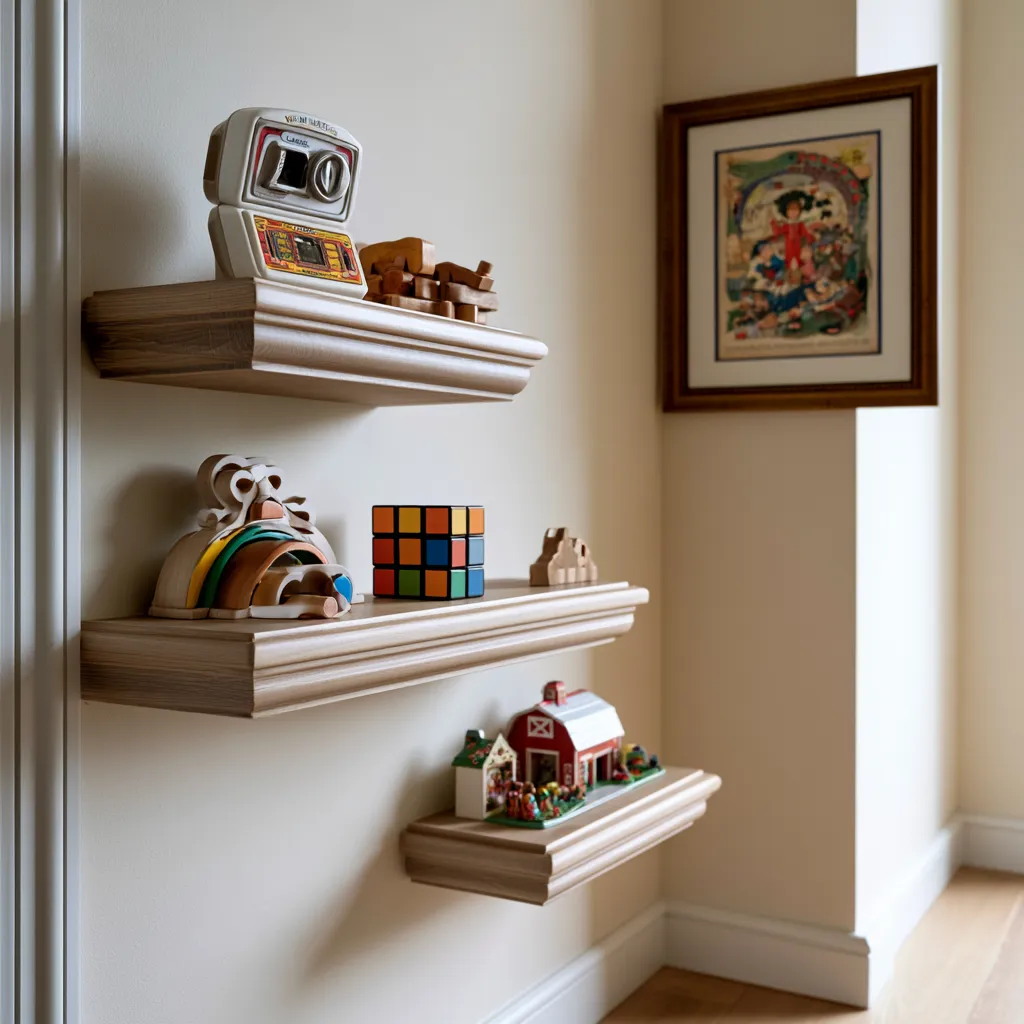
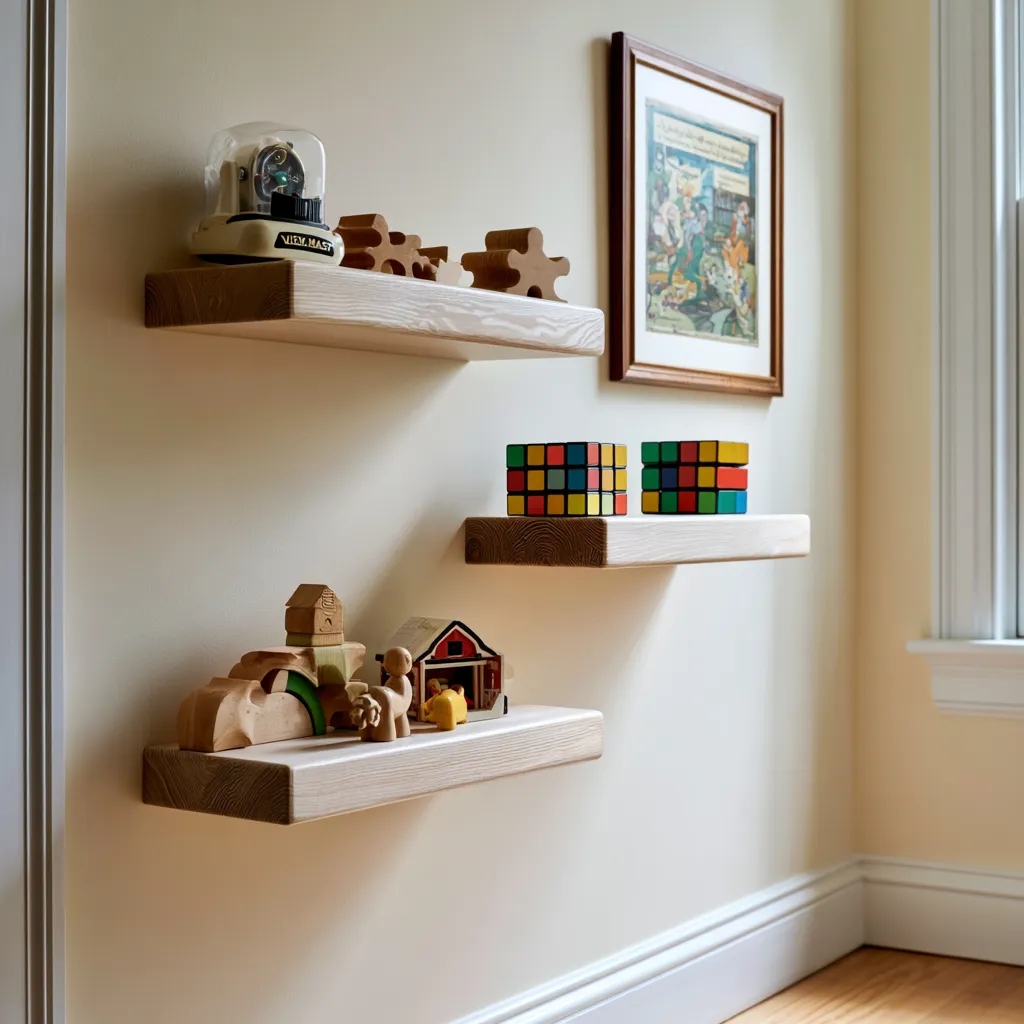
The objects you place in a retro kids’ room carry as much visual weight as the furniture. Pinterest’s 2026 data is specific about which items are driving the trend: the Classic View-Master Metallic Viewfinder, Mr. Potato Head Set with 13 Parts, and the Rubik’s Cube 3×3 Original are all named as top nostalgic products for this year. Displayed on a dedicated shelf — not buried in a toy bin — these objects become visual anchors that communicate the entire philosophy of the room.
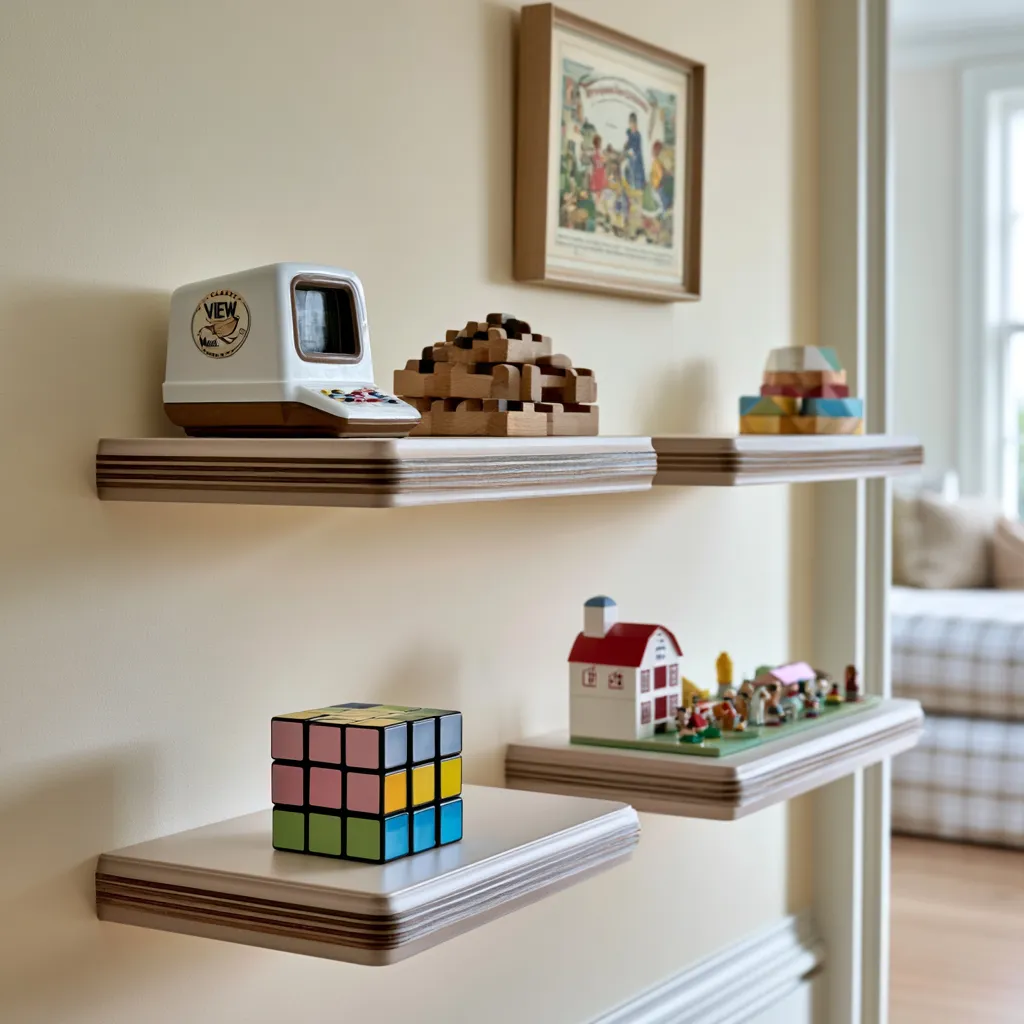
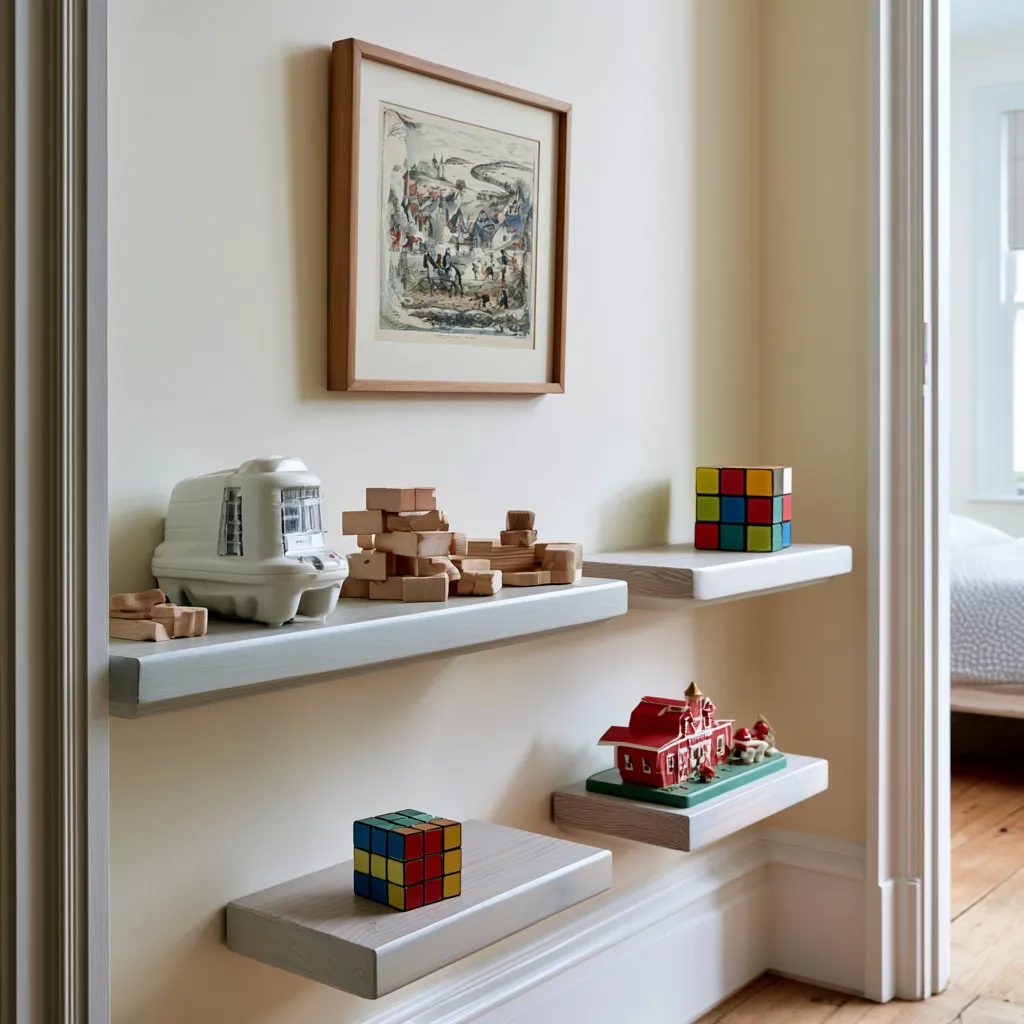
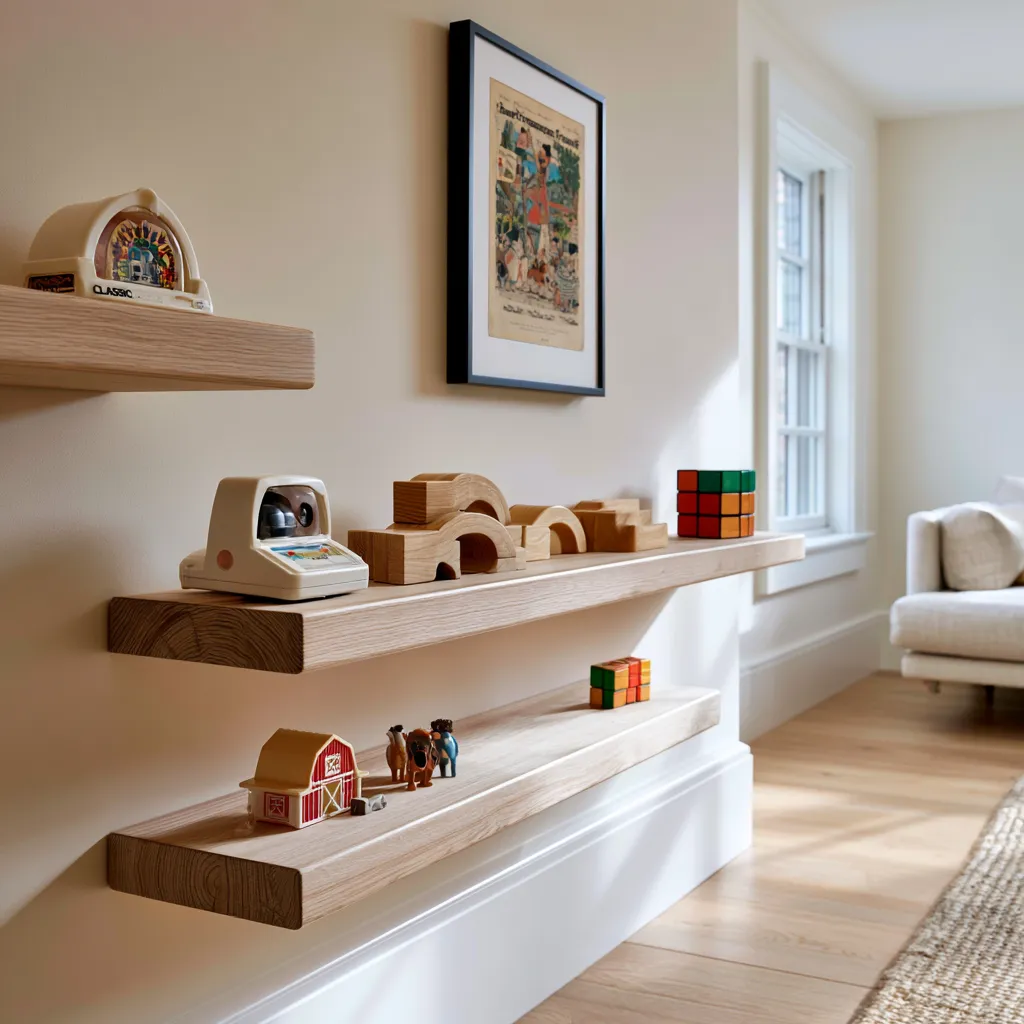
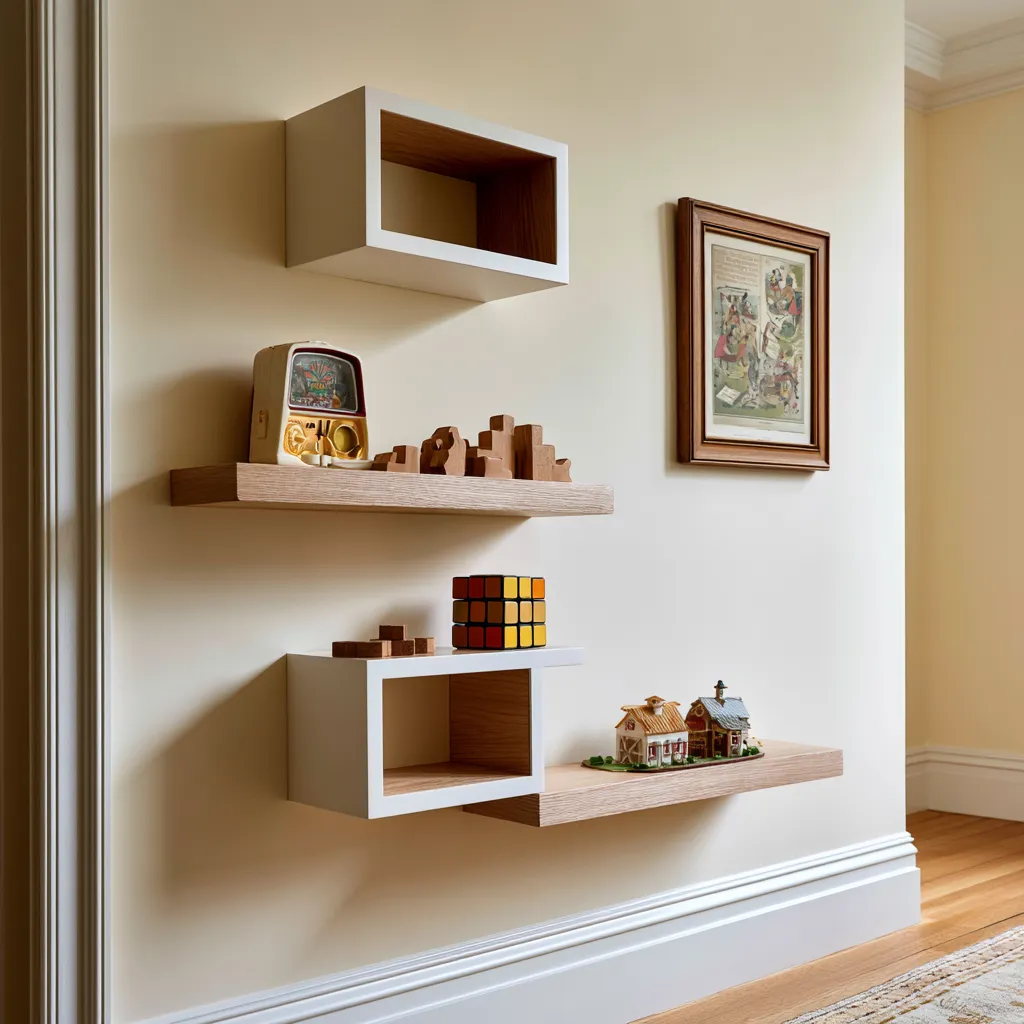
How do you display toys without it looking like a retail shelf? Grouping by era and texture is the answer. A cluster of wooden Melissa & Doug puzzles alongside a vintage Fisher-Price Little People barn (the original 1960s rounded figures, not the current oversized versions) creates depth and visual contrast. Add a View-Master for around $12 on Amazon or $8 at a thrift store, and you’ve built a vignette that tells a story. Keep groups to three or five objects — odd numbers always read as intentional.
The circus revival is a parallel thread worth weaving in selectively. Pinterest reports that searches for “circus interior” are up 130% and “vintage circus aesthetic” up 70%, making it one of the most specific visual languages emerging inside the broader retro kids’ room trend. This doesn’t mean clown wallpaper. It means pennant banners in red and gold, a vintage-style big-top stripe on a pillow, or a printed circus poster from a shop like Society6 for around $25 to $45. Used sparingly, the circus element adds whimsy without dominating.
For walls, vintage-inspired wallpaper from Rifle Paper Co. — specifically their Wildwood or Meadow collections, starting around $198 per roll — offers botanical illustration styles that feel genuinely retro without requiring antique sourcing. Alternatively, a single statement wall painted in Benjamin Moore’s Pumpkin Cream (a 1970s-adjacent warm orange) with framed vintage children’s book illustrations does the same work for a fraction of the cost. Don’t mix circus with botanical with 70s geometric on the same four walls. Pick one visual language and commit to it. Modern Geometric Wallpaper Spices Up a Vibrant Kids Room shows how pattern can anchor a space when used with restraint.
The mistake that derails most retro kids’ rooms is over-accessorizing. A room packed with every nostalgic object from three different decades reads as a store rather than a childhood. Choose one era to center — the 1970s, the early 1990s, or the early 2000s — and curate around it. Pinterest’s data shows that “nostalgia core” works best when it’s specific, personal, and edited. Fifty objects don’t create magic. Six carefully chosen ones do.
| Element | Authentic Vintage Source | Estimated Cost |
|---|---|---|
| Jenny Lind Bed | Facebook Marketplace / Estate Sale | $50–$150 |
| Vintage School Desk | Etsy / Antique Mall | $45–$120 |
| Steamer Trunk Toy Chest | Facebook Marketplace / Flea Market | $30–$80 |
| Classic View-Master | Thrift Store / Amazon | $8–$12 |
| Wooden Crate Bookshelf | Flea Market / Garage Sale | $5–$20 |
Building an Analog Childhood Room Without Buying Everything New
Pinterest’s 2026 Parenting Report frames this entire trend as a reaction to screen-heavy childhoods — parents want backyard movie nights, DIY playgrounds, and arts-and-crafts corners baked into the architecture of the room itself. That intention changes how you shop and how you plan the space. The room isn’t a showroom. It’s an environment designed to make a child want to draw, build, read, and imagine without prompting.
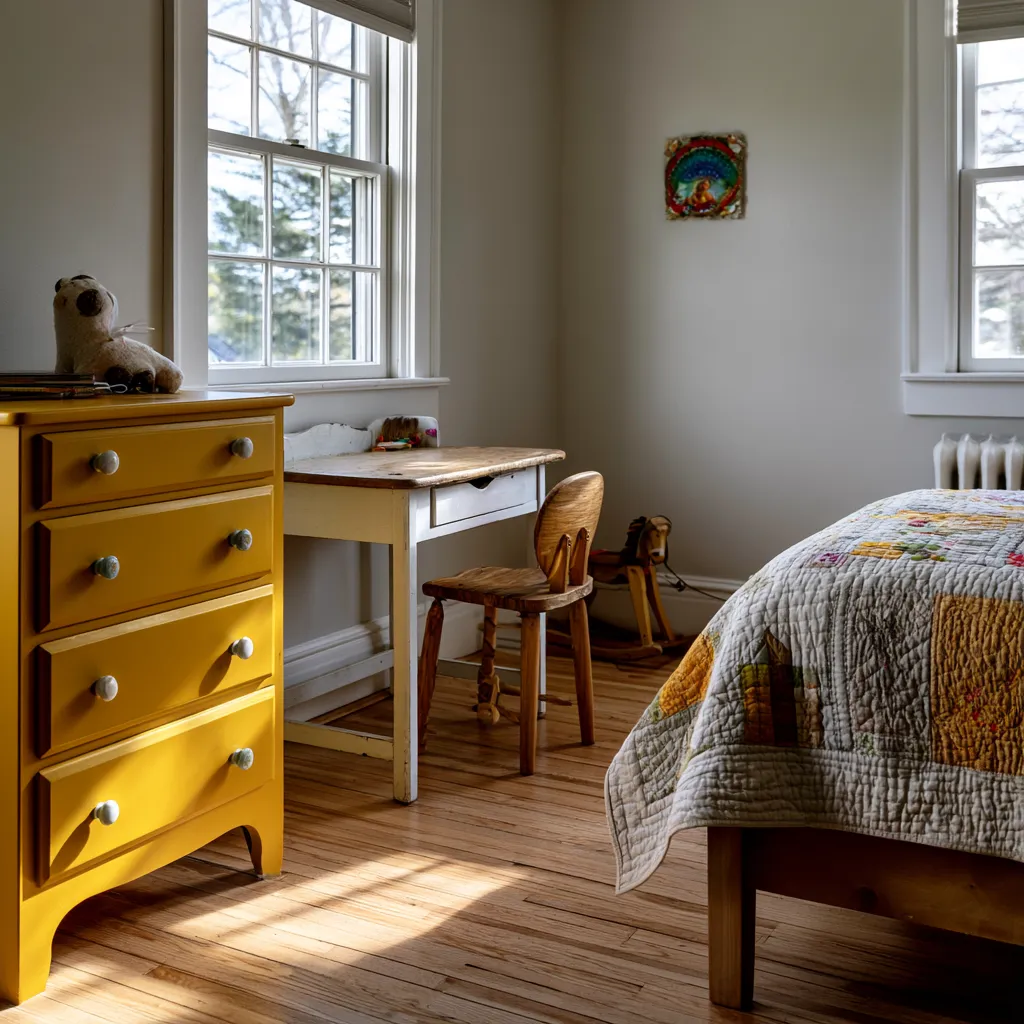
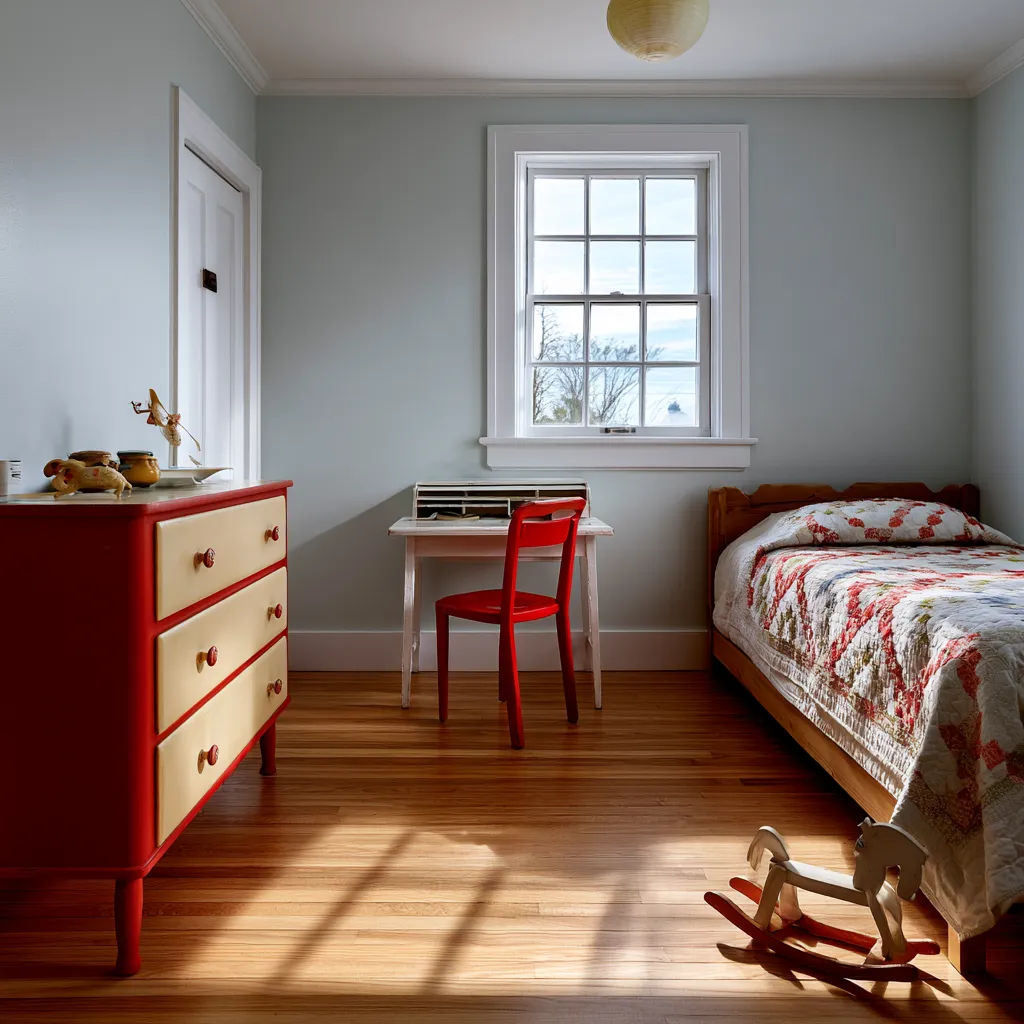
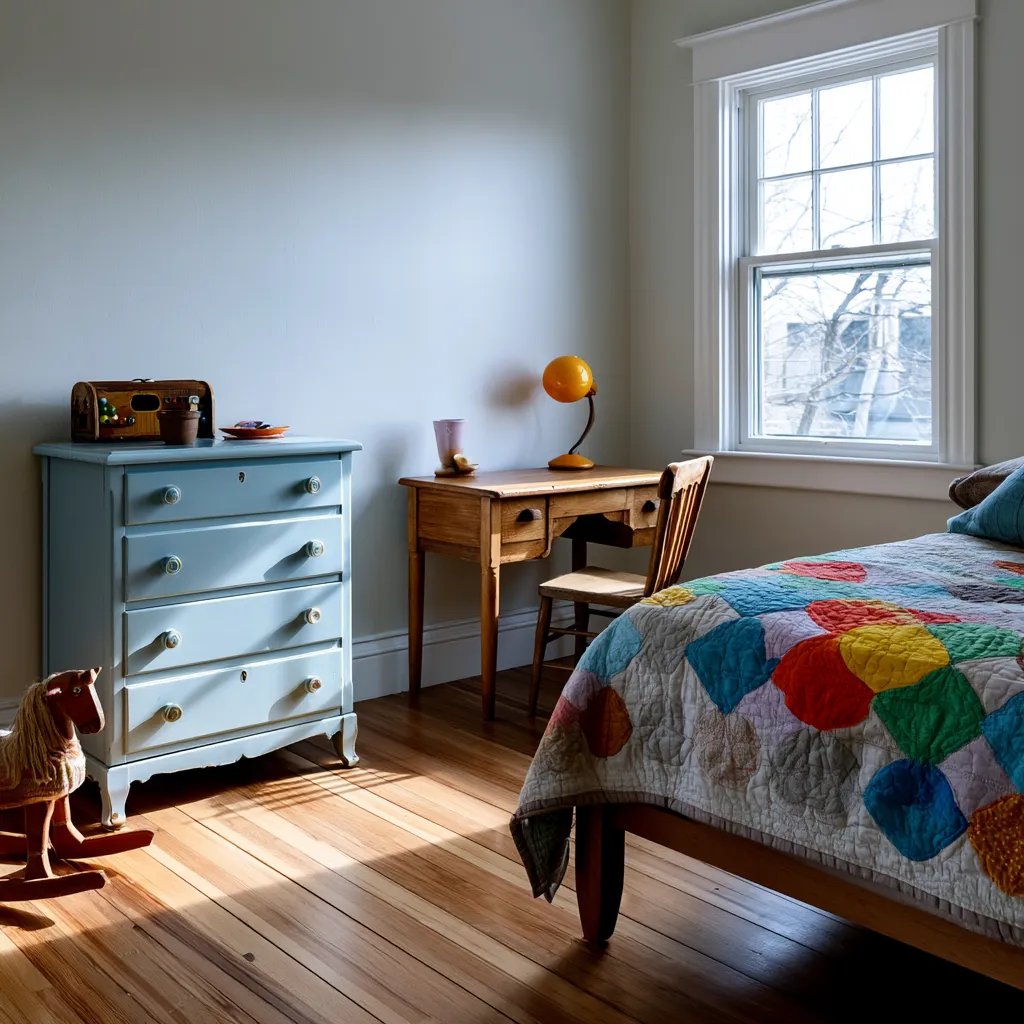
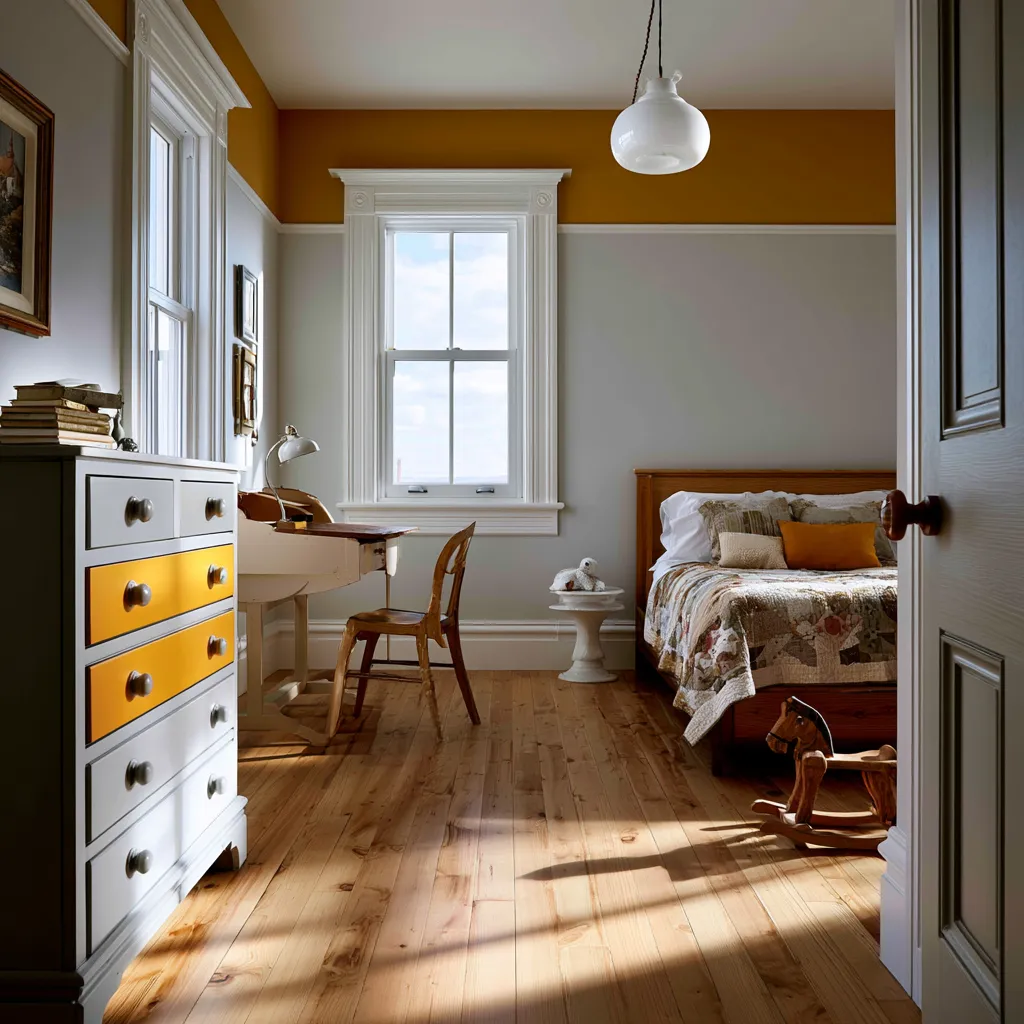
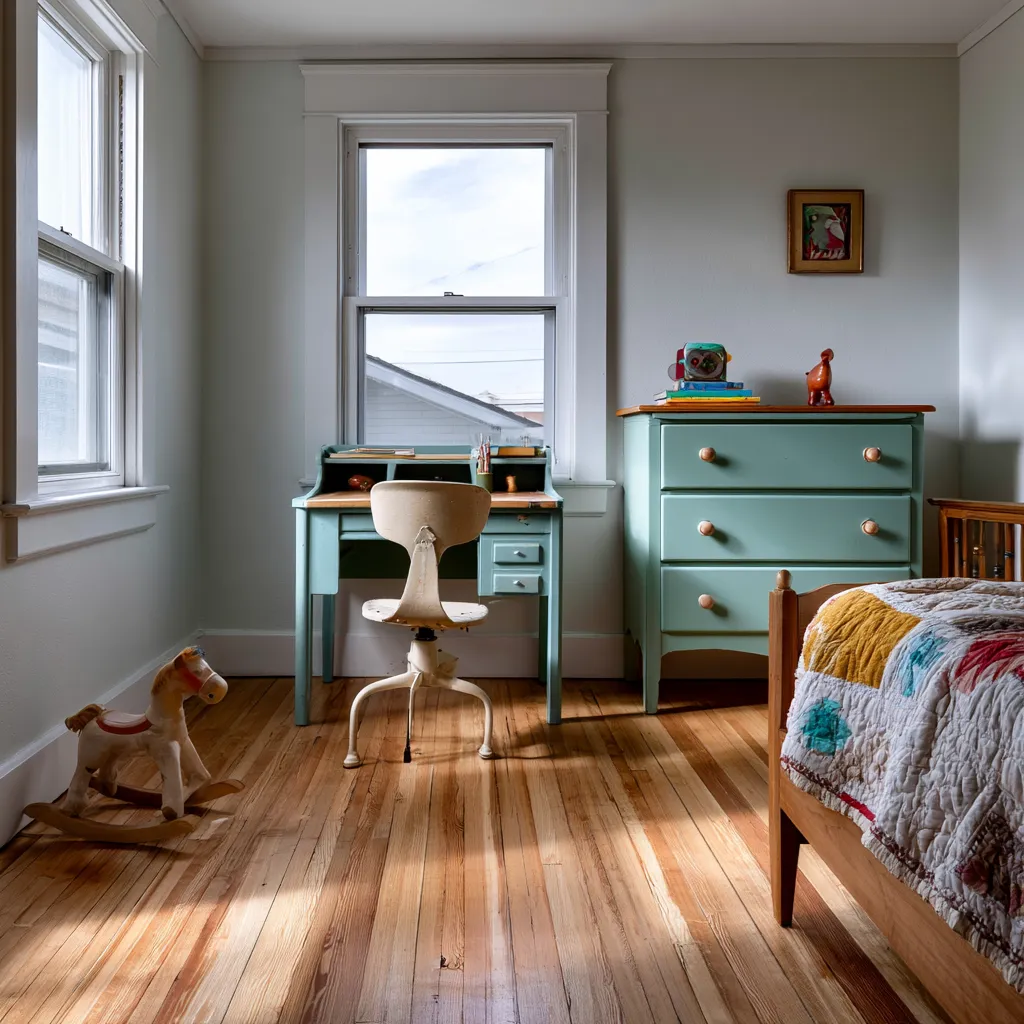
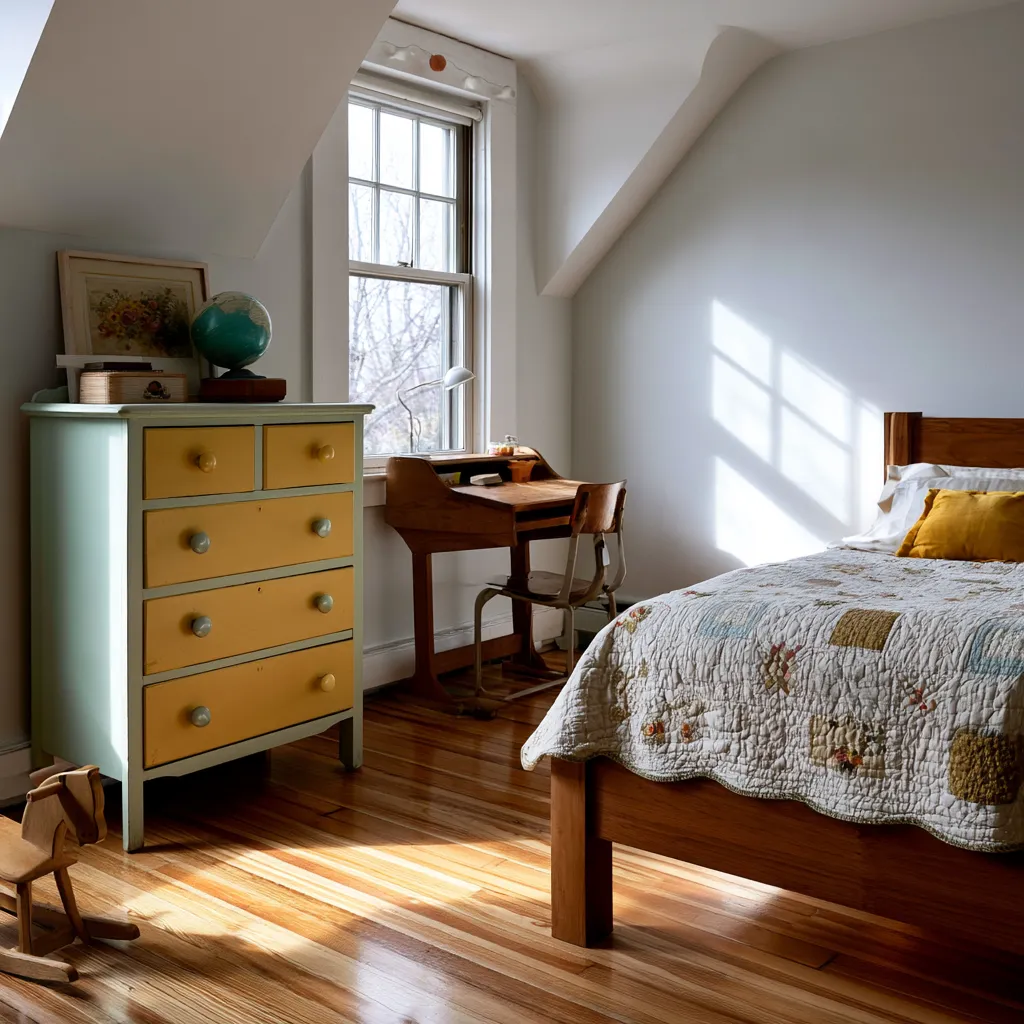
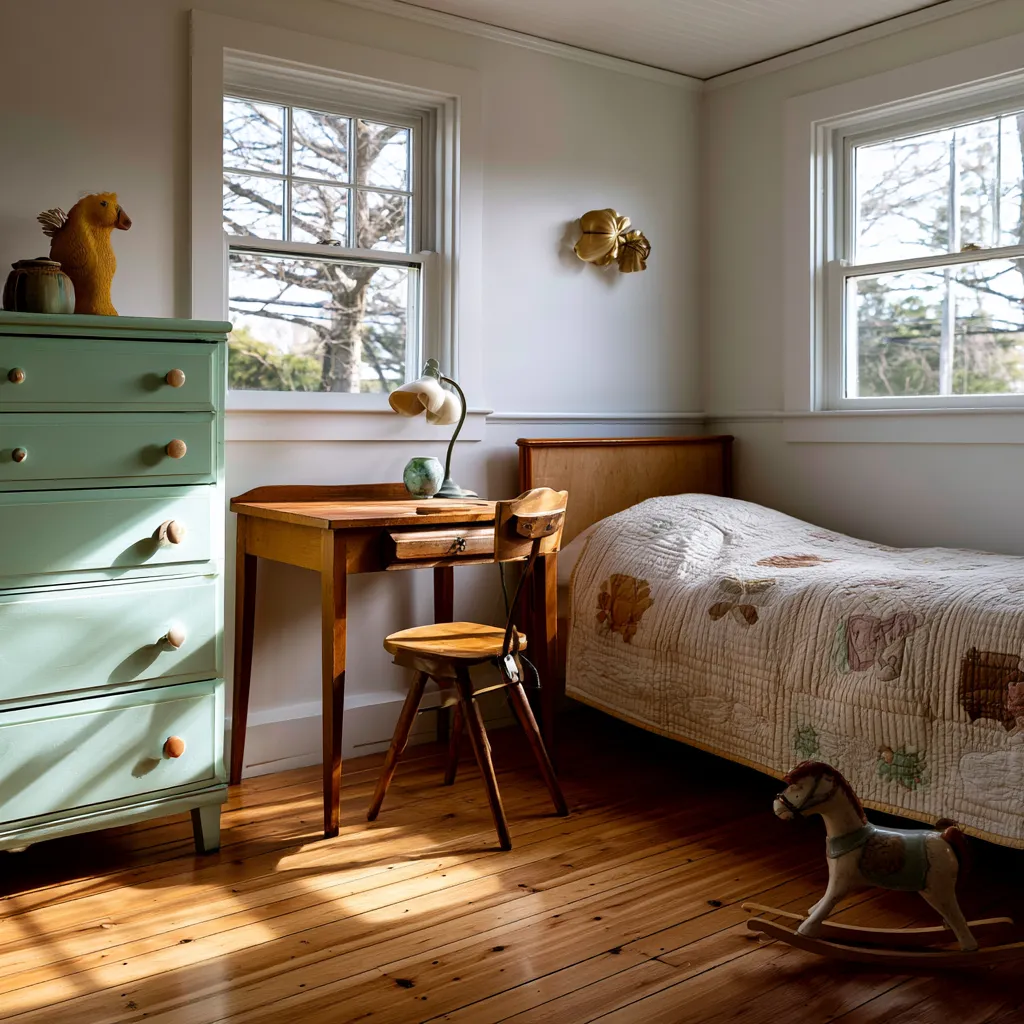
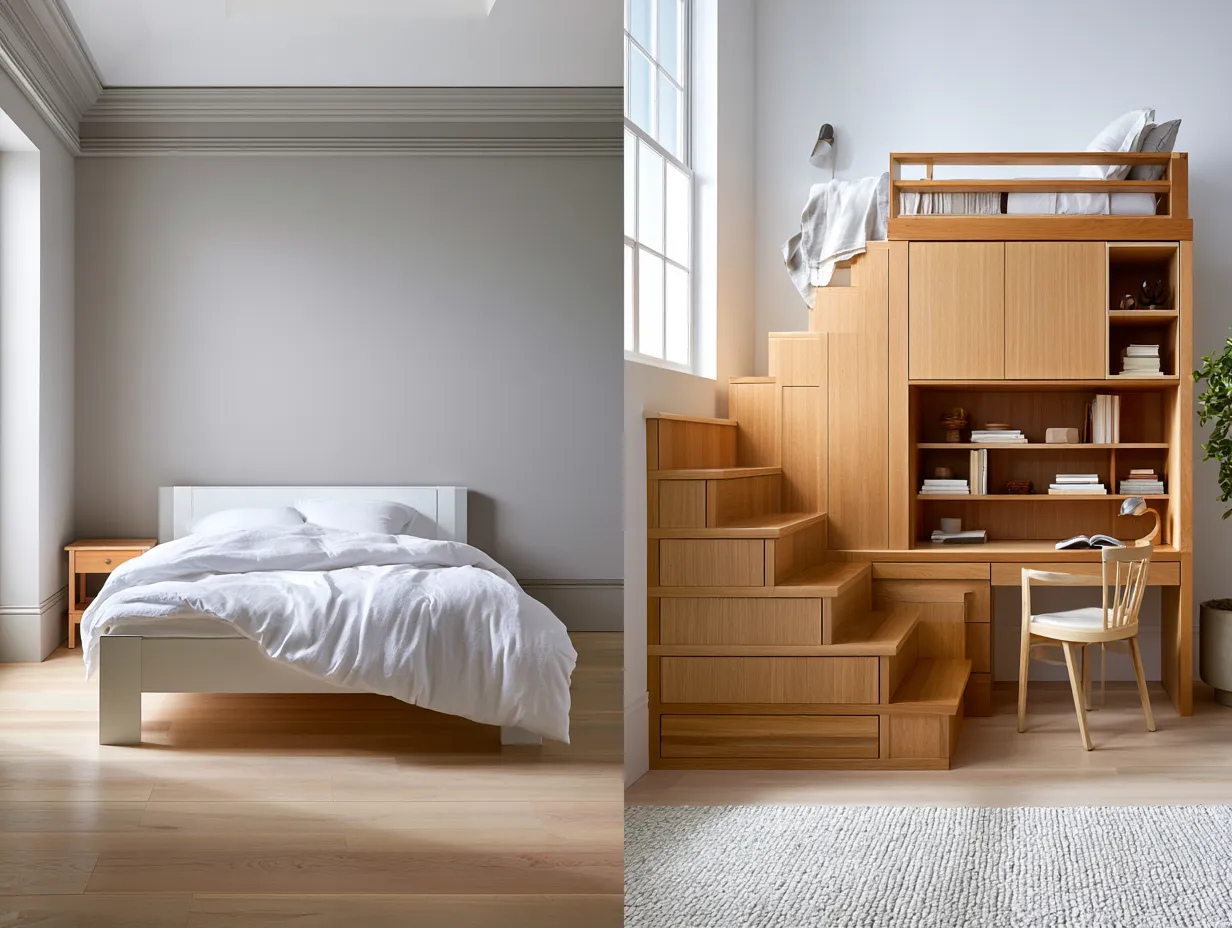
What does that look like practically? A dedicated art corner with a vintage school desk — the kind with the inkwell hole, findable on Etsy for $45 to $120 depending on condition — positioned under natural light signals to a child that making things matters. Stock it with a classic wooden art supply caddy, a set of Faber-Castell Polychromos colored pencils (around $40 for a 24-color tin), and a stack of drawing paper. No tablet. No charging cord. The corner communicates its own purpose.
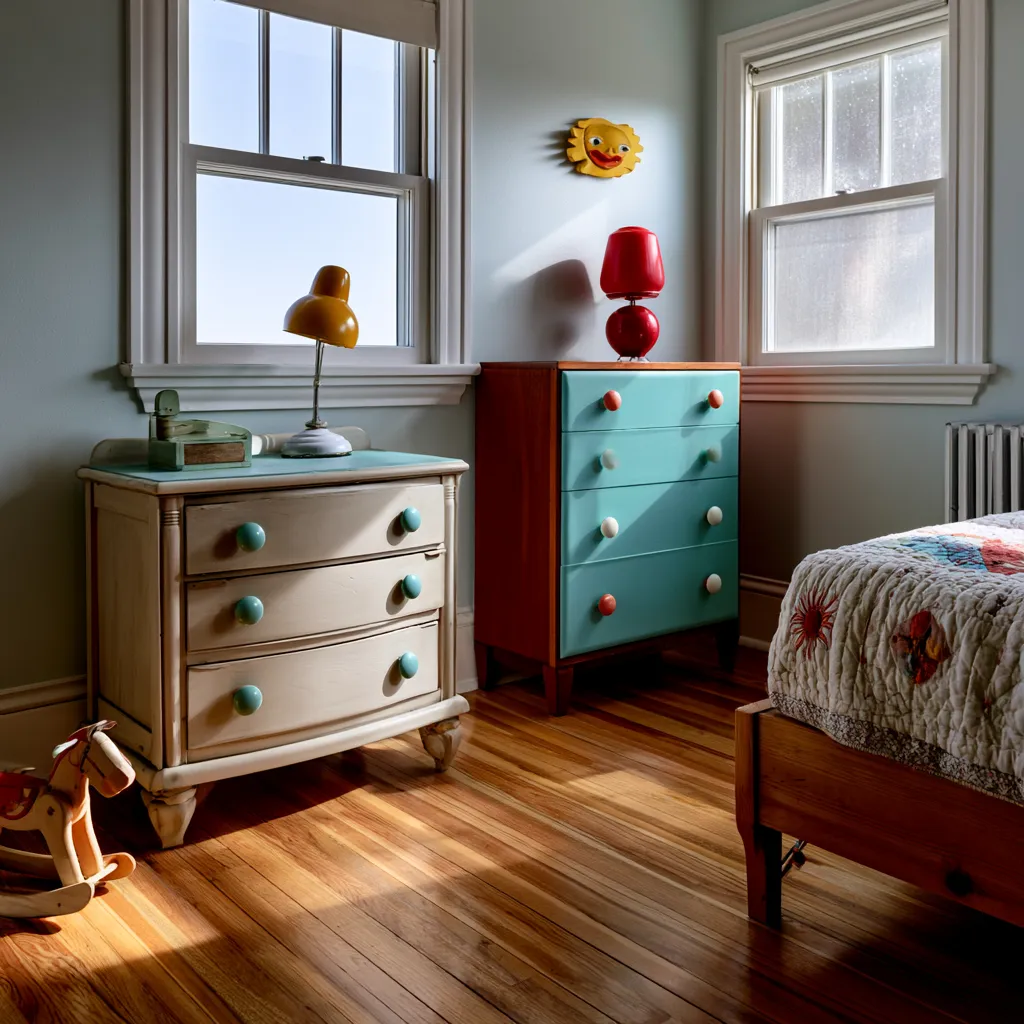
Upcycled sourcing is central to the 2026 retro aesthetic, and it also makes the design significantly more affordable. Pinterest’s trend data specifically highlighted upcycled baby clothes and vintage kids’ fashion searches surging — the same instinct applies to furniture. A painted dresser from Facebook Marketplace for $40, refinished in Sherwin-Williams’ Antique White with new ceramic knobs from Anthropologie ($6 each), becomes a centerpiece that no flat-pack furniture can replicate. The slight imperfections in the finish are the point.
Over the past six years, 88% of Pinterest’s trend predictions have come true. That’s not a trivial number. It means that if you’re designing a kids’ room right now and you’re not accounting for the nostalgia wave, you’re building toward a look that will feel dated faster than the trend you’re ignoring. The retro kids’ room aesthetic has staying power precisely because it’s rooted in emotional memory rather than fashion-cycle color palettes.
Don’t attempt to complete this room in one weekend shopping trip. The rooms that perform best on Pinterest — and more importantly, feel most magical to the children who live in them — were assembled over time, one meaningful object at a time. A vintage globe from a library sale. A hand-me-down rocking horse. A quilt sewn by a grandmother. These objects cannot be rushed into existence, and rushing them produces a costume rather than a room. The magic is in the accumulation, not the installation.
FAQ
What era is the retro kids room trend focused on in 2026?
Pinterest's 2026 data spans multiple decades, with searches for 1970s toys up 125% and 2000s nostalgia also surging separately. The strongest design results come from choosing one era — 1970s, late 1980s-early 90s, or early 2000s — rather than blending all three. The 'nostalgia core' aesthetic works best when it's specific and personal.
Where do I actually find authentic vintage kids furniture?
Facebook Marketplace, local estate sales, and Etsy shops specializing in vintage children's furniture are the most reliable sources in 2026. Jenny Lind beds, vintage school desks, and old steamer trunks appear regularly and typically cost between $30 and $150 depending on condition. Library sales and church rummage sales are underrated sources for vintage decor objects.
How do I make a retro kids room safe for young children?
The key is finishing and material selection. Any vintage wooden furniture should be checked for lead paint using an inexpensive test kit before refinishing — then sealed with a non-toxic water-based finish. Crocheted and textile pieces should be washed and inspected for loose fibers. Vintage toys displayed on high shelves keep small-part items out of reach of toddlers.
Is the retro kids room trend expensive to pull off?
It doesn't have to be. The most-praised rooms in this aesthetic are built primarily from secondhand sourcing, where a $40 dresser refinished with a $15 can of paint outperforms anything from a furniture showroom. Costs rise when parents pursue new reproduction pieces, which also tend to undermine the authentic feeling the trend depends on.
Can I incorporate a retro aesthetic in a small kids' room?
Small rooms actually benefit from this approach because the design philosophy is inherently edited. A Jenny Lind bed, one wooden crate bookshelf, a crocheted mat, and a small art corner can define the entire aesthetic in a 10-by-10 space. The key is restraint — fewer, more intentional objects read as designed rather than cluttered.
What colors work best for a retro kids room in 2026?
The 2026 palette skews warmer than recent minimalist trends. Sunflower yellow, burnt sienna, dusty sage, and warm cream dominate the top-performing rooms on Pinterest. Benjamin Moore's Pumpkin Cream and Sherwin-Williams' Antique White are both commonly referenced. Avoid the cool grays and stark whites associated with the preceding decade of Scandinavian-influenced nurseries.
Save this
Retro Kids Room Decor Works Because Childhood Memory Is the Strongest Design Language
The best retro kids' rooms being built right now aren't copying a decade — they're recreating a feeling. Warmth, tactility, the smell of wooden toys, the weight of a real book. Those things don't go out of style because they were never really about style to begin with. The trend data confirms the momentum, but the reason it resonates is entirely human.
Start with one authentic object. One vintage desk, one crocheted mat, one classic toy displayed with intention. Build slowly, source thoughtfully, and resist the pull of the one-weekend room. Save this post.
📌 Save to Pinterest