Quick Scan
- Start with one large mudcloth or kuba cloth anchor — frame it, drape it, or use it as a statement pillow cluster before adding anything else.
- Layer rugs: a jute base under $50 topped with a geometric African-pattern kilim creates depth that a single rug never achieves.
- Vary basket sizes dramatically when wall-clustering — odd numbers and size contrast create the organic, collected-over-time feeling the aesthetic requires.
- Carved wood and handmade terracotta ceramics add three-dimensionality that keeps a textile-heavy room from feeling flat.
- Source at least one piece directly from an African artisan or Black-owned maker — it raises the authenticity of every object around it.
Afrohemian decor is the interior movement that Pinterest named its number one home prediction for 2026, and the numbers back it up — searches for afrobohemian home decor are up 220% year over year, with adire fabric alone climbing 130%. The appeal is not hard to understand. Mudcloth, handwoven baskets, Nigerian indigo textiles, and carved wood bring something that a beige sofa and a generic gallery wall simply cannot: a room that feels like it belongs to someone. This is how you build that feeling, layer by layer, without it looking like a mood board gone wrong.
Start With Mudcloth And Adire Fabric As Your Foundational Anchors
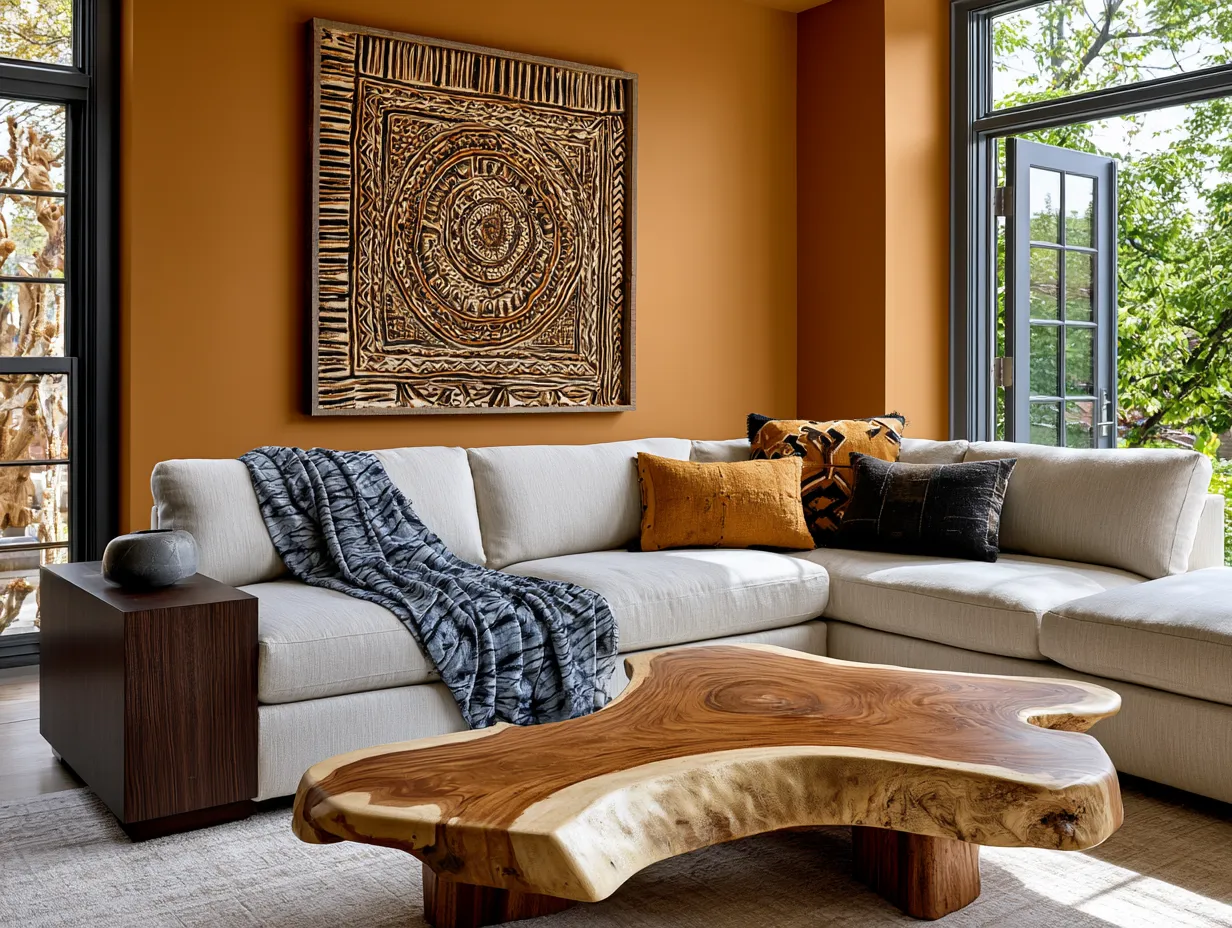
Every strong afrohemian living room starts with one big, culturally grounded piece. Michelle Gage, founder of Michelle Gage Interior Design, puts it plainly: plan the whole room around that anchor. For most people, that anchor is a textile — and mudcloth is the right place to start. Bogolanfini, originating from Mali, is a hand-woven cotton fabric dyed with fermented mud. Its geometric black-and-white or rust-colored patterns carry visual weight immediately. Use it as a throw pillow, drape it over a sofa arm, or frame a large panel as wall art above a media console.
Adire fabric is the next layer. This indigo-dyed cloth comes from the Yoruba people of Nigeria and produces the kind of deep, saturated blue that pairs exceptionally well with dark wood furniture — think espresso-stained shelving or a raw-edge acacia coffee table. If your room already leans warm and earthy, adire adds contrast without coldness. That is a distinction worth holding onto. Say Goodbye To Millennial Gray And Hello To Rich Chocolate Brown Interiors — the shift toward deep, warm tones is already well underway, and adire slots into that palette with ease.
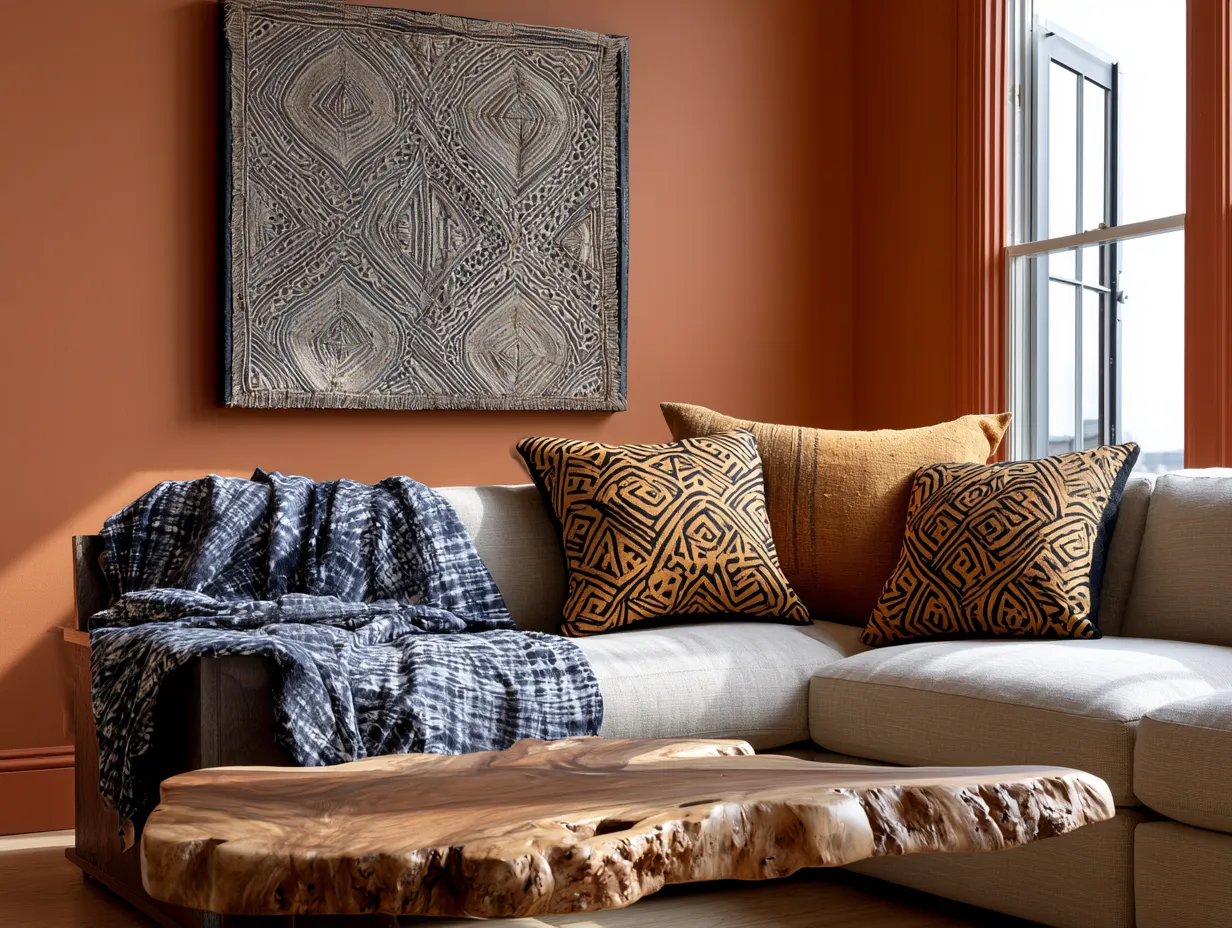
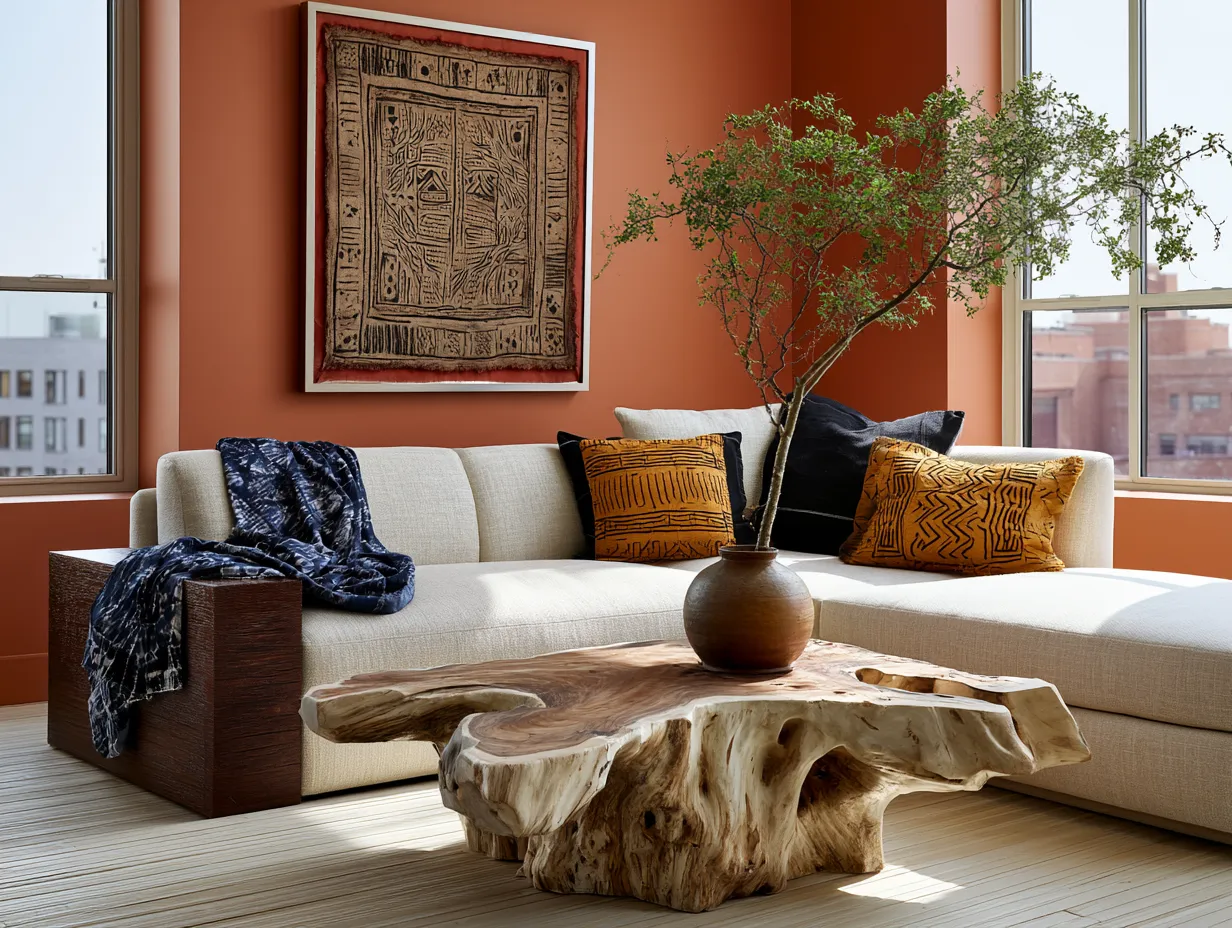
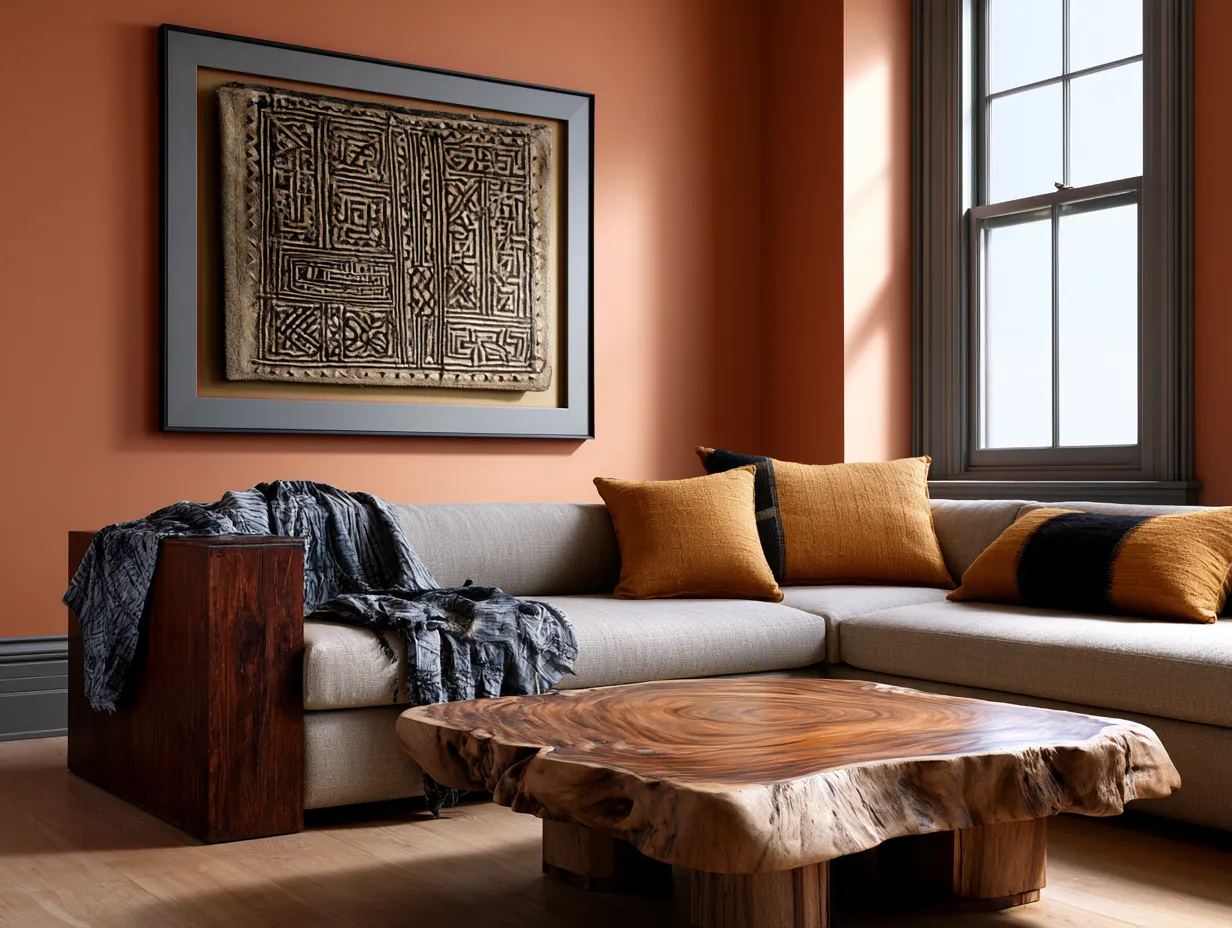
Kuba cloth is the third foundational textile worth knowing. Handwoven from raffia palm fibers by artisans in the Congo, it features bold geometric patterns in ochre, cream, and black. Designer Reynolds recommends it specifically: its graphic geometry anchors a space and brings cultural depth whether used as pillows, throws, or framed as art. The St. Frank Ecru Figures Kuba Cloth Rod Pocket Curtain — available in a striking black and white cotton-linen blend in four lengths — is one of the most direct ways to introduce the pattern at scale without overwhelming a room.
What is the biggest mistake people make when starting? Buying one token mudcloth pillow and calling it done. A single textile piece does not create an afrohemian room — it creates a room that almost got there. You need at least two to three textile anchors working together before the layering logic starts to read. Scatter them across different elevations: one at floor level, one on the sofa, one on the wall. Do not cluster them all in one corner hoping they will do the work from there.
Color is not an afterthought here. Reynolds notes that afrohemian leans into warm, sunbaked hues — ochre, clay, burnt sienna, deep browns, olive, and sand — often balanced with black for contrast, not pastel boho tones. That is a crucial distinction. If your starting palette is blush and cream, you are building a different room. The 2026 afrohemian palette uses terracotta and warm beige as base tones, then layers in burnt orange, mustard yellow, indigo blue, and forest green as accents, with antique brass and copper metallics to close the loop.
Don’t Do This
- Do not buy one token mudcloth pillow and stop — a single textile piece reads as an accessory, not an aesthetic. You need at least two to three anchors across different elevations before the layering logic lands.
- Do not use matching basket sets — uniform size and finish from a big box store contradicts the gathered, multi-origin feeling that makes afrohemian rooms feel warm rather than merchandised.
- Do not bring in mass-produced animal print thinking it reads as African-inspired — leopard throws flatten cultural specificity into costume, and they compete with the craft-rooted palette rather than supporting it.
- Do not cluster all your textiles in one corner — spread anchors across floor level, sofa height, and wall height so the eye moves through a complete room rather than a decorated section of one.
Layer Natural Fiber Rugs And Woven Baskets To Build Depth From The Floor Up
Rugs are where afrohemian layering becomes most literal — and most satisfying when done right. The formula is simple: a natural fiber base rug underneath a smaller patterned rug to create depth. A jute base rug from Amazon runs under $50 and gives you a neutral, textural foundation that reads as intentional rather than cheap. On top of that, a mudcloth-inspired patterned kilim or an African geometric wool rug pulls the whole textile story upward into the room. The Ruggable x Justina Blakeney Hilma Sunset Rug is one of the most cited afrohemian-infused foundational pieces right now — its warm sunset palette bridges African craft aesthetics with practicality.
Woven baskets deserve more credit than they get. Most people hang one or two on a wall and stop there. In an afrohemian room, baskets function as both art and storage — large coiled Tonga baskets from Zimbabwe in sorghum or grass work beautifully clustered in odd numbers on a white or clay wall. The asymmetry is the point. A tight, symmetrical grid of identical baskets kills the organic warmth that makes this aesthetic work. Let sizes vary dramatically: a 24-inch basket next to a 10-inch basket next to a 16-inch basket creates visual rhythm that feels collected over time.
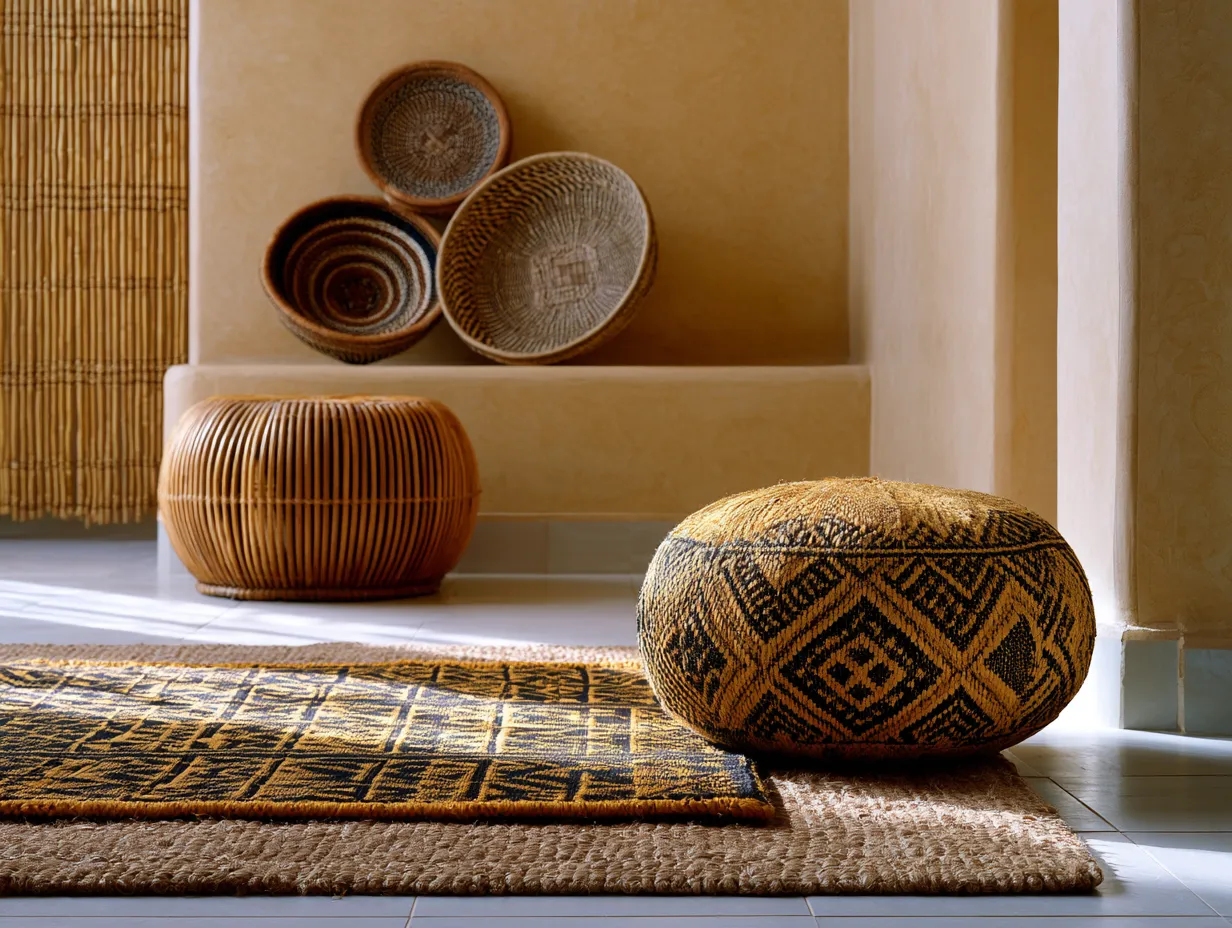
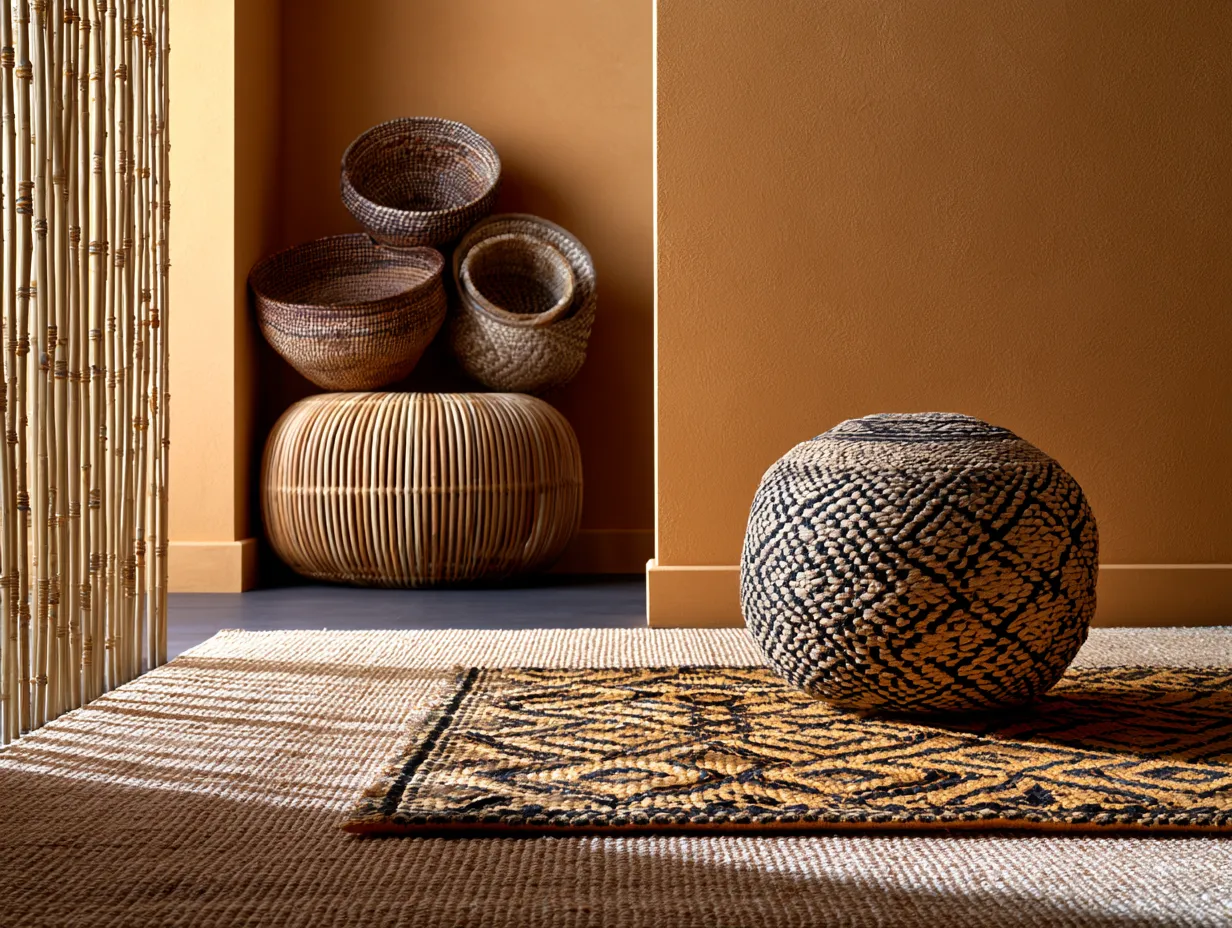
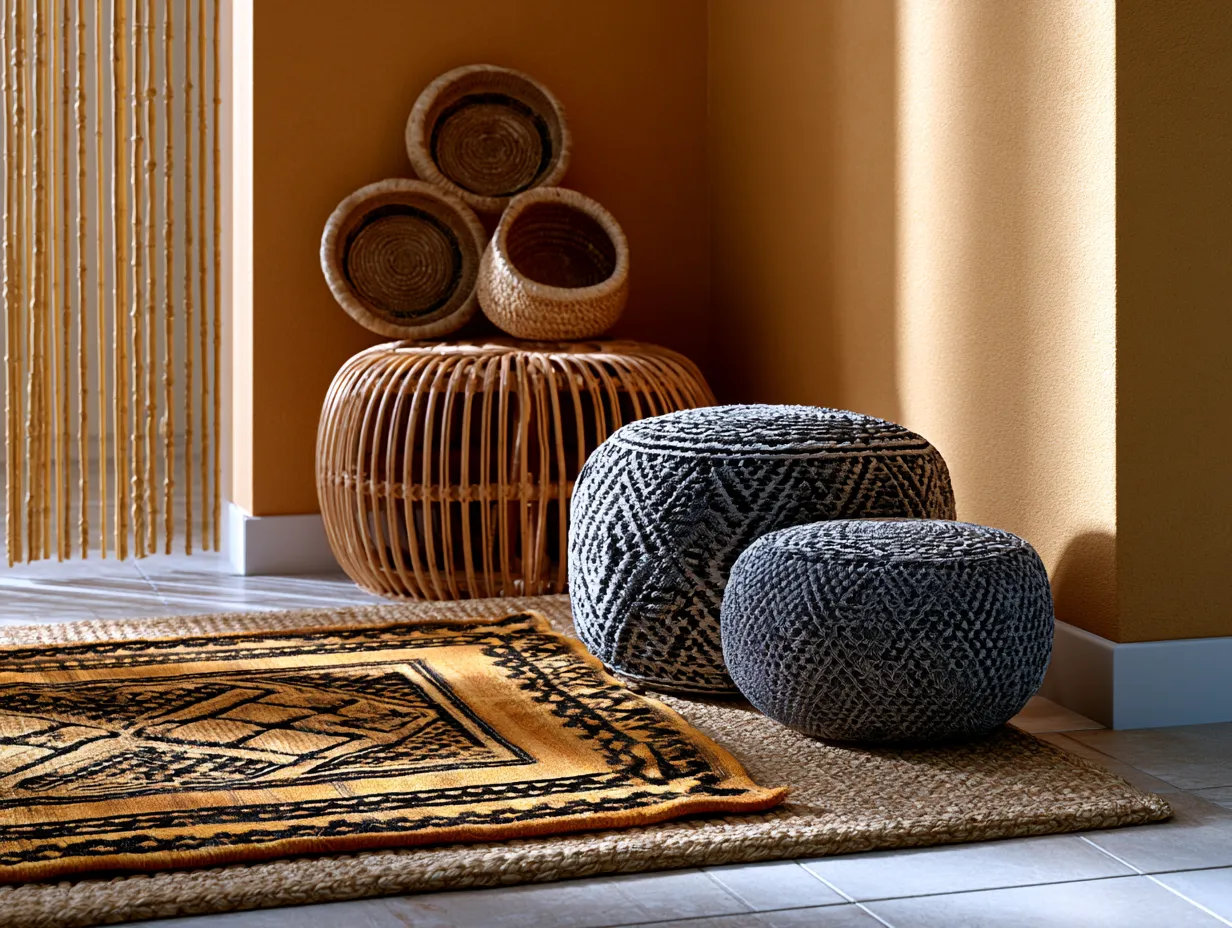
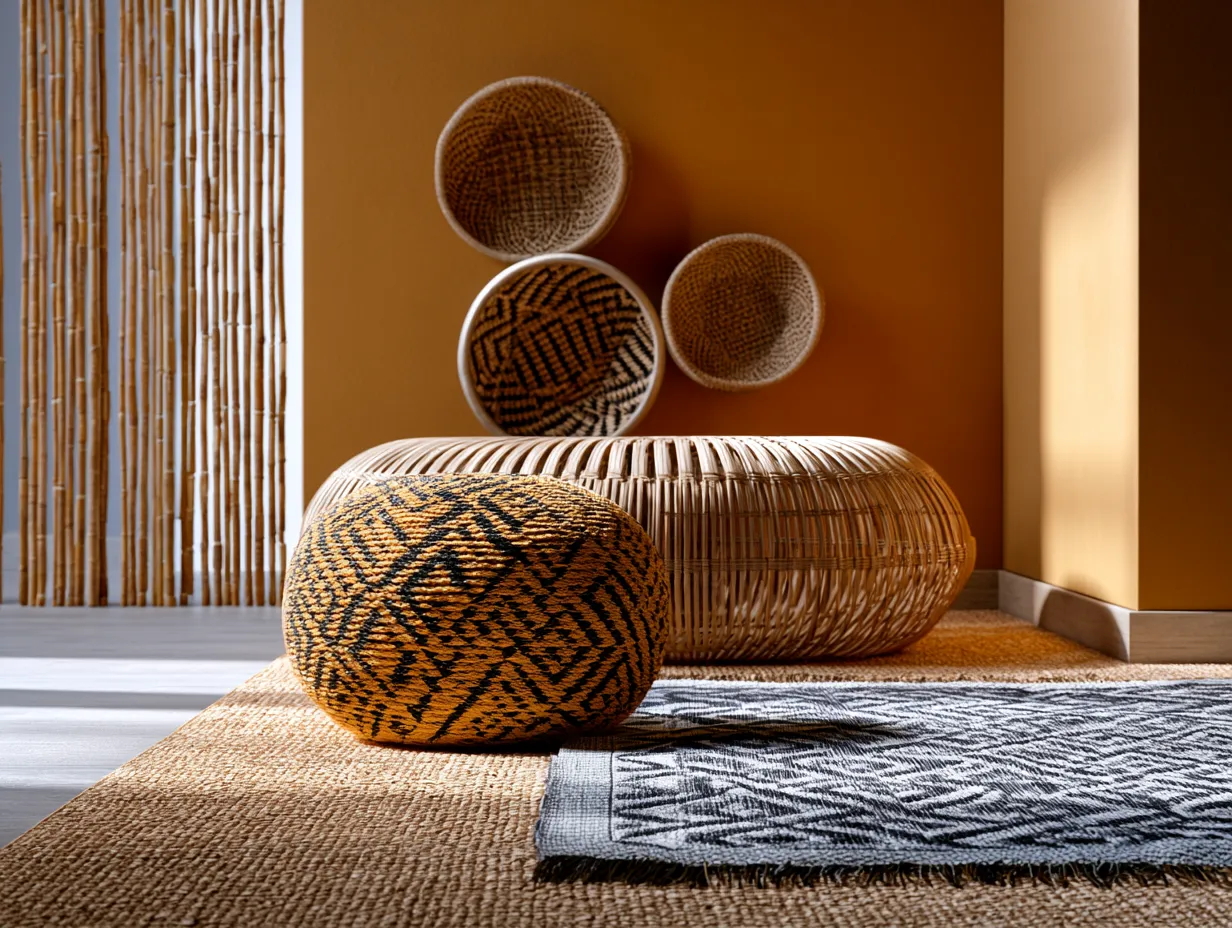
Bamboo beaded curtains are having a significant moment — searches on Pinterest are up 60% year over year. Used as a doorway divider or even a room partition, they add movement and sound that no static textile can replicate. Pair them with rattan pendant lights overhead and the connection between ceiling and floor suddenly reads as deliberate. Consistent interior styling with faux plants across locations is worth considering here too — a tall fiddle-leaf fig or a clustering of trailing pothos in woven terracotta planters reinforces the natural fiber language without requiring a full plant maintenance commitment.
London textile designer Eva Sonaike’s Kano collection offers cushions, pouffes, lampshades, wallpaper, and fabric by the meter in African-inspired colorful patterns — all designed to work together in a layered room context. A Kano pouffe used as a footrest or side table brings the woven texture down to floor level, which grounds the whole composition. That grounding is what separates an afrohemian room from a room with African accessories.
Do not use matching sets. A matching jute basket set from a big box store, all the same size and finish, works against the entire principle of this aesthetic. Afrohemian gets its warmth from the sense that objects were gathered from different makers, different regions, different moments. Even if you buy everything in one afternoon, choose pieces that look like they have different origins. Mix a smooth coiled grass basket with a rough sisal tote with a hammered terracotta pot. Variation is the texture.
| Textile | Origin | Best Use In A Living Room |
|---|---|---|
| Mudcloth (Bogolanfini) | Mali | Throw pillows, framed wall art, sofa drape |
| Adire Fabric | Yoruba, Nigeria | Accent cushions, table runner, small framed panel |
| Kuba Cloth | Congo | Curtain panels, large wall art, upholstery accent |
| Jute Rug | Global / Natural Fiber | Base layer rug under a patterned kilim |
| Raffia / Rattan | West Africa / Southeast Asia | Baskets, pendants, pouffes, beaded curtains |
Carved Wood Accents And Handmade Ceramics Close The Afrohemian Room
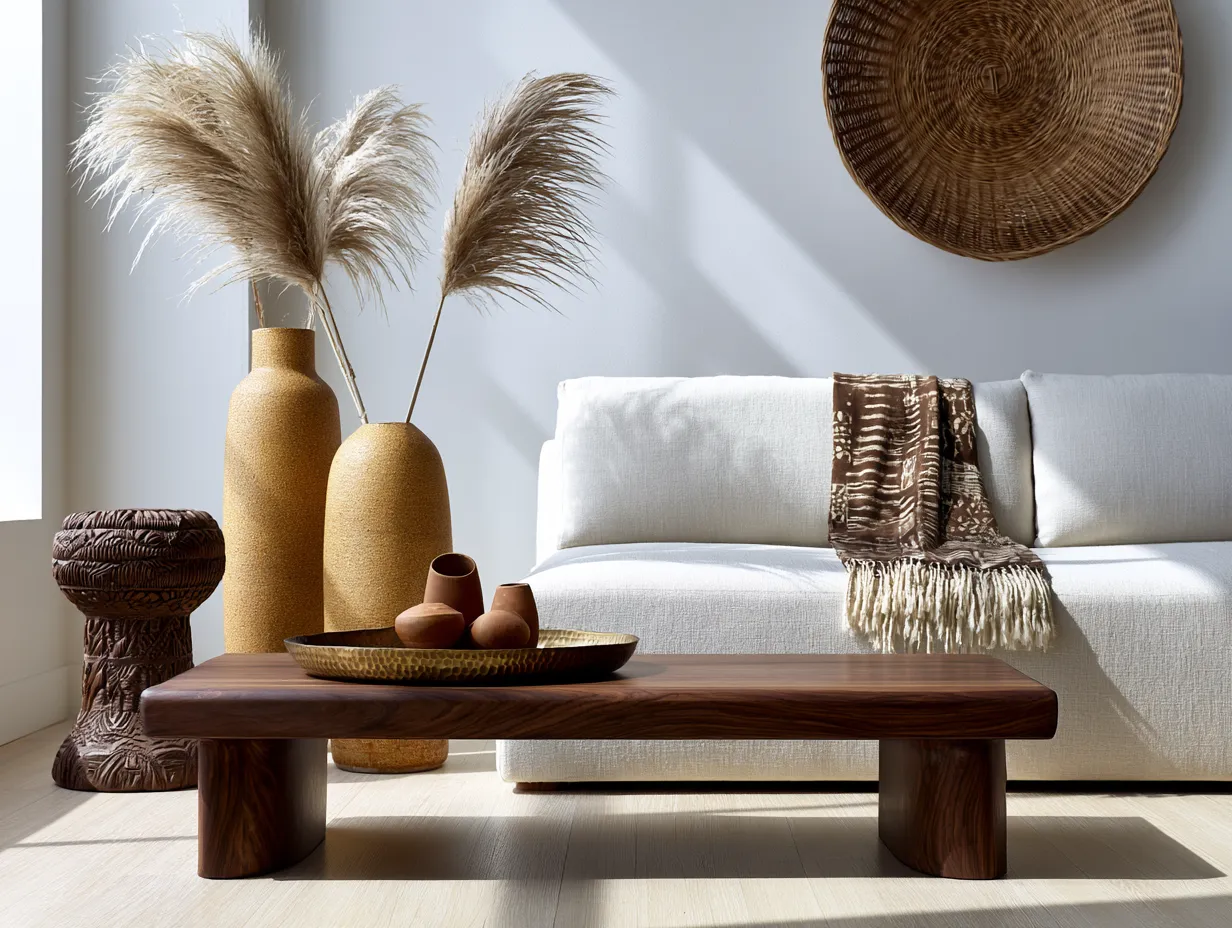
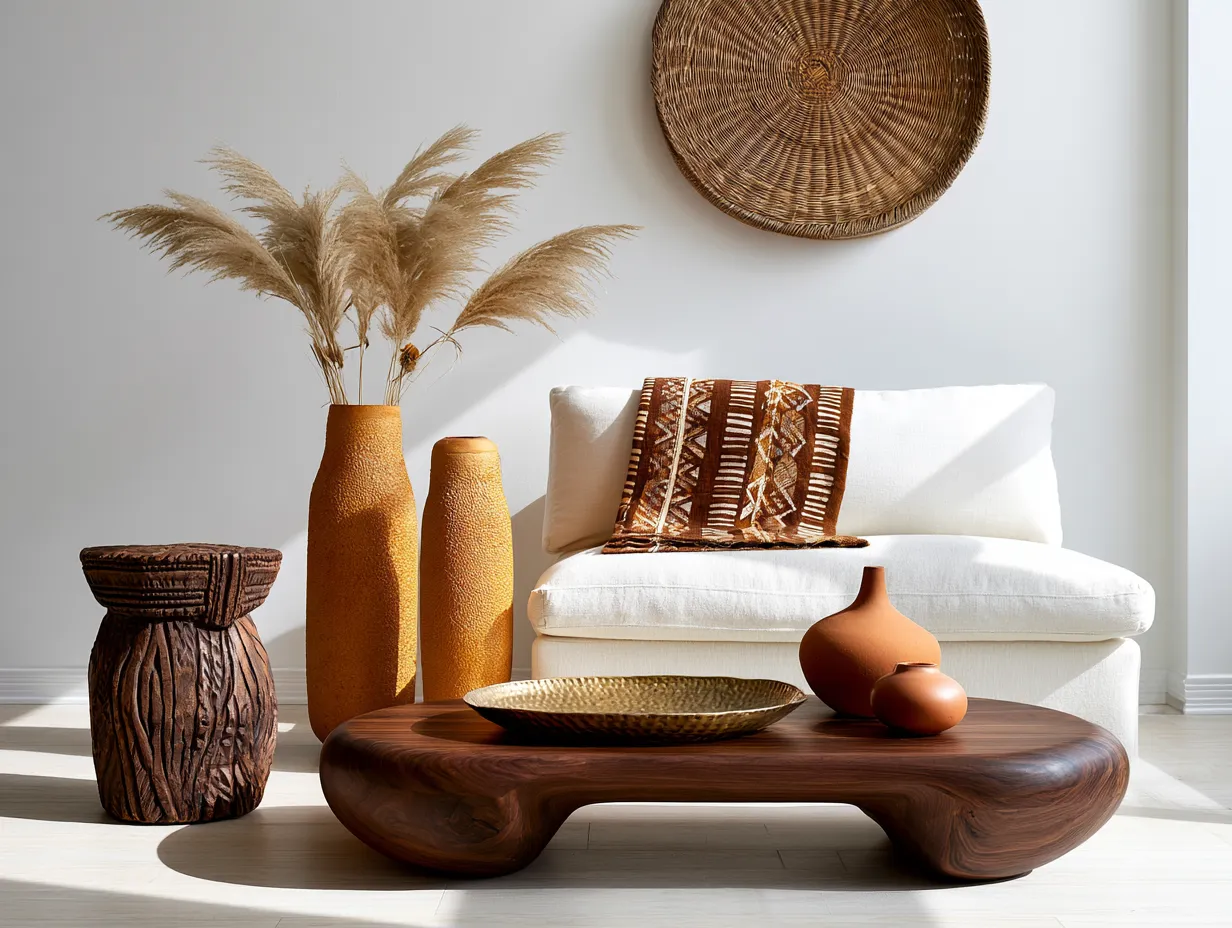
Raw wood and handmade ceramics are what keep afrohemian decor from sliding into a flat textile showcase. Carved wood — think stools, side tables, decorative masks, or sculptural candleholders — introduces three-dimensionality that woven fabrics cannot provide alone. A carved Ghanaian fertility doll used as a bookend, a set of hand-turned mango wood bowls stacked on a console, or a low Moroccan-style carved coffee table in dark walnut all serve the same structural purpose: they anchor the organic palette in something solid and ancient-feeling. The weight matters as much as the pattern.
Handmade ceramics in terracotta, ash glaze, or deep ochre slot naturally into the 2026 afrohemian palette. A pair of tall terracotta vases — one textured, one smooth — holding dried pampas grass or bundled sorghum stalks adds vertical interest without competing with the textiles. Antique brass and copper details close the metallic layer: a brass tray on the coffee table, copper candle sconces on the wall, a patinated bronze figurine on a shelf. These metallics warm the entire room in a way that chrome or silver never could in this context.
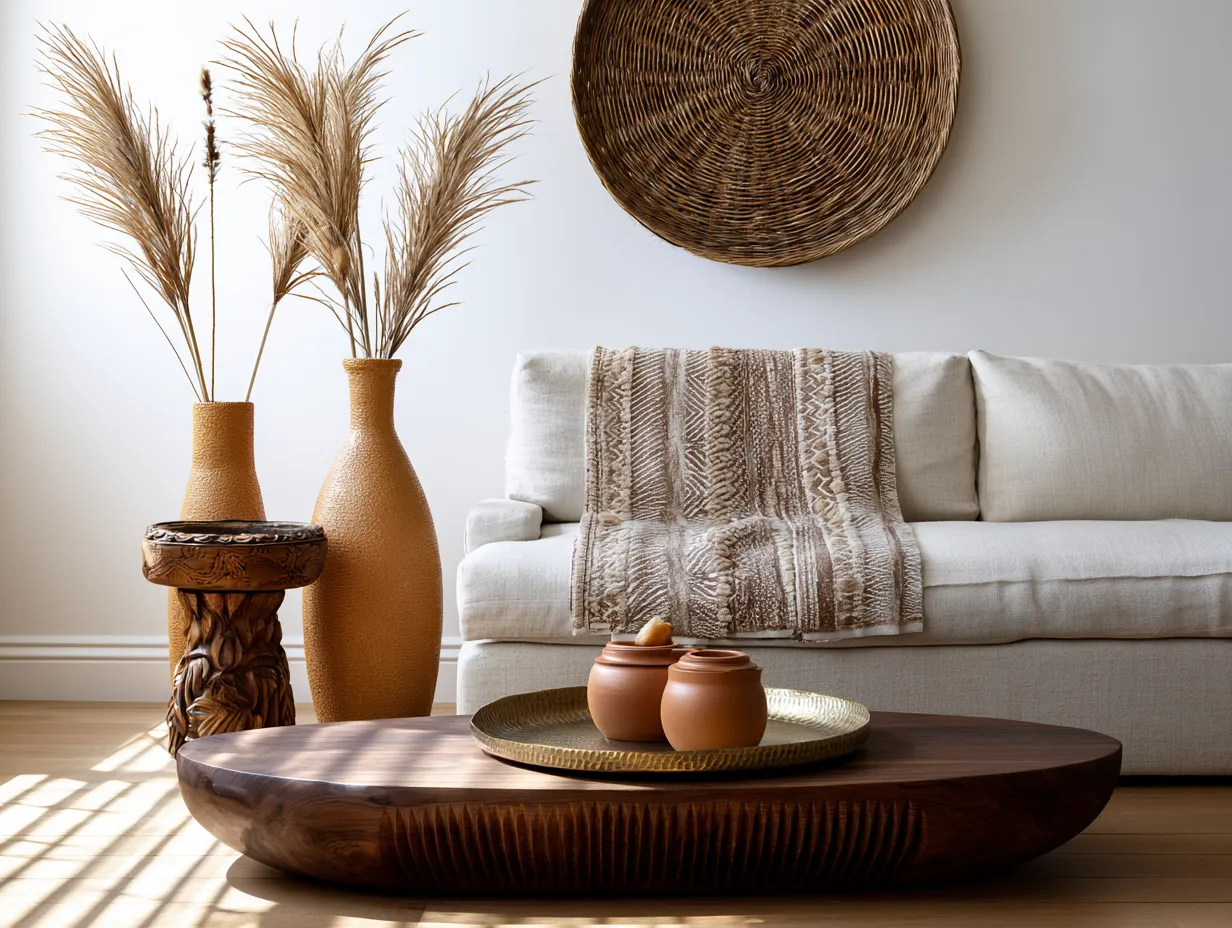
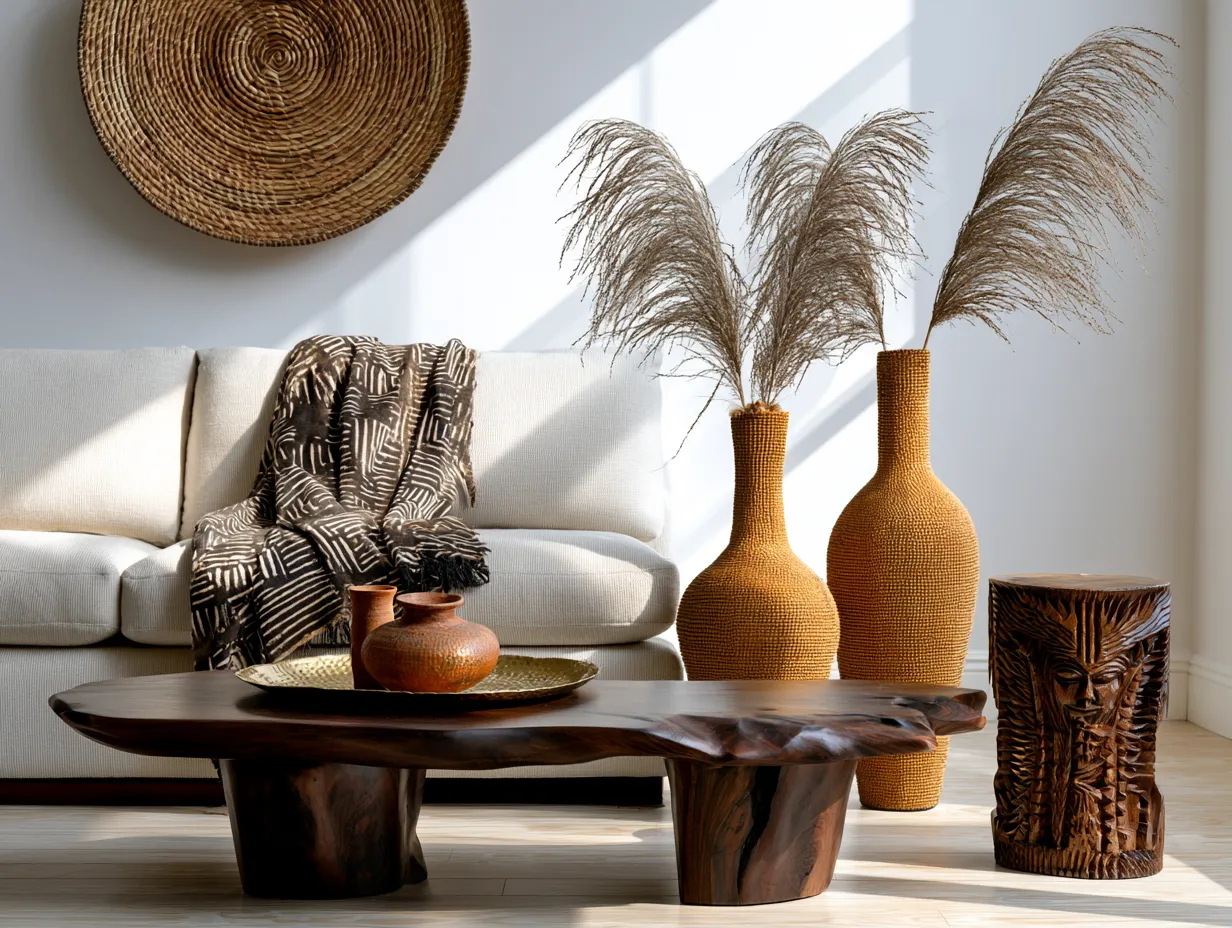
Is it necessary to source everything directly from African artisans? Not always, but Reynolds is clear: when possible, sourcing from African artisans or Black-owned makers adds authenticity and supports the communities that inspire the look. Practically, this means checking platforms like Etsy for Nigerian textile sellers, browsing Novica for fair-trade African craft, or investing in one key piece — a hand-carved stool, a single mudcloth panel — that came directly from its origin. The rest of the room can be assembled more broadly. One genuine piece raises the integrity of everything around it.
A note on what not to bring in: mass-produced animal print. Leopard-print throw pillows from a fast fashion home brand share zero DNA with afrohemian decor, but they get pulled in regularly because people conflate African aesthetic with African wildlife imagery. They flatten the room’s cultural specificity into a costume. The distinction between craft-rooted design and safari-themed decoration is not subtle once you know to look for it. Keep the reference points in textiles, fiber, clay, and carved wood — not in animal skin approximations.
42% of global Pinterest respondents say they only participate in trends that suit them — and that number captures exactly why afrohemian is resonating so broadly. It is not prescriptive. A room can go deep into mudcloth and carved wood with very few other elements, or it can introduce just two or three afrohemian pieces into an otherwise neutral space. The global home textile market is valued at USD 143 billion and growing at 5.6% annually through 2032 — the craft and textile category is not slowing down, and neither is the consumer appetite for interiors that feel personally rooted rather than generically assembled. Your living room does not need a rebrand. It needs one honest layer at a time.
FAQ
what is afrohemian decor
Afrohemian decor blends African cultural heritage — mudcloth, handwoven baskets, adire fabric, carved wood — with the layered warmth of bohemian interior style. Pinterest named it the top home decor prediction for 2026. It prioritizes craft, natural materials, and warm earthy tones over generic or mass-produced aesthetics.
how do I use mudcloth in a living room
Mudcloth works at multiple scales — as throw pillow covers, as a draped sofa blanket, or framed as wall art above a console or media unit. Its geometric black-and-white or rust patterns carry enough visual weight to anchor an entire seating area. Start with one large panel or a cluster of three pillow covers before adding other textile layers.
what colors go with afrohemian decor
The 2026 afrohemian palette is built on terracotta, ochre, sand, warm beige, and deep espresso as base tones. Accent colors include burnt orange, mustard yellow, indigo blue, and forest green. Antique brass and copper metallics add warmth and close the color story without introducing anything cold or contemporary.
where can I buy authentic African textiles for home decor
Etsy hosts many independent Nigerian and West African textile sellers offering adire and mudcloth by the yard or as finished goods. Novica connects buyers with fair-trade African artisans directly. St. Frank carries kuba cloth curtain panels, and Eva Sonaike's Kano collection offers cushions, pouffes, and lampshades in African-inspired patterns available internationally.
how do I layer rugs in an afrohemian room
Start with a natural fiber base — a jute rug under $50 from Amazon works well — and layer a smaller patterned rug on top. The patterned layer can be a mudcloth-inspired kilim, a geometric wool rug, or the Ruggable x Justina Blakeney Hilma Sunset Rug. The base rug should be larger so its texture frames the patterned piece above it.
can afrohemian decor work in a small living room
Yes — in a small room, focus on one large textile anchor rather than many small ones. A kuba cloth curtain panel or a framed mudcloth piece on the main wall gives cultural weight without crowding the space. Use a single layered rug and one or two carved wood accents rather than filling every surface. Restraint in volume still delivers the aesthetic when the individual pieces are strong.
How To Layer An Afrohemian Living Room From Floor To Ceiling
Follow this sequence to build a layered, soulful afrohemian room without the pieces clashing or the palette losing its warmth.
-
1
Lay Your Natural Fiber Base Rug
Start with a jute or sisal rug sized to anchor the seating area — all main furniture legs should sit on or touch it. A jute rug under $50 from Amazon works as a foundation. This neutral layer gives the patterned rug above it something to contrast against.
-
2
Add A Patterned Rug On Top
Place a smaller mudcloth-inspired kilim or geometric African wool rug over the jute base, centered under the coffee table. The Ruggable x Justina Blakeney Hilma Sunset Rug is a strong choice. The size difference between base and top rug should be visible — at least 12 to 18 inches of jute showing around the edges.
-
3
Place Your Main Textile Anchor
Introduce one large mudcloth or kuba cloth piece at mid-height — either framed on the wall above the sofa or draped across the sofa back. This is the piece the room reads first. It should contain at least two of your palette colors to tie the layers together.
-
4
Layer Cushions Across Two Textures
Add three to five cushions in varying sizes using at least two different textiles — adire fabric and kuba cloth work well together. Mix a 22-inch square with an 18-inch square and a lumbar. Do not match them. The variation is what makes the arrangement feel gathered rather than packaged.
-
5
Build The Wall With Baskets And Carved Wood
Cluster three to five woven Tonga baskets on the wall in an asymmetric arrangement — vary sizes between 10 and 24 inches. Add one carved wood element nearby: a mask, a sculptural stool used as a pedestal, or a hand-turned bowl on a wall-mounted shelf. This closes the vertical story from floor rug to eye level to upper wall.
Save this
Afrohemian Decor Earns Its Warmth One Honest Layer At A Time
A living room built around mudcloth, adire fabric, hand-carved wood, and natural fiber rugs does not feel designed — it feels inhabited. That distinction is exactly what makes afrohemian decor the defining interior movement of 2026. Start with one strong textile anchor, build your palette around sunbaked earth tones, and let the layering accumulate slowly rather than all at once.
The room you are building is not trying to look like anyone else's Pinterest board. It is trying to look like yours. Save this post.
📌 Save to Pinterest