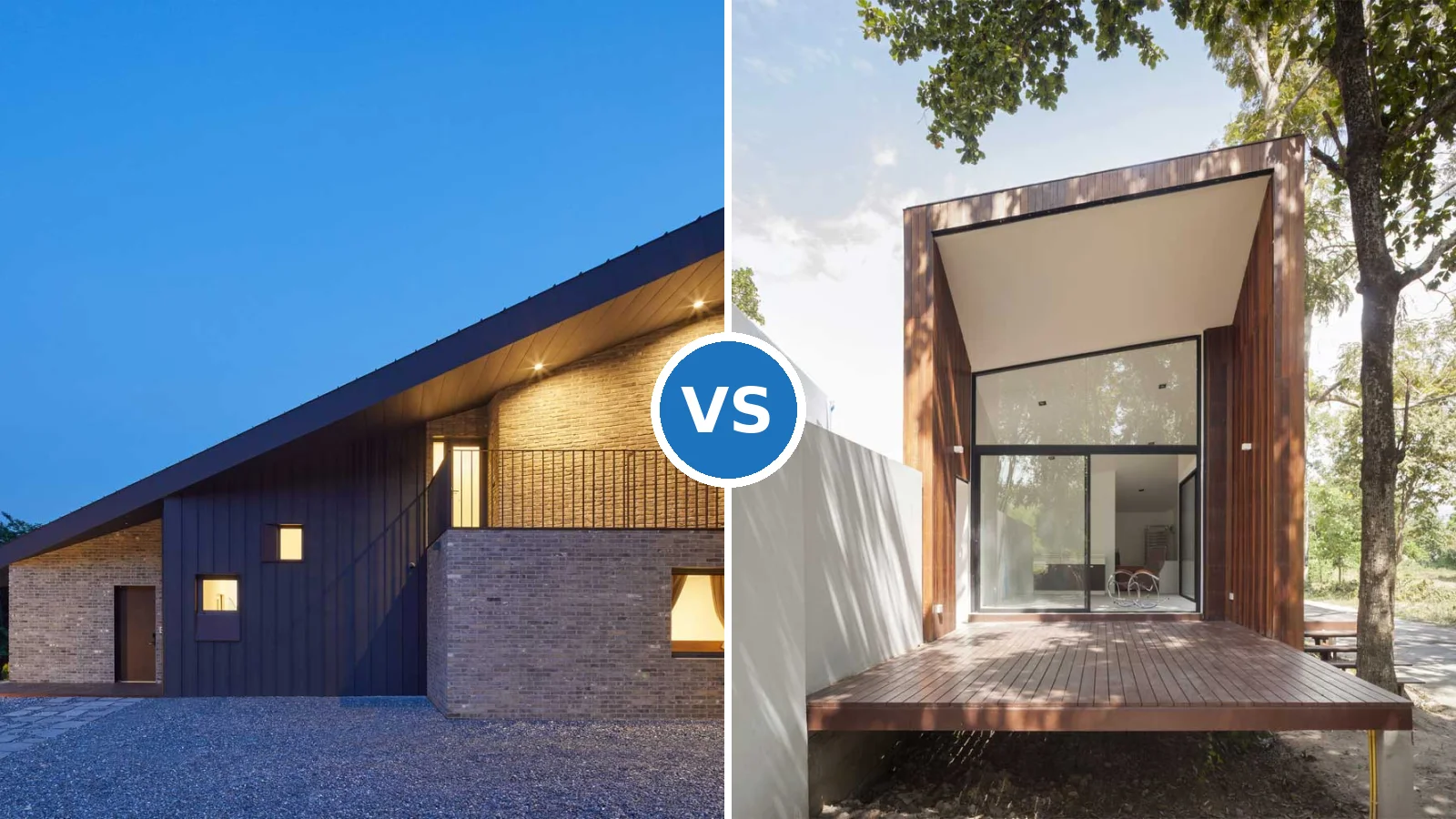
Entrance gate design shapes the first view of a property and can influence privacy, security, and curb appeal at the same time. The strongest solutions match the gate to the architecture instead of treating it as a separate object. Wrought iron suits classical homes, wood adds warmth, while steel and mixed materials create a cleaner modern entrance.
For a practical result, start with the driveway, available opening space, facade style, and desired level of visual privacy. Does the gate need to hide the property or simply define the boundary? That answer determines whether solid panels, open metalwork, slats, or a combination makes more sense, so choose the operating system and finish only after the basic proportions are settled.
Quick scan
- Wrought iron works naturally with classical facades and masonry pillars.
- Wood and metal create a warmer entrance while preserving a contemporary character.
- Solid or closely spaced panels provide more privacy than open decorative ironwork.
- Sliding gates are useful where swing clearance is limited.
- Well-maintained powder coating can remain serviceable for roughly 20 years or more, depending on conditions.
Classic Wrought Iron Sets the Tone for Entrance Gate Design
Classic wrought iron entrance gate design works especially well when the property already has stone, masonry, columns, or other formal architectural details. The open metal pattern gives the entrance a crafted appearance while allowing the surrounding facade and landscaping to remain visible. What makes this approach convincing is repetition: the gate should echo nearby railings, lanterns, hardware, or balcony details rather than introduce an unrelated motif, so keep decorative geometry consistent.
The first group of photographs shows how dark metal can contrast with substantial stone supports and still keep the composition balanced. A useful question is how much privacy the entrance actually needs: open scrollwork provides visibility, while denser panels block more of the property from view. Wrought iron is often associated with long service life, and specialist gate manufacturers commonly cite at least 10 years for properly maintained products, with some powder-coated finishes lasting around 20 years, so specify corrosion protection before choosing ornament.


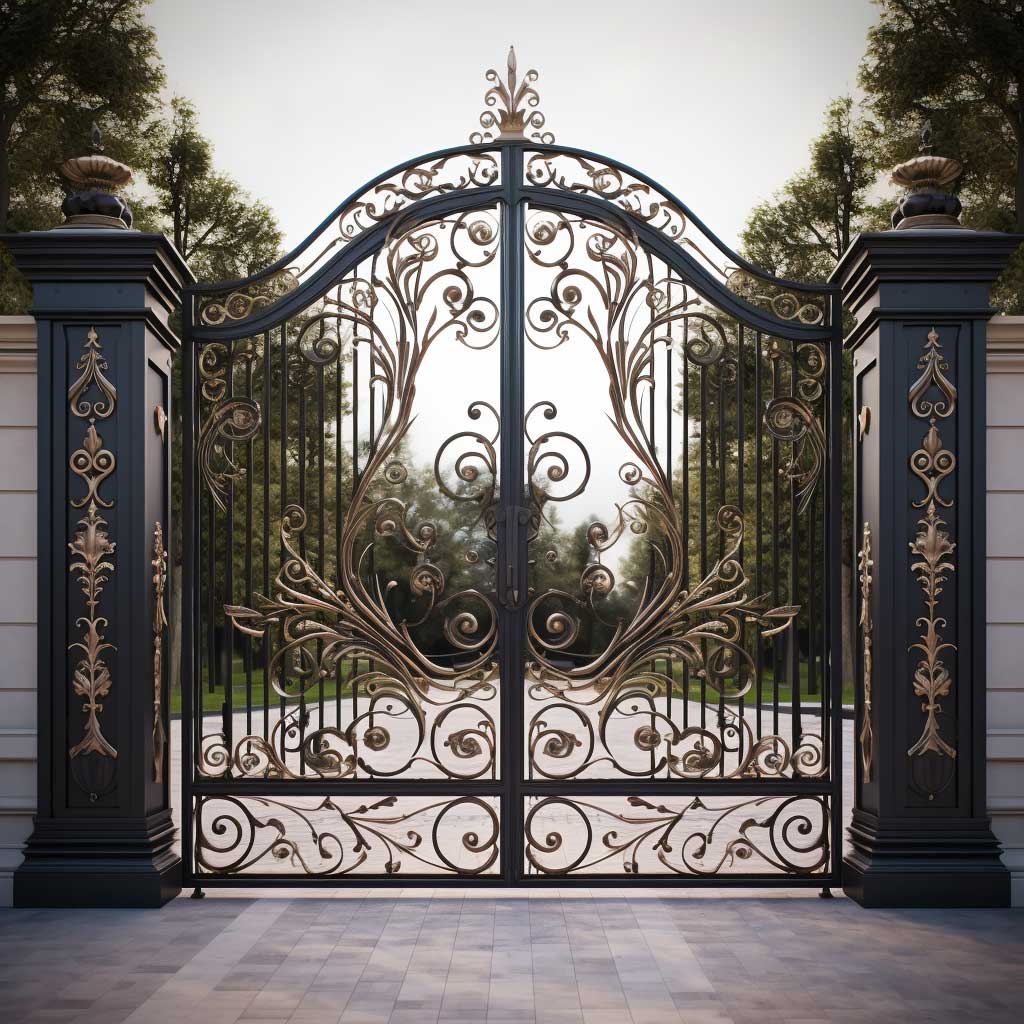
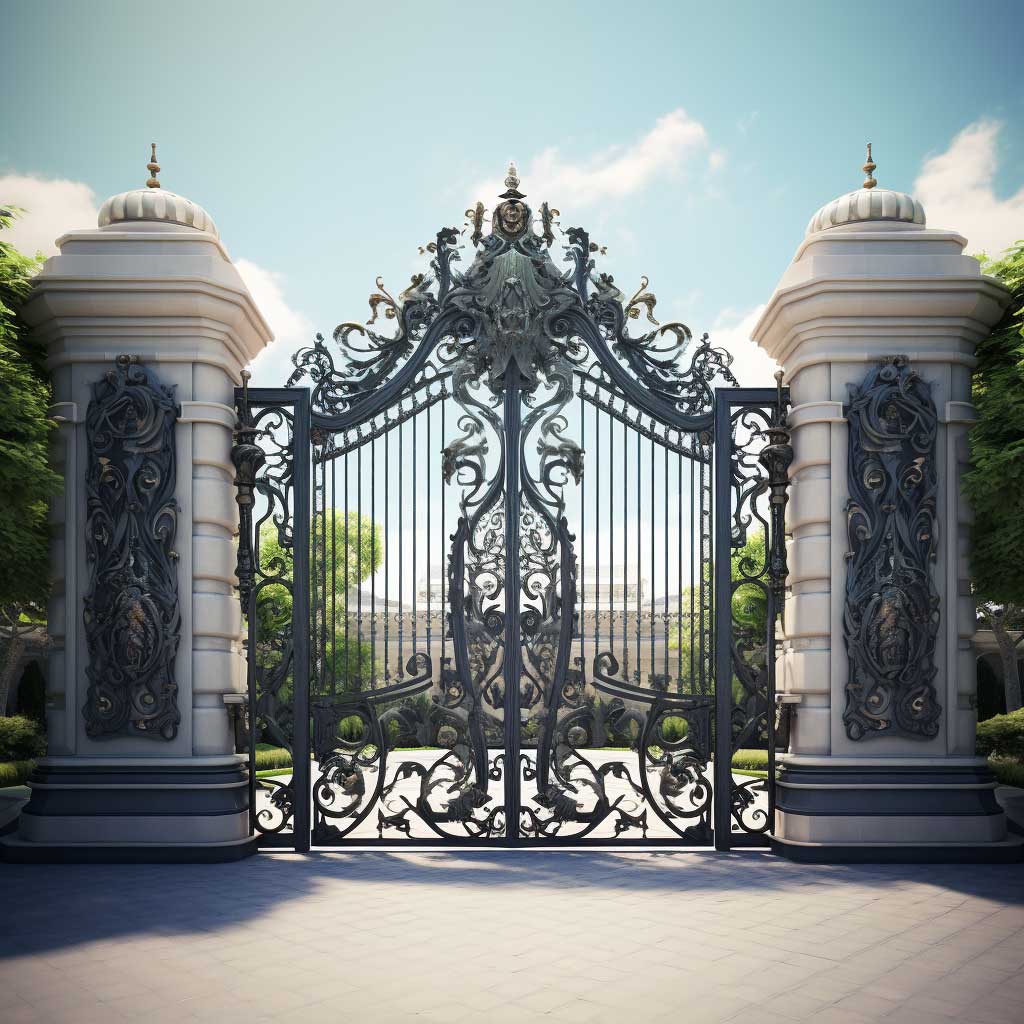
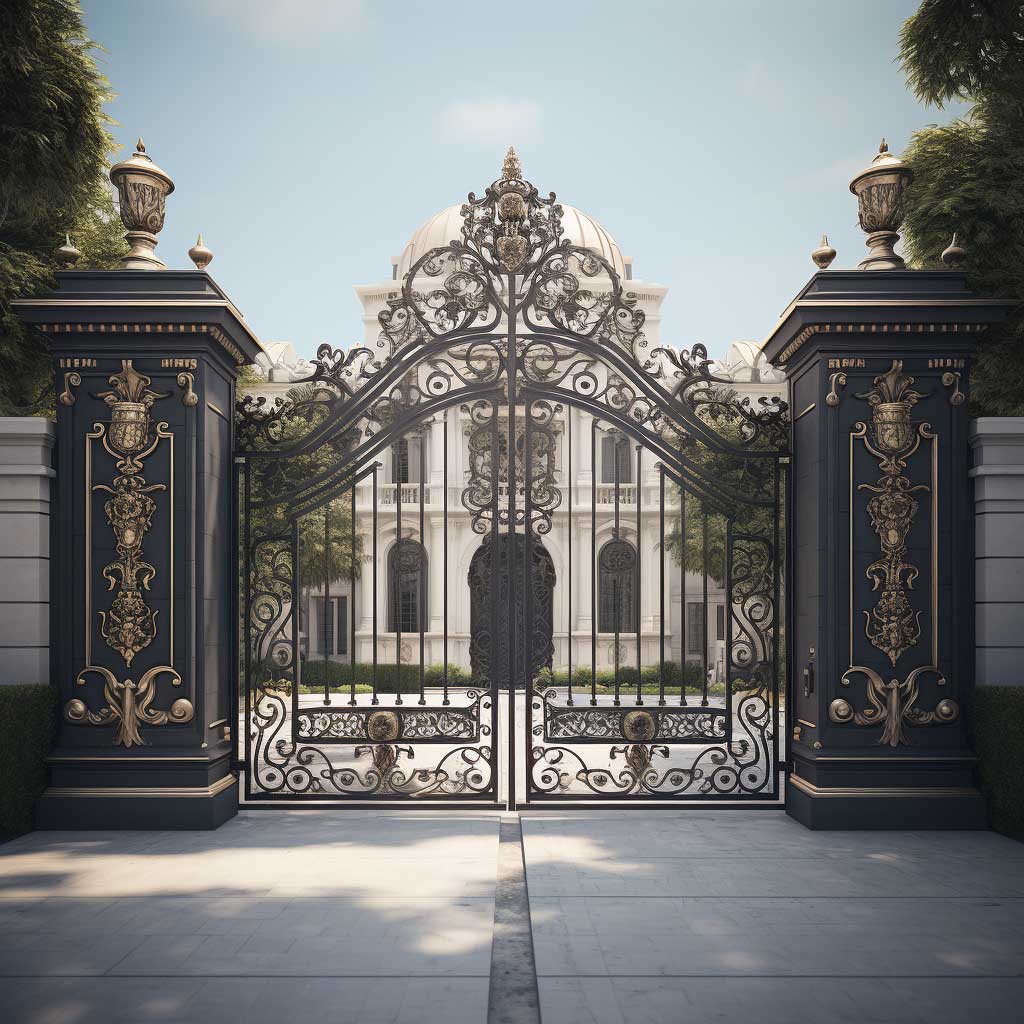
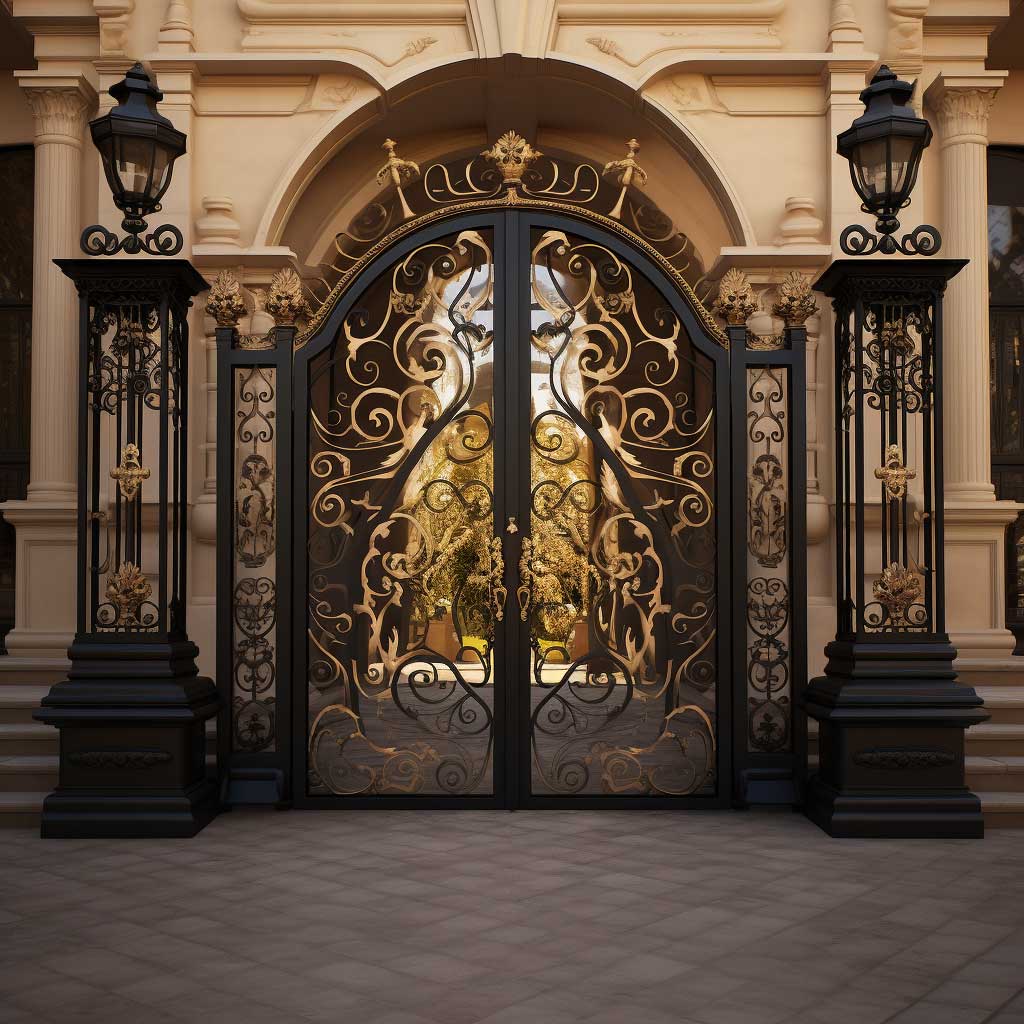
Lighting becomes part of the composition after sunset, particularly when fixtures sit on or near the gate pillars. Warm illumination can reveal the metal pattern and make the driveway easier to read without turning the entrance into a brightly exposed zone. Think of the lighting as stage lighting for architecture: it should reveal structure, not compete with it, so aim fixtures at the gate surface and path rather than directly toward approaching drivers.
Don’t do this: Don’t choose ornate ironwork simply because the gate itself looks impressive in isolation. If the facade has clean modern lines, excessive scrollwork can make the entrance feel disconnected.
A useful maintenance detail is the finish rather than the decorative pattern. One specialist source reports that powder coating on metal gates can last roughly 20–50 years with suitable maintenance and without impact damage, while another cites about 20 years for a quality powder coating. Treat those figures as service-life guidance rather than a guarantee, and inspect chips or exposed metal before corrosion spreads.
For a broader collection of materials, operating styles, and entrance configurations, see these entrance gate ideas for different home exteriors. The useful lesson is simple: decorative metal works hardest when its pattern belongs to the architecture, so repeat one or two motifs instead of mixing several unrelated ones.
Modern Entrance Gate Design Gets Cleaner with Wood and Metal
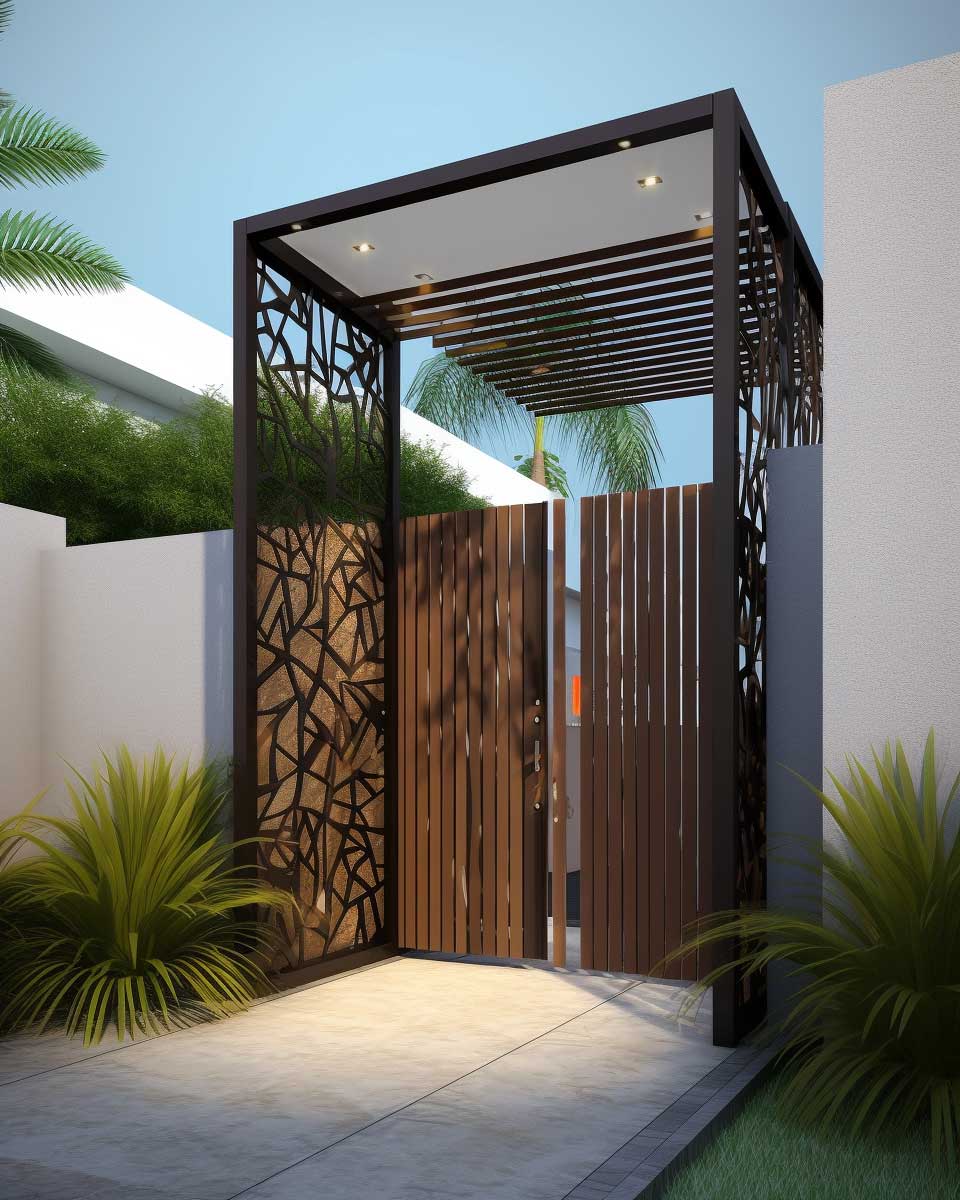
Modern entrance gate design usually relies on horizontal or vertical rhythm, restrained colors, and a deliberate balance between enclosure and visibility. Wood introduces texture while metal supplies a sharper frame, making the combination suitable for contemporary houses that need privacy without looking completely closed. The effect is similar to a well-designed screen: it separates spaces while still allowing light and visual depth, so select the slat spacing according to the privacy requirement.
The photographed examples use broad surfaces and straightforward geometry rather than decorative motifs. What works here is the contrast between the organic grain of wood and the precise lines of the metal structure. If the driveway has limited clearance, would a sliding arrangement be more practical than swinging leaves? In many restricted approaches, sliding gates avoid the inward or outward sweep of hinged panels, so confirm the required side-run before ordering the frame.


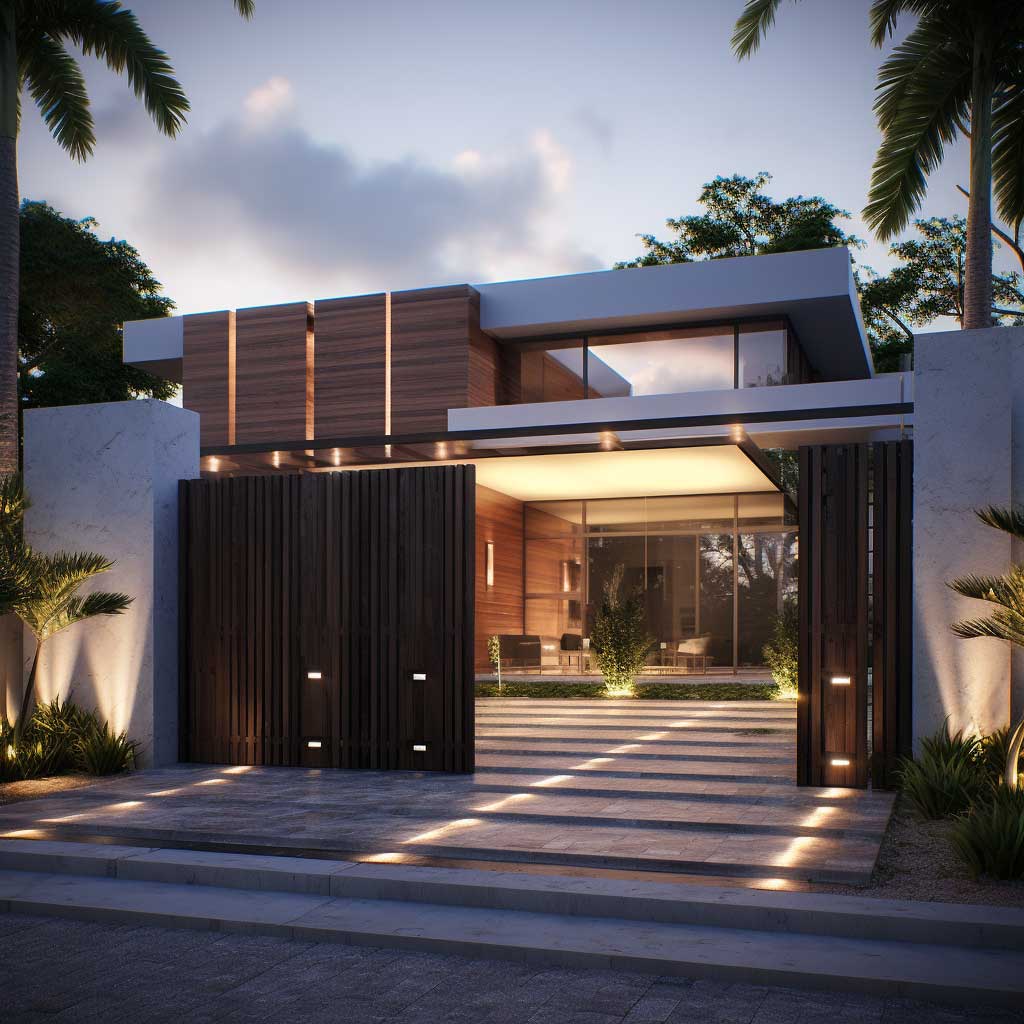
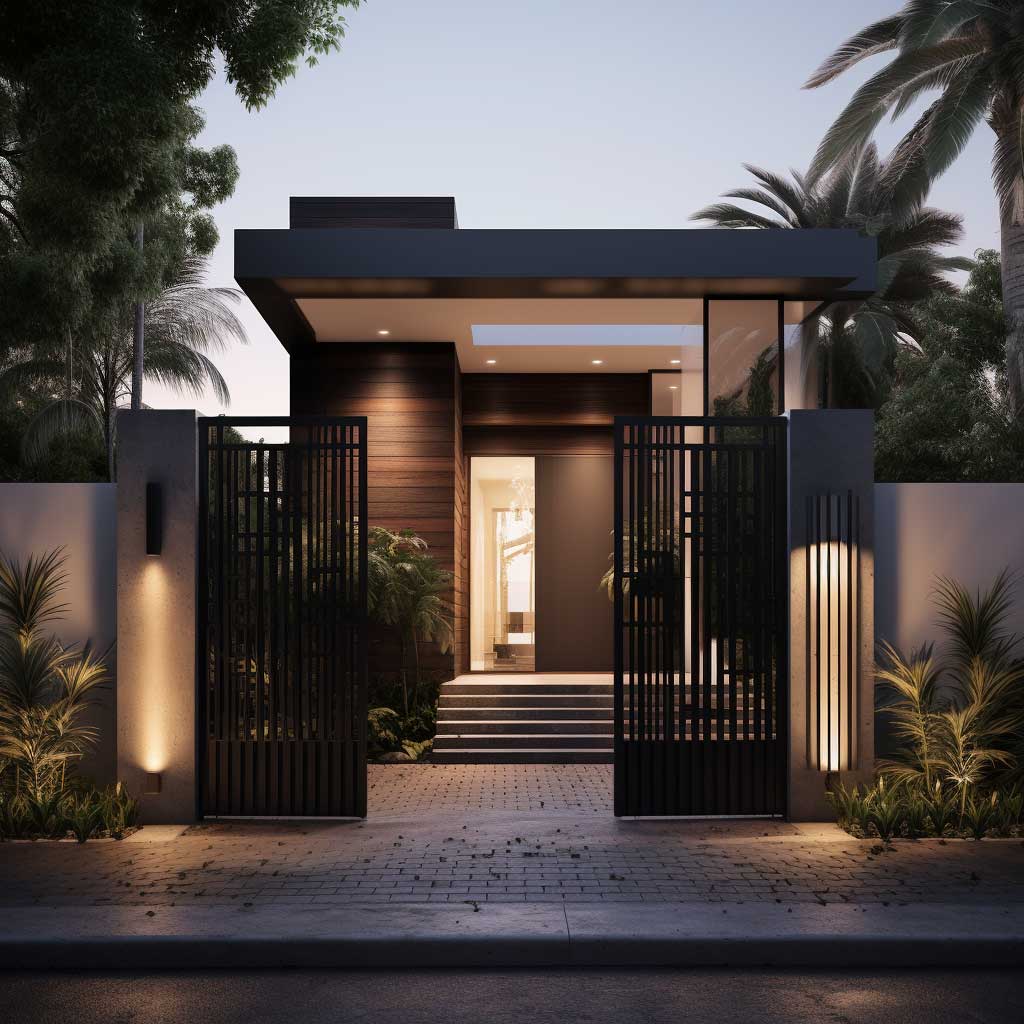
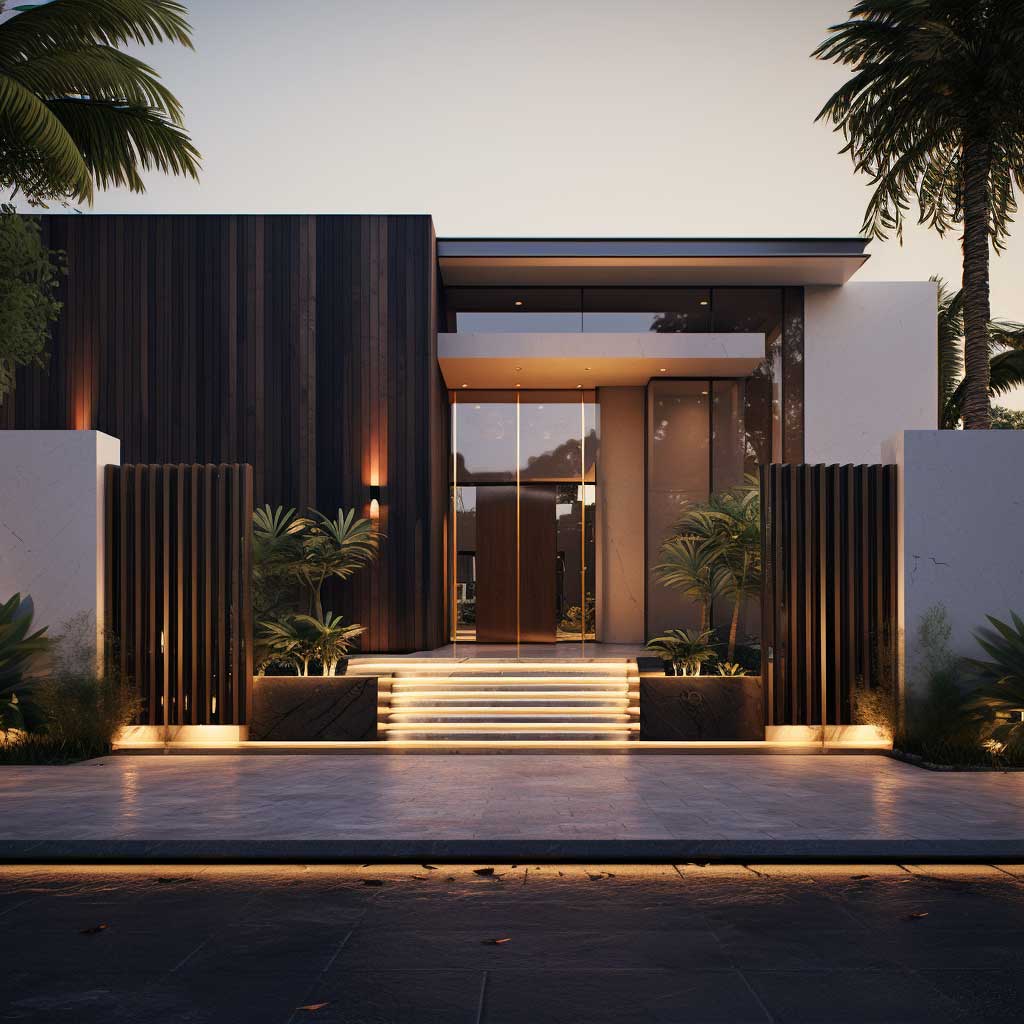
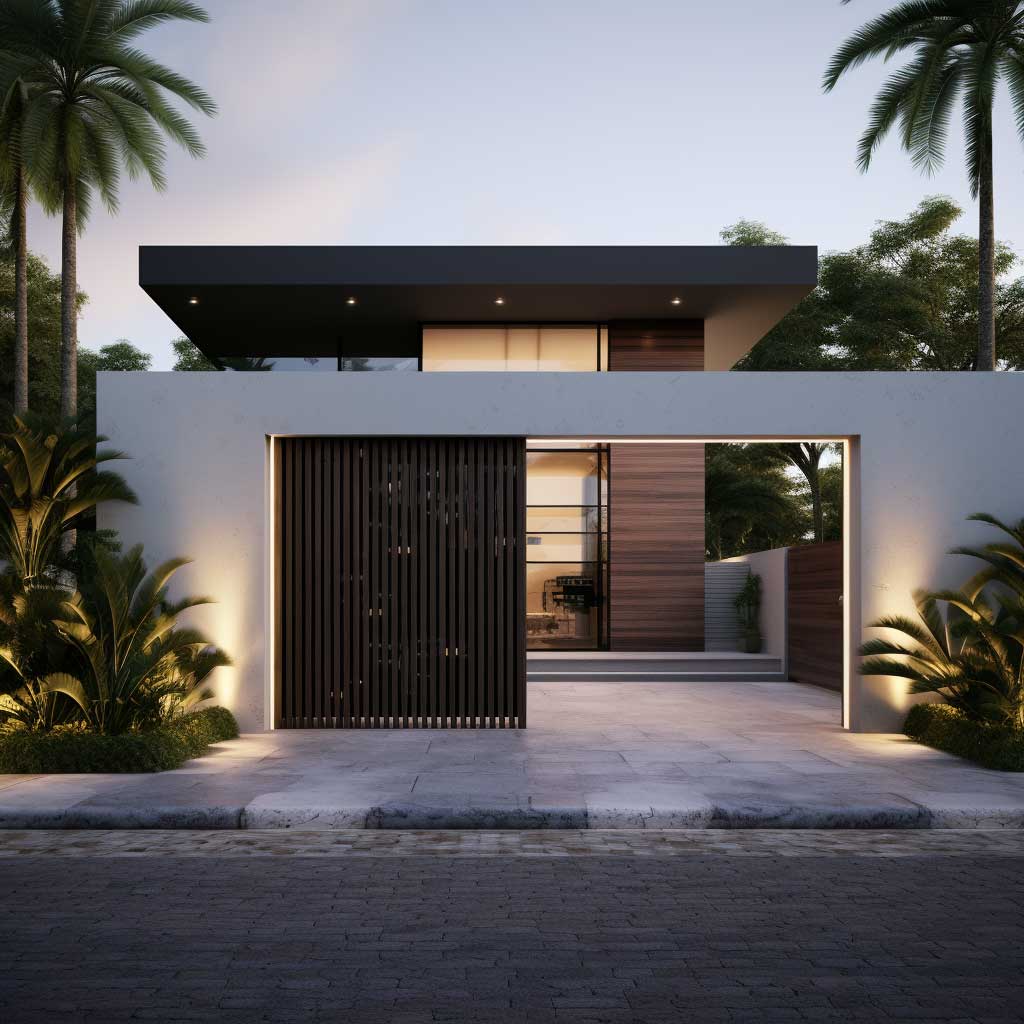
Material choice should follow the maintenance conditions as closely as the visual style. Wood needs a suitable exterior finish and periodic renewal, while powder-coated steel can reduce routine upkeep when the coating remains intact. For comparison, a current metal-gate specialist recommends regular inspection, annual cleaning, hinge and bolt lubrication, and prompt removal of rust, so build those tasks into the property maintenance routine.
- Use closer slats where street-facing privacy matters most.
- Choose a durable exterior finish before selecting the final color.
- Reserve enough side clearance for a sliding gate mechanism.
- Coordinate the gate frame with window, railing, or balcony geometry.
Don’t do this: Don’t make the gate completely opaque without considering the scale of the facade. A large uninterrupted panel can visually dominate a small house, so introduce controlled gaps, timber rhythm, or a contrasting frame when appropriate.
A practical reference point from residential entrance planning is that an accessible clear opening is commonly around 85–90 cm for pedestrian movement, although vehicle-gate dimensions depend on the driveway and local requirements. The number matters because hardware, posts, and automation can reduce the usable opening even when the nominal gate width looks generous. Measure the finished clear passage rather than relying only on the manufacturer’s stated overall width.
Classic Wood Gives Entrance Gate Design a Warmer Character
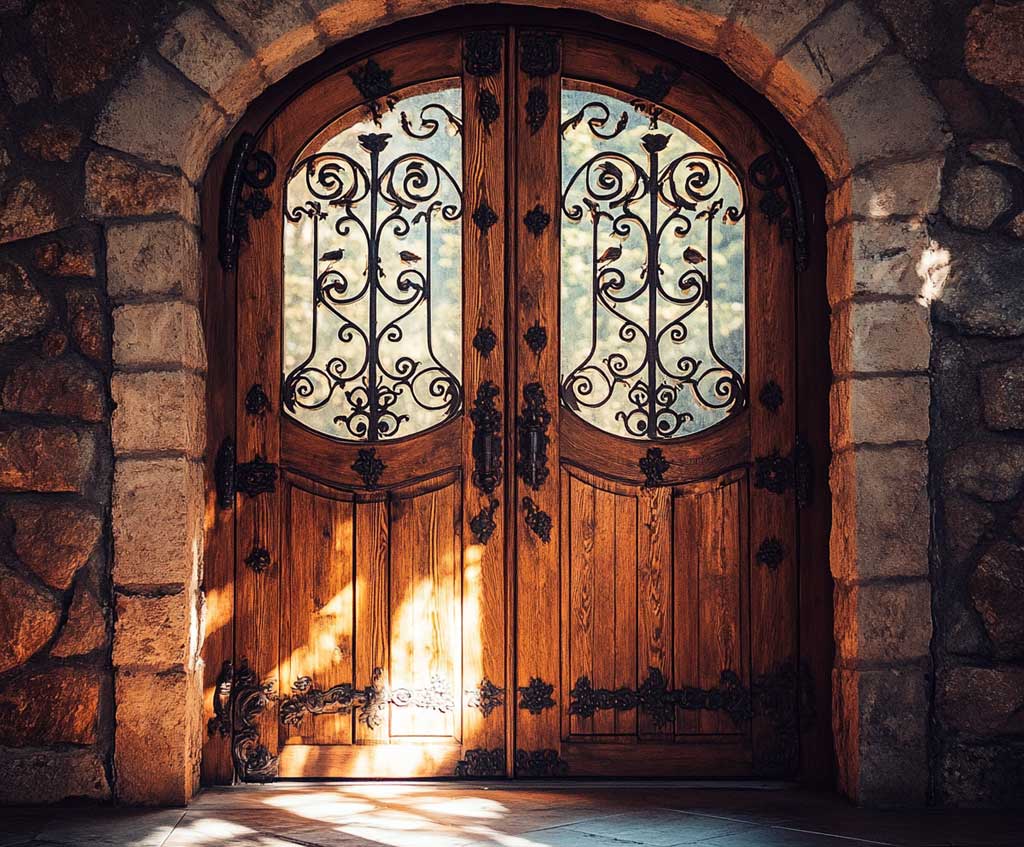
Classic wood entrance gate design brings a different visual weight to the property, especially when solid panels, carved details, brass hardware, or traditional proportions are involved. Instead of relying on transparency, this approach makes the gate itself a large architectural surface, much like a substantial front door scaled up to the driveway. The right wood tone should relate to nearby doors, shutters, beams, or landscaping, so test the finish in daylight before committing.
The photographs in this group emphasize paired wooden leaves with decorative detailing and metal hardware. A useful question is whether the gate will be exposed to direct rain and strong sun: if so, the finish and construction matter as much as the carving. Exterior wood commonly needs periodic recoating, while movement caused by moisture can affect joints and panels, so protect end grain and keep drainage away from the lower edge.


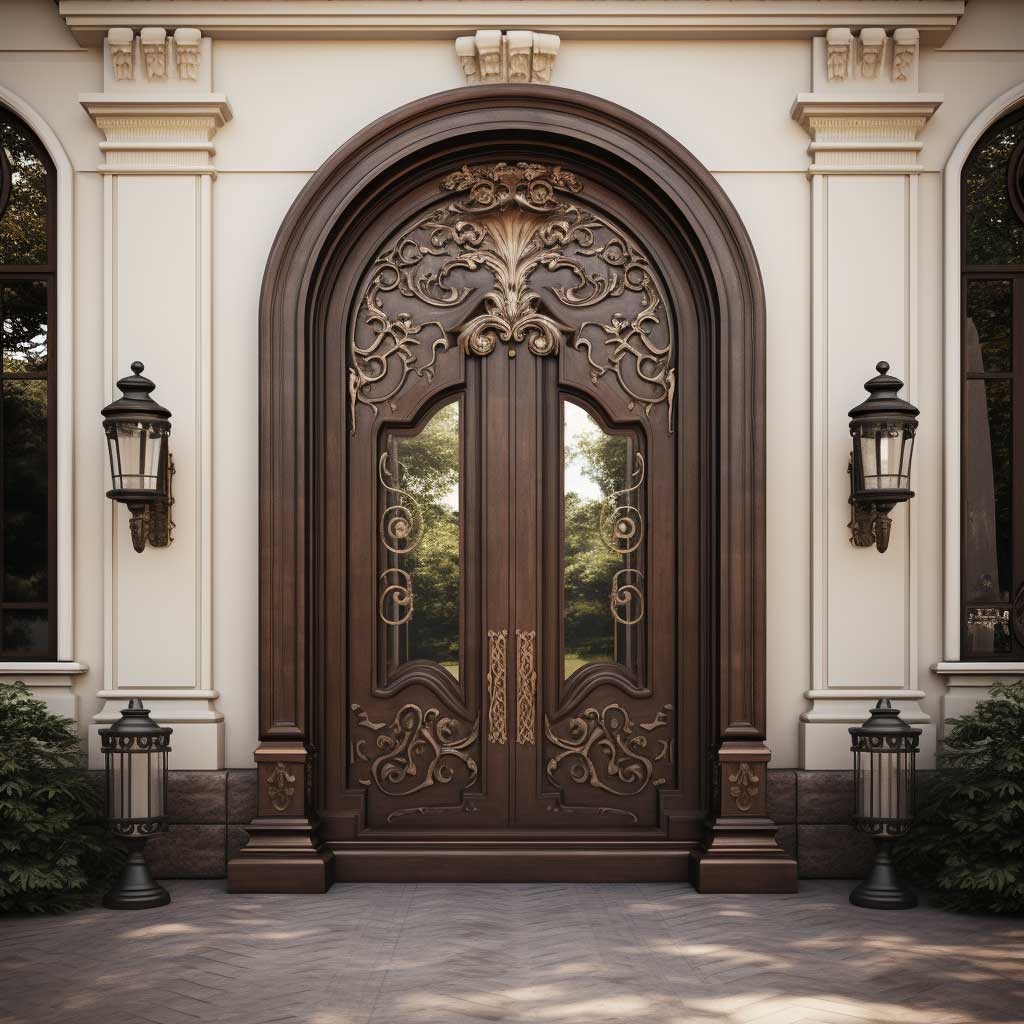
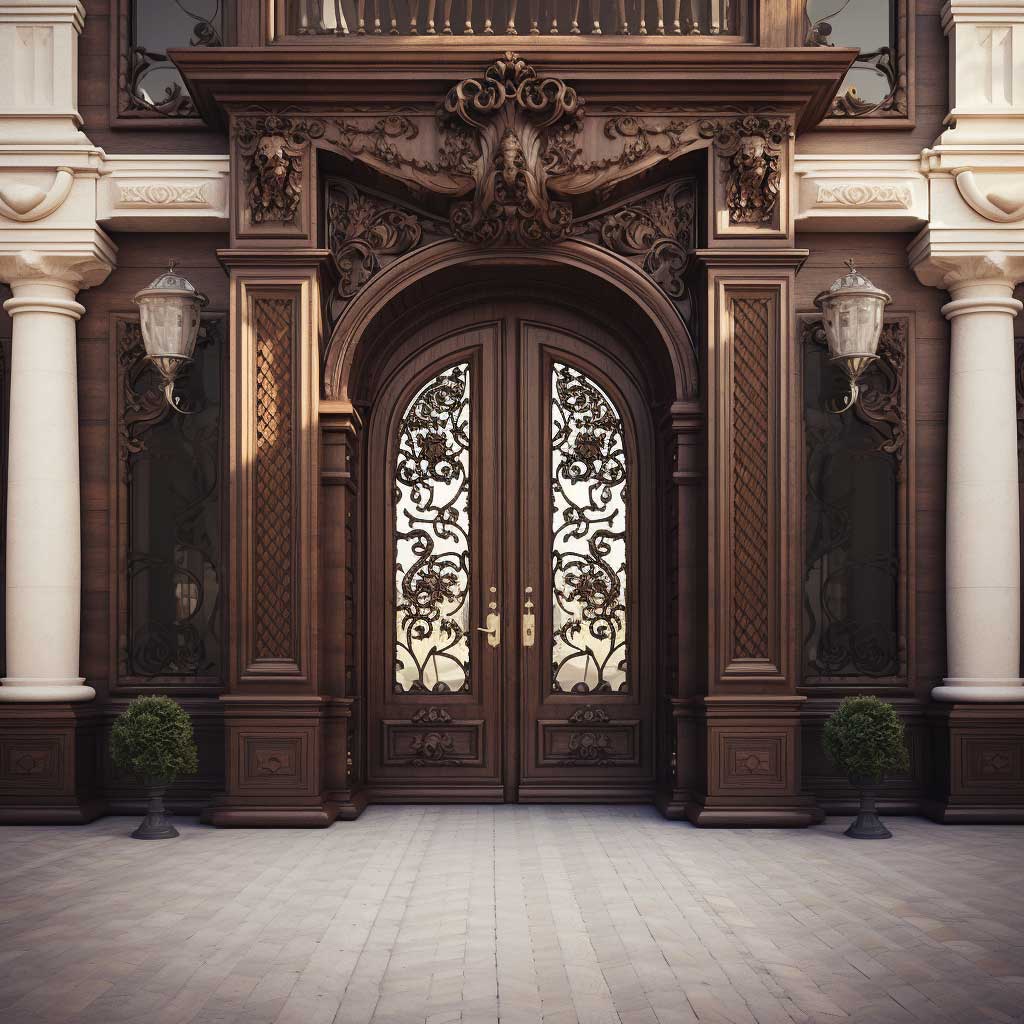
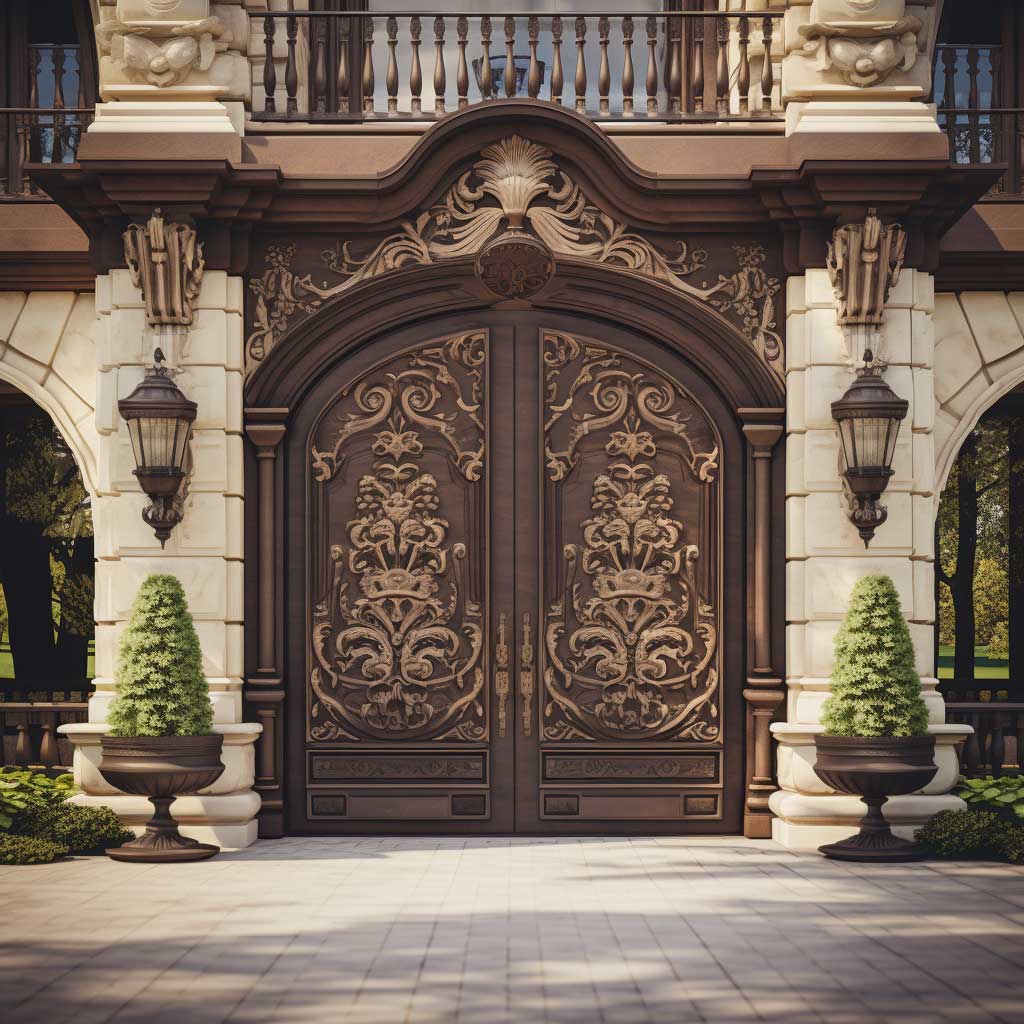
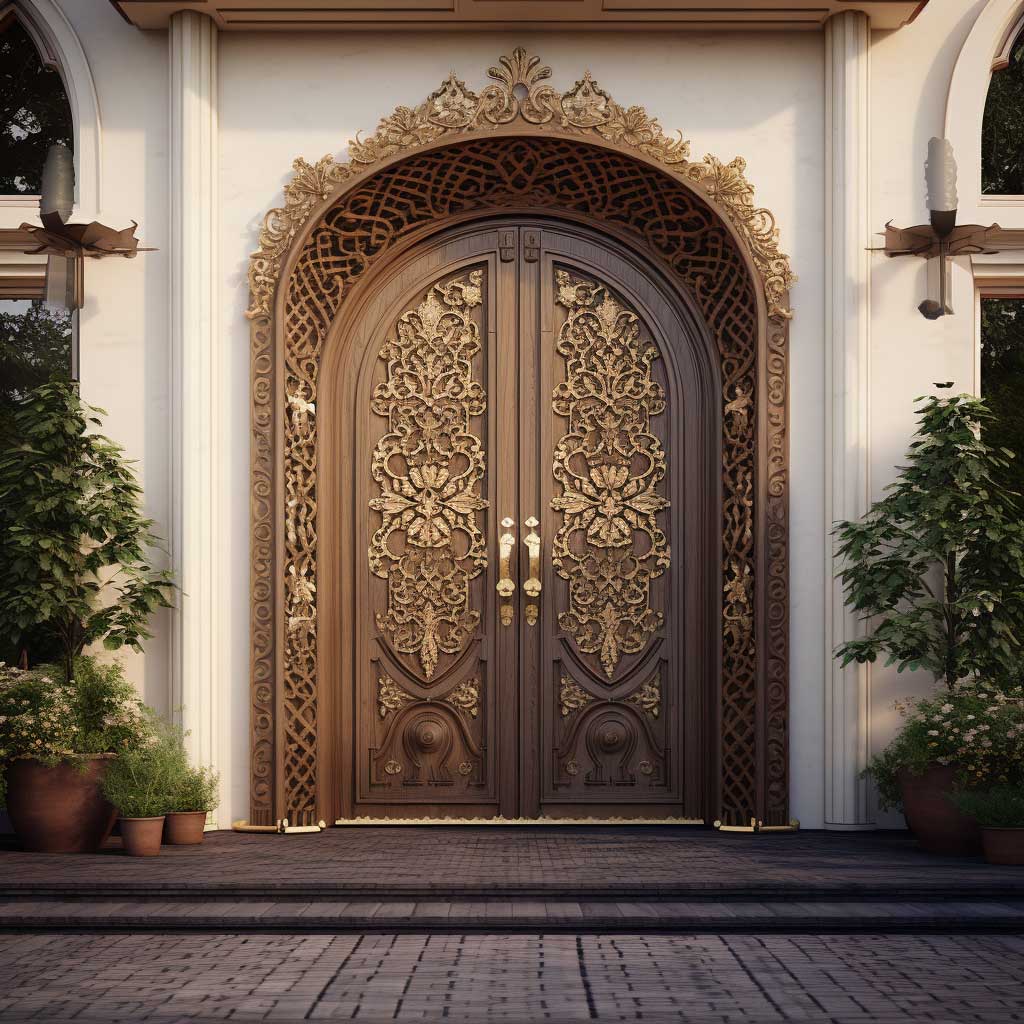
Brass hardware adds a small but noticeable layer of contrast against dark or medium wood. Handles, hinges, studs, and other visible fittings should share a coherent finish because inconsistent metals can make an otherwise carefully designed gate look assembled from unrelated parts. If the property already uses brass lighting or door hardware, repeating that finish at the driveway creates a visual bridge, so use hardware as the connecting detail.
Don’t do this: Don’t place untreated timber directly where standing water can collect. A beautifully carved gate can deteriorate quickly if its lower edge, joints, or end grain repeatedly remain damp, so specify drainage and an exterior-grade finish.
For wider entrances, double gates need enough opening width to remain comfortable rather than producing two narrow, awkward leaves. Residential entrance guidance commonly places double-door openings around 160 cm or more when the architecture genuinely calls for them, but the correct dimension depends on vehicles, turning space, posts, and local standards. Treat the opening as part of the driveway geometry, not as an isolated decorative feature.
There is no single material that defines a successful entrance: iron emphasizes craftsmanship, wood adds warmth, and modern metal can sharpen the architecture. The best choice follows the facade, required privacy, operating space, and maintenance conditions rather than a passing visual trend. For another reference on coordinating the wider entrance composition, explore these main entrance design ideas for houses and villas, then compare the gate with the door, columns, lighting, and path before finalizing it.
A successful entrance gate should look as though it belongs to the house, not as though it was added afterward. Choose the material and opening system together, repeat architectural details across the entrance, and let privacy requirements determine how open or solid the gate becomes. A practical finish can protect the investment for years, while consistent proportions keep the whole approach visually calm. Design the gate as the first piece of the facade rather than the last.