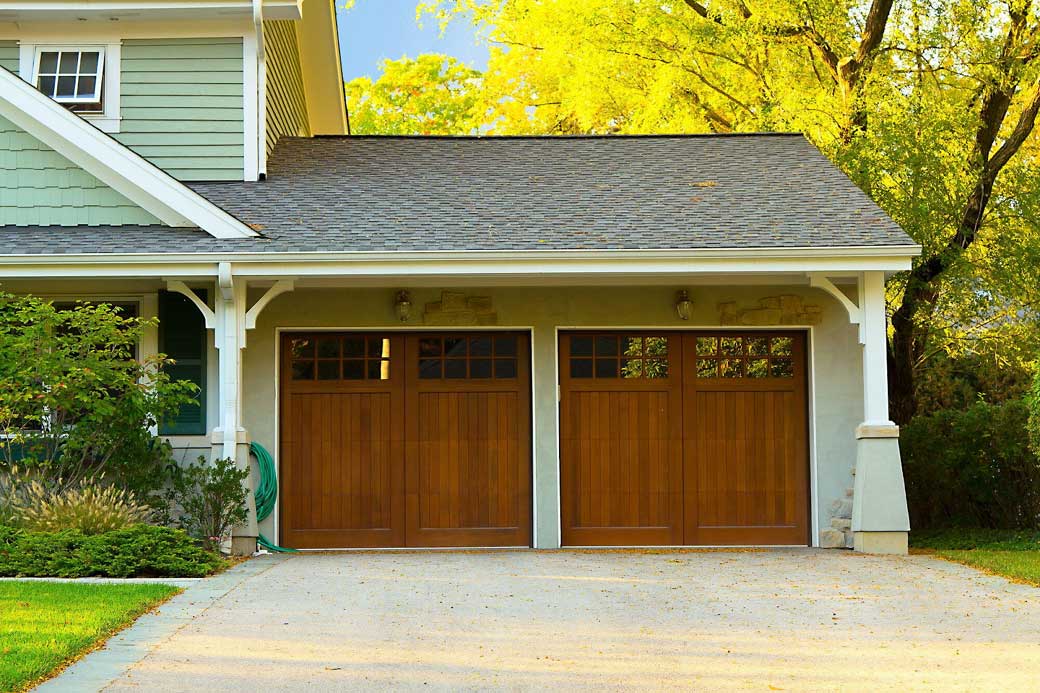
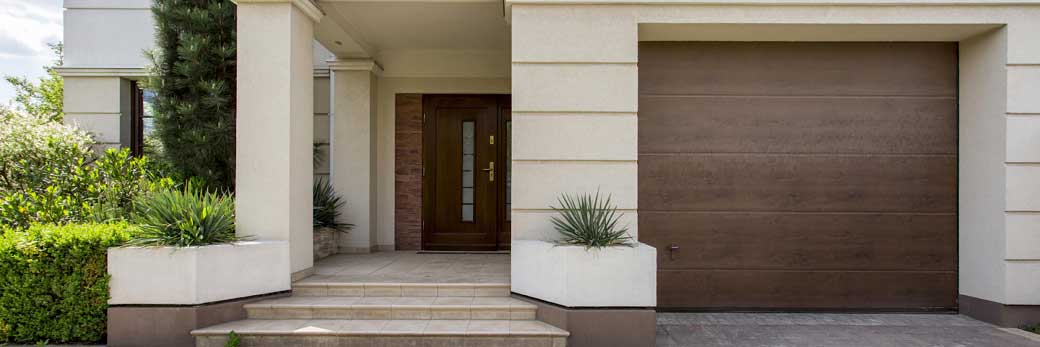
Your garage takes up roughly a third of your home’s front facade. That’s not a small wall. It’s the first thing a neighbor sees, the last thing you look at pulling out of the driveway, and somehow the detail most homeowners treat as an afterthought.
Garage gate design is not a background decision. Pick the wrong material and you’re repainting every two years. Pick the wrong style and a $400 gate makes a $400,000 house look cheap. I’ve seen it happen in person — a cedar-stained home with a powder-coated aluminum gate slapped on because it was “low maintenance.” It looked like a rental unit.
Wood, steel, and glass each solve a different problem. None of them is universally right. What follows breaks down exactly what each one does well, what it costs you long-term, and which one you should walk away from depending on your exterior.
QUICK SCAN
Garage Gate Design at a Glance
Wood — Cedar or redwood, $800–$1,800 installed. Warmest visual. Needs sealant every 18 months. Best for traditional and craftsman exteriors.
Steel — 18–24 gauge, $1,100–$1,700 installed. Most durable. Powder-coat finish only. Best for modern and minimalist exteriors.
Glass — Tempered panels, $2,200–$4,500 installed. Highest visual impact. Frosted over clear for residential use. Best for contemporary and showcase-style garages.
| Factor | Wood | Steel | Glass |
|---|---|---|---|
| Installed cost | $800–$1,800 | $1,100–$1,700 | $2,200–$4,500 |
| Durability | Medium (humidity risk) | High | High (tempered) |
| Maintenance | Reseal every 18 months | Touch up paint as needed | Weekly wipe-down |
| Insulation (R-value) | Up to R-10 | Up to R-17 | Low (single pane) |
| Best exterior style | Traditional, craftsman | Modern, minimalist | Contemporary, showcase |
| Automation-friendly | Yes (with swing operator) | Yes (standard opener) | Yes (heavy-duty springs) |
| Privacy | Full | Full | Frosted = partial |
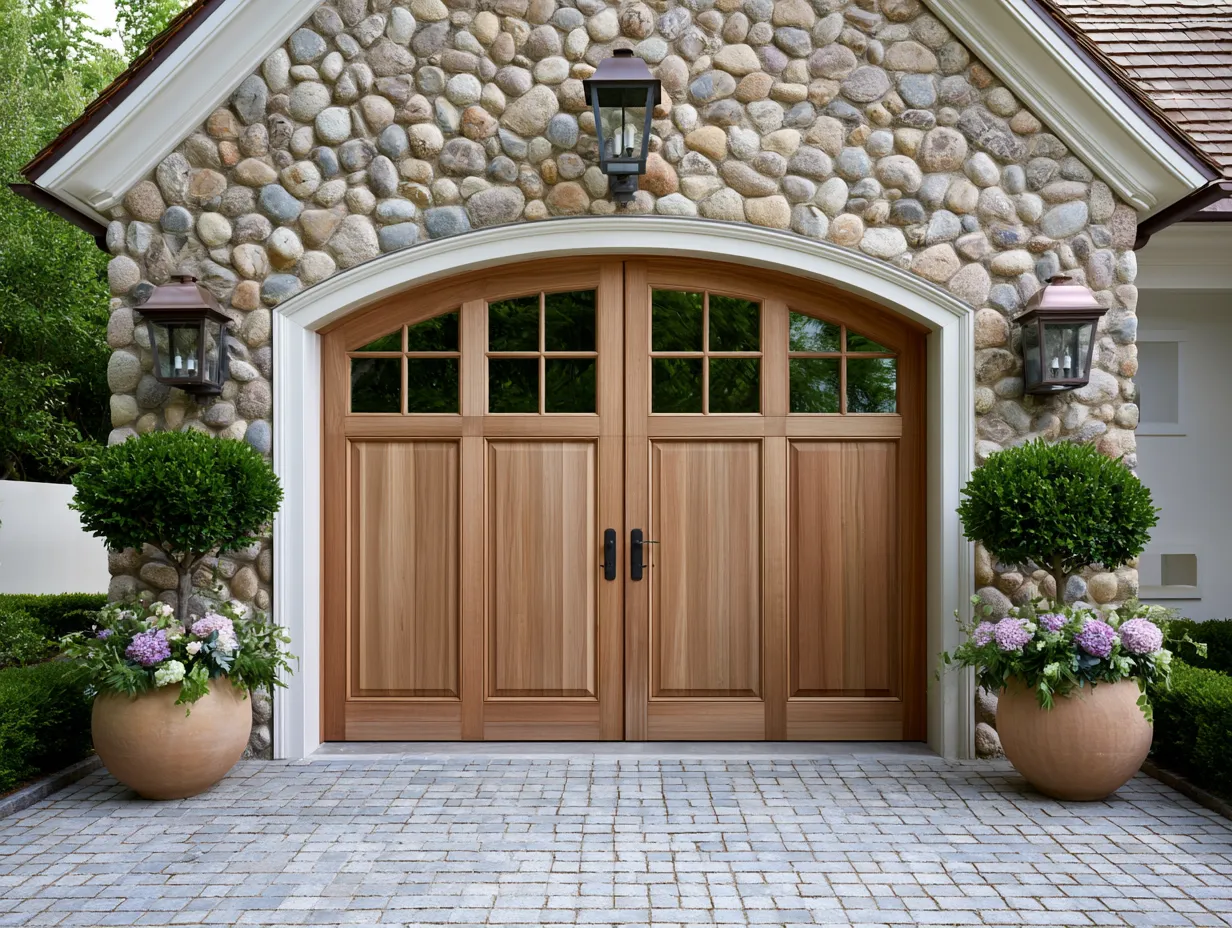
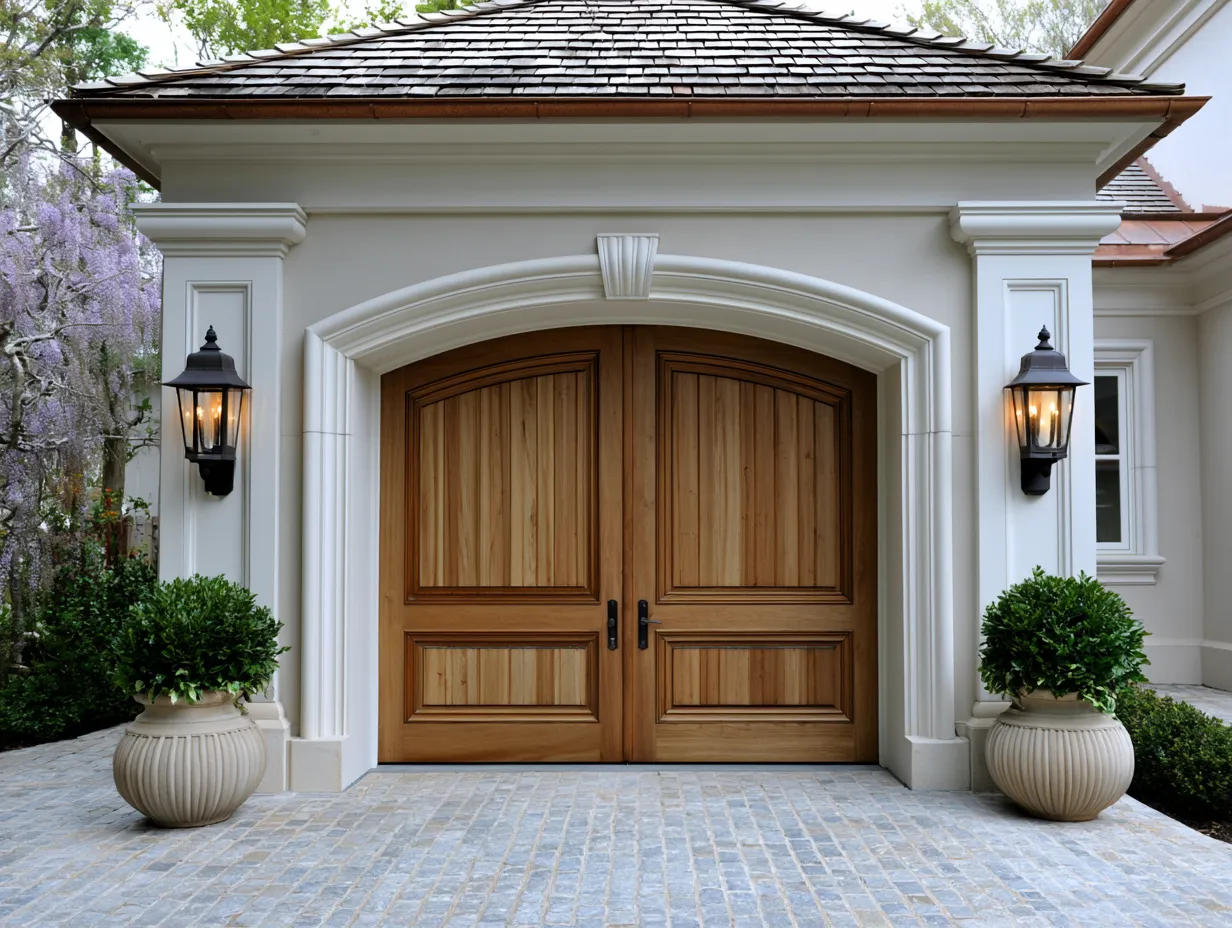
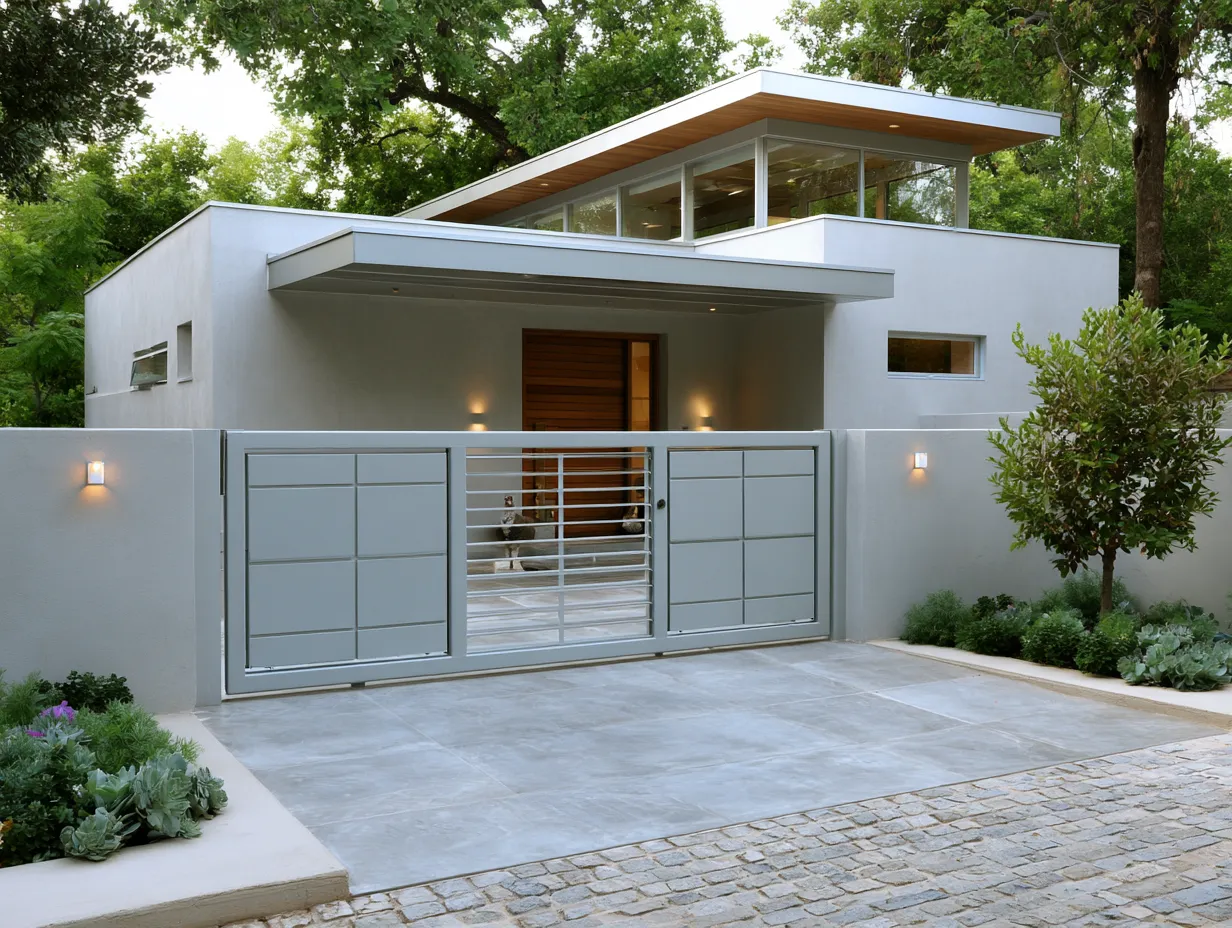
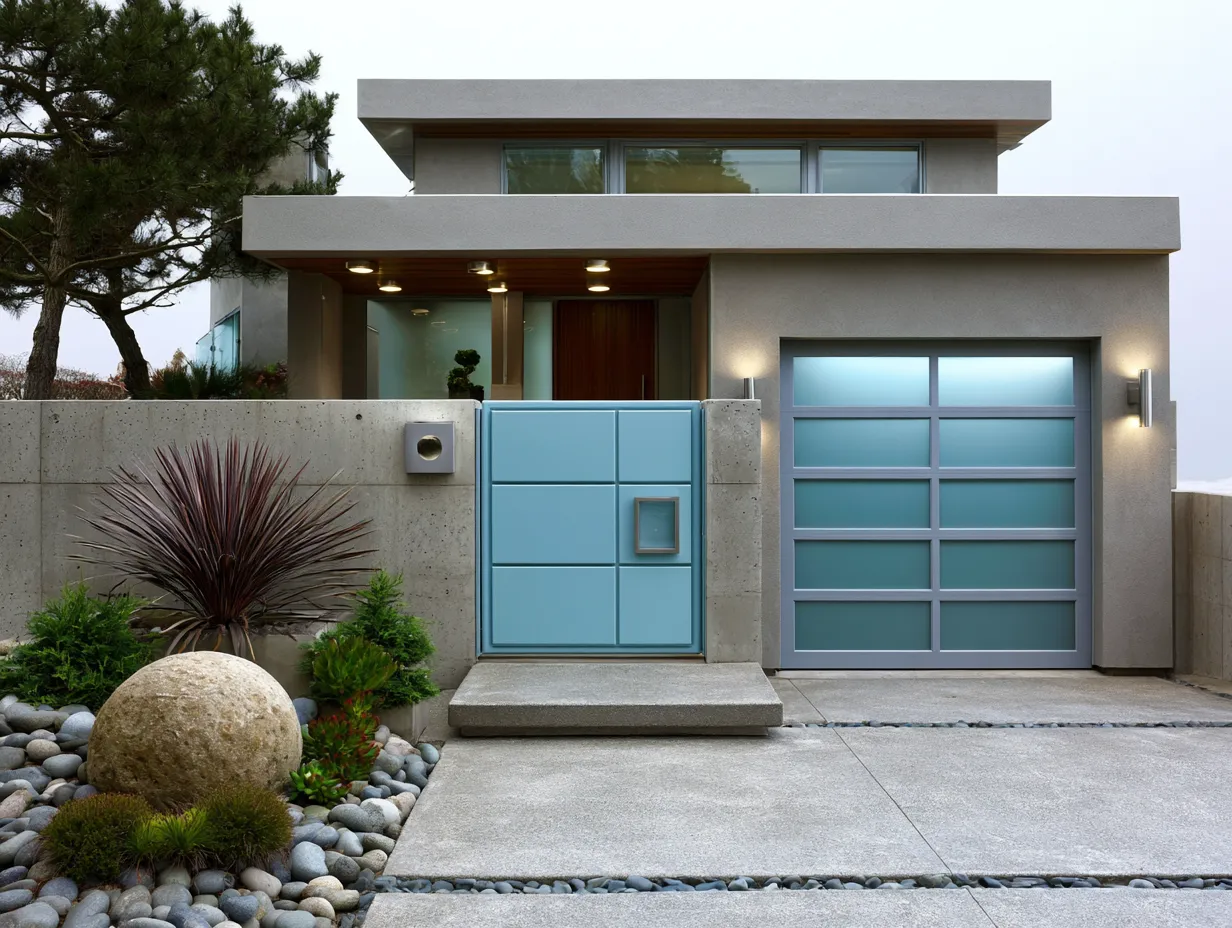
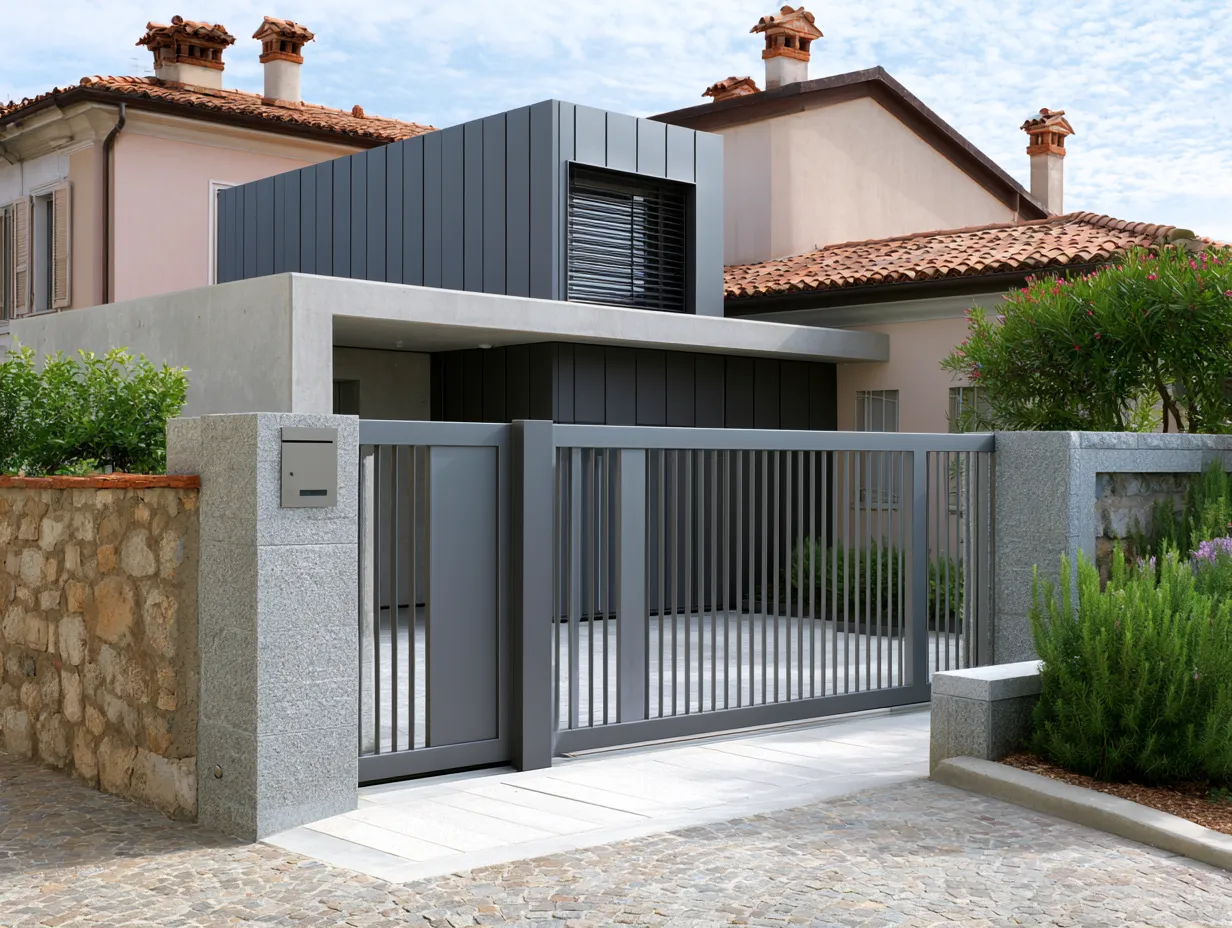
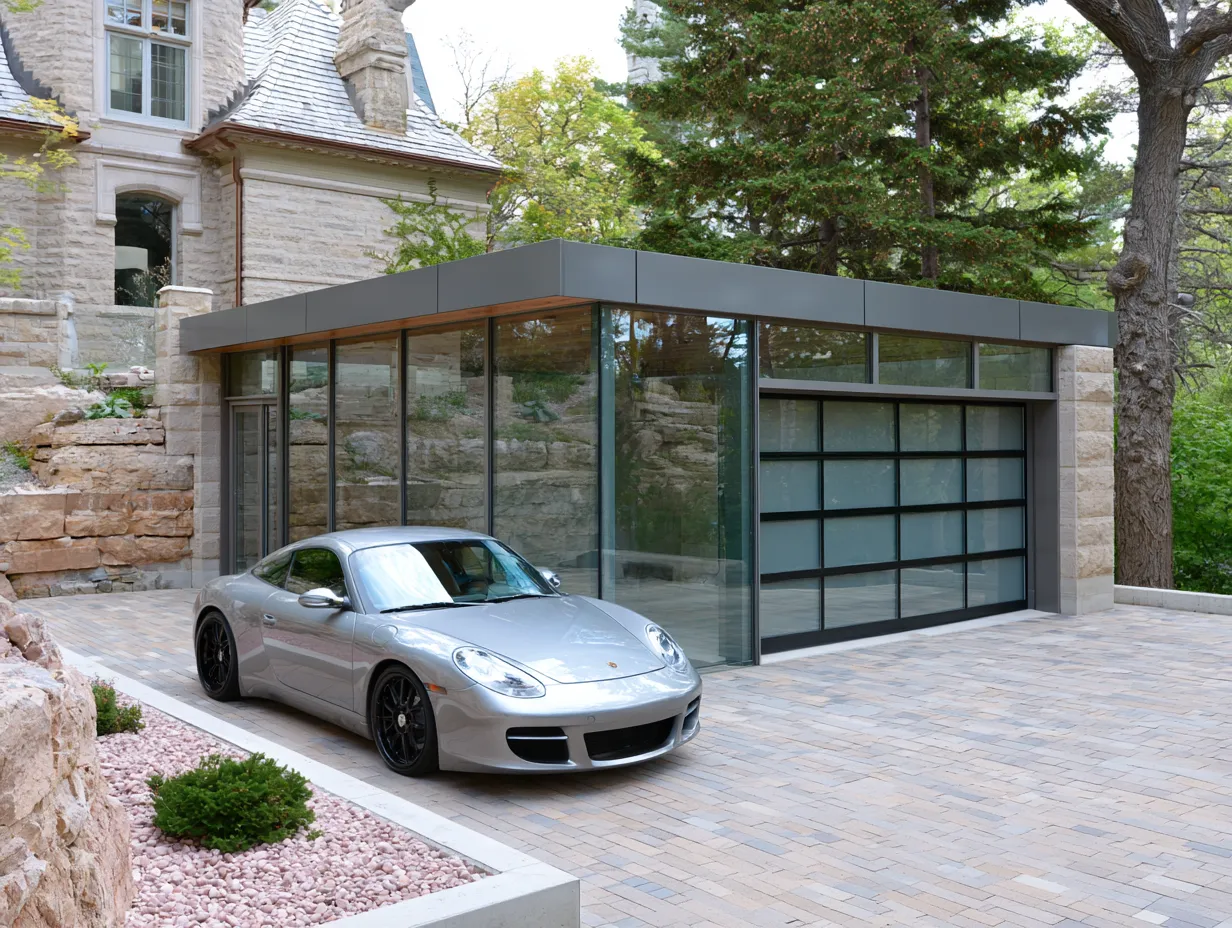
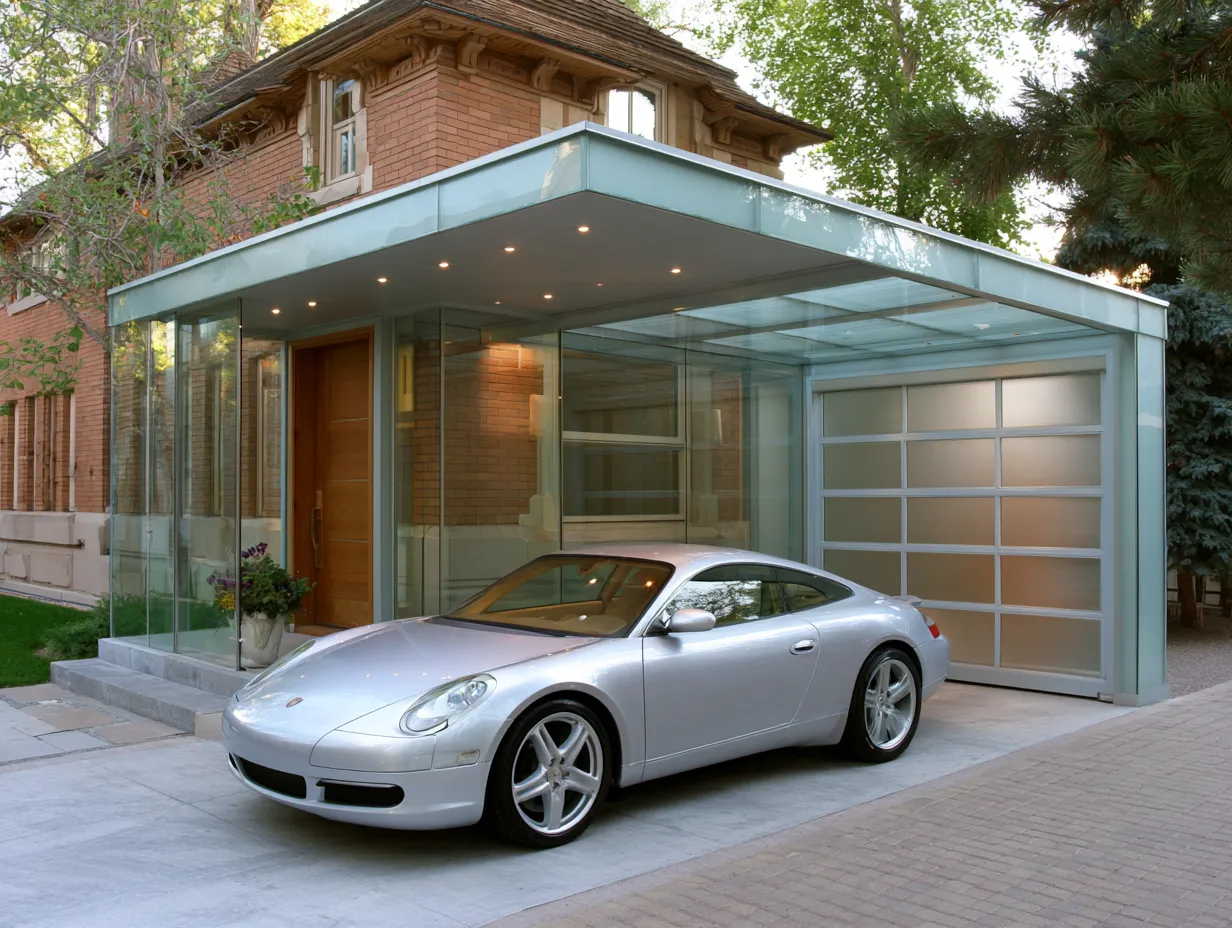
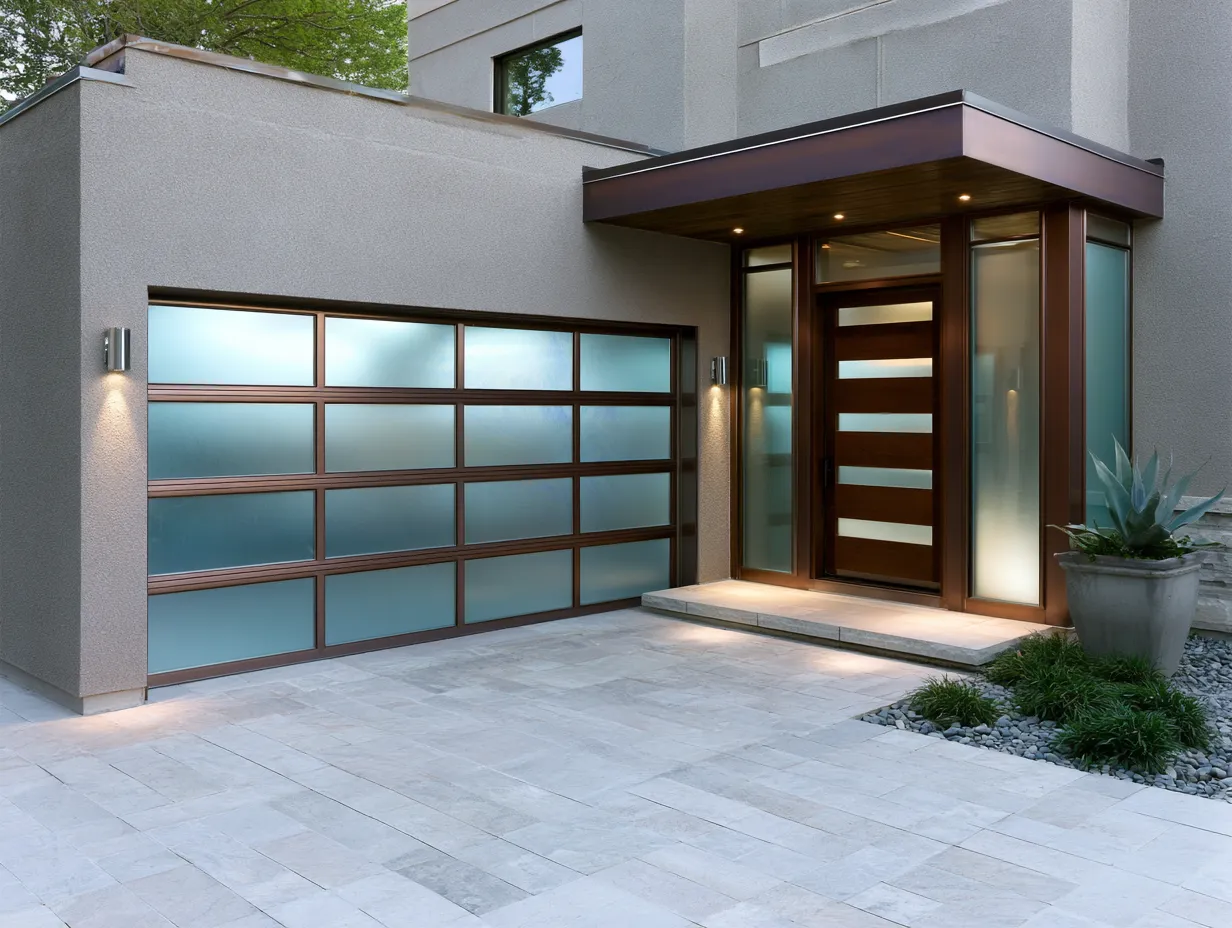
Wood Grain Reads Warm From 30 Feet Away. Steel Doesn’t.
Cedar and redwood are the two woods worth paying for here. Cedar runs $800–$1,400 installed for a standard two-car width, and it resists moisture without aggressive treatment. Redwood is closer to $1,200–$1,800 but holds stain color longer in sun-heavy climates. Pressure-treated pine is cheaper at around $500–$900 — but it warps. I’ve watched pine gates develop a twist in the upper panel within 18 months in a humid zone. Not worth the savings.
The grain is what you’re actually buying with wood. A flat-panel steel or aluminum door can simulate wood texture, but it doesn’t read the same way at distance. The variation in natural grain catches light differently hour by hour. That movement is what makes a wooden garage gate feel residential rather than industrial.
Don’t cheap out on the sealant. A penetrating oil finish like Penofin ($45–$65 per liter) outperforms surface-film sealants because it works from inside the wood fiber rather than sitting on top and eventually peeling. Reapply every 18 months, not every five years like the can claims.
The one thing wood does badly is high-humidity garages. If your garage interior runs damp, the inner face of the door absorbs moisture the sealant never reaches. That’s how you get internal rot while the outside looks fine. Ventilate the garage first.

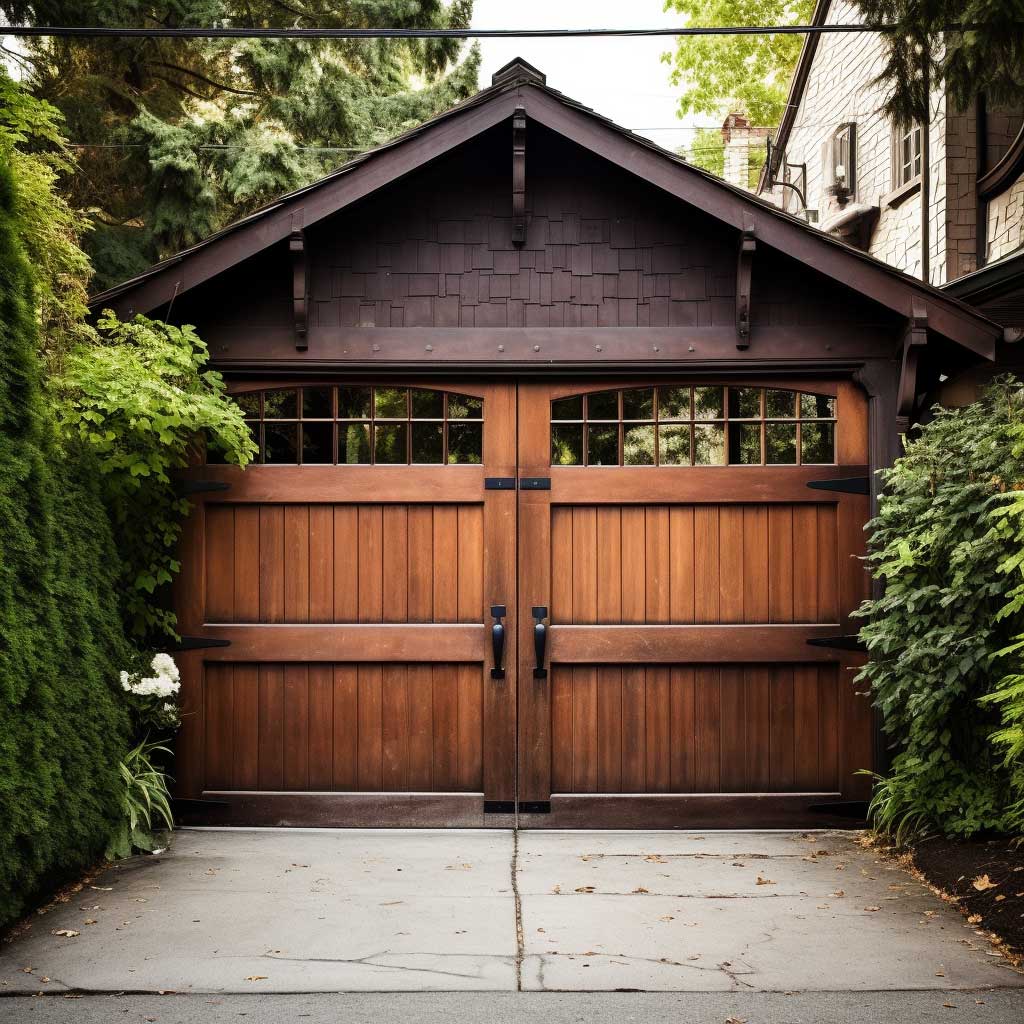
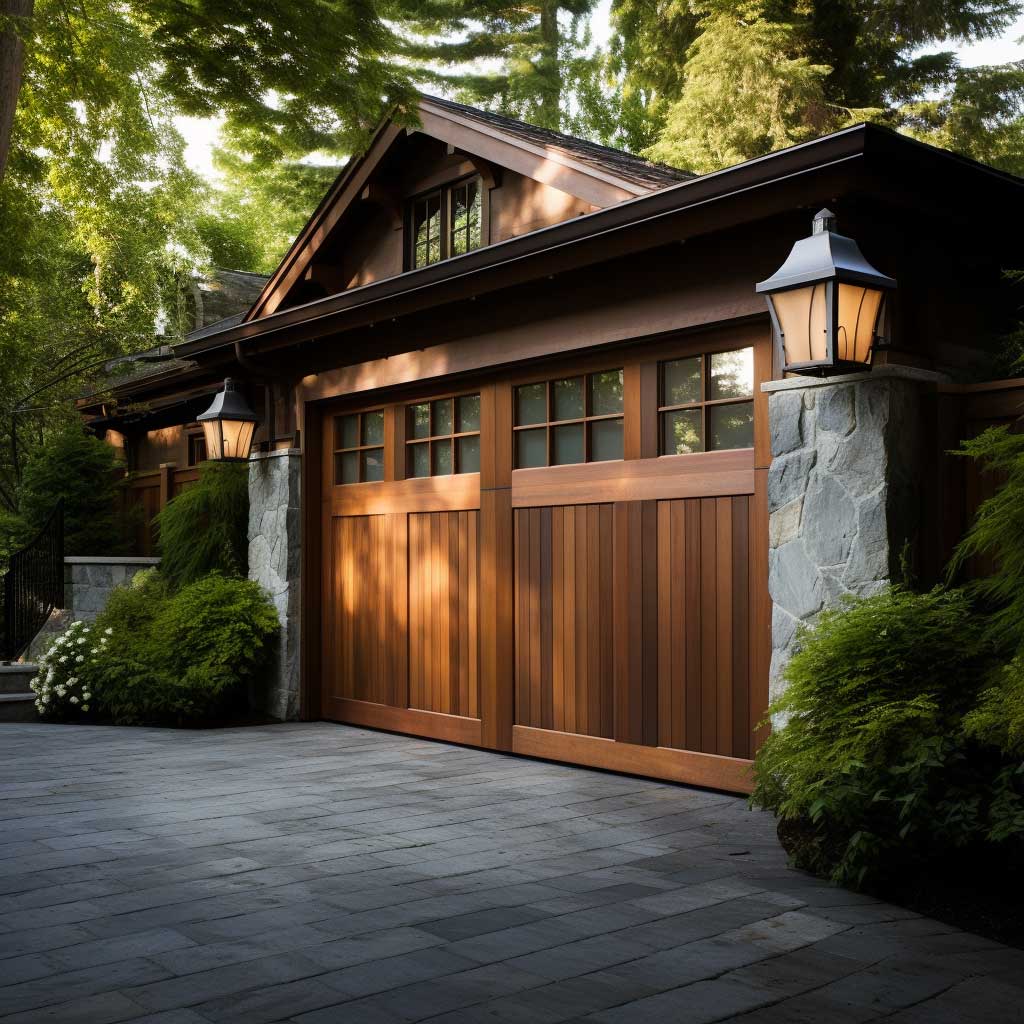
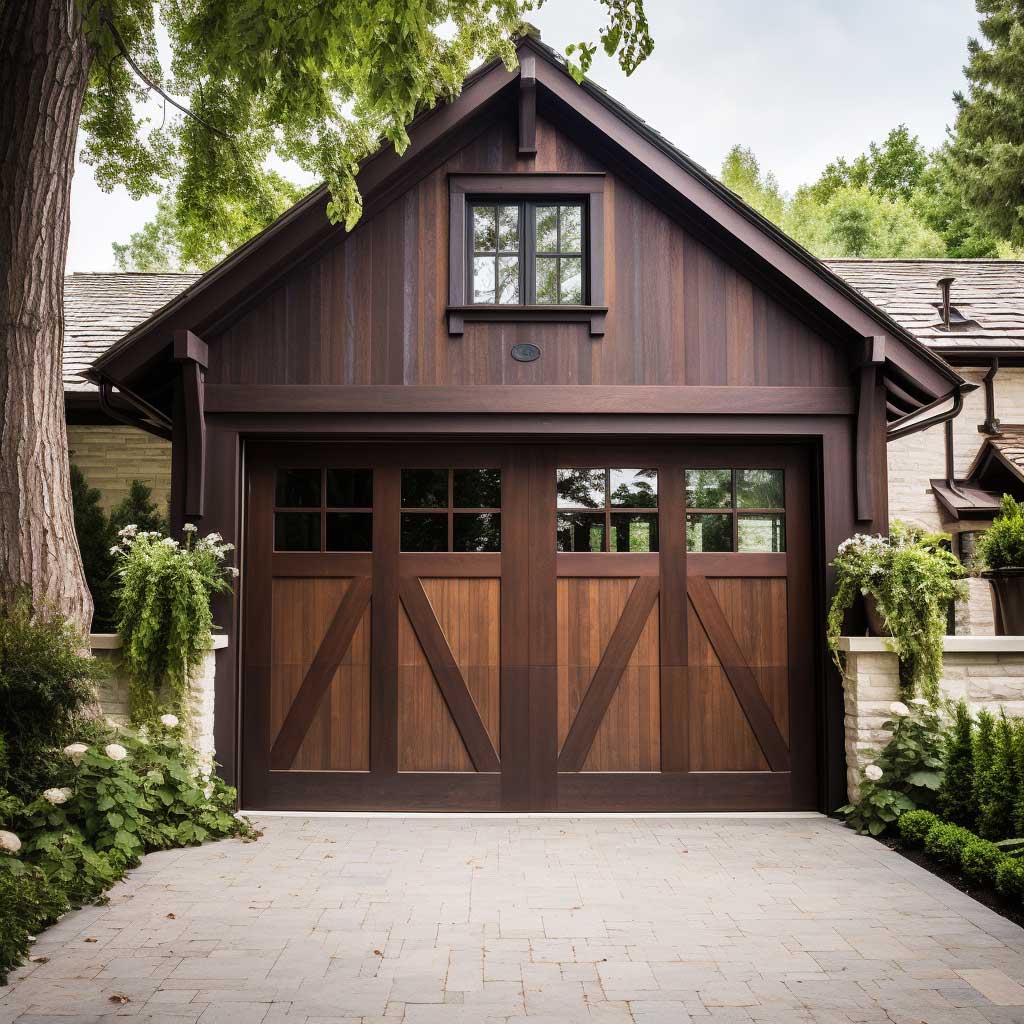
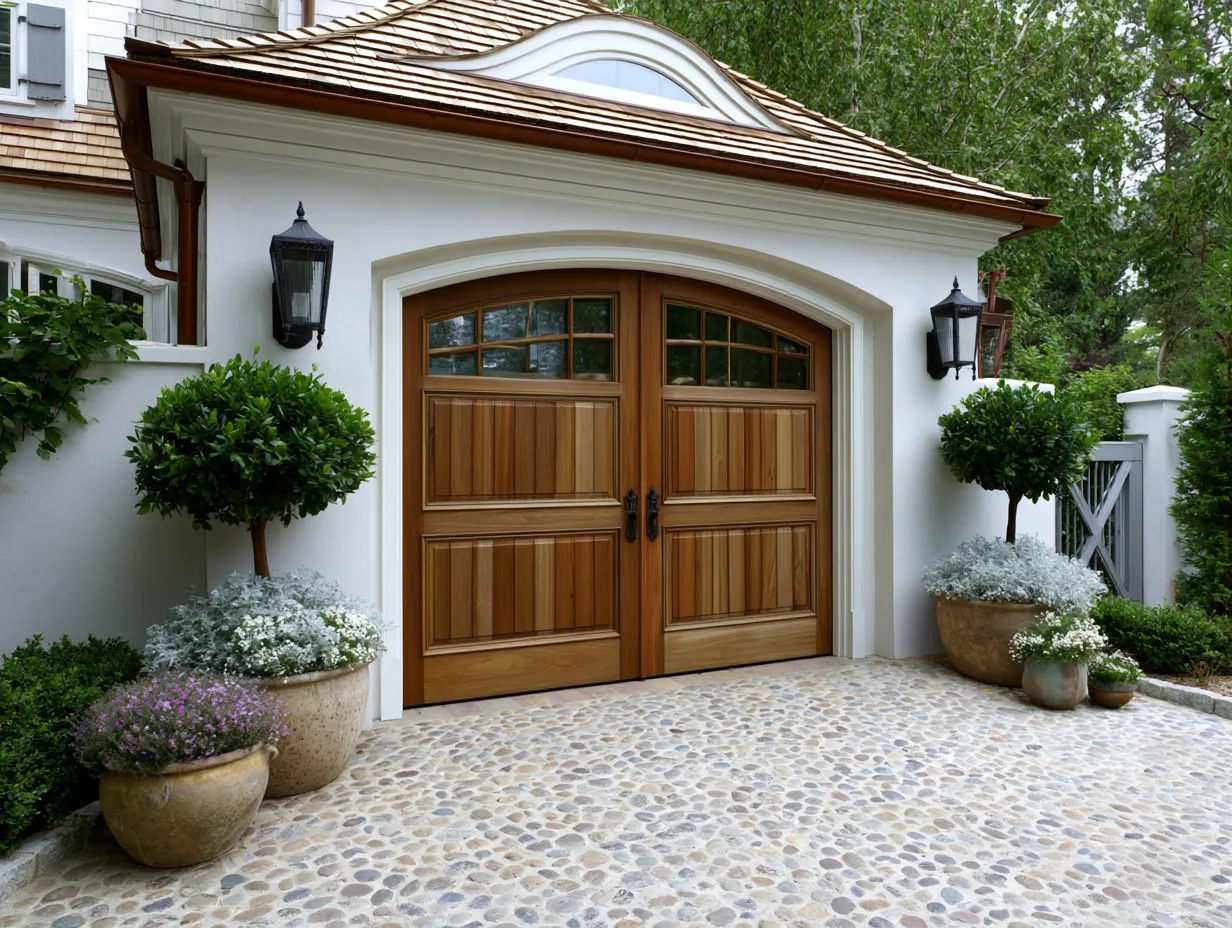
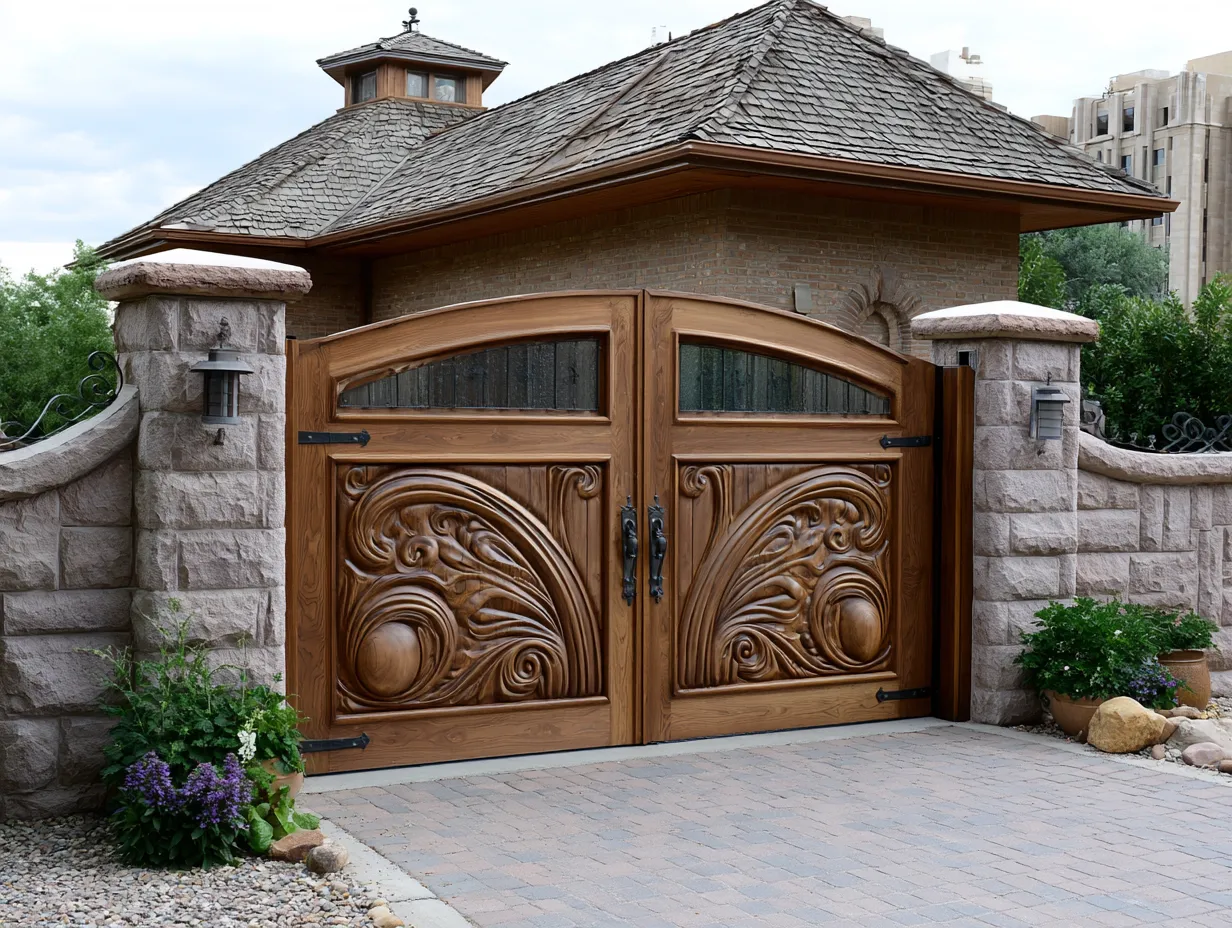
The design of the garage gate is classic wooden and, in some ways, human by nature. A nostalgic view, one might say. Taken off the page of a classic American storybook, a wooden gate stood on what else but an incredibly cozy abode. What’s really beautiful about it is the sheer versatility of wood: a cottage can be rustic, easily transformed into something like a modern, minimal home.
The garage door is a two-door wooden model.
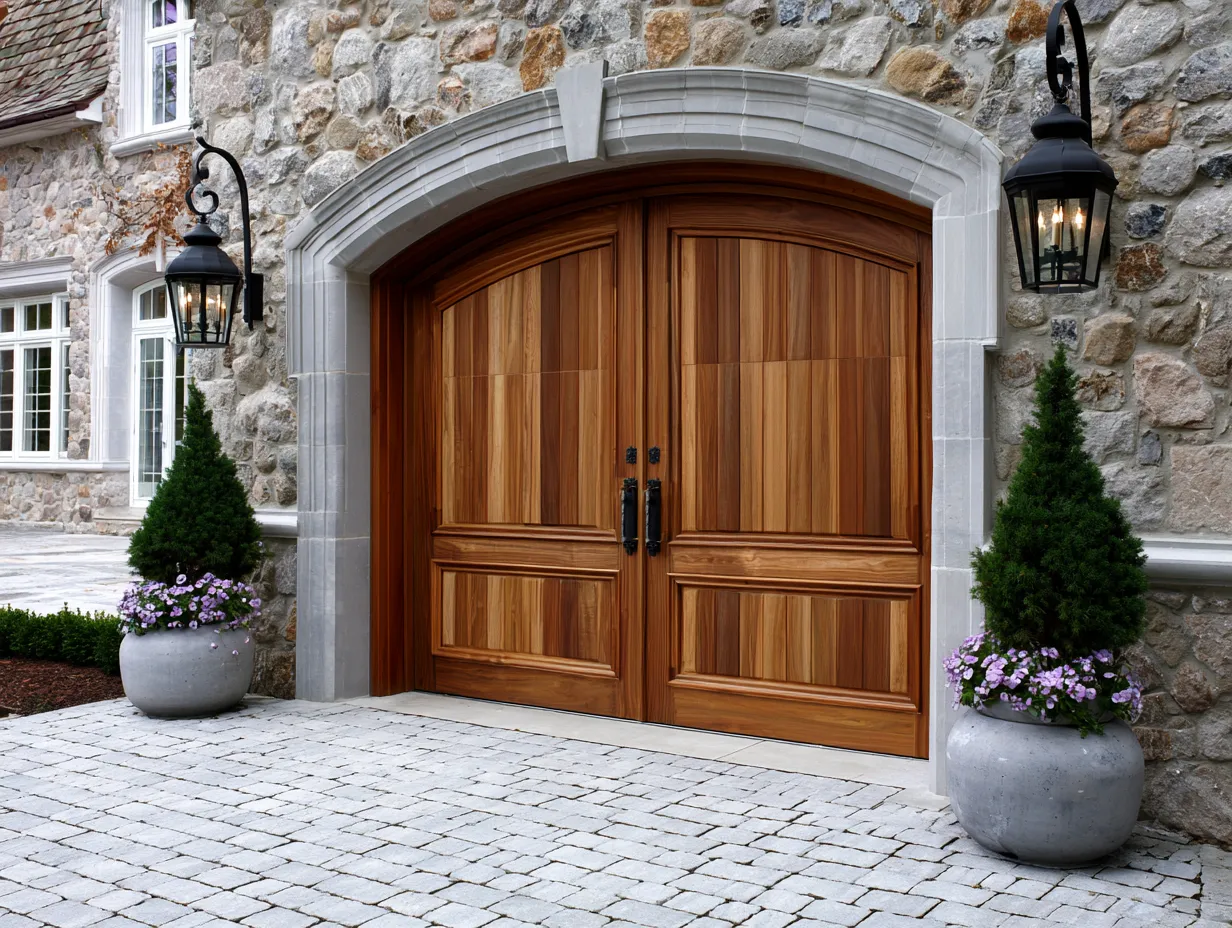
Earthy stain brings out all the intricate grain and pattern dances over their surfaces, and lets the wood speak. It’s like design with a little of its own story as a silent witness to the staying power of natural materials.
The appeal is in the details: from the fine grain of its wood to the workmanlike craftsmanship that went into its construction, it’s a piece that really does marry form with function. They are repaired, and their charm is maintained. It’s all about taking care and maintaining a wooden garage gate, just as if the branches of a tree are left for the storm; so are the wooden gates, if properly attended.
A good quality sealant acts like an armor for the gate, protecting the wood from moisture, sunlight, and time itself.
Details like wrought iron handles or fancy strappings could further enhance the appeal of a wooden gate. These hark back to carriage-house style gates, melding the classic feel of them with sleek, modern lines, making them a beautiful contradiction.
Color gives you the ability to make a difference. The wood is stained with your choice of stain to complement or contrast with the exterior of your house. Try a dark stain against a light-colored house for a bold visual statement with stark contrast.
Functionality is the lifeblood of the design. The wood gate contains double doors that swing outward. The operation is fairly smooth, though, but needs ample space within the driveway for the doors to open fully.
As evening sets in and the rest of the world retreats to its place of slumber, the warm porch light spills over the top of the wooden gate that stands silent and firm, an emblem to the age-old attraction of classically beautiful design.
Design of wooden garage gate It is never an entrance to a home, but a quiet welcome, nod to the tradition, testimony to old-world charm, and natural beauty that never declines. The conclusion that we may arrive at the end of our investigation into a classic wooden design of the garage gate is the understanding of what is alluring. A rich, earthy stain will bring out the wood grain, and fine attention to detail says clear as day—a wooden gate means more than function. It is the aesthetic option, which can actually turn your home entrance into a grand statement.
DON’T DO THIS
Garage Gate Mistakes That Are Hard to Undo
Mixing wood gate with aluminum trim. The color match looks fine on a sample chip. On a full facade in afternoon sun, the undertones pull apart. One goes warm, one goes grey. You’ll notice it every single day.
Choosing gate style before choosing the opener. A heavy wood double-swing gate needs a dedicated swing-gate operator, not a standard overhead opener. Retrofitting costs $400–$600 more than getting it right from the start.
Clear glass panels on a cluttered garage. Glass is a frame, not a door. It presents whatever is behind it. If that’s cardboard boxes and a broken lawnmower, the gate actively lowers your curb appeal.
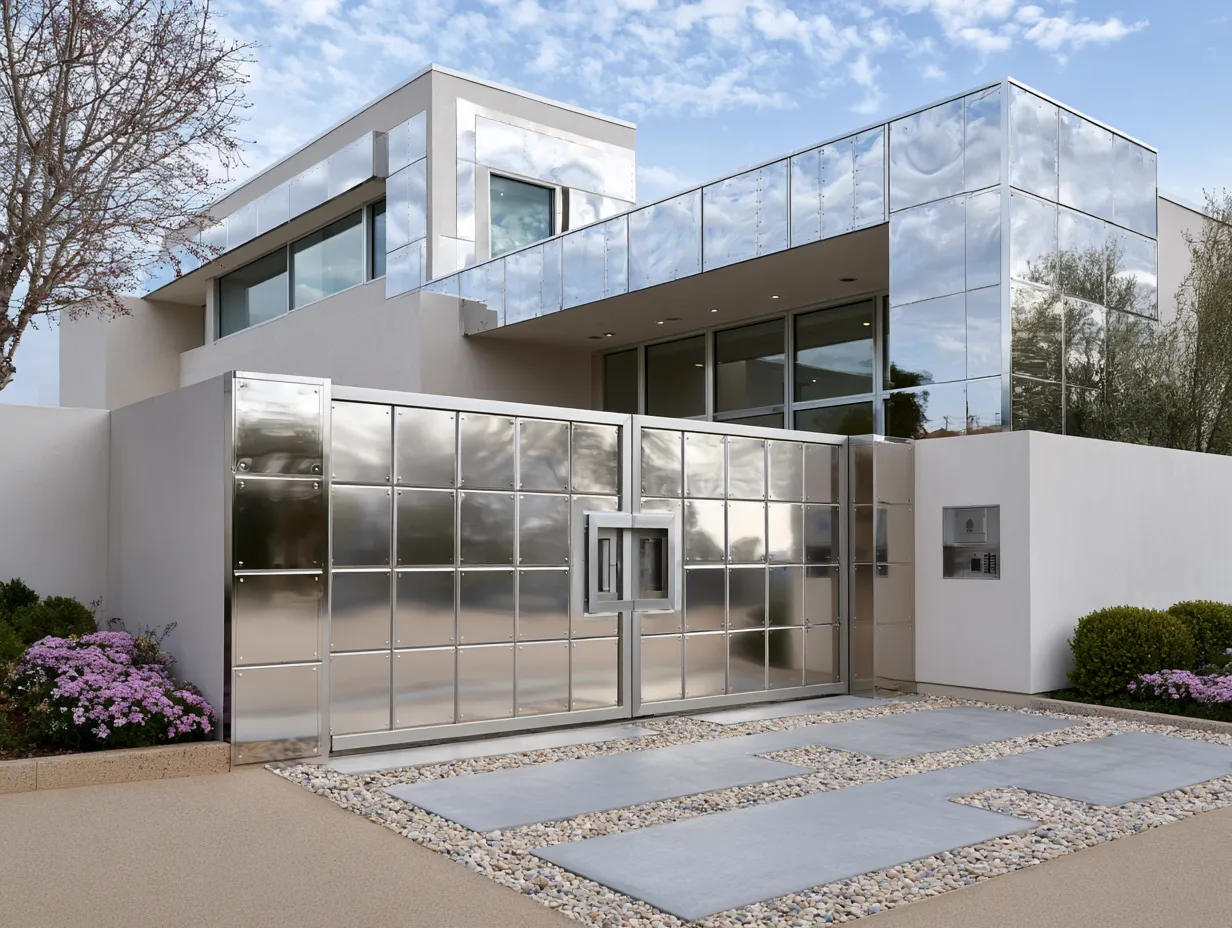
Buying the polished steel finish for a suburban house. Mirror steel needs a fully committed architectural context to work. On a standard driveway, it just looks like you couldn’t decide between a car dealership and a house.
The Steel Garage Gate That Doesn’t Need an Apology for Looking Modern
Galvanized steel gauge matters more than finish color. 24-gauge is the minimum for a gate that won’t flex in wind; 18-gauge is what commercial installations use. Most residential steel garage gates sold at box stores are 25-gauge or thinner — they dent from a shopping cart hit. Clopay’s Canyon Ridge line starts at around $1,100–$1,700 installed for 18-gauge steel and holds shape under actual impact.
Powder coating beats paint every time for steel. It bonds at a molecular level during the curing process, which means it doesn’t peel the way brush-applied paint does when the metal expands and contracts seasonally. A powder-coated finish in a matte charcoal or RAL 7016 anthracite runs about $150–$200 extra at time of fabrication. Worth it.
The finish trap is glossy mirror steel on a house that isn’t already committed to the industrial-modern look. Polished steel looks remarkable in photography. In a suburban driveway next to a beige stucco house, it reads as pretentious. Matte finishes on steel age better visually and hide minor surface scratches that would be obvious on a polished surface.
Steel gate frames also handle automation better than wood. Adding a LiftMaster 8500W ($350–$450 unit cost) to a steel gate is straightforward because the weight is consistent and predictable. Wood expands with humidity, which changes the torque load on the opener motor seasonally.
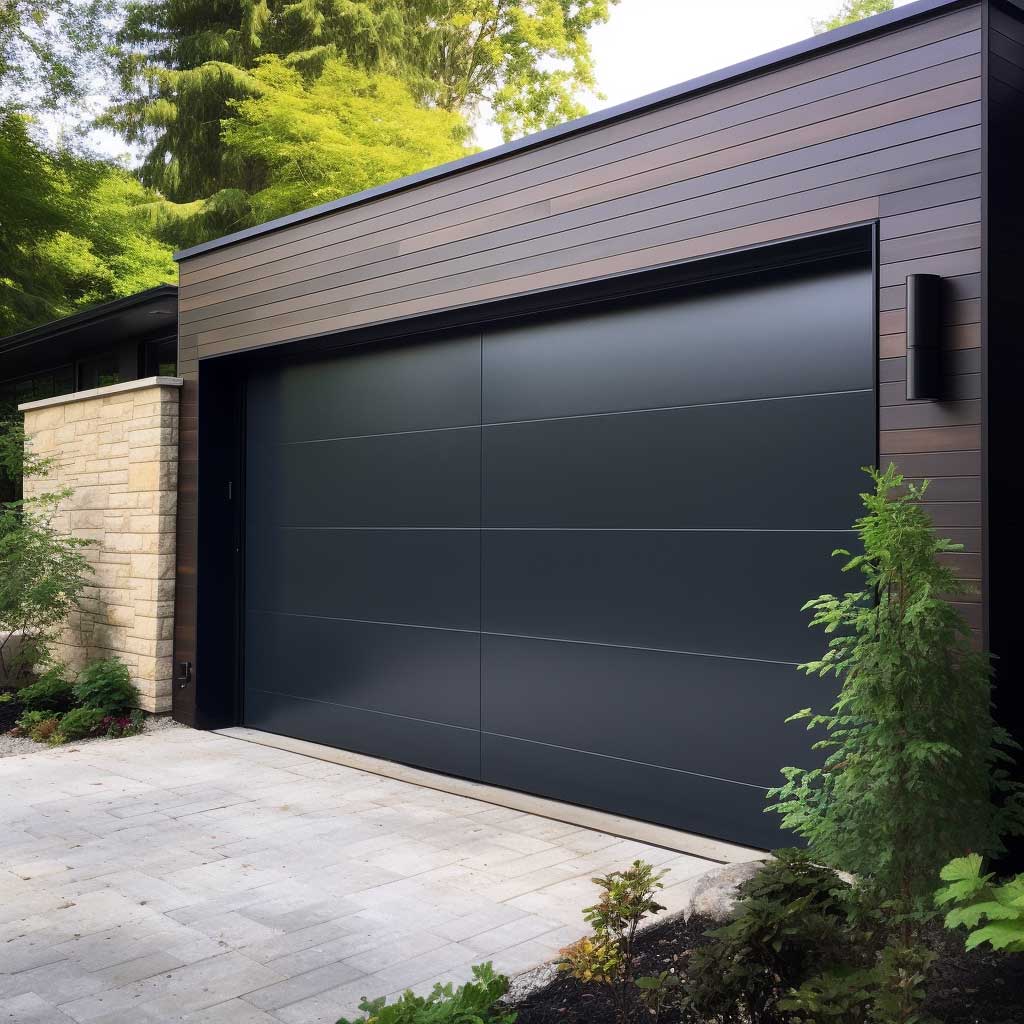
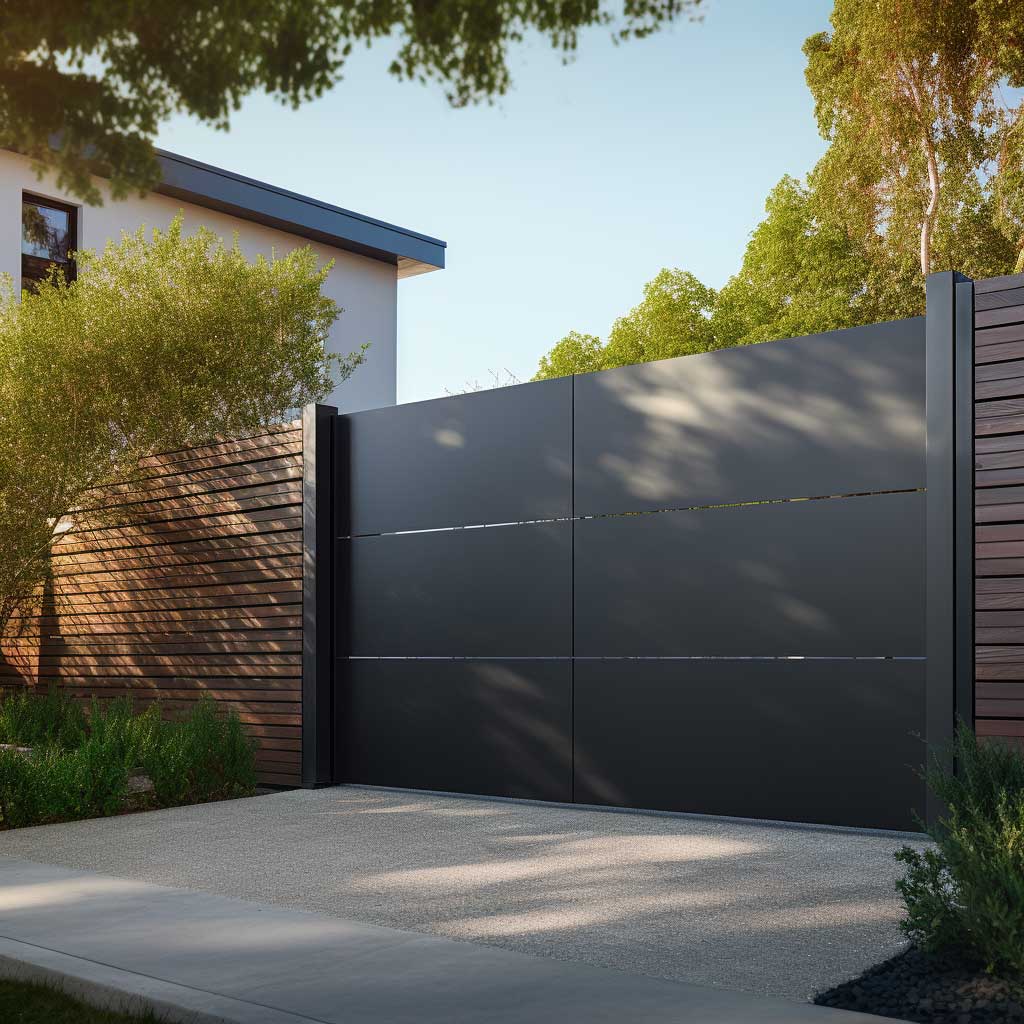
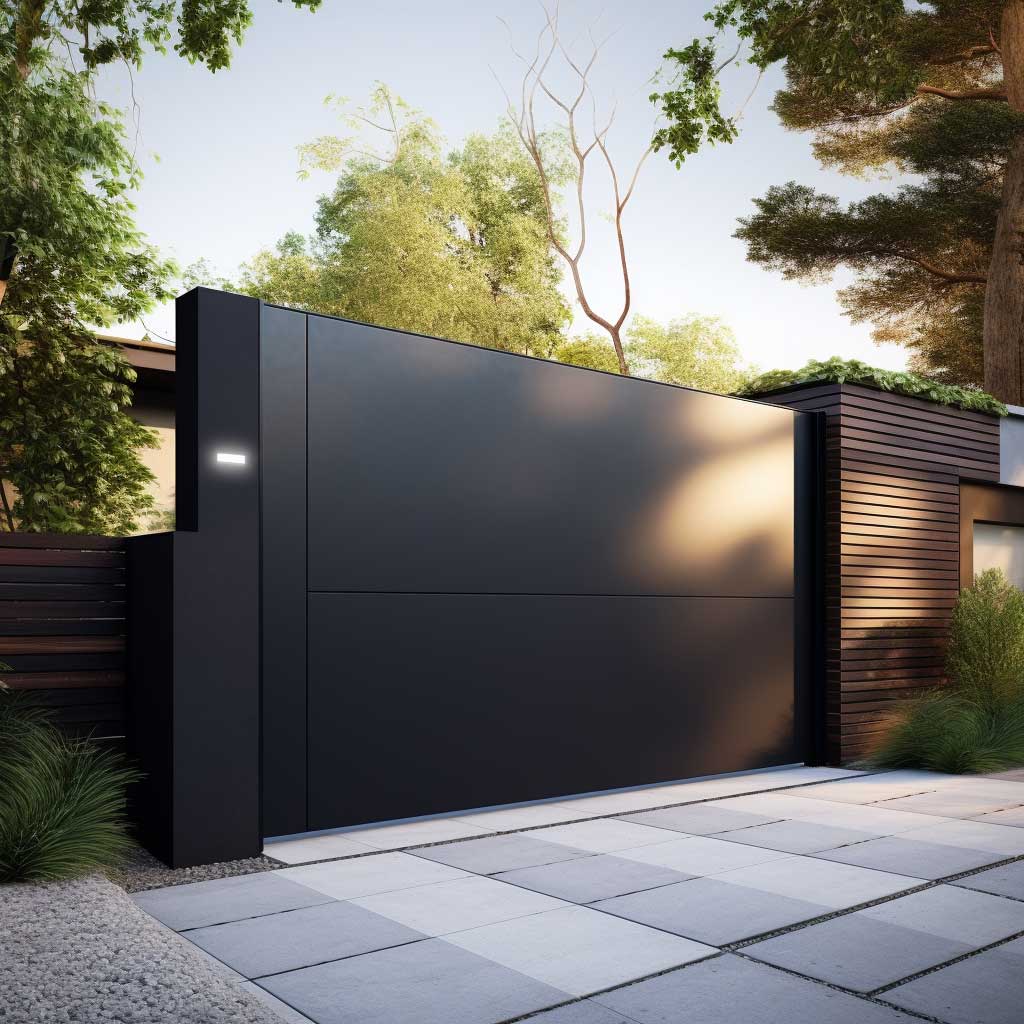
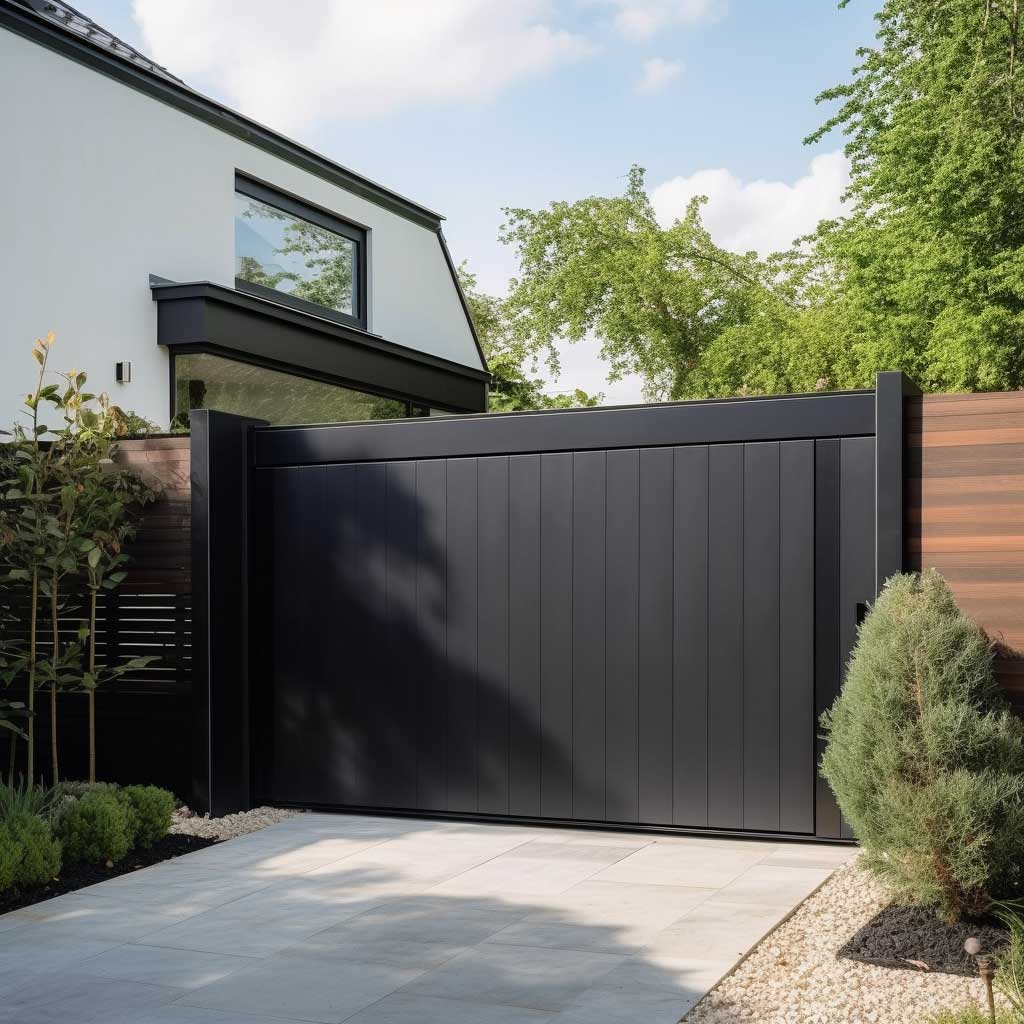
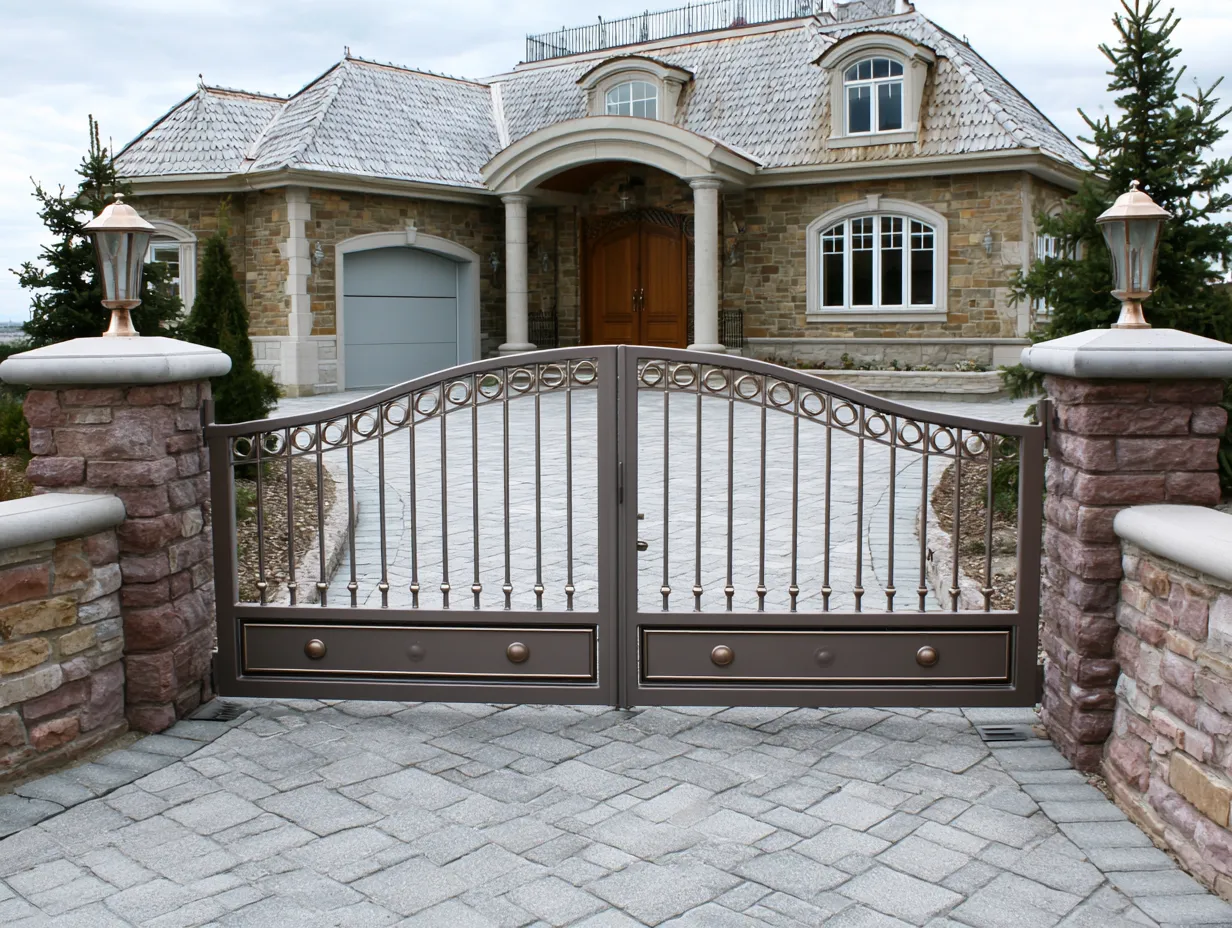
With modernity taking its stride, we move on to a contemporary garage gate design in steel. If you’re also reconsidering your home’s full entrance, the main entrance gate designs post covers how the driveway gate and front door read as a single visual unit. Contemporary steel uses materials and aesthetic compositions that deliver strength with minimalist charisma.
The steel-molded garage door—it’s a vision of streamlined simplicity. The polished surface reflects well unto the world about it and mirrors light to throw reflections on its own image. This gives the feeling of depth and, in a way, motion, which brings it into life from what could be considered a still setup.
A steel gate is inherently much more modern when contrasted with the earthy appeal that a wooden gate brings to the space. Its neat lines and minimalist charisma tie in perfectly to contemporary design principles of less often being interpreted as more.
Major in strength and durability: Steel will stand firm against rust, bad weather, and impact. This Old House’s garage door material breakdown confirms that foam-insulated steel panels reach R-values up to 17, which is significantly higher than wood at R-10 — a detail that matters if the garage shares a wall with a living space. The gate stands ready to shoulder the test of elements and time.
Moreover, to aesthetically enhance it, the steel gate can be finished in different finishes. From the glossy mirror finishing that reflects light beautifully to the matte finish for a subtle look, they are numerous in variety.
This is where steel shines. It is very flexible and can be molded in complex shapes, or it can be kept relatively flat and simple, as in this case. Combining both, it’s a gate that, apart from useful purposes, is aesthetically pleasant.
Another remarkable aspect of this steel gate is an absolutely organic combination with the outside of the building. The gate itself does not look like an awkward misfit; on the contrary, it contributes to the modern-looking facade.
The steel gates also call for their due share, just like the wooden gates, in terms of the regular maintenance. It is advised to apply a fresh coat of rust-resistant paint to the gates to keep up both the polished looks and the longevity.
The steel garage gate not only secures the dwelling but also enunciates a statement of the modern bold design principle. It is demanding to catch the eye and responds with durability, functionality, and aesthetic appeal.
As we have concluded our discussion of contemporary steel garage gate design, we humanly like its sleek simplicity, strength, and modern aesthetic. It goes beyond the functionality of a garage gate, really. A good design, along with material and finish, will work for your home’s curb appeal and leave a memory.
Glass Panels on a Garage Gate Work Until the Neighbor Walks By
Tempered glass panels on a garage gate run $2,200–$4,500 installed depending on panel count and frame material. That’s not a shock purchase. It makes sense when your garage interior is worth showing — polished concrete floor, visible storage system, clean car. If your garage is a storage unit with a vehicle parked in front of the chaos, glass is the wrong choice architecturally and practically.
The frame material matters as much as the glass itself. Aluminum frames with anodized finish are the standard, running $1,800–$2,800 for a full-width gate. Steel frames are heavier and cost more to automate but allow thinner visible profiles. Wood-framed glass panels exist and look remarkable — Schweiss Doors makes a bifold version starting around $3,500 — but wood-glass combinations require maintenance on two materials simultaneously.
Frosted or satin-etched glass solves the privacy problem without blocking light. A 60% opacity sandblasted finish lets in natural light during the day while making the interior unreadable from the street. This is the option I’d take over clear panels for 90% of residential applications.
One thing nobody mentions: glass panels collect condensation on cold mornings. A garage with a tempered glass gate facing east will have visible water streaks by 8 a.m. in autumn. It clears by midday, but if that visual bothers you, plan for a weekly wipe-down with a calcium-removing solution like CLR ($8–$12) during shoulder seasons.
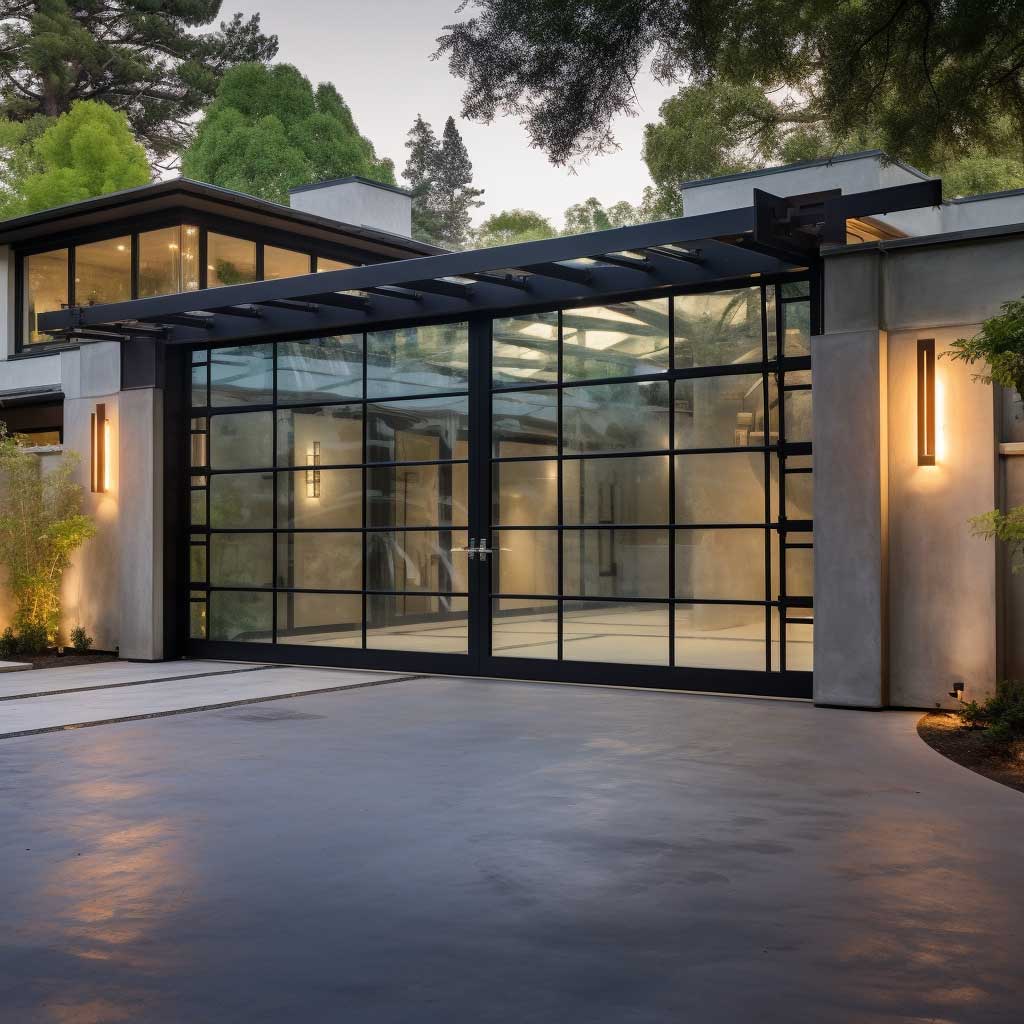
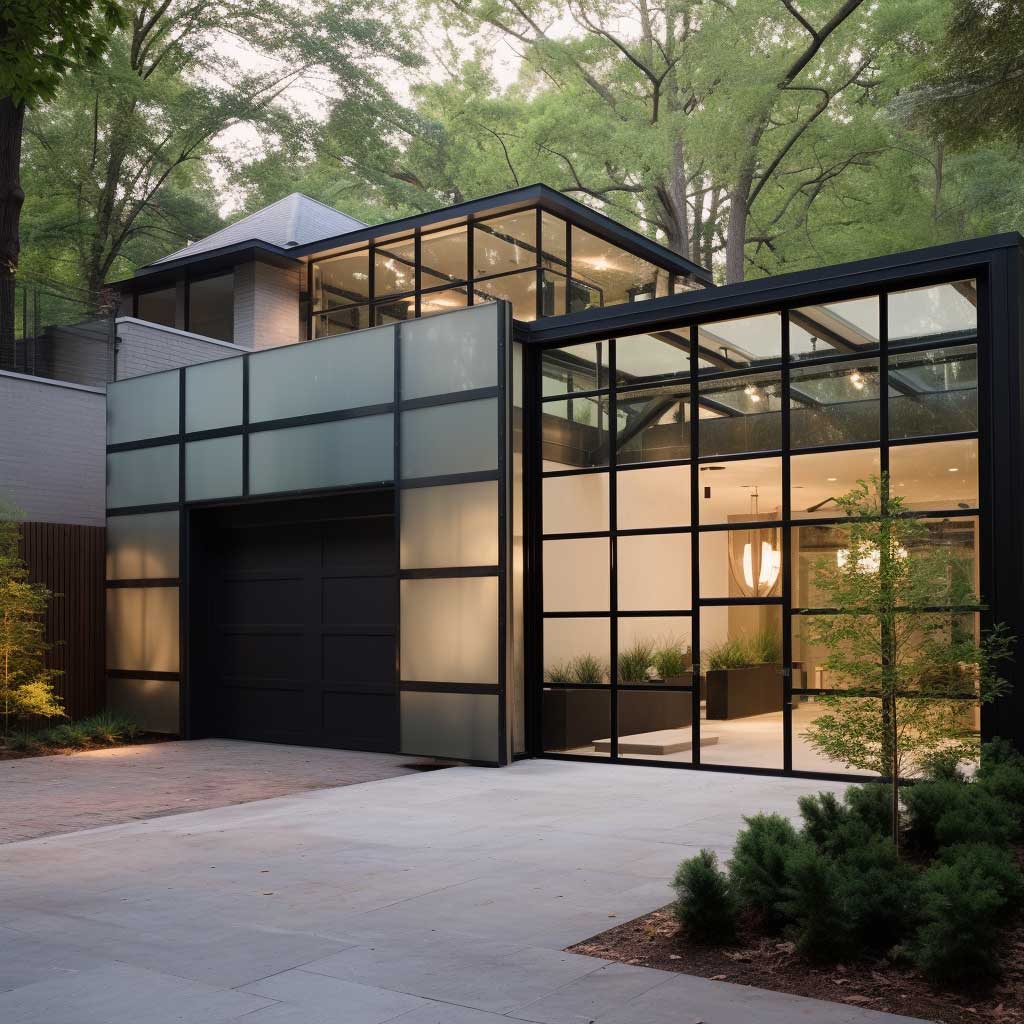
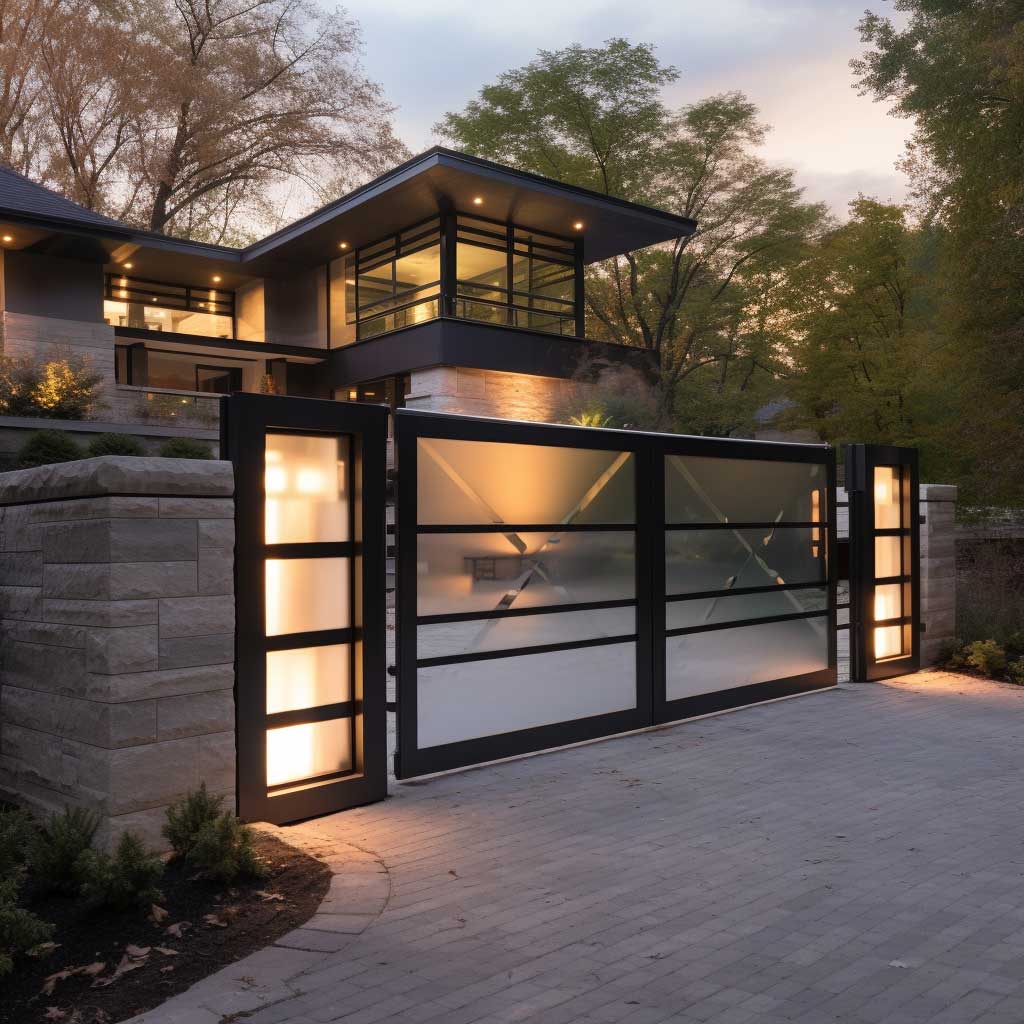
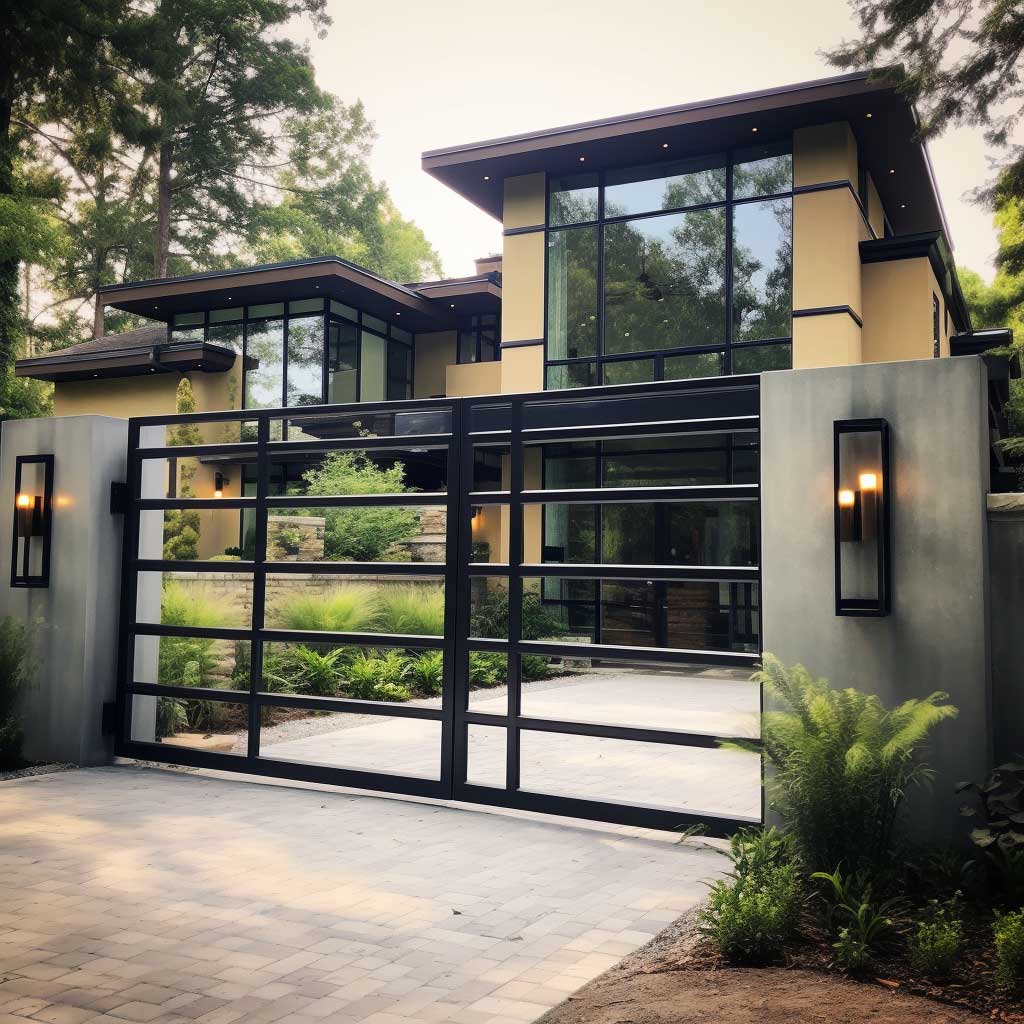
And the final act in our exploration of garage gate design brings us to an unconventional material: glass. For context on how transparency and light play out across an entire facade, the garage exterior lighting ideas post shows exactly how a glass gate performs after dark. It is anything but traditional and adds genuine creativity to the design.
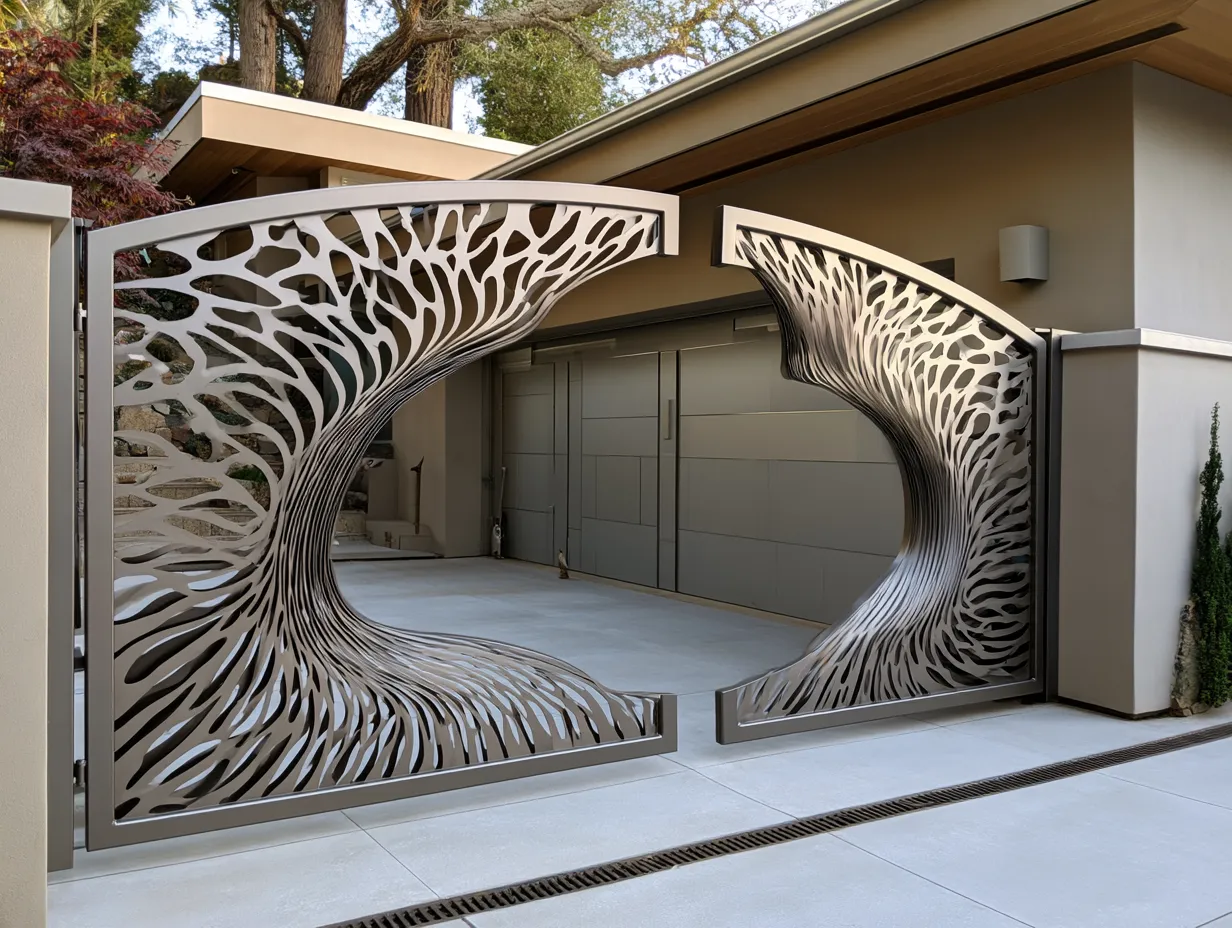
On the photo, we can see a glass gate to the garage, made of clear panels. They open single, showing the view into the room. In general, such transparency in the gate design has an extremely rare example, and for this reason, it creates outstandingly modern and fresh looks.
Glass garage door opens up millions of designs before you due to its transparent look. It fits perfectly with any exterior, starting from traditional brick to modern, shiny concrete.
The glass used on such gates must be of sufficient durability. Tempered glass is the favorite of many because of its strength and safety features. It is designed to resist elemental forces; when broken, it falls into small blunt pieces.
The lighting is very key in bringing out the aesthetic appeal of a glass gate. In the evening, the lights in the garage interior can turn this into a kind of shining display, warm and beckoning.
The glass garage doors are maintained simply by cleaning so that it remains clear and clean. Streaking on the glass is usually avoided by applying the right cleaning solution so that there is improved visibility of all the objects behind the window.
Design-wise, a garage door made out of glass really adds depth to a home’s exterior. It breaks the monotony of solid walls in buildings and sets that part of your home differently from the others.
Though one concern may be privacy, this can always be solved as the innovative gate can be made with froglassed or tinted glass.
The glass garage gate, due to its modern form, is recommended to people who are looking for an innovative solution that looks completely different than traditional gates. Due to great and very interesting aesthetic and functional properties, such a gate is recommended to people who think extraordinarily, namely creative house owners.
In summary of our analysis of the garage gate design, it is evidently clear that the glass garage gate epitomizes a unique balance of both functionality and design. Its see-through panels and futuristic looks modernize the exterior design and give the necessary value of safety from onlookers.
FINAL TAKE
The Garage Gate Design You Pick Lives on Your Facade for 15 Years
Wood, steel, and glass are not interchangeable. Each one belongs to a specific exterior language. Get the material right first, then choose the finish. The style follows from there.
Budget the maintenance cost into the decision, not just the installation price. A $900 pine gate that warps in two years costs more than a $1,400 cedar gate that holds for a decade.
Save this post. When you’re ready to choose, you’ll want the material comparison and price ranges in front of you.
How to Choose a Garage Gate Design for Your Home
Material sets the visual tone, installation method sets the budget, and the opener determines whether you'll regret the decision in year two. Work through these steps in order before pricing anything.
-
1
Measure the opening and note ceiling clearance
Measure width and height of the garage opening exactly. Note ceiling height inside — overhead sectional doors need 12–15 inches of clearance above the opening. Swing-out gate styles need zero ceiling clearance but require clear driveway space in front. Get these numbers before looking at any design.
-
2
Match the gate style to your exterior architecture
Traditional or craftsman facades call for wood or carriage-style steel. Modern flat facades need horizontal-panel steel or glass. Never pick gate style from a catalog photo without cross-referencing it against your actual facade material and color. Mismatches show up immediately.
-
3
Choose the material based on climate and maintenance budget
Cedar or redwood for humid climates, not pressure-treated pine — pine warps within 18 months. 18 or 24-gauge steel for modern designs in any climate. Glass only if the garage interior is presentable, since glass shows everything behind it. Skip clear glass panels for any garage used for storage.
-
4
Decide on the opening mechanism before finalizing the design
Swing-out garage gates require a dedicated swing operator, not a standard overhead opener. Heavy glass panels need heavy-duty torsion springs. Match the opener spec to the gate weight and geometry before ordering anything. This is the step most homeowners skip, and it costs $400–$600 to fix after installation.
-
5
Select the finish and hardware
Powder coat for steel, penetrating oil finish for wood, anodized aluminum frame for glass. Match hardware finish (handles, hinges) to the other metal elements on the facade — front door hardware, house numbers, light fixtures. Brushed black is the most universally compatible finish in 2024–2026 residential design.
-
6
Get installation quotes with written material specs
Request quotes that specify gauge (for steel), wood species and grade (for wood), or glass type and frame material (for glass). A quote that says “steel garage gate” without gauge is not a real quote. Compare material specs, not just prices.