I spent three months pricing metal door canopies for a 42-inch entryway. Most looked the same — flat aluminum sheets bolted to stucco. Boring. But a few stopped me cold. A brushed 6063-T5 aluminum panel with a 1200 mm projection. A raw Corten steel awning that rusts on purpose. A curved copper hood that turns green after five winters. Below you’ll find seven metal canopy designs broken down by material, typical cost range ($350–$4,000+), and the kind of house they actually suit. I’ve also noted what nobody mentions: the weight load on your wall anchors, because a 3 mm steel canopy at 1500 mm wide weighs roughly 28 kg before rain adds more. If you want something that looks sharp and won’t rip off in a December windstorm, keep reading.
Quick Summary
Best for most homes: Brushed aluminum — $150–$800, under 12 kg, corrosion-proof
Best for industrial style: Corten steel — $600–$2,000+, develops natural rust patina
Best for luxury facades: Curved copper — $2,000–$4,500, green verdigris over time
Wall load to plan for: 11–47 kg depending on metal and span
Typical projection: 800–1200 mm from wall face
| Feature | Aluminum | Steel / Corten | Copper |
|---|---|---|---|
| Weight (1500 × 900 mm, 3 mm) | ~11 kg | ~35–47 kg | ~12 kg (on steel frame) |
| Typical cost range | $150–$800 | $600–$2,000+ | $2,000–$4,500 |
| Corrosion resistance | Excellent — no rust | Corten self-heals; mild steel needs coating | Develops protective patina |
| Maintenance | Wipe down yearly | None (Corten) / repaint every 3–5 yr (mild) | None — patina is the point |
| Best house style | Minimalist, Scandinavian, contemporary | Industrial, loft, exposed-brick | Transitional, luxury, heritage |
| DIY-friendly? | Yes — most kits bolt on | No — heavy, needs chemical anchors | No — custom fabrication required |
| Lifespan | 20–30 years | 40–80+ years | 60–100+ years |
Brushed Aluminum Door Canopy — Lightweight, Rust-Proof, Under 0
Aluminum canopies weigh roughly 40–60% less than the same profile in steel. That matters. A typical 1500 × 900 mm panel in 3 mm 6063-T5 alloy comes in at about 11 kg — light enough for two expansion bolts into brick or concrete. I’ve seen contractors use four M10 anchors on anything wider than 1200 mm, and honestly, that’s the safer call if your wall is rendered block. Most brushed aluminum canopies ship in mill finish or RAL 7016 anthracite grey. You can powder-coat them any color you want, but I’d stick with dark tones — fingerprints and water spots show fast on white or silver. One thing to watch: cheaper panels use 1.5 mm sheet bent over a hollow frame. They flex in wind and drum during rain. Go for at least 2.5 mm solid if your projection exceeds 800 mm. Brands like Palram and Schulte sell kits at Home Depot starting around $150 for polycarbonate-and-aluminum combos, but a custom all-metal unit from a local fabricator typically runs $400–$800 depending on your city.
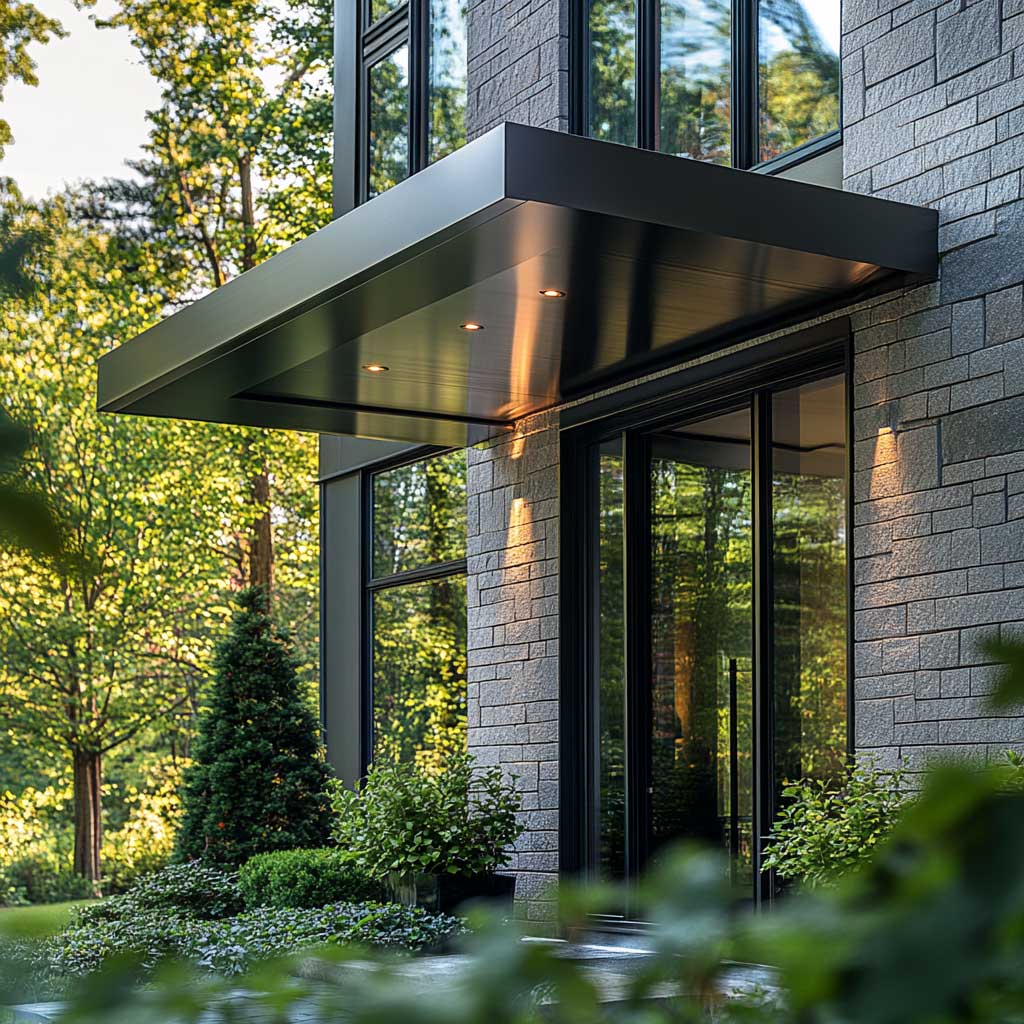

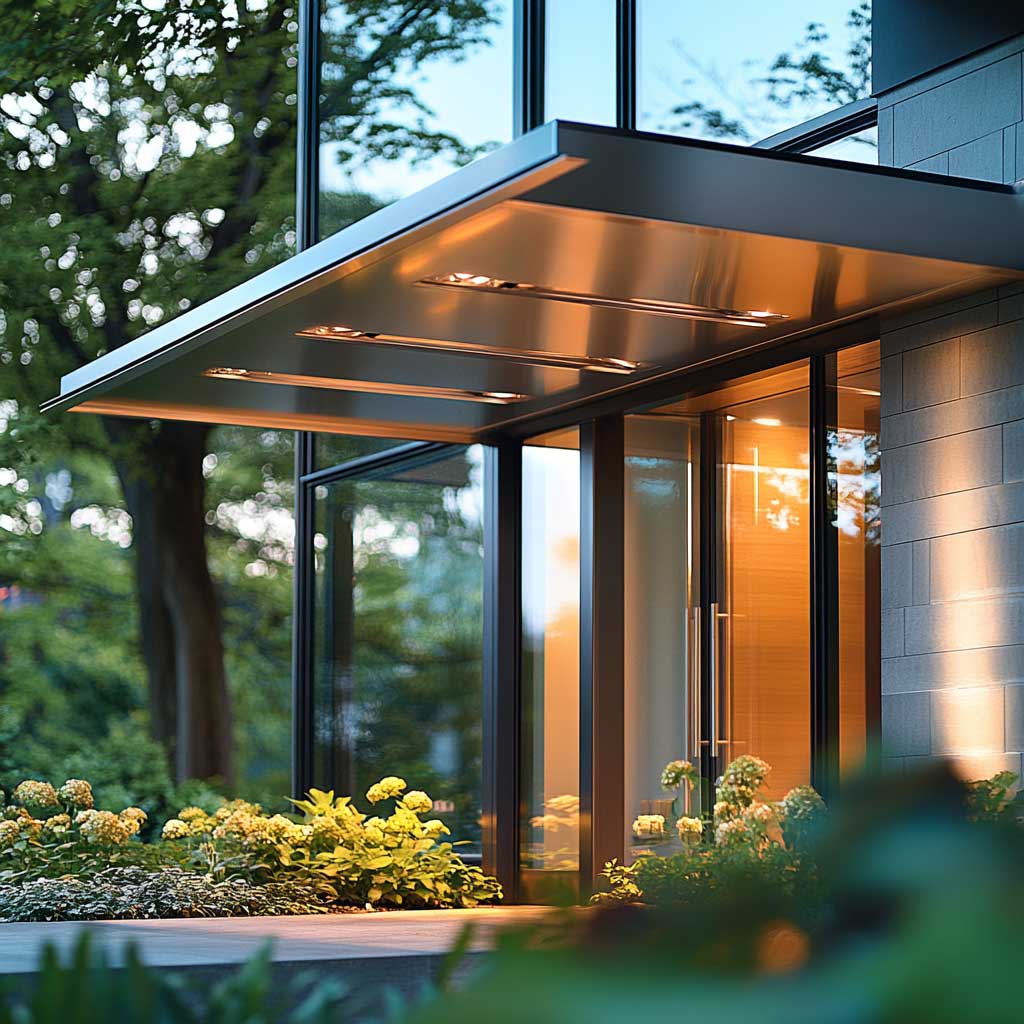
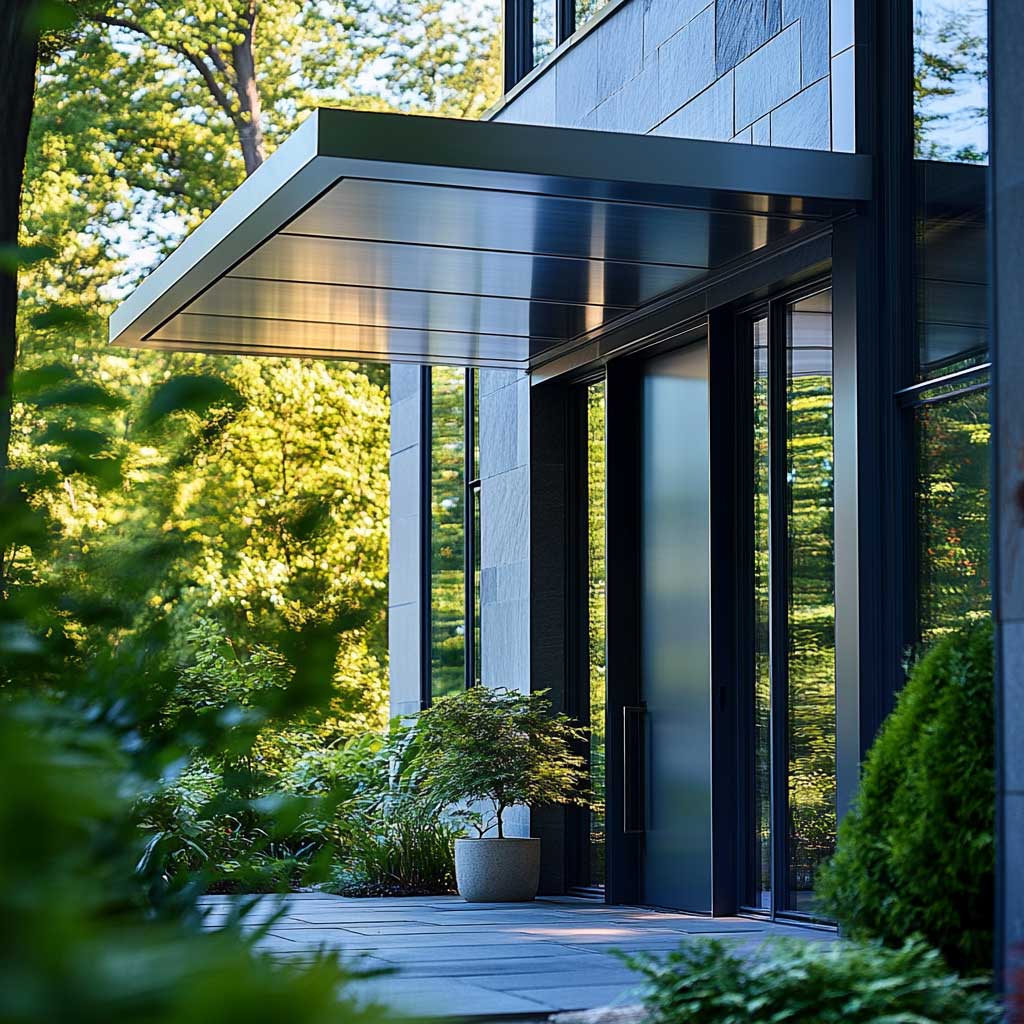
A sleek aluminum modern front door canopy is the epitome of contemporary elegance. Aluminum, known for its lightweight yet durable properties, is an ideal material for creating canopies that are both functional and aesthetically pleasing. The brushed finish of aluminum gives the canopy a refined look that blends seamlessly with modern architectural styles. Its clean lines and minimalist design make it a perfect match for homes that favor simplicity and sophistication.
The canopy’s reflective surface adds a dynamic element to the entrance, catching and diffusing natural light in a way that brightens the entryway. This not only enhances the curb appeal but also creates a welcoming ambiance for guests as they approach the home. The interplay of light and shadow on the aluminum surface can be particularly striking during early mornings or late afternoons, when the sun is at a lower angle. If you’re updating the door itself alongside the canopy, these modern door designs for a main entrance makeover pair naturally with a clean aluminum line overhead.
Moreover, aluminum is highly resistant to corrosion, making it an excellent choice for outdoor applications. This ensures that the canopy will maintain its sleek appearance for years to come, with minimal maintenance required. Its durability is complemented by its sustainability, as aluminum is fully recyclable, aligning with eco-friendly building practices. For a broader breakdown of fixed versus retractable awning types and which materials hold up best, Family Handyman’s awning buying primer covers the basics well.
For homeowners looking to elevate their modern front door canopy with a material that offers both style and substance, aluminum stands out as a top choice. Its ability to transform a simple entrance into a statement piece is unmatched, making it a popular option for those who appreciate modern design aesthetics.
Corten & Raw Steel Door Canopy — Industrial Look That Ages on Purpose
Corten steel — sometimes sold as A588 or COR-TEN B — forms a stable rust layer that actually protects the metal underneath. It looks rough and unfinished at first. Give it 18–24 months outdoors and the surface settles into a deep reddish-brown that won’t flake or progress. But here’s the catch: it drips orange runoff for the first few rain cycles. If you have a light-colored porch or limestone steps, expect staining unless you pre-weather the panels with a vinegar-and-salt solution before mounting. Weight is the other factor. A 1500 × 1000 mm canopy in 4 mm Corten weighs around 47 kg. You need chemical anchors into masonry, not just plugs. Steel fabricators in most metro areas charge $600–$1,500 for a flat cantilever design; add welded gussets or a pitched profile and you’re north of $2,000 easily. Still, nothing else gives you that raw loft-conversion look from the outside. And the material will outlast the house.
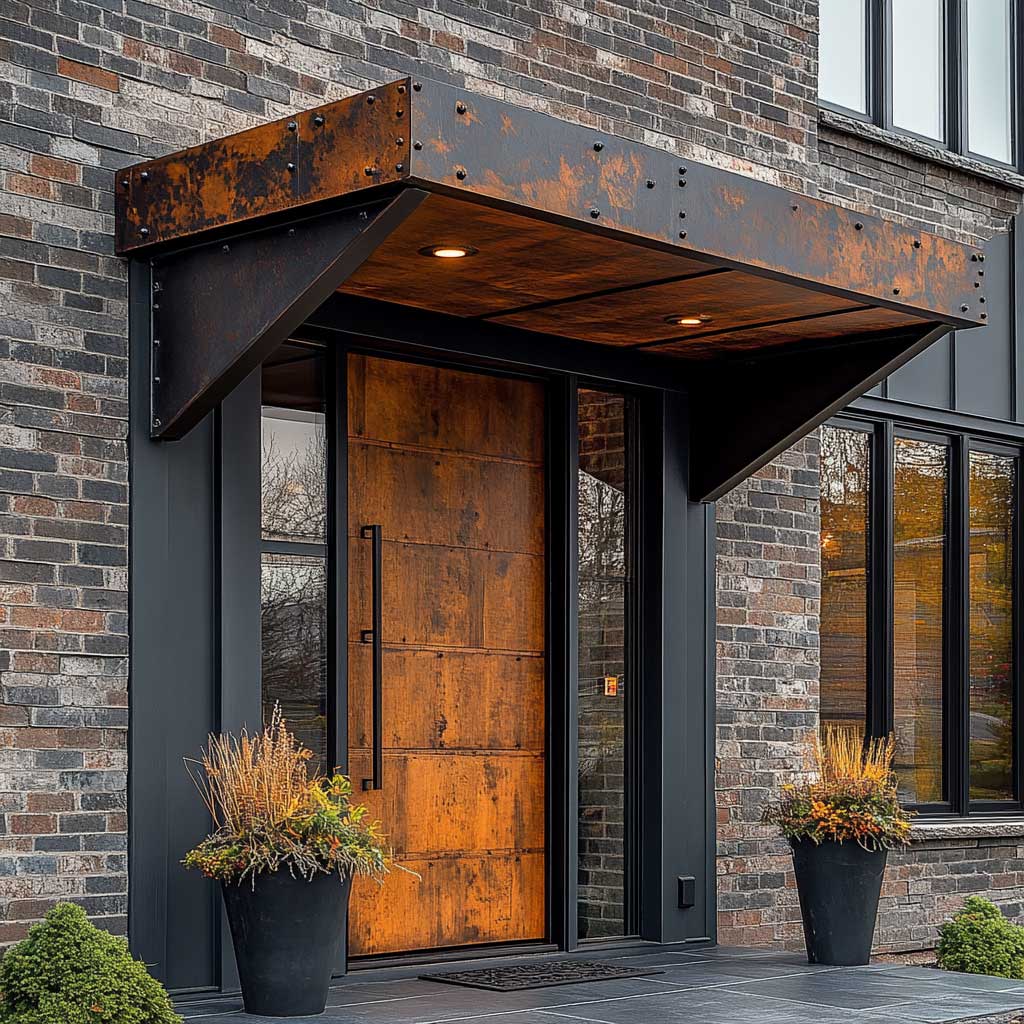
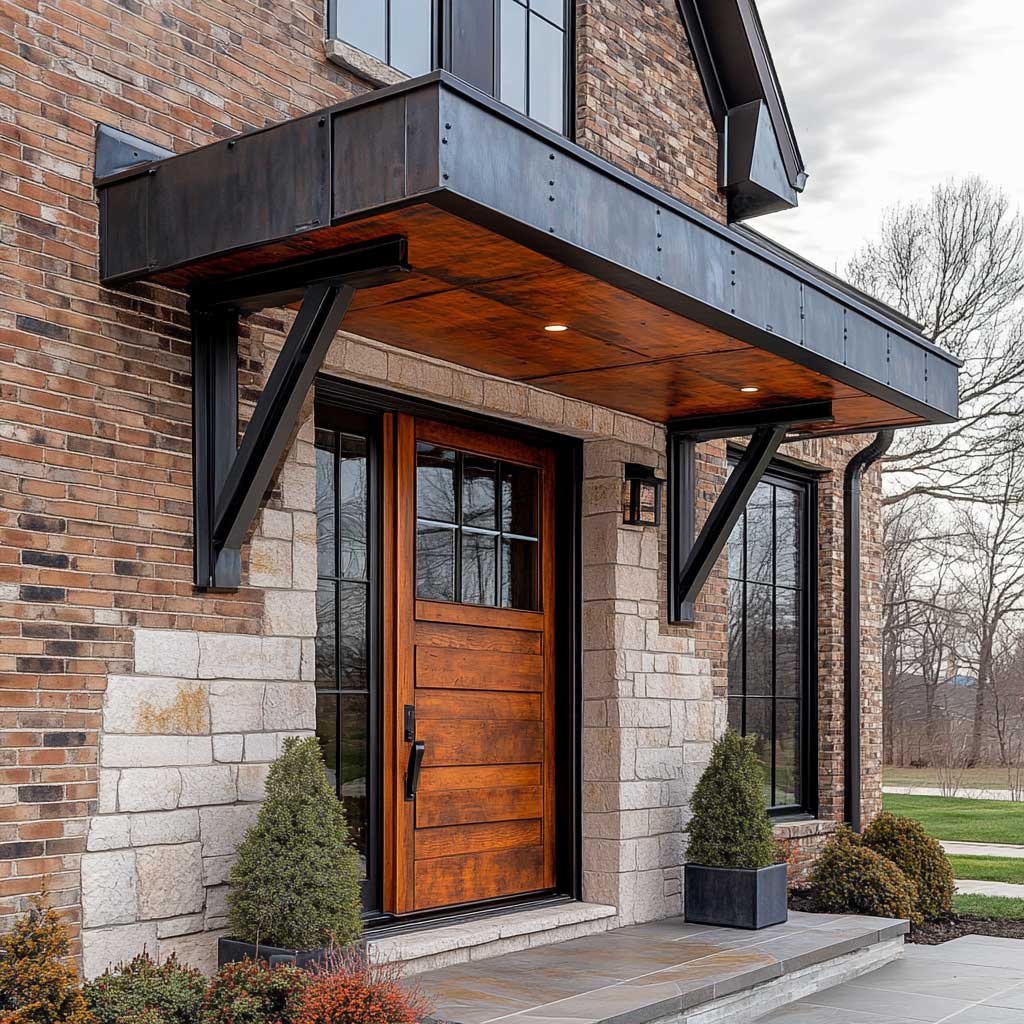
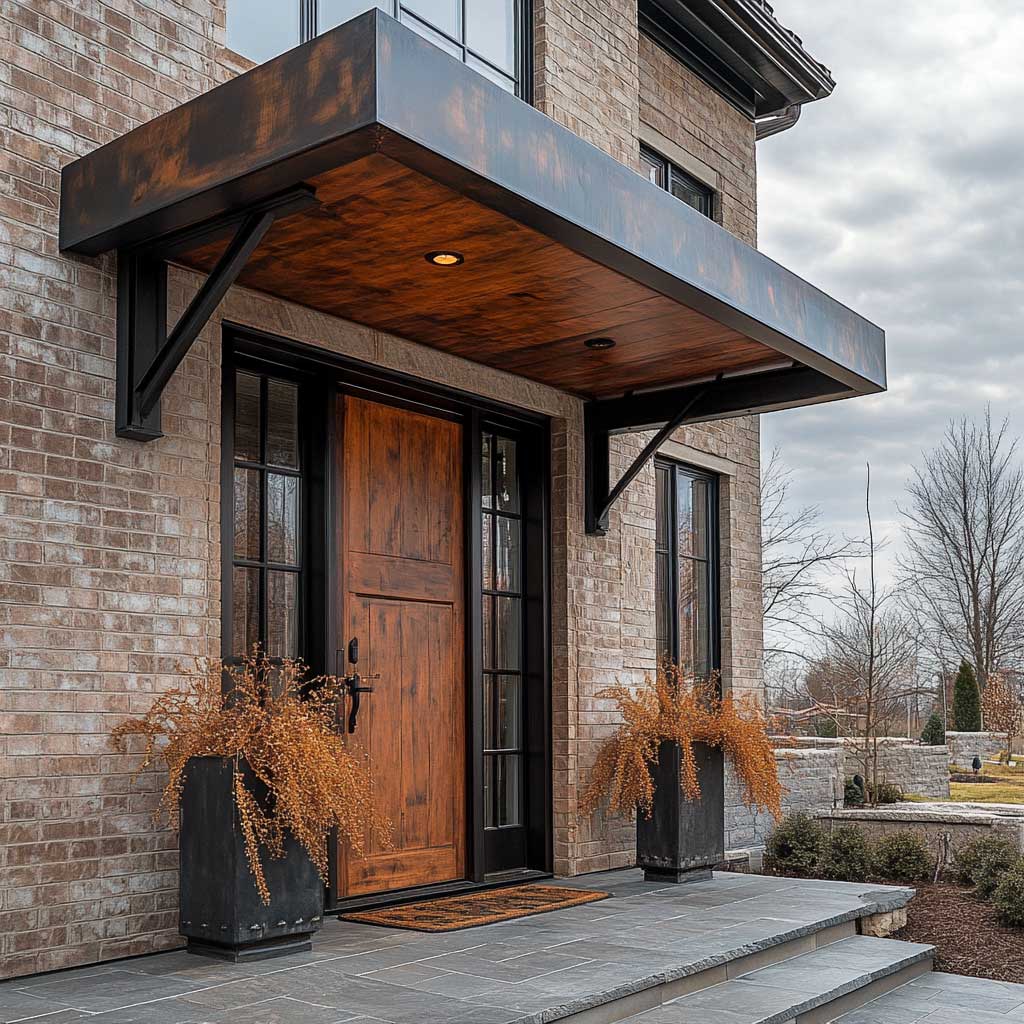
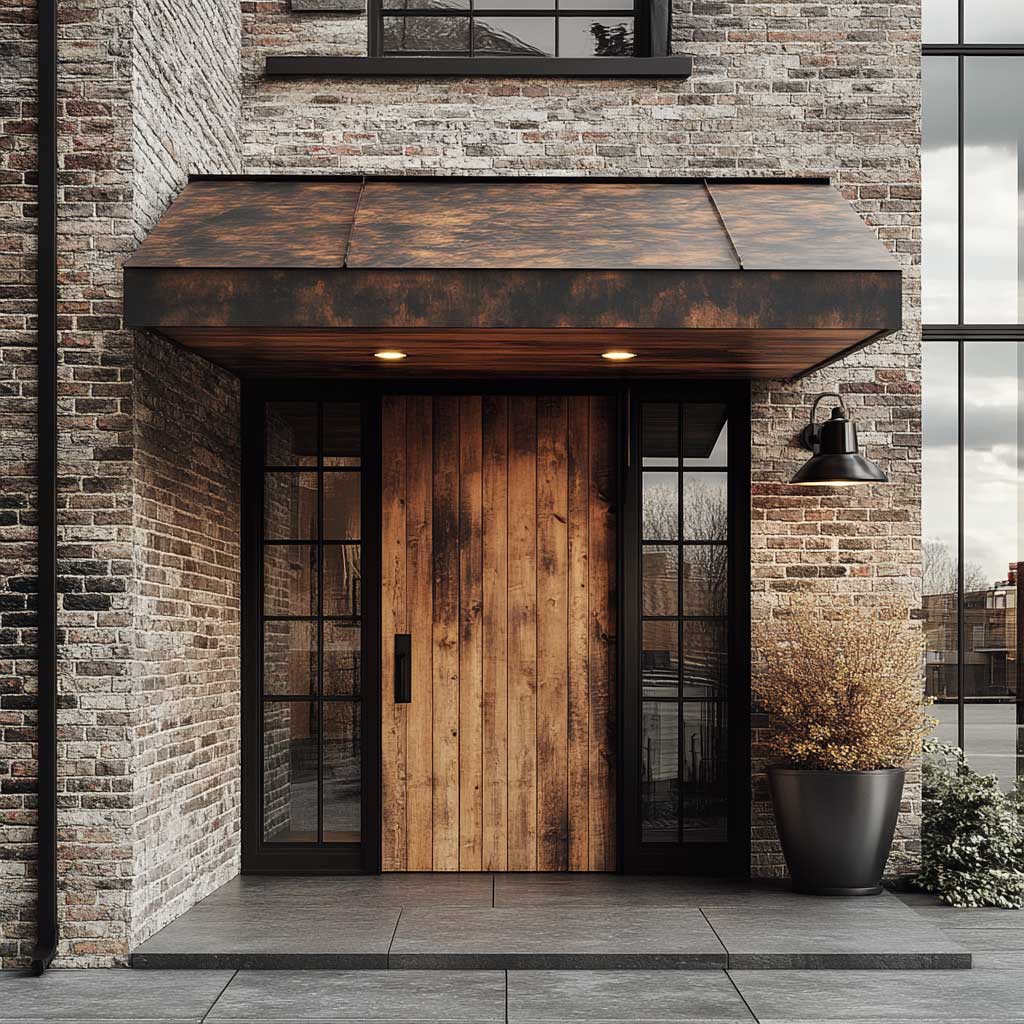
An industrial steel modern front door canopy offers a striking contrast between raw material and refined design. Steel, with its rugged texture and unpolished finish, brings a touch of industrial chic to any home. This type of canopy is perfect for those who want to make a bold statement with their entrance, blending the robustness of steel with the clean lines typical of modern architecture.
The use of raw, weathered steel adds character to the canopy, creating a unique visual appeal that changes over time as the metal develops a natural patina. This aging process is a hallmark of industrial design, where the beauty of materials is celebrated in their most authentic forms. The bold geometric lines of the canopy frame the entrance in a way that is both dramatic and functional, providing ample coverage while drawing attention to the front door.
The juxtaposition of steel against more traditional materials like wood or brick enhances the industrial aesthetic, creating a harmonious balance between old and new. This contrast is particularly effective in homes that feature exposed brickwork or metal accents, where the steel canopy can tie together various design elements into a cohesive whole. For a broader look at how metal performs in outdoor shelter structures, I’d also check why a metal roof canopy is a strong long-term choice — same material logic, bigger scale.
In addition to its visual impact, steel is also incredibly durable, capable of withstanding harsh weather conditions without compromising its structural integrity. This makes it an excellent choice for a modern front door canopy, offering long-lasting protection while requiring minimal upkeep. If you’re considering the DIY route for a lighter awning install, This Old House walks through the full mounting process with video. For those who appreciate the raw beauty of industrial design, a steel canopy is a perfect addition to their home’s entrance.
Curved Copper Door Canopy — Patina, Warmth, and a ,000+ Price Tag
Copper starts at a warm salmon-pink and shifts through brown, then dark chocolate, before settling into that unmistakable green verdigris. In a coastal climate, you’ll see green within two years. Inland, it can take five to ten. You can force the patina with liver-of-sulphur or ammonia fuming — plenty of YouTube tutorials on that — but I prefer letting it happen naturally. The color is more layered and uneven, which looks better up close. Curved copper canopies are usually formed from 0.7–1.2 mm sheet over a steel subframe. The copper itself is soft and can’t hold a cantilever without internal support. That’s why these designs cost $2,000–$4,500 from a specialist sheet-metal shop, and even more if the curve is compound rather than single-radius. For smaller budgets, some suppliers offer copper-clad aluminum — real copper bonded to an aluminum core. Runs about 30–40% less than solid copper and weighs half as much. My go-to advice: if your front door is painted black or charcoal, copper reads beautifully against it. White door frames can look disconnected.

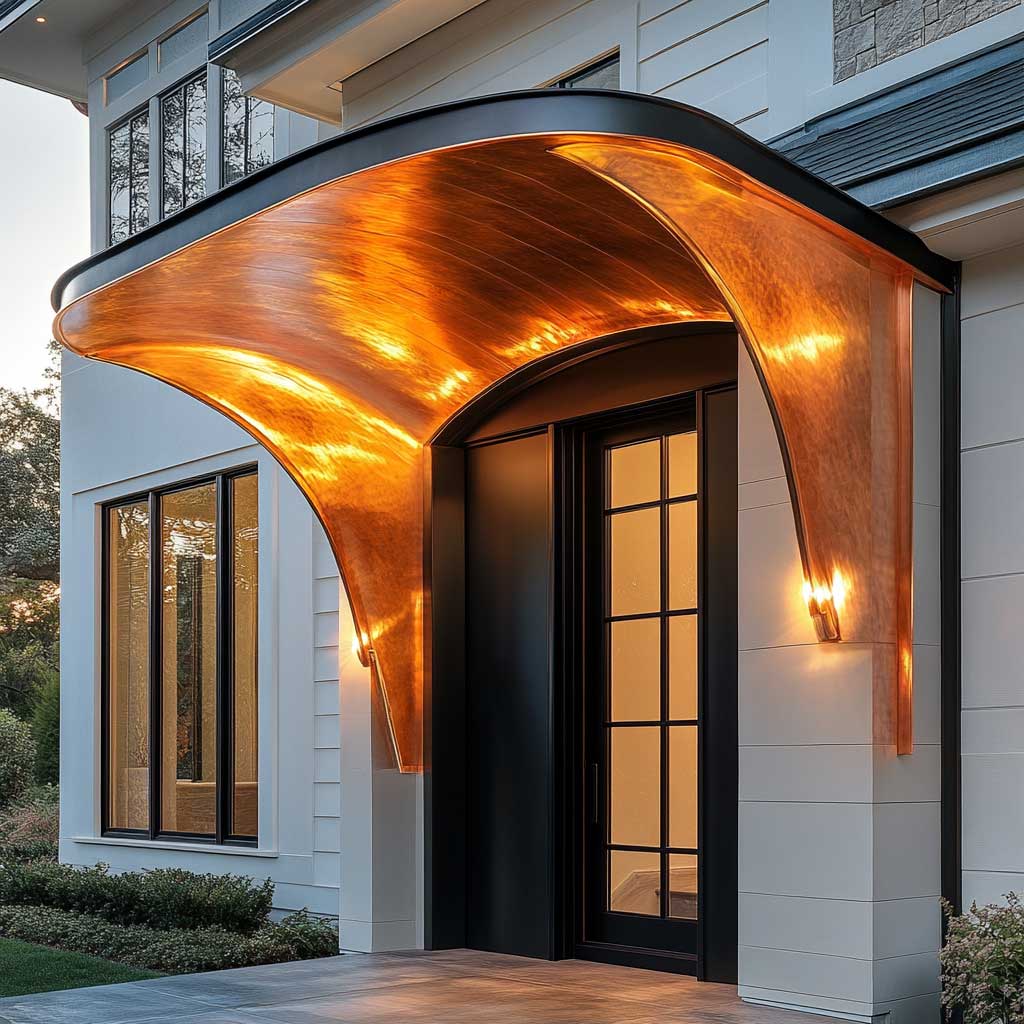

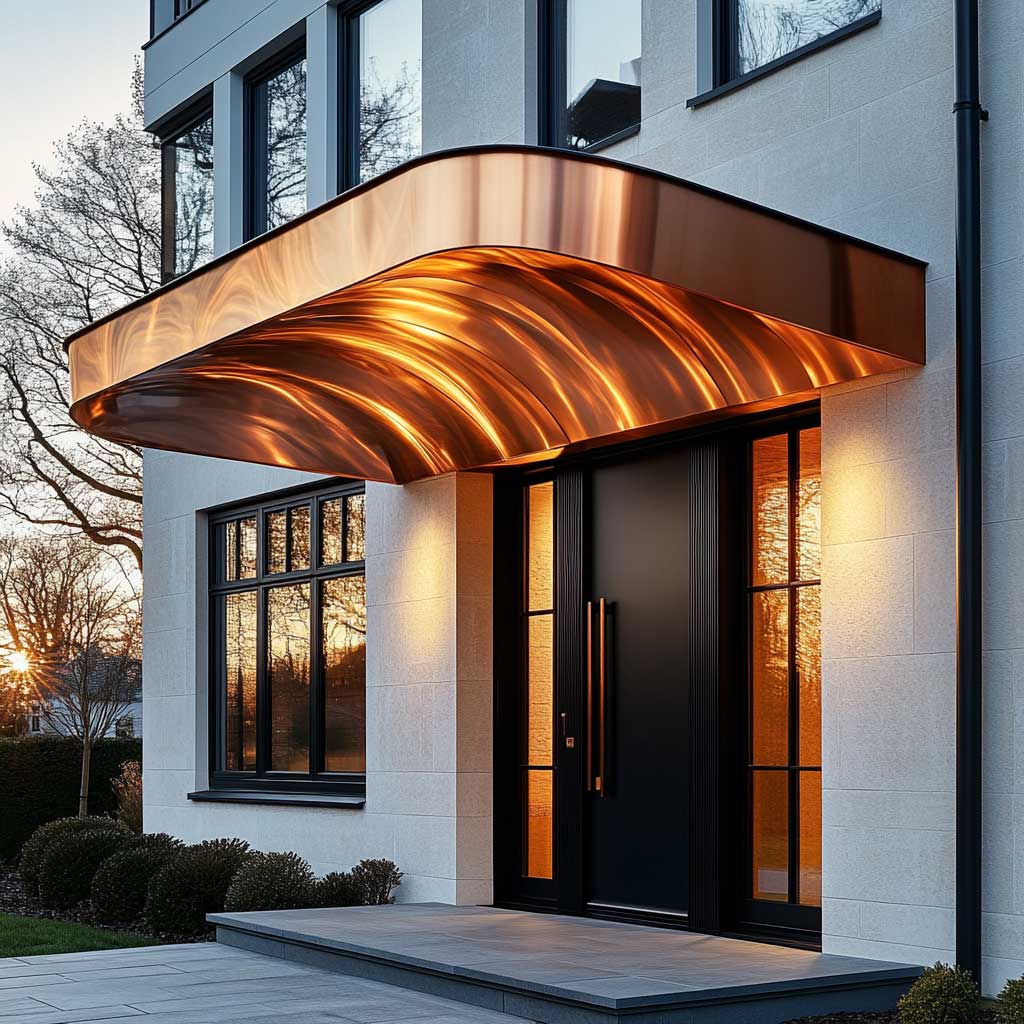
A curved copper modern front door canopy exudes warmth and elegance, making it a standout feature in any modern home. Copper, with its rich, warm tones, brings a touch of luxury to the entrance, while its curved design adds a sense of fluidity and motion. This type of canopy is ideal for homes with minimalist or angular architecture, where the contrast between the canopy’s curves and the home’s straight lines creates a visually striking effect.
The polished finish of the copper canopy catches the light beautifully, creating a dynamic play of reflections that change throughout the day. During the golden hour, when the sun is low on the horizon, the copper canopy takes on an almost ethereal glow, enhancing the welcoming atmosphere of the entrance. This makes it not only a practical feature for protection against the elements but also a key element of the home’s exterior design.
Over time, copper naturally develops a patina, shifting from its original bright hue to deeper, more complex tones. This aging process adds character to the canopy, making it an evolving piece of art that reflects the passage of time. For homeowners who appreciate materials that tell a story, copper is an excellent choice. If wood appeals more than metal for the canopy frame, compare costs and warmth in these wood front door canopy designs — cedar and teak run significantly less per linear metre.
In addition to its aesthetic appeal, copper is also highly durable and resistant to corrosion, making it suitable for outdoor applications. Its longevity ensures that the modern front door canopy will continue to serve as a beautiful and functional part of the home for many years. For more front door awning ideas across different materials and price ranges, Family Handyman’s roundup of door overhang styles has solid inspiration shots. The combination of style, durability, and the unique aging process makes a copper canopy a luxurious addition to any modern home, offering both beauty and protection.
How to Choose and Mount a Metal Front Door Canopy
A step-by-step walkthrough for picking the right metal, sizing the canopy, and bolting it to your wall — from measuring to final sealant bead.
Tools you’ll need:
- Hammer drill with masonry bit (10–12 mm)
- Spirit level (600 mm minimum)
- Torque wrench or ratchet socket set
- Silicone sealant gun and exterior-grade sealant
- Tape measure and pencil
- Stainless A4 expansion bolts (M10 × 80 mm or longer)
Measure your door opening and wall material
Measure the width of your door including the frame — most standard entries run 900–1050 mm. Add 150–300 mm on each side for rain coverage. Check what your wall is made of: solid brick, rendered block, timber frame, or concrete. This determines your anchor type. Expansion bolts work in solid masonry; chemical resin anchors are needed for hollow or lightweight block.
Pick your metal based on budget and style
Aluminum for under $800 and minimal weight. Corten or mild steel for industrial looks and budgets of $600–$2,000+. Copper for luxury facades at $2,000–$4,500. Factor in the weight: aluminum at ~11 kg for 1500 mm, steel at ~35–47 kg, copper-on-frame at ~12 kg. Heavier canopies need more anchor points.
Mark and drill anchor points
Hold the mounting bracket in position — or tape the template sheet that many kits include — and level it with a spirit level. Mark hole centres with a pencil. Drill into the wall at least 80 mm deep using a masonry bit matched to your bolt diameter (typically 10–12 mm). Blow out dust with compressed air or a manual pump.
Secure the brackets and hang the canopy
Insert expansion bolts or inject chemical resin and push in threaded studs. Tighten brackets evenly — don’t torque one side fully before the other or you’ll skew the level. Lift the canopy panel onto the brackets. Most designs slot or bolt from below. Have a second person hold the panel while you fasten the securing screws.
Seal the wall junction and check drainage slope
Run a bead of exterior silicone sealant along the top edge where the canopy meets the wall. This stops water from wicking behind the panel and into the masonry. Confirm a slight forward tilt — 2–3 degrees is enough — so rainwater drains off the front edge and doesn’t pool. Step back, check the level one last time, and you’re done.
FAQ
How much does a metal front door canopy cost?
Can I install a metal door canopy myself?
How long does a metal canopy last outdoors?
Does a steel canopy rust through?
What metal is best for a modern minimalist entrance?
Will a copper canopy stain my porch?
Bottom Line on Metal Door Canopies
Aluminum is the practical pick — light, cheap, zero rust, easy to mount solo on a Saturday morning. Steel is for the look. You’ll pay more, you’ll need heavier anchors, and you’ll deal with surface treatment — but nothing else delivers that industrial punch. Copper sits in its own category: it’s a decorative investment, not a quick fix. If you’re budgeting under $500, start with a powder-coated aluminum flat panel from Palram or a local fabricator. If you’ve got $1,500+ and want your entrance to age like a bourbon barrel, Corten steel is my pick. And if money isn’t the constraint but you want something your neighbours will actually notice in ten years, copper rewards patience like no other material.