A wood front door canopy changes the read of your entire facade — and the wood species you choose does more work than the bracket style, the pitch, or the color of your front door combined. I’ve looked at hundreds of modern front door canopy ideas across every climate zone and the pattern is consistent: cedar and teak punch above their weight; pine with a clear coat does not. Your canopy is the one architectural detail that reads at street level, in rain, and in photos, so it deserves a sharper material decision than most homeowners give it.
The three wood species in this article — cedar, oak, and teak — cover different budgets and different aesthetics. Cedar sits around $18–$28 per linear foot installed for a basic cantilevered profile. Reclaimed oak runs $35–$55 depending on your fabricator. Teak, particularly FSC-certified Burmese or plantation teak from brands like TeakCraft or EcoTeak, lands at $60–$110 per linear foot for a finished canopy. You’ll see why the price gap is justified. None of these are impulse buys, and all three reward you when they’re detailed correctly.
What you’ll see in this article:
- Minimalist cedar canopy with steel bracket detail — best for white or grey facades
- Reclaimed oak canopy over arched iron doors — rustic meets contemporary
- Cantilevered teak canopy with integrated LED — the high-end play
- Wood species comparison table: cedar vs oak vs teak vs pine (and why pine loses)
- FAQ covering gate canopy sizing, canopy roof pitch, and wooden canopy maintenance
Cedar Wood Canopy Over a Dark Front Door
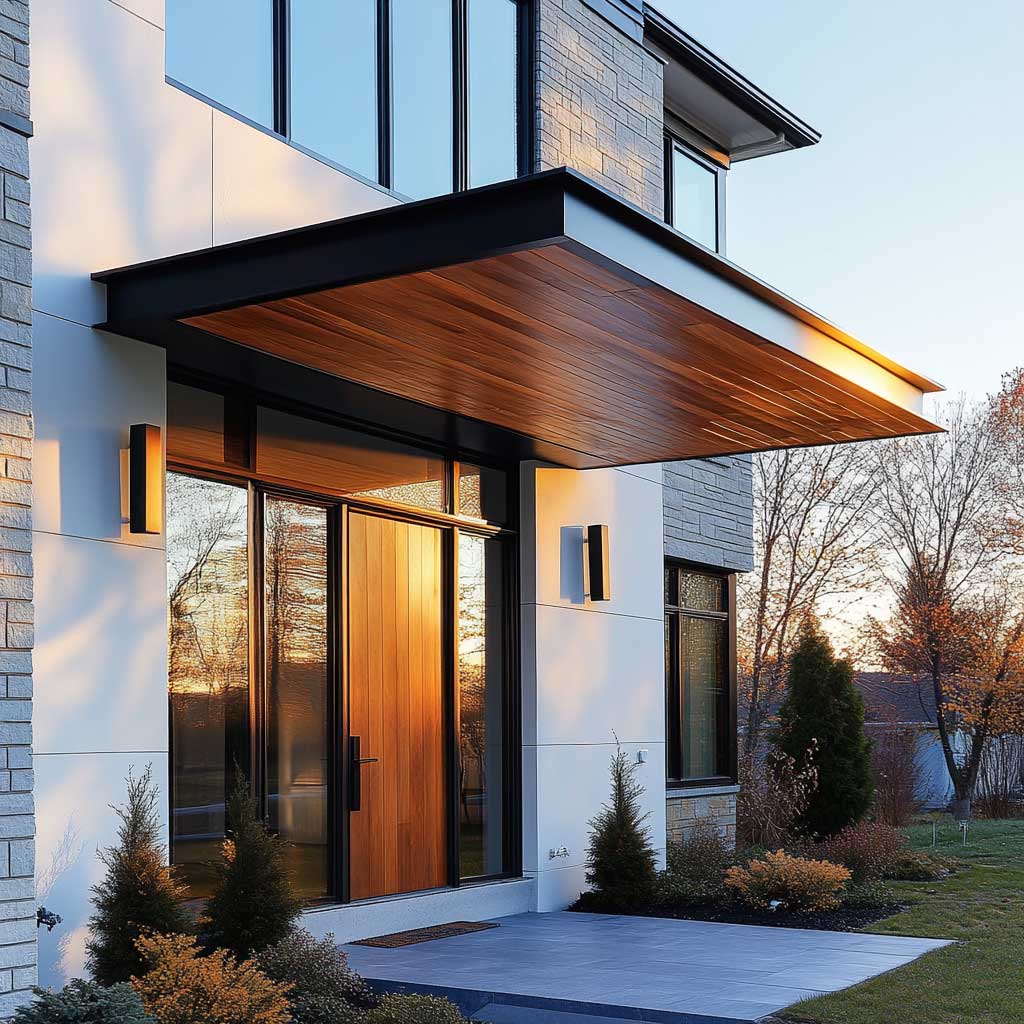
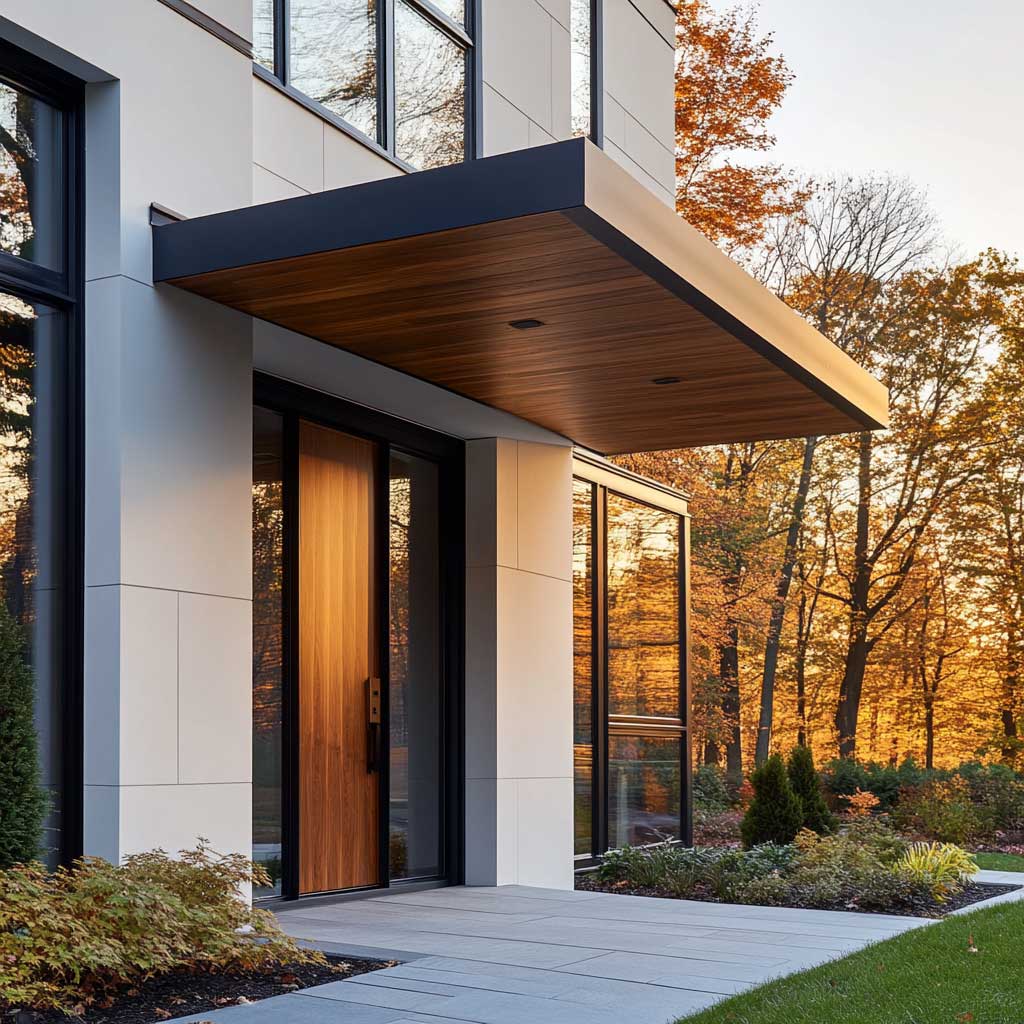
Cedar’s reddish-brown grain reads warm against dark doors and cool against white render — which is why it’s the default wood for front door canopy ideas in both Scandinavian-influenced and West Coast modern homes. The key detail to get right is the bracket. Powder-coated steel in matte black, 8mm flat bar, welded not bolted — that combination keeps the profile razor thin and doesn’t visually compete with the wood. I’ve seen homeowners choose decorative cast-iron brackets that looked like they belonged on a Victorian porch, and the whole modern reading collapsed instantly.
Size matters more than most canopy design guides admit. A canopy that projects only 600mm from the wall leaves you hunching in rain while you fish for your keys. My go-to minimum is 900mm projection, 1200mm wide — enough to actually shelter two people and a delivery box. The depth-to-width ratio should run roughly 1:1.3 to stay proportional. Go wider than that without adding a fascia board and it starts to look unfinished, like someone just nailed planks to the wall.
Cedar holds stain exceptionally well, which gives you real color control. Cabot Australian Timber Oil in Mahogany or Natural stains costs around $45 per quart and gives you a factory-finish look with one coat. Sikkens Cetol SRD is the professional spec choice at $65/quart — it builds a flexible film that handles freeze-thaw cycles without cracking. Don’t use deck sealer on a cedar canopy. I made that mistake on a client project in 2022: the sealer trapped moisture at the wall bracket interface and the wood greyed and checked within eight months.
You’ll notice cedar’s grain opens up attractively after the first season outdoors. That’s not degradation — it’s character. A light sand with 120-grit and a fresh coat of Sikkens every two years keeps it looking intentional rather than neglected. Cedar canopies in this style typically run $1,200–$2,800 fully installed depending on size and bracket complexity.
Reclaimed Oak Above an Iron-Accented Arched Door
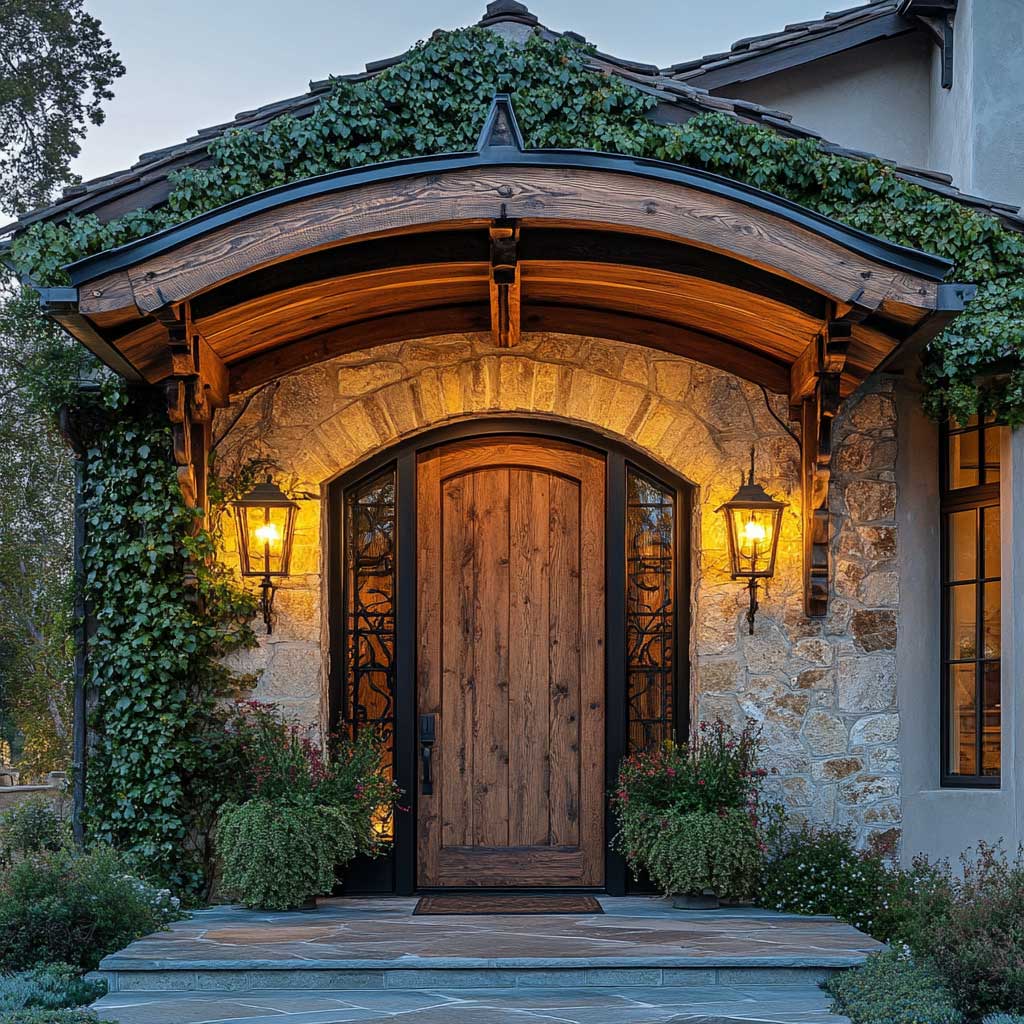
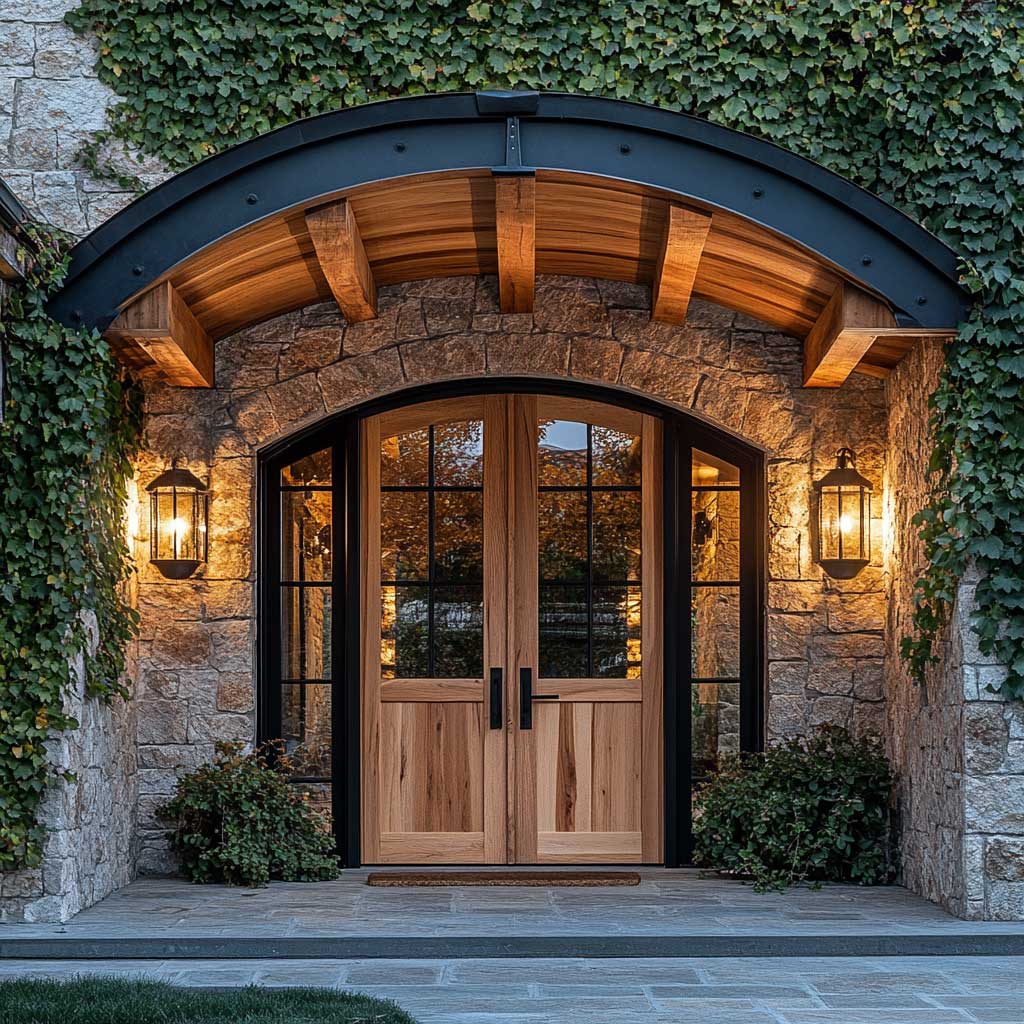
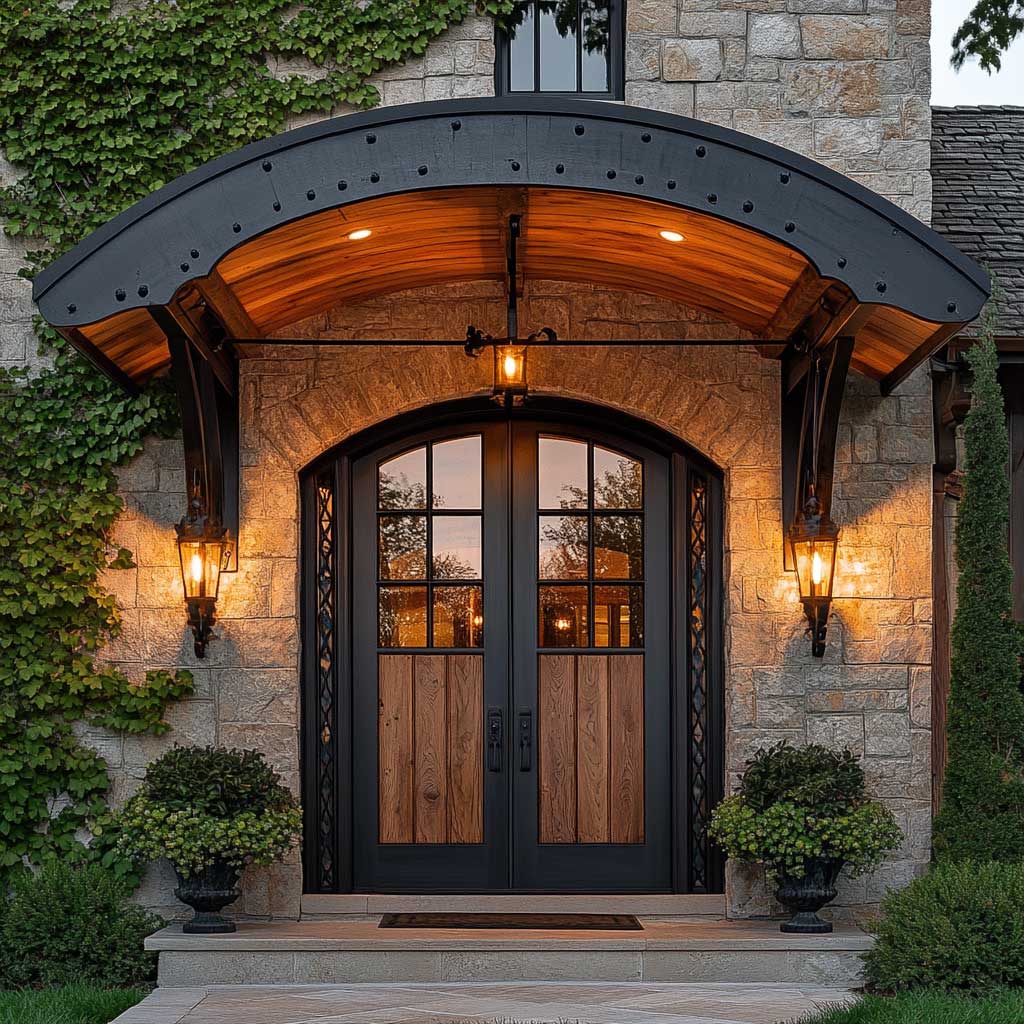
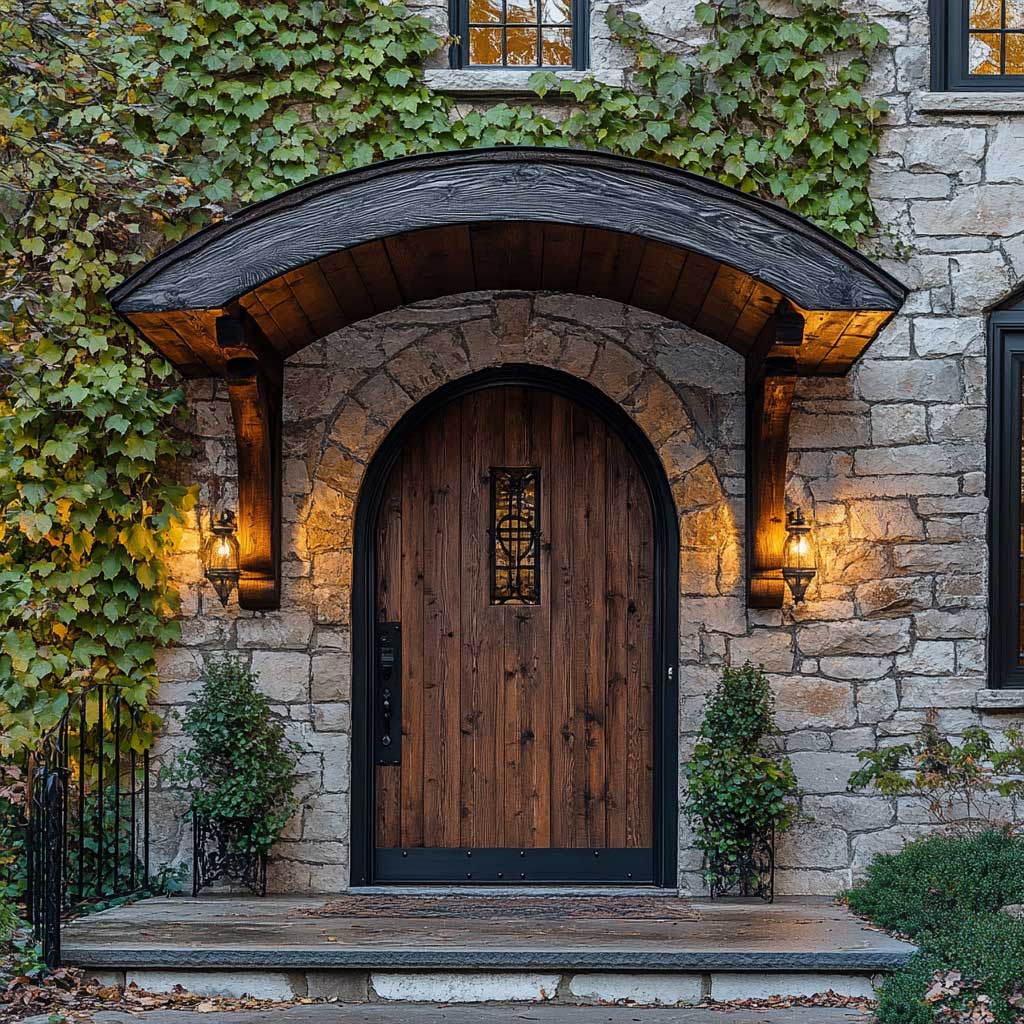
Reclaimed oak brings something none of the other canopy materials can fake: a surface that already has a hundred years of story in it. The weathered face boards, the nail holes, the colour variation between planks — none of that is decorative. It’s structural honesty, the same principle that makes exposed brick walls read better than painted ones. Pair it with a stone-clad facade and wrought iron door hardware and you get a front entrance that photographers actually want to shoot.
What doesn’t work: new oak with a clear coat trying to pass as reclaimed. The grain is too uniform, the surface too blonde, and next to actual reclaimed material it reads like a prop. If you want the rustic aesthetic without sourcing reclaimed stock, wire-brush new white oak with a lye treatment — it opens the grain and produces an aged grey that costs around $8 per linear foot in materials. Tung oil finish over that. Job done.
The structural case for oak is real. Janka hardness of 1290 lbf means it resists denting from ladder rungs, falling branches, and hail impact in a way that cedar never will. For a gate canopy design that needs to span wider than 1400mm without visible deflection, oak is the better call. I’ve seen oak canopies in coastal New England still performing after 22 years with nothing but a linseed oil treatment every four years. That’s the closest thing to a maintenance-free wood option that actually exists.
Sourcing reclaimed oak: Elmwood Reclaimed Timber ships nationally, typically $4.50–$7.00 per board foot depending on grade. Build With Reclaimed in Portland also carries good stock. Budget $3,500–$5,800 for a finished reclaimed oak canopy with custom iron brackets, installed. Skip the kit canopies from Amazon in this category — the oak veneer over MDF construction fails within 18 months outdoors and the iron brackets are decorative gauge, not structural.
Don’t Do This
Pressure-treated pine as a canopy material. It’s tempting — PT pine costs $2–$4 per linear foot and holds up structurally. But the greenish tint never fully disappears, the grain is coarse and open, and it checks aggressively in the first two seasons. Three clients I’ve worked with went the PT pine route to save money. Two ended up re-doing the canopy within three years. The third painted it black, which works, but then you’ve eliminated the entire reason for choosing wood over metal. If budget is tight, go cedar over pine every time.
Cantilevered Teak With Integrated Lighting — the High-Cost Case That Pays
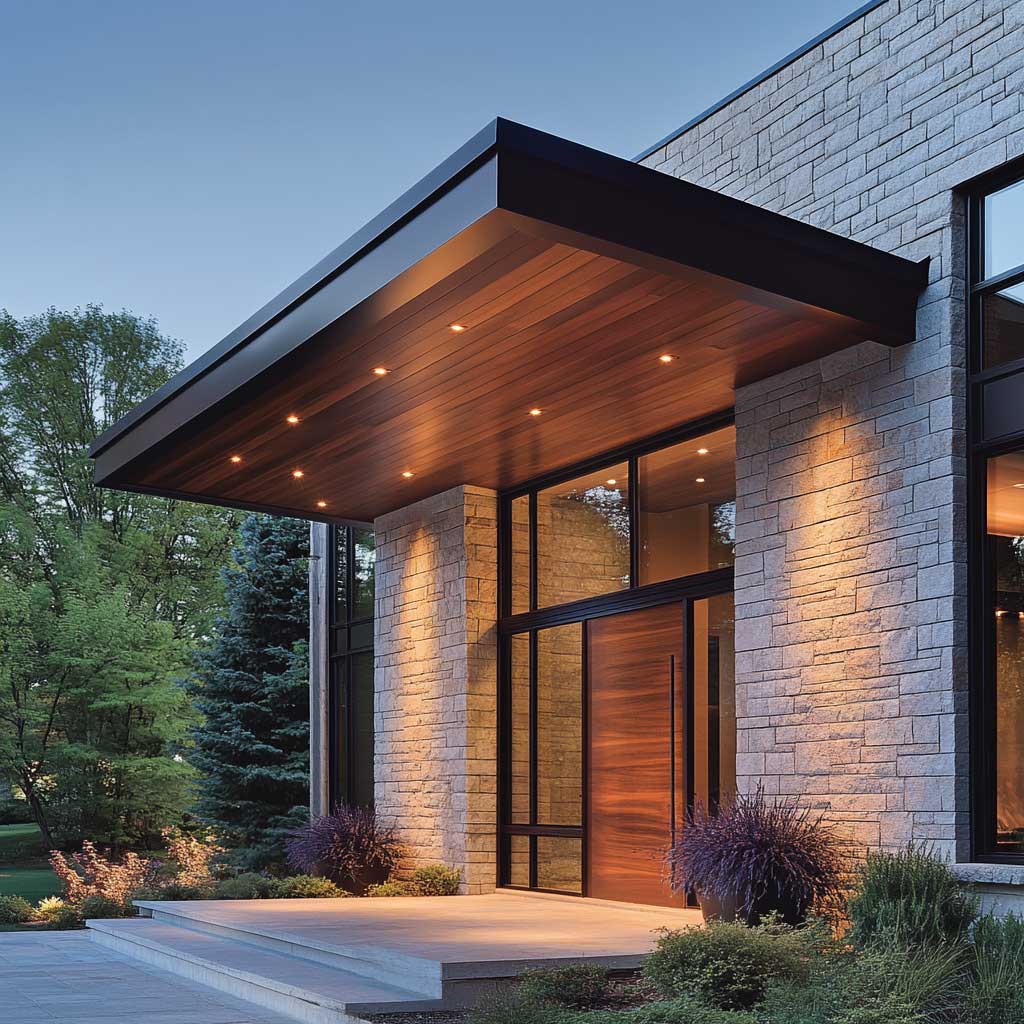

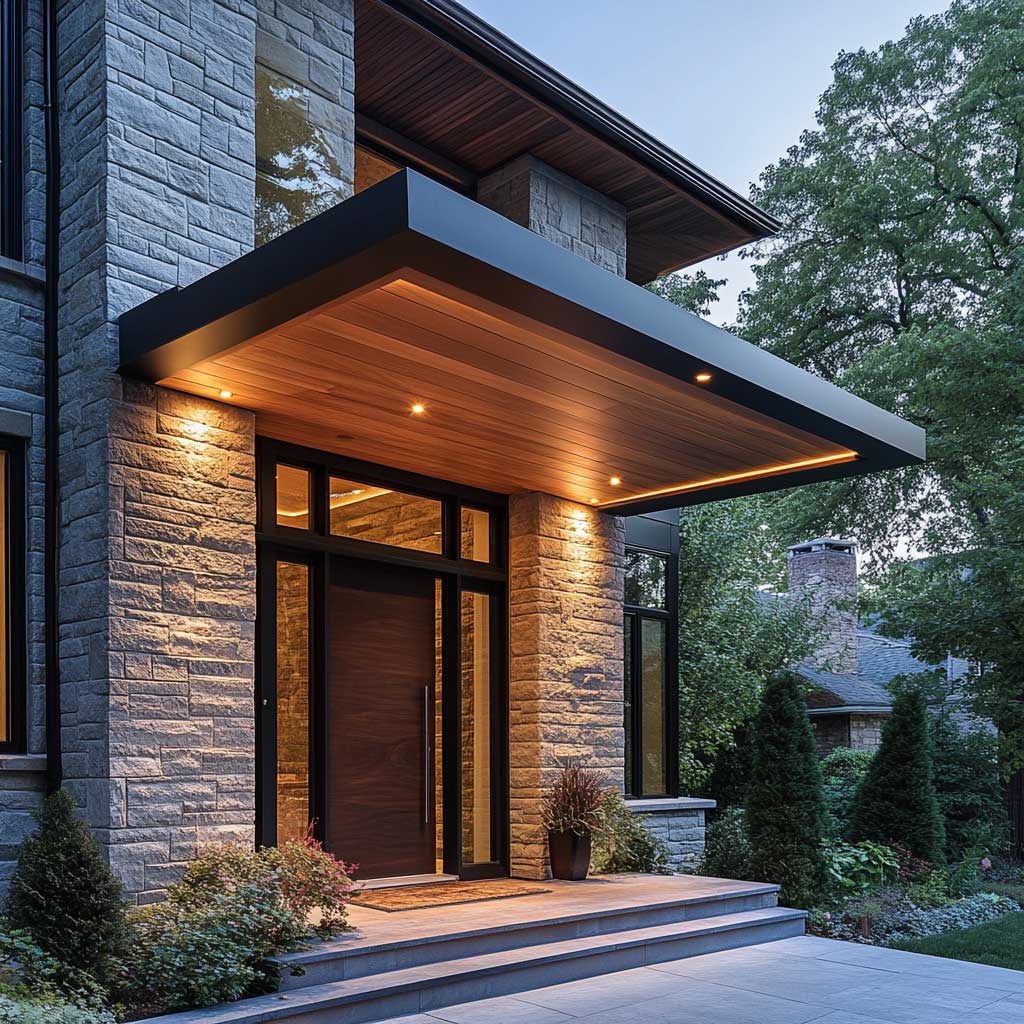
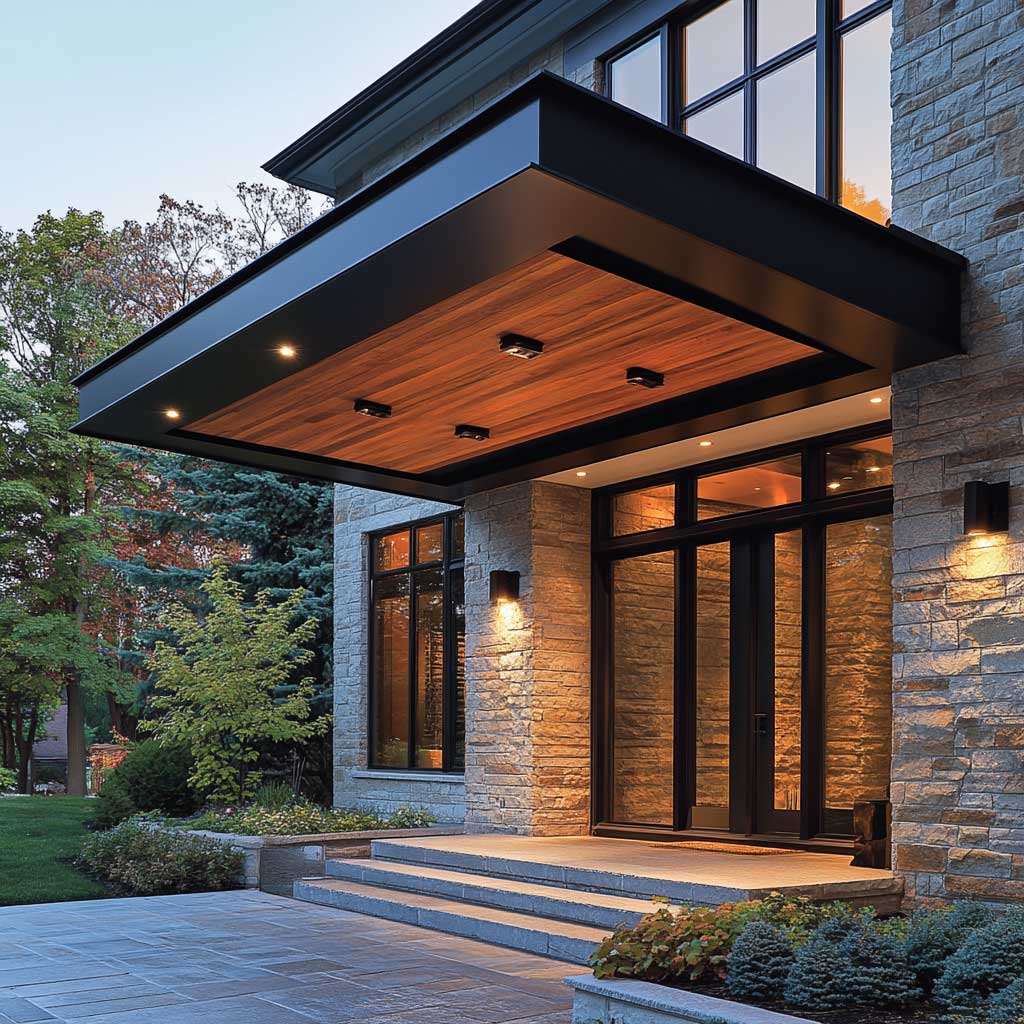
Teak is the one wood species that genuinely doesn’t need finishing to survive outdoors. Its natural silica and oil content form a self-protecting surface — untreated teak goes silver-grey in about six months, stays structurally sound for decades, and never checks or warps the way cedar will if you forget a maintenance coat. That silver patina is the preferred look in Scandinavian and Japanese-influenced architecture. If you want to preserve the golden-brown, a twice-yearly wipe-down with Semco Teak Sealer at $38 per quart is all it takes.
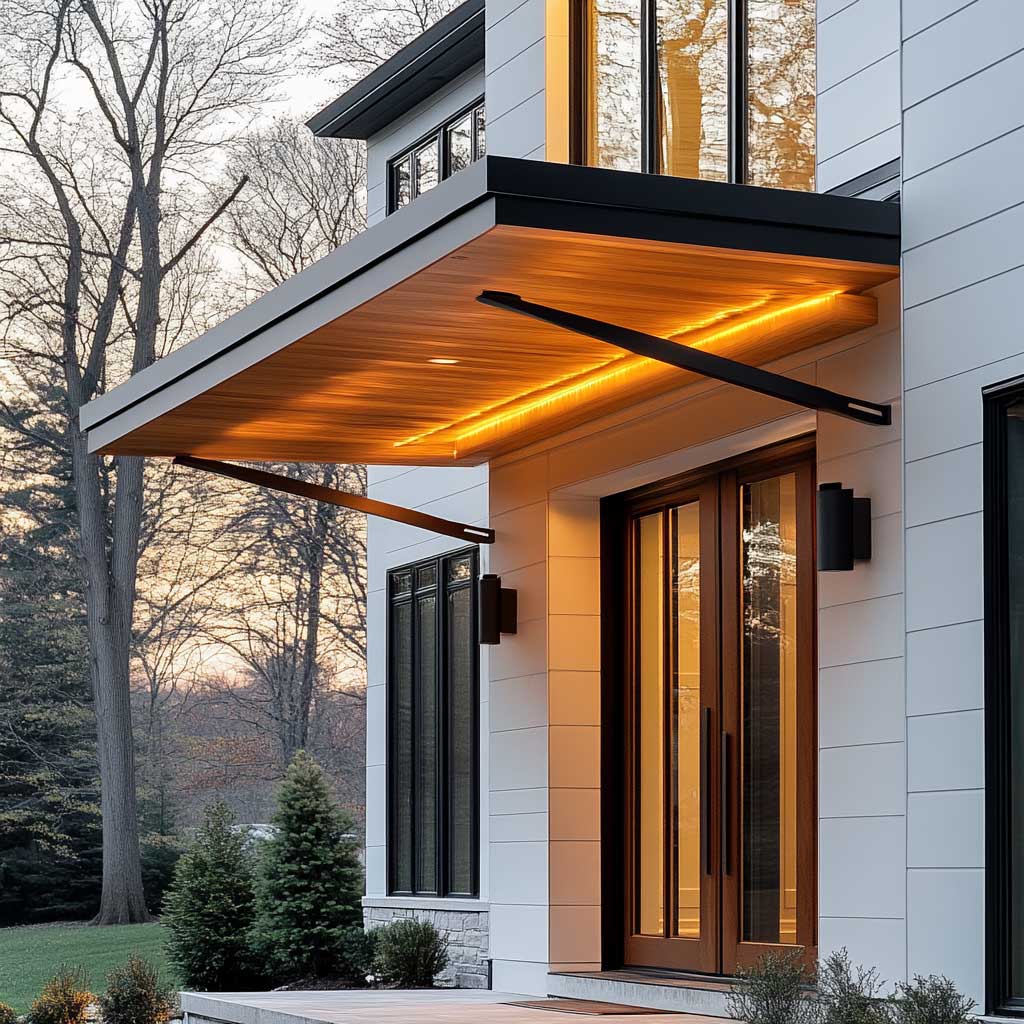
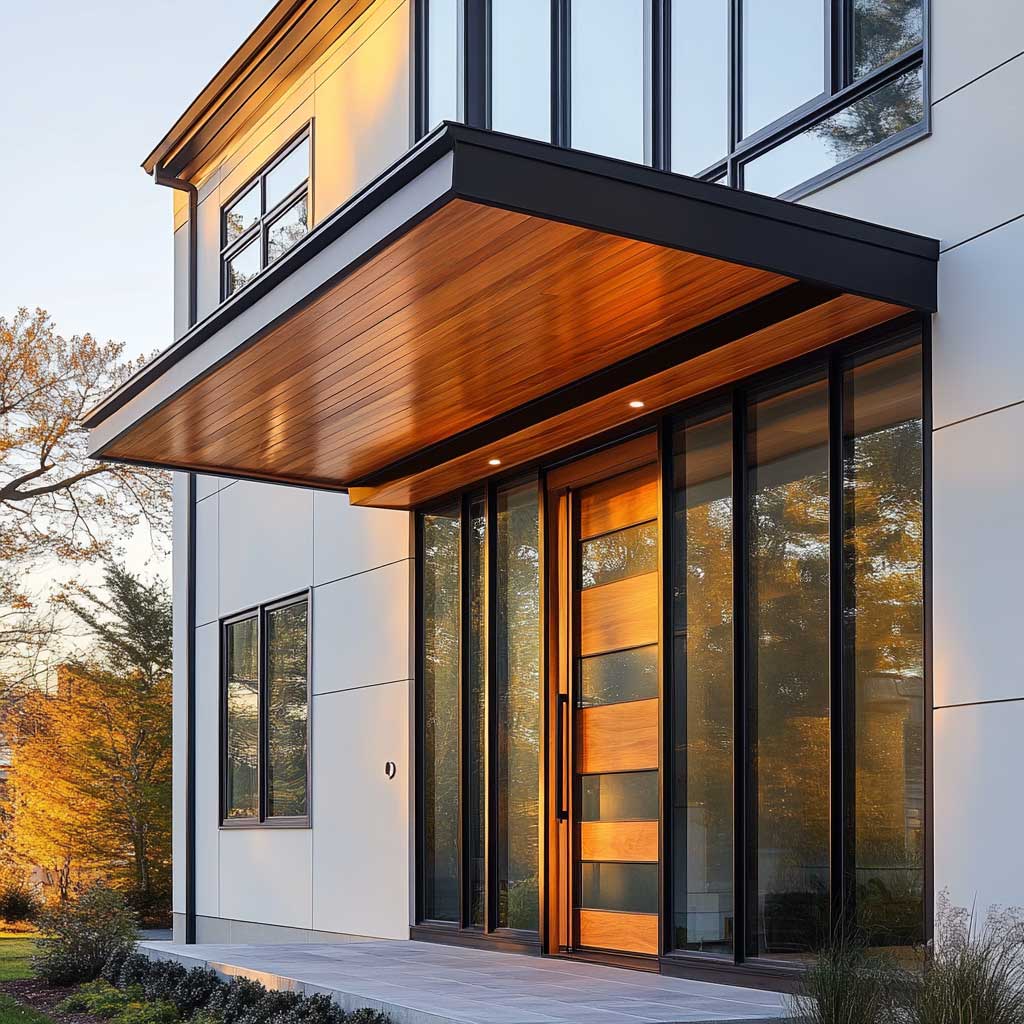
The cantilevered design in these images is a contemporary front door canopy executed at its clearest. No visible brackets. The canopy projects from a steel armature anchored through the wall to the structure behind — the wood is essentially the cladding. This approach costs more in engineering and installation ($6,500–$12,000 fully finished) but produces a facade detail that looks like it was designed by an architect rather than chosen from a catalog. Against a light limestone or white-rendered facade, the contrast of dark oiled teak reads at 40 feet.
Integrated lighting in a teak canopy isn’t decorative — it changes how the entrance reads after dark. Recessed Kichler 12V LED strip under the canopy soffit at $85 per kit, run through a photocell switch, gives you a warm 2700K wash that hits the door and the threshold. Don’t use cool white (5000K+) in this application. Cool white makes wood look clinical and flat. Warm white makes it look like it costs twice what it does.
For homeowners weighing contemporary front door canopy materials, teak wins on longevity and visual precision. The 15–20 year maintenance-free horizon versus cedar’s 2-year refinishing cycle means the cost difference often disappears over time. I own a teak outdoor bench from 1998 that has had zero maintenance and still looks like furniture, not salvage. That’s what you’re buying at the $60+ per linear foot price point.
If the full cantilevered build is over budget, explore metal front door canopy designs — a steel-framed canopy with teak cladding gives you 70% of the aesthetic at 40% of the cost, because you’re paying for teak board rather than teak structure.
Cedar vs Oak vs Teak vs Pine — Four Materials Laid Flat
Ask three contractors which wood to use for a front door canopy and you’ll get three different answers based on what they typically work with. Here’s the comparison they should be making for you.
| Wood | Cost per lin. ft (installed) | Maintenance cycle | Durability | Best paired with |
|---|---|---|---|---|
| Cedar | $18–$28 | Every 2 years | Very good (natural oils) | White or grey render, dark door |
| Reclaimed Oak | $35–$55 | Every 4 years | Excellent (hardwood, 1290 Janka) | Stone cladding, iron hardware |
| Teak (FSC) | $60–$110 | Optional (self-protecting) | Outstanding (15–20 yr horizon) | Limestone, glass, cantilevered builds |
| Pine (PT) | $8–$14 | Every 1–2 years | Poor outdoors (checks, greys badly) | Not recommended for canopies |
For more entrance shelter ideas beyond wood, the full entrance canopy design roundup covers glass, polycarbonate, and steel options with photos for each facade type.
For door proportions that work under any canopy width, see these wood front door with window design ideas — the horizontal sidelight configurations in particular pair well with a low-profile canopy.
Wooden canopy sizing for a gate entrance follows a different logic than a standard door canopy. Gate openings typically run 1800–2400mm wide, so the canopy needs to either span the full gate width on a single beam or use a central post — and a central post always reads as a compromise. If you’re covering a gate entrance, use engineered LVL timber wrapped in oak or teak veneer for spans over 1600mm; solid hardwood at that span will deflect noticeably within a few years. For reference, the Houzz canopy photo library has useful real-world examples of gate-width canopy spans in different climates.
THE BOTTOM LINE
Your wood species decision is made before the bracket drawing starts.
Cedar if you want low entry cost and reliable aesthetics. Oak if the facade is stone and you want something that only gets better with age. Teak if you’re building once and not touching it for fifteen years.
The canopy pitch matters less than most people obsess over — a 15–20 degree slope handles rain in any UK or Pacific Northwest climate. Anything steeper starts to look like a shed roof rather than an entrance feature.
Save this post before you meet with your joiner — the price benchmarks and spec product names will save you from being oversold.