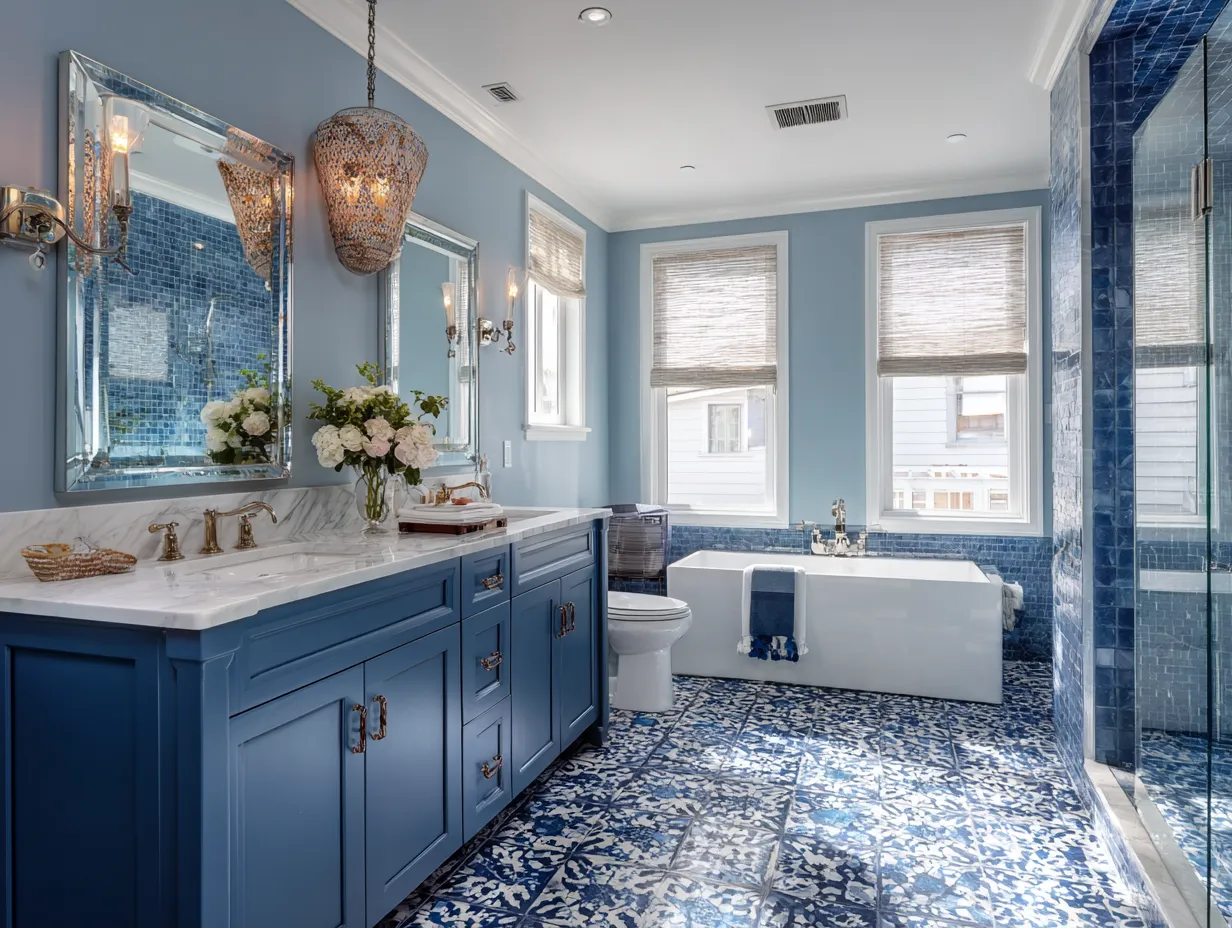
I’ve redone three bathrooms in the last six years. Two of them got blue tile. The first was a disaster — I picked a teal mosaic from a big-box store that turned the room into a dentist’s office circa 1997. The second time I went with cobalt herringbone and it looked like a different house. Transitional bathrooms sit between old and new, and blue tile is the fastest way to land there without the room feeling like a museum or a spaceship. Stick to three shades that actually work in transitional spaces: cobalt, powder blue, and royal blue. Each one pairs differently with fixtures and finishes, and I’ll break down what to put with what below.
Quick Summary
Best for floors: Cobalt blue herringbone — pair with white freestanding tub and chrome fixtures.
Best for accent walls: Powder blue hexagonal tile — works with dark wood cabinets and brushed nickel.
Best for backsplashes: Royal blue subway tile — goes with marble countertops and brushed gold.
Budget range: $8–$15 per square foot depending on brand and tile size.
| Tile Type | Best Use | Pairs With | Price Range |
|---|---|---|---|
| Cobalt Herringbone | Floors, shower feature walls | White fixtures, chrome hardware | $8–$11/sq ft |
| Powder Blue Hex | Accent walls, vanity surrounds | Dark wood cabinets, brushed nickel | $10–$15/sq ft |
| Royal Blue Subway | Backsplashes, shower walls | Marble countertops, brushed gold | $6–$12/sq ft |
Cobalt Herringbone Tile: The Floor That Makes White Fixtures Pop
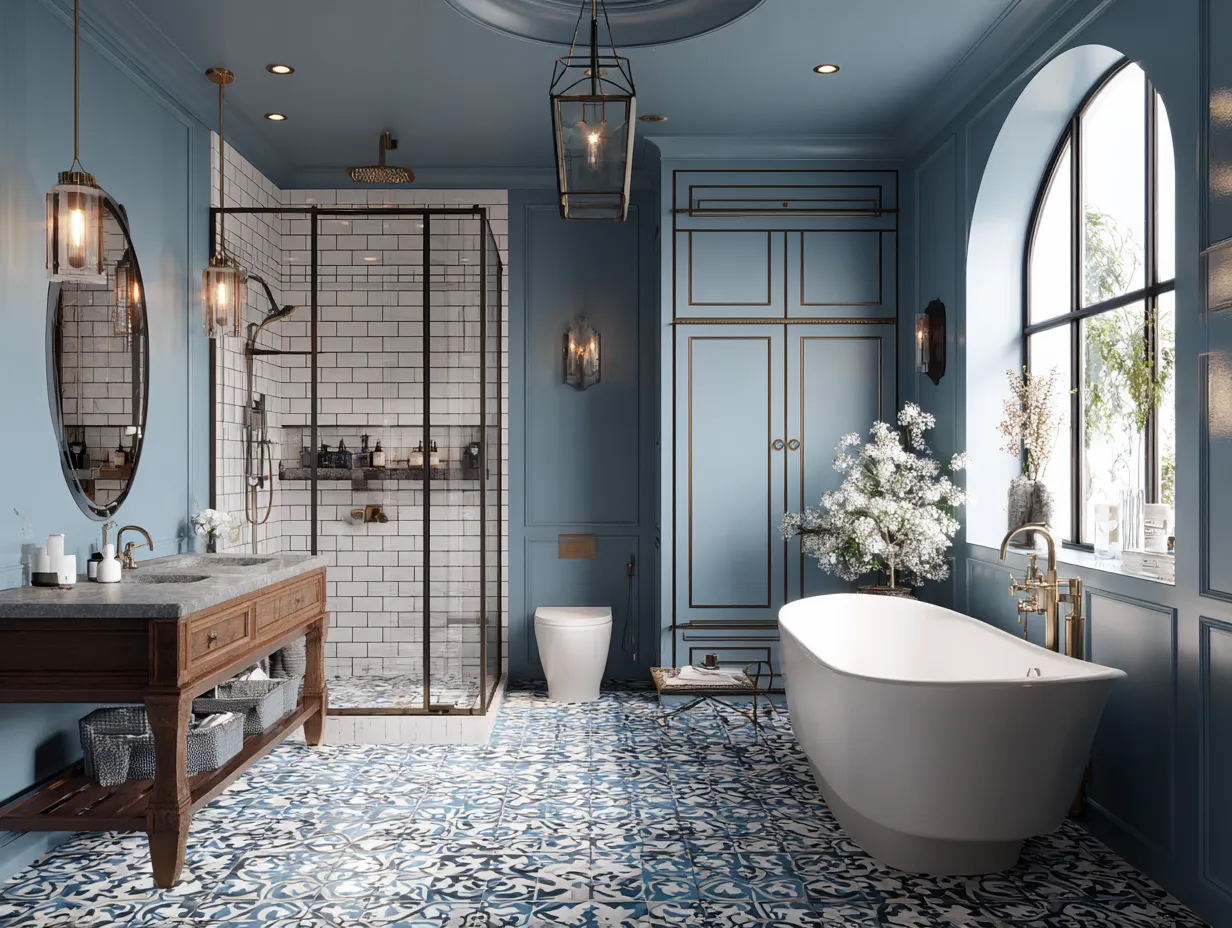
Cobalt blue herringbone tiles are an excellent choice for those searching for blue bathroom tiles ideas that combine traditional charm with a modern twist. The herringbone pattern itself is a timeless design that has been used for centuries, often associated with elegance and class. When paired with the bold hue of cobalt blue, it adds an unexpected modern flair that works beautifully in transitional spaces.
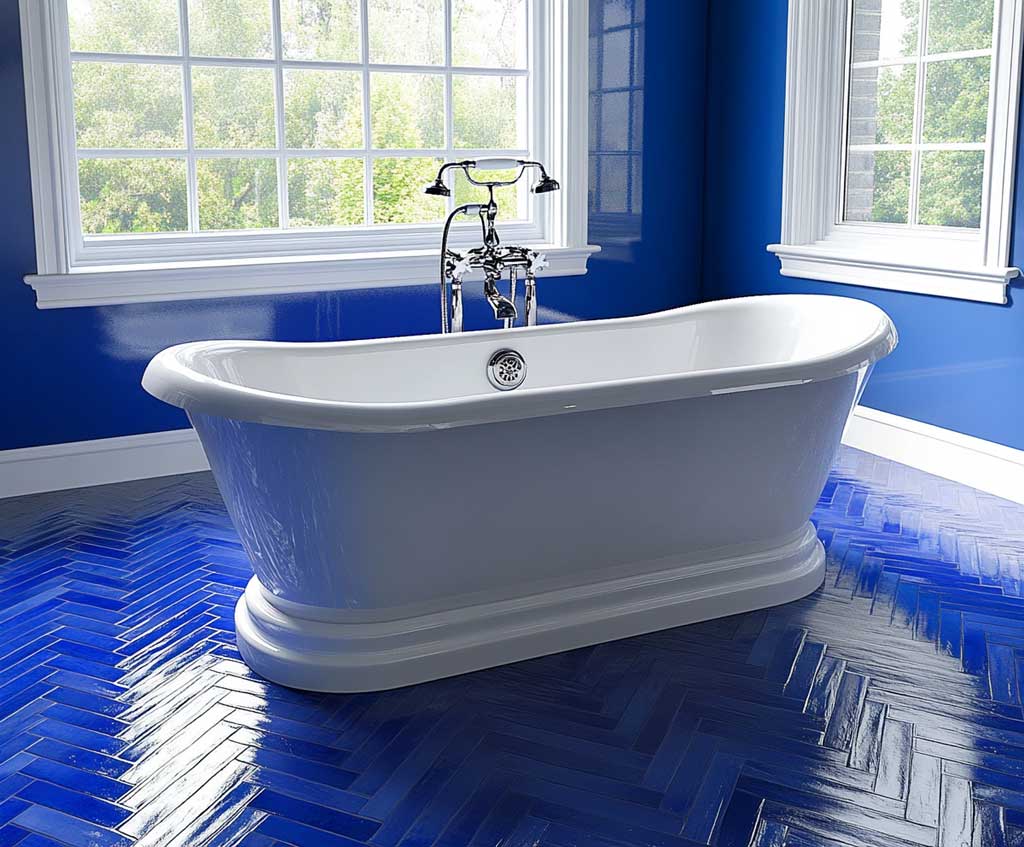
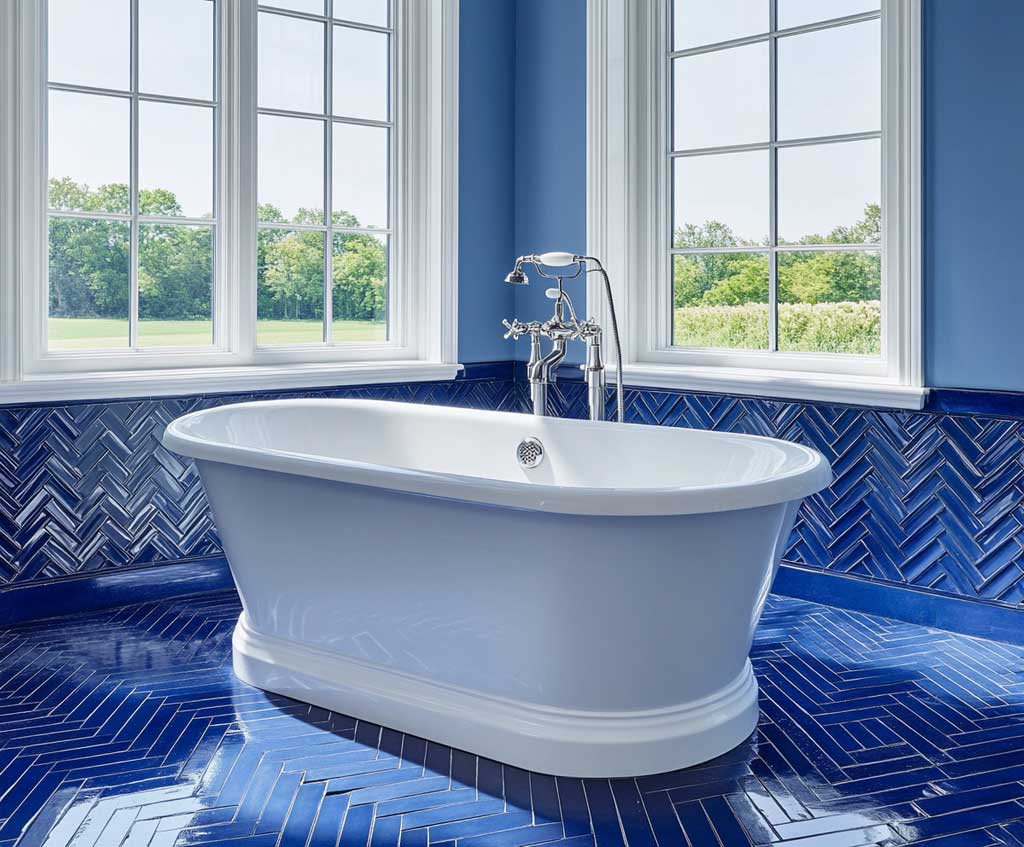
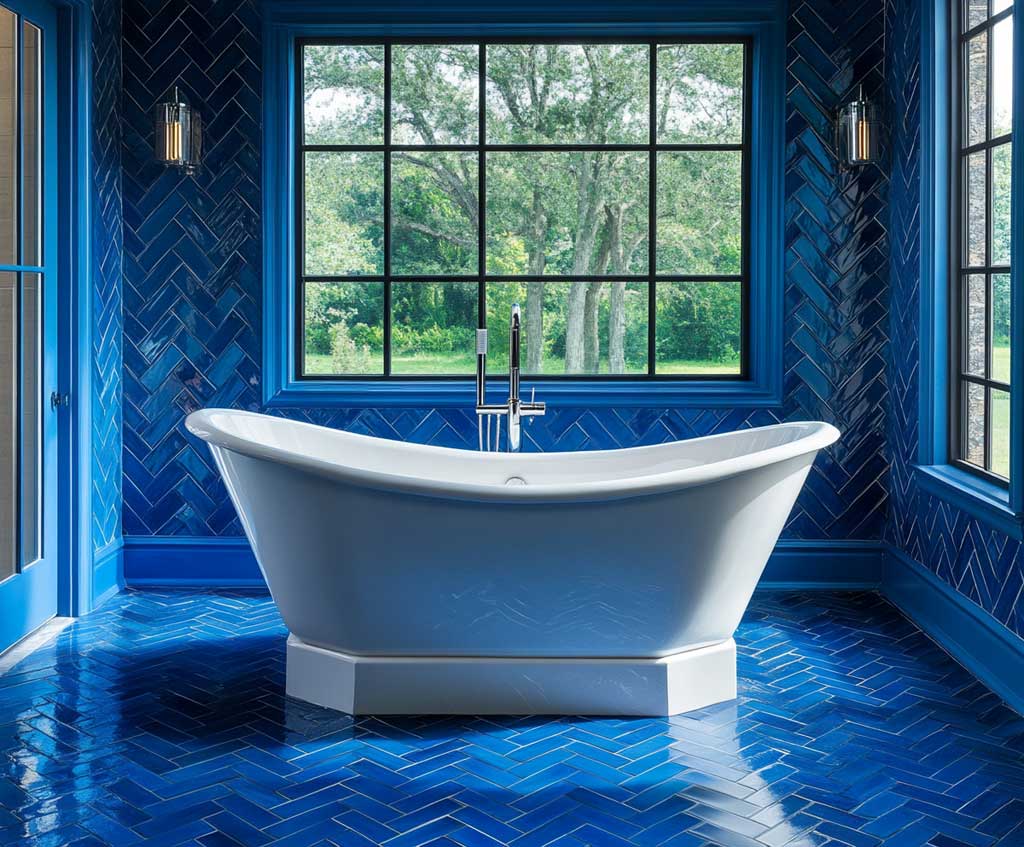
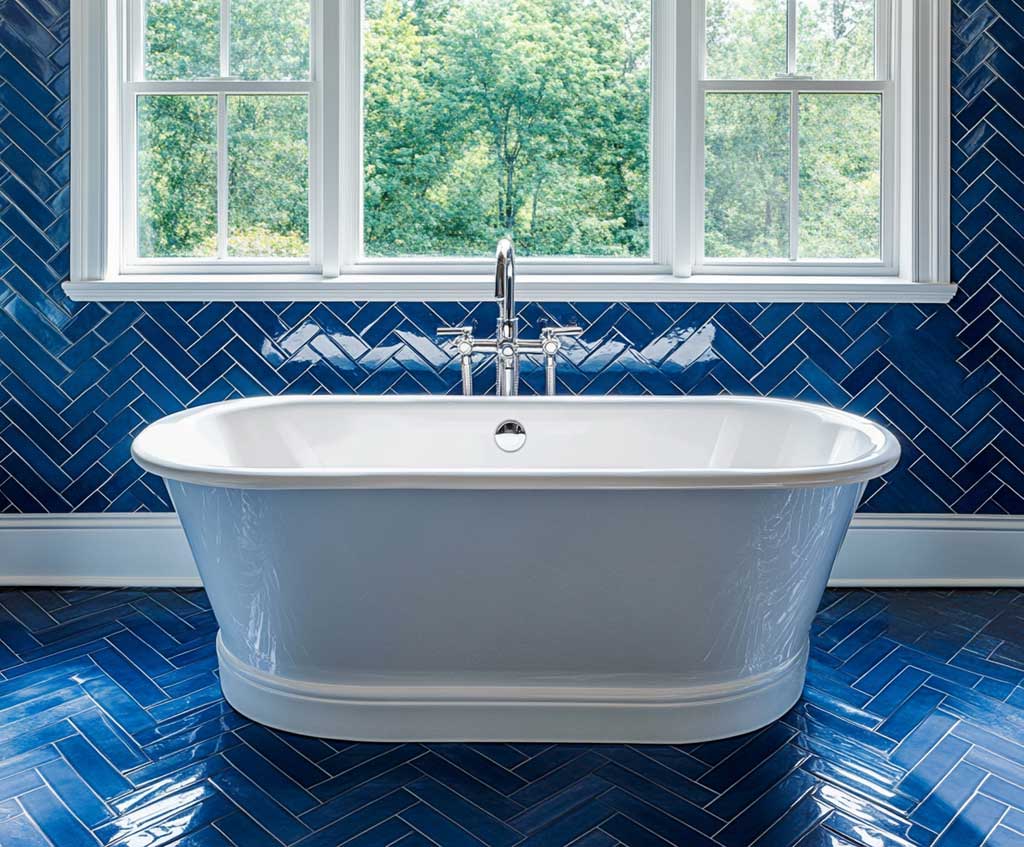
These tiles can be used to cover the bathroom floor or as a feature wall in the shower area, creating a stunning visual impact. The deep cobalt blue adds a rich, sophisticated color that contrasts well with the neutral tones often found in transitional bathrooms. Pairing these tiles with white fixtures, such as a freestanding bathtub or a classic sink, enhances the overall balanced look, as the white elements provide a fresh, contemporary counterpoint to the traditional design of the tiles.
Budget matters here. Cobalt herringbone from Merola Tile runs about $8 to $11 per square foot at Home Depot. That’s reasonable. What’s not reasonable is the grout bill — herringbone eats grout like nothing else because every tiny V-joint needs filling. I spent $140 on grout alone for a 40-square-foot shower wall. Worth it, but plan for it.
Skip the dark grout if you want the pattern to read from across the room. White or light grey grout makes each zigzag pop. I tried charcoal grout once on a cobalt floor and the whole thing looked like a muddy checkerboard from five feet away. Never again.
One thing nobody mentions: herringbone requires a dead-flat surface. My installer charged an extra $200 to level the subfloor before laying tile. If your floor has dips, the angled cuts won’t line up and you’ll see every gap. Not a DIY-friendly pattern unless you own a wet saw and have patience for days.
In a transitional bathroom, the use of cobalt blue herringbone tiles bridges the gap between old-world elegance and modern trends. The striking blue color injects personality into the space, while the herringbone pattern keeps the design grounded in timelessness. Whether used in small doses or across a larger area, these tiles offer a refined and stylish approach to designing a bathroom that feels both classic and current. For a completely different take on blue tile in bathrooms, see how Scandinavian blue bathroom tiles use softer shades and simpler layouts to create a calm retreat.
Powder Blue Hex Tile: Soft Color Without the Boring Factor
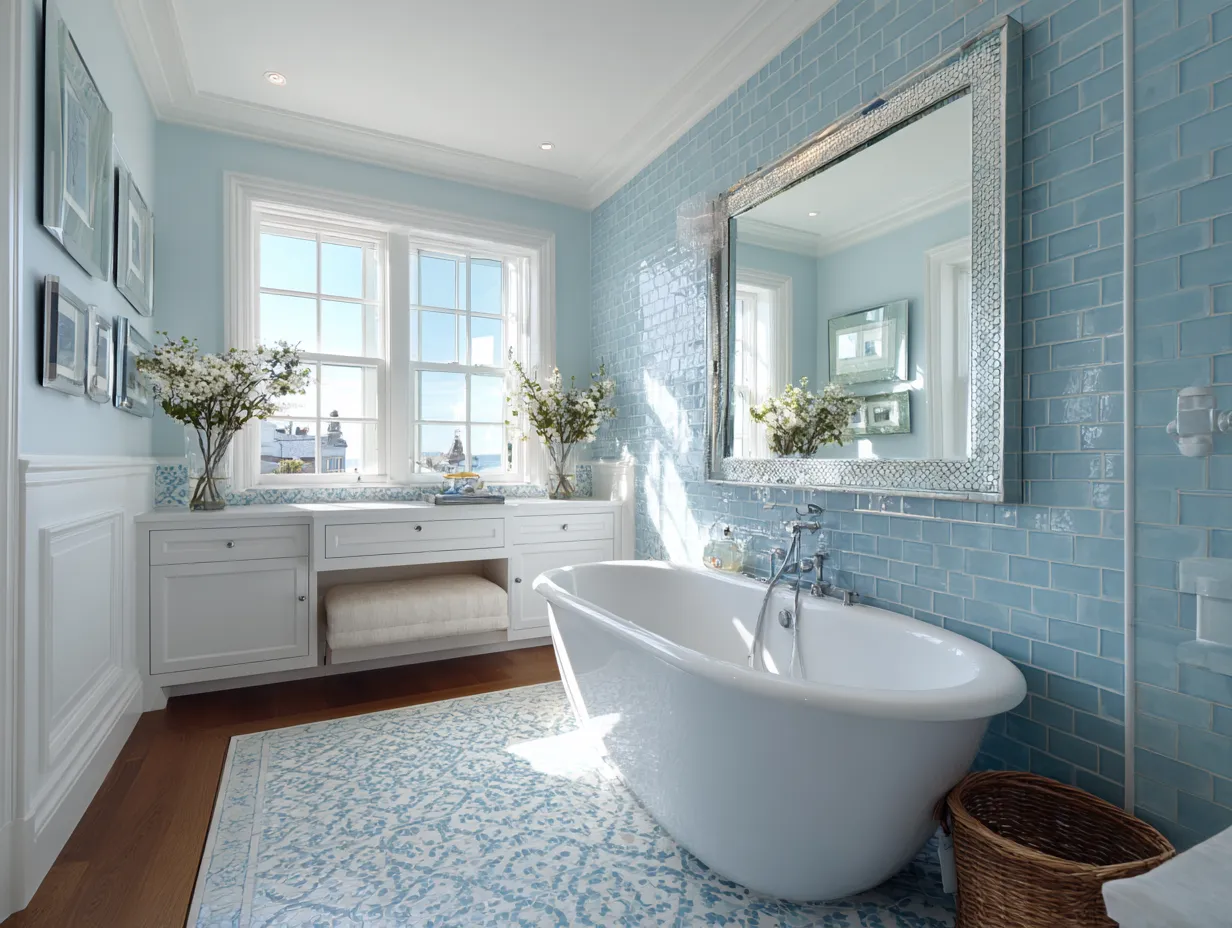
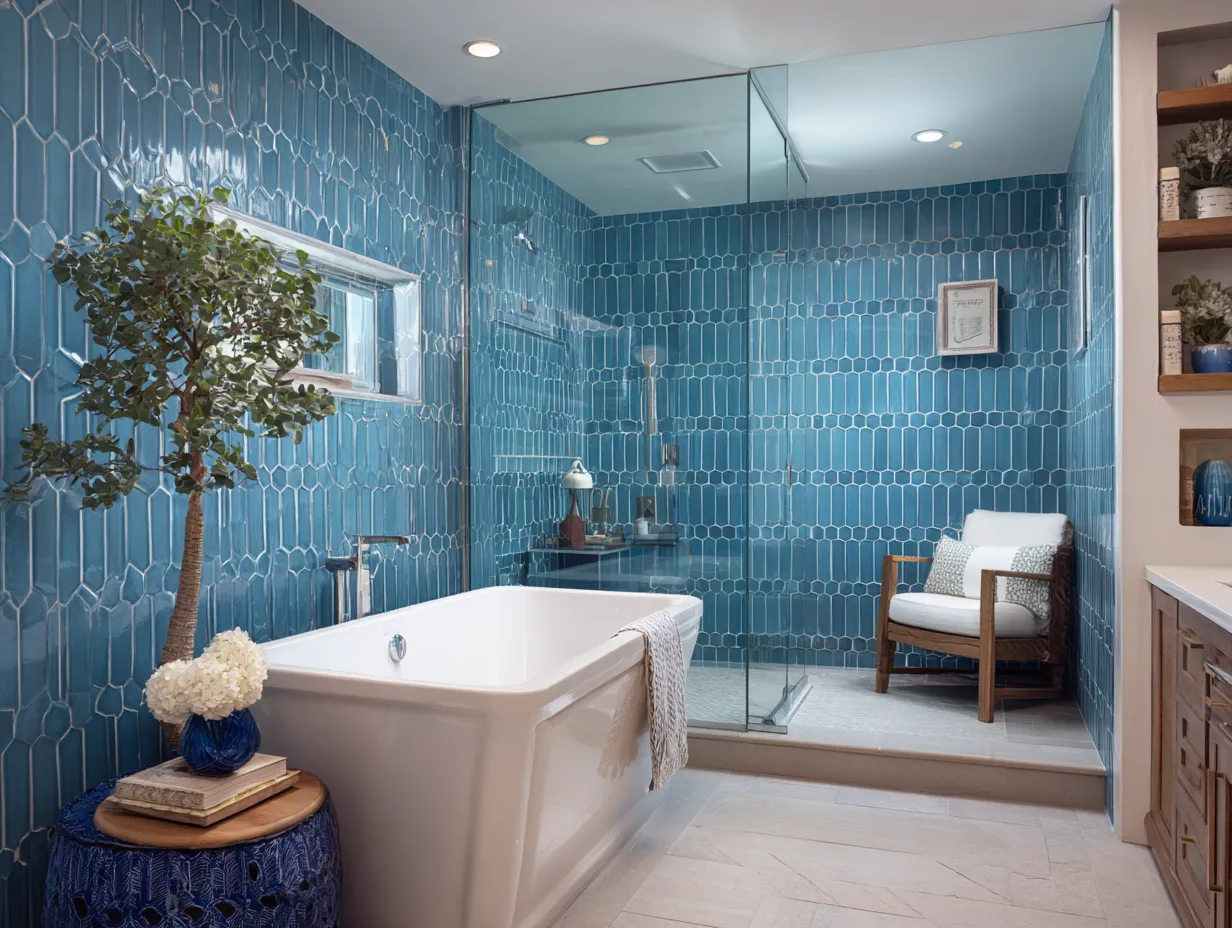
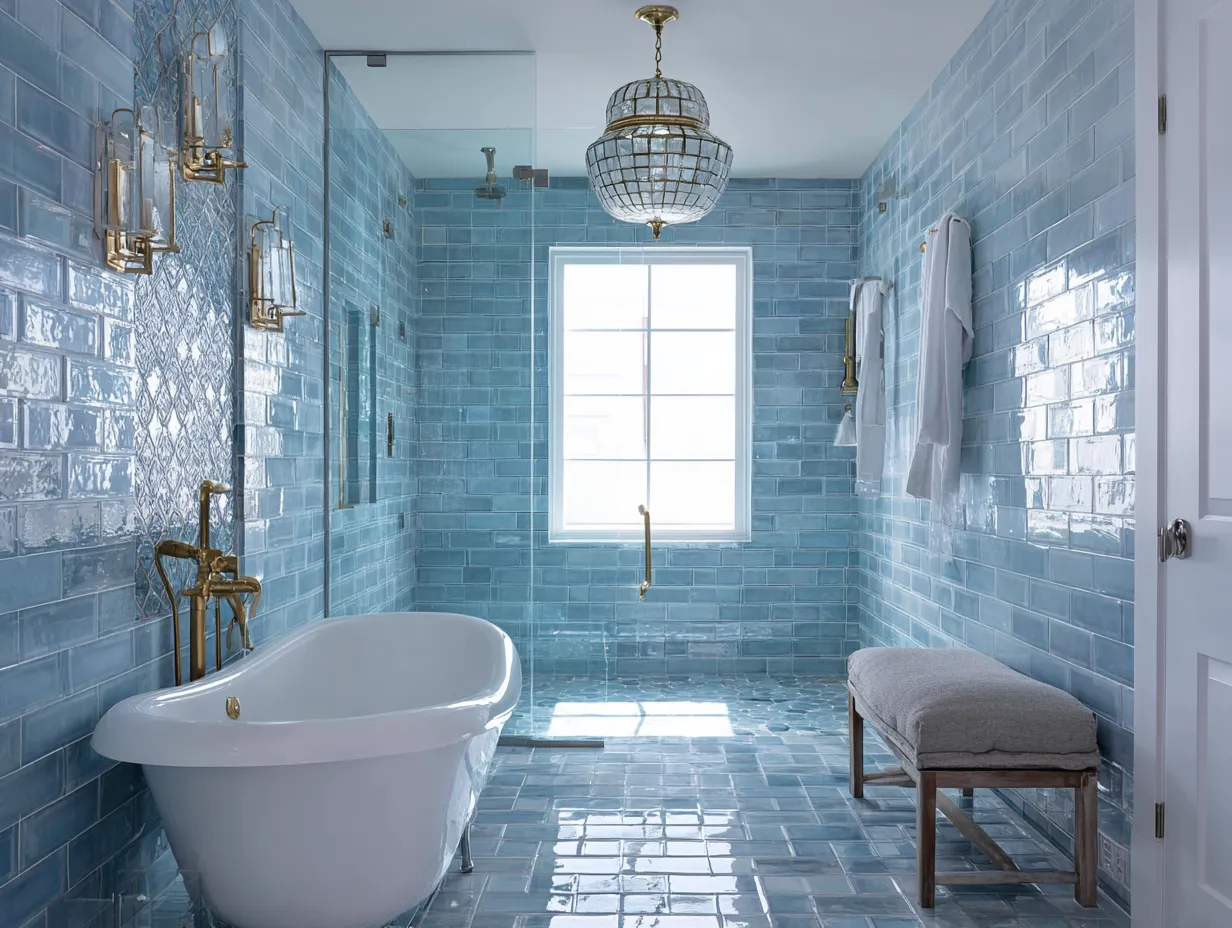
Powder blue hexagonal tiles bring a subtle yet striking modern touch to any transitional bathroom. These tiles are ideal for those seeking blue bathroom tiles ideas that offer a light, airy feel without overpowering the room’s traditional elements. The soft shade of powder blue exudes calmness, making it a perfect color choice for creating a peaceful and balanced atmosphere.
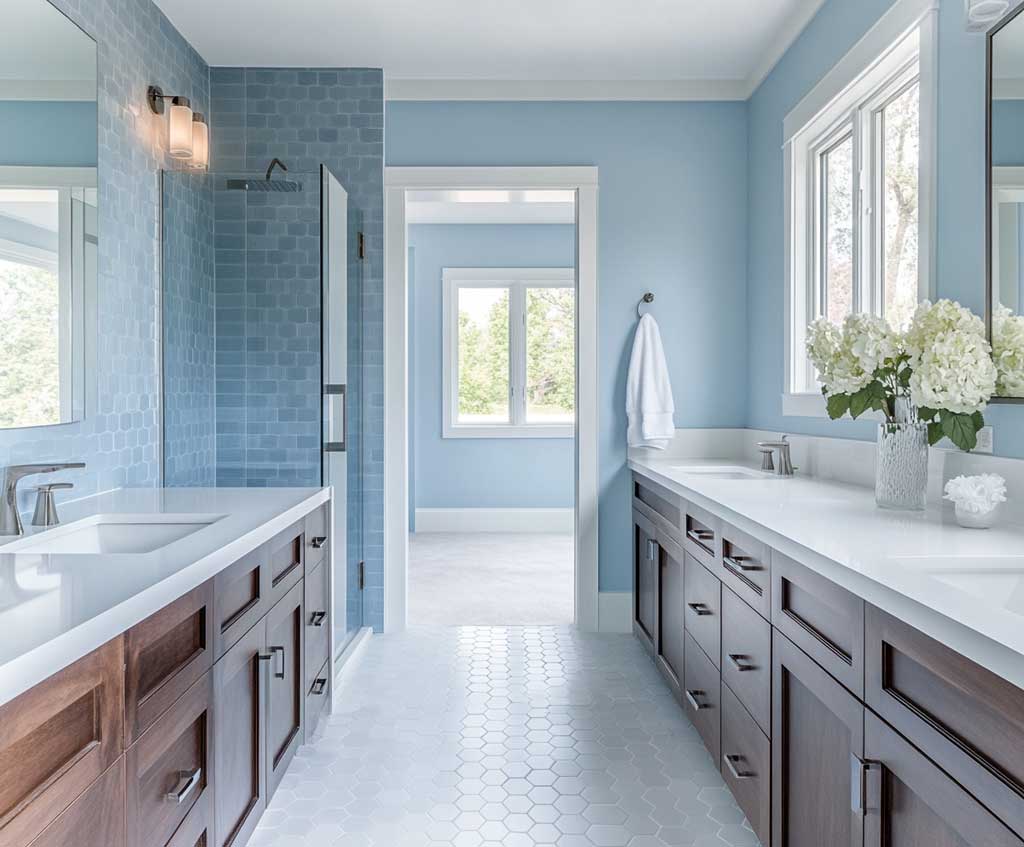
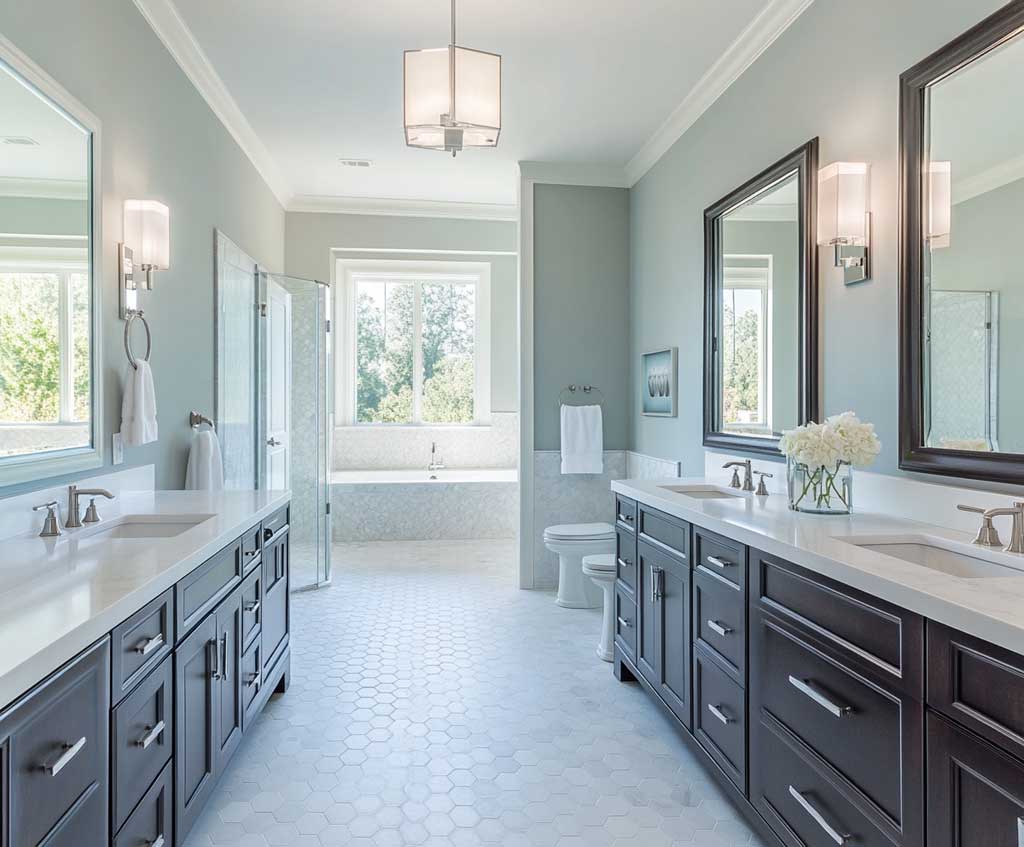
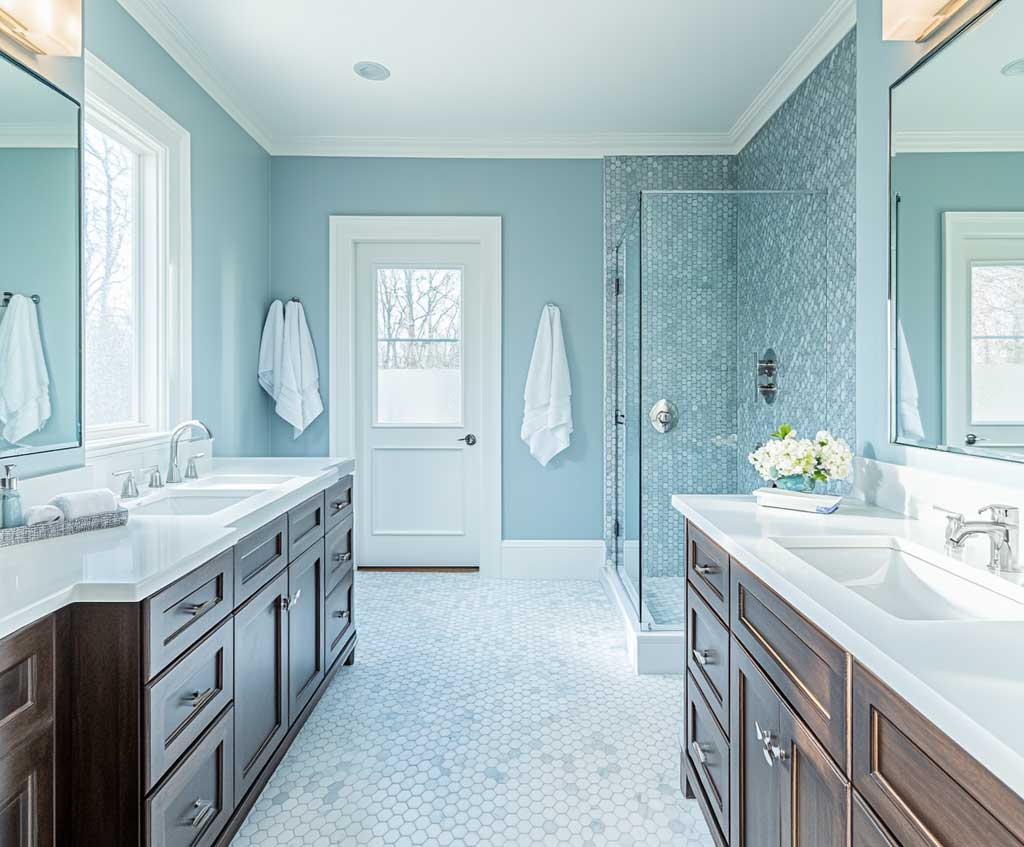
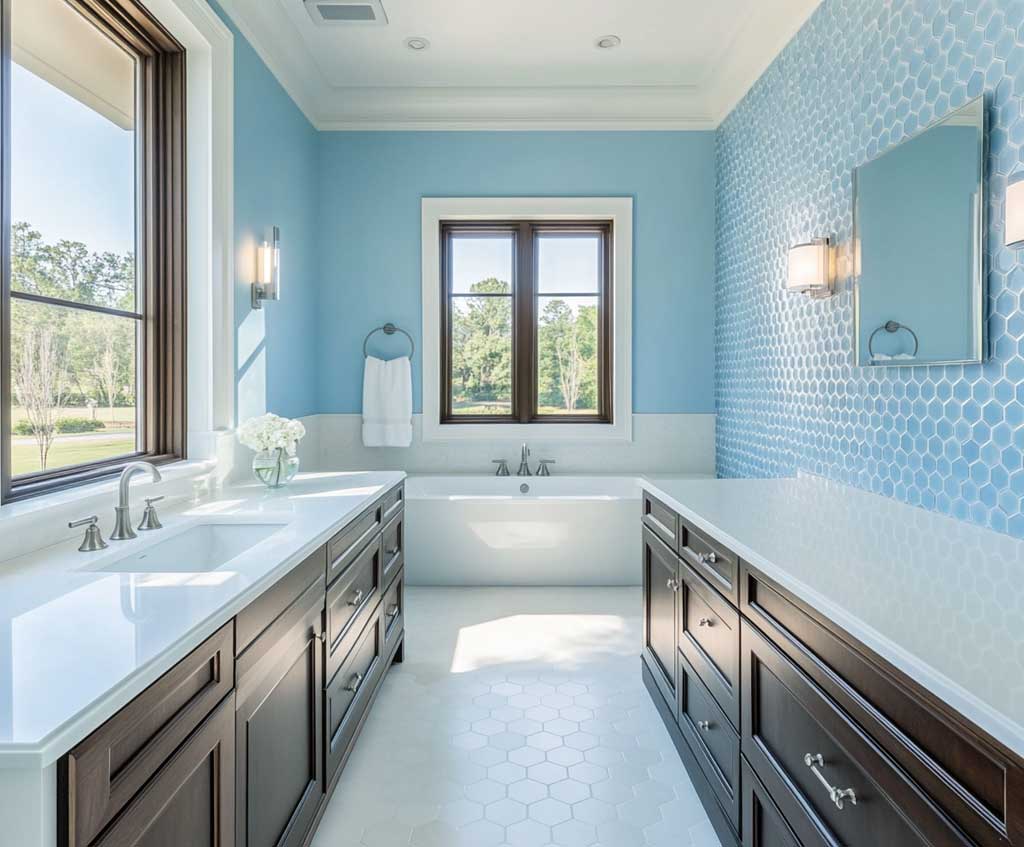
The hexagonal shape adds a contemporary geometric element to the bathroom while maintaining a clean and elegant appearance. The unique shape contrasts with the more traditional aspects of a transitional bathroom, such as dark wood cabinetry or classic white countertops, creating an aesthetic that feels both fresh and grounded. Powder blue tiles can be used on an accent wall or even around a vanity area, where they offer a gentle pop of color that complements a range of fixtures and finishes.
Fair warning: cheap hex tile looks cheap. Fast. The $3-per-sheet mosaic hex from Amazon? Paper-thin, uneven edges, and the color faded after six months of shower steam. My go-to is Daltile’s Keystones line — about $12 per square foot, real porcelain, consistent color batch to batch.
Hex tile has a weird optical trick. Small hex (1-inch) makes walls look textured, almost fabric-like. Large hex (4-inch and up) reads more architectural, like a honeycomb grid. For transitional bathrooms, I’d go 2- to 3-inch hex. It splits the difference. Smaller than that and the room starts feeling like a subway station restroom in a not-great way.
Don’t mix hex with another patterned tile in the same room. I’ve seen people pair hex walls with chevron floors and the whole bathroom looks like a geometry textbook having a nervous breakdown. Pick one statement pattern per room. Let the other surfaces stay flat.
The use of hexagonal tiles in this setting adds depth and visual interest to the room without overwhelming the space. Their soft, soothing hue ensures the bathroom remains light and serene, while the geometric design keeps it modern. Powder blue tiles are the perfect choice for those who want a transitional bathroom that balances soft, traditional charm with a sleek, modern edge.
Royal Blue Subway Tile: Bold Backsplash, Classic Shape
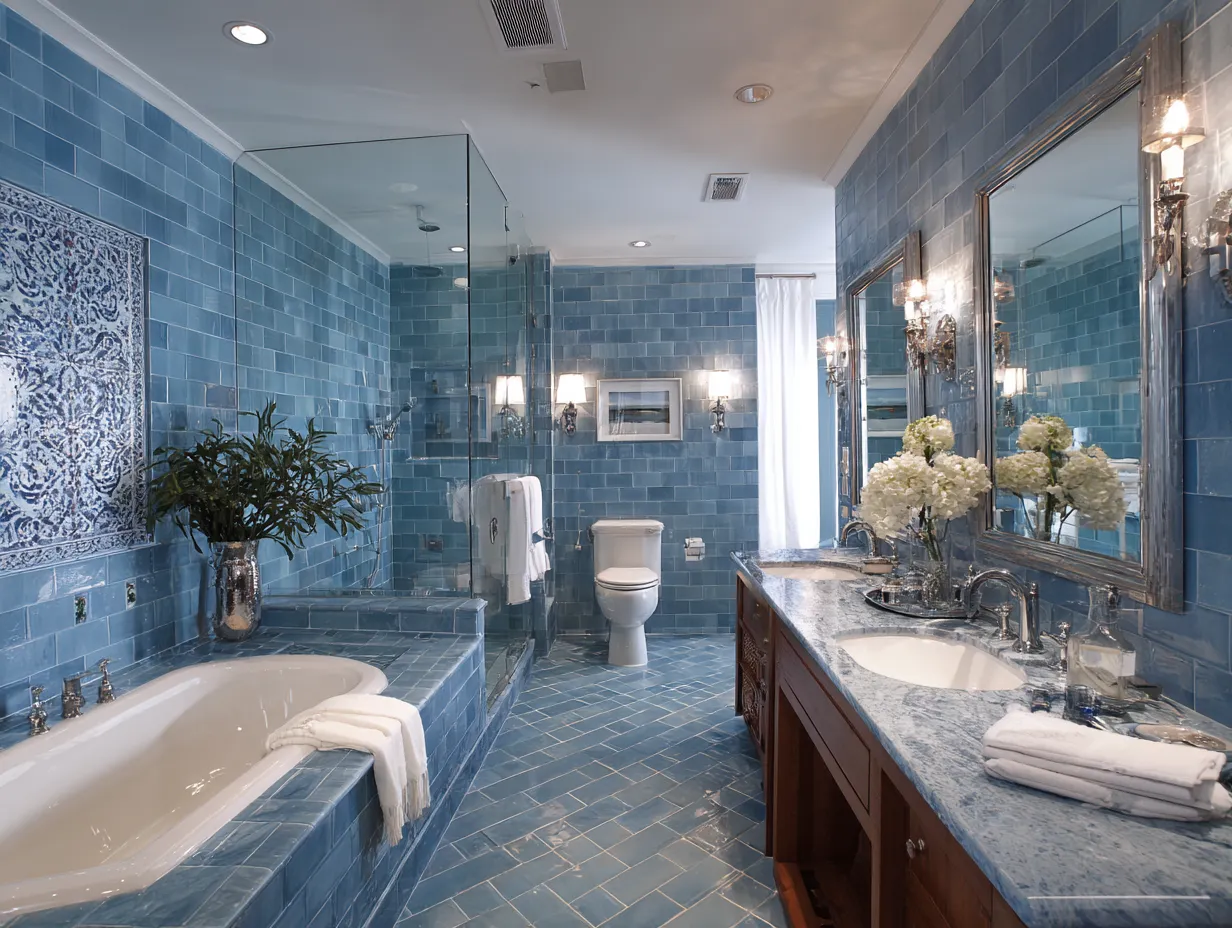
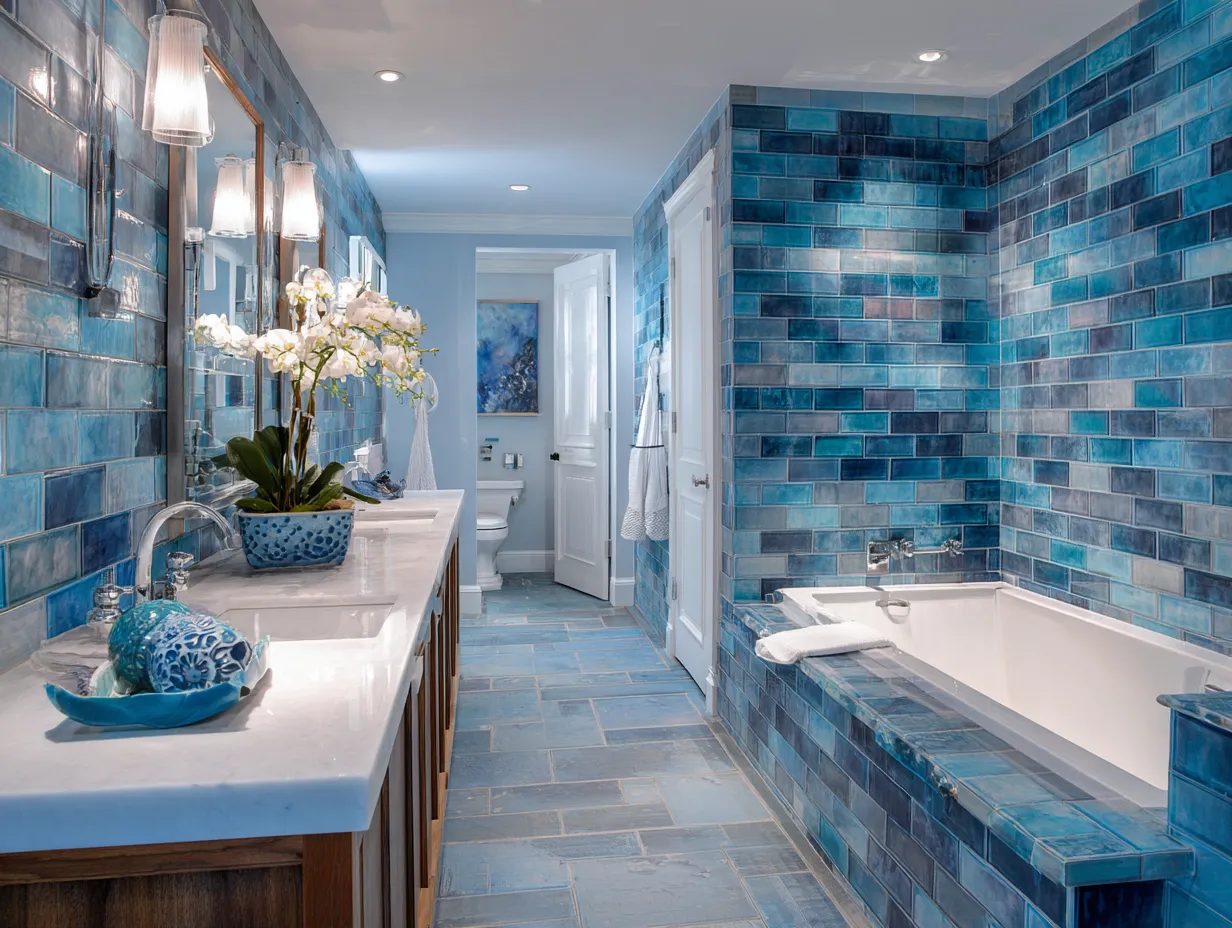
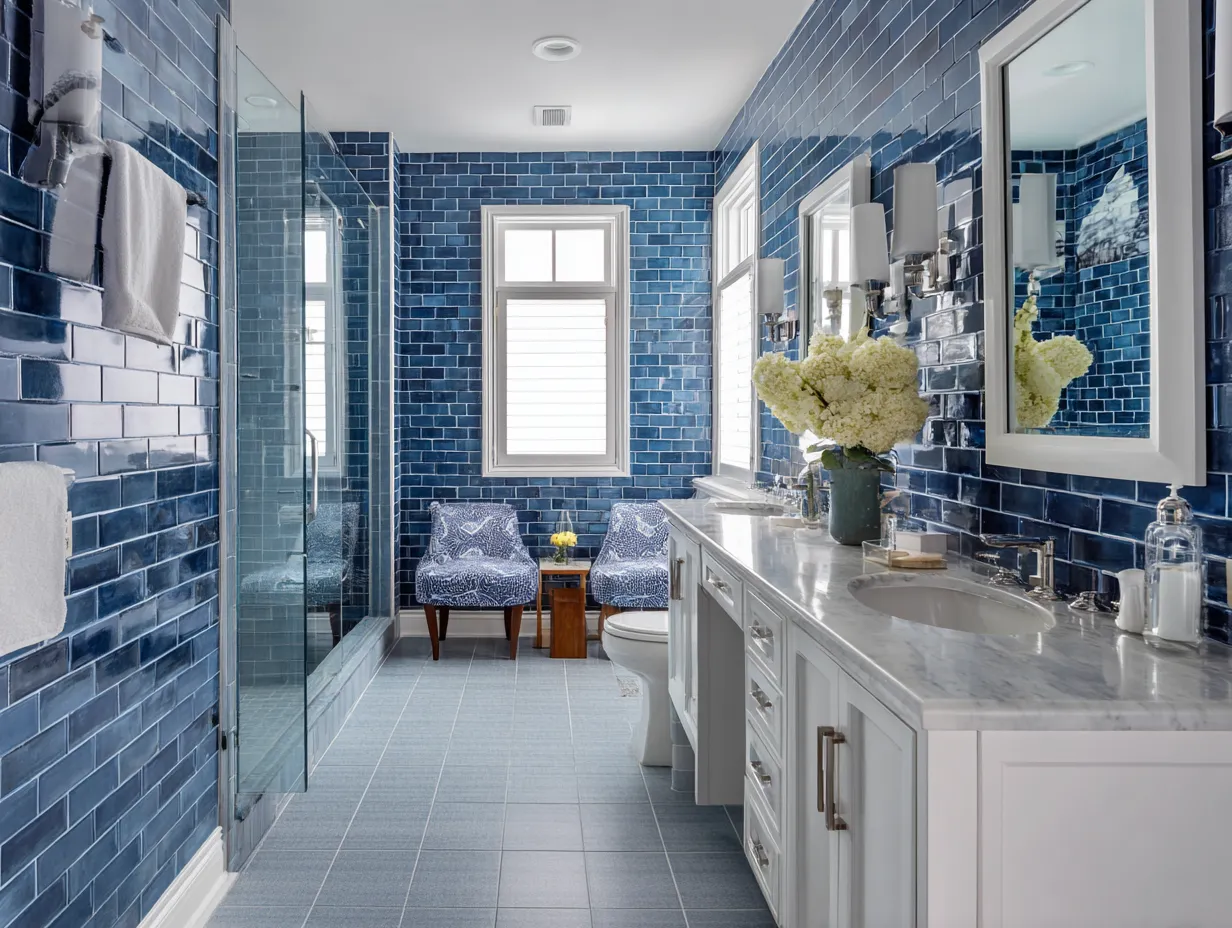
Royal blue subway tiles offer a bold and sophisticated option when considering blue bathroom tiles ideas for a transitional space. Subway tiles are a classic choice, known for their timeless appeal and clean, structured design. By using royal blue, a rich and vibrant shade, the tiles bring a modern boldness to the room, creating an impressive visual focal point.
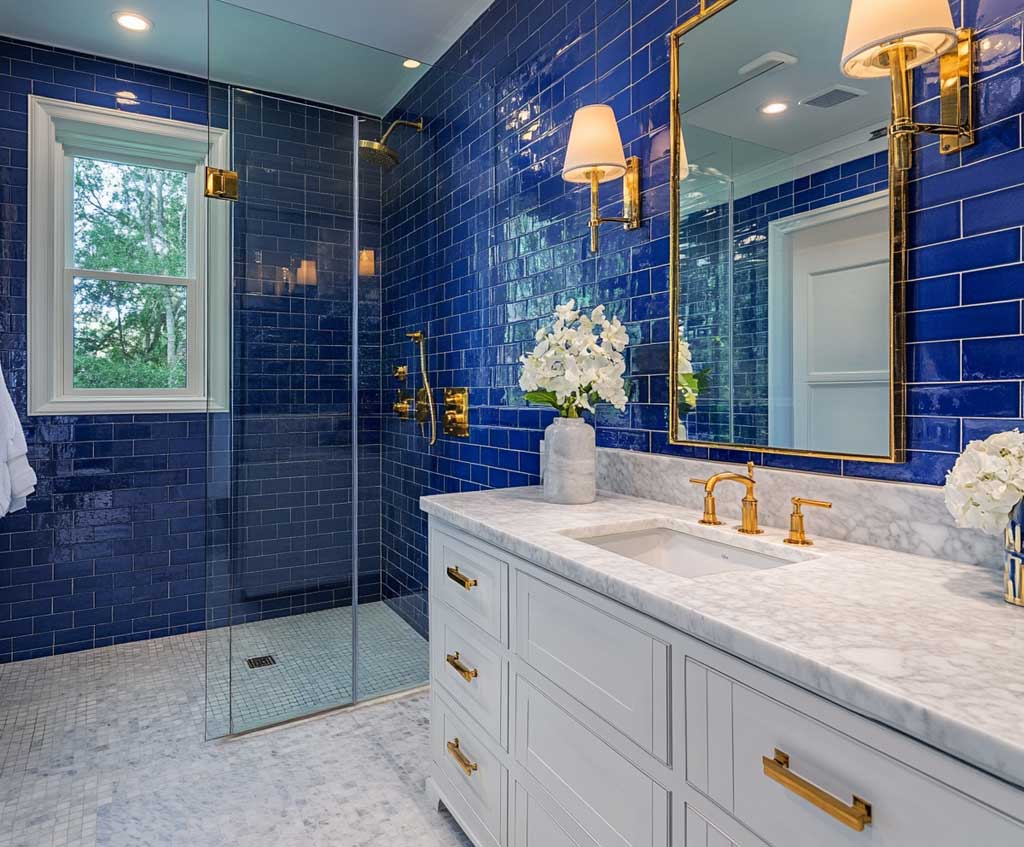
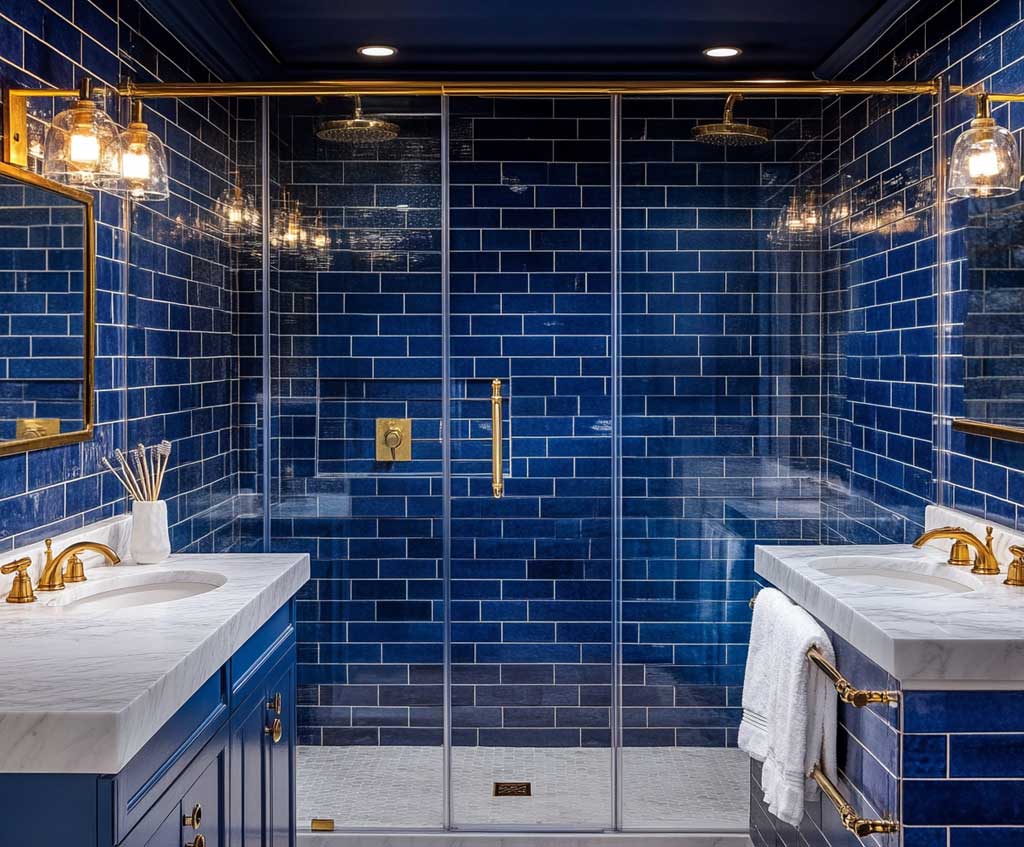
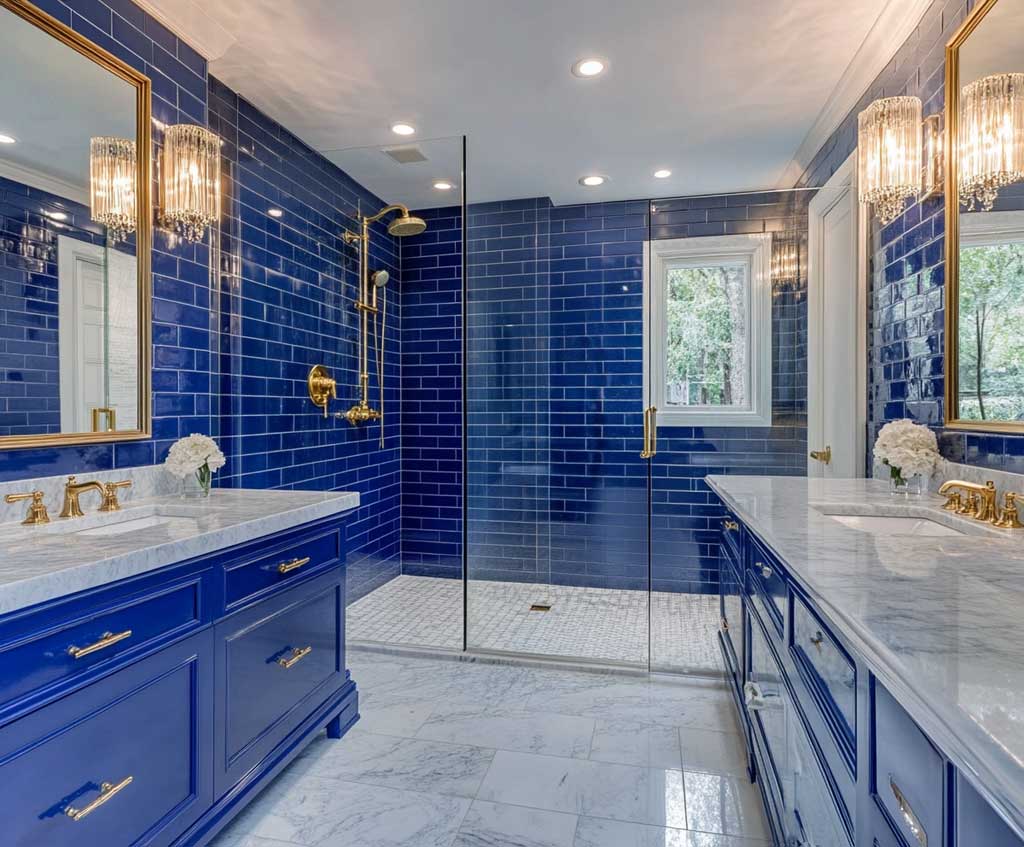

In a transitional bathroom, these tiles work particularly well in the shower area or as a backsplash behind a vanity. The glossy finish of the tiles adds depth and dimension, allowing the rich blue color to stand out while reflecting light in a way that enhances the room’s overall brightness. Pairing these tiles with luxurious materials like marble countertops or brushed gold fixtures adds a touch of opulence, elevating the design while keeping it balanced between traditional and contemporary elements.
Glossy vs. matte is the decision that changes everything. Glossy royal blue subway tile behind a vanity turns the wall into a mirror — which is gorgeous in a bathroom with one small window. Matte royal blue absorbs light and reads more moody, almost like denim. I’ve installed both. Glossy wins for small bathrooms because it fakes more space. Matte wins for large bathrooms where you want depth without glare.
Subway tile grids matter too. Standard brick-lay offset is fine but predictable. A straight stack (tiles perfectly aligned, no offset) looks twice as expensive for the same material cost. Most tile setters can do it, but double-check before they start because once row one is down, you’re committed. Cost difference? Zero dollars. Impact? Looks like a boutique hotel instead of a kitchen remodel from 2014.
Here’s something I wish someone told me before my first subway install: buy 15% overage minimum. Royal blue subway tile gets discontinued constantly. I ran three tiles short on a backsplash and the replacement batch was visibly different — bluer on the edges, almost purple. Had to rip out a whole row. Three tiles cost me an extra day of labor at $65 per hour.
The strong, vibrant royal blue provides a dramatic contrast to the neutral tones often used in transitional bathrooms. However, it doesn’t overpower the space, as the subway tile’s classic shape keeps the design grounded in tradition. This combination of bold color and classic tile design results in a bathroom that feels both luxurious and inviting, perfectly blending the elegance of traditional design with the sleekness of modern trends. If you’re picking tile for a shower remodel, check out these modern shower tile designs for more pattern ideas beyond subway layout.
How to Choose and Install Blue Tiles in a Transitional Bathroom
A step-by-step process for picking the right blue tile shade, pattern, and finish — then getting it on the wall without expensive mistakes.
Tools and materials:
- Tile samples (at least 3 shades)
- Wet saw or tile cutter
- Notched trowel
- Tile spacers
- Level and measuring tape
- Thinset mortar
- Grout (white or light grey recommended)
- Backer board
Pick your shade based on fixtures, not on Pinterest
Tape sample tiles next to your existing fixtures. Cobalt pairs with white and chrome. Powder blue softens dark wood. Royal blue needs gold or brass hardware to avoid looking flat. Live with the sample for two days under your actual bathroom light before buying.
Choose one pattern per room
Herringbone for floors or feature walls. Hex for accent areas and vanity surrounds. Subway for backsplashes and full shower walls. Mixing two patterns in one bathroom almost always looks cluttered. One pattern, one neutral surface to balance it.
Order 15% more tile than your measurements say
Blue tile gets discontinued constantly and replacement batches never match exactly. Herringbone and hex patterns create more waste cuts than standard layouts. That extra box of tile is insurance against a color mismatch that ruins the whole wall.
Prep the surface before any tile goes down
Install backer board on walls. Level the subfloor for herringbone — any dip over 1/8 inch will show in the angled joints. Dry-lay your first three rows on the floor without adhesive to check alignment and plan cuts around edges and fixtures.
Grout last and seal within 72 hours
Let thinset cure for 24 hours before grouting. Use unsanded grout for joints under 1/8 inch (typical for hex and subway), sanded for wider herringbone joints. Seal the grout within three days to prevent water stains and discoloration, especially with white grout on dark blue tile.
What Actually Works With Blue Tile
Three shades. Three patterns. That’s all you need for a transitional bathroom that doesn’t look like every other Pinterest board. Cobalt herringbone on the floor with white fixtures hits the classic-modern sweet spot without trying too hard. Powder blue hex on an accent wall keeps things calm but interesting. Royal blue subway behind a vanity with brushed gold hardware? That’s the one guests actually notice.
Pick one blue, one pattern, and let neutral fixtures do the rest. The bathrooms that fall apart are the ones stacking three tile patterns in one room. Keep it simple and the blue does all the heavy lifting.