Quick Scan
- Zellige tiles from Cle Tile ($35–$55/sq ft) and Porcelanosa terracotta ceramics ($8–$12/sq ft) are the two tile anchors of this trend.
- Sage green, ochre, and sandy beige are the palette — Sherwin-Williams Aged Oak and Benjamin Moore Pale Straw are the leading paint picks.
- Brushed gold fixtures (Moen Doux collection, ~$320) and warm walnut vanities (Bertch, from ~$900) tie the material story together.
- Avoid chrome fixtures entirely — they cool the palette and undermine the warmth terracotta and zellige are building.
- Rattan mirrors and arched niches are the fastest architectural signals of this aesthetic — both available without full renovation.
Something shifted in how people want to feel inside their bathrooms. The cold, slate-gray surfaces that dominated the last decade are being stripped back, replaced by warm ochre walls, handmade tiles, and the kind of light that makes you feel like you are somewhere near the sea. Mediterranean bathroom design is not a trend that arrived quietly — Ideal Home confirmed it as a top 2026 bathroom direction tied directly to Pinterest’s annual predictions, and brands like Duravit and Porcelanosa have both aligned their 2026 collections around it. The timing makes sense. May nostalgia for sun-soaked travel is real, and the bathroom is often the first room people want to transform when that mood hits.
Zellige and Terracotta Tiles Define the Look From the Floor Up
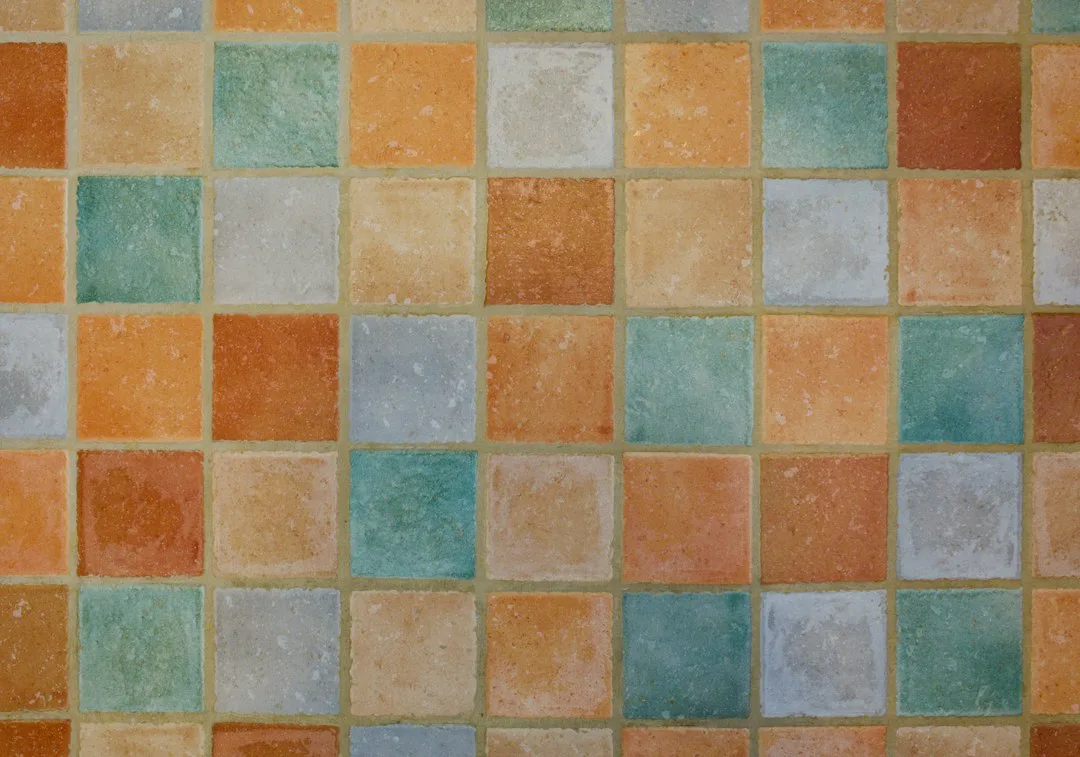
Ask any designer which single material is driving Mediterranean bathroom design in 2026 and the answer is almost always the same: handcrafted tile. Zellige and terracotta are the two finishes appearing most consistently across new projects, and House Digest confirmed that ‘the handcrafted style is a tile trend you will see even more of in 2026.’ The irregularity is the point. Each zellige tile from brands like Cle Tile catches light differently, averaging $35–$55 per square foot, which makes even a small feature wall feel genuinely artisan. That price is not cheap — but a single tiled niche or a half-wall application keeps the budget manageable without sacrificing the effect.
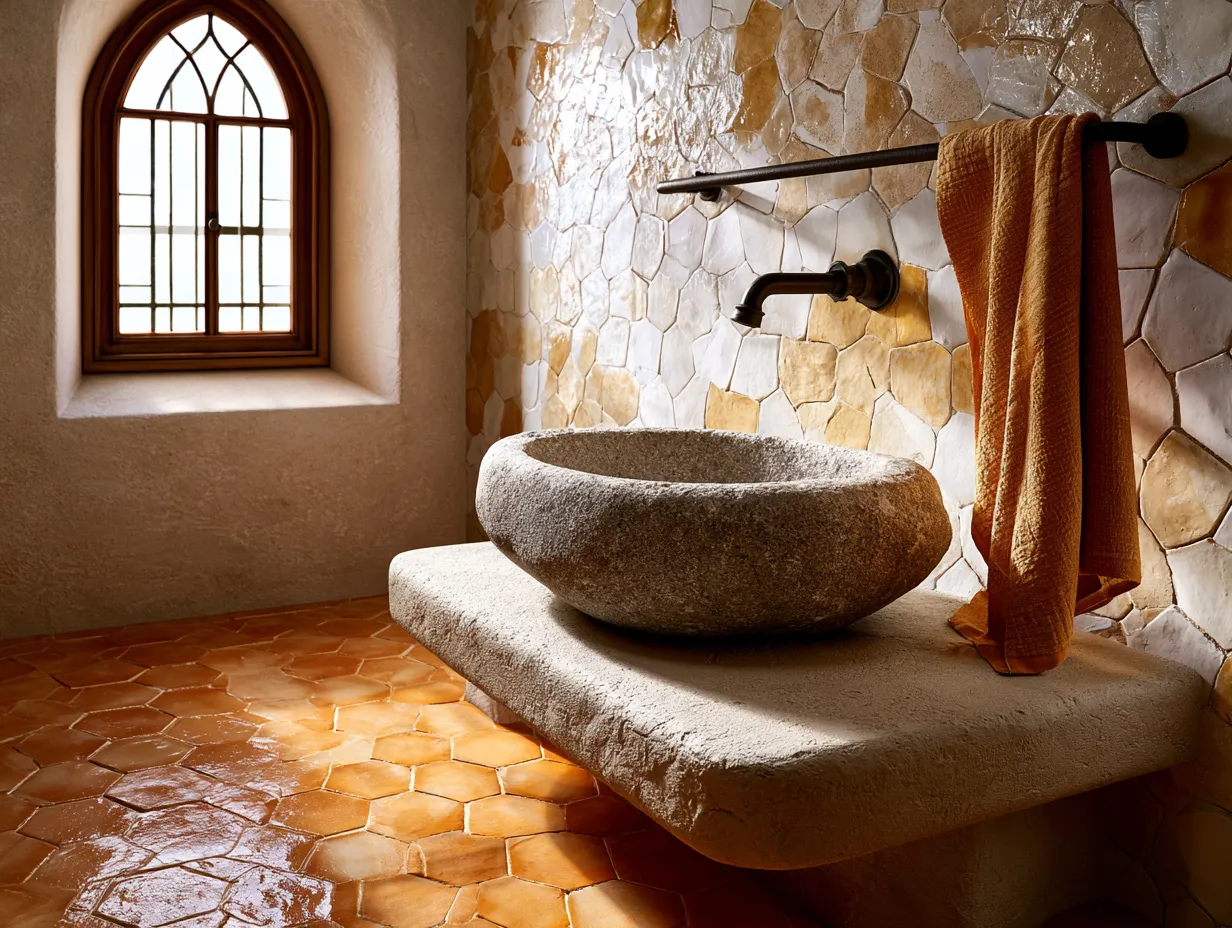
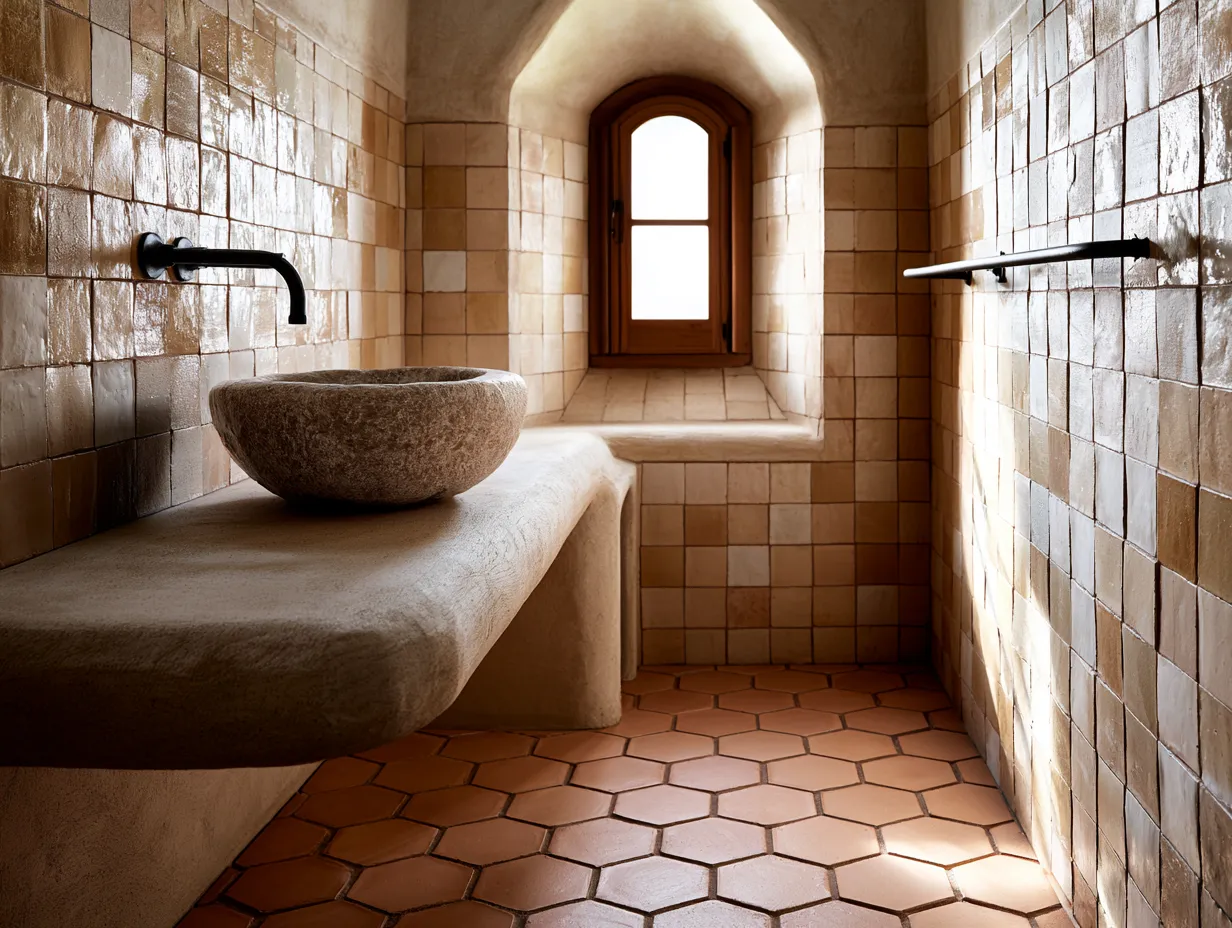
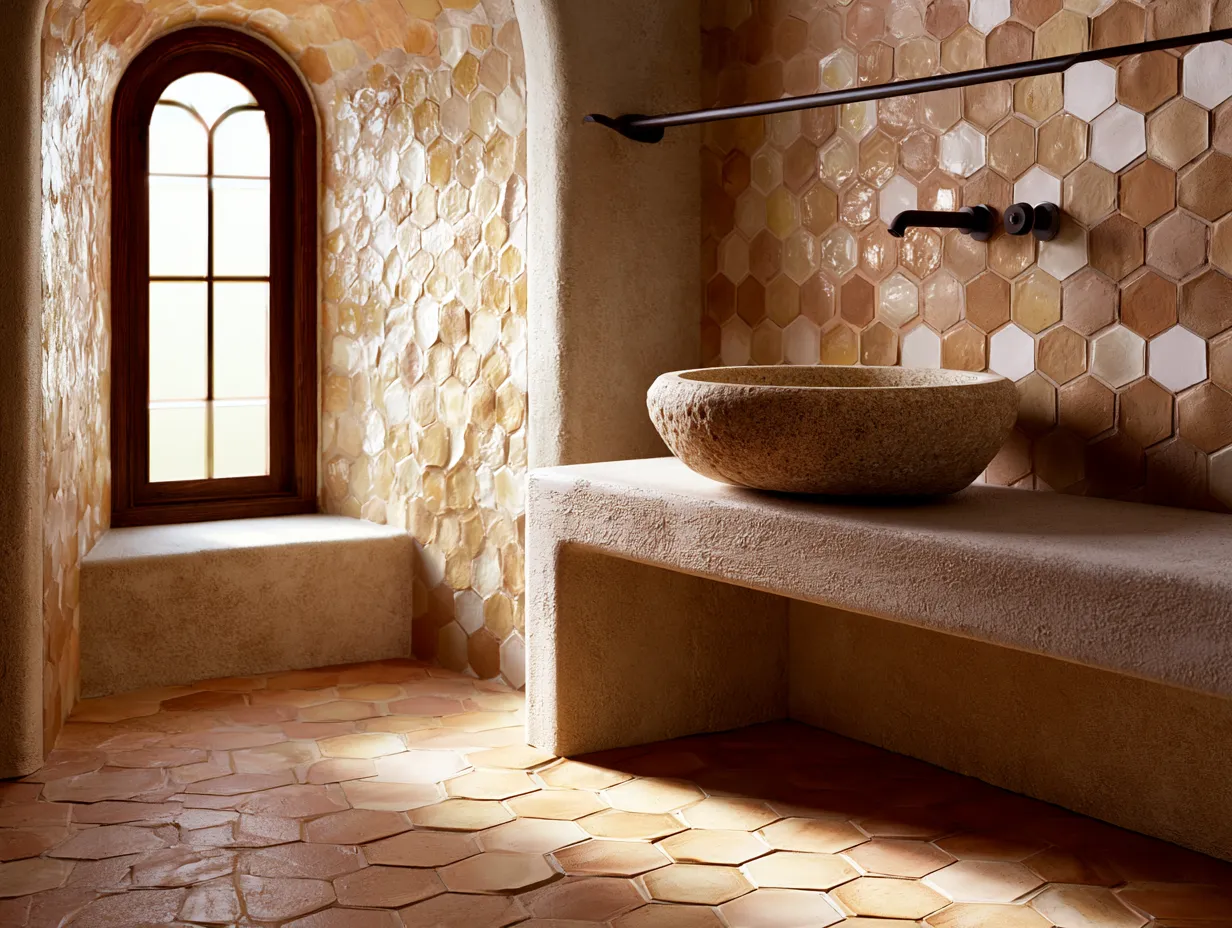
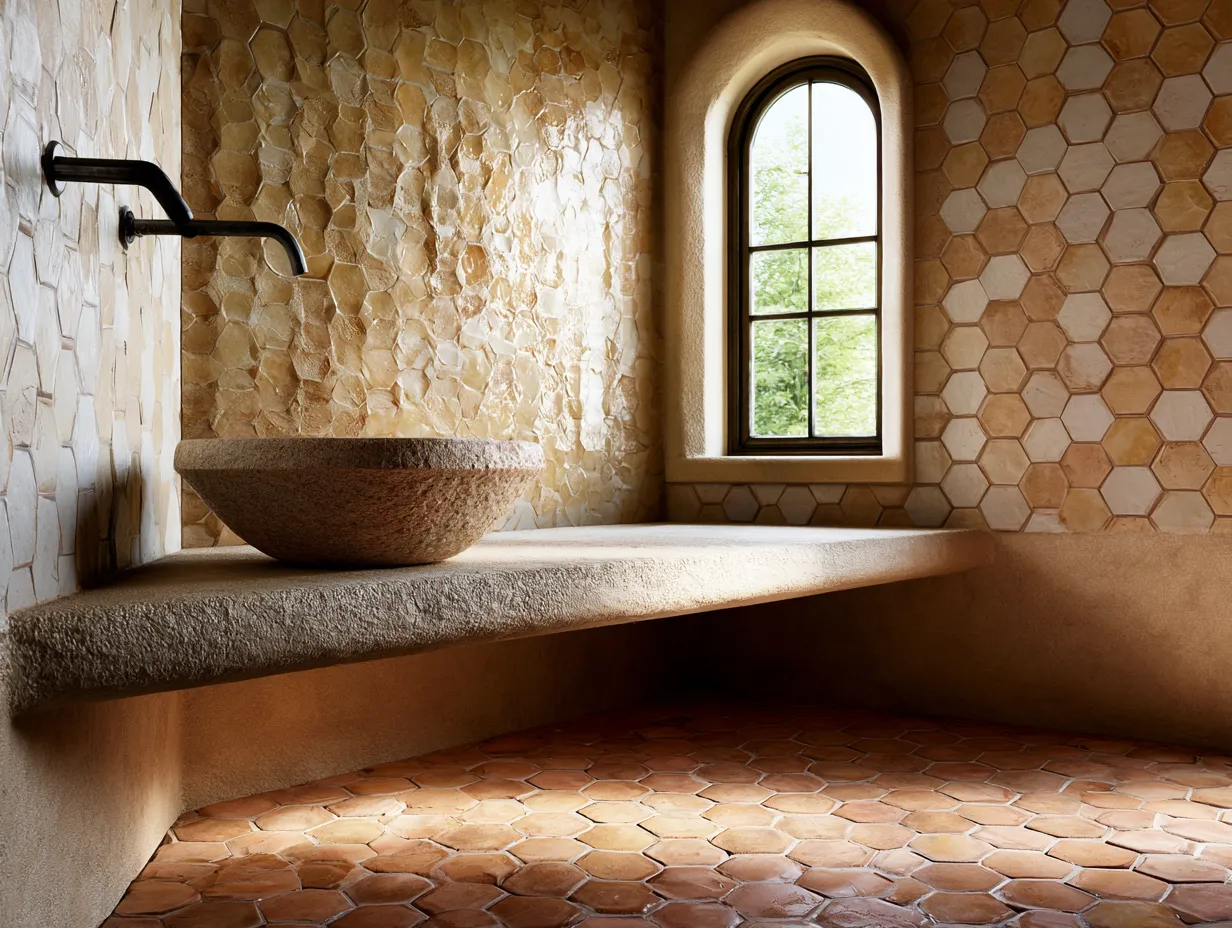
Porcelanosa has built their 2026 bathroom positioning around exactly this moment, stating that the Mediterranean style will dominate modern bathroom trends this year. Their terracotta-look ceramic tiles are the accessible entry point, starting from approximately $8–$12 per square foot. If you want to see how geometric tile logic can translate into a completely different visual register, the Modern Bathroom Elevated with White Geometric Tile article shows the structural contrast well — Mediterranean tile works on similar placement principles but swaps precision for warmth. Layering the two approaches in a single bathroom rarely works. Pick one language and commit.
What not to do: do not mix zellige with large-format porcelain slabs in the same visual zone. The handmade texture and the industrial smoothness fight each other, and neither reads as intentional. The result looks like a renovation that ran out of budget mid-project rather than a considered design choice.
Floor choices matter as much as walls. Terracotta hex tiles on the floor paired with a zellige-clad shower wall is the most-saved combination on Pinterest right now for this aesthetic. Seal terracotta properly — unsealed terracotta in a wet room will stain within weeks. Brands like Fila offer penetrating sealers specifically formulated for porous terracotta at around $25–$40 per liter, which covers roughly 100 square feet. That small investment protects a significant tile spend.
Don’t Do This
- Do not mix zellige with large-format porcelain slabs in the same visual zone — the handmade and industrial textures actively fight each other and the result looks unintentional.
- Do not introduce chrome or brushed nickel fixtures into a Mediterranean bathroom — chrome reflects cool blue light and makes warm terracotta tiles look muddy rather than rich.
- Do not leave terracotta floor tiles unsealed in a wet room — unsealed terracotta stains within weeks; use a penetrating sealer like Fila's terracotta formula (~$25–$40/liter) before any water exposure.
- Do not overload the space with accessories trying to complete the look — three well-chosen objects land harder than fifteen coordinated items and the excess reads as cluttered, not considered.
Warm Earth Tone Palette and Fixtures That Hold the Mood Together
Color is where Mediterranean bathroom design either lands or collapses. The palette that is working in 2026 is specific: terracotta, ochre, sandy beige, and sage green — not the cold sage of Scandi minimalism but a warmer, muddier version that reads more like dried herb than mint. Duravit explicitly called out sage green as ‘especially popular’ for this look, noting it pairs particularly well with black faucets and ceramics. Sherwin-Williams’ Aged Oak and Benjamin Moore’s Pale Straw are both strong wall paint choices that anchor this palette without tipping into orange territory.
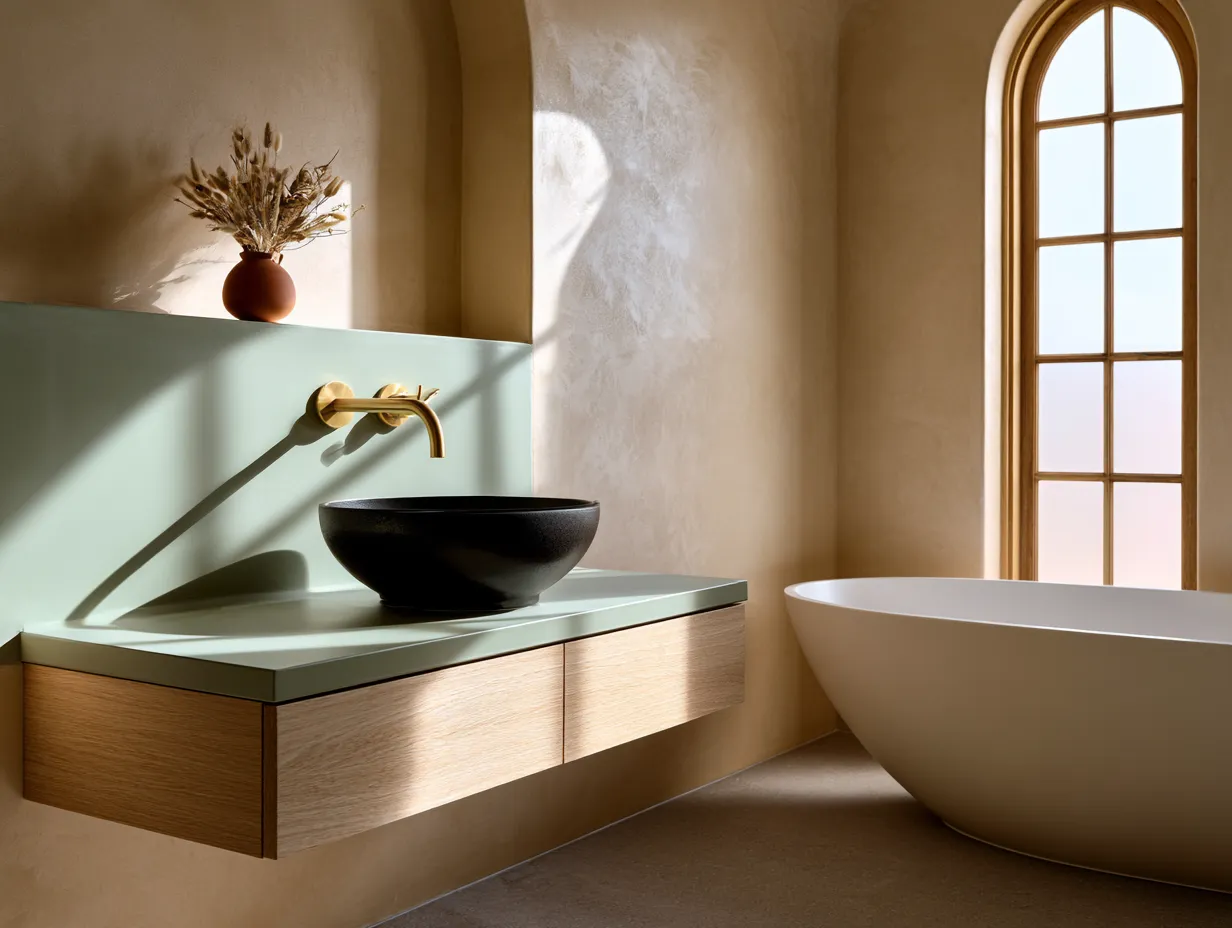
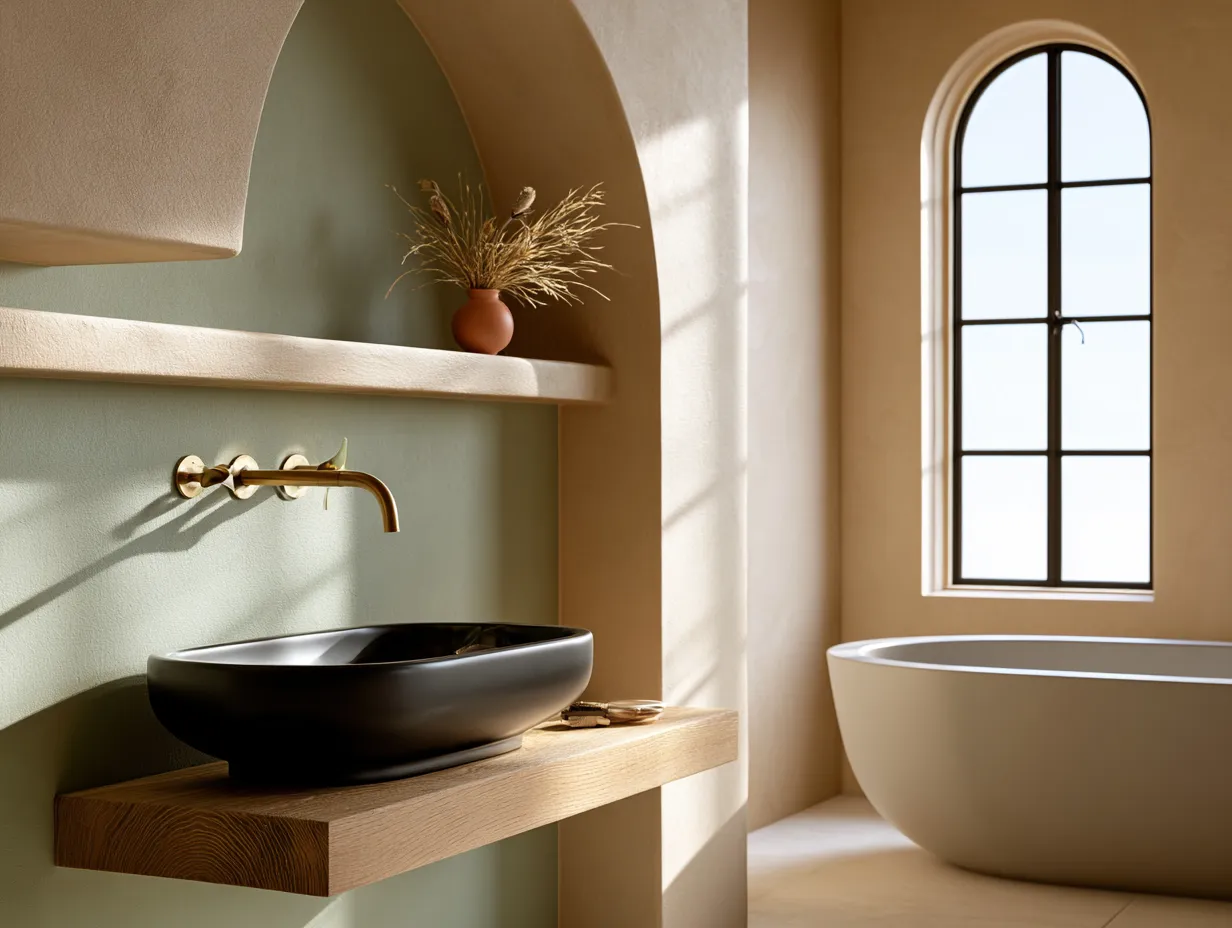
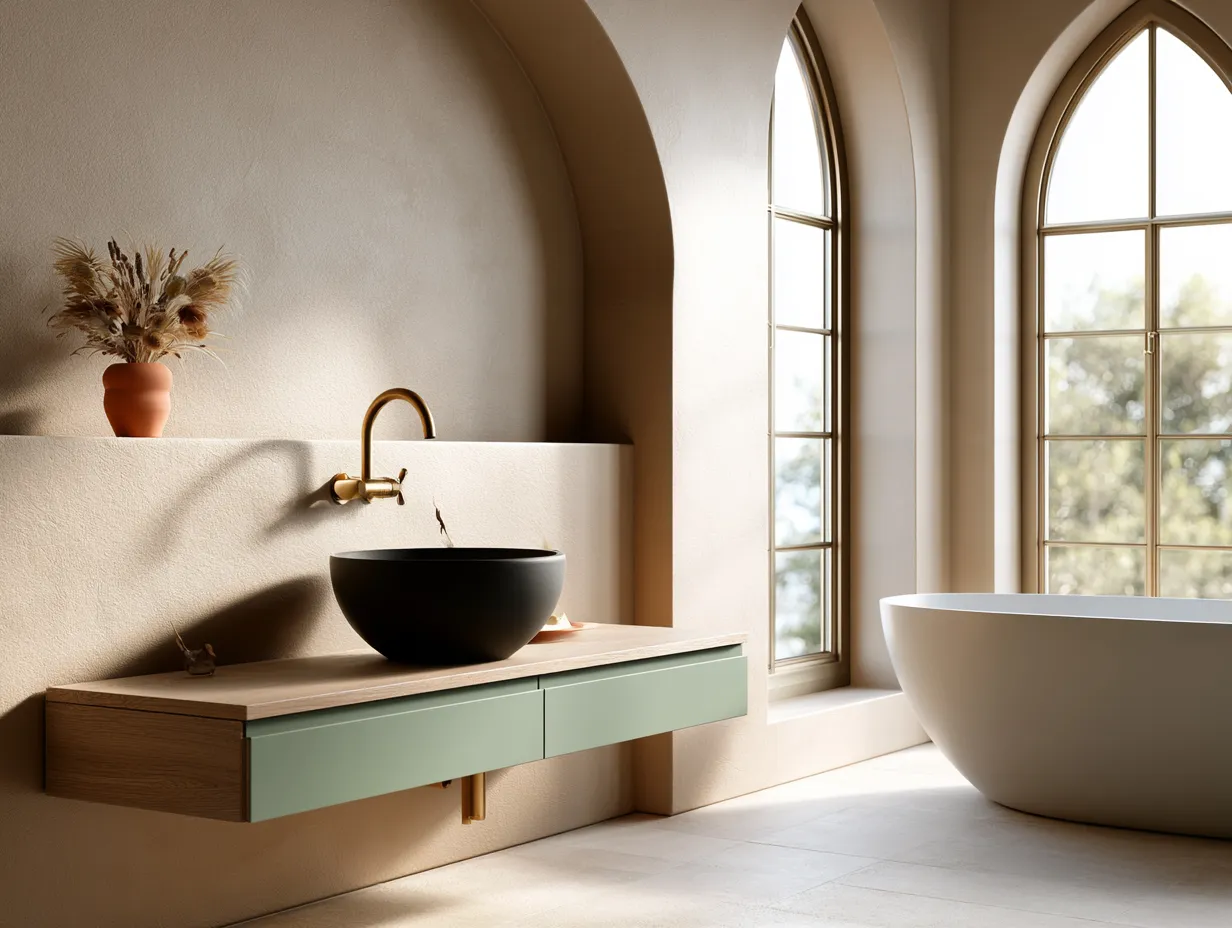
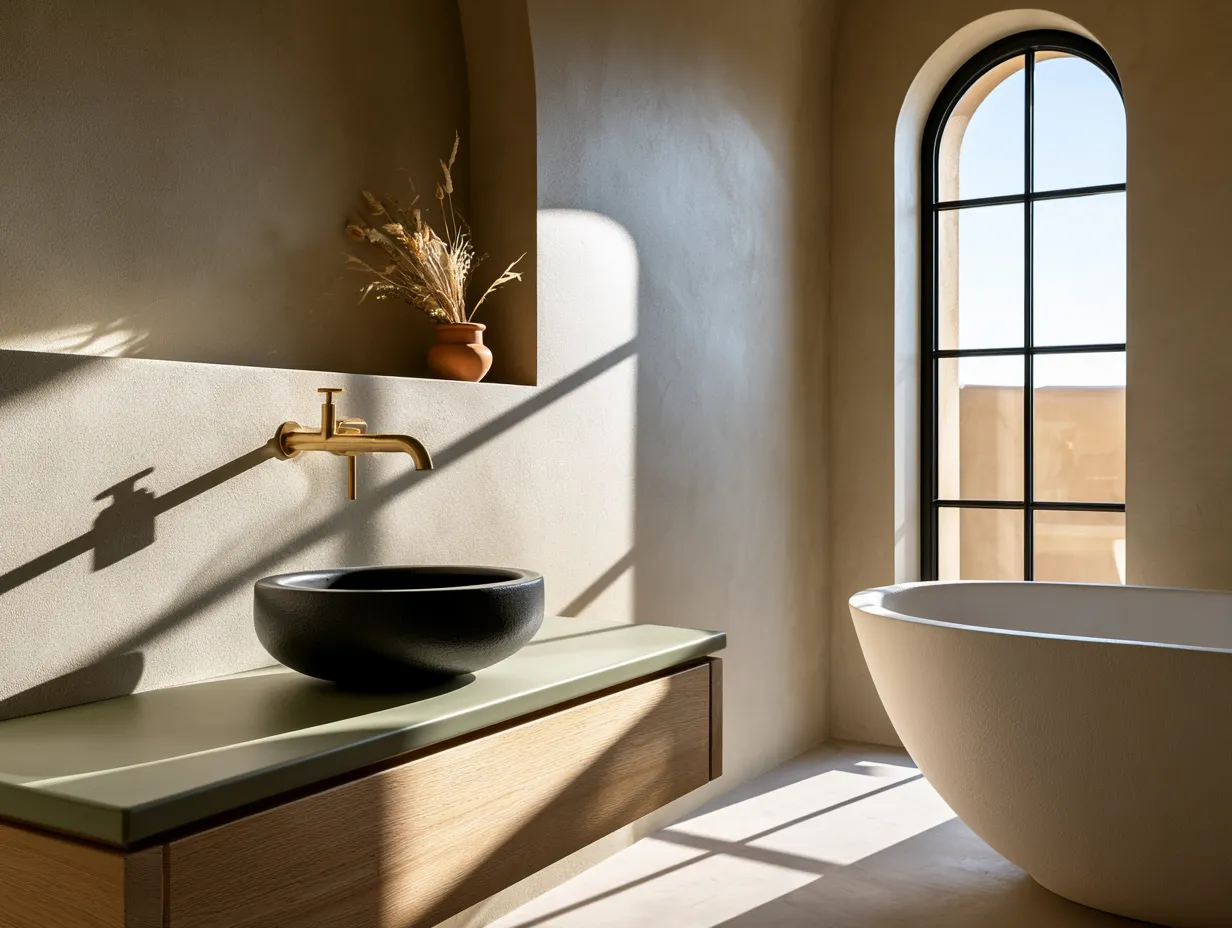
Fixtures carry the palette forward. Brushed gold is the dominant metal finish in Mediterranean-styled bathrooms this year, and Moen’s Doux collection wall-mount faucet in brushed gold retails at approximately $320 — a realistic investment for a finish that reads as considered rather than shiny. Re-Bath’s 2026 remodel guide also flags Bertch vanities as a reliable match for this look, particularly their warm walnut wood finishes that start around $900 for a single-vanity unit. The combination of warm wood, black ceramic accents, and brushed gold hardware is the Mediterranean bathroom fixture formula that consistently photographs well and ages gracefully. You can also explore how Victorian-era tile logic applies to warm-palette bathrooms in Victorian Geometric Floor Tiles Accentuating a Classic Bathroom — the color discipline is transferable even across very different aesthetics.
What not to do: do not introduce chrome or brushed nickel fixtures into a Mediterranean bathroom. Chrome reflects cool blue light and immediately undermines the warmth the entire palette is building toward. It is the fastest way to make terracotta tiles look muddy rather than rich.
Wall surfaces beyond tile deserve attention. Microcement is a strong choice for non-wet zones — walls, ceilings, even vanity fronts — because it reads as organic and handmade without the maintenance complexity of limewash in a humid room. Topciment offers microcement wall systems at roughly $50–$90 per square foot installed, which is a significant spend but creates a continuous warm surface that ties tiled and non-tiled areas together seamlessly. The Duravit ME by Starck freestanding bath, which retails from approximately $4,200, sits particularly well against a microcement wall in a deep sand or warm greige tone — the clean lines of the bath make the texture of the wall read as a deliberate backdrop rather than an unfinished surface.
| Material | Cost Range | Best Use In Mediterranean Bathroom |
|---|---|---|
| Zellige Tile (Cle Tile) | $35–$55/sq ft | Feature shower wall, backsplash niche |
| Terracotta Ceramic (Porcelanosa) | $8–$12/sq ft | Floor tiles, sealed hex or square format |
| Microcement Walls (Topciment) | $50–$90/sq ft installed | Non-wet wall zones, vanity surrounds |
| Brushed Gold Faucet (Moen Doux) | ~$320 | Wall-mount basin tap, main fixture focal point |
Rattan, Arches, and Natural Accessories That Finish the Space
Materials do most of the heavy lifting in Mediterranean bathroom design, but accessories and architectural details close the gap between a bathroom that looks designed and one that genuinely feels transported. Rattan is the third material Porcelanosa named alongside ceramic and terracotta as a key driver of the Mediterranean aesthetic — and it earns that status because it introduces warmth without adding visual weight. A rattan mirror frame, a woven storage basket, or a rattan stool beside a freestanding bath each cost under $150 from brands like Bloomingville or Zara Home, yet they shift the atmosphere of a finished room considerably.
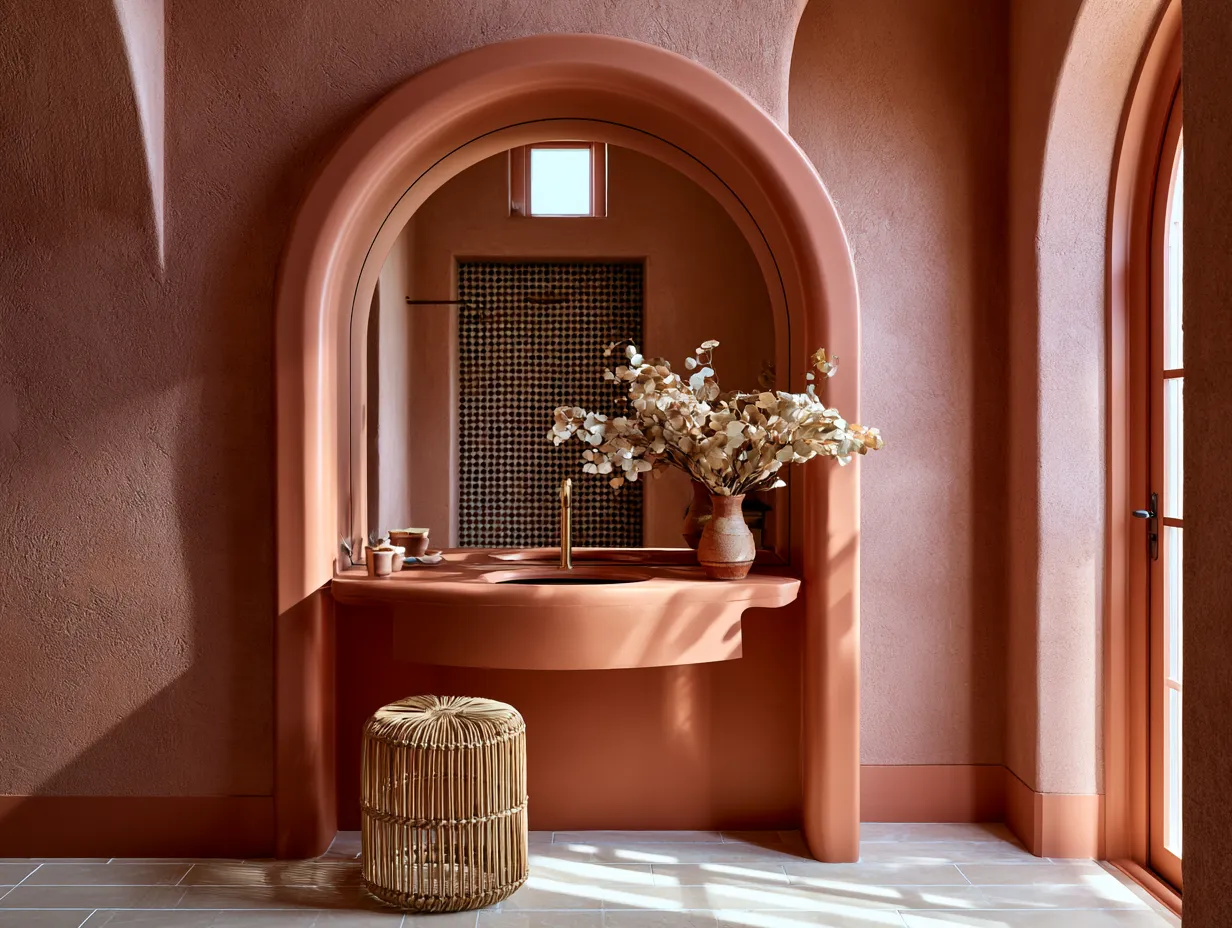
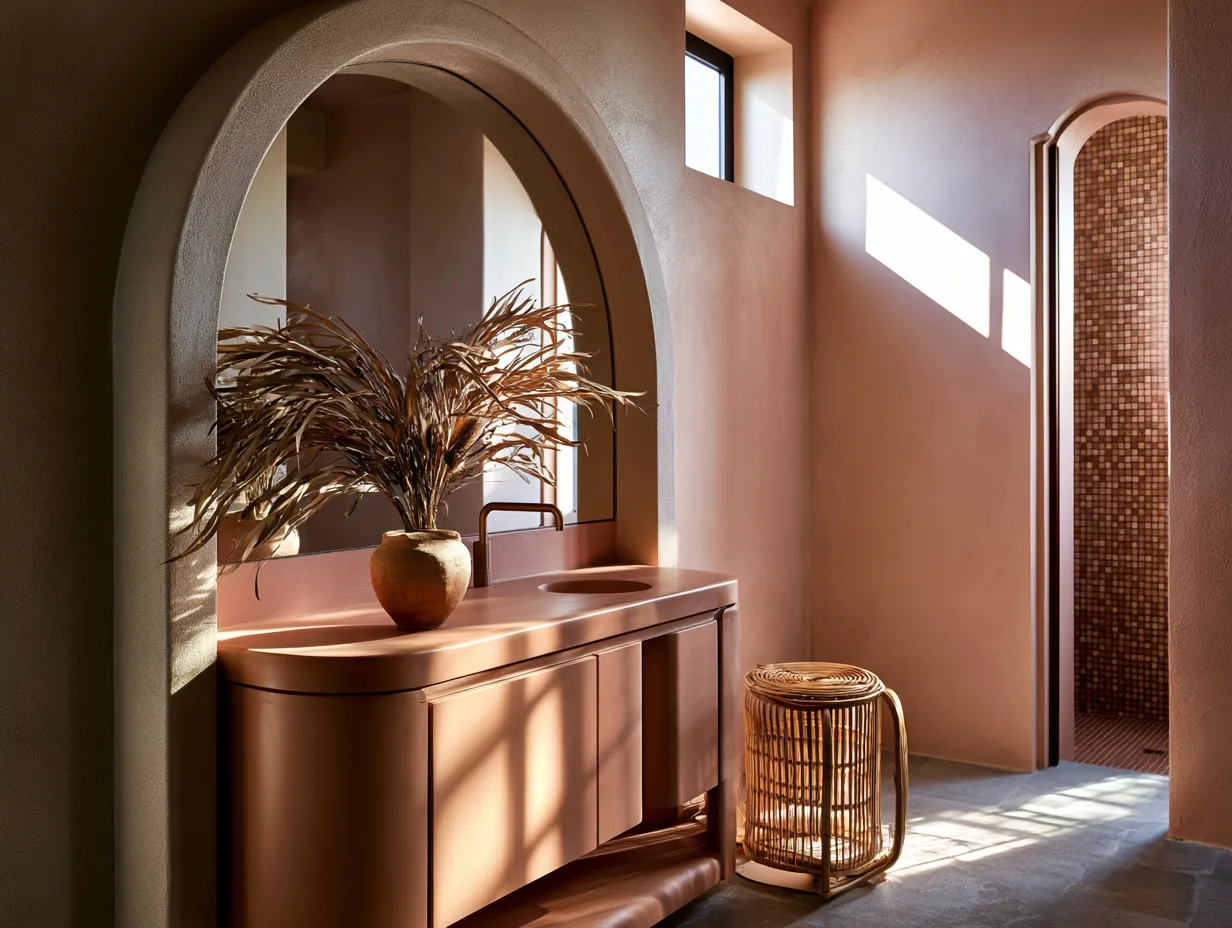
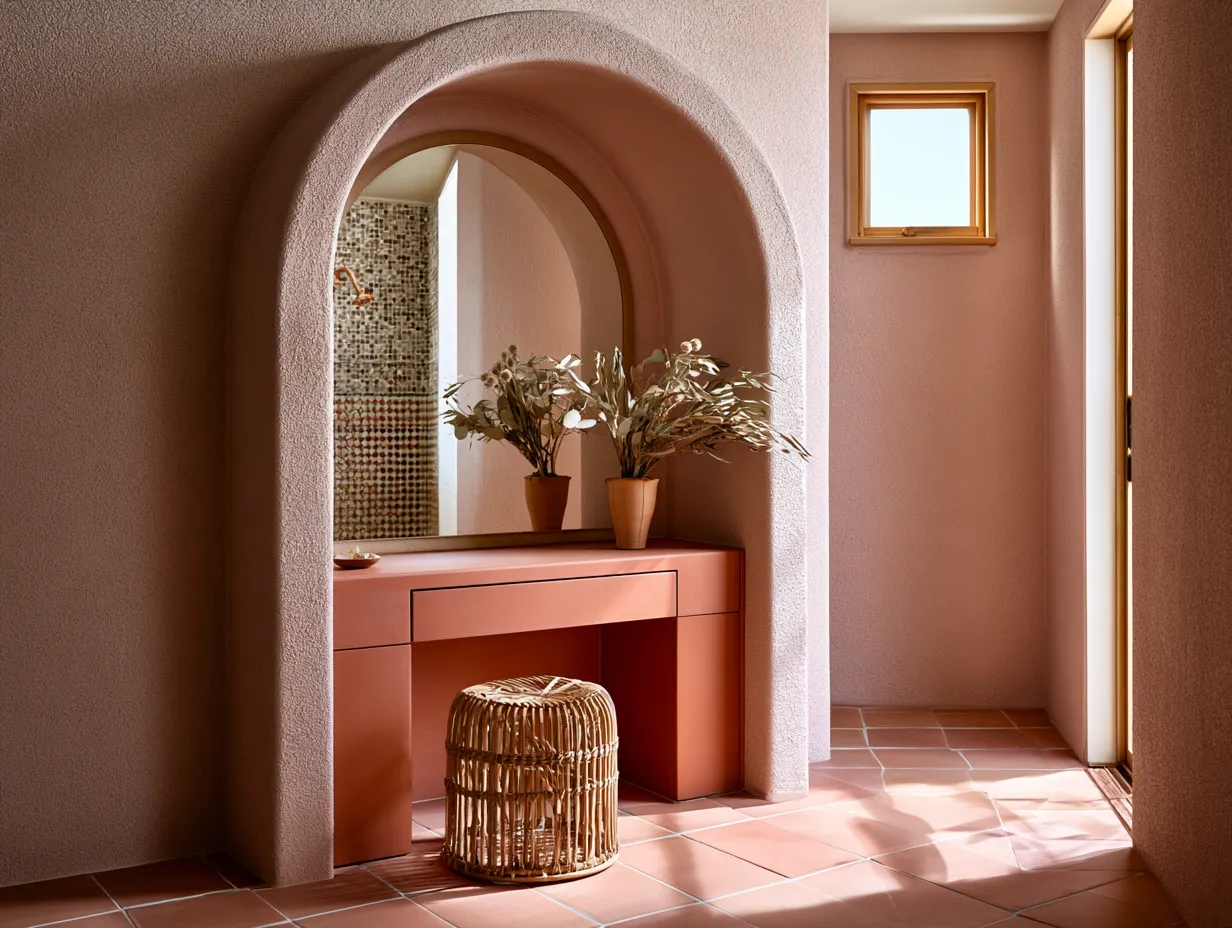
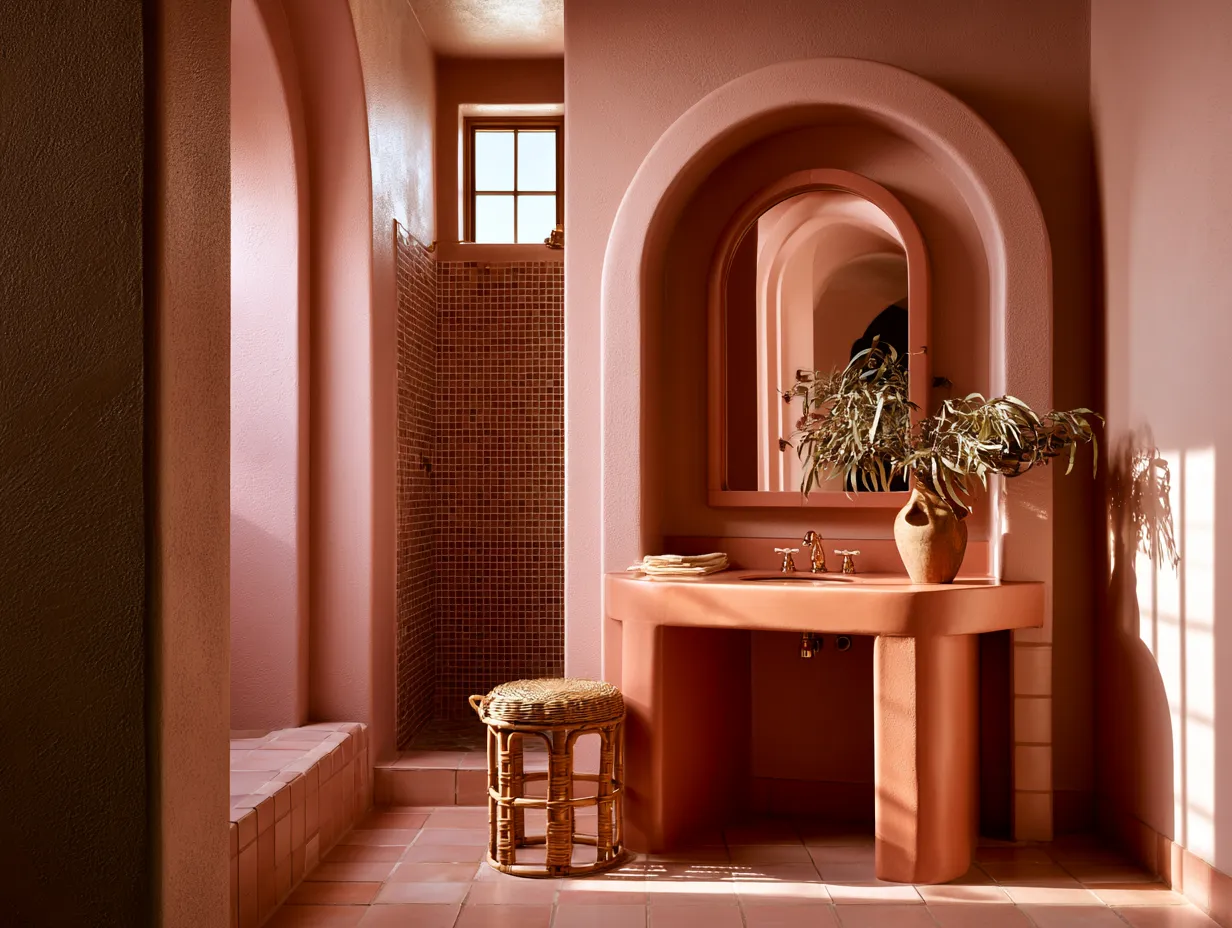
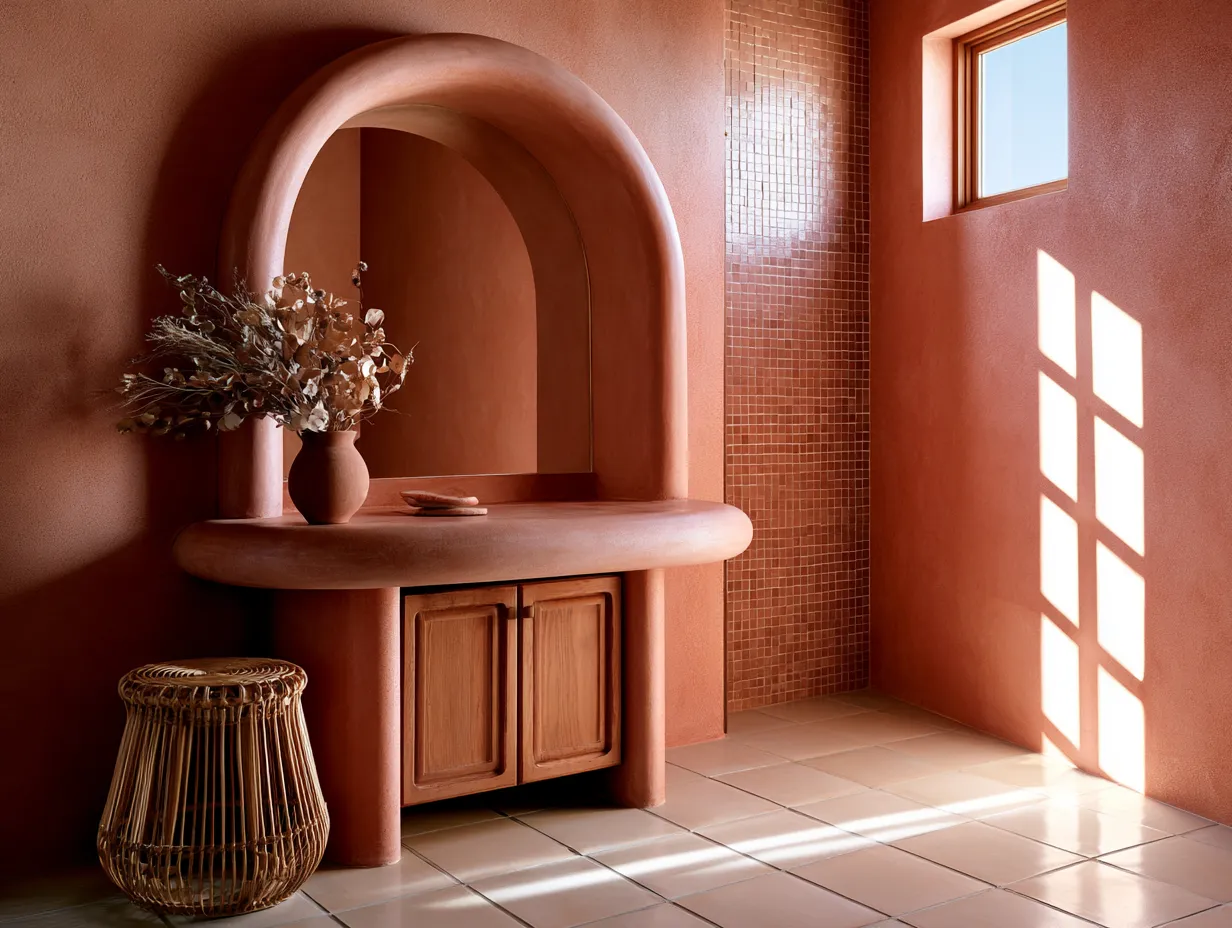
Arched forms are equally important. Where does the arch show up in a bathroom? Mirrors are the easiest application — a plaster-framed arched mirror above a vanity is one of the most-saved Pinterest images in the Mediterranean bathroom category right now. Arched niches in shower walls are a more permanent investment but create the same effect. If full renovation is not on the table, arched mirror options from brands like CB2 or Anthropologie start around $180–$350 and deliver the visual cue without touching the structure. The arch signals ‘Mediterranean’ faster than almost any other single element in the room.
What not to do: do not overload the space with accessories in an attempt to ‘complete’ the look. Mediterranean bathrooms carry warmth through material quality, not volume. Three well-chosen objects — a rattan mirror, a ceramic soap dish, a dried botanical stem in a clay vase — land harder than fifteen coordinated items from a single collection. More is not more here. It just reads as cluttered.
Seasonal timing matters for this investment. May is the peak search and save period for Mediterranean interior content as spring travel planning peaks, which means tiles, fixtures, and paint colors in this palette are actively being ordered. The average master bathroom remodel runs $18,000–$25,000 according to Fixr data cited by Statista, and Mediterranean-style projects using natural stone and handcrafted tile typically land at the upper end of that range. Starting material sourcing now, before summer lead times extend, keeps a fall installation realistic. H&M Home launched a dedicated Mediterranean bathroom collection this year in direct response to the trend signal — their accessory price points ($15–$120) make it easy to test the palette before committing to tile. That is a low-risk way to confirm the color direction works in your actual light before ordering $50-per-square-foot zellige.
FAQ
What colors make a Mediterranean bathroom?
The core palette is terracotta, ochre, sandy beige, and warm sage green — not cool mint but a muddier, earthier green tone. Sherwin-Williams Aged Oak and Benjamin Moore Pale Straw are the two most-recommended paint choices for walls. Black ceramic accents and brushed gold metal finishes complete the color story without introducing cool undertones.
How much does a Mediterranean-style bathroom remodel cost?
According to Fixr data cited by Statista, the average master bathroom remodel runs $18,000–$25,000, and Mediterranean-style projects using natural stone and handcrafted zellige or terracotta tile typically land at the upper end of that range. Zellige tiles from Cle Tile average $35–$55 per square foot, while Porcelanosa's terracotta-look ceramics start from $8–$12 per square foot as a more budget-accessible option.
What tiles are used in Mediterranean bathrooms?
Handcrafted zellige and terracotta are the two dominant tile types. Zellige is a Moroccan-origin glazed clay tile with irregular surfaces that catch light differently across the wall — Cle Tile is the most-cited brand at $35–$55 per square foot. Terracotta is used most often on floors in hex or square formats, sealed against moisture with products like Fila's penetrating terracotta sealer.
Can you do a Mediterranean bathroom in a small space?
Yes — and small bathrooms often benefit more from this aesthetic because rich materials read as intentional rather than overwhelming at smaller scale. A zellige feature wall in a shower niche, a single arched mirror, and terracotta hex tiles on the floor deliver the full visual effect without requiring large surface areas. Keep wall color light (sandy beige or pale ochre) to maintain the sense of space.
What fixtures work best in a Mediterranean bathroom?
Brushed gold is the dominant hardware finish — Moen's Doux collection wall-mount faucet retails at approximately $320 and is specifically flagged in Re-Bath's 2026 remodel guide. Warm walnut wood vanities from brands like Bertch (from around $900) pair well with black ceramic basins and brushed gold taps. Avoid chrome entirely as it introduces cool undertones that undermine the warm palette.
Is Mediterranean bathroom design only for large bathrooms?
Not at all — the trend is primarily driven by material choice and palette rather than spatial scale. A single handcrafted zellige tile accent, a rattan mirror frame, and warm ochre paint can transform a compact bathroom completely. The key is restraint: one strong material per surface zone rather than trying to layer all the elements at once in a limited footprint.
Save this
Mediterranean Bathroom Design Is the 2026 Shift Worth Making Now
The move away from cool-gray bathrooms toward warm terracotta, zellige, and sage green is not a passing seasonal mood — it is confirmed by Pinterest data, Duravit's product direction, and Porcelanosa's 2026 collection strategy simultaneously. That kind of alignment across trend forecasting, tile manufacturing, and fixture design does not happen without a genuine consumer shift underneath it.
Starting with paint and accessories from H&M Home's Mediterranean collection lets you test the palette in your actual light before committing to $35-per-square-foot handcrafted tile. The material investment follows once you know the direction is right for your space. Save this post.
📌 Save to Pinterest