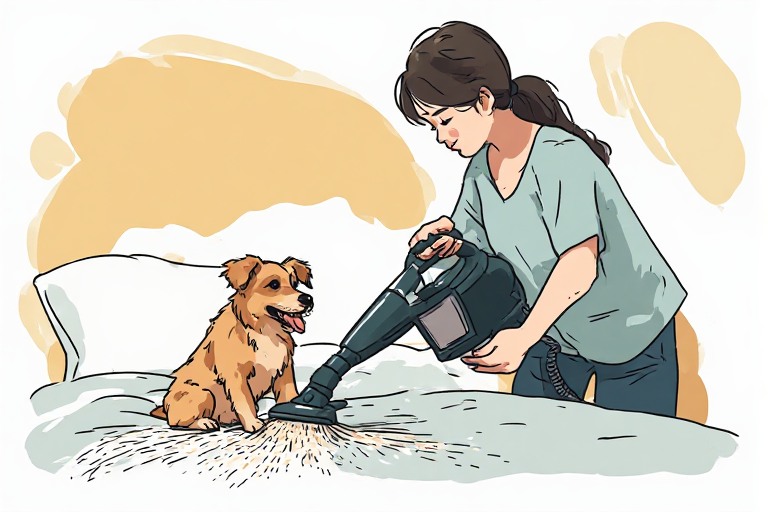
The quickest way to clean pet hair from a bed is to strip the bedding, shake it outside, remove loose fur with a rubber glove or lint roller, and vacuum the mattress using a handheld vacuum with an upholstery attachment. Wash bedding regularly, groom your pet often, and use a mattress protector to reduce future hair buildup.
If you share your home with a dog or cat, pet hair on the bed is almost unavoidable. Even short-haired breeds leave behind fur that clings to sheets, blankets, pillows, and mattresses. While it may seem like a never-ending battle, the right cleaning methods can make removing pet hair faster and easier.
This guide explains practical techniques to remove pet hair from your bed, prevent it from returning, and keep your sleeping space cleaner for both you and your pets.
Why Does Pet Hair Stick to Your Bed So Easily?
Pet hair doesn’t simply fall onto your bed—it becomes trapped within the fibers of your bedding. Several factors contribute to this problem.
Static electricity causes lightweight hairs to cling tightly to fabrics. Body oils from both people and pets create a slightly sticky surface that attracts loose fur. Soft materials like microfiber, fleece, and flannel naturally hold onto hair more than tightly woven cotton sheets.
As pets move around, roll over, or scratch before settling down, their fur becomes embedded deeper into blankets and mattress covers. Over time, this buildup becomes harder to remove without proper cleaning.
What Is the Best Way to Clean Pet Hair From a Bed?
The most effective approach combines several cleaning methods instead of relying on a single tool. Start by removing the bedding and shaking it outdoors to loosen hair. Next, use a rubber glove or lint roller to collect surface fur. Finally, vacuum the mattress and upholstered surfaces to remove embedded hair and dust.
Using multiple techniques ensures both visible hair and hidden debris are removed, leaving your bed cleaner and fresher.
How Does a Handheld Vacuum Remove Pet Hair From a Bed?
Vacuuming is one of the most effective ways to remove pet hair that has settled into fabric.
Unlike standard upright vacuums, handheld models are easier to maneuver around pillows, mattress seams, and upholstered headboards. They also allow you to apply consistent suction directly where hair accumulates.
If you’re looking for the best handheld vacuum for pet hair, choose one with strong suction, a motorized brush roll, and a HEPA filter. These features help lift embedded fur while capturing fine dust and pet dander, making your bedroom cleaner and more comfortable.
When vacuuming your bed:
- Remove all bedding first.
- Work slowly instead of making quick passes.
- Vacuum in overlapping lines.
- Pay extra attention to seams, corners, and tufted areas.
- Clean both sides of the mattress if possible.
Weekly vacuuming prevents pet hair from becoming deeply embedded over time.
Can a Rubber Glove Really Remove Pet Hair From Bedding?
Yes. A simple rubber cleaning glove is surprisingly effective.
The rubber creates friction against the fabric, causing pet hair to gather into clumps that are easy to remove.
To use this method:
- Put on a clean rubber glove.
- Slightly dampen it with water.
- Rub the bedding in one direction.
- Collect the hair into small piles.
- Dispose of the fur before washing the bedding.
This inexpensive technique works especially well on comforters, blankets, and upholstered headboards.
Do Lint Rollers Work on Beds?
Lint rollers are excellent for removing loose surface hair but are less effective against deeply embedded fur.
They’re ideal for:
- Pillowcases
- Decorative cushions
- Throws
- Comforters
- Last-minute touch-ups before bedtime
Keep a lint roller in your bedroom for quick daily maintenance between deeper cleanings.
Can a Damp Microfiber Cloth Pick Up Pet Hair?
Absolutely.
Microfiber cloths naturally attract tiny fibers, dust, and pet hair without requiring chemical cleaners.
Lightly dampen the cloth and wipe your bedding in one direction. Hair will cling to the cloth, making cleanup simple. Avoid soaking the cloth, as excess moisture can dampen bedding unnecessarily.
Should You Wash Bedding Before or After Removing Pet Hair?
Always remove as much loose hair as possible before washing.
Large amounts of pet hair inside the washing machine may stick to other clothing or clog drainage systems over time.
Before washing:
- Shake bedding outdoors.
- Remove visible fur with a rubber glove or lint roller.
- Follow the care instructions on the fabric label.
After washing, use the dryer if appropriate for the fabric. The tumbling action helps loosen remaining hair, which collects in the dryer’s lint filter.
Remember to clean the lint trap after every drying cycle.
How Do You Remove Pet Hair From a Mattress?
Your mattress deserves regular cleaning because loose fur often settles beneath fitted sheets.
Follow these steps:
Step 1: Remove All Bedding
Take off sheets, blankets, pillowcases, and mattress protectors.
Step 2: Gather Loose Hair
Use a rubber glove or microfiber cloth to collect visible fur from the mattress surface.
Step 3: Vacuum Thoroughly
Vacuum the entire mattress slowly, focusing on:
- Seams
- Edges
- Corners
- Tufted sections
- Pillow tops
Step 4: Rotate the Mattress
If your mattress manufacturer recommends rotation, this is a good opportunity to do it before replacing clean bedding.
How Can You Prevent Pet Hair From Building Up on Your Bed?
Preventing pet hair is much easier than constantly removing it.
Here are several habits that help reduce buildup.
Brush Your Pet Regularly
Frequent grooming removes loose hair before it reaches your bedding.
Long-haired breeds often benefit from daily brushing, while short-haired pets may only require grooming several times per week.
Wash Pet Blankets Frequently
Many pets have favorite sleeping blankets.
Cleaning these weekly prevents loose fur from transferring onto your bed.
Use a Mattress Protector
A washable mattress protector creates a barrier between your mattress and pet hair.
Instead of vacuuming the mattress constantly, you can simply wash the protector.
Vacuum Your Bedroom Weekly
Hair doesn’t stay where it lands.
Regularly vacuuming carpets, rugs, upholstered furniture, and curtains prevents loose hair from circulating back onto your freshly cleaned bed.
What Mistakes Make Pet Hair Harder to Remove?
Many homeowners unintentionally make pet hair removal more difficult.
Common mistakes include:
- Vacuuming too quickly
- Ignoring mattress seams
- Using soaking-wet cloths
- Washing heavily fur-covered bedding without removing loose hair first
- Waiting too long between cleanings
- Skipping regular pet grooming
Small improvements in your routine often make the biggest difference.
How Often Should You Clean Pet Hair From Your Bed?
The ideal cleaning schedule depends on how often your pets sleep on the bed.
A good routine includes:
| Task | Recommended Frequency |
| Remove loose hair | Every 2–3 days |
| Wash bedding | Once per week |
| Vacuum mattress | Weekly |
| Wash mattress protector | Every 2–4 weeks |
| Deep clean mattress | Every 3–6 months |
Following a schedule prevents hair from accumulating and keeps allergens under control.
Frequently Asked Questions About Cleaning Pet Hair From Beds
What removes pet hair from a bed the fastest?
A combination of a rubber glove and a handheld vacuum removes both loose and embedded pet hair quickly.
Can I vacuum my mattress every week?
Yes. Weekly vacuuming helps reduce pet hair, dust, pet dander, and other allergens while extending the cleanliness of your mattress.
Does washing sheets remove all pet hair?
Not always. Removing loose hair before washing significantly improves cleaning results and prevents hair from sticking to other laundry.
Are lint rollers enough for removing pet hair?
Lint rollers work well for light surface cleaning but cannot remove deeply embedded fur from mattresses or thick blankets.
Should I let my pet sleep on my bed?
That depends on your personal preference and allergies. If your pet sleeps on your bed, maintaining a consistent cleaning routine becomes much more important to control hair, dander, and odors.
What Is the Best Way to Keep Your Bed Free of Pet Hair?
Keeping pet hair off your bed isn’t about finding one perfect cleaning tool—it’s about building a simple routine. Groom your pet regularly, wash bedding every week, vacuum your mattress with a quality handheld vacuum, and use protective bedding that is easy to clean.

With over 15 years dedicated to home economics and housekeeping, Mary sets the editorial standard for every article on this site. She personally reviews all content before publication, ensuring every recommendation is grounded in practical, real-world knowledge — not manufacturer claims. Her academic background bridges the science of home management with the craft of communicating it clearly to everyday readers.




Related Topics