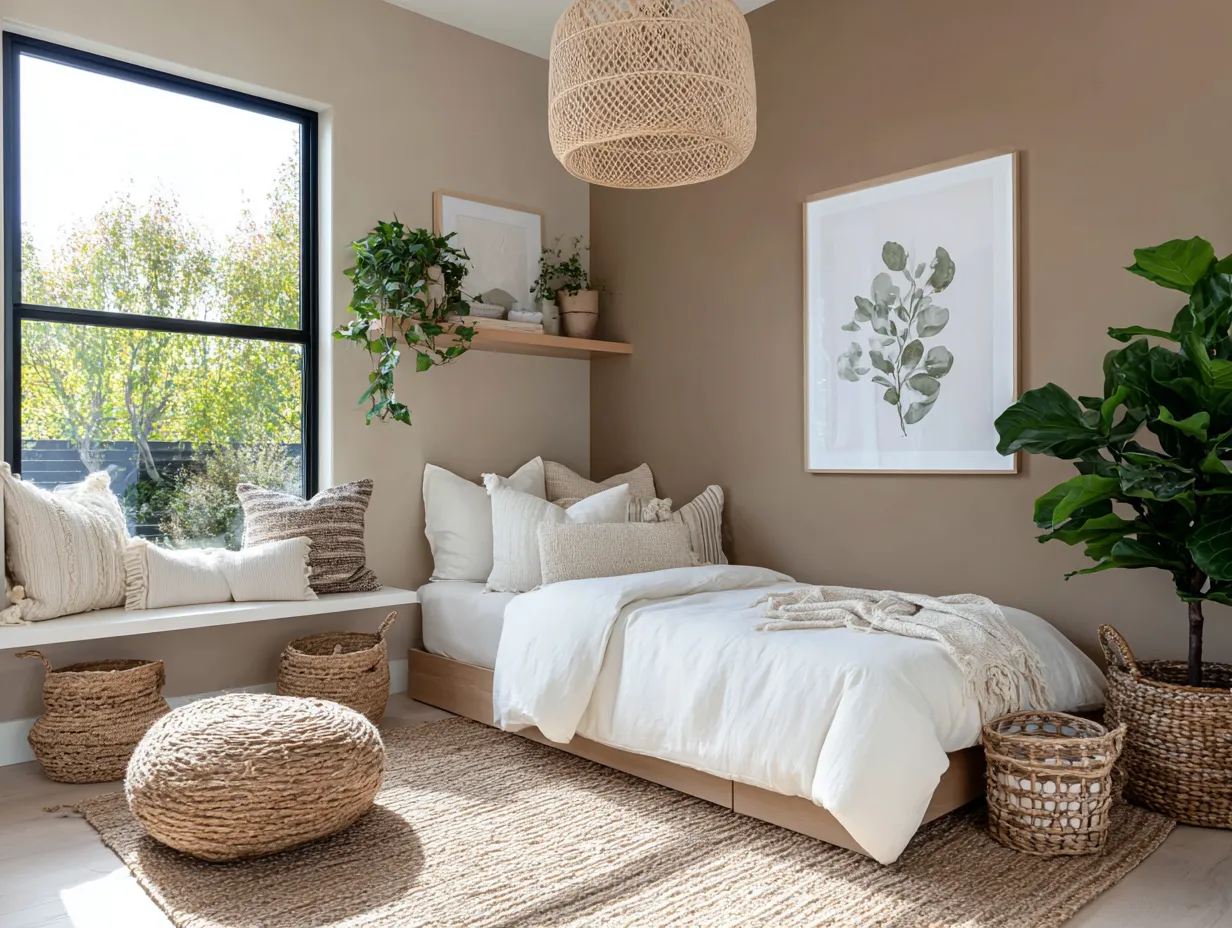
Quick Scan
- Use a 4–8 inch mattress for floor beds—this keeps the height right for toddler independence without sacrificing comfort.
- Display only 8–10 toys at once on low open shelves and rotate every 3–4 weeks, not every week.
- GREENGUARD Gold Certification is the benchmark for non-toxic kids bed materials in 2026—check it before buying.
- The IKEA KURA flipped upside down is a $179 entry point into Montessori floor bed design that actually works.
- Design from the floor—literally sit down in the room to audit what your child can and cannot reach independently.
A montessori kids room starts with one deceptively simple question: can your child do this without you? From the moment Maria Montessori wrote about floor sleeping over 110 years ago to the 7K Pinterest saves on a single Montessori playroom tour in 2025, this design philosophy has never been more relevant—or more searched. As end-of-school-year redesigns ramp up in summer 2026, parents are rethinking not just what their child’s room looks like, but what it allows.
Floor Beds and Sleep Setups That Actually Give Children Ownership
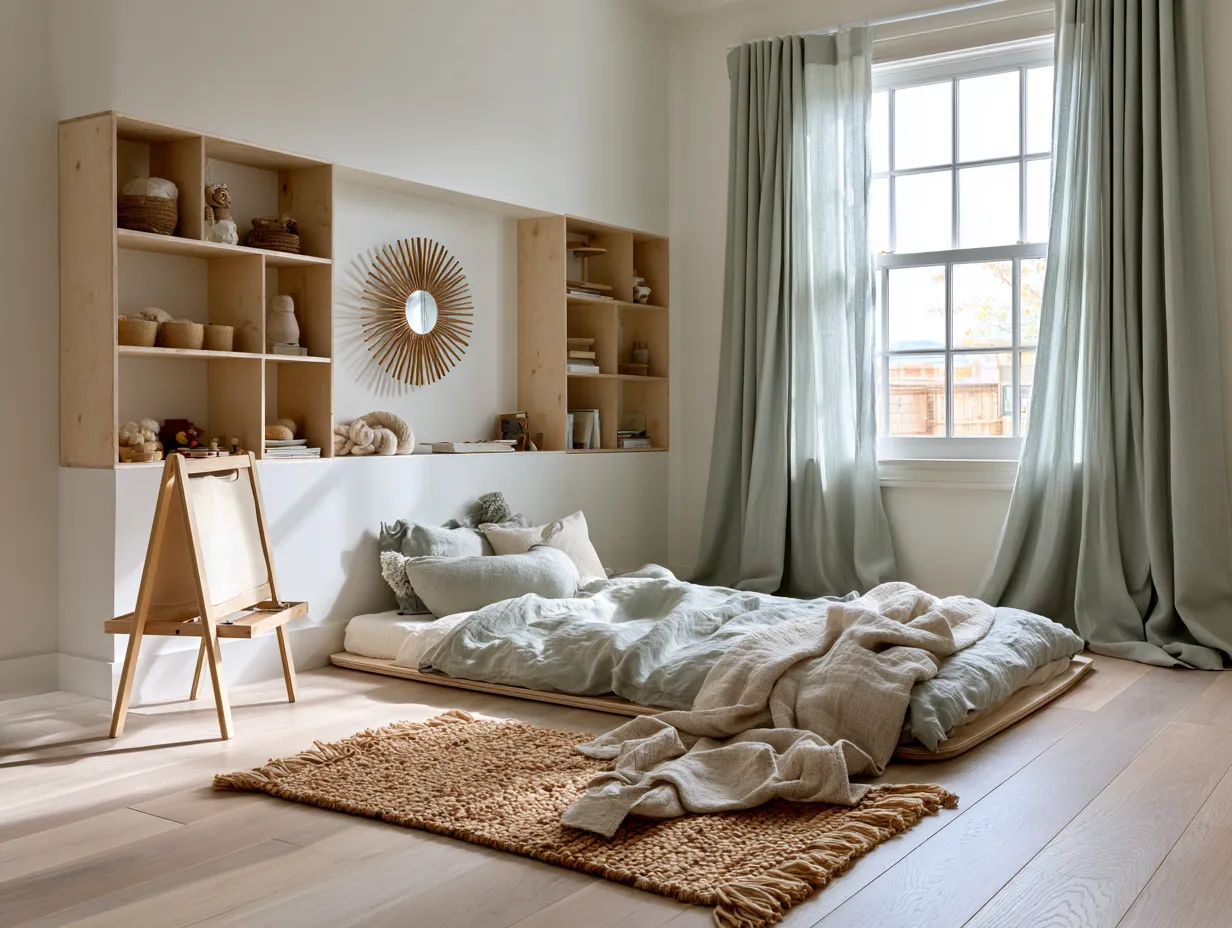
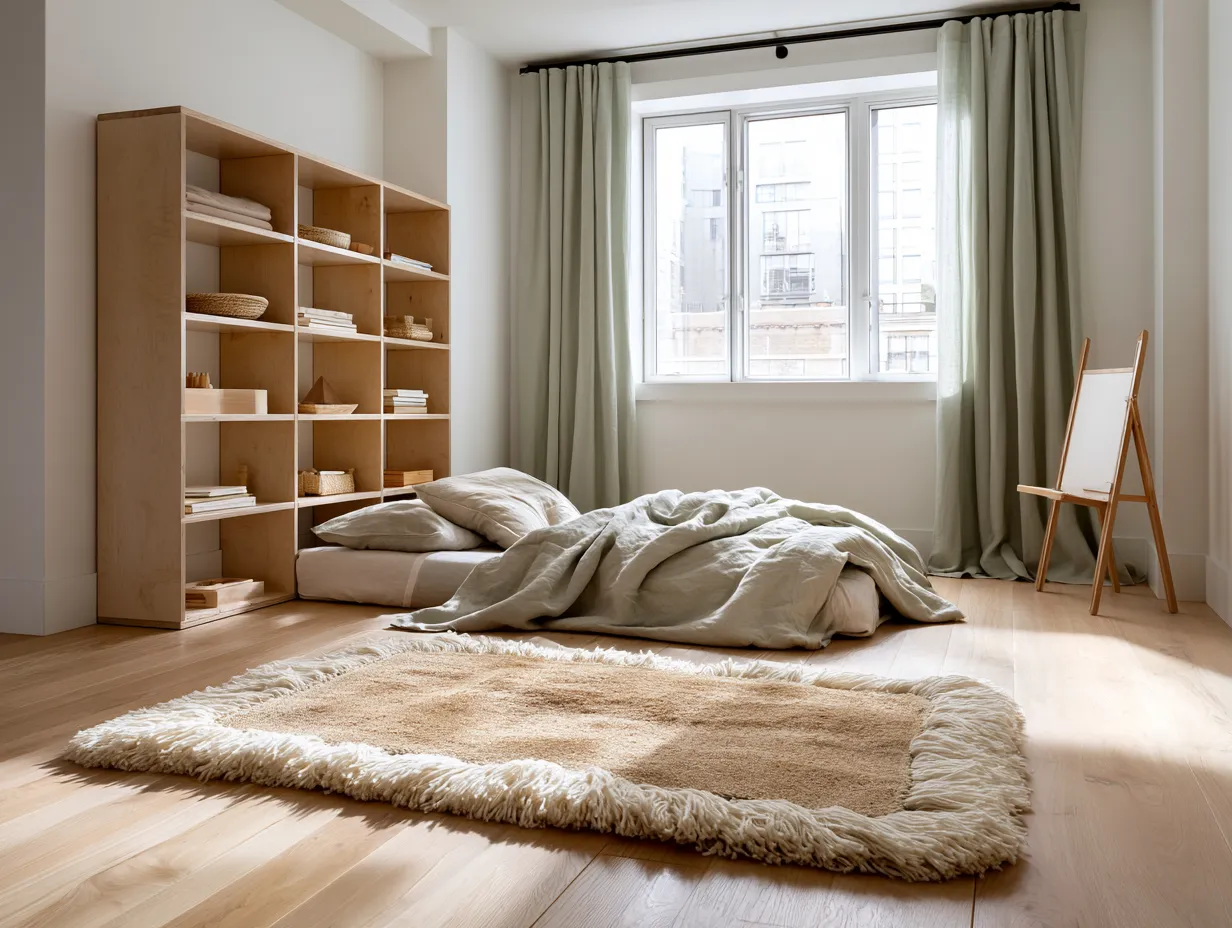
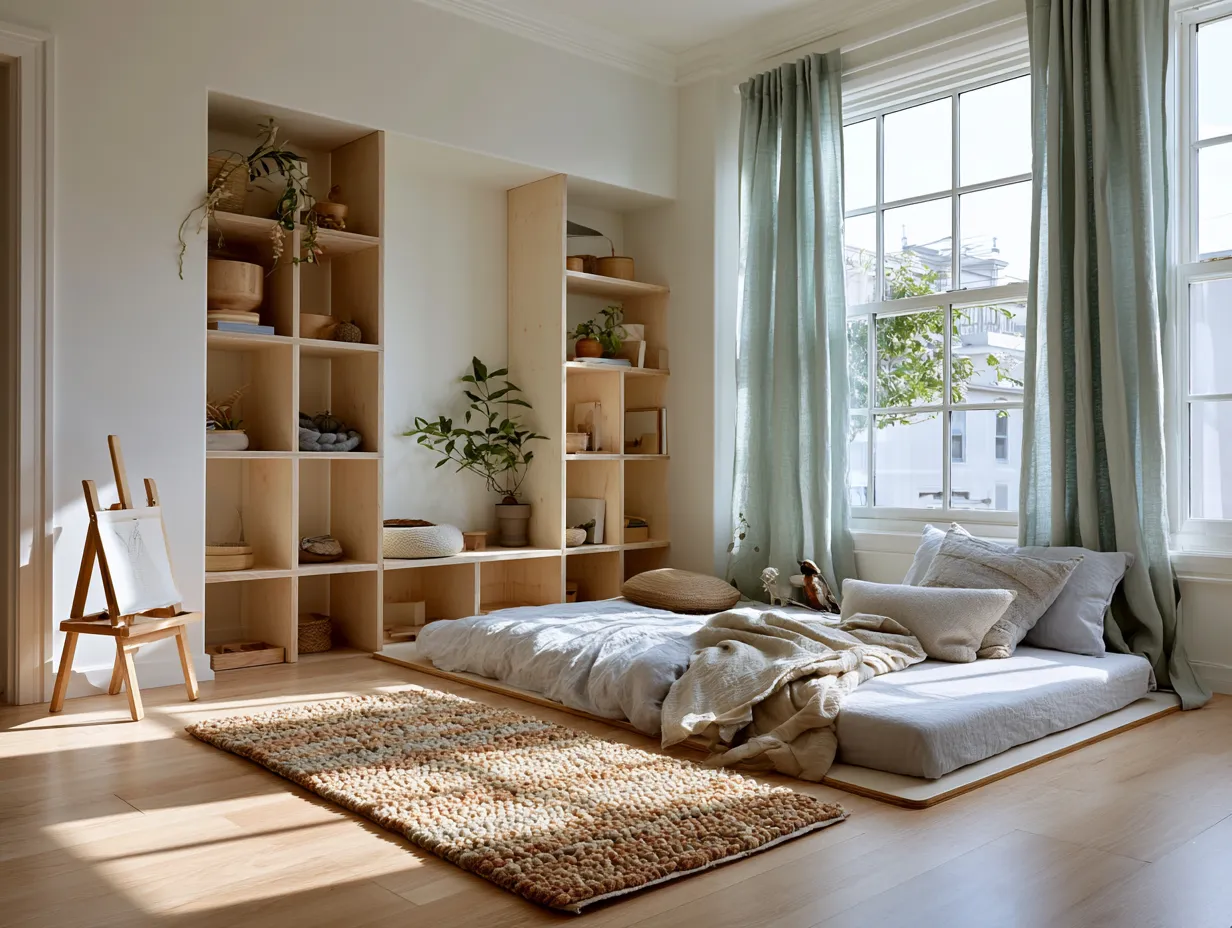
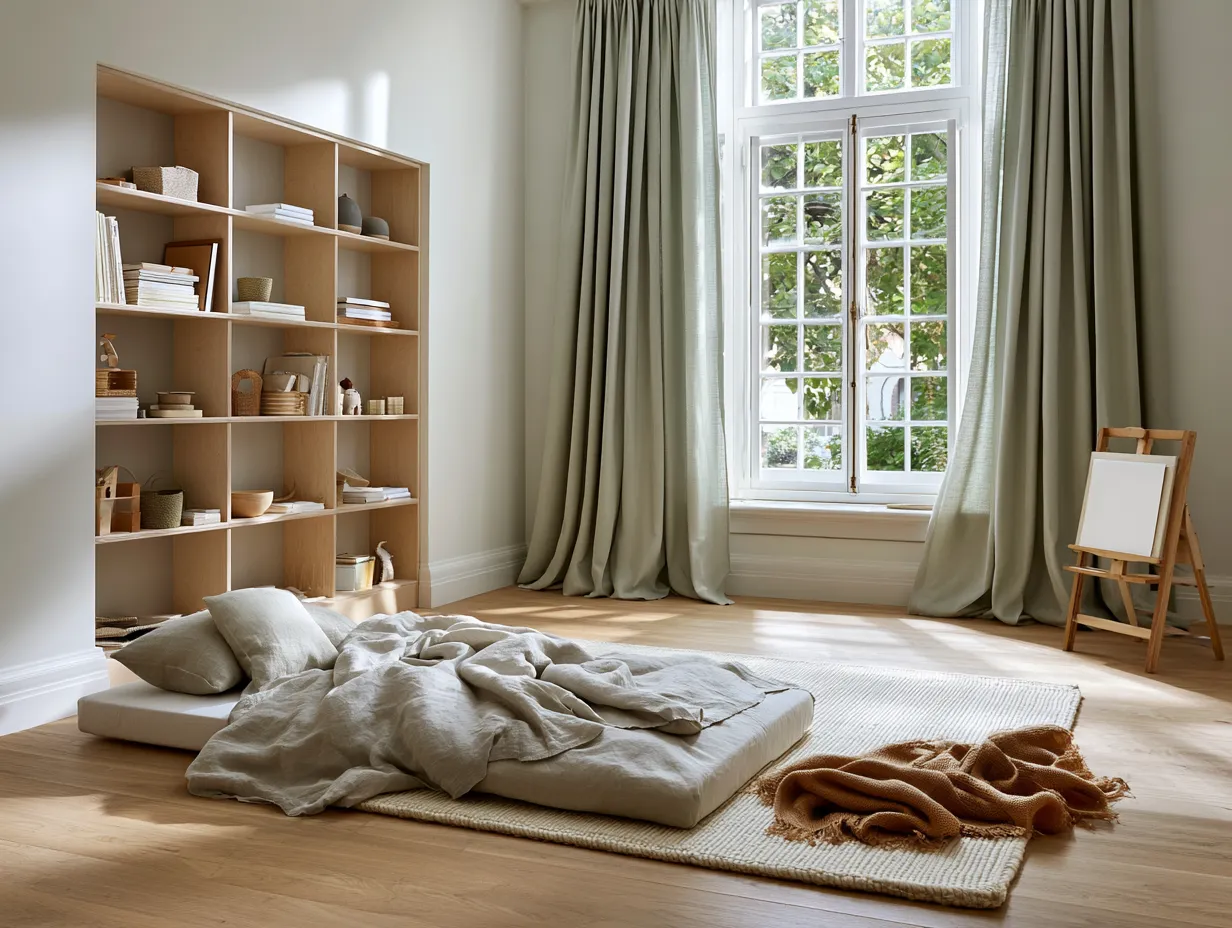
The floor bed is the most visible commitment in a Montessori kids room. It signals to a child: this space is yours to navigate. The CPSC recommends open floor beds starting at 15 months, and in 2026, the options have matured well beyond a mattress on bare hardwood. Piccalio’s bedBED™ flips from a low Montessori-style frame to a raised big-kid bed in minutes—it’s GREENGUARD Gold Certified, meaning it’s tested against over 10,000 toxic chemicals. That certification matters more than most parents realize when children are sleeping with their faces inches from the surface.
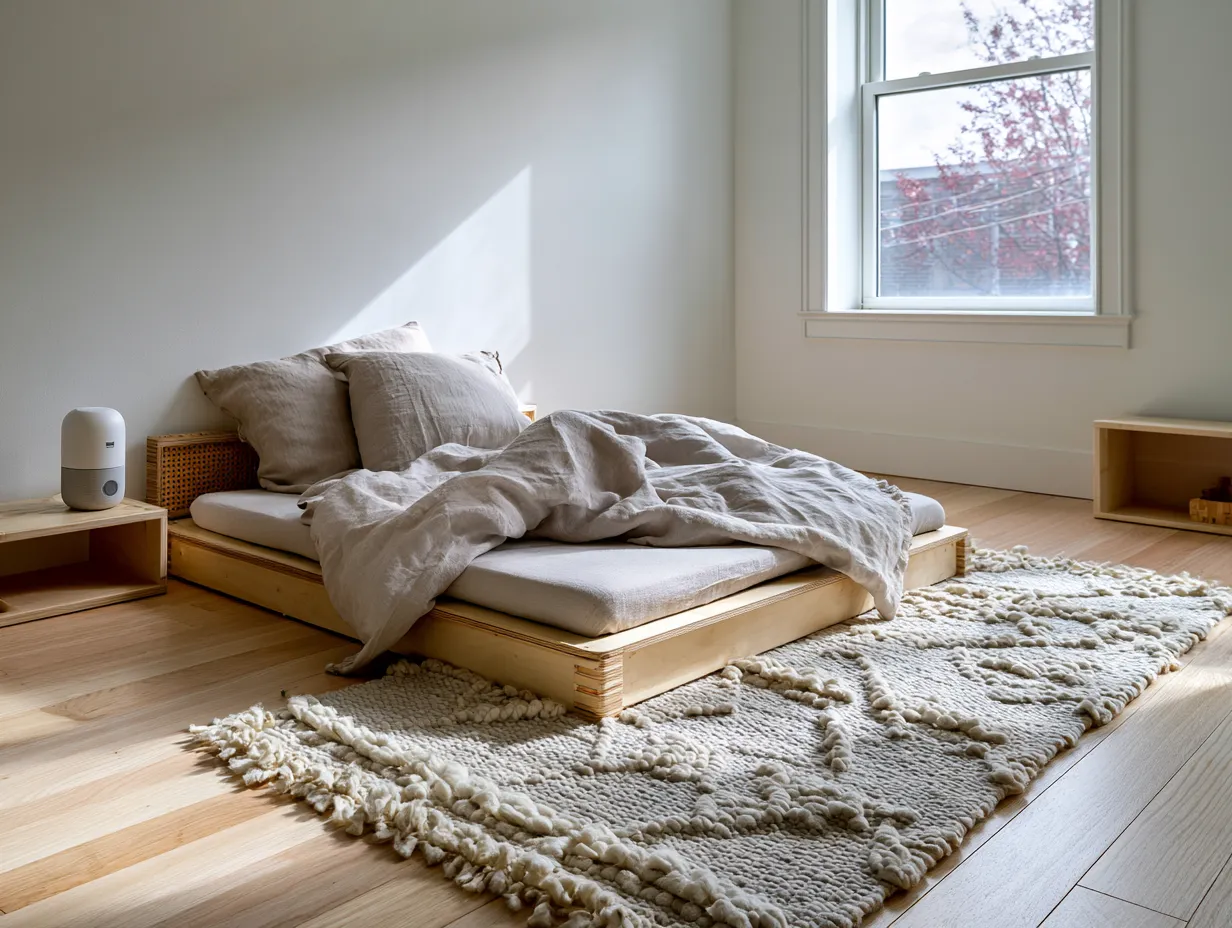
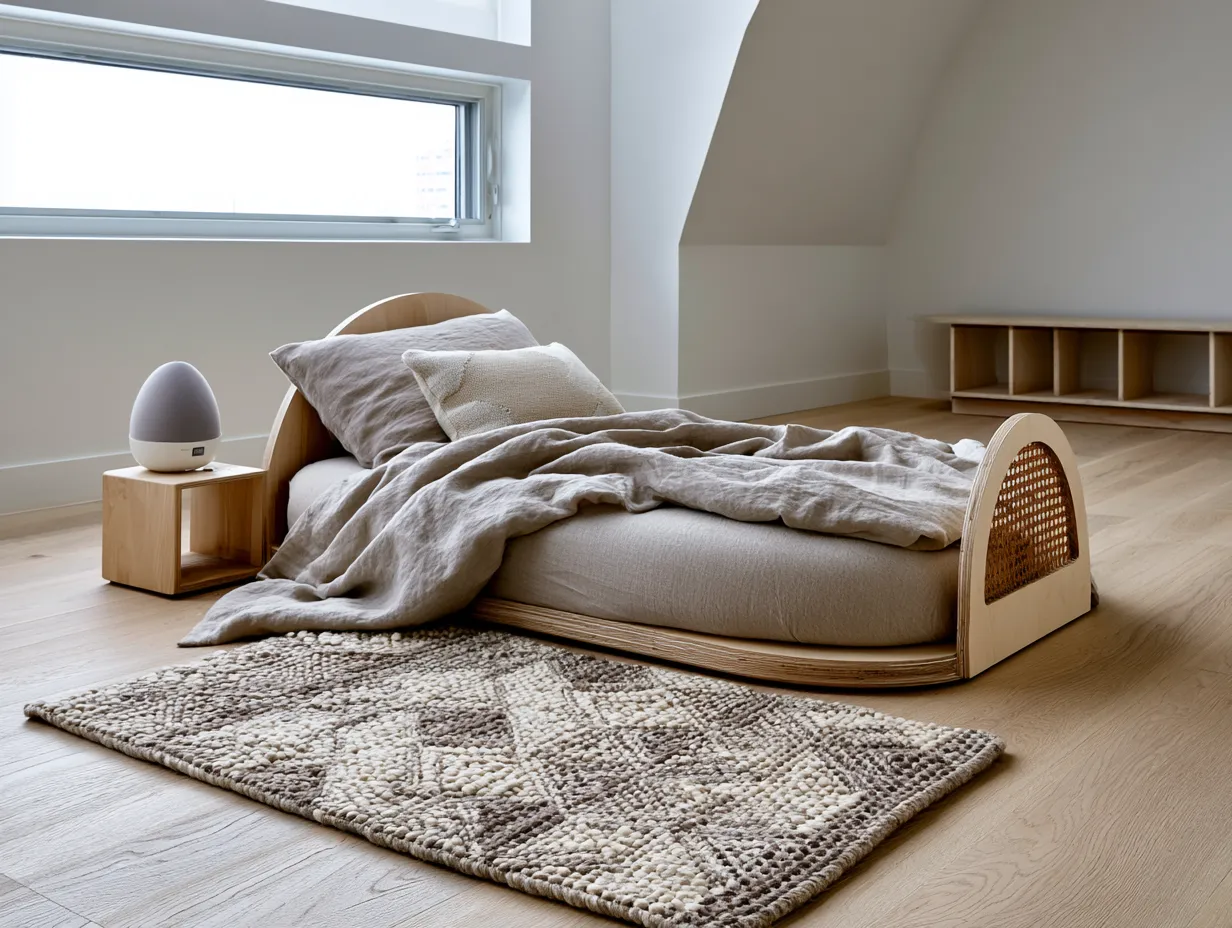
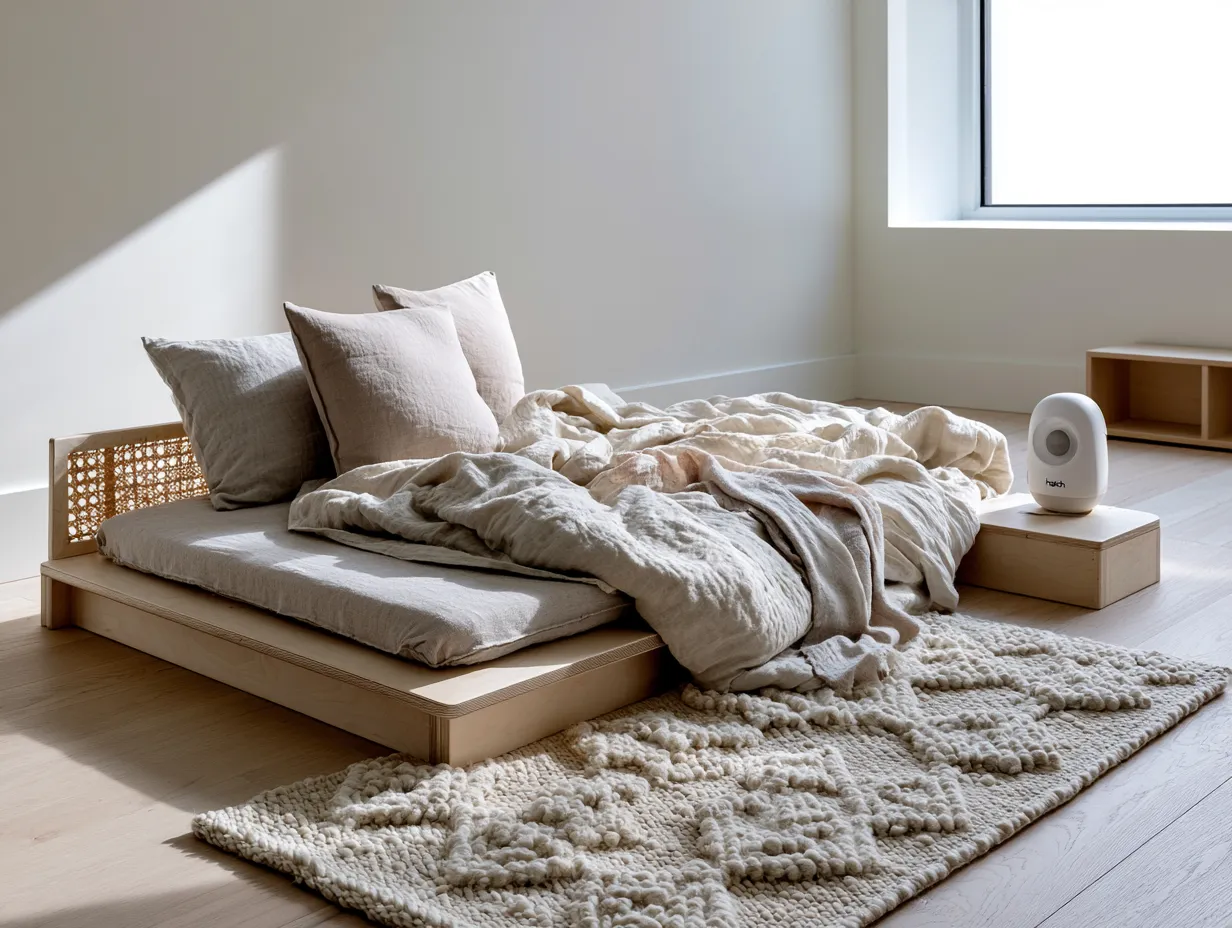
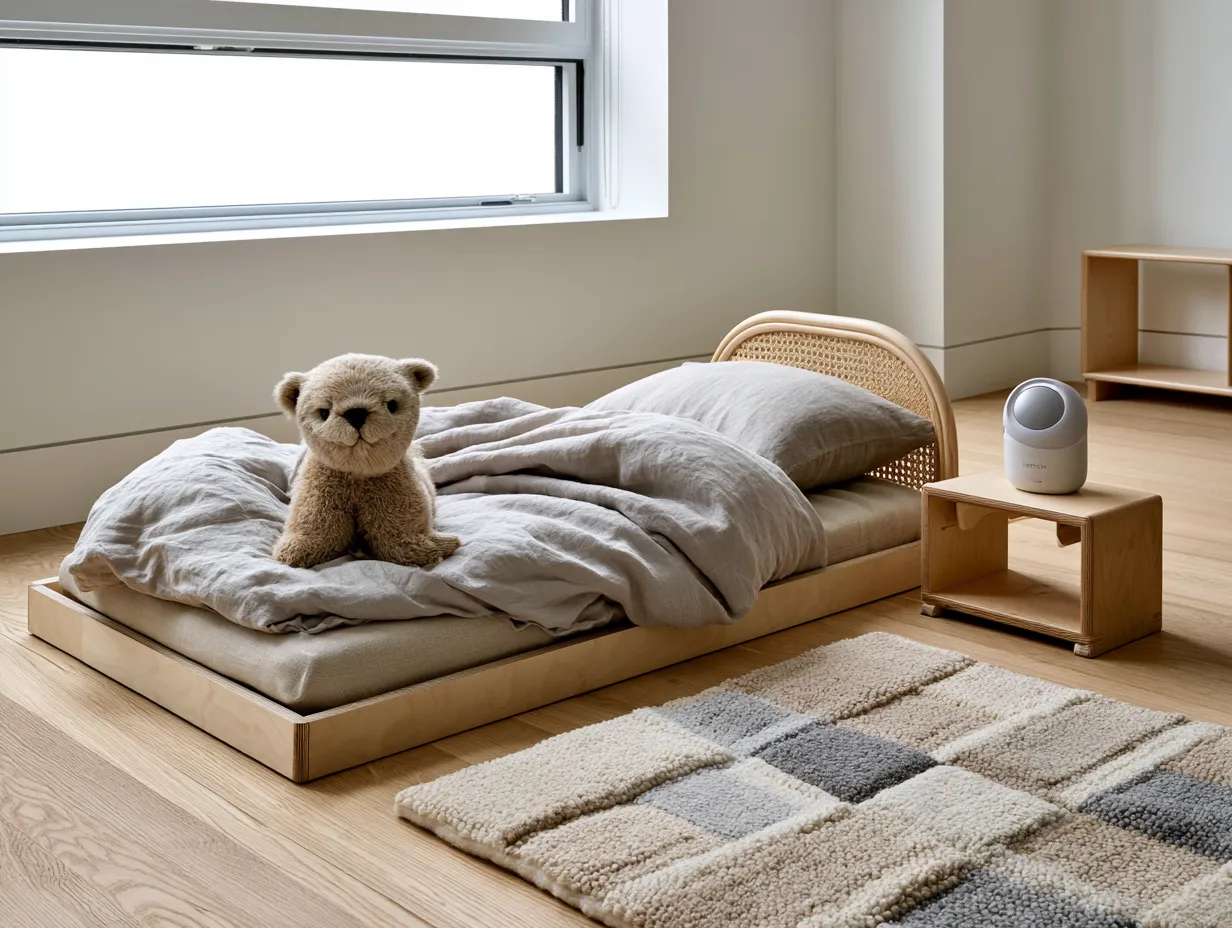
Nestig’s “Our House” Convertible Kids Bed is another worth knowing. It starts as a floor configuration with a walnut finish and rattan detailing, then converts to a classic twin using included legs. The design is calm enough to grow with a room without a full overhaul. Sprout’s Sosta Bed, made from premium Baltic birch, supports up to 450 lbs—which means it holds up through co-sleeping phases without compromise.
What mattress works here? A 4–8 inch profile is the standard recommendation. Avocado’s organic latex mattresses land in that range and pair naturally with low-frame setups. The IKEA KURA bed, flipped upside down, is a popular budget hack—in its lower configuration, the mattress sits close enough to the floor that toddlers can climb in and out unaided. At roughly $179, it’s one of the lowest-barrier entries into Montessori sleep design.
Don’t skip the floor consideration entirely. A soft, washable area rug anchors the sleep zone and adds warmth underfoot when a child climbs out at 6am. For layering floor textures in a thoughtful way, Grounding Playfulness with Geometric Kids Room Floor Design covers how patterned rugs can define zones without walls. One rug. It does a lot of work.
What not to do: don’t place the floor bed directly against a radiator or under a window with a low sill. Children sleeping independently at floor level need the surrounding environment checked at their scale, not yours. Hazards that disappear at adult eye level become very real at 18 inches off the ground.
Don’t Do This
- Don't design the play zone for visual appeal first—beautiful baskets that require adult height or two hands to open defeat the independence the room is supposed to build.
- Don't rotate all toys every week—children build mastery through repetition, and constant novelty prevents them from developing focus with any single activity.
- Don't add a screen station to a Montessori room—it will dominate attention and undermine the self-directed analog play the entire design is structured around.
- Don't place a floor bed against a radiator or under a low window sill—hazards that seem minor at adult height become significant at 18 inches from the ground.
Low Shelving and Play Zones Built for a Child to Run Without You
Independent play doesn’t happen in a room stuffed with options. Montessori educators are consistent on this: pack away roughly 80% of toys and display only 8–10 activities on low, open shelves at any given time. The visible 20% gets chosen, used, and returned. Rotation every two to three weeks keeps engagement high without buying anything new. What actually changes behavior isn’t the toy—it’s the access.
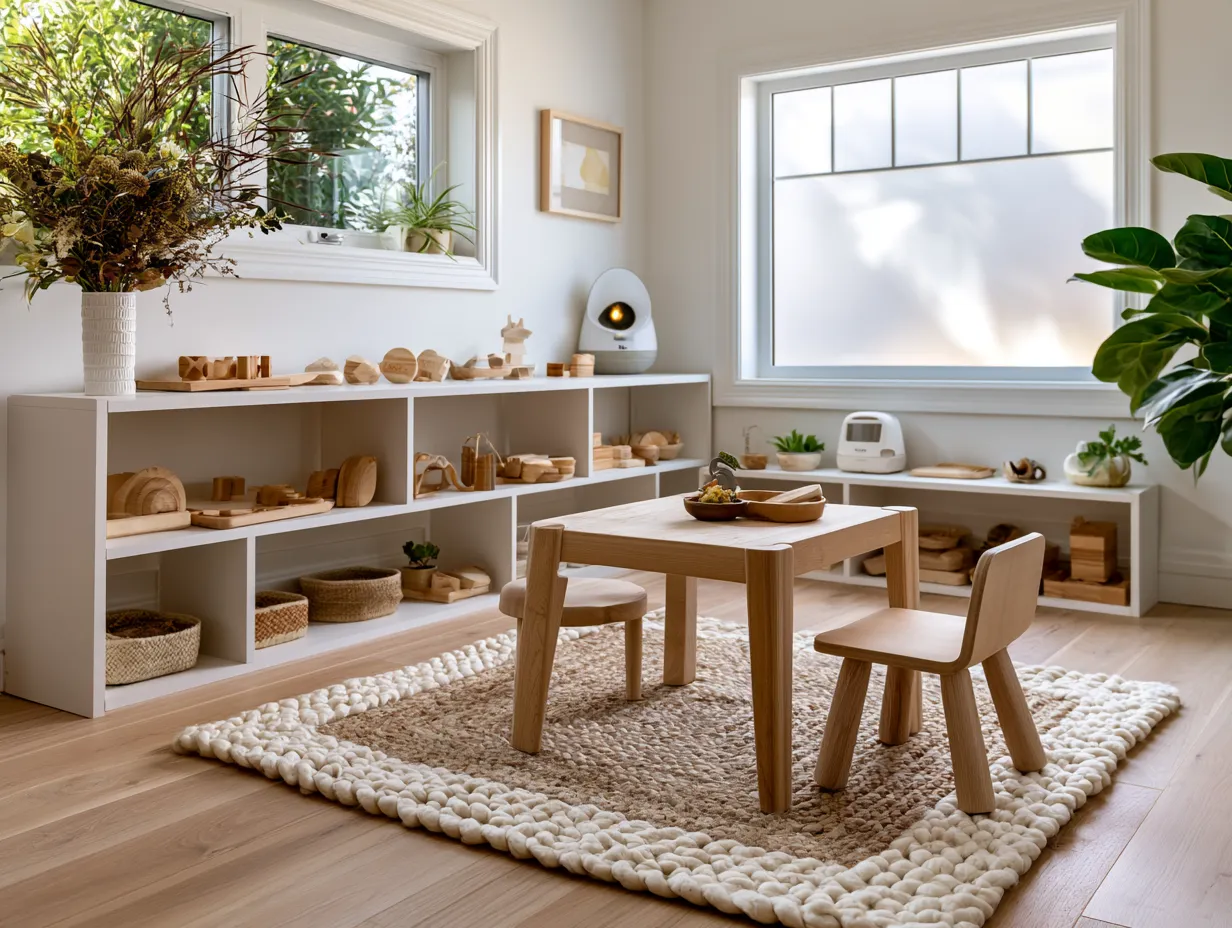
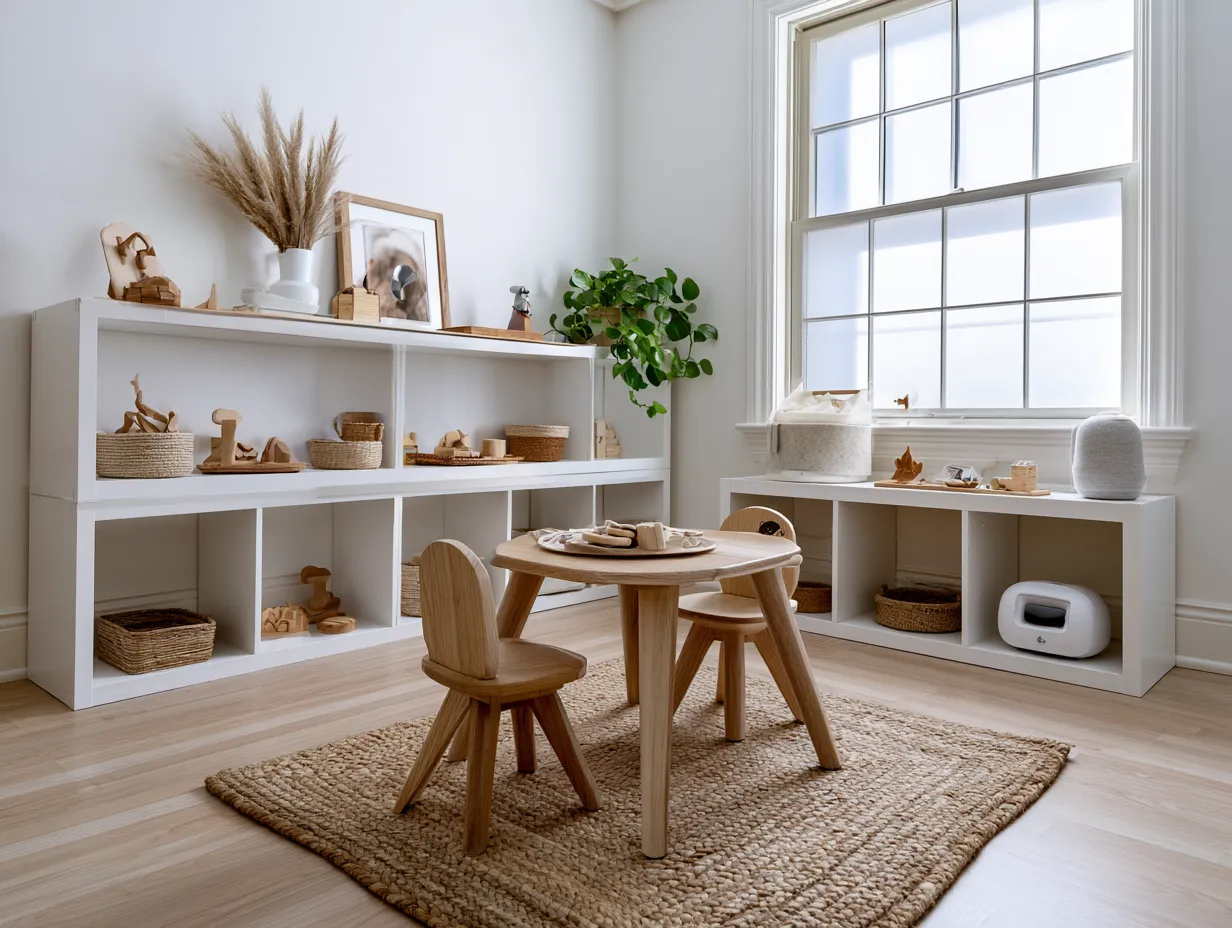
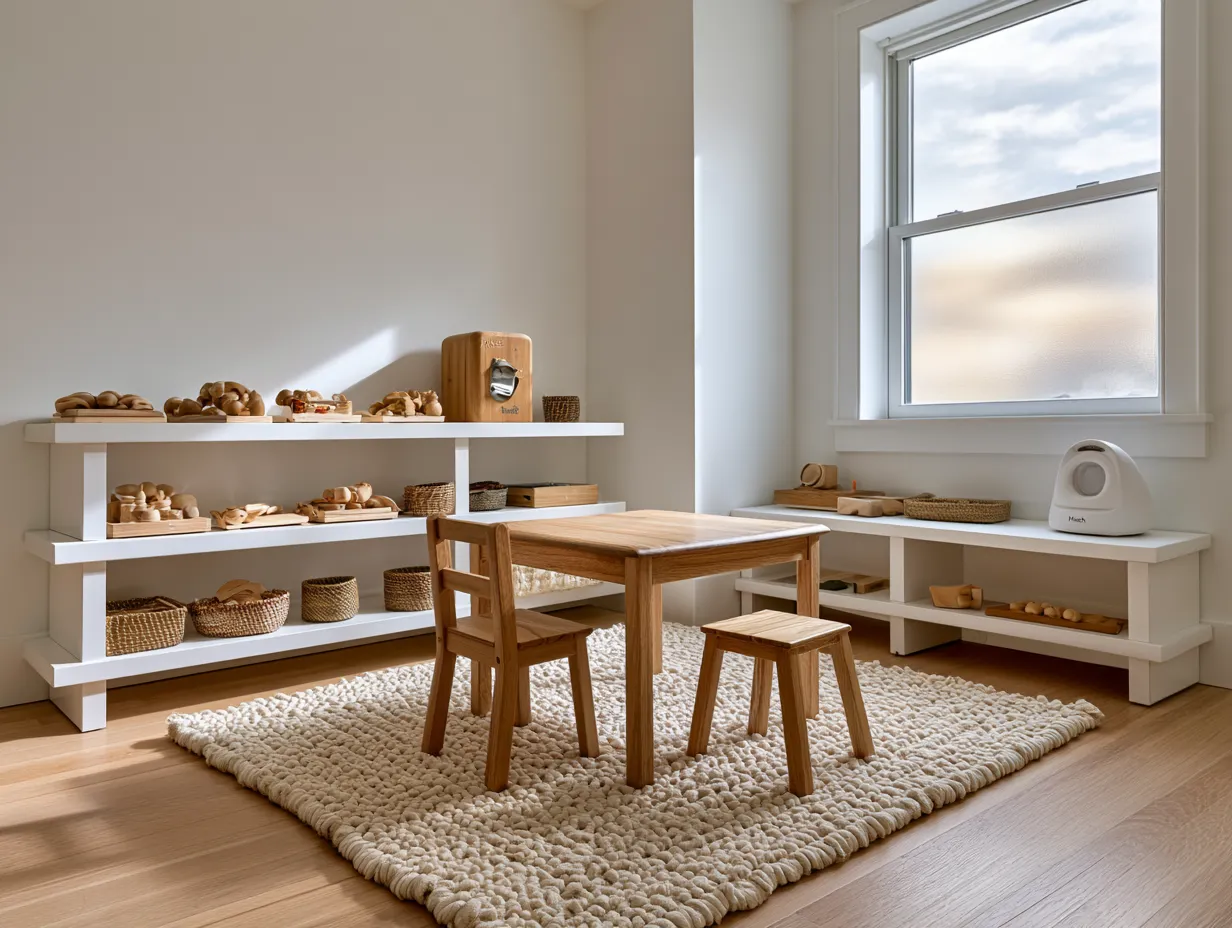
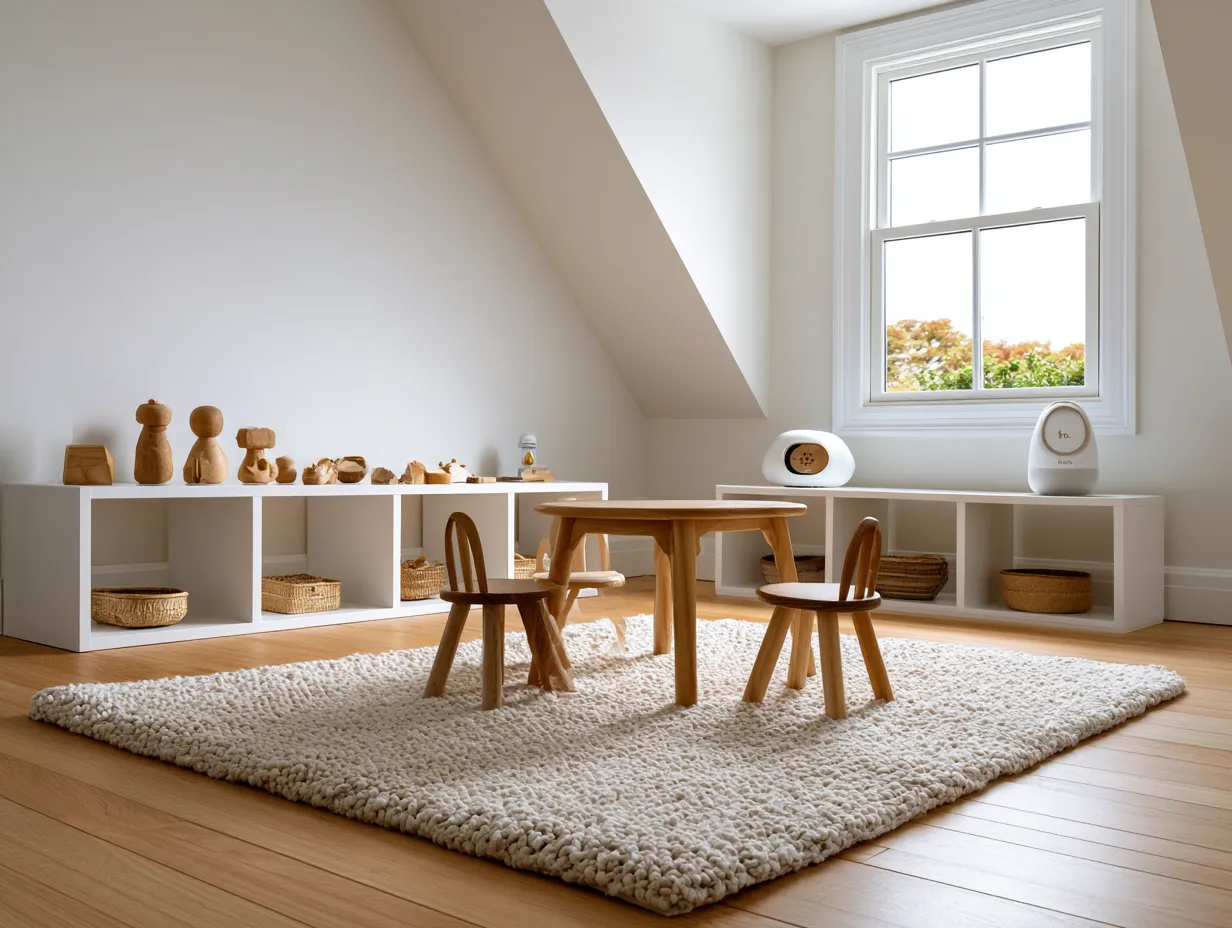
Low shelving is the structural backbone of this setup. Roomix, a London-based brand that launched in 2022, offers made-to-measure toddler shelving and built-in storage at child height. Their units are designed to be drilled into the wall at low anchor points, which matters for safety. A shelf that a three-year-old can reach independently must also be a shelf that cannot tip onto them. IKEA’s KALLAX at floor level works similarly when configured horizontally and wall-anchored, with basket inserts to limit visual clutter.
Natural materials matter more than they might seem. Wood, cotton, and metal hold up to repeated handling and don’t carry the off-gassing concerns of cheaper plastic. The research case for natural materials in play spaces is practical, not aesthetic: children who interact with varied textures build finer sensory discrimination. That’s not parenting theory—it’s occupational therapy language applied to room design.
What about nighttime accessories? Real Montessori toddler room setups in 2025 and 2026 consistently include the Hatch sound machine and the Toniebox at child-height bedside positioning. The Toniebox, at around $80, lets children select their own audio stories by placing small figurines on the box—no screen, no parent required. It embodies exactly what this design philosophy is building toward: a child who manages their own environment. For wall-level decor that adds dimension without overwhelming a low-shelf layout, Geometric Wood Art Adds Whimsy to Vibrant Kids Room shows how a single textured wall piece anchors a space without competing with the play zone below.
Research confirms what Montessori educators have argued for over a century: when children independently access their belongings, choose activities, and manage their space, they build executive function and self-regulation. These aren’t abstract outcomes. They show up as a child who can transition from play to sleep without a battle, because the room itself communicates routine and ownership.
Don’t design the play zone for visual Instagram appeal first. Baskets that look beautiful but require two hands and adult height to open defeat the entire purpose. If your child cannot retrieve and return an item in under 30 seconds, the storage solution is working for you, not for them.
| Product | Type | Key Feature |
|---|---|---|
| Piccalio bedBED™ | Convertible floor bed | GREENGUARD Gold; flips to raised frame |
| Nestig Our House Bed | Convertible floor bed | Walnut finish, rattan detail, twin conversion |
| Sprout Sosta Bed | Low floor bed | Baltic birch, supports 450 lbs |
| IKEA KURA (flipped) | Budget floor bed hack | ~$179; low mattress position for toddlers |
| Avocado Organic Latex | Mattress | 4-inch profile; organic; floor bed compatible |
Montessori Room Mistakes That Quietly Undermine the Whole Setup
The most common mistake in a Montessori kids room isn’t a product choice—it’s scale blindness. Parents design from adult height and then wonder why the room doesn’t function. Sit on the floor in your child’s room. Everything you cannot see or easily reach from that position is inaccessible to them. That single exercise usually reveals three or four things that need to move.
Over-rotation is the second issue. Swapping all 8–10 activities every week creates novelty but destroys familiarity. Children build mastery through repetition. Leave a favorite activity in rotation for three to four weeks before cycling it out. What should you rotate? Notice what’s being ignored, not what’s being overused. Ignored toys signal a mismatch with current developmental stage.
Color is where well-intentioned Montessori rooms often go wrong. The philosophy favors calm, neutral backgrounds—not because aesthetics matter more than function, but because a visually loud environment raises cortisol and competes with the child’s ability to focus. Warm whites, natural wood tones, soft sage, and muted terracotta work. A full accent wall in primary red behind the shelf display does not. The room should feel like a exhale, not a stimulus.
Is Montessori furniture expensive? It doesn’t have to be. The IKEA KURA at $179, a KALLAX at $80–$130 depending on size, and a basic Avocado mattress in the 4-inch organic wool version at around $399 for a twin give you 80% of the functional setup for under $700. Roomix and Sprout sit at the premium end, but the philosophy doesn’t require them. Function over finish every time.
A defining feature of the best 2026 Montessori furniture is transformability. Piccalio’s bedBED™ and Nestig’s convertible design both flip from floor configuration to raised frame as the child grows. This matters financially—a setup that evolves from age 1 to age 8 without replacement is genuinely more economical than cheap furniture swapped every two years. Buy once, adjust as they grow.
Don’t add a TV or tablet station to a Montessori room and expect the rest of the design to counteract it. Pinterest’s 2026 Parenting Report specifically highlights screen-smart, experience-rich childhoods as the cultural direction parents are actively choosing. A Montessori room and a built-in screen station are philosophically incompatible—the screen will dominate attention and erode the self-directed play the rest of the room is designed to build. Make the choice clearly, or the room makes it for you.
FAQ
what age should a child start using a montessori floor bed
The CPSC recommends open floor beds for children 15 months and older. Many families start earlier with a floor mattress only, removing the frame entirely until the child is mobile and stable. The key signal is whether the child can get in and out without falling.
how many toys should be visible in a montessori playroom
Most Montessori educators recommend displaying only 8–10 activities at a time—roughly 20% of total toys. The other 80% are stored out of sight and rotated in every 3–4 weeks. Fewer visible options leads to longer, deeper engagement with each one.
is montessori furniture expensive
It doesn't have to be. An IKEA KURA bed flipped to its low configuration runs about $179, a KALLAX shelf sits at $80–$130, and a 4-inch Avocado organic twin mattress is around $399. That's a functional Montessori sleep and play setup for under $700. Premium brands like Sprout and Roomix offer upgraded materials but aren't required.
what is greenguard gold certification for kids beds
GREENGUARD Gold Certification means a product has been tested against over 10,000 chemical emissions and meets strict indoor air quality standards. For children who spend 10–12 hours in close contact with their bed, this certification is worth prioritizing over aesthetics or price.
what colors work best for a montessori kids room
Warm whites, natural wood tones, muted sage, and soft terracotta are the most compatible with Montessori principles. Visually loud environments—bright primaries, high-contrast patterns on every surface—raise cortisol and compete with the child's ability to focus independently. Calm backgrounds let the play materials become the visual interest.
what accessories belong in a montessori toddler room
Real 2025–2026 Montessori room setups consistently include the Hatch sound machine and the Toniebox, both positioned at child height. The Toniebox at around $80 lets children choose their own audio stories without a screen or parent involvement—exactly the kind of self-directed tool the room is designed around.
How to Set Up a Montessori Kids Room in One Weekend
A functional Montessori room doesn't require a full renovation. These steps move from the most impactful change to the finishing details.
-
1
Lower or remove the bed frame
Start with sleep. If you have an IKEA KURA, flip it to its low configuration. If buying new, Piccalio’s bedBED™ or Nestig’s Our House Bed both arrive ready to assemble at floor height. Pair with a 4–6 inch organic mattress for the right climb-in height.
-
2
Audit and reduce the toy count
Pull every toy out of the room and sort into three groups: keep visible, rotate into storage, and remove. The visible group should be 8–10 items maximum. Be ruthless—what hasn’t been touched in three weeks goes into storage, not back on the shelf.
-
3
Install low open shelving at child height
A horizontal KALLAX anchored to the wall at 12–16 inches from the floor, or Roomix made-to-measure shelving, gives children full visual and physical access. Wall-anchor every unit regardless of brand—a shelf a child can reach is also one they can pull.
-
4
Define zones with a rug
Place a washable wool or cotton area rug to mark the play zone separately from the sleep zone. This gives children a visual boundary they learn to read and respect without instruction.
-
5
Add child-height accessories
Position a Hatch sound machine and a Toniebox at bedside level—on the floor or on a low surface the child can reach independently. These tools support bedtime routine without requiring a parent to operate them.
Save this
A Montessori Kids Room Works When the Child Can Run It Without You
The floor bed, the low shelf, the 8–10 visible toys—none of it is decoration. Each choice removes an obstacle between your child and their own capability. Maria Montessori wrote about this over a century ago, and Pinterest parents in 2026 are rebuilding it from scratch, one KALLAX and one Avocado mattress at a time.
Start with one change: lower one shelf, pull out 80% of the toys, or flip the KURA bed. The room doesn't need to be finished to start working. Save this post.
📌 Save to Pinterest