Window treatment ideas for sliding glass doors stumble most people at exactly the same point: the door is beautiful, the light is the whole reason you wanted it, and then you hang something in front of it that kills both. The problem is almost always proportion — a rod that’s too short, panels that are too narrow, or a shade that fights the door rather than working with it.
A sliding glass door spans six to eight feet and moves horizontally. That single fact disqualifies most standard window treatments right from the start. Whatever you choose has to stack out of the door’s path, hold up to daily use, and not make the room feel smaller than it already is. The three options in this post — floor-length curtains, vertical blinds, and roller shades — each solve the problem differently depending on your room, budget, and how much light you’re willing to trade for privacy.
Prices here come from current retailer listings; they shift, but the ranges are useful for setting expectations before you visit a showroom or measure for a custom order.
- Floor-length curtains need a rod that extends 12–18 inches past each side of the door frame — most people install it too short
- Vertical blinds stack in the same direction as the door’s sliding mechanism, making access effortless; vinyl versions start around $64–$80 for a standard 78″ x 84″ panel
- Roller shades in light-filtering fabric are the cleanest minimalist option; Hunter Douglas Luminette versions for large sliders run $700–$1,400
- The wrong fabric on a south- or west-facing door yellows fast — warm cream and warm gray hold better than bright white
- Cordless designs are now the standard; corded window coverings were banned in the U.S. and Canada as of June 1, 2024
Floor-Length Curtains Work on Sliding Glass Doors When the Rod Is Twice as Long as You Think
Curtains on a sliding glass door fail at the hardware stage almost every time. The rod has to extend at least 12 to 18 inches past each side of the door frame — not flush with the frame, not a few inches past it. If the rod doesn’t clear, the panels sit in front of the glass when they’re open, blocking the door every time you use it. That one installation detail decides whether floor-length curtains read as elegant or as a daily frustration.
Fabric fullness is the second variable that separates a designed look from a halfhearted one. Stylists recommend at least 1.5 times the total door width in fabric — 2x is the benchmark for any room that gets photographed. IKEA’s MAJGULL blackout curtains, currently around $49 for two panels, are a useful baseline for testing fullness on a budget before committing to custom fabric. At that price, you can order extra panels to achieve proper coverage without guessing. Hanging the rod at ceiling height rather than just above the frame adds the vertical dimension that makes the room feel taller, which is the visual payoff you’re actually buying with floor-length curtains.
What doesn’t work? Bright white curtains on a south-facing door. They catch every dust shadow and yellow faster than any other color near direct sun. Warm cream, warm gray, or any earthy linen tone holds its appearance significantly longer. Tie-backs are worth including — a simple rope or leather version ($15–$30 a pair) holds the panel off the door handle during daytime hours without requiring you to slide the entire panel to the side each time someone walks through.
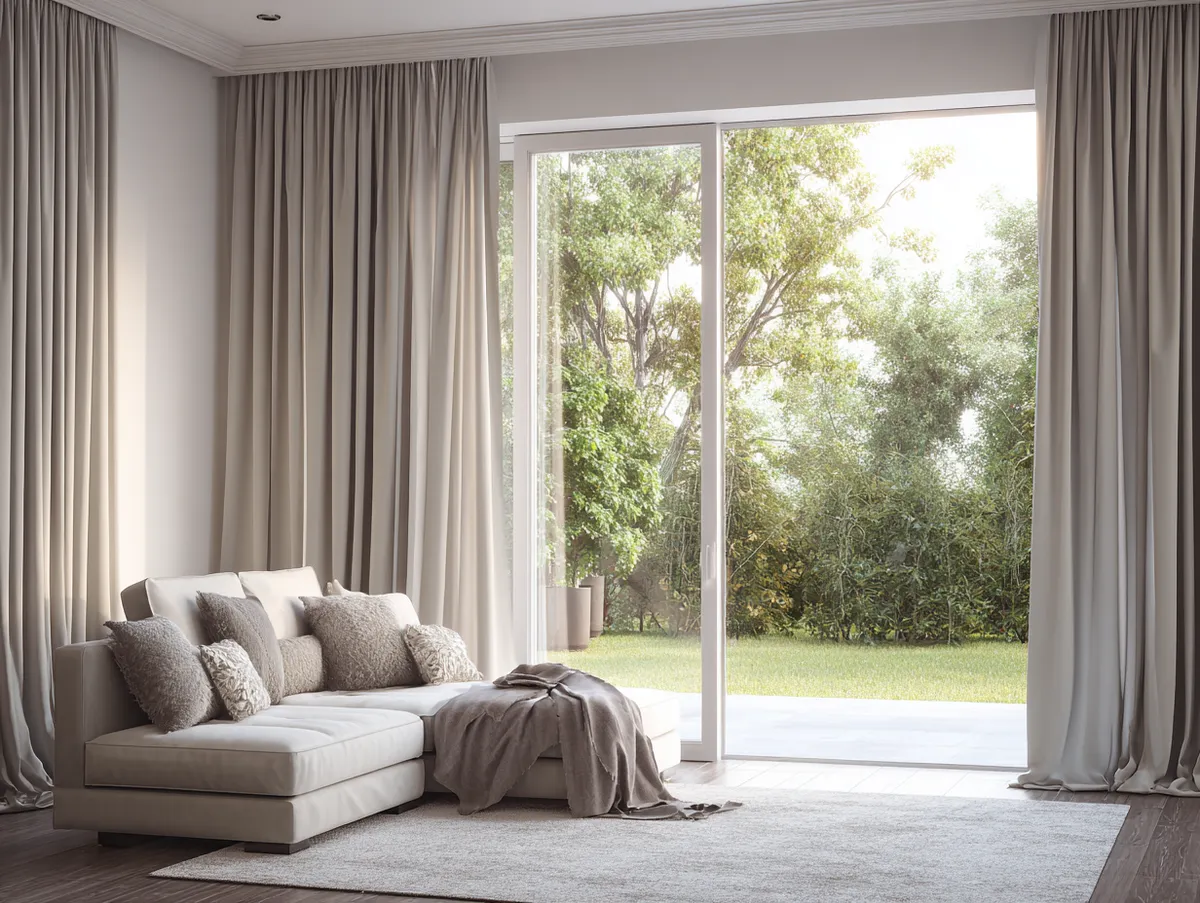
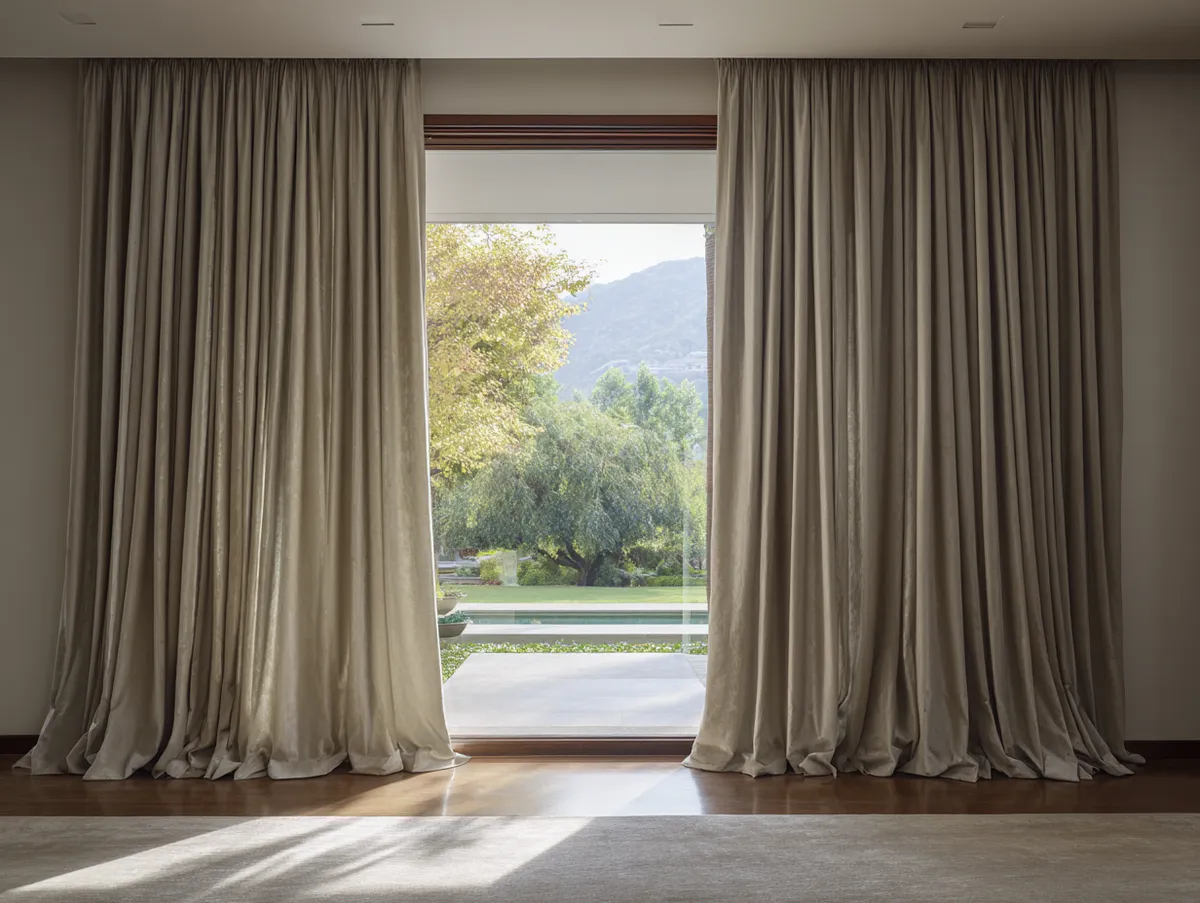
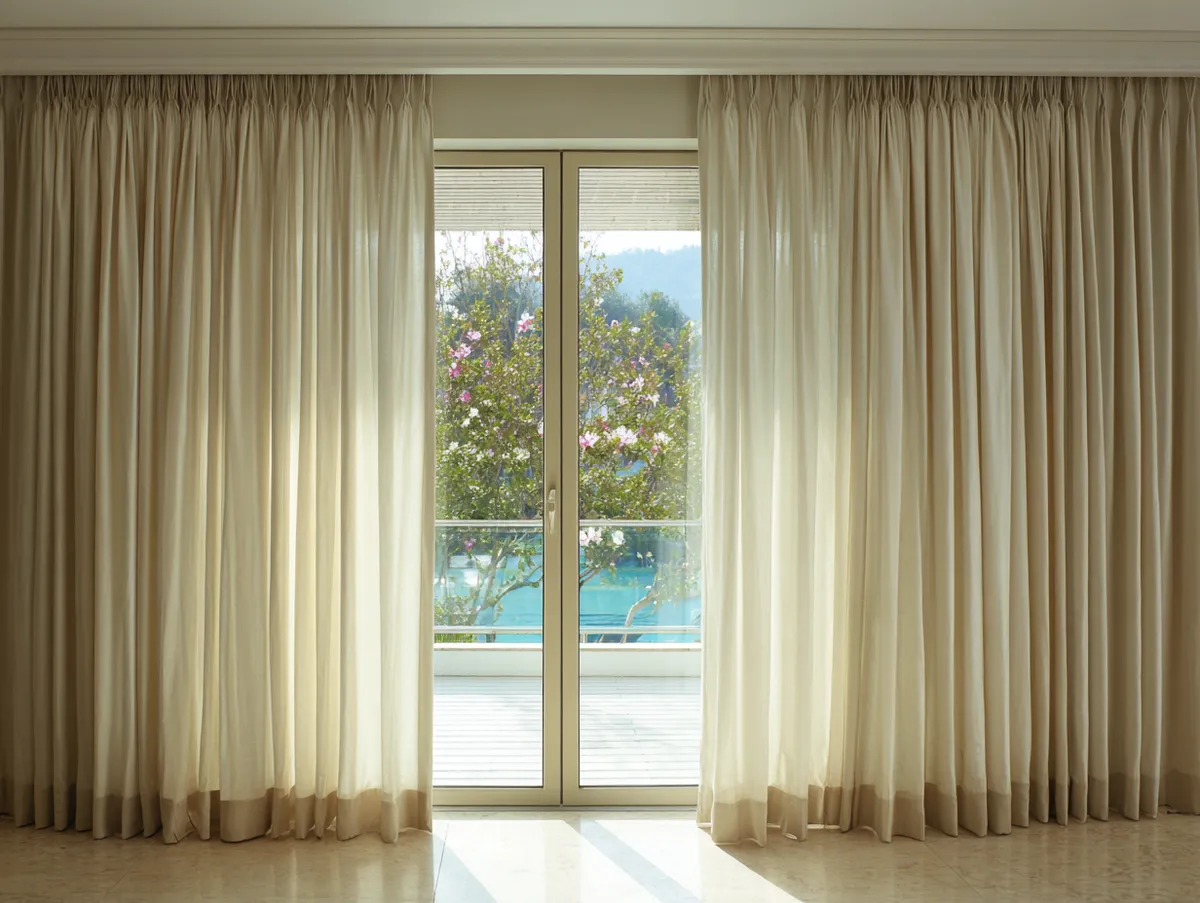
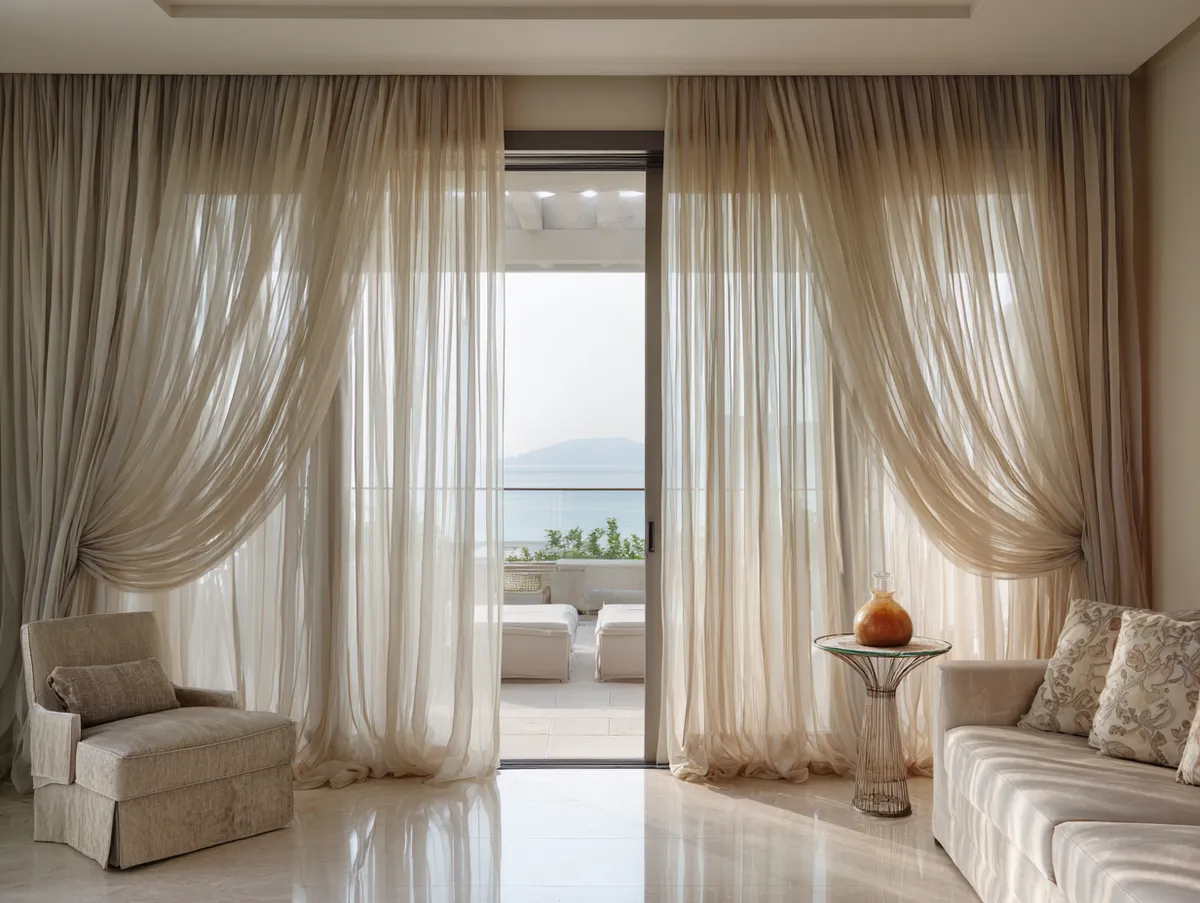

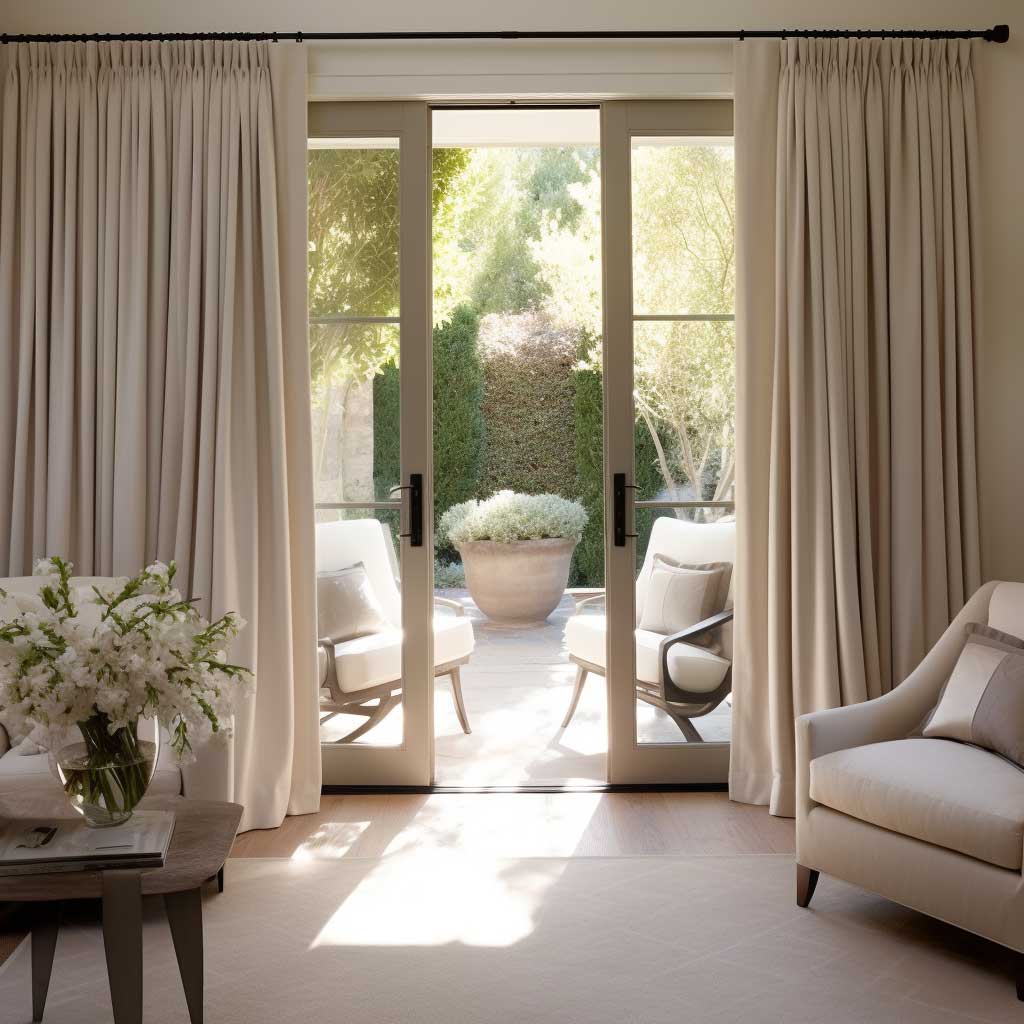
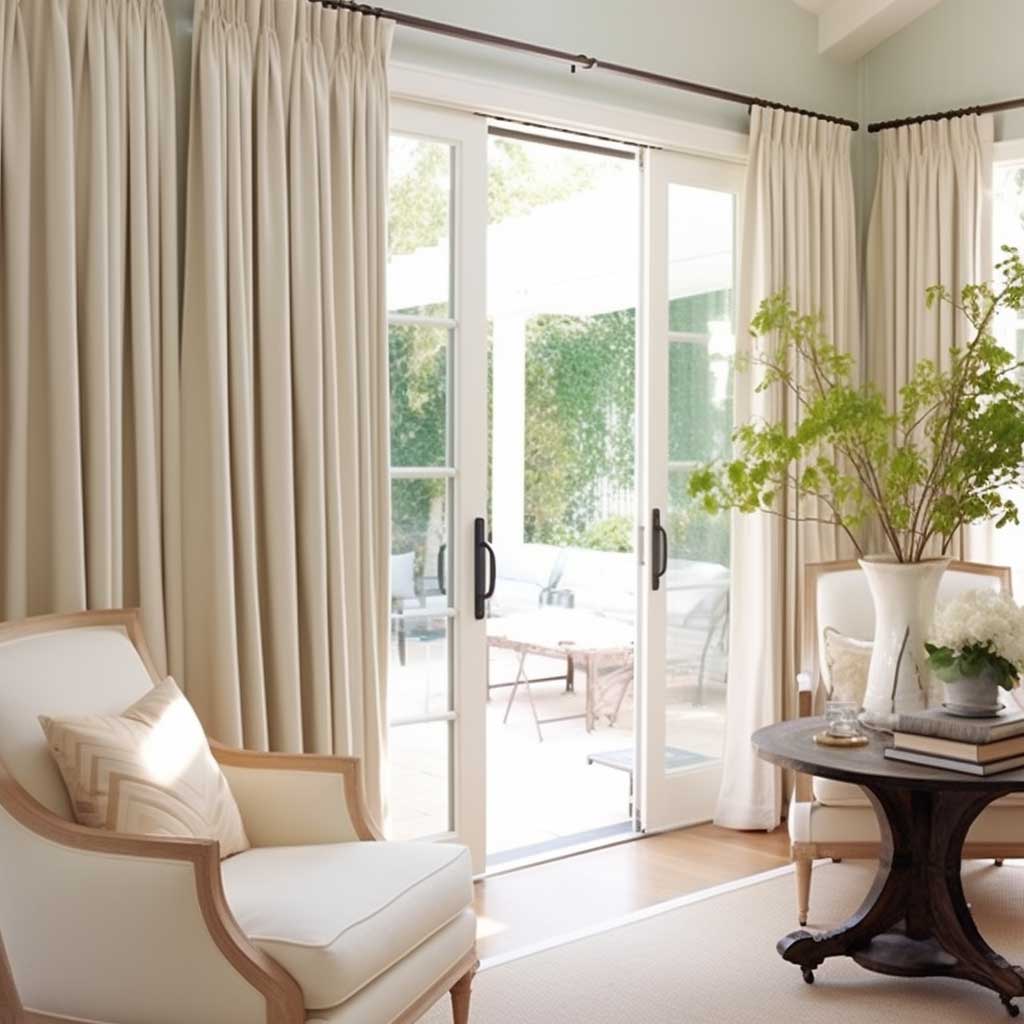
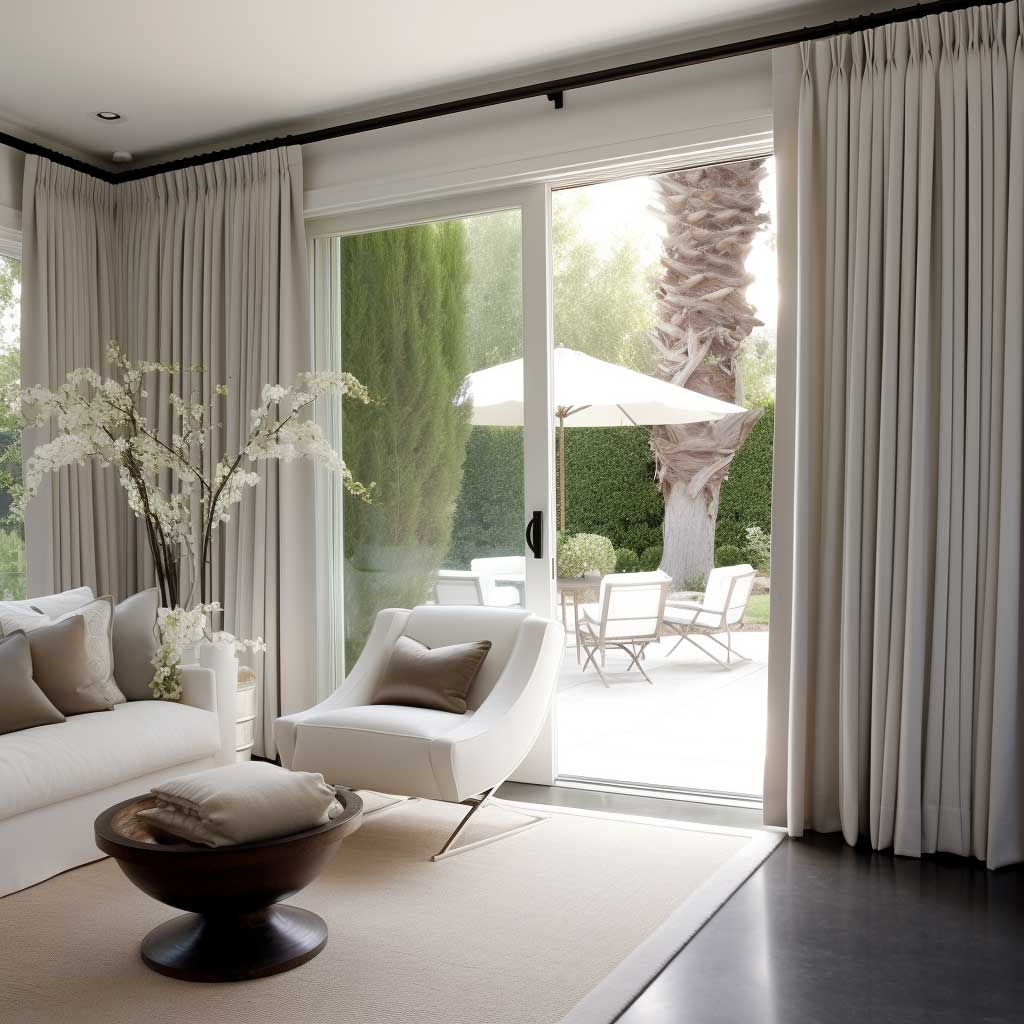
A track system mounted directly to the ceiling — rather than a decorative rod — is worth considering for doors wider than 72 inches. Ceiling-mount tracks distribute weight more evenly, prevent the sagging that plagues long rods over wide spans, and give the curtains a hotel-grade look that a wall-mounted bracket rarely achieves. The track itself disappears when the panels are closed, and the overall effect looks built-in rather than bolted on. More sliding door window treatment ideas — including sheer-layer combinations and blackout configurations — show how curtains can be layered for different times of day.
Vertical Blinds Stack in the Right Direction — and That Makes All the Difference
Modern window coverings for sliding glass doors have one mechanical requirement nothing else matches: the covering has to open in the same direction the door does. Vertical blinds solve this natively. The slats run the same axis as the sliding panel, so the whole system draws to one side when you open the door — no lifting, no bunching, no reaching around fabric. That operational logic is why vertical blinds dominated sliding door installations for decades and why they’ve outlasted trends that replaced them.
The plastic-vane versions common in rental apartments have given the category an unfair reputation. Fabric vanes with an internal stiffener — or a sheer-fabric-plus-vane combination — behave entirely differently. Cordless vinyl versions like the CHICOLOGY light-filtering vertical blinds for a 78″ x 84″ opening run $64–$80 at major retailers, making this one of the most budget-accessible options for a large door. The tradeoff at that price point is longevity near direct sun — vinyl yellows and warps faster than fabric in high-UV exposures. For south-facing doors, spend toward the $150–$230 range for PVC or fabric-vane versions that hold their shape and color for several years.
How much does the upgrade matter? Vinyl or faux-wood vertical blinds range from approximately $56 to $226 (SelectBlinds, 2026 pricing), and that range captures the real performance gap. Stylists recommend treating that upper end as the floor on a door that gets daily foot traffic and direct sun — not an optional upgrade. A vane that warps in the first summer costs more to replace than the difference in initial price. Why does this happen? Vertical slats flex slightly every time the door is opened or closed, and cheaper materials fatigue at those flex points first.
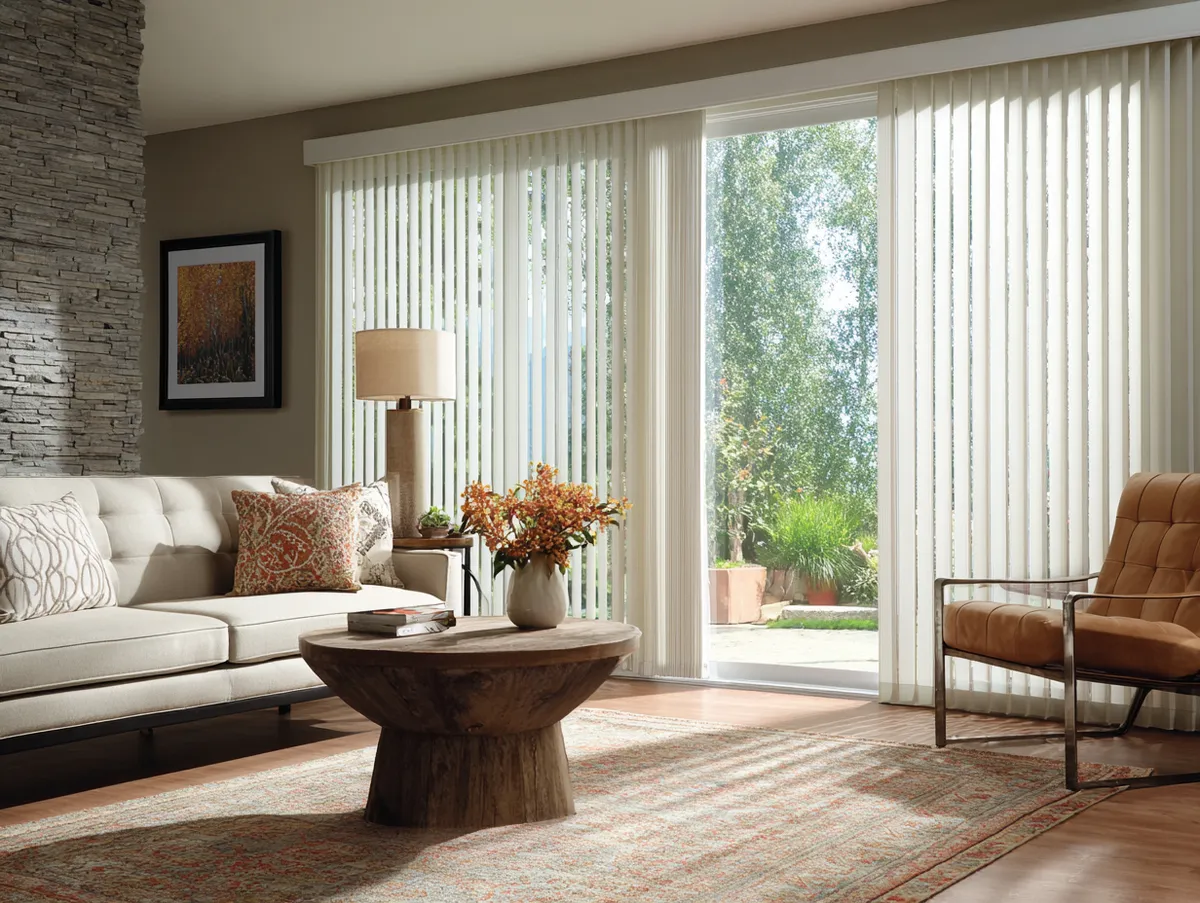
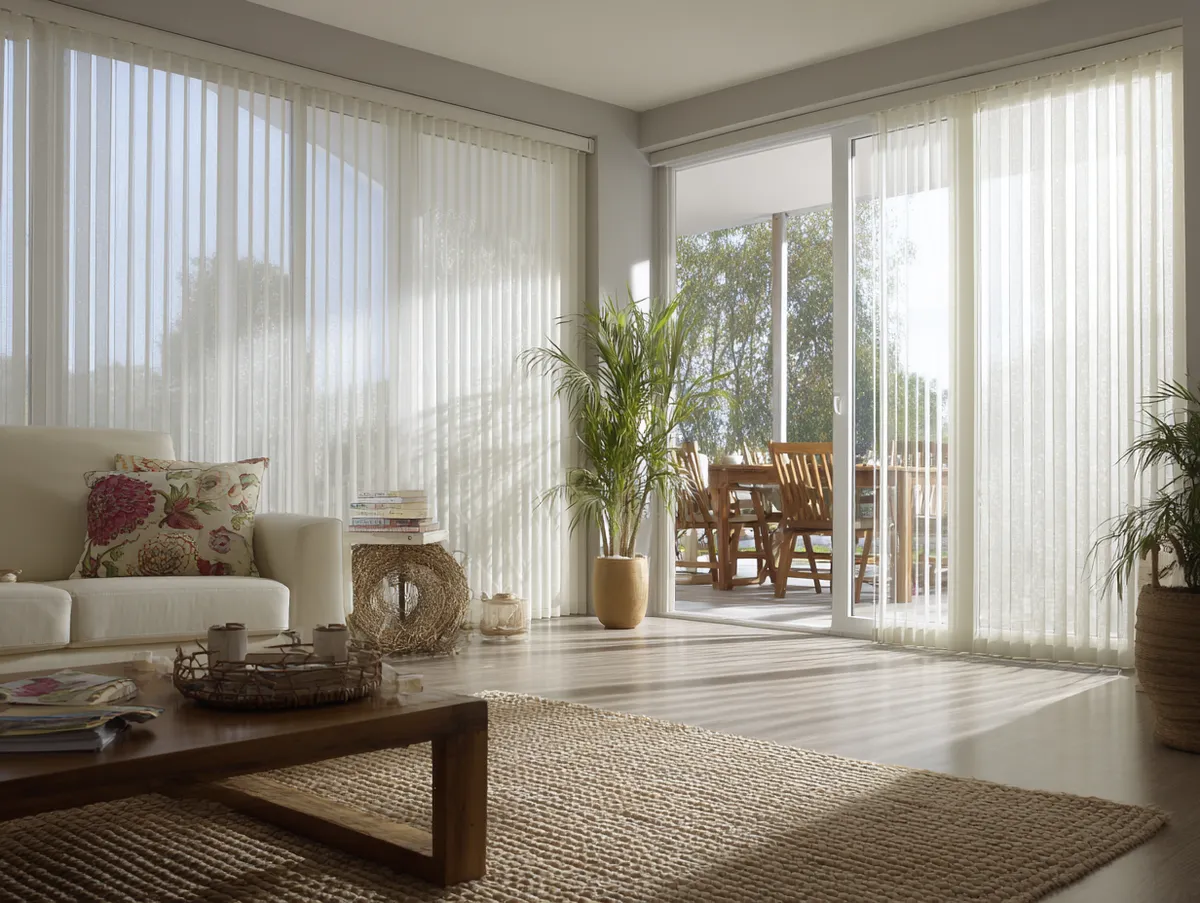
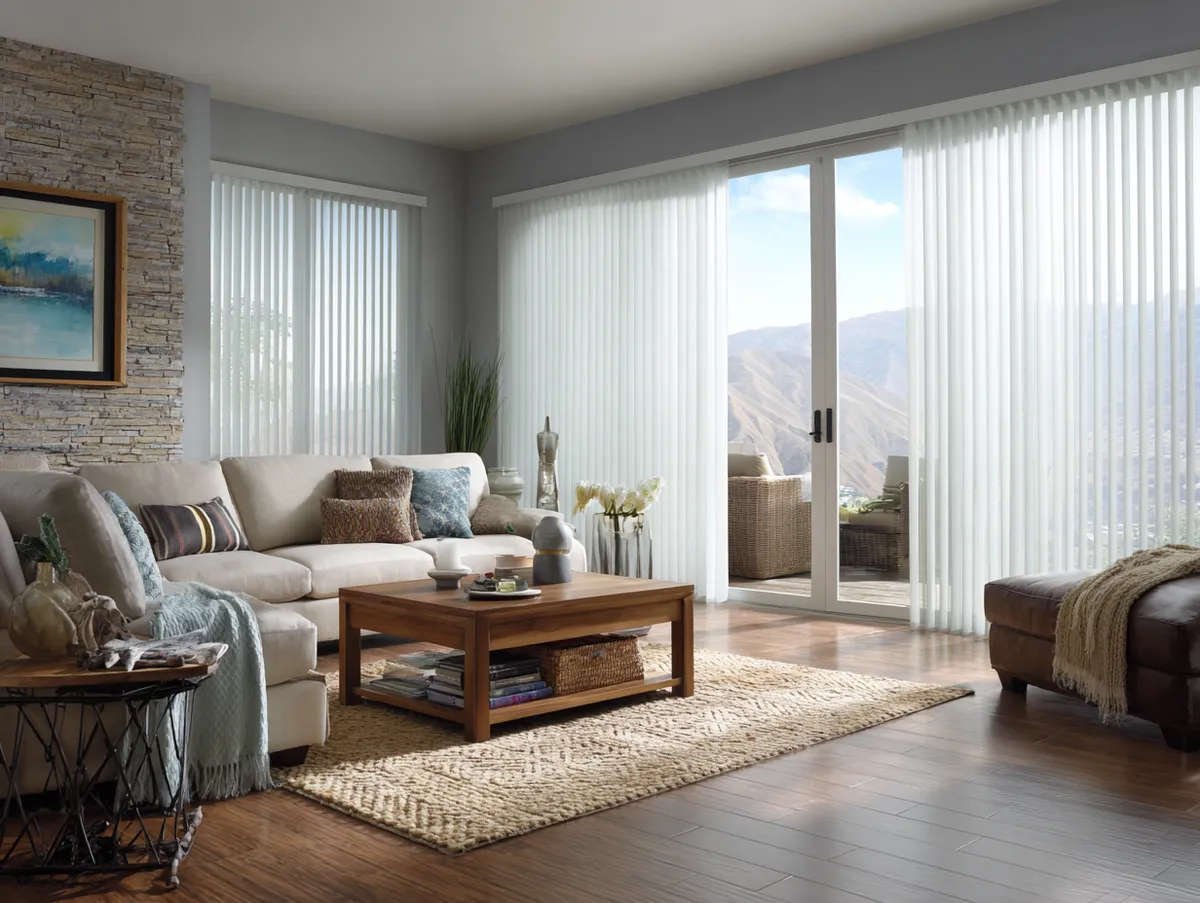
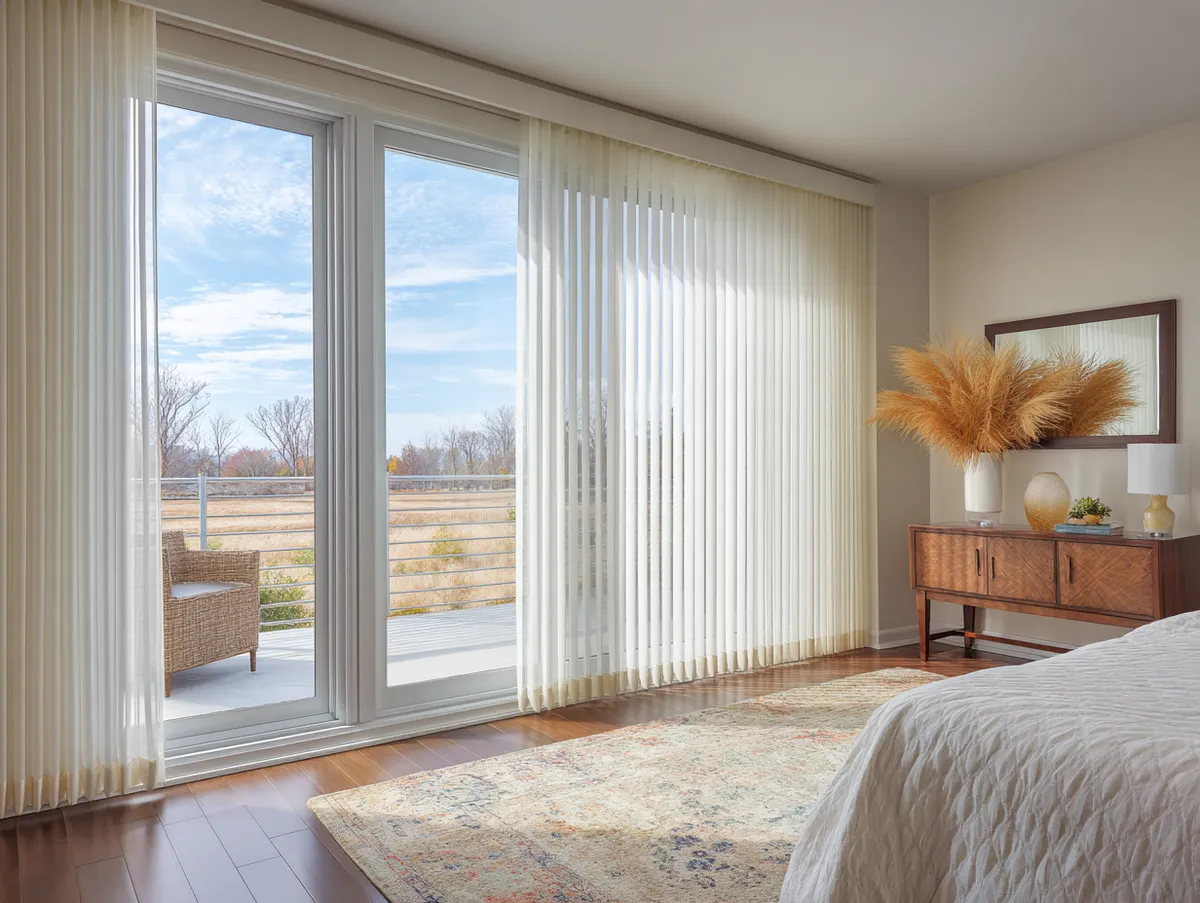
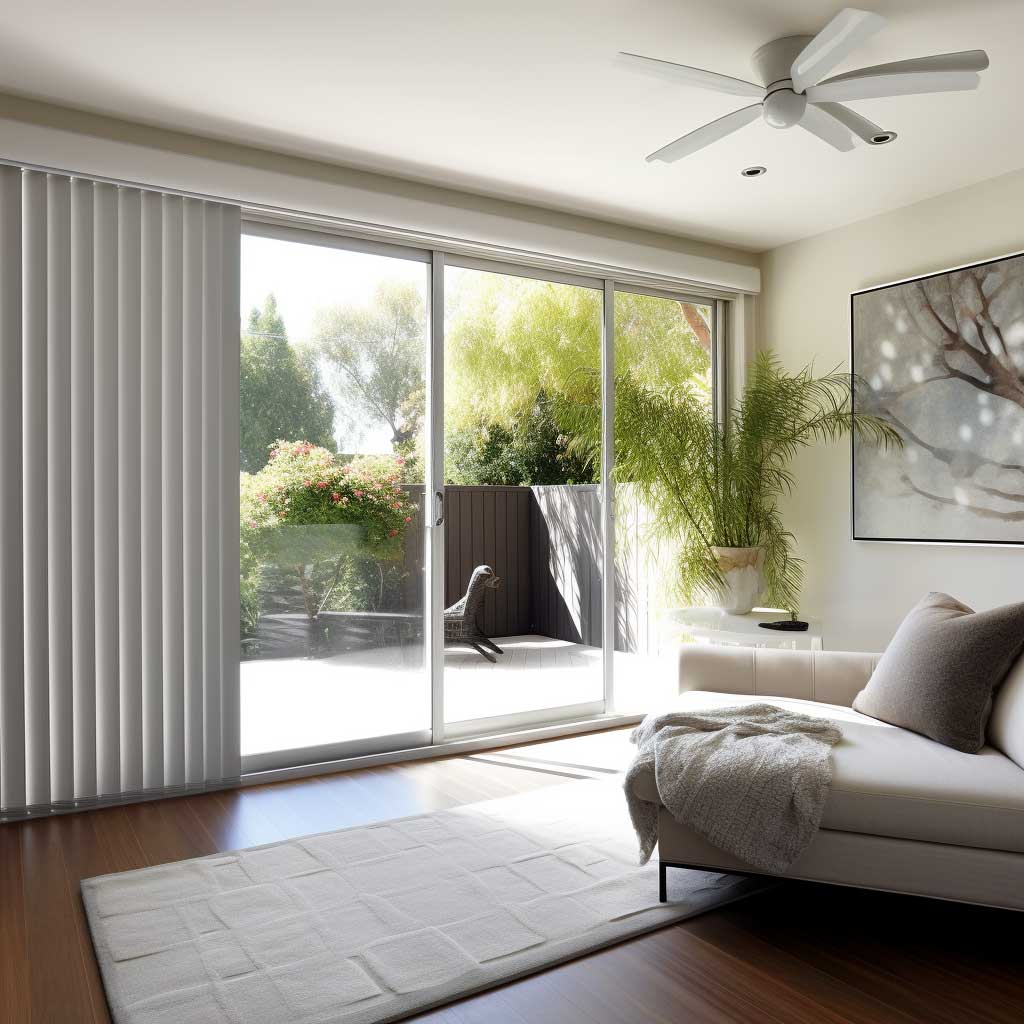
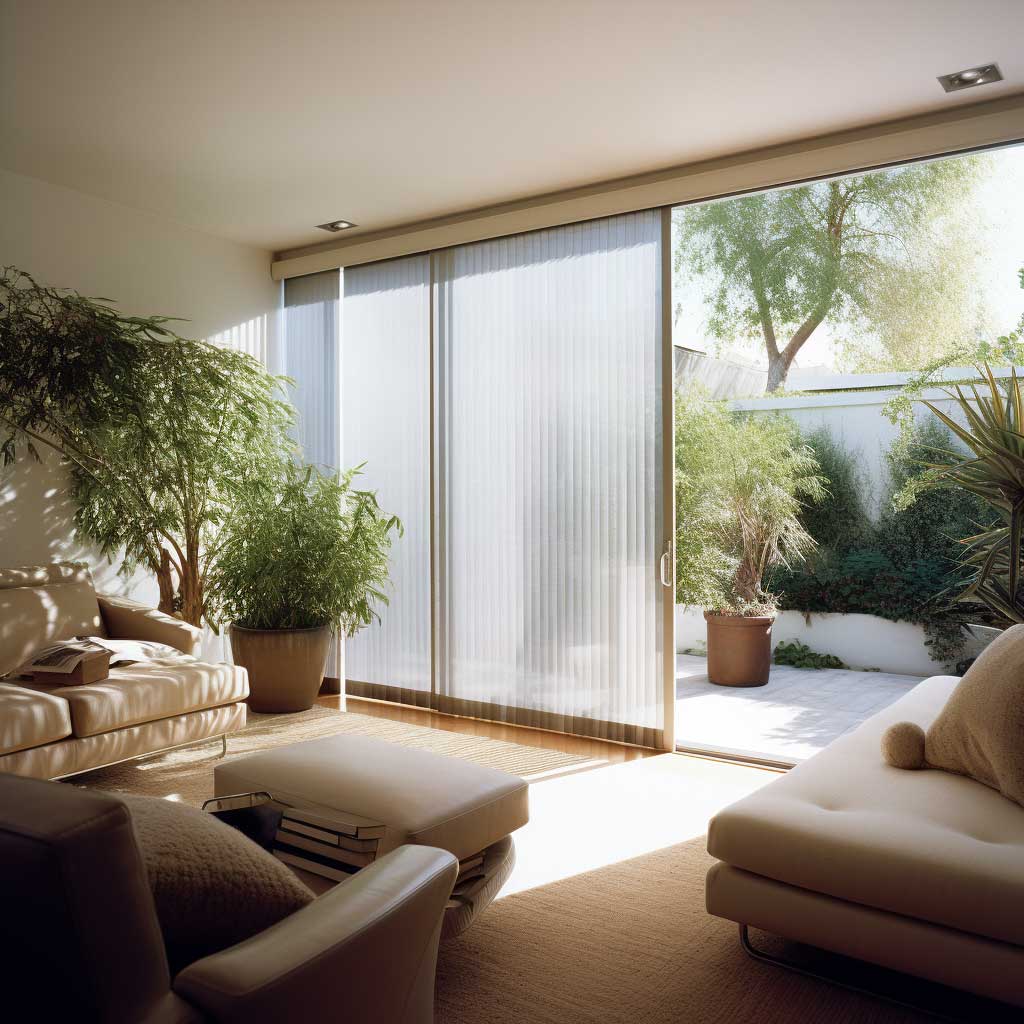
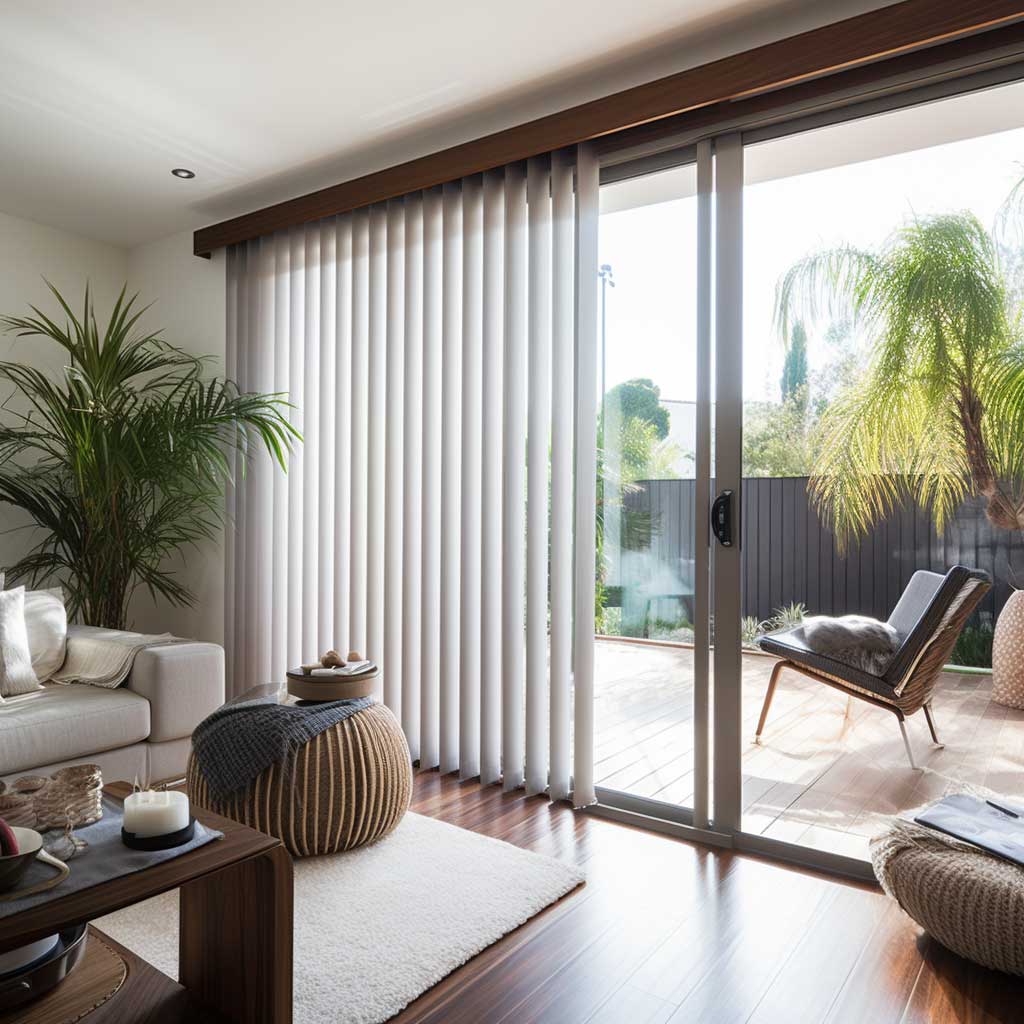
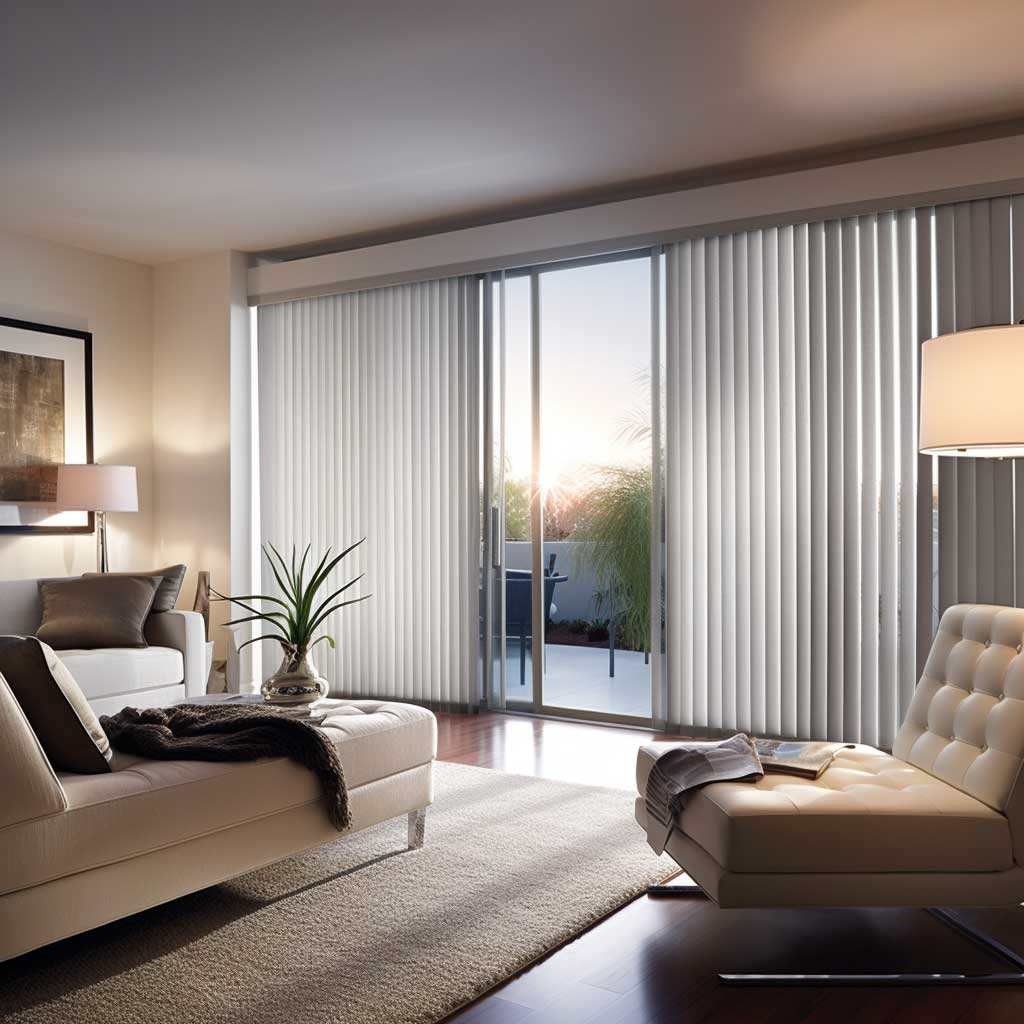
Individual vanes can be replaced on most quality vertical blind systems without swapping out the entire set — a practical advantage that flat panel-track systems don’t share. One stained or damaged vane costs a few dollars to replace versus a full panel replacement. Over a door that sees cooking smells, outdoor dust, and daily use, that maintainability matters more than it sounds.
- Don’t choose fabric-only vertical vanes without an internal stiffener. They sway with every draft and look limp within weeks — the stiffener is what gives the vane its clean vertical line when hanging.
- Don’t mount the rod flush to the door frame. Panels need room to stack completely off the glass, which means the rod has to extend 12–18 inches past each side. Too short and the panel blocks the door every time it’s opened.
- Don’t apply roller shades or film to textured or low-E coated glass. Adhesive products won’t bond properly to specialty coatings and will bubble or peel within a few months.
Roller Shades Bring Window Treatment Ideas for Sliding Glass Doors Down to One Clean Decision
Roller shades make the most sense for sliding glass doors when the room is already doing the design work and the covering just needs to stay out of the way. A single shade in a neutral light-filtering fabric disappears during the day, pulls down when privacy is needed, and never competes with furniture, rugs, or art. That restraint is the point — think of it as infrastructure rather than decoration, the same way good recessed lighting doesn’t call attention to itself.
On a wide door — 72 inches or more — the practical recommendation is two independently operated shades rather than one large shade. A single shade at that width becomes heavy, rolls unevenly, and puts significant stress on its mounting bracket. Two shades on adjacent brackets operate independently, letting you lower one side depending on where afternoon sun is hitting. Hunter Douglas’s Luminette Privacy Sheers, designed specifically for vertical door applications, are priced from $700–$1,400 for a sliding glass door, which represents the premium end of the category. For most living room applications, a mid-range light-filtering roller in a linen-look fabric from retailers like SelectBlinds or Blinds.com delivers 80% of the result at a fraction of the price.
Light-filtering versus blackout is the single most important choice in this category. Light-filtering fabric allows a diffused glow through the shade during the day — the room stays bright, the shade stays readable as fabric rather than a wall, and the outdoor view softens rather than disappears. Blackout fabric does what it says and is the right call for a bedroom patio door or a door that opens to a bright street. The trick here is to order a sample before committing: on a door that receives direct sun, even a light-filtering shade reads darker than the retailer’s swatch suggests, and a blackout shade in a living room can feel oppressive at midday.
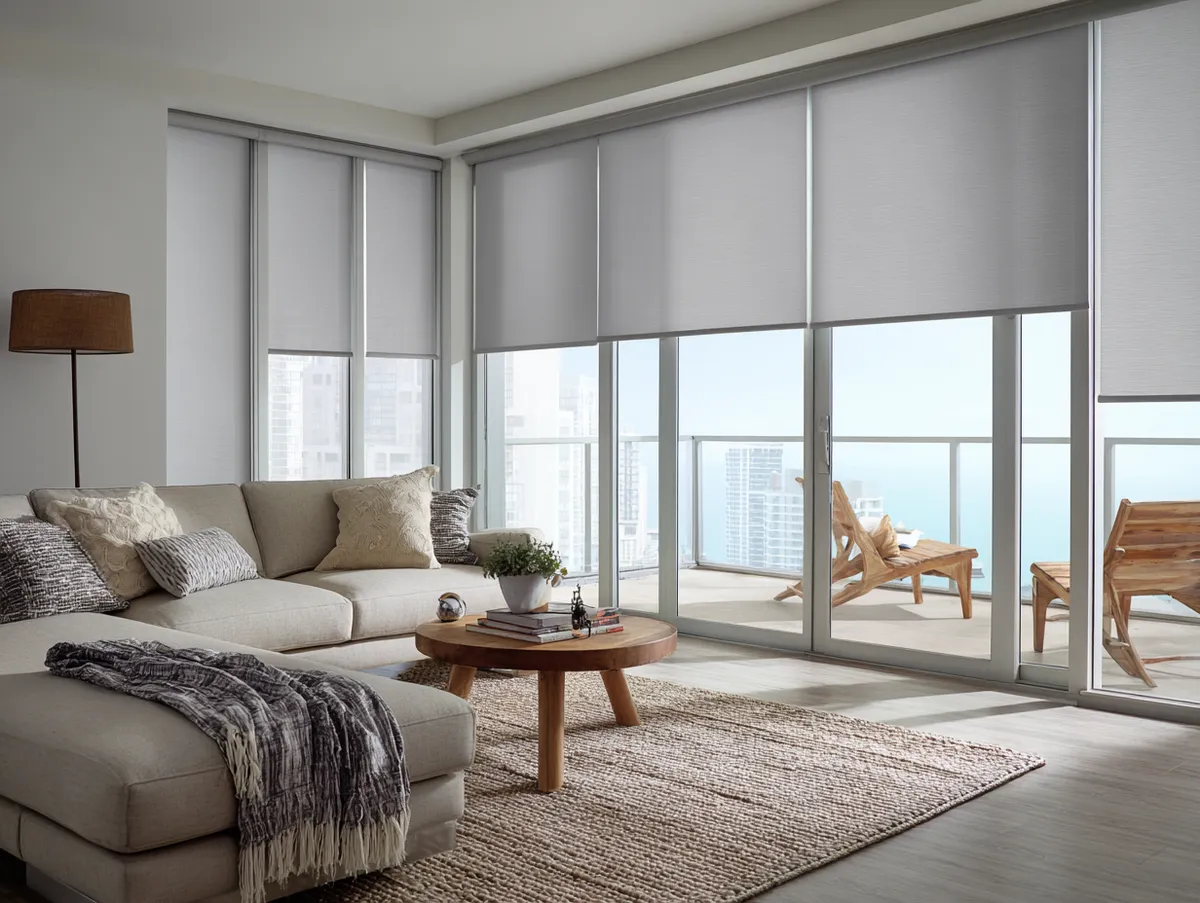
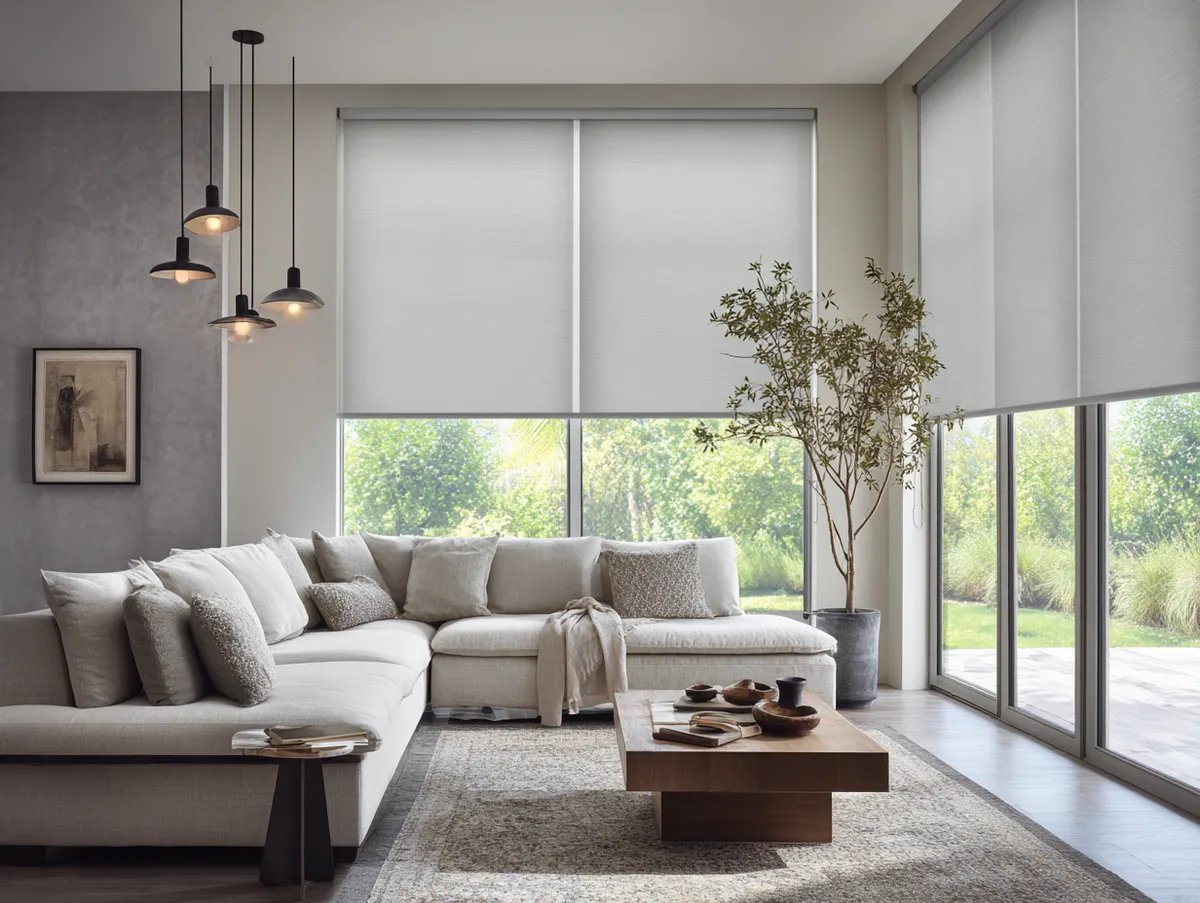
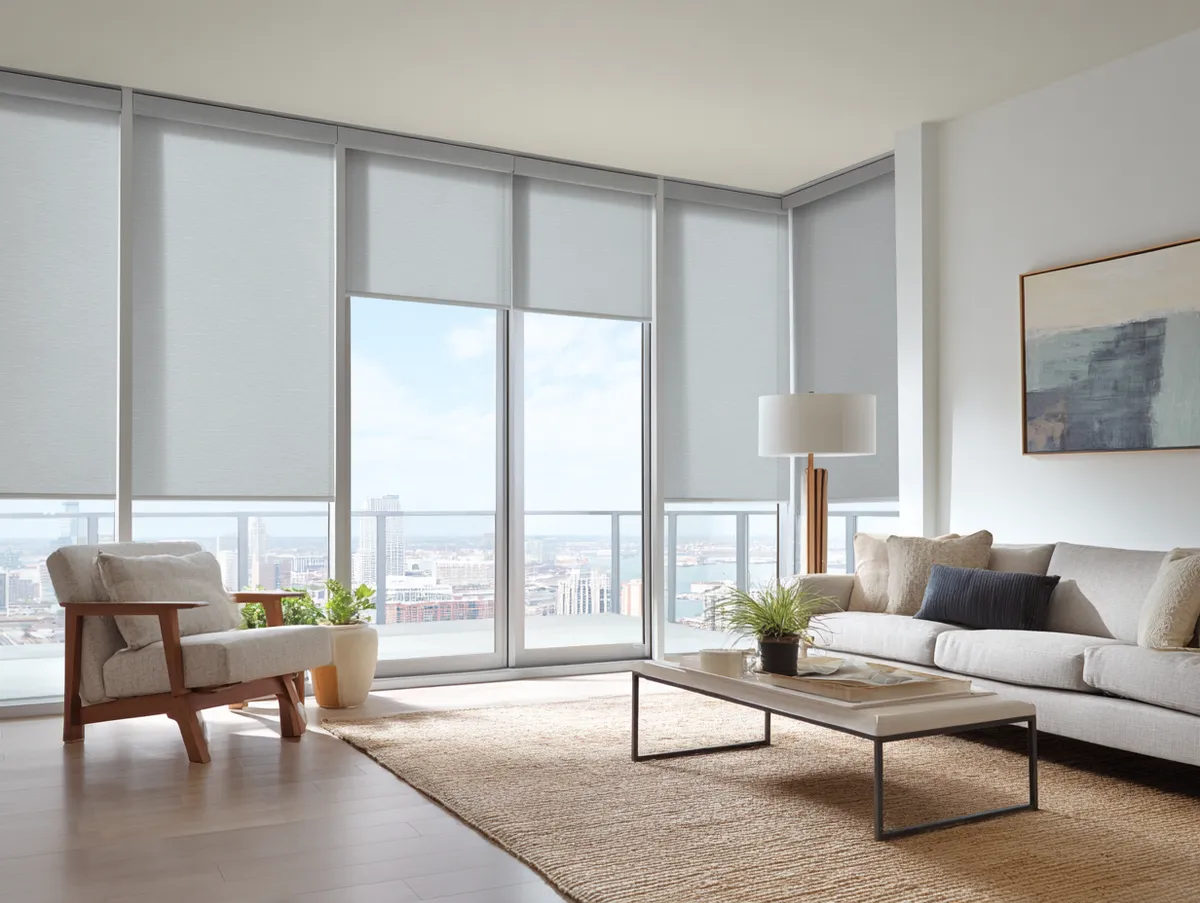
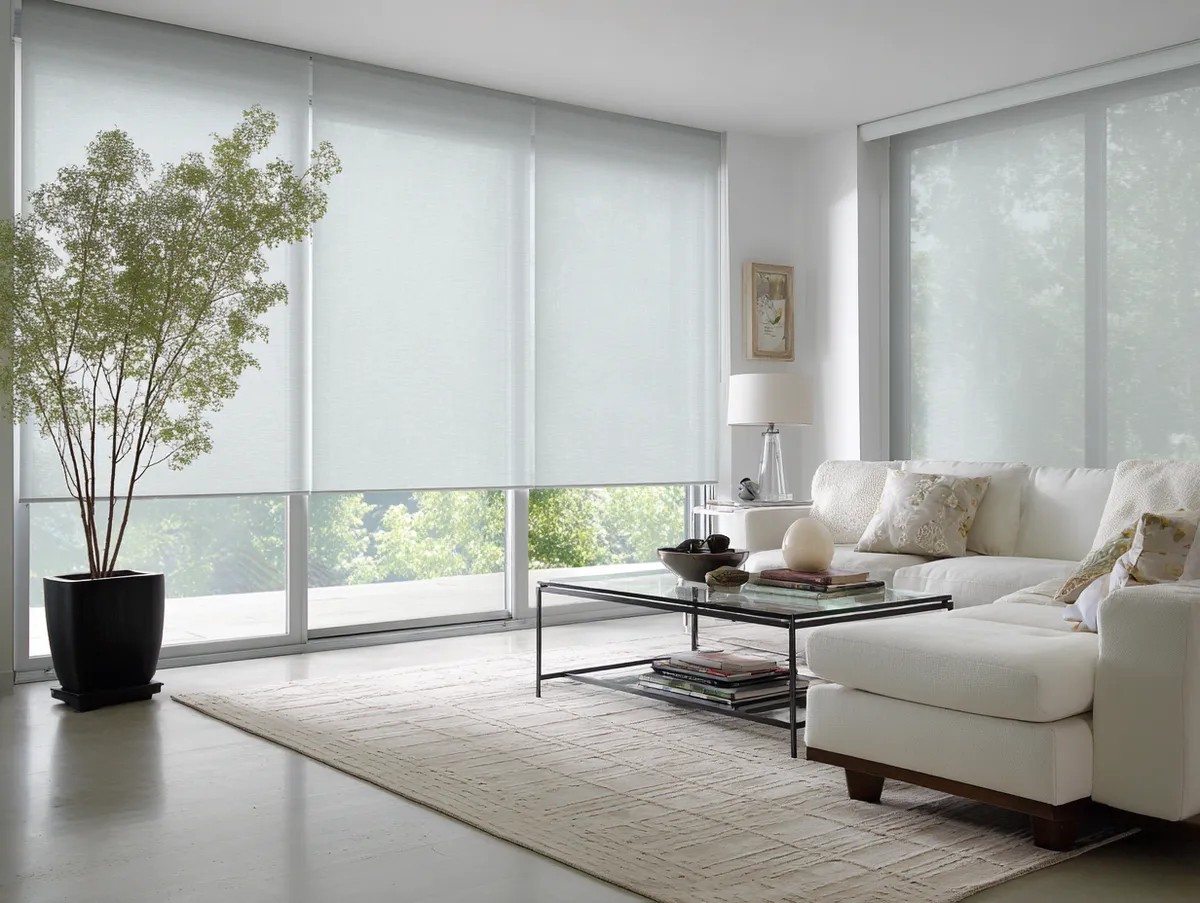
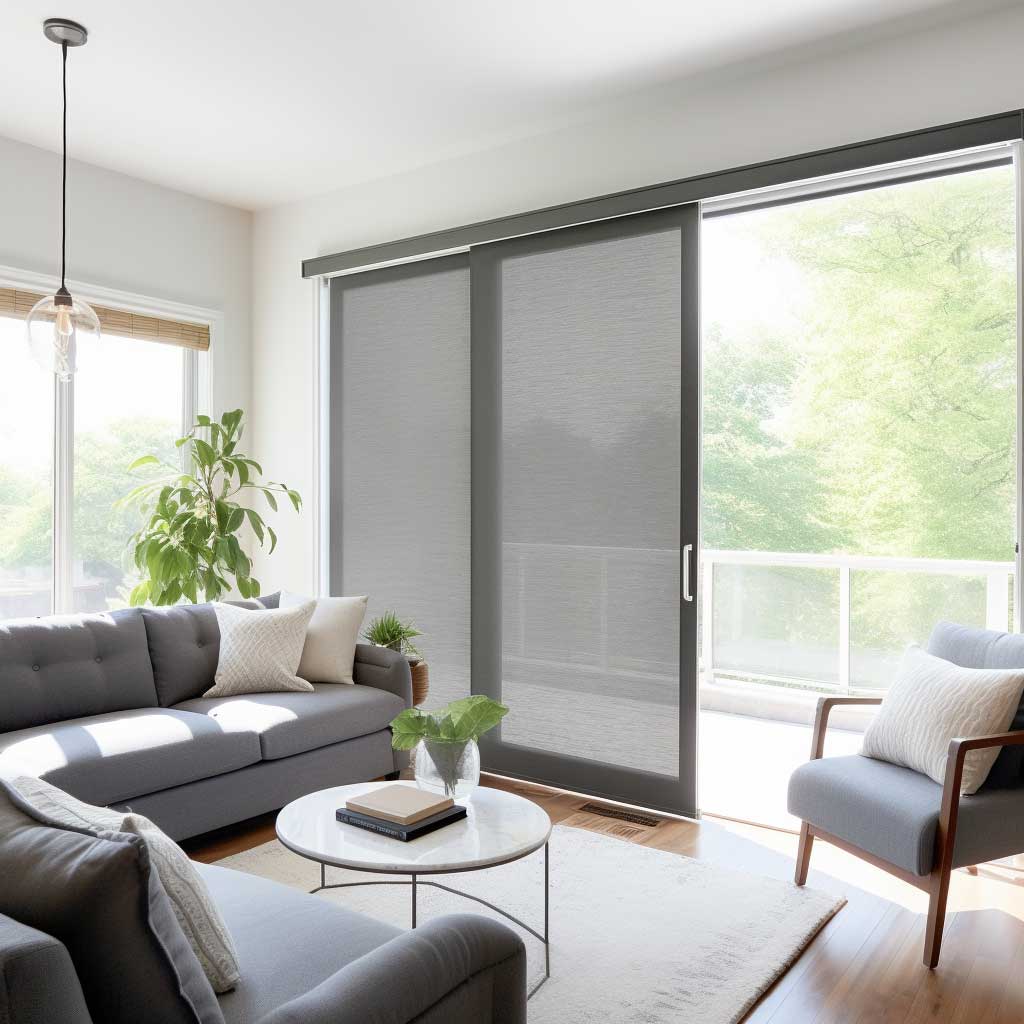
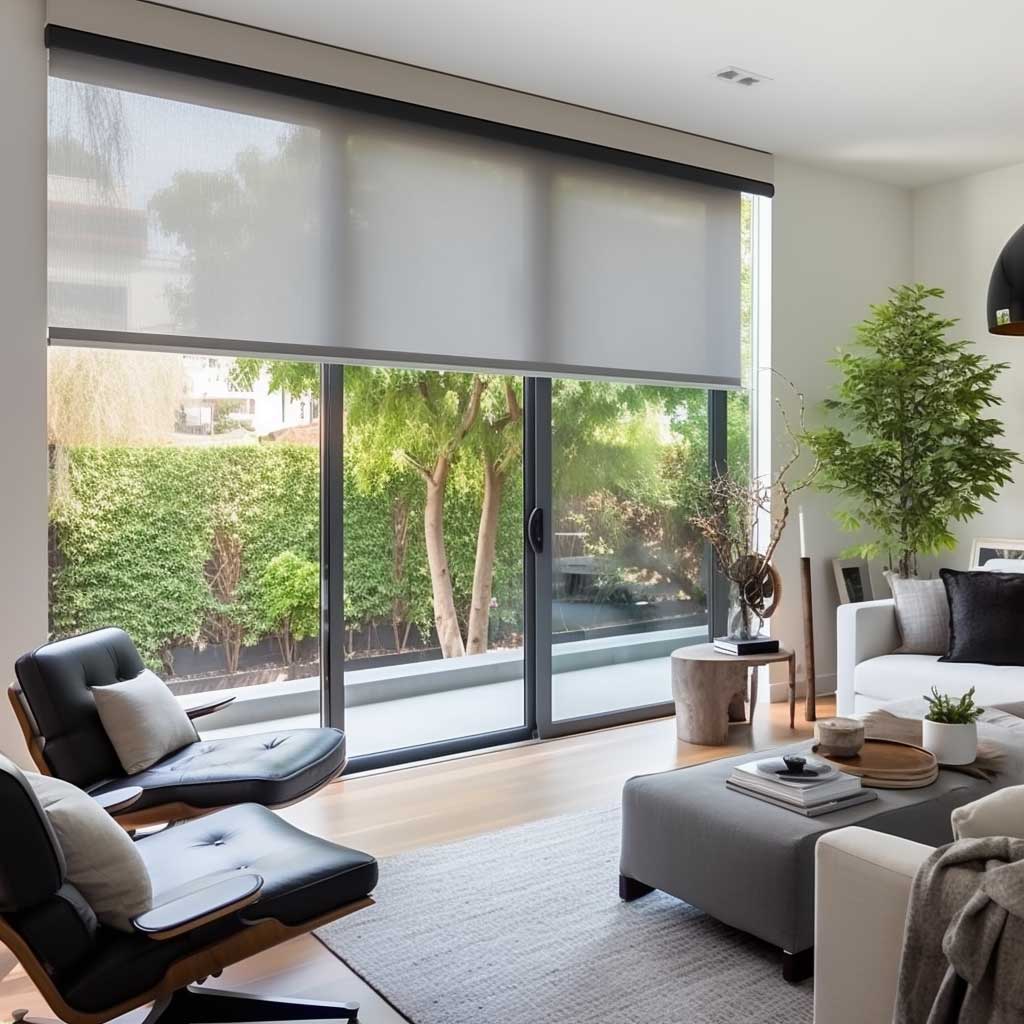

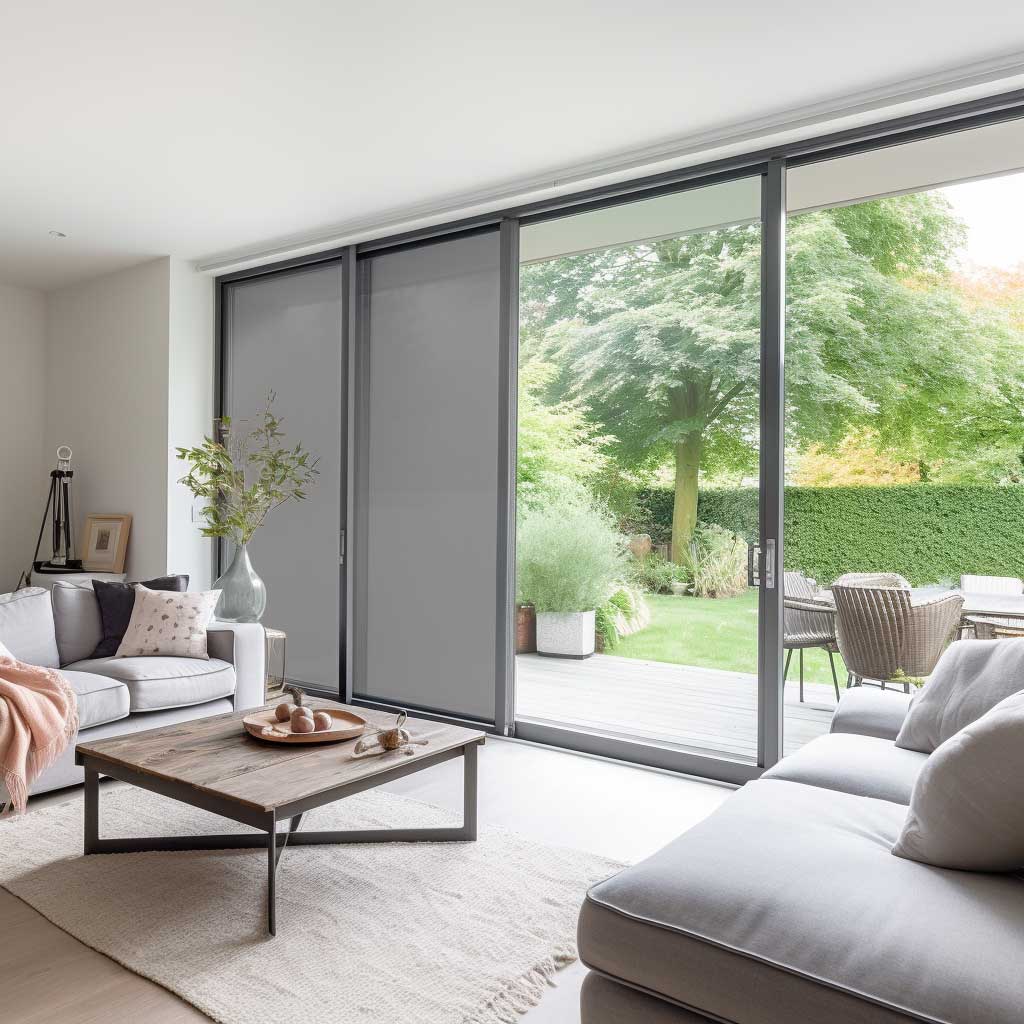
Roller shades are easy to operate with a simple pull cord, chain, or — at the premium end — a motorized system controllable by app or voice. For a door that gets daily use, motorization is genuinely useful rather than a luxury: raise at 7am, lower during peak afternoon heat, raise again at dusk without touching the shade each time. According to Hunter Douglas’s buyer guide for sliding glass door treatments, cellular shade designs using the Vertiglide operating system can cover the full door span or split into two independently operated sections for more granular light control — a configuration that’s increasingly popular in rooms where sun exposure changes dramatically between morning and afternoon. For more on how patio door coverings perform in real conditions, the full breakdown of window covering ideas for sliding glass patio doors covers panel-track, honeycomb, and frosted film options that roller shades don’t address.
| Treatment | Best For | Price Range | Key Limitation |
|---|---|---|---|
| Floor-length curtains | Rooms where drama and softness matter; insulating cold glass | $49–$200+ per panel | Rod must extend 12–18″ past frame or panels block the door |
| Vertical blinds | Daily-use doors; tight spaces; budget-conscious installations | $56–$226 (vinyl/fabric) | Cheap vanes yellow and warp near direct sun within a year |
| Roller shades | Minimalist rooms; wide doors split into two shades | $300–$1,400+ | Single shade over 72″ rolls unevenly; two shades recommended |
ARTFASAD VERDICT
The Covering That Works Is the One That Opens With the Door
Curtains need room to stack — measure the rod first, before choosing any fabric. Vertical blinds are the most forgiving option mechanically, and the price gap between budget vinyl and a quality fabric vane is smaller than a replacement set two years from now.
Roller shades reward rooms that don’t need the covering to do visual work. On a minimalist door in a room with good bones, a single neutral shade is the right answer — quiet, functional, and gone the moment it’s raised.
Save this post before you measure — the rod length is the number that breaks every other calculation.