Quick Summary
Best cabinet style for a victorian kitchen: raised-panel doors in Shaker or beaded profiles — Kraftmaid Marquette at $280/linear foot or IKEA BODBYN at $90/linear foot for budget builds.
Top countertop pick: honed quartz with marble veining (Caesarstone 5031 at ~$75/sq ft installed) — real marble stains within weeks.
Hardware: brass cup pulls from Rejuvenation ($18 each) or Emtek ($9–$14 each). Skip chrome — it kills the victorian look instantly.
Biggest mistake: painting everything pure white. Real victorian style kitchens used deep greens, navy, burgundy, and cream.
I’ve spent three years renovating a Victorian house, and the kitchen almost broke me. Every Pinterest board showed the same thing: ornate cabinets, marble countertops, a chandelier over the island. Nobody mentioned that half those victorian kitchen ideas fall apart the second you try cooking for four people on a Tuesday night.
These 12 victorian kitchen designs solve that. Each one keeps the victorian style kitchen look — the panel moldings, the brass hardware, the rich color palettes — but the layouts actually work. You get pull-out pantry shelves behind carved doors. Induction cooktops hidden under heritage-style countertops. Modern kitchen functionality wearing a victorian costume.
Skip the museum-kitchen trap. Whether you’re remodeling a kitchen in a victorian house or faking the look in a 2010 new-build, you’ll find specific products, price points, and the mistakes I made so you don’t have to.
Quick Scan
Section 1 — Cabinet door profiles, brass hardware picks, L-shaped vs U-shaped layouts for kitchens in victorian houses
Section 2 — Encaustic tiles, countertop materials, and authentic victorian kitchen color palettes (Farrow & Ball vs Benjamin Moore)
Section 3 — Modern appliances that look period-appropriate, butler’s pantry hacks, and budget breakdowns for a modern victorian kitchen
FAQ — What did a victorian kitchen look like, cost estimates, best brands for victorian kitchen designs
Victorian Style Kitchen Cabinets, Hardware, and Layout Basics
The kitchen is such a room where, through many hundreds of years, it has metamorphosed to be almost synonymous with the needs and desires of users. Nowhere was a mark more indelibly stamped within the rich tapestry of design and culture that was the Victorian era than in the world of interior design. Today, Victorian charm meets modern functionality, and in doing so, we are seeing a symphony of design elements blending harmoniously with the past and the present.
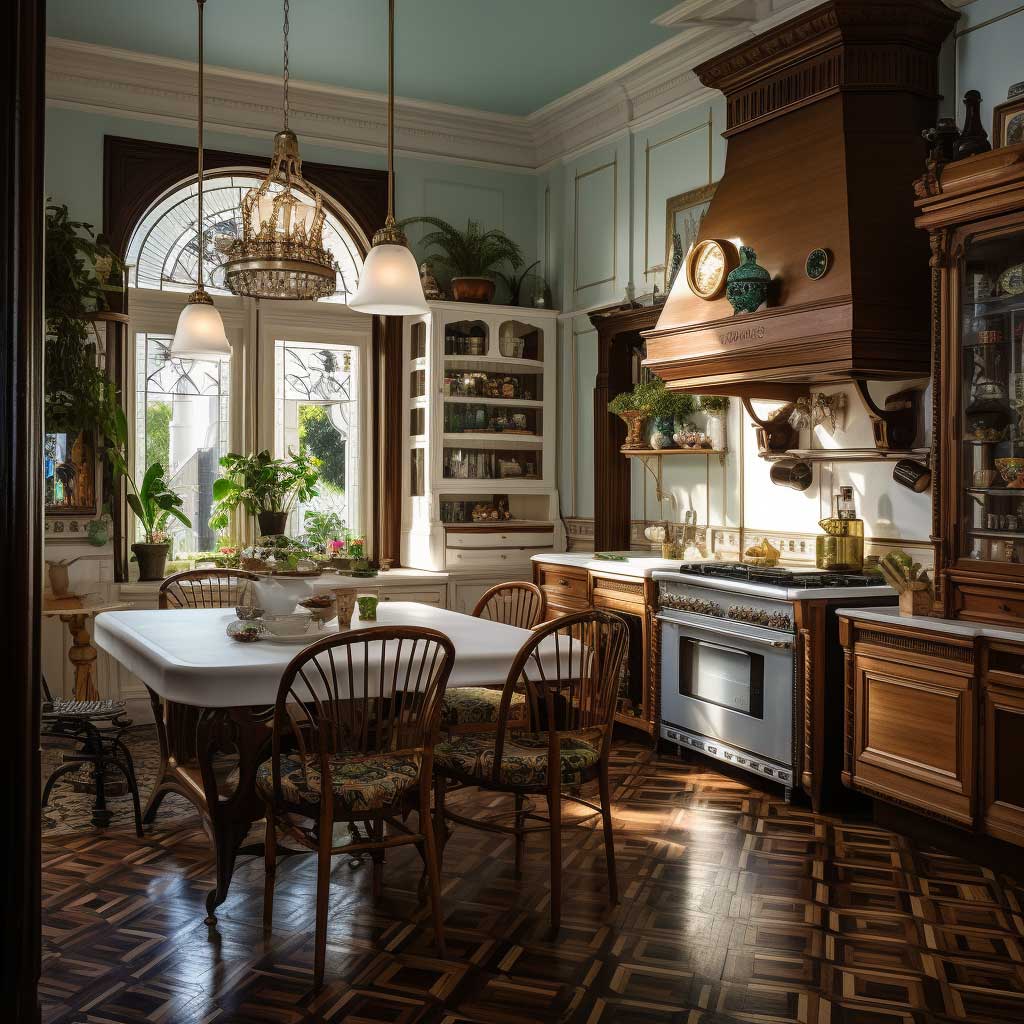
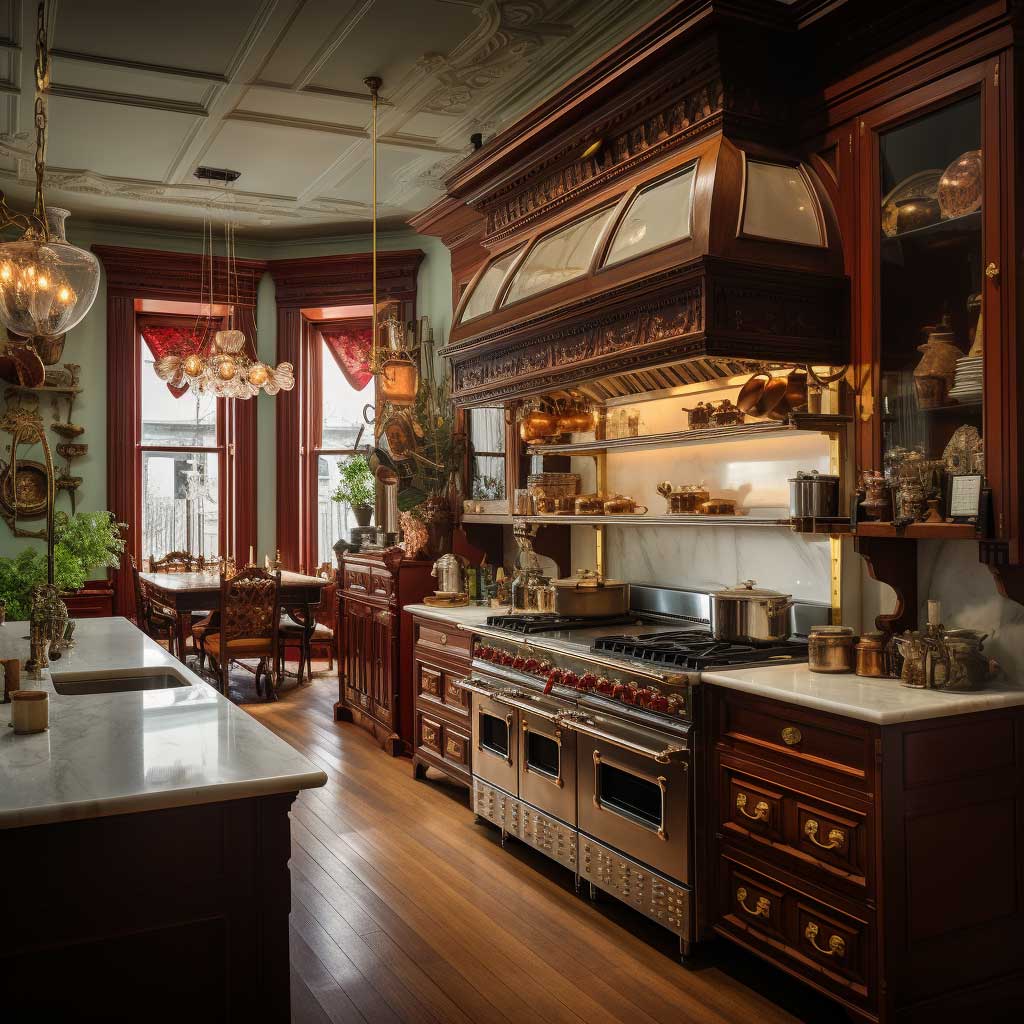

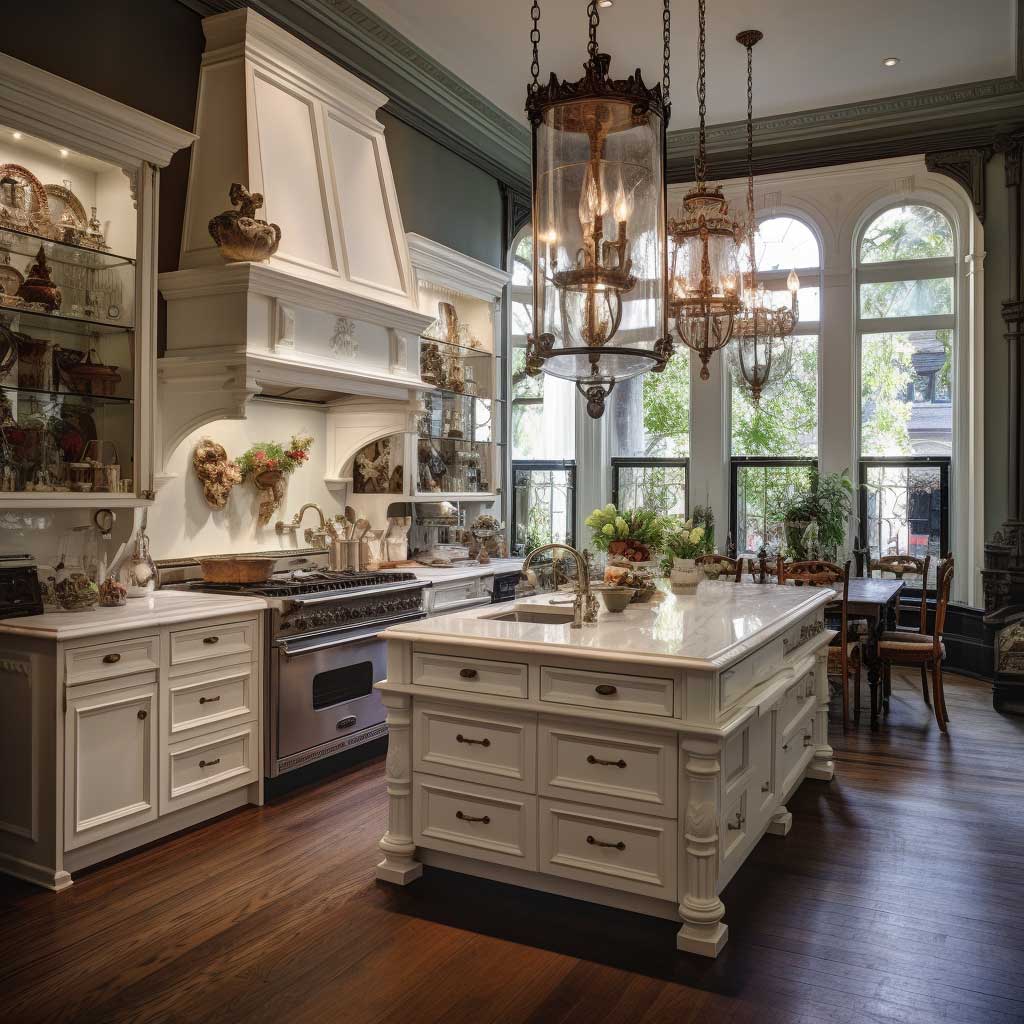
The Victorians were so well known for fussy embellishments, detailed details, and an inordinate love of all that’s ostentatious. A kitchen in this period was not only a place to work in but a statement of the homeowner’s status in terms of taste in design. And as we re-do these spaces in today’s context, the challenge is simple: keep that Victorian charm but make the space modern and functional. If you’re applying this same approach to other rooms, check out these furniture picks for a modern Victorian living room that follow the same old-meets-new logic.
Kraftmaid’s Marquette door in Praline finish runs about $280 per linear foot installed. It’s got the raised panel profile you need without the custom-shop price tag. I tried a no-name import from a big-box store first. The doors warped within eight months. Don’t do that.
Brass cup pulls from Rejuvenation cost $18 each. Sound steep for hardware? Maybe. But every cheap pull I’ve bought has turned green within a year, and replacing 30 handles twice costs more than buying good ones once. Emtek and Nostalgic Warehouse make solid mid-range options at $9–$14 per pull. The weight of the hardware matters. If it feels like a toy in your hand at the store, it’ll look like a toy on your cabinets.
Don’t Do This
Mixing chrome and brass hardware in the same victorian style kitchen. Pick one metal finish and commit. I’ve seen kitchens with brass pulls on the cabinets and chrome on the faucet, and it looks like two different rooms had a fight.
Installing recessed LED pot lights as your only light source. Victorian kitchens need pendant fixtures or chandeliers to read correctly. Pot lights alone make the room look like a condo showroom.
Choosing flat-panel “modern” cabinet doors and hoping trim molding will save them. It won’t. The door profile does the heavy lifting in a victorian kitchen design — raised panels or beaded Shaker, nothing flat.
L-shaped layouts work best for kitchens in victorian houses because those rooms tend to be narrow and long. U-shapes eat the floor space. I’ve walked into a dozen victorian home kitchens with U-shaped layouts, and every single one felt cramped despite having 200 square feet. An island only makes sense if you have at least 42 inches of clearance on all sides — measure twice, because victorian houses lie about their square footage.
The complex wooden decorations, ornate tiles, and large chandeliers placed in the kitchens of yesteryears all contribute to a Victorian charm. Replete with details and handiwork, they are essentially the very base of Victorian designing. However, with an unending spree for crafting things in the contemporary world, the idea is to tweak these designs to suit the needs of the current times.
Add in modern functionality. Today’s appliances fit right in with modern functionality, smart storage solutions, and ergonomic designs. The challenge, of course, is to fit the modern elements into the Victorian framework so seamlessly. This is where the magic happens. When Victorian charm meets modern functionality, we see a brilliant amalgamation of design elements that echo the past while serving the needs of the present. Imagine a kitchen with a Victorian chandelier gleaming brightly next to the sharp, modern lines of an induction cooktop. The kind of appliances that are as up-to-date as a convectional microwave within elaborate Victorian cabinets. Victorian tiles that are highly detailed popping out against a modern kitchen island. That’s the beauty in a space where Victorian charm meets modern functionality.
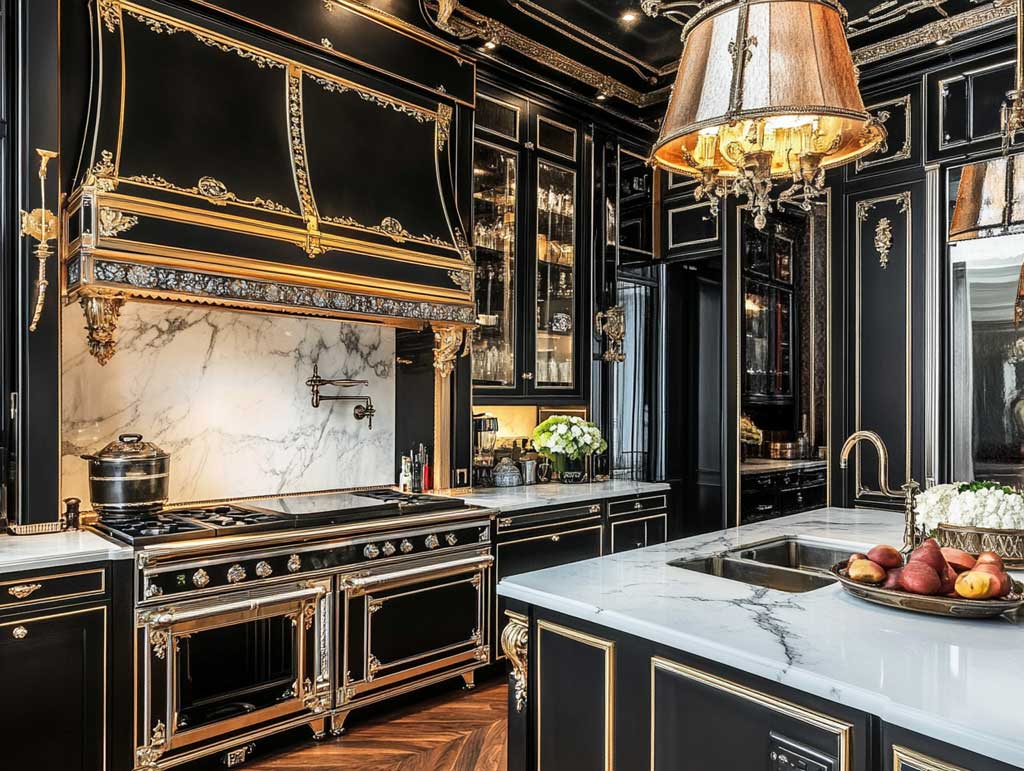
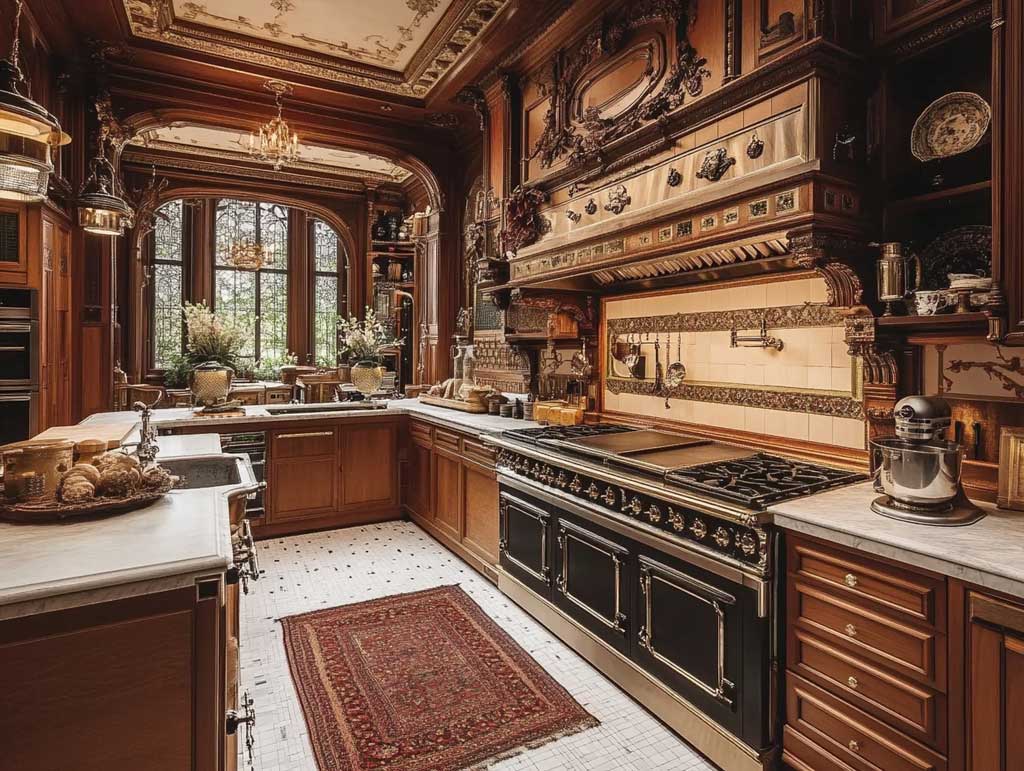


The fact that the same idea is echoed over and over again in design forums, magazines, and homes—Victorian charm meets modern functionality—proves that it does attach to the hearts of so many; it is attached to the soul of a person who truly appreciates history and art but at the same time is sensitive or conscious to the demands and needs of the modern world.
More than that, however, Victorian charm meeting modern functionality reminds us of something else: How timeless good design really is. It is a celebration of history, art, and innovation. This, in itself, is proof enough that the essence of beauty and function remains the same even if time bounds forward.
Victorian Kitchen Design Ideas: Tiles, Countertops, and Color Palettes
There are many styles and trends in interior design, which keep on changing, although there are always timeless designs to mix comfortably with contemporary elements for a space that is timeless and modern. One of such designs is a Victorian kitchen. It is one area that exudes out elegance and grandeur. The reason there is contemporary elegance in the design of a Victorian kitchen is that all these elements of design, when infused with a little bit of a contemporary element, come to life.
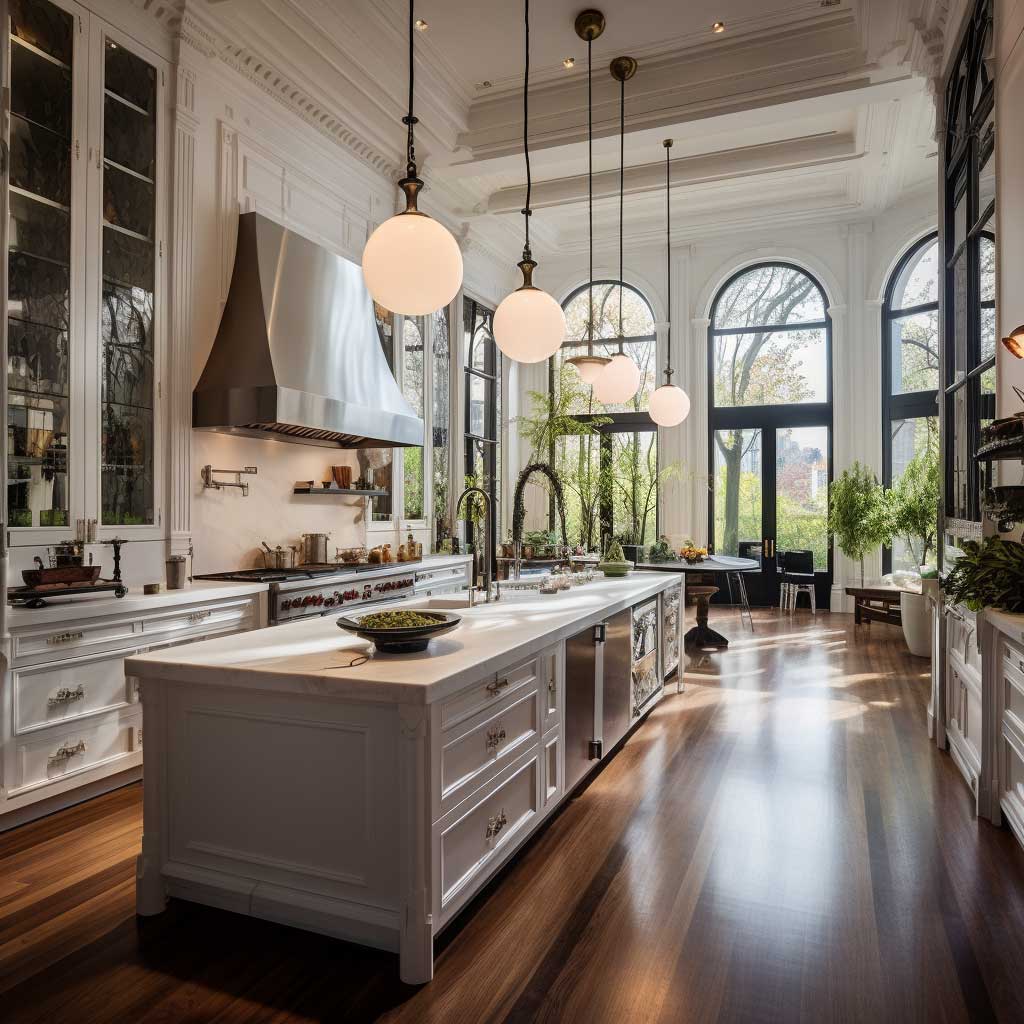


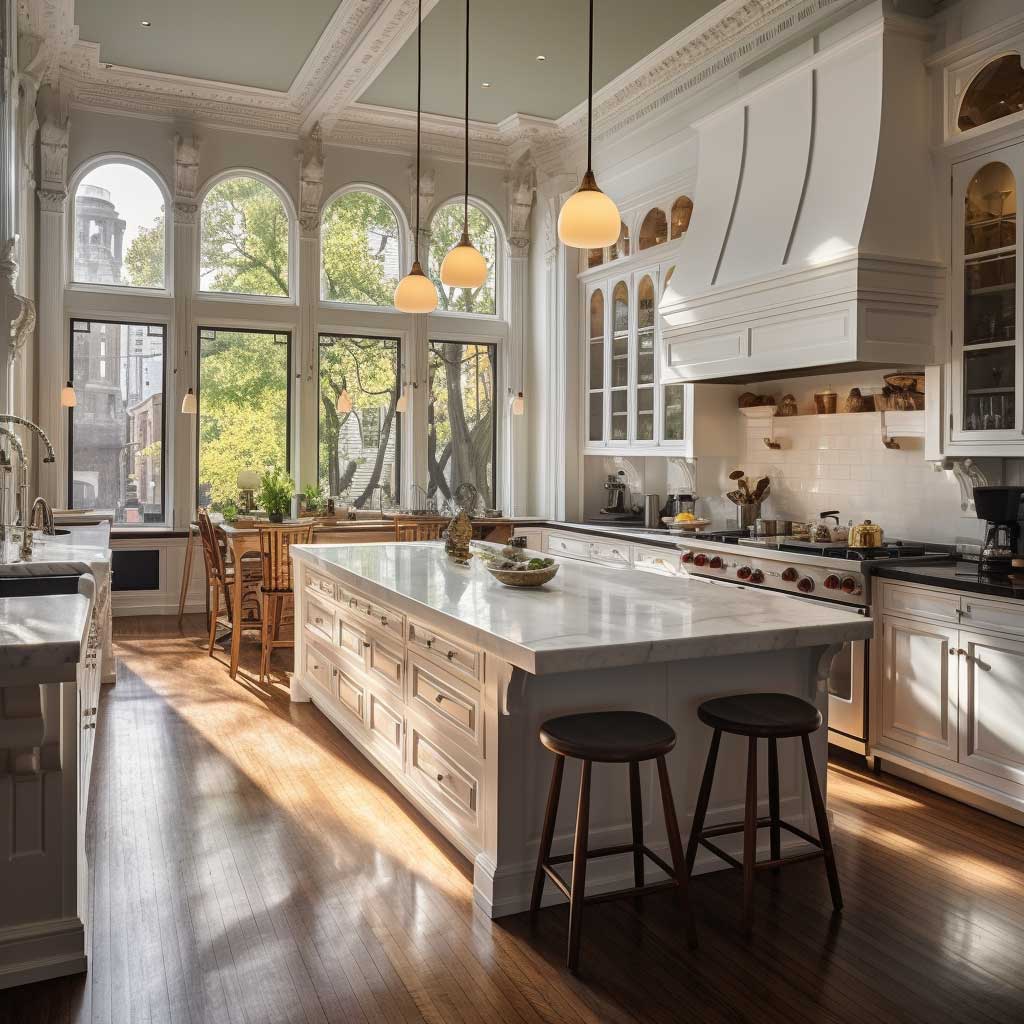
The closest attention to detail and ornamental design like none other went into the Victorian-era kitchens of grandeur. They seem to smack of that period of time when craftsmanship was at its height and everything was hand-worked over. Living with the least number of things one needs has become the norm now, so the need arises to make Victorian design more accordant with the needs of today’s modern world. For a solid overview of how open layouts, farm-style sinks, and antique cabinetry define the style, HGTV’s victorian kitchen design breakdown covers the fundamentals well.
Fired Earth makes an encaustic tile range that starts at $12 per square foot. That sounds reasonable until you realize you need 40 square feet for a backsplash. The good news? You can get the exact same geometric pattern from Merola Tile at Home Depot for $6.50 per square foot. I’ve used both. The Merola version is thinner, but once it’s grouted, nobody can tell the difference.
Honed Carrara marble on countertops looks perfect for about six weeks. Then the first lemon juice stain arrives, followed by an oil ring from a cast-iron skillet. If you want that white marble look in a victorian kitchen design without the anxiety, go with Caesarstone’s 5031 Statuario Maximus. It runs around $75 per square foot installed. My contractor tried talking me into quartz that was “just as good” for $45 per square foot, and the veining looked like a bad photocopy. You get what you pay for with engineered stone.
| Feature | Authentic Victorian Kitchen | Modern Victorian Kitchen |
|---|---|---|
| Cabinets | Freestanding pine dressers, open shelving | Raised-panel built-ins, soft-close hinges |
| Countertops | Butcher block, scrubbed pine | Honed quartz or soapstone, $60–$100/sq ft |
| Sink | Deep porcelain basin, cold water only | Fireclay apron-front, dual faucet handles |
| Flooring | Stone flags, unfinished wood planks | Encaustic tile or engineered hardwood |
| Lighting | Gas lamps, candles | Brass pendants with LED bulbs at 2700K |
| Color Palette | Whitewash, dark green, burgundy | Navy, deep green, cream, warm grey |
| Budget Range | N/A (historical) | $15,000–$45,000 full remodel |
Victorian era kitchens were never white. That’s a modern myth. Deep green, navy, burgundy, cream — those are the real victorian kitchen colors. Farrow & Ball’s Hague Blue No. 30 at $115 per gallon is my go-to for lower cabinets. Benjamin Moore’s Newburyport Blue HC-155 at $80 per gallon gets you 90% of the same look. Paint your uppers in a cream or off-white, never pure white. Pure white against victorian millwork looks clinical, like a dentist’s office pretending to be a parlor.
What makes Victorian kitchen design contemporary is the balance of elegance. It remains Victorian in design but is infused with a contemporary feel. It makes a place functional as well as beautiful at the same time.
Picture, if you will, a Victorian kitchen—all high ceilings, ornate tile, and grand chandeliers. Now, picture that with modern appliances and sleek countertops. It seems to give that feel of a kitchen out of contemporary display in the frame of a Victorian kitchen of elegance.


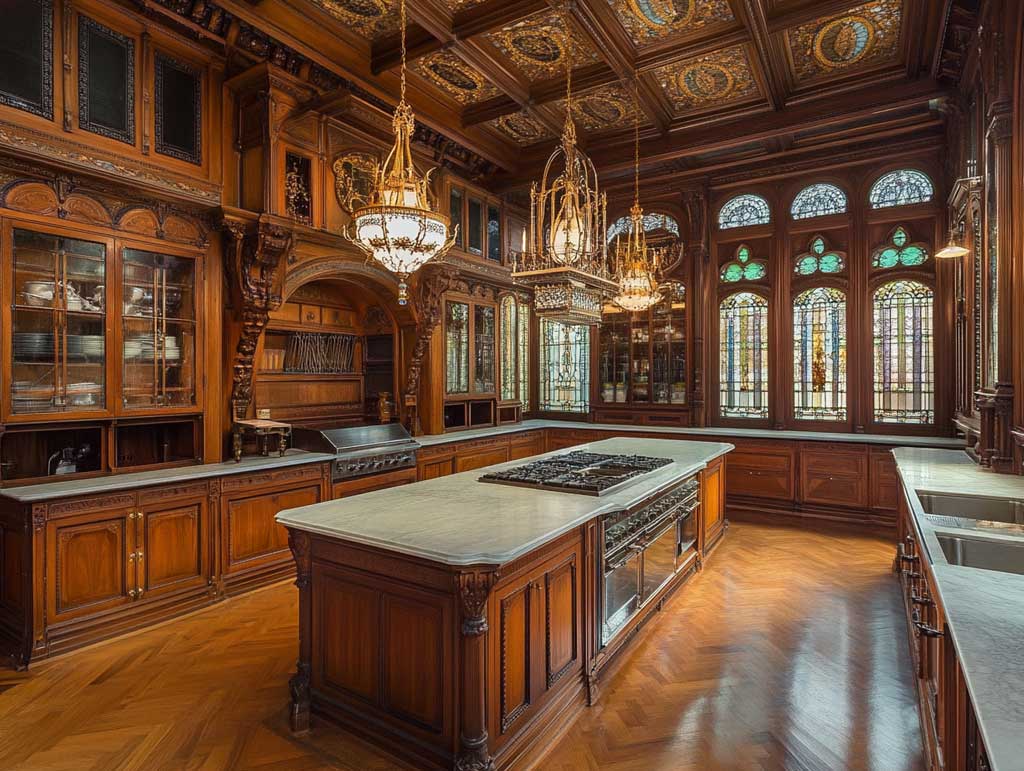
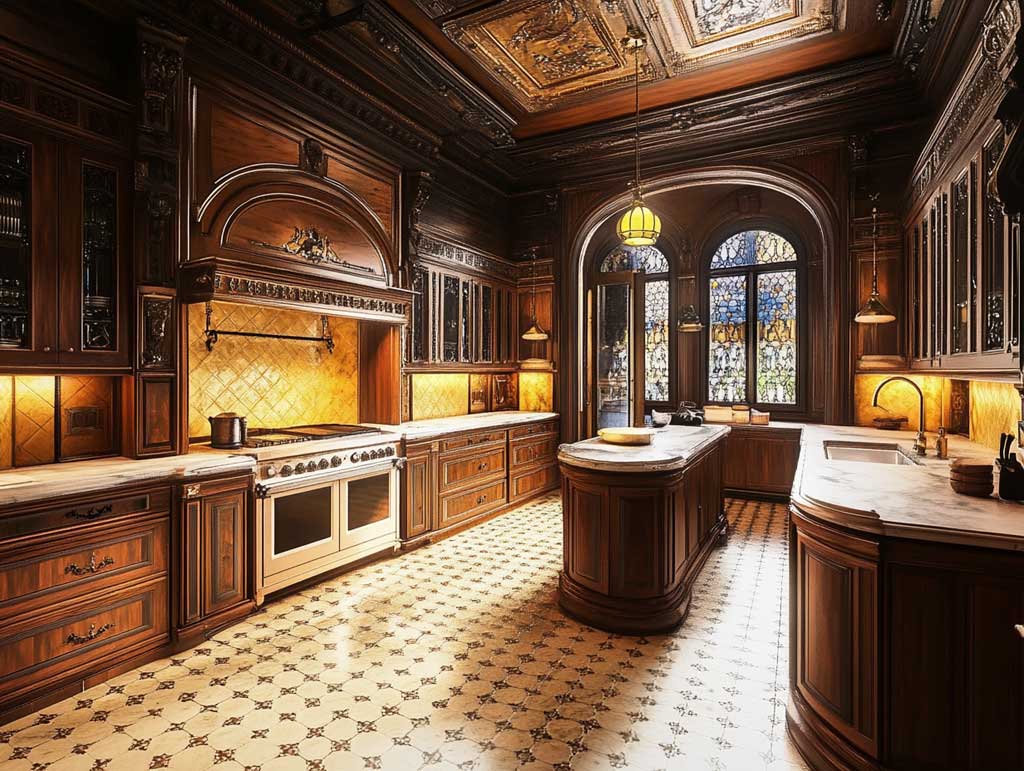
The flexibility in this design makes it great; the one who fancies history, art, or modernity all in one. It is both nostalgic and farsighted, for it is the perfect blend of the old and the new. That which only suggests in most kitchens from yesterday being applied in this respect, there is the circular definition of the concept of contemporary elegance in Victorian kitchen design. This only goes around design circles lately, proving its burgeoning popularity. A rectification of the view that is held on kitchen spaces is promised to be homeowner-and-designer-friendly.
In other words, current elegance in Victorian kitchen design is really not a trend; it is a transition. It’s about fulfillment and living for the future, but at the same time, it refers to the spaces that are timeless, elegant, and functional.
Modern Victorian Kitchen Ideas for Real Homes
The Victorian era had a very long narrative and so much cultural relevance that it has forced over onto the world of design. We create spaces today that are inspired by that era in history, designed to meet the needs of now, in the past. One such design space is the kitchen, which is often referred to as the heart of the home. The kitchen is the heart of the home, but Victorian-inspired spaces like these are a testament to the timelessness of Victorian design and the adaptability of modern design elements.
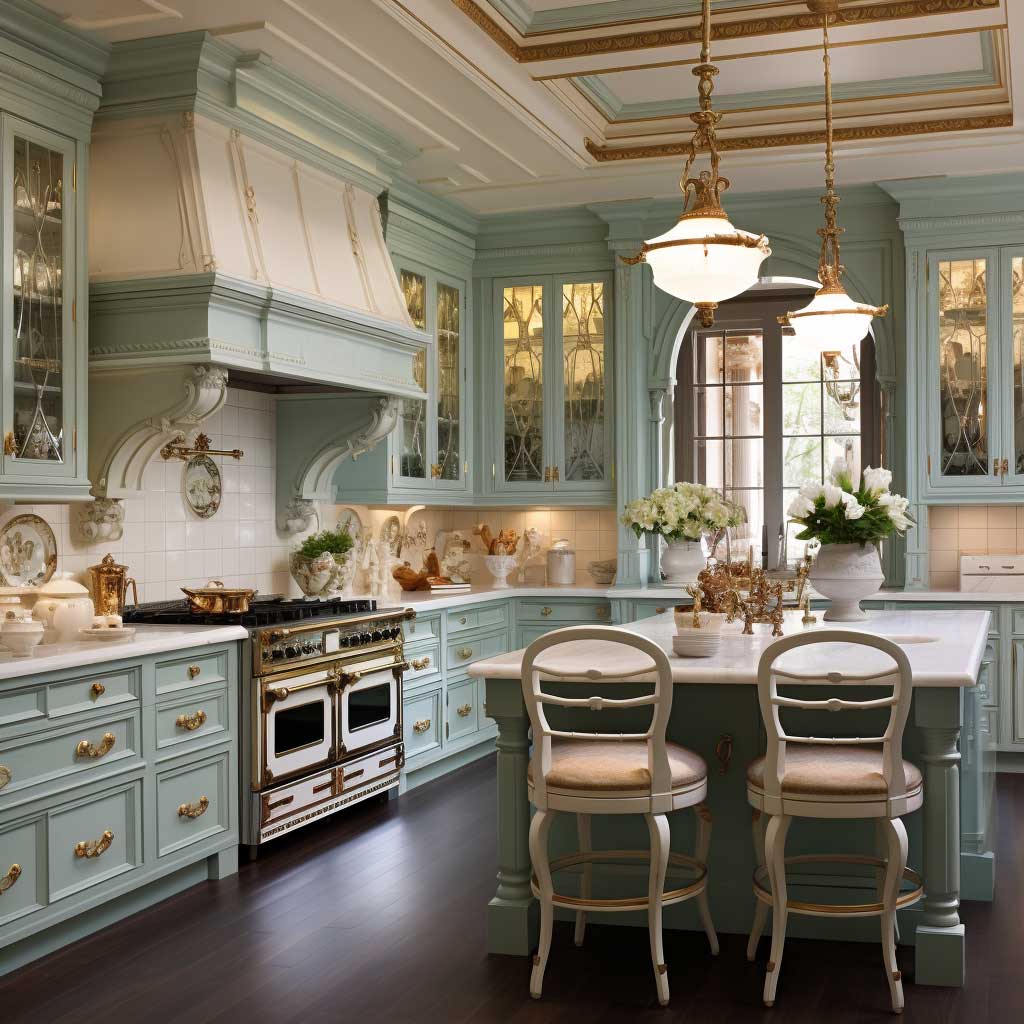

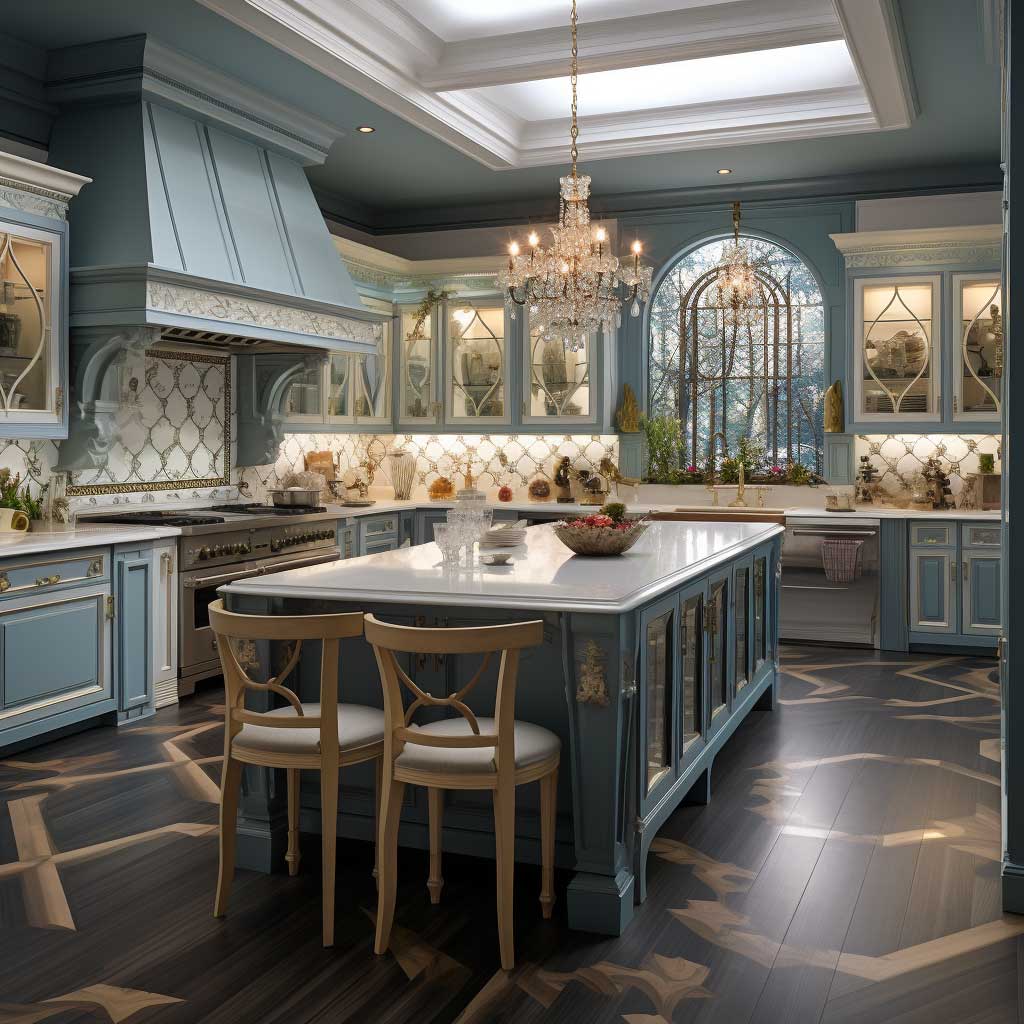
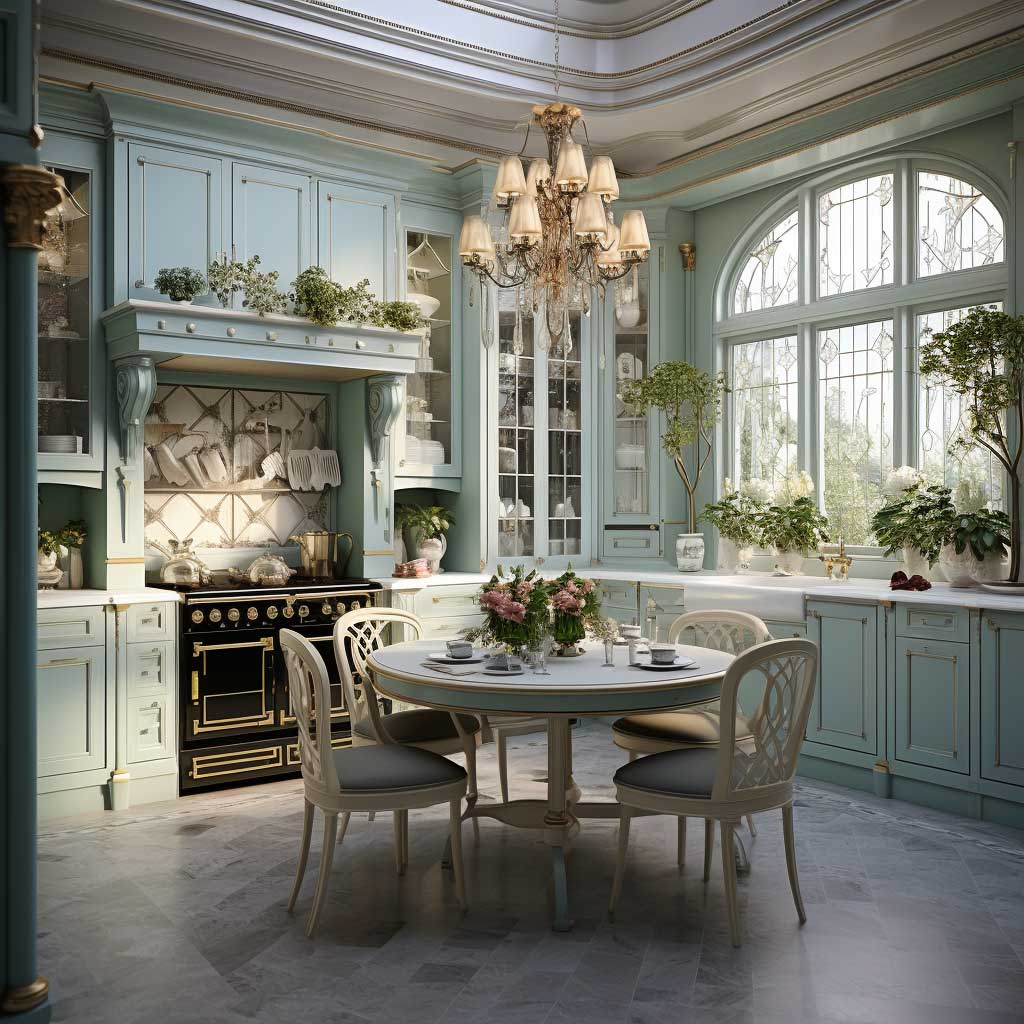
Their opulence, luxury, and elegance are spoken of through the Victorian design, which was inspired by rich details, ornate patterns, as well as the sense of grandeur. But this is different from how things are around the world right now, as functionality and efficiency are the names of the game. The color palette alone can shift the entire mood — for deeper inspiration on period-accurate hues, see these Victorian color schemes for interior design that pair well with kitchen cabinetry and tile.
Modern kitchen in victorian house projects fail when people pick sides. Full modern and the house rejects it — you get a spaceship kitchen inside a 130-year-old shell. Full period reproduction and you’re stuck cooking on a range that takes 40 minutes to preheat. The fix is surprisingly simple: keep the shell victorian and the guts modern.
Thermador’s Pro Grand 48-inch range at $12,000 looks contemporary but reads traditional when flanked by a carved mantel surround.DERA’s La Cornue knockoff at $3,800 gives you the same visual weight for a third of the price. I helped a friend install one last year. Her kitchen has 9-foot ceilings, original crown molding, and this massive cream-colored range sitting where a fireplace used to be. Nobody asks about the brand. Everybody asks about the feeling.
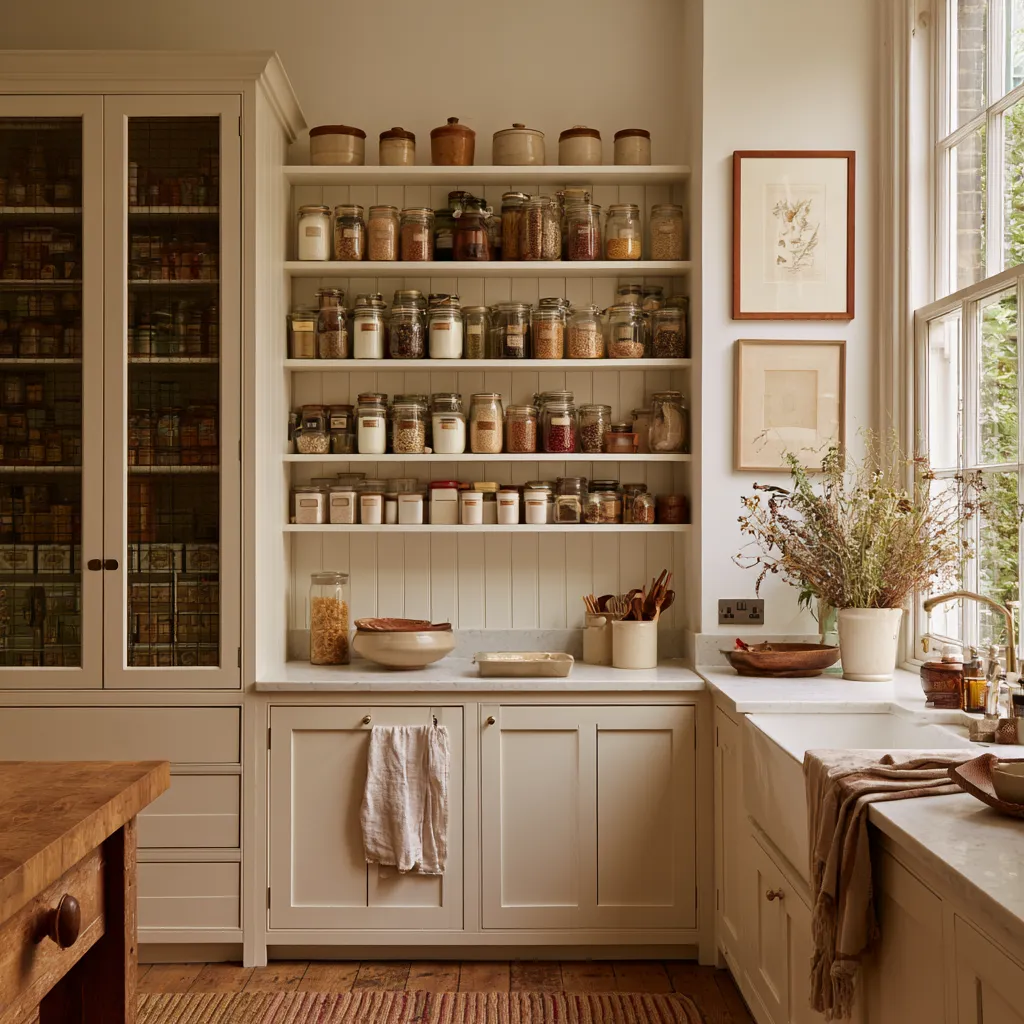
A butler’s pantry will change your life if your victorian house kitchen has the footprint for it. Even a 4-by-6-foot closet conversion works. You hide the microwave, the toaster, the blender — all the modern stuff that ruins a victorian kitchen aesthetic. My butler’s pantry cost $2,200 to build out with IKEA SEKTION frames and custom fronts from Semihandmade. Best money I’ve spent on the entire renovation.
The best idea behind today’s Victorian-inspired kitchen oasis is mixing the old with the new. It is maintaining the spirit of Victorian eras but with modern building conveniences. It is to create a space that is functional but beautiful.
Imagine an all-Victorian kitchen, complete with Victorian cabinets and tiles, or even grand chandeliers, but fitted with full modern gadgets, down to the streamlined countertops and the most ergonomic designs. Two worlds are combined into one, a mix of nostalgia and foresight.

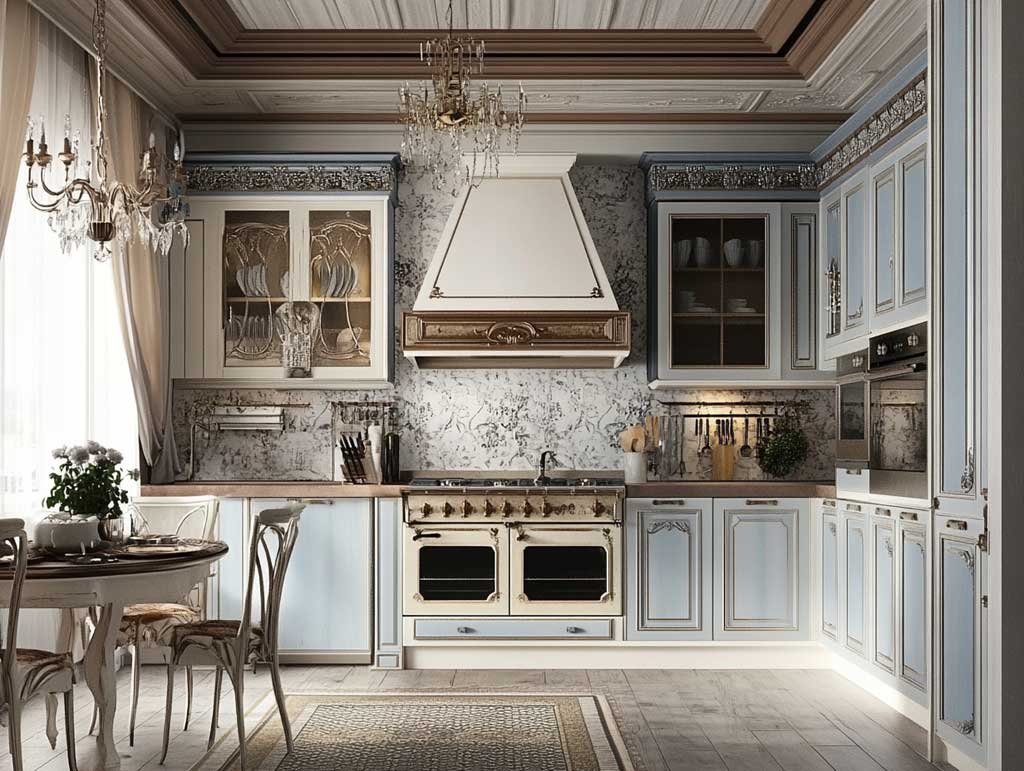


What makes this kitchen an oasis in the Victorian style is the great versatility. It appeals to people with a real love for history and art, not to mention those who find great value in the contrasts of modern design. It is really timeless, yet very contemporary, and it blends with great bits of the past and future. The repetition of the concept today finds itself as a kitchen oasis inspired by the Victorian age in design circles. It is a trend with which home owners and designers are equally identifying; in fact, it assures a complete redefinition in how space in a kitchen is perceived.
In conclusion, this new Victorian kitchen oasis is not design only, but movement. It’s a past celebration while feeling the future. Spaces created, timeless, elegant, and functional.
FAQ
What did a Victorian kitchen look like?
How much does a modern Victorian kitchen renovation cost?
Can you put a modern kitchen in a Victorian house?
What colors are best for a Victorian style kitchen?
What hardware works best for Victorian kitchen cabinets?
How to Design a Victorian Style Kitchen
A step-by-step plan for turning any kitchen into a victorian style kitchen that works for modern life.
Tools needed:
- Tape measure
- Level
- Paint roller and brushes
- Drill with cabinet hardware bits
Materials needed:
- Raised-panel cabinet doors
- Brass cup-pull hardware
- Honed quartz or soapstone countertops
- Encaustic or geometric floor tiles
- Period-appropriate paint (deep green, navy, or cream)
- Fireclay apron-front sink
- Brass pendant light fixtures
Choose your cabinet door profile
Select raised-panel or beaded Shaker doors. Avoid flat-panel slab doors — they read modern no matter what molding you add around them. Kraftmaid Marquette or IKEA BODBYN are solid starting points at different price levels.
Lock in your color palette
Paint lower cabinets in a deep tone — Farrow & Ball Hague Blue or Benjamin Moore Newburyport Blue. Paint uppers in cream or warm white. Never use pure white; it fights victorian millwork.
Install brass hardware throughout
Match every metal in the room — cabinet pulls, faucet, light fixtures, hinges — to one finish. Brass or unlacquered brass reads the most authentically victorian. Budget $300–$600 for a full kitchen set.
Select countertops and a sink
Honed quartz with marble veining or soapstone for countertops. Pair with a fireclay apron-front sink — Kohler Whitehaven at $900 or Sinkology at $450 for a budget option. Skip undermount stainless steel; it looks wrong here.
Add period-style lighting
Hang two to three brass pendant fixtures over the island or worktable. Use LED bulbs at 2700K for warm light. Schoolhouse Electric and Rejuvenation sell fixtures in the $180–$400 range that look period-correct.
Hide modern appliances behind victorian panels
Panel-ready dishwashers and refrigerators disappear behind matching cabinet doors. If budget is tight, a butler’s pantry — even a converted closet — hides microwaves, toasters, and everything else that breaks the look.
Why These Victorian Kitchen Ideas Still Work
Victorian kitchens survived 150 years of design trends because they got the basics right: solid cabinetry, warm color palettes, hardware that feels heavy in your hand. The ornate details were never just decoration. They were proof that someone cared enough to get the trim right.
Modern victorian kitchen design works the same way. You’re not recreating a museum. You’re borrowing the parts that still make sense — raised panels, deep sinks, brass fixtures — and stuffing modern appliances behind them. The shell says 1890. The guts say 2026.
Every victorian house kitchen I’ve worked on taught me the same lesson: the layout matters more than the finish. Get the flow right, hide the microwave, pick one metal finish, and the rest takes care of itself.