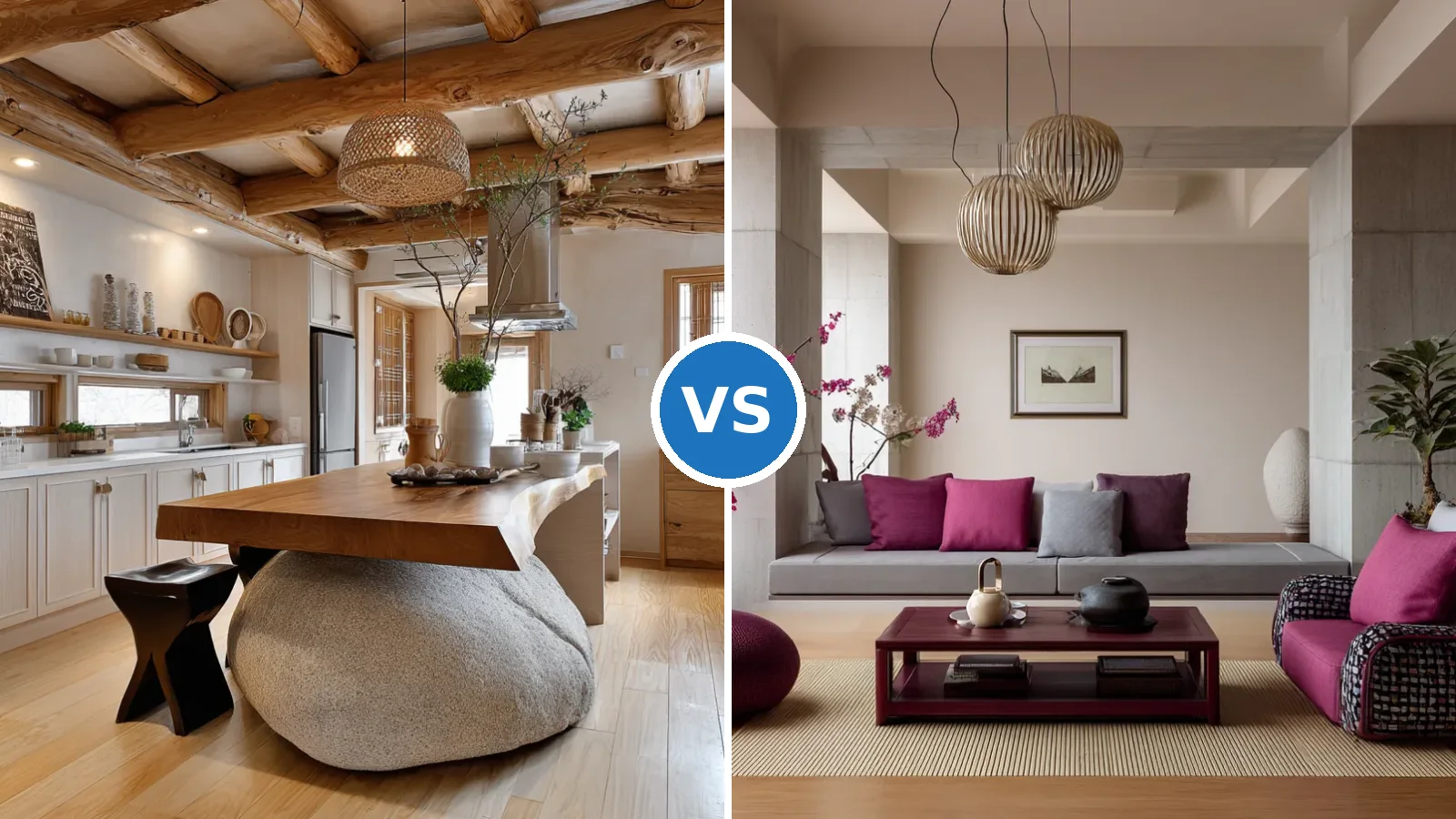
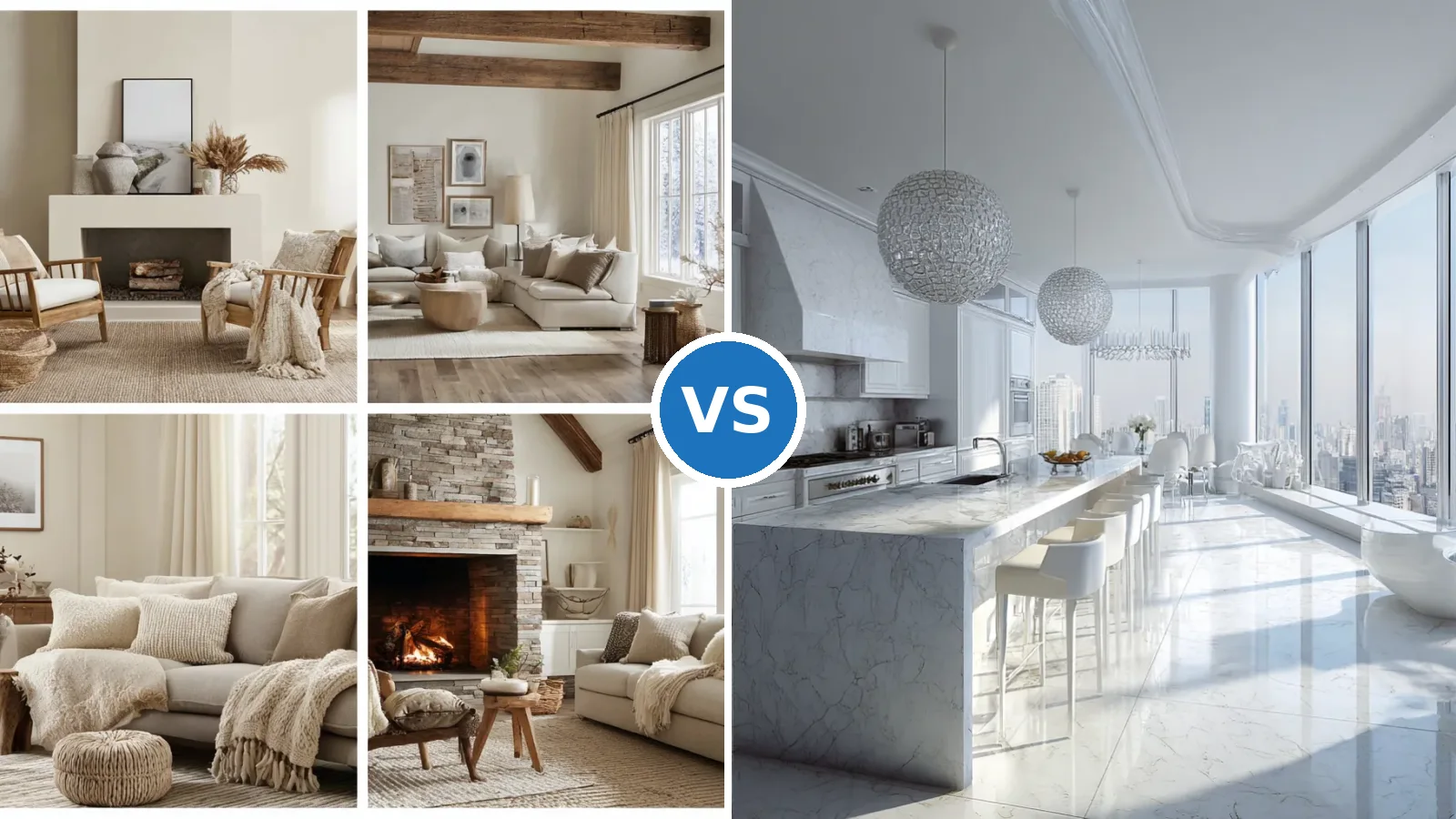
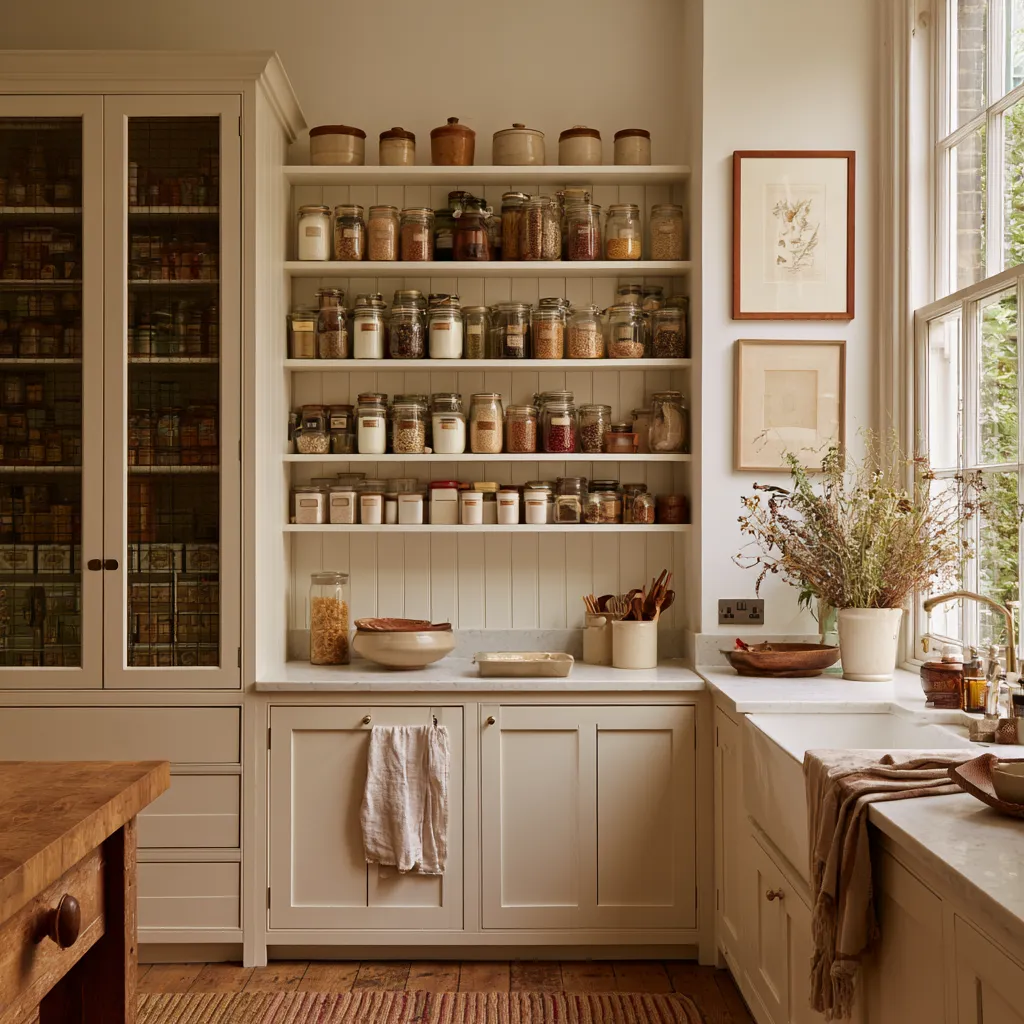
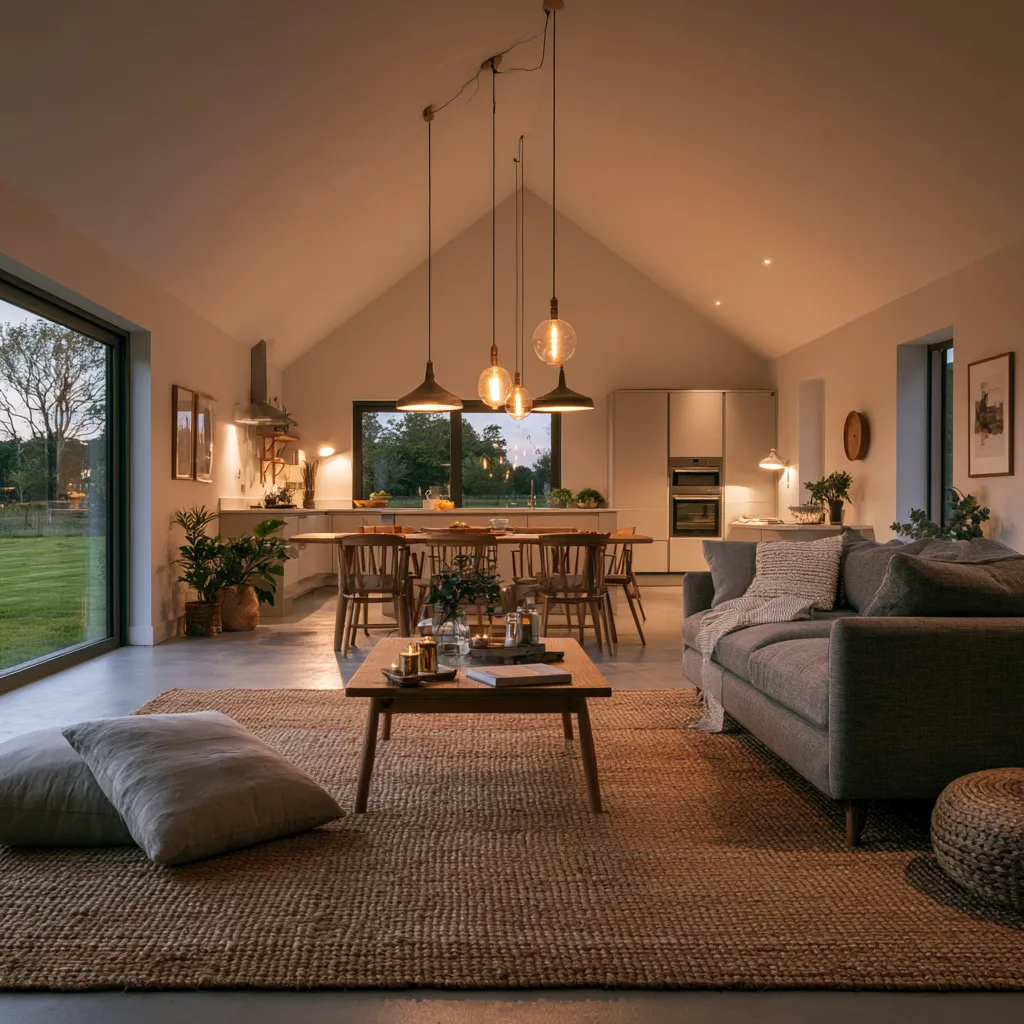
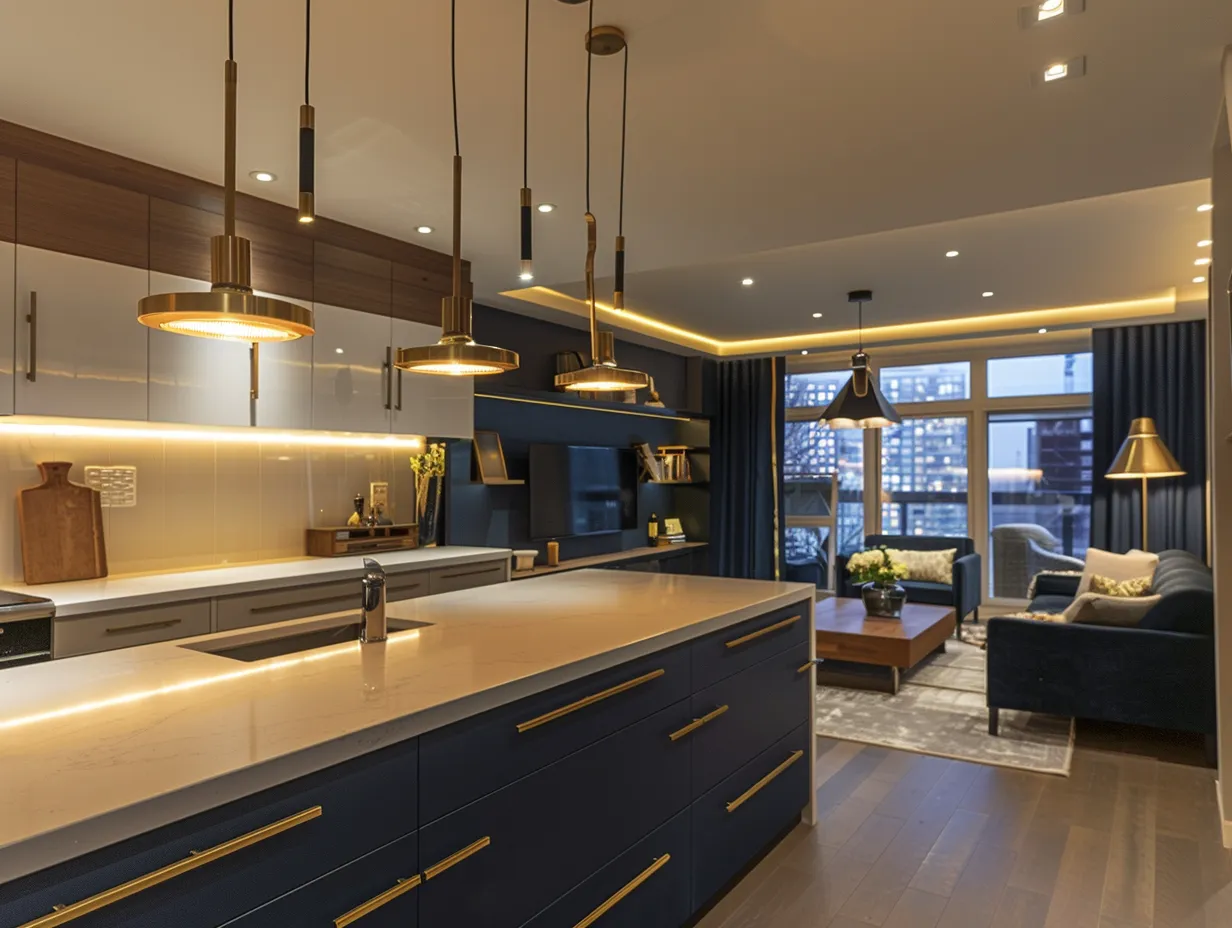
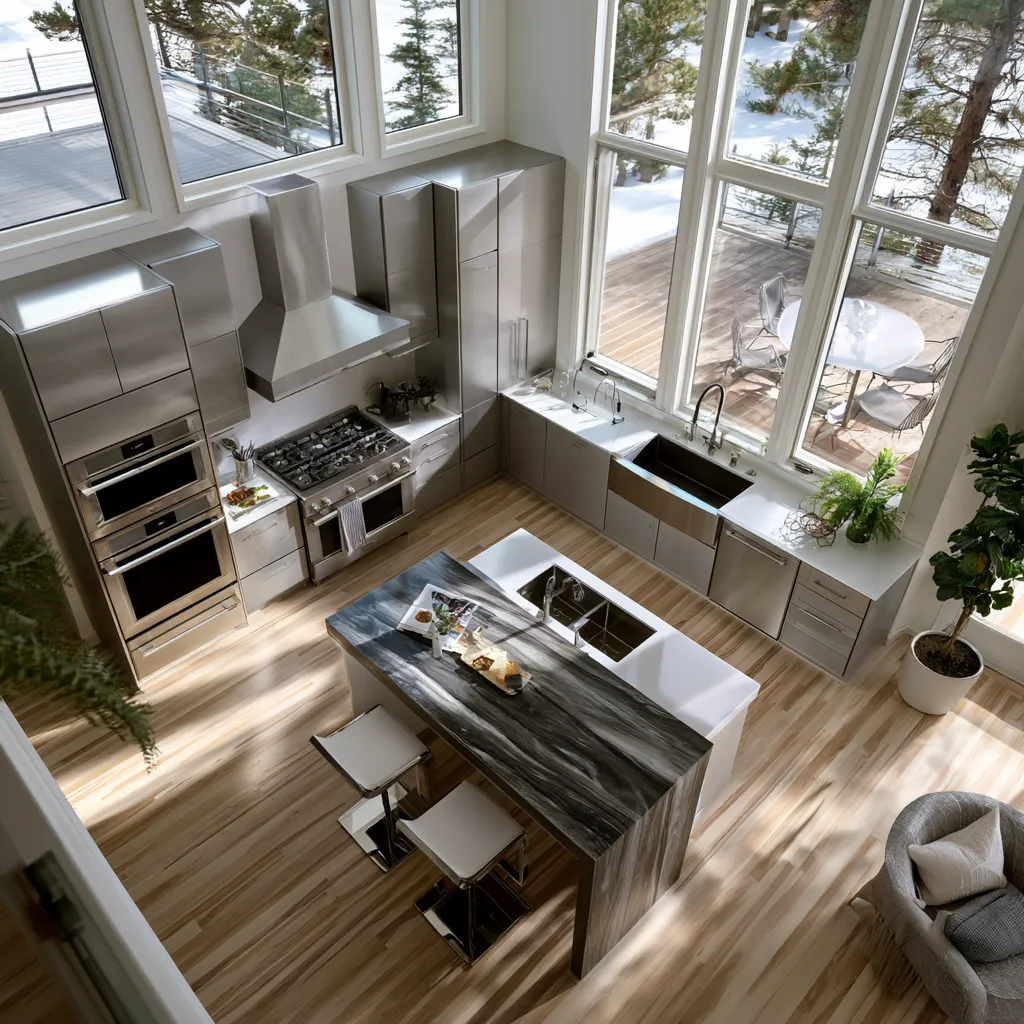
Modern oak kitchen design has outgrown its farmhouse-only reputation, and what’s replacing it is sharper and more considered than most renovation blogs let on. I’ve visited dozens of contemporary kitchens over the past year, and the ones that stop me in my tracks consistently share one thing — oak used with restraint, precision, and hardware that doesn’t apologize. You’ll notice three distinct directions dominating right now: flat-front oak cabinetry paired with black or brushed brass fittings, open-plan layouts where oak anchors the entire social zone, and statement islands with grain patterns treated like artwork. Each approach solves a different problem, and none of them look like your grandmother’s kitchen.
Contemporary oak kitchens are holding steady at around $18,000–$35,000 for a mid-range full renovation in the US, according to 2024 National Kitchen & Bath Association data. That range shifts fast depending on whether you go rift-cut white oak versus plain-sawn red oak — the difference in price per linear foot can hit $80–$120. Worth knowing before you fall in love with a finish your budget can’t support.
Quick Scan
- Section 1 — Flat-Front Cabinetry: How oak cabinet grain direction changes the entire mood of a contemporary kitchen
- Section 2 — Open-Plan Layouts: Why oak is the only wood that zones a space without needing a wall
- Section 3 — Statement Island Designs: The grain pattern placement trick designers charge extra for
- FAQ: Oak dining tables, small kitchen fixes, finish longevity, and what not to pair with oak
Flat-Front Oak Cabinetry Changed What Contemporary Kitchens Look Like
Flat-front cabinetry — also called slab-door style — is where oak’s grain does all the heavy lifting. I’ve spec’d this in three kitchens now and the difference between rift-cut and plain-sawn oak on a flat door is not subtle. Rift-cut gives you tight, parallel lines running straight and vertical; plain-sawn gives you cathedral arches that read as traditional even on the sleekest door profile. If your goal is a genuinely contemporary oak kitchen, rift-cut white oak from brands like Reform or Henrybuilt is the move, starting around $650–$900 per door in 2024. Plain-sawn at $280–$450 per door will undercut your modern intent every time.
Hardware finish matters more than most people admit. Brushed brass on white oak reads warm and editorial — it’s the pairing I stole from a London kitchen shoot and immediately recommended to a client in Austin. Matte black reads cooler and more industrial, which works when your countertop is honed Calacatta marble or concrete. Avoid polished chrome on natural oak. The combination looks like 2008 and nobody needs that.
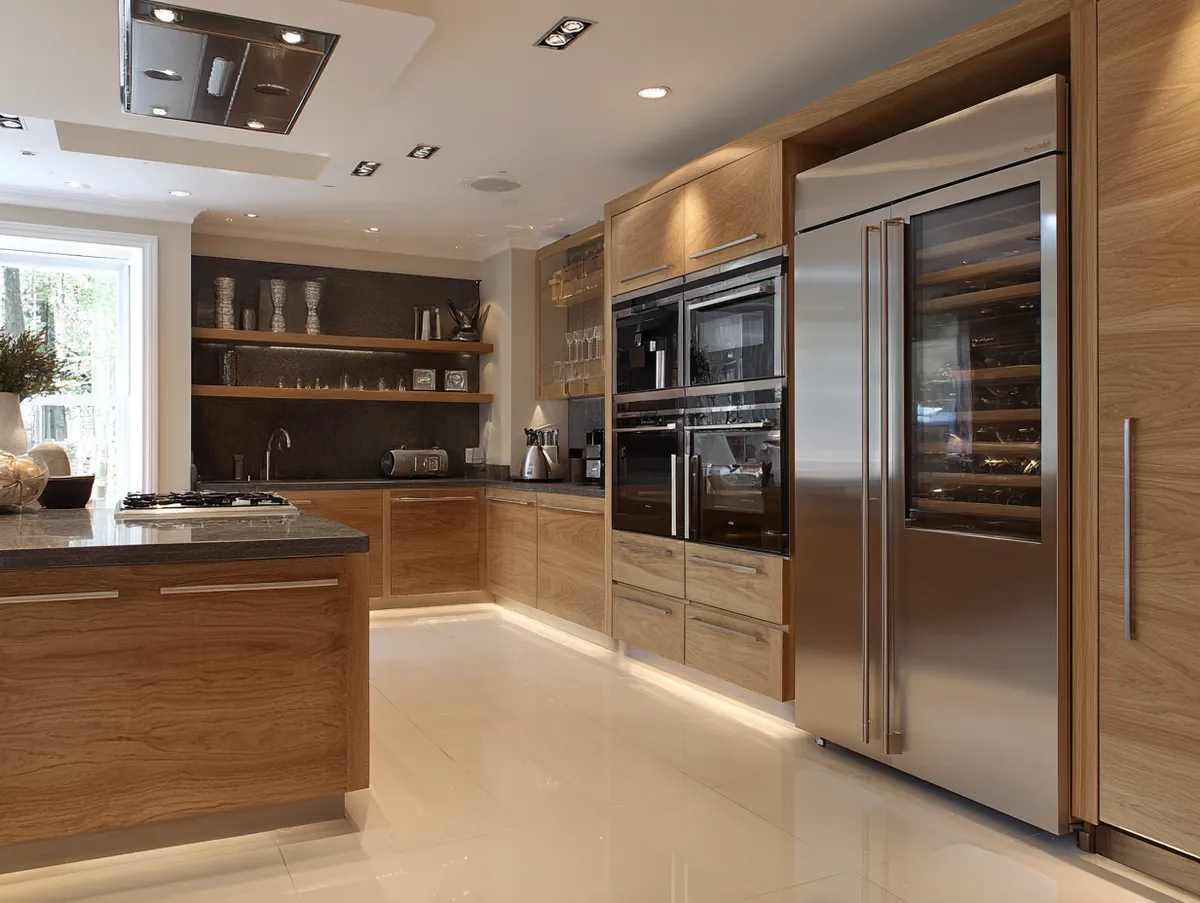
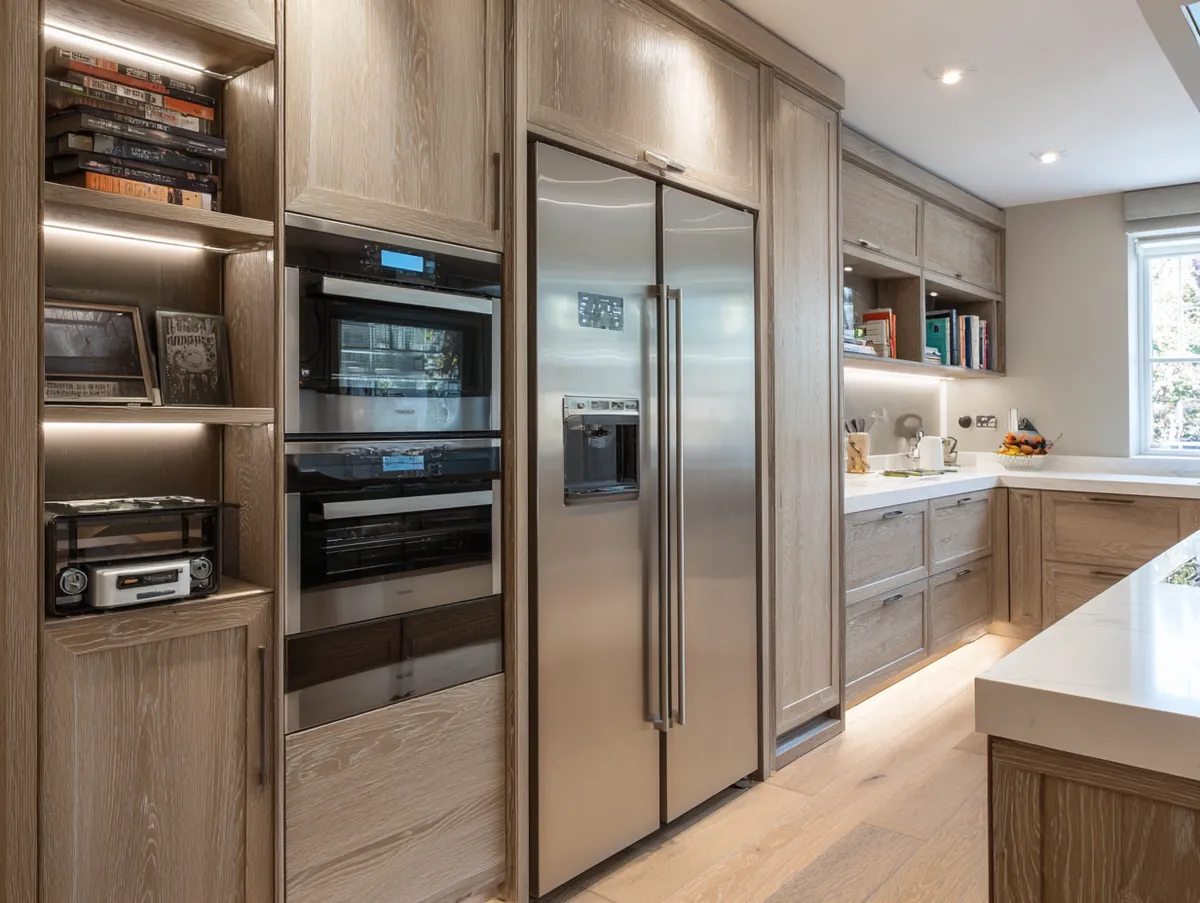
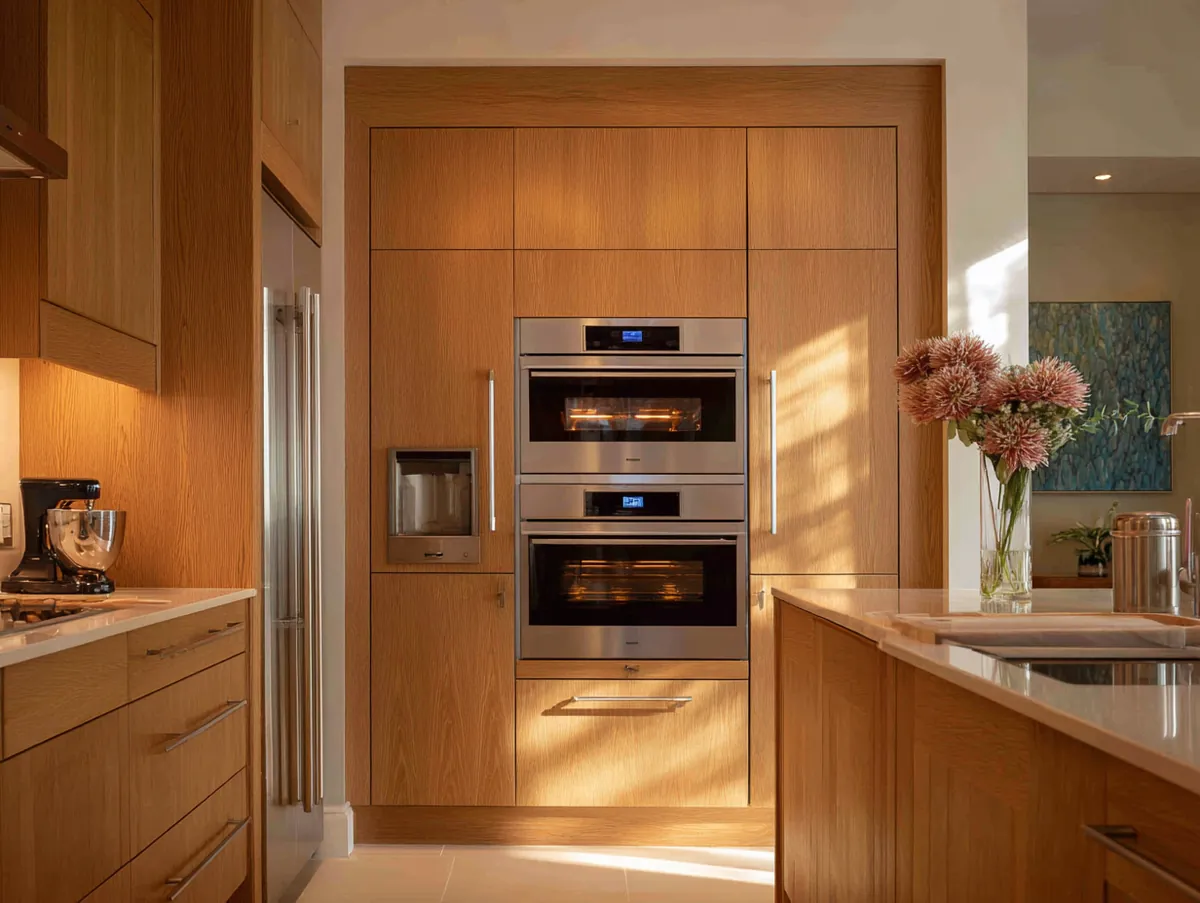
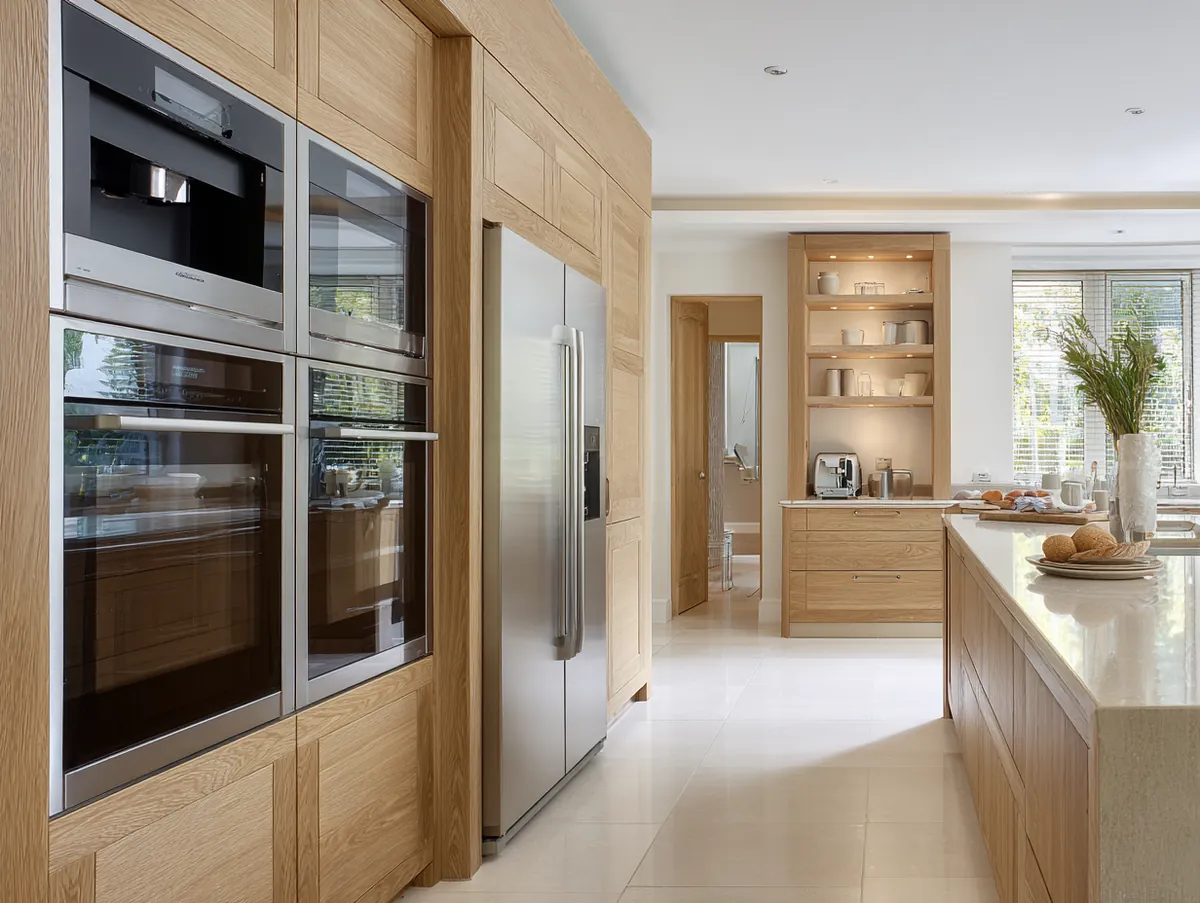
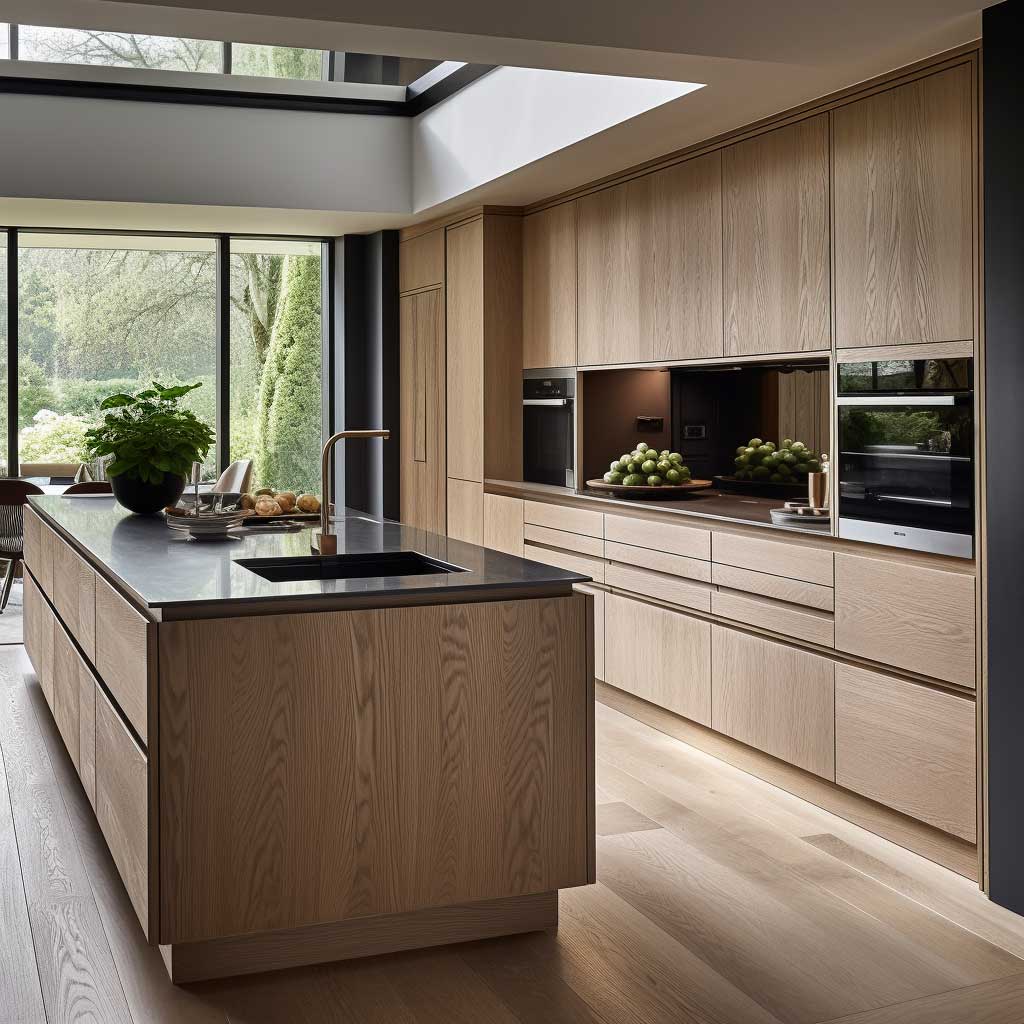
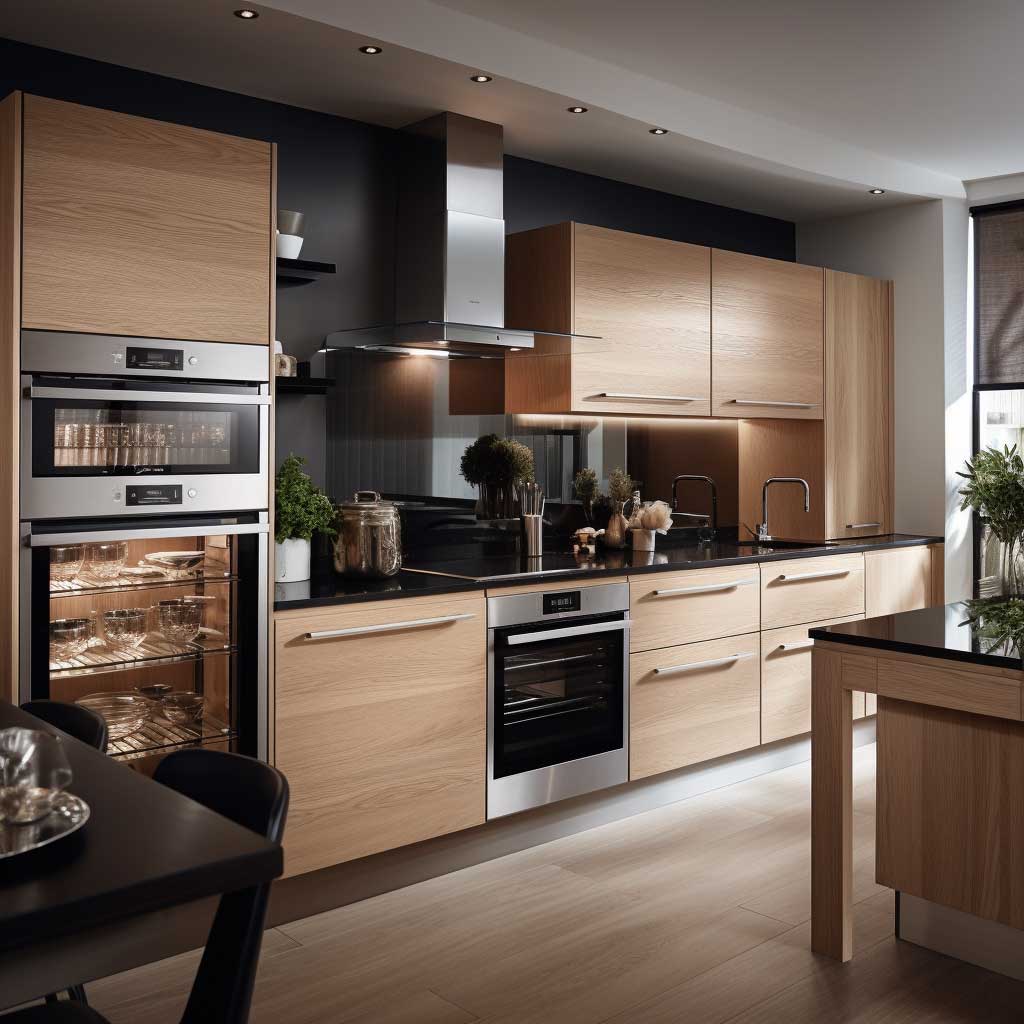


Finish selection is where most DIY oak renovations go wrong. Waterborne polyurethane over raw oak yellows within 18 months in a south-facing kitchen — I’ve watched it happen to a $40,000 renovation in Phoenix that looked dated before the warranty expired. Rubio Monocoat Oil Plus 2C at around $95 per liter gives you a matte, dead-flat finish that ages clean and feeds the grain rather than sitting on top of it. Osmo Polyx-Oil is a slightly more affordable option at $75 per liter and handles steam and grease better in high-use kitchens.
What doesn’t work: staining oak to imitate walnut. You’ll never get the depth right because oak’s ray flecks absorb stain differently than walnut’s long parallel grain. The result looks patchy and cheap against modern appliances. If you want dark wood, buy dark wood. Oak is at its strongest in its natural honey or white-blonde range, not pretending to be something else. According to Homes & Gardens, the hardware finish is the single most important update you can make to an existing oak cabinet scheme to bring it into the contemporary range.
Don’t Do This with Oak Cabinetry
- Don’t pair oak with warm white walls. Cream on oak looks muddy. Go cool white — Benjamin Moore Chantilly Lace (OC-65) or Sherwin-Williams Pure White (SW 7005) — for enough contrast to let the grain read properly.
- Don’t choose raised-panel oak doors for a contemporary kitchen. The profile immediately reads traditional, and no amount of modern hardware will fix it.
- Don’t skip the UV-blocking topcoat on south-facing kitchens. Sun bleaches plain-sawn oak unevenly and you’ll have a two-tone cabinet situation within two years.
- Don’t mix oak cabinetry finishes — matte uppers with satin lowers, for example. The sheen difference becomes the focal point of the room, and not in a good way.
Open-Plan Oak Kitchens Work Because the Wood Zones Without Walls
Oak in an open-plan kitchen does something no painted cabinet can — it reads as a distinct material zone from across the room. My go-to move is extending the oak from the kitchen cabinetry into a floating shelf run along the adjacent dining wall. Suddenly the kitchen doesn’t stop at the counter; it bleeds into the social space in a way that feels deliberate rather than accidental. IKEA’s SEKTION frame with custom Semihandmade oak fronts gets you 80% of the bespoke look at around $4,000–$8,000 for a medium kitchen. It’s not the same as Reform or DeVOL, but the grain reads identically in photographs and that matters if you’re staging to sell.
Natural light is the variable most designers underestimate in oak open-plan layouts. Oak reflects warm yellow light, so if your main windows face north, the kitchen will feel dimmer than a white cabinet scheme. You’ll need to compensate with 3000K-4000K LED recessed lighting — cooler than you’d use in a living room but warmer than office lighting. I made the mistake of speccing 5000K LEDs in an oak open-plan last year and the client called me within a week. Lesson learned. Stick to Lutron Caséta dimmers and warm-toned bulbs at around $60–$90 per fixture.
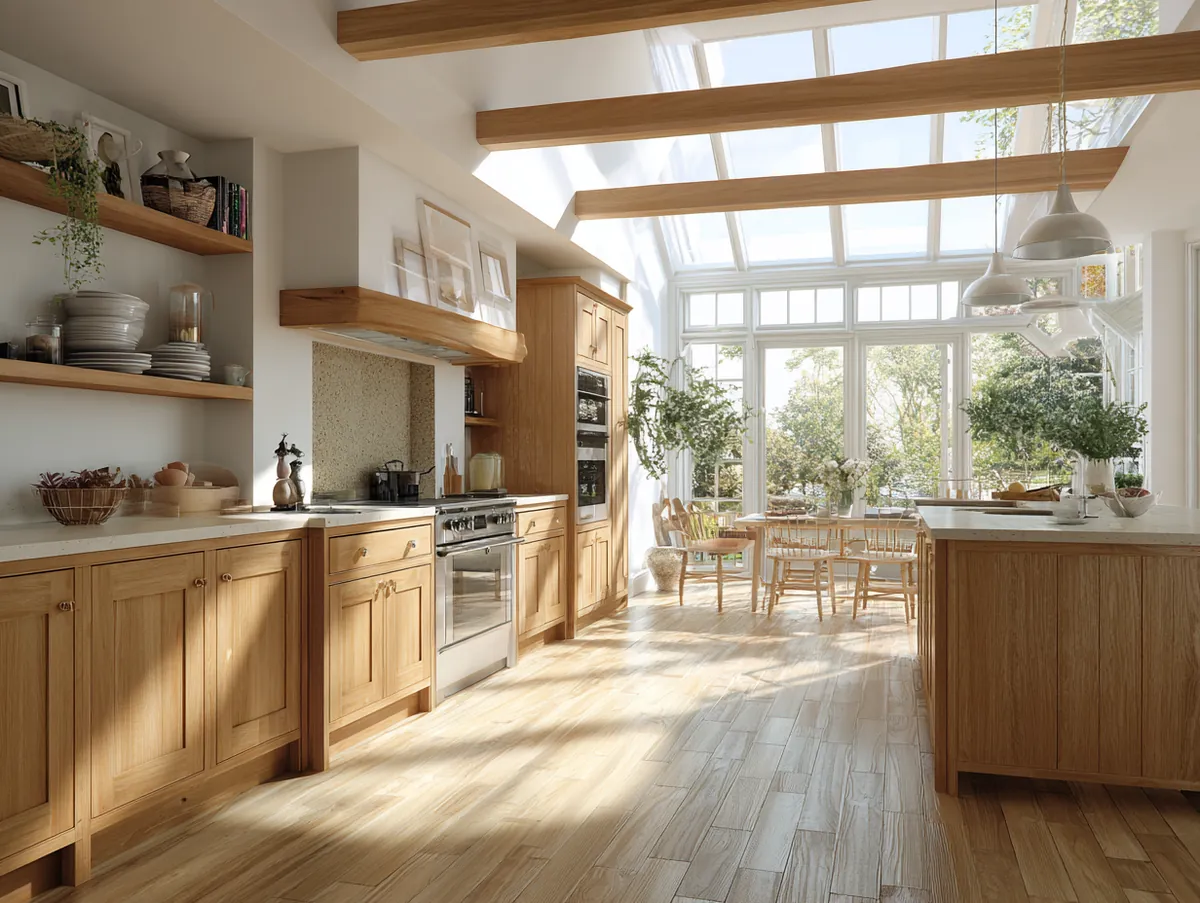
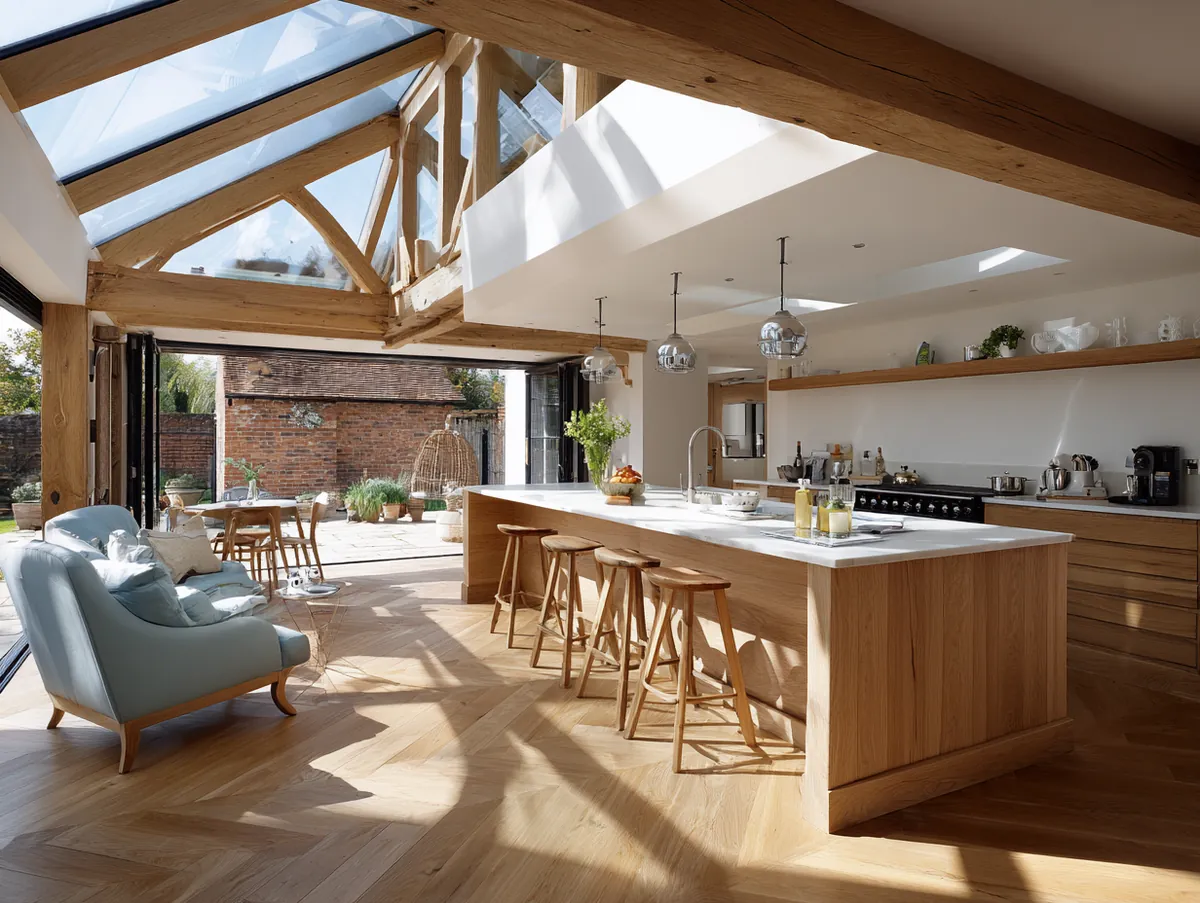
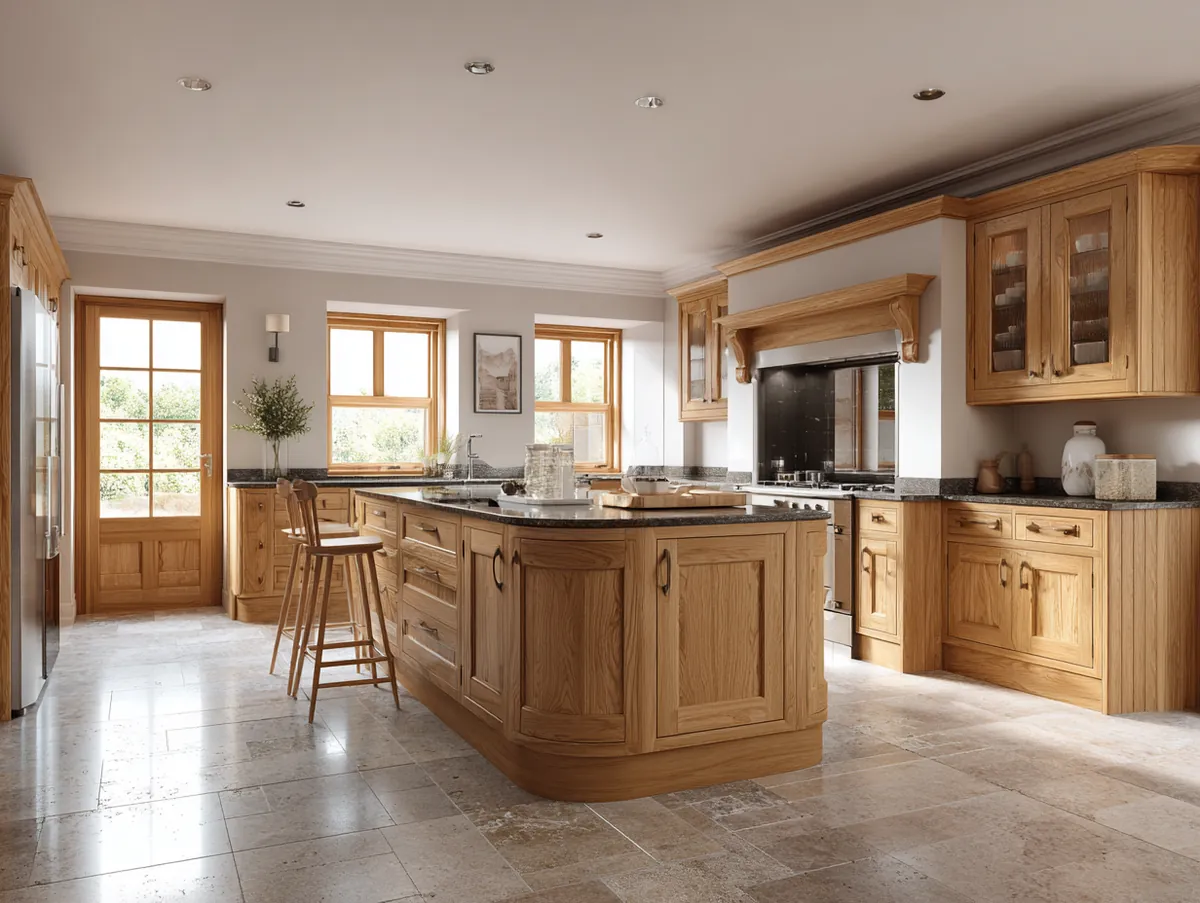
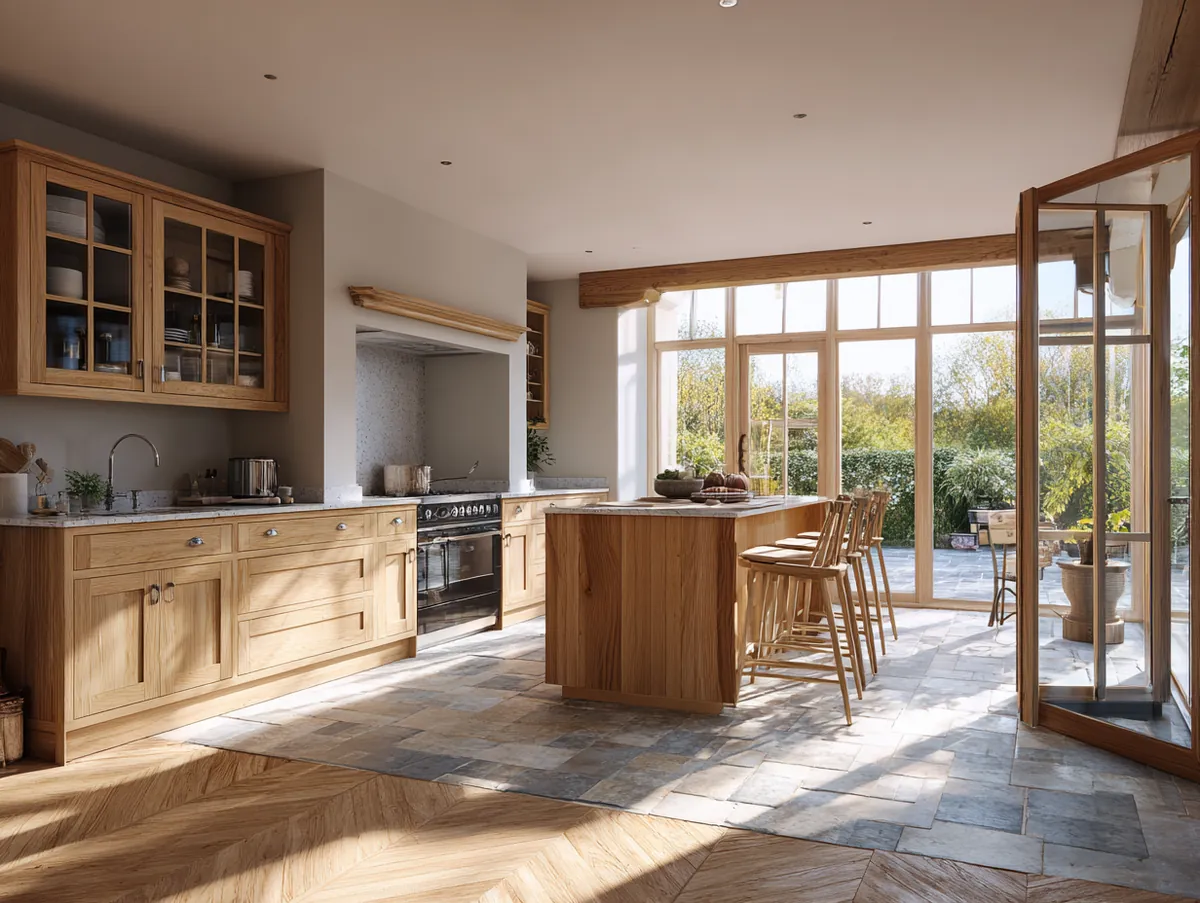


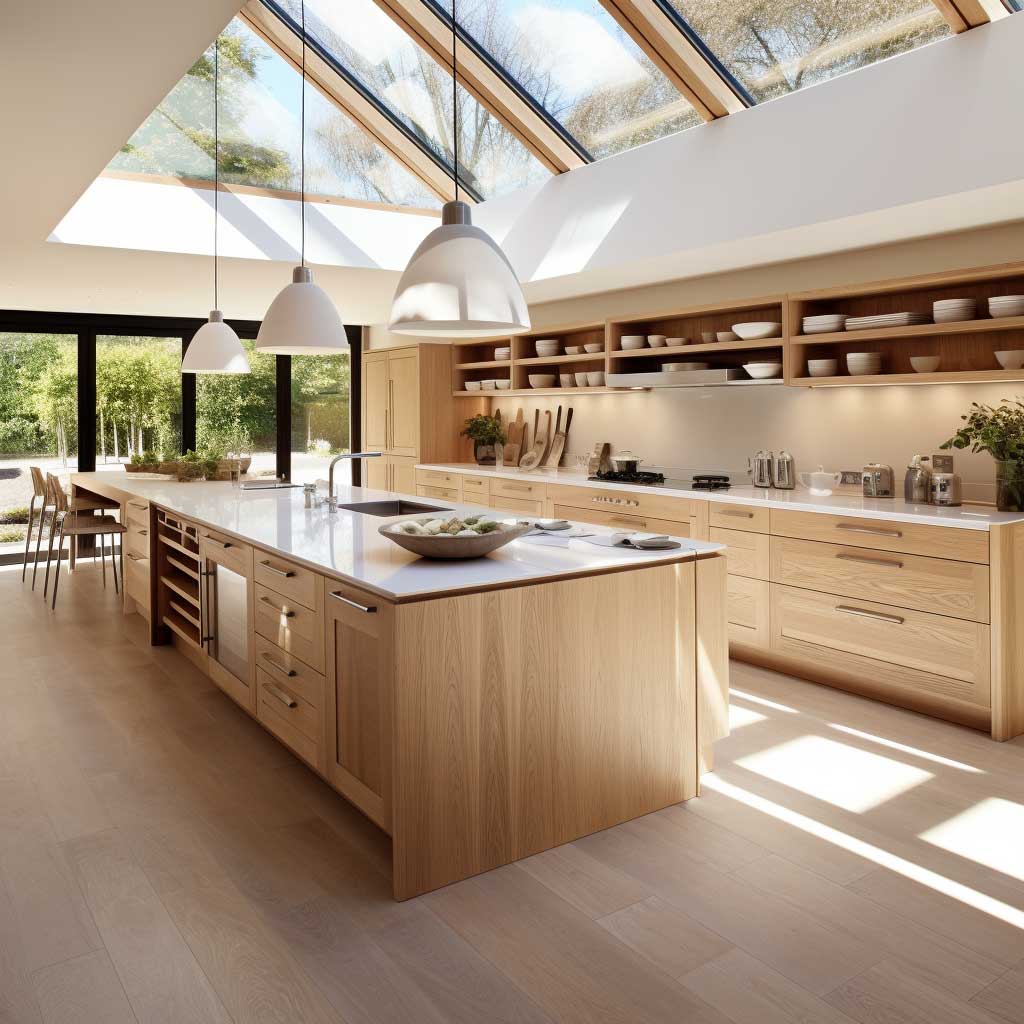
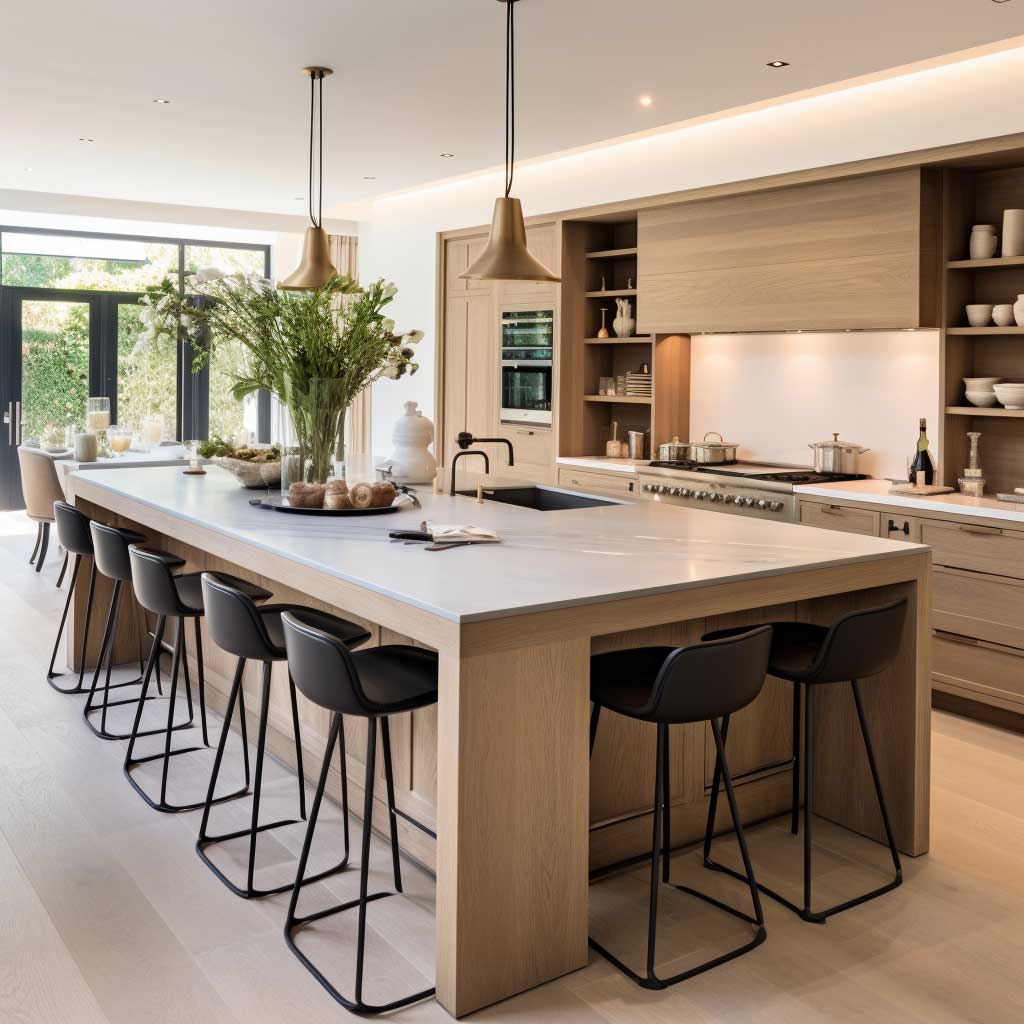
Zoning in an open-plan oak kitchen is less about furniture placement and more about material transitions. Think of it like a river delta — the oak is the water, and you’re controlling where it spreads. Use oak on the kitchen island base but switch to painted MDF on the perimeter cabinetry. The contrast defines the island as a separate zone without needing a step change in flooring or a dropped ceiling. I’ve used this technique in four open-plan renovations now and it works every time. The oak island becomes the gravitational center of the whole space. For further open-plan layout strategies that work in tighter footprints, this breakdown of small kitchen island layouts covers the clearance rules and island sizing in detail.
What fails in open-plan oak kitchens: matching every oak element to the same stain batch. You’d think consistency is a virtue here. It’s not. When upper shelves, island base, and lower cabinets are all the same oak tone, the room reads flat and lacks depth. Vary the finish slightly — oiled raw oak on shelves, lightly smoked oak on lowers — and the space immediately gains layers. It’s the difference between a room that photographs well and one that feels alive when you’re actually standing in it.
Oak Island Grain Placement Is the Detail Nobody Budgets For
A book-matched oak island front costs roughly $400–$800 more than a standard oak panel island from the same supplier. Worth every cent. Book-matching means two oak veneers are opened like a book and mirrored — the grain creates a symmetrical pattern across the full face of the island that reads as intentional art rather than lumber. DeVOL Kitchens out of the UK does this routinely and their oak islands run $6,000–$14,000 depending on size. IKEA won’t do it. Custom cabinet makers in the US typically charge $1,200–$2,500 for the book-match treatment on a 6-foot island face.
Oak dining tables in open-plan kitchens work best when they share the same finish family as the island, not the same exact finish. My rule: the table can be one tone warmer or two tones darker than the island — no closer, no further. This keeps the visual connection without making the whole room feel like a single piece of furniture. Popular oak dining table configurations right now include the solid oak trestle (Crate & Barrel Basque table at $1,799), the live-edge oak slab table (custom, $2,500–$5,000), and the round white oak pedestal (CB2 Odyssey, around $1,399). What styles of oak dining tables are popular for modern kitchens? Trestle and live-edge are leading because they read less formal than four-leg rectangle tables — the open base keeps the sightlines clear in an open-plan space.
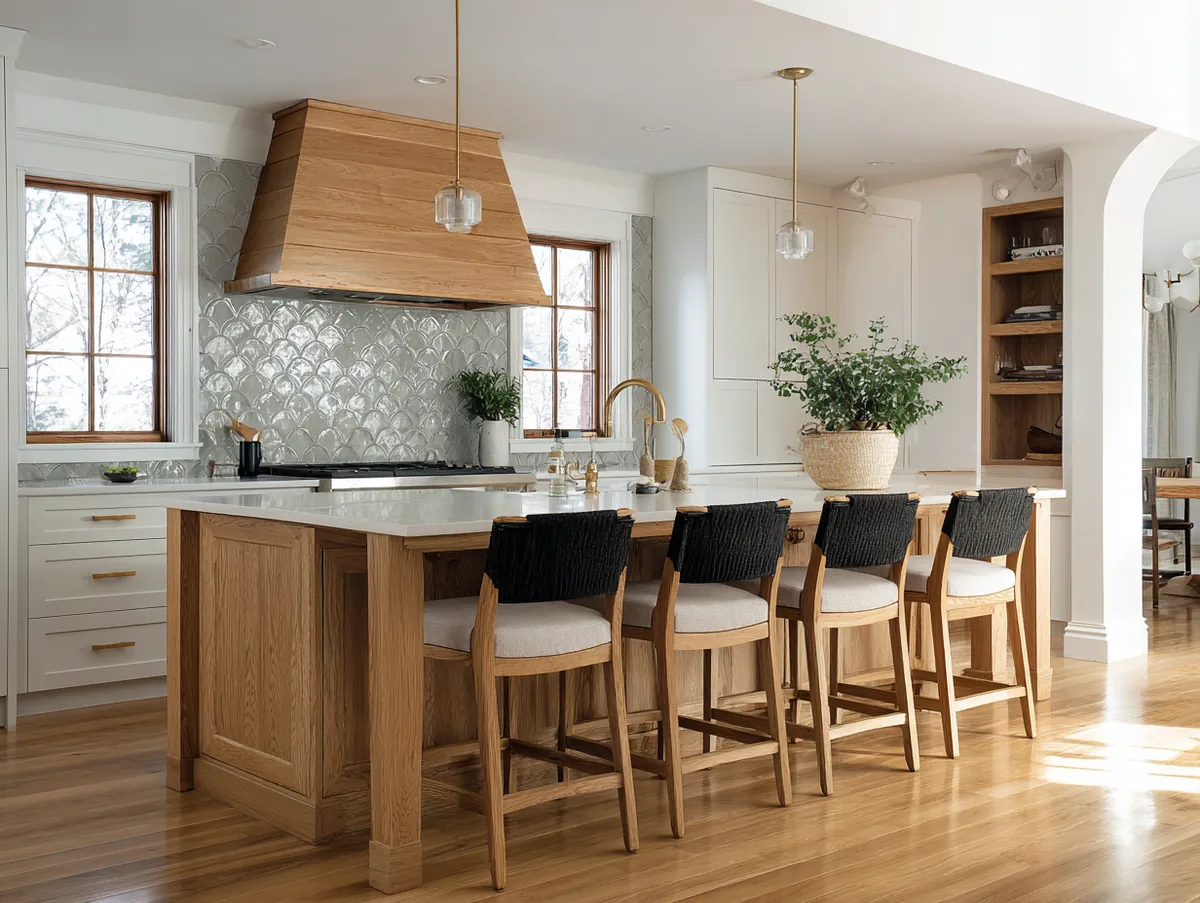
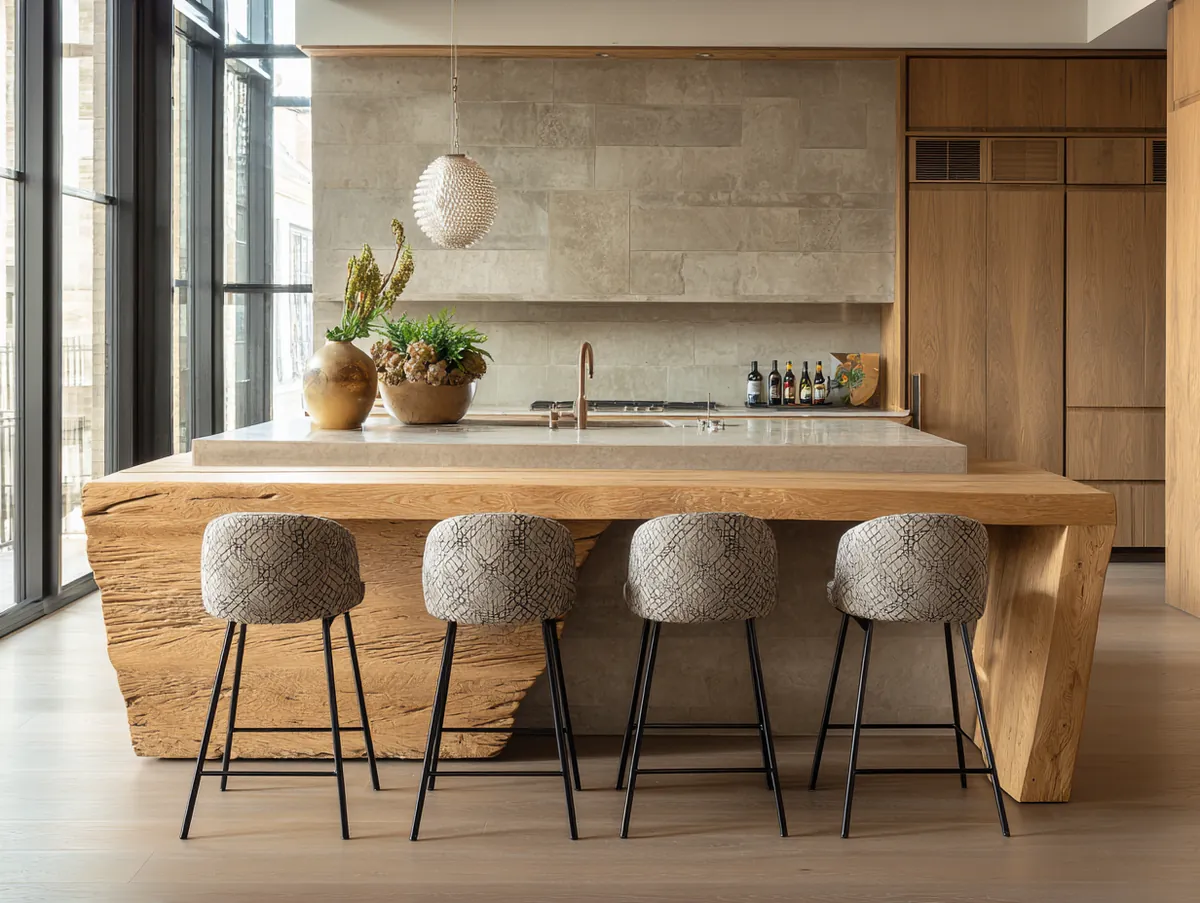
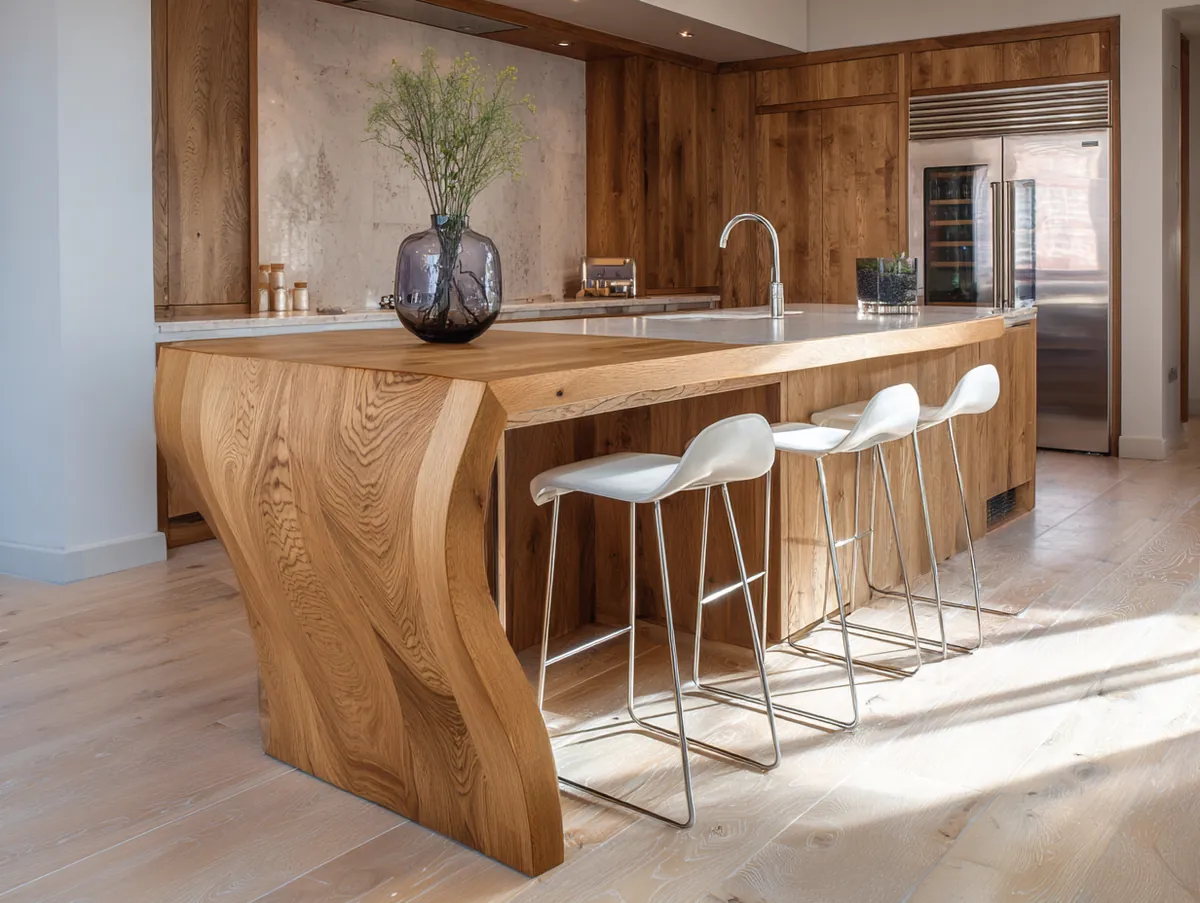
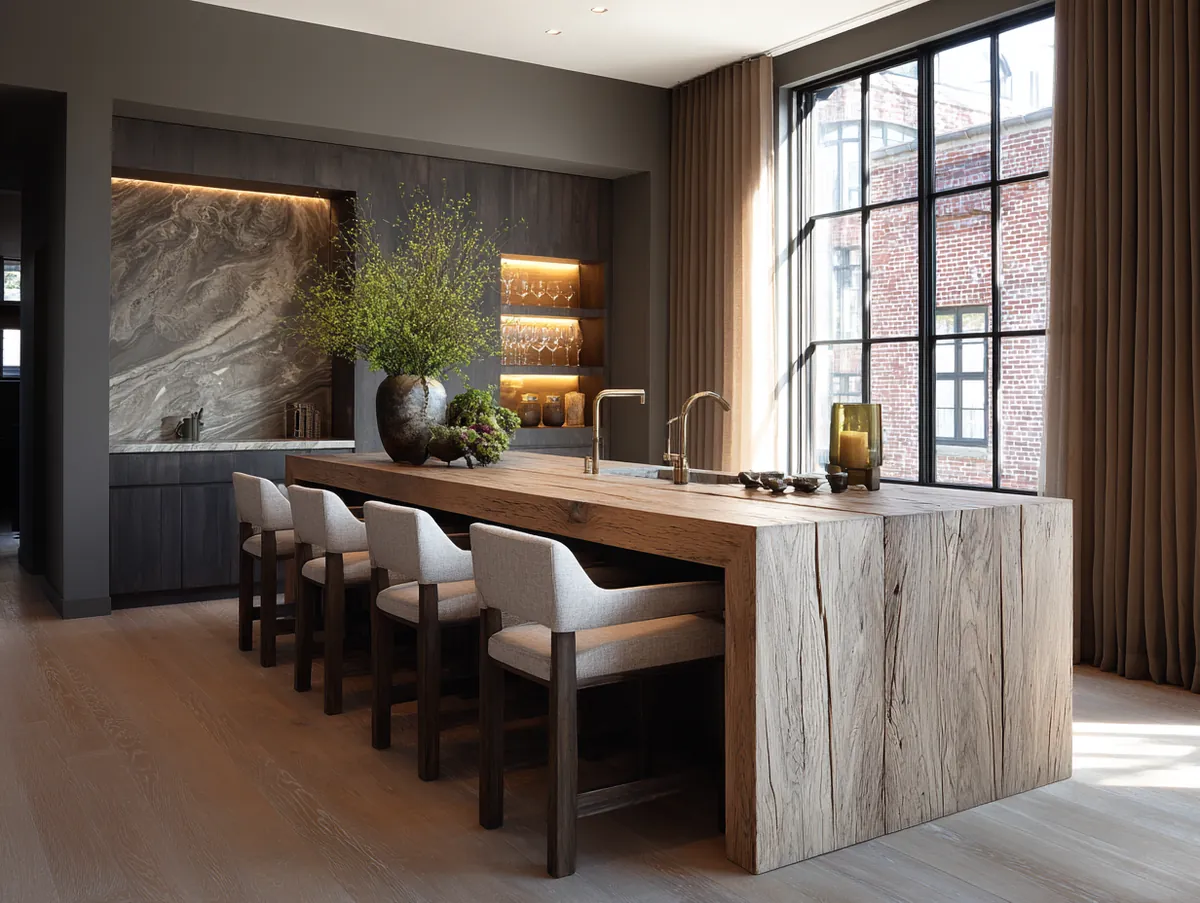
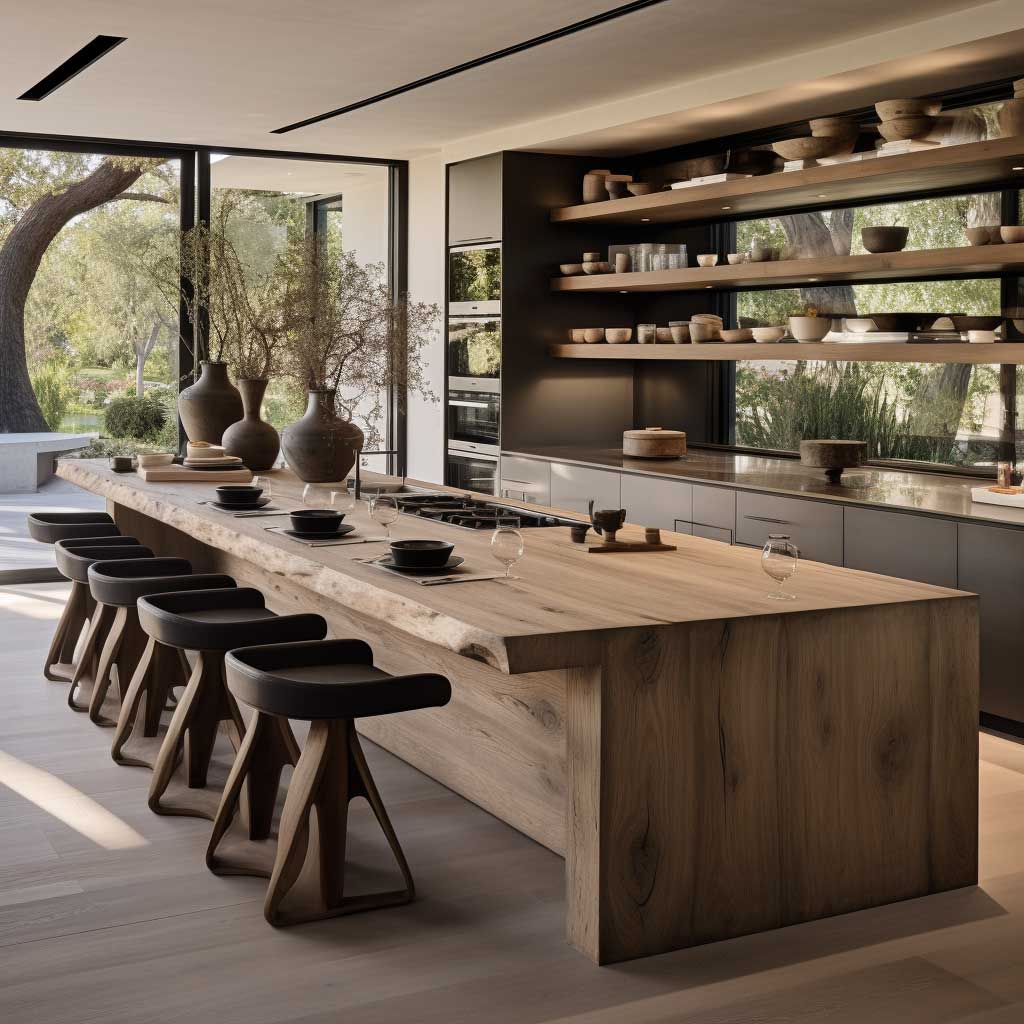


Fluted panels on the island base are the 2024 detail that aged fastest into ubiquity. I own two kitchens I’ve renovated and fluted oak appeared in both before I realized every design blog had already called it a trend. It still looks good, but if you want to be ahead of the curve in 2025, book-matched veneer panels are where the conversation is heading. Houzz’s 2024 Kitchen Trends Study confirmed fluted details peaked in visibility at design shows — that usually means the mass market adoption is six months behind. Choose accordingly.
What doesn’t work on an oak island: a contrasting countertop in a wood tone. I’ve seen oak islands topped with butcher block and the result is wood overload — the grain competes and neither material wins. Your best countertop pairings for a contemporary oak island are honed Calacatta marble ($85–$140 per sq ft installed), black leathered granite ($65–$110 per sq ft), or white Silestone quartz ($55–$95 per sq ft). All of these let the oak read as the primary material. For more ideas on island sizing and layout in modern kitchens, this roundup of light oak island ideas covers proportions and countertop pairings that photograph well.
Final Word
Oak is not making a comeback. It never left — it just stopped apologizing for being wood.
The kitchens that photograph the best right now share one trait: they committed to a single oak finish and built everything else around it. Half-measures produce half-results.
Rift-cut white oak at around $650–$900 per door, Rubio Monocoat finish, brushed brass hardware, and a book-matched island front — that’s the formula that keeps appearing in the top-saved Houzz photos of 2024. It’s not accidental.
Skip the stained-walnut imitation and the fluted panel bandwagon. Save this post before you finalize your oak kitchen spec.