Gone are the days when the heart of the home had to be a sanctuary of sterile white subway tiles and safe, neutral greys. A new wave of expression is taking over interior trends, inviting homeowners to inject personality, vibrancy, and unapologetic energy into their culinary spaces. Maximalism is not just about clutter; it is the art of curation, the joy of abundance, and the celebration of life through saturation. It allows you to tell a story through layers of texture, eras, and hues that reflect a bold spirit. If you are tired of playing it safe and crave a space that energizes you the moment you walk in to brew your morning coffee, these concepts will inspire you to embrace the chaos and creativity of high-saturation living.
Eclectic Maximalist Kitchen Room Design Mixing Patterns and Textures
The philosophy behind an eclectic approach to interiors is often misunderstood as simply throwing things together, but true mastery lies in the intentional clash of disparate elements to create a cohesive whole. When you begin planning a maximalist kitchen room design, the first rule is that there are no rules, only relationships between objects. This specific aesthetic relies heavily on the dialogue between patterns that might seem incompatible on paper but sing together in a three-dimensional space. Imagine walking into a room where the floor anchors the space with sharp, monochromatic geometric tiles, perhaps a classic encaustic cement style. This rigid foundation provides the necessary stability for the visual fireworks happening at eye level and above.


Moving upward, the cabinetry serves as the primary block of color. In a space dedicated to abundance, a deep, saturated emerald green or a profound teal acts as a neutral. It sounds contradictory, but these dark, rich tones ground the visual palette, allowing lighter and brighter accents to pop without overwhelming the senses. The hardware becomes the jewelry of the room; unlacquered brass or polished copper pulls add warmth that reflects light, creating small pockets of gleam against the matte finish of the painted wood. This interplay of matte and metallic is crucial in high-volume styling because it adds depth. A flat, one-dimensional surface can make a room feel smaller, whereas layered textures expand the perceived volume of the kitchen room design.
The ceiling is often the most neglected surface in renovation projects, usually relegated to a coat of flat white paint. However, for the color lover, the “fifth wall” is a canvas waiting for drama. applying a bold floral wallpaper to the ceiling draws the eye upward, making the room feel taller and more enveloping. It creates a jewel-box effect where the inhabitants feel safely tucked inside a world of their own creation. The choice of a pink or coral floral print overhead provides a soft, organic counterpoint to the rigid geometry of the floor tiles below. This tension between the organic and the geometric is the heartbeat of eclectic style.
Furniture choices in such a dynamic environment should shun uniformity. Instead of a matching set of bar stools, consider sourcing vintage chairs in varying shapes but painted in a unified palette, or perhaps the same shape upholstered in different, clashing fabrics. A reclaimed wood island introduces a necessary rustic element. The warmth of the timber softens the hardness of the tile and stone, bridging the gap between the sleek cabinetry and the busy patterns. It reminds us that this is a workspace, a place of gathering and tactile experiences.
Open shelving is a hallmark of this look because it turns everyday utility into display. In a minimalist home, clutter is hidden; here, your collection of turquoise depression glass, hand-painted Mexican pottery, and yellow ceramic pitchers becomes the decor itself. The key to successful kitchen room design in this vein is density. Empty space is viewed as a missed opportunity. Yet, this density must be curated. Grouping objects by color or size on these shelves prevents the look from veering into messy territory. It transforms your cookware into an art installation that evolves with your daily life.
Lighting completes the atmosphere. Stained glass inserts in windows or pendant lights with colored glass shades cast tinted shadows that shift throughout the day. As the sun moves, the room changes mood, from a bright, energizing morning space to a moody, intimate evening retreat. This transformative quality is what makes maximalism so enduring for those who love it. It is never static. It is a living, breathing extension of the owner’s personality, proving that a kitchen room design can be as expressive as a gallery wall or a painted canvas. It invites you to cook, to dance, and to live loudly within its walls.
Jewel Tone Kitchen Room Design Focusing on Deep Velvet and Stone
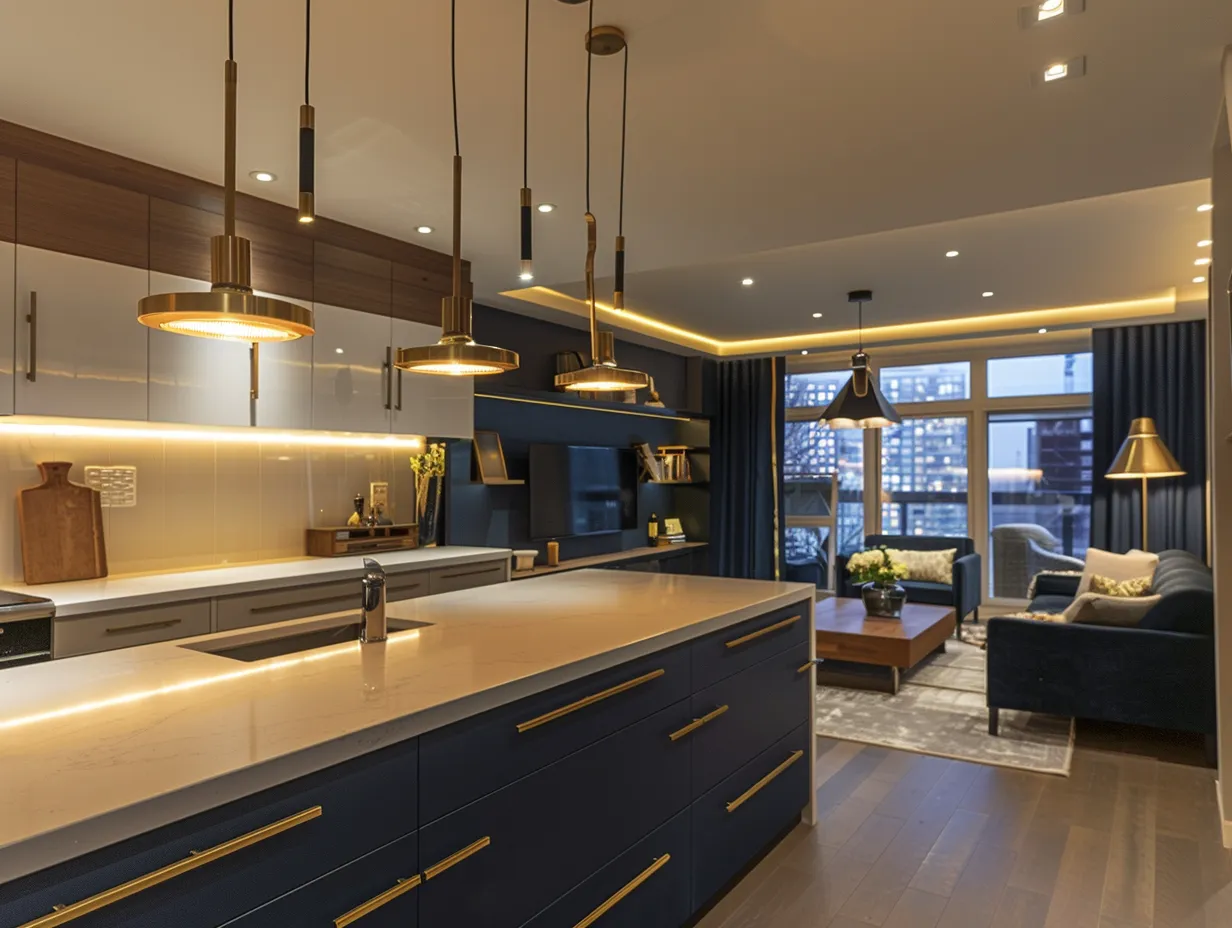
There is a distinct kind of magic found in the darker end of the color spectrum, a sophistication that whispers of midnight soirées and decadent meals. Implementing a jewel-tone palette transforms a standard culinary space into a lounge-like environment that blurs the lines between cooking and entertaining. This specific take on maximalist kitchen room design moves away from the chaotic and playful, leaning instead into the regal and the sensory. It is about wrapping the room in color so rich it feels edible. Sapphire blues, amethyst purples, and ruby reds are not just accent colors here; they are the main event, applied with a heavy hand to walls, cabinetry, and upholstery.


The foundation of this look is often high-gloss finishes. When you commit to dark colors, light management becomes essential. A high-gloss lacquer on navy or midnight blue cabinetry reflects light rather than absorbing it, bouncing illumination around the room and preventing the space from feeling dungeon-like. This glossy surface mimics the depth of precious stones, giving the kitchen room design a polished, liquid quality. It demands to be touched. To contrast this slickness, natural stone plays a pivotal role. We are not talking about subtle white Carrara marble here. This style calls for dramatic stone—slabs of black granite with lightning strikes of gold veining, or exotic quartzites that feature swirls of green and burgundy. A waterfall edge on the island showcases this natural art, turning a functional surface into a sculptural centerpiece.
Texture is the silent language of luxury. In a typical kitchen, hard surfaces dominate—wood, metal, stone. To bring in the maximalist comfort, one must introduce softness where it is least expected. Upholstery is the vehicle for this. Bar stools covered in crushed amethyst velvet introduce a tactile shock that is delightful. The lush pile of the velvet against the cold, smooth stone of the countertop creates a sensory experience that elevates the act of sitting down for a drink. It signals that this room is for lingering. It suggests that the kitchen room design is focused as much on leisure as it is on utility.
Lighting in a moody, jewel-toned space must be theatrical. Standard recessed cans are insufficient; they flatten the drama. Instead, Art Deco-inspired pendants with geometric brass detailing or smoked glass chandeliers serve as the jewelry of the ceiling. Backlighting is another tool that adds a modern, high-end edge. Imagine a backsplash made of semi-precious stone slabs, like agate or onyx, illuminated from behind. The stone glows, highlighting its internal crystalline structure, acting as a mood light that washes the counter in a warm, ethereal hum. This specific element can serve as the focal point of the entire kitchen room design, turning a wall into a glowing installation piece.
Metals in this environment should be warm to offset the coolness of the blues and purples. Gold, brass, and bronze are the natural companions to jewel tones. They provide the “gilt” on the frame, so to speak. A faucet in brushed gold, cabinet handles with intricate knurling, or even a gold-lined range hood can tie the look together. The reflection of these metallic elements against the dark walls creates a constellation effect, sparkling in the low light of an evening dinner party.
Finally, the ceiling in such a dramatic room should not be ignored. Painting the ceiling a dark charcoal or even the same navy as the cabinets creates a cocooning effect. It dissolves the boundaries of the room, making the corners disappear in the shadows. This technique is often used in cinema rooms, but in a kitchen room design, it creates intimacy. It focuses the attention downward onto the illuminated surfaces—the food, the drinks, the faces of guests. It is a bold move that pays off by creating a space that feels infinite and incredibly cozy at the same time. This is maximalism for the romantic, for the person who wants their morning espresso to feel like an occasion and their evening wine to feel like a celebration.
Retro Pop Art Kitchen Room Design Exploding with Primary Colors
For those who view the home as a source of dopamine and unadulterated joy, the retro pop art aesthetic offers a playground of possibilities. This style rejects the serious and the somber, opting instead for a high-energy explosion of primary colors and graphic shapes. It draws heavy inspiration from the Memphis Group of the 1980s and the optimistic consumerism of the mid-century, resulting in a kitchen room design that feels like living inside a Saturday morning cartoon or a piece of modern art. It is fearless, slightly irreverent, and undeniably fun.
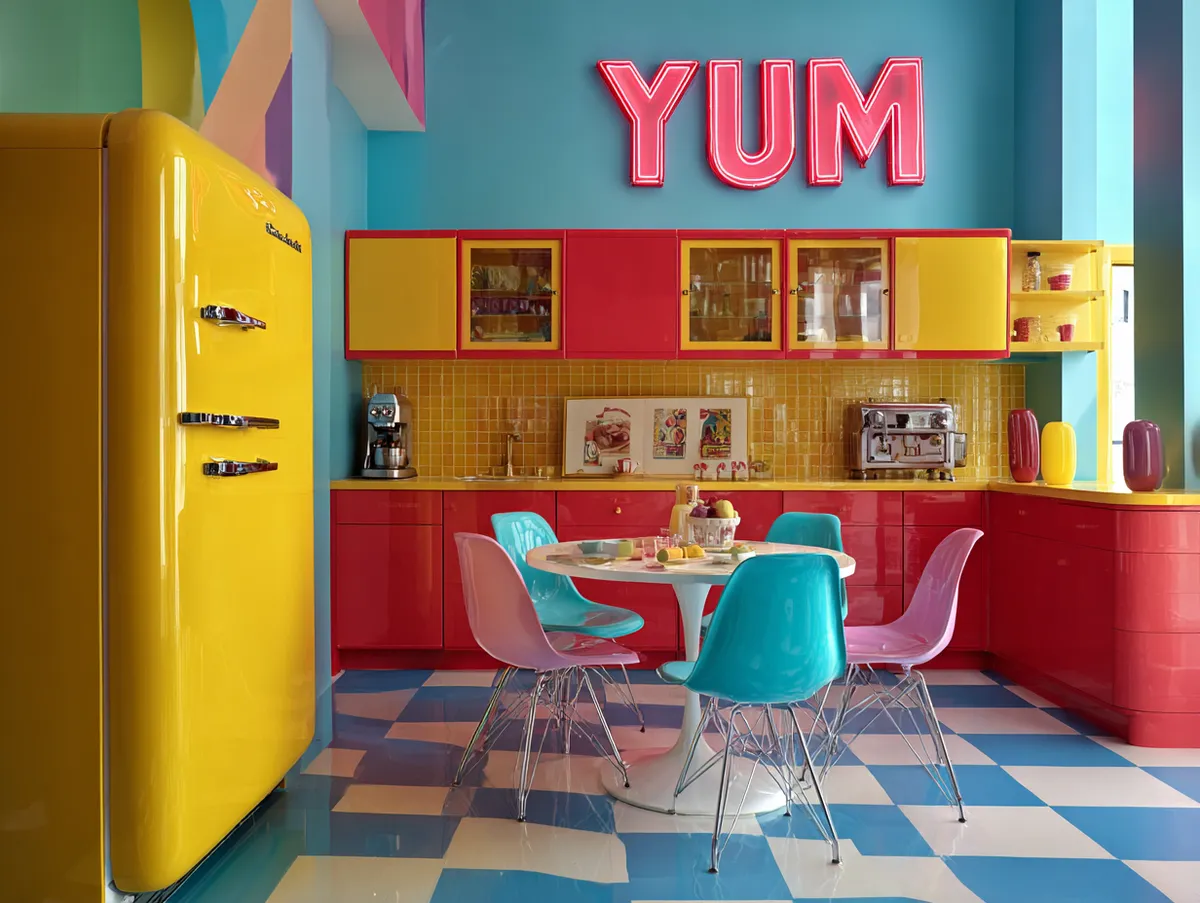


The color palette here is not about nuance; it is about impact. Fire engine red, sunshine yellow, and electric blue are the building blocks. In a conventional setting, one might choose a neutral cabinet color and add a red toaster. In this maximalist vision, the cabinets themselves are the red toaster. High-gloss red laminate or painted cabinetry sets a vibrant tone that immediately wakes up the brain. Large appliances, often the boring workhorses of the room, become stars. A retro-style refrigerator in bright yellow or turquoise is not just an appliance; it is a sculpture, a nod to an era when machinery was designed with flair. Integrating these large blocks of color requires a confident hand in balancing the kitchen room design so it feels curated rather than accidental.
Flooring in a pop-art kitchen is rarely subtle. A checkerboard pattern is a classic choice, but instead of the traditional black and white, imagine a bold cobalt blue and crisp white, or even a red and pink combination. This strong geometric floor acts as a grid that holds the floating elements of the room together. It provides a graphic baseline that allows the furniture to shine. Speaking of furniture, this aesthetic favors synthetic materials that were revolutionary in the mid-20th century. Molded plastic chairs, acrylic bar stools, and Formica tables fit perfectly. These materials take color exceptionally well and often come in curvaceous, fluid shapes that contrast with the boxiness of standard appliances.
Wall decor in this style moves beyond traditional framed prints. Neon signage is a hallmark of the pop-art look. A buzzing neon sign glowing in hot pink or electric green adds a layer of urban grit and nightlife energy to the space. It serves as a literal highlight, drawing the eye and adding a hum of excitement. The backsplash also offers a canvas for graphic expression. Custom tiles with geometric shapes—squiggles, triangles, dots—or even a mural painted directly onto the tiles can transform the area behind the stove into a focal point. This is where the “art” in kitchen room design truly comes into play.
Accessories are the final layer of confetti in this celebration of color. This is not the place for hidden storage. Open shelving should display a collection of funky, sculptural objects: a kettle with a bird whistle, oversized pepper grinders in lacquered wood, vintage cookie jars, and geometric vases. Every object should spark a little joy. The aim is to create a visual feast that rivals the actual food being prepared. Even the choice of dishware contributes to the theme; melamine plates in mismatched brights make every meal feel like a picnic.
Despite the apparent chaos of colors, successful execution of this style relies on the use of white or black as a spacer. White walls or countertops provide the necessary “negative space” that allows the eyes to rest. Without these breathing room areas, the primary colors could vibrate too intensely, causing visual fatigue. The white acts as a gallery wall, framing the colorful cabinets and furniture. This balance ensures that the kitchen room design remains livable and functional, rather than overwhelming. It is a space that celebrates youthfulness, creativity, and the sheer fun of being alive. It proves that sophistication doesn’t always have to be serious, and that good design can—and perhaps should—make you smile every single day.