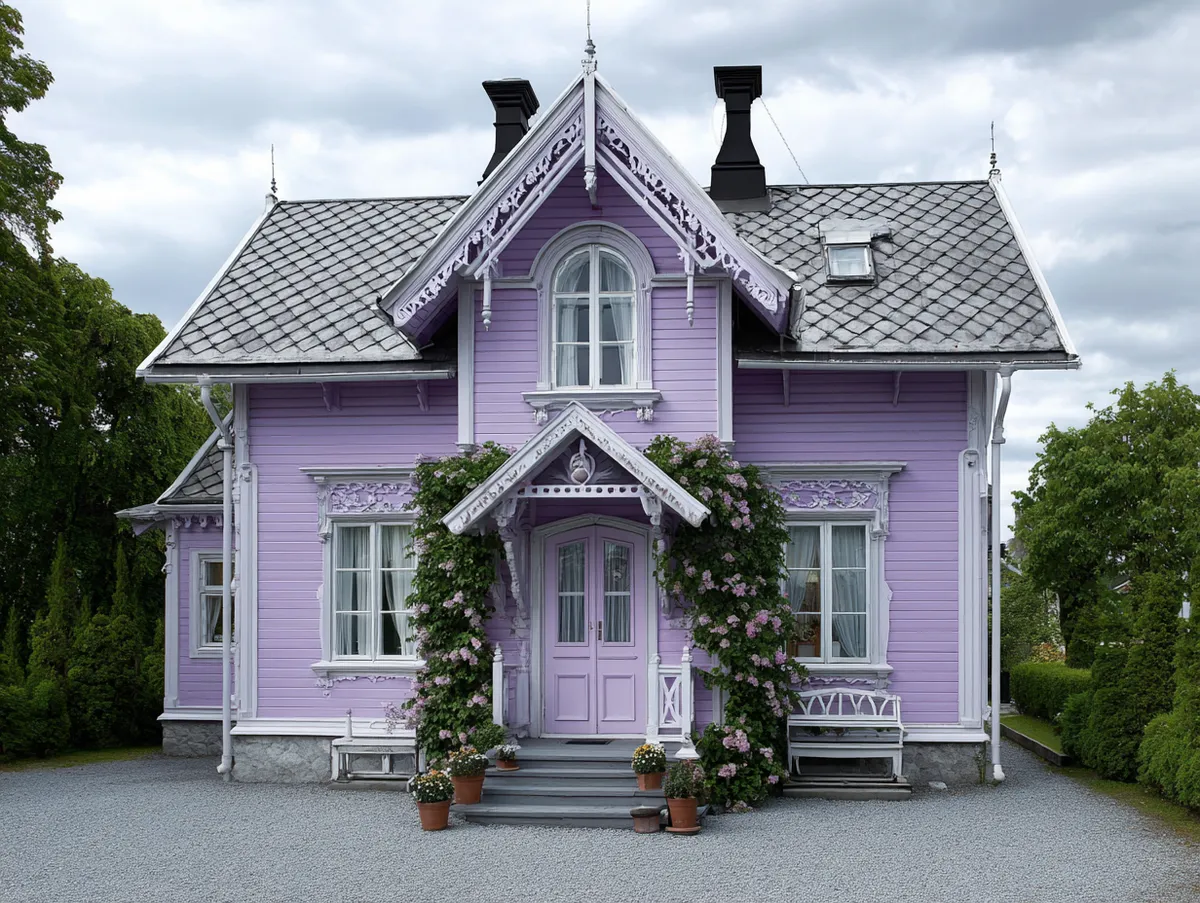
A magenta colour house outside reads differently from every other bold exterior choice — it doesn’t compete with the landscape, it reshapes it. Paired with slate green on the trim and architectural details, the combination lands somewhere between a garden in peak bloom and a property that photographers circle back to. The two colours are optical complements: in paint mixing they neutralise each other to a neutral gray, which is exactly why they stay visually stable on a facade — neither one overwhelms the eye when the ratio is right.
Exterior paint on standard siding lasts 7–10 years in moderate climates, and darker, more saturated hues like magenta fade faster under direct UV than lighter shades — which makes product choice the first real decision. Most exterior projects in this palette run two coats; Sherwin-Williams SuperPaint exterior covers 350–400 sq ft per gallon at around $60, which puts a typical two-story home at 13–14 gallons minimum before accounting for trim. Budget that before falling in love with a shade at the counter.
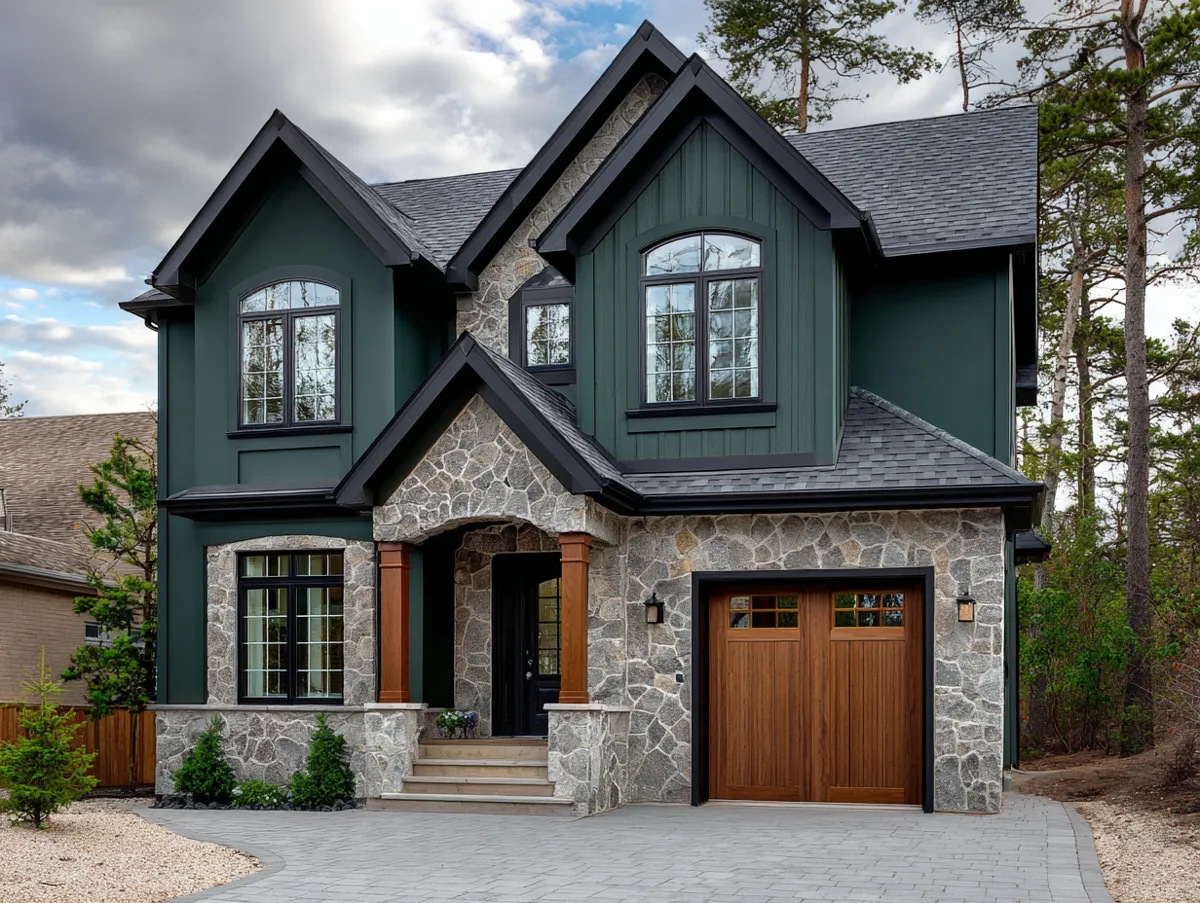
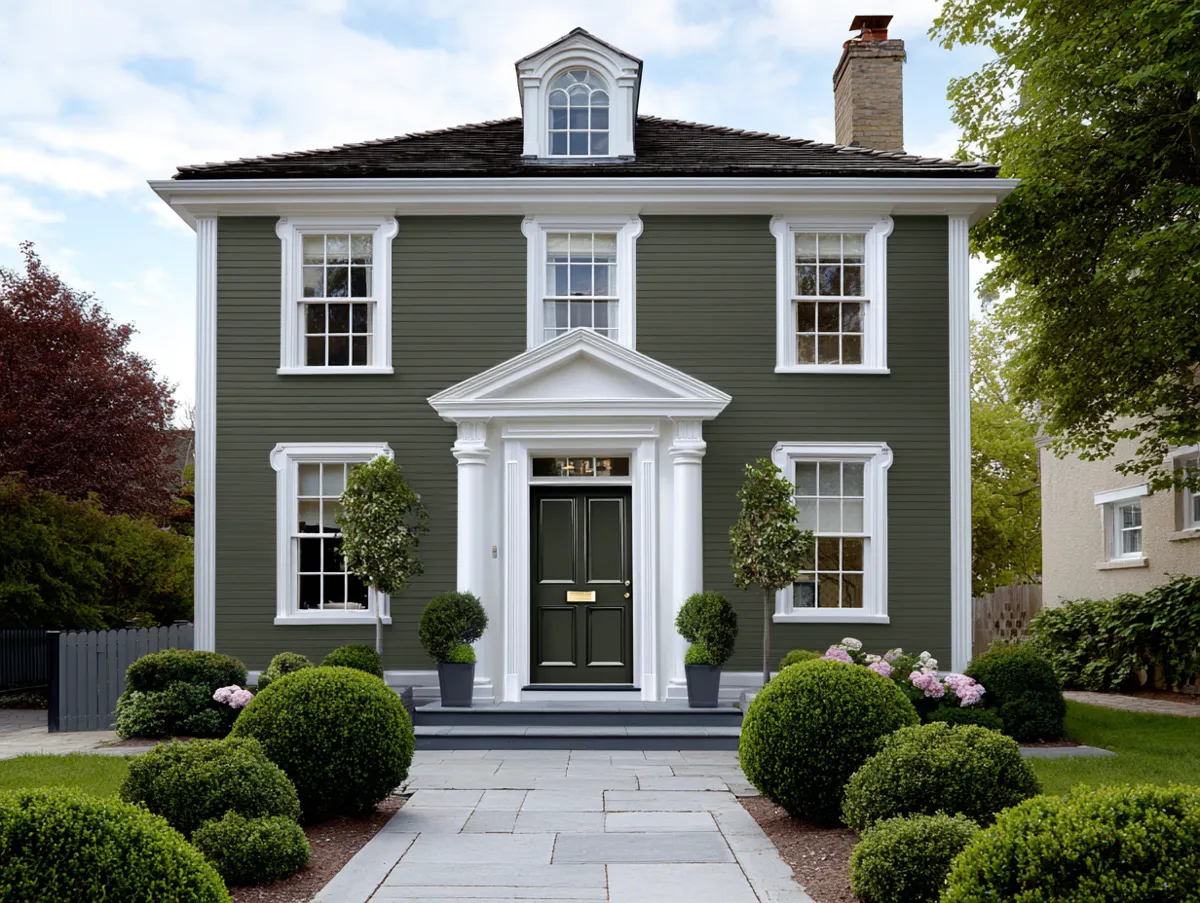
The images below represent three distinct approaches: magenta as the primary facade with slate green accents, slate green as the body with magenta highlights, and the two colours distributed across outdoor living areas. Each approach has a different dominant energy and a different risk profile. The section that matches your house’s architecture is the one worth spending time in.
- Magenta and slate green are complementary colours — they don’t clash, they stabilise each other on a facade.
- Magenta works best as the body colour on homes with strong architectural definition: clear window lines, trim, or contrasting doors.
- Slate green as the primary exterior colour reads quieter — magenta on doors or shutters becomes the focal point.
- Dark, saturated exteriors like magenta fade faster in direct UV; premium exterior formulas at $60–$95/gallon extend the lifespan over budget paints.
- Wood siding in either colour needs refreshing every 3–7 years depending on sun exposure; stucco and fiber cement hold longer.
- Test physical samples outdoors for 48+ hours — magenta shifts significantly between morning overcast and afternoon direct sun.
Magenta House Paint Colour Outside Demands the Right Body-to-Trim Ratio


Magenta as a primary facade colour works because it earns attention without asking for it. The colour sits between red and blue on the spectrum, which means it reads warm in morning light and cools slightly under overcast skies — unlike pure red, which just gets louder in direct sun. The trick is containment: slate green on every architectural anchor point (window casings, door frames, corner boards, gutters) gives the magenta something to push against, and the facade stays readable rather than overpowering. Homes with symmetrical window layouts, clear eaves, and defined trim profiles carry this palette better than houses with minimal architectural detail.
Sheen matters here more than most people expect. A satin finish on the magenta body sheds water, cleans without streaking, and still reads as matte from the curb — flat finishes on dark, saturated colours collect mildew within a single humid season. Semi-gloss minimum on the slate green trim so the boundary between body and trim reads sharp rather than muddy. Sherwin-Williams Duration exterior runs $60–$95 per gallon depending on sheen, and the coverage difference between one coat and two on a deep-pigmented colour like magenta is the difference between a colour that looks patchy at dusk and one that holds across all light conditions. Two coats is not optional with this palette.
What kills this combination? Using the same sheen on the body and the trim, and picking a slate green that reads blue rather than green under the specific light conditions of the actual facade. Slate greens with strong blue undertones will fight the magenta rather than ground it — the result looks cold rather than considered. Hold slate green swatches directly against your magenta sample outdoors. If the green reads teal, keep searching. The right slate green reads earthy and slightly grayed, not oceanic.


One colour theory fact that’s genuinely useful here: magenta and green are complementary in the RGB model — when you mix them as paint they neutralise to a brownish-gray. On a facade that means neither colour is “fighting” the other; each one makes the other look more intentional by contrast. That’s why this combination photographs well and reads coherently from the street even though the individual colours are each quite bold. The eye gets rest in the green and stimulation in the magenta in a rhythm that doesn’t fatigue — the same principle that makes certain gardens feel energising without feeling chaotic. For a similarly bold approach using pink tones next to neutrals, the coral pink and dove gray exterior combinations on ArtFasad show how body-to-trim ratios shift across different facade scales: coral pink and dove gray exterior ideas break down the same structural logic in a different colour family.
Don’t apply magenta on unprepared stucco without a tinted primer. Stucco absorbs the first coat almost entirely, and the colour will dry two shades lighter and patchy — matching that tone on a second coat becomes nearly impossible without repainting from scratch. Use an exterior primer tinted to roughly 50% of your final magenta colour, let it cure 24 hours, then topcoat. Also: don’t skip the physical swatch test outdoors. Magenta shifts more between morning and afternoon light than almost any other exterior colour — a shade that looked rich and grounded on a chip in the store can read hot pink or purple on your actual facade depending on sun angle and orientation.
Slate Green Body Paint Where Magenta Colour Highlights Do the Focal Work


Slate green as the dominant exterior colour is a different commitment from magenta — quieter from the street, but not passive. The colour sits in a gray-green register that reads differently depending on undertone: warmer slate greens with yellow-green bases look connected to foliage; cooler ones with blue-green bases feel more architectural and modern. Benjamin Moore’s exterior green collection includes options across this range, with darker choices like Tarrytown Green HC-134 pairing particularly well with cool stonework, and softer greens like Saybrook Sage HC-114 working for more traditional facades. The right undertone depends entirely on the fixed elements already on the property — roof colour, hardscaping, surrounding trees.
Magenta as a highlight colour in this setup functions like a well-placed painting on a calm wall. The magenta front door becomes the one thing the eye navigates toward — everything else on the facade serves the door. This is a more approachable version of the palette for homeowners who want the combination without committing the whole surface to a bold colour. A standard exterior door covers about 20 sq ft per face, so one quart of magenta exterior paint is more than enough for two full coats — premium quarts in this range run $20–$30, making the door the lowest-cost element to test before committing to a full colour scheme.
What doesn’t work is spreading the magenta too far — shutters, door, window boxes, and porch railing all in magenta turns the focal-point logic into noise. Paint stylists generally recommend one focal element in the accent colour, two at most if the home is large enough that the elements are visually separated. A slate green body with a magenta door and magenta flower planters reads as considered; magenta on every surface that isn’t the siding itself reads as unresolved. The restraint is the point.


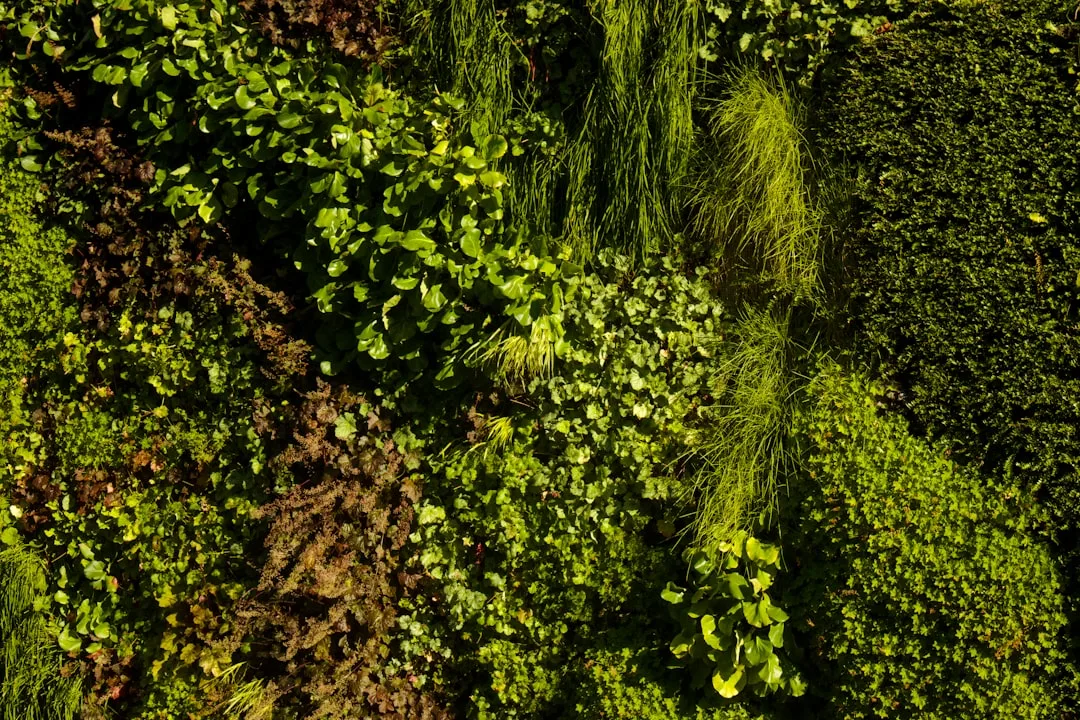
One underrated advantage of a slate green body: it makes adjacent greenery look more saturated without any additional landscaping investment. The cool-neutral base acts like a gallery wall — whatever plant material grows against it reads richer and denser. A hedge that looks ordinary against a white or beige house looks lush against slate green. Add a magenta-flowering plant at the base of the entry, and the facade creates a layered colour moment that photographs extraordinarily well in natural light. The color coordination is also available for slate green paint on other green-toned exteriors — for a comparative look at how different dark greens handle trim and accent logic, dark green exterior house colour combinations cover olive, forest green, and hunter green with stone and wood pairings.
Outdoor Spaces Where Magenta Green Colour Combination Distributes Across Materials
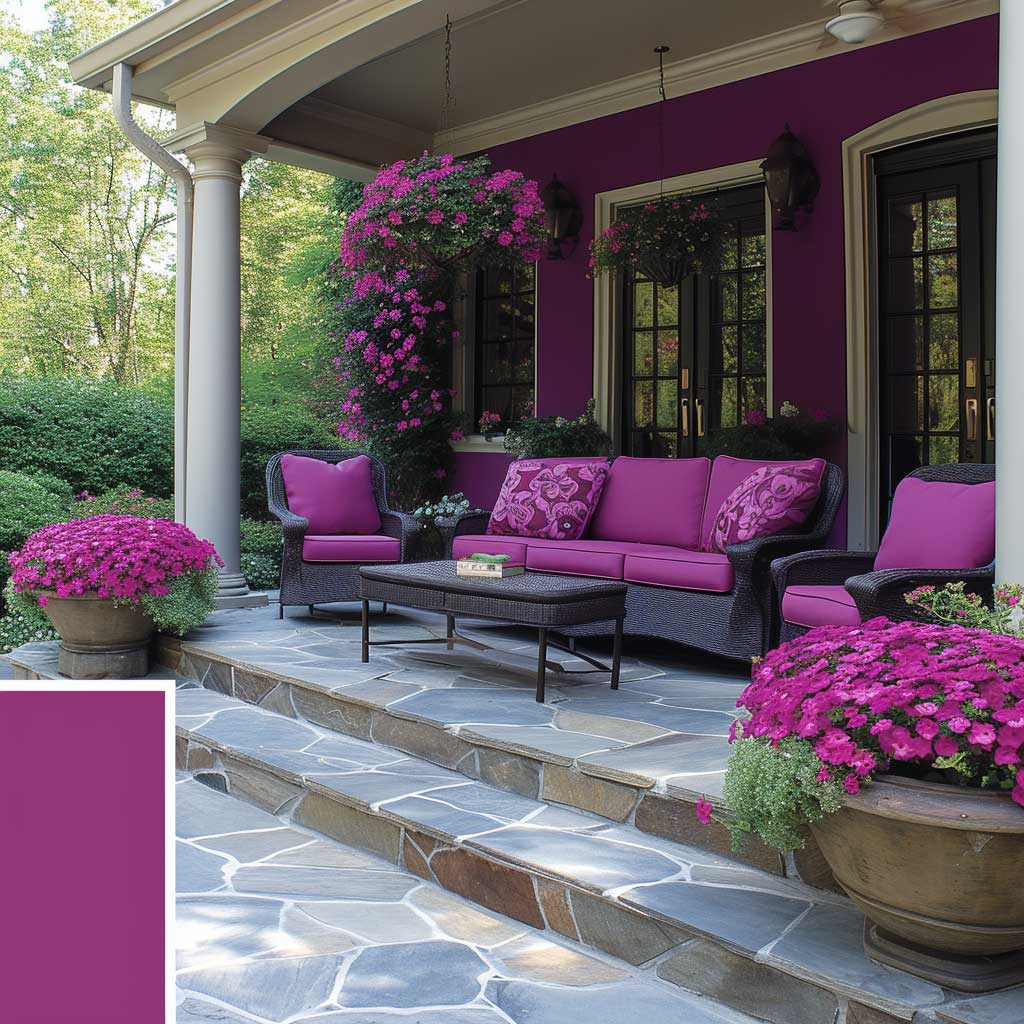


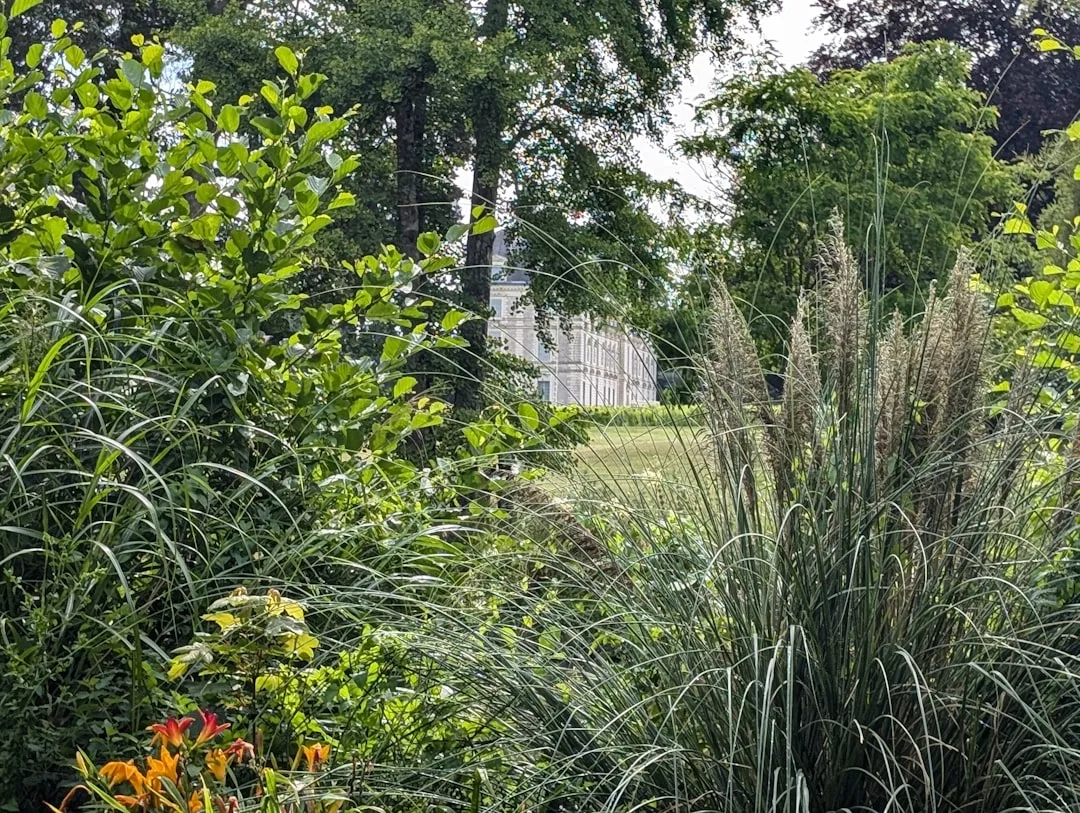
Distributing magenta and slate green across an outdoor living area rather than concentrating them on the facade is the most forgiving version of this colour combination — and the one that most people can add to an existing exterior without a full repaint. Slate green on a pergola, garden wall, or planter beds anchors the space. Magenta appears in cushions, ceramics, or flowering plants. The colours mix across materials and textures rather than sitting side by side in paint, which softens the contrast and makes the space feel gathered rather than designed. Outdoor fabric in magenta resists fading for roughly 2–4 seasons before the UV exposure shifts the colour toward pink; replacing cushions is far cheaper than repainting trim, which is the practical case for this approach as a first test of the combination.
Lighting changes everything in this kind of space. Magenta textiles that read rich and saturated at noon become warm and almost rose-tinted under warm bulb outdoor lighting in the evening — a shift that works in the combination’s favour. Slate green structures go darker and more mysterious after sundown, which pulls the space toward the moody end of the palette in a way that rarely happens in daytime. Candles or warm-toned string lights at about 2700K amplify this effect without requiring any additional colour. Cool daylight-temperature bulbs (above 5000K) do the opposite — they flatten the magenta toward neon and push the green toward gray, which is not the result most people want from this palette.
Texture is the element that separates outdoor spaces that use this palette well from those that don’t. A smooth-painted slate green wall next to a magenta-cushioned seating area reads flat. Add a slate green woven planter, a rough-cast concrete paver, or a cedar structure in a natural tone, and the space gains the kind of layering that makes a colour combination feel rich rather than applied. What to avoid: synthetic grass in any shade of green alongside magenta anything — the artificial color flatness of synthetic turf makes every colour near it look less real, and magenta specifically reads almost fluorescent by comparison. Natural plantings, even low-maintenance ones, are the right textural partner for this palette outdoors.
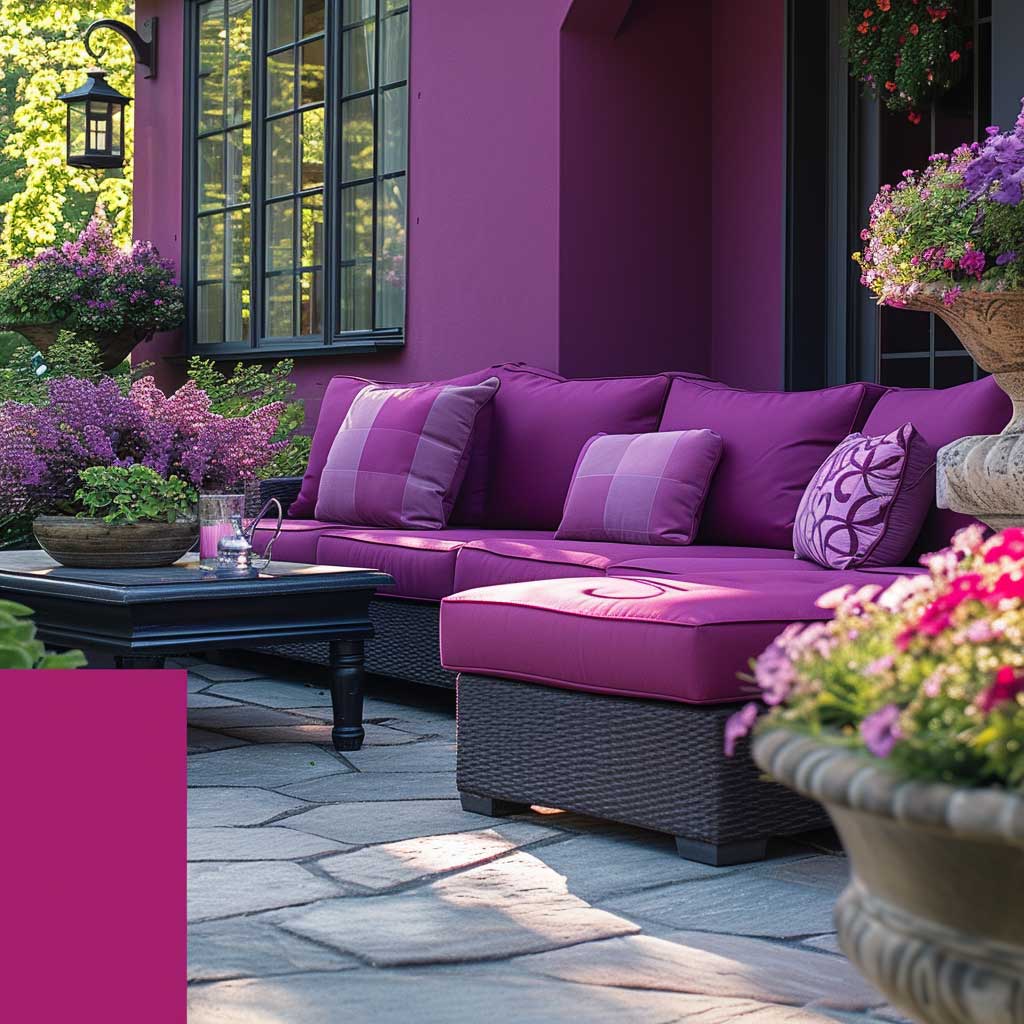


The outdoor space approach also lets you test whether the magenta and slate green combination reads the way you want it to before investing in an exterior paint project. Live with the cushions and planters for a full season and across different light conditions. If the palette energises the space and you find yourself using the area more, the combination is working — and committing to paint on the facade becomes a much more confident decision. Benjamin Moore’s green exterior paint collection is worth browsing for slate green exterior paint options across warm and cool undertones before finalising any shade.
| Approach | Magenta Role | Best For | Key Risk |
|---|---|---|---|
| Magenta facade + slate green trim | Primary body colour | Homes with strong architectural definition | Too intense without clear trim anchors |
| Slate green facade + magenta highlights | Door or shutter accent | Traditional and cottage-style homes | Spreading magenta too wide loses focal point |
| Outdoor space distribution | Textiles and planters | Testing before full repaint commitment | Synthetic materials flatten both colours |
The Bottom Line
Magenta and Slate Green Hold Because Neither Colour Flinches
The combination works across all three approaches because both colours have enough weight to hold their own — magenta doesn’t go pastel, slate green doesn’t go muddy. The ratio between them is the only variable that needs managing.
Sherwin-Williams SuperPaint exterior runs about $60/gallon and covers 350–400 sq ft per gallon. Budget two coats on both colours. Test physical swatches outdoors for at least 48 hours before buying full gallons — magenta shifts more between morning and afternoon light than almost any other exterior colour.
Wood siding in this palette needs refreshing every 3–7 years. Keep a quart of each colour for touch-ups so you’re not rematching from scratch. Save this post.