Lime green and white colour combinations for houses look electric in photos and unpredictable in person — because the ratio between those two colours, not the shades themselves, determines whether the result reads bold or chaotic. Sherwin-Williams Gecko (SW 6719), one of the few lime greens rated for exterior use, costs around $65–$75 per gallon in their Duration exterior line. Pair it wrong and you’ll repaint in three years.
Most houses that pull off lime green do it with restraint. The green covers 60–70% of the facade. White takes the trim, soffits, window casings, and door frame — those 30–40% that define the structural outline. Take that white away, and the green collapses into a single undifferentiated mass. Keep it, and the architecture becomes legible from the street.
The three sections below cover what lime green actually does on a facade surrounded by landscaping, how to pair white correctly without losing the boldness, and where lime green performs best in dense urban streetscapes. Each comes with specific paint choices, verified prices, and the mistakes that turn a statement house into a cautionary tale.
- Sherwin-Williams Gecko (SW 6719) is confirmed exterior-rated; Benjamin Moore Lime Green (2026-10) is not recommended for exterior use
- Exterior paint on most surfaces lasts 5–10 years; south- and west-facing walls typically need repainting at the 5–7 year mark
- White trim sheen matters: satin on siding, semi-gloss on trim — flat on lime green siding invites mildew within one humid season
- One white shade works universally against lime green: warm-neutral whites (Sherwin-Williams Alabaster, Benjamin Moore White Dove) — pure bright white reads clinical
- Lime green in urban settings works only when the facade has geometric definition; on boxy or featureless walls, the colour overwhelms with nothing to anchor it
What Lime Green Does to a Facade Before You Even Pick the White
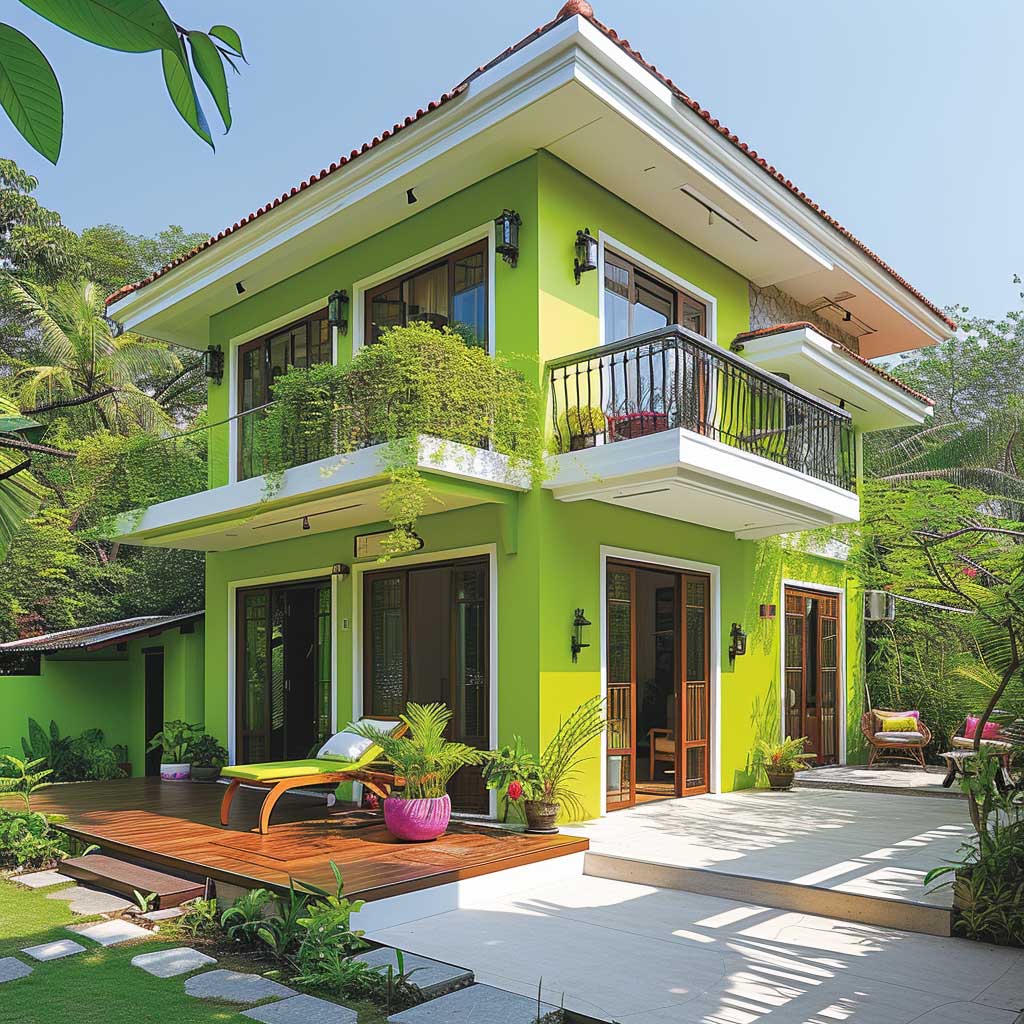

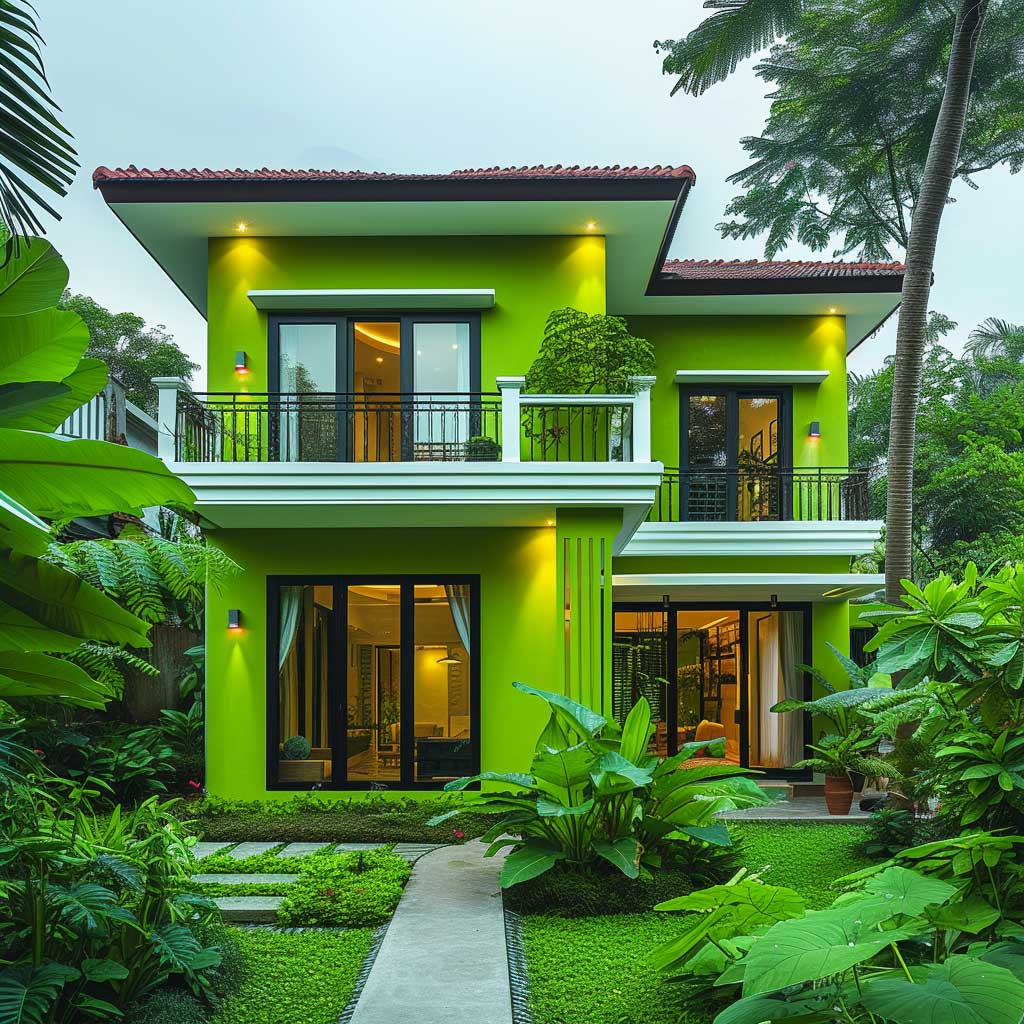
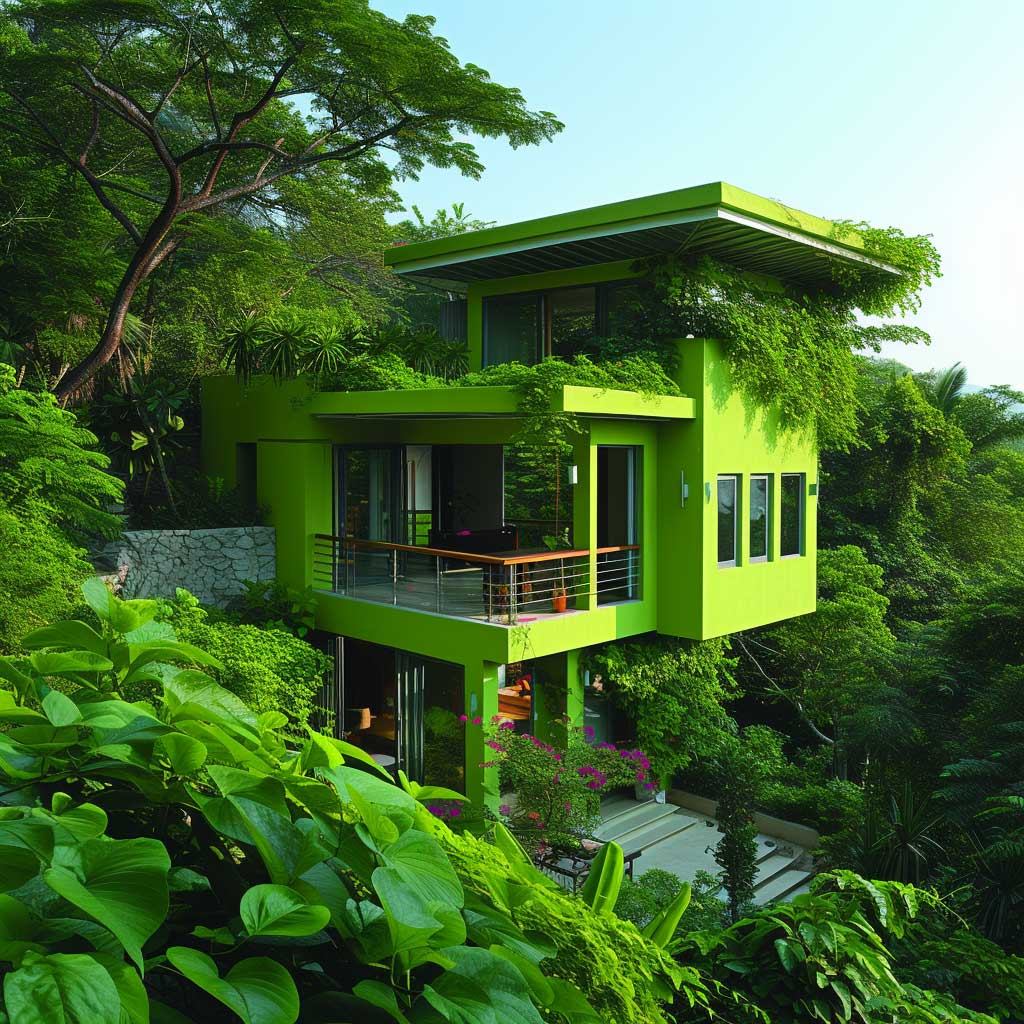
Lime green exterior house paint behaves differently than any other bold colour on a facade — it advances visually, meaning it appears closer than it actually is. On a house set back from the street, that optical push forward makes the structure feel larger and more present. On a house right at the sidewalk line, the same effect can feel aggressive. The lesson from colour theory here is practical: test your swatch at 20 feet, not 3.
Sherwin-Williams Gecko (SW 6719) leans yellow-green and carries warm undertones that keep it from reading as neon under overcast skies. Does lime green look different at noon versus 5 PM? Dramatically — the yellow component intensifies in direct sun and softens at dusk, which means a shade that looks tropical at noon reads more like a warmed-up chartreuse in the evening. Budget around $65–$75 per gallon for SW Duration exterior, which covers roughly 350–400 square feet per gallon. For a standard two-storey house, you’re looking at 10–12 gallons for two coats.
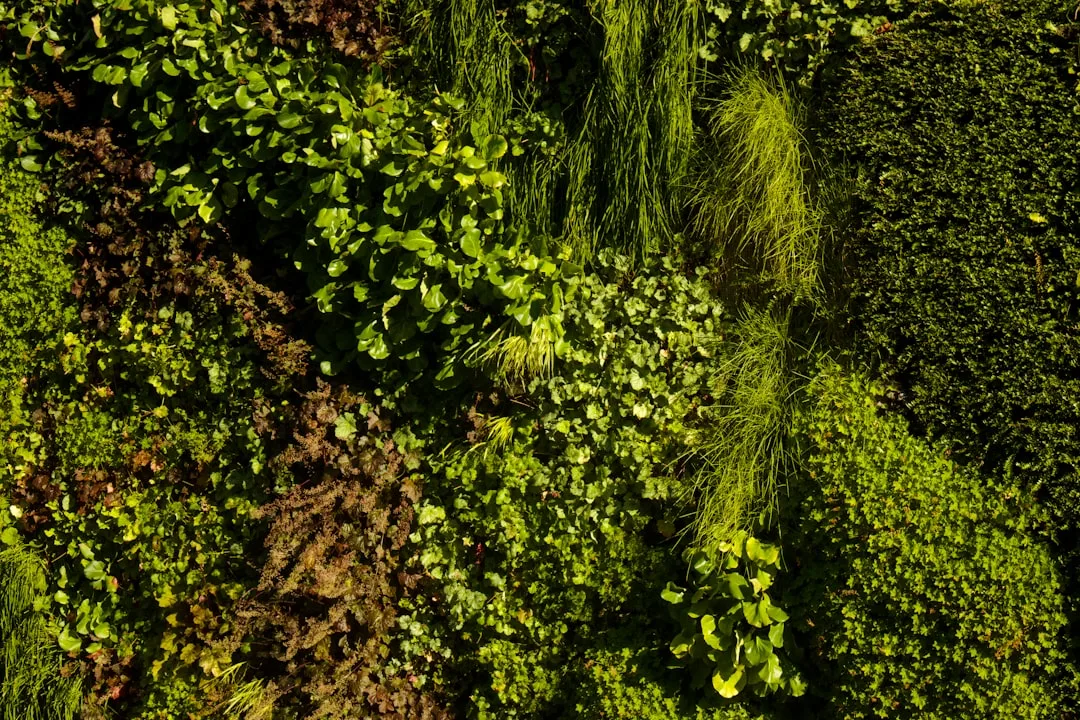
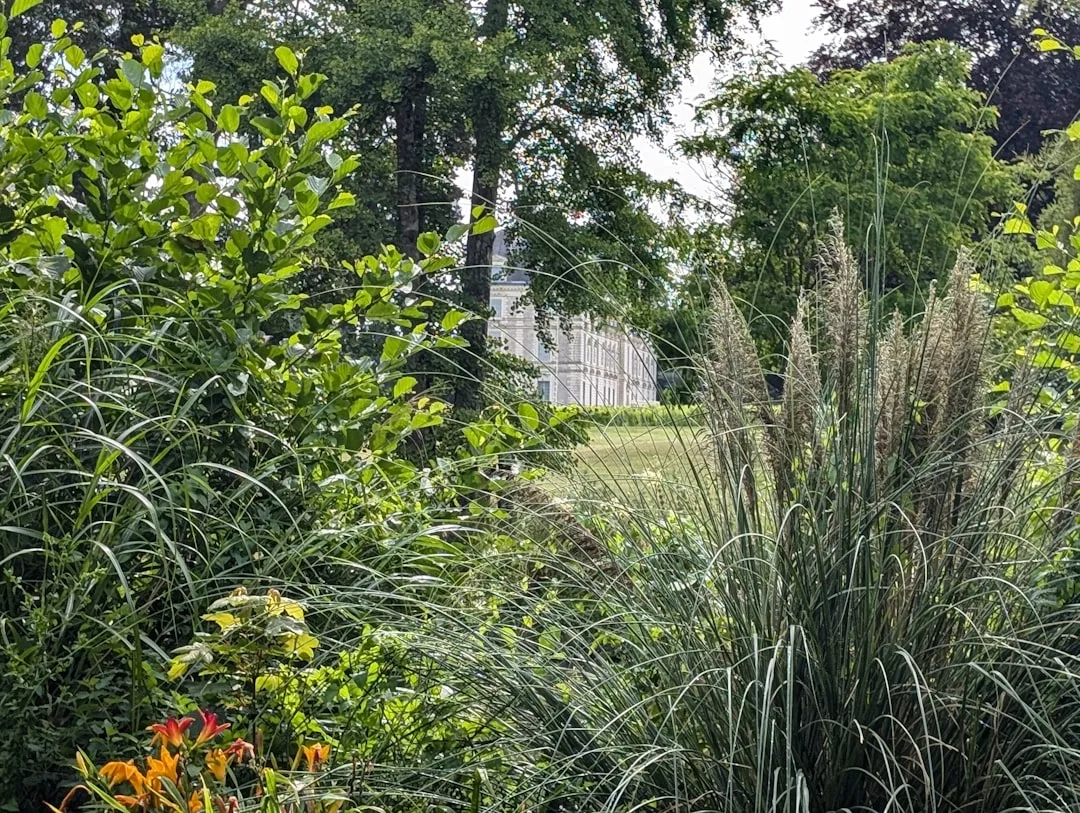
Green as the dominant body colour activates the garden surroundings in a specific way: any established trees or hedges nearby start reading as part of the colour scheme rather than separate elements. This is the lime green trick stylists recommend — plant something. A row of white hydrangeas or silver-leaf shrubs along the foundation line anchors the green and stops it from floating. Skip the red or orange flowering plants entirely; they clash at every season.
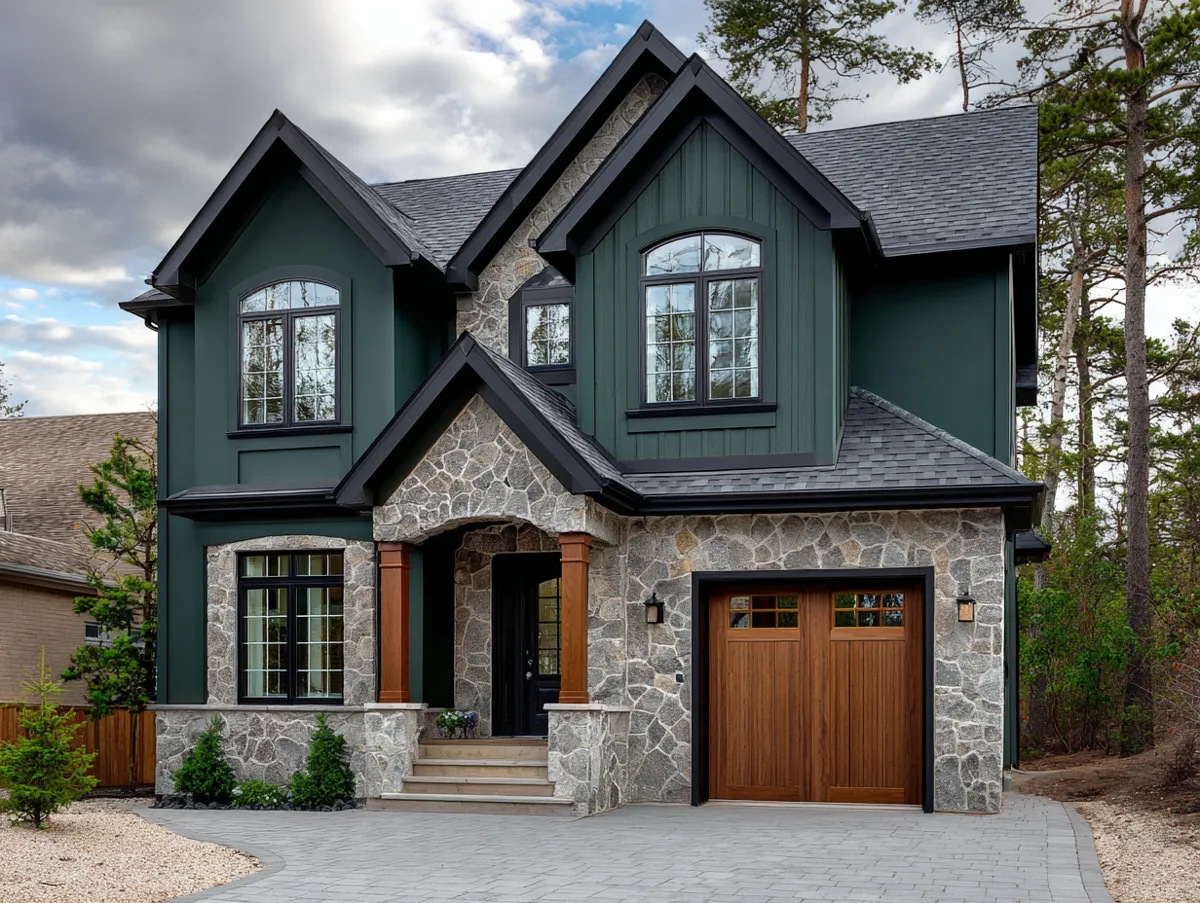
For context on how other green shades perform on exterior facades — including darker options that age differently — the breakdown in dark green exterior house color ideas covers paint-to-trim ratios and the satin vs. flat sheen debate in detail. The physics of green on siding don’t change with lightness — the sheen rules apply to lime as much as to forest.


Professionally applied exterior paint lasts between 5 and 10 years on most surfaces. South- and west-facing walls, which absorb the most UV, typically need repainting at the 5–7 year mark — and this applies more to lighter, high-chroma colours like lime green than to muted earth tones, because saturated pigments fade faster under sustained UV. The trick here is to specify a 100% acrylic latex paint with fade-resistant pigment binders; cheaper formulas lose their lime punch within two or three summers.
Don’t apply lime green exterior paint in a flat sheen to save money on finish costs. Flat paint on a bold colour is a mildew farm — lime green with flat sheen in any climate with seasonal humidity will chalk and streak within two years. Satin on the siding body, semi-gloss on trim. That’s the only formula that holds.
Don’t judge your lime green swatch indoors under LED store lighting. Every paint retailer’s fluorescent environment removes the yellow component from lime tones — the shade you approve in the aisle looks greener and flatter outside. Buy the peel-and-stick sample ($8), tape it to the actual wall, and check it at 9 AM, 1 PM, and 5 PM before committing to 12 gallons of custom-tinted paint you cannot return.
Don’t plant red or orange flowers along a lime green foundation line expecting them to pop. They clash. White, silver-grey, or deep purple plantings are the palette that works — anything warm-toned fights the green instead of framing it.
Lime Green and White Combination — Getting the Ratio Right


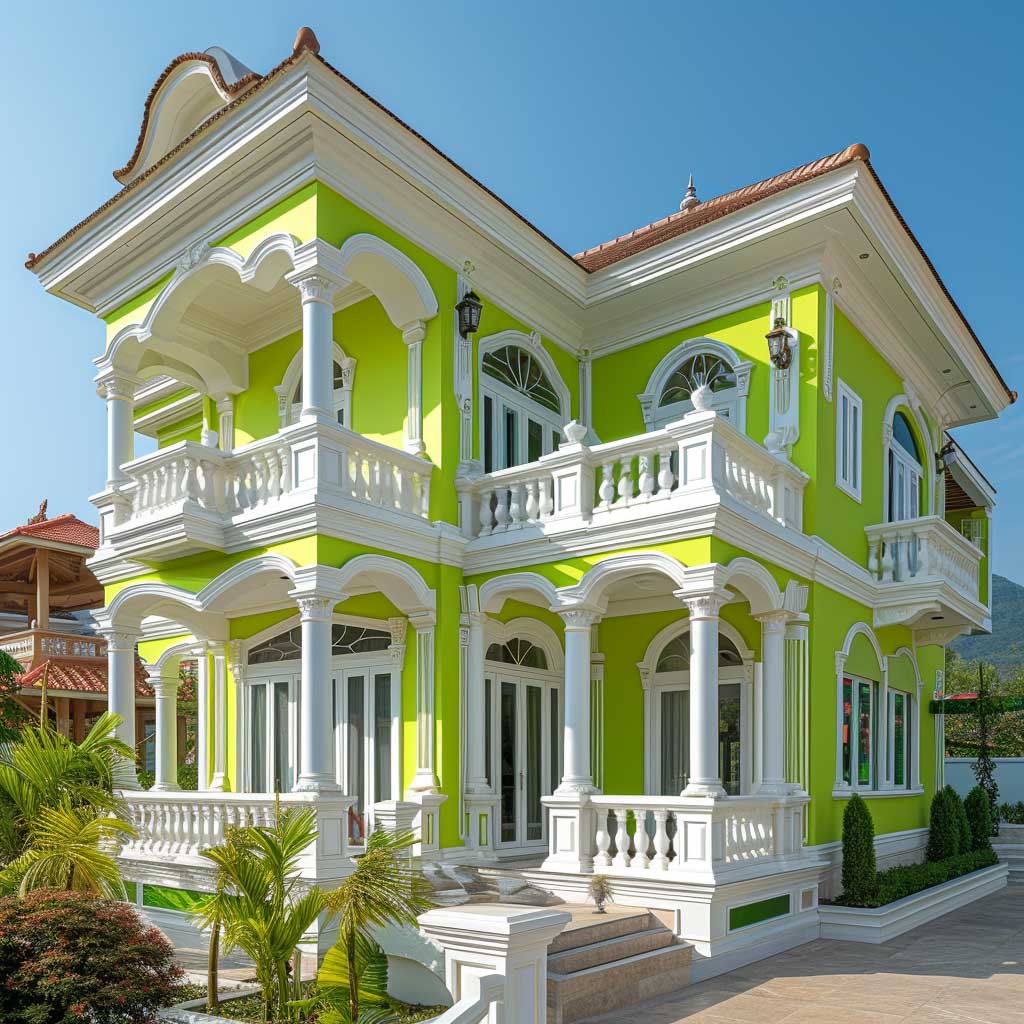
A lime green and white colour combination for houses lives or dies on one decision: which white. Sherwin-Williams Alabaster (SW 7008) sits at an LRV of 82 — warm, with just enough cream to soften the contrast without muddying it. Benjamin Moore White Dove runs similarly warm. Pure bright white (LRV 93+) next to lime green creates a contrast so sharp it reads clinical, like a hospital entrance rather than a house. The trick here is choosing white that has its own identity — one that flatters the green rather than competing with it.
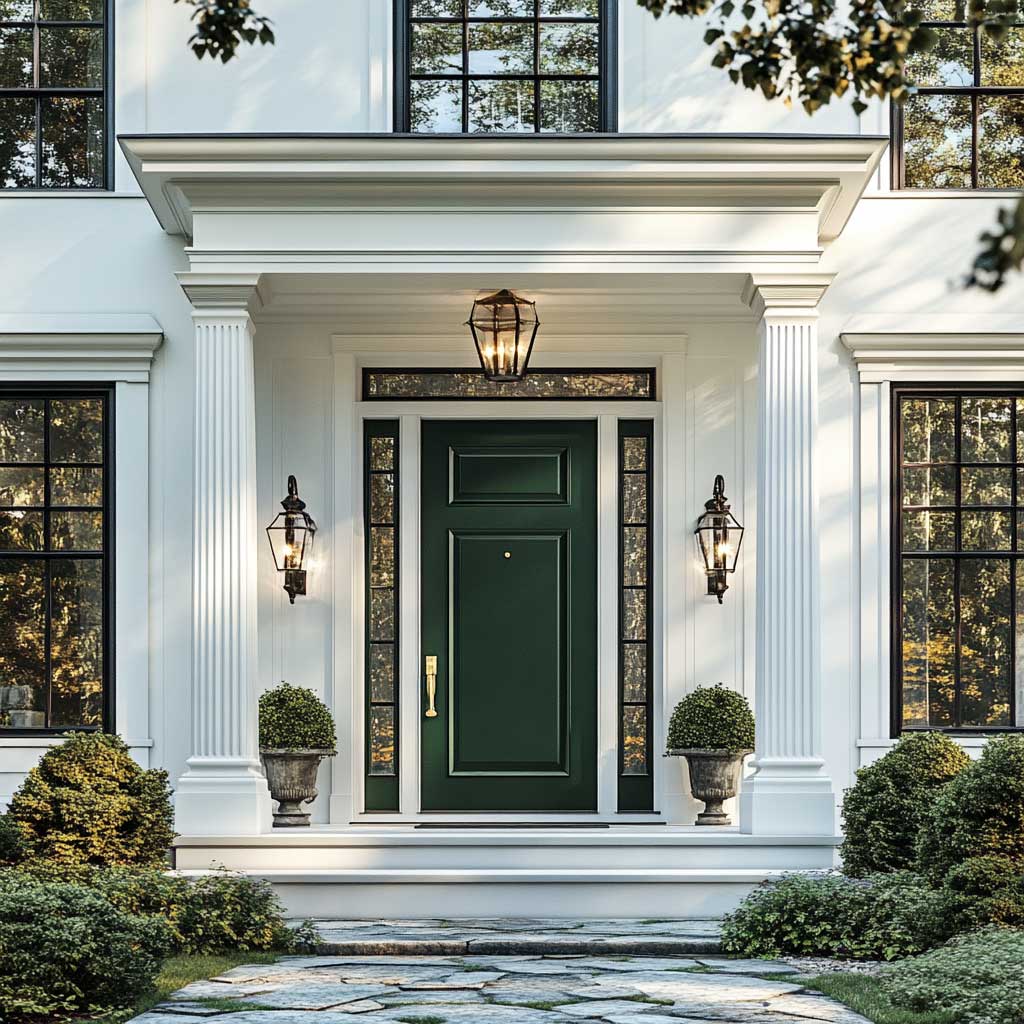
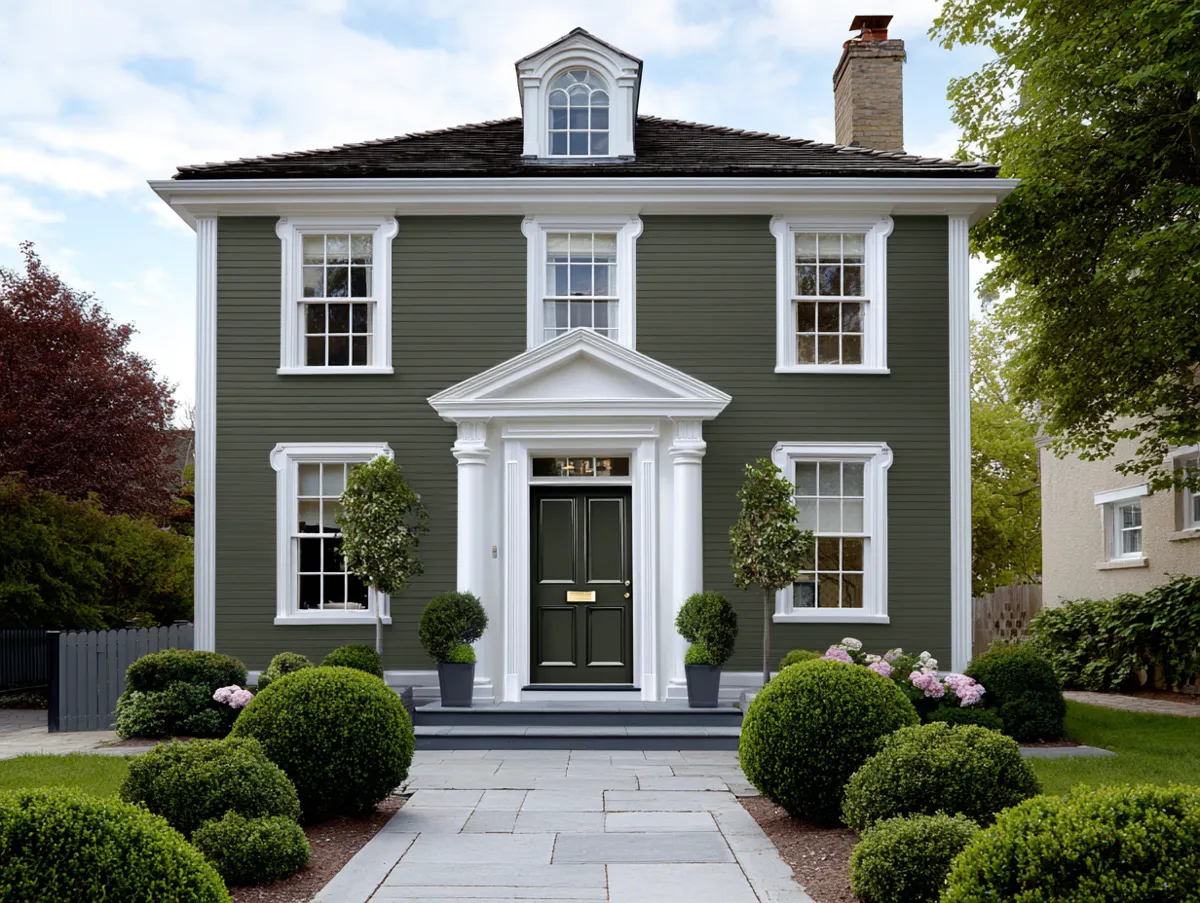
What percentage of the facade should be white? Stylists recommend 30–40% for white trim, architectural detailing, and door elements. Below 20% and the white disappears; above 50% and the lime green loses its authority and reads as an accent colour rather than the dominant statement. On houses with ornate classical detailing — columns, decorative mouldings, railings — the white naturally covers more surface area, which is exactly why lime green plays so well on heritage and traditional forms: the architecture gives white a reason to exist.
A common approach is to paint the front door in a deeper, more saturated green — two or three shades darker than the siding — rather than keeping it white or introducing a third colour entirely. This creates depth without complicating the palette. Think of the facade like a well-tailored outfit: the lime green is the fabric, the white trim is the clean stitching, and a darker green door is the belt — one element that grounds it all. Introducing a fourth colour (say, a black door or yellow shutters) breaks the logic.
For a broader look at how different body-to-trim ratios play out across colour families — including the brown-green and blue-white combinations that share the same ratio principles — the breakdown in house exterior paint colour combinations covers real-world results with verified paint prices. The white-trim rules there translate directly to lime green pairings.
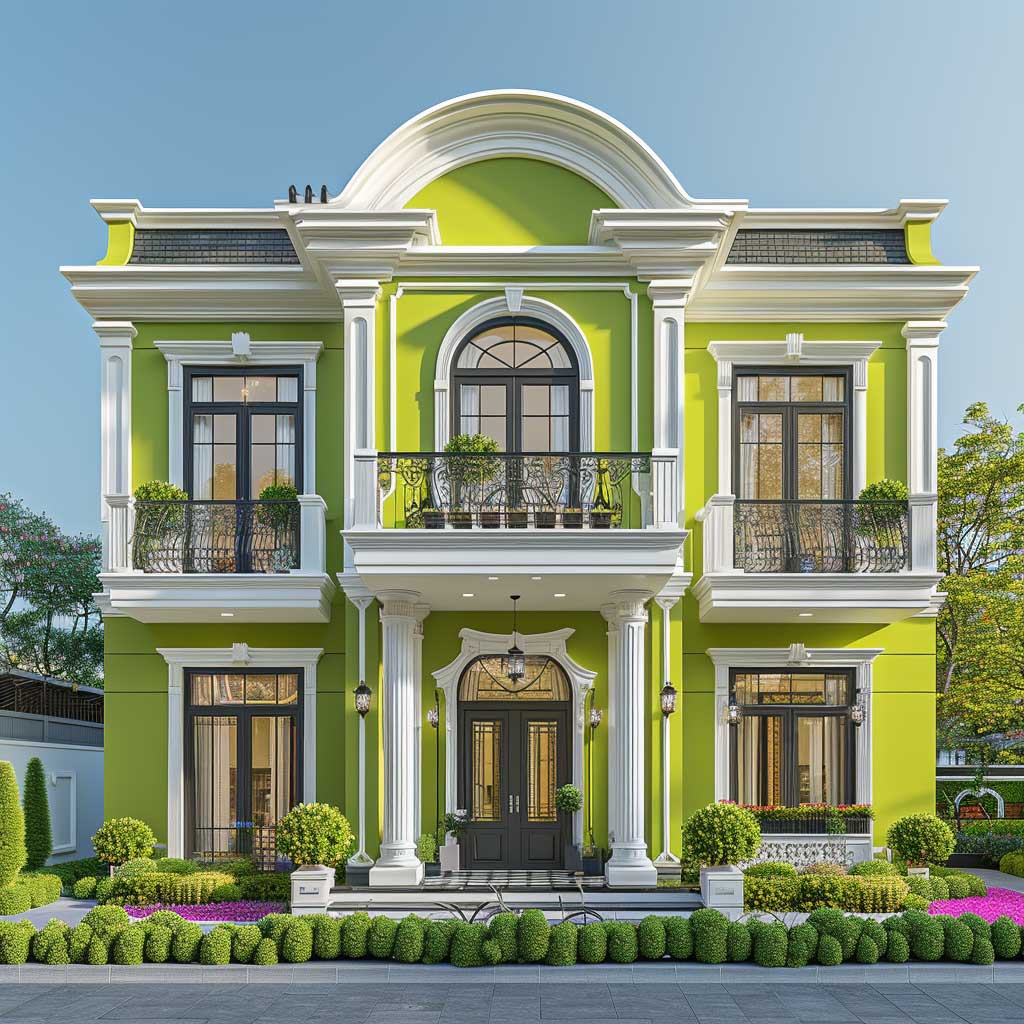
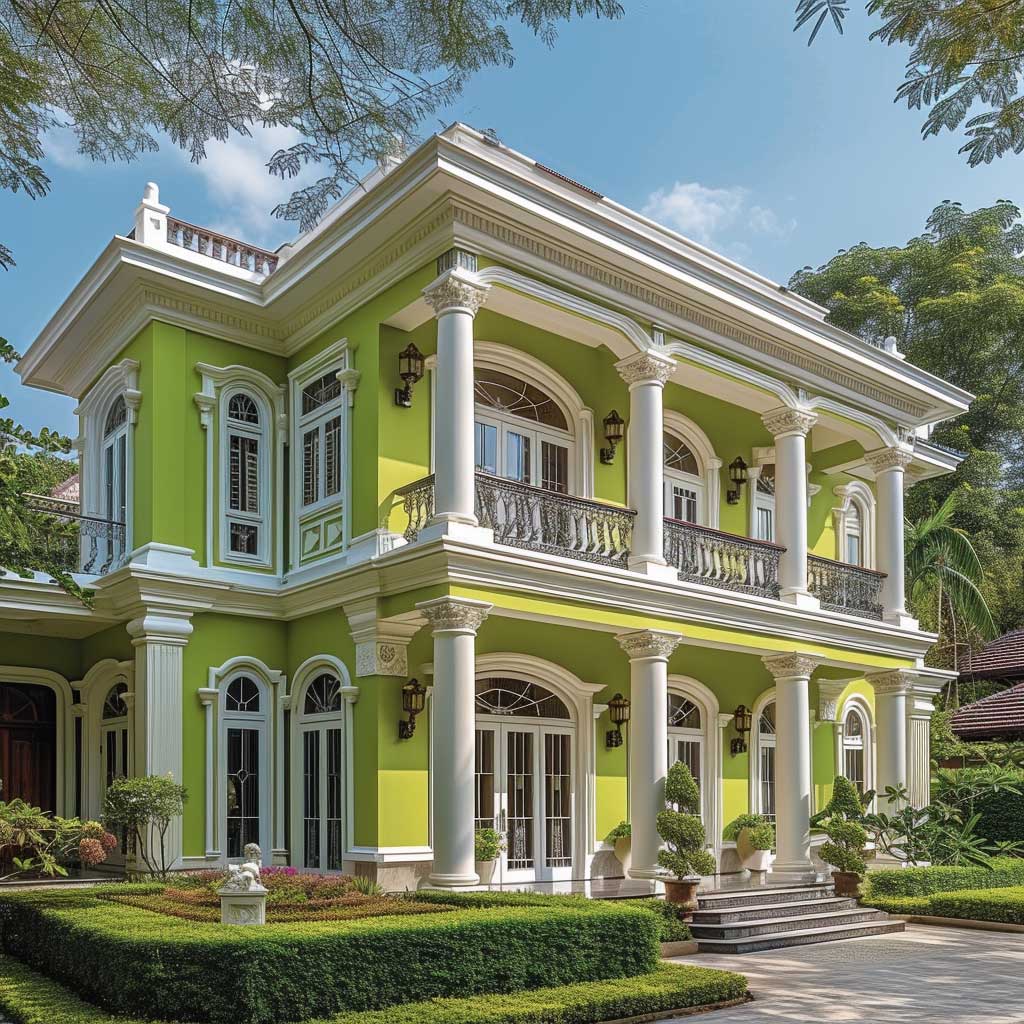


Sheen choice on the white matters as much as sheen choice on the green. Semi-gloss on all white trim elements — window casings, corner boards, fascia, door frames — lets them hold their crispness through rain and UV. Satin or matte white on exterior trim fades and chalks within 18–24 months in most climates, and once chalked white trim turns grey, the lime green above it looks washed out by association. A gallon of quality semi-gloss trim paint from Benjamin Moore Advance runs around $85 and covers one full coat on most trim elements on a typical single-storey house.
You’ll notice that houses with lime green and white look sharpest in the first two years, then gradually soften as the green fades and the white yellows slightly. Scheduling a trim repaint every 5–7 years — even if the siding body still holds colour — refreshes the entire facade without the cost of full repainting. Trim is the frame; keep the frame clean and the picture always looks maintained.
Urban Facades Where Lime Green Earns Its Place


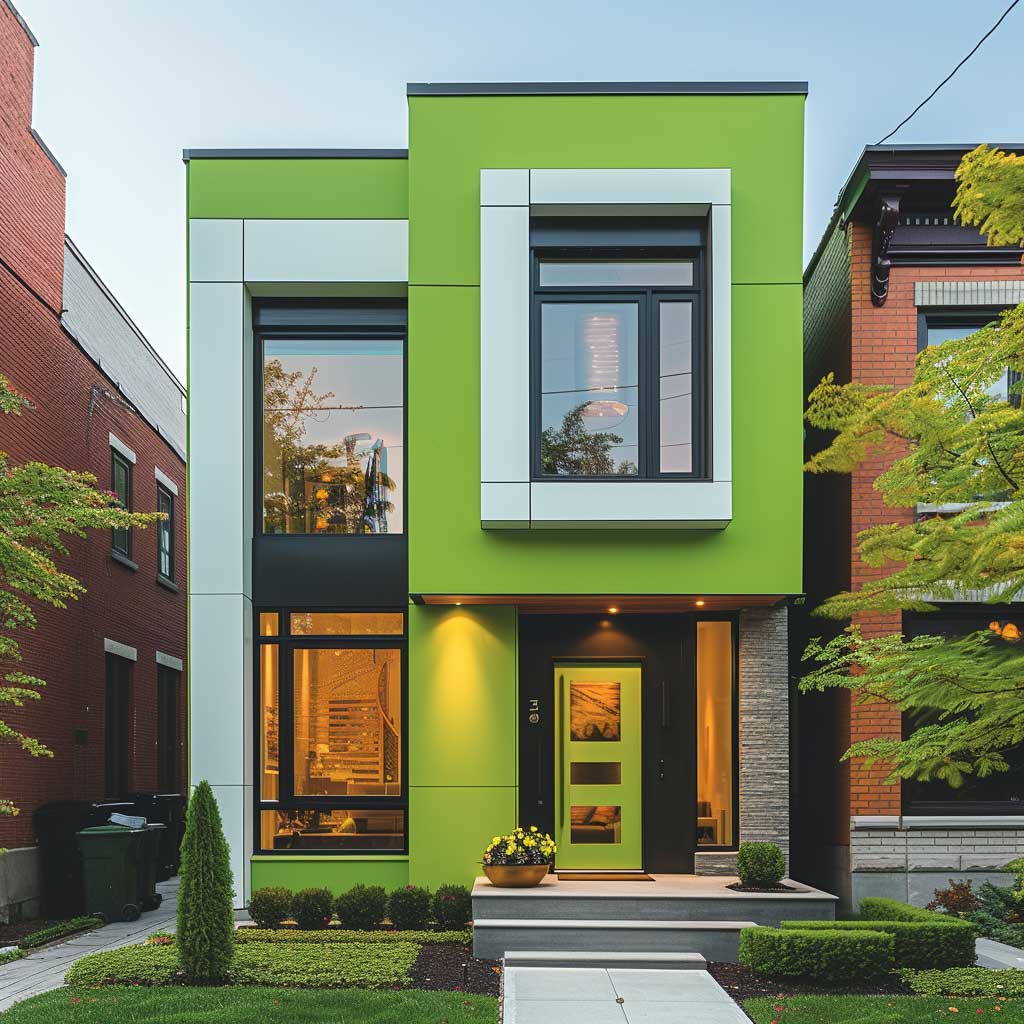
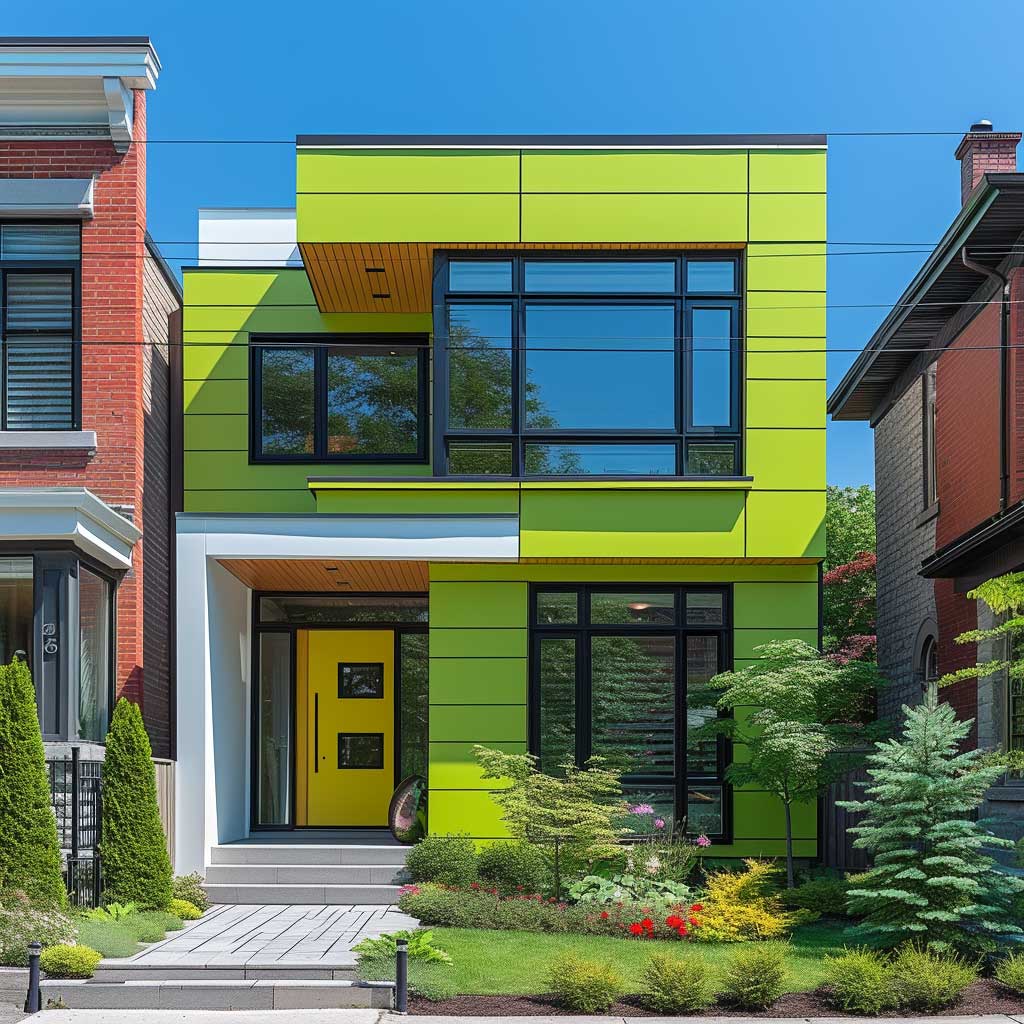
City streets dominated by grey, beige, and brick create an unintentional grey wash that makes a lime green facade function like a visual landmark — neighbours start giving directions using it. This works because lime green has a light reflectance value high enough to read across a full streetblock in overcast light, unlike navy or forest green, which collapse to near-black in shade. The contrast with surrounding neutrals does the attention-getting for you, which means you can keep the design itself restrained and still make a statement.
Lime green exterior paint in dense urban settings demands geometric precision in the facade. Does lime green work on a plain boxy wall with no architectural detail? Not well — without window mouldings, corner boards, or structural rhythm, the colour has nothing to anchor itself to and reads as an unfinished paint job rather than a deliberate choice. The white trim in an urban context isn’t decorative; it’s structural, defining the grid that gives the green its reason for being there.
A common approach for urban townhouses is to concentrate the lime green on the main body and use white only on the parapet, window surrounds, and balcony railings — keeping roughly 25% of the visible facade in white. The parapet edge in white is specifically effective because it defines the roofline against the sky, giving the building a completed silhouette. Without that edge, lime green facades in urban settings can look like they stop abruptly rather than ending deliberately.


Sherwin-Williams’ exterior colour tools let you test different green-to-white combinations on visualised facades before ordering paint — a useful step when navigating HOA approvals or when the neighbouring buildings’ colours create constraints. The Sherwin-Williams exterior colour palette resource at Sherwin-Williams exterior house colours includes regional style palettes organised by architectural type, which narrows down whether a bold lime is appropriate for a given street context or whether a softer chartreuse would carry the same visual energy with less friction.
Maintenance in urban settings is worth factoring into the colour decision. Street-level lime green walls pick up exhaust residue and atmospheric grime faster than upper-storey sections, and grime on lime green reads as a green-grey smear rather than just a dirty wall. A power-wash once a year — standard practice for any exterior in a dense city — keeps the colour reading correctly. One thing that actually extends lime green’s urban life: applying a clear exterior topcoat sealant (around $40–$50 per gallon) over the final paint coat. It doesn’t change the colour but makes the surface washable and slows UV degradation by 15–20% according to most product specifications.
| Lime Green Setting | Best White Element | Ideal Sheen Combo | Key Risk |
|---|---|---|---|
| Nature / garden surroundings | Window frames and door surround only | Satin body / semi-gloss trim | Green disappears into foliage without white anchor |
| Modern classic / traditional architecture | Full trim — columns, mouldings, railings, fascia | Satin body / semi-gloss trim | Too much white turns lime into an accent, not a body colour |
| Urban streetscape / townhouse | Parapet, window surrounds, balcony railing | Satin body / semi-gloss trim | No geometric definition makes lime look unfinished |
Final Take
Lime green holds when the white has a job to do
Sherwin-Williams Gecko (SW 6719) at around $65–$75 per gallon is the exterior-safe lime green worth committing to. Pair it with Alabaster or White Dove — not bright white — on all trim at semi-gloss sheen.
South- and west-facing lime green walls fade fastest; budget for a repaint at 5–7 years on those elevations, 7–10 on north and east.
The white trim isn’t decoration — it’s the structure that makes the green legible. Get the ratio (60–70% green, 30–40% white) and the sheen combination right before you commit to a shade. Save this post before your next paint consultation.