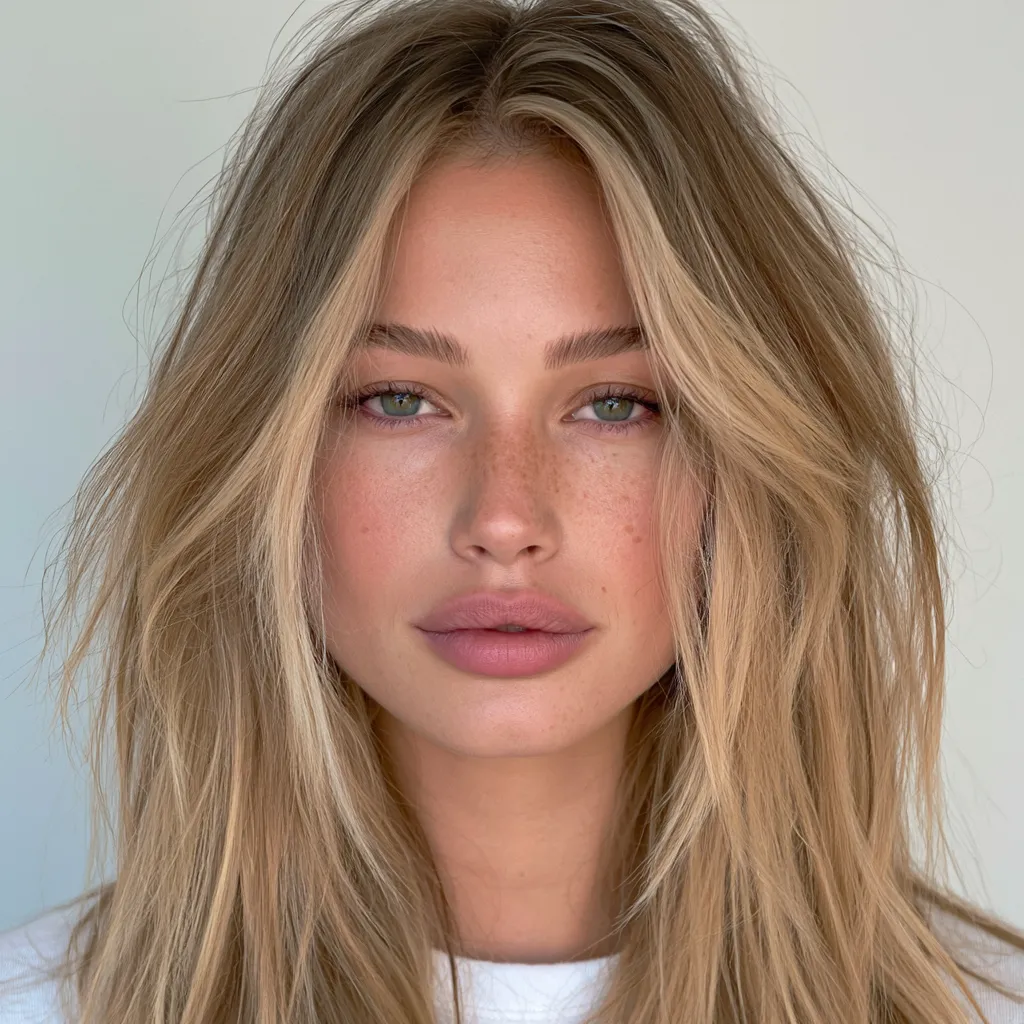
Long layered hair straight enough to catch light like polished glass — that’s the look these six styles are built around. Each one uses layers not to add poof, but to create rhythm inside a sleek silhouette. You get shine, structure, and the kind of shape that reads intentional from across a room. I’ve been obsessed with this intersection for years: the moment a flat iron and a precise layer placement turn ordinary length into something that looks editorial. These looks cover diamond faces, round frames, and everything between — and each one proves that straight doesn’t mean static.
What’s worth noting before you pick a reference: long layered haircuts for straight hair live or die by the angle of the cut. Too many short layers and you get the 2005 shaggy disaster. Too few and the hair hangs like a curtain. The sweet spot is long layers that begin below the collarbone, with a face-framing section that starts no higher than the cheekbone. That formula shows up in every look below — just executed in three very different color worlds.
Quick Scan
Target look: Sleek straight hair with long layers and visible movement
Best for: Diamond, round, and heart face shapes
Key tool: Titanium flat iron + heat protectant spray
Color range covered: Icy blue, cherry red, sunset orange
Layer placement rule: Start below the collarbone, face-frame from cheekbone down
Biggest mistake to avoid: Short layers above the chin on straight hair — they flip outward and break the silhouette
Icy Blue Long Layers on a Diamond Face
Icy blue is ruthless about exposing bad layer placement — and this cut survives that test with confidence. The long layered straight hair here uses a middle part as an anchor, then lets face-framing sections curve just below the cheekbones, sculpting the diamond shape without fighting it. You’ll notice the layers don’t start high; they ease in from around the jawline and fan outward as they extend past the shoulders. That geometry is doing real work. My go-to descriptor for this is “architectural hair” — it looks like someone planned it on paper before picking up scissors.


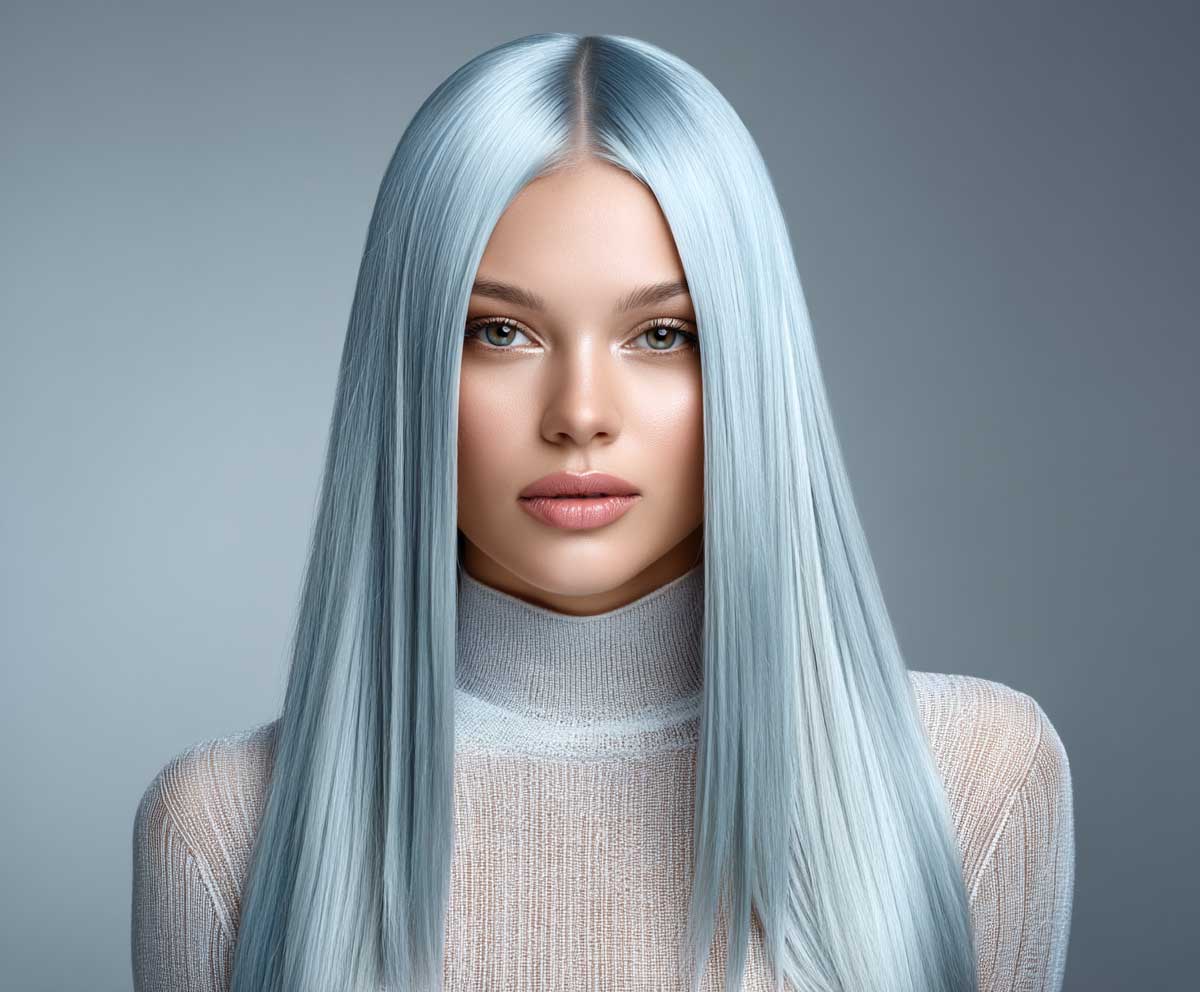
For styling, I reach for a CHI Titanium flat iron at 380°F and a dime-sized drop of Olaplex No.7 Bonding Oil worked through from mid-shaft to ends before the iron even touches the hair. The oil is what gives the icy blue that near-metallic reflective finish — without it, the color reads flat and slightly chalky. Don’t use a serum that contains silicone as the first layer; it coats the hair and prevents the color from showing its full depth. Paddle brush through first, then work the flat iron in sections no wider than an inch.
The layers in this look are cut with restraint. They won’t give you volume — that’s not the point. What they give you is rhythm inside the straight silhouette, like a song played at the same tempo but with different notes underneath. For those with thin straight hair, this long-layer approach is far more forgiving than short interior layers, which create unpredictable flyaways once straightened. The longer the layer, the more the hair lays down cleanly while still showing movement at the ends.
One honest note: icy blue fades fast. You’re looking at a toning gloss every 3-4 weeks minimum if you want it to stay this crisp. Wella Color Charm toners in the T18 and T28 range cost around $8 each and do the job at home. Without maintenance, this color shifts to a muddy teal within a month — and no amount of good layering saves muddy teal.
Cherry Red Precision Layers That Earn the Attention
Cherry red has a reputation problem — people assume it reads costume. This haircut fixes that through one specific decision: razor-finished ends on long layered straight hair. The razor cut keeps each layer sharp rather than blunt, so the ends slice through air instead of sitting heavy. You’ll notice the layers begin just below the chin and angle downward toward the mid-back in a subtle V shape. That V is the reason this looks expensive and not loud. I tested the same color on a blunt cut once — it looked like a Halloween wig. Same color, different layer angle, completely different result.
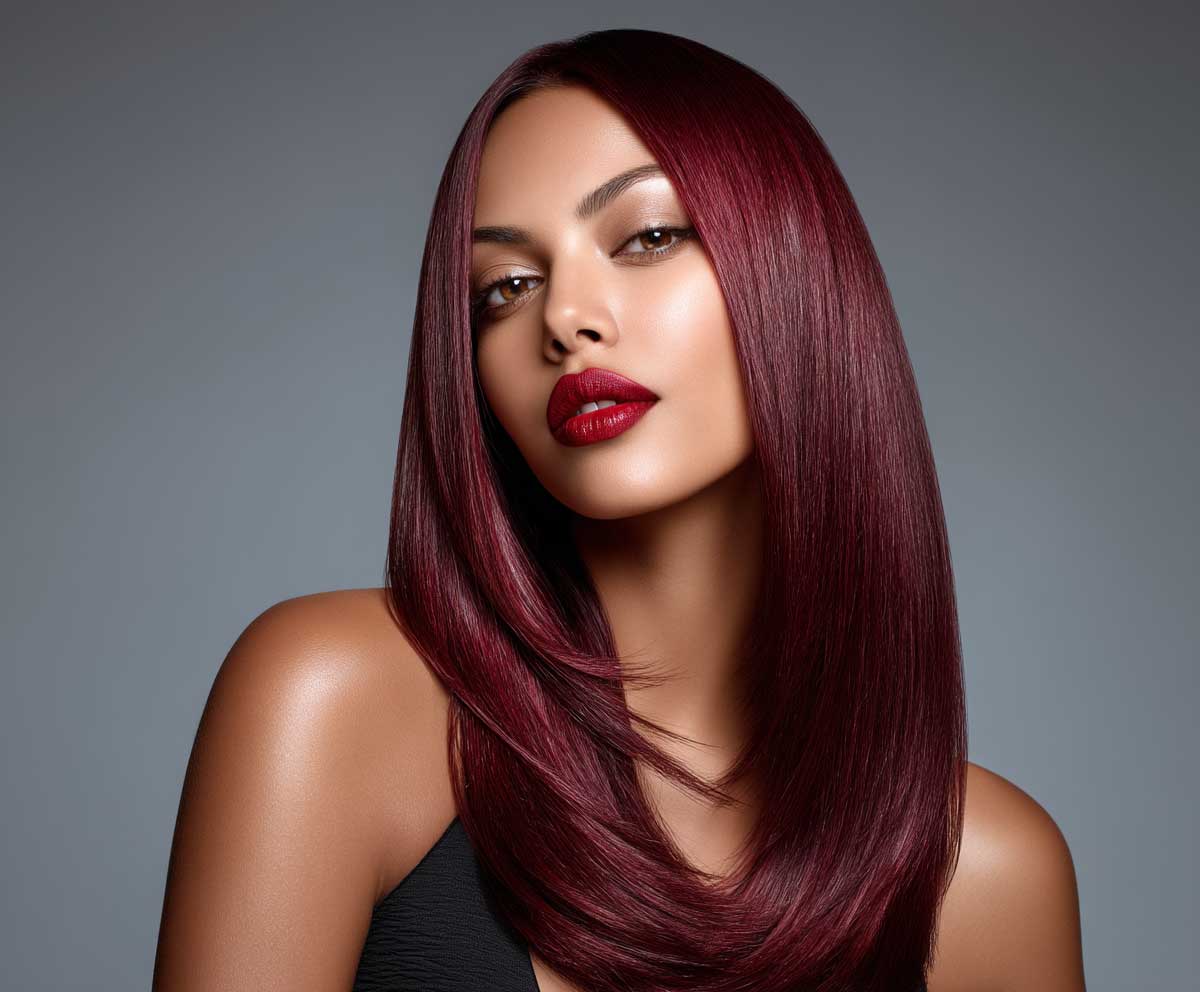


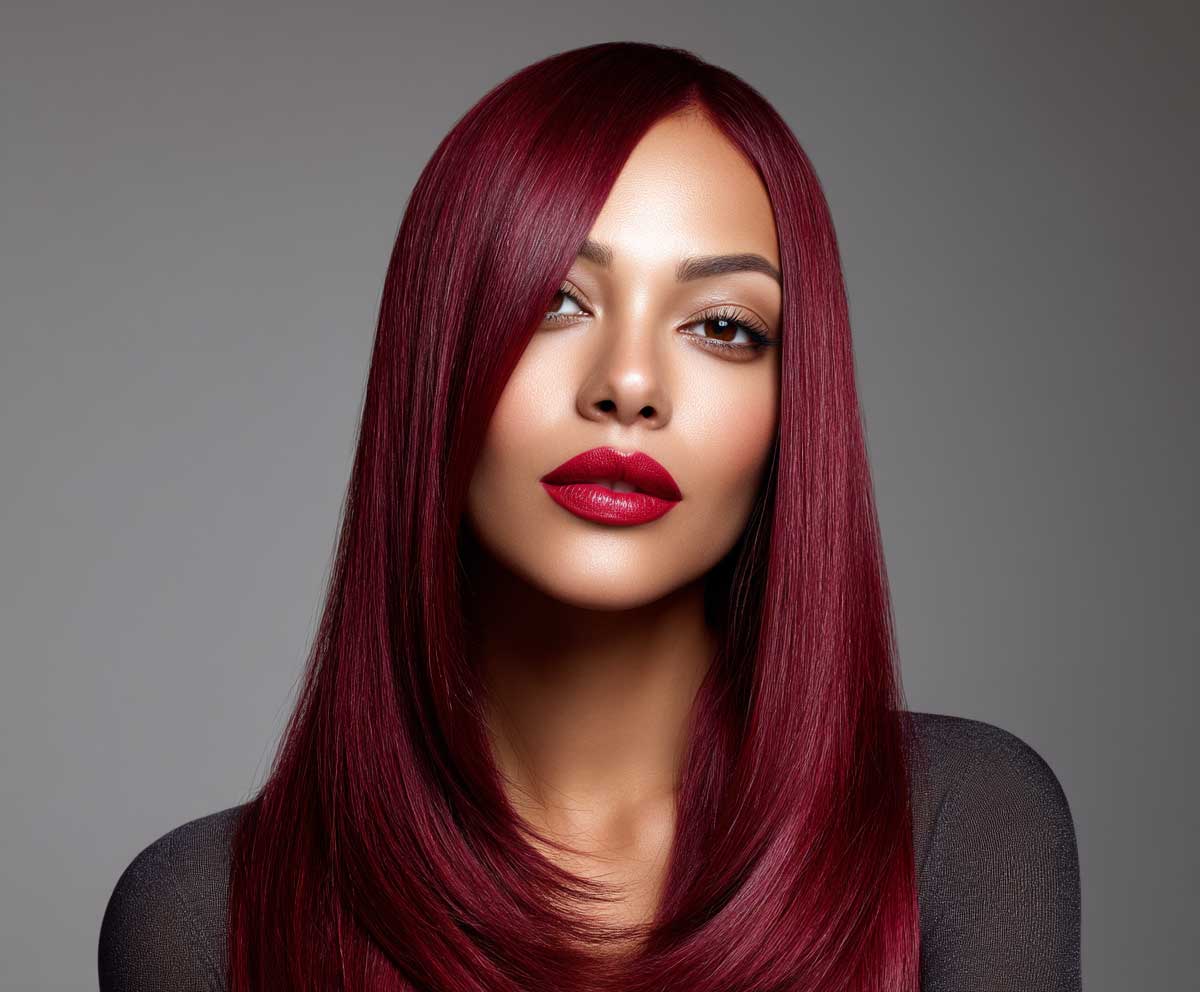
Cherry red demands polish at the product level, not just at the salon. After flat ironing, apply KENRA Platinum Silkening Mist ($22) from mid-length to ends — it enhances the vivid hue without any greasiness, and at under $25 it’s half the price of most luxury finishing sprays. Skip anything heavy or leave-in creamy at the ends; it dulls the red and gives the hair a slightly wet look that kills the precision of the layers. The layered haircut for straight hair only delivers on its promise when the ends stay light and sharp.
This works particularly well for heart-shaped faces. The longest layers reach past the collarbone and draw the eye downward toward the chin — which is exactly the opposite of what most heart-face styling advice suggests you avoid. Here the layers create a visual weight at the bottom of the face rather than the top. That redistribution softens the width of the forehead without doing anything dramatic. You can push this further with a deep side part, which adds asymmetry and keeps the look from reading too symmetrical and stiff.
Don’t Do This
Don’t ask for “short layers throughout” on long straight hair thinking it adds volume. Short interior layers on straight hair — anything starting above the jaw — flip outward when straightened and refuse to lay flat. The result is a silhouette that looks unfinished in the front and bulky in the middle. If your stylist suggests taking layers up to the crown on straight hair, ask them to keep everything below the cheekbone instead. You can find a solid breakdown of what works for different face shapes in this layered haircuts by face shape guide — worth reading before your next appointment.
For occasions where you want this haircut to land harder, switch the center part to a deep side part and add a single pass of the flat iron at the ends with a slight inward bend — about 15 degrees of rotation. That small curve at the tip of each layer is the difference between looking like you walked out of a salon and looking like you tried. It takes 4 minutes. No extra product required.
Sunset Orange Layers Pulled Long on a Round Frame
Round faces get bad styling advice constantly. “Go for volume at the crown, keep sides flat” — sure, but that creates a mushroom shape and no one’s talking about it. This sunset orange long layered straight hair takes a different approach: pull the longest layers past the collarbone so the eye travels down, not out. The layers sit close to the cheeks through the upper section and then release outward below the jaw, which creates a vertical line rather than a horizontal one. That redirection is what makes this work for a round face where most long straight cuts just hang flat and make the face look wider.


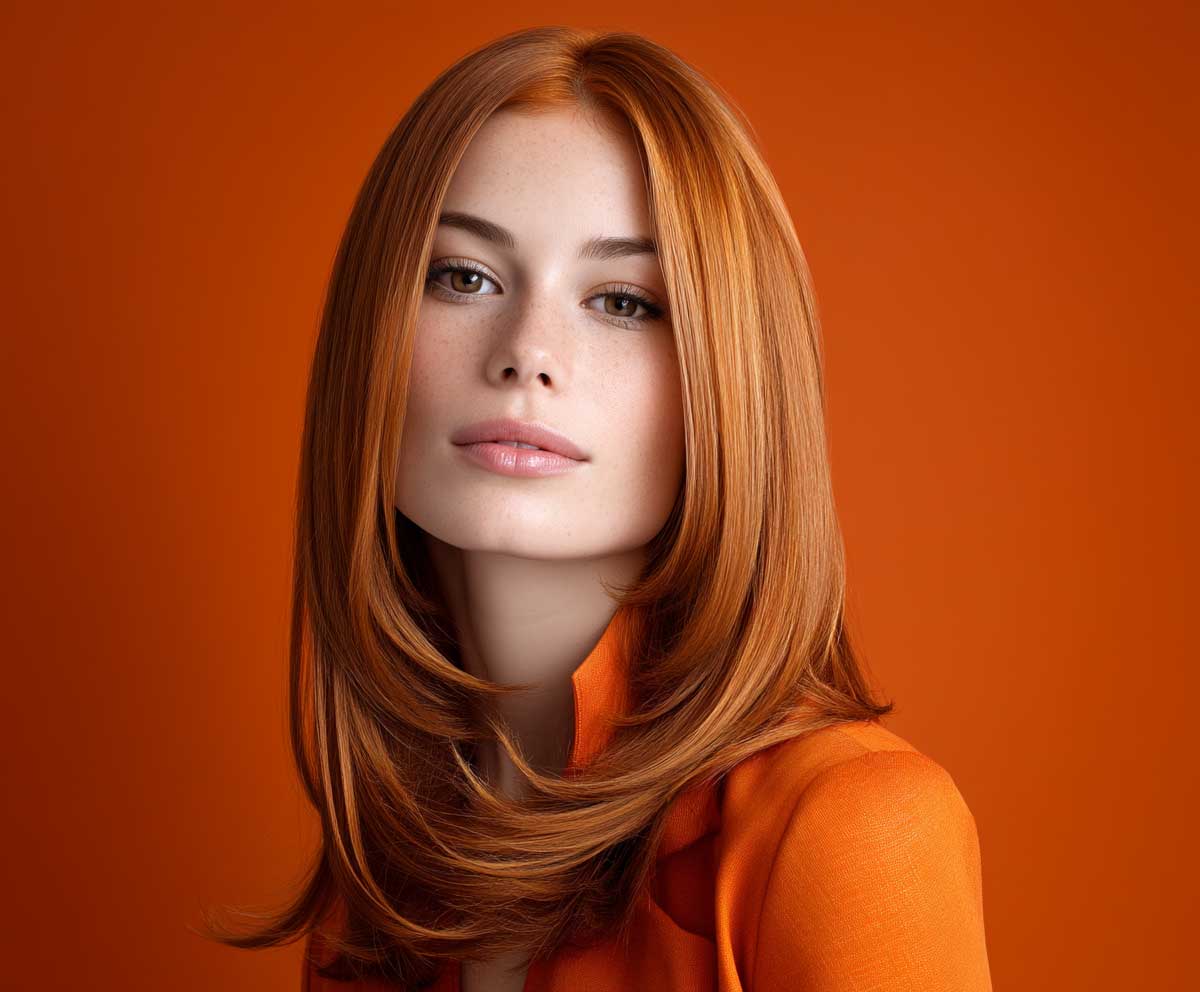

Heat styling is non-negotiable for this orange. Not because the hair needs forcing, but because the finish — that smooth, reflective surface — is what turns orange from aggressive to sunset. A BaBylissPRO Nano Titanium flat iron ($150) at 375°F gives the most consistent result I’ve found at this price point. Pair it with ghd Heat Protect Spray ($26) before each pass. What you don’t want here is a ceramic iron on a setting below 350°F — it leaves orange hair with a slightly matte, dull finish that makes the whole look seem bargain-priced.
The layer length here — falling well past the collarbone, almost to mid-back — is also why this works unstyled. Longer layers on straight hair have a blending behavior that shorter ones don’t: they lie flat on their own once the hair settles after washing, rather than sticking out at odd angles. That means a quick pass with a flat iron in the morning actually stays looking clean for a full day. If you want to see how this layer logic applies to layers on long straight hair without bold color, the auburn long straight cuts on this site show the same architecture in a more natural palette — same principles, more wearable for daily contexts.
Is this a high-maintenance color? Absolutely. But the structure of the cut isn’t. The long layers grow out cleanly — no awkward middle stage where the hair looks neither layered nor one-length. You get about 10-12 weeks before a trim is strictly necessary, longer if you use a good strengthening treatment like Olaplex No.3 weekly ($30 at Sephora). Don’t skip the treatment and then blame the haircut when the ends start feathering apart at week 8.
For creative professionals — stylists, designers, photographers — this is the haircut that reads as intentional without trying to look “artsy.” The color does the talking; the layered structure keeps it from being chaotic. Pair it with tonal outfits (all terracotta, all cream, all black) and the hair becomes the only focal point in the room. That’s the move. L’Oréal Paris has a solid breakdown of face-framing layer techniques by face shape if you want to understand where to ask your colorist to place the shortest pieces for maximum effect on your specific geometry.
Final Take
Long Layered Hair Straight Silhouettes Reward One Thing: Correct Layer Placement
Icy blue, cherry red, or sunset orange — the color is a choice, but the architecture is the haircut. Every look above works because the layers start below the collarbone and stay long enough to lie flat against the silhouette. Move those layers up above the jaw on straight hair and the whole thing falls apart.
The tools matter too. Titanium iron, heat protectant that isn’t silicon-heavy, and a finishing oil or mist that enhances the color’s reflective depth. Budget $20–$30 for product before you book the appointment.
Save this post before you talk to your stylist — show them the images directly, because “long layered straight hair” means three different things to three different people holding scissors.