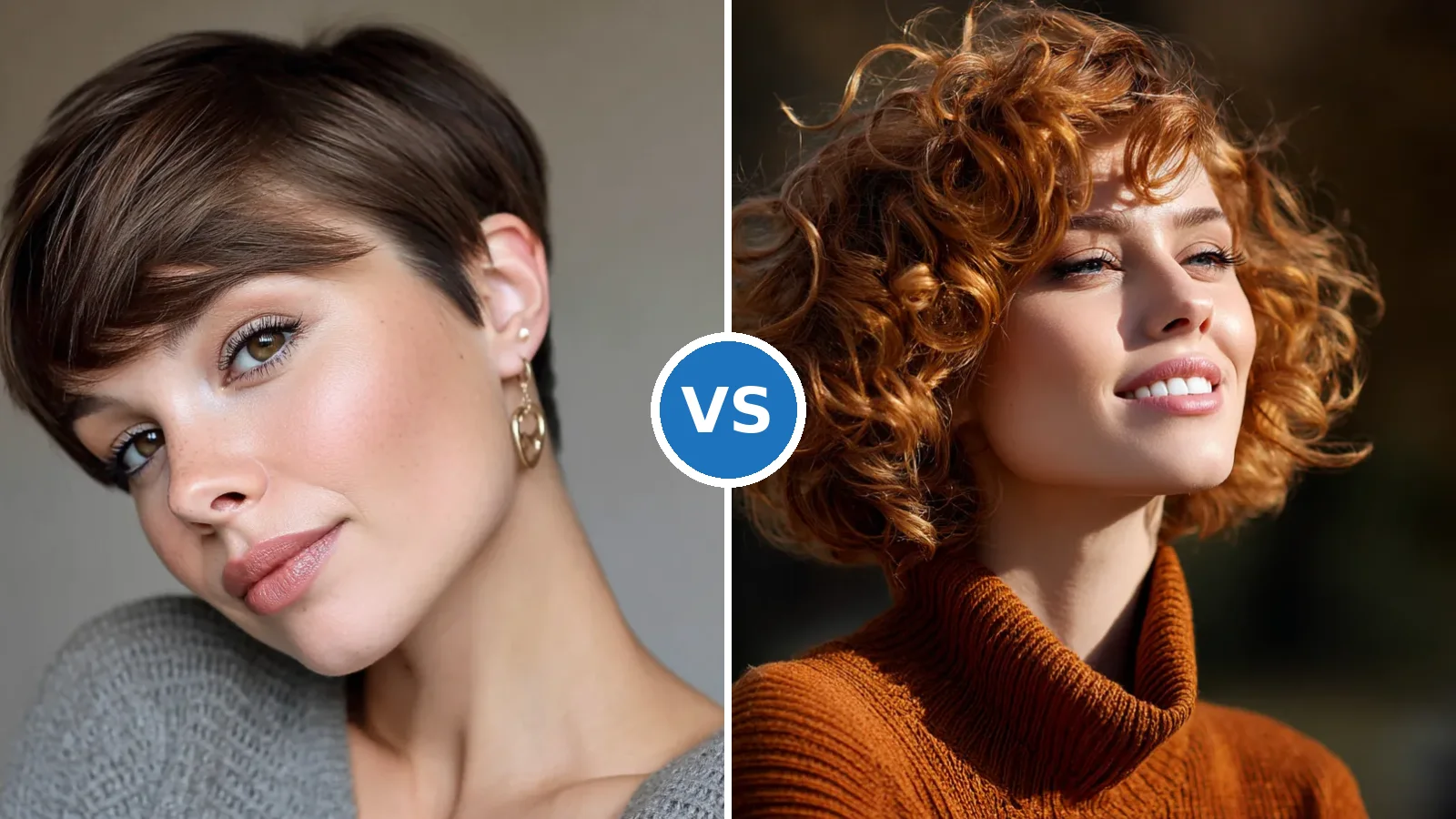
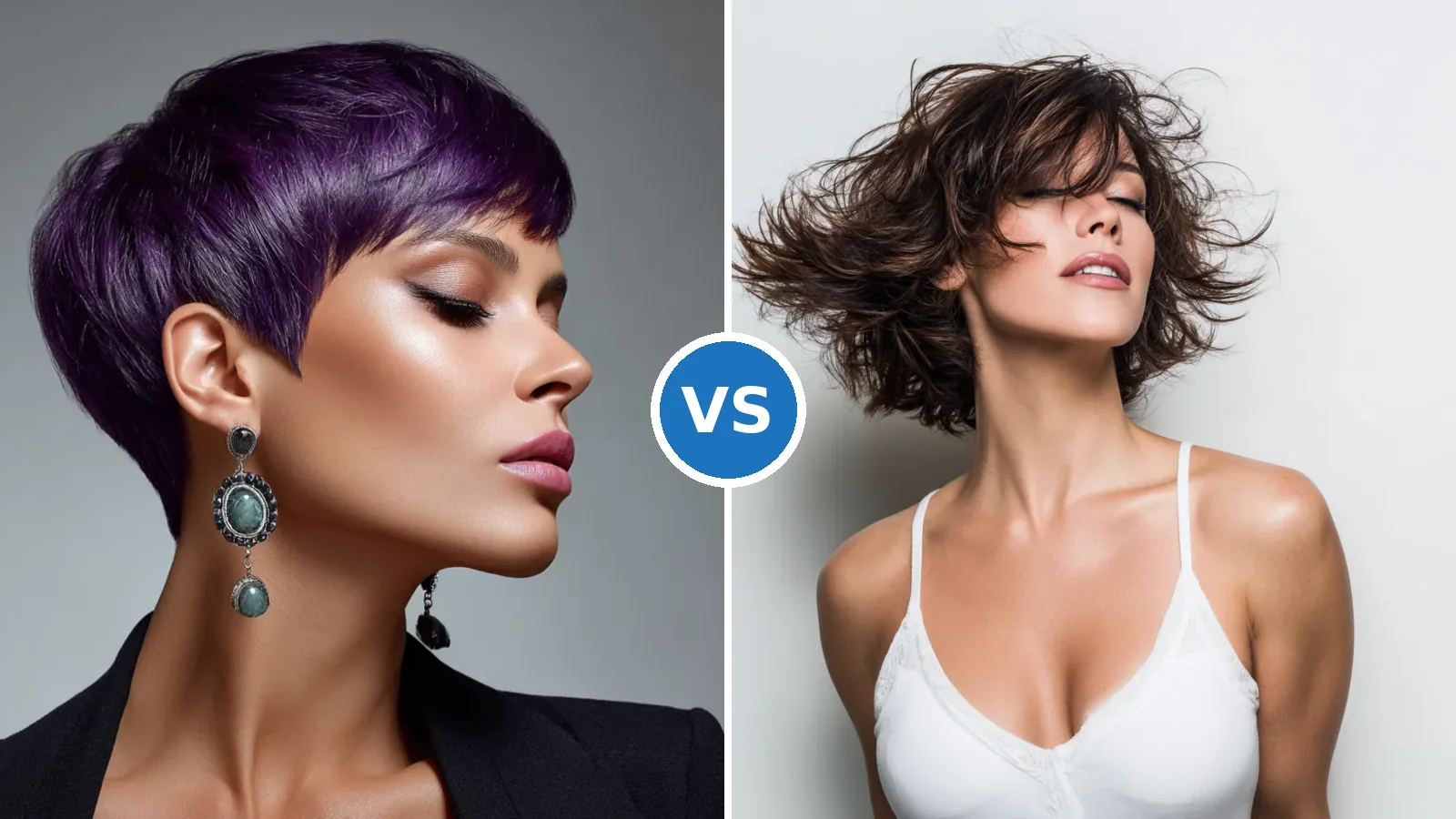
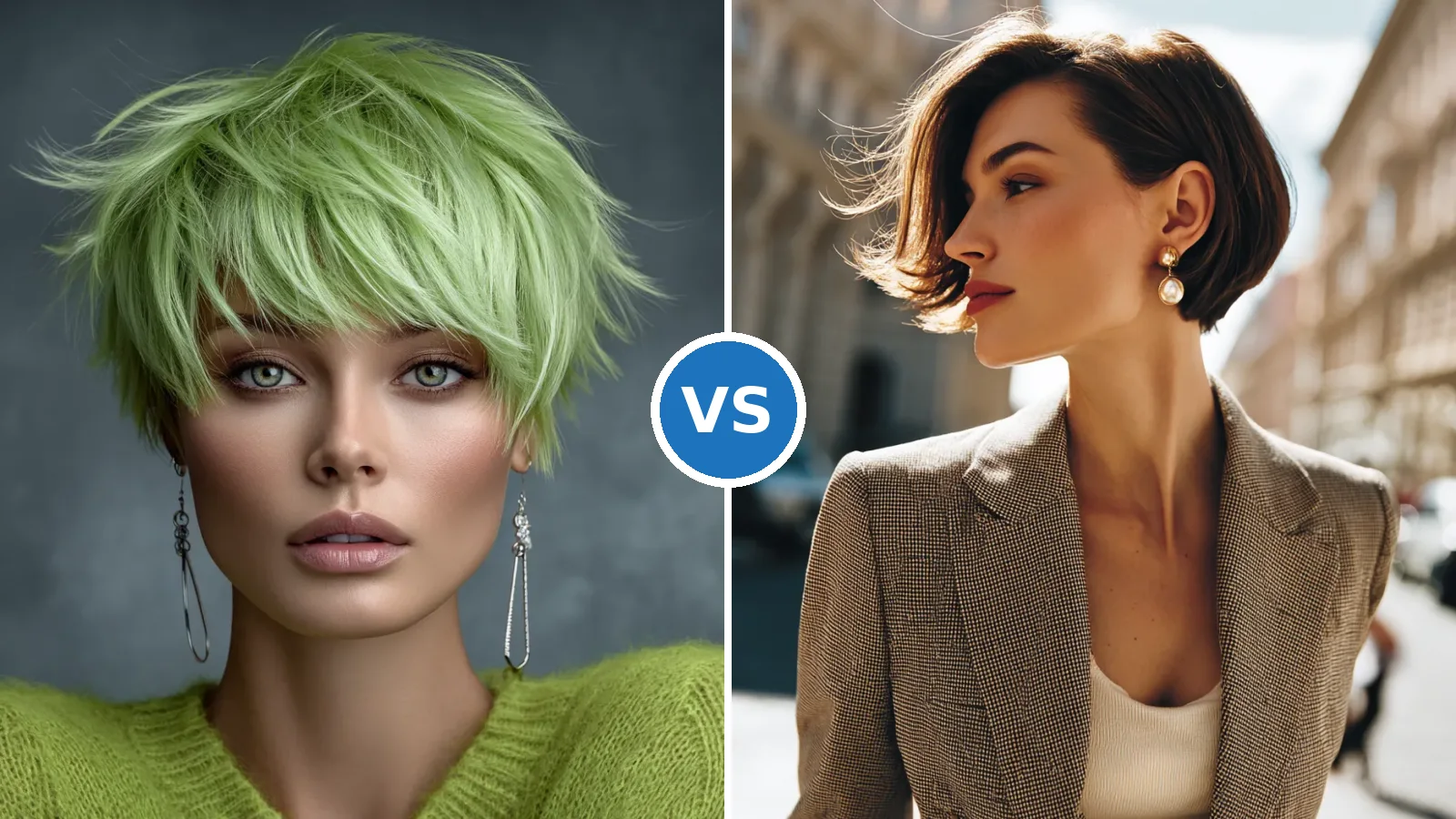
Shag haircuts for women with a round face work because the cut does something geometry alone cannot — it redirects the eye vertically instead of letting it trace the widest part of your face. I’ve sat in enough salon chairs to know that a generic layered cut won’t cut it. Blunt, single-length hair hugs the cheeks. The shag, with its crown volume and face-framing pieces, pulls focus upward and downward simultaneously. The result reads as longer. More defined. Closer to oval. You don’t slim down a round face by hiding it — you reframe it.
Most stylists suggest avoiding short cuts on round faces. That’s half right. The actual issue is where the bulk lands. A shag is the rare short-to-medium cut that cheats the geometry in your favor — layers sit heavy at the crown, feather out at the ends, and leave the sides deliberately light. My go-to test: if the hair grazes the cheekbones and stops, find a different cut. The shag never does that.
Quick Scan — What This Post Covers
- Textured layered shag — crown volume without sidewall bulk
- Shoulder-length shag — the length that elongates best
- Chin-length choppy shag — short but not round-face-risky
- Styling products and techniques that make layers actually work
- The one shag variation you should skip if your face is full
- FAQ: modern shag, layered shag, double-chin shag styling
Textured Layers at the Crown Change the Whole Face Equation
A textured layered shag haircut for women builds volume where round faces need it most — at the crown, not the sides. That’s the mechanical reason it works. The feathered layers cascade from the top outward, and the side sections stay deliberately thin and airy. You’ll notice the face looking longer within the first 48 hours post-cut, before you’ve even mastered styling it. Bulk around the cheeks is the enemy. This cut keeps it away on purpose.
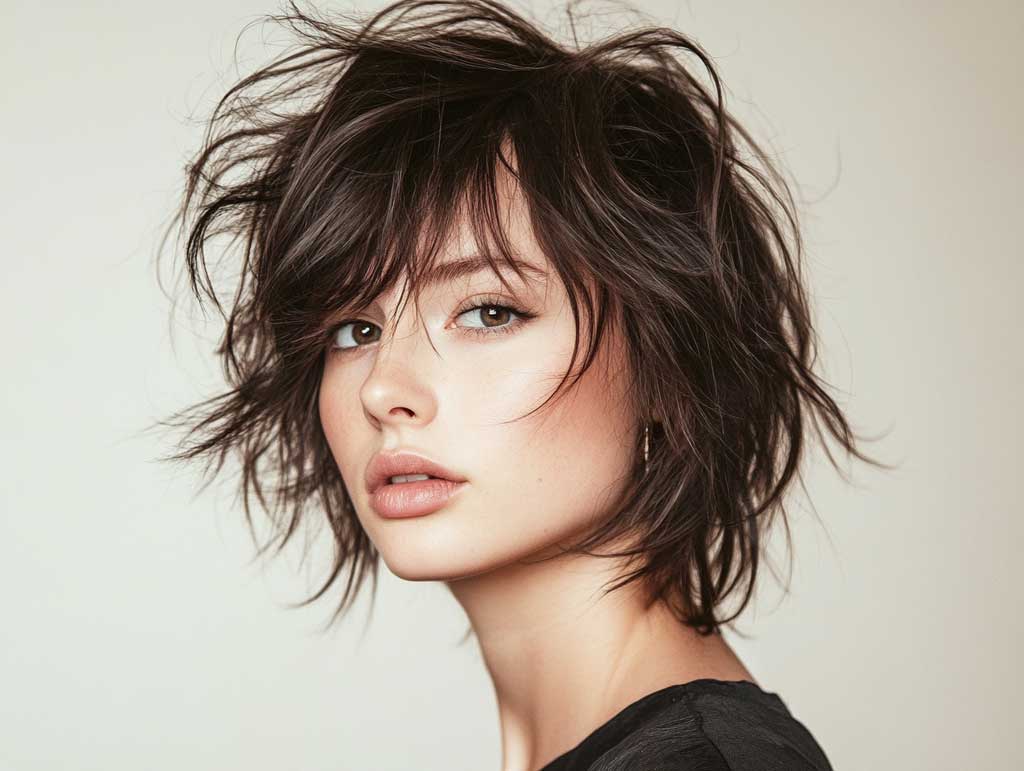
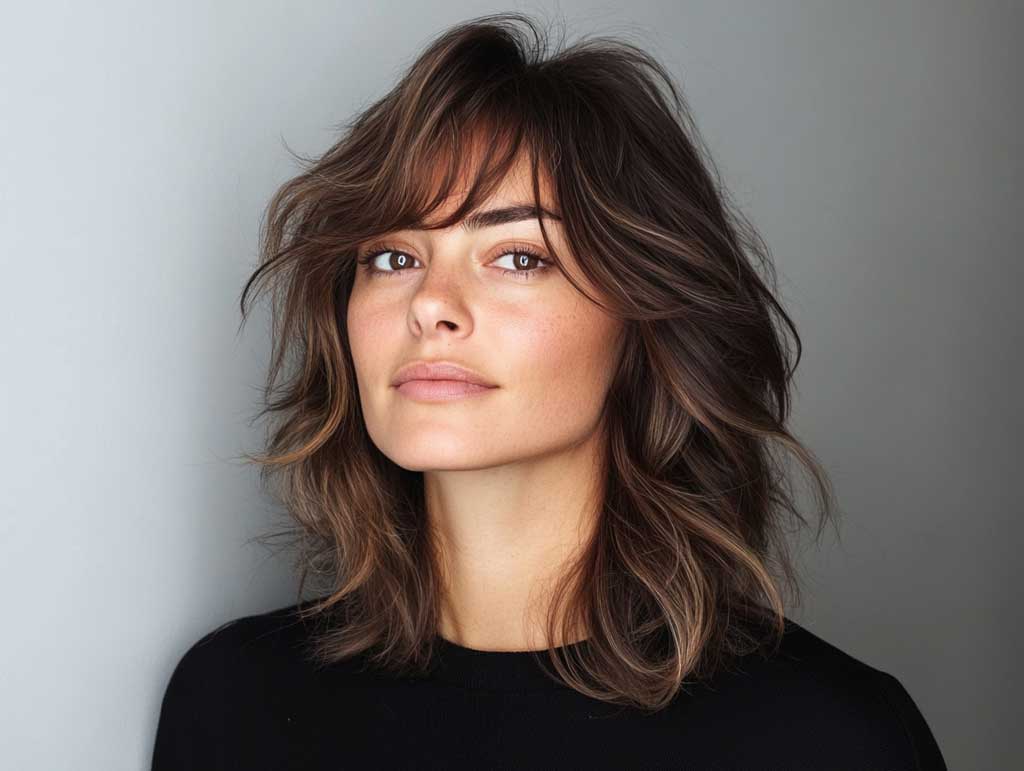
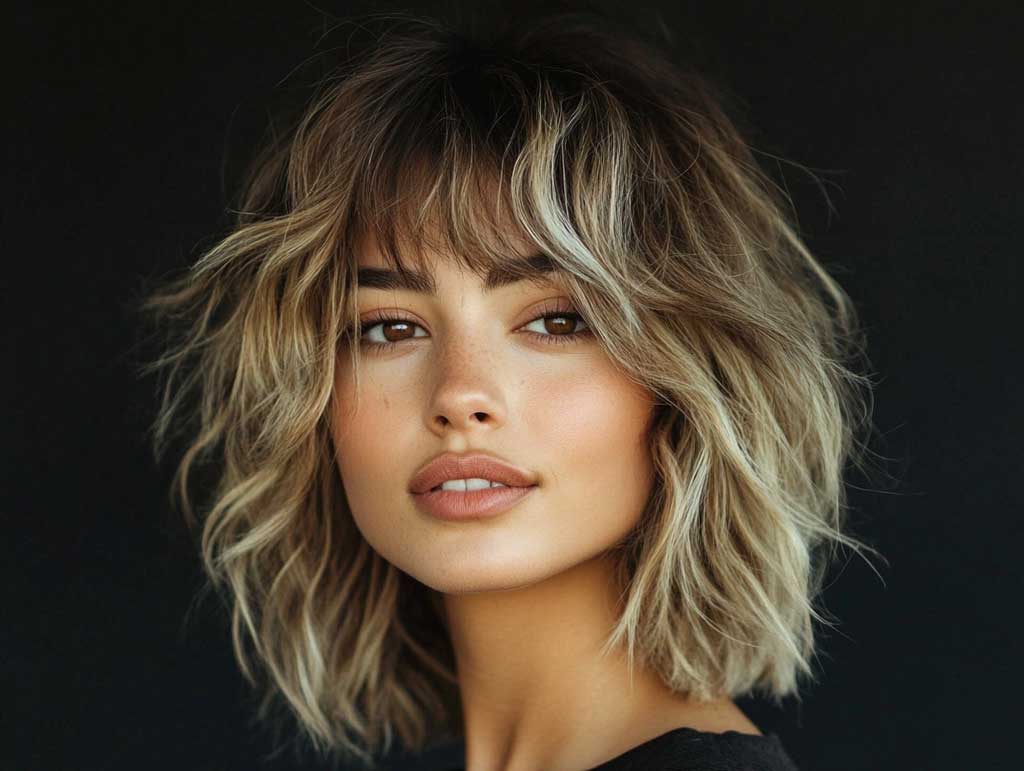
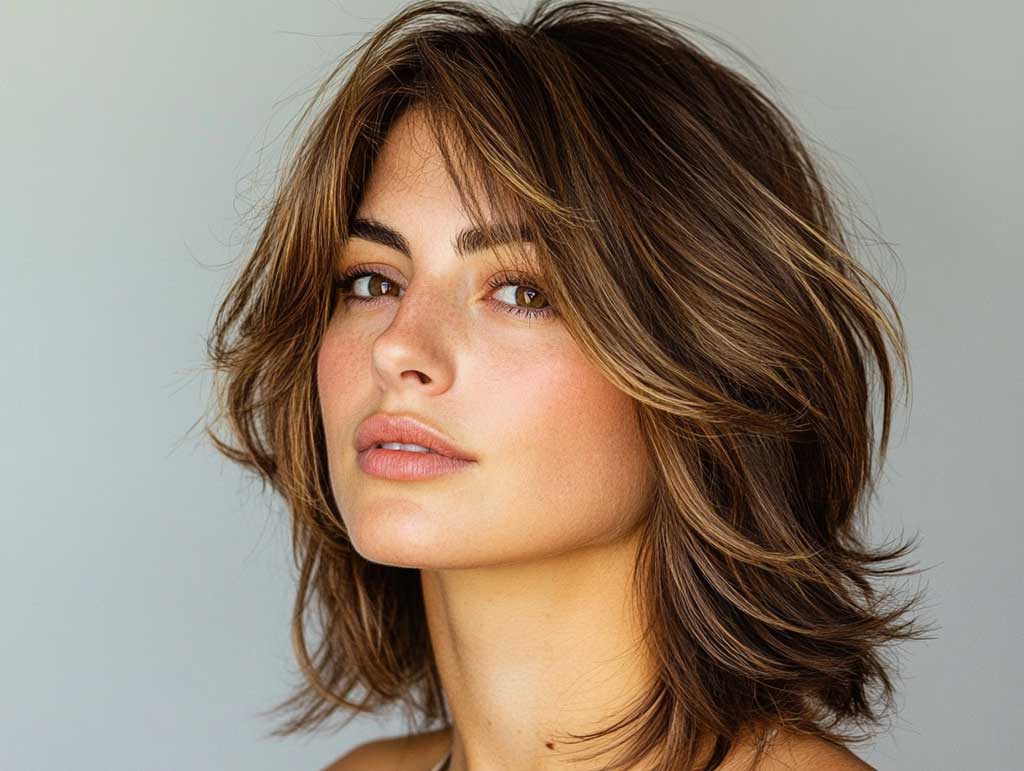
Naturally wavy or curly hair gets an extra bonus here. The layers encourage the curl pattern to separate rather than clump, so the silhouette stays tall rather than wide. Think of the crown layer as a load-bearing wall — remove it and everything collapses sideways. I own two diffusers and the Dyson Airwrap, and for this specific cut, the diffuser wins every time. It lifts the root without forcing the curl into a defined spiral that flattens the whole structure.
Styling is where most women go wrong with this cut. Heavy creams drag the layers down and defeat the geometry you paid a stylist to create. My go-to is R+Co Rockaway Salt Spray ($32) — two spritzes on damp hair, scrunch, diffuse upside down for two minutes. That’s it. For a polished version, a round brush at the root only, no more than two inches of lift, keeps the structure without the salon-blowout stiffness that reads overdone. Skip anything with oil in the first three ingredients.
Balayage or highlights amplify this cut visually. The lighter pieces at the front face-framing section catch the light and draw the eye toward your features, not the outline of your head. Dark, single-process color on a textured shag can look flat — the movement of the layers becomes invisible. I stole this trick from my colorist: ask for dimension at the face-frame only, leave the back darker, and the depth contrast does half the elongating work for you. For more layer inspiration, chestnut shaggy waves for round faces show exactly how tonal variation and layer placement work together.
Don’t Do This
Skip asking for “lots of layers” without specifying where. A stylist who layers heavily through the sides instead of the crown will widen the face rather than lengthen it. The classic mistake is a mushroom silhouette — round on top, round on the sides, no vertical pull at all. Tell your stylist explicitly: maximum volume at the crown, tapered and feathered from the ears down. If they look uncertain, show a reference photo. Vague instructions produce round results on already-round faces.
Shoulder-Length Shag — Where the Length Actually Earns Its Keep
A shoulder-length shag haircut for women is the length most face shape guides recommend — and for once, the generic advice is right. Length that hits at or just past the collarbone cascades below the cheekbones rather than stopping at them. That cascading is the mechanism: the hair acts as a vertical line that runs past the widest part of the face and keeps going, which visually extends the whole proportional column. Shorter cuts that stop at the jaw can frame the face beautifully or square it off badly — at shoulder length, the risk disappears.



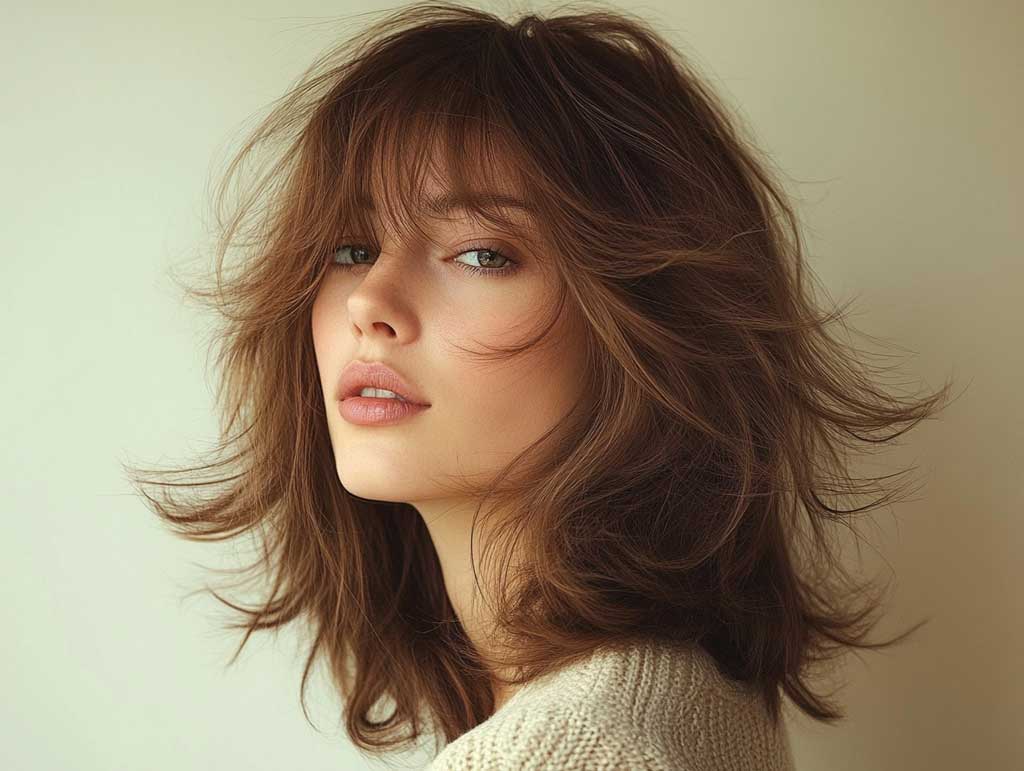
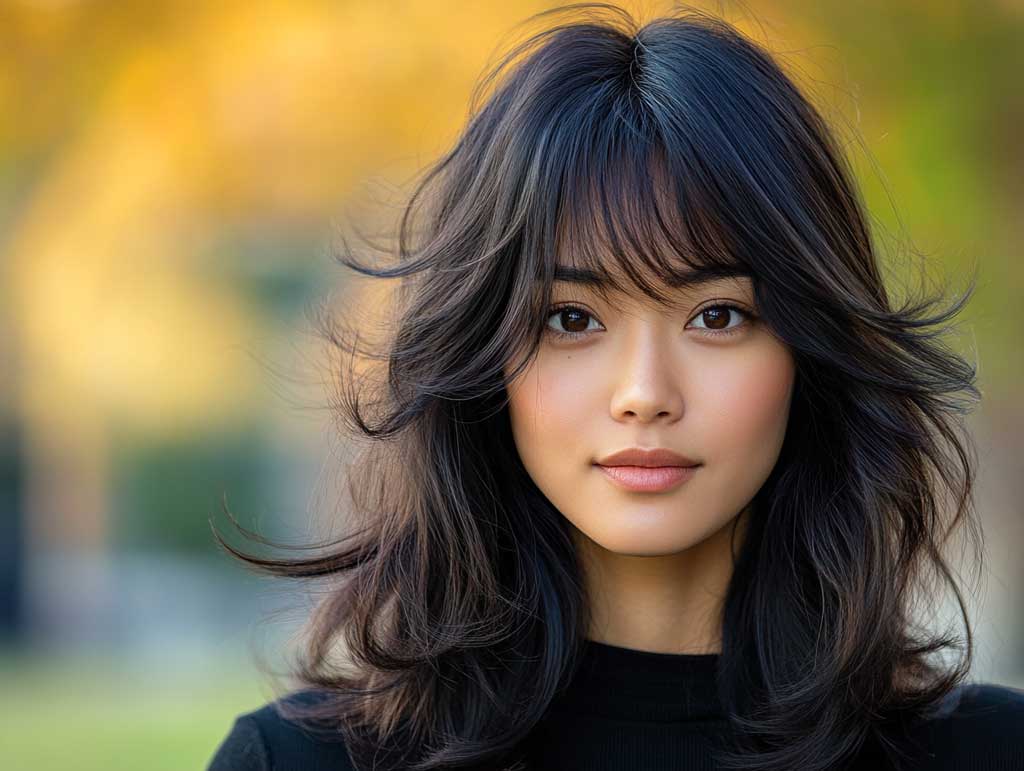
The layers in a shoulder-length shag typically start near the jawline and step down gradually. That descending structure keeps weight out of the cheek area while the feathered ends stay light and mobile. Fine hair gets instant body from the graduation — the stepping creates the illusion of density without actually adding thickness. Thick hair benefits the opposite way: the layers remove bulk from the perimeter so the whole cut moves rather than sitting heavy and still like a helmet.
Is soft wave or sleek finish better here? Soft wave, every time — no contest. A sleek shoulder-length shag looks flat unless you’re working with serious shine products, and flat hair on a round face emphasizes the horizontal. Loose waves give each layer its own spatial dimension. A 1.25-inch barrel from Beachwaver Pro ($130) on random sections — not every strand, just 60 percent of them — produces the naturally uneven texture that makes this cut look intentionally undone rather than failed-blowout. One spritz of Ouai Texturizing Hair Spray ($30) through the mid-lengths after and you’re done in under ten minutes.
You need to see the shaggy hairstyles for round faces with curtain bangs if you’re considering this length — the combination of shoulder-length layers and center-parted curtain bangs is particularly effective because the bangs break the forehead horizontally while the length adds vertical pull below the chin. Both directions working at once is what makes the face look genuinely more oval rather than just less obviously round.
Chin-Length Choppy Shag — Short Without the Round-Face Risk
A chin-length shag haircut for women sits in the danger zone for round faces — and clears it almost entirely thanks to the choppy layer structure. The risk with short cuts on round faces is volume at the sides, which a traditional chin-length bob delivers aggressively. The shag version cuts that risk by building choppy, disconnected layers instead of a solid perimeter. The layers point downward. The outline isn’t a smooth round dome. It’s broken up and architectural, which the eye reads as angular rather than circular.
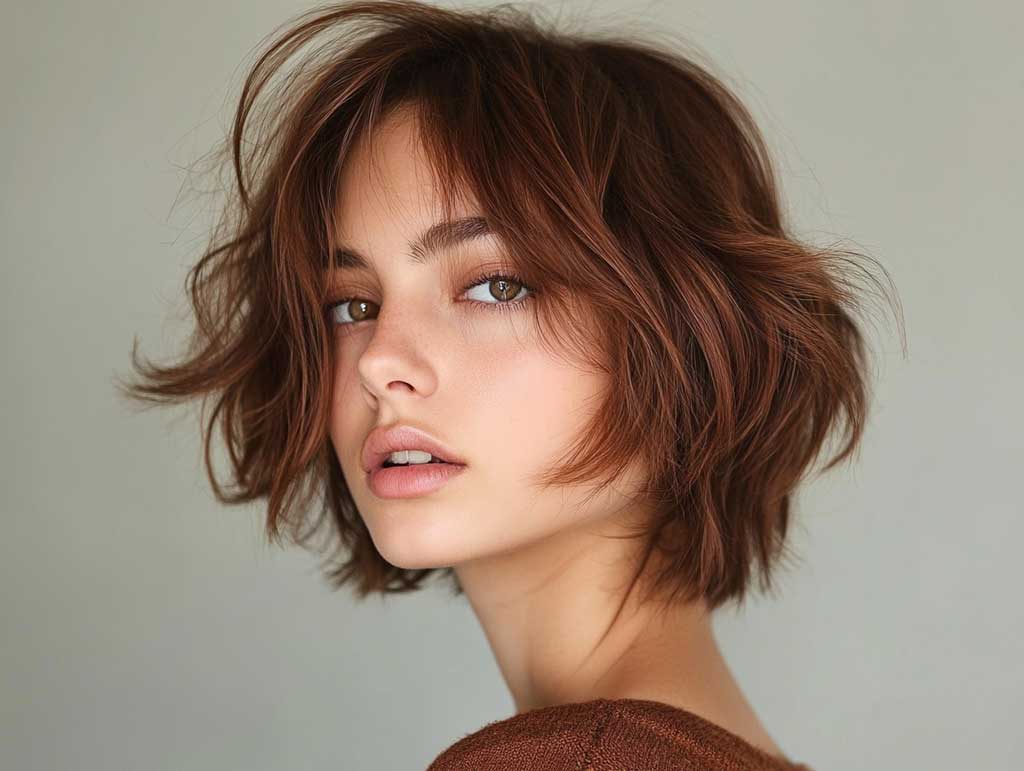

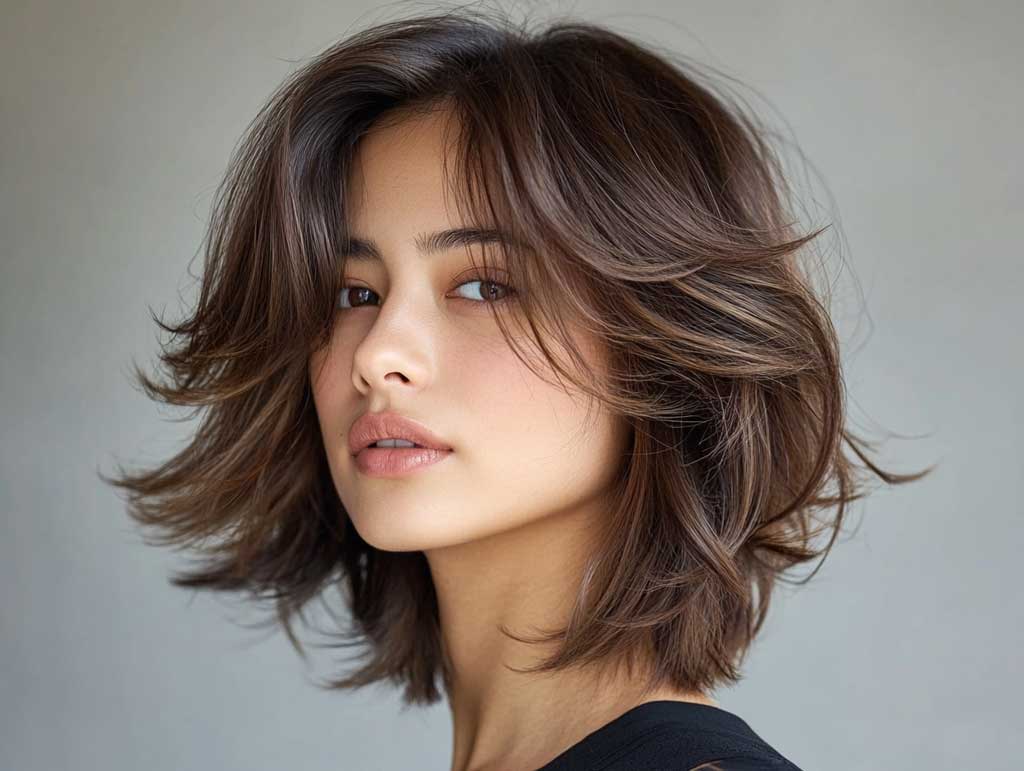
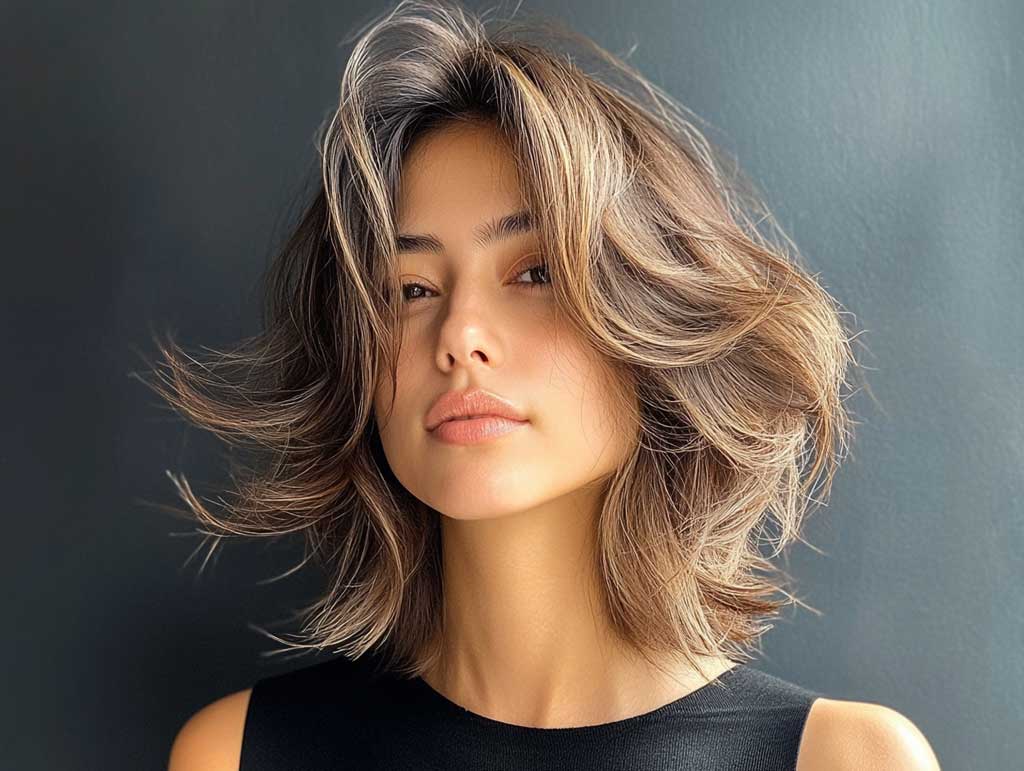
Crown volume is non-negotiable at this length. The front sections running slightly longer than the back create a soft A-line effect that keeps the silhouette moving downward rather than outward. Ask your stylist to keep the front pieces at least half an inch longer than the back — that specific request changes everything. I’ve had this cut with and without that detail, and the without version looked like a grown-out bowl cut within six weeks. The longer front anchors the shape as it grows.
Dry texture spray is the product this cut was designed for. Not cream, not oil, not serum. Dry texture spray — Bumble and bumble Surf Infusion ($34) or Oribe Dry Texturizing Spray ($52 and worth it) — roughens up the choppy ends so each layer stands independently instead of lying flat against its neighbor. Apply it to dry hair, finger-separate two or three sections, shake the roots, done. The tousled finish isn’t accidental style — it’s the technical requirement for the cut to perform correctly. Over-styling a chin-length shag into sleekness defeats the entire structural purpose.
What doesn’t work at this length? A blunt fringe. A heavy, straight-across bang at chin length with a full round face is the double-chin haircut — it chops the face into two horizontal sections, neither of which does you any favors. Curtain bangs or wispy side-swept fringe are the functional alternatives if you want something at the forehead. Or skip bangs entirely and let the crown layers do the framing work. Explore more short-length strategies in this breakdown of feathered short hair for round faces — the feathering technique discussed there pairs directly with the chin-shag structure.
Straight or wavy hair both work here with minimal effort. Wavy hair can air-dry into the choppy structure on its own — three pumps of Moroccanoil Curl Defining Cream ($34) on soaking wet hair, scrunch, leave it alone. Straight hair needs two minutes with a diffuser at the roots to lift the crown, then the same dry texture spray finish. Either way you’re looking at a ten-minute morning routine maximum, which for a cut this visually specific feels almost unfair to everyone else in the salon waiting room.
Modern Shag in the 70s Revival — What Actually Translated from That Era
The 70s shag revival isn’t nostalgia for nostalgia’s sake — the original cut was engineered for volume and movement in an era before heat tools did everything. Paul McGregor cut it for Jane Fonda in 1971, and the mechanics haven’t changed: heavy layers at the crown, wispy at the perimeter, with a fringe that’s lived-in rather than precision-cut. What modern stylists have updated is the fringe itself. The 70s version was full and low. The current interpretation is a curtain bang — center-parted, long enough to tuck behind the ear, which frames a round face without cutting across the forehead like a wall.
Wavy and curly hair wearers have the clearest path to the authentic version. The original wasn’t blown out — it was set on rollers or left natural, which means coils and waves are actually the intended texture, not a challenge to work around. You’ll notice that the wave pattern distributes the layers visually, making each section of the cut legible. On pin-straight hair, the 70s shag requires more effort: a large-barrel curling iron ($1.5-inch minimum), curling away from the face on the front sections, inward on the back, never uniform. Uniform curls are a different cut entirely. Low-maintenance long shag inspiration shows the authentic texture approach across three different hair colors.
The choppy shag from this decade’s revival specifically suits a round face better than the smooth, blended version because the deliberate separation between layers creates hard visual breaks. A blended shag smooths into a continuous oval silhouette — exactly what a round face already has. The choppy version interrupts that silhouette at multiple points, and the eye reads angles where they technically don’t exist. It’s optical geometry, not magic, but the effect is the same.
Double Chin and Fuller Face — the Layer Placement That Actually Compensates
Styling for a double chin or fuller face asks a slightly different question than styling for a round face — the challenge isn’t just width, it’s the jawline-to-neck transition. The shag addresses it directly by keeping side volume minimal and directing visual weight toward the top of the head. Crown layers that are lifted and held with a light-hold spray visually lengthen the entire face-to-neck column. The shorter someone’s neck appears, the more critical that vertical pull becomes. A flat crown is the worst possible choice here — it drops all visual weight onto the lower face and jaw.
Face-framing pieces that start at the collarbone rather than the cheekbone are the specific technical request to make at the salon. Pieces that begin at cheekbone level create a bracket that frames — and therefore highlights — the widest part of the face. Collarbone-start pieces create a line that draws attention past the jaw entirely. It’s a two-inch difference in starting point that changes the whole read. Ask for it specifically. Most stylists default to cheekbone-start framing because it’s faster to cut; the collarbone version requires more precision in the initial sectioning.
What I’d steer away from: anything with volume at the sides below the ear. Blowouts with inward curl at the ends, or curl patterns that puff outward at the jawline, add apparent width at exactly the wrong spot. If you’re diffusing naturally wavy hair, direct the airflow upward at the crown and downward at the sides — counterintuitive with how most people use a diffuser, but the direction of airflow determines where volume builds. The L’Oréal Paris guide to hairstyles for round faces covers the crown-volume and asymmetry principles that apply directly here.
The Bottom Line
Shag Haircuts for Women with a Round Face Work Because the Layers Redirect the Eye, Not Hide the Face
Crown volume, collarbone-start framing, and choppy disconnected ends are the three technical requests that separate a shag that flatters from one that rounds out. The length matters less than where the bulk lands.
Whether you go chin-length choppy or shoulder-length feathered, the rule stays the same: keep the sides light and lift the top.
Save this post before your next salon appointment — showing your stylist these photos is faster than explaining the geometry.