The most talked-about hairstyle trends of 2026 aren’t about going shorter or bolder. They’re about a cut so subtle most clients don’t realize they’ve had it — until they feel their hair move differently on the way out of the salon. Ghost layers have arrived, and the reason they’re spreading fast has everything to do with what conventional layering has been getting wrong for years.
One to Two Inches Changes Everything About How Hair Falls
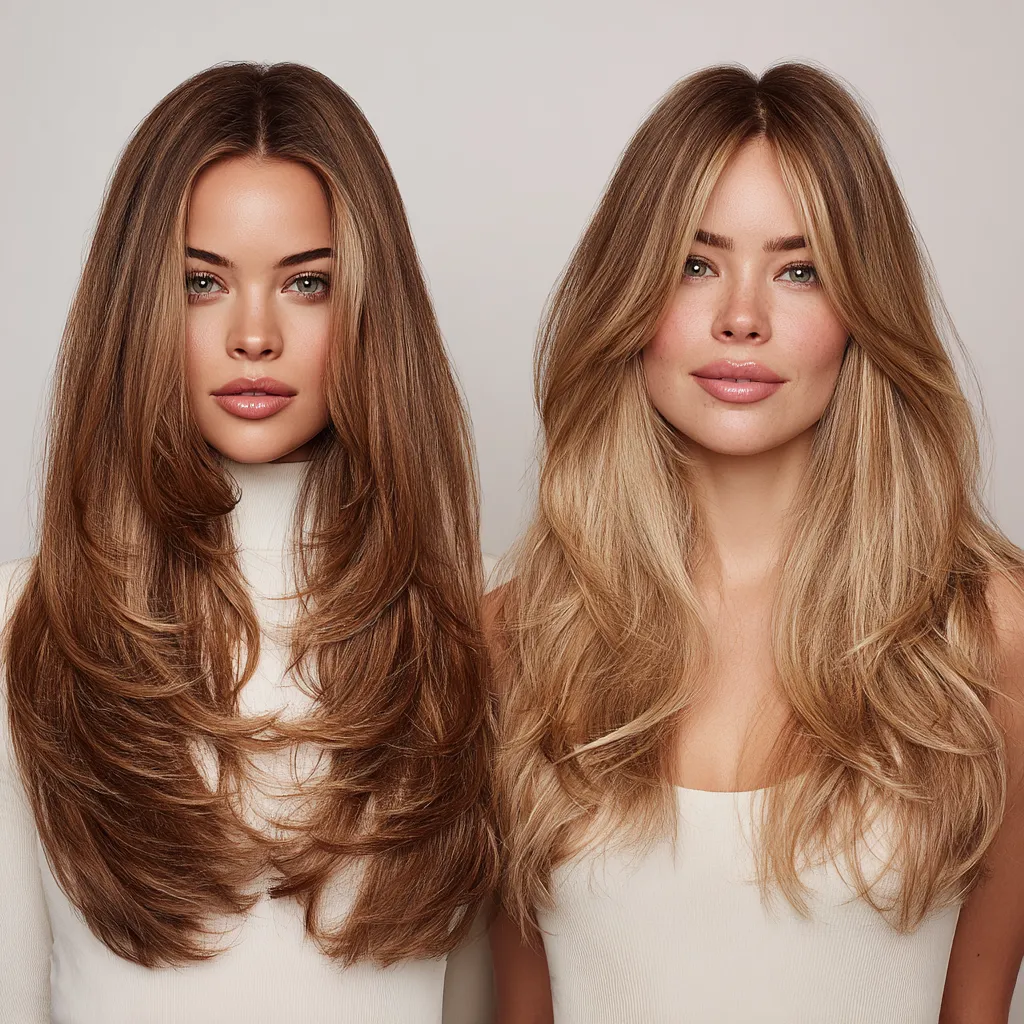
Unlike traditional layers that create obvious steps or chunky graduation, ghost layers are cut at strategic angles just one to two inches from the longest pieces. The result is hair that appears to be one length but moves, breathes, and swings as if it were fully layered. Celebrity hairstylist Dimitris Giannetos describes them as “incredibly subtle but making a big difference in how the hair falls and moves” — delivering “that effortless, polished look without blunt lines or chunkiness.”
The technique is nothing like the shag revival or the shattered bob aesthetic that dominated earlier in the season. There is no visible texture, no deliberate fragmentation. The ghost layer is a precision move, and its power is in restraint.
Why Fine Hair Has Been Waiting Specifically for This Hairstyle Trend
Conventional layering has always carried a risk for fine or thin hair: too much graduation pulls weight from already-delicate strands and leaves them looking sparse. Ghost layers sidestep this entirely. Because they’re cut so close to the base length, they add internal movement without stripping density. Hair that looks like one solid length actually has built-in swing and lift that reads as fullness, not thinness.
Stylists at top London and New York salons — including Neale Rodger at STIL in London — have been pushing this idea of hidden internal movement as the antidote to the overly architectural cuts that peaked in 2025. The Italian bob’s razor-sharp precision served its moment. Now the demand is for hair that feels personal and lived-in, not engineered.

The Grow-Out Argument Every Salon Client Actually Needs to Hear
One of the defining frustrations with visible layers is the grow-out. Once the weight line drops, the whole silhouette can read as dated or shapeless. Ghost layers don’t have this problem. Because the shorter pieces are hidden underneath the surface, the grow-out appears seamless — the hair simply looks longer and slightly fuller as weeks pass, never awkward.
This is why the technique is gaining particular traction among clients who want a refresh without committing to something dramatic. You’re not walking out with a statement cut. You’re walking out with a version of your hair that behaves exactly the way you always wanted it to. That quiet effectiveness is precisely what drives the word-of-mouth momentum now building behind this technique.
Ghost Layers Work Across Every Length Currently in Circulation
The technique isn’t length-specific, which has expanded its reach considerably. On the lob — still one of the most requested cuts of spring 2026 — ghost layers provide the fluid movement that prevents the style from reading flat or blunt. On longer hair, they create the kind of natural-looking swing associated with the quiet luxury aesthetic that celebrities like Jennifer Lopez and Amal Clooney have been wearing through the year: long layers that give the impression of natural regrowth without obvious graduation.
Even on the bixie — the bob-pixie hybrid that went from red carpet novelty to mainstream option after Zendaya and Teyana Taylor debuted theirs in early 2026 — stylists are incorporating ghost-layer logic to soften the perimeter and add texture that reads natural rather than sculpted.
What to Actually Ask for When You Sit in the Chair
The vocabulary matters here. Asking for “layers” will often get you something much more visible than intended. The specific request is: invisible layers, cut one to two inches shorter than your longest length, with sliced-in technique rather than point-cutting. Giannetos recommends specifying that you want the layers hidden beneath the surface so the perimeter stays clean.
At salons like Arkive in London (founded by Adam Reed) and STIL, the technique is now referred to variously as ghost layers, invisible layers, or secret layers — all describing the same principle. If your stylist reaches for a razor rather than scissors for the internal work, you’re on the right track. The razor slices weight from the mid-shaft without disturbing the exterior line, which is what creates that characteristic weightless swing.
For color, ghost layers pair exceptionally well with the seamless transitions of Color Melting Has Replaced Balayage and Your Colorist Already Knows It — both techniques share the same logic of hiding the work inside the result. Similarly, if you’re weighing a more structural cut against this invisible approach, the contrast is worth understanding: The Cloud Cut Gains Momentum While Every Other Length Stays Stuck leans into volume as a visible statement, where ghost layers keep everything under the surface.
As hairstyle trends move deeper into spring 2026, the clearest throughline isn’t boldness or maximalism. It’s precision that disappears. Ghost layers are the embodiment of that shift — a technique where the less you see, the more the hair delivers.
Complete guide
Straight Hairstyles That Actually Work for Your Hair Type
Cuts by length, face shape, texture and color — all in one place
Complete guide
The Shag Haircut Playbook — Every Length, Face Shape and Texture Covered
Short, medium, long, curly, pixie, bangs, by face shape — all in one place