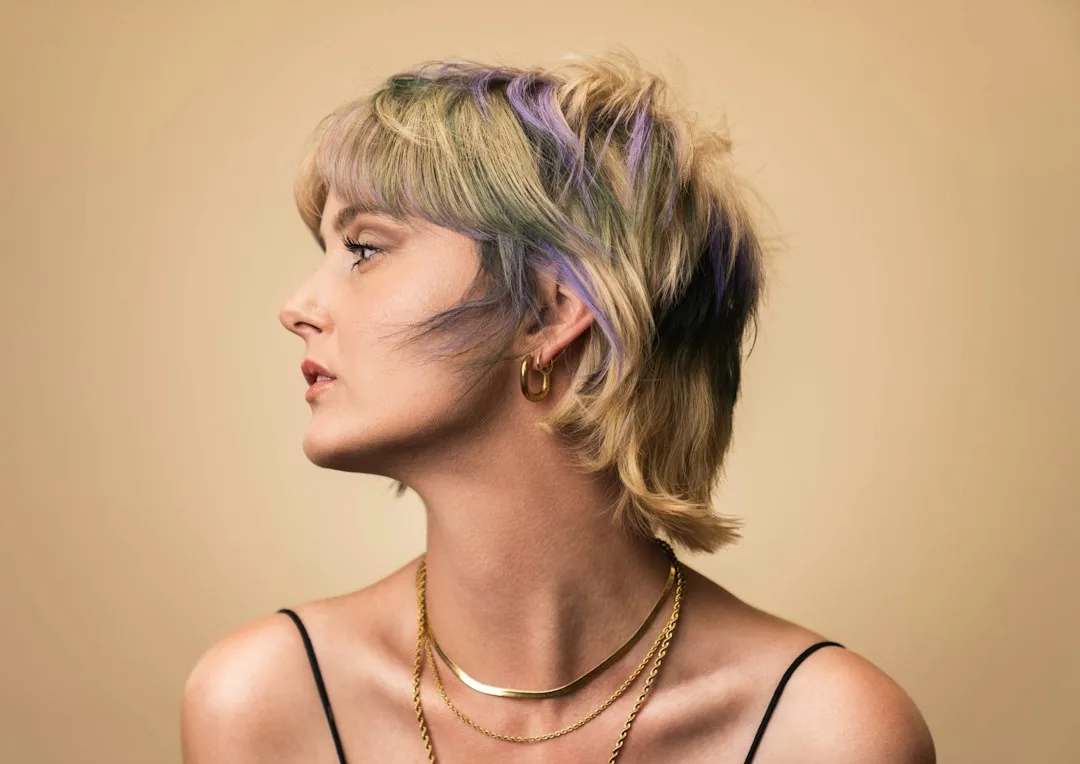
There is a specific kind of confidence that comes with a haircut that moves the way you move. The soft wolf cut has become one of those styles that stylists keep returning to because it works across textures, face shapes, and hair densities in ways that rigid cuts simply cannot. It is not just a trend. It is a structural approach to layering that builds volume at the crown, softens the perimeter, and lets the hair fall with intention rather than weight.
What separates a soft wolf cut from a standard shag or a blunt wolf is the deliberate blending at the transition points. The layers are not stacked or choppy. They are carved to create movement that reads as effortless even when the styling took twenty minutes and a round brush. The result sits somewhere between polished and undone, and that tension is exactly what makes the cut so wearable.
This guide covers the core variations of the soft wolf cut, what makes each one distinct, how to style and maintain them at home, and the products worth investing in to keep the shape alive between salon visits. Real advice from working stylists is woven throughout, because a great cut lives and dies by how it is cared for after you leave the chair.
Layered Soft Wolf Cut for Thick and Wavy Hair Types
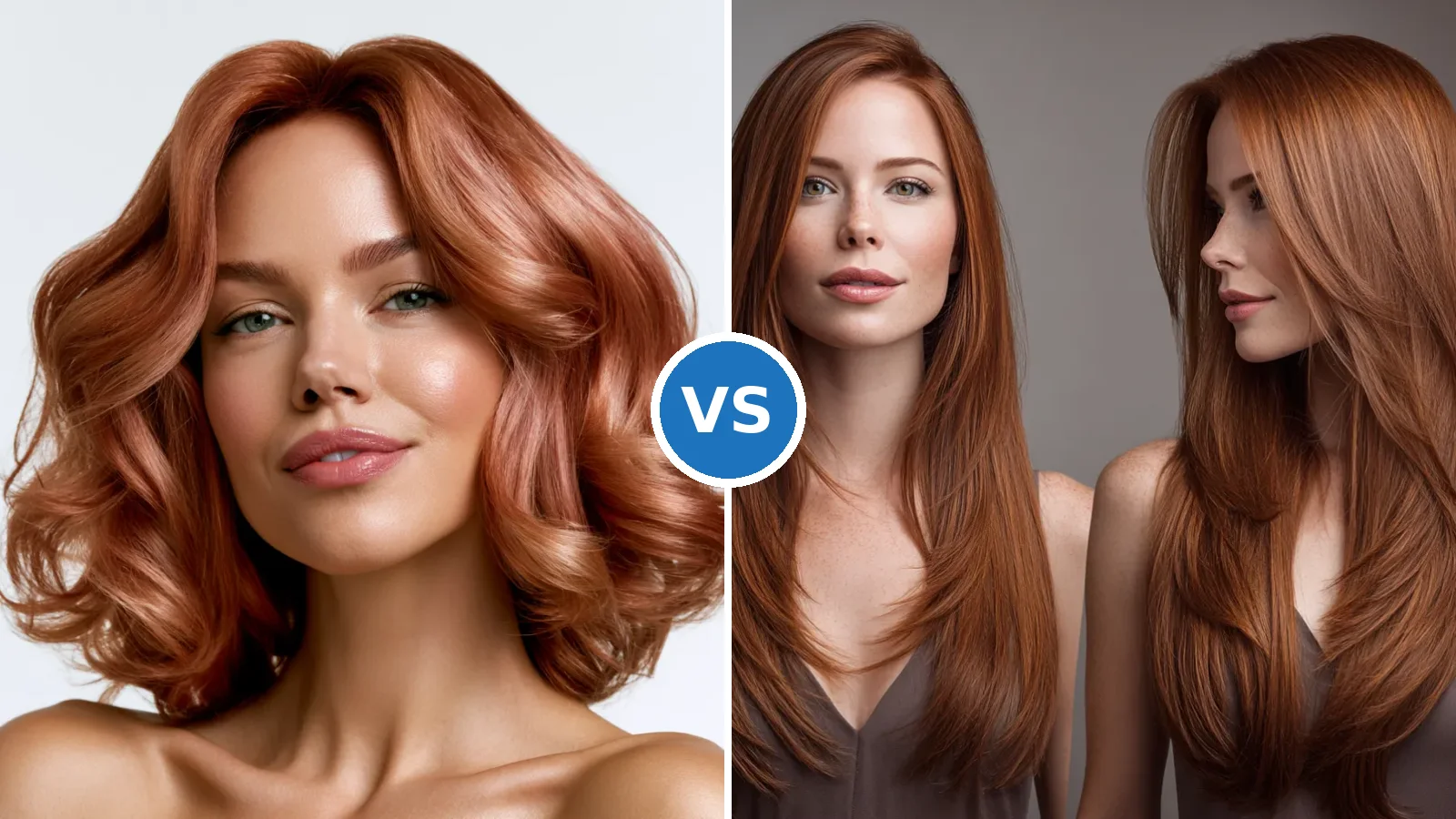
Wavy and thick hair has historically been one of the more difficult textures to cut in a way that flatters the natural pattern without fighting it. Stylists who do not understand the physics of wave behavior tend to over-layer, which creates a triangular shape that widens at the bottom, or under-layer, which leaves the hair heavy and undefined. The layered soft wolf cut solves both problems by working with the wave rather than against it.
How Volume and Texture Work Together in a Layered Wolf Cut
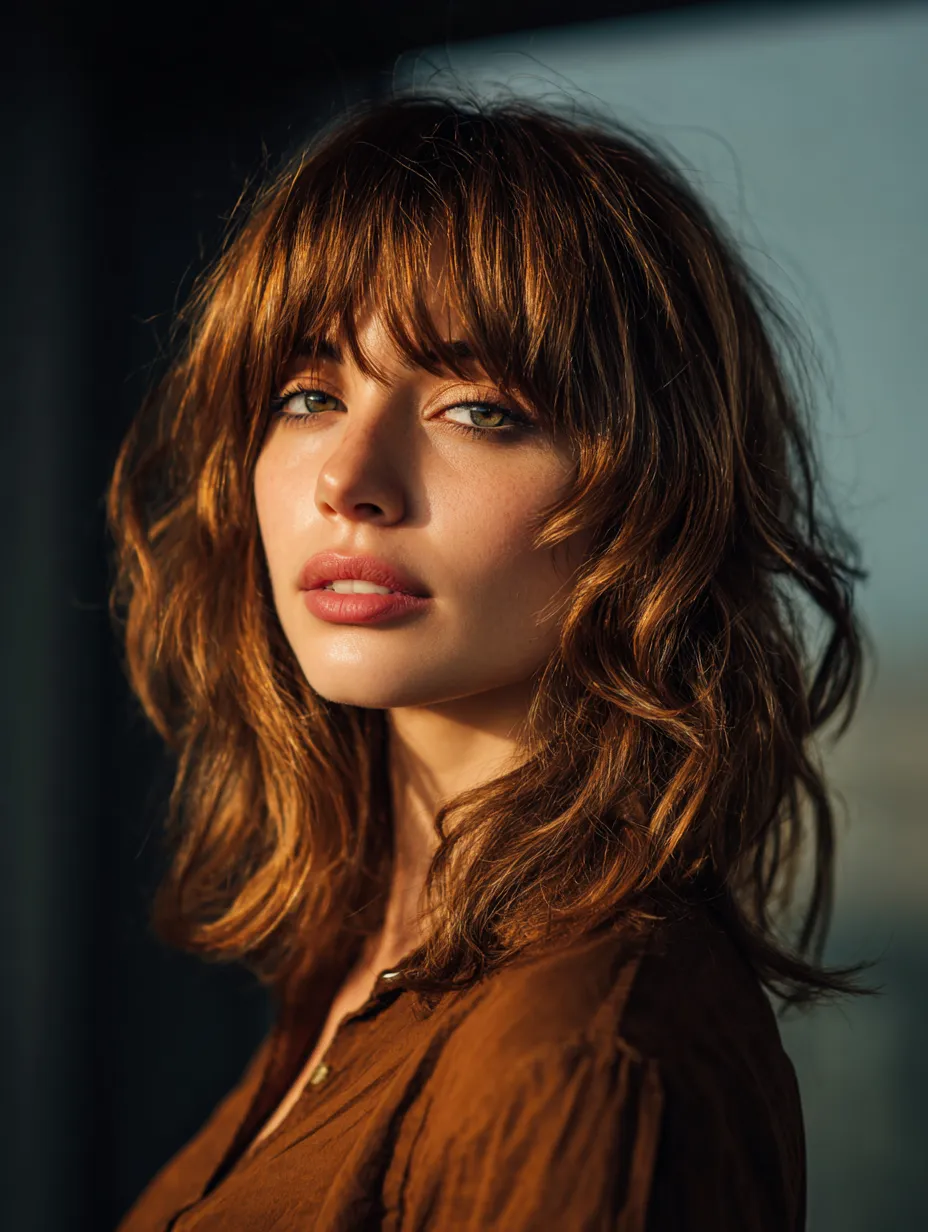
Thick hair carries weight, and that weight collapses layers if the cut is not structured correctly. A layered soft wolf cut for thick hair removes bulk from the interior while leaving enough density at the surface for the shape to hold. The stylist works with point cutting and channeling techniques to thin the hair without flattening it, which is a completely different outcome from thinning shears used indiscriminately.
Waves respond to internal layering in a way that straight hair does not. When the layers are placed at the right intervals, the wave pattern tightens slightly at the ends and opens through the mid-shaft, creating that signature wolf cut silhouette with movement from root to tip. On thick wavy hair, this effect is pronounced and often dramatic, which is part of the appeal.
Curtain Bangs and the Soft Wolf Cut Are a Natural Match
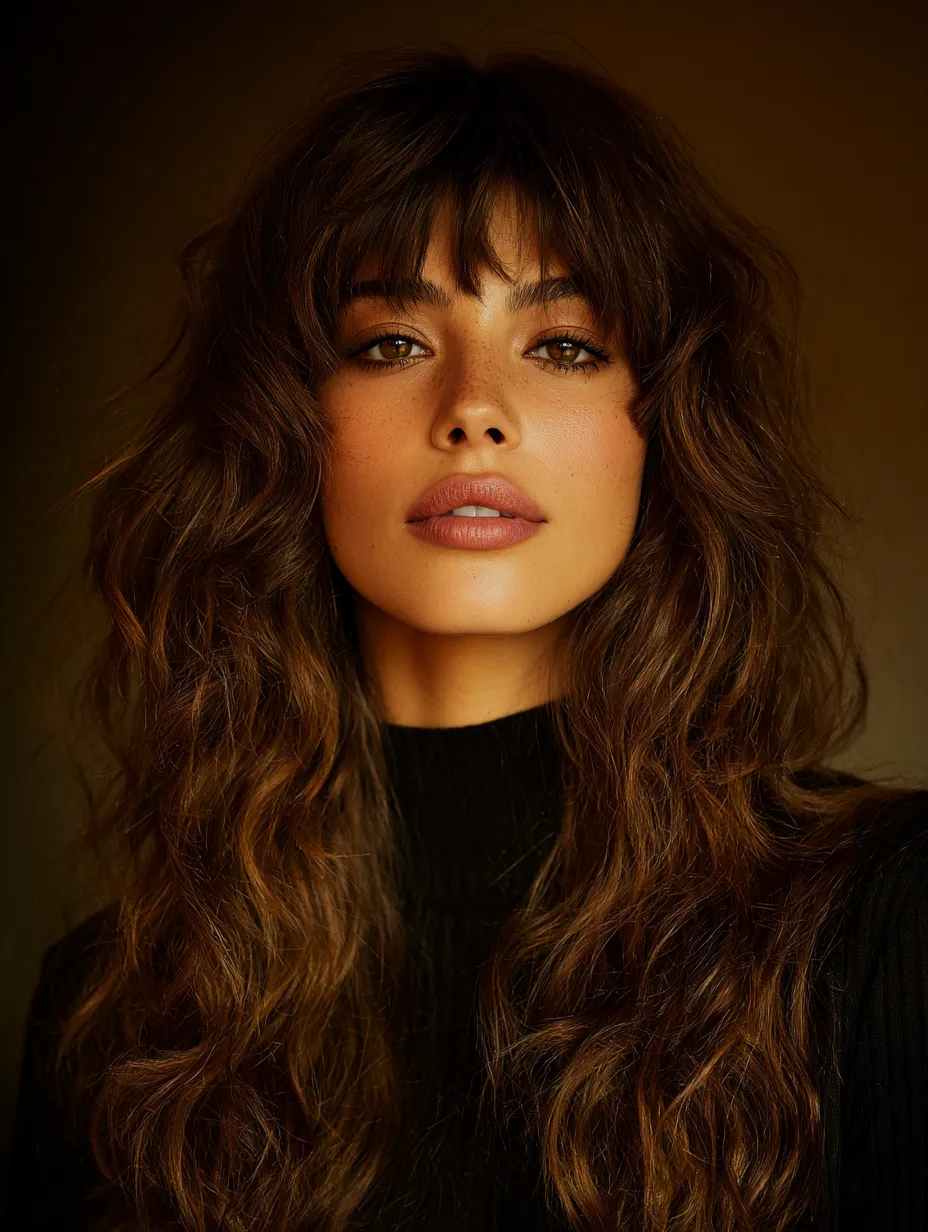
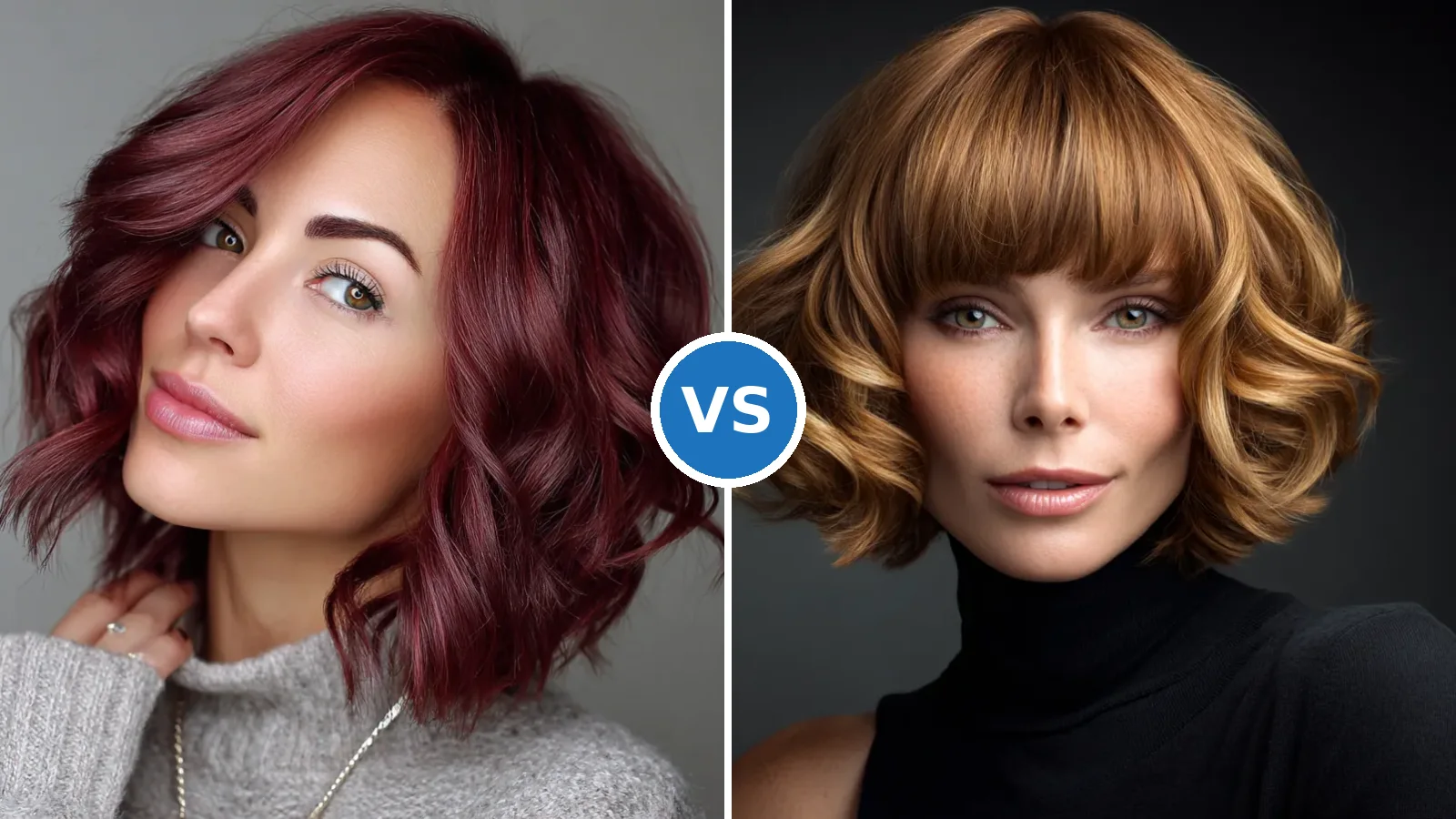
Curtain bangs work with the soft wolf cut because they share the same structural logic. Both rely on graduation and blending rather than hard lines. When a stylist cuts curtain bangs to flow into the face-framing layers of a wolf cut, the front of the style becomes one cohesive movement from forehead to collarbone rather than a bang that starts and ends abruptly.
The styling is key here. A Dyson Airwrap or a round brush with a blow dryer on medium heat can train the bangs to part and sweep outward. Once set, the shape holds through humidity and wind better than a traditional blunt bang because the weight is distributed across a wider section of hair.
Best Products for Maintaining a Wolf Cut on Wavy Thick Hair
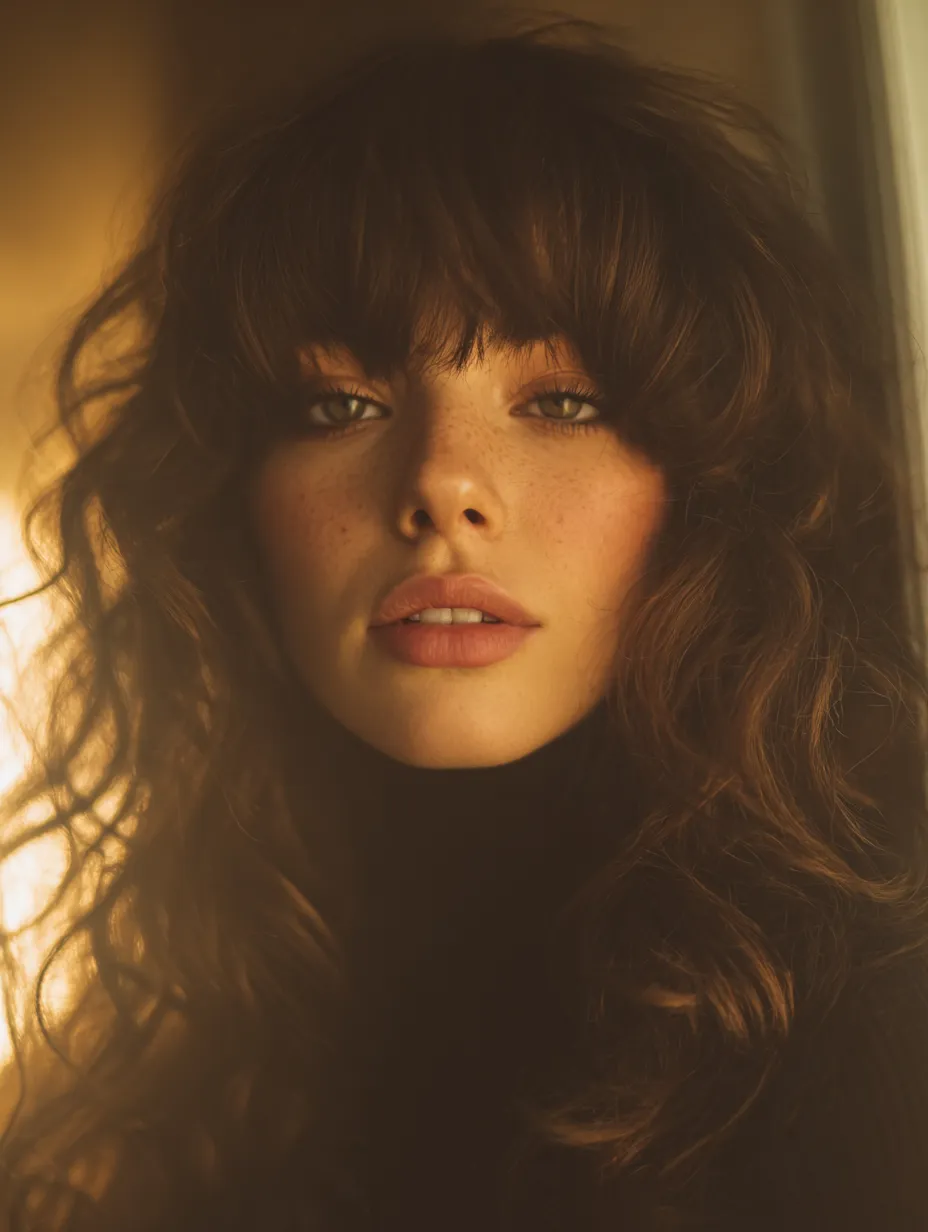
Wavy thick hair in a wolf cut needs moisture without heaviness. The Moroccanoil Curl Defining Cream works well applied to damp hair before diffusing because it defines the wave pattern without the crunch that gel can leave behind. For day two and three hair, a small amount of Ouai Wave Spray reactivates the texture and lifts the root without requiring a full wash.
Avoid heavy butters or oils through the mid-lengths on thick hair. They weigh the layers down and eliminate the bounce that makes the wolf cut worth having in the first place. A light press serum applied only to the ends, like the Olaplex No. 7 Bonding Oil, adds shine and controls frizz without disrupting the volume at the crown.
Styling a Layered Wolf Cut for Wavy Hair Without a Diffuser
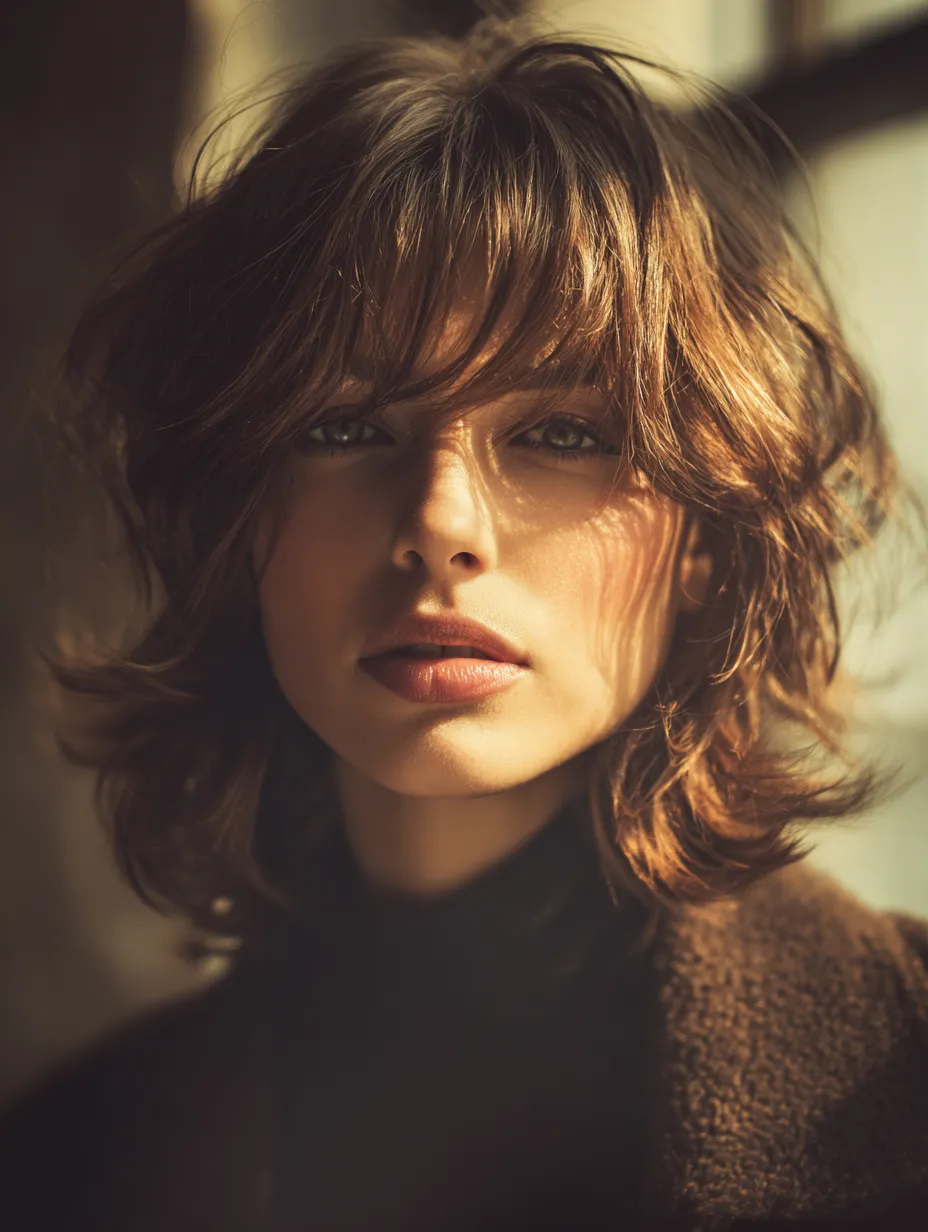
A diffuser is the most efficient tool for this cut, but it is not the only option. Plopping the hair in a microfiber towel for twenty minutes after washing removes excess water without disturbing the wave pattern. Then, a hands-off air-dry with the hair flipped to one side encourages volume at the root and keeps the layers from drying flat.
The temptation to touch the hair while it dries is the main enemy of frizz control. Raking fingers through wet layers separates the wave clusters and introduces frizz that no product fully corrects once set. Leave it alone, and a layered wolf cut on wavy hair dries into exactly the kind of effortless shape the style is known for.
The key is understanding that waves do not all behave the same way across different sections of the head. The nape tends to have tighter wave patterns due to heat and sweat, while the crown often has looser movement. A skilled stylist accounts for this when placing the layers, feathering more aggressively through the nape and preserving more length through the top to balance the proportions as the hair dries.
From a maintenance standpoint, the layered wolf cut on thick wavy hair requires trimming every ten to twelve weeks to keep the shape. Because the layers are blended rather than stacked, they grow out gracefully for the first couple of months, but beyond that the perimeter starts to feel heavy again and the internal movement flattens. Regular trims are not optional for this cut. They are what make the style function.
The styling routine matters as much as the cut itself. Moroccanoil, Ouai, and Olaplex are brands that consistently perform on wavy thick hair because their formulations prioritize moisture and weight control simultaneously. Building a routine around two or three products from a single line tends to work better than mixing brands, because the formulations are designed to layer without conflict.
For anyone with thick wavy hair who has been told their texture is difficult to work with, the layered soft wolf cut is genuinely worth considering. It is one of the few cuts designed specifically for hair that has both volume and weight to manage, and in the right hands it transforms a texture that felt like a problem into one that feels like an asset.
Soft Wolf Cut Variations for Fine Hair With Long Layers
Fine hair has a complicated relationship with layered cuts. Too many layers and the hair becomes stringy and structureless. Too few and the weight drags everything flat. The soft wolf cut for fine hair navigates this tension by using shallow internal layers and a longer perimeter to create movement without sacrificing the density that fine hair needs to look healthy.
Fine Hair Wolf Cut Techniques That Create the Illusion of Density
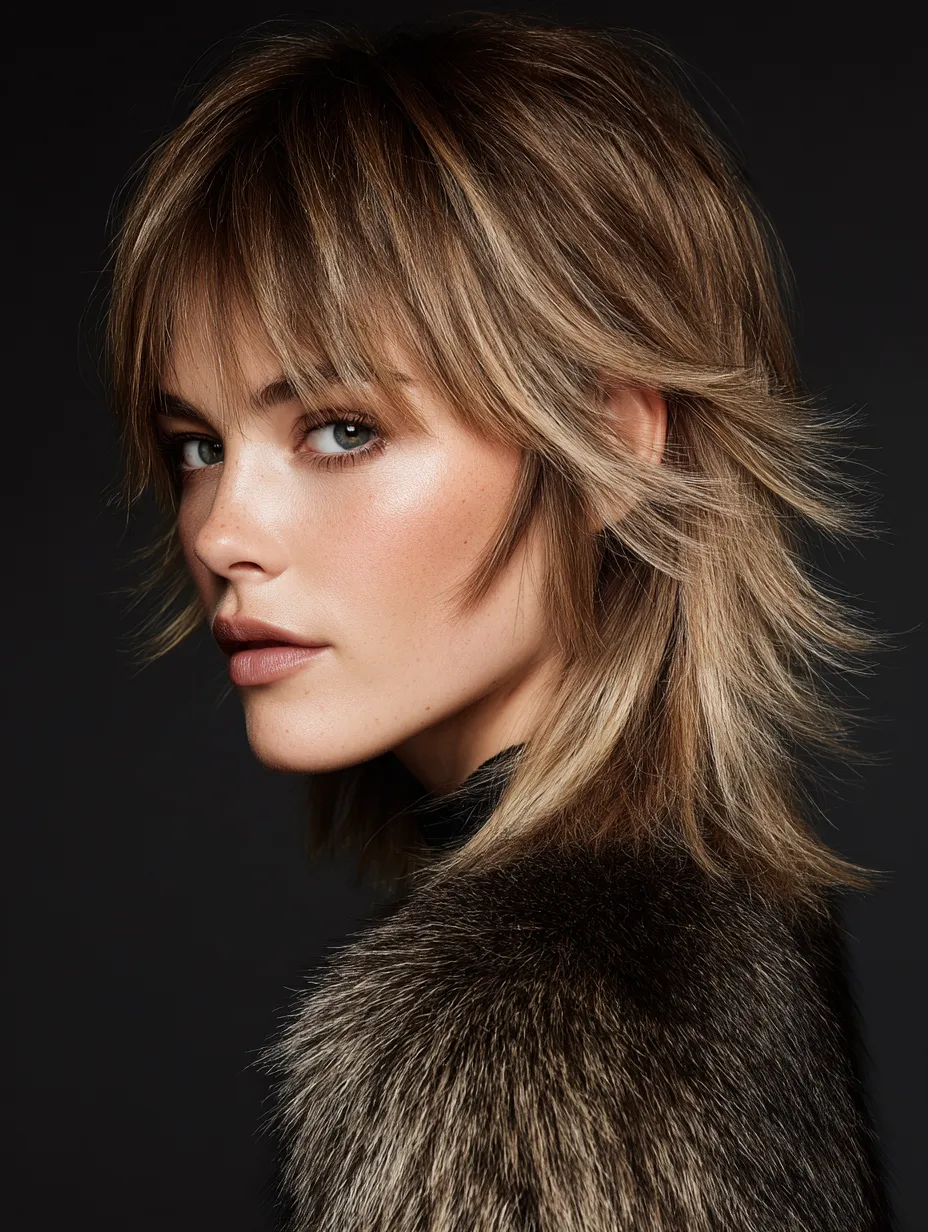
Fine hair is often talked about as if volume is something that happens to it rather than something that can be built into the structure. The soft wolf cut for fine hair is an exercise in optical density: layers are placed close enough together to give the appearance of fullness without removing so much weight that the hair becomes limp. The internal layers are shallow, not deep, which means the hair moves as a cohesive unit rather than falling into separated strands.
Stylists working with fine hair often use razor cutting to create the soft, diffused ends that the wolf cut is known for. A razor frays the hair shaft at the tip rather than cutting cleanly across it, which makes individual strands less visible and gives the perimeter a soft, airy quality that reads as fuller on thin hair.
Long Layers in a Soft Wolf Give Fine Hair Shape Without Weight Loss
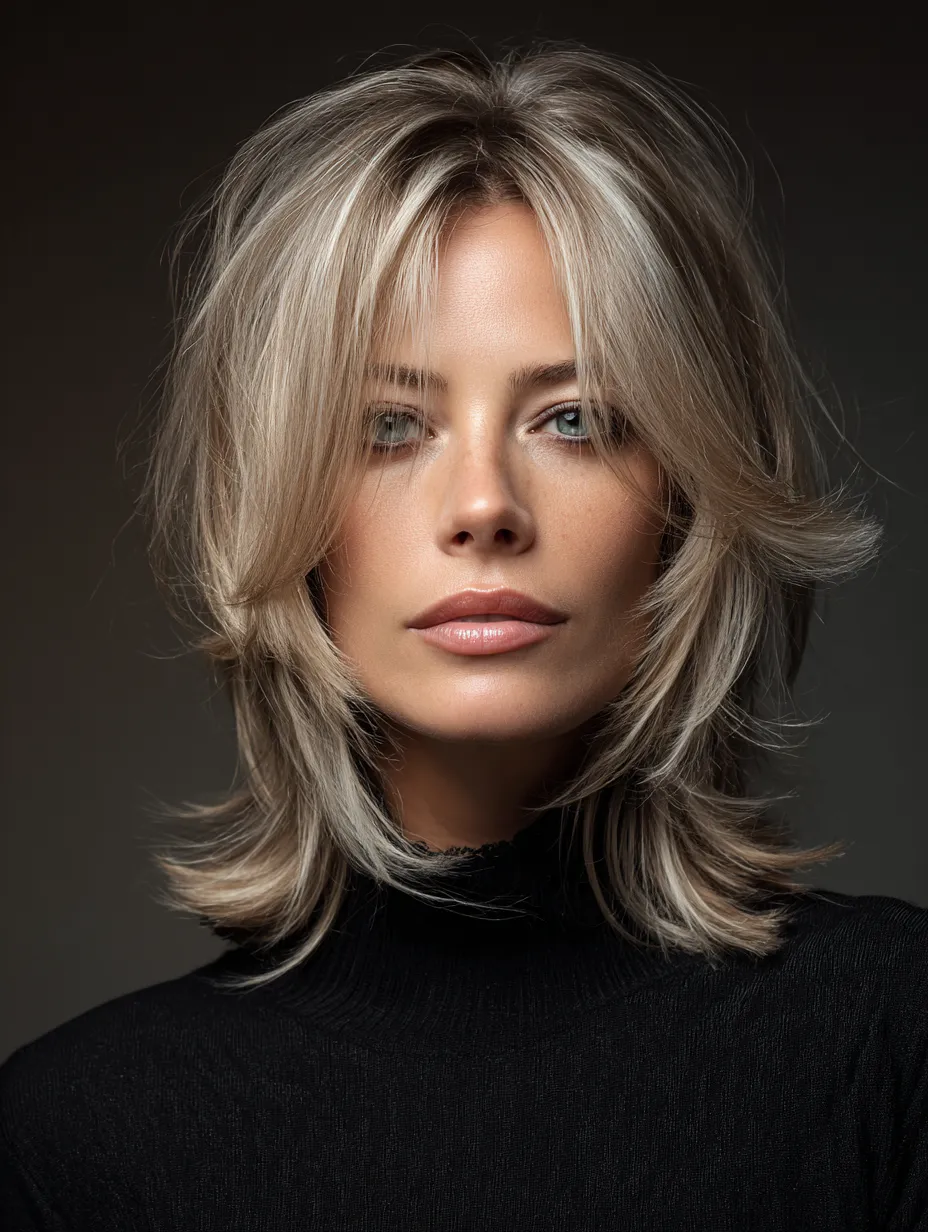
The instinct with fine hair is to keep it long for the illusion of fullness. That instinct is half right. Length does create the perception of density, but unstructured length with no layering pulls the hair flat and actually makes it look thinner. Long layers in a soft wolf cut give fine hair something to do. The layers create movement at the ends while the crown retains enough weight to sit properly.
The sweet spot for fine hair is layers that start at or below the chin. Layers above the chin remove too much weight and can leave the top of the head looking sparse. Below the chin, the layers are long enough to move without stripping the density from the sections that need it most.
Blowout Techniques for Fine Hair in a Wolf Cut Style
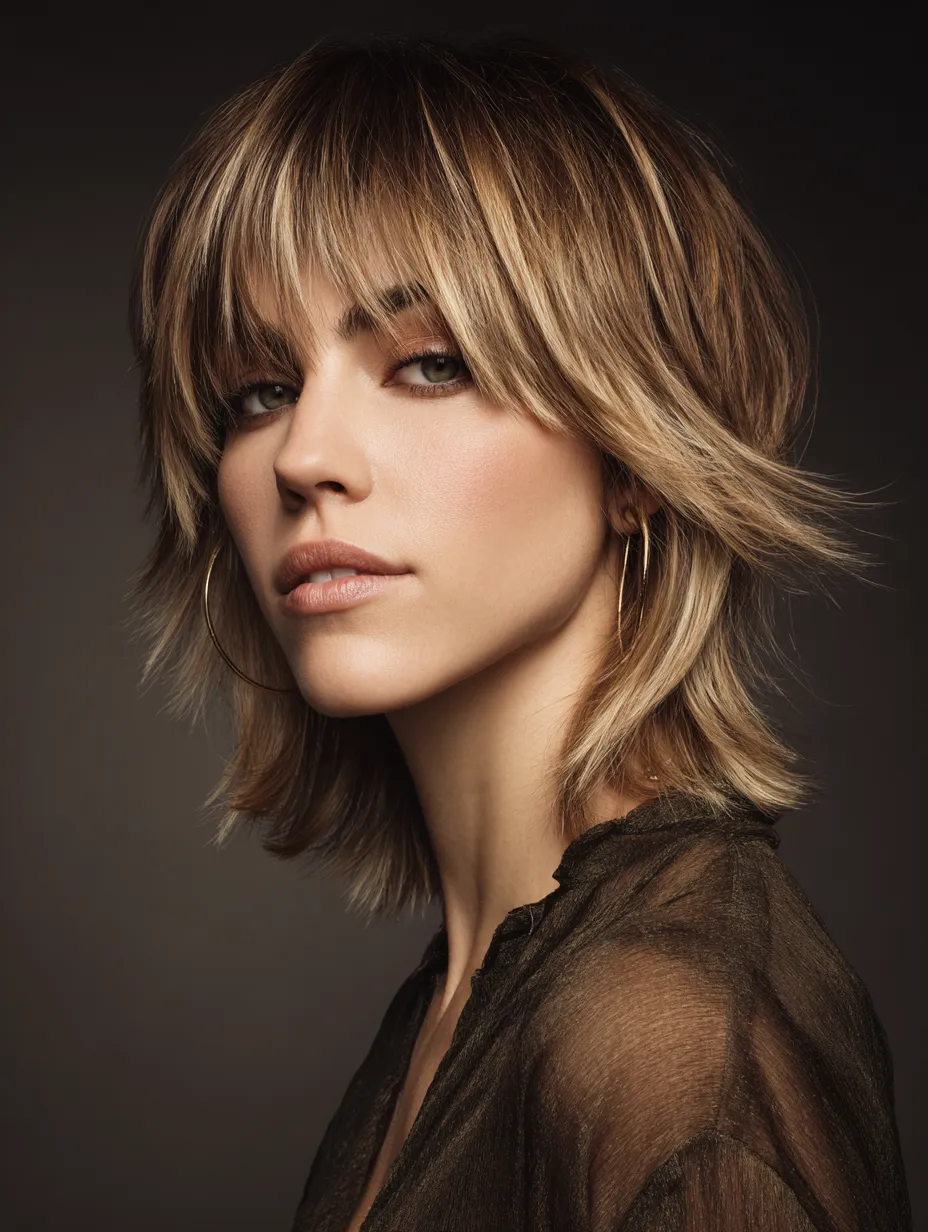
A blowout is the single most effective styling technique for fine hair in a wolf cut because it builds volume at the root that product alone cannot achieve. Using a Drybar Double Shot Blow Dryer Brush or a traditional round brush with a separate blow dryer, direct the airflow toward the root and angle the brush upward as you dry. This trains the hair to lift away from the scalp and holds the position once cool.
The cardinal rule of blowouts on fine hair is to dry in small sections. Large sections cannot be fully dried in one pass, which means the underneath layers stay slightly damp and flatten as they cool. Small sections ensure complete drying and maximum volume from root to mid-length.
Color Placement That Makes a Fine Hair Wolf Cut Look Thicker
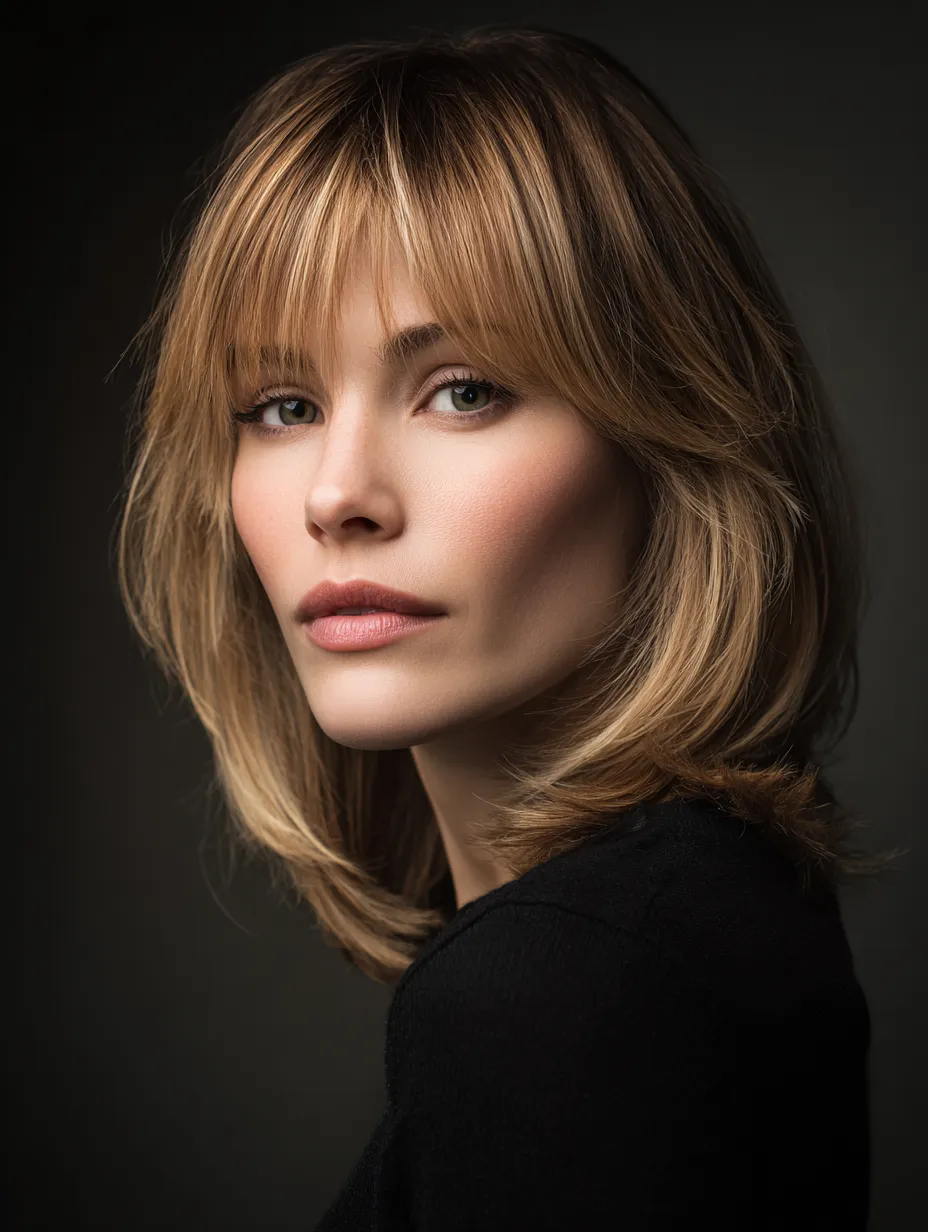
Color is one of the most underused tools in the styling of fine hair. Dimensional highlights placed through the mid-lengths and ends of a soft wolf cut create contrast between the lighter and darker strands, which makes individual layers more visible and the hair as a whole appear thicker. A single-process color makes fine hair look flatter because it eliminates the variation that the eye reads as depth.
Balayage suits the wolf cut particularly well because the color is applied to the surface of the sections rather than saturating them completely. The result is a blended, grown-out look that emphasizes the movement of the layers and adds warmth that reads as vitality, not just color.
The choice of stylist matters enormously for fine hair in a wolf cut. Someone who cuts primarily thick or wavy hair may not understand how to calibrate the layer placement for fine strands. Finding a stylist who has demonstrated experience with fine hair, either through a portfolio or through referrals from people with similar textures, is worth the extra effort. A bad wolf cut on fine hair can take eight months to grow out.
Styling is where fine hair wolf cuts live or die on a daily basis. The Drybar brand has built a strong reputation for blowout-focused tools that work particularly well on fine hair because their products are designed around the blowout as the primary styling method rather than an afterthought. The Buttercup Blow Dryer and the Double Shot Blow Dryer Brush are two tools that regularly come up in conversations with stylists who specialize in fine hair.
Beyond tools, the volumizing products used on fine hair should be applied at the root rather than through the lengths. Kenra Platinum Silkening Mist, for instance, is light enough to use through the ends for smoothness without building up at the scalp the way heavier serums do. Living Proof Full Thickening Mousse applied at the root and worked through the first two inches of hair gives the blowout something to hold onto without weighing down the lengths.
Fine hair in a soft wolf cut is not the most low-maintenance choice, and anyone considering it should go in with realistic expectations. The cut looks best with regular styling. But the payoff, a shape that looks intentional and alive rather than flat and formless, makes the extra ten minutes in the morning feel worthwhile for most people who commit to it.
Short Soft Wolf Cut Ideas for a Bold and Modern Silhouette
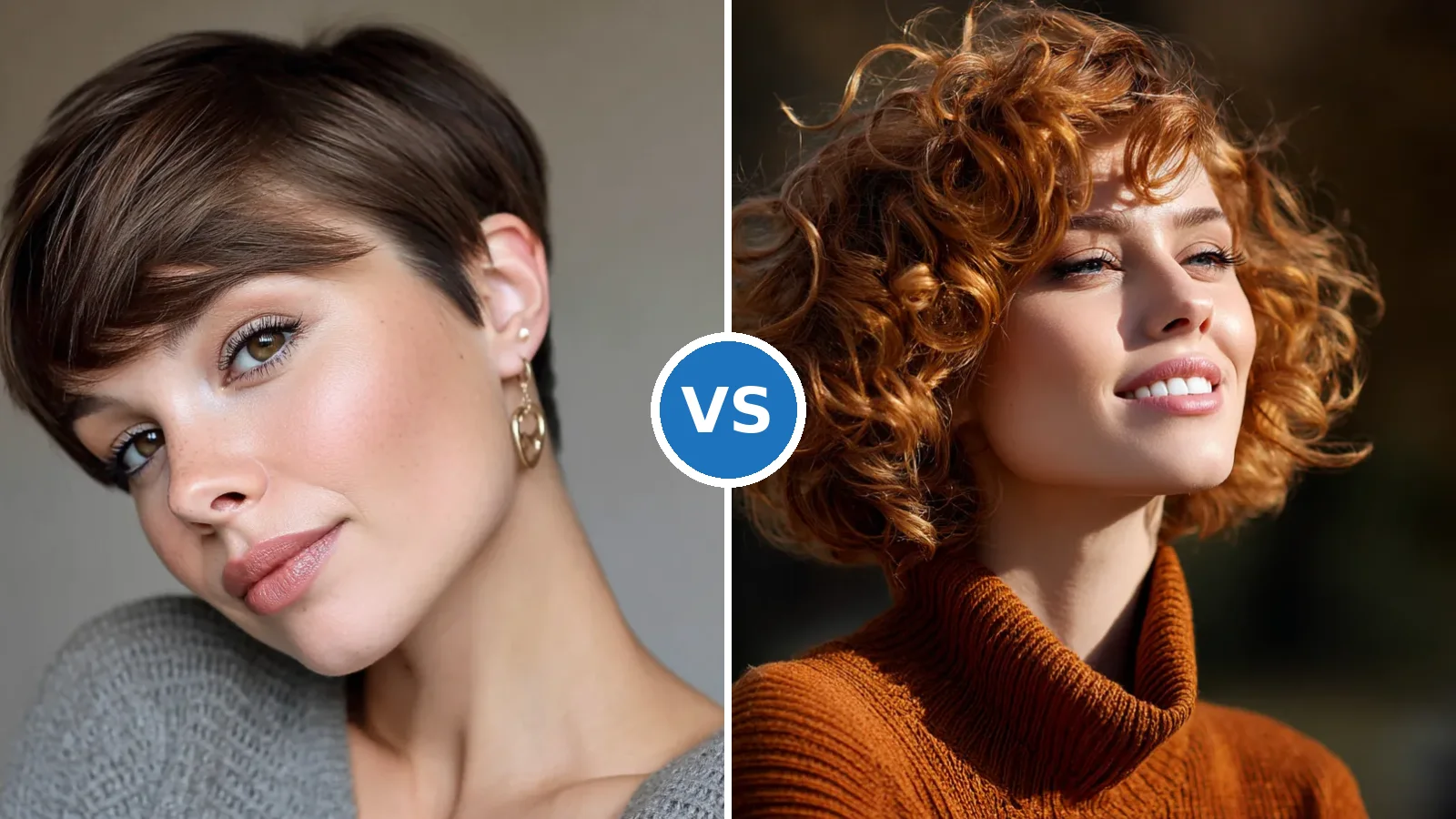
Short hairstyles carry a particular kind of statement. There is no length to hide behind, no volume to fall back on when styling goes wrong. A short soft wolf cut is honest in this way. The cut itself must be precise because everything is visible. But when it is done well, it is one of the most striking and modern silhouettes available, and it suits a wider range of face shapes than most short cuts because the face-framing layers do the work of balancing proportions that a blunt bob or a pixie cannot.
Short Wolf Cut Lengths That Keep the Signature Shape Intact
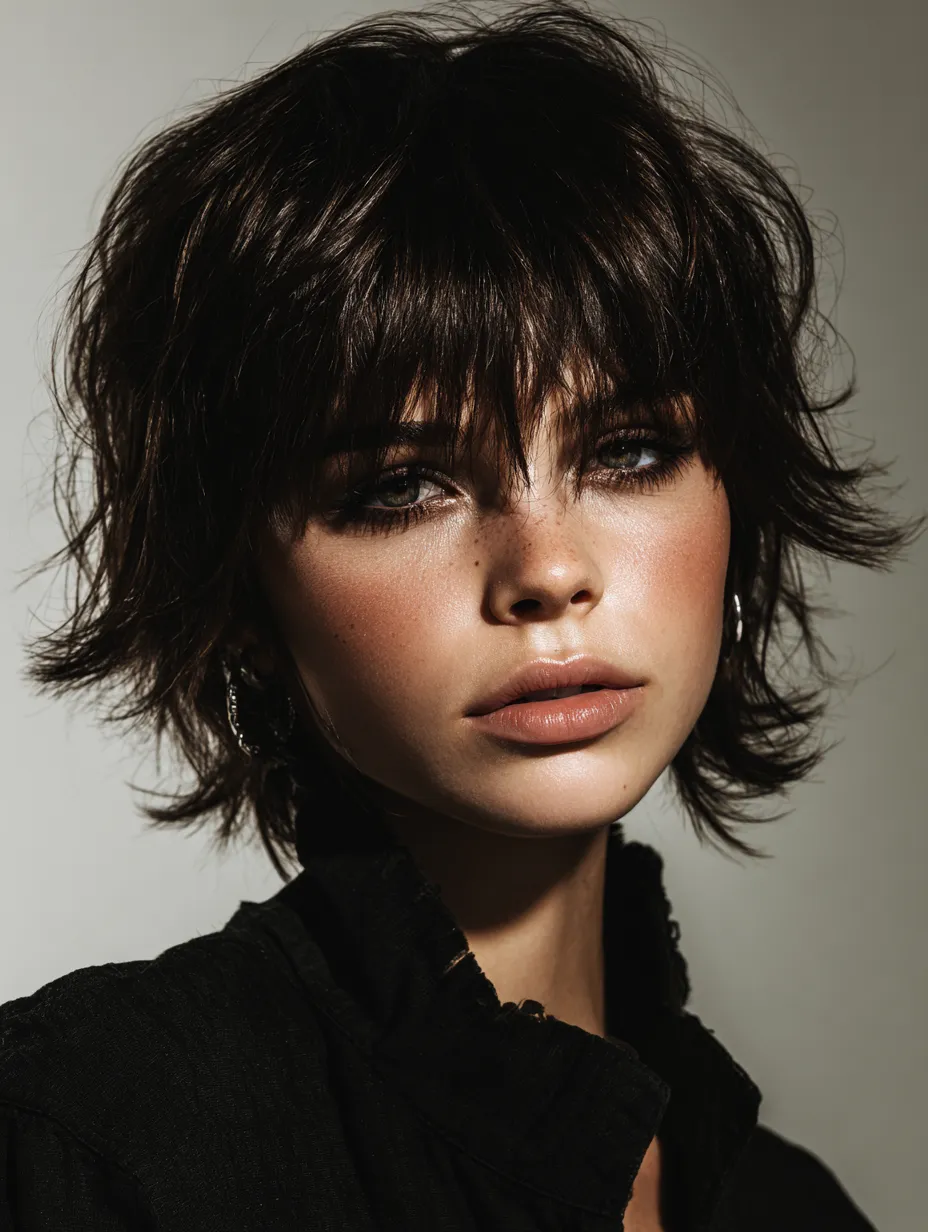
The wolf cut is most commonly pictured at shoulder length or longer, but the structure translates into shorter lengths with surprisingly little adjustment. The defining elements of the cut, a crown with volume, interior layers that remove bulk, and a soft perimeter, all remain intact at collarbone length and even above it. What changes is the relationship between the layers and the face.
At shorter lengths, the face-framing pieces become more prominent because there is less overall length to balance them. Stylists typically keep the face-framing layers at or just below the jaw for a short wolf cut, which creates a framing effect that softens the jawline and draws attention upward toward the eyes and cheekbones.
Texture and Movement in a Short Soft Wolf Cut With Curtain Fringe
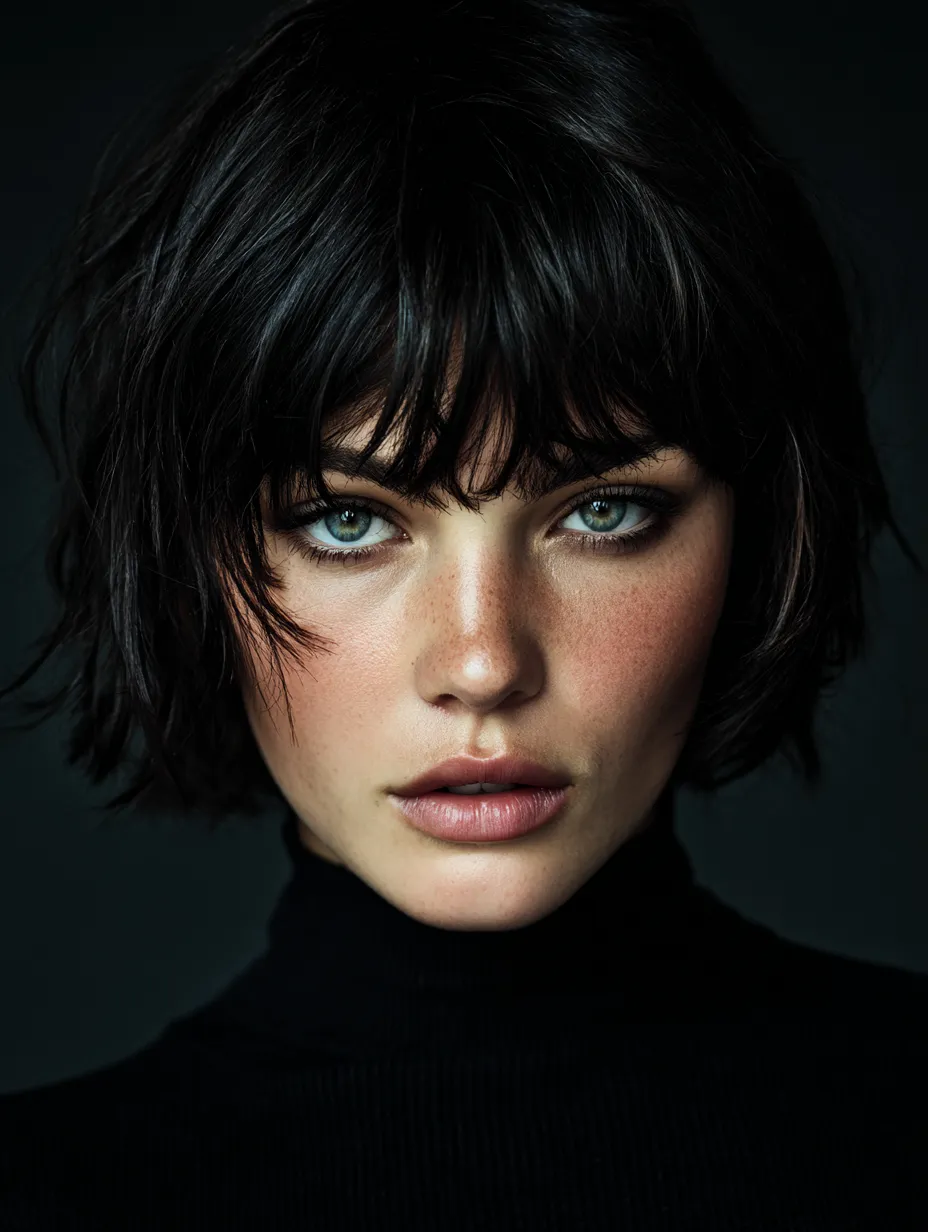
Curtain fringe on a short wolf cut changes the proportion of the style significantly. Because the length is already above the collarbone, the fringe anchors the face and prevents the cut from reading too boyish or undirected. It gives the style a focal point and adds the softness that keeps a short cut feeling feminine rather than sharp.
Styling curtain fringe on a short wolf cut requires a specific technique to prevent the bangs from flipping outward or clinging flat to the forehead. A medium round brush positioned at the root of the bang section, directed downward and then swept outward in one fluid motion, creates the curtain shape. The Paul Mitchell Neuro Grip Thermal Styling Brush is compact enough to manage short fringe without overworking the section.
Air Drying a Short Soft Wolf Cut for a Lived-In Texture Look
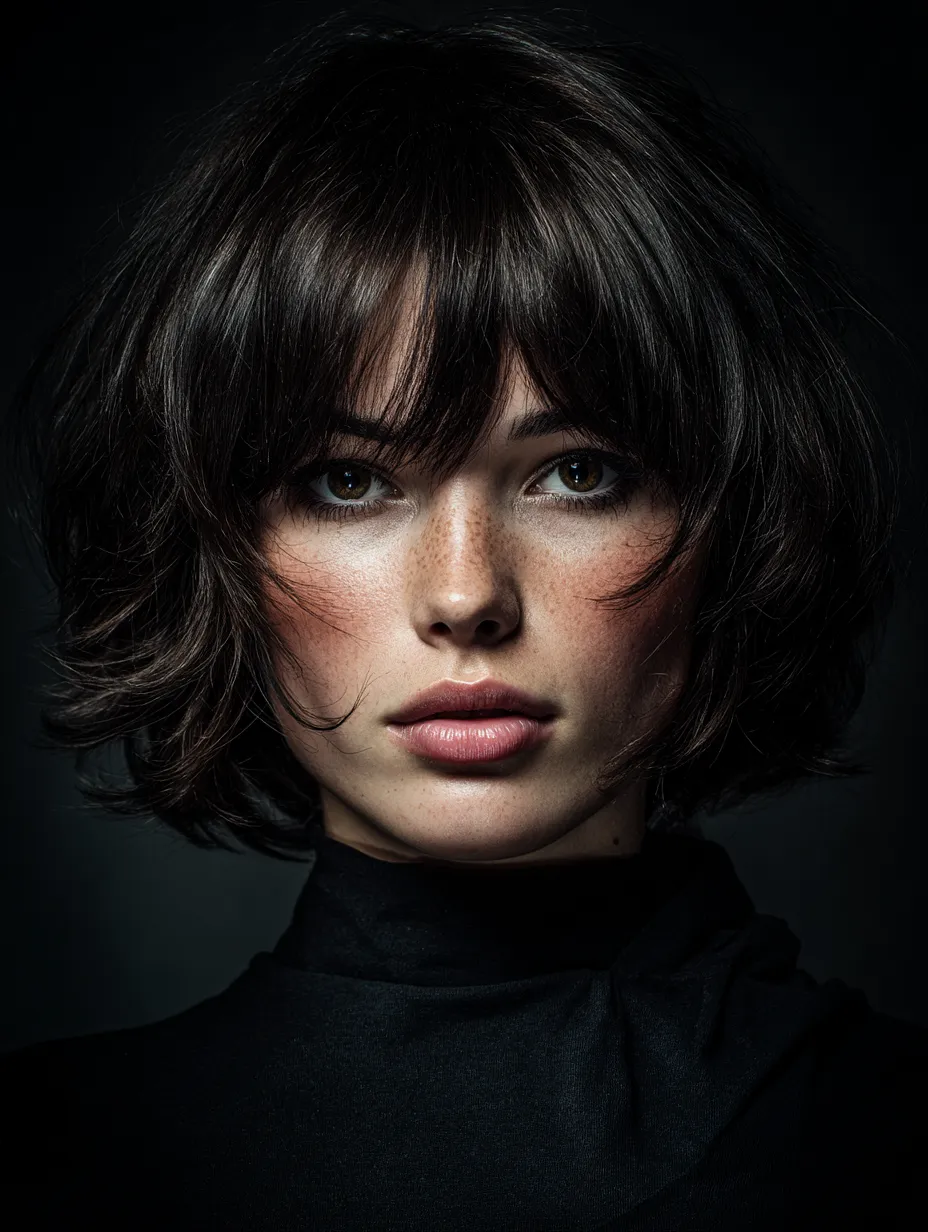
Short hair dries faster than long hair, which makes air drying a practical option for a short wolf cut. The challenge is encouraging the root to lift while the rest of the hair falls naturally. Applying a volumizing spray like the IGK Good Behavior Spirulina Protein Smoothing Spray at the root before air drying, then clipping the crown sections up while the hair dries, creates lift that holds once the clips are removed.
The tousled, undone quality of an air-dried short wolf cut is one of its most appealing characteristics. It looks like very little effort was made, which is the hallmark of a well-cut style. When the structure is right, the hair dries into shape with minimal intervention.
How to Transition a Short Wolf Cut Into a Longer Style Over Time
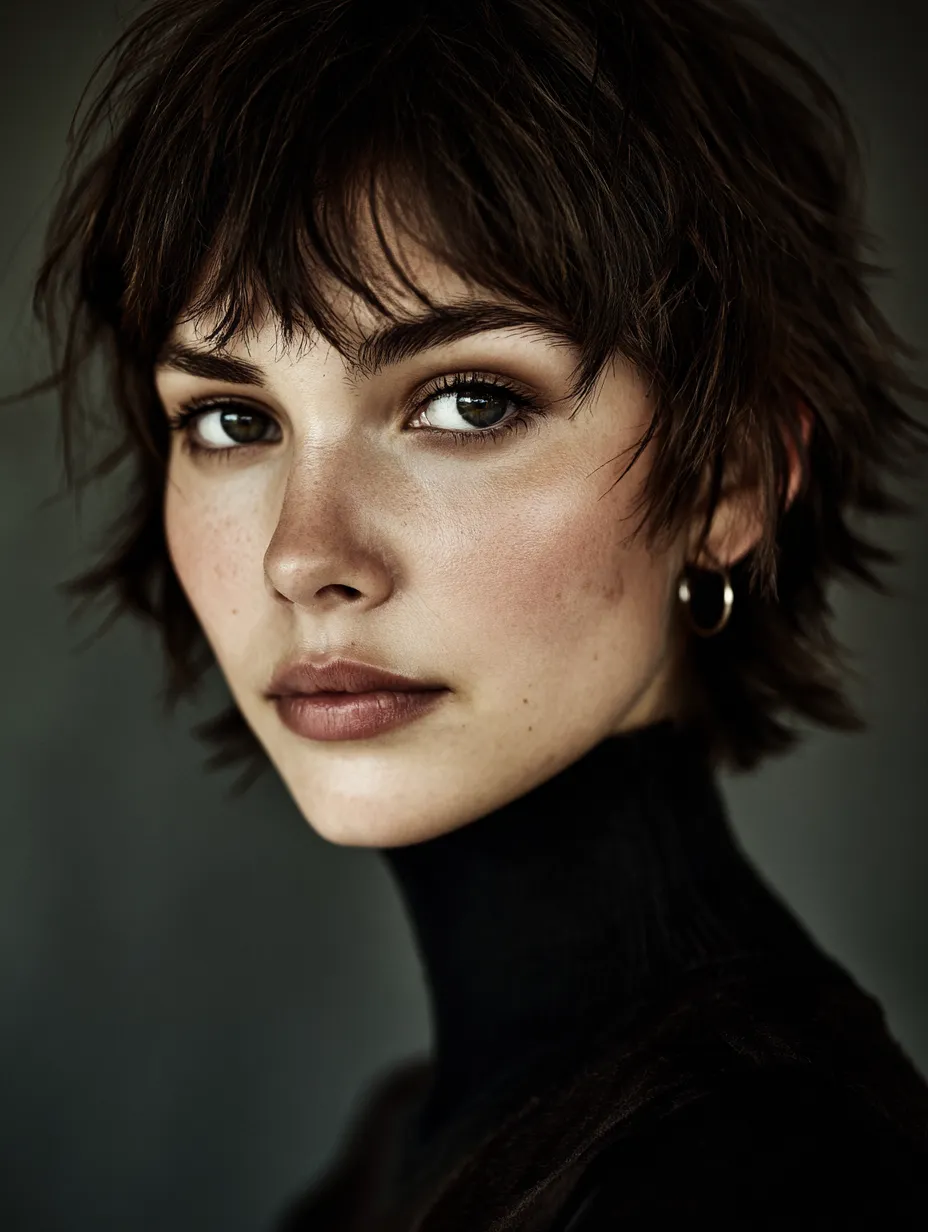
One of the practical concerns with committing to a short wolf cut is the grow-out phase. Fortunately, the structural logic of the wolf cut means it grows out more gracefully than a blunt short cut. The layers in the interior grow at different rates, which maintains movement even as the overall length increases. The face-framing pieces tend to grow fastest and can be trimmed without affecting the back and sides.
Every eight to ten weeks, a light dusting of the ends and a reshaping of the face-framing layers keeps the short wolf cut intentional-looking during the grow-out. By the time the style reaches shoulder length, the layers have grown into a medium wolf cut naturally, with no awkward in-between stage that requires starting over.
The popularity of the short wolf cut has grown steadily over the past two years, and with it has come a clearer understanding of what makes the cut work at shorter lengths. The layering system needs to be adjusted for collarbone-length and above cuts because the weight distribution changes significantly. At shoulder length and longer, the hair has enough mass to fall naturally into the shape. At shorter lengths, the crown layering needs to be more deliberate to ensure volume without puffiness.
Brands like Paul Mitchell and IGK have developed products specifically suited to the textured, lived-in quality that short wolf cuts aim for. The IGK line in particular has built a following among stylists who work with shorter textured cuts because their texture sprays and styling foams deliver hold without stiffness. For a short wolf cut, hold without stiffness is exactly the goal: the hair should move when touched and spring back into shape, not stay fixed in position.
There is also the matter of personality. Short wolf cuts read as confident, and that confidence is partly the product of the structural boldness of the style and partly the commitment it requires from the person wearing it. Choosing to cut significantly above the shoulder with a textured, layered silhouette is not a passive choice. It announces something about the person making it, which is exactly the kind of attitude the style is designed to project.
For anyone considering a short wolf cut for the first time, the advice from stylists is consistent: go shorter than you think you want to. The layers need length to fall, and if the cut is left too long in an attempt to ease into it, the shape reads as a standard shag rather than a wolf cut. Trust the structure and let the stylist work with the length that serves the cut rather than the length that feels safest.
The soft wolf cut is not one style. It is a structural approach to layering that adapts to different textures, lengths, and personalities without losing its essential character. Whether the hair is thick and wavy, fine and straight, or cut above the collarbone, the principles remain the same: volume at the crown, internal layers that remove weight without eliminating density, and a soft perimeter that moves with the wearer.
What makes this cut last beyond a seasonal trend is its practicality. It grows out gracefully, works across a range of styling approaches from blowouts to air drying, and responds well to the products that serious haircare brands like Moroccanoil, Olaplex, Drybar, and Kenra have developed for textured, layered styles. The cut rewards investment in both the initial service and the ongoing maintenance, and it gives back in the form of hair that looks alive and intentional on a daily basis.
If there is one piece of advice that runs through every variation of the soft wolf cut, it is this: the consultation with your stylist matters as much as the cut itself. Bring reference photos, describe your daily styling routine honestly, and tell them whether you own a diffuser or a round brush. A stylist who understands your texture and your lifestyle will build a soft wolf cut that works for you specifically, not just in the salon chair but every morning after.
FAQ
How often should I get a soft wolf cut trimmed to keep the shape looking sharp?
Can a soft wolf cut work on hair that is very straight and does not hold a wave naturally?
What is the difference between a soft wolf cut and a standard shag haircut?
Related: The Shattered Bob: Why Fragmented Texture Is Replacing Sleek in 2026