The sun dips low over the horizon of the Brazilian landscape, casting long, amber fingers across a structure that seems to have grown directly from the iron-rich soil. It is a place where the boundary between the wild terrain and human ingenuity blurs into a singular, breathtaking silhouette. Here, the architecture does not fight the elements; it invites them to dance. The air carries the scent of damp earth and native flora, swirling around a residence that stands as a testament to the beauty of aging and the strength of stillness. As the light shifts, the surface of the building responds in kind, glowing with an internal fire that mimics the sunset itself. It is a home of deep contrasts, where the warmth of a family gathering place is protected by a shell of industrial resilience, creating a sanctuary that feels both ancient and entirely of the future.
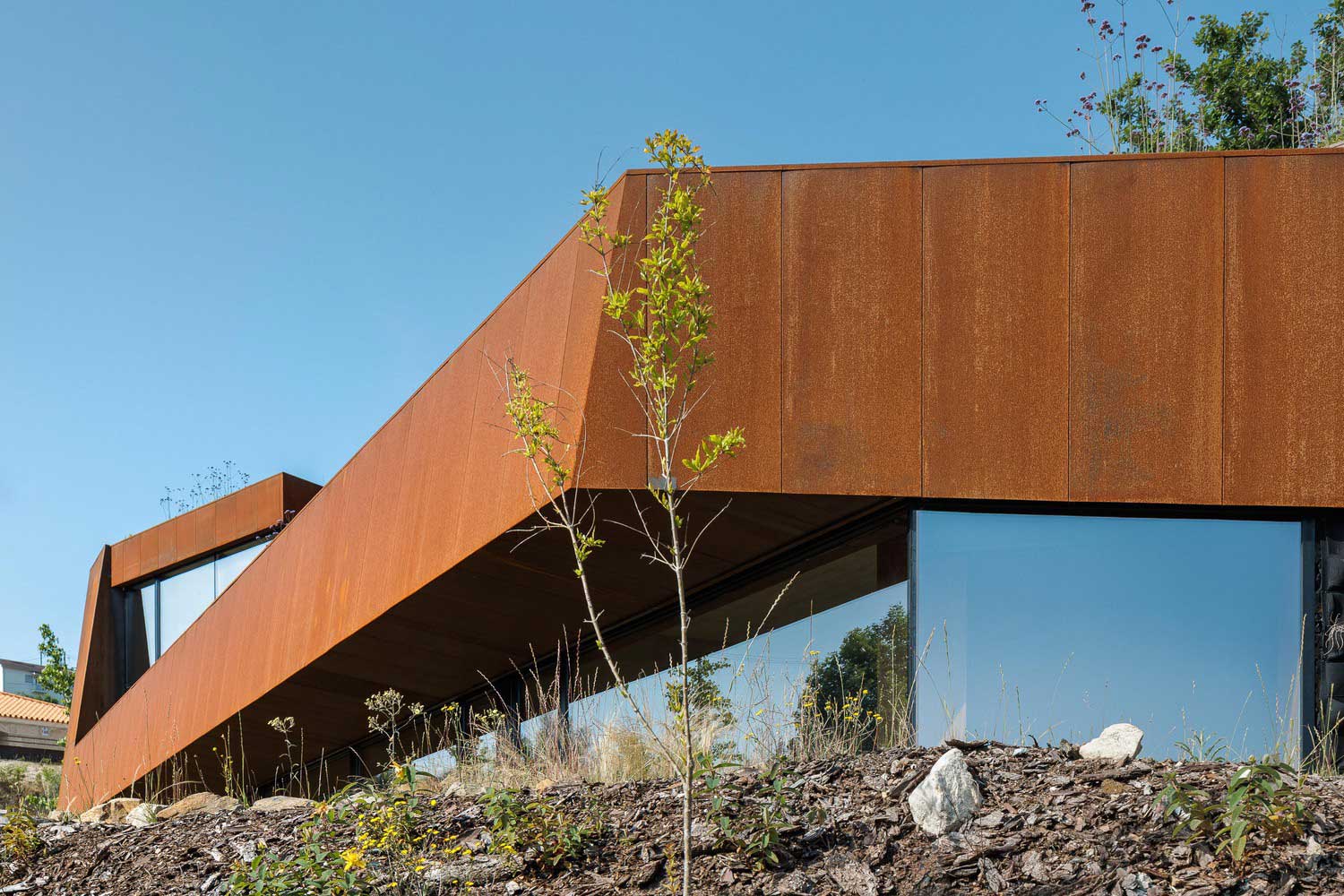
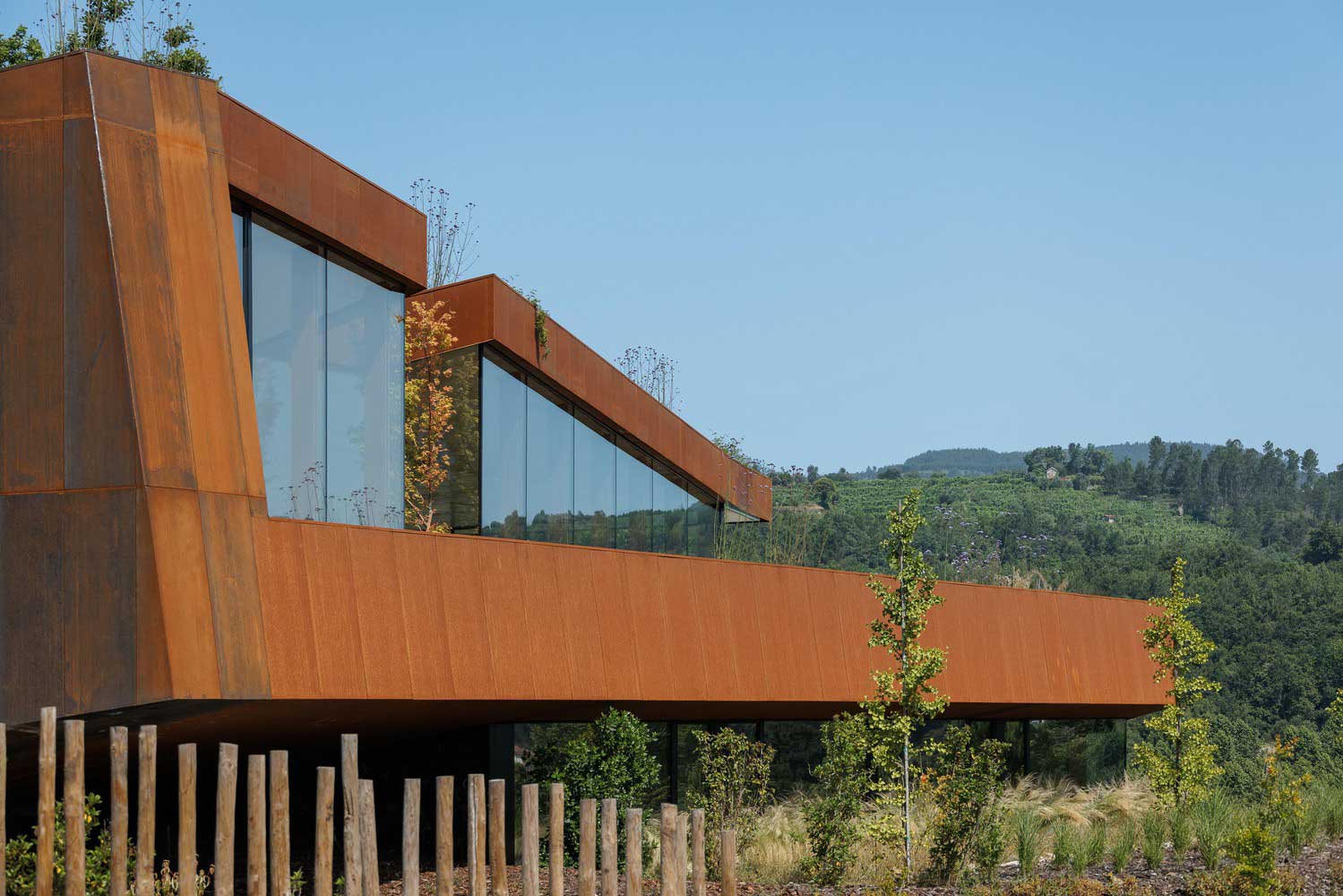
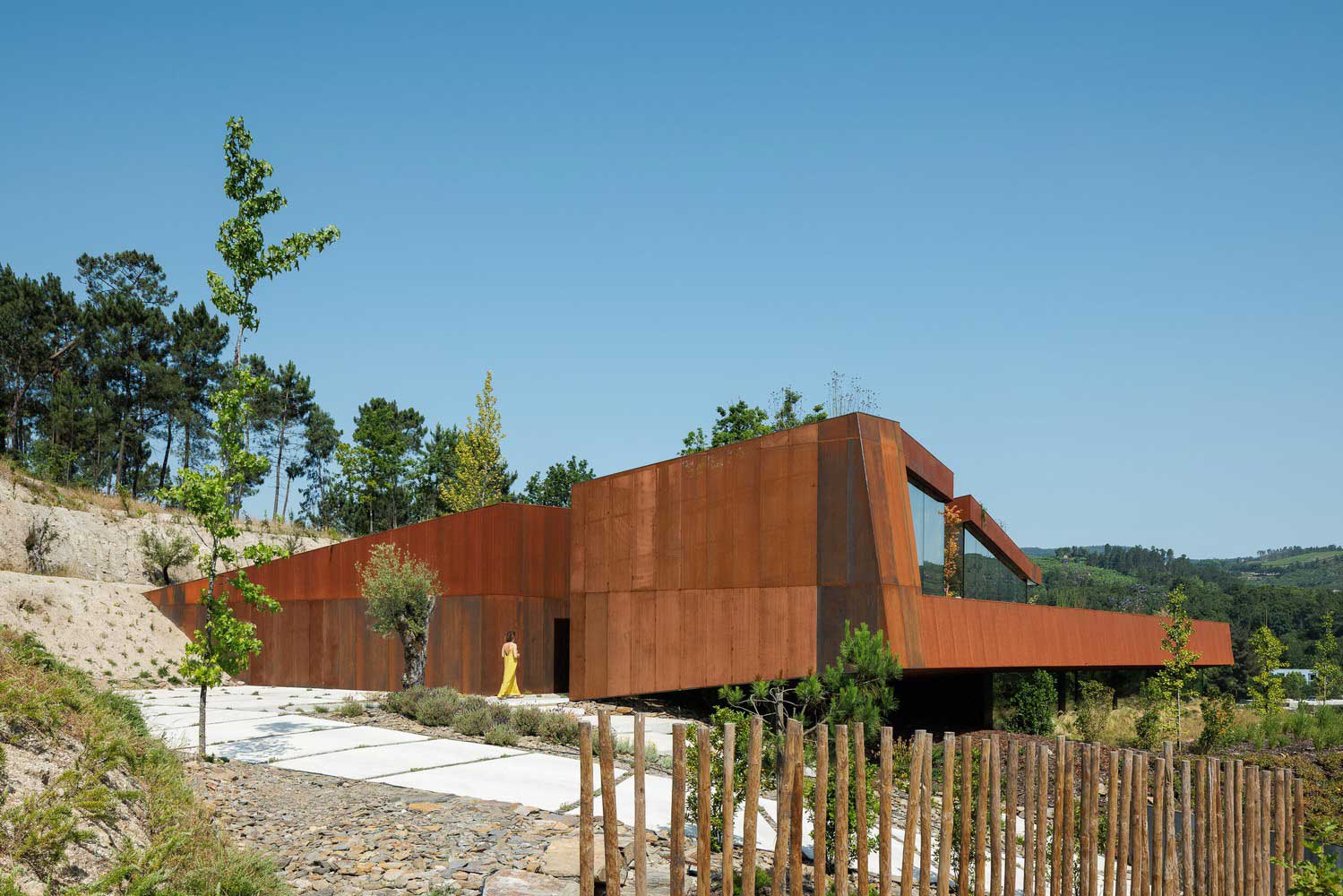
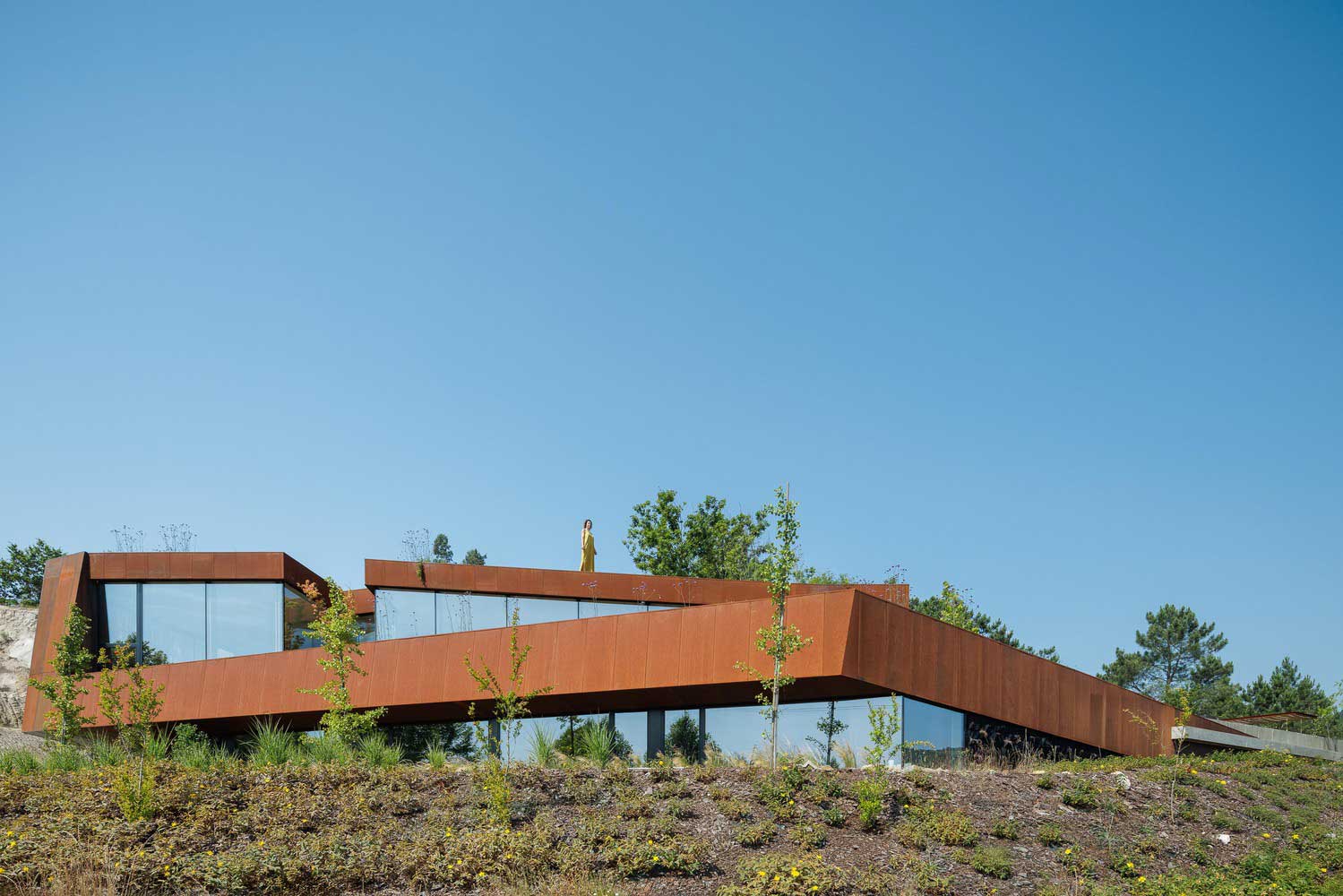
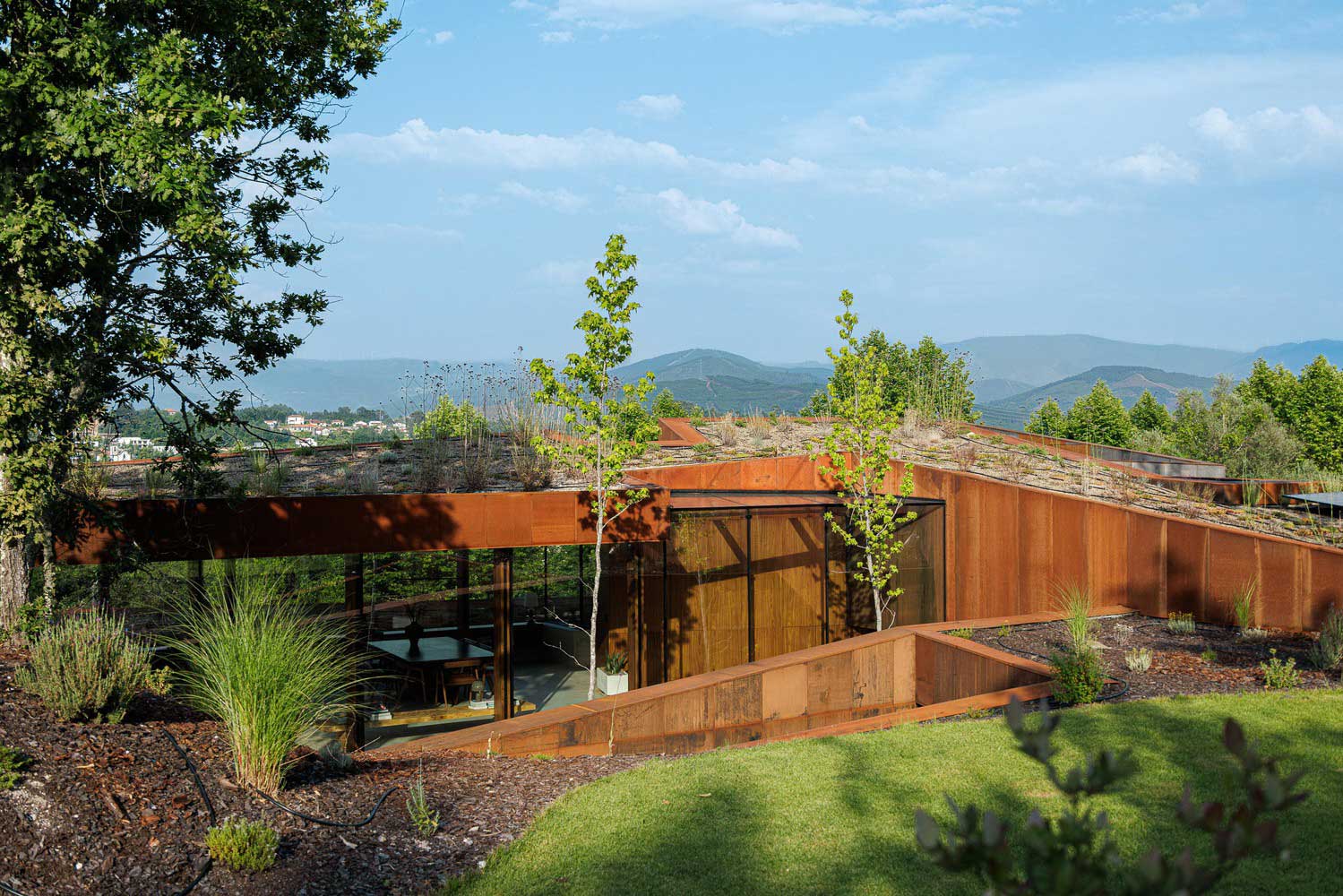
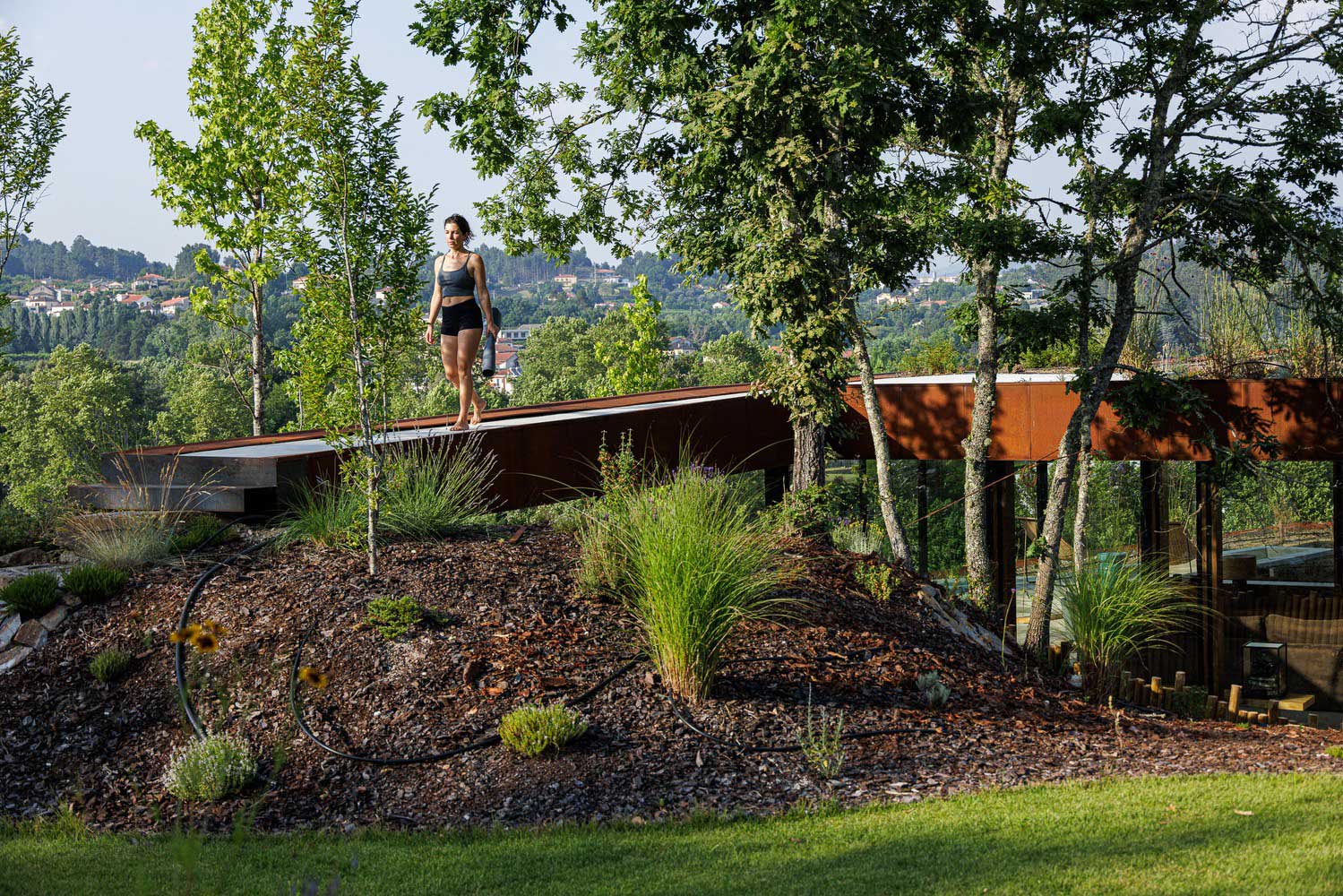
Everything about the site speaks to a careful choreography of movement. The steep slope of the land dictated a design that steps down gracefully, hugging the topography rather than flattening it. This tiered approach allows the structure to peek out from the foliage, offering glimpses of textured surfaces and sharp, geometric lines. The arrival is an experience of discovery, a slow unveiling of a private world tucked away from the rush of the modern era. As one approaches, the visual weight of the building is balanced by the lightness of the surrounding greenery, creating a sense of equilibrium that permeates the entire property. It is a composition of earth, sky, and hand-built precision, where every corner turned reveals a new perspective on the relationship between shelter and the natural world.
Bronze Hues of Weathered Steel
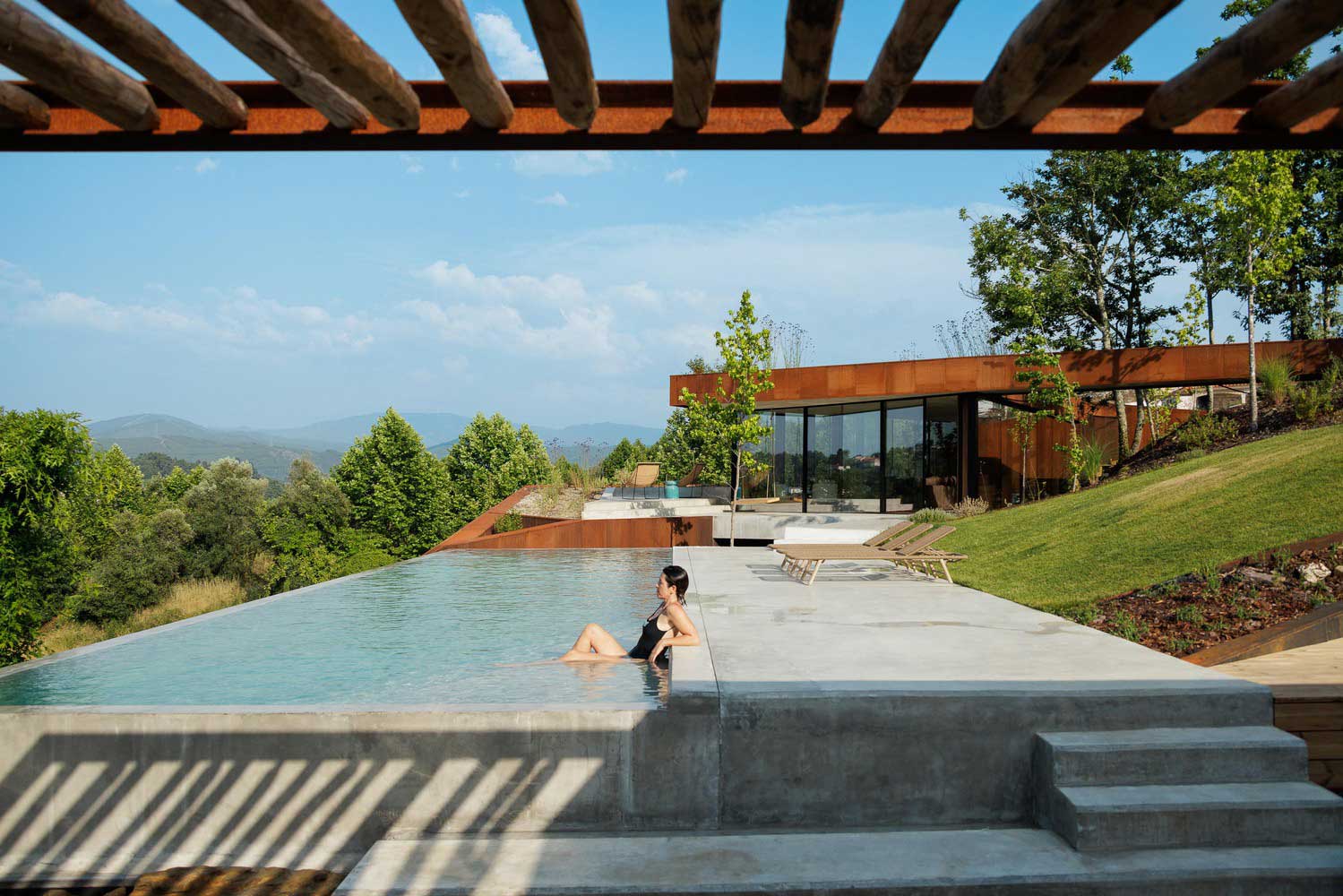
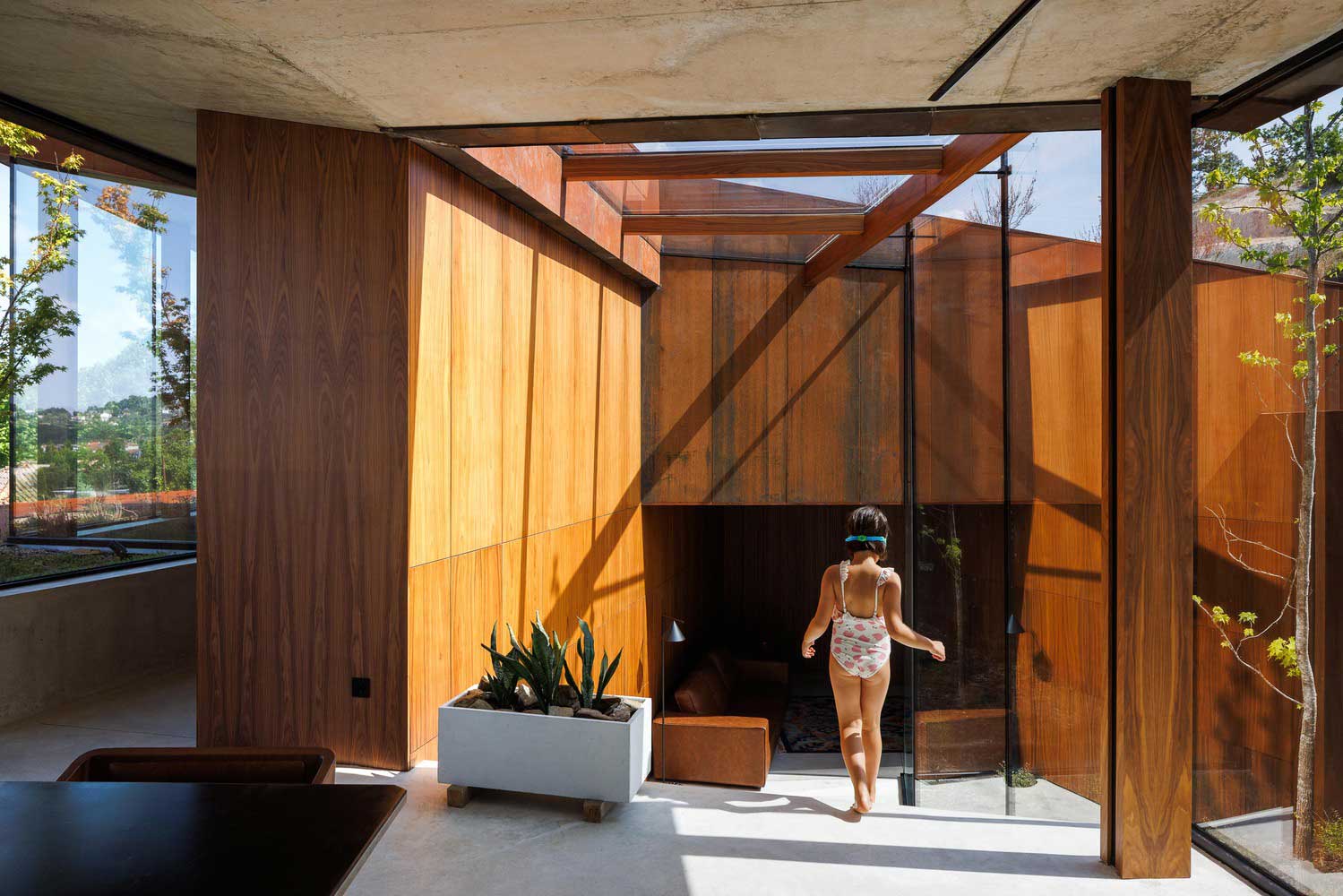
The most striking feature of the exterior is the skin that wraps around the upper volumes, a material that celebrates the passage of time through its changing complexion. This weathered steel cladding provides a vibrant palette of deep ochre, burnt orange, and rich chocolate tones. Unlike traditional paints that fade or peel, this surface evolves, developing a protective patina that shields the structure while grounding it in the colors of the earth. The metallic sheets are not merely flat panels; they are often perforated or articulated to create a rhythmic play of light and shadow. During the day, the sun filters through these tiny openings, casting intricate patterns onto the floors and walls like a digital forest canopy.
As the day progresses, these metallic surfaces transform. In the harsh midday sun, they appear rugged and industrial, asserting their dominance over the landscape. But as twilight approaches, the metal softens, absorbing the purple and gold of the sky until the house appears to be glowing from within. This material choice is a poetic nod to the mining heritage of the region, utilizing an industrial language to create something deeply organic. The steel acts as a thermal and visual veil, providing privacy for the intimate quarters of the home while allowing the inhabitants to remain connected to the movements of the wind and the shifting light outside. It is a rugged elegance that requires no maintenance, only the patient hand of nature to refine its beauty over the years.
Cold Concrete and Structural Honesty
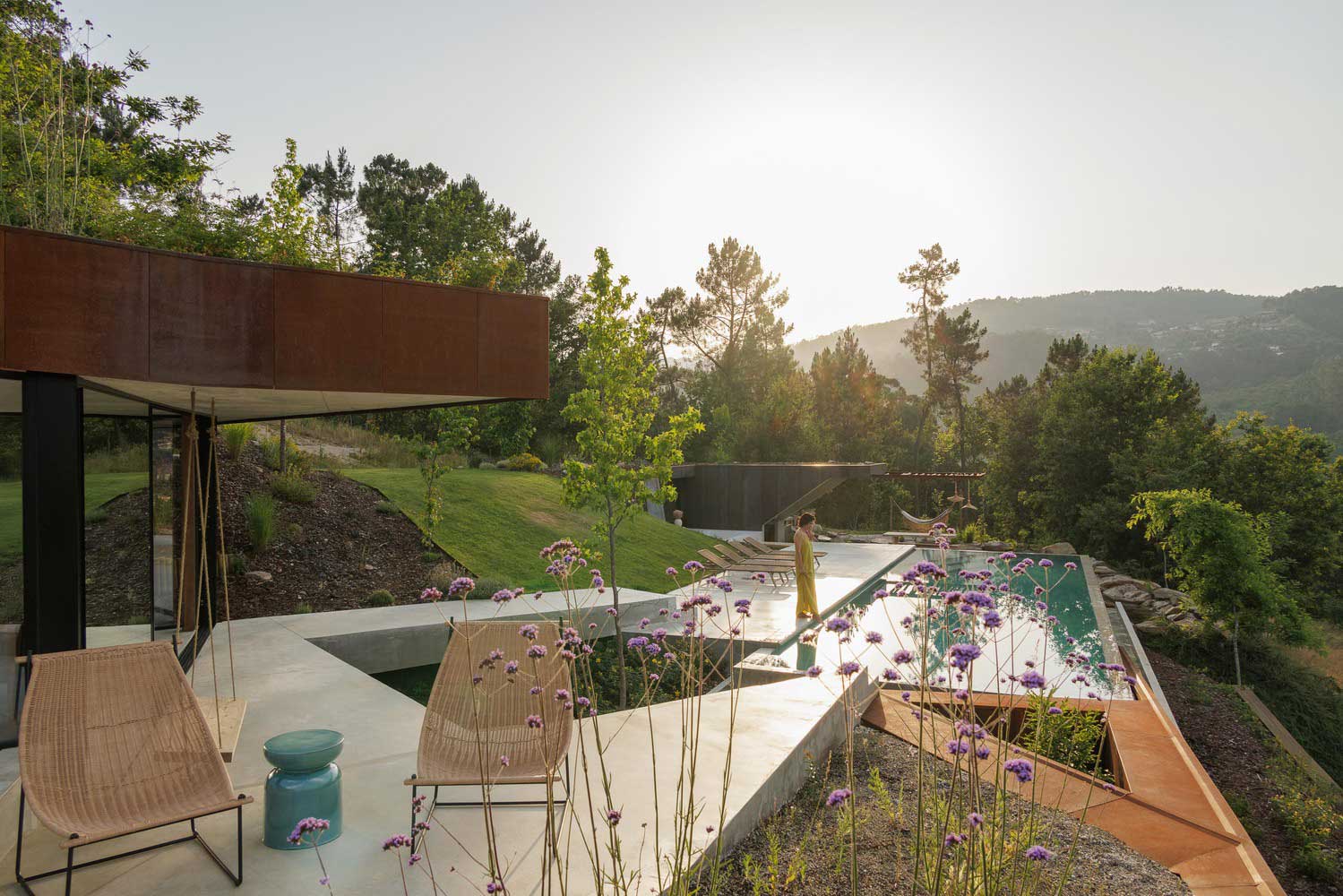
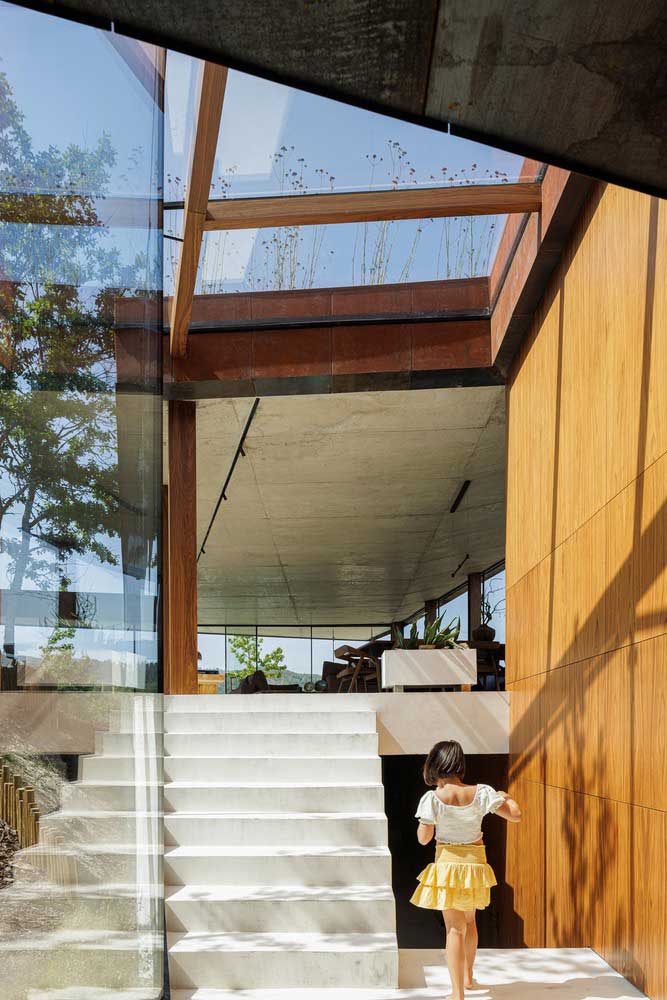
Supporting this crown of metallic warmth is a foundation built on the uncompromising strength of gray masonry. The lower levels and the primary structural skeletons are defined by the presence of raw, exposed cement. This material provides a neutral, grounding counterpoint to the vibrant activity of the steel above. The texture is smooth yet tactile, bearing the subtle imprints of the timber formwork used during its creation. This “cold” element is not meant to feel distant or sterile; instead, it offers a sense of permanence and security. It is the bedrock upon which the lighter, more expressive elements of the home rest.
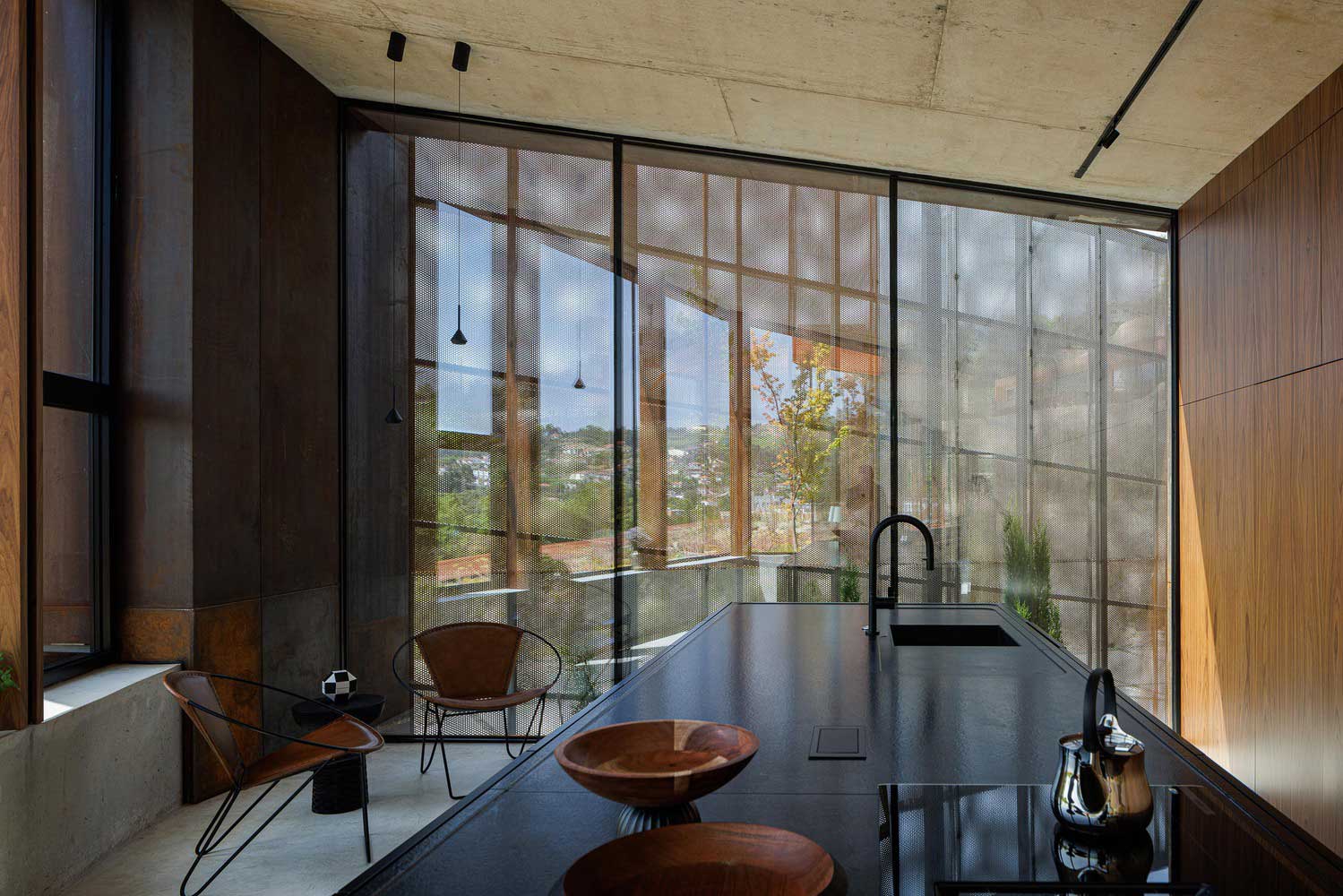
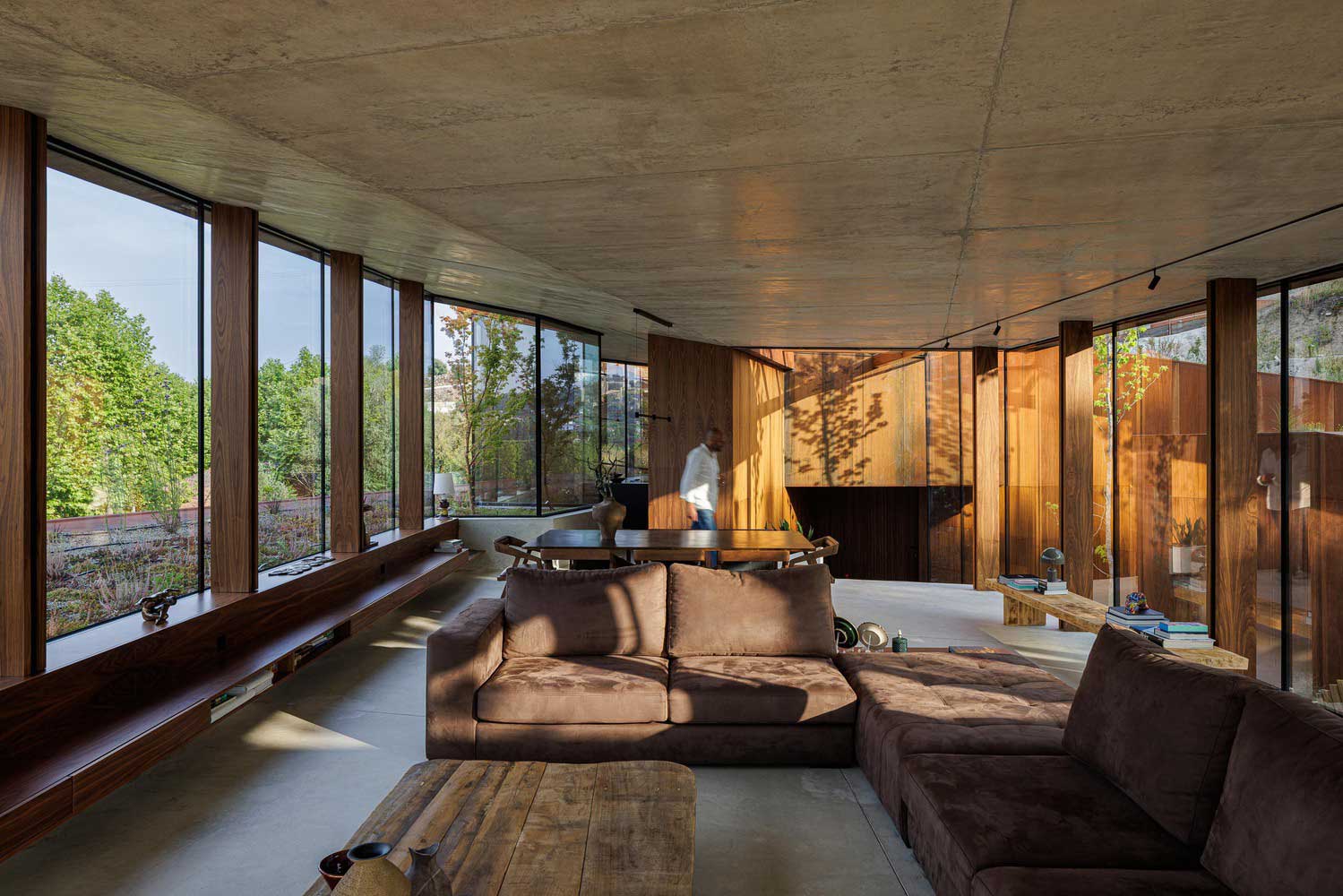
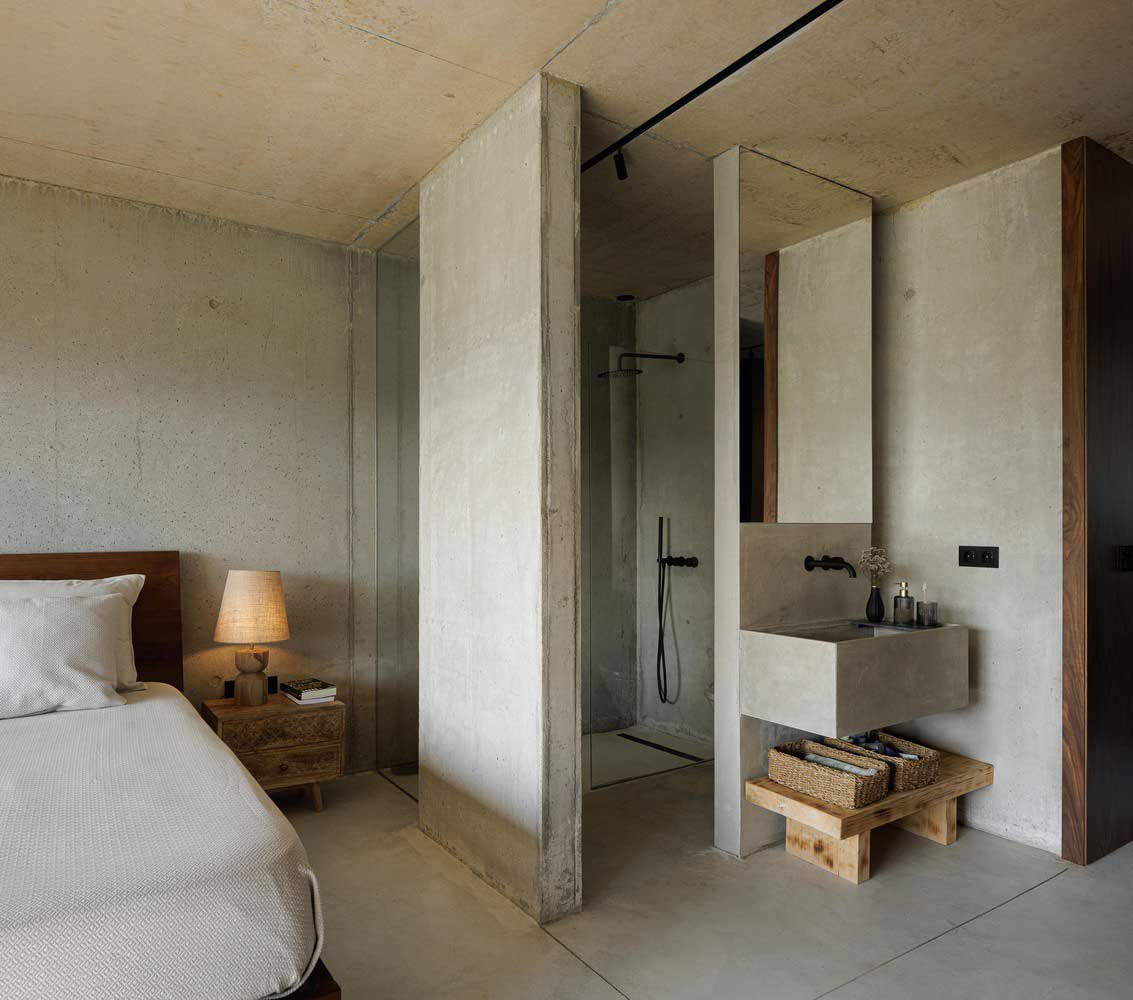
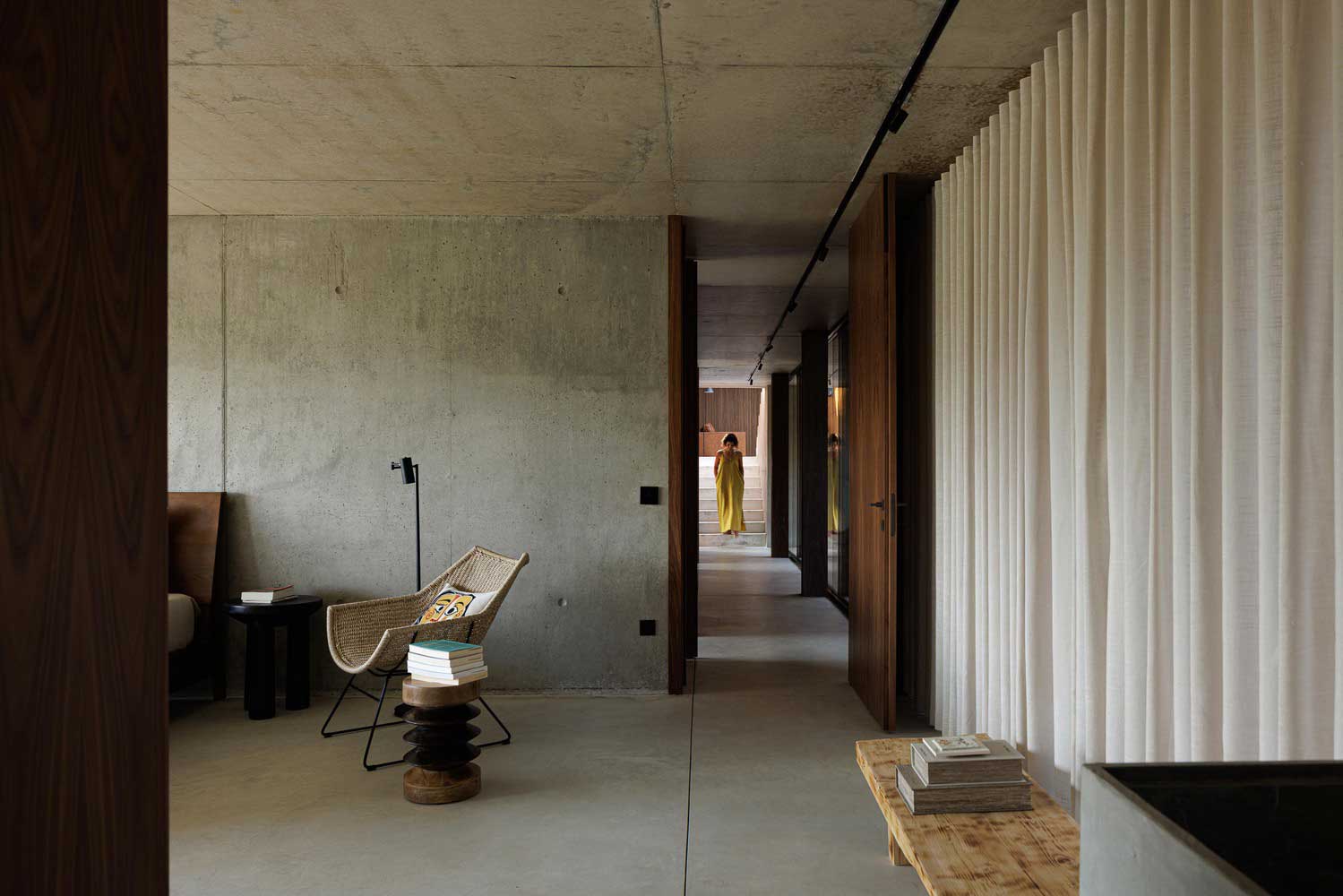
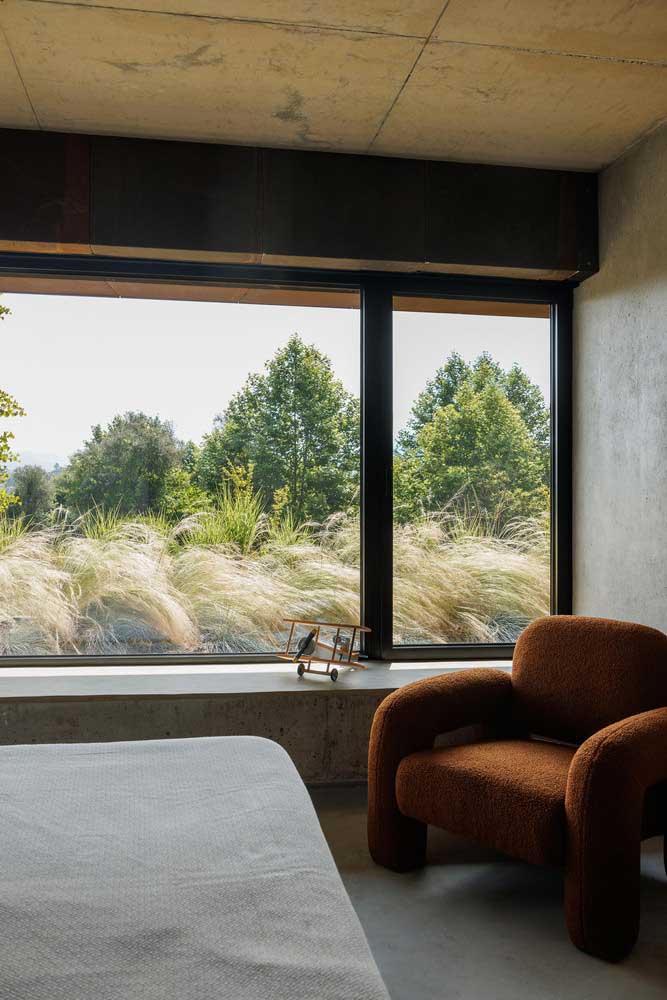
Inside, the gray surfaces continue, creating a seamless transition from the exterior world to the interior sanctuary. The floors, polished to a soft sheen, reflect the greenery visible through floor-to-ceiling glass walls. The concrete walls act as a gallery for the play of light, their matte finish catching the softest glow of a lamp or the sharp streak of a morning sunbeam. By leaving the material exposed, the architecture celebrates its own construction, showing the honesty of the build. There are no hidden layers or decorative facades; the beauty lies in the weight of the slabs and the precision of the joinery. This creates a cooling effect in the tropical climate, a thermal mass that keeps the interior air fresh and tempered even during the height of a humid afternoon.
The Modern Hearth and Shared Spaces
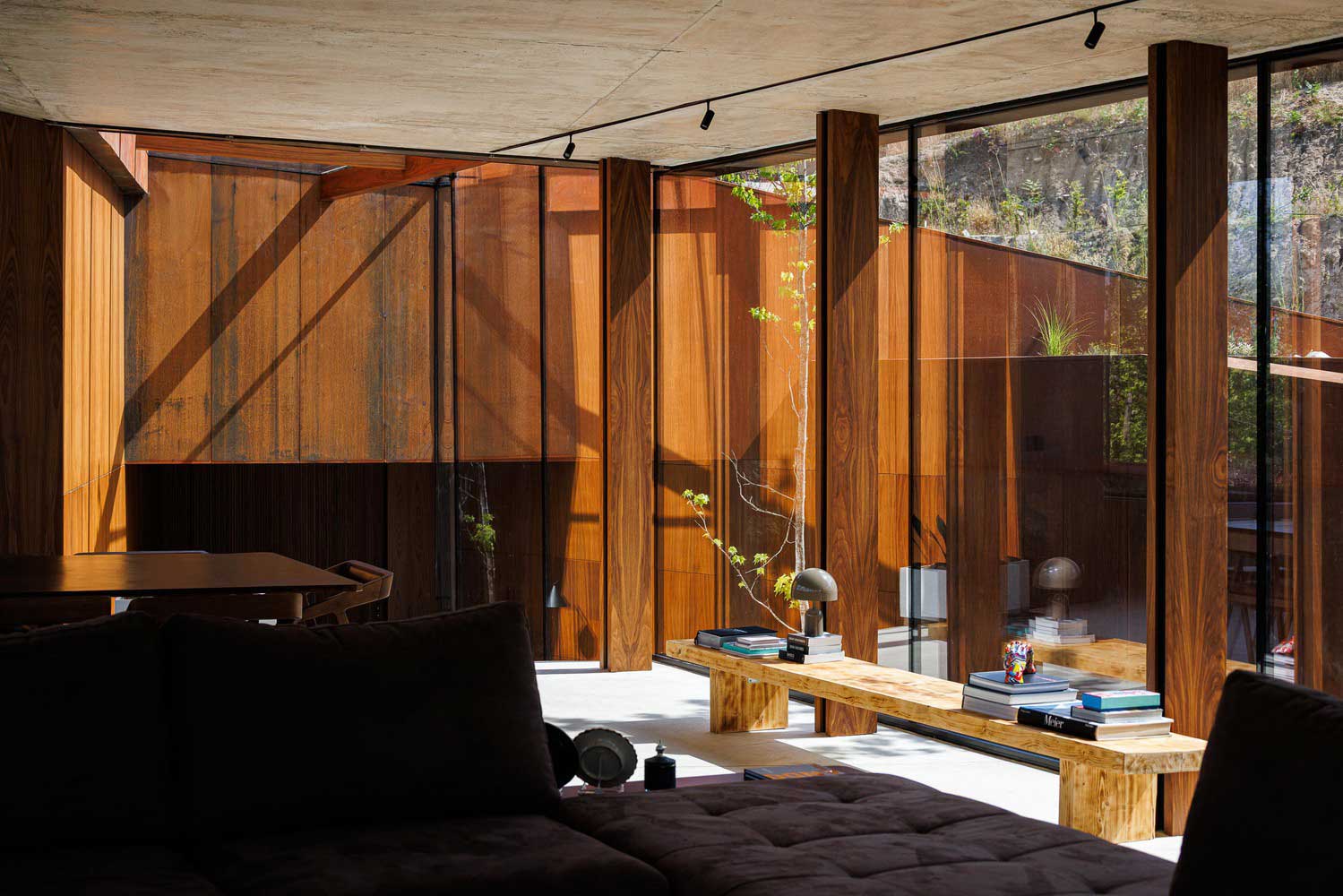
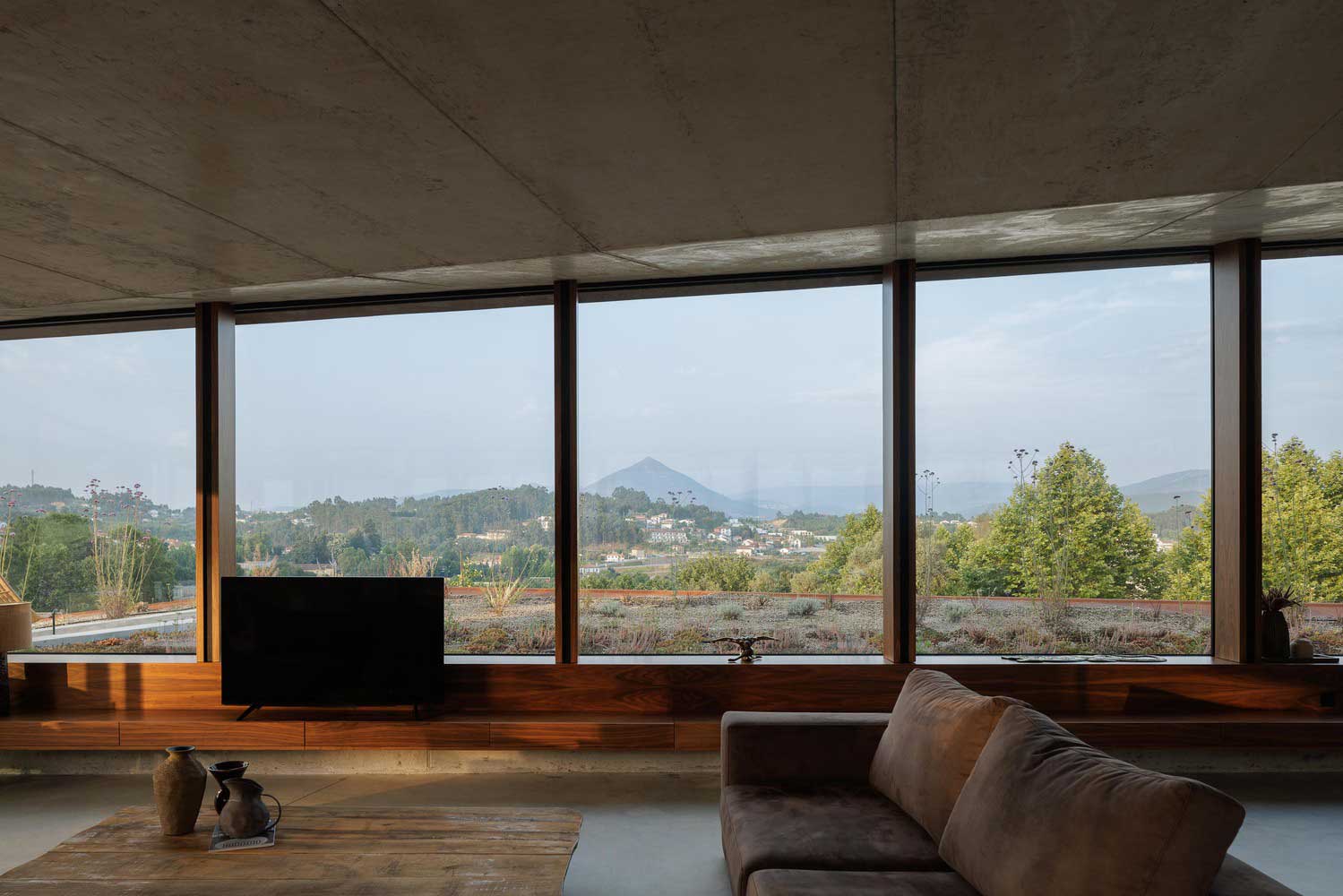
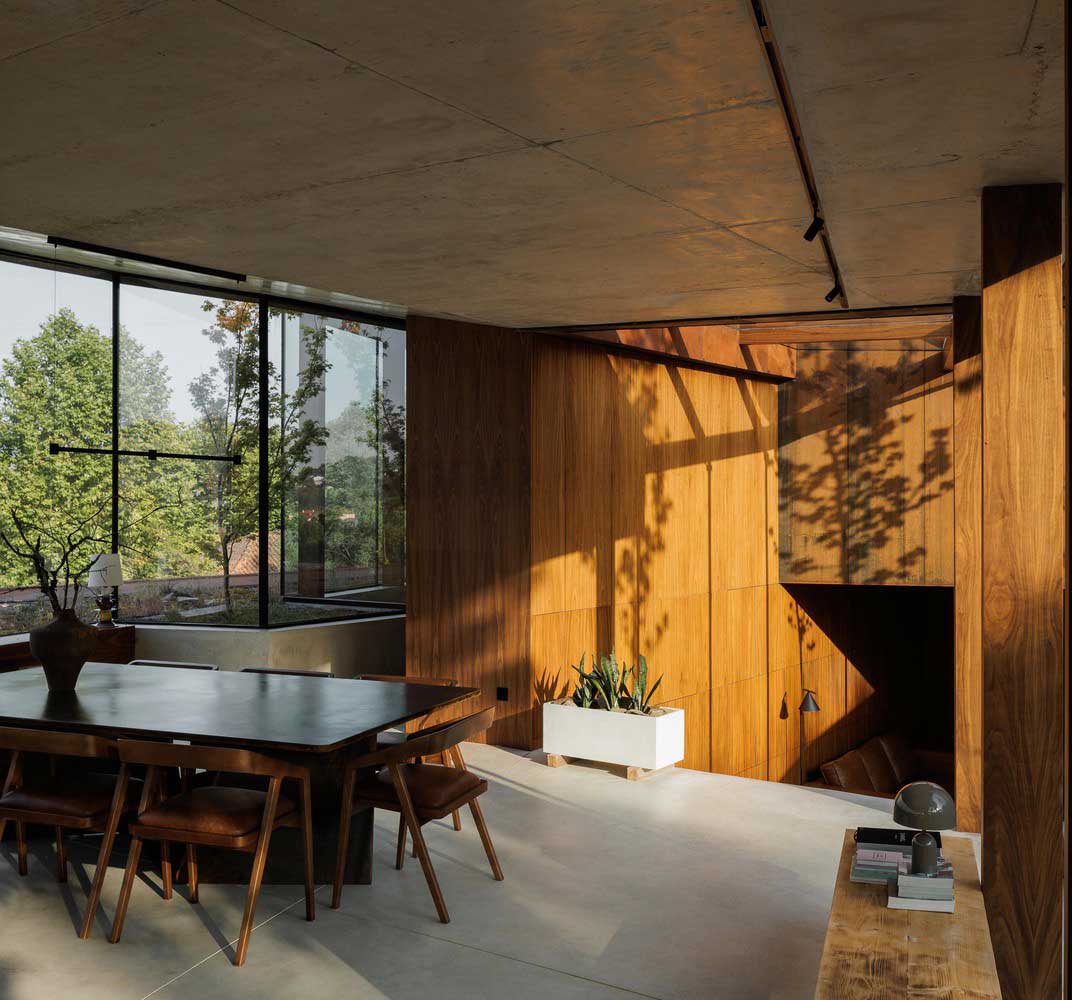
At the heart of this material intersection lies the soul of the home, a vast open area designed for the rituals of daily life. The concept of the traditional fireplace is reinvented here as a central gathering point where the family congregates. This social core is framed by the massive glass apertures that erase the distinction between the living room and the garden. The furniture is arranged to encourage conversation, positioned beneath high ceilings that give the space a sense of cathedral-like volume. Despite the industrial nature of the steel and cement, the interior feels remarkably warm, thanks to the strategic use of timber and soft textiles that temper the hard edges of the architecture.
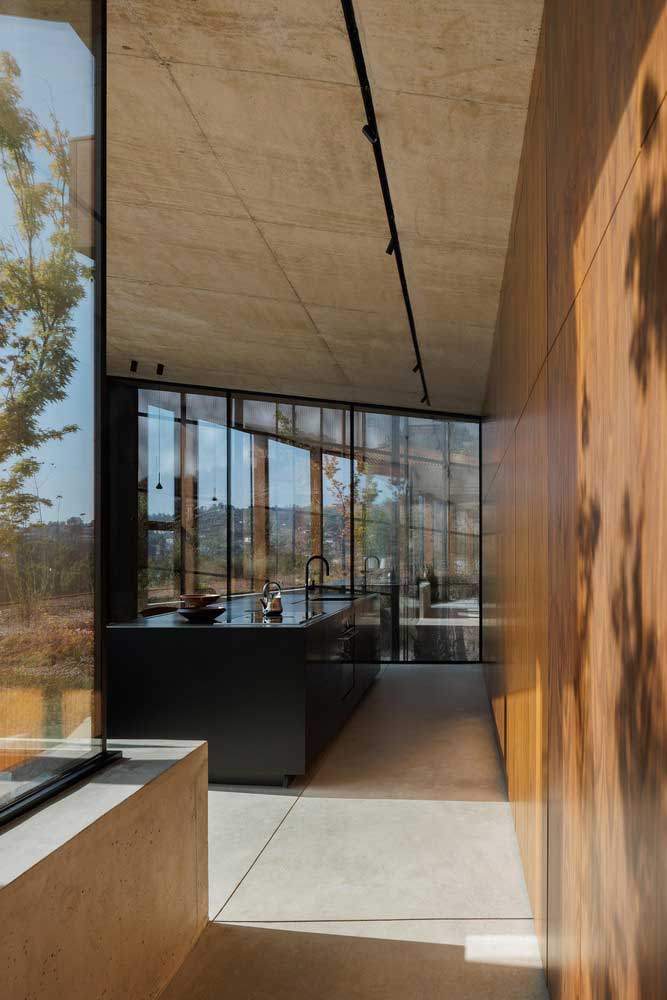
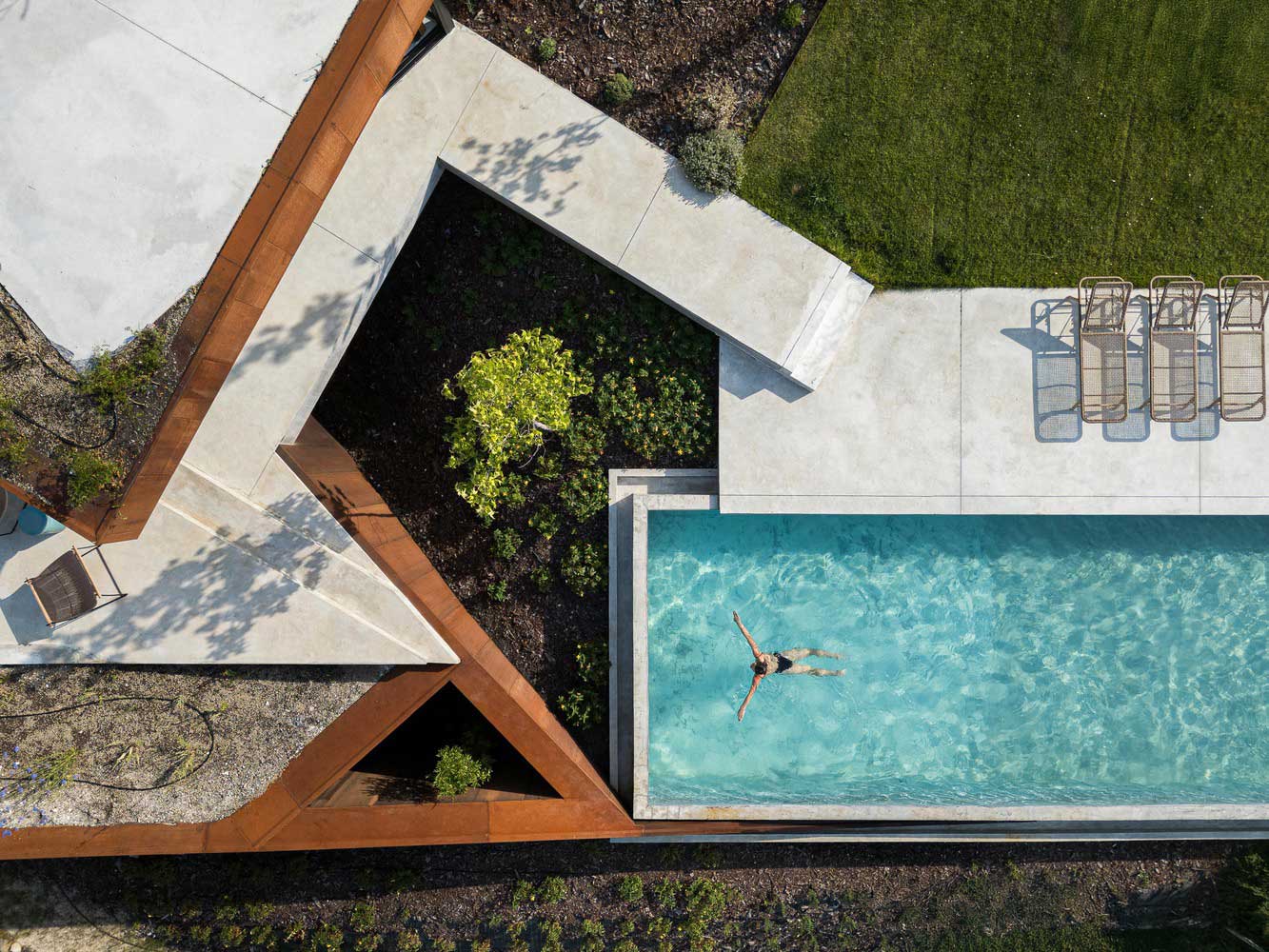
The kitchen and dining areas flow effortlessly into the lounge, creating a horizontal plane of activity that feels boundless. This is the modern hearth, a place not just for warmth, but for visual and emotional connection. From the center of the room, one can look up to see the bronze-toned screens or out toward the swimming pool that mirrors the sky. The integration of the landscape into the living area is so complete that the garden feels like a wallpaper that breathes. This central void acts as a lung for the house, allowing cross-ventilation to pull the scent of the forest through the living spaces. It is a triumph of spatial planning where the hard shells of the exterior give way to a soft, inviting core dedicated to the art of hospitality and relaxation.
A Harmony of Textures and Tones
The true magic of the residence is found in the moments where the various materials meet. A staircase of dark wood might lean against a wall of poured gray stone, or a sliver of glass might separate a heavy steel beam from a delicate garden bed. These junctions are handled with surgical precision, ensuring that the heavy and light, the warm and cold, and the rough and smooth all exist in a state of perfect tension. The house is a sensory journey; the cool touch of a concrete pillar, the radiant heat of the steel skin in the afternoon, and the soft rustle of leaves against the glass. It is a building that demands to be felt as much as it is seen.
As night falls, the architecture undergoes its final transformation. Integrated lighting tucked into the recesses of the concrete and behind the steel screens turns the house into a lantern. The bronze hues deepen into a regal dark brown, and the gray masses recede into the shadows, leaving only the warm glow of the interior life visible to the world. It is a quiet, powerful presence on the hillside, a beacon of modern design that respects its environment. This home is a reminder that architecture is at its best when it serves as a bridge, connecting the raw power of industrial materials with the delicate, fleeting beauty of a family’s life within its walls. It is a permanent anchor in an ever-changing landscape, a masterpiece of balance and light.