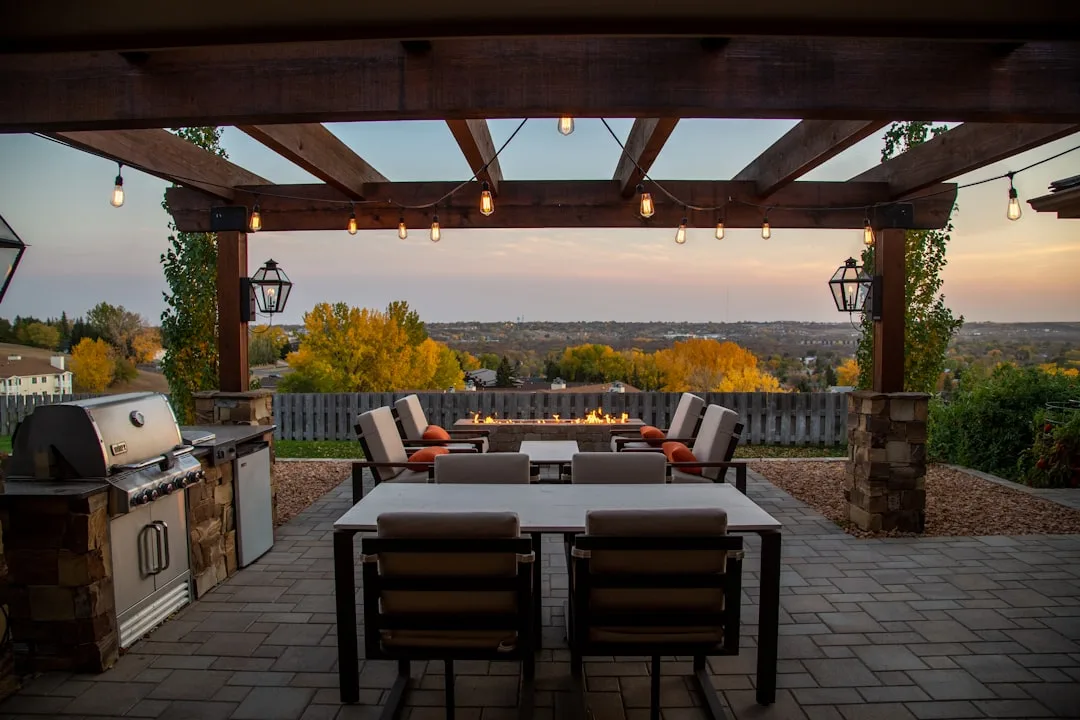
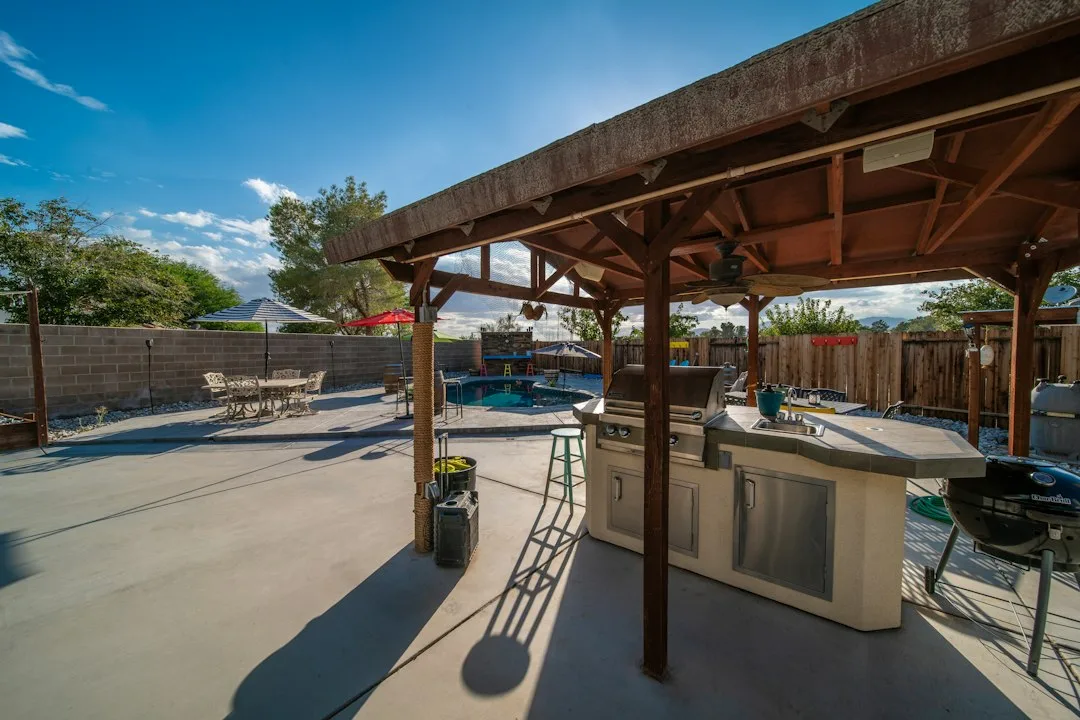
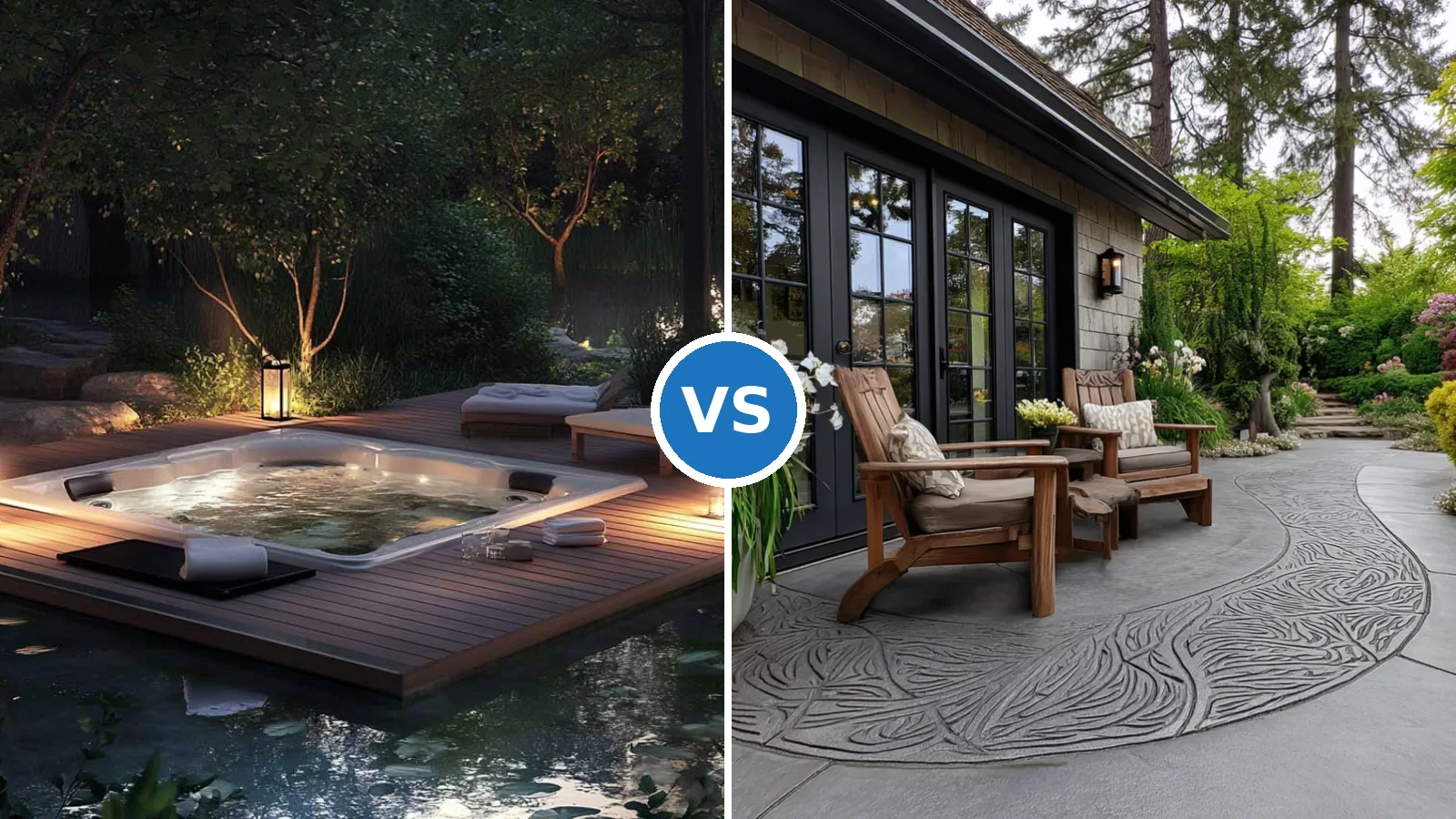
An industrial concrete kitchen on the patio pairs poured concrete counters with steel cabinets and appliances, and the combination holds up outdoors when each material is specified for weather. Installed outdoor concrete countertops typically run $65–$135 per square foot, which places them between porcelain slabs at $30–$75 and stainless steel at $75–$150. The look borrows from warehouses and loading docks, yet the logic is practical: concrete carries weight and heat, while steel shrugs off grease. Set the counter budget first, because it caps the price of everything around it.
Does the style work in every backyard? It suits open sunny patios and covered terraces alike, but concrete outdoors needs resealing every one to two years, while steel and porcelain need no sealing at all. Coastal homes call for 316 marine-grade steel, which contains about 2% molybdenum to resist salt corrosion, and inland yards do fine with standard 304 at a lower price. Match the steel grade to your distance from salt air before you pick cabinet finishes.
The sections below cover three proven setups: concrete counters with black metal cabinets, polished steel against concrete walls, and a concrete island with metal stools. Layout rules and a side-by-side cost table follow. Think of the whole kitchen as a restaurant line moved into the garden, with hard surfaces, clear zones and nothing fragile. Read the cost table before you call a fabricator.
- Outdoor concrete counters average $65–$135 per sq ft installed, versus $30–$75 for porcelain slabs.
- Concrete outdoors needs resealing every 1–2 years; stainless steel and porcelain need none.
- 316 steel costs roughly 40–60% more than 304 but resists salt air near pools and coasts.
- A 1.5-inch concrete slab weighs 18–20 lb per sq ft, so bases belong in steel or masonry, not plywood.
- Leave 36 inches of clearance around an island for safe grill access.
- A 10-foot counter run at 32-inch depth covers roughly 26–27 sq ft of surface.
Concrete Countertops and Black Metal Cabinets Set the Industrial Tone
An industrial style outdoor kitchen usually starts with this pairing: a gray concrete countertop resting on matte black metal cabinets. The counter reads raw and heavy, the cabinets read crisp, much like a steel-framed warehouse window set into a rough wall. A typical 40-square-foot concrete counter costs roughly $2,600–$5,400 before plumbing or demolition, according to fabricator price guides. Ask for a sample cast from the exact mix and sealer you will receive.
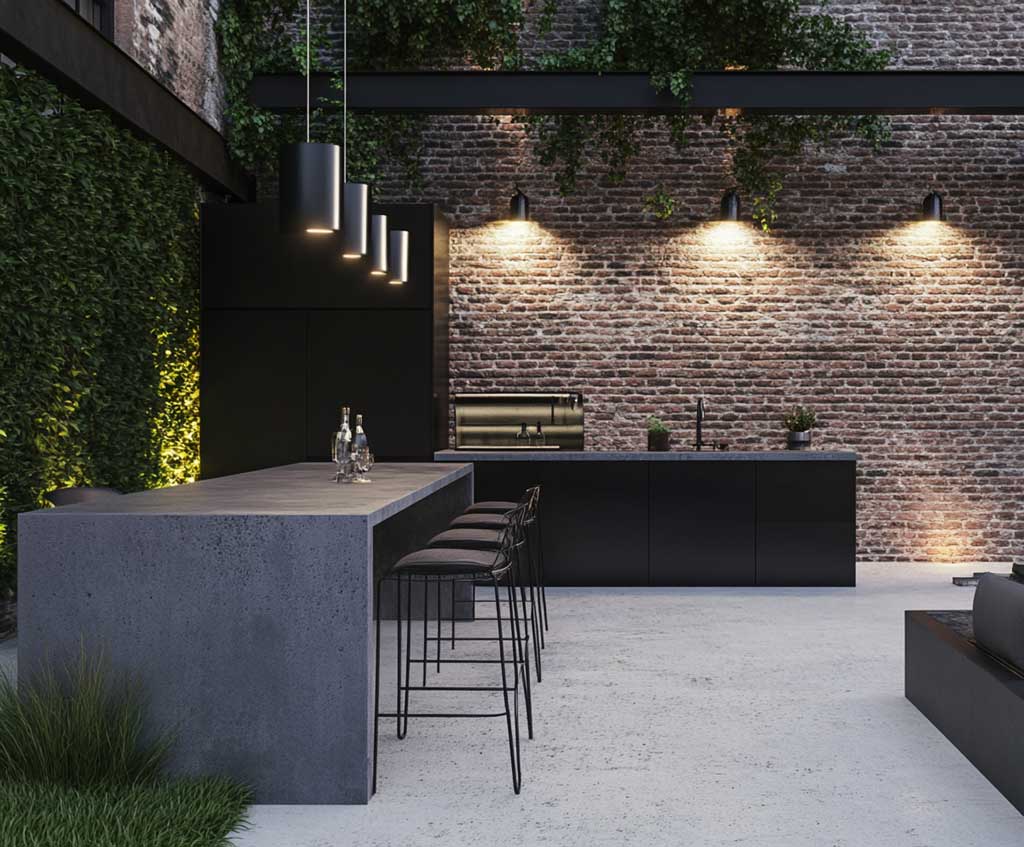
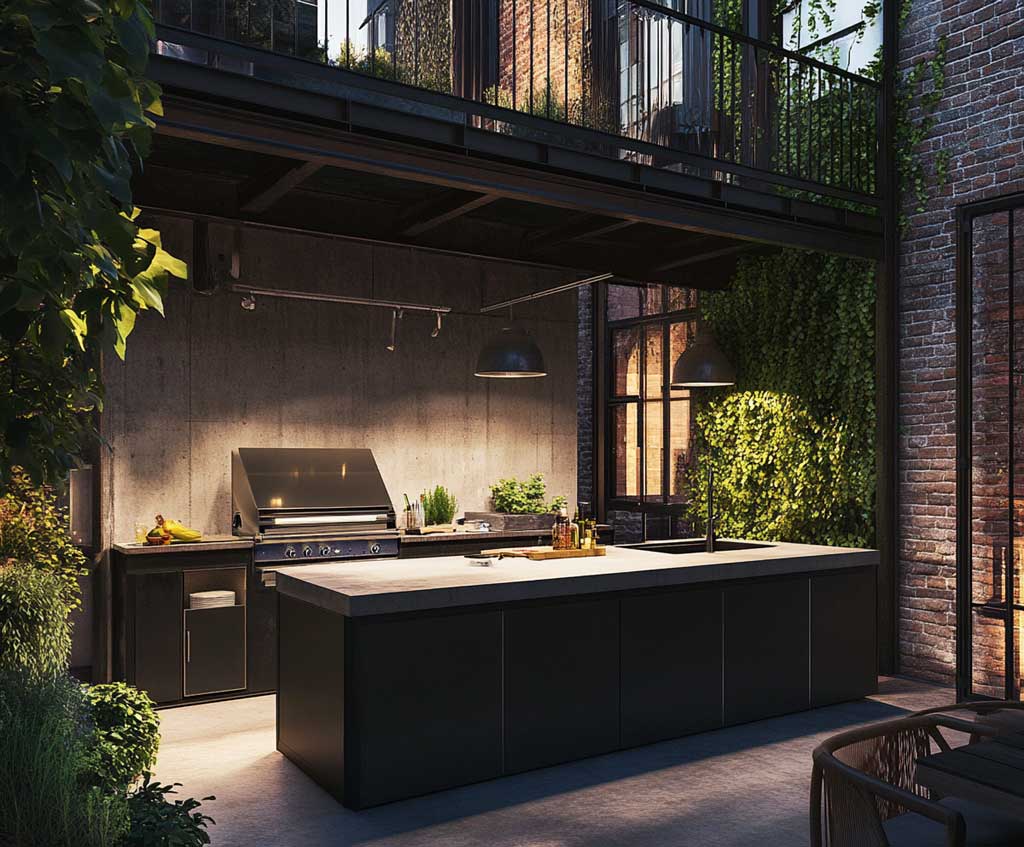
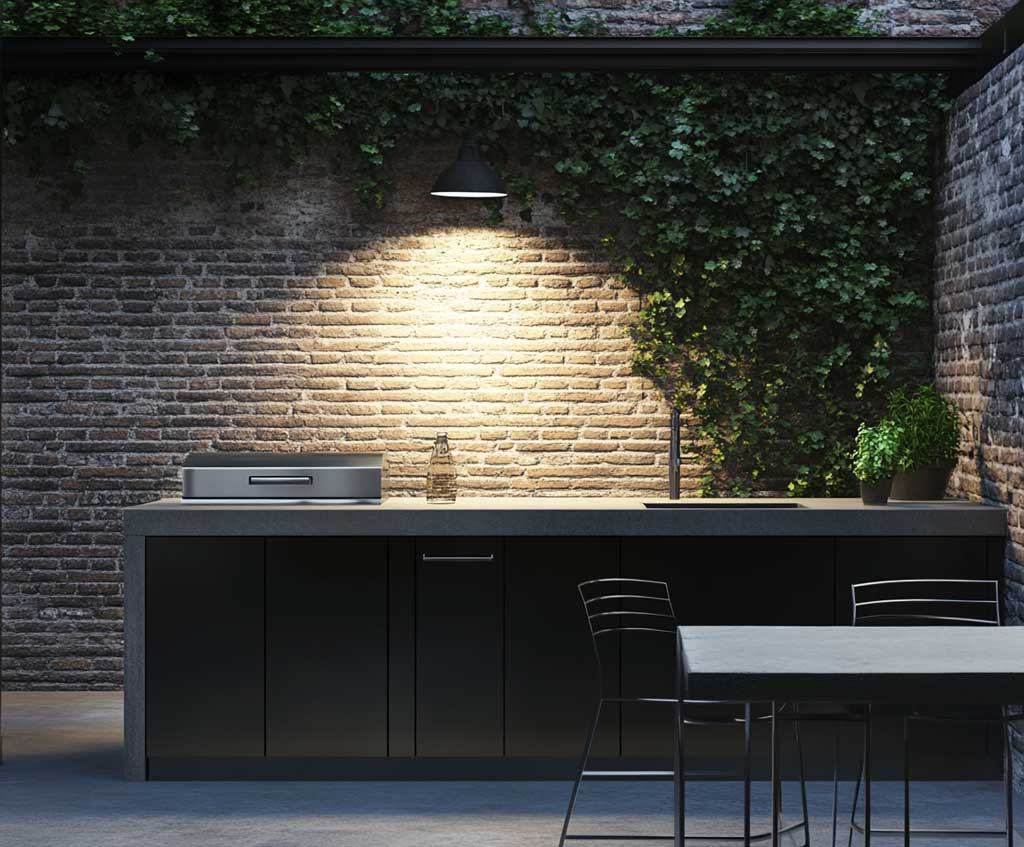
Why does the cabinet base matter so much? A 1.5-inch concrete slab weighs about 18–20 pounds per square foot, so a 40-square-foot run lands between 720 and 800 pounds. Metal stud framing with cement board carries that load outdoors, while plywood swells after rain and cracks the slab at its seams. Never let a contractor frame the base in wood, even pressure-treated boards.
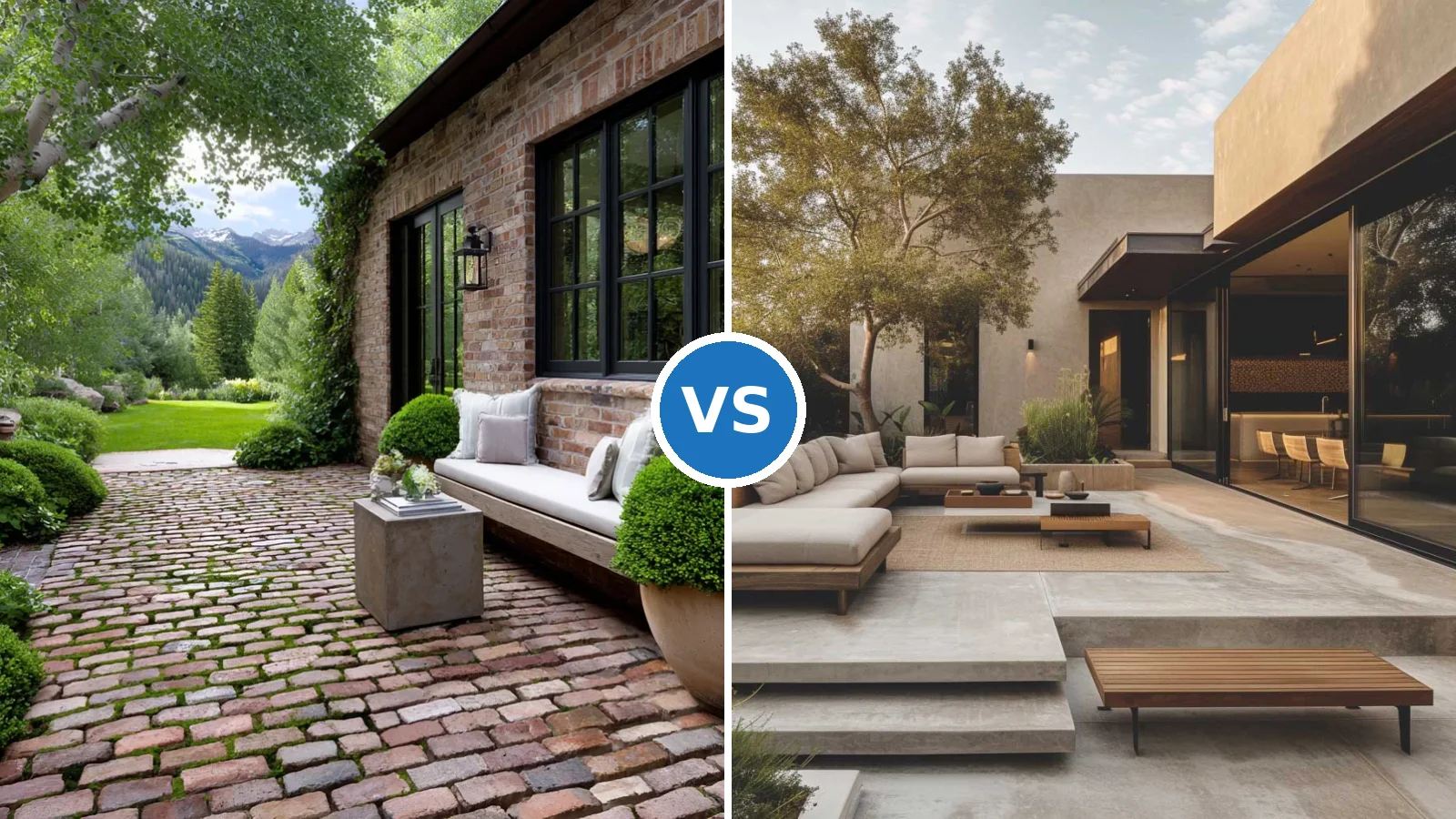
Exposed brick behind the run adds the warmth that pure concrete lacks, the way a leather strap softens a steel watch. If the patio floor is still undecided, compare a brick patio versus a concrete slab patio before pouring, because concrete counters on a concrete floor can turn into one long gray block. Brick costs more per square foot to lay, yet it breaks up the monotone. Use one material underfoot and the other as the backdrop.
A short spec list keeps the concrete-and-metal run durable through years of weather:
- Integral fiber reinforcement in the concrete mix to limit shrinkage cracks
- A penetrating sealer refreshed every 1–2 years outdoors
- Powder-coated or 304/316 stainless cabinet boxes, never unspecified “stainless”
- Eased or bullnose edges instead of sharp profiles that chip in frost
Polished Steel Appliances Sharpen an Industrial Concrete Kitchen
The industrial modern look runs on contrast: polished stainless grills and fridges reflect light, while board-formed concrete walls absorb it. That split works like a mirror hung on a stone wall, making a narrow patio feel wider. Stainless counters and fronts cost about $75–$150 per square foot installed, compared with $65–$135 for concrete. Put steel where heat and grease hit hardest and concrete everywhere else.

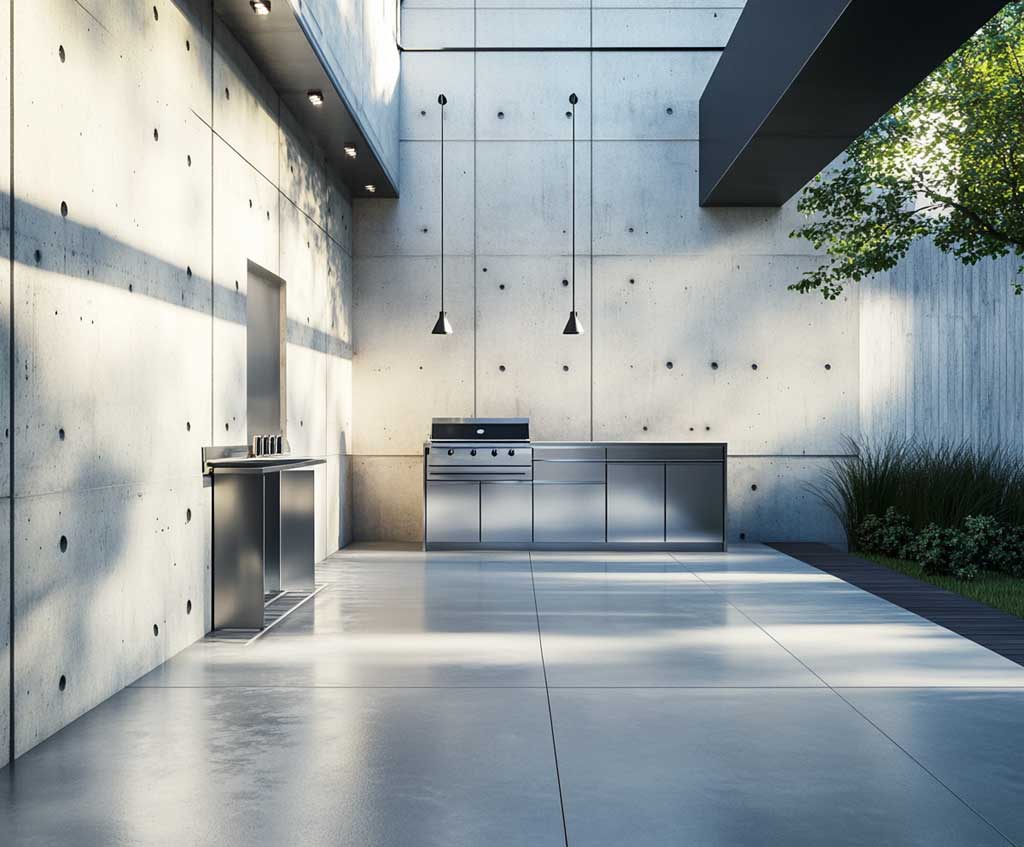

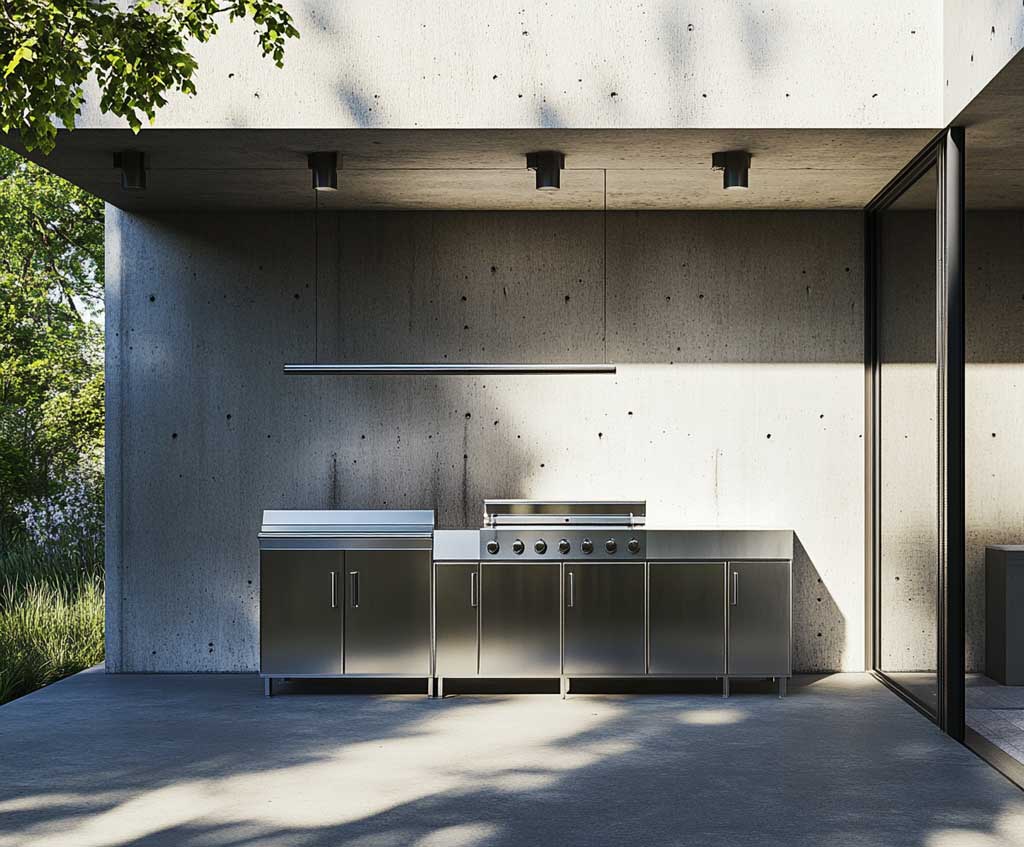
Is polished steel a smart pick in full sun? Exposed metal heats up fast, and dark outdoor surfaces on a Phoenix patio can reach about 150°F in July. Brushed finishes also hide fingerprints and fine scratches far better than a mirror polish. Choose brushed steel for horizontal work surfaces and save polished fronts for vertical appliance doors.
Steel grade decides how long the shine lasts. Grade 304 contains 18% chromium and 8% nickel and suits dry inland yards, while 316 adds roughly 2% molybdenum for chloride resistance near pools and the sea. Avoid cabinets labeled only as “stainless,” since budget lines can use cheaper grades such as 201 or 430. Ask for the grade in writing on the quote.
For a wider material check, the outdoor countertop cost and durability guide from SlabWise lists installed prices and reseal schedules side by side. It rates porcelain and stainless steel as seal-free, while concrete and granite need regular sealing. Read its climate notes if your patio sees hard frost.
Don’t seal a freshly poured concrete counter or patio slab before its 28-day cure is finished. Sealing early traps moisture, and the coating can flake within a single season. Skipping the reseal is the opposite mistake: past the 1–2 year window, grill grease soaks into unsealed concrete like water into a sponge, while a fresh sealer makes it bead on the surface.
A Concrete Island With Metal Stools Becomes the Patio Gathering Point
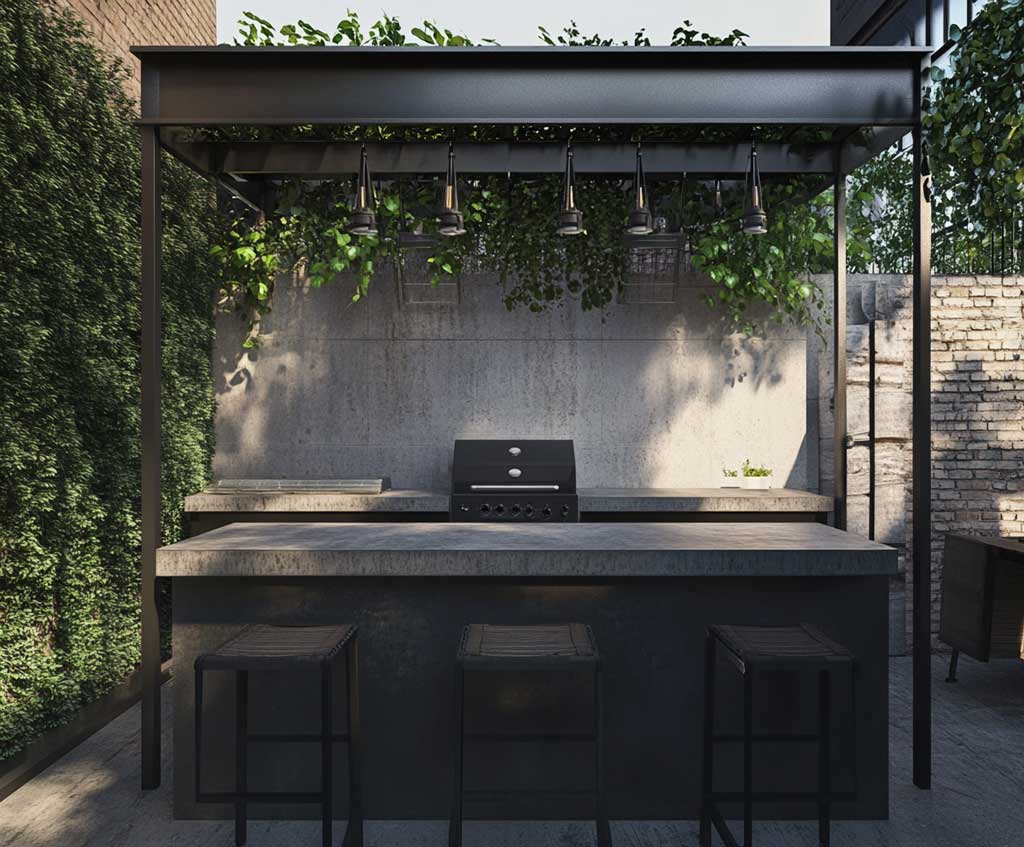
A concrete island with metal bar stools turns a modern outdoor kitchen into a place where guests sit while the cook works. The island acts like the bar in a taproom, so the host faces the crowd instead of a wall. Plan at least 8 by 4 feet for a single-grill island with usable prep space, and closer to 10 by 6 feet for two cooking zones. Mark the footprint on the patio with tape before ordering anything.
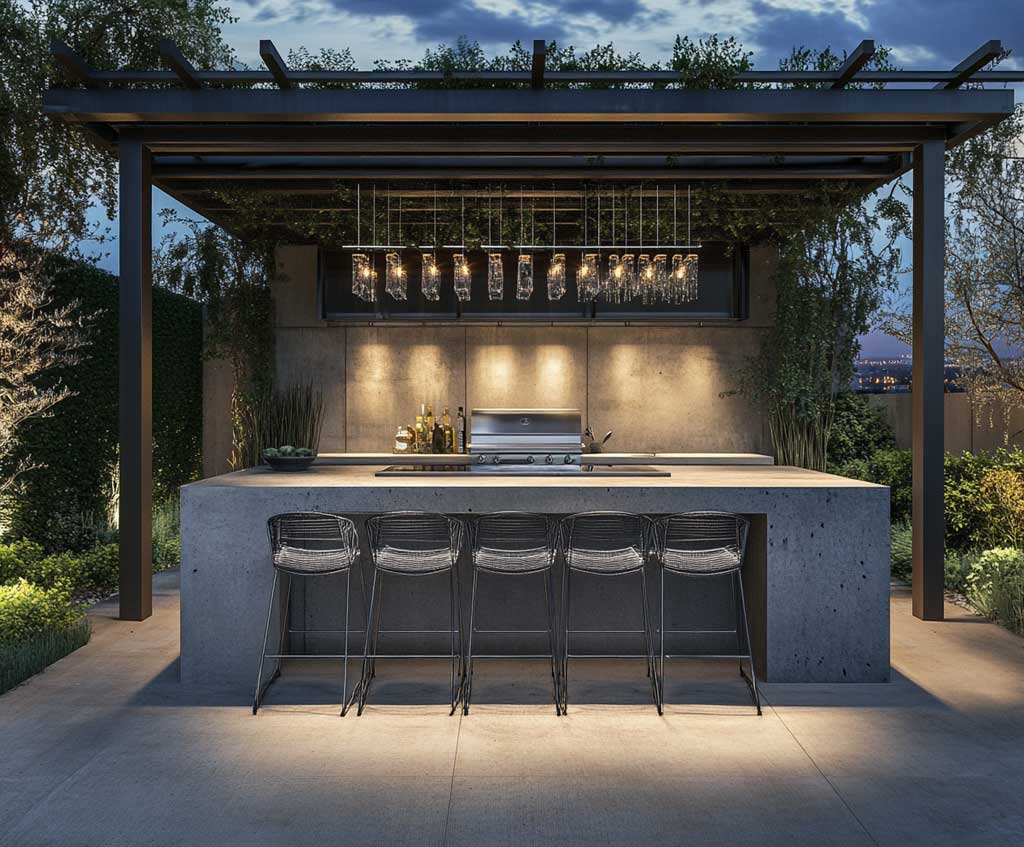
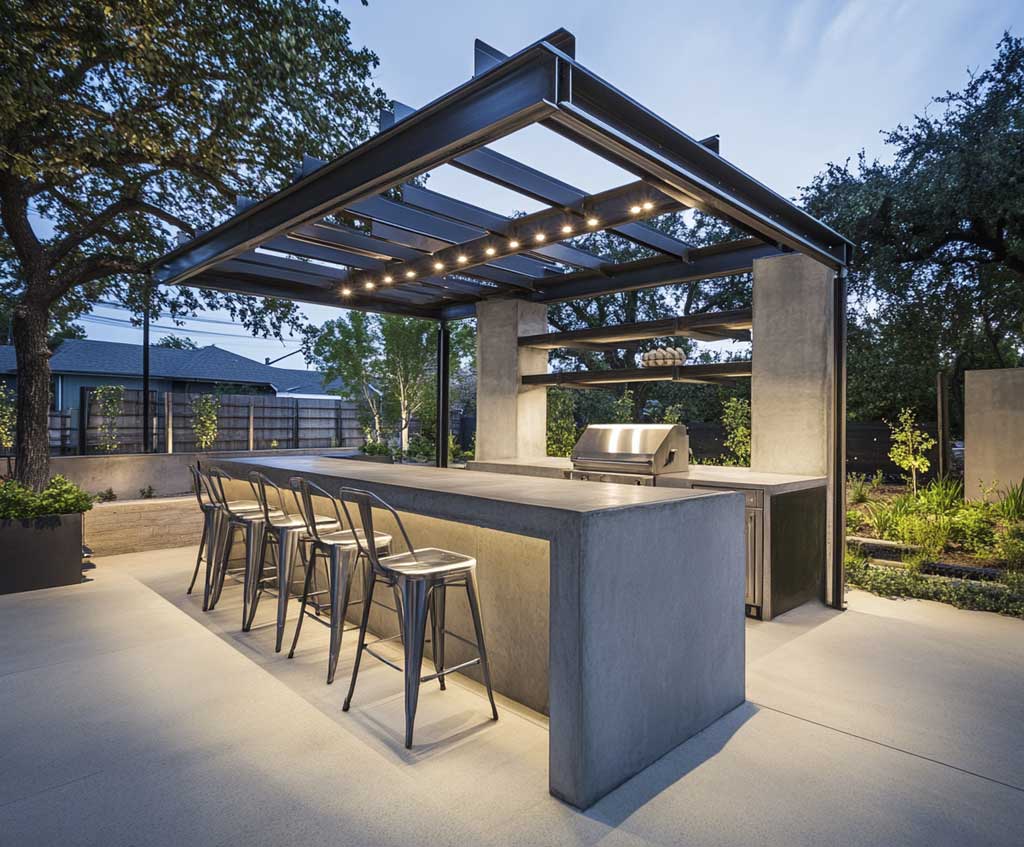
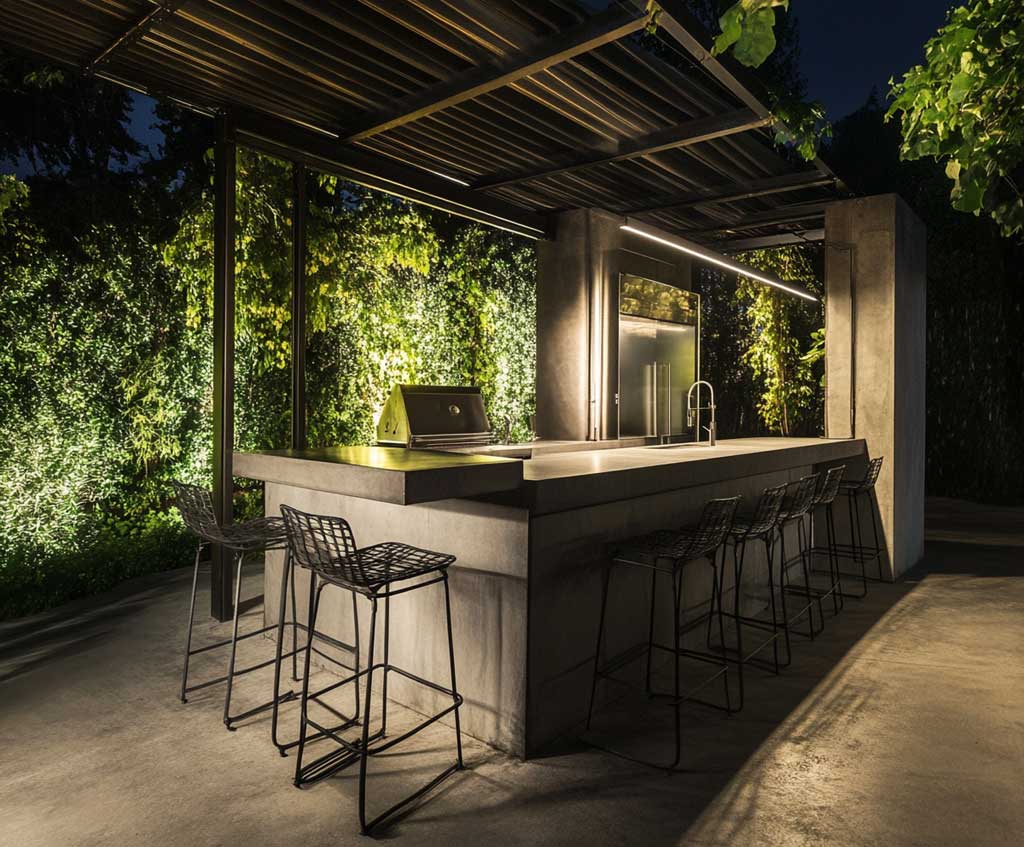
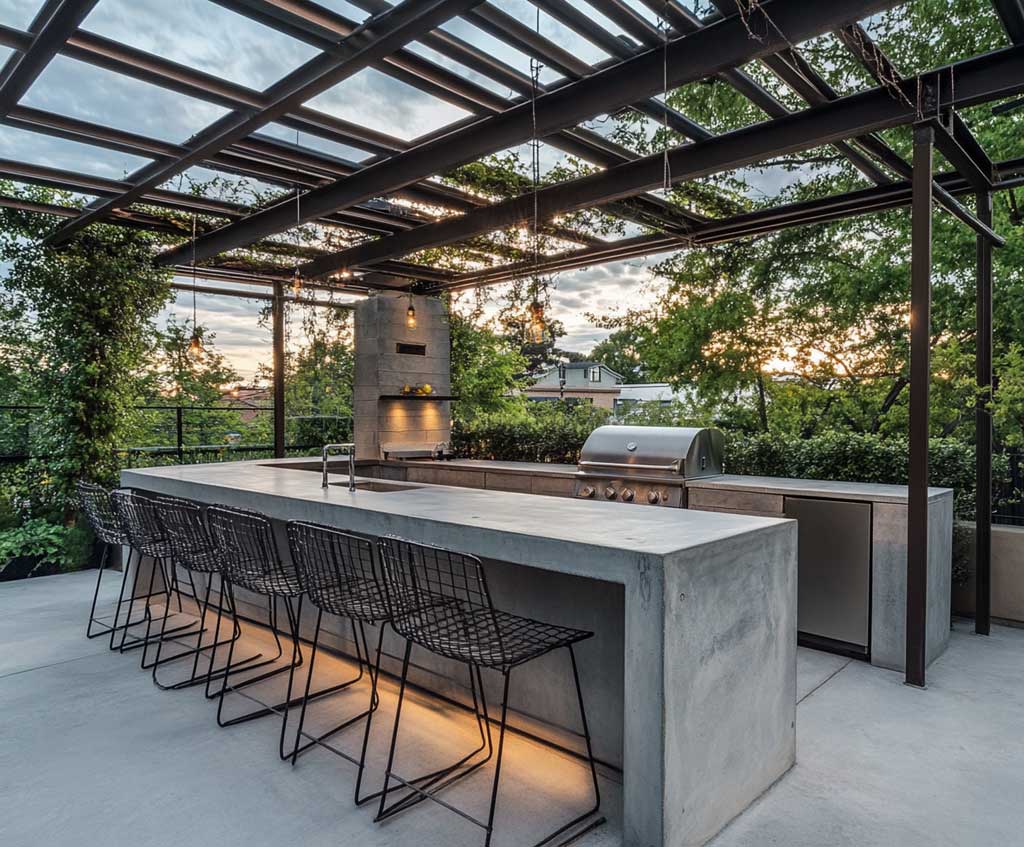
How far can the seating ledge overhang? Outdoors, most fabricators want corbel or steel bracket support once an overhang reaches about 10 inches, compared with the 12-inch rule common indoors. Thermal cycling outside puts extra stress on any cantilevered slab. Weld the brackets to the island frame rather than gluing them to cement board.
Metal stools should be powder-coated or stainless, because bare steel starts rusting after one wet season. A steel pergola overhead ties the stools and island into one frame and shades a counter that would otherwise bake in afternoon sun. For sizing, clearances and appliance packages, see how patio outdoor kitchen islands become a backyard social hub. Leave 36 inches of clearance behind the stools so guests can pass the grill safely.
Layout Rules That Keep an Industrial Concrete Kitchen Clean and Cool
A minimalist outdoor kitchen layout separates hot, cold and dirty zones the way a commercial line separates grill, cold prep and dish pit. A 36-inch counter depth splits neatly into roughly 24 inches for cooking and 12 inches for plating, while a shallow 18-inch counter fills up within one party. Prefab modular units use a 32-inch depth, so a 10-foot run gives about 26–27 square feet of surface. Choose 32–36 inches of depth whenever the patio allows it.
- Hot zone: grill in a steel or porcelain inset, with 36 inches of clearance around it.
- Cold zone: undercounter fridge and drinks storage, shaded from afternoon sun.
- Dirty zone: sink with trash pull-out beside it, so scraps never cross the prep surface.
- Plating zone: bare concrete between hot and cold zones for serving.
Where should the cutouts go? Fabricators typically charge $75–$150 per opening for the grill, sink and burners, and a run longer than about 8 feet needs a flexible silicone joint at the seam instead of a tight butt joint. Packing three cutouts into one short slab leaves thin bridges that crack first, like the narrow neck of a cookie cutter. Spread appliances along the run and keep every seam clear of a cutout.
Concrete, Steel and Stone Compared for Outdoor Counters
Concrete and stainless steel define the industrial look, but they are not the only outdoor-rated surfaces worth pricing. Granite runs $50–$100 per square foot and porcelain $30–$75, so both undercut concrete’s $65–$135 range. Is concrete worth the premium over porcelain? It is when you want thick cast edges, integrated sinks or a curved island end that slabs cannot match. Use the table to shortlist two materials, not to pick a winner on price alone.
| Material | Installed cost per sq ft | Resealing | UV stability | Best role in the kitchen |
|---|---|---|---|---|
| Concrete | $65–$135 | Every 1–2 years | Good with sealer | Main counters, cast island |
| Stainless steel | $75–$150 | None | Excellent | Grill zone; 316 grade near coasts |
| Granite | $50–$100 | Every 1–3 years | Excellent | Lower-cost stone alternative |
| Porcelain slab | $30–$75 | None | Excellent | Humid or freeze-thaw climates |
| Sintered stone | $80–$150 | None | Excellent | Premium high-heat surfaces |
One material belongs nowhere on this list: engineered quartz, whose resin binder yellows under UV and whose makers exclude outdoor use from warranties. Concrete and porcelain combine well, much like a cast-iron pan on a ceramic trivet, with the porcelain taking hot pots near the grill. A mixed counter also cuts the reseal area. Reserve concrete for the surfaces people see and touch most.
Concrete Leads, Steel Does the Hard Work
A concrete and steel patio kitchen delivers more character per dollar than most alternatives: concrete at $65–$135 per square foot carries the look, while steel at $75–$150 handles the hottest, greasiest jobs.
Inland yards can stay with 304 steel, but anything within reach of salt air or pool chlorine justifies the 40–60% premium for 316.
Seal concrete after the 28-day cure and then every 1–2 years; professional sealing costs about $1.35–$2.50 per square foot, versus $0.10–$0.75 for DIY materials.
Build on metal framing with cement board, keep 36 inches clear around the island and spread cutouts along the run, and the kitchen keeps its sharp industrial lines for years.