The industrial aesthetic, born from the conversion of old factories and warehouses into living spaces, celebrates the raw, the unfinished, and the utilitarian. While often associated with expansive lofts and high ceilings, this design style is surprisingly perfect for compact living. It relies on a “less is more” philosophy, prioritizing function, durable materials, and open structures that prevent a room from feeling closed in. By stripping away the unnecessary and highlighting the architectural “bones”—even if they are added decoratively—you can create a space that feels grounded and sophisticated. Bringing this look into a limited footprint requires a balance of tough textures and cozy comforts, ensuring the sleeping area feels like a sanctuary rather than a machine shop.
Exposed brick walls and metal piping when decorating a small bedroom
The foundation of the industrial look often lies in its walls and storage solutions, two critical components that can make or break the functionality of a tight floor plan. When you begin the process of decorating a small bedroom, the walls are your primary canvas. In a true loft, you might find centuries-old brickwork, but in a standard apartment or a small spare room, you often have to recreate that character. Exposed brick is the quintessential texture of this style, providing a gritty, historical backdrop that adds immediate depth. In a compact space, however, traditional red brick can sometimes feel too heavy or light-absorbing, making the room feel smaller. A fantastic workaround is to utilize whitewashed brick—either through textured wallpaper, faux brick panels, or painting over existing masonry. This retains the beautiful, uneven texture that catches the light and adds interest, but the white color reflects natural light, keeping the area feeling spacious and airy.




Once the textural backdrop is set, the next challenge in a limited area is storage. Standard dressers and wardrobes are often bulky, boxy, and visually heavy. They eat up floor space and block sightlines, which is the enemy of decorating a small bedroom effectively. This is where industrial ingenuity shines through the use of metal piping. Black iron or galvanized steel plumbing pipes are not just for carrying water; they form the skeleton of some of the most space-efficient furniture imaginable. constructing an open wardrobe system using metal pipes and reclaimed wood planks allows you to utilize the full height of the room. Because these structures are open, the eye can travel all the way to the wall behind them. This visual trickery makes the footprint of the room feel larger than it actually is.
The juxtaposition of the rough brick and the smooth, cold metal creates a dynamic tension that is visually engaging without being cluttered. When you are decorating a small bedroom, every piece of furniture needs to pull double duty. A pipe-frame bed, for instance, offers a sturdy, minimalist silhouette that doesn’t overwhelm the room like a solid wood sleigh bed might. You can even extend the pipe concept to curtain rods or wall hooks, creating a cohesive design language that ties the room together. The “unfinished” nature of these materials suggests a space that is utilitarian and honest, stripping away the decorative frills that often clutter up traditional small bedroom designs.
Furthermore, the verticality of pipe shelving encourages you to think upwards. You can install shelves above the door frame or high up near the ceiling to store items you don’t use daily, displaying them in wire baskets or metal bins that complement the theme. This approach to organization is inherent to the industrial style—everything has a place, and the mechanism of storage is part of the beauty. It turns your possessions into a curated display rather than a hidden mess. The raw aesthetic of the brick and the linear sharpness of the pipes provide a masculine, structured look that feels intentional.
Integrating these elements requires a keen eye for balance. If you have a wall of textured brick and a wall of metal shelving, you might want to keep the bedding and floor relatively simple to avoid sensory overload. The goal of decorating a small bedroom with these raw materials is to create a sense of urban cool, a private retreat that feels like a slice of the city. It is about embracing the imperfections—the chips in the brick, the patina on the metal—and allowing them to tell a story. This style proves that you do not need crown molding or plush carpets to create a welcoming space; sometimes, the rawest elements create the most sophisticated atmosphere. By focusing on the interplay between the architectural wall texture and the skeletal furniture, you create a room that breathes, proving that industrial design is not just for massive warehouses, but is equally powerful in a cozy, personal corner of the world.
Vintage lighting and raw wood furniture for decorating a small bedroom
While the structure of a room provides the canvas, the soul of the industrial aesthetic comes from the warmth of its materials and the mood of its lighting. Industrial chic is not merely about cold metal and concrete; it is equally about the history and warmth found in aged wood and vintage illumination. When decorating a small bedroom, finding the right furniture scale and the correct lighting temperature is paramount to ensure the space feels like a home rather than a cold storage unit. Raw wood, specifically reclaimed timber with visible knots, saw marks, and varying grain patterns, serves as the perfect counterpoint to the cooler industrial elements.


In a small room, a massive headboard can be overwhelming. However, a headboard made from raw, horizontal wood planks can actually help visually widen the room. The horizontal lines draw the eye across the space, expanding the perceived width. Using a platform bed made of pallet wood or distressed timber keeps the profile low, which increases the perceived ceiling height—a crucial tactic when decorating a small bedroom. The wood shouldn’t look pristine or highly polished; the industrial vibe thrives on the “lived-in” look. This imperfection effectively hides the wear and tear of daily life, making it a practical choice for tight spaces where bumping into furniture is inevitable.
Lighting plays a dramatic role in setting the tone. In large factories, lighting was purely functional, often provided by large metal pendants or caged bulbs. In a domestic setting, particularly in a small sleeping quarter, we adapt this by using Edison bulbs. The amber glow of a filament bulb is distinct; it provides a warm, candlelight-quality illumination that instantly makes a raw space feel cozy. Instead of using precious nightstand space for table lamps, consider hanging pendant lights with metal cages or glass shades from the ceiling. This is a classic space-saving move when decorating a small bedroom. It frees up the surface area on your bedside table (or crate, if you are committing to the theme) for your phone, a book, or a glass of water.
The interplay between the amber light and the rich tones of the raw wood creates a specific atmosphere that is hard to replicate with modern materials. It evokes a sense of nostalgia and craftsmanship. You might choose a bedside table that is a mix of wood and metal—perhaps an old school locker or a table with castor wheels—further emphasizing the utilitarian roots of the style. The mobility of furniture on wheels is actually a functional bonus in a small room, allowing you to easily shift pieces around for cleaning or rearranging.
When selecting these wooden pieces, look for timber that has a story. The variations in color—from honey gold to deep espresso—add visual interest without the need for patterned fabrics or wallpaper. The wood itself becomes the art. This is essential when decorating a small bedroom because it reduces the need for “extra” decor that clutters the space. The furniture is the statement.
To prevent the room from feeling too dark or heavy, especially with the use of dark woods, ensure your lighting plan is layered. The pendant lights provide ambient glow, but you might also include a clamp-light attached to a shelf for reading, or a small floor lamp in a corner to brighten shadows. The vintage aesthetic of these fixtures—often featuring brass, copper, or matte black finishes—acts as jewelry for the room. By focusing on raw wood and vintage-style lighting, you anchor the room in warmth. You create a tactile experience where the roughness of the wood meets the smooth glass of the bulb, a sensory combination that makes a small space feel rich, layered, and deeply inviting. This approach ensures that your industrial bedroom is not just a style statement, but a comfortable place to rest.
Decorating a small bedroom using concrete accents and neutral textiles
The final piece of the puzzle in mastering the industrial chic look for a compact area involves the careful balancing of hard, cold surfaces with soft, inviting textures. This creates a modern, sophisticated variation of the style often referred to as “soft industrial.” At the heart of this look is concrete. Whether it is polished concrete floors, a concrete-effect feature wall, or simply concrete accessories, this material creates a sleek, matte grey backdrop that is incredibly modern. When decorating a small bedroom, a monochromatic grey palette—which concrete naturally provides—is a powerful tool. It blurs the edges of the room and creates a seamless visual flow, preventing the eye from getting stuck on contrasting colors that break up the space.
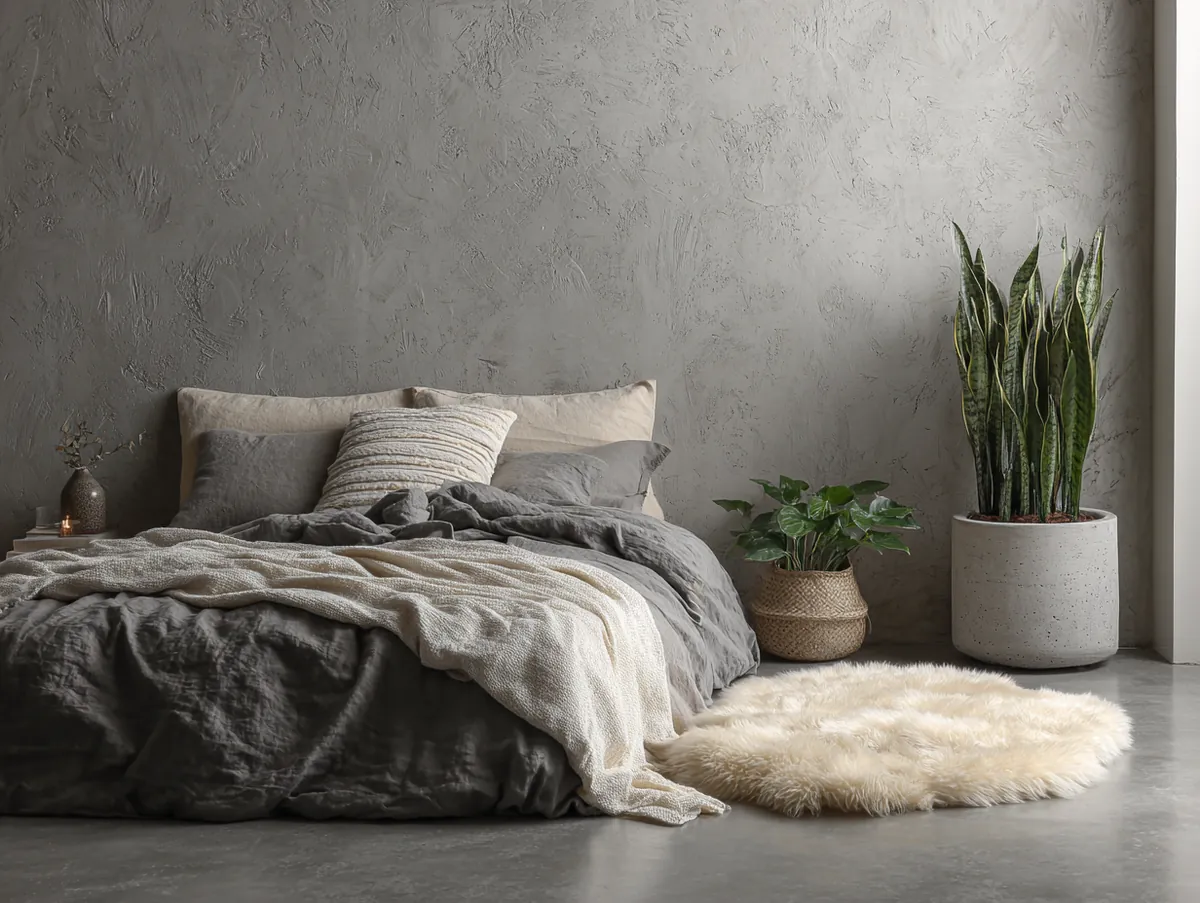


However, a room made entirely of concrete and metal can feel like a prison cell or a parking garage if not tempered correctly. This is where the magic of neutral textiles comes into play. The juxtaposition of hard concrete against soft, organic fabrics creates a tactile richness that is essential for a bedroom. Think of linens, wools, and faux furs. When decorating a small bedroom with an industrial edge, the bed becomes the primary “soft” zone. Dressing the bed in layers of washed linen in varying shades of grey, charcoal, and white adds volume and comfort. The natural wrinkles of linen fit perfectly with the imperfect, effortless vibe of industrial design.
To further mitigate the coolness of concrete, flooring textiles are crucial. If you have concrete or dark wood floors, a plush, high-pile rug or a sheepskin throw is mandatory. It provides a literal soft landing for your feet in the morning and adds a layer of acoustic dampening, which is often needed in rooms with hard surfaces. A large rug can also help define the sleeping zone within the room, grounding the bed.
Concrete can also be introduced in smaller, less permanent ways if you cannot change the architectural shell of the room. Concrete bedside lamps, planters, or trays add that desired urban grit without requiring a renovation. These accessories, with their porous texture and heavy weight, feel substantial and expensive. When paired with the airy nature of neutral textiles, they strike a perfect balance.
The color palette here is strictly restrained. We are looking at whites, blacks, greys, and perhaps subtle earth tones like taupe or olive. This restraint is a secret weapon when decorating a small bedroom. A busy color scheme creates visual clutter. A neutral, tonal scheme calms the mind and tricks the eye into seeing more space. It reflects the utilitarian roots of the style, where color was functional, not decorative.
In this environment, plants play a vital role as living decor. The vibrancy of green leaves against a grey concrete wall is striking. A snake plant or a fiddle leaf fig adds a sculptural organic shape that breaks up the rigid straight lines of industrial architecture. The planter itself can be concrete or metal, tying it back to the theme.
Ultimately, mixing concrete accents with soft neutral textiles is about creating a sanctuary that feels safe and solid. The concrete provides a sense of permanence and urbanity, while the textiles offer the necessary comfort for sleep. It is a design strategy that embraces the “cool” factor of city living but wraps it in a blanket of coziness. By keeping the colors muted and the textures varied, you ensure that the room feels expansive and serene. This approach to decorating a small bedroom demonstrates that you don’t need bright colors to make a space interesting; you simply need to master the art of contrast between the hard and the soft, the man-made and the organic.