Arch ceiling design transforms a room the way nothing else in a renovation budget can — not the flooring, not the paint, not the furniture. I’ve stood in barrel-vaulted living rooms where the ceiling alone justified the entire project cost, and I’ve seen flat-ceiling rooms with every other detail perfect that still felt like a waiting area. The shape overhead changes the physics of a space.
You’ll notice arched ceilings doing two things at once: adding height you can feel even when the actual clearance hasn’t changed, and creating a visual anchor that makes every other design decision easier. Architects like Andrew Trotter have used this trick in farmhouses in Ostuni, Italy — where rooms with zero furniture still read as intentional and complete.
What most people get wrong is treating an arch ceiling as a luxury finish for high budgets only. Prefabricated barrel vault kits from companies like Archways & Ceilings start under $1,500 installed, and a single vaulted corridor can reframe an entire floor plan. The structure is older than drywall and still outperforms it visually every time.
- Barrel vaults, groin vaults, domes, and ribbed vaults each serve a different spatial purpose — don’t default to barrel just because it’s easiest
- Arch ceilings visually increase room height without touching structural floor-to-ceiling clearance
- Plaster and white stone are the classic finishes; wood and concrete are the modern ones
- Lighting placement matters more with curved ceilings — recessed cans wash the curve, pendants fight it
- Andrew Trotter’s Masseria Moroseta farmhouse in Italy is the single most-referenced residential example for a reason
- Budget range for a residential barrel vault: $1,500–$12,000 depending on span and material
What Arch Ceiling Design Actually Does to a Room
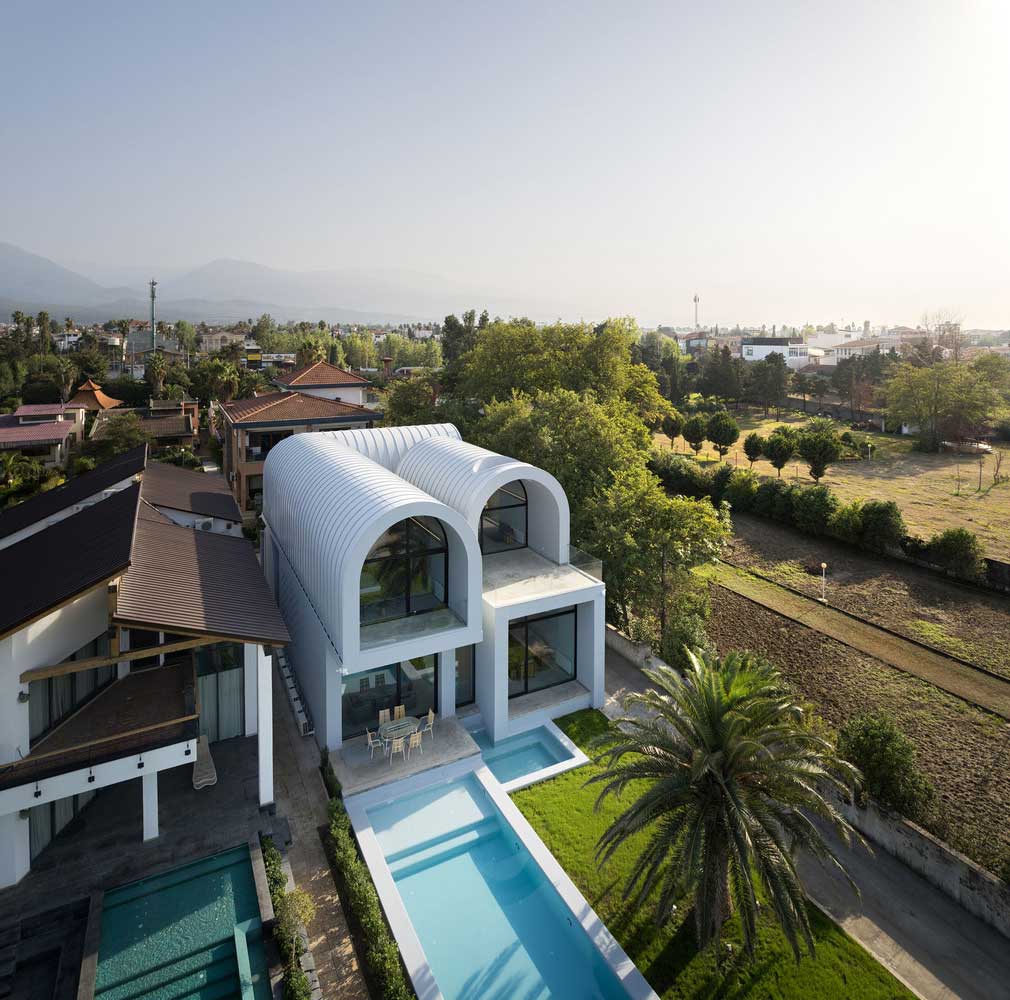
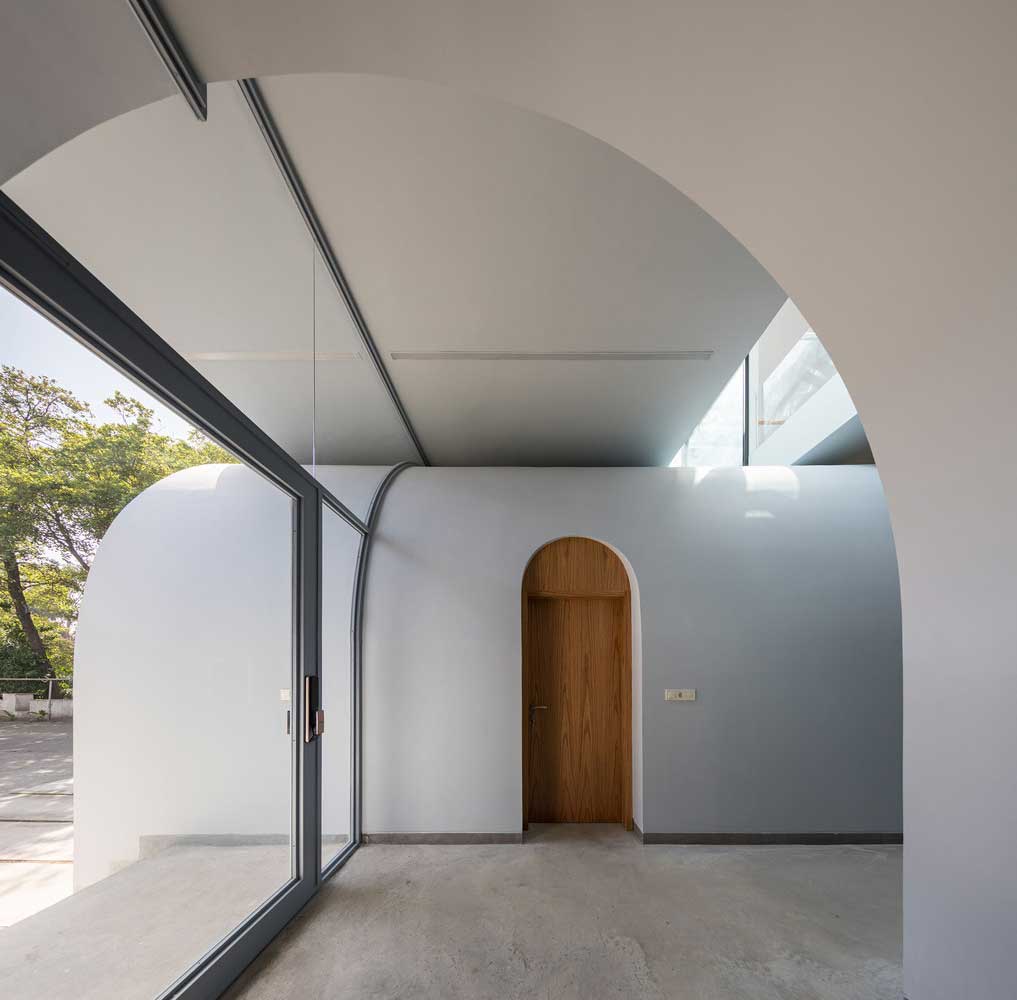
Arch ceiling design works like a wide-angle lens on your interior — the curve draws the eye outward and upward simultaneously, making the perimeter of a room feel further away than it is. I’ve measured rooms at 9 feet flat and rooms at 9 feet vaulted, and the vaulted ones read two to three feet taller in photographs and in person. The illusion is structural, not decorative. A barrel vault that peaks at 11 feet over a 14-foot-wide room creates a proportional relationship that a flat ceiling at the same height simply doesn’t have.
The second thing arched ceilings do — the one most designers undersell — is acoustic softening. Hard parallel surfaces (flat ceiling, flat floor) create flutter echo. A curved ceiling scatters sound rather than bouncing it back in a single wave. You’ll notice the difference in a dining room or a home office immediately. This is why pre-Reformation churches used vaulted naves centuries before acoustic science existed to explain why it worked.
Don’t expect an arch ceiling to save a poorly proportioned room. If you have a 7-foot flat ceiling and you vault it to 9 feet at the peak, the result is a low arch — and low arches read as tunnels, not as architectural gestures. The minimum I’d recommend for a barrel vault in a residential bedroom is a 10-foot peak. Anything under that and you’re spending construction budget to make the room feel smaller.
Four Arch Ceiling Types and When to Use Each
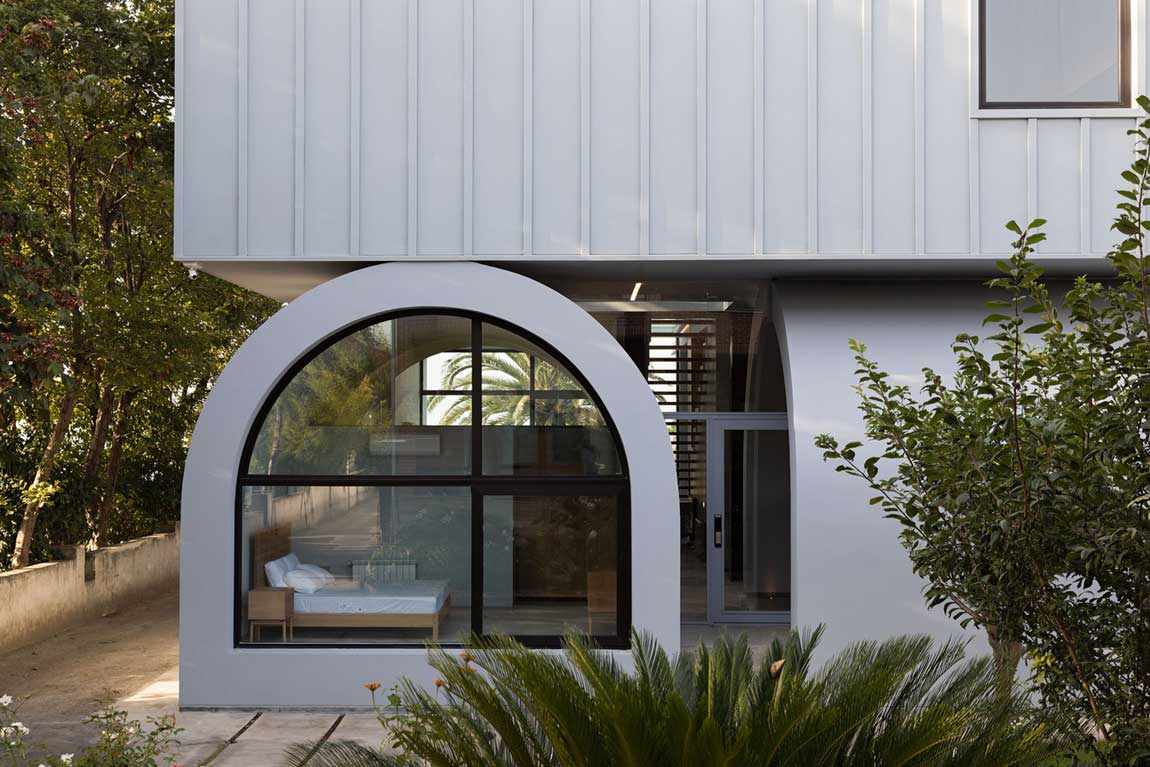
Arched ceilings are not a single shape — they’re a family of four structurally distinct forms, and choosing the wrong one for your space is like buying the right paint color in the wrong finish. The barrel vault is the simplest: a single continuous curve running the length of a room. It works best in corridors, hallways, and bedrooms where the room is longer than it is wide. IKEA’s showroom designers use barrel-vaulted display alcoves for exactly this reason — the shape directs attention forward.
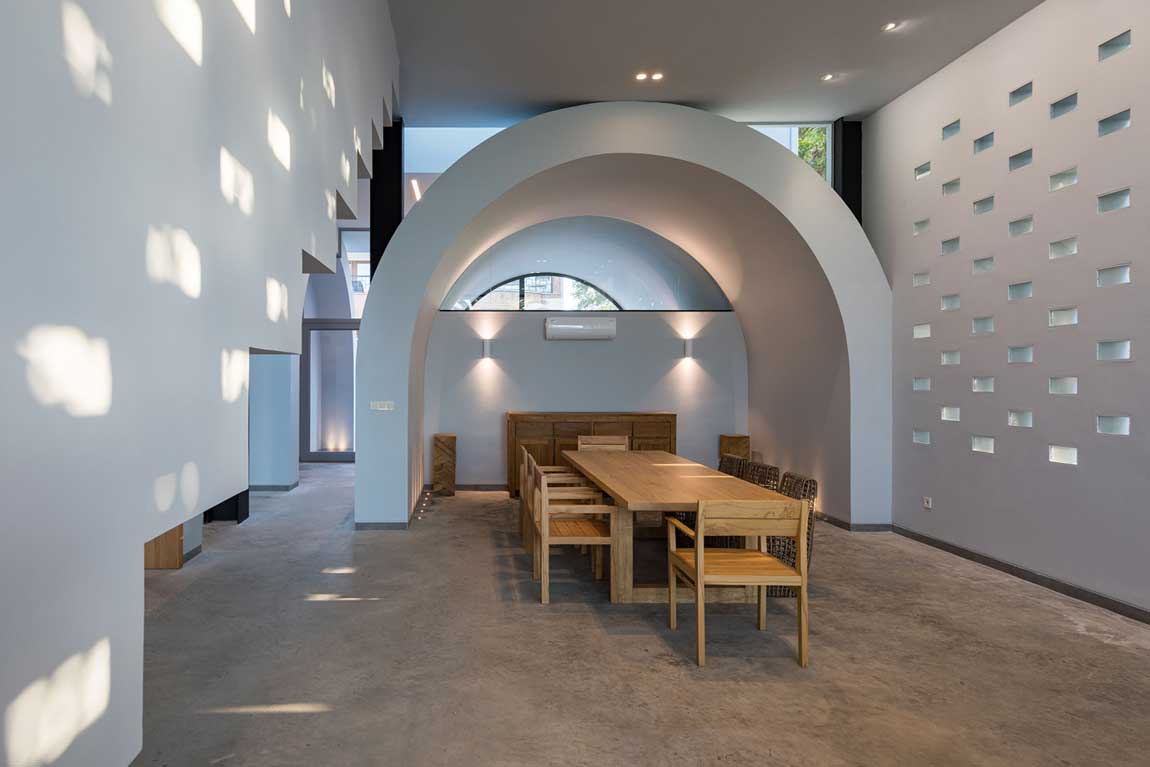
The groin vault is two barrel vaults intersecting at a right angle — you get four curved triangular panels meeting at a central point. This is the ceiling type you see in the undercrofts of medieval cathedrals, and it translates directly into residential dining rooms and foyers where you want the ceiling to feel like a destination rather than a lid. Groin vaults require more formwork and more skilled labor; expect to pay 40–60% more than a comparable barrel vault.
Domes belong in rooms with a square or circular footprint — they don’t work over rectangular spaces without looking like an afterthought. A dome over a square foyer with a Murano chandelier is a design statement; a dome over a rectangular living room is a geometry problem. Ribbed vaults, which feature intersecting structural arches running across the ceiling surface, are the most labor-intensive of the four types and are largely the province of Gothic Revival renovations and high-budget custom builds. My honest take: for a first arch ceiling project, barrel vault every time.
Materials That Make or Break an Arched Ceiling
Plaster is the historic go-to for arch ceiling finishes, and it earns that status — it conforms to curves without visible seams, accepts paint without grain interference, and costs between $8 and $18 per square foot installed depending on thickness and profile. I’ve worked with USG Structo-Base scratch coat on barrel vault projects and the results hold up over decades without cracking when the substrate is properly prepared. The mistake most DIYers make is applying plaster over an improperly primed or moisture-exposed foam form — the plaster cracks within two years and the entire section has to be re-floated.
Wood is the contemporary alternative that’s gained the most ground in residential arch ceilings since 2018. White oak tongue-and-groove planks running perpendicular to the curve create a rhythm that reads from 30 feet away and up close. James Hardie’s fiber cement boards can be bent to curve radii down to 36 inches for exterior arch applications. Concrete is the material I reach for in brutalist or industrial loft contexts — it’s dense, permanent, and unforgiving of errors, which is exactly why it photographs so well.
Glass in arch ceilings is nearly always a budget trap. Structural glazing in a curved ceiling requires custom-bent laminated panels, specialized waterproofing at every joint, and ongoing maintenance that flat skylights don’t need. The only context where it pays off is a garden room or conservatory where the arch is the primary architectural feature of the entire structure. For everything else, stick with plaster, wood, or concrete — and spend the glass budget on vaulted ceilings paired with large windows at the walls instead.
- Don’t add crown molding at the arch-wall transition. The molding fights the curve. The arch already IS the transition — adding a cornice profile on top reads as decorative panic.
- Don’t center a flush-mount light fixture under a vault peak. The fixture kills the curve optically. Use wall sconces, cove lighting, or a pendant hung at two-thirds of the arch height.
- Don’t vault a room narrower than 10 feet. Below that width, even a well-proportioned arch reads as a tunnel, not a feature.
- Don’t use patterned wallpaper on arched ceiling walls. The pattern fights the curve at the transition line and creates visual noise that makes the room harder to photograph and harder to live in.
Structural Requirements Before You Build
Arched ceilings require a load path that flat ceilings don’t — the lateral thrust of an arch has to go somewhere, and in residential construction that somewhere is usually a reinforced tie beam or a thickened foundation wall. Archways and Ceilings manufactures prefabricated steel-framed vault kits that transfer this load through the existing stud wall system, which is how they keep residential installation costs manageable. Without proper load transfer, an arch ceiling exerts outward pressure on the bearing walls over time — you’ll see it first as hairline cracks at the arch-wall junction, then as door frames racking.
Budget reality: a structural barrel vault in a 12-by-18-foot living room typically runs $6,000–$12,000 in materials and labor in the US market (2024 pricing). A non-structural decorative vault using foam formwork with plaster skin runs $1,500–$3,500 for the same space. The non-structural version looks identical in photographs and in person — the difference is whether the arch is actually carrying load or just appearing to. For residential renovations where an existing flat ceiling exists, decorative vaulting is almost always the right call. Ask your contractor for the load path plan before signing anything.
Lighting rough-in has to be decided before the vault is framed, not after. Recessed cans in a curved ceiling require angled housings — standard 90-degree cans look wrong and aim light into the curve rather than down into the room. The brands I’ve specified on arch ceiling projects are Juno IC22R (adjustable air-tight can, ~$28 each) and Halo H7ICT for deeper soffits. Plan for cove lighting at the spring line of the arch — that’s where the curve begins — and you’ll have a ceiling that photographs as well at night as it does in daylight.
Arched Vaulted Ceilings in Real Residential Projects
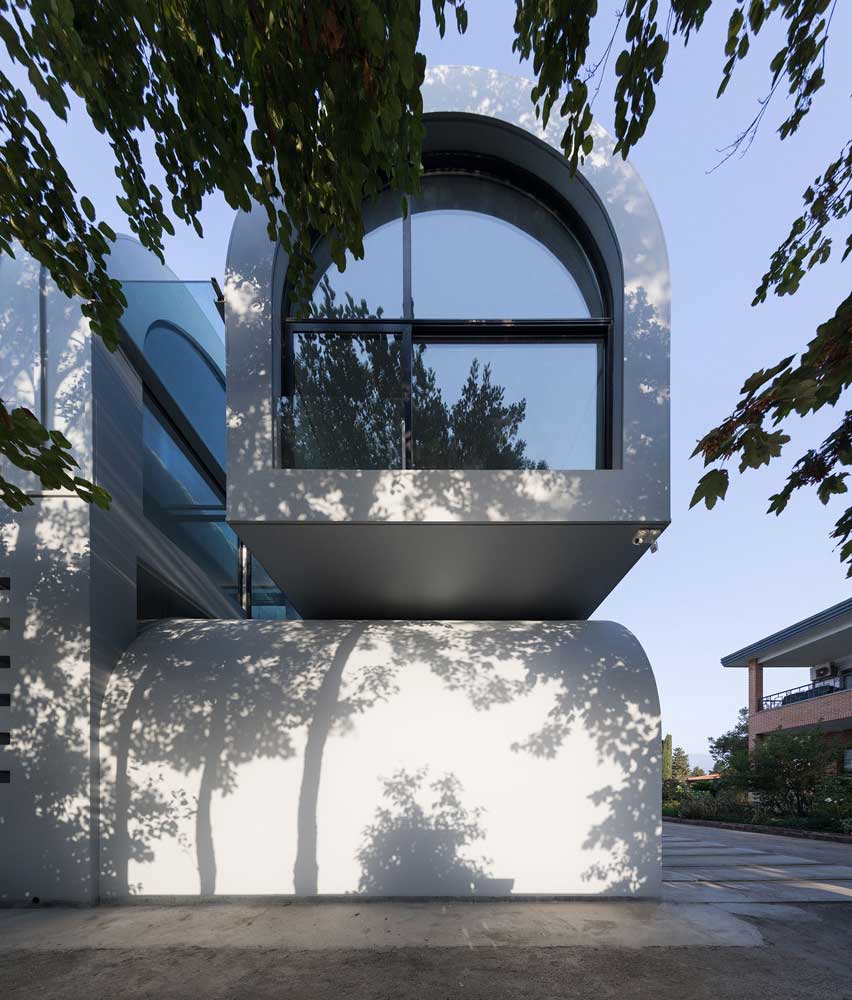
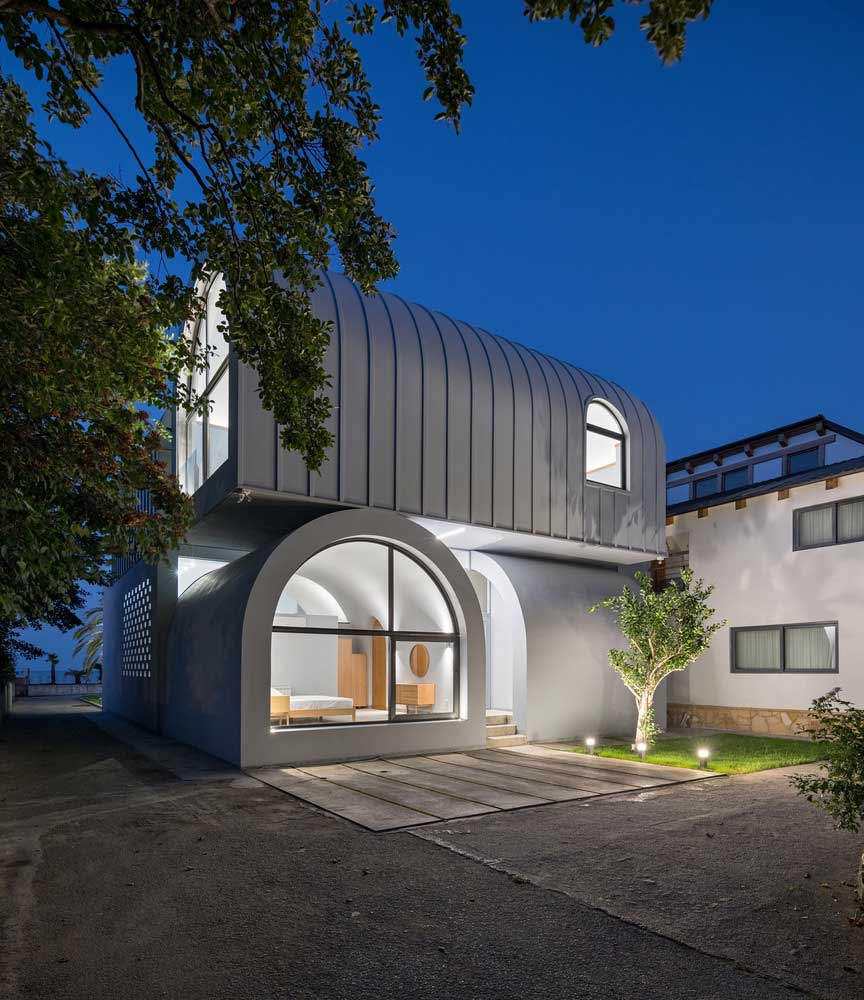
Arched vaulted ceilings hit differently in residential spaces than in churches or hotels because the scale is human — you’re living under the arch, not passing through it. The Masseria Moroseta farmhouse in Ostuni, Italy, designed by Andrew Trotter, is the project I return to most when clients ask what an arch ceiling looks like when it’s done right. Every room in the house uses the same barrel-vaulted white stone ceiling, and the repetition is exactly what makes it work. One arch is a feature. Arches throughout is an architecture.
You can see the same principle in apartment renovations in Barcelona and Madrid, where ERDC Arquitectos has used shallow Catalan vault ceilings to add height to floors where structural limits prevent any other intervention. The Catalan vault — also called a timbrel or Guastavino vault — is built from thin terracotta tiles laid in mortar without formwork, spanning as little as 8 cm thick over a 4-meter room. It weighs a fraction of a concrete slab and installs faster. I’ve seen this method applied in Brooklyn loft renovations for between $90 and $130 per square foot installed.
Commercial applications in restaurants and hotels use arch ceilings as the one design move that can’t be replicated by a competitor putting up drywall features overnight. A ribbed vault in a hotel lobby or a dome in a museum atrium takes months to build and reads as institutional permanence. For residential clients who want that same signal at a fraction of the cost, the simple ceiling design approaches that work alongside arched forms are often the better investment than the arch alone.
The Sheikh Zayed Grand Mosque in Abu Dhabi uses 82 domes of varying sizes — the largest spanning 32 meters — to create a ceiling language that reads at every scale simultaneously. The main prayer hall chandelier hangs from a dome 55 meters above the floor and is visible from the entrance. This is the extreme end of arch ceiling design, but the principle scales: use the dome where you want a room to feel like a destination, use the barrel vault where you want it to feel like a journey.
The Sistine Chapel’s barrel-vaulted ceiling was painted by Michelangelo on a surface approximately 40 meters long and 13 meters wide. The vault itself is the reason the frescoes work — the curve breaks the surface into readable panels that the eye can follow from entrance to altar. Flat ceilings and large-scale painting don’t work together as naturally; there’s no physical structure to organize the eye’s movement.
How to Plan Your Arch Ceiling Project From Scratch
Start with the room’s width, not its height. The width of the room determines the maximum arch radius — you want the crown of your barrel vault at roughly 60–70% of the room width above the spring line for proportions that read as intentional rather than cramped. A 14-foot-wide room can support a vault crown at 8–10 feet above the floor with a spring line at 8 feet, giving you a 2-foot rise. That’s the minimum I’d build. Below 18 inches of rise, the shape reads as a ceiling that warped rather than a ceiling that was designed.
Material choice comes second. Plaster over rigid foam formwork is the path I recommend for most residential barrel vault projects — the foam form stays in place as backing, the plaster skin is 3–5 coats, and the finish is seamless. USG Durabond 90 as a scratch coat, USG Finish coat for the final layer, and Benjamin Moore Aura Interior in a flat sheen for paint. That combination costs roughly $22–$35 per square foot installed in major US markets.
Work with a structural engineer, not just a contractor, for any span over 12 feet. The contractor can build what the engineer specifies; without the engineer, the contractor is guessing at load paths. I’ve seen two residential arch ceiling failures in my career — both were non-engineered barrel vaults over 16-foot spans where the lateral thrust cracked the bearing walls over three winters. The engineering fee ($400–$800 for a single room) is the cheapest part of the project by a factor of ten compared to repairing that damage.
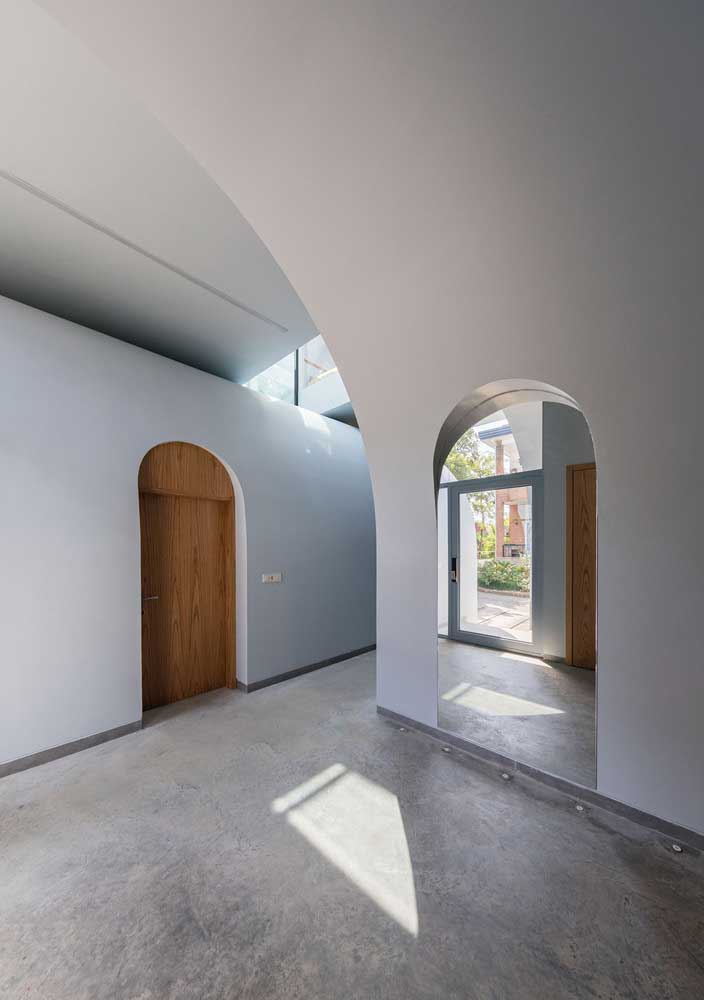
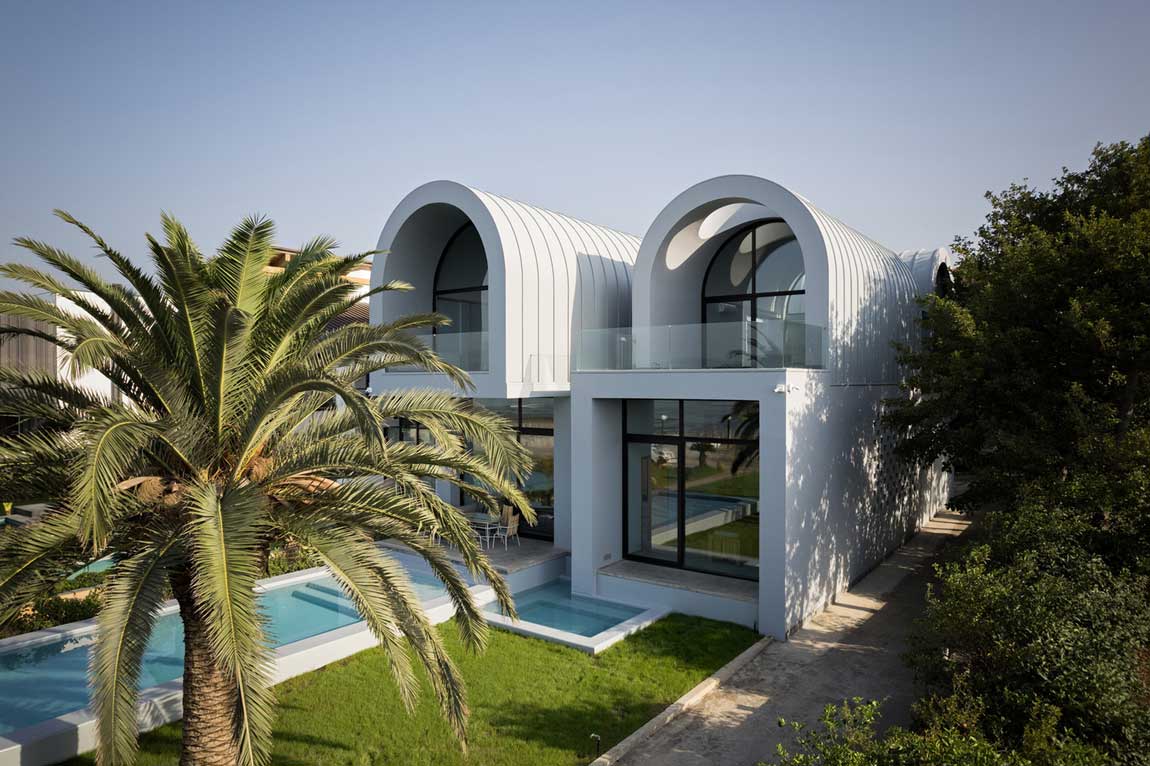
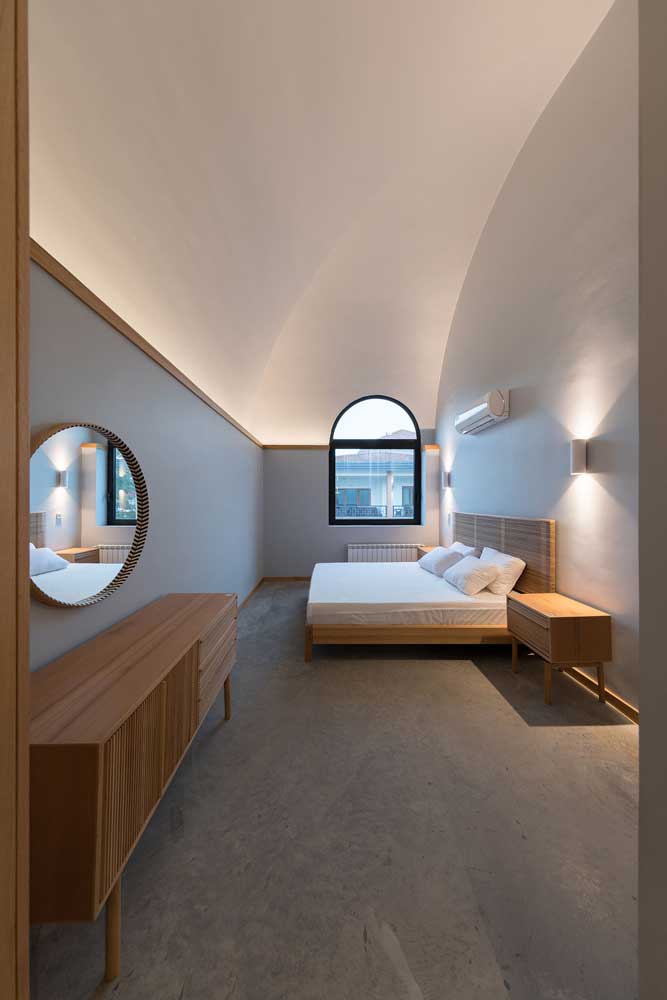
Vaulted Ceiling Materials — Brick, Wood, Plywood, and Concrete
Vaulted ceilings built from brick, wood, plywood, and concrete each produce a completely different spatial atmosphere — the material is the message as much as the form. Brick vaults carry the weight of centuries; you’re in a wine cellar, a Venetian cortile, a Moroccan riad. The thermal mass of brick also means a vaulted brick ceiling paired with stone flooring keeps a room 4–6°F cooler in summer without air conditioning — Andrew Trotter used this exact combination at Masseria Moroseta and the owners report the house is habitable in July without mechanical cooling.
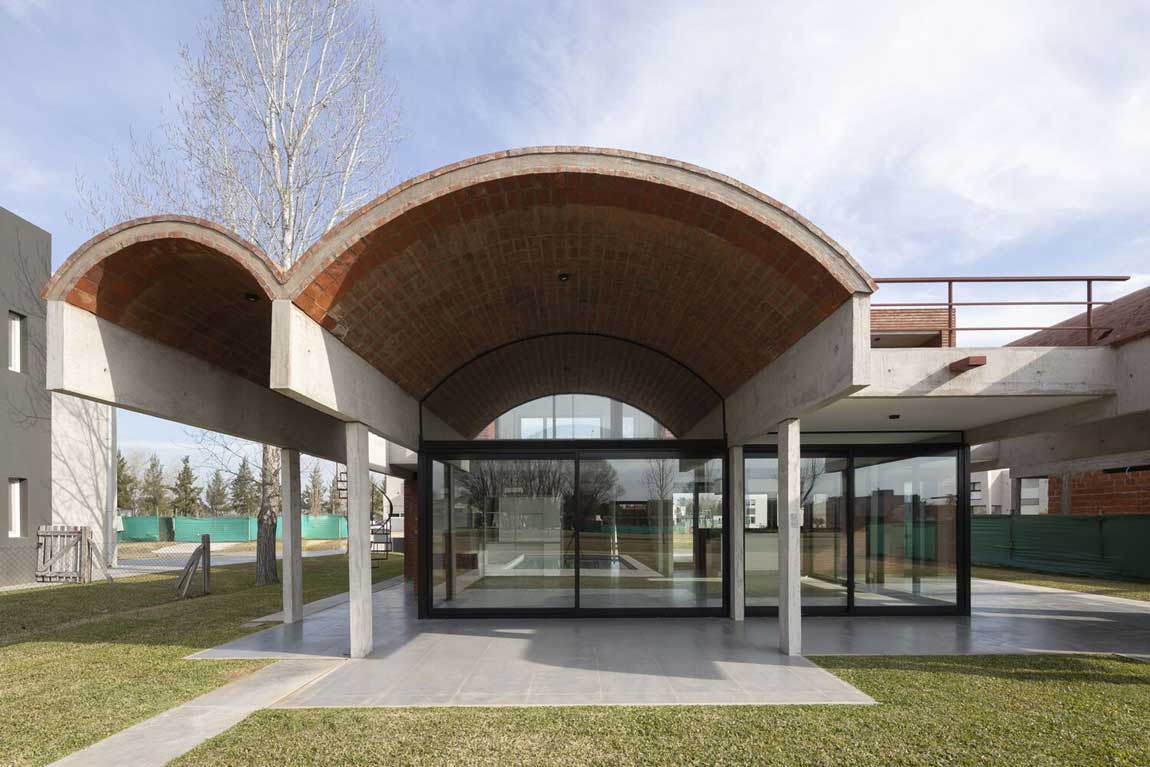
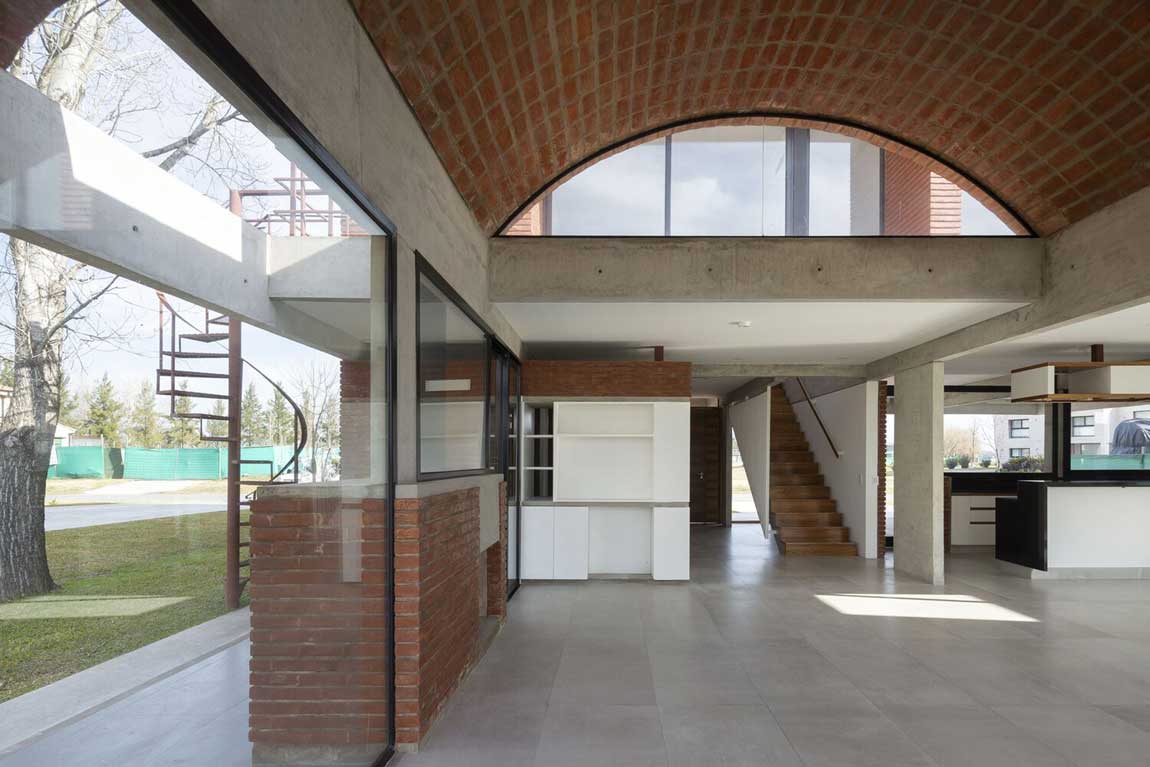


Wood vaulted ceilings in plywood or solid timber have a warmth that plaster simply cannot replicate — the grain catches light differently at every hour and every season. My go-to specification for a wood barrel vault is 3/4-inch white oak plywood bending panels, pre-finished with Rubio Monocoat Pure, run perpendicular to the vault axis in 8-inch-wide rips. The total material cost for a 12-by-18 room runs around $4,200–$5,600. Finger-jointed pine is the budget version at roughly half the cost and looks convincing until you get within four feet of the surface.


Smaller prefabricated arches — the kind you see spanning 3–5 feet over walkways or between rooms — are almost always clay or concrete, built without formwork by an experienced mason in a day. The Catalan vault technique spans these narrower widths at a cost of $60–$90 per linear foot for materials alone. What makes them useful in residential renovations is that they’re less curved than a traditional barrel vault, which means they fit under lower structural ceilings without the vault crown breaking into the floor above. I stole this trick from a project in Seville and used it in a Brooklyn brownstone corridor with a 9-foot ceiling to great effect.
Ceiling Arch in Rural Interiors — Andrew Trotter’s Masseria Moroseta
Ceiling arch design in rural interiors follows a completely different logic than it does in urban apartments — instead of compensating for low ceilings or adding architectural weight to a featureless box, the arch connects the interior to a building tradition that goes back centuries in the Mediterranean. Andrew Trotter’s farmhouse project in Ostuni proves this connection doesn’t require ornament, color, or decoration of any kind. The arch is the decoration.

The house sits among olive groves on the Adriatic coast, and every design decision — white stone construction, arched ceilings throughout every room, minimal furniture, no applied decoration — came from a single editorial choice: let the building be Italian. The owners didn’t impose style onto the structure. They removed everything that competed with the structure. The result is a house where the ceiling is the most interesting object in every room, which is the correct hierarchy for this type of architecture.

Each room reads as a transparent volume — white walls, arched ceiling, stone floor, simple furniture. No room has a dominant color accent, no room has pattern, no room has contrast material. What unifies the house across six bedrooms, a living room, a veranda kitchen, a spa, and a gym is the repeated arch form overhead. That’s what makes the interior feel like architecture rather than decoration — the structural element repeats across every space until it becomes the grammar of the building.

The white stone Trotter used is traditional for the Apulia region — it’s the same material used in trulli construction, the circular dry-stone houses that populate the Valle d’Itria. The stone is cool to the touch even in summer, and its weight gives the arch thermal mass that a plaster-over-foam vault simply can’t replicate. If you’re building in a warm climate and want to reduce cooling loads, this material combination is not decorative — it’s mechanical.

The six bedrooms, open kitchen veranda, spa center, and gym layout sound like a resort compound — and at 6 bedrooms plus amenity spaces, it is more villa than farmhouse by any real measure. What makes it feel intimate rather than institutional is the ceiling. Each room is the same arch, same material, same height — the consistency of the overhead surface knits what could be a collection of separate suites into a single residence.
What is special about arched ceilings?
Arched ceilings work in apartments, houses, and country cottages because the curve does three things simultaneously that no other single ceiling treatment can match: it increases perceived height, it reduces echo, and it creates a visual destination that anchors the room. A vaulted ceiling combined with stone flooring provides cooling on hot summer days through thermal mass — the stone absorbs heat during the day and releases it at night, acting as a passive HVAC system. This is not a new discovery; it was the engineering logic behind Mediterranean architecture for a thousand years.


At Masseria Moroseta, the arch appears not just in the interior rooms but in the central courtyard — the entrance arch prepares you for the interior. It’s the architectural equivalent of a dress code: you know before you cross the threshold that the rules inside are different from outside. No applied finishes, no additional materials beyond the white stone — the surface of the arch IS the finish. This is the cleanest expression of structural honesty I’ve encountered in a residential project under 10,000 square feet.

Snow-white interiors, minimal furniture, no decorative objects, natural materials throughout — this is not Scandinavian minimalism transplanted to Italy. It’s something older and more specific: rural southern Italian comfort, where the architecture does the work that northern European design assigns to objects. White sofas, wooden tables painted white, beds without headboards. The rooms have nothing to prove because the ceiling already made the argument.
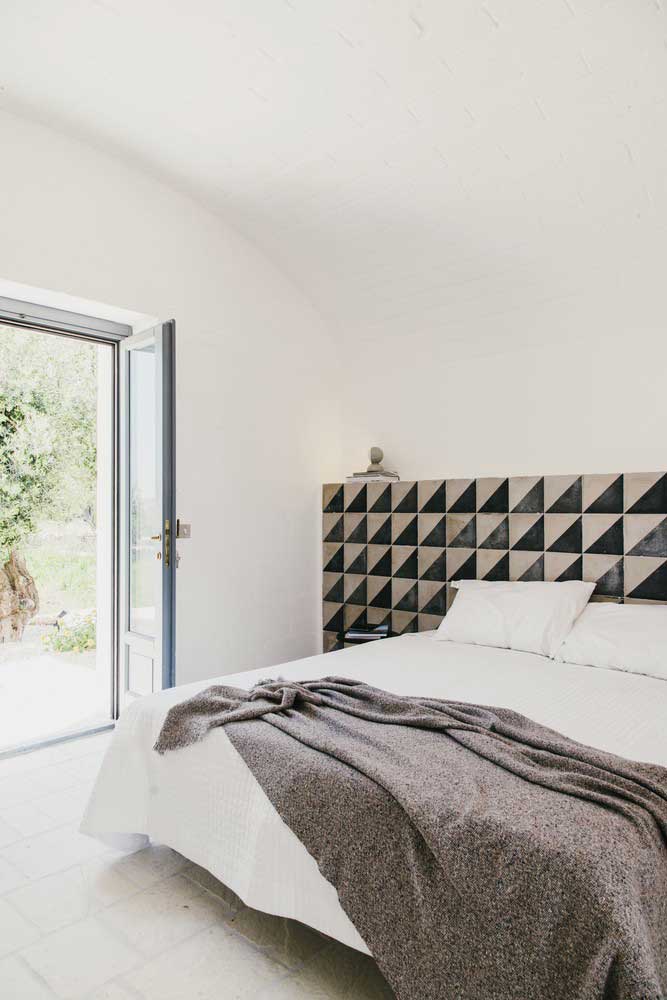
Panoramic windows and sliding doors opening to garden terraces with sea views complete the sensory picture — the arch overhead, the landscape beyond the glass. After seeing the Masseria Moroseta project, you’ll find it difficult to look at a flat-ceilinged vacation rental the same way again. The arch stays with you the way a detail from a film does: not as decoration but as atmosphere.
| Architects | Andrew Trotter |
| Photo | Salva López |
More Arched Ceiling Designs


Final Verdict
Arch ceiling design is the one renovation decision that doesn’t date itself
Barrel vaults cost $1,500–$12,000 depending on whether the arch is structural or decorative — the visual result is nearly identical either way.
Plaster over rigid foam is the most practical finish for residential projects; white oak planks are the most photographed.
Lighting must be planned before framing — angled recessed cans at the spring line, not centered flush mounts at the crown. Save this post.