A haircut for straight hair lives or dies by its angles. I spent years chasing volume with products before realizing the actual fix was structural — the right haircut for straight hair does in one appointment what three rounds of dry shampoo never could. Straight strands are unforgiving: they record every millimeter of imprecision and reward every millimeter of intention. Below are three architecturally distinct cuts — a blunt bob, soft graduated layers, and an angled lob — each engineered to give flat hair shape, rhythm, and reflection.
You’ll notice these aren’t casual suggestions. Each cut works because of a specific mechanical reason, not just because it looked good on someone’s Pinterest board. Fine hair, medium density, thick and coarse — the geometry shifts, but the logic holds.
- Blunt Bob — jaw-length precision cut, zero layers, maximum shine, needs a trim every 6 weeks
- Soft Graduated Layers — stacked volume from crown to ends, creates motion without curls
- Angled Lob — back shorter, front at collarbone, diagonal line that elongates the silhouette
- All three work on fine-to-medium straight hair without heat styling every day
- Worst mistake for straight hair: cutting all one uniform length with no internal variation





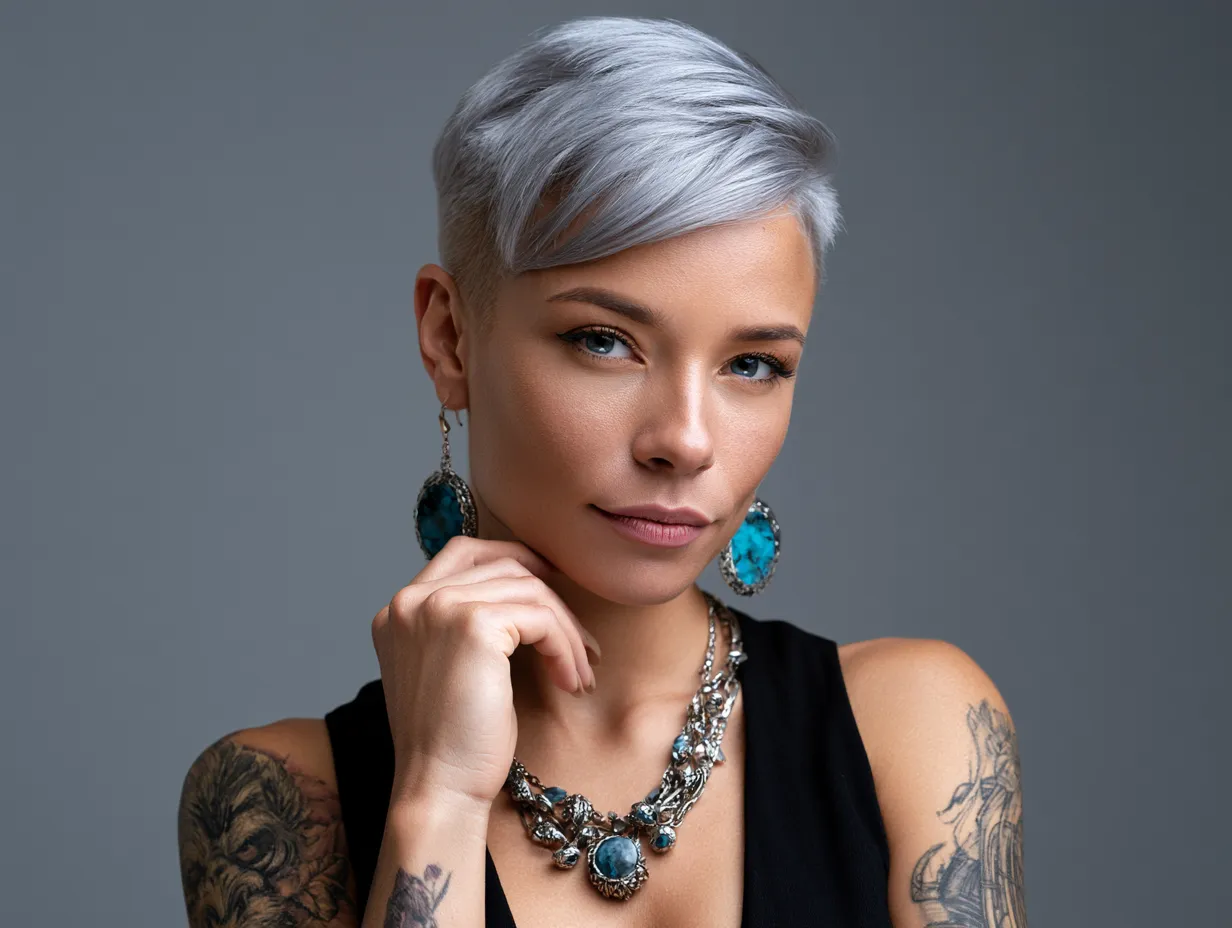

Modern Blunt Bob — Where Straight Hair Actually Wins
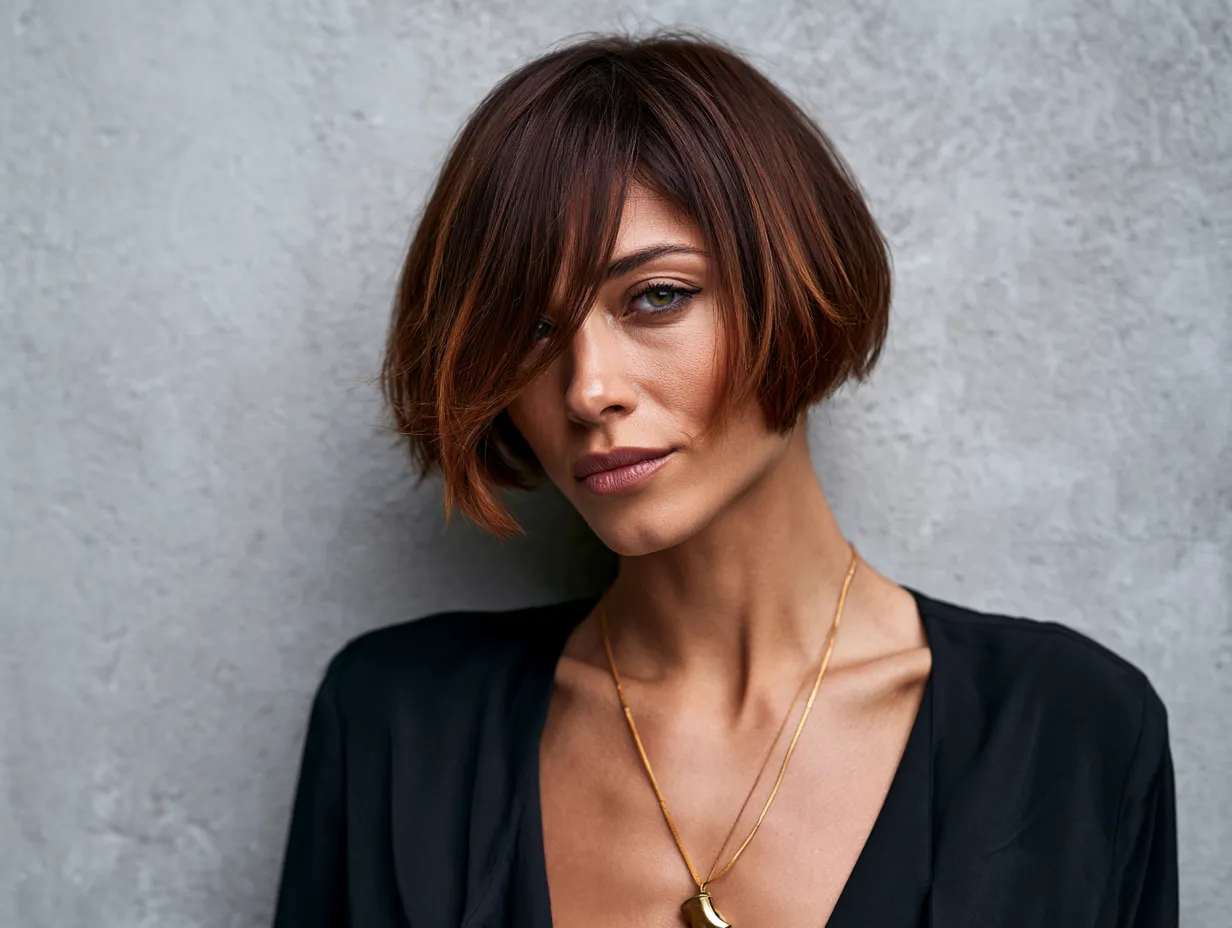
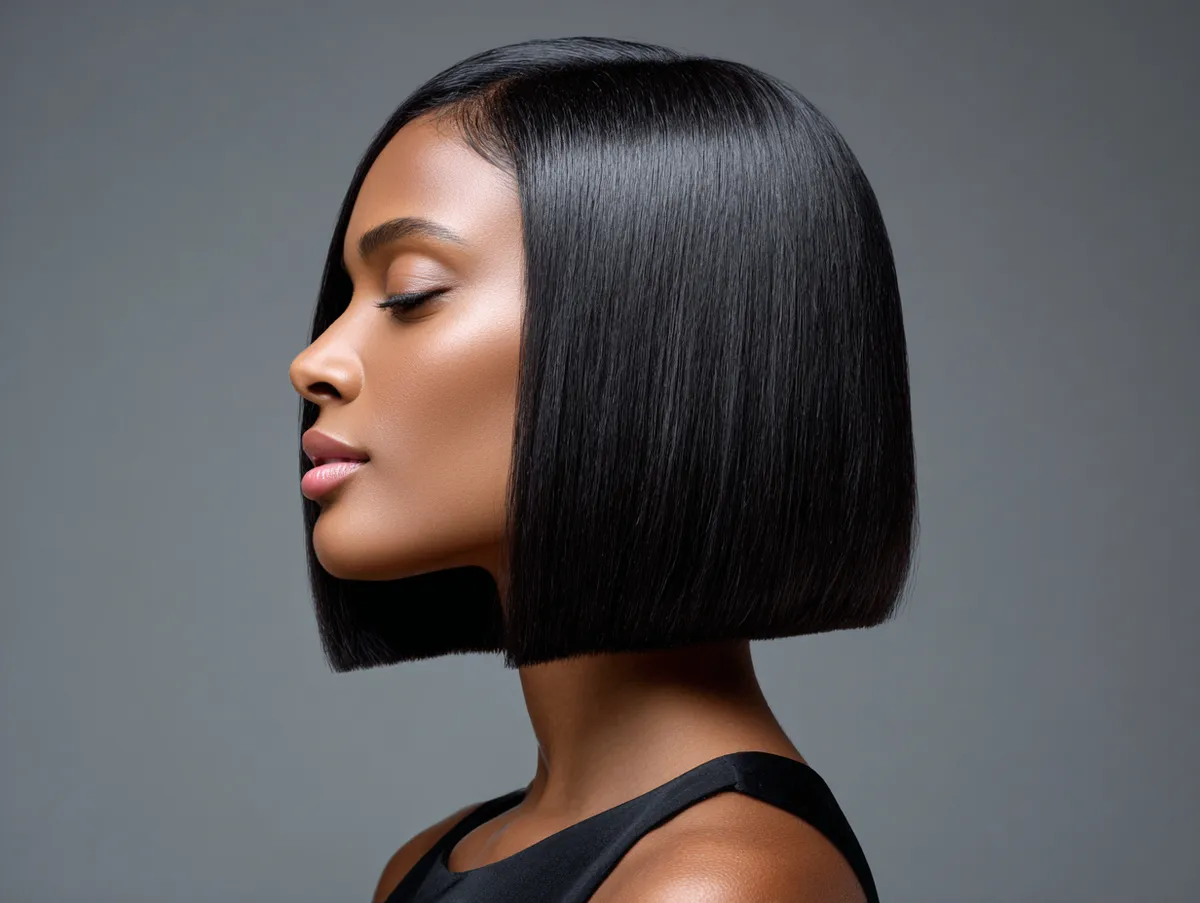
My go-to recommendation for straight hair that refuses to behave is the blunt bob — and the reason isn’t aesthetics, it’s physics. A haircut for straight hair cut to one uniform jaw-length line creates optical density. The ends stack against each other instead of dispersing, and the result looks twice as thick as it actually is. Celebrity extensionist Priscilla Valles, whose clients include Dua Lipa and Kendall Jenner, puts it plainly: the blunt cut gives fine strands the illusion of thickness that layers simply can’t. I’ve bought this argument completely.
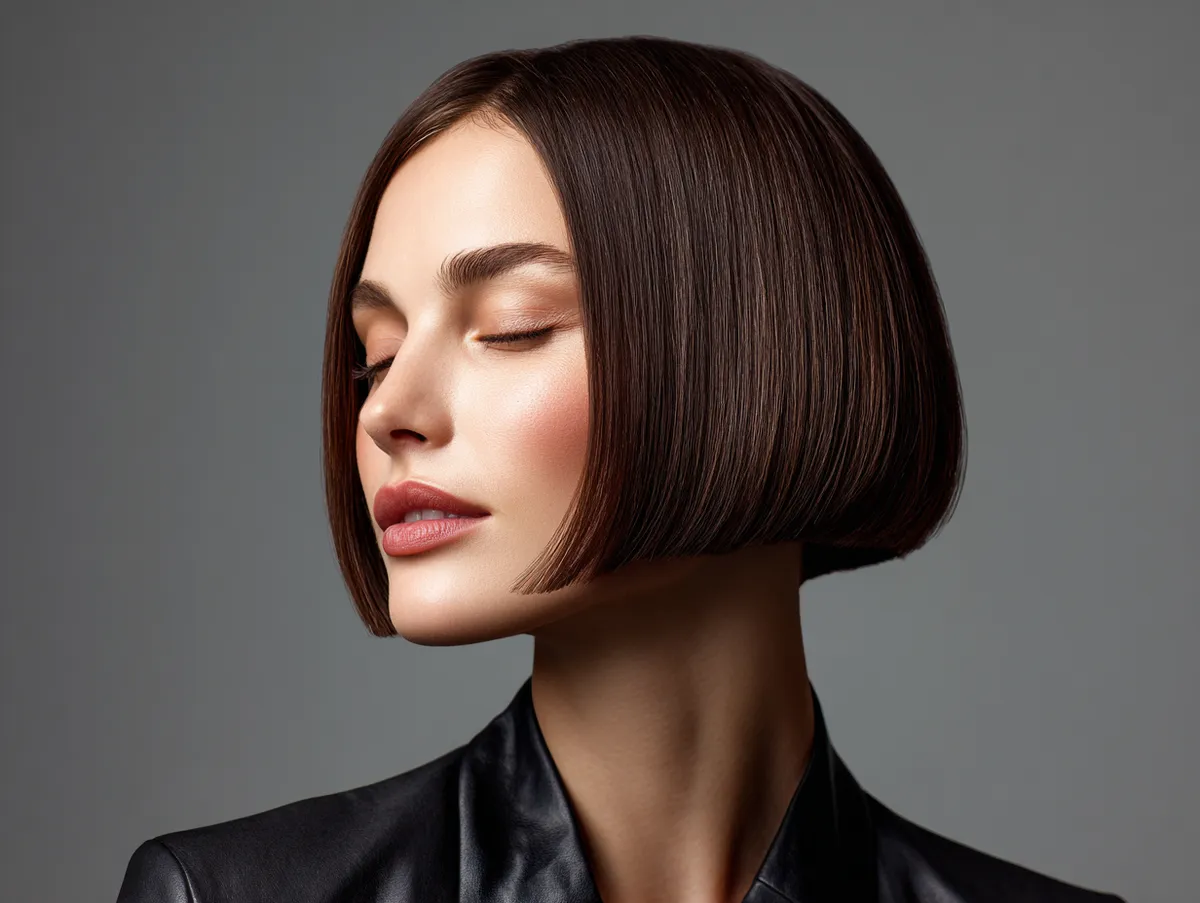
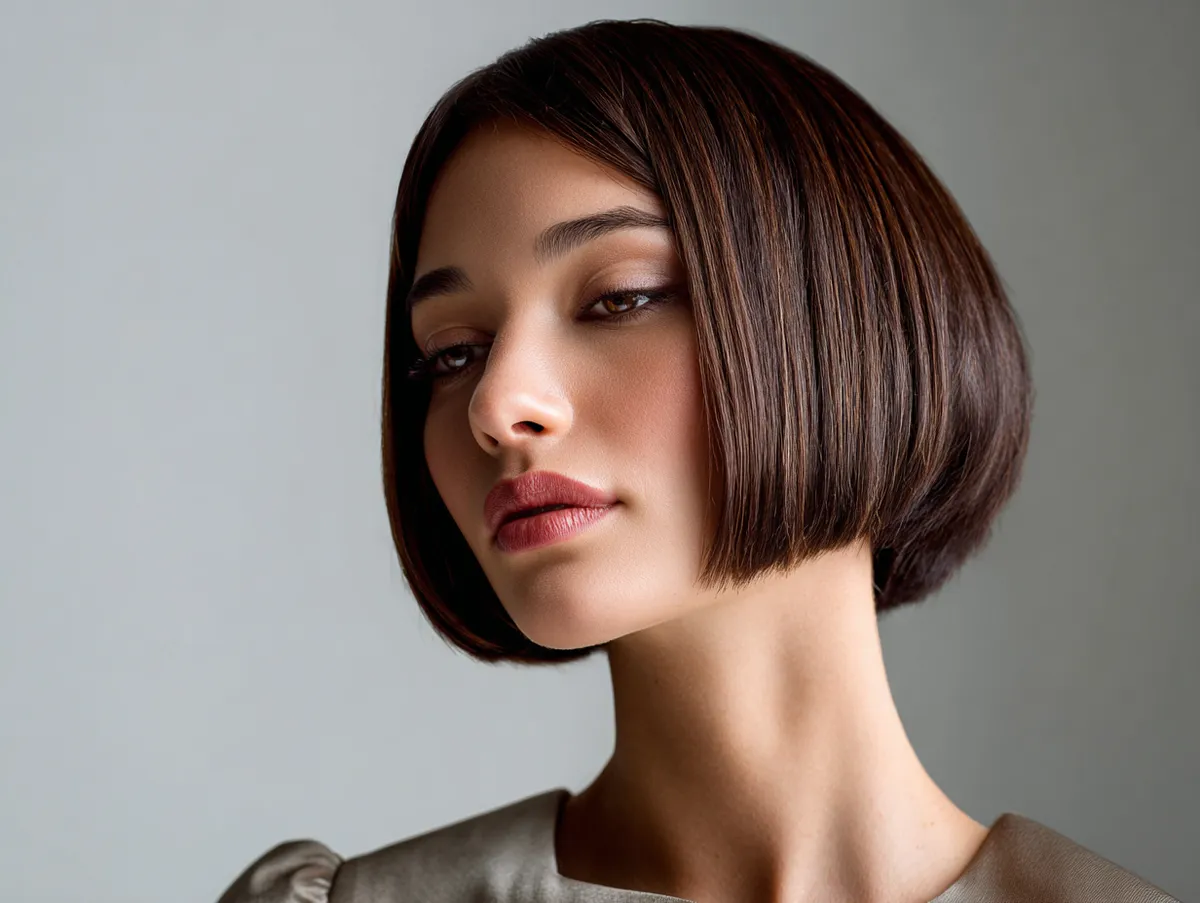
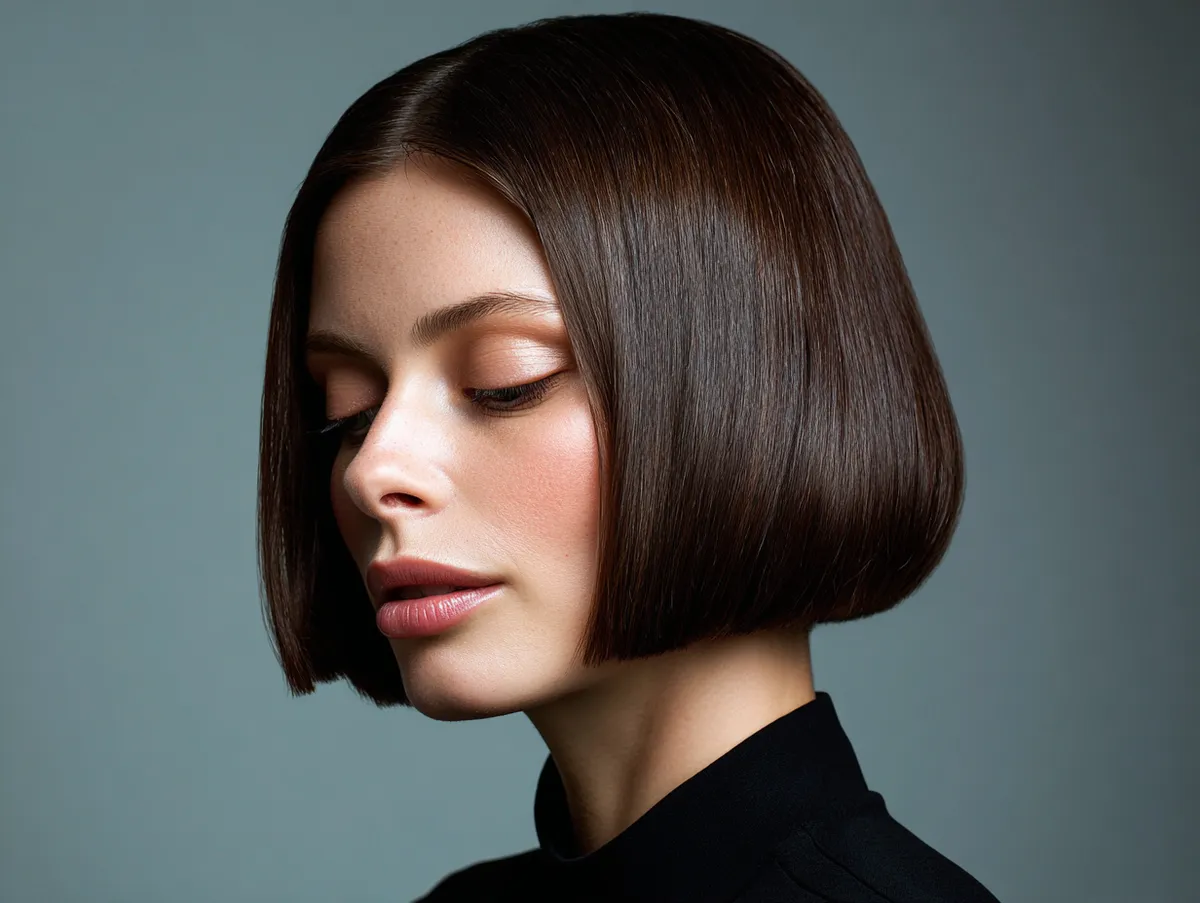
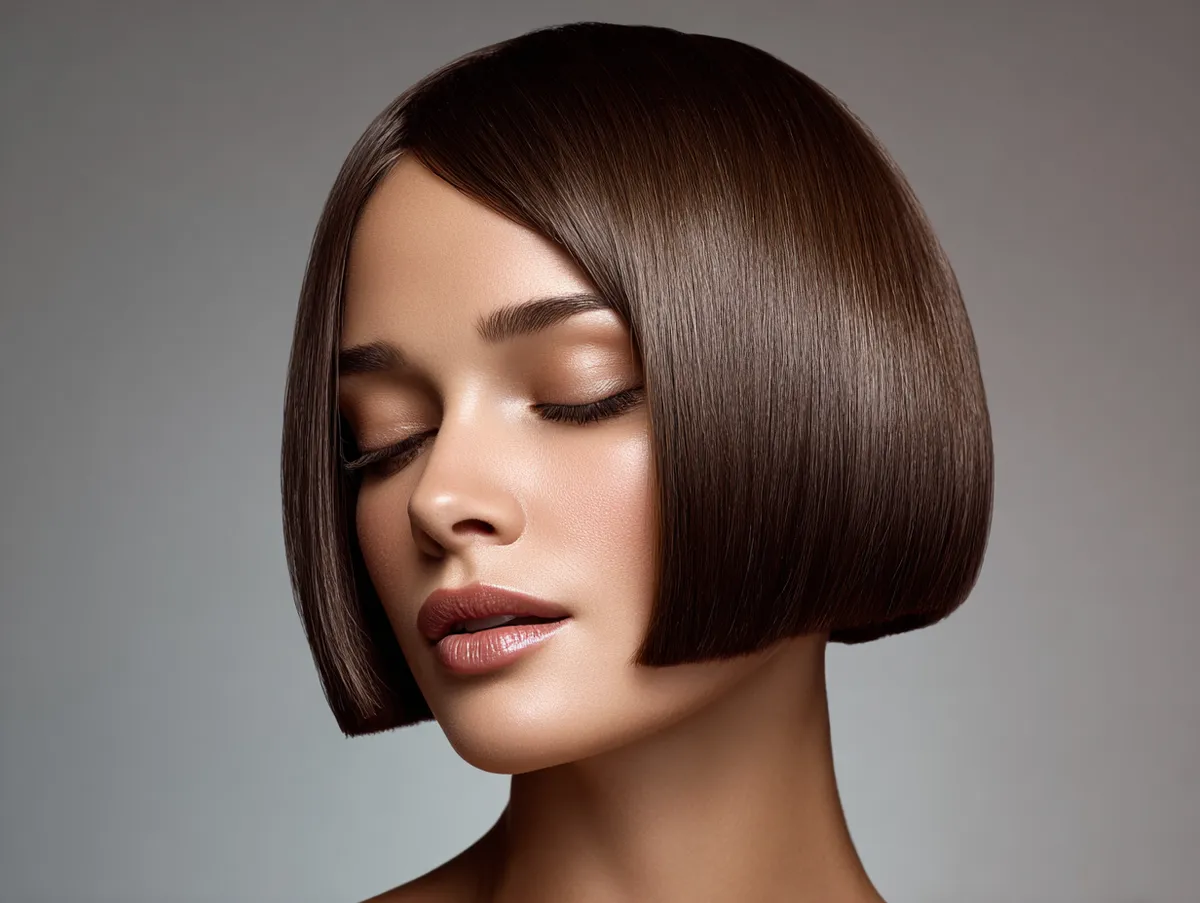
The execution matters more than the concept. Your stylist needs super-sharp scissors — celebrity hairstylist Cody Renegar is specific about this: blunt ends cut with dull shears look frayed within two weeks. What I tell my own stylist every single time: slight inward bevel on the underside of the ends, not visible, but enough to make the tips hug the jaw instead of flipping. That single instruction is the difference between a haircut that photographs like a Vogue cover and one that looks like a DIY job.
Density management keeps this cut from going helmet-shaped on thicker hair. Small snips made underneath the top layer — invisible from outside — prevent that solid brick of hair feeling. You keep the crisp silhouette but the head can move. Without this step, thick straight hair turns the blunt bob into what I privately call “the mushroom.” Not the goal. Ask specifically for internal point-cutting if your hair is on the denser side.
Sachajuan Finish Cream ($31) is my go-to for daily maintenance — apply a pea-sized amount to damp ends before blow-drying with a flat brush. Done in twelve minutes flat. A deep side part or one side tucked behind the ear completely changes the mood without changing the cut. Plan for a trim every six to eight weeks; the blunt line softens fast and once it goes, the whole optical trick unravels. Low-maintenance short haircuts for straight hair go deeper on which bob variations require the least upkeep if you’re weighing options.
Don’t cut a blunt bob on straight hair with the ends pointed at a downward angle toward the face — this is sometimes called a “curtain bob” and on straight hair it creates a hard frame that traps the face rather than framing it. I tried this in 2022 and spent four months growing it out. The forward-facing angle works on curly hair where the bend softens the line; on pin-straight hair, you end up looking like you’re perpetually peering out of a window. Stick with horizontal or a very slight inward bevel — that’s it.
Also skip box-dye right before a blunt cut. Fresh color swells the cuticle slightly, and a blunt line cut on swollen strands will sit differently once your hair normalizes — your precision cut becomes approximate within two washes.
Soft Graduated Layers Add Movement Without a Single Wave
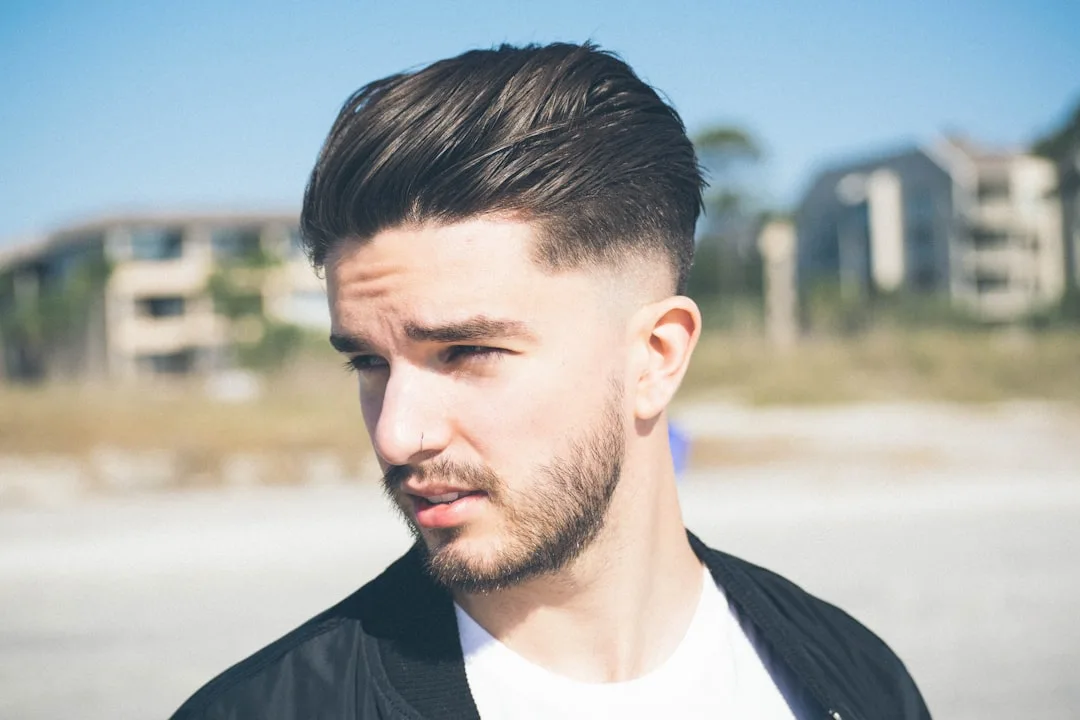
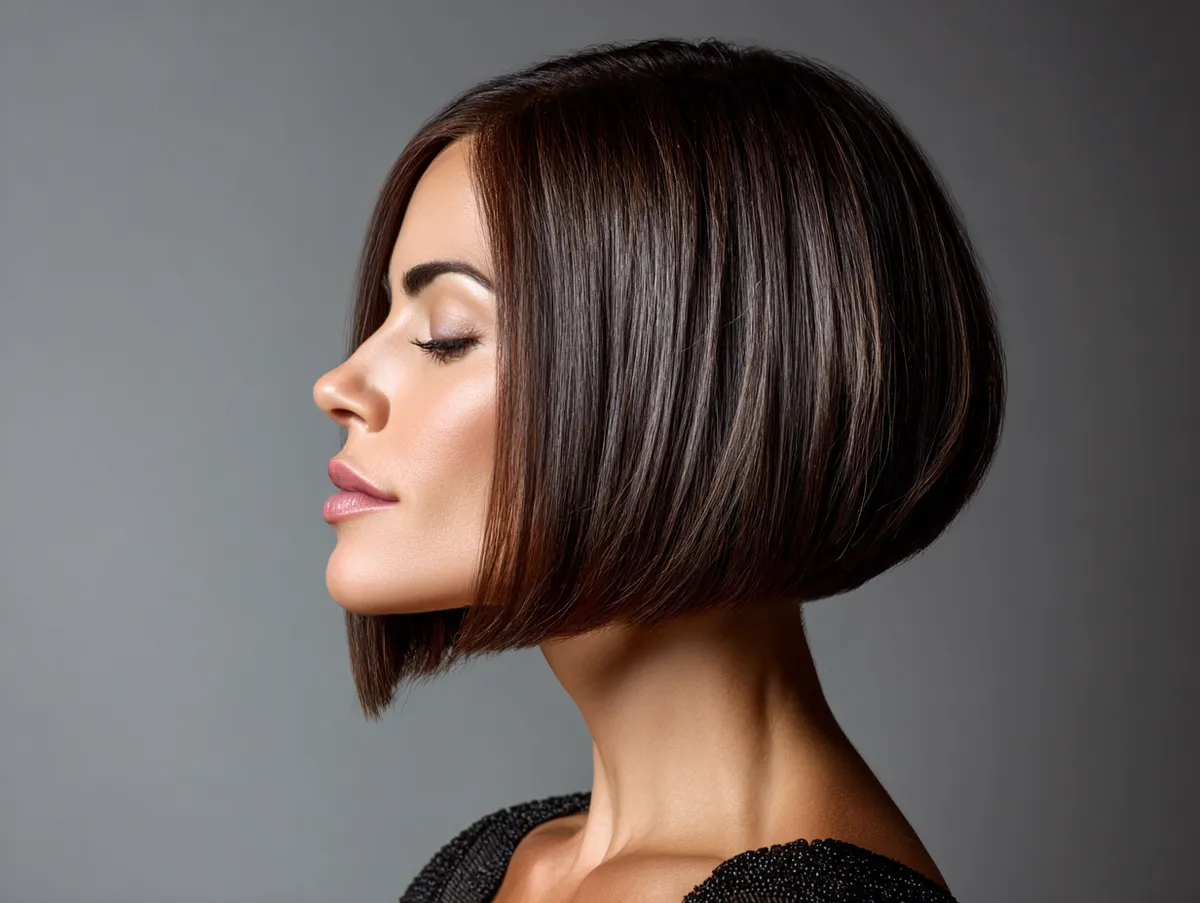
Graduated layers are where straight hair stops looking like a curtain and starts looking like it has somewhere to be. The mechanic here is controlled stacking: each layer sits slightly shorter than the one beneath it, so gravity pulls the longer sections forward in arcs instead of straight down. You need this straight hair cut if your hair has volume on top but dies completely by the time it reaches your shoulders — that’s exactly the density problem layers solve.
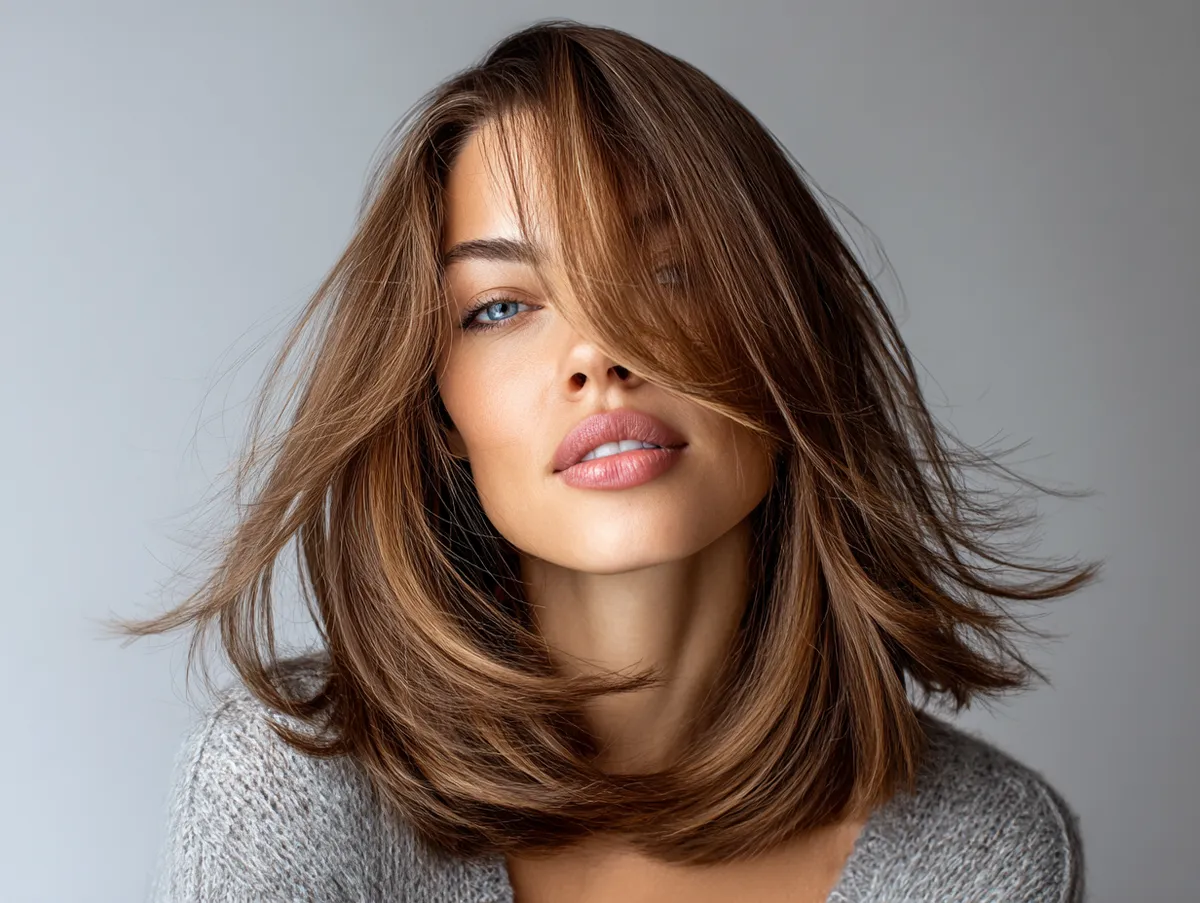
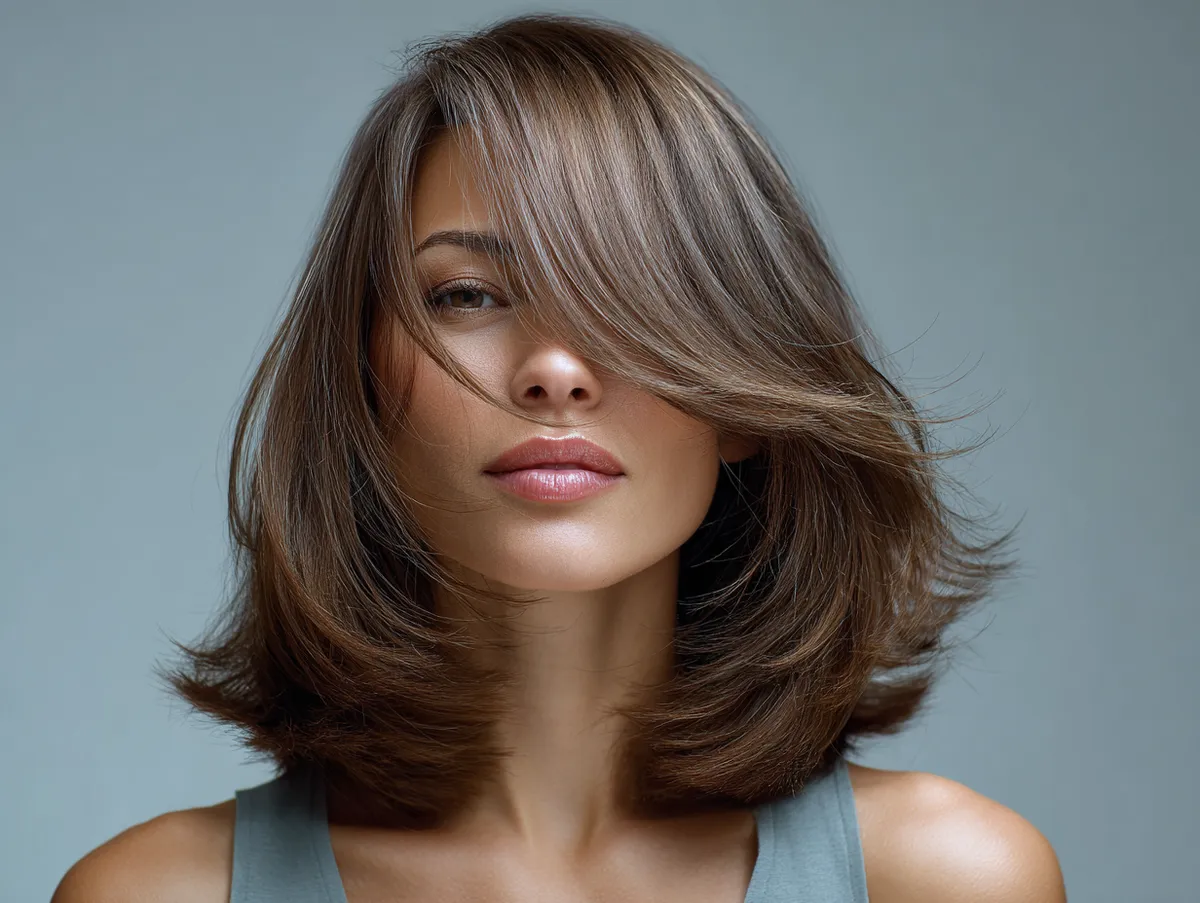

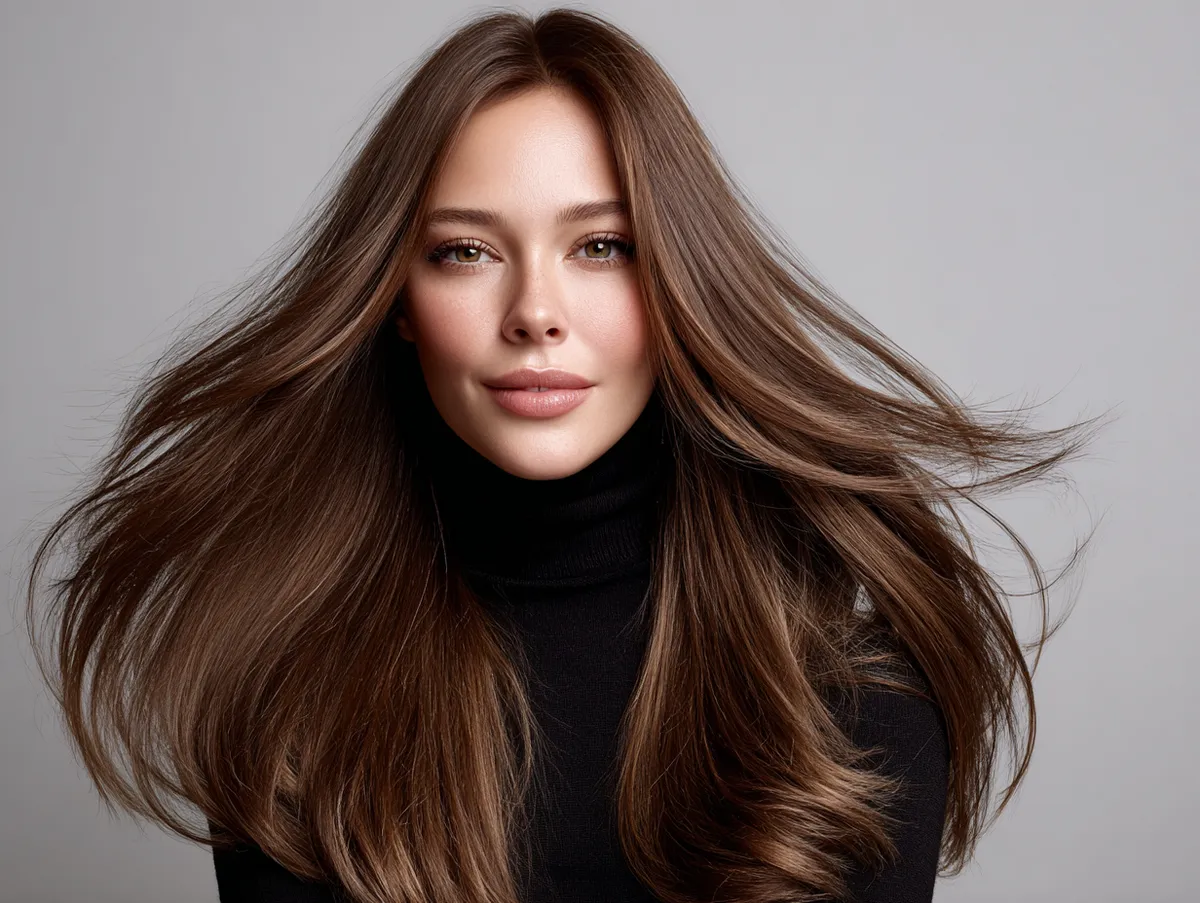
The crown is where the stylist sets the elevation, and this decision determines everything downstream. Higher elevation at the top means more lift; lower means a softer, more blended descent. I stole this trick from a session stylist I watched work backstage at a show: she lifted the crown section to 90 degrees before cutting, which built volume that gravity later compressed into a natural shape. The result looks effortless because the architecture is doing the work, not a round brush.
Straight hair reflecting light across multiple planes is one of the better arguments for layers over a blunt cut. Each section catches the light at a slightly different angle, producing that depth you usually associate with color-treated hair — except this version comes from geometry, not pigment. A Kerastase Cristalliste gloss treatment (~$45 at most salons) amplifies the effect dramatically. You walk out looking like your hair has highlights it doesn’t actually have.
Maintenance keeps the sequence from collapsing. At eight weeks, the layers begin to merge and the effect dulls — you’ll notice your hair suddenly looking flat again and assume you need a product, when actually you need a trim. Conditioning masks every two weeks prevent the lengths from drying out and separating unevenly. What doesn’t work: heavy oils applied at the root before blow-drying. They weigh down exactly the sections you want lifted and you’ll undo the cut’s entire structural logic before you even leave the house. Choosing a lob haircut for straight or curly hair covers how layering interacts with lob-length cuts if you want to combine both approaches.
Angled Lob — A Diagonal Does What Layers Sometimes Can’t
The angled lob is the straight hair cut that works by cheating the geometry. Back shorter, front longer — that diagonal line pulls the eye downward along the jaw and neck, and the silhouette reads as elongated even on rounder face shapes. I’ve seen this cut fail exactly once: the stylist made the back too short and the front didn’t reach jaw level, reversing the entire effect. Front pieces need to hit at minimum collarbone length for the slope to read correctly.
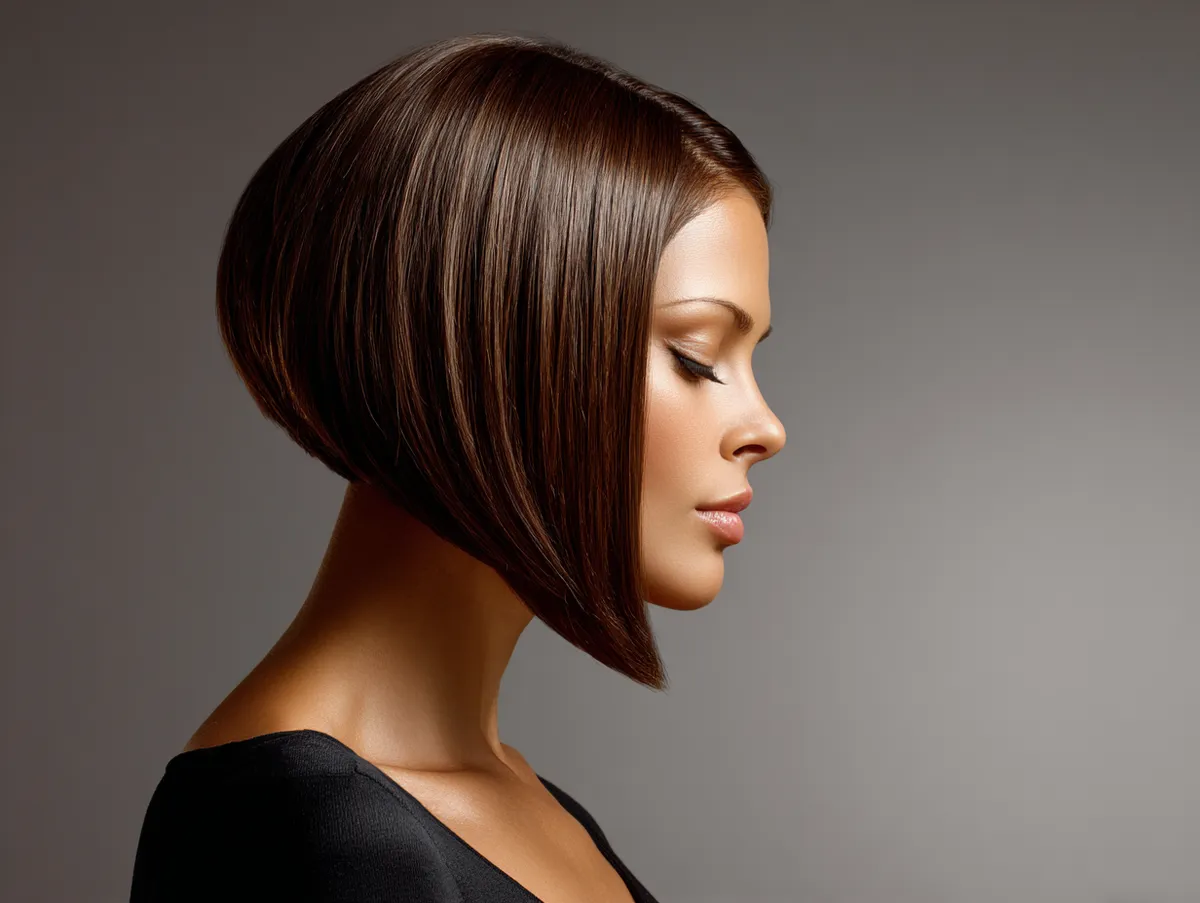
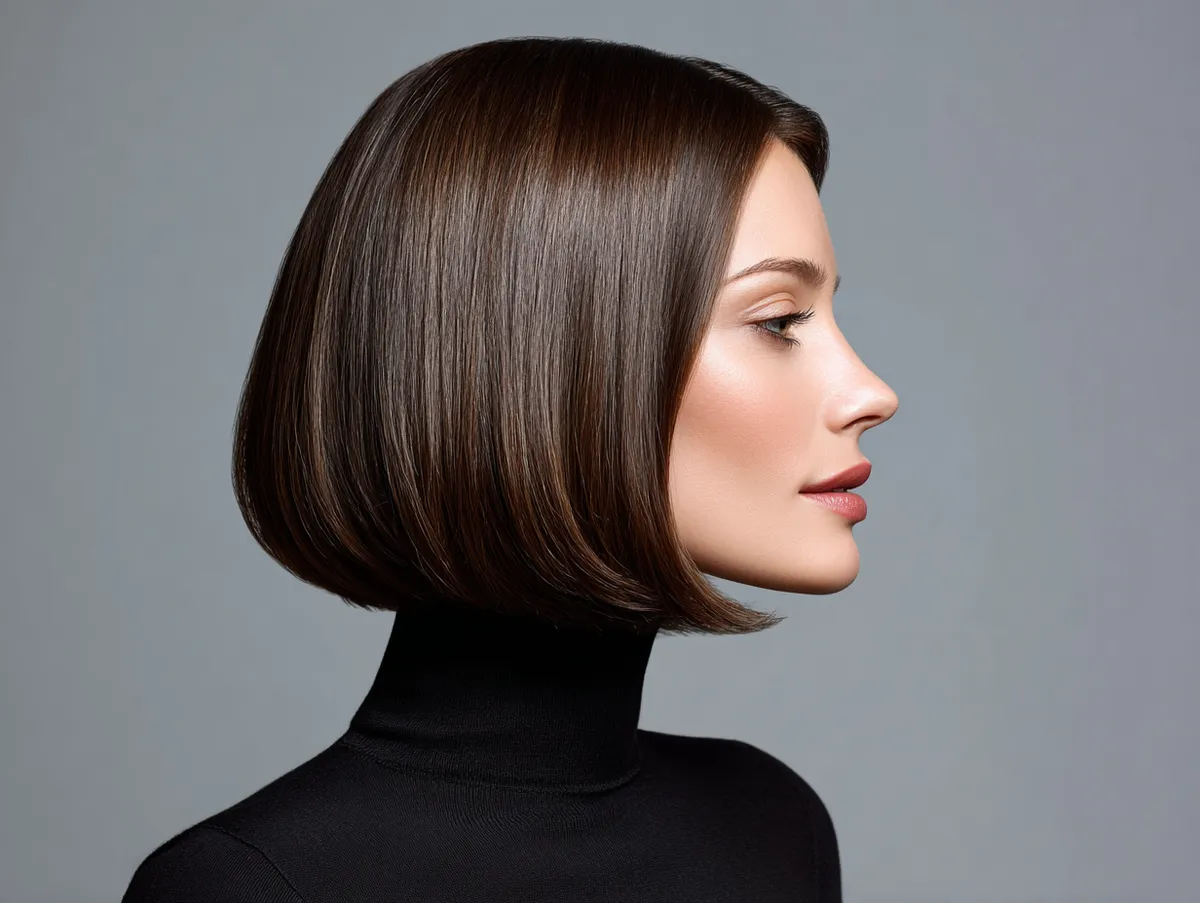
Straight hair is the ideal canvas for this cut because the gradient reads without interference. Wavy or curly hair softens the slope into something approximate; straight hair makes it architectural. The shorter back lifts volume at the nape naturally — no backcombing, no root spray — while the longer front sections frame the jaw with a precision that styled hair rarely achieves. It’s the one haircut I’d recommend to someone who says they never bother styling their hair, because air-dried straight hair shows the angled lob at its clearest.
The execution requires dividing the head into quadrants and aligning each section to the natural fall of the hair before cutting. Stylists who rush this step produce uneven angles that only become visible a week later when the hair settles. Bring a reference photo — not because words are hard to understand, but because “angled” means three different things to three different stylists. What you want: front at collarbone, back at mid-nape, continuous slope with no visible segmentation between sections.
A paddle brush blow-dry preserves the slope’s clean geometry. Finish with a drop of Moroccanoil Treatment Light ($15 for the travel size) on the lengths and the surface looks polished enough for a board meeting and relaxed enough for a Saturday. The angled lob works between haircuts better than any other straight hair cut — the grow-out phase just softens the angle rather than breaking the shape entirely. That’s the real reason to choose it over a blunt cut if your schedule doesn’t allow for six-week trims. According to PureWow’s straight hair stylist recommendations, fine-to-medium straight hair benefits most from blunt edges like the lob’s front line, which creates the illusion of density at the lengths.
Straight Hair Cuts Worth Saving
Geometry Does the Work. Products Are Optional.
Three shapes — blunt, stacked, angled — cover every reason straight hair looks flat. None of them require heat styling every morning.
The blunt bob rewards precision. Graduated layers reward patience. The angled lob rewards low-maintenance routines. Pick the one that matches your schedule, not just your mood.
Save this post before your next salon appointment — it’s faster to show your stylist these images than to describe what you want.