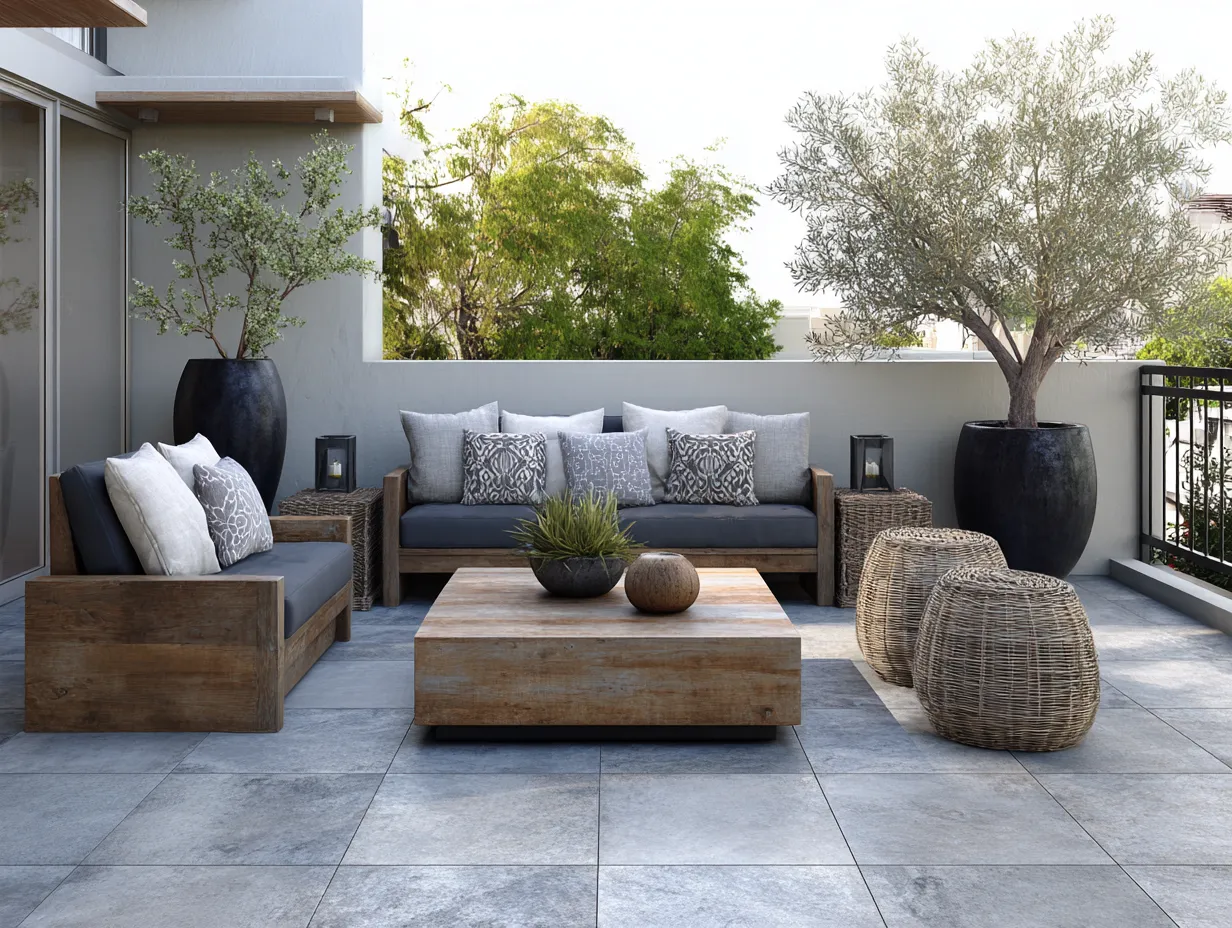
Quick Summary
Gray outdoor tile ideas for patio spaces covered here: light gray porcelain ($3–$5/sq ft), textured gray stone ($5–$14/sq ft), and geometric gray-and-white patterns ($6–$10/sq ft). Best budget pick: MSI Arterra Beton Gray porcelain at $4.89/sq ft. Best for pool decks: any matte porcelain with COF above 0.6. Biggest mistake: using indoor/outdoor tile without a frost-resistance rating — it cracks after one winter. Herringbone layout adds 15% to install cost. Large-format 24×48 tiles look best on patios over 150 sq ft.
Gray outdoor tile ideas for patio spaces aren’t all created equal. I’ve ripped out two patio floors in the last four years because the tile looked great on a showroom sample and cracked after one winter. Cool gray tones hide dirt better than white, age better than beige, and cost less than most people think. Porcelain pavers from Daltile’s XTeriors line start at $3.50/sq ft. Natural stone runs $7–$12.
Skip anything labeled “indoor/outdoor” without an actual frost-resistance rating. That’s marketing talk for “it’ll pop like popcorn in February.” You need a water absorption rate under 0.5% and a COF above 0.6 for wet bare feet. Most gray outdoor tile checks both boxes if you buy from the right brands.
This post covers 10+ grey patio ideas — light gray porcelain, textured gray stone, and geometric gray-and-white patterns. I’m including what works near pools, what holds up under outdoor furniture legs, and what modern backyard tile solutions actually cost installed in 2026.
Quick Scan — Light Gray Porcelain Patio Tile
Best budget option: MSI Arterra Beton Gray — $4.89/sq ft
Best large-format: Daltile XTeriors 24×48 — $5.50/sq ft
Grout rule: one shade darker than the tile, always sealed
Minimum size for outdoor: 18×18 inches
Water absorption: under 0.5% for freeze-thaw climates
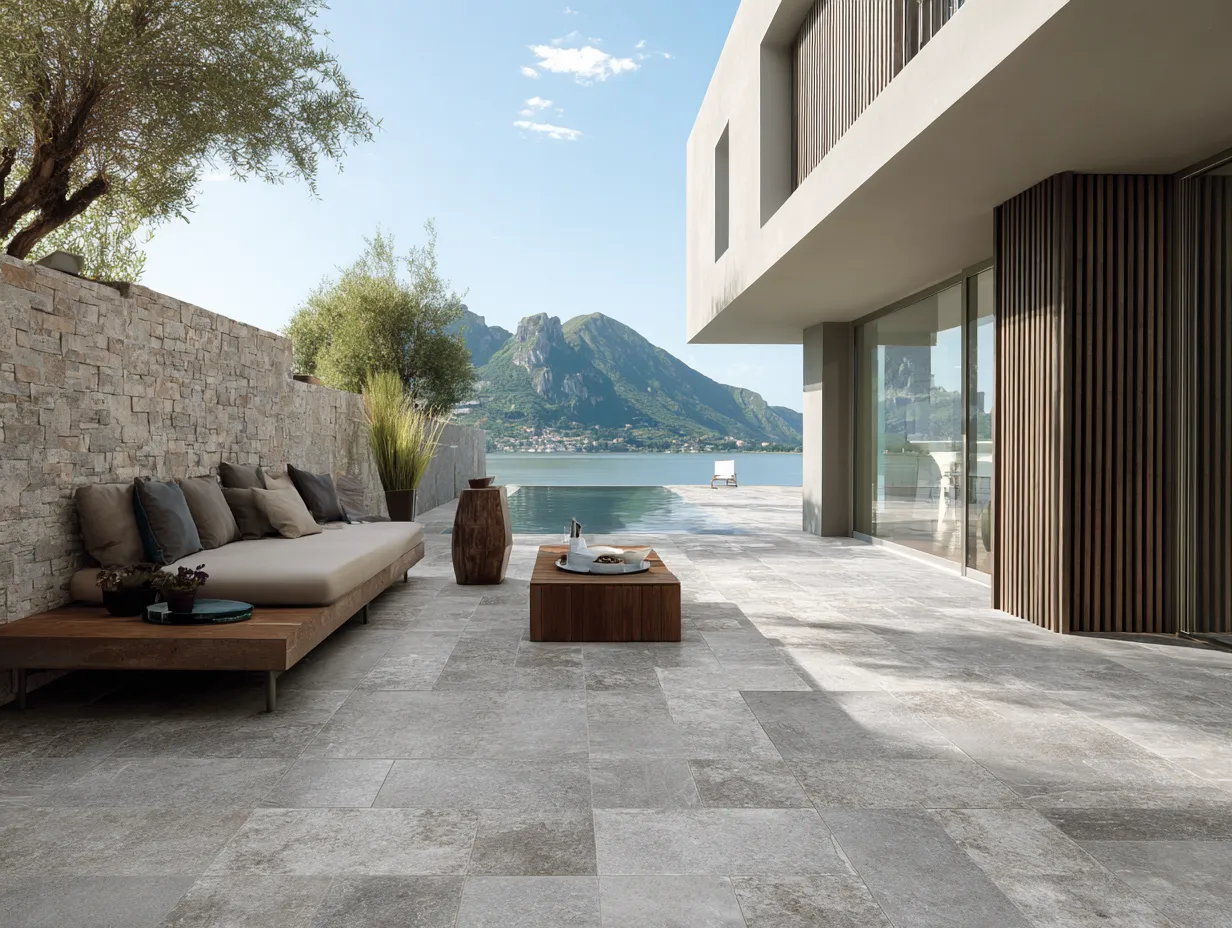
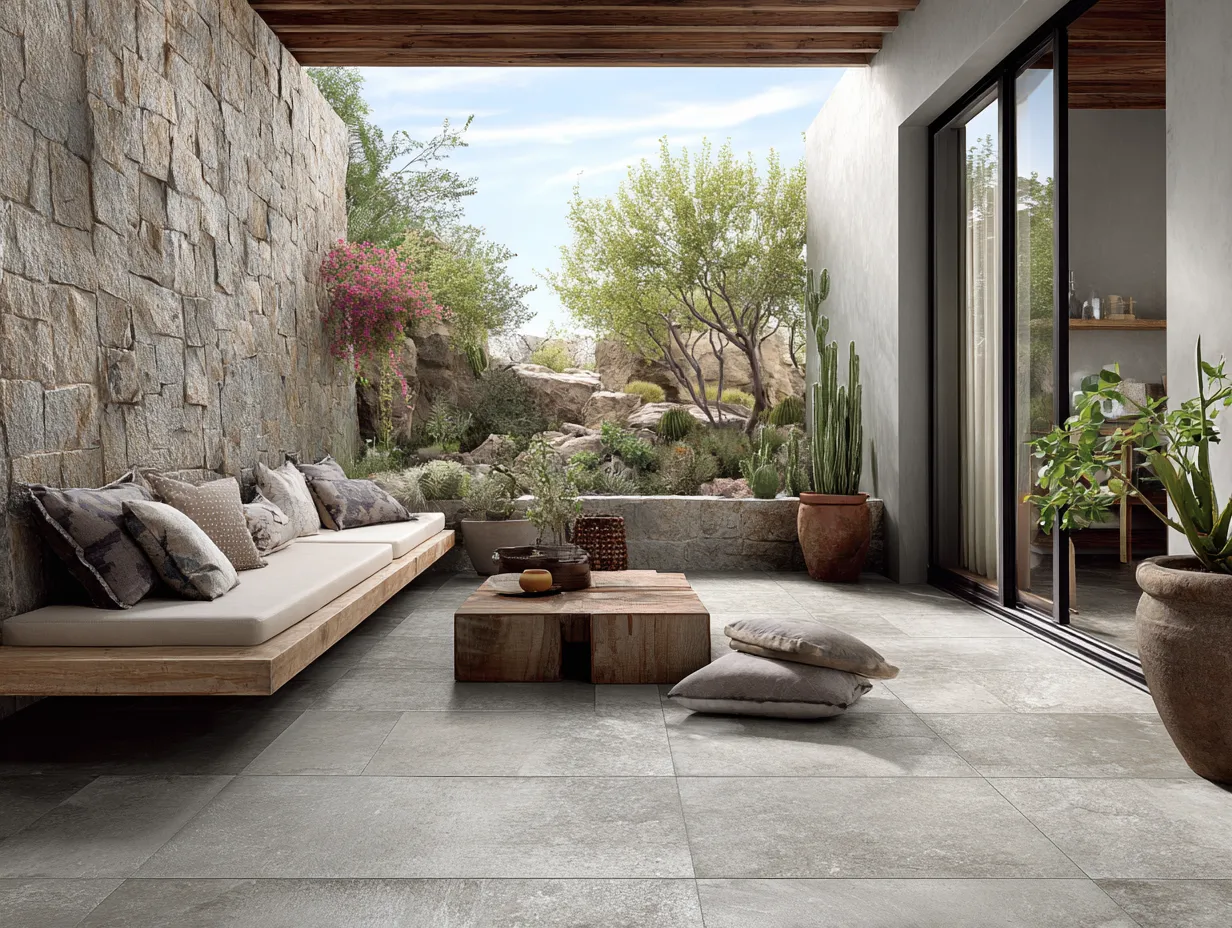
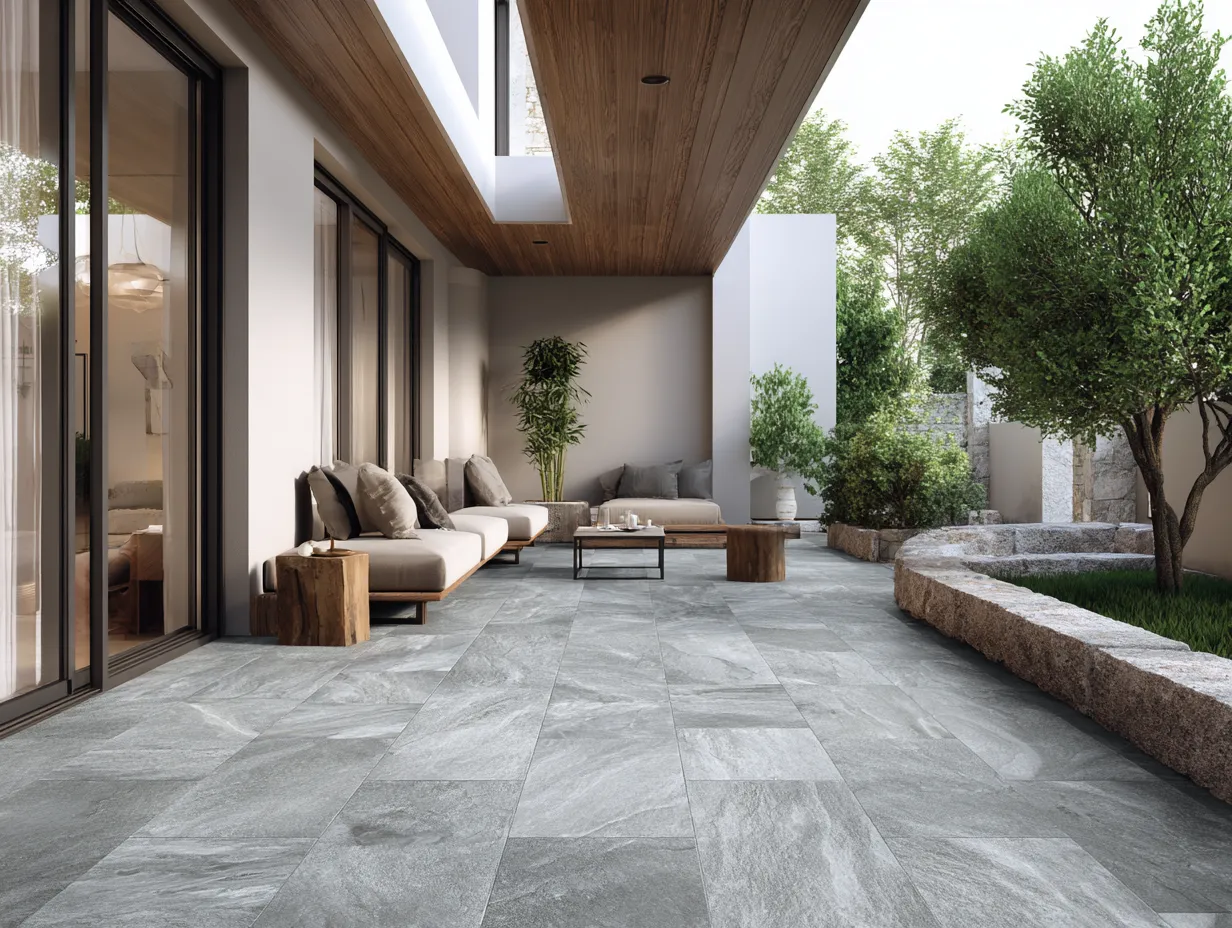
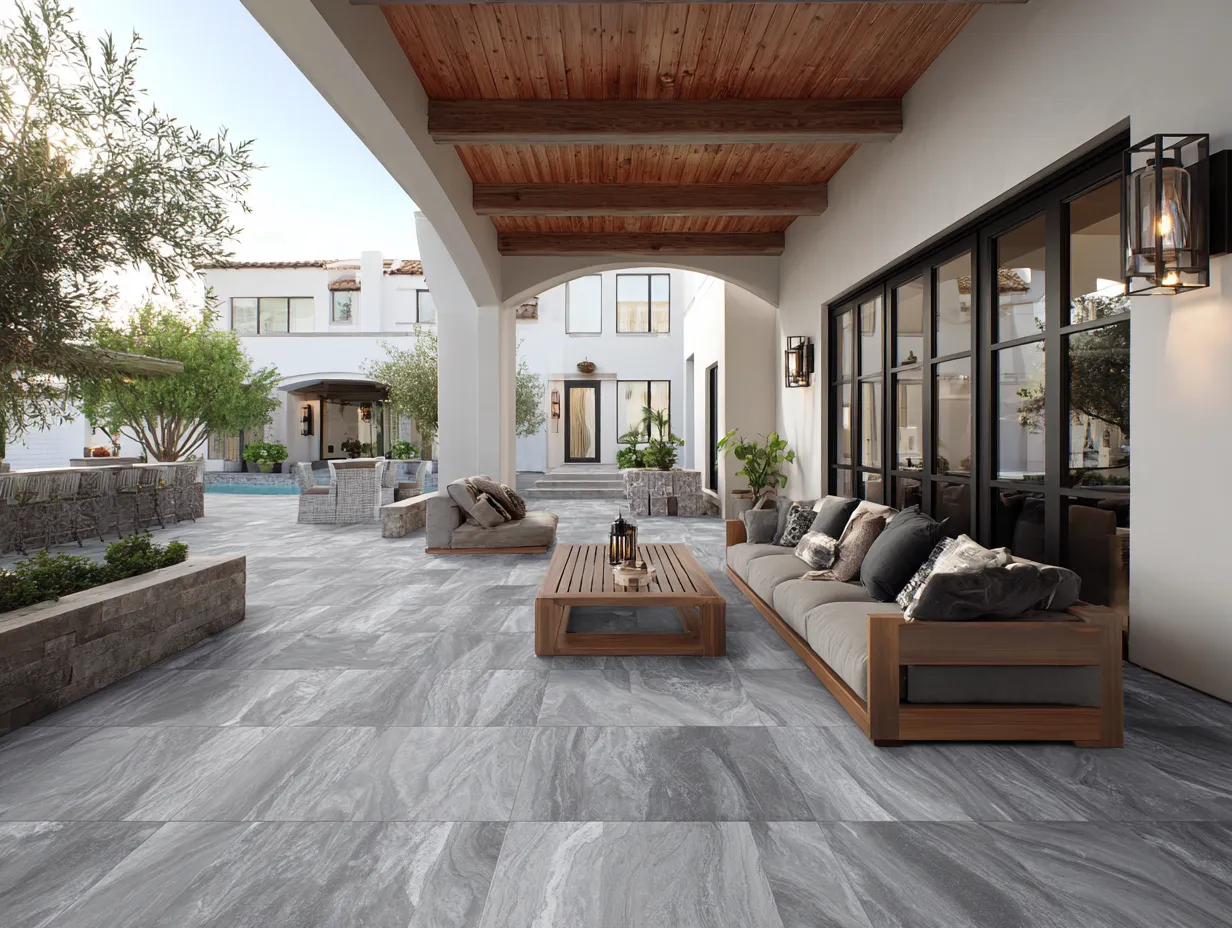
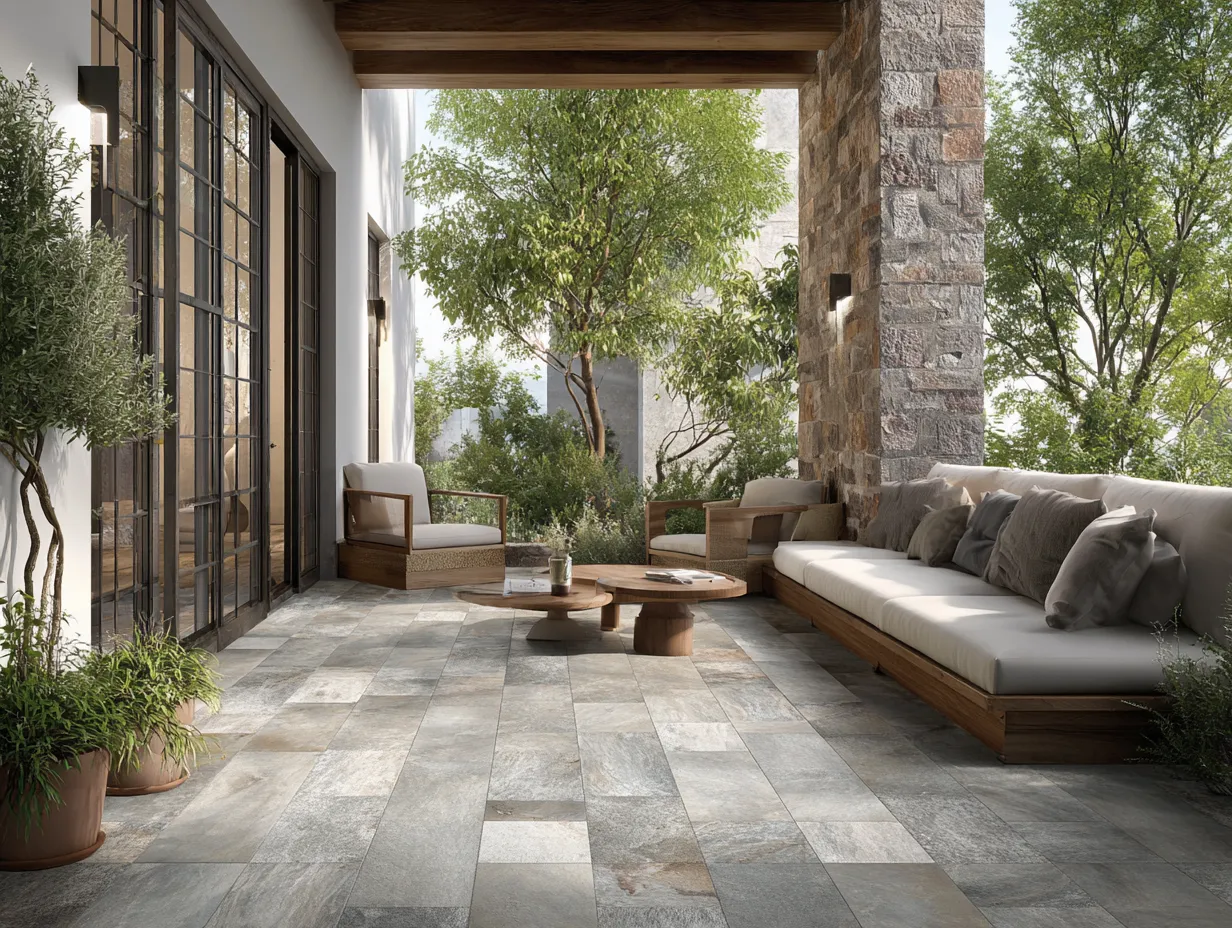
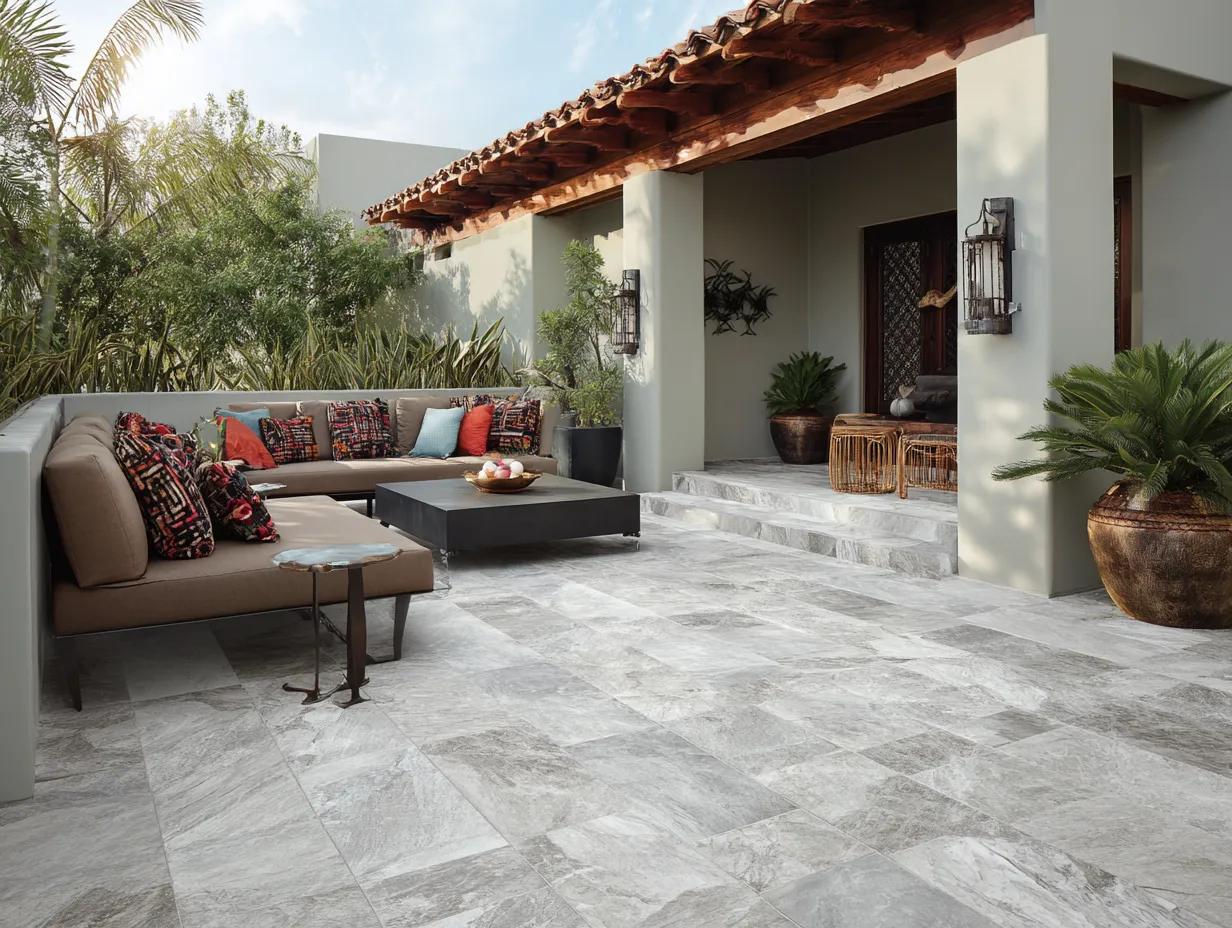
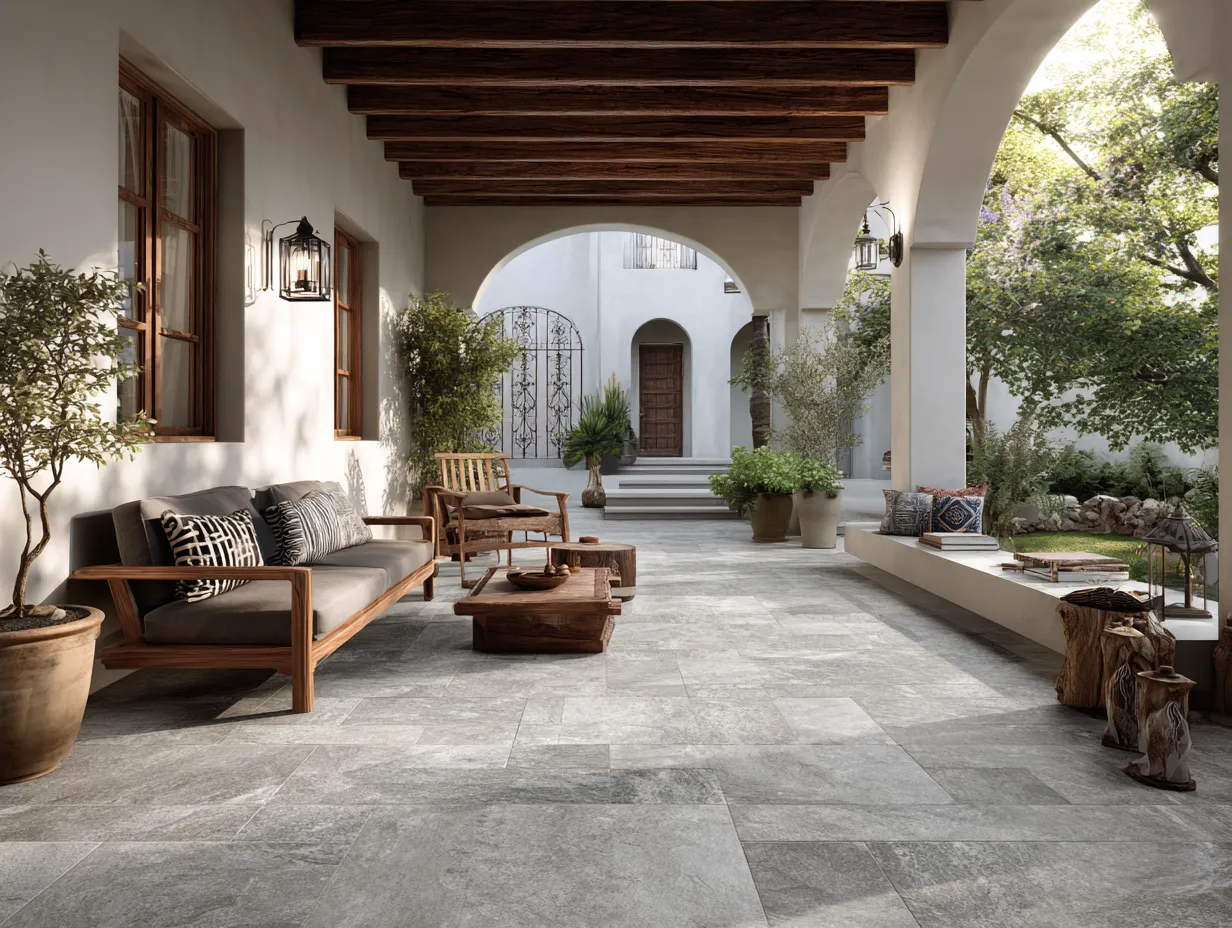
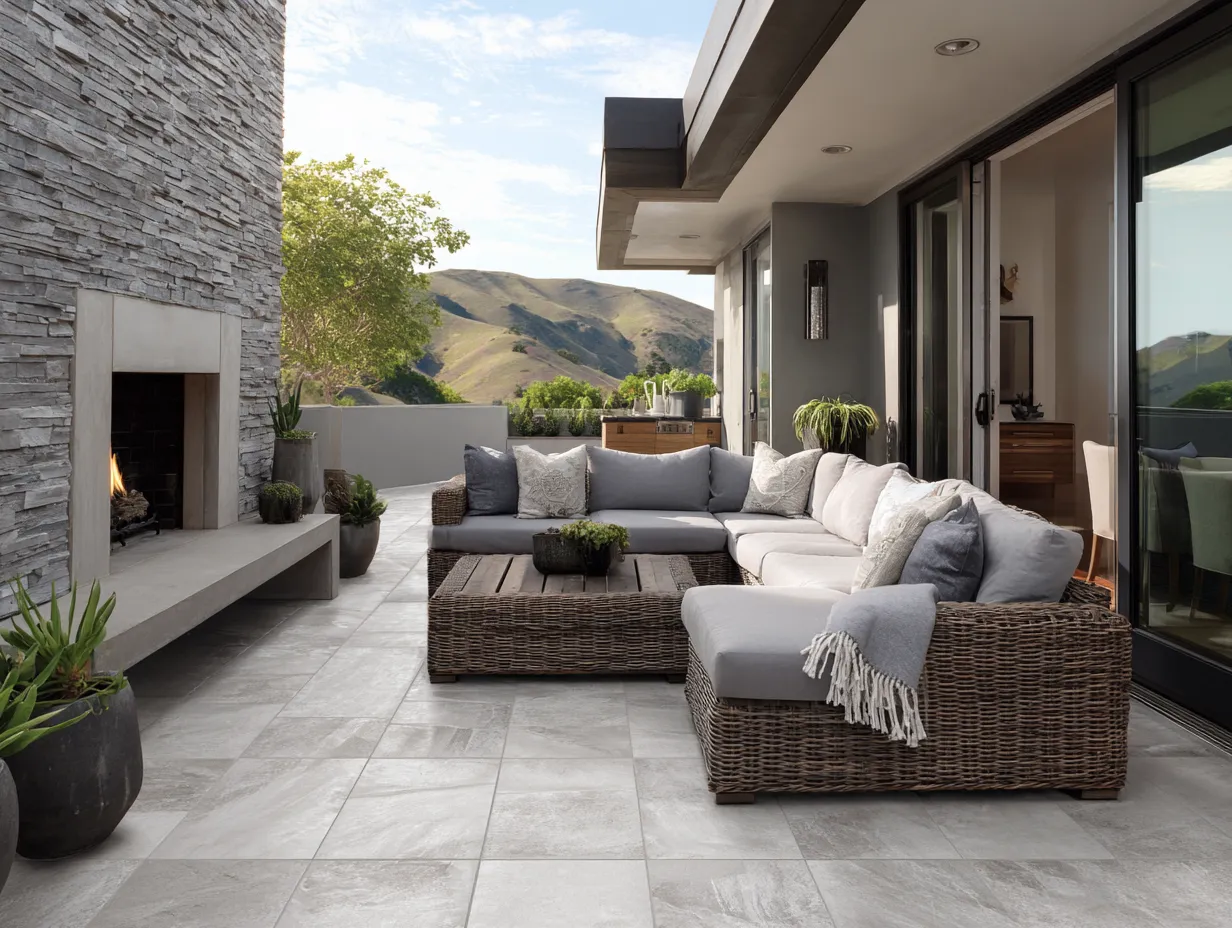
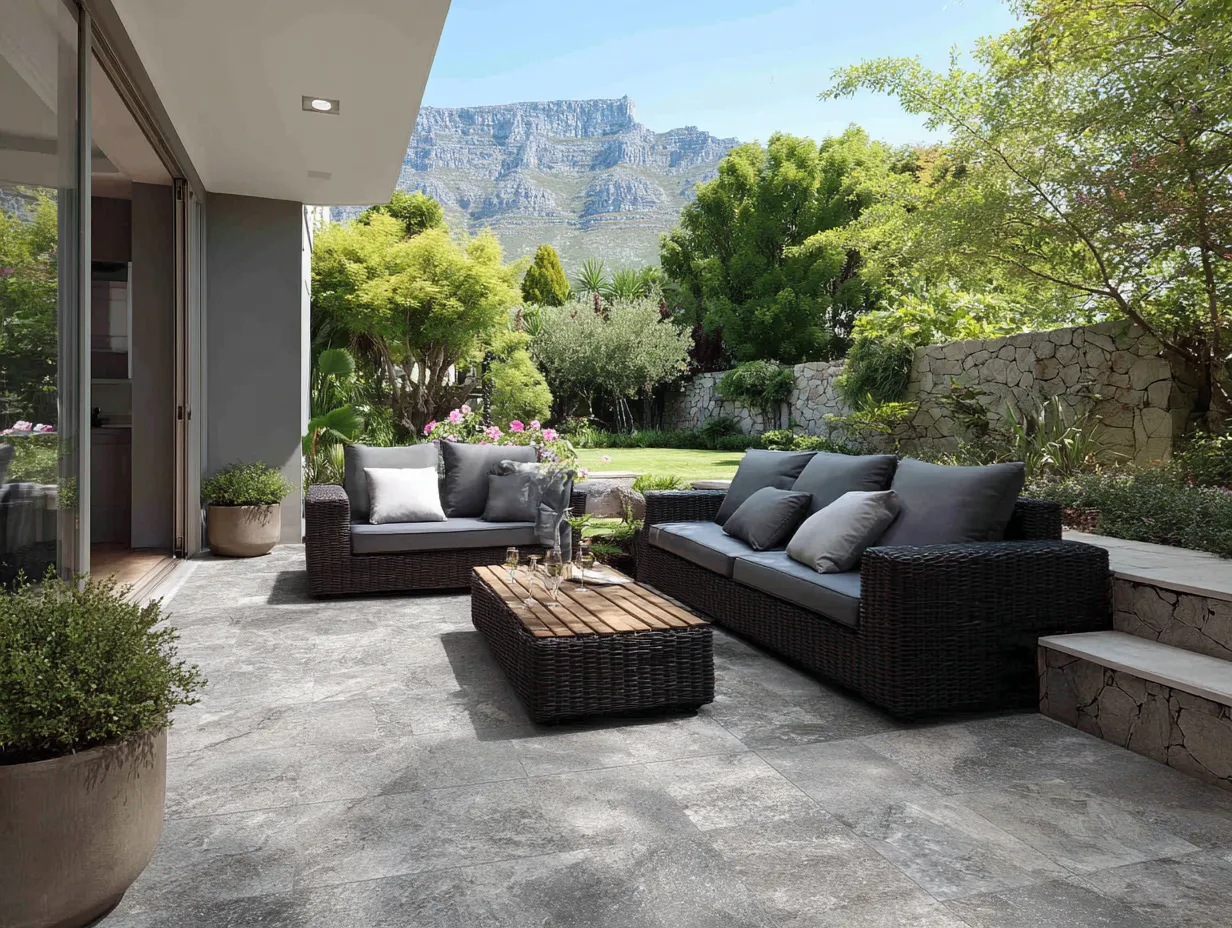
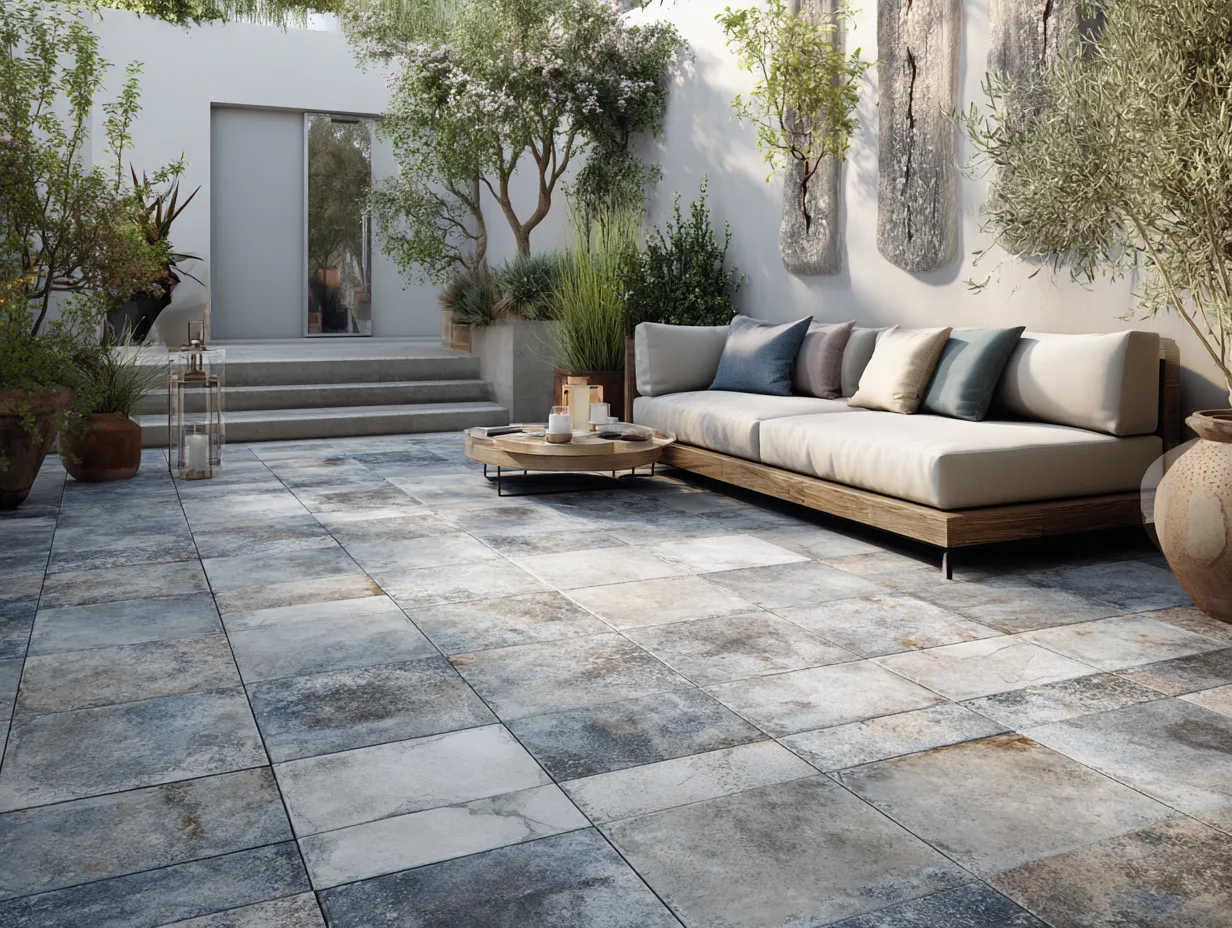
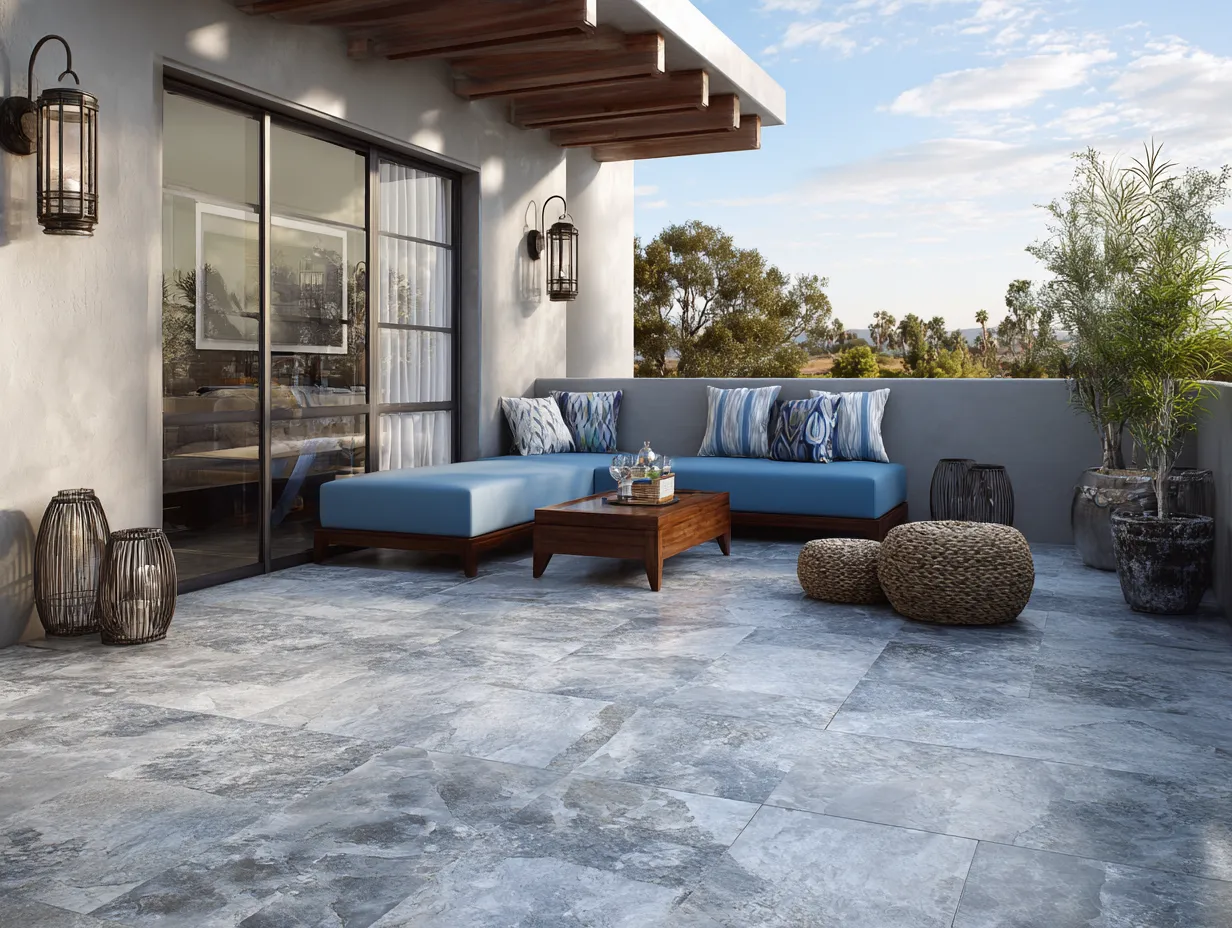
Light Gray Outdoor Tile Ideas for a Modern Patio
MSI’s Arterra Beton Gray runs about $4.89/sq ft and looks like poured concrete from three feet away. I used it on a 200 sq ft side patio and the total material cost was under $1,000. Nobody believes it’s not actual concrete until they knock on it. The trick with light gray porcelain is grout color. Go one shade darker than the tile. White grout on light gray tile turns brown within a season unless you seal it every six months, and nobody does that. I learned this after watching my neighbor’s brand-new patio look like a subway station floor by October.
Large-format 24×48 tiles cut the number of grout lines in half and make a small patio feel twice its size. Fewer grout lines also mean less maintenance. Worth the extra $1/sq ft every single time. Don’t go smaller than 18×18 on an outdoor patio unless you’re doing a deliberate mosaic or cobblestone look. Tiny tiles on a big patio feel busy and dated, like a 2008 bathroom floor dragged outside.


$4.89/sq ft gets you a porcelain tile that looks like poured concrete. Nobody will know the difference.


Using light gray tiles for a modern patio creates an inviting and sophisticated atmosphere that fits seamlessly with both urban and suburban settings. These outdoor tile ideas for patio areas often focus on a minimalist aesthetic, with sleek surfaces that reflect light beautifully and maintain a clean, crisp appearance. The light gray tone also pairs well with various shades of outdoor furniture, making it easy to design a cohesive look.
Light gray tiles can be made from a variety of materials, including porcelain or concrete, offering both durability and style. Porcelain, in particular, is known for being weather-resistant, making it an ideal option for outdoor spaces. Its smooth surface allows for easy cleaning and maintenance, ensuring that your patio remains pristine with little effort. If you’re comparing tile against other patio surfaces, our breakdown of the best outdoor flooring options for your patio covers wood decking, concrete, and stone pavers side by side. Additionally, light gray provides a neutral backdrop that enhances the natural beauty of your surroundings, from lush green plants to architectural features of your home.
Incorporating subtle elements like warm lighting or potted greenery can further enhance the elegance of the patio. Warm lighting softens the gray tones in the evening, creating a cozy yet sophisticated ambiance, while green plants offer a refreshing contrast that brings the space to life. Light gray tiles are perfect for those who want a chic, modern look without overwhelming their outdoor area with bold colors.
For larger patios, light gray tiles create a sense of openness and continuity, especially when laid out in expansive, unbroken sections. The simplicity of the design allows for versatility, enabling homeowners to experiment with different furniture styles, from rustic wooden tables to sleek metal chairs. This flexibility makes light gray outdoor tile ideas for patio spaces a favorite for those who appreciate both aesthetics and practicality.
Gray Stone Patio Tile: Textured Finishes That Hide Everything
Slate is the cheapest natural gray stone option at $5–$8/sq ft, but it flakes in freeze-thaw climates after three to five years. Bluestone holds up better and runs $8–$14/sq ft installed. My go-to for anyone on a budget who still wants the stone look is porcelain that mimics stone. Anatolia Tile’s Beacon series at Lowe’s costs $4.29/sq ft and passes the eye test at arm’s length. Real stone lovers will notice the repeat pattern, but guests at your barbecue absolutely will not.
Textured gray tile near a pool needs a COF of 0.6 or higher. Check the spec sheet, not the box marketing. I’ve seen “slip-resistant” tiles with a COF of 0.42, which is basically an ice rink when wet. Bardiglio Gray marble pavers look incredible around pools but they stain from sunscreen within weeks and need resealing twice a year. Skip the marble for pool decks. Use it on a covered patio where it won’t see direct rain or chlorine splash.
Don’t Do This
Don’t install polished marble pavers around a pool. They stain from sunscreen, turn slippery when wet, and need resealing twice a year. A $14/sq ft marble patio looks like a $3 mess within one summer if you skip the maintenance.
Don’t buy “indoor/outdoor” tile without checking the frost-resistance rating. If the box doesn’t list water absorption under 0.5%, walk away. I’ve replaced two patios because the tile looked fine in May and cracked in January.
Don’t use white grout on outdoor gray tile. It turns brown by October. Go one shade darker than the tile and seal it before winter.


Slate looks amazing for 3 years. Then it flakes. Bluestone lasts 20+. Choose accordingly.


For those looking to introduce a more natural and rustic vibe, textured gray stone tiles offer an ideal solution. These outdoor tile ideas for patio designs combine the cool elegance of gray tones with the organic feel of stone, creating a blend of modern and earthy aesthetics. The uneven surfaces and subtle variations in shade contribute to a dynamic look that changes with the shifting light throughout the day.
Textured stone tiles are particularly effective in creating a connection between the built environment and nature. Whether your patio is bordered by a garden, pool, or open lawn, the gray stone tiles serve as a transitional element, grounding the space while providing a sturdy and slip-resistant surface. For patios that double as full outdoor living areas with kitchens and dining zones, see our 15 creative outdoor living space ideas for layout inspiration. Natural stone also evokes a timeless quality, making it a popular choice for homeowners who want their patios to age gracefully.
The slight roughness of these tiles not only adds to their visual appeal but also improves their functionality. In areas prone to wet conditions, such as near pools or outdoor kitchens, the textured surface provides added grip, making them safer for everyday use. The blend of functionality and aesthetic charm is one of the key reasons textured gray stone tiles continue to be a popular outdoor tile idea for patio spaces.
Stone tiles also come in various sizes and formats, allowing for creative layouts. You can opt for large, square slabs to emphasize the open space of your patio or choose smaller, irregularly shaped tiles for a more traditional, cobblestone look. This adaptability ensures that gray stone tiles can fit both modern and classic designs, offering versatility in outdoor decor.
Gray and White Geometric Patio Tile Patterns
Herringbone layout adds about 15% to installation cost because of extra cuts and waste. Worth it on a focal area, not the entire patio. My rule: herringbone for the dining zone, straight-set for the walkway. Merola Tile’s Twenties series at Home Depot gives you the geometric gray-and-white look for $6.50/sq ft. It’s cement tile, so it needs sealing, but the pattern is hand-poured and no two tiles match exactly. That irregularity is what makes it look expensive.
Chevron patterns photograph well on Pinterest but drive most tilers crazy. Expect a 20% installation premium and make sure your contractor has done chevron before. A botched chevron looks worse than a straight grid. Ask to see photos of their previous chevron jobs. If they hesitate, pick another contractor or switch to herringbone. Same visual energy, half the headache.


Herringbone adds 15% to labor. Budget for it or go straight-set.


For a patio that truly stands out, geometric patterned tiles in gray and white bring a level of sophistication and visual interest that elevates any outdoor space. These tiles combine the sleekness of gray with the freshness of white, offering a balanced, high-contrast design that appeals to those who love bold patterns without straying too far from a neutral palette.
Patterns like herringbone, chevron, or intricate mosaic designs can be incorporated into this type of patio tile, each bringing its own unique style. Herringbone patterns, for example, offer a sense of movement and direction, drawing the eye across the patio, while chevron designs provide a more dynamic and energetic vibe. Intricate mosaic patterns, on the other hand, create a visually complex surface that can act as the focal point of the outdoor area.
The beauty of gray and white geometric tiles lies in their ability to fit with various patio furnishings and decor elements. These patterns add an artistic flair to the space without overwhelming the eye. Browsing galleries like Houzz’s gray tile patio collection shows how many layout options exist within just this color family. The contrast between gray and white ensures the design remains crisp and clean, offering an organized aesthetic that works well in contemporary outdoor settings.
Geometric tiles can also be used to zone different areas of the patio. For example, a seating area might be framed with these patterned tiles, separating it from a walkway or garden space. This not only adds to the visual appeal but also enhances the functionality of the patio, allowing for a more organized and purposeful layout. The blend of design and practicality makes geometric outdoor tile ideas for patio spaces an exciting option for anyone looking to introduce a creative touch to their outdoor living space.
| Feature | Gray Porcelain | Gray Natural Stone | Gray & White Cement |
|---|---|---|---|
| Price per sq ft | $3 – $6 | $5 – $14 | $6 – $10 |
| Frost Resistance | Excellent | Good (bluestone) / Poor (slate) | Good if sealed |
| Slip Resistance (COF) | 0.6 – 0.8 (matte) | 0.5 – 0.7 (textured) | 0.6 – 0.7 |
| Maintenance | Low — hose and go | Medium — seal yearly | Medium — seal every 1–2 years |
| Best For | Pools, modern patios, budget builds | Covered patios, rustic designs | Accent zones, dining areas |
| Lifespan | 20–30 years | 15–25 years (depends on type) | 15–20 years |
FAQ
What is the best gray outdoor tile for a patio?
How much does gray patio tile cost per square foot?
Can gray porcelain tile be used around a pool?
What grout color works best with gray outdoor tile?
Is natural stone or porcelain better for a gray patio?
What size gray tile is best for a small patio?
How to Install Gray Outdoor Tile on a Patio
Step-by-step process for installing gray porcelain or stone tile on an outdoor patio. Covers surface prep, layout, adhesive, grouting, and sealing.
Tools needed:
- Wet tile saw
- Notched trowel (1/2″ x 1/2″)
- Rubber mallet
- Level (48″)
- Grout float
- Tile spacers
Materials needed:
- Gray porcelain or stone patio tile (+ 10% extra)
- Exterior-rated thin-set mortar
- Sanded exterior grout
- Penetrating grout sealer
- Concrete backer board (if no existing slab)
Prep the concrete slab
Clean the existing concrete with a pressure washer. Fill cracks with concrete patching compound. The surface must be flat within 1/4″ over 10 feet. Any dips or humps will crack your tile within a year.
Dry-lay the tile pattern
Place tiles on the slab without adhesive to test your layout. Start from the center and work outward. Adjust spacing so cut tiles at the edges are at least half-width. Use 3mm spacers for porcelain, 6mm for stone.
Apply exterior-rated thin-set mortar
Spread mortar with a 1/2″ x 1/2″ notched trowel. Back-butter large-format tiles (24×24 or bigger) for full coverage. Work in 3×3 foot sections so the mortar doesn’t skin over before you place the tile.
Set tiles and level
Press each tile into the mortar and tap with a rubber mallet. Check level after every 3–4 tiles. Maintain a slight slope of 1/4″ per foot away from your house for water drainage. Flat tile = puddles = mold.
Grout and seal
Wait 24 hours for mortar to cure. Apply sanded exterior grout with a float, working diagonally across joints. Wipe excess with a damp sponge within 15 minutes. After grout cures for 48–72 hours, apply a penetrating sealer. Reseal once a year before winter.
Bottom Line on Gray Outdoor Tile
Gray outdoor tile is the one patio material that won’t look dated in five years. Porcelain at $3–$5/sq ft handles freeze-thaw, hides dirt, and pairs with literally any furniture color. Stone costs more but ages like wine. Geometric patterns photograph like a Pinterest dream but check your contractor’s portfolio before committing to chevron.
Pick matte over polished. Seal your grout before the first rain. Buy 10% extra tile for cuts and future repairs. Your patio will outlast three sets of outdoor furniture if you get the foundation right.