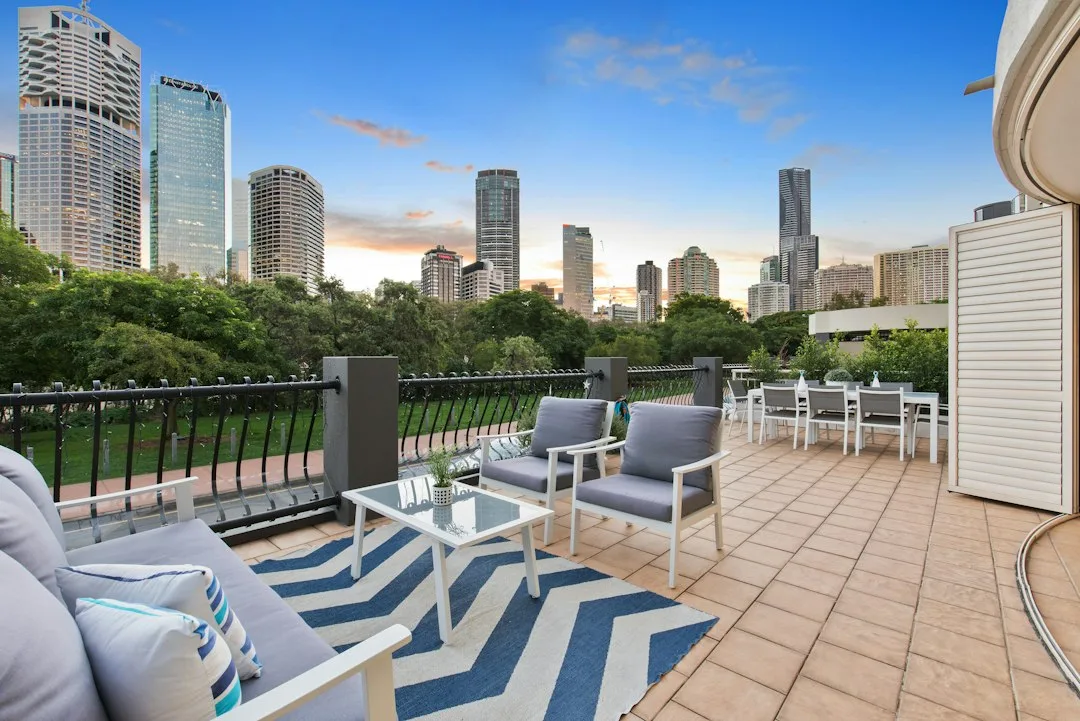
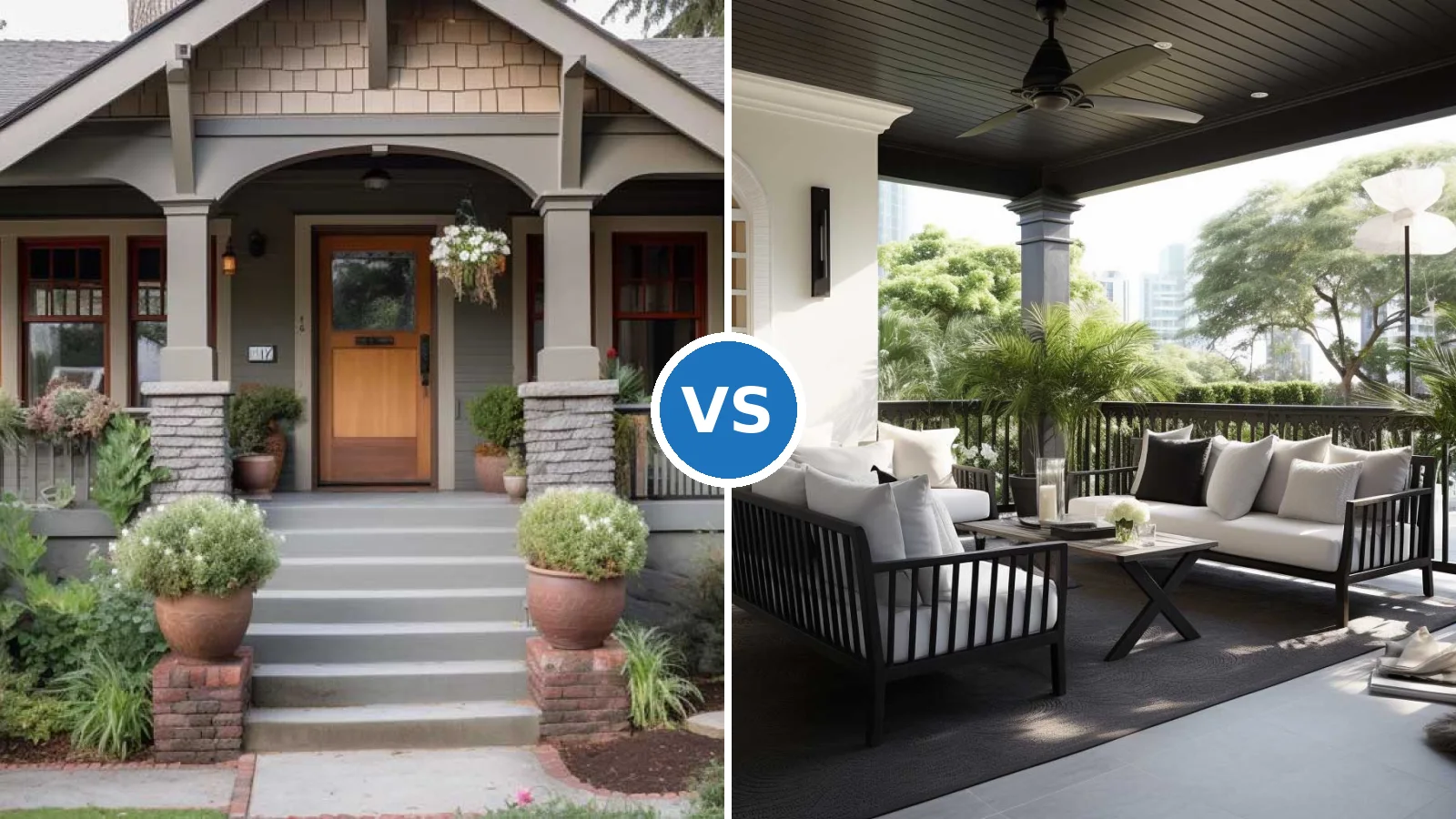
Outdoor flooring options for a patio come down to three proven families: wood decking, poured concrete and stone pavers, with installed prices running from about $4 to $31 per square foot. Each one solves a different problem. Wood gives warmth underfoot, concrete gives the lowest entry price, and stone gives the longest service life. Before shopping for specialty outdoor flooring tiles or mats, decide which of those three jobs matters most in your yard.
Which one works best? For a tight budget, a brushed concrete slab at roughly $4–$9 per square foot is the cheapest permanent surface. For a floor that should outlive the mortgage, natural stone pavers at $15–$31 per square foot routinely last 50 years or more. Wood sits between them on price but asks for the most upkeep, with softwood decks typically lasting 10–15 years versus up to 75 years for dense tropical ipe.
The sections below break down cost, lifespan, upkeep and comfort for each patio flooring material, then put everything into one comparison table. Treat the numbers as national averages, since local labor alone can swing the bill by $4 to $18 per square foot. Start with your budget per square foot, then let lifespan break the tie.
Quick Scan
- Brushed concrete slab: about $4–$9 per sq ft installed, the cheapest permanent patio floor.
- Natural stone pavers: $15–$31 per sq ft, with a 50–100 year lifespan versus roughly 25+ years for a poured slab.
- Pressure-treated pine decking lasts 10–15 years, while ipe can reach 75 years.
- Concrete pavers ($8.70–$16.70 per sq ft) cost about double a plain slab but allow single-unit repairs.
- A 4-inch compacted gravel base is the cheapest insurance against cracks and frost heave.
- Dark brick and concrete hold daytime heat into the evening; wood and composite cool off fast.
Wood Decking Brings Warmth at a Maintenance Price
Wood decking remains one of the most requested backyard flooring options because it feels warm, softens footsteps and links an indoor floor to the garden without a visual break. The price spread is wide. Pressure-treated pine boards start around $2–$3 per square foot, while ipe runs $20–$25 or more for material alone. Pick the species before the stain color, because the species decides how long the deck survives.
Softwood vs hardwood is the real decision here. Pressure-treated pine usually lasts 10–15 years and cedar about 20, while ipe can reach 30 to 75 years with proper care. Think of it like buying footwear: canvas sneakers are cheap and comfortable but wear out fast, leather boots cost more and get resoled for decades. Choose softwood only if you already expect to rebuild the deck once.


How much work does a wood floor need outdoors? Cedar typically needs a water-repellent sealer every 1–2 years, and pine benefits from a yearly cleaning plus fresh stain every couple of seasons. Skipping one cycle rarely shows right away, but gray, split boards tend to appear within two or three winters. Never blast soft species with a pressure washer at full power, because it tears up the grain and shortens board life. Set a spring calendar reminder instead of waiting for visible wear.
Resale figures favor plain wood more than many owners expect. Cost-versus-value data puts a wood deck addition at roughly 83% recouped versus about 68% for composite, because the lower build cost is easier to win back at sale. If you are weighing timber against a masonry surface instead, the brick patio versus concrete slab comparison shows how hard surfaces trade warmth for lower upkeep. Buy decking for how you live now, not for a resale number you may never collect.


Concrete Patio Flooring Wins on Budget and Flexibility
Concrete patio flooring is the budget anchor among exterior flooring options, with a smooth or brushed slab costing about $4–$9 per square foot installed. A color-stained or acid finish lands near $5.50–$12.50, and a stamped finish that imitates stone or brick reaches $8–$16. That means you can get the look of flagstone for roughly half the price of the real thing. Lock in the finish at pour time, because changing it later means grinding or resurfacing.
Does concrete actually crack? Nearly every slab develops hairline cracks over time, and that is the price of one continuous surface. Standard concrete is rated around 2,500 PSI versus up to 8,000 PSI for many natural stones, so it shrugs off furniture and foot traffic but forgives less ground movement. A properly installed slab still lasts 25 years or more. Ask for control joints in the plan so cracks follow straight lines instead of wandering.


The base decides a slab’s lifespan more than the concrete mix does. A 4-inch compacted gravel layer underneath is the standard defense against frost heave, and skipping it can produce cracks within 12–18 months. Never seal a fresh pour early: concrete needs about 28 days to cure, and sealer applied sooner traps moisture and flakes off within a season. Ask every contractor to write the gravel depth into the quote.
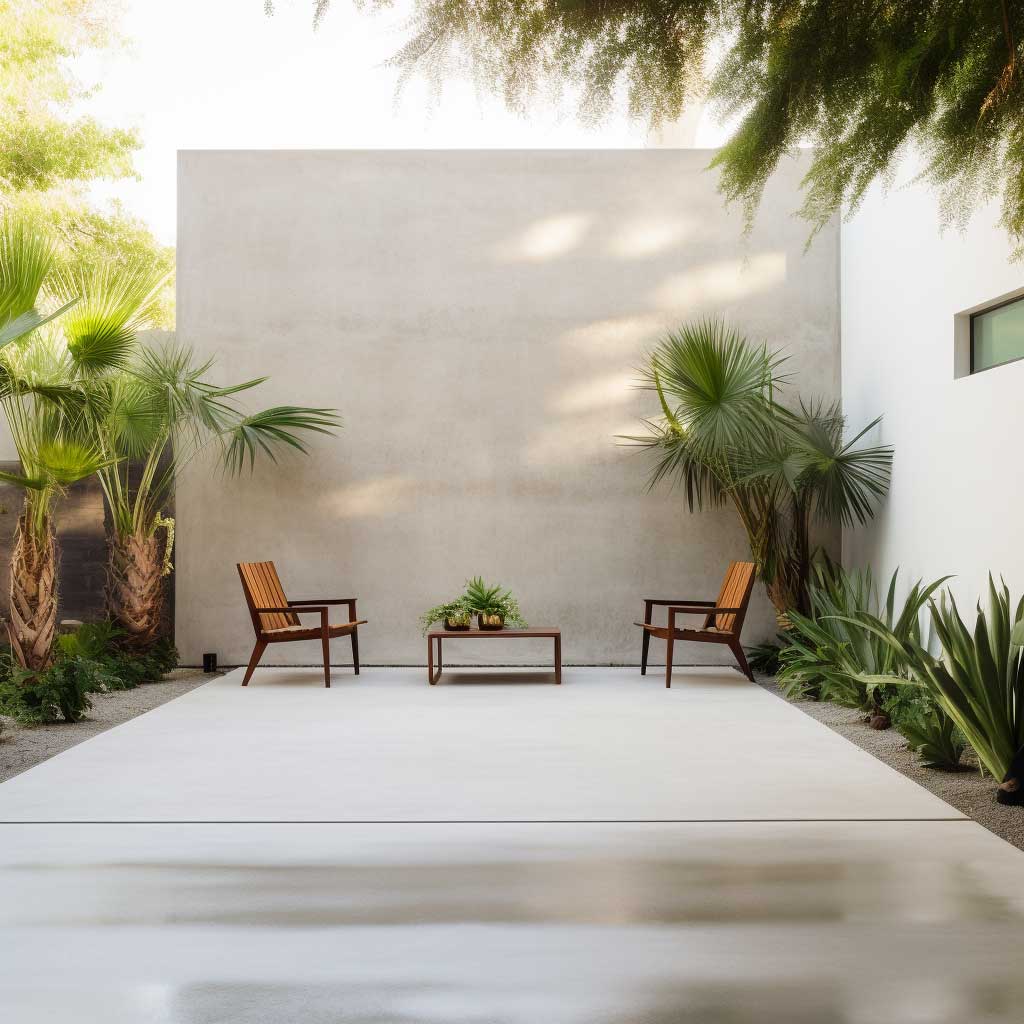
A plain slab works like a white gallery wall, fading into the background so furniture, planters and lighting carry the design. That neutrality suits modern and minimalist yards, and the savings over pavers can fund rugs, cushions and string lights. Many towns treat a slab as permanent construction, so a permit may cost $50–$200, while paver and gravel patios usually skip that step. Check local rules before booking a pour date.


Don’t Do This
- Don’t lay any hard surface on bare soil; a 4-inch compacted gravel base costs far less than replacing a slab that cracks in 12–18 months.
- Don’t seal new concrete before day 28 of curing.
- Don’t pick pressure-treated pine for a 30-year plan; it typically lasts 10–15 years.
- Don’t ignore paver joints; re-sanding or sealing every 3–5 years keeps weeds and washouts out.
- Don’t put dark brick or concrete on an unshaded west-facing patio in a hot climate.
Stone Pavers Outlast Almost Every Other Patio Floor
Stone pavers are the premium tier of patio floor materials, and the price shows it: natural stone pavers run about $15–$31 per square foot installed, and flagstone $13.65–$31.65. Slate, limestone, travertine and granite each bring their own color range and surface texture. The payoff is longevity, with well-chosen stone lasting 50 to 100 years. Choose stone when you expect to stay in the home long enough to use that span.
Is natural stone worth roughly double the price of concrete pavers? Manufactured concrete pavers cost about $8.70–$16.70 per square foot and copy the shapes of stone, but their surface color can fade under years of UV. Natural stone keeps its mineral color permanently, much like an oil painting next to a printed poster of the same scene. For a rental or a short-term home, concrete pavers deliver most of the look at close to half the price.
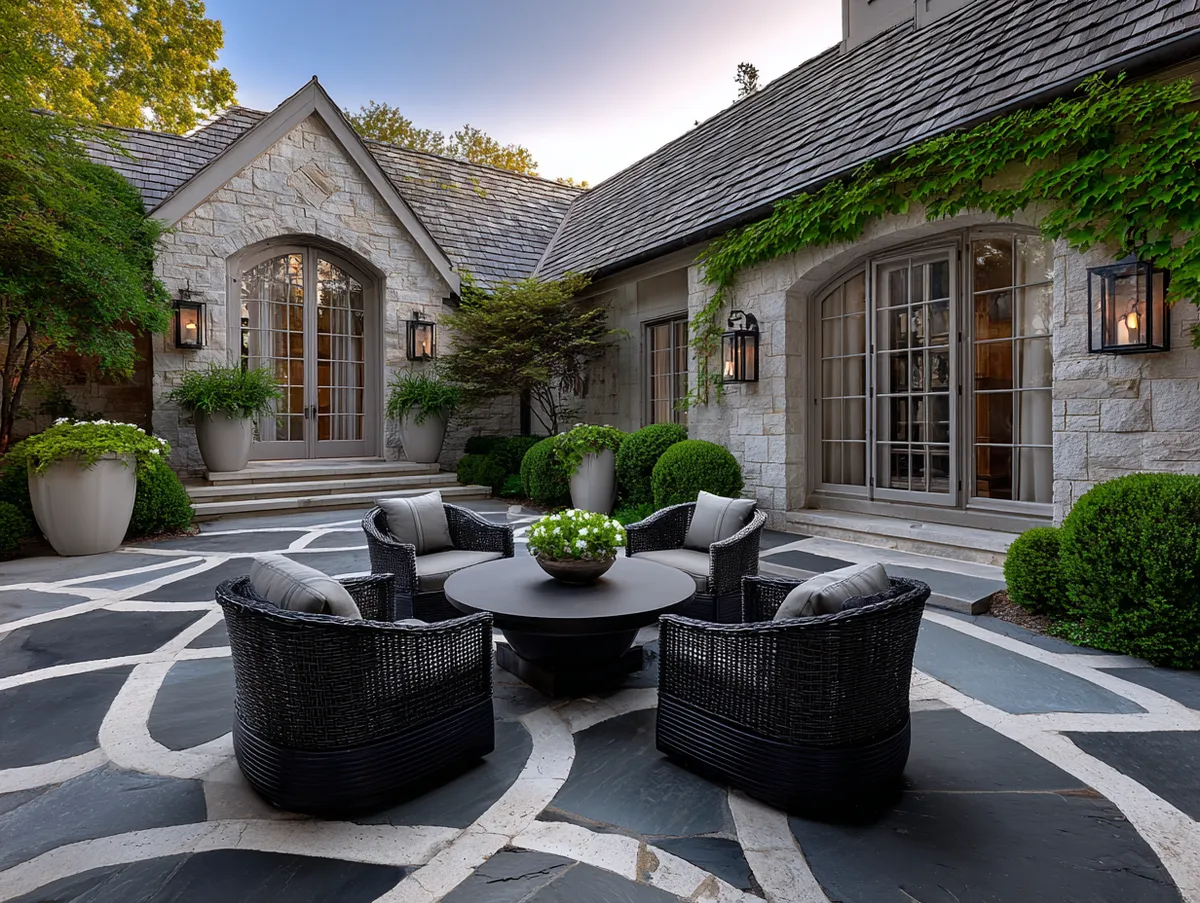


Stone needs less care than wood but more than a sealed slab. Joints between pavers typically need fresh sand or joint sealer every 3–5 years to block weeds and washouts, and porous types such as limestone and travertine benefit from a stain-resistant sealer. Keep acid-based cleaners away from limestone and travertine, because they etch the surface almost on contact. Sweep the joints after heavy storms and top up sand before gaps widen.
Pavers hold one big advantage over a monolithic slab: a broken unit can be lifted and swapped in an afternoon, while a cracked slab usually ends up with a patch that never quite matches. Installation is slower, often 2–4 days of base work and setting for a mid-size patio compared with 1–2 days for a concrete pour. That extra time buys a floor that flexes with the ground instead of fighting it. Hire installers who show you a compaction plan, not just a pattern catalog.


How Outdoor Flooring Options Compare Side by Side
Comparing outdoor flooring options gets easier when cost, lifespan, upkeep and comfort sit in one table. The figures below are typical national averages, and your region can push them up or down by several dollars per square foot. Read the lifespan column first, then divide cost by years to see what each floor really costs you.
| Material | Typical cost per sq ft | Typical lifespan | Upkeep | Heat and comfort | Best for |
|---|---|---|---|---|---|
| Pressure-treated pine deck | $15–$35 built ($2–$3 boards) | 10–15 years | Clean yearly, restain every 2–3 years | Cools fast at sunset | Tight budgets, raised sites |
| Ipe hardwood deck | $20–$25+ boards only | 30–75 years | Oil yearly or let it gray | Warm look, low thermal mass | Long-term owners |
| Composite deck | $35–$60 built | 25–30 years | Soap wash 1–2 times a year | Heats in sun, no stored warmth | Low-maintenance decks |
| Brushed concrete slab | $4–$9 | 25+ years | Seal after 28-day cure | Absorbs 60–75% of solar heat | Modern, budget patios |
| Stamped concrete | $8–$16 | 25+ years | Periodic resealing | Stores heat like a slab | Stone look for less |
| Concrete pavers | $8.70–$16.70 | Several decades | Re-sand joints every 3–5 years | Varies by color | DIY builds, easy repairs |
| Brick pavers | $14–$24 | Several decades | Sweep, matte sealer optional | Absorbs 70–80% of solar heat | Traditional and cottage homes |
| Natural stone pavers | $15–$31 | 50–100 years | Seal porous types, joints every 3–5 years | Light stone reflects 40–50% | Forever homes, pool decks |
| Gravel | $2.35–$6.20 | Ongoing top-ups | Rake and replenish | Drains well, stays cooler | Rentals, temporary seating |
Notice the pattern: the cheapest floor per square foot is rarely the cheapest per year. A $6 slab lasting 25 years costs about $0.24 per square foot per year, a $25 stone patio lasting 75 years lands near $0.33, and a $25 pine deck replaced after 12 years climbs to roughly $2. The gap between concrete and stone is far smaller than the sticker suggests, while wood is the outlier. Run that division before the upfront price makes the decision for you.
Matching Outdoor Flooring Options to Climate and Budget
Climate narrows the field of patio flooring options faster than taste does. In freeze-thaw regions, pavers and stone flex with ground movement while a slab is more likely to crack, and in hot, sunny yards dark masonry keeps radiating heat long after sunset. Regional pricing matters too: a national patio cost breakdown shows ground-level patios ranging from about $7.70 per square foot in smaller Southern cities up to $35.20 in New York. Collect at least three local quotes before locking a budget.
- Budget under about $10 per sq ft: a brushed or color-stained concrete slab.
- $10–$20 per sq ft plus a DIY streak: concrete pavers, saving $4–$18 per sq ft in labor.
- $20+ per sq ft and a long horizon: natural stone or flagstone pavers.
- Barefoot comfort or a sloped, raised site: wood or composite decking.
- Rental or temporary yard: gravel at $2.35–$6.20 per sq ft.
What about comfort on cool evenings? Dark brick absorbs roughly 70–80% of solar heat and concrete 60–75%, so masonry behaves like a storage heater that releases warmth after dusk, while composite and wood decks cool almost immediately. The guide to patio microclimate design explains how shade, wind breaks and thermal mass work together around a seating zone. Avoid dark pavers on an unshaded west-facing patio in a hot climate, where light stone that reflects 40–50% of sunlight stays far kinder to bare feet.
The Patio Floor Verdict
Concrete wins the budget race at $4–$9 per square foot, stone wins the endurance race at 50–100 years, and wood wins on warmth while demanding the most upkeep. Every other choice is a trade between those three strengths.
For most backyards, a brushed slab on a 4-inch gravel base delivers the best value per year, roughly $0.24 per square foot annually. Spend the savings on shade, lighting and furniture.
If you plan to stay 20 years or longer, natural stone pavers close most of the cost gap through sheer lifespan and single-unit repairs. Concrete pavers at $8.70–$16.70 per square foot are the middle road for shorter stays.
Choose wood only with a maintenance plan in hand: sealer every 1–2 years for cedar, or ipe if you want boards that can reach 75 years. A 10–15 year pine deck is a fine choice only when you budget for its replacement from day one.