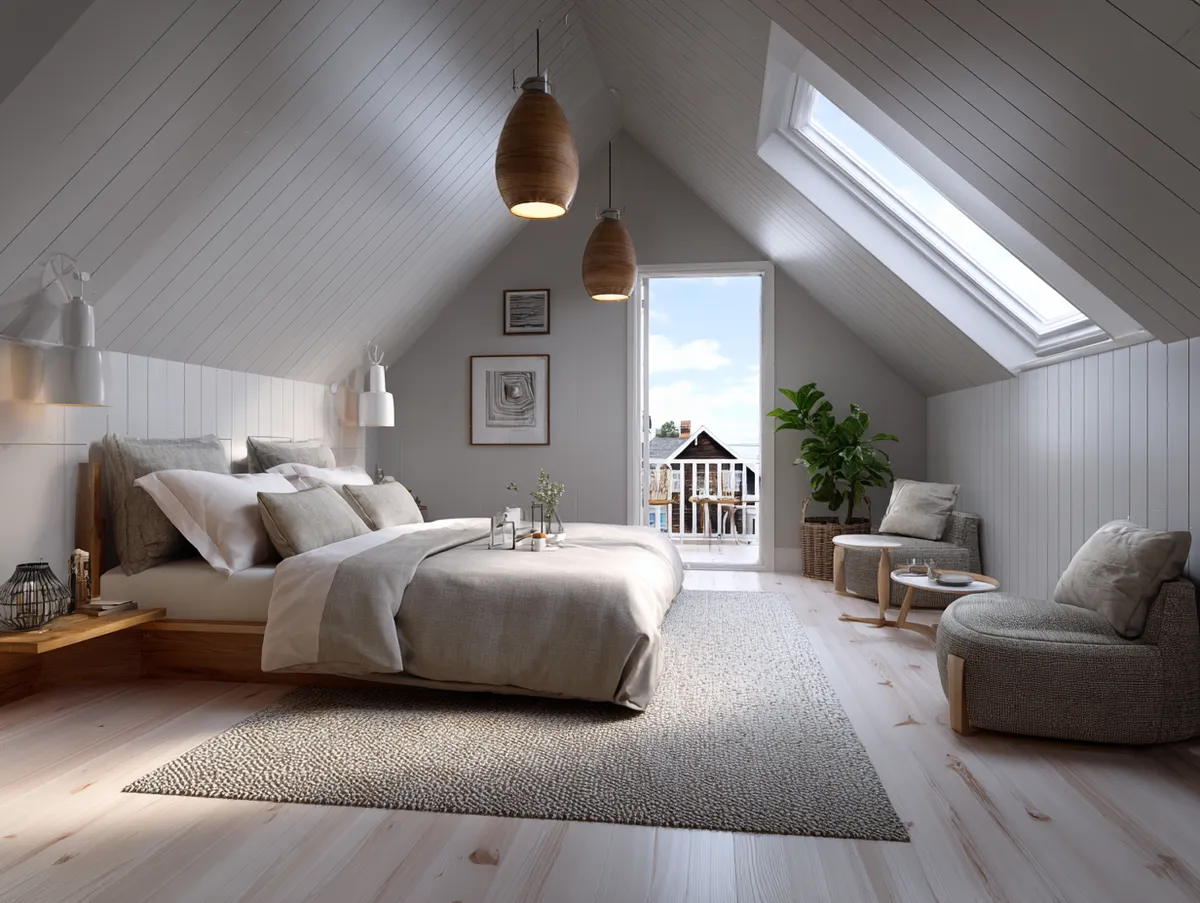
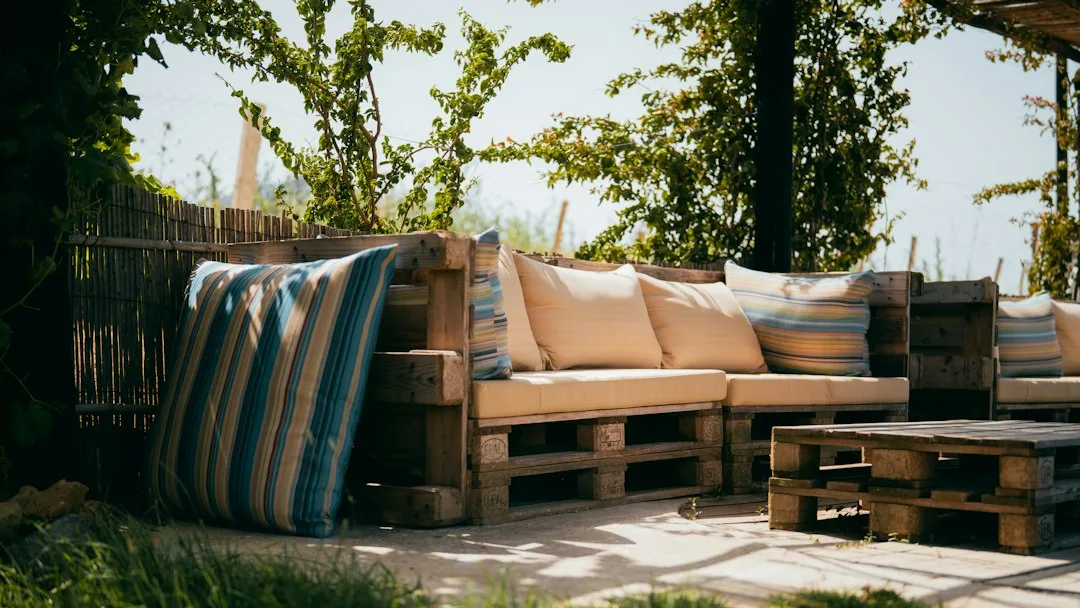
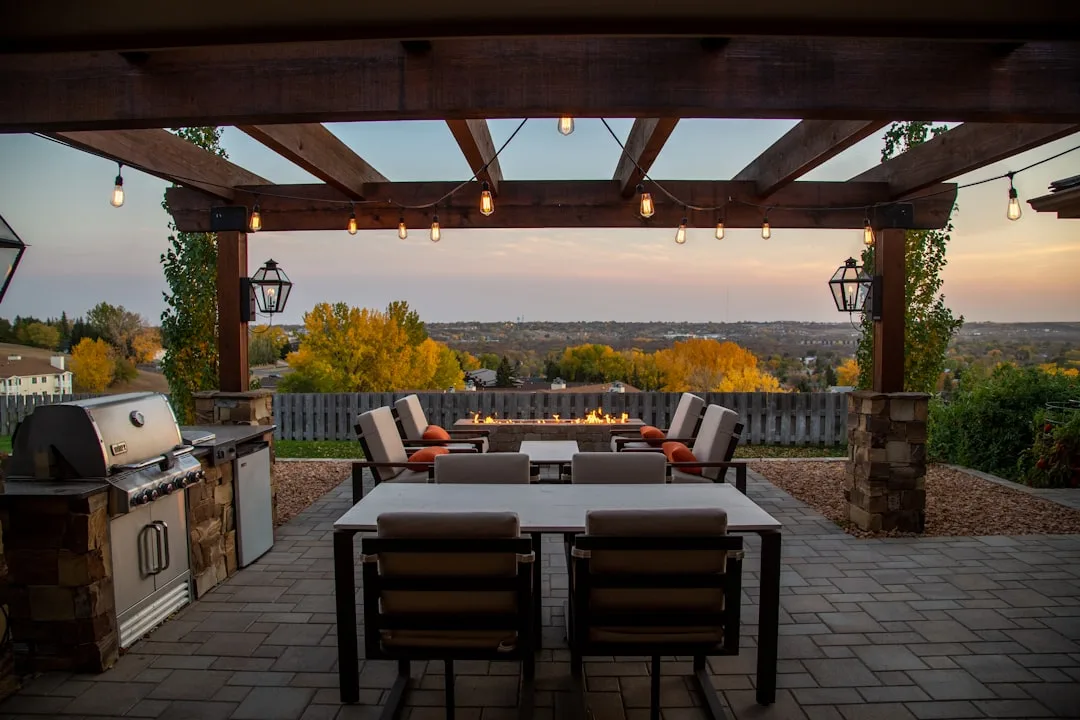
Industrial design has a distinct ability to make outdoor living feel grounded, functional, and authentic. With its raw edges, honest materials, and muted color palettes, this style elevates patios by introducing a sense of strength and timelessness. Gray patio furniture becomes the perfect centerpiece for this aesthetic, offering both subtle sophistication and sturdy structure.
Choosing gray in an industrial context is not about playing it safe. Instead, it brings texture, depth, and versatility to open-air environments. Whether working with weathered steel, polished concrete, or powder-coated metal, gray furniture delivers contrast against greenery while remaining understated. The industrial look thrives on visual tension: hard meets soft, old meets new, structured meets relaxed. When applied outdoors, this tension becomes especially captivating.
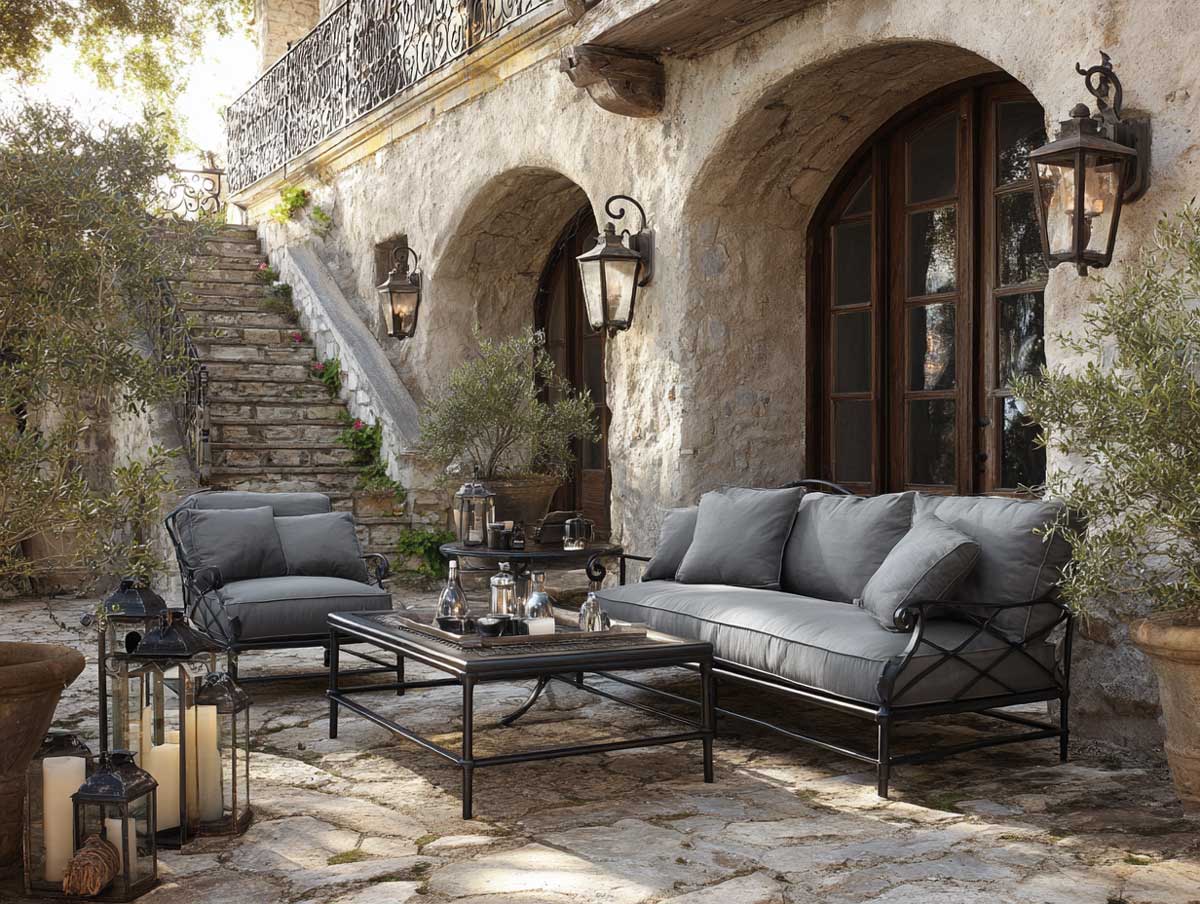
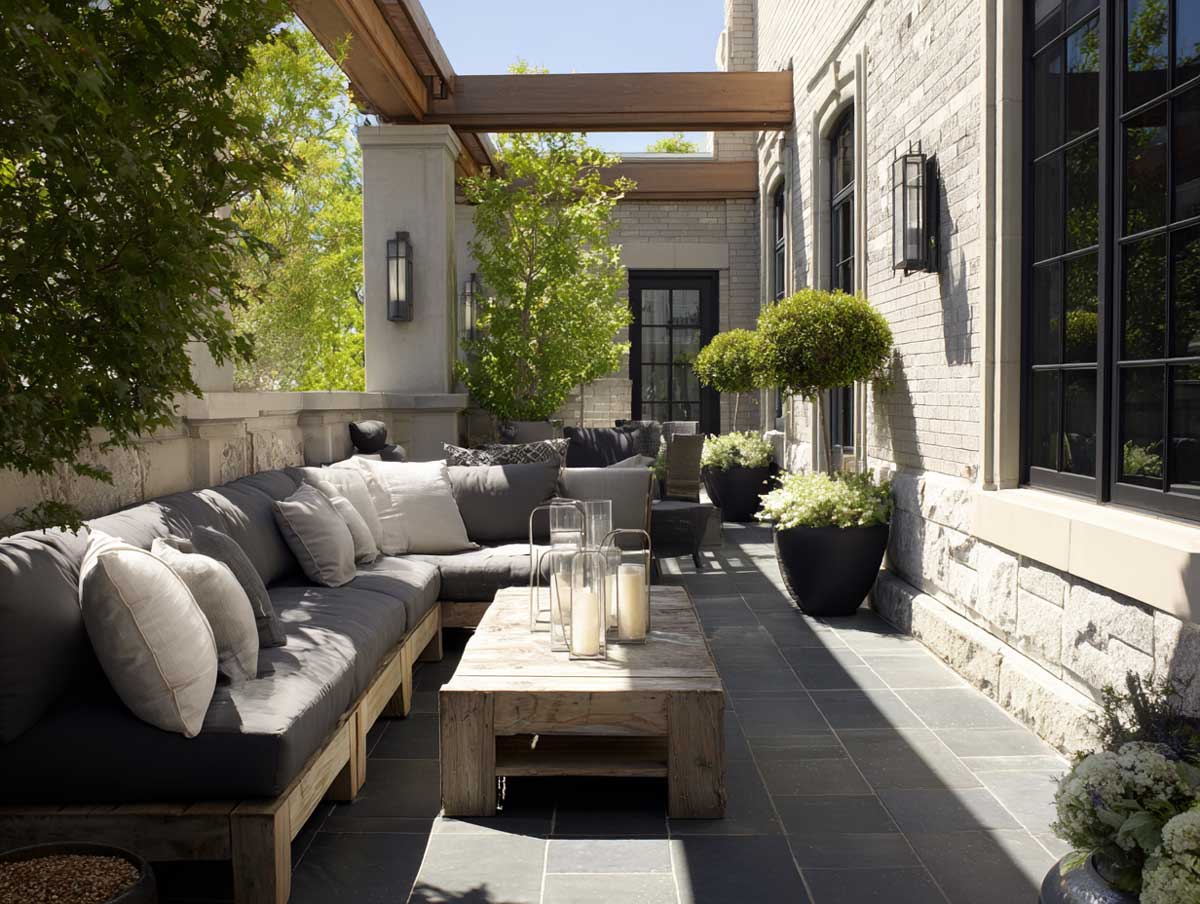
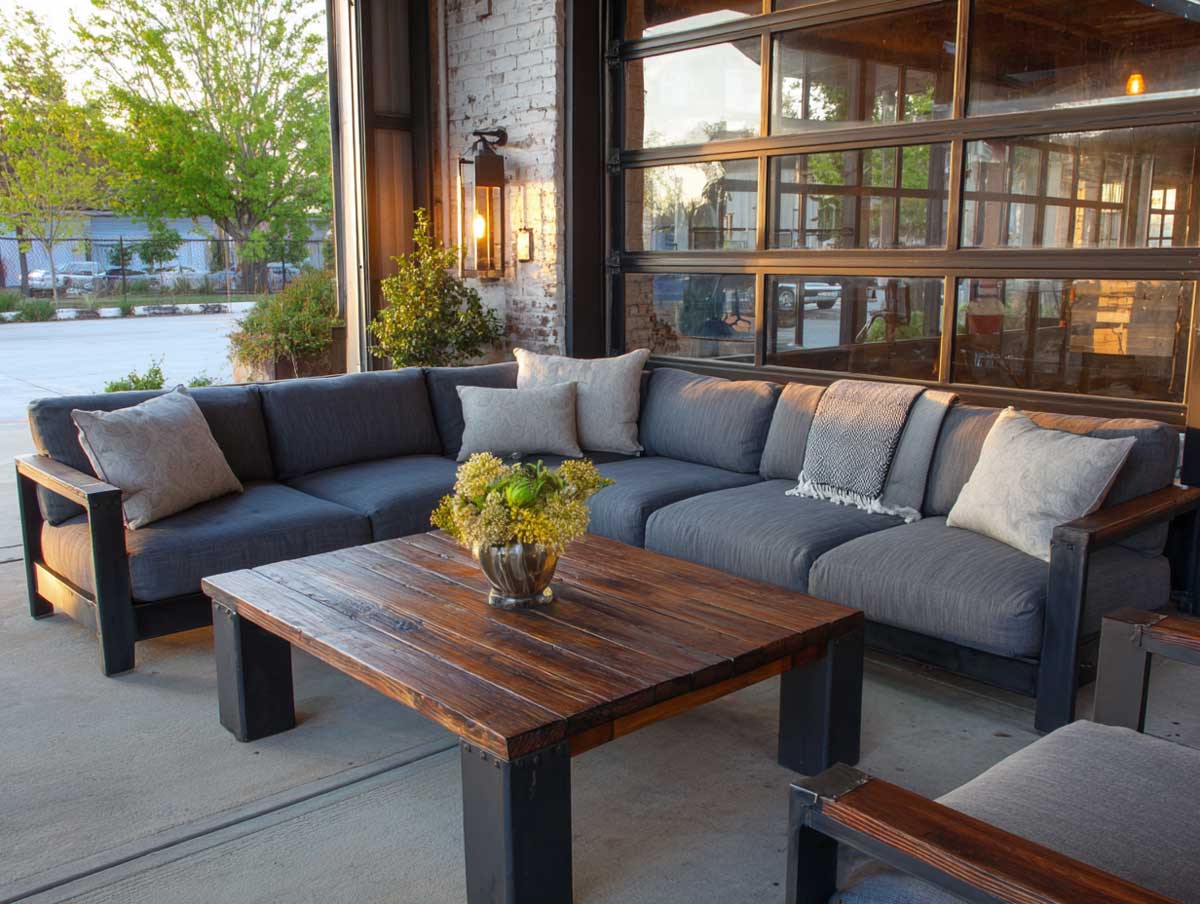
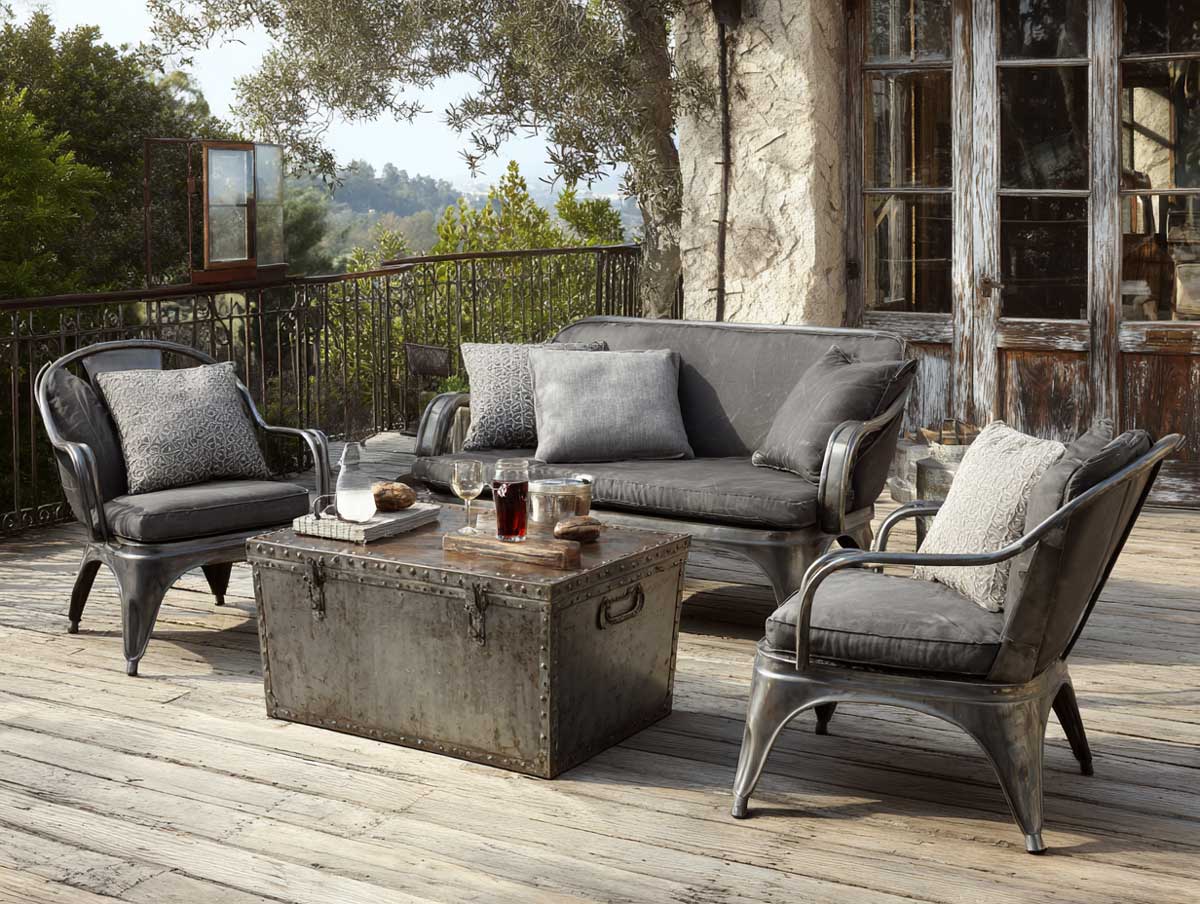
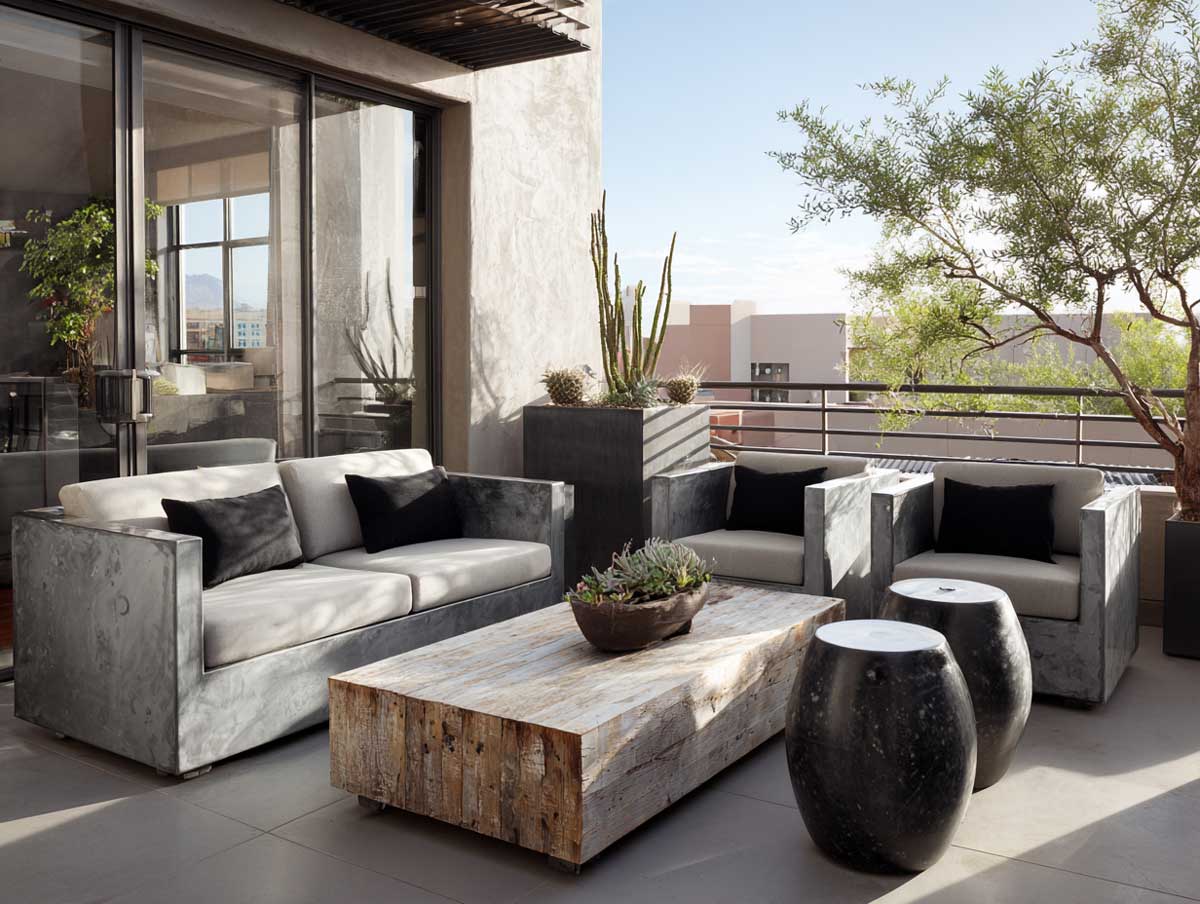
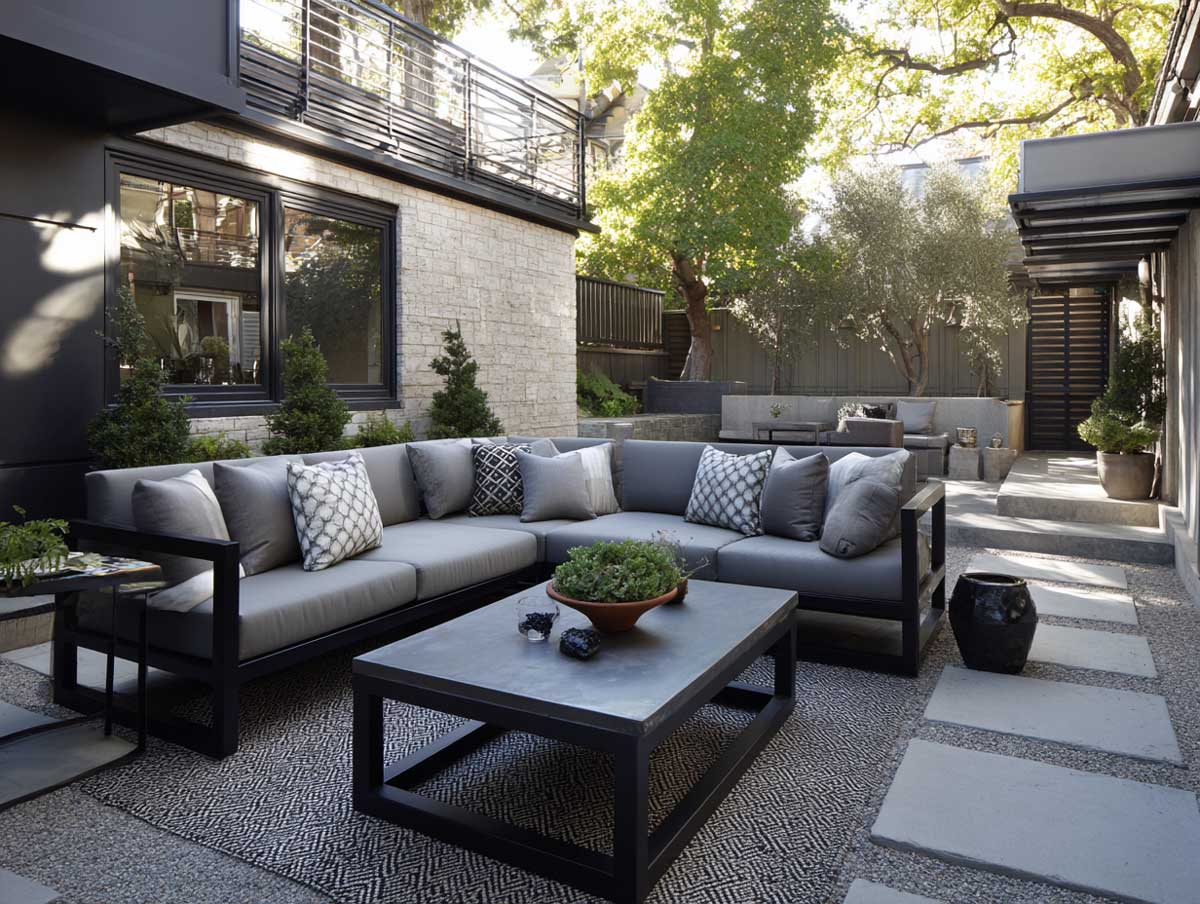
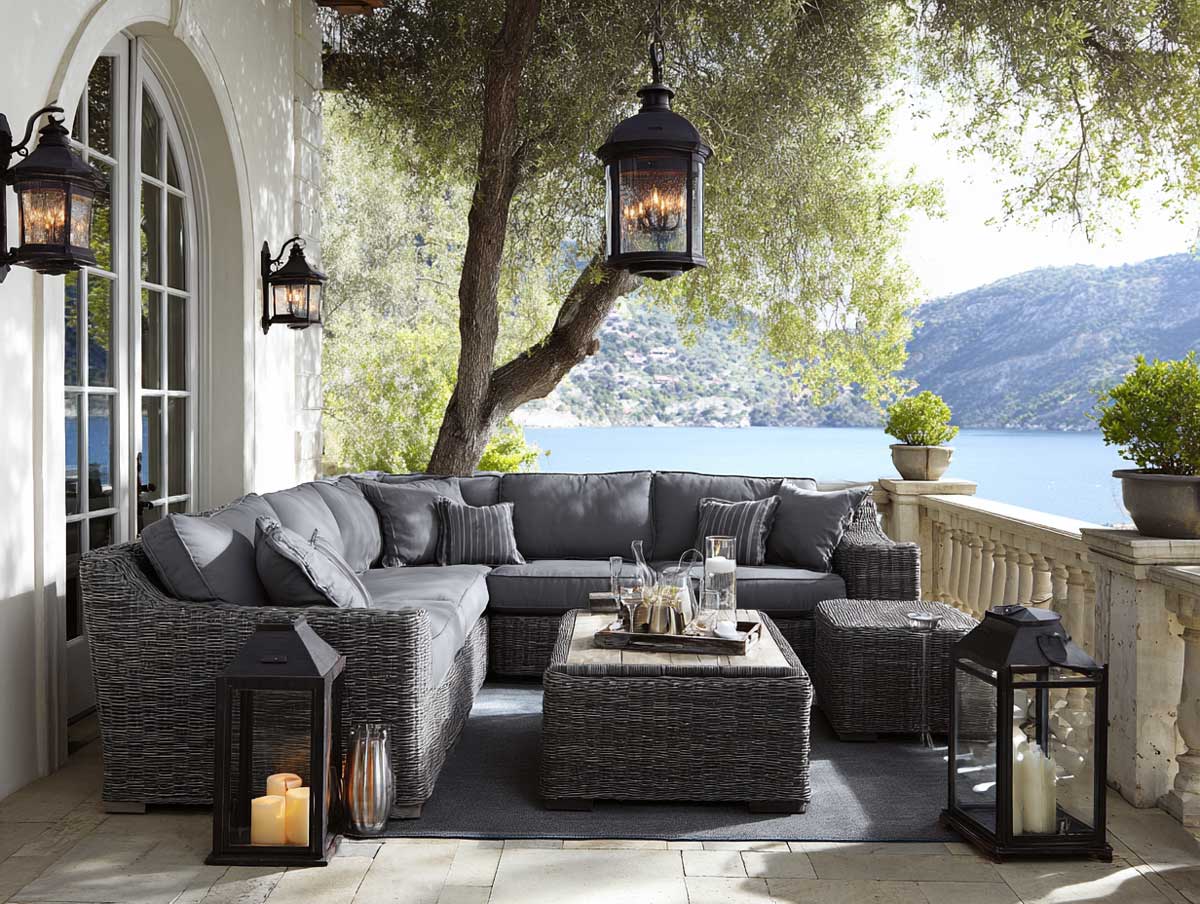
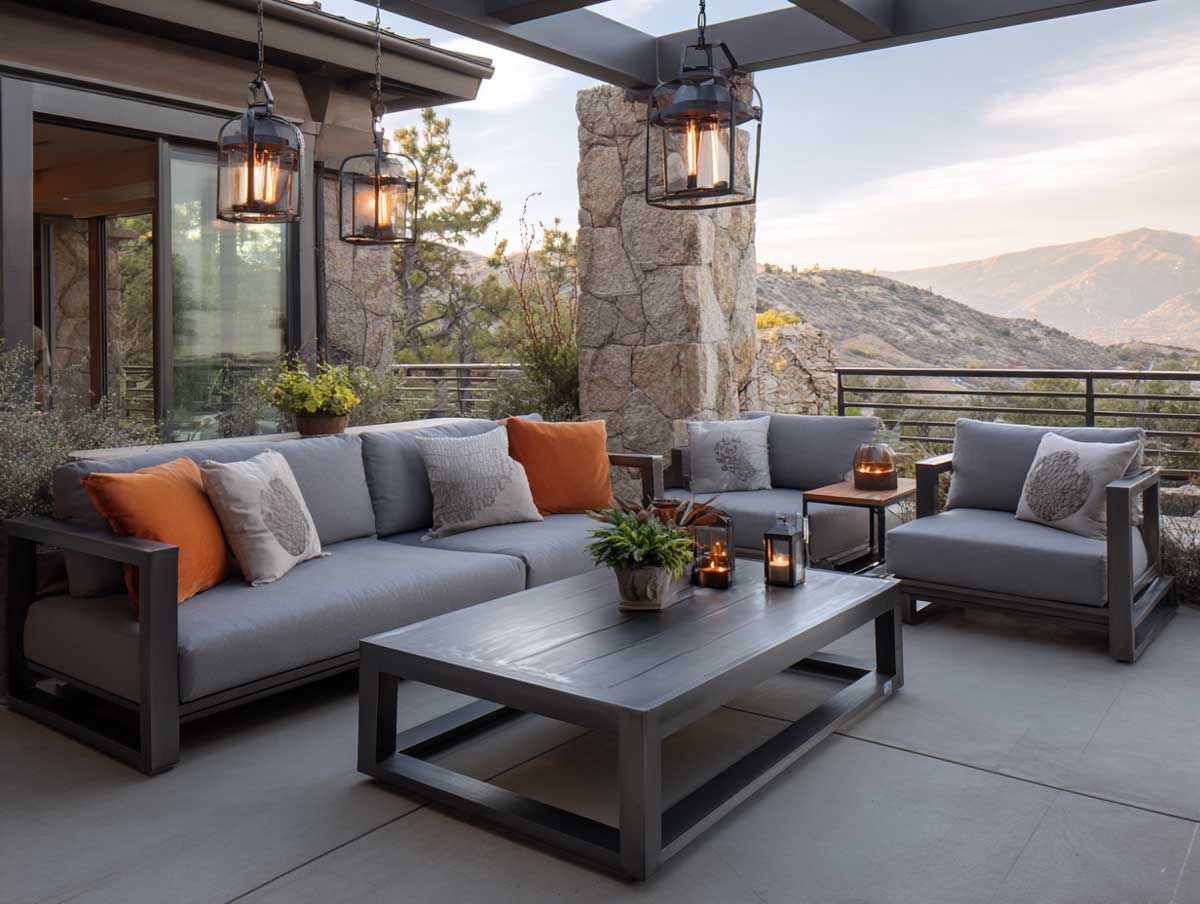
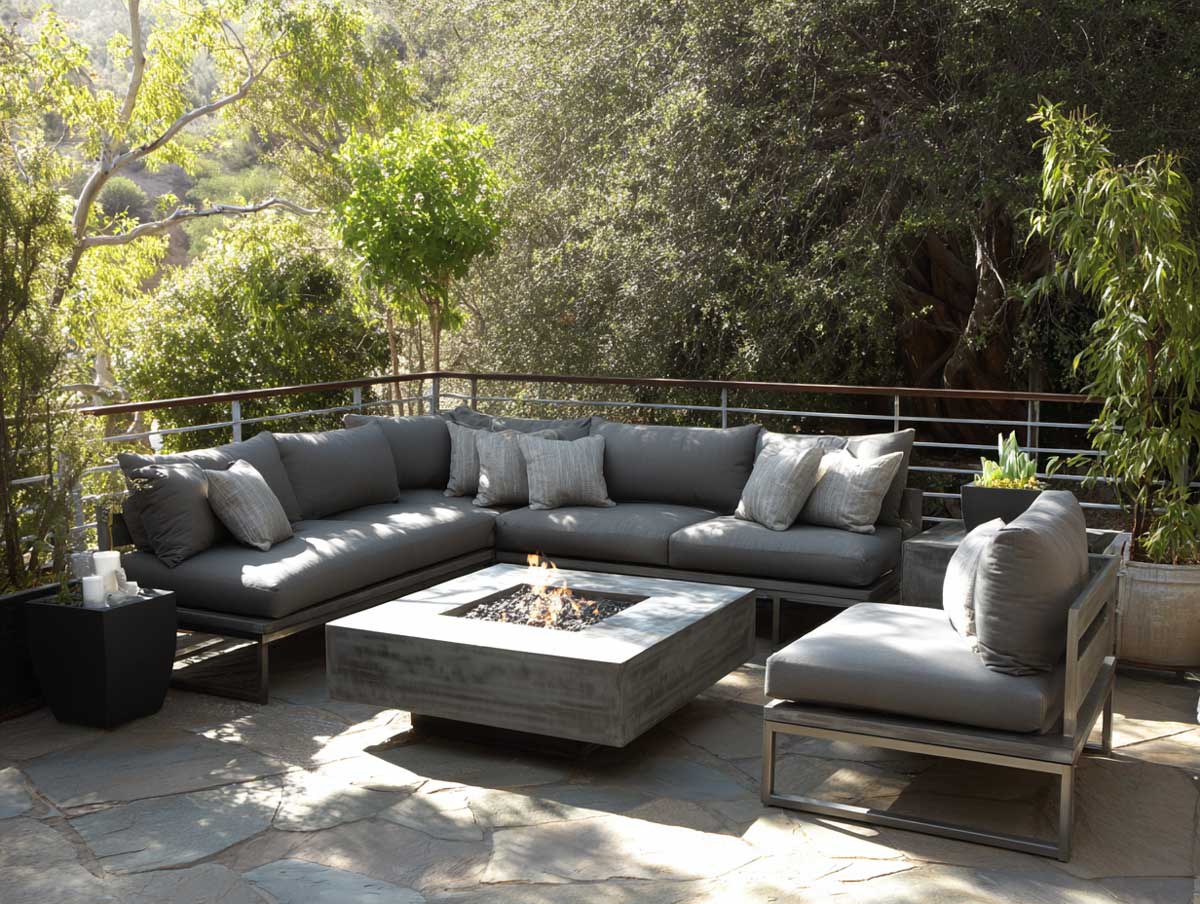
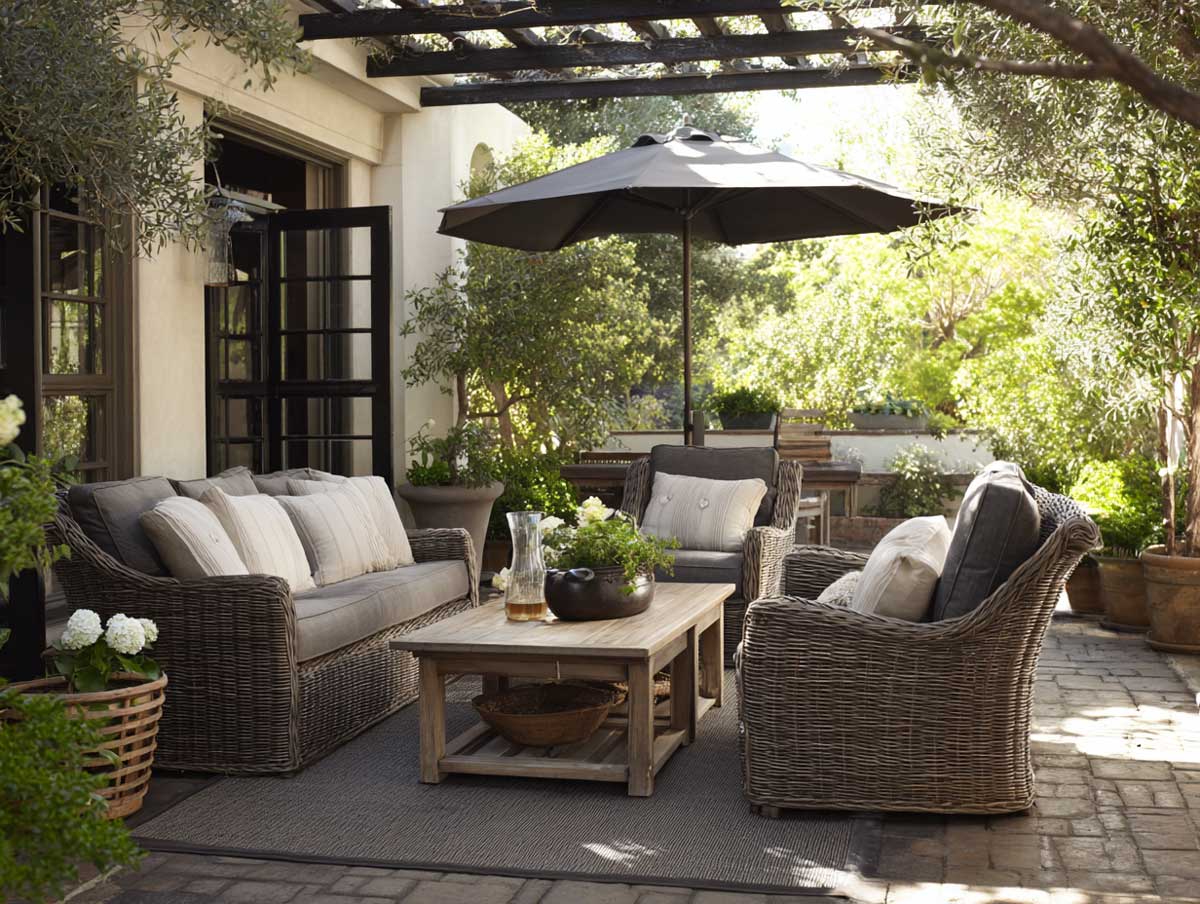
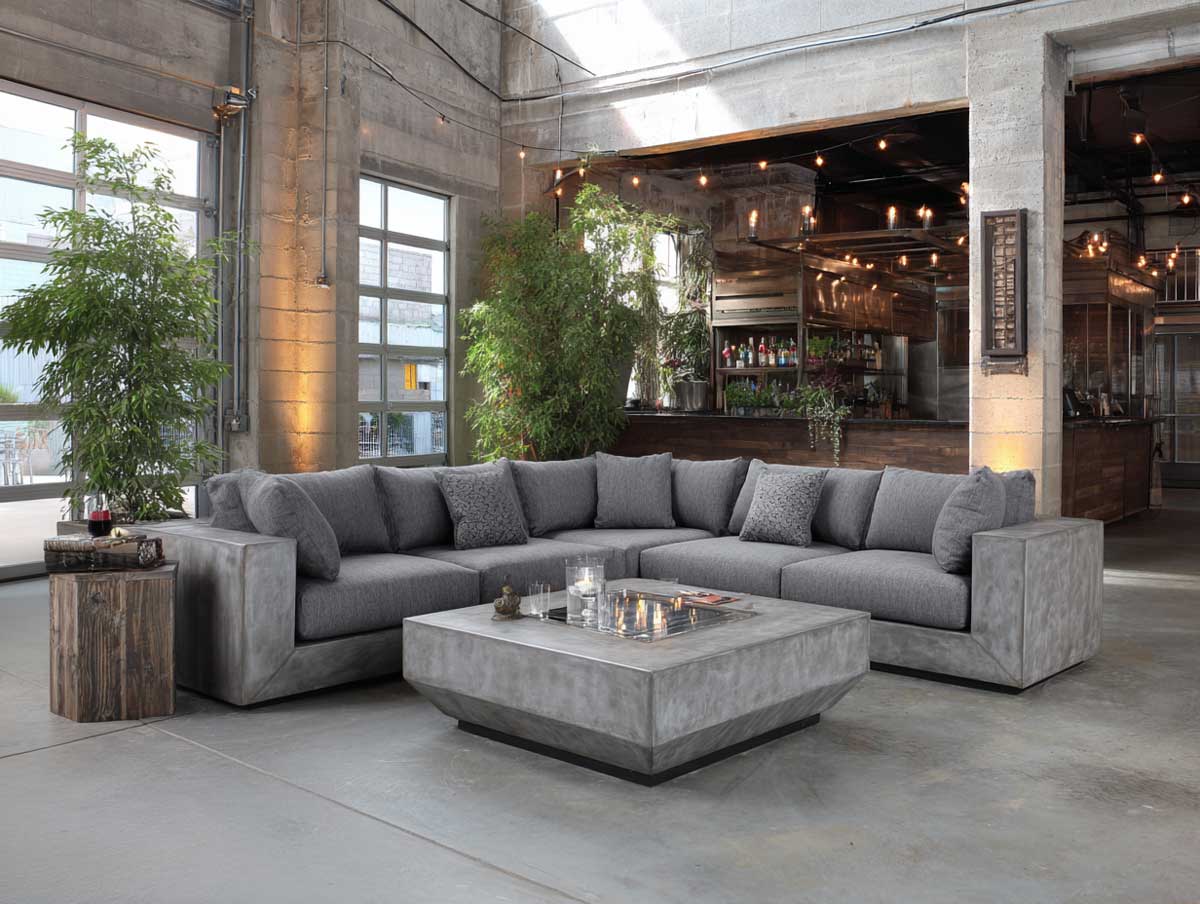
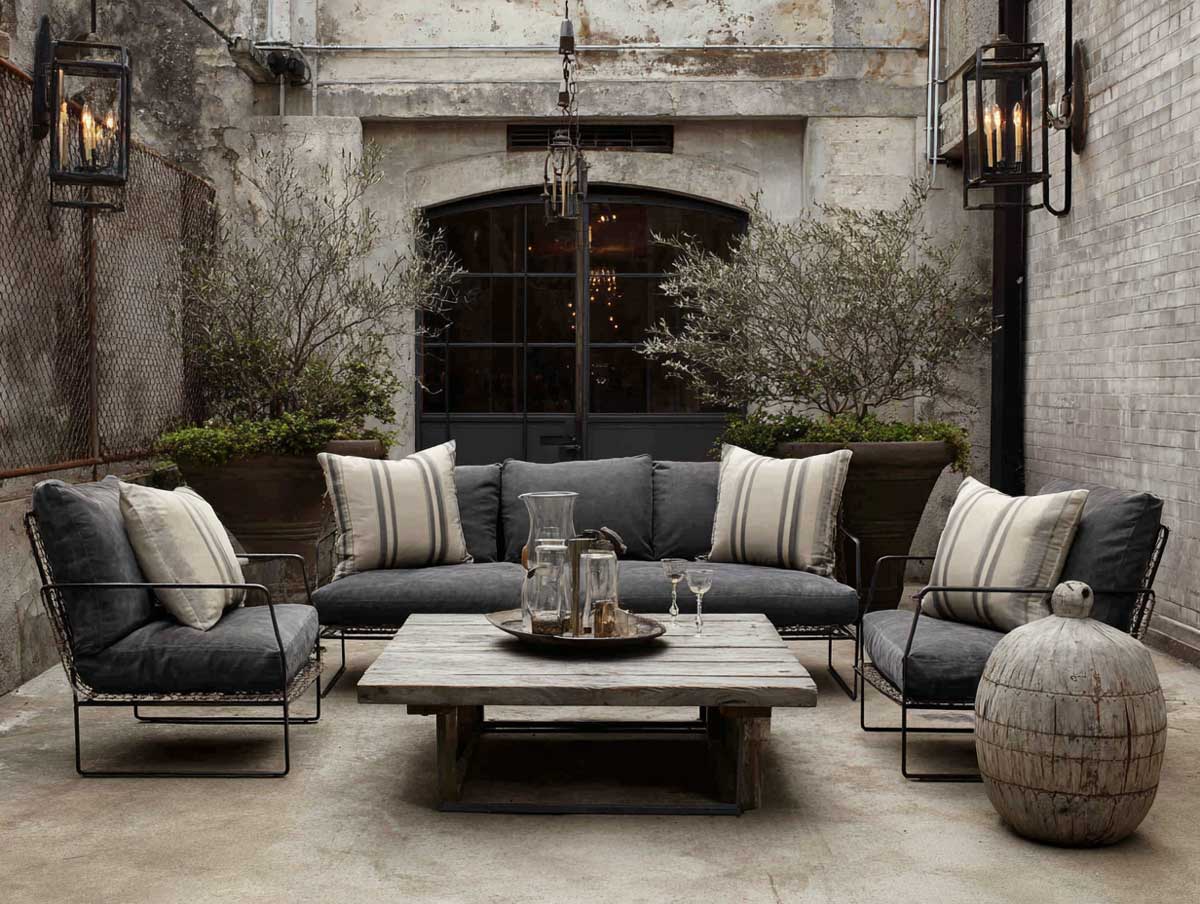
The following three design concepts demonstrate how industrial gray furniture can shape patios into cohesive and memorable experiences. Each one is visually distinct—ranging from urban loft-inspired rooftops to converted warehouse gardens—yet all revolve around minimalist values, architectural discipline, and tactile realism.
Urban Concrete Gray Patio Furniture Design Ideas
One of the most iconic expressions of industrial design is the rooftop loft patio, where raw architectural elements frame the outdoor experience. In this context, concrete gray furniture becomes more than just seating—it defines the mood and language of the entire space. On a rooftop surrounded by exposed brick, weathered steel beams, and glass barriers, every piece must be both practical and powerful in form.
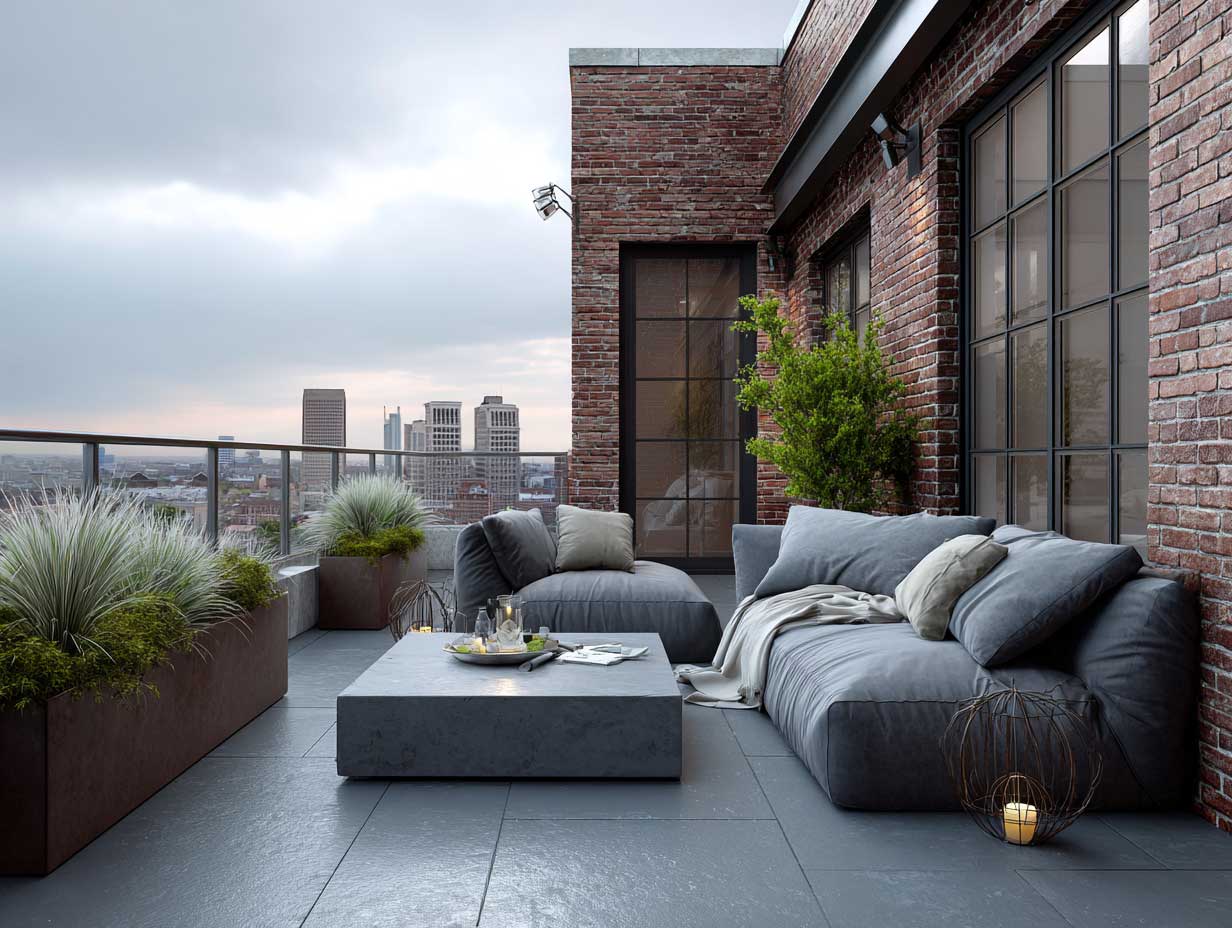


The furniture here is sculpted from cast concrete or concrete-look resin, often paired with minimal steel frames. Rectangular blocky armchairs, linear benches, and geometric coffee tables keep everything grounded. Their gray tones reflect subtle shades of urban light, from overcast skies to city glows at night. When paired with black or metallic accents—like a matte firepit or steel planter boxes—the result is a visually cohesive setup that exudes strength and quiet confidence.
Minimalist doesn’t mean sparse in this layout; it means everything has intention. Planters hold ornamental grasses or rigid succulents, chosen not just for beauty but for form. Lighting comes from recessed ground LEDs or exposed Edison bulbs strung overhead. The gray color palette doesn’t wash out the surroundings—it becomes a neutral framework that enhances everything else: the brick textures, the steel joints, and the horizon line itself.
These gray patio furniture design ideas take cues from converted industrial spaces and reinterpret them for the outdoors. The materials chosen are weather-resistant but feel architectural. Concrete ages beautifully and feels right at home in city environments. Even the imperfections—chips, patinas, small cracks—are welcome. They tell a story and contribute to the authenticity that industrial lovers crave.
This setup suits those who want their outdoor space to feel like an extension of a loft interior—modern, clean, and unapologetically urban.
Reclaimed Wood and Gray Steel Patio Furniture Design Ideas
When industrial sensibility meets reclaimed materials, the result is a hybrid style rich in character and craftsmanship. A garden patio framed by aging wood walls, gravel underfoot, and rusted steel containers finds its ideal match in gray patio furniture made from steel and salvaged wood. Here, the narrative shifts from sleek and modern to earthy and weathered—without losing the architectural sharpness of industrial form.
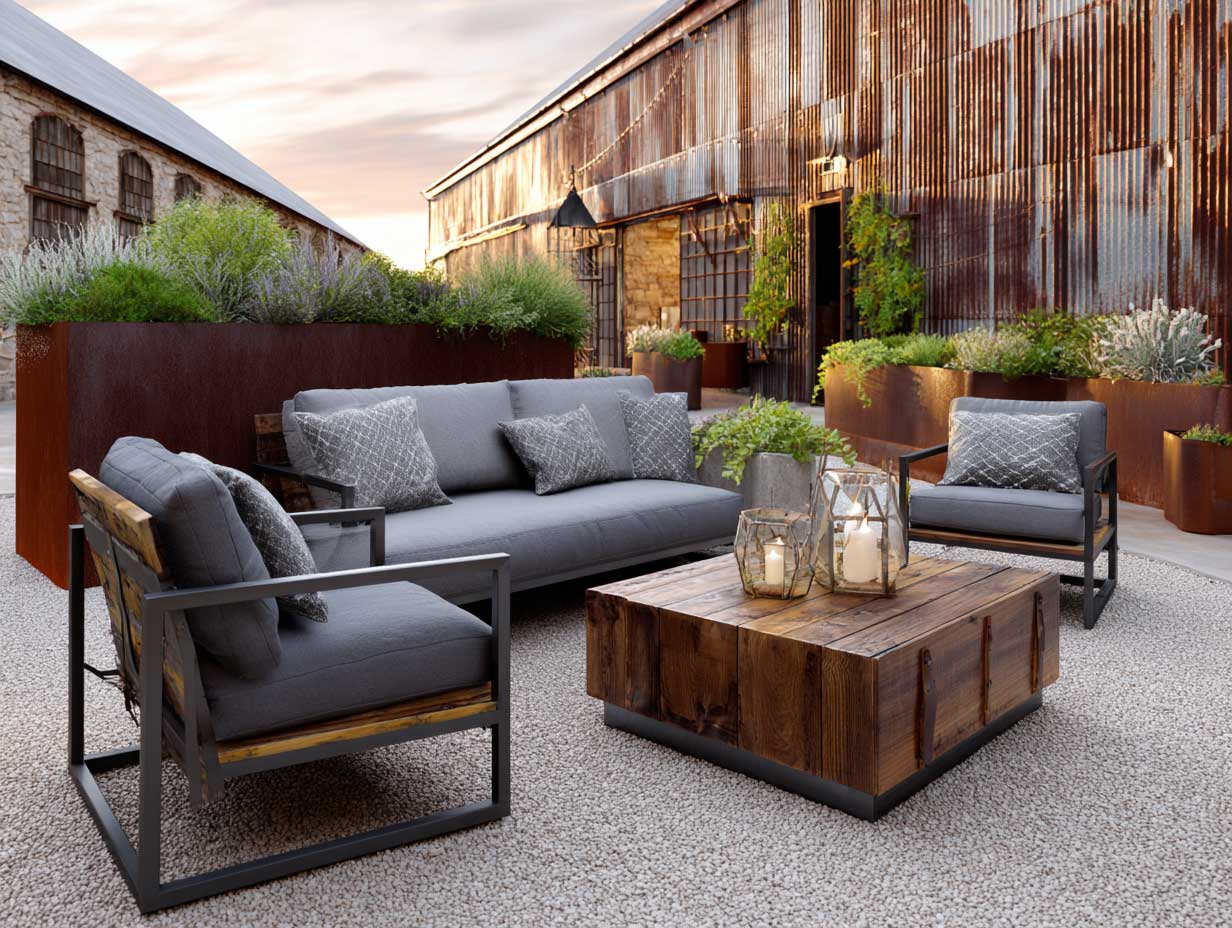
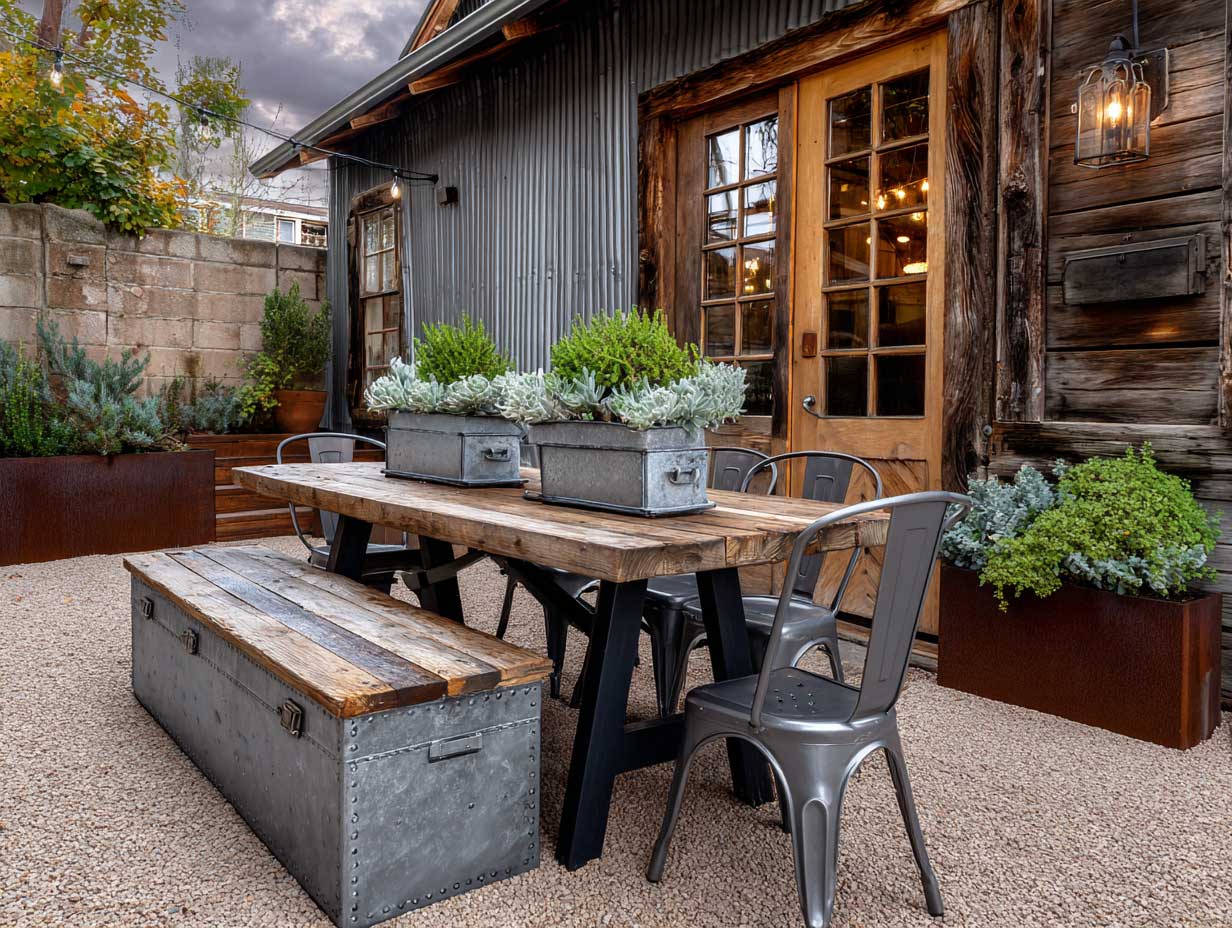
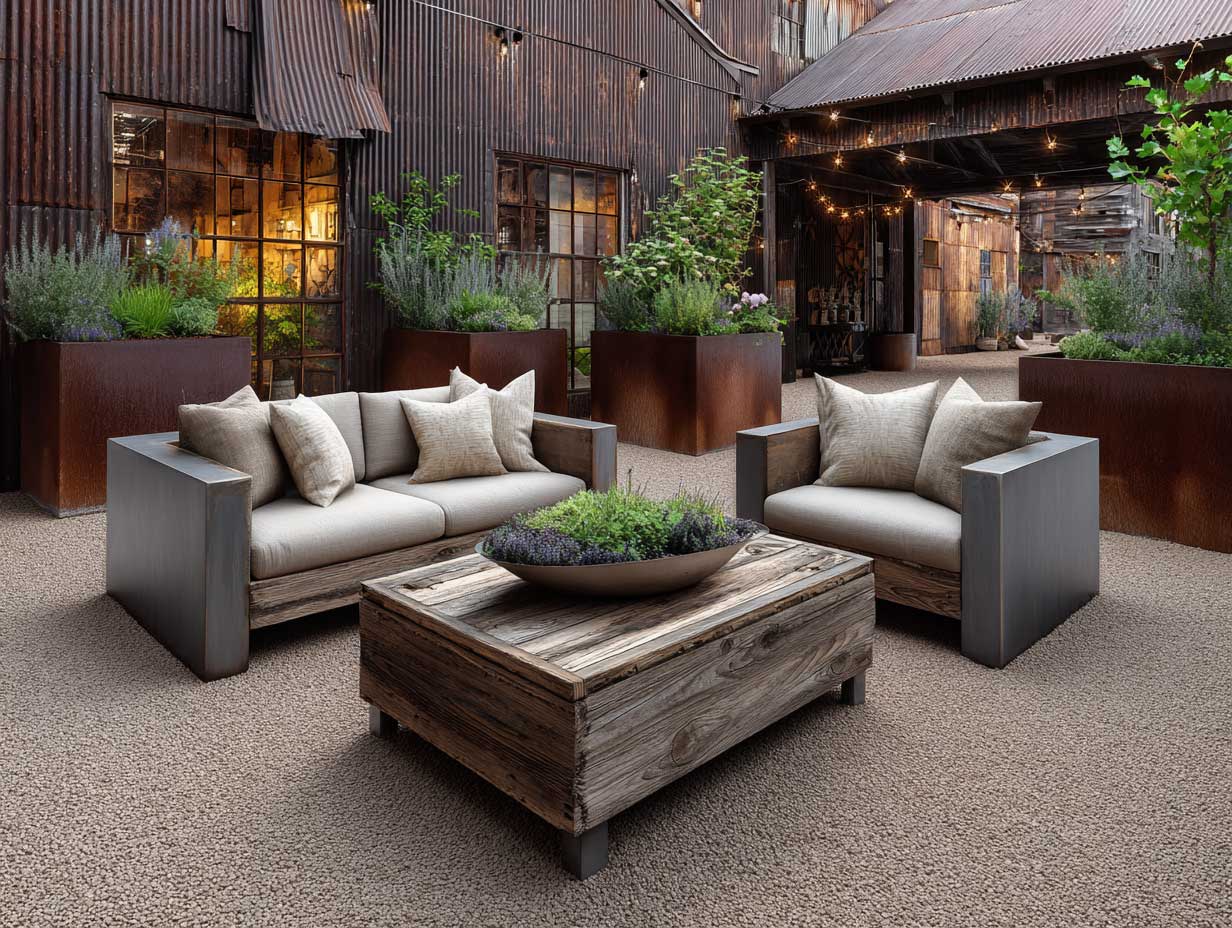
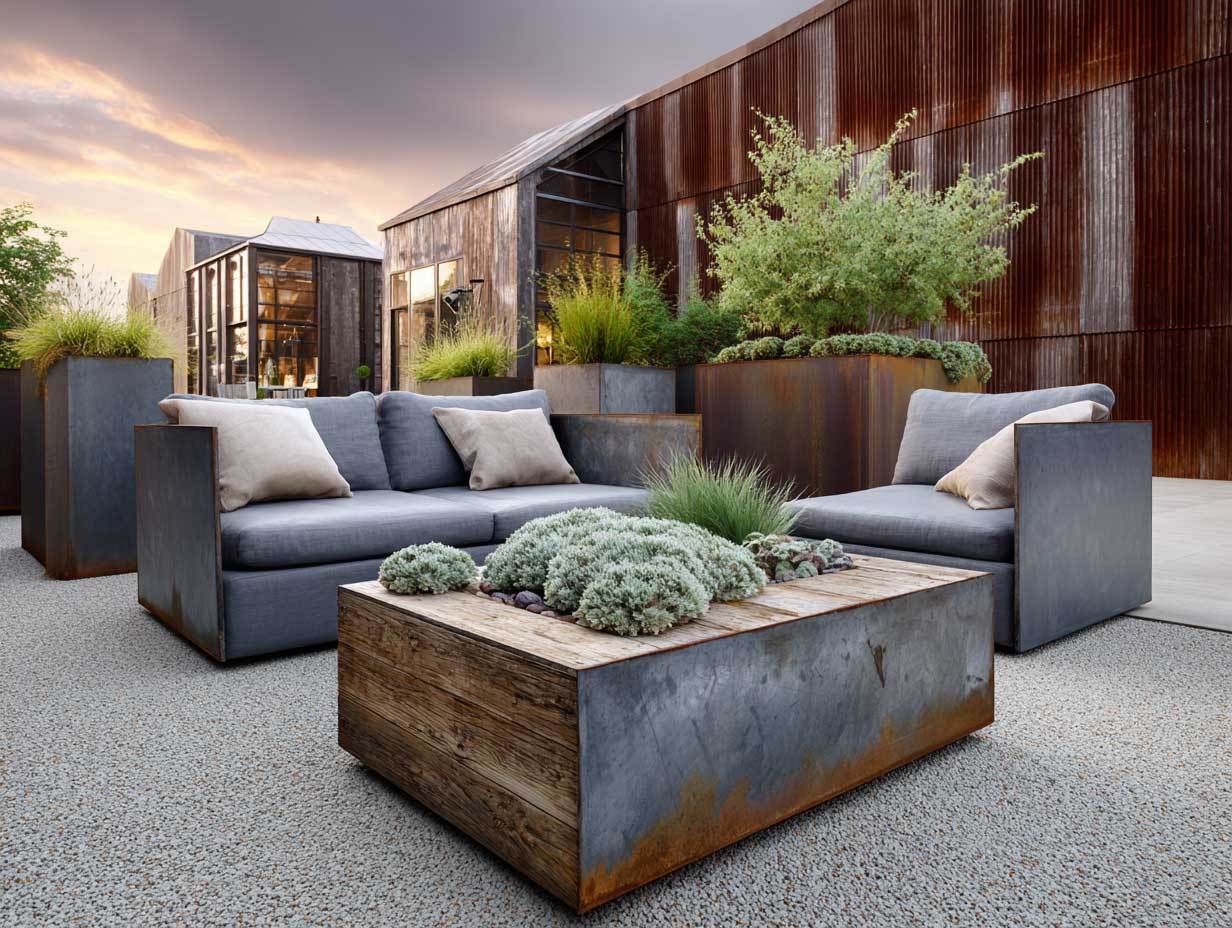
Chairs and benches crafted with powder-coated gray steel frames offer clean silhouettes, while the wood surfaces—drawn from old barn siding or decommissioned rail ties—add a layer of organic warmth. The wood isn’t polished to perfection; it’s intentionally distressed, showcasing saw marks, knots, and deep grains. This contrast between the industrial coldness of steel and the natural irregularities of wood becomes the central design statement.
Tabletops follow the same language: raw plank-style surfaces resting on minimalist steel legs. Some even include visible bolt details or custom-welded connections, emphasizing the hand-built aesthetic. Color tones remain strictly in the gray spectrum, from ash to slate, but are softened by the natural aging process and surrounding plant life.
To support the visual narrative, the rest of the patio embraces raw materials. Gravel flooring replaces wood decking, and corten steel planters hold wild ornamental grass or lavender, providing movement against the hard lines of the furniture. A few vintage industrial lamps or rusted accents further enhance the atmosphere.
These gray patio furniture design ideas show how the industrial look doesn’t have to be cold or sterile. By integrating tactile materials like wood and stone with sturdy gray steel, the result is warm, layered, and deeply human. It’s a look that matures with time, gaining texture and memory, season after season.
This design direction is ideal for those who appreciate imperfection, sustainability, and the story that every salvaged material carries.
Minimalist Gray Wireframe Patio Furniture Design Ideas
Industrial minimalism reaches new visual heights with wireframe gray furniture set against architectural backdrops. In this scene, a private terrace enclosed by smooth concrete walls becomes a canvas for light, shadow, and repetition. The furniture appears almost skeletal—thin gray metal rods shaped into angular seating forms, with no bulk or extra detail. These airy structures create strong outlines without overwhelming the space.

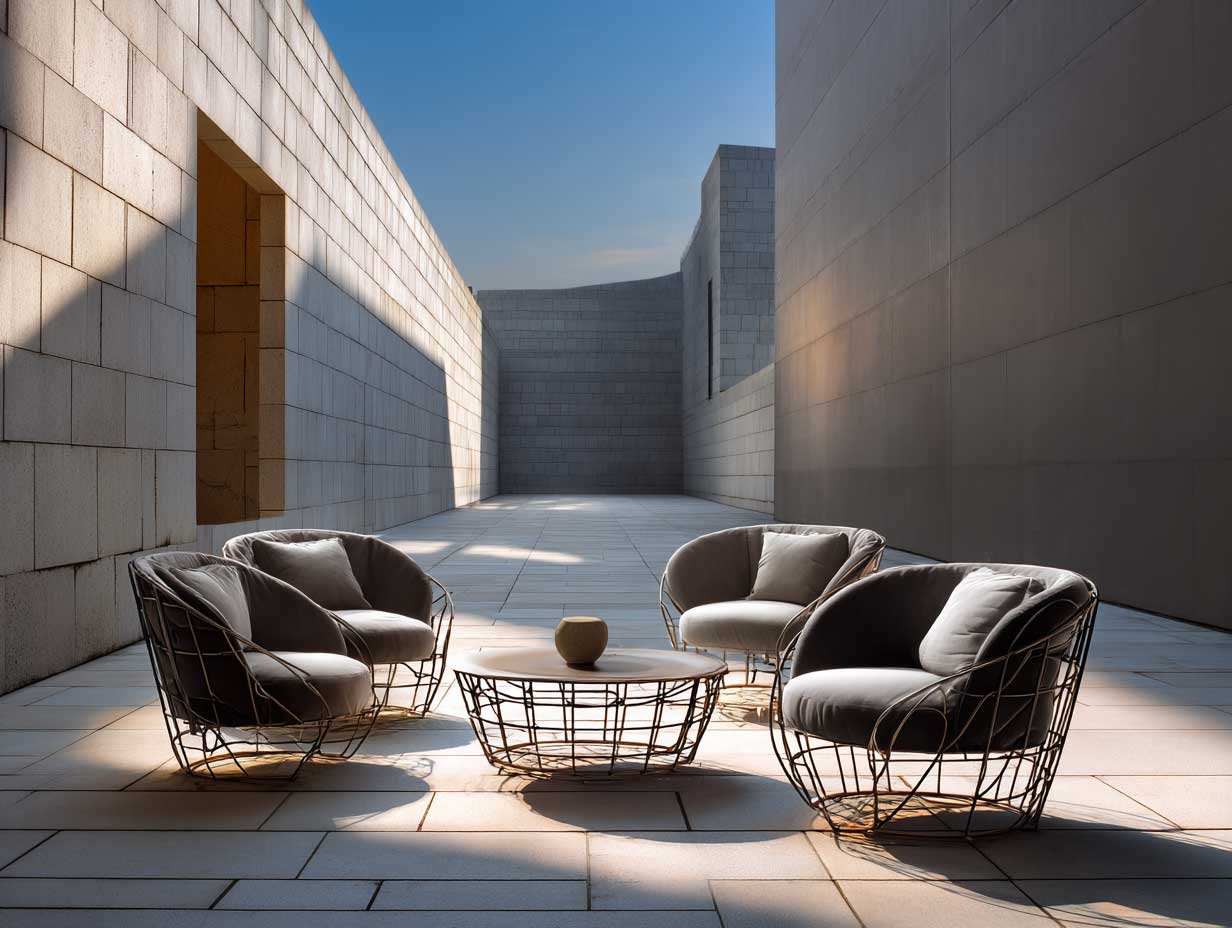


Unlike heavy materials like wood or concrete, this design leans into spatial openness. Chairs might have fine slatted backs or open square bases. Tables feature glass or metal tops resting on barely-there frameworks. Despite their visual lightness, the materials remain unmistakably industrial—steel finished in slate or gunmetal gray, built for endurance.
The beauty of these gray patio furniture design ideas lies in the way they let the surroundings shine. The wireframe pieces cast delicate shadows across stone pavers, creating changing patterns as the sun moves. With minimal solid surfaces, airflow is unobstructed, making them ideal for hot climates. Upholstery, if included, is removable and strictly neutral—light gray or off-black—to maintain harmony.
The minimalist layout allows flexibility and encourages negative space. A single tree in a concrete pot or a linear water feature becomes a focal point. Lighting is subtle and architectural, integrated into walls or recessed in the ground. The entire space feels curated without being sterile—modern without being cold.
This design concept is ideal for those who crave order, balance, and modernist clarity in their outdoor spaces. It respects the minimalist creed while delivering high-performance materials and long-lasting aesthetic impact. Wireframe furniture, though delicate in appearance, holds up to time and weather while blending seamlessly into contemporary industrial landscapes.
The gray color tone ensures that while the furniture contributes structure, it doesn’t demand attention. It becomes part of the rhythm of the patio, moving with light, wind, and the quiet beauty of the space itself.
Industrial gray patio furniture offers far more than utilitarian function—it crafts bold visual identities for outdoor spaces rooted in authenticity and discipline. Whether it’s heavy concrete modules on a city rooftop, steel-and-wood hybrids in a converted barn setting, or minimalist wireframes on a private terrace, each expression tells a unique story through materials and form.
Gray becomes a central tool in this language of design. It neutralizes distractions, enhances textures, and allows architectural elements to breathe. The raw edge of the industrial style finds its balance in minimalism, where every bolt, slab, and weld serves a purpose. In spaces designed with this ethos, silence, space, and structure combine to create timeless outdoor environments.
These interpretations challenge the assumption that outdoor furniture must be ornate or colorful to stand out. By choosing gray, especially within an industrial theme, homeowners and designers can lean into permanence, refinement, and material honesty—elements that continue to inspire and evolve across seasons.
FAQ
How can industrial gray metal seating be used to create a durable and modern outdoor lounge area
What is a practical way to incorporate concrete elements into a gray industrial patio design
Why is a monochromatic gray palette effective for an industrial-themed outdoor space
Complete guide
Furniture Decor Ideas for Every Room in Your Home
Living room, bedroom, dining, kitchen, outdoor — all in one place
Complete guide
Loft Design Ideas That Transform Raw Space Into Home
Bedrooms, kitchens, living rooms, styles, materials, layouts — all in one place
Complete guide
Grey Home Color Ideas for Every Room and Every Shade
Exteriors, kitchens, living rooms, bedrooms, bathrooms — all in one place