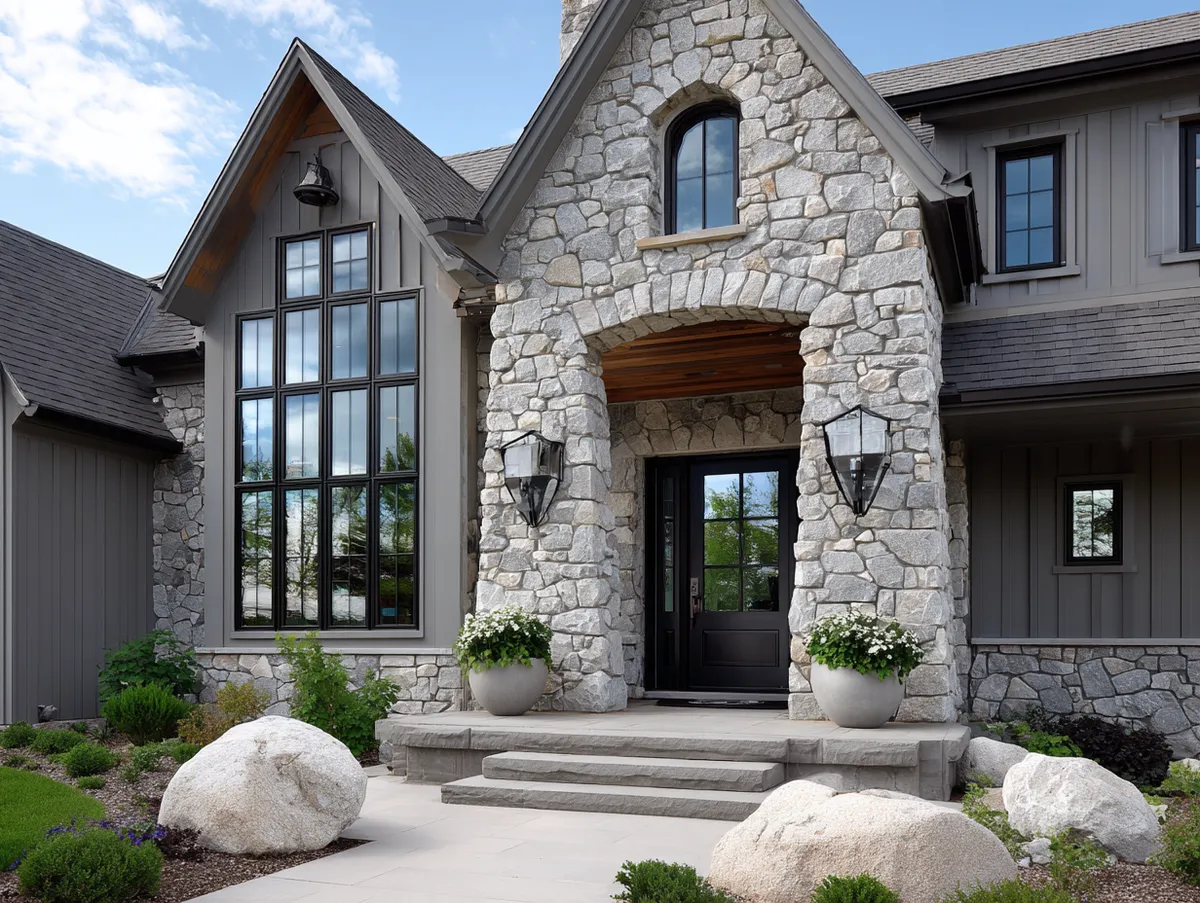
Yellow and gray house siding is one of those color combinations that looks like a mistake on a paint chip and a revelation on an actual facade. I’ve walked past dozens of homes where this pairing stopped me cold — not because it was loud, but because it was right. The yellow pulls warmth from the sun, the gray anchors the whole thing so it doesn’t read as a lemonade stand. Pick the wrong shades, though, and you get a house that looks like a highlighter attacked a parking garage. This article covers three distinct yellow-gray approaches — soft with white accents, bold mustard with dark panels, and pale with traditional trim — so you can find the version that fits your architecture instead of fighting it.
Soft yellow exterior house paint colors are the most-searched version of this palette, and for good reason. They work on almost every house style from Victorian cottage to modern farmhouse. Gray trim is the variable that determines whether your house looks expensive or accidental — more on that below.
– Soft yellow + white accents + gray window trim — works on two-story traditional homes, Benjamin Moore Hawthorne Yellow HC-4 is the go-to pick around $60–$80/gallon
– Mustard yellow + dark gray lower panels — contemporary split look, James Hardie fiber cement handles it well; expect $8–$12/sq ft installed
– Pale yellow + light gray shutters/trim — classic colonial vibe, pairs naturally with brick pathways and white porch railings
– Gray trim color matters more than the yellow — warm-undertone grays (greige direction) read richer; cool blue-grays can flatten the yellow unexpectedly
– What color goes with yellow siding — charcoal, slate gray, and warm greige all work; avoid pure cool grays with greenish undertones
Soft Yellow Siding with Gray Window Trim and White Accents
Benjamin Moore Hawthorne Yellow HC-4 — around $72 a gallon at most independent dealers — is my go-to recommendation for this look. It has a slight gray undertone baked right in, which means it photographs beautifully and never reads as a crayon yellow, even in harsh afternoon light. You’ll notice the difference the moment you hold it next to a brighter lemon yellow: Hawthorne Yellow looks like it belongs on a house that’s been standing for 150 years. Pair it with Benjamin Moore Stonington Gray HC-170 on the window trim and you have a combination that sells itself.
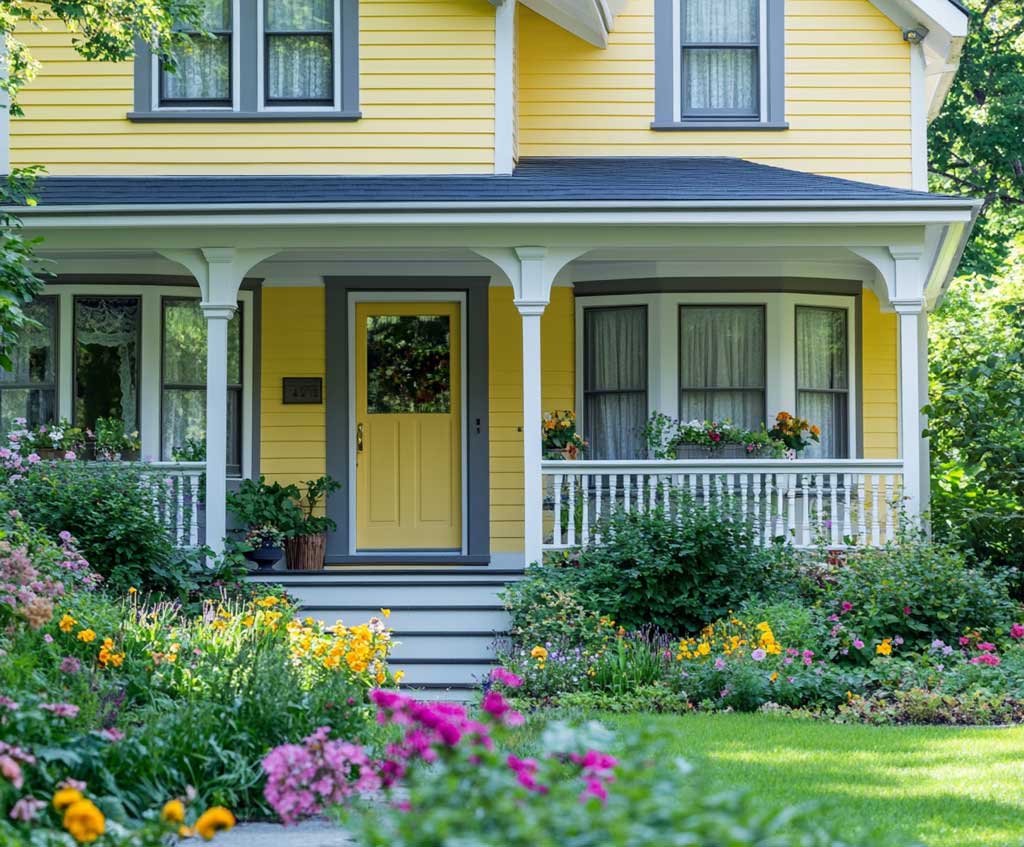
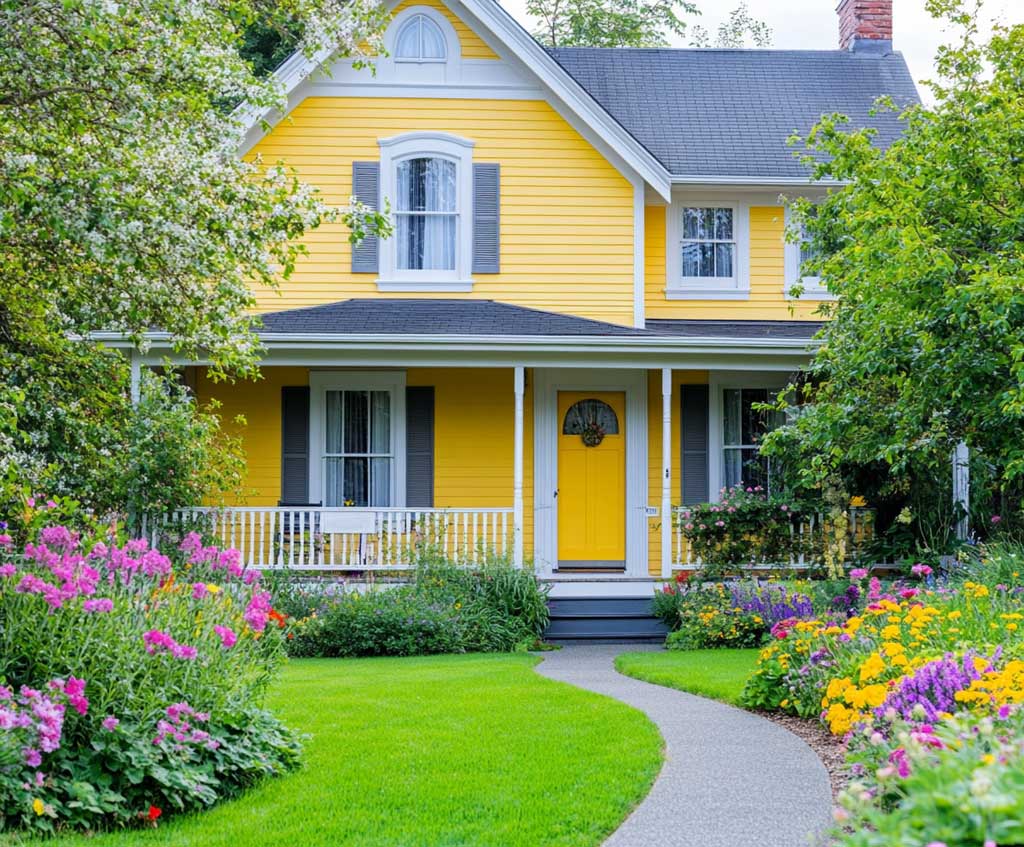
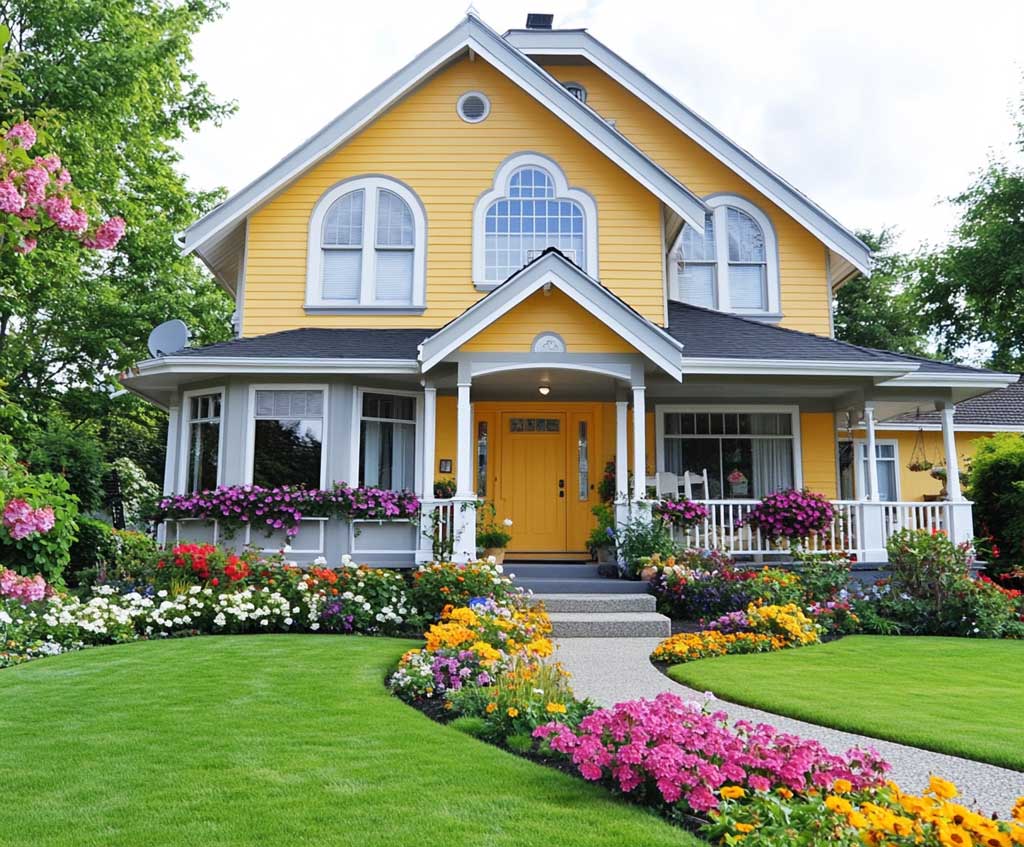
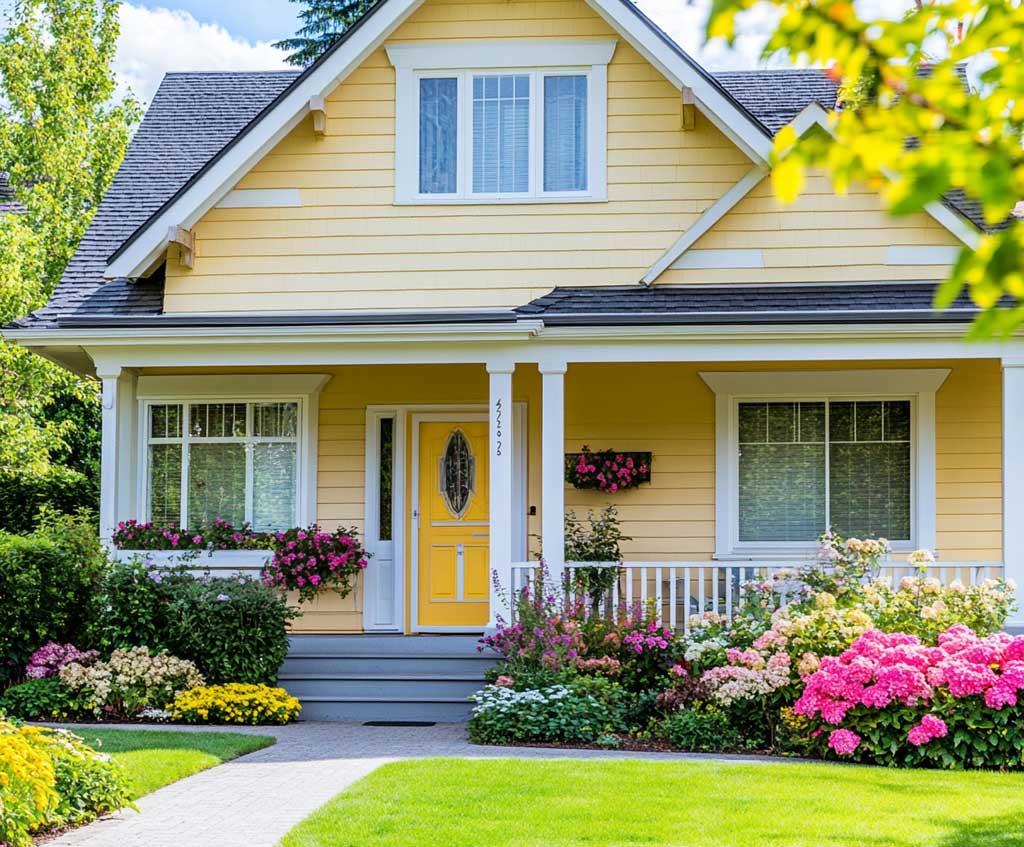
White trim is the third player here, and it does the heavy lifting of separating the yellow body from the gray accents so neither color bleeds into the other. Frame the windows in gray first, then run white along the porch railings, fascia boards, and corner boards. That layering — yellow, then gray, then white — gives the facade a depth that a two-color scheme simply can’t match. I stole this trick from a 1910 craftsman bungalow in my neighborhood that’s been repainted six times and always returns to this same formula. Skipping the white layer and going straight yellow-to-gray usually produces a result that looks flat rather than layered. Don’t do it.
The front door is where you either commit or chicken out. A bright yellow door on a soft-yellow house reads as timid — you’ve matched yourself into invisibility. Try a deep navy or a charcoal door instead. You’ll get more contrast from a dark door against yellow siding than from any window trim decision you make. The green lawn and surrounding plantings do the rest of the work by providing a natural frame that makes the whole color combination pop from the street. For more exterior color ideas that play with contrast this way, explore ArtFasad’s full exterior color combinations library.
Don’t paint the window trim and the siding the same family of yellow. I’ve seen homeowners try “warm yellow siding + golden yellow trim” to create a monochromatic look — it reads as a mistake, not a design choice. The eye needs a clear boundary between the main field and the trim color. If your trim is within two LRV points of your siding, repaint it. Also: avoid cool-toned grays with a noticeable blue or green cast on a warm yellow house. The undertones will fight each other in afternoon light and your house will look purple from certain angles.
Mustard Yellow Paired with Dark Gray Panels Below the Waterline
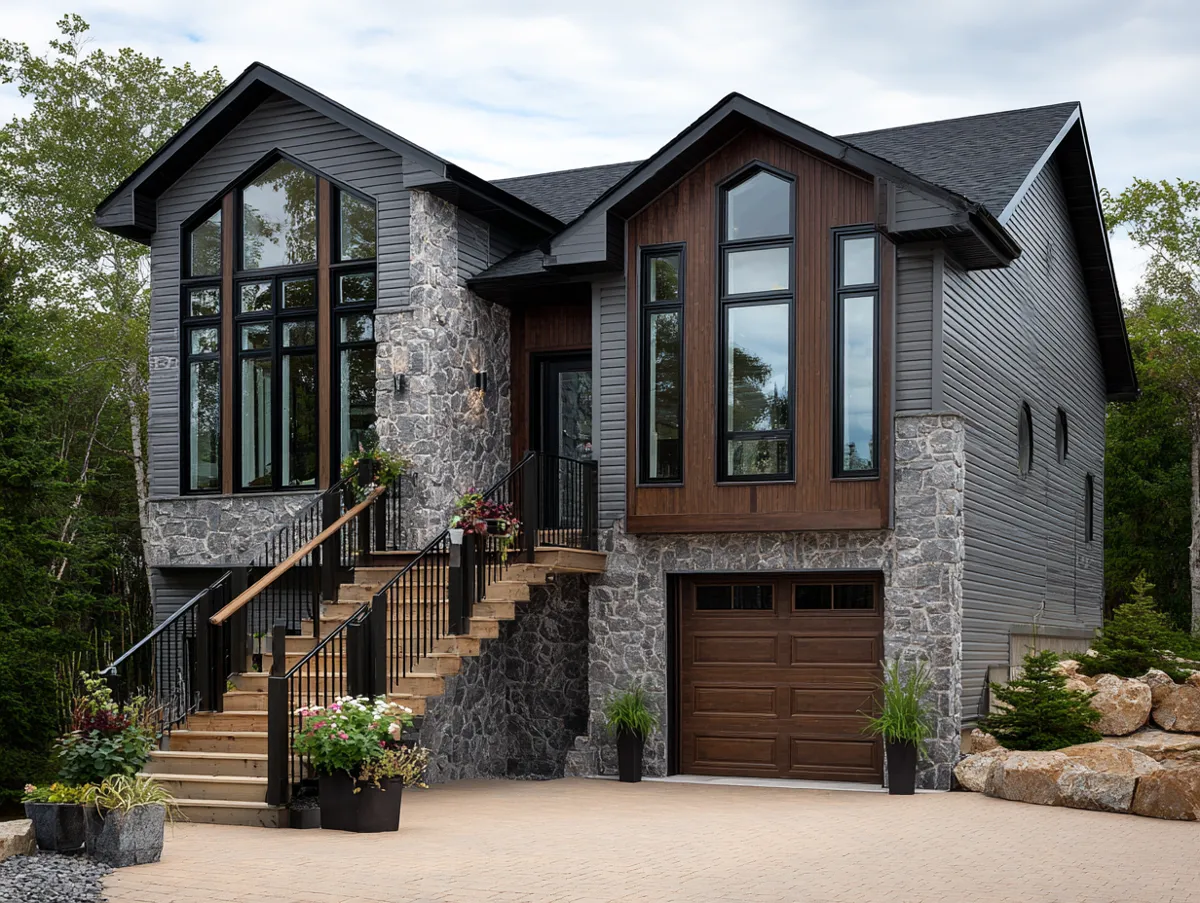
Mustard yellow and dark gray is a contemporary split that divides the house horizontally — warm tones above, grounding tones below — and it reads as a deliberate architectural statement rather than a color accident. The split line typically falls at the water table or the floor-line of the second story, which gives the dark gray panels a structural logic rather than just a decorative one. James Hardie’s HardiePanel vertical siding in Iron Gray runs about $10–$14 per square foot installed and holds its color reliably for 15+ years without the fading issues I’ve seen with painted wood at this contrast level.
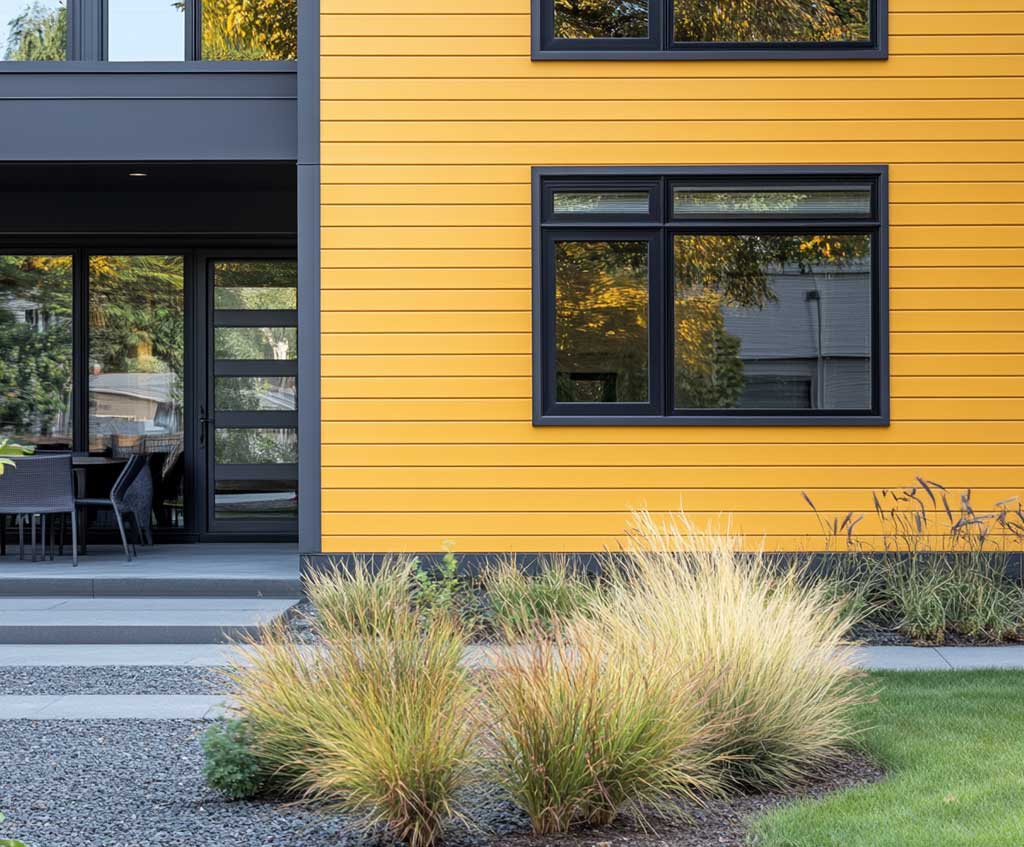
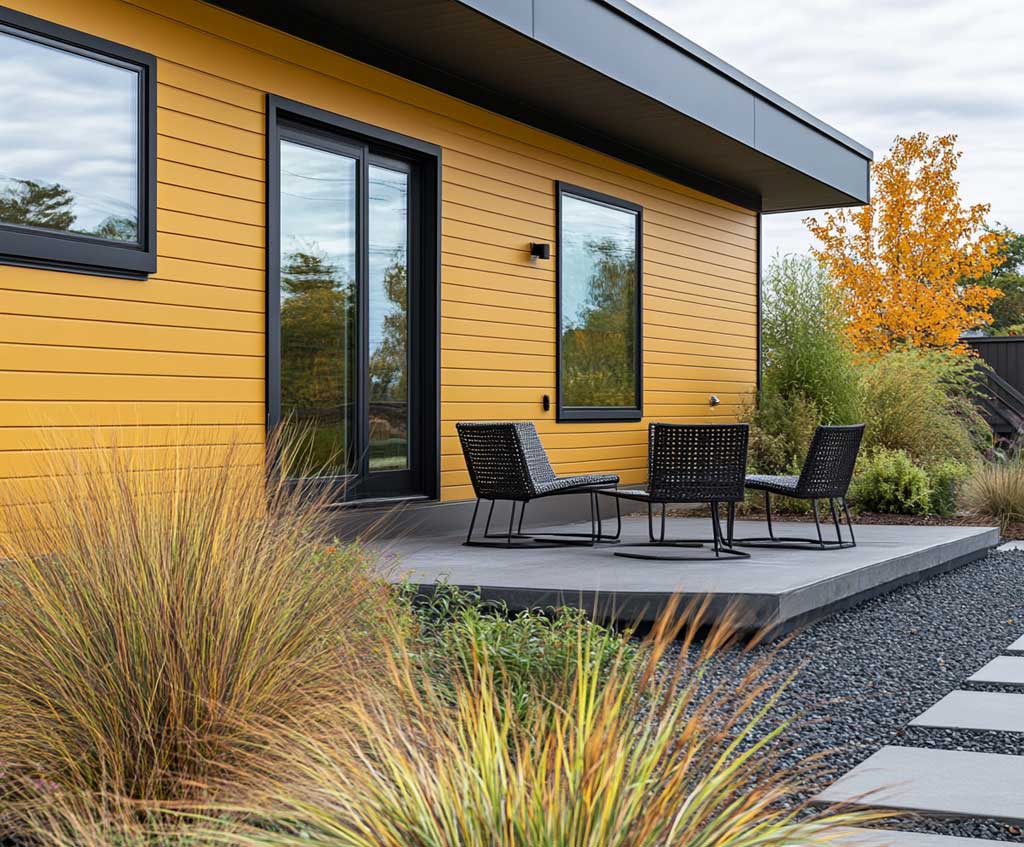
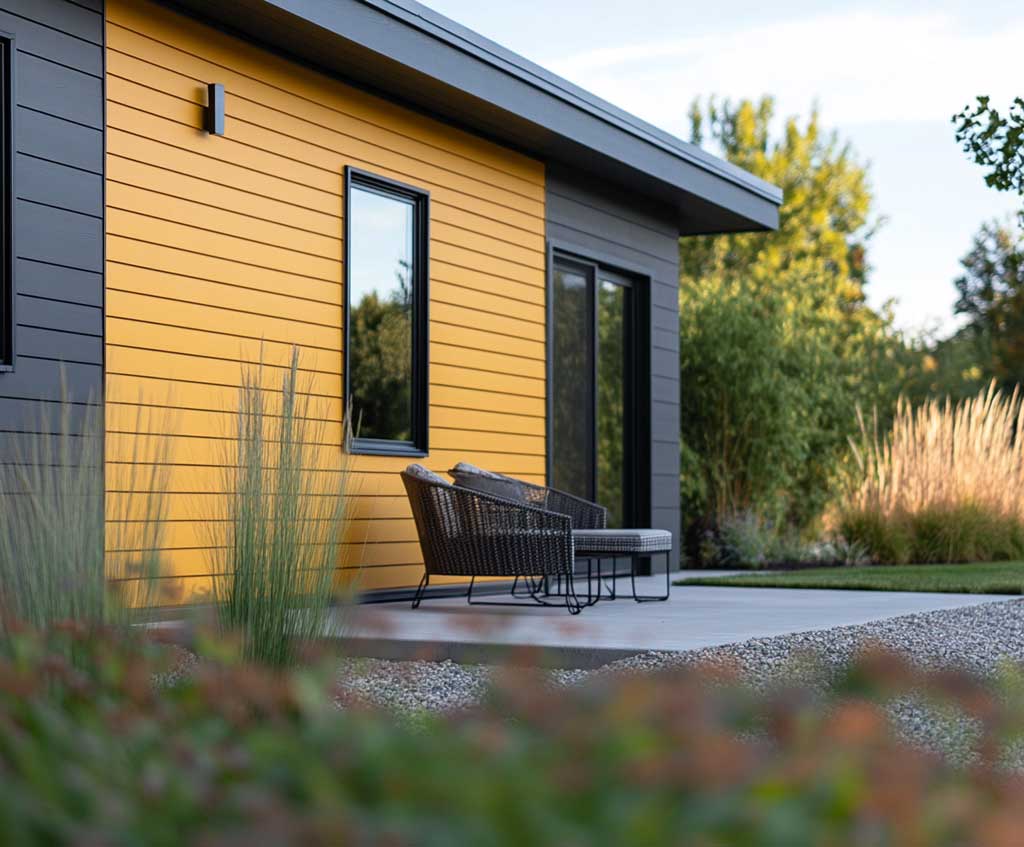
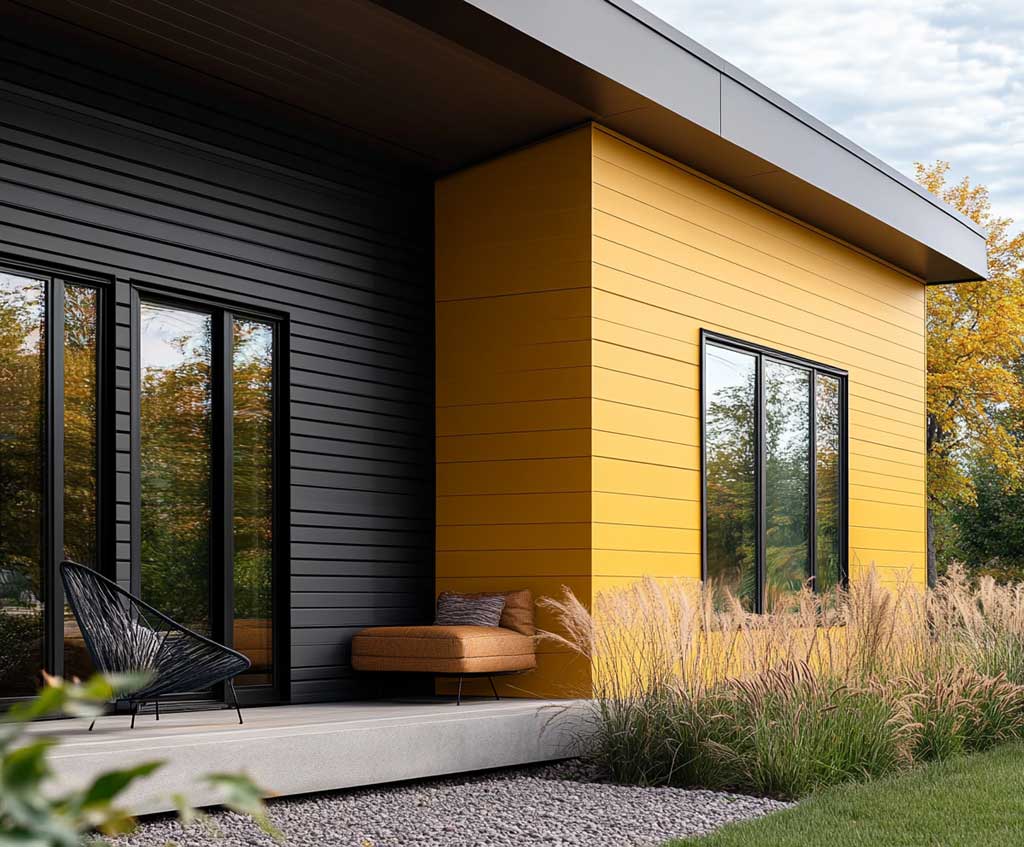
Black-framed windows are the detail that makes this combination work on a modern house. The black frames pull the dark gray panels up into the upper story visually, so the house reads as a unified object rather than two houses stacked on top of each other. Marvin’s Signature Ultimate Double Hung windows in Ebony come in around $800–$1,200 per window installed, which is not cheap — but a builder-grade white vinyl window on a mustard-and-charcoal facade looks like a mistake that cost you $40,000 in resale value. Get the frames right. The door in matching dark gray completes the loop.
Low-maintenance landscaping suits this exterior more than a traditional garden. Neat gravel beds with architectural grasses — Karl Foerster feather reed grass is about $15–$25 per plant — frame the patio without competing with the bold color scheme. What doesn’t work here: lush, English-garden-style planting with lots of soft pastels. Roses and cottage flowers soften the mustard-gray palette in a way that undermines the whole contemporary premise. You can explore how bold gray palette choices interact with different siding materials at ArtFasad’s gray house with dark trim feature.
Pale Yellow Siding Where the Gray Trim Does All the Work
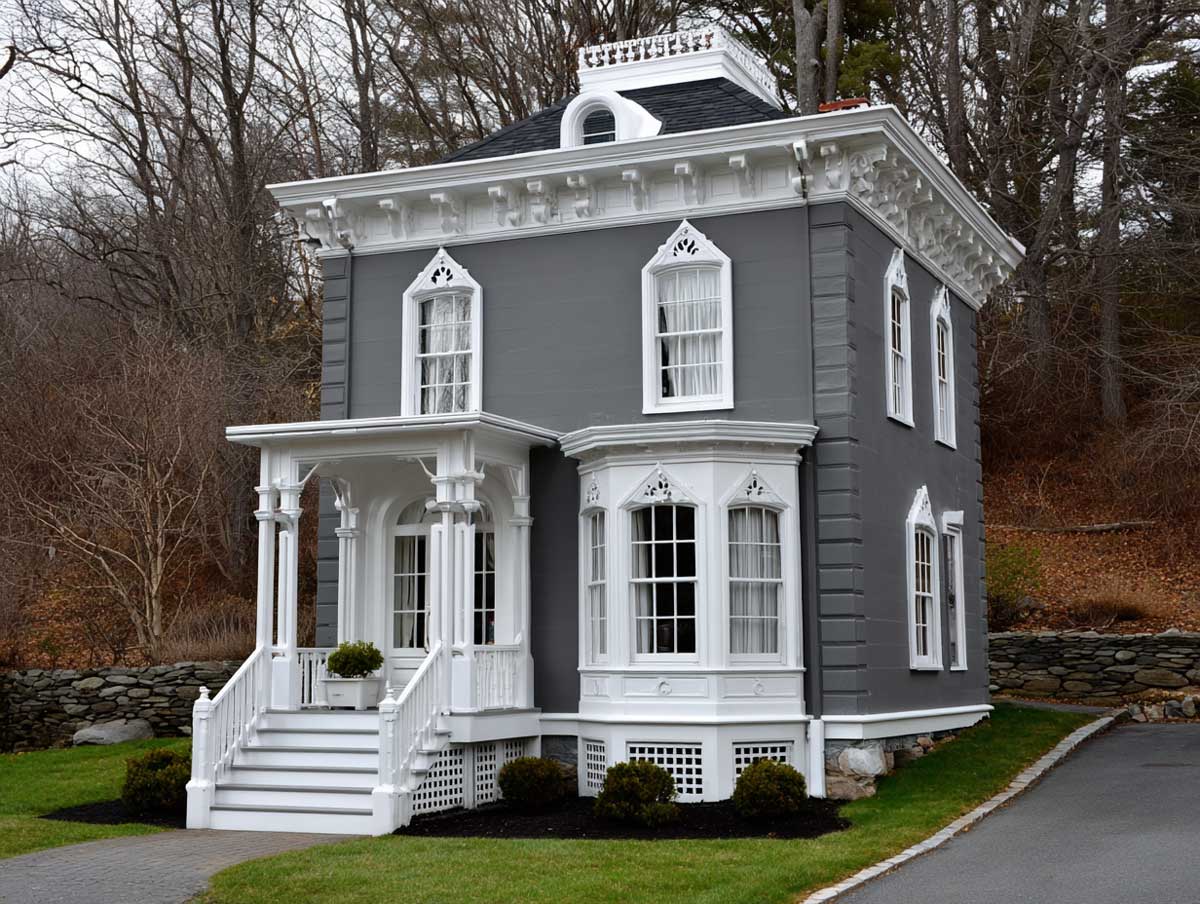
Pale yellow is the version of this palette where the gray trim is doing 80% of the visual work — and most homeowners underestimate how much trim color choice matters when the siding itself is so quiet. Sherwin-Williams Accessible Beige SW-7036 used as siding with Repose Gray SW-7015 on the trim is a combination I’ve seen recommended in three different design forums, and it holds up. The pale yellow reads as a warm neutral from a distance but reveals its golden undertone in direct sunlight. That shift is what gives these houses their particular charm. It’s the paint equivalent of a cream linen blazer: understated from across the room, interesting up close.
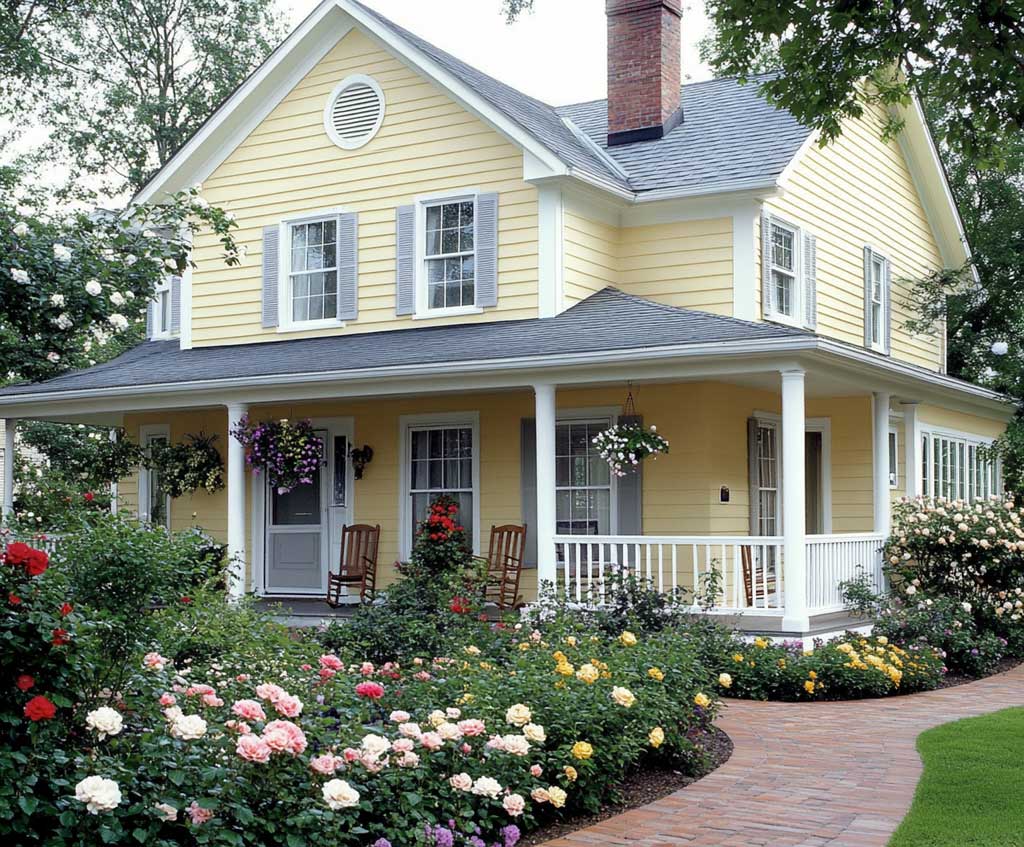
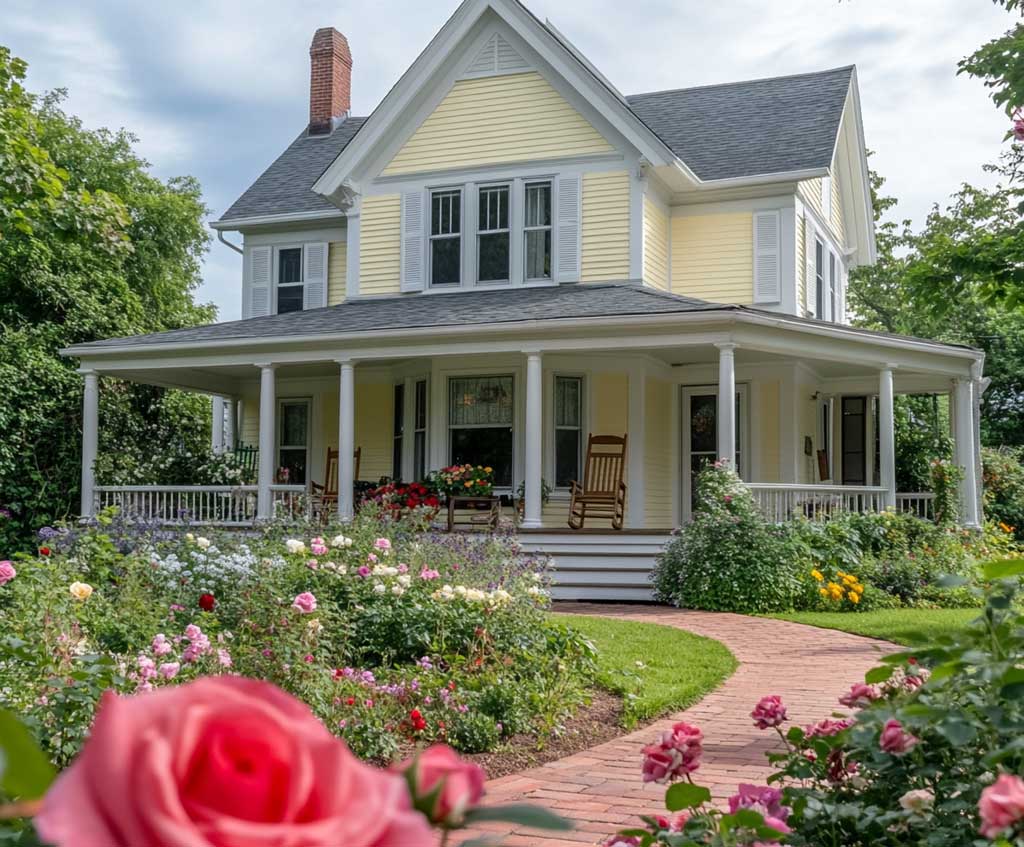
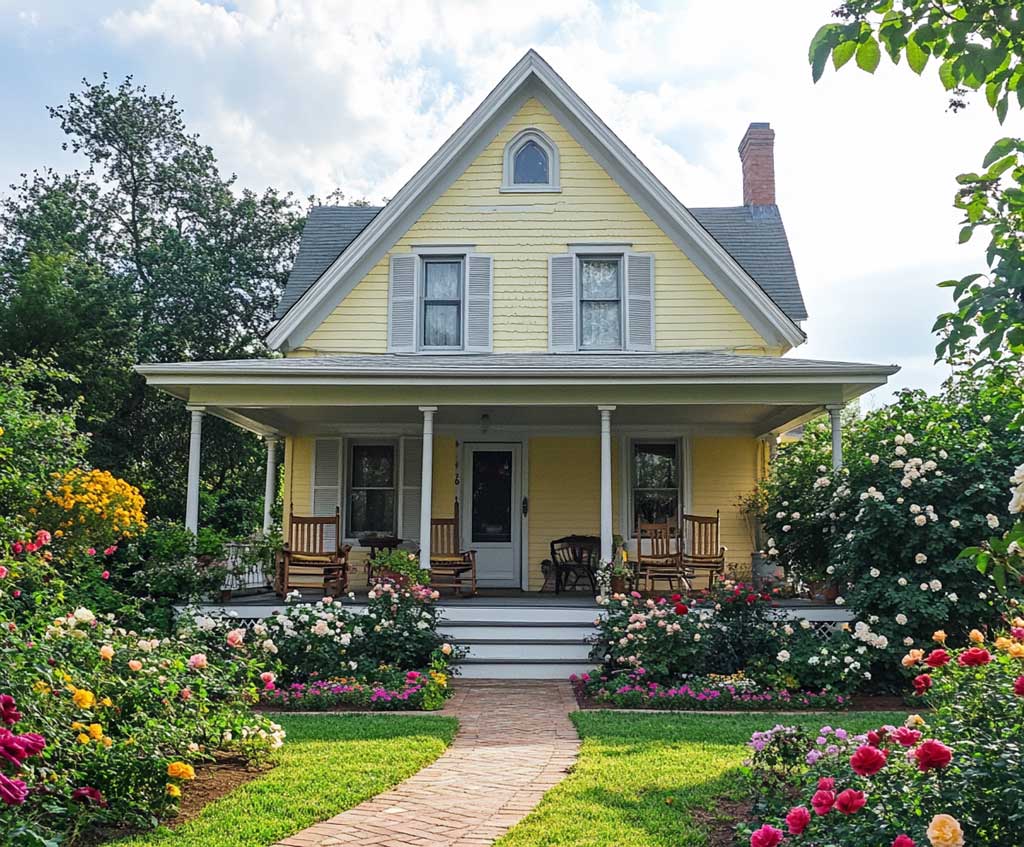
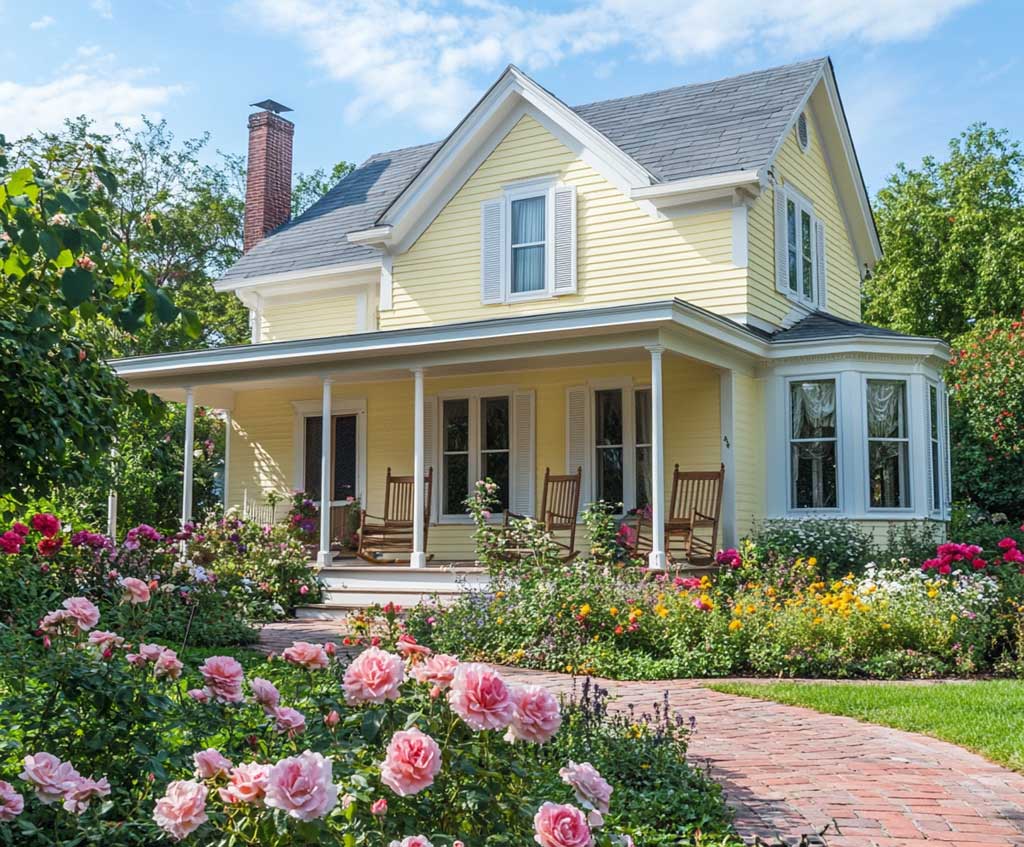
White shutters on pale yellow houses are a classic move, but they work only when the shutters are genuinely operable — or at least look like they could be. Decorative shutters that are clearly just glued to the wall and proportioned incorrectly for the window opening destroy the traditional effect you’re going for. I own a 1940s house, and the first thing the previous owners did wrong was installing shutters half the window’s width. Replace them with correctly sized shutters, paint them light gray instead of white for more depth, and you’ve just improved your curb appeal without touching the siding color. The gabled roof and front porch complete the traditional composition.
The front garden is where pale-yellow traditional homes earn their Pinterest saves. Blooming roses along a brick pathway cost almost nothing to maintain once established — David Austin’s Olivia Rose costs about $28 per bare-root plant and blooms in a soft peach-pink that picks up the warmth in the yellow siding rather than clashing with it. Avoid purple or violet flowers in this garden: those cool tones fight the warm palette and the whole composition loses its cohesion. For more ideas on pairing soft exterior colors with traditional home architecture, see ArtFasad’s classic house painting designs feature.
| Approach | Yellow Shade | Gray Tone | Best Architecture | Cost Range |
|---|---|---|---|---|
| Soft + White Accents | BM Hawthorne Yellow HC-4 | BM Stonington Gray HC-170 | Traditional, Craftsman | $3–$6/sq ft paint |
| Mustard + Dark Panels | SW Goldenrod SW-6904 | James Hardie Iron Gray | Modern, Contemporary | $10–$14/sq ft installed |
| Pale + Light Gray Trim | SW Accessible Beige SW-7036 | SW Repose Gray SW-7015 | Colonial, Victorian | $3–$5/sq ft paint |
For further reference on how gray tones interact with warm exterior palettes across different home styles, HGTV Magazine’s tested exterior color combinations show how yellow and gray land on colonial, craftsman, and modern architecture side by side.
Yellow & Gray Siding
Gray Trim Is Never Just a Trim Color — It’s the Decision That Makes or Breaks the Yellow
Three approaches, zero guesswork: soft Hawthorne Yellow with Stonington Gray trim for traditional homes, bold mustard with James Hardie Iron Gray panels for modern ones, pale yellow with Repose Gray shutters for colonials.
Pick the wrong gray undertone and your yellow house will look purple in afternoon light. Pick the right one and it reads as a considered, editorial exterior choice.
Save this post and come back when you’re standing in front of the paint chips.