Quick Scan
- Cedar pergola kits from Yardistry start at $1,800 for a 10×10 — aluminum options from Palram-Canopia begin around $900
- Always build the patio surface first, then anchor pergola posts into it to avoid drainage and rot issues
- The 60-30 rule: pergola covers 60% of outdoor living area, leaving 30% open to sky for balance
- Louvered motorized pergolas (TEMO, Sunesta) cost $5,500–$14,000 installed but are only worth it for rain-use climates
- Mount string lights with conduit clips to structural beams — not zip ties, which crack in UV within one season
Pergola ideas for backyard spaces have exploded across Pinterest and Google Discover this spring, and the April 2026 trend reports from System Pavers and Yardistry confirm what millions of saves already show: a pergola isn’t a luxury add-on anymore — it’s the structural anchor that makes every other outdoor element feel intentional. Pick the wrong one, though, and you’ve got an expensive eyesore that fights your yard instead of framing it.
Wood vs. Aluminum Pergolas and What Each Material Actually Costs You
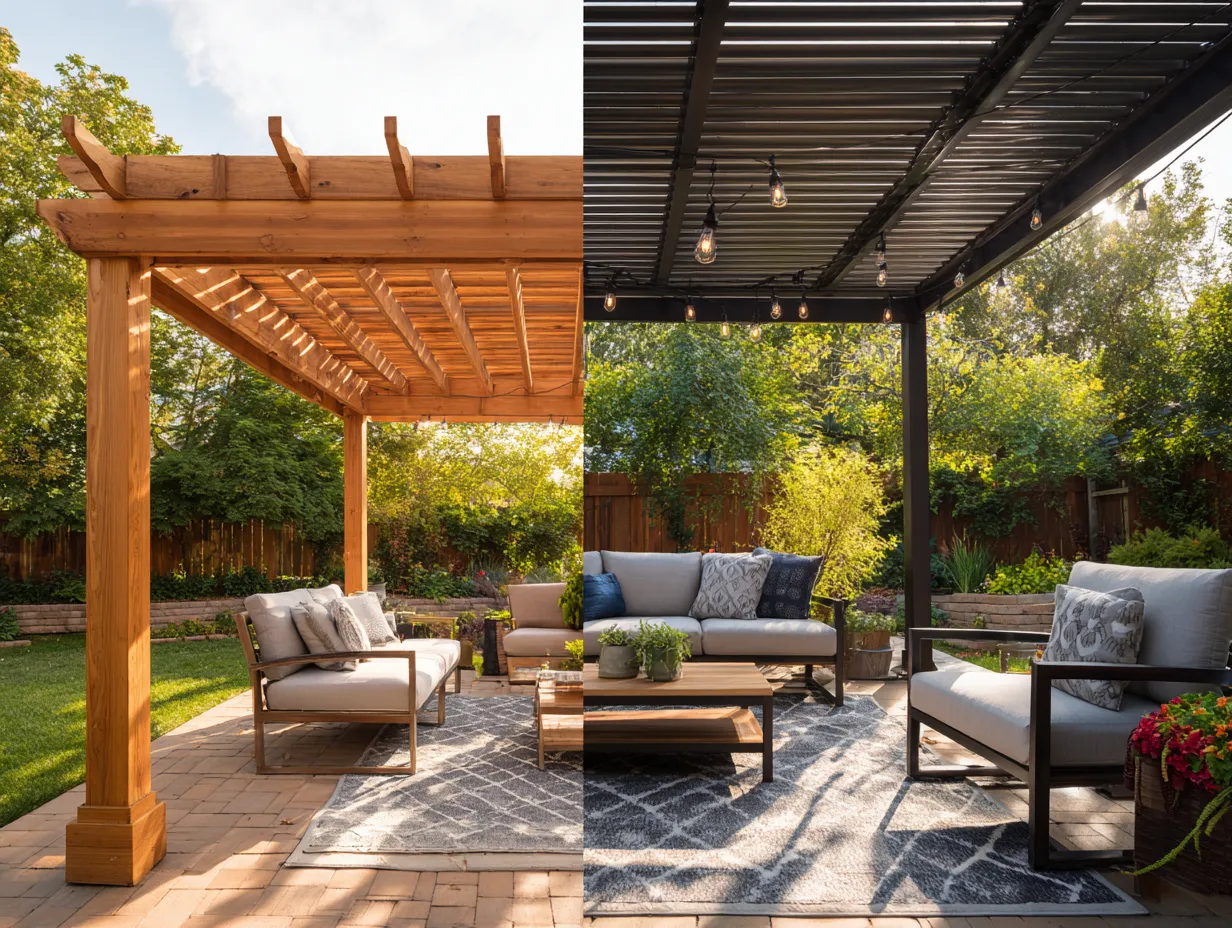
The first real decision isn’t style — it’s material. Wood pergolas, particularly cedar and Douglas fir, bring warmth that no composite can fake, but they ask for annual sealing and are vulnerable to rot in climates with wet winters. Aluminum holds up. Full stop.
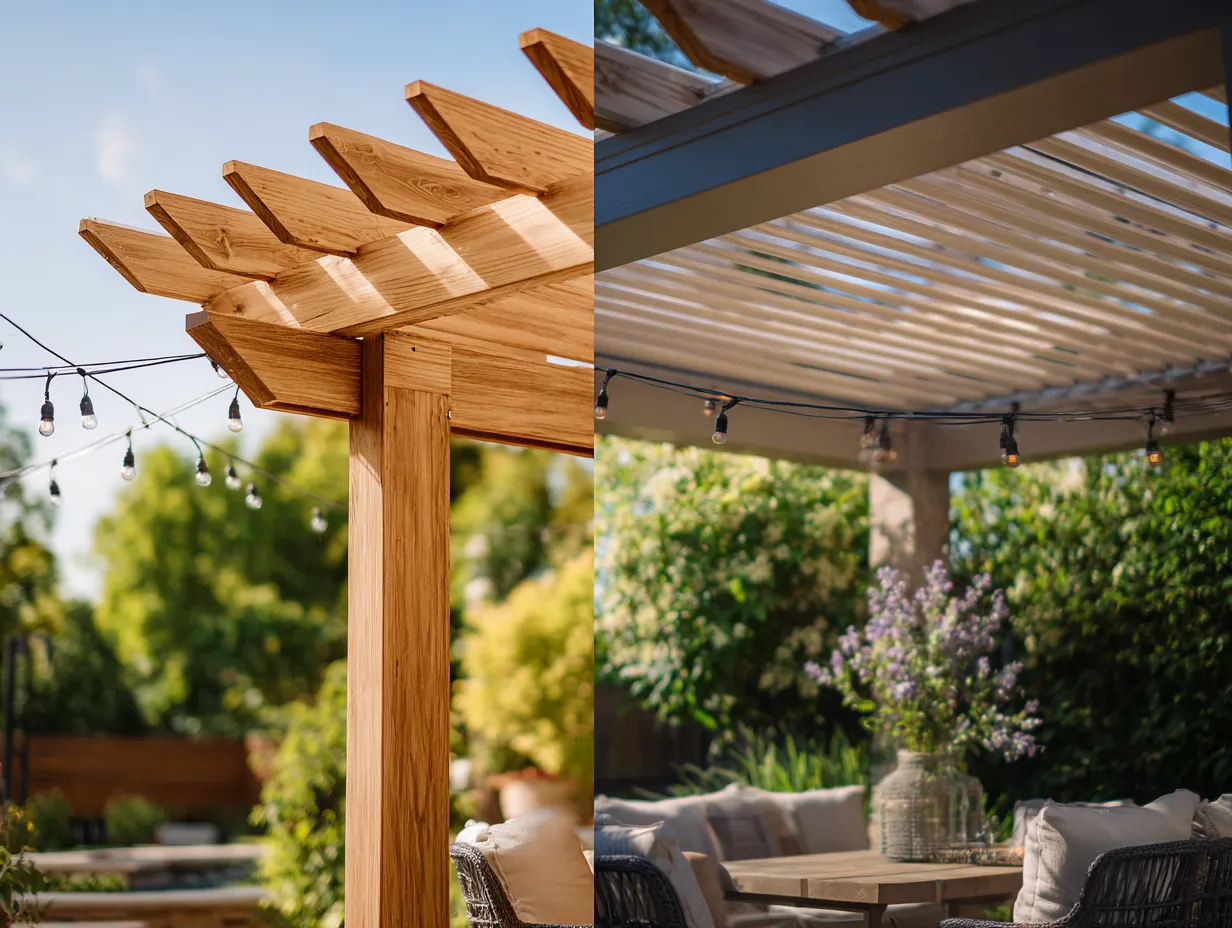
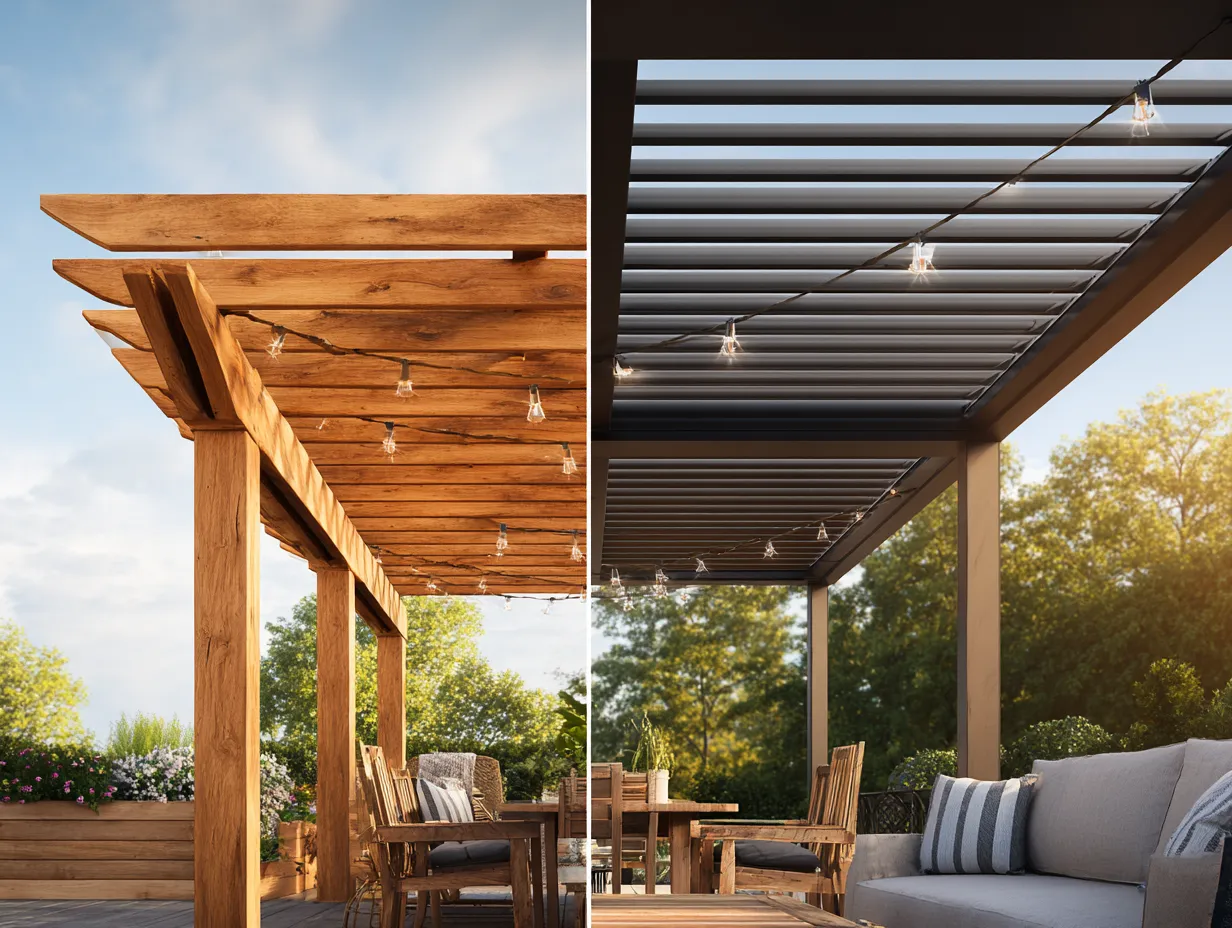
Yardistry’s 2026 cedar pergola kits start around $1,800 for a 10×10 structure, while their larger 12×16 runs closer to $3,200 before hardware. Palram-Canopia’s aluminum freestanding models land between $900 and $2,400 depending on roof style — their Feria 10×14 is one of the most saved pergola products on Pinterest right now at roughly $1,600. What does aluminum sacrifice? The texture. Up close, it reads commercial even with a wood-grain finish.
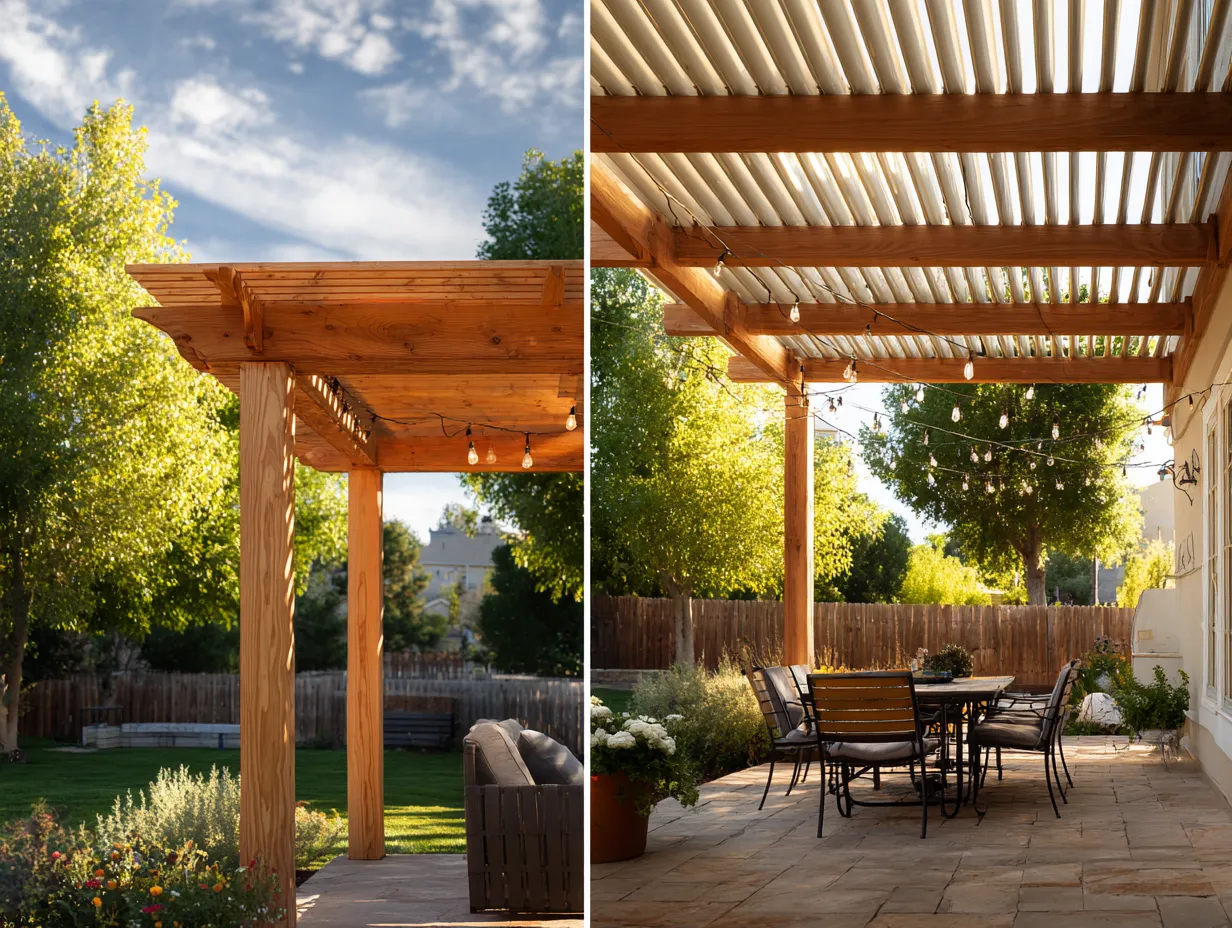
For a Beautiful Single Story House with Patio Yard, a freestanding cedar pergola placed 18 inches from the home’s roofline creates visual connection without requiring structural attachment permits in most municipalities. That gap matters more than most homeowners realize. Don’t attach a heavy pergola directly to your home’s fascia board without an engineer sign-off — fascia is not load-bearing, and pulling it away from the roofline mid-winter is an expensive lesson.
Louvered pergolas are the fastest-growing sub-category right now. TEMO’s motorized louvered pergola system runs $6,000–$14,000 installed, and Sunesta’s shade-integrated version sits around $5,500 for a 12-foot span. Are they worth it? Only if you actually use the space in rain. For pure shade and aesthetics without the mechanical complexity, a fixed-lattice cedar kit outperforms on value every time.
Don’t skip the post anchor decision. Surface-mount post brackets — the kind that sit on concrete with four bolts — are fine for low-wind zones but will flex noticeably in anything over 40 mph gusts. In-ground concrete footings add $200–$400 to a DIY build but eliminate movement entirely. Most homeowners regret choosing speed over stability here.
Don’t Do This
- Don't attach a pergola directly to your home's fascia board without an engineer review — fascia is not load-bearing and the damage can be severe
- Don't anchor posts into dirt and add pavers later — drainage problems will rot treated lumber within four years
- Don't use surface-mount post brackets in high-wind zones above 40 mph — in-ground concrete footings cost $200–$400 more but eliminate dangerous movement
- Don't design a pergola layout for only summer use — add a damp-rated ceiling fan and you gain four to five extra months of comfortable outdoor living
Pergola Layouts That Actually Create an Outdoor Room — Not Just a Frame
A pergola placed randomly in a yard is just a structure. Placed deliberately, it becomes a room — with implied walls, a ceiling, and a reason to stay. The layout decision is where most backyard projects go wrong before a single post goes in the ground.
The most effective pergola placement in 2026 design reports follows what landscape architects call the 60-30 rule: the pergola covers roughly 60% of your intended outdoor living area, leaving 30% open to sky and 10% as transition zone to lawn or garden. This keeps the covered zone from feeling like a cage. It feels like a choice to be inside it.
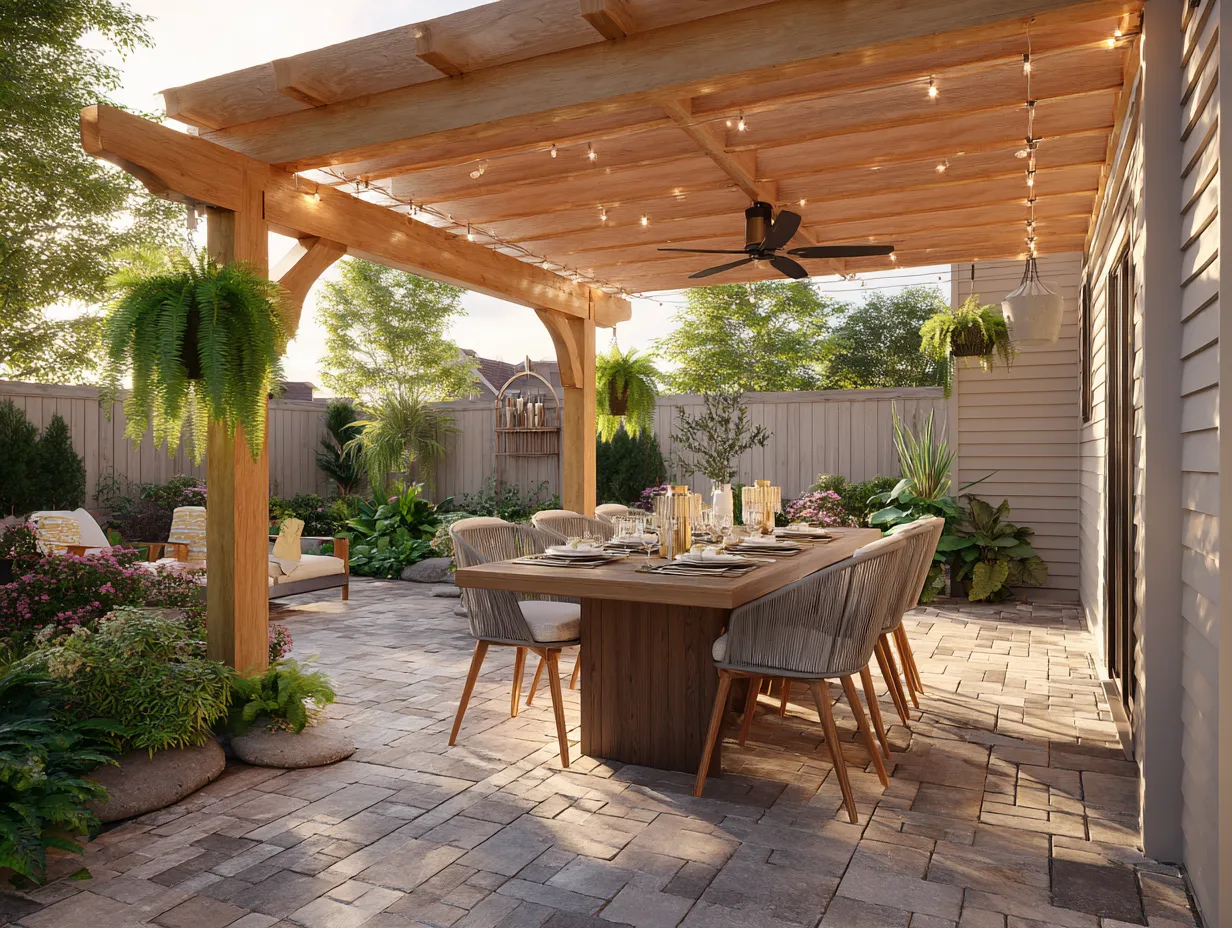
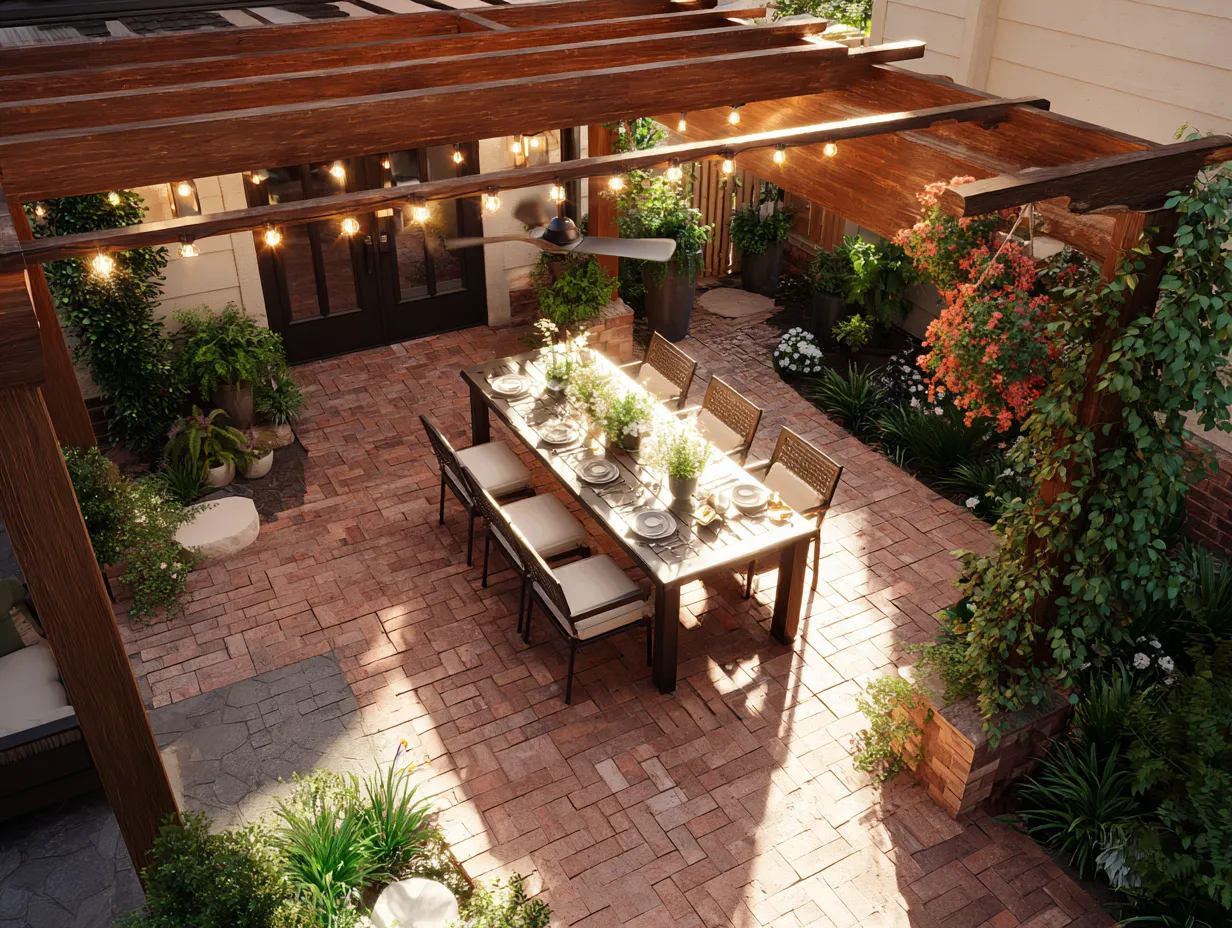
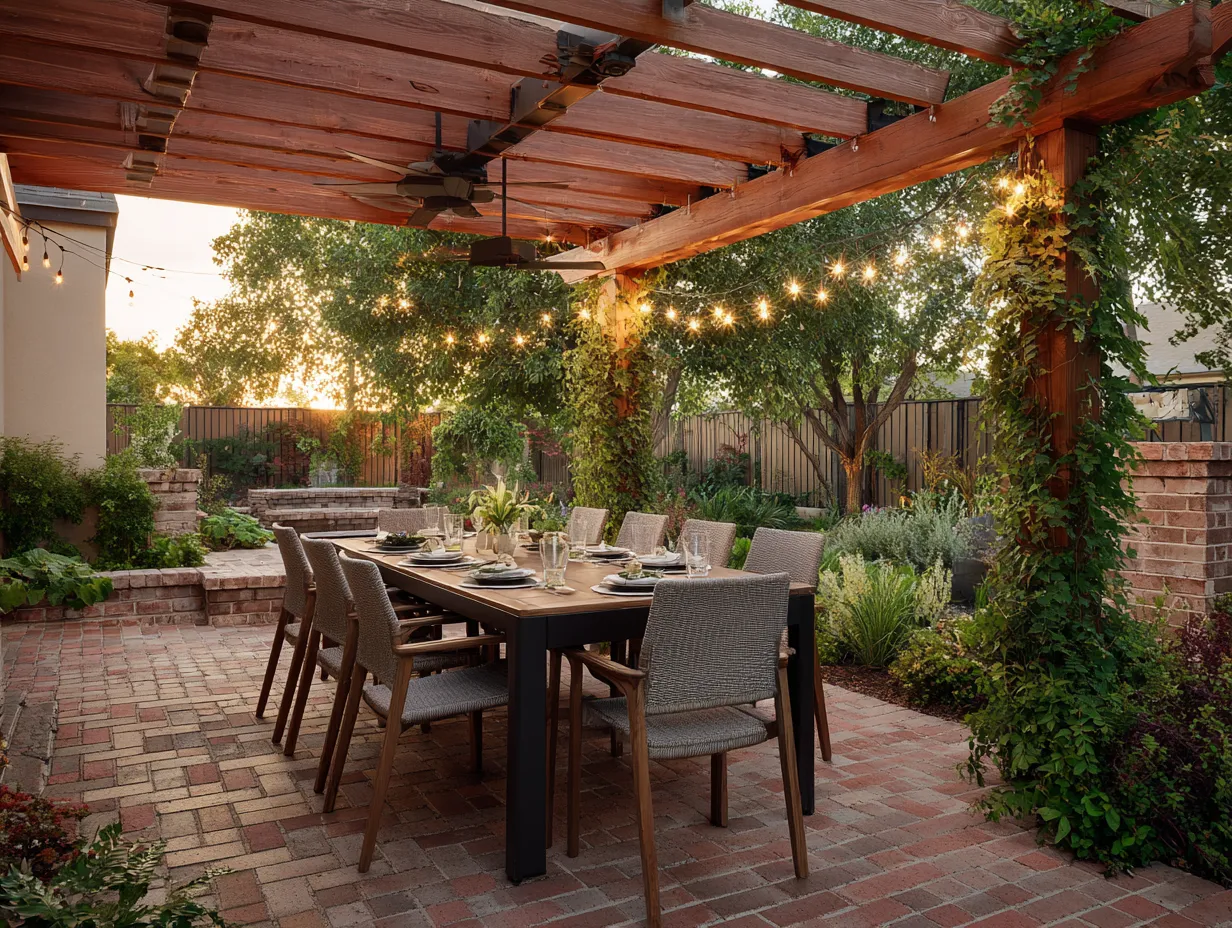
For dining-focused pergolas, a 10×12 footprint handles a six-seat table with 24 inches of clearance on each side — that’s the minimum. Go smaller and chairs scrape posts every time someone stands. Pottery Barn’s Indio 6-piece dining set at $2,400 fits cleanly under a 10×12 Yardistry kit, which is not a coincidence — outdoor furniture brands and pergola kit manufacturers have quietly started sizing around each other.
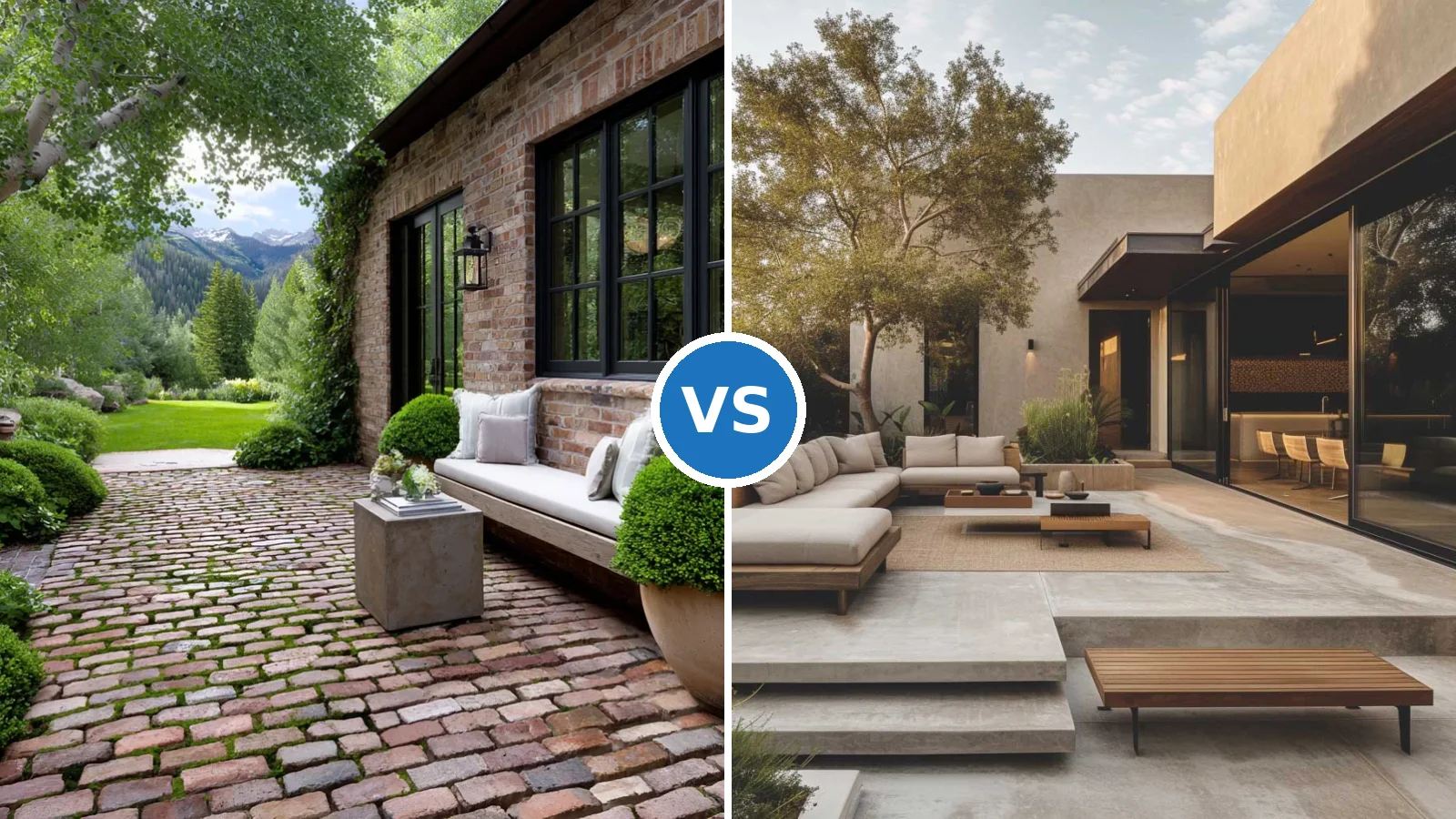
The 7+ Brick Patio Design Ideas for a Backyard You’ll Actually Use article covers base surfaces well, but the key point for pergola placement is this: build the patio first, then anchor the pergola into it. Anchoring posts into dirt and adding pavers around them later creates drainage problems that rot even treated lumber within four years.
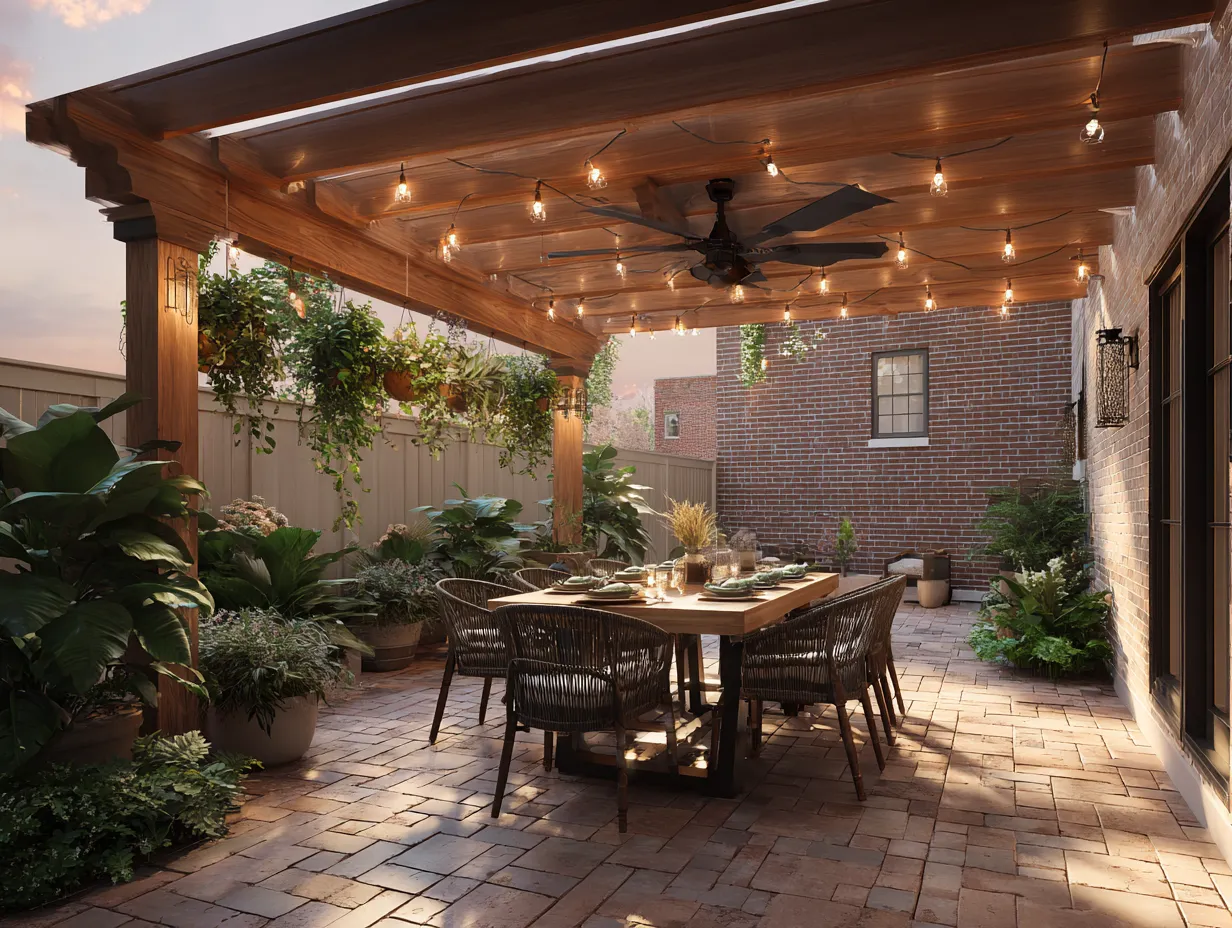
Lighting placement inside a pergola layout changes the feel completely after dark. Flush string lights mounted along the interior beams read as architectural. The same lights draped loosely read as temporary. Globe lights on a dimmer — IKEA’s SOLVINDEN outdoor string at $34.99 or Govee’s waterproof outdoor string at $29.99 — work at both ends of the budget. Mount them to the structural members with conduit clips, not zip ties, which crack in UV after one season.
Don’t design a pergola layout around a single season. The brands getting the most traction in spring 2026 — Yardistry, TEMO, and Palram-Canopia — all lead with year-round use cases. If your layout only works in July, you’ve built a seasonal decoration, not an outdoor room. Add a ceiling fan rated for damp locations (Hunter’s Aker 52-inch outdoor model runs $189) and you extend comfortable use from May through October in most U.S. climates without adding a single wall.
| Pergola Type | Price Range | Best For |
|---|---|---|
| Cedar Kit (Yardistry 10×10) | $1,800–$3,200 | Warm aesthetics, DIY install, dry climates |
| Aluminum Freestanding (Palram-Canopia Feria) | $900–$2,400 | Low maintenance, budget-conscious buyers |
| Motorized Louvered (TEMO) | $6,000–$14,000 | Rain-use, year-round outdoor rooms |
| Shade-Integrated (Sunesta) | $5,500+ | Sun angle control, extended season use |
| Fixed Lattice Cedar (custom build) | $2,500–$5,000 | Maximum aesthetic flexibility, any climate |
FAQ
how long does a cedar pergola last
A cedar pergola properly sealed every 12 to 18 months can last 15 to 25 years. Without maintenance, expect significant deterioration within 5 to 7 years in wet climates. Kiln-dried cedar resists warping better than green lumber, so check the product spec before buying a kit.
do I need a permit to build a pergola in my backyard
Most municipalities require a permit for pergolas over 200 square feet or those attached to the home's structure. Freestanding pergolas under that threshold are often exempt, but rules vary widely by county. Always check with your local building department before purchasing — some HOAs have additional restrictions on height and material.
what is the difference between a pergola and a gazebo
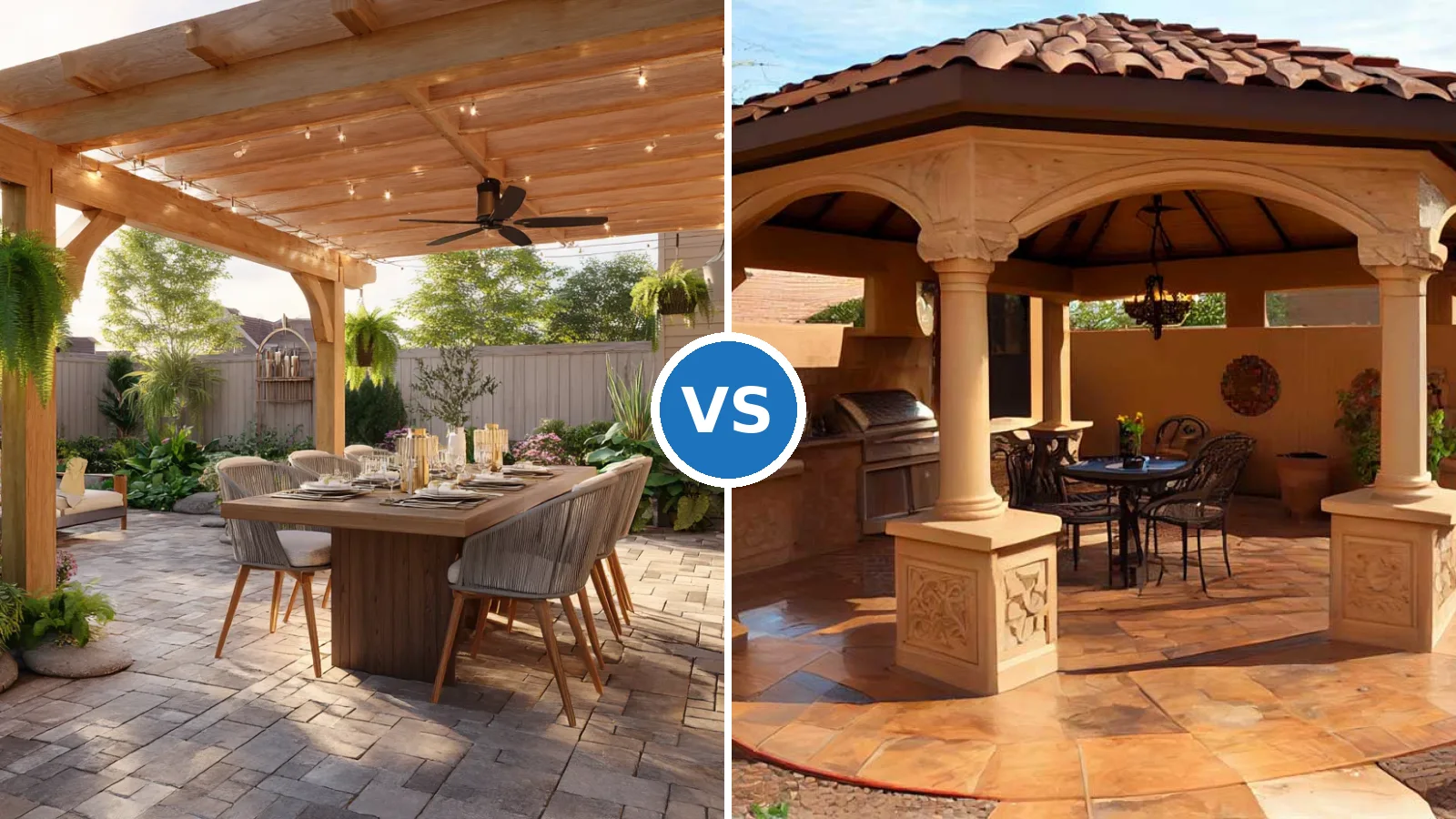
A pergola has an open or latticed roof that provides partial shade but no full weather protection. A gazebo has a solid, closed roof and is typically octagonal or round. Pergolas are more popular for creating flexible outdoor rooms because they allow light and airflow while still defining a space.
can a pergola increase home value
According to Remodeling Magazine's 2025 Cost vs. Value data, outdoor structure additions including pergolas return between 50% and 80% of their cost at resale depending on the region. In markets where outdoor living season is long, the return trends higher. A well-built pergola that integrates with existing patio materials performs better than a standalone kit dropped onto bare lawn.
what size pergola fits a 6 person dining table
A 10×12 foot pergola is the minimum comfortable fit for a six-person rectangular dining table. This gives you roughly 24 inches of clearance on each side so chairs can be pulled out without hitting posts. If you want space for a serving cart or side table, size up to 12×14.
are louvered pergolas worth the cost
Louvered pergolas from brands like TEMO and Sunesta cost $5,500 to $14,000 installed — significantly more than fixed-lattice wood kits. They're worth it specifically if you want to use the space during light rain or need precise sun angle control. For pure shade and aesthetics in a dry climate, a cedar lattice pergola offers better value per dollar spent.
Save this
The Right Pergola Ideas for Backyard Spaces Change How You Use Your Whole Yard
Material, placement, and lighting aren't decorating decisions — they're structural ones that determine whether your pergola becomes an outdoor room or an expensive frame you walk past. Cedar or aluminum, freestanding or attached, the layout logic stays the same: anchor first, furnish second, light last. Save this post.
📌 Save to Pinterest