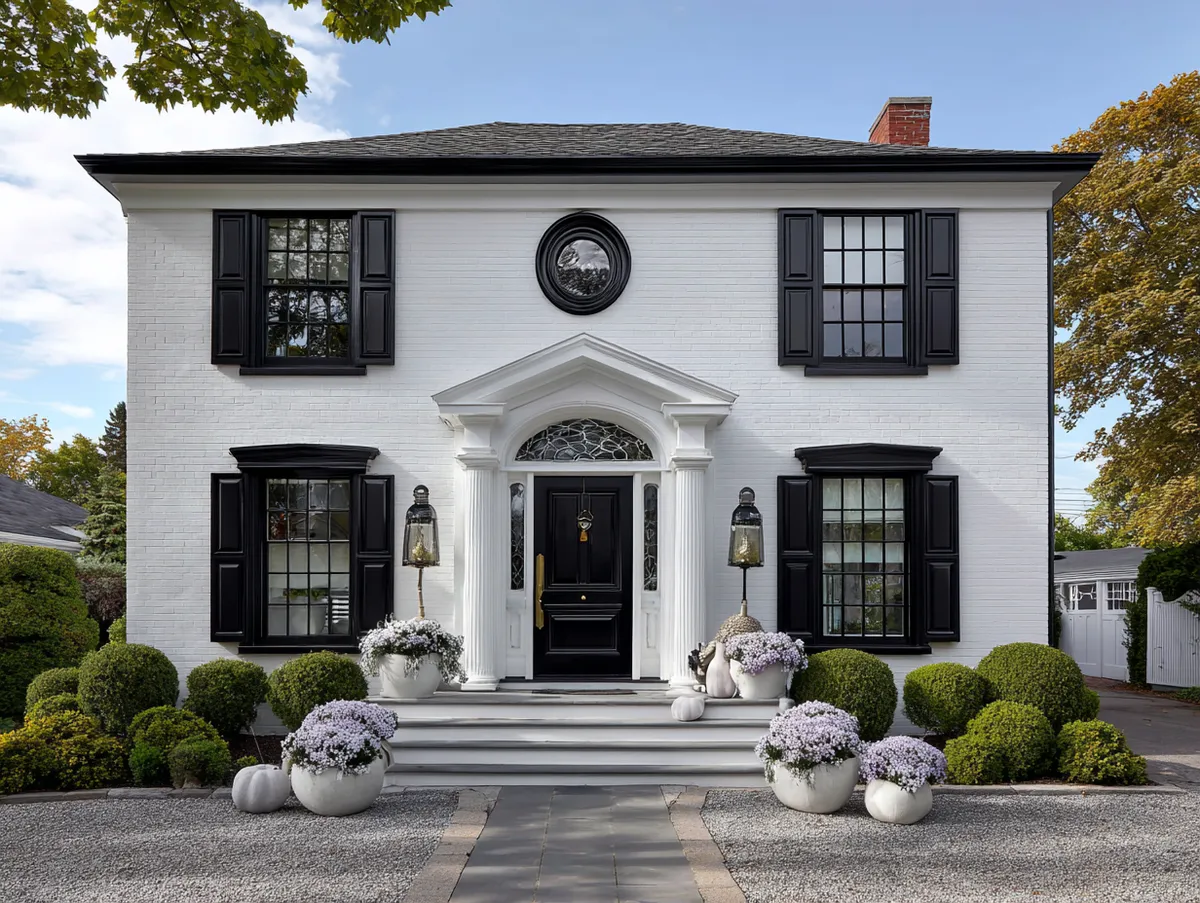
Pastel blue with white trim looks like a beach vacation that never ends. Navy blue with white borders hits harder — more like a tailored suit for your house. I’ve been collecting blue and white exterior combinations for three years now, and the gap between “looks great in a photo” and “looks great at 3pm in direct sunlight” is massive. Cheap blue paint fades to gray within two seasons. Spend less than $45 per gallon and you’ll repaint by next summer.
This roundup covers everything from soft powder-blue cottages to dark navy facades with crisp white detailing. Real materials, real price ranges, real mistakes I’ve watched homeowners make. Skip the siding that peels. Grab ideas that hold up.
Quick Summary
This article covers three blue-and-white siding palettes: pastel blue for nautical cottage vibes, dark navy for modern dramatic exteriors, and sky blue for classic cottage style. Each section includes real paint color names, material recommendations, trim sizing, and common mistakes to avoid.
Best pastel blue: Benjamin Moore Palladian Blue · Best navy: BM Hale Navy HC-154 · Best sky blue: SW Breezy · Trim material: Azek PVC ($3.50/ft) · Min. trim width: 5 inches
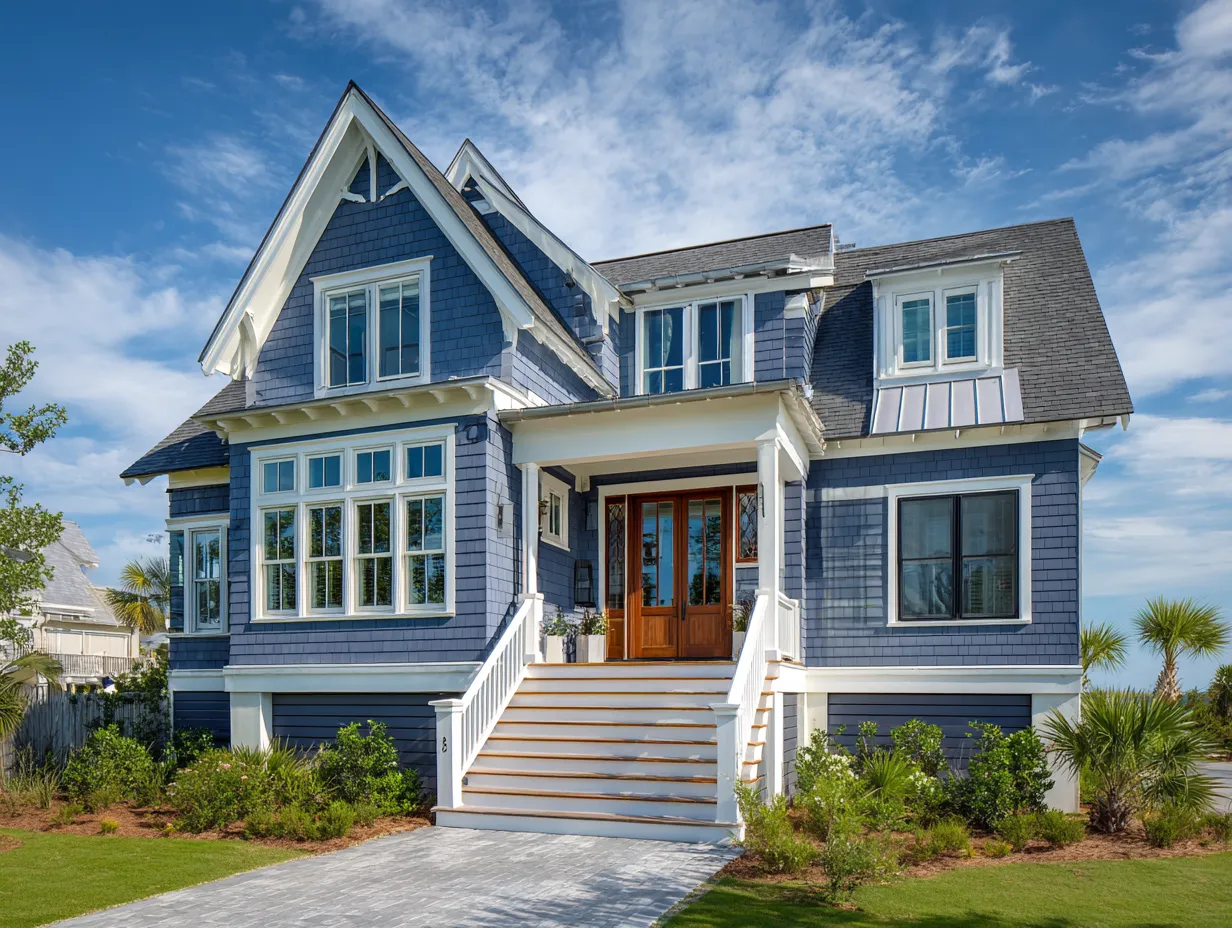
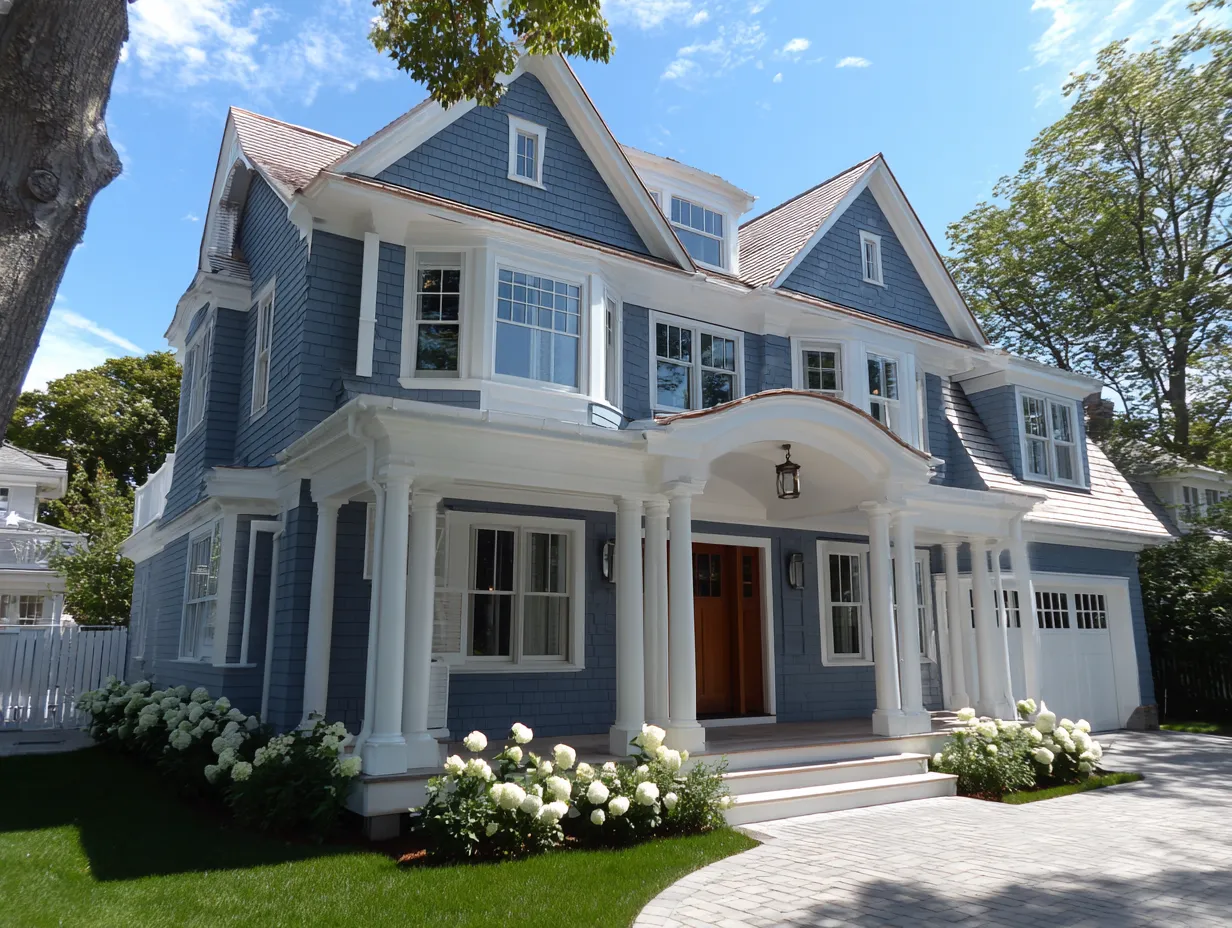
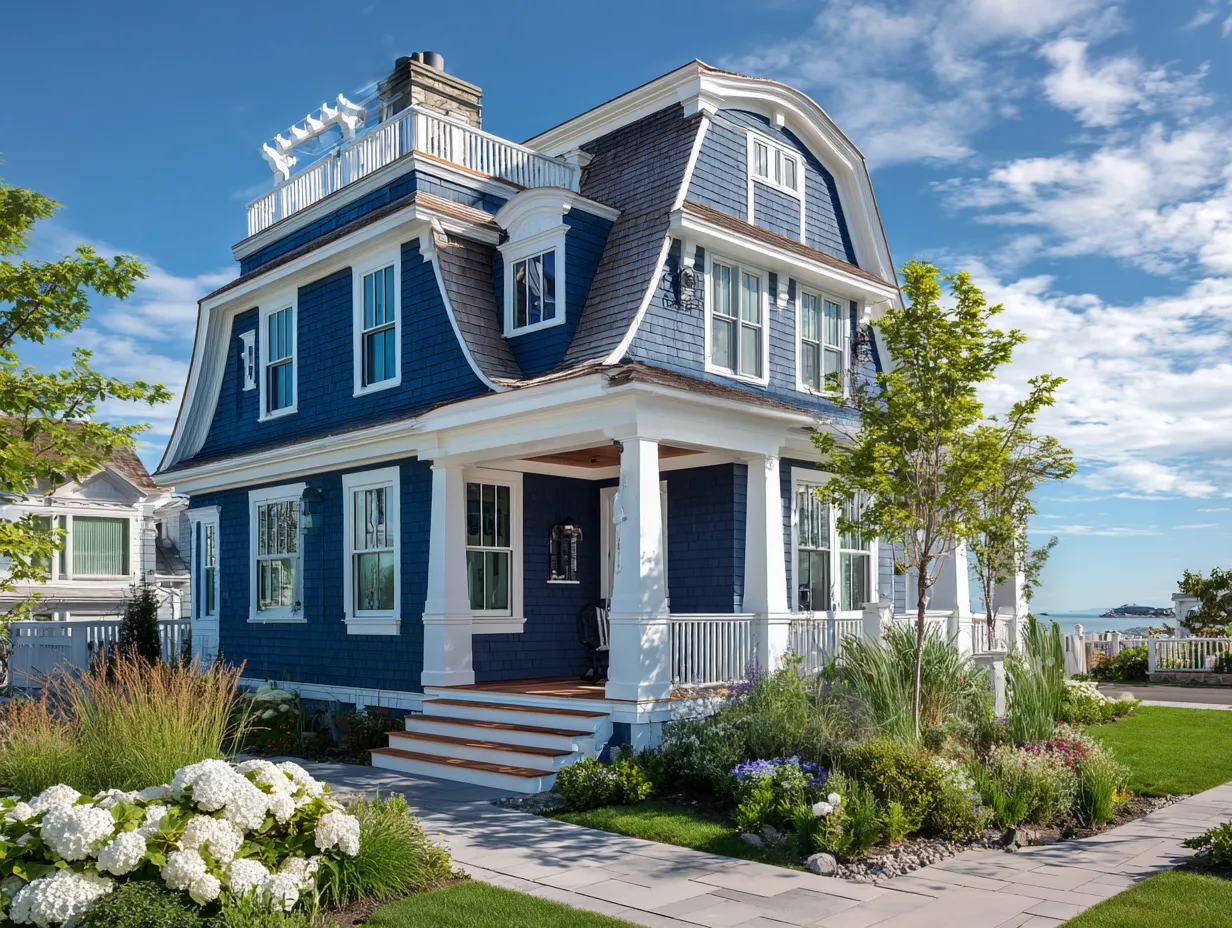
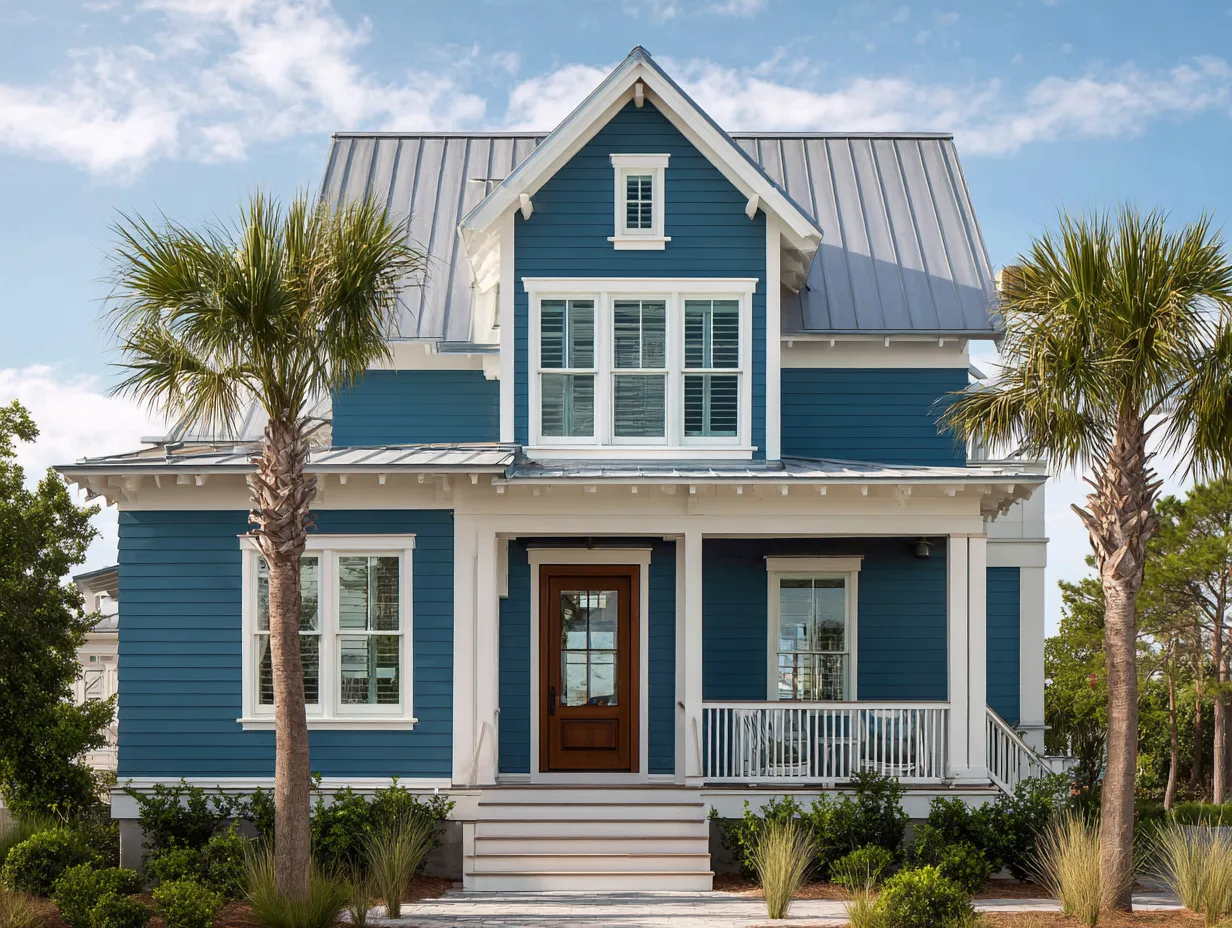
Pastel Blue House Siding With White Trim and Nautical Details
Pastel blue vinyl siding runs about $3–$5 per square foot installed. Fiber cement in the same shade costs double but lasts 30+ years without warping. Don’t cheap out here. I watched a neighbor install budget vinyl in a light blue — it buckled after one Texas summer, and the seams turned visible from across the street.
One thing nobody warns you about: pastel blues photograph darker than they look in person. Order samples first. Sherwin-Williams Breezy and Benjamin Moore Palladian Blue are safe picks, but Palladian leans slightly green in afternoon sun. Test it on the north-facing wall before committing. The difference between a $2 swatch test and a $12,000 repaint is, well, $12,000.
White trim width matters more than you’d think. Anything narrower than 3.5 inches around windows looks cheap on a blue background — like someone ran out of paint and slapped on whatever was left. Go 5-inch minimum on corner boards. Your house will look twice as expensive for maybe $200 more in lumber.
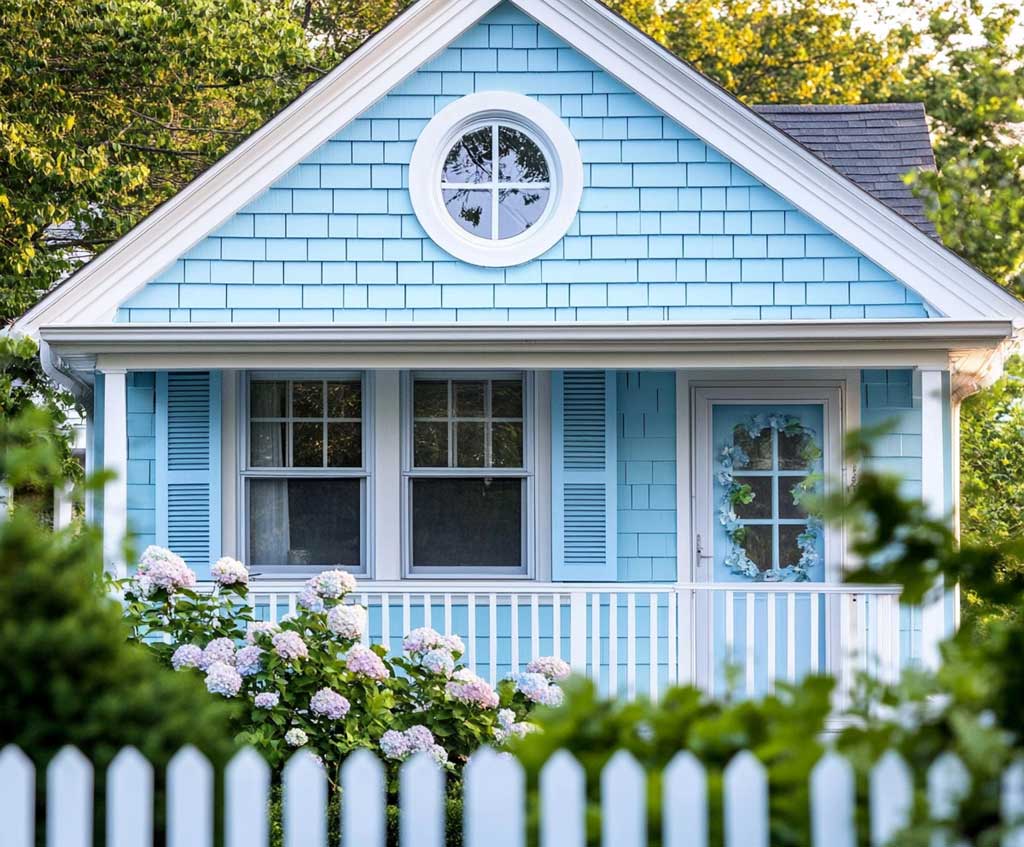
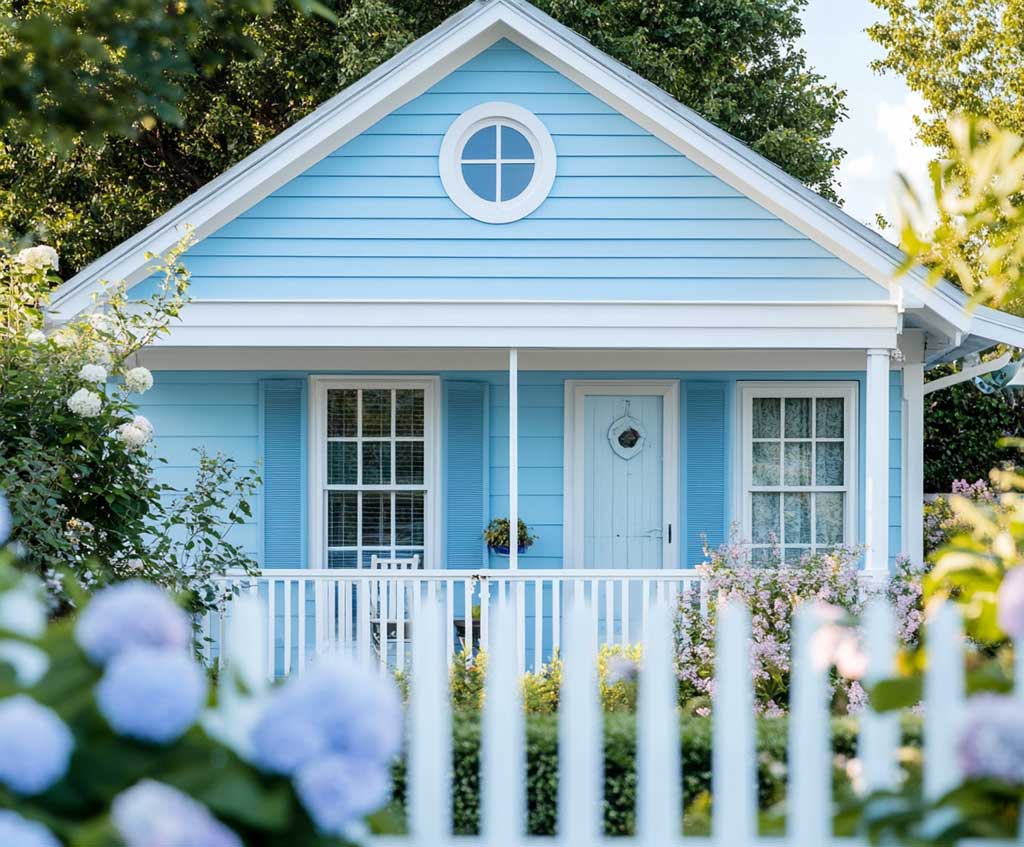
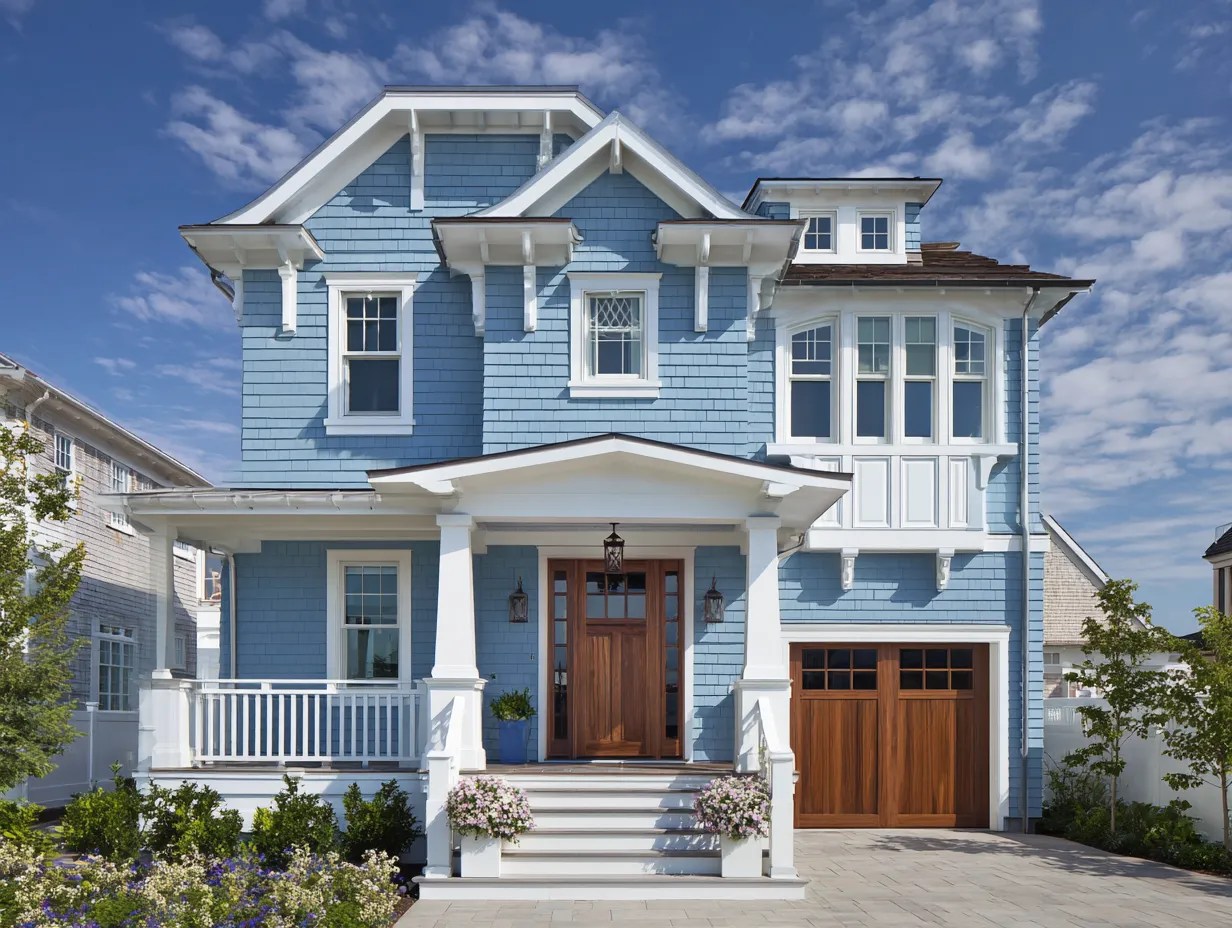
For a charming and inviting exterior, pastel blue paired with white trim offers a soothing coastal aesthetic perfect for homeowners who want a tranquil vibe. The pastel blue siding covers the main structure of the house, giving it a light and airy appearance that’s ideal for evoking the relaxed feel of a seaside retreat. The white trim around the windows and doors enhances the overall look, adding crispness to the design while maintaining an inviting, open feel.

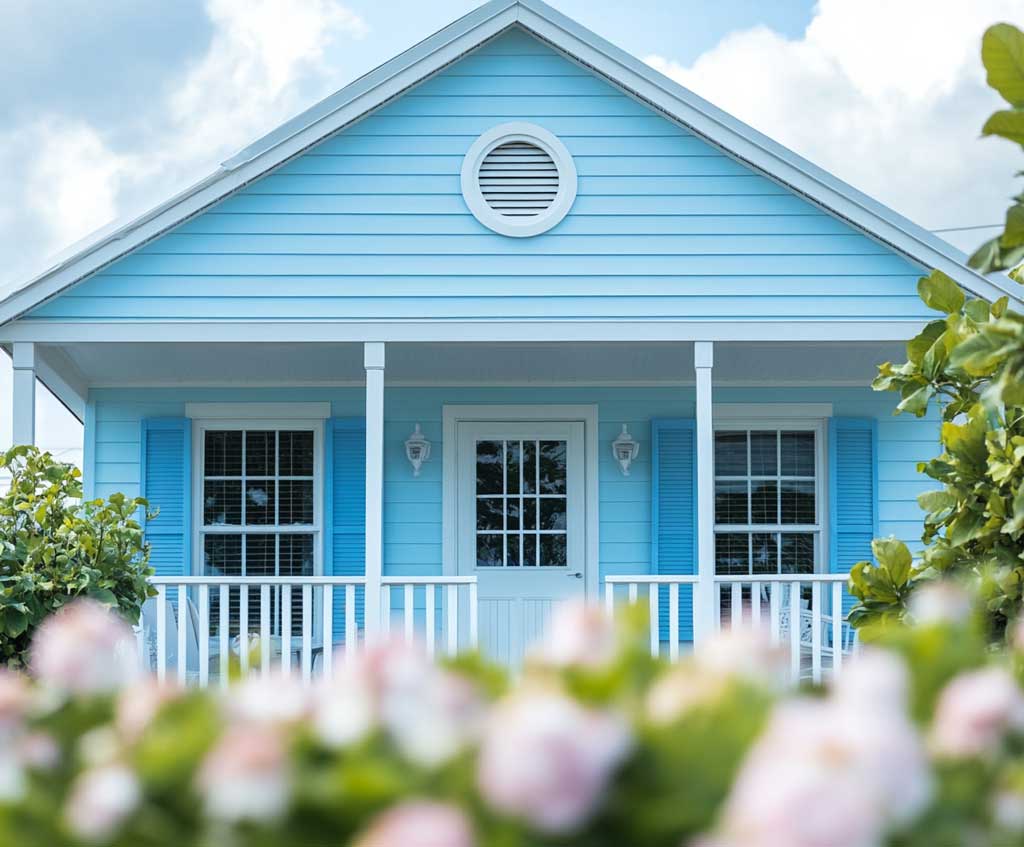
The use of nautical-inspired elements like a porthole window and white porch railing adds character to the design, making it ideal for those who want to embrace the full coastal aesthetic. The light blue shutters on the windows give a subtle accent that complements the pastel blue siding, adding depth without overpowering the simple elegance of the house.
The addition of a white picket fence and blooming hydrangeas in the yard creates a transition between the home’s exterior and its surroundings. This touch of greenery softens the blue and white palette, adding warmth and color that enhances the overall charm of the home. These house siding ideas show how soft hues can create a serene and inviting look that blends with coastal landscaping. For touch-ups and small repaint jobs, the PRESTIGE Exterior Paint in Steel Blue is a solid one-gallon option that covers about 400 sq ft per coat and comes with built-in primer.
Choosing pastel blue for your house siding offers the perfect backdrop for highlighting architectural details like windows, doors, and porch features. This combination is a timeless choice for homeowners who want a light, breezy aesthetic that never goes out of style. By incorporating elements like shutters, railings, and fencing, you can add even more character and charm to the overall design, creating a home that feels like a peaceful coastal haven. For more ideas on mixing siding textures and colors, see our roundup of two tone siding ideas for your home.
Dark Navy Blue Siding With White Trim for a Modern Exterior
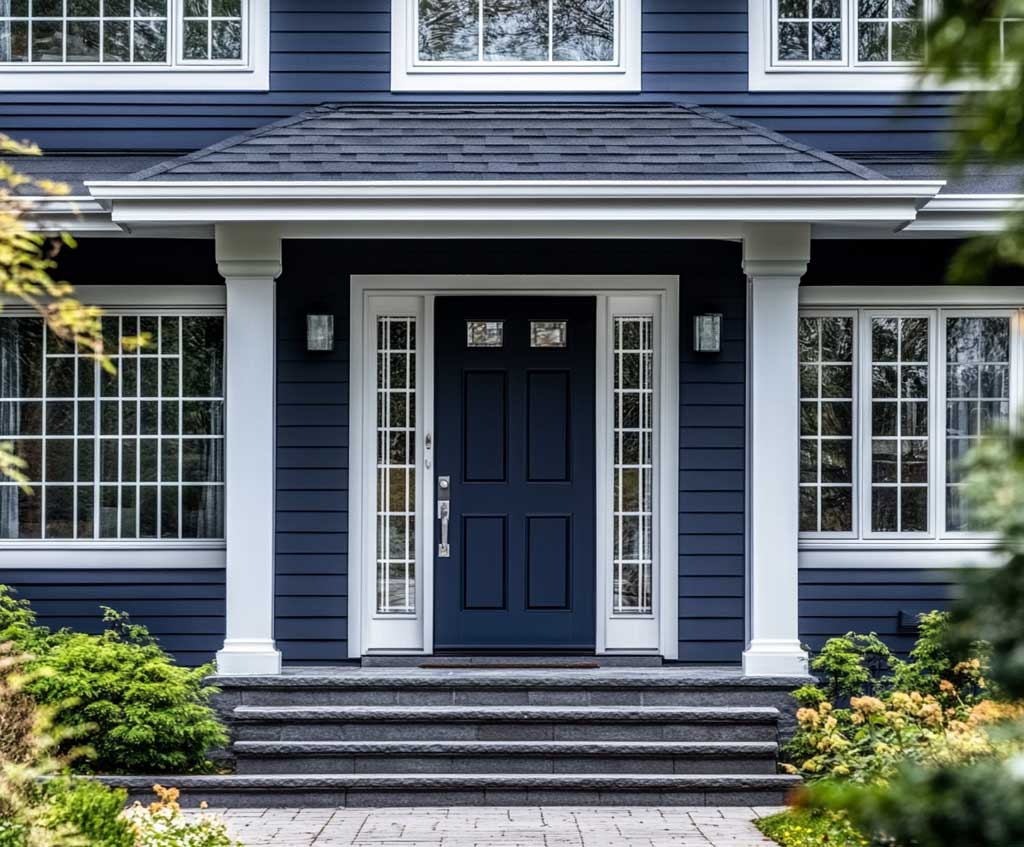
Navy siding absorbs heat like asphalt. Seriously. On south-facing walls in Phoenix or Houston, you’re adding $30–$50/month to your cooling bill versus a lighter shade. Worth it for the curb appeal? Probably. But pick fiber cement over vinyl for dark colors — vinyl expands in heat and navy panels warp faster than any other color in the lineup.
Benjamin Moore Hale Navy (HC-154) is the go-to exterior navy, and I get why. Rich, not too purple, holds up to UV better than most competitors at the $75/gallon price point. Sherwin-Williams Naval (SW 6244) runs a touch greener and darker. Both need two solid coats over primer, no exceptions. Skip the primer and you’ll see blotchy patches within six months — I’ve seen it on three separate projects.
Black exterior lighting against navy siding looks sharp in photos but creates a visual dead zone at night. Swap to brushed brass or matte nickel fixtures. The contrast pops harder, and your front door doesn’t vanish into a dark rectangle after sunset. Cost difference between black and brass fixtures? About $15–$20 per light at Home Depot.
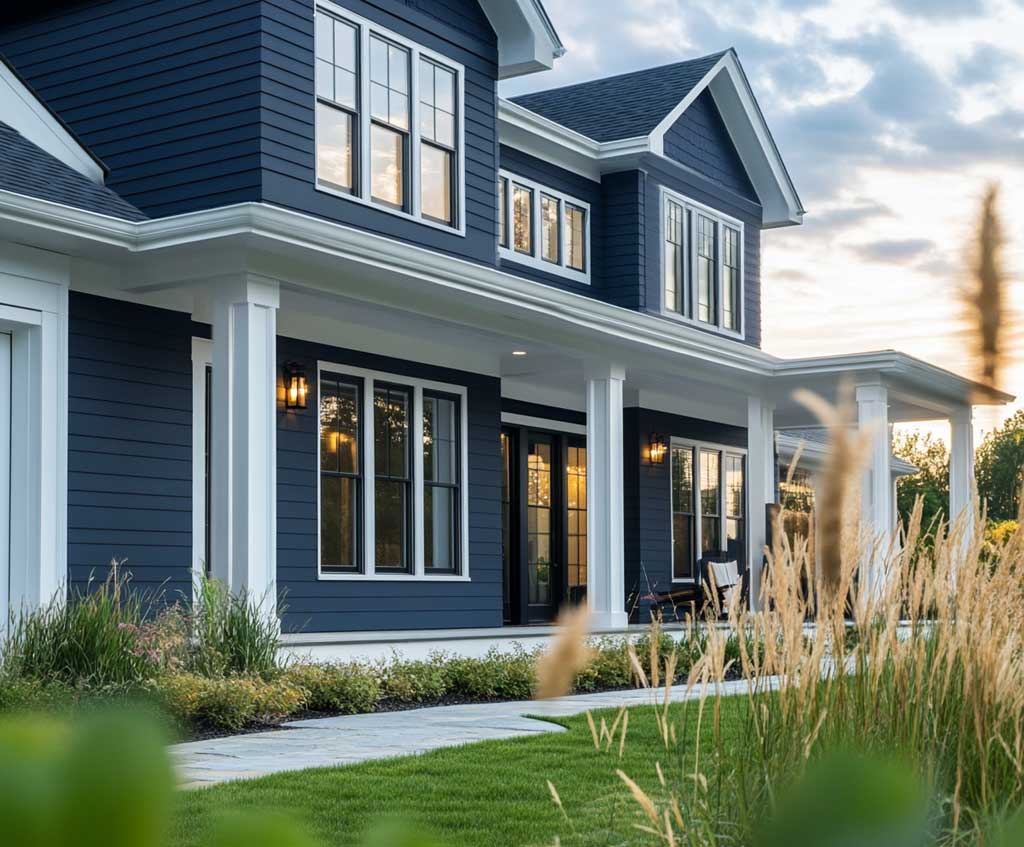
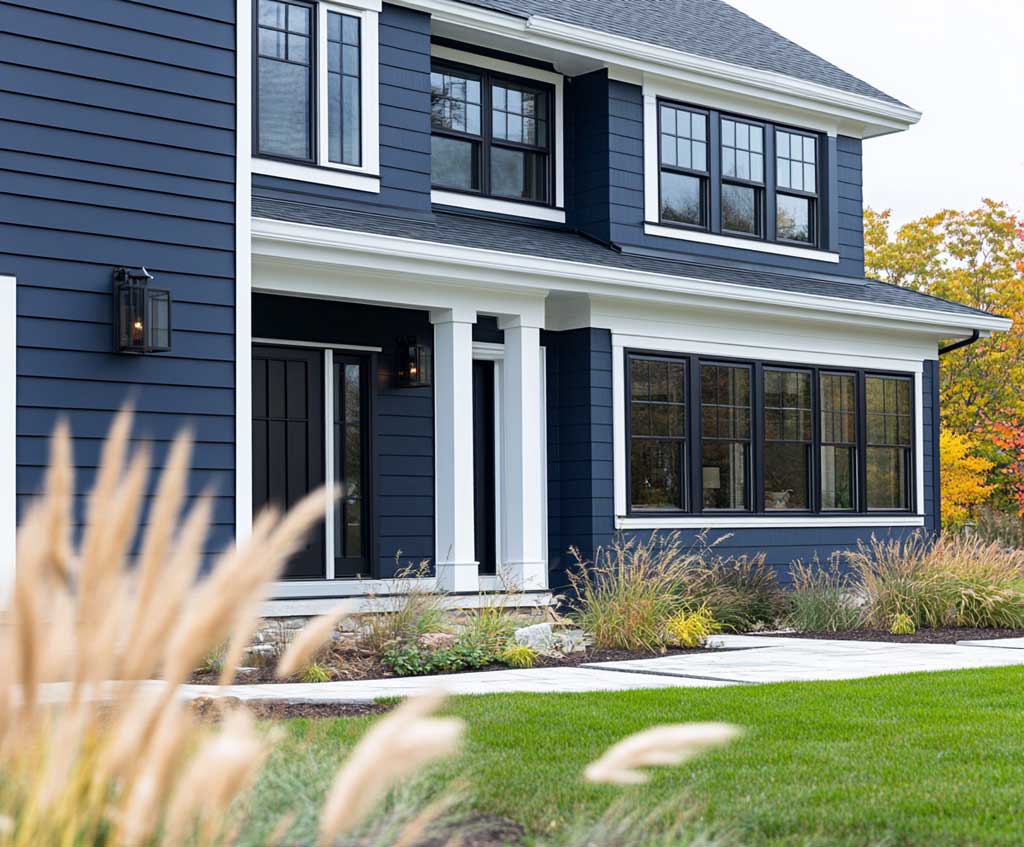
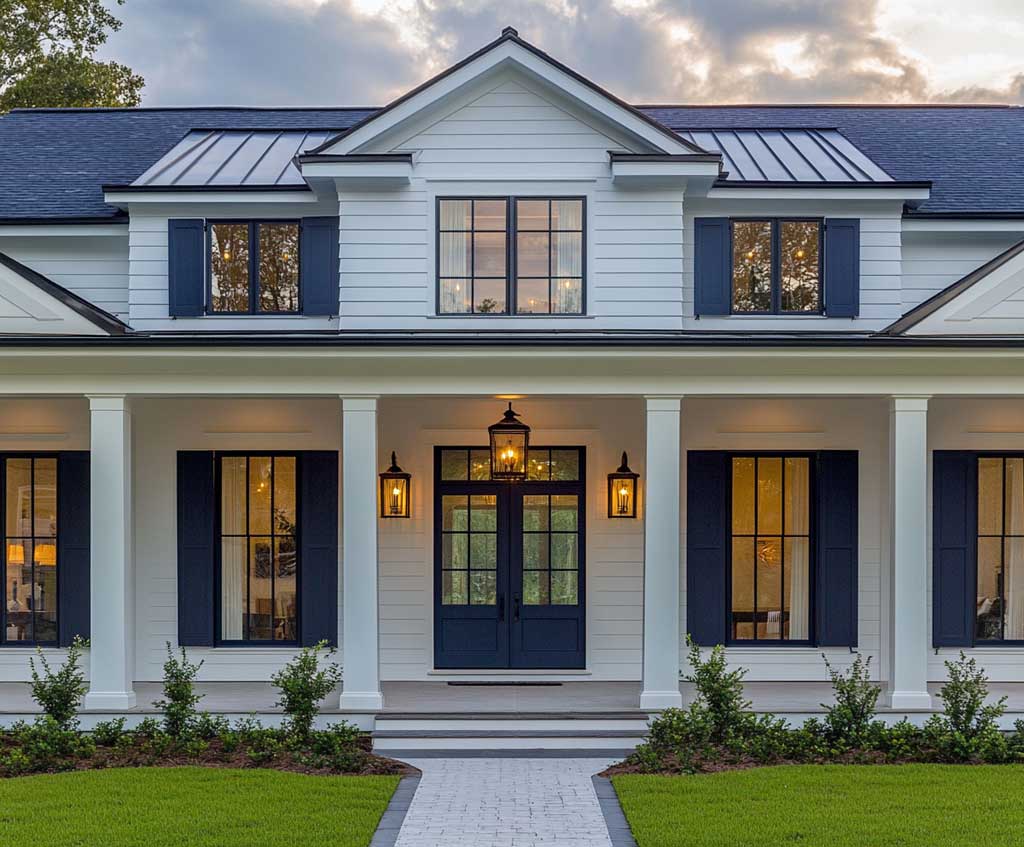
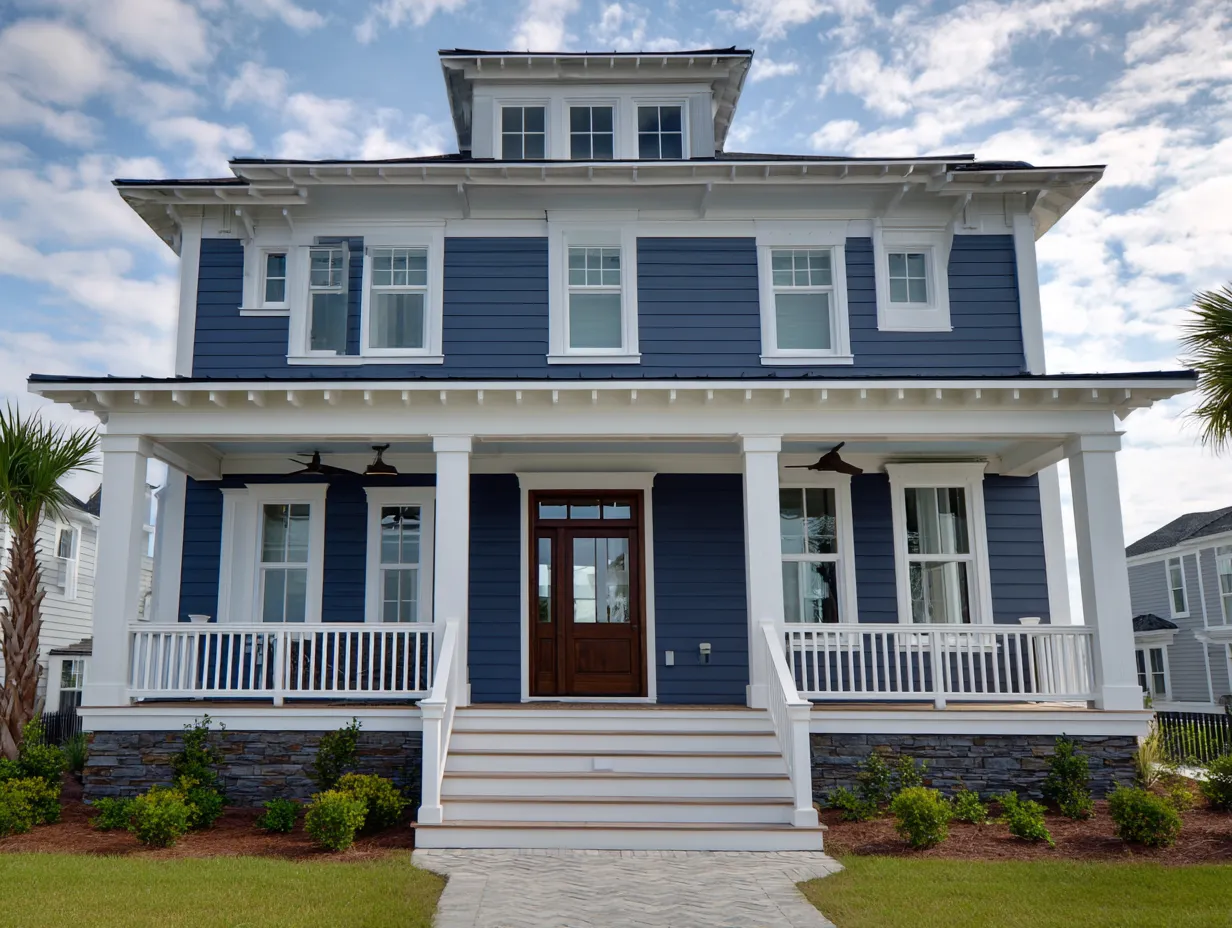
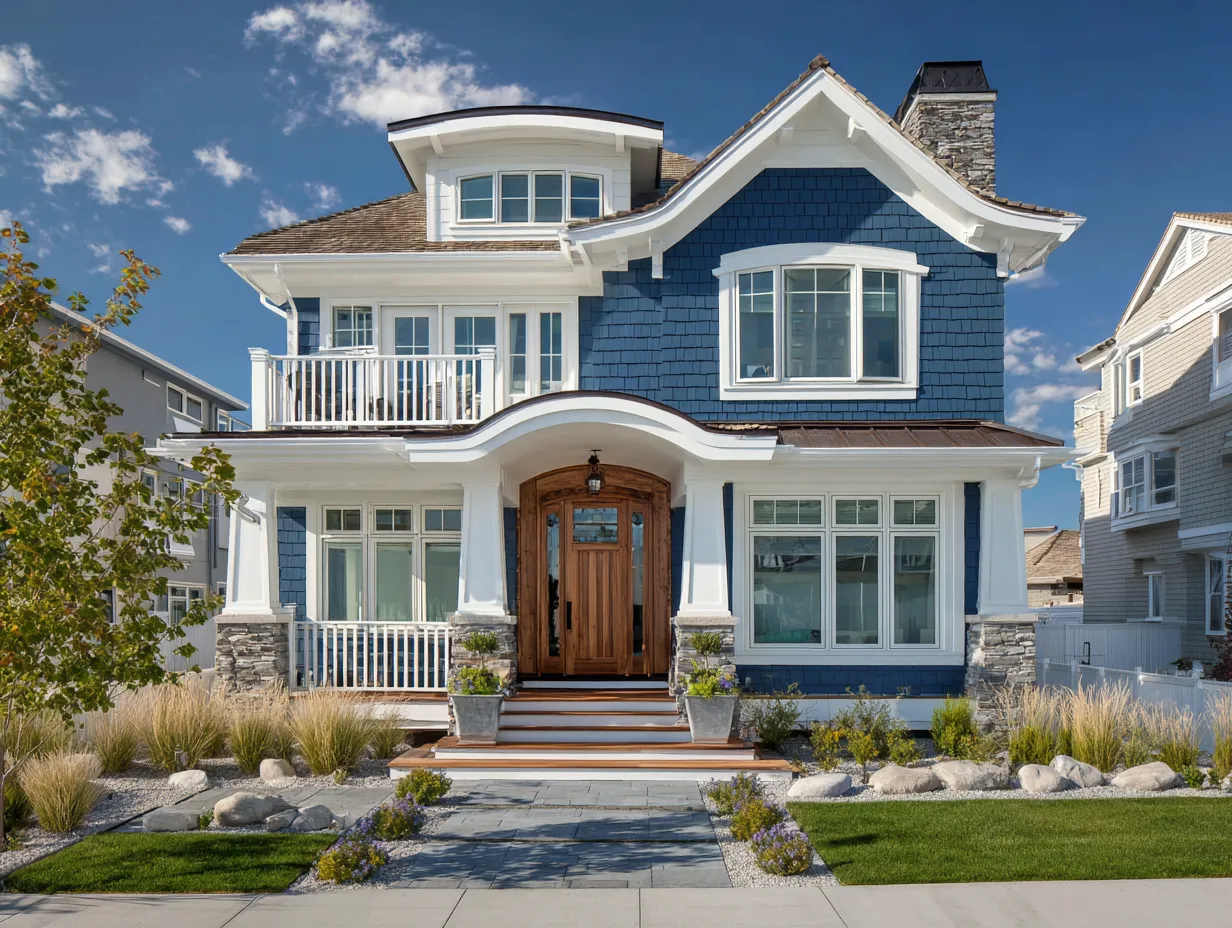
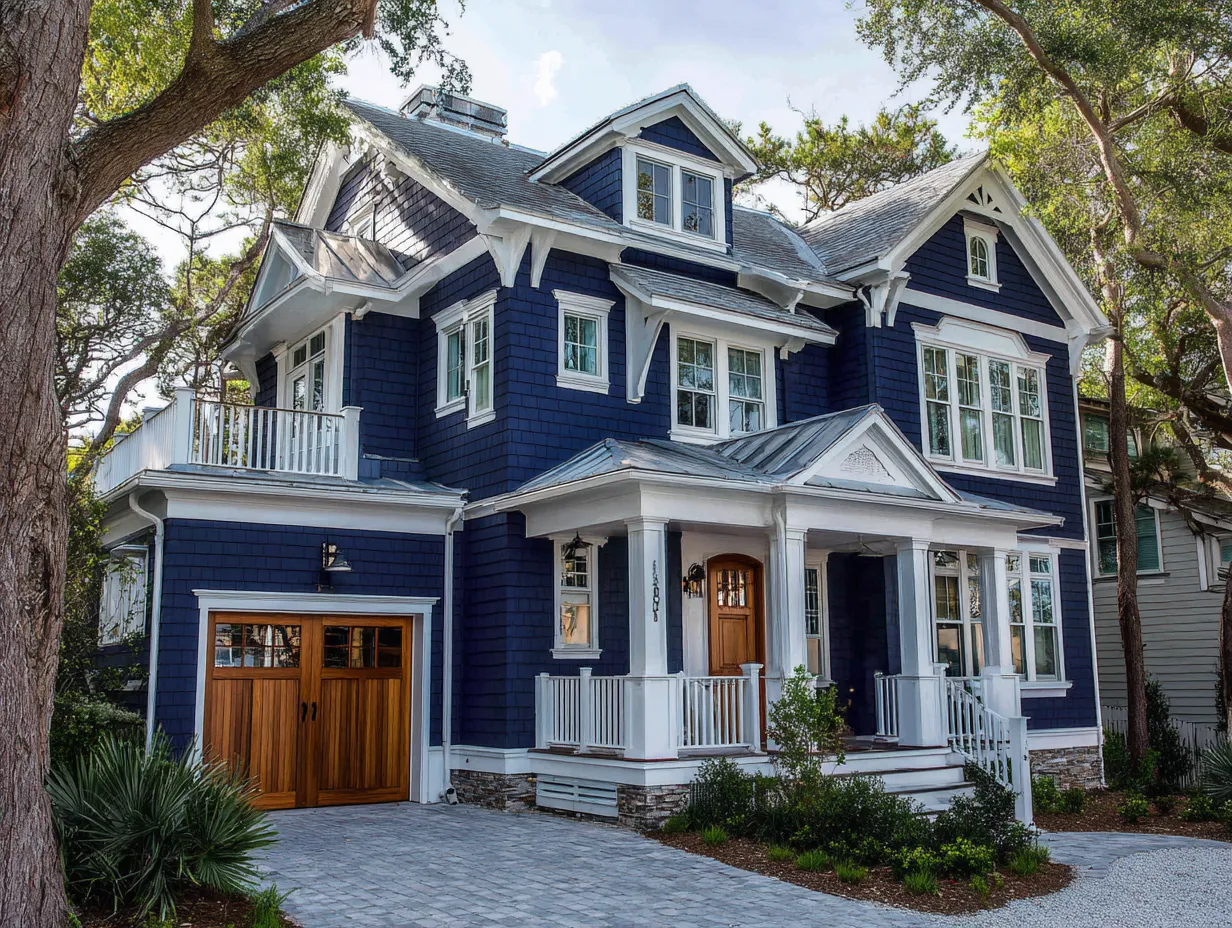
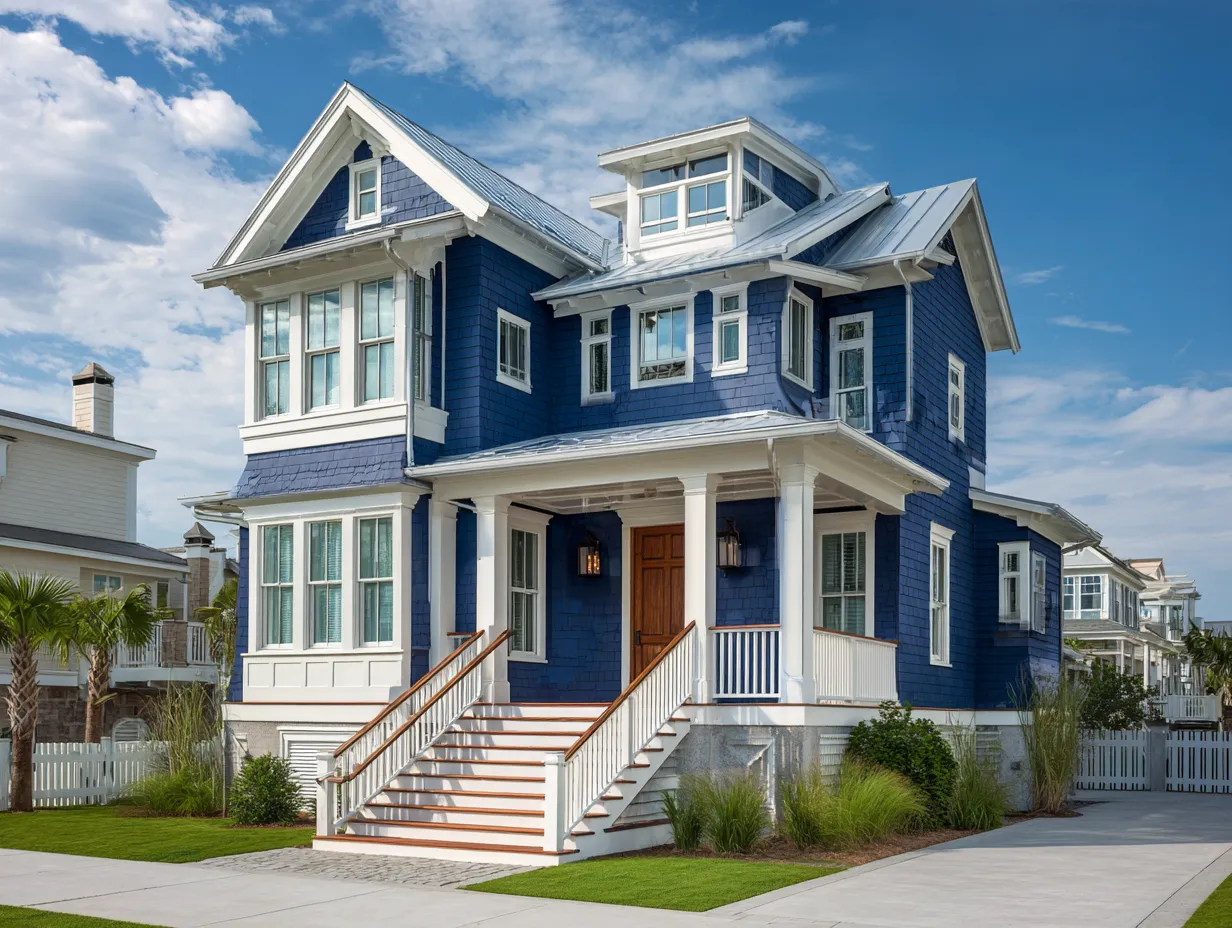
Navy blue siding offers a bolder approach to house siding ideas, bringing a sense of sophistication and drama to any home exterior. When combined with white trim, the result is a striking contrast that exudes modern elegance. The navy blue dominates the facade, lending the home a rich, deep hue that stands out beautifully against the clean white detailing around windows and doors. This combination is ideal for homeowners looking for a more dynamic color scheme that still retains the coastal charm. If you’re after a more detailed breakdown of navy-and-white palettes, check out exterior paint design with white and navy accents for full trim and door color pairings.
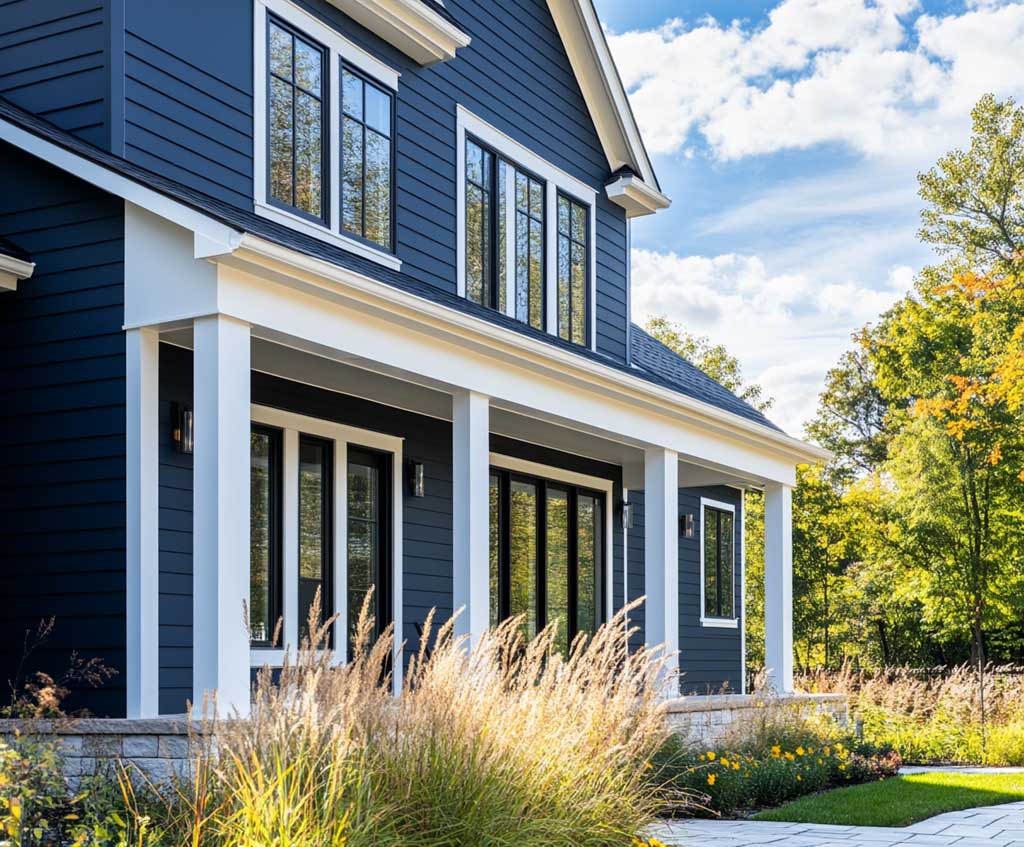
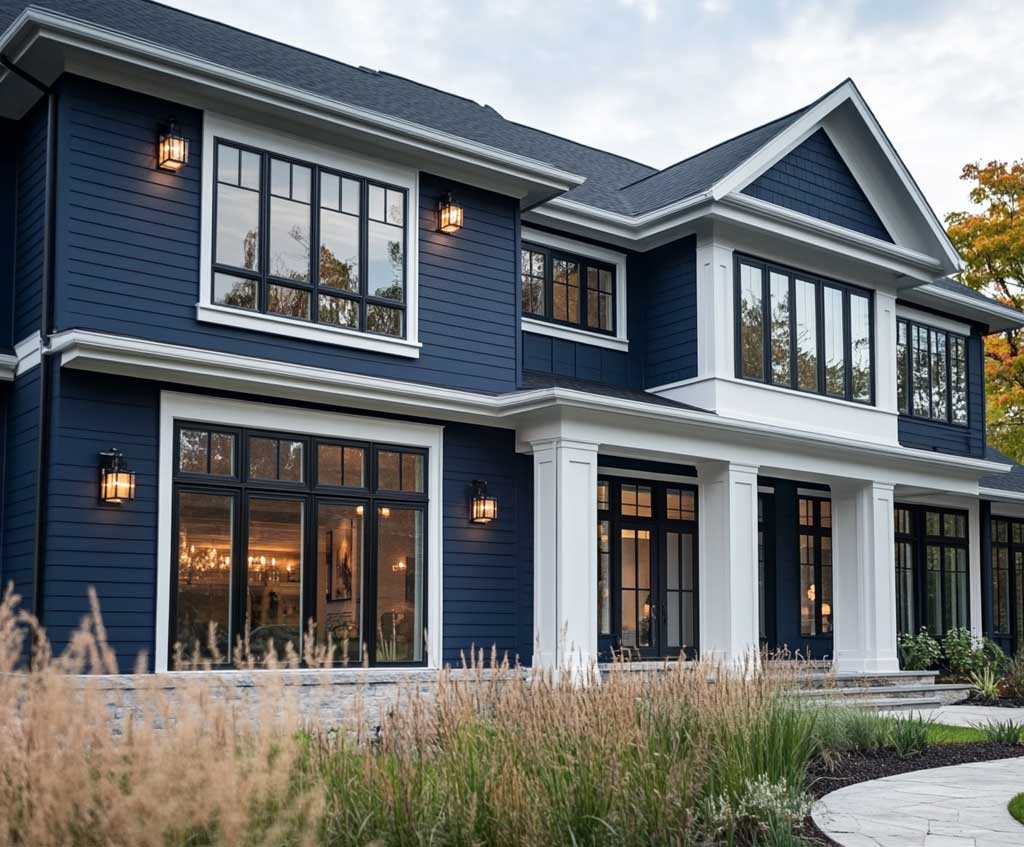
The sleek, black exterior lighting fixtures add a modern edge to the overall design, complementing the boldness of the navy blue. The white wrap-around porch provides a light, airy contrast to the dark siding, creating a welcoming entrance that feels both contemporary and classic. This balance between dark and light elements ensures that the exterior remains inviting, despite the dramatic color palette.
Tall ornamental grasses and a well-maintained stone pathway complete the look, adding natural textures that soften the bold siding and enhance the overall aesthetic. The natural landscaping plays an important role in grounding the color scheme, creating a harmonious connection between the home and its outdoor environment. These house siding ideas offer a refined yet bold option for those who want to combine modern design with coastal influence.
Using navy blue and white as your primary colors allows you to experiment with additional architectural features. Whether it’s sleek black lighting or stone pathways, these elements can be used to highlight the contrast and sophistication of the color palette. This approach works particularly well for modern or contemporary homes that want to maintain coastal influences while embracing a more daring design.
Sky Blue and White Cottage-Style Siding Combinations
Sky blue reads “cottage” instantly because it was literally the default paint choice for New England beach houses since the 1940s. That association is baked in. Lean into it with board-and-batten shutters instead of flat panel ones — the texture difference against horizontal lap siding adds dimension you can’t fake with color alone.
Bay windows eat up extra trim budget fast. Expect to spend $400–$600 per bay window on trim work alone if you’re wrapping them in white PVC. Wood trim looks better but rots within 5–7 years near the coast. Azek cellular PVC is my go-to: it takes paint well, won’t rot, and runs about $3.50 per linear foot. Real wood trim at the same dimensions costs $2 less per foot — and then you’re repainting every two years.
One regret I see constantly: homeowners match their shutter blue to their siding blue exactly. Dead wrong. Shutters should be one or two shades darker than the main body to create depth. Same-shade shutters disappear against the wall, and your house looks flat like a painted cardboard box.
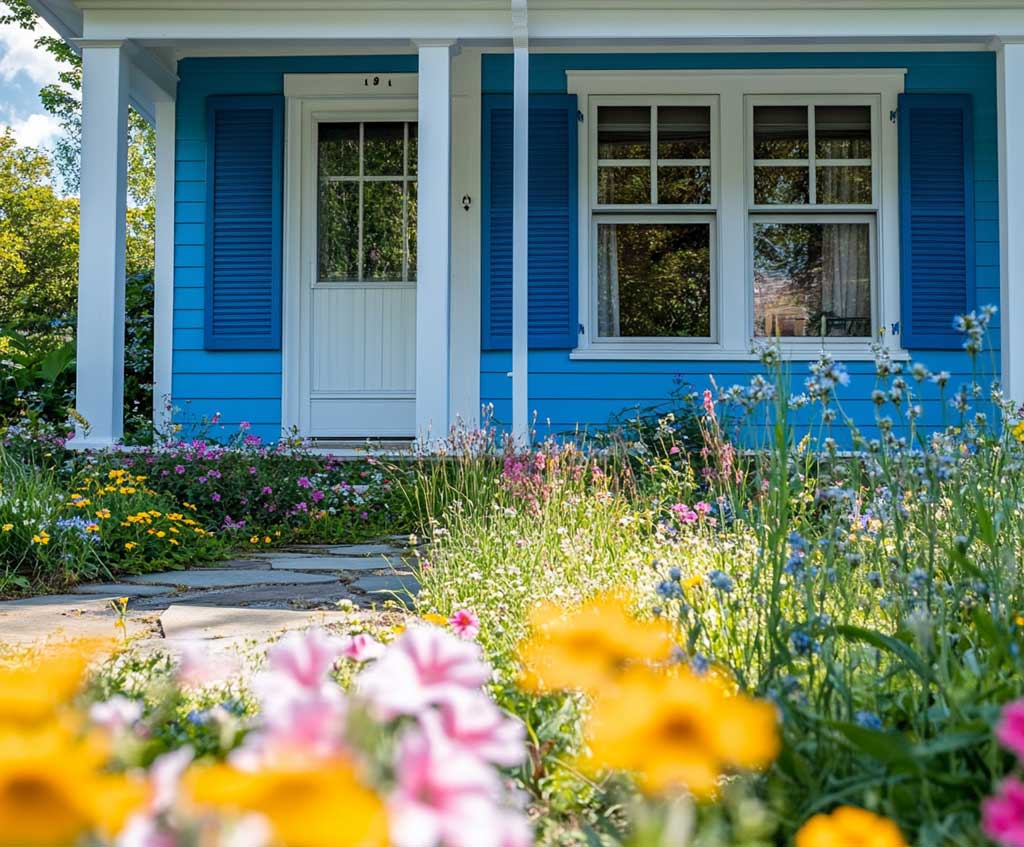
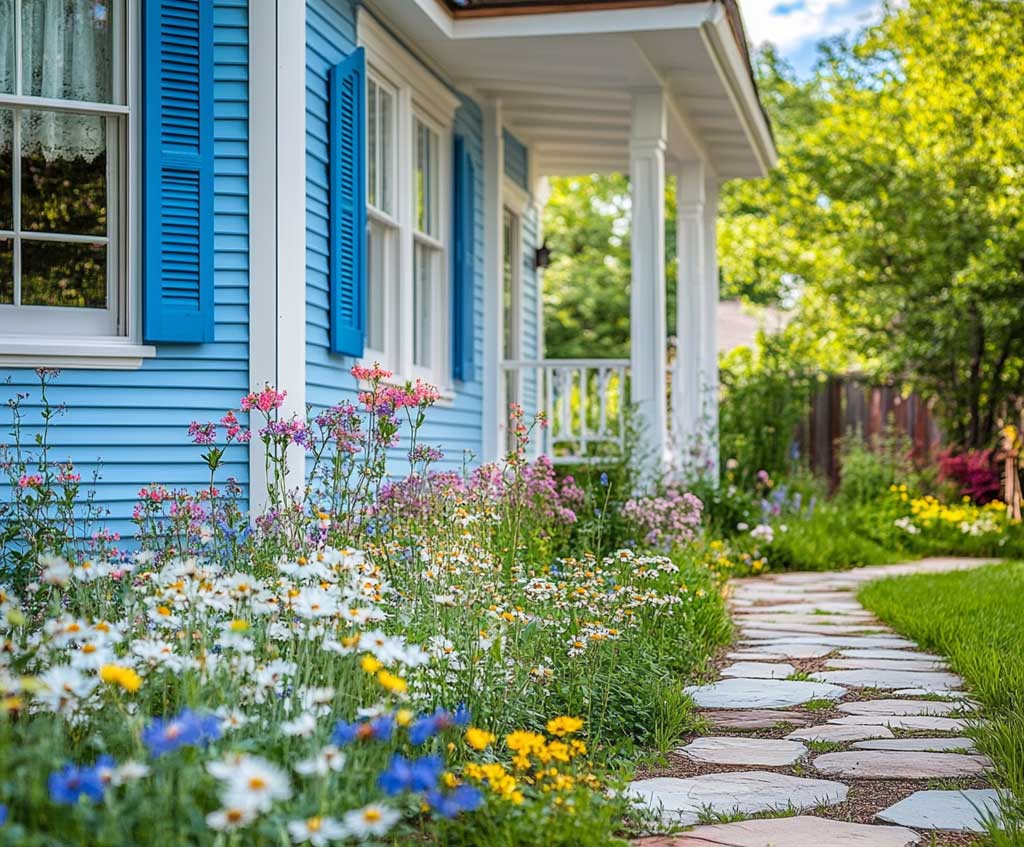
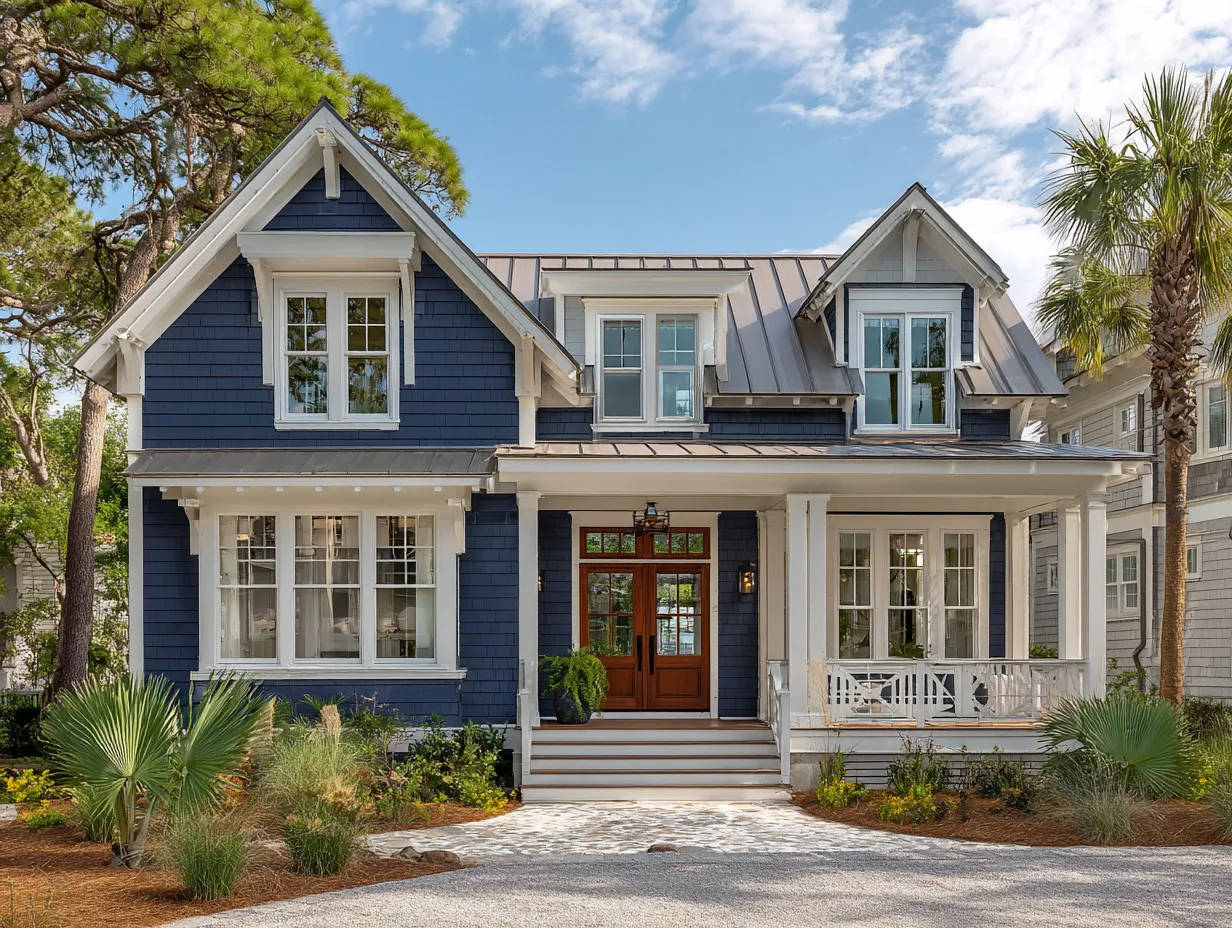
Sky blue siding is a classic choice for homes seeking a light, fresh feel with a hint of traditional charm. In this cottage-style design, the sky blue siding wraps the exterior, providing a soft, calming hue that immediately makes the home feel welcoming. The white trim around the bay windows and doors brings a crisp, clean touch to the design, offering contrast without overpowering the gentle blue tone.

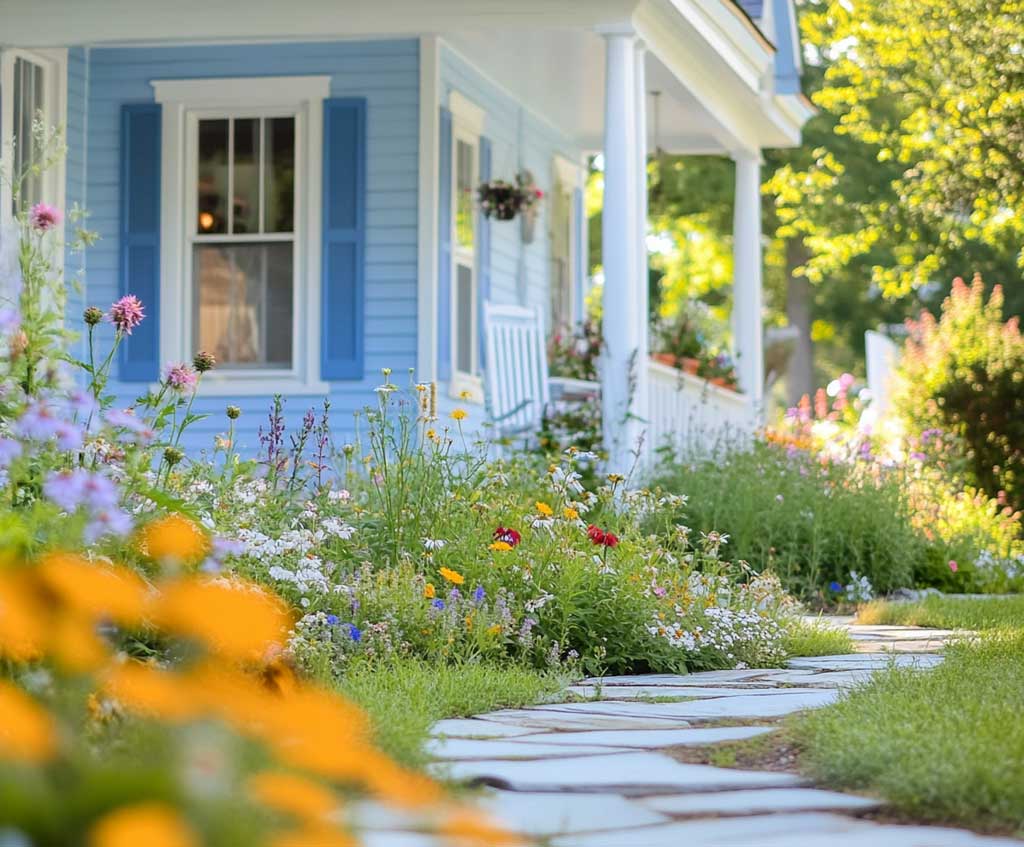
The addition of blue shutters adds another layer of color, complementing the siding while reinforcing the cottage aesthetic. White wood paneling on the porch further enhances the overall look, creating a harmonious blend of textures and tones that exude warmth and comfort. This classic combination of sky blue and white captures the essence of a traditional coastal cottage, perfect for those who want to evoke the feel of simpler, breezier days by the sea. For shutters and small accent areas, the Glidden One Coat Exterior Paint in Blue Fjord covers well in a single pass and resists cracking through temperature swings.
The front garden, filled with colorful wildflowers, softens the structure and integrates it into the natural surroundings. A stone pathway leading to the front door completes the charming aesthetic, adding both functionality and visual interest to the home’s entrance. These house siding ideas demonstrate how sky blue can be both versatile and timeless, offering homeowners a design that feels both contemporary and rooted in tradition. If you’re still weighing material options — vinyl vs. fiber cement vs. wood — Bob Vila’s siding guide breaks down cost, durability, and maintenance for each type.
This soft, calming color palette is perfect for those who want to create a relaxing environment that doesn’t stray too far from classic design principles. Sky blue, paired with white trim and accents, allows for endless customization while maintaining the overall cottage feel. Whether it’s a bay window, shutters, or a white-framed porch, these elements help to bring out the best of the sky blue and white combination, ensuring the home feels both breezy and welcoming.
Blue Siding Shades Compared: Pastel vs Navy vs Sky Blue
| Feature | Pastel Blue | Navy Blue | Sky Blue |
|---|---|---|---|
| Best paint pick | BM Palladian Blue | BM Hale Navy HC-154 | SW Breezy |
| Price per gallon | ~$55 | ~$75 | ~$55 |
| Best siding material | Vinyl or fiber cement | Fiber cement only | Vinyl or wood |
| Heat absorption | Low | High (+$30–50/mo cooling) | Low to moderate |
| Fade risk | Low | High (needs UV-resistant paint) | Moderate |
| Best home style | Coastal cottage, Cape Cod | Modern, contemporary | Traditional cottage, farmhouse |
| Shutter match | 1 shade darker blue | White or black | 1–2 shades darker blue |
How to Choose the Right Blue Siding Color for Your Home
Pick the right blue shade, material, and trim combination so your siding looks great and lasts 20+ years without fading or warping.
Tools & materials:
- Paint color sample pots
- Large foam boards for testing
- Exterior primer
- Tape measure for trim widths
Decide on your blue shade range
Pastel for relaxed cottages, navy for modern homes, sky blue for traditional builds. Hold paint chips against your roof color and any existing stonework before narrowing down.
Test samples on multiple walls
Paint two coats on 2×2 ft foam boards. Place them on the north-facing and south-facing walls for 48 hours. Blues shift dramatically between shade and direct sun — Palladian Blue goes green in afternoon light, Hale Navy looks almost black at dusk.
Pick your siding material based on shade darkness
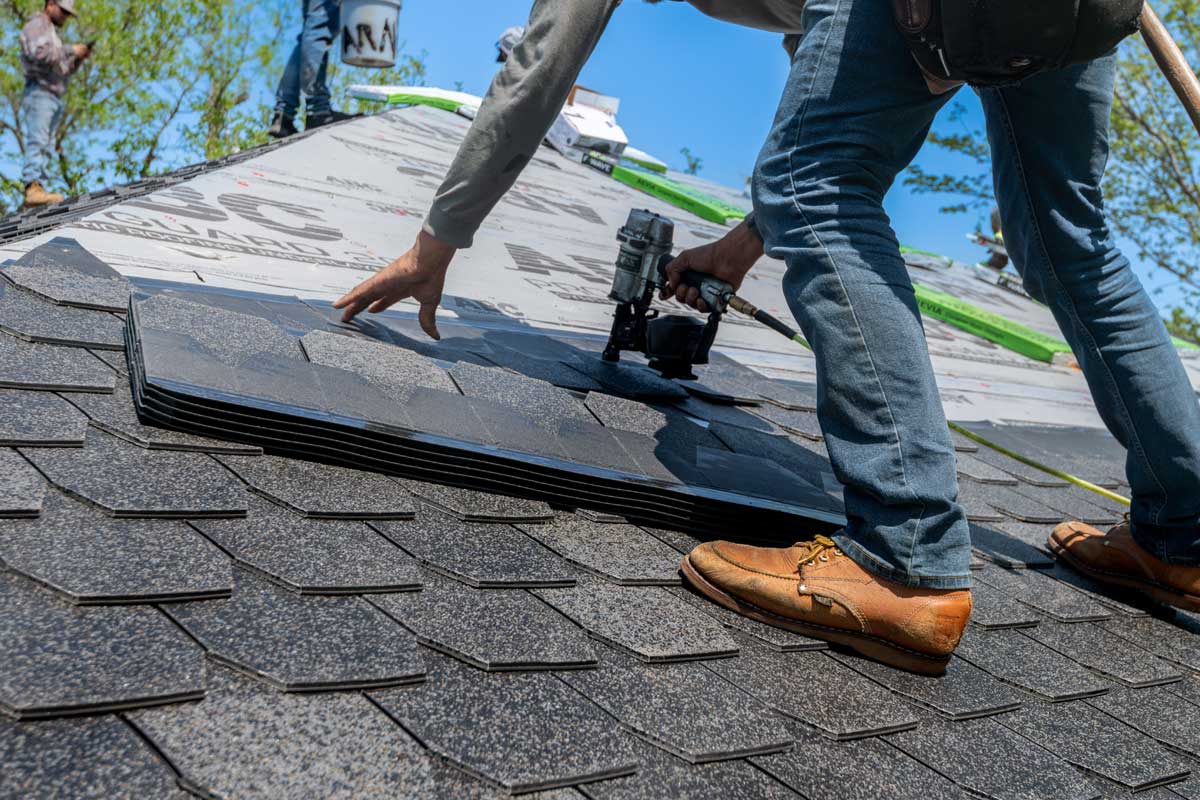
Light blues work on vinyl ($3–$5/sq ft). Any navy or dark blue must go on fiber cement ($6–$10/sq ft) to avoid heat warping. Dark vinyl siding buckling is the most common exterior siding complaint.
Size your white trim for maximum contrast
Use 5-inch-wide corner boards minimum. 3.5-inch boards look thin and cheap against blue siding. PVC trim (Azek at ~$3.50/ft) resists rot near the coast. Wood trim saves $2/ft but needs repainting every 2–3 years.
Choose shutters one shade darker than the body
Same-shade shutters vanish against the wall. Pick shutters 1–2 shades darker to create depth. For navy siding, go with white or black shutters instead of matching blue — the contrast reads better from the street.
Bottom Line on Blue and White Siding
Pastel blue works for cottages and relaxed coastal homes. Navy blue hits harder on modern builds with clean lines. Sky blue sits in the middle — safe, classic, almost impossible to mess up. All three need white trim to pop, and all three punish you if you skip primer or buy paint under $45 a gallon.
Fiber cement outlasts vinyl in every dark shade. Period. Budget an extra $2–$3 per square foot upfront and save thousands on replacements over 20 years. Match your shutter tone one shade darker than your siding. Use PVC trim near any coast.
The cheapest upgrade that makes the biggest difference? 5-inch white corner boards instead of 3.5-inch. Costs maybe $200 total and makes a $150k house look like a $250k house. Not bad for a few extra inches of paint-grade lumber.
FAQ
What is the best blue paint for exterior house siding?
Does navy blue siding increase energy costs?
What color trim works best with blue house siding?
Is vinyl or fiber cement siding better for blue exteriors?
How do I keep blue siding from fading?
Complete guide
White Color in Home Design: Every Room, Every Style, Every Shade
Kitchens, bathrooms, living rooms, exteriors, palettes — all in one place
Complete guide
Blue Home Color Ideas for Every Room and Style
Navy, sky blue, slate, teal — interiors, exteriors, kitchens, bedrooms — all in one place