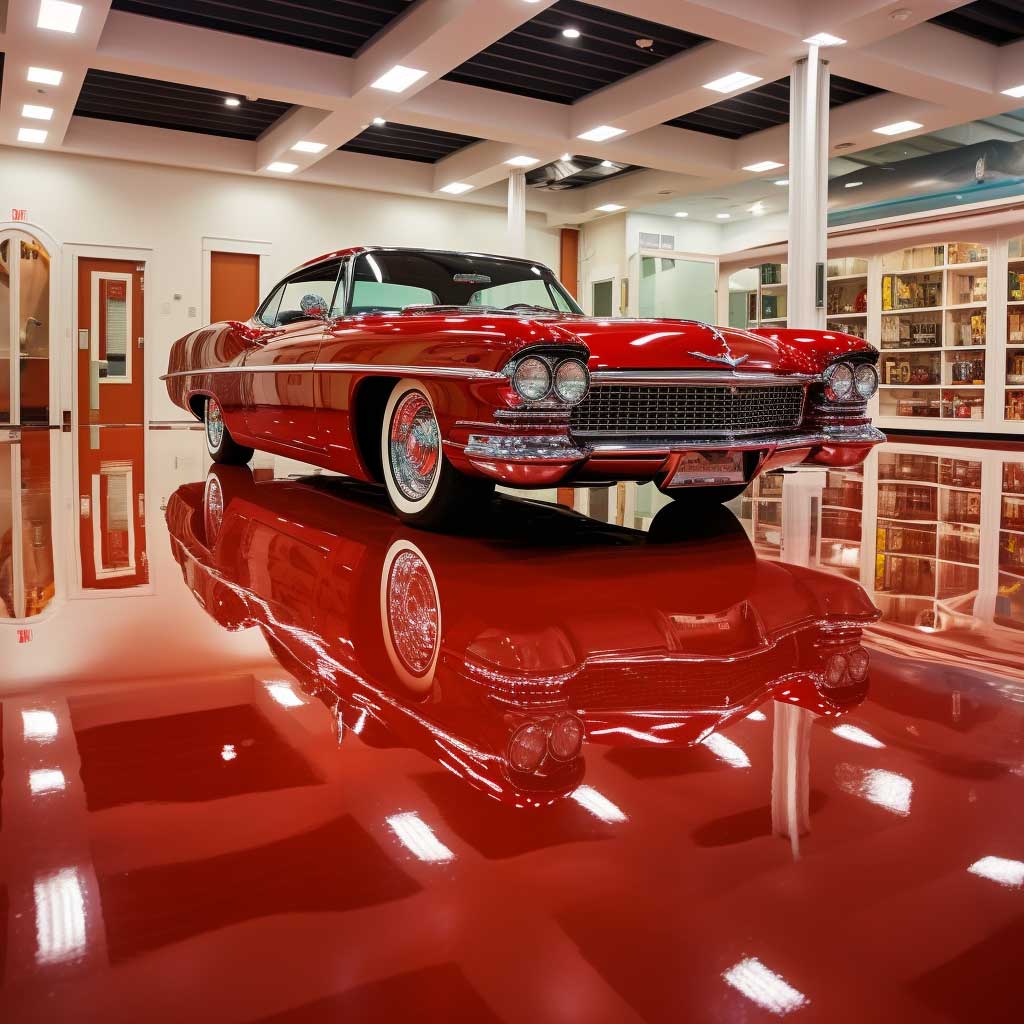
Epoxy garage flooring ideas keep coming up because nothing else on the market matches the combination of durability and visual impact you get from a properly installed epoxy system. I’ve walked through garages coated with big-box DIY kits and garages done by professional crews — the difference is immediately obvious underfoot and overhead in how the light bounces. You’ll notice right away that a well-executed epoxy floor doesn’t just protect concrete; it reframes the entire room. Whether you’re looking at metallic finishes, color flake systems, or a flat high-gloss coat, the finish type you choose determines how the space reads and how it performs years from now.
Quick Scan — What This Post Covers
- Metallic epoxy — the reflective system that makes a two-car garage look like a showroom
- Custom color epoxy — how to pick a hue that doesn’t date in three years
- Color flake finish — the practical choice when you need grip and want to hide tire marks
- High-gloss clear-coat epoxy — maximum shine, maximum upkeep honesty
- Surface prep mistakes that kill a $1,200 floor on day one
- FAQ covering cost, cure time, and DIY vs. pro installs
Metallic Epoxy Garage Floor Designs Worth the Price Premium
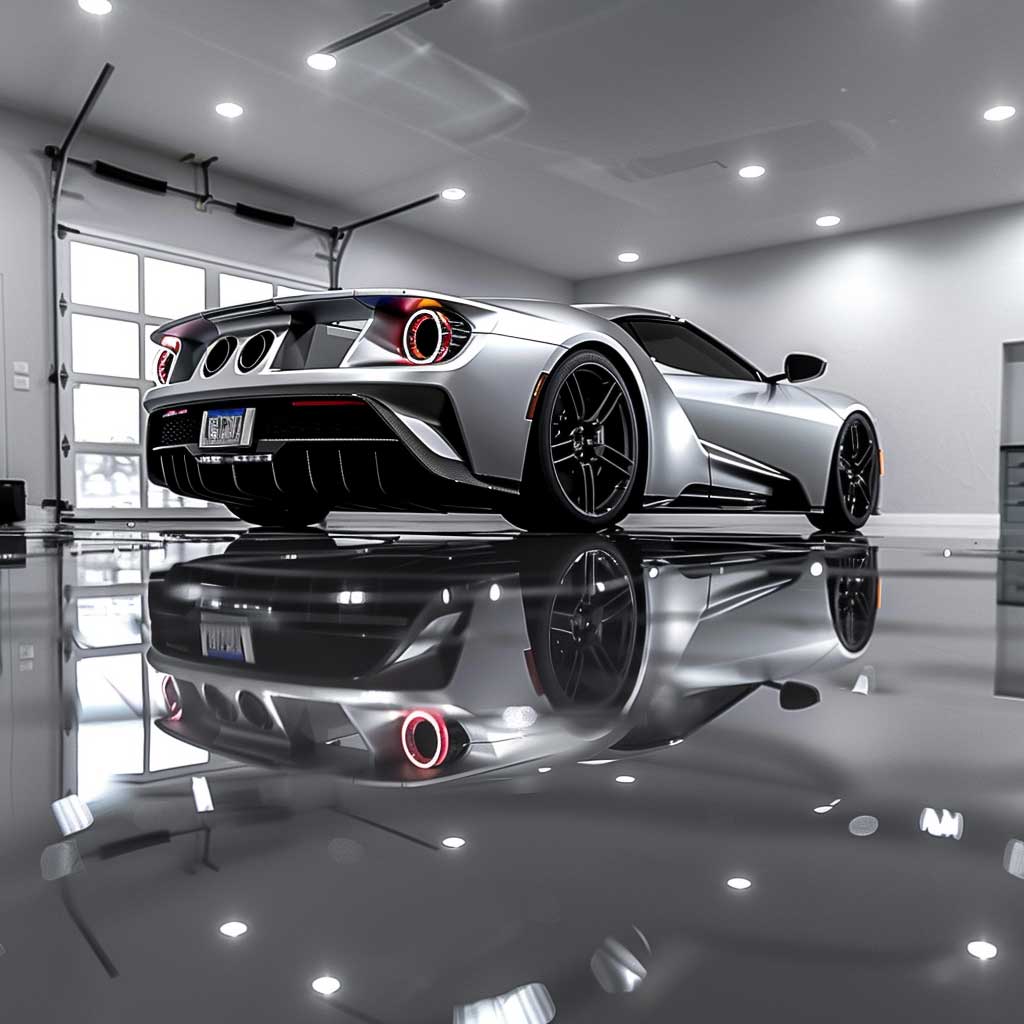
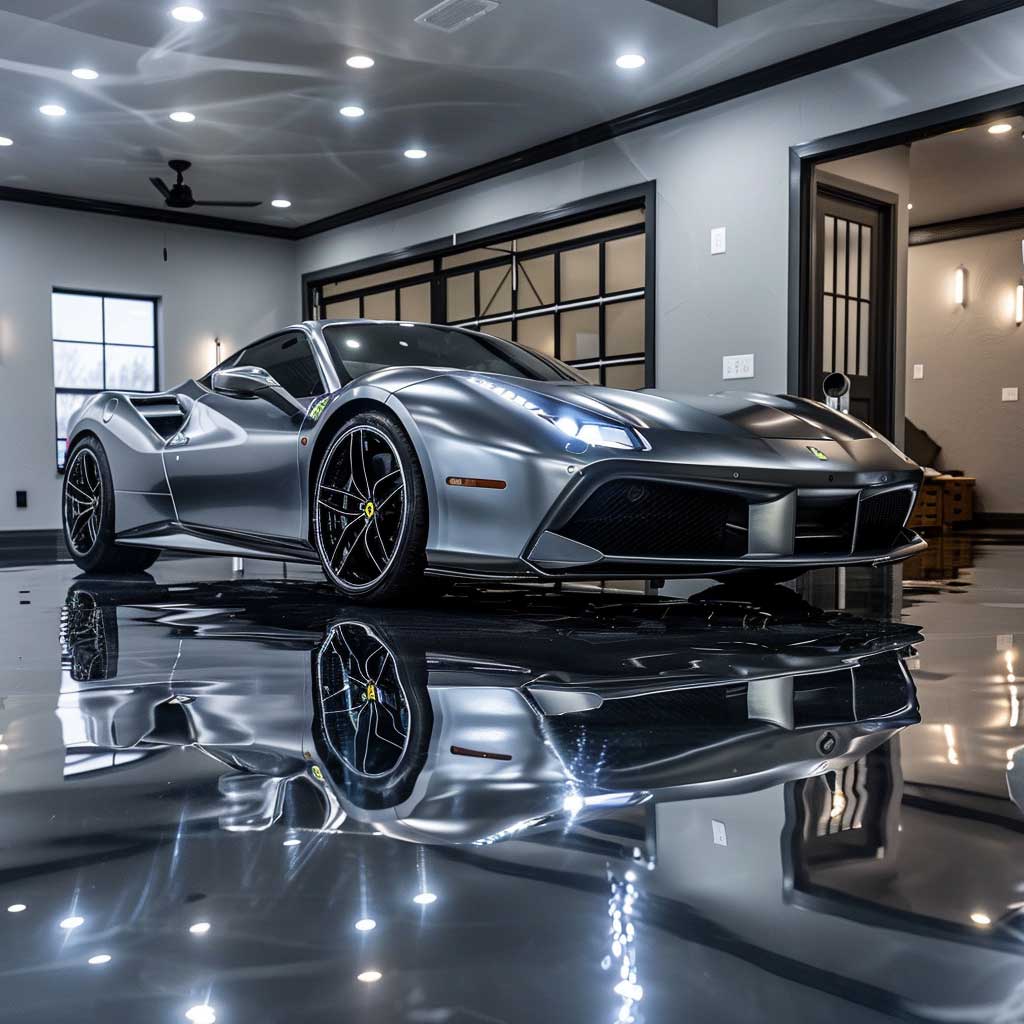


Metallic epoxy runs $3–$7 per square foot installed, which puts a two-car garage somewhere between $1,500 and $4,200 depending on your region and the contractor. That’s not cheap, and I’ll be honest — I’ve seen DIY metallic kits from Rust-Oleum and ArmorGarage go sideways when the applicator didn’t work the pigment fast enough before it started curing. The swirl pattern you’re picturing from Pinterest requires a specific squeegee technique applied within a tight window, usually under 20 minutes at 70°F. Hire someone if it’s your first time.
Done correctly, metallic epoxy behaves like polished stone from a distance and nothing like concrete at all. The mica or aluminum pigments suspended in the resin catch light at angles that shift as you move across the floor — it’s the closest thing to a liquid marble effect you can get without $40/sq ft of actual stone. My go-to colorway recommendation is a medium gray base with silver metallic overlay; it reads neutral in photos but has dimension in person. Avoid gold on anything under 400 square feet — it tends to read as brass-heavy and makes the space feel smaller.
What doesn’t work: single-pigment metallic in bright white. You’ll spend two years watching every tire scuff and footprint show up like a crime scene. The multi-tone combinations — gunmetal plus copper, navy plus silver — mask daily use far better. Rust-Oleum’s EpoxyShield Metallic line gives you decent starter pigment kits around $120–$180 for a one-car bay, but for a serious result on a full two-car floor, look at ArmorPoxy or Stone Coat Countertops’ floor system instead.
Don’t Do This
Skip the acid etch or shot-blast prep step because “the concrete looks fine.” Metallic epoxy needs mechanical profile to bond — smooth, trowel-finished slabs will delaminate within months regardless of how expensive the coating is. I’ve seen a $2,800 metallic install peel in sheets because the crew power-washed and called it prep. That’s not prep. It’s wishful thinking.
Epoxy Garage Floor Color Ideas That Won’t Look Dated in Five Years


Picking an epoxy garage floor color is the decision most people overthink and then regret — not because they chose wrong, but because they didn’t account for how the color shifts under artificial light versus daylight. Charcoal and mid-tone grays are the workhorses here: they photograph clean, they hide grime between mopping sessions, and they work with every cabinet color from white to black. You’ll notice that the garages on Pinterest with the most saves tend to cluster around the same three tones: medium gray, dark slate, and warm greige.
Bright colors — cobalt blue, racing red, hunter green — look electric in a fresh pour and dated within two repainting cycles of the rest of the house. I stole this rule from a flooring contractor I interviewed: if you wouldn’t put the color on a kitchen cabinet for a resale-focused renovation, don’t put it on the floor. The floor is a bigger commitment because regrinding and recoating costs as much as the first install. That said, I’ve seen a deep navy blue (Benjamin Moore’s Hale Navy translated into epoxy pigment) hold up beautifully for six years in a workshop setting without feeling trendy.
Two-tone zone designs are worth considering if your garage functions as both a parking space and a workshop. A lighter zone near the workbench (easier to see fasteners you dropped) and a darker zone under the parking area (hides oil drips) costs about 15–20% more in labor but pays off in daily usability. Rust-Oleum’s RockSolid Polycuramine line offers a solid single-color starter at around $100 per kit for a one-car bay, with decent UV stability if the garage gets sun. Don’t expect it to perform like a professional two-part system — it won’t, but it’s honest about what it is.
Color Flake Finish Hides Everything the Solid Colors Show


Color flake epoxy — also called vinyl chip or broadcast flake — is probably the most practical epoxy garage flooring idea if you actually use your garage as a garage rather than a display case. The vinyl chips broadcast over the wet base coat create a speckled surface that camouflages tire marks, dirt, and minor scuffs the way a textured wall paint hides roller texture. Full broadcast coverage (where the chips overlap edge to edge) is the version worth doing — partial broadcast leaves visible base coat between chips and looks unfinished within a year.
The flake size matters more than most installers will tell you. Quarter-inch chips (the most common) give you a clean, commercial-floor look. One-eighth-inch micro-chips read almost like stone. Three-quarter-inch mega-flakes are a design choice, not a functional one — they’re harder to seal without voids and they telegraph imperfections in the slab underneath. I’ve seen the mega-flake look work well exactly once, in a 1,200 sq ft showroom with a laser-leveled pour. In a typical residential garage with shrinkage cracks and aggregate pop-outs, smaller chips are more forgiving.
Topcoat choice on a flake floor matters: polyaspartic clears cure faster (back on the floor in 24 hours) and resist yellowing under UV better than standard epoxy clears. Garage Living and GarageExperts both use polyaspartic topcoats as standard on their flake systems, which is part of why their installs consistently hold up better than big-box DIY results. Expect $4–$6 per square foot professionally installed for a full-broadcast flake with polyaspartic clear — about 20% more than solid color epoxy, and worth every dollar if you park in the sun.
What to skip: pastel or light-colored flake blends in garages with oil leaks. The light chips absorb oil staining despite the clear coat, and you’ll see ghost rings around where cars park within the first season. Stick to dark neutrals — charcoal, slate, black-and-white — for anything that sees regular vehicle parking. The Spruce’s breakdown of epoxy floor coating types confirms the same: dark base colors outperform light ones in real-use conditions.
High-Gloss Epoxy Looks Like a Showroom Floor Until You Actually Drive on It


High-gloss solid epoxy — no chips, no metallic pigment, just a flat color under a mirror-clear topcoat — is the floor you see in every automotive photography backdrop and almost no residential garage, because it requires a level of surface prep that most concrete slabs can’t support without significant grinding. The effect is real. I’ve stood in a collector’s garage with a 100% solids white gloss floor and the reflection was clean enough to read the car’s chassis number without leaning in. That’s not an exaggeration — it’s what 6+ coats of material and 16 hours of prep look like.
For a functional daily-driver garage, high-gloss solid epoxy works best in medium to dark tones where surface imperfections telegraph less aggressively. Light gray and medium graphite are the two colorways that hold up to real use without becoming a permanent record of footprints and tire scuffs. You’ll need to damp-mop weekly to maintain the appearance — this floor punishes neglect the way white kitchen cabinets do. If that sounds like work, that’s because it is.
Wet conditions are the real risk factor with a smooth high-gloss floor. Add aluminum oxide or silica sand anti-slip additive to the topcoat — it slightly reduces sheen but drops slip incidents dramatically. 100% solids epoxy from brands like Rust-Oleum’s EpoxyShield Professional series or ArmorPoxy’s full-build systems run $200–$350 for a two-car garage in materials alone, with professional installation adding $2–$4 per square foot. The DIY kits work — just budget two full days and don’t let the floor drop below 55°F during cure.
Epoxy Finish Type at a Glance
| Finish Type | Installed Cost (per sq ft) | Hides Daily Grime | Slip Resistance | Best For |
|---|---|---|---|---|
| Metallic | $3–$7 | Medium | Low–Medium | Showroom, display garages |
| Custom Color (Solid) | $2–$5 | Low–Medium | Medium (with additive) | Workshops, clean garages |
| Color Flake | $4–$6 | High | High | Daily-driver garages, families |
| High-Gloss Clear | $3–$6 | Low | Low (add anti-slip) | Photography, collector storage |
Related Topics
FAQ
How much does epoxy garage flooring cost to install professionally?
What are the best epoxy garage floor color options for hiding dirt?
How long does epoxy garage floor coating last?
Can you DIY epoxy garage flooring or do you need a contractor?
What is the difference between epoxy and polyaspartic garage floor coating?
Do cool epoxy garage floor designs add resale value to a home?
Final Word
The Floor Finish That Works Is the One Matched to How You Actually Use the Space
Metallic looks the most impressive in photos. Color flake performs the best in daily use. High-gloss is the hardest to maintain but the most dramatic in person.
Pick your finish based on how often you park, whether kids or pets use the space, and how much time you’ll actually spend mopping. The wrong choice isn’t a bad finish — it’s a good finish in the wrong context.
Save this post before your next garage renovation conversation with a contractor — it’ll help you ask the right questions about prep, topcoat type, and long-term performance.