Quick Scan
- Recycled glass tile uses roughly half the energy of ceramic tile production — a verified sustainability advantage, not a marketing claim.
- Fireclay Tile's Debris series starts at $24/sq ft with 60% recycled content; Oceanside Glasstile's Elevations series runs $40–$70/sq ft with up to 97% recycled content.
- Always use white polymer-modified thinset under glass tiles — gray thinset bleeds through translucent glass and ruins the finish.
- Verify EPDs and certified recycled content percentages on product sheets before purchasing if LEED credits matter for your project.
- Late May through early June is the optimal installation window — summer humidity extends cure times by up to 30%.
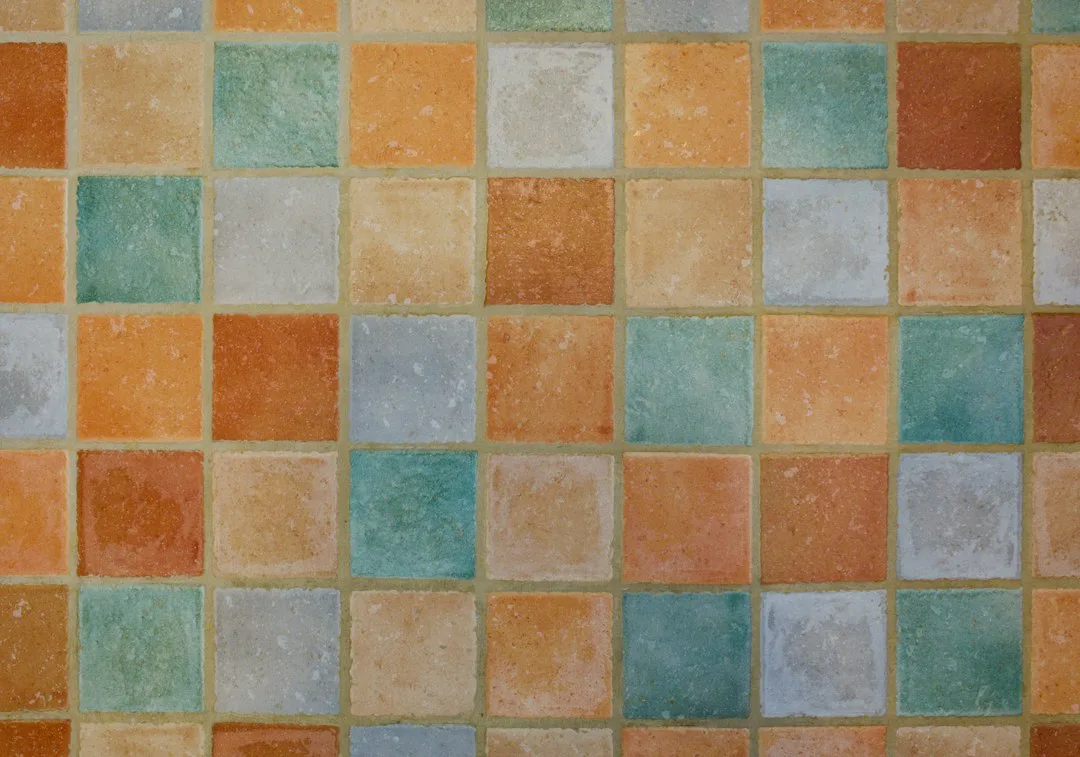
Recycled glass tile backsplashes are having a moment that goes far beyond trend cycling. A 2026 industry survey found 70% of designers now cite unique textures as pivotal in client projects, with recycled and upcycled materials explicitly named as a top showroom display trend. That is not a coincidence — it is a shift in how homeowners define quality finishes. Glass catches light in ways ceramic simply cannot, and when that glass is made from post-consumer bottles or reclaimed car windshields, the surface carries a story the wall earns every single day.
Why Recycled Glass Tile Outperforms Ceramic on Every Sustainability Metric
Energy use is the first number worth knowing. Producing a recycled glass tile requires roughly half the energy of manufacturing a ceramic tile of the same size. Recycling glass itself consumes just 30% of the energy needed to produce it from raw silica — a gap that compounds across an entire kitchen backsplash installation. That is a measurable reduction, not a marketing claim.
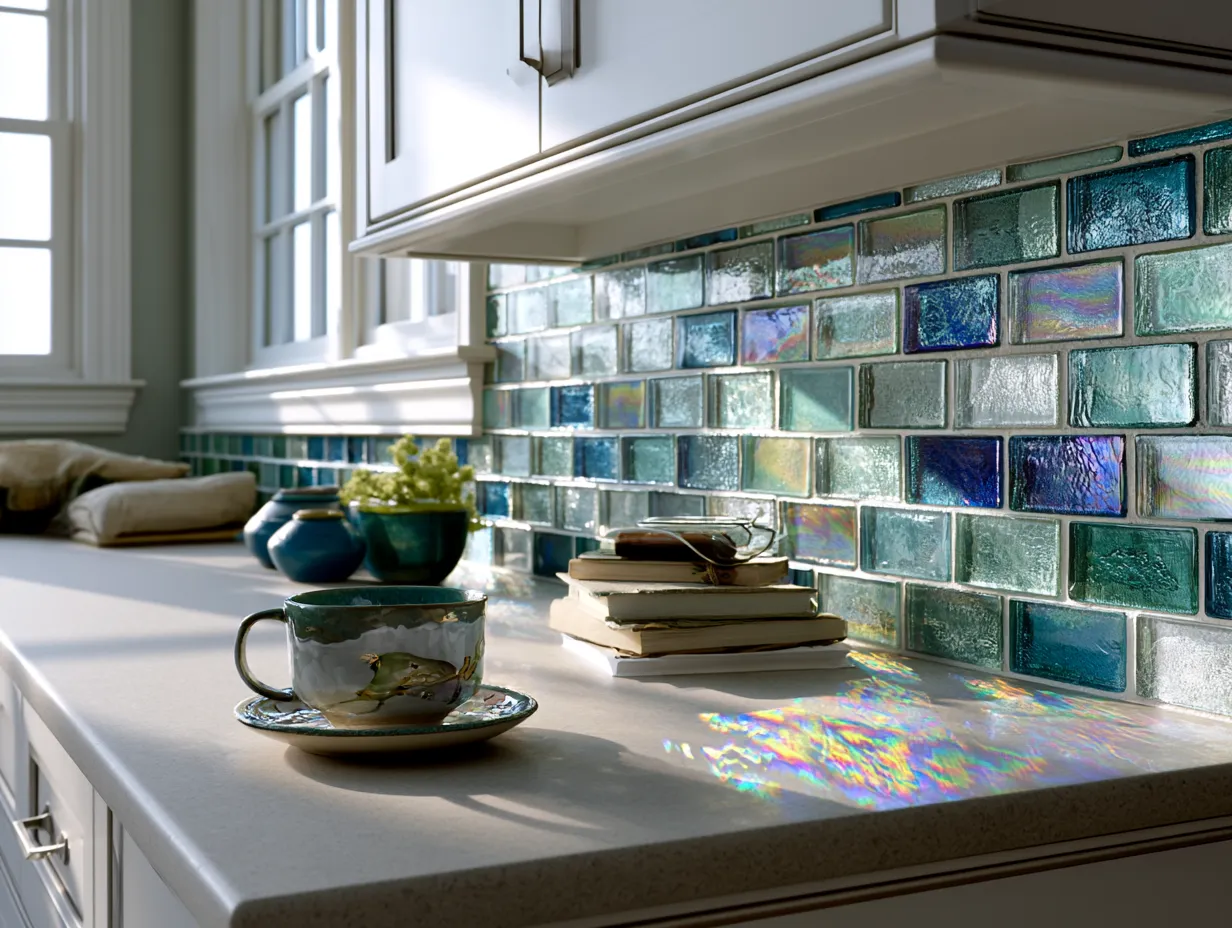
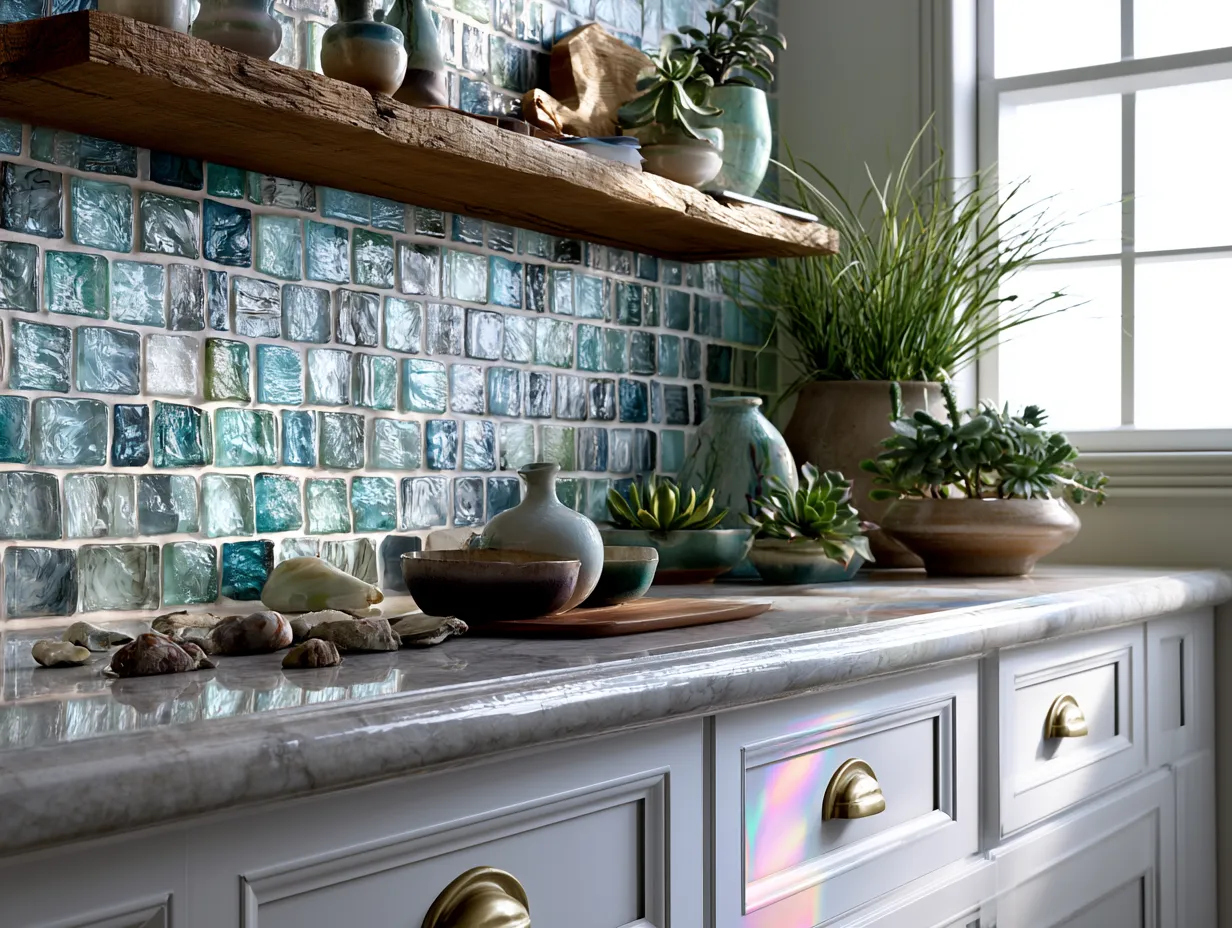
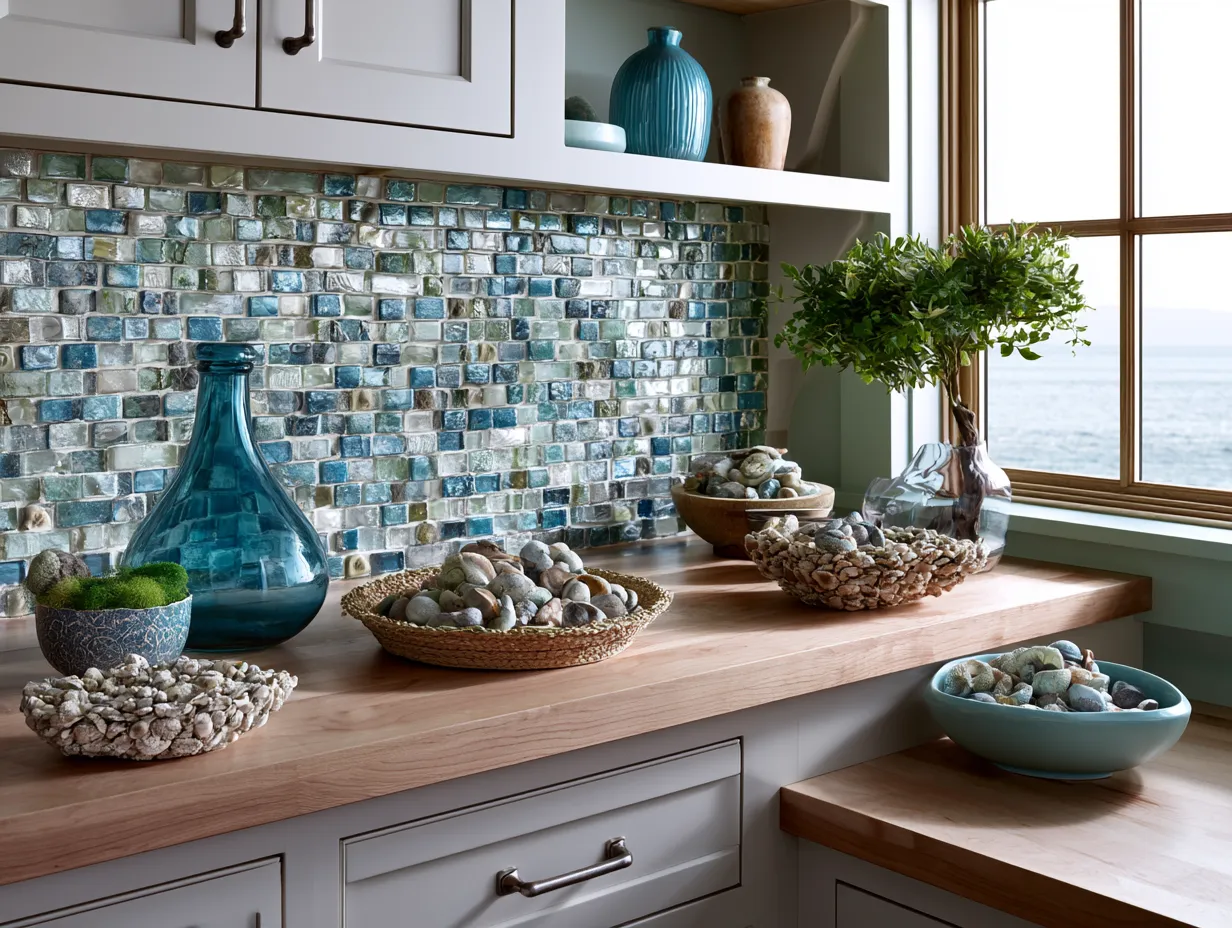
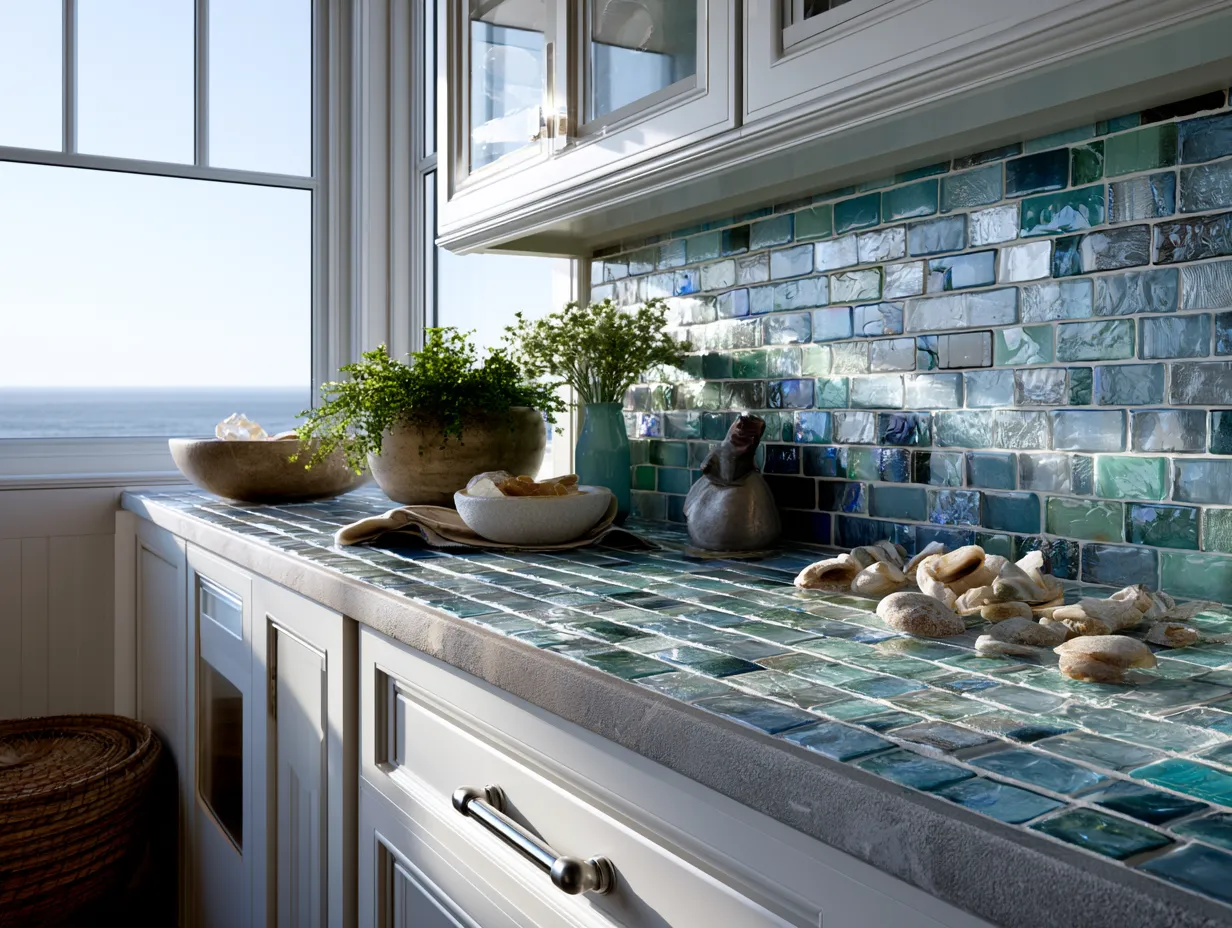
What does that mean for your renovation budget and your values? It means choosing recycled glass lets you pursue LEED credits without sacrificing visual impact. Industry guidance recommends verifying Environmental Product Declarations (EPDs) and certified recycled content percentages before purchasing — both are standard documents from brands like Fireclay Tile and Oceanside Glasstile. Ask your supplier for product sheets before committing to any order. Credentials matter here.
Fireclay Tile manufactures in their Spokane, WA factory, offering USA-made glass tile across 24 colors and 12 sizes. Their Debris series combines 60% postconsumer and postindustrial recycled content and starts at approximately $24 per square foot — an accessible entry point for a material with genuine sustainability credentials. That price point makes it competitive with mid-range ceramic without any compromise on eco integrity.
If you want to take sustainability further, look at BELK Tile’s recycled glass mosaic line, made from 98% recycled glass sourced from post-consumer bottles, windows, and jars. It is available in square, brick, and hexagon shapes, which means you are not sacrificing format variety for eco content. Do not assume high recycled content forces you into limited design options. The range at this tier is wider than most homeowners expect.
One thing to avoid: do not select a tile based on a brand’s general sustainability messaging without verifying the specific product line’s recycled content percentage. Broad claims like ‘eco-friendly manufacturing’ can refer to factory processes rather than material composition — and that distinction changes whether your project qualifies for any LEED credits. Verify the product sheet, not the homepage. For visual inspiration on how eco materials translate into contemporary kitchen aesthetics, Geometric Tile Backsplash Elevating a Contemporary Kitchen Design demonstrates how bold format choices work alongside sustainable finishes.
Don’t Do This
- Do not use gray thinset under translucent recycled glass tiles — the color bleeds through the tile body and permanently muddies the surface.
- Do not select tiles based on a brand's general eco messaging without verifying the specific product line's documented recycled content percentage.
- Do not mix recycled glass tiles from different manufacturers without testing grout color compatibility first — light transmission varies between brands and creates uneven visual grids.
- Do not apply topical stone sealer to glass tile faces — it leaves a hazy residue that dulls reflectivity and cannot be removed without damaging the surface.
Choosing the Right Recycled Glass Tile Brand for Your Kitchen or Bathroom
Price range across recycled glass tile brands is wider than most people anticipate — and that spread maps directly to recycled content percentage and finish quality. Oceanside Glasstile’s products contain between 30% and 97% recycled content depending on the line, with their premium Elevations series priced at $40 to $70 per square foot. That upper range is a design investment, not an impulse purchase, and it performs best in spa-style bathrooms where surface quality reads at close range.
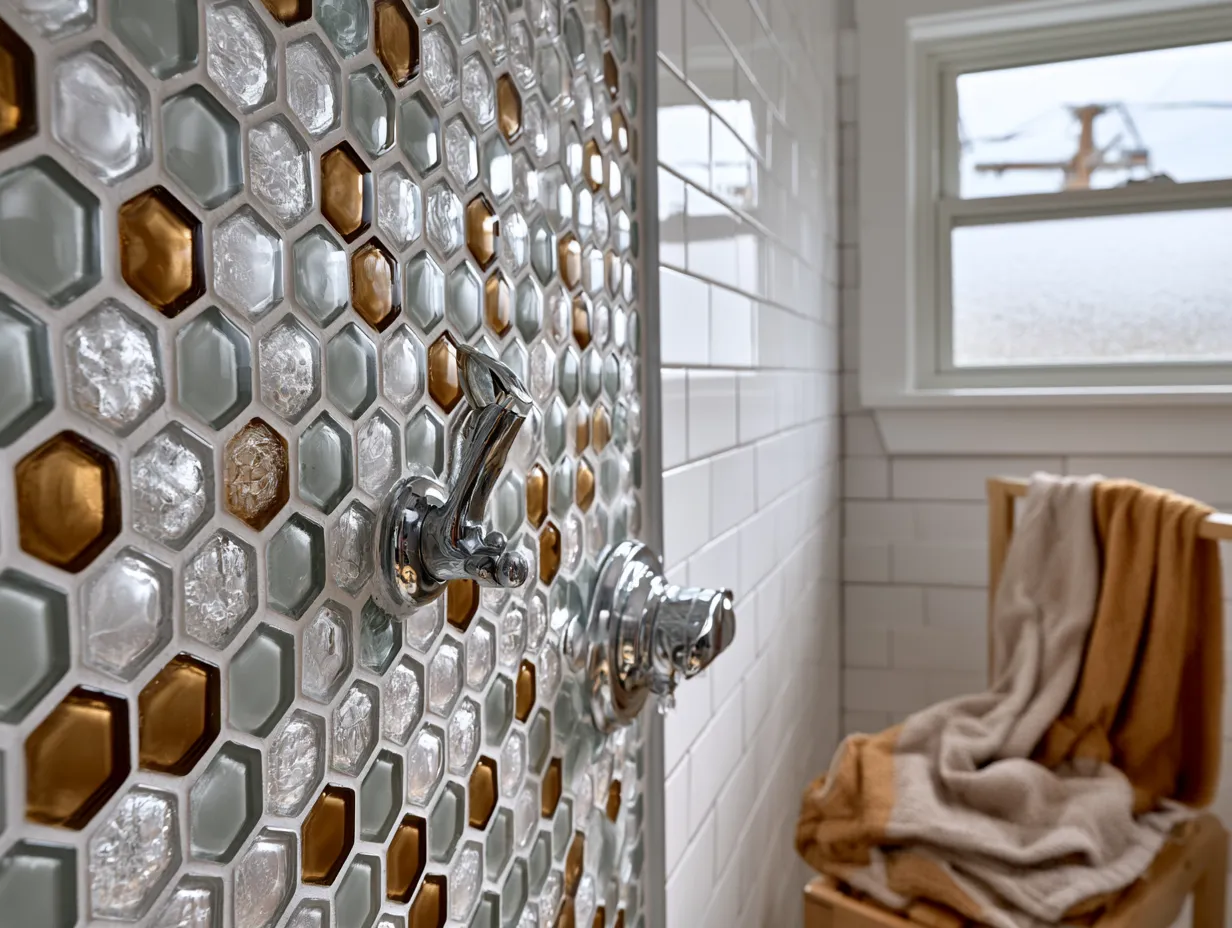
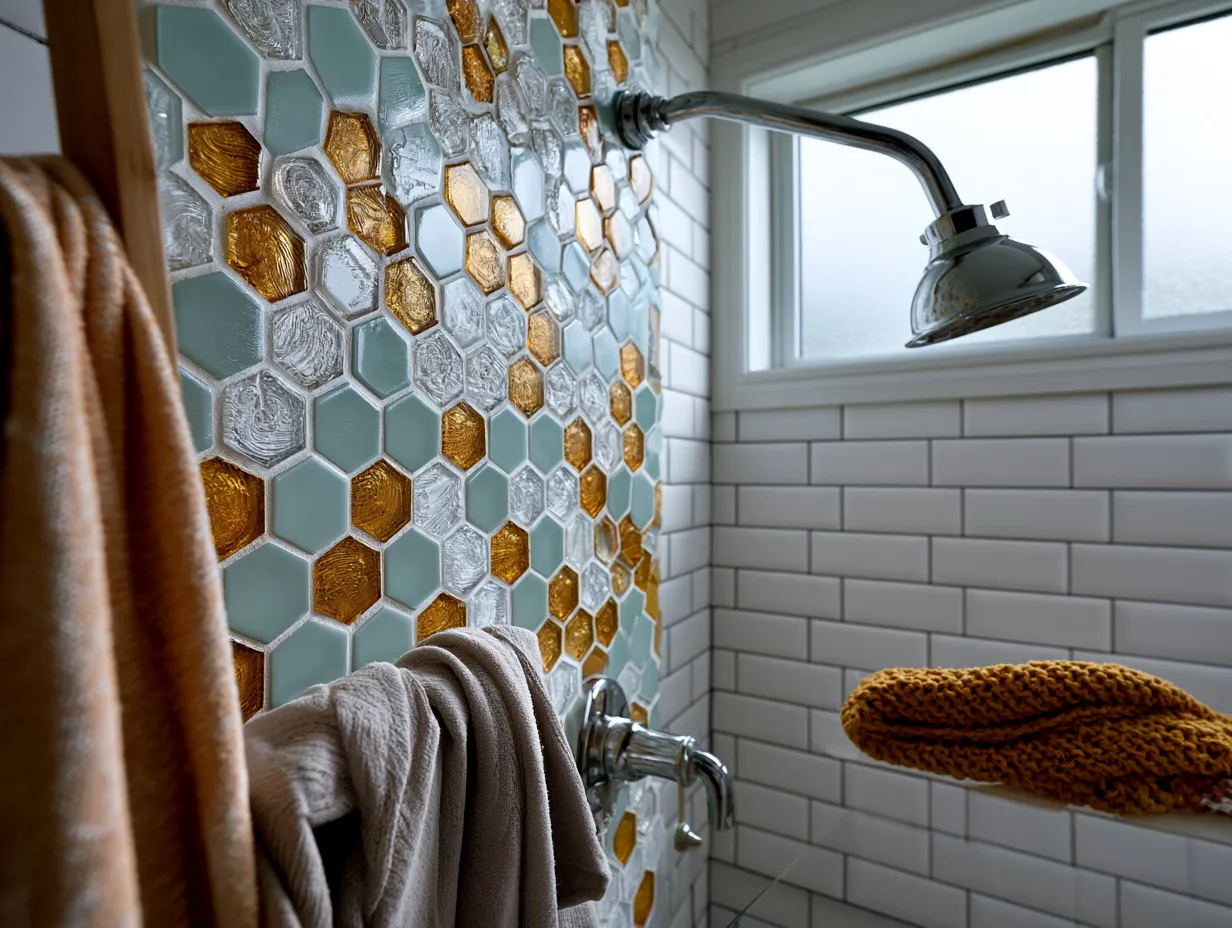
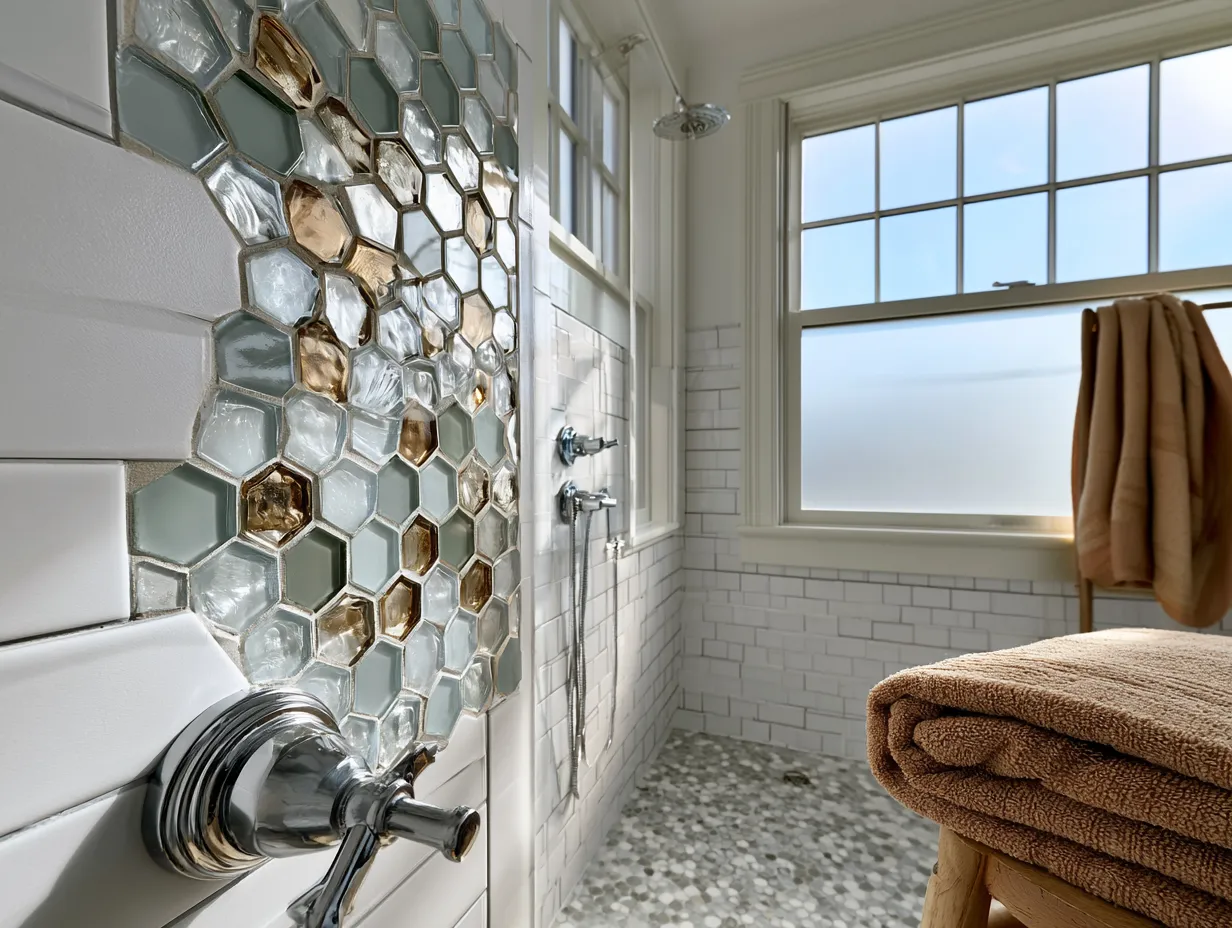
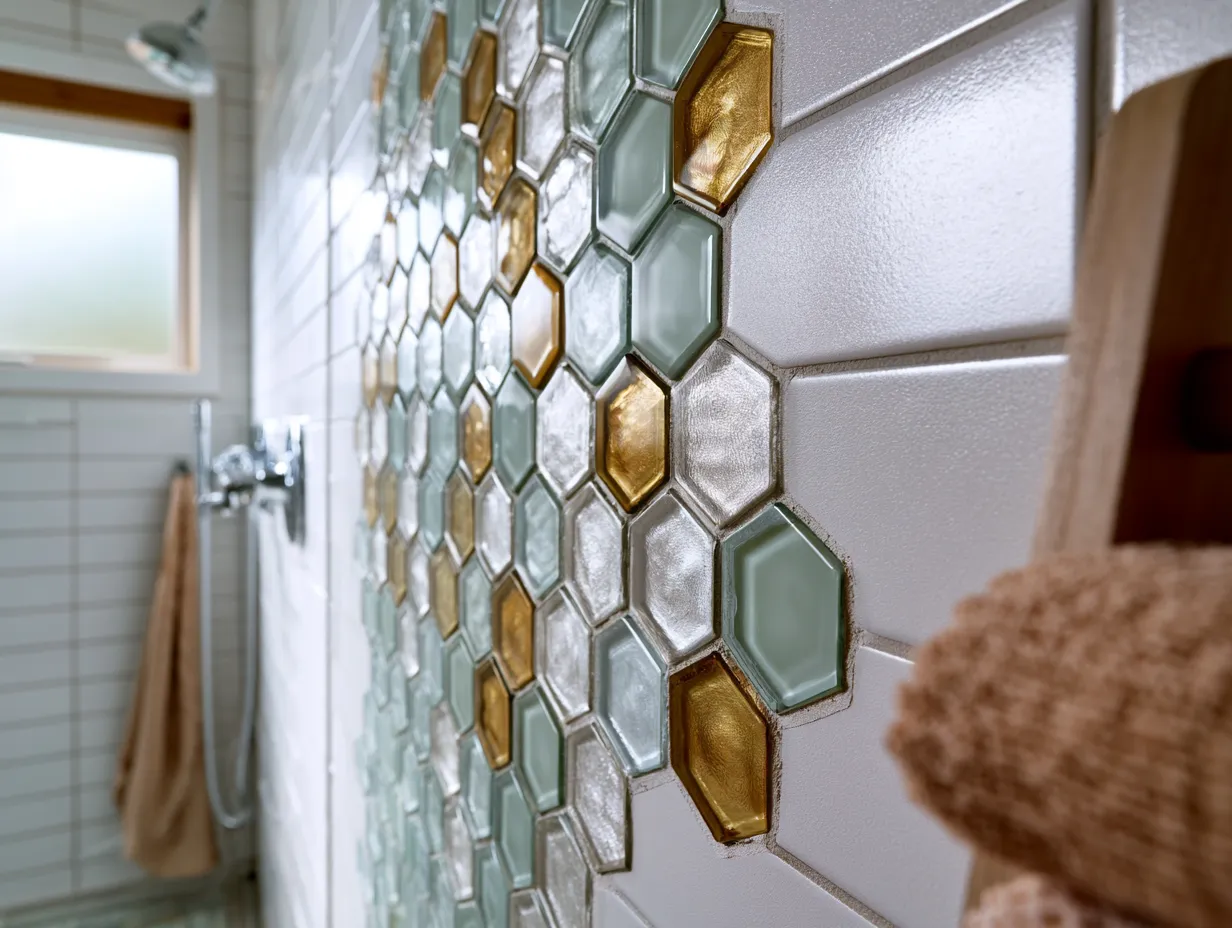
Mineral Tiles takes a different approach. The brand sources its recycled glass tiles directly from broken car windshields and beverage bottles, offering mosaic formats in both rustic and polished finishes at budget-accessible price points. Rustic finishes work particularly well in farmhouse kitchens or eclectic spaces where slight surface variation reads as texture rather than imperfection. Polished formats perform in contemporary bathrooms where clarity and reflectivity are the whole point.
So which brand is right for your project? It depends on three variables: your square footage, your finish preference, and whether you need documented eco credentials for a building certification. For a standard kitchen backsplash of 15 to 20 square feet, Fireclay’s Debris series at $24 per square foot keeps total material cost under $500 while still delivering verified recycled content. For a bathroom feature wall where LEED documentation matters, Oceanside Glasstile’s product sheets provide the EPDs and certified content percentages contractors need.
Format choice is just as important as brand selection. BELK Tile’s availability in hexagon shapes opens up pattern options that square or brick tiles cannot achieve — particularly in bathrooms where a single hexagon field tile can function as both floor and wall without visual conflict. Hexagon recycled glass tiles installed floor-to-ceiling in a wet room create a cocoon of refracted color that no ceramic format replicates. See how that translates to bathroom environments in Modern Bathroom Elevated with White Geometric Tile, which shows how format and finish interact at scale.
Do not mix recycled glass tiles from different manufacturers in the same installation without testing grout color compatibility first. Variation in glass density between brands means light passes through each tile differently — and a grout line that disappears under Fireclay glass may appear as a hard grid under Oceanside Glasstile’s denser product. Order samples before committing to a mixed installation. One test panel saves an expensive mistake.
| Brand / Line | Recycled Content | Price Range |
|---|---|---|
| Fireclay Tile — Debris Series | 60% post-consumer + post-industrial | ~$24/sq ft |
| Oceanside Glasstile — Elevations | 30–97% depending on line | $40–$70/sq ft |
| BELK Tile — Recycled Glass Mosaic | 98% post-consumer glass | Mid-range, contact for quote |
| Mineral Tiles — Recycled Mosaic | Windshields + beverage bottles | Budget-accessible |
Installing a Recycled Glass Tile Backsplash Without Common Setbacks
Glass tile installation rewards preparation more than ceramic does. The non-porous surface means standard ceramic adhesives can fail — glass requires a white polymer-modified thinset specifically rated for non-porous materials. Using gray thinset under translucent glass tiles is a visual disaster: the color bleeds through the tile body and muddies the entire surface. White thinset only. That single rule prevents the most common installation regret reported by homeowners who DIY this project.
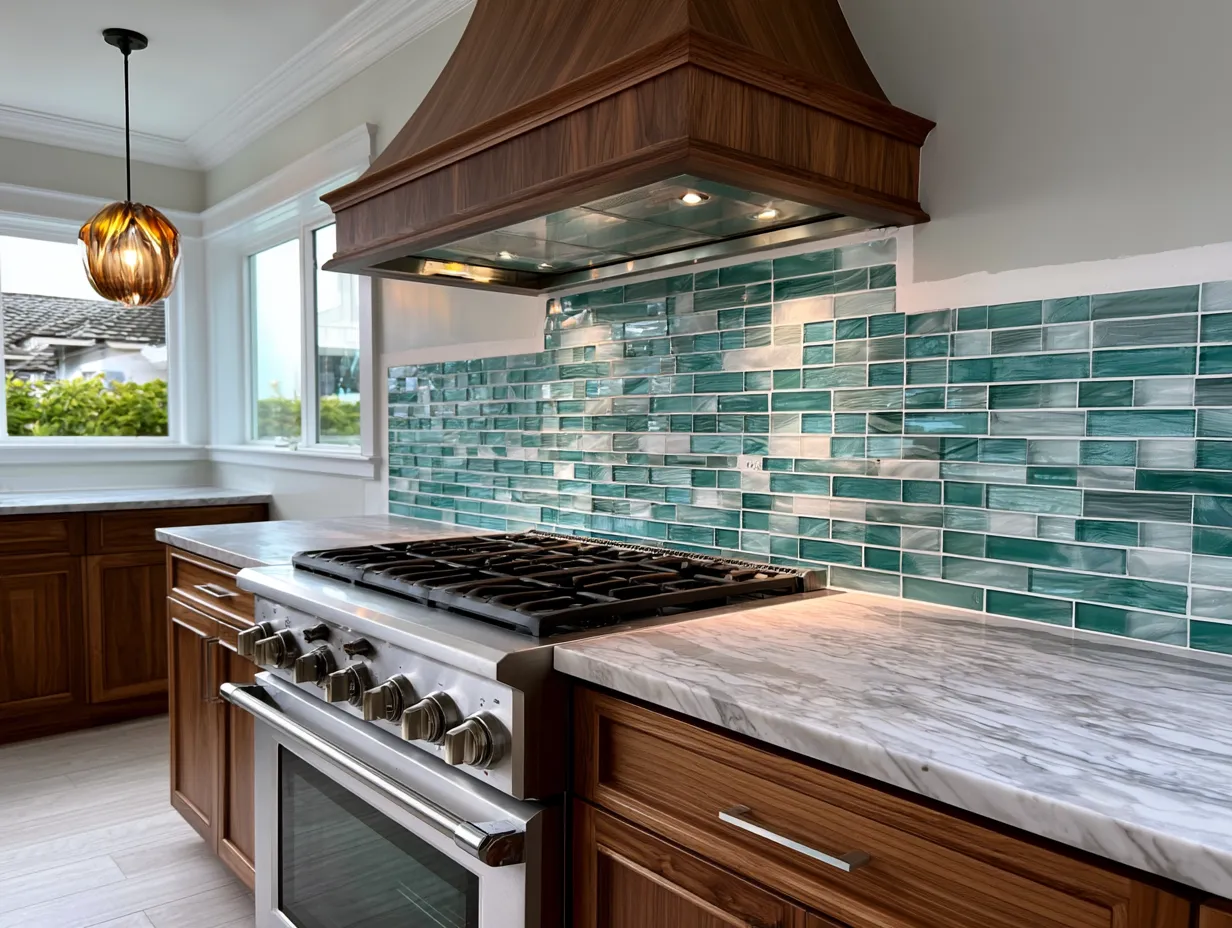
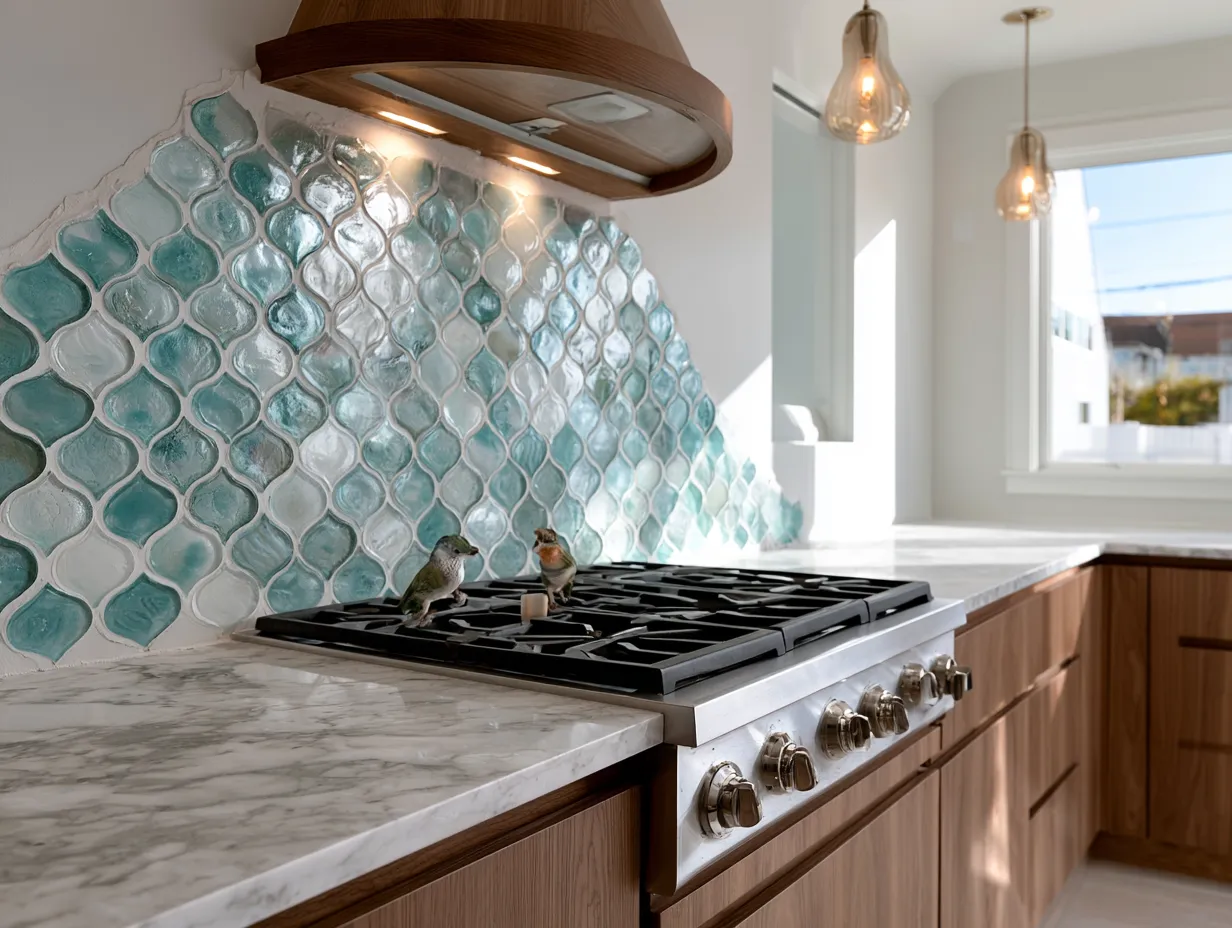
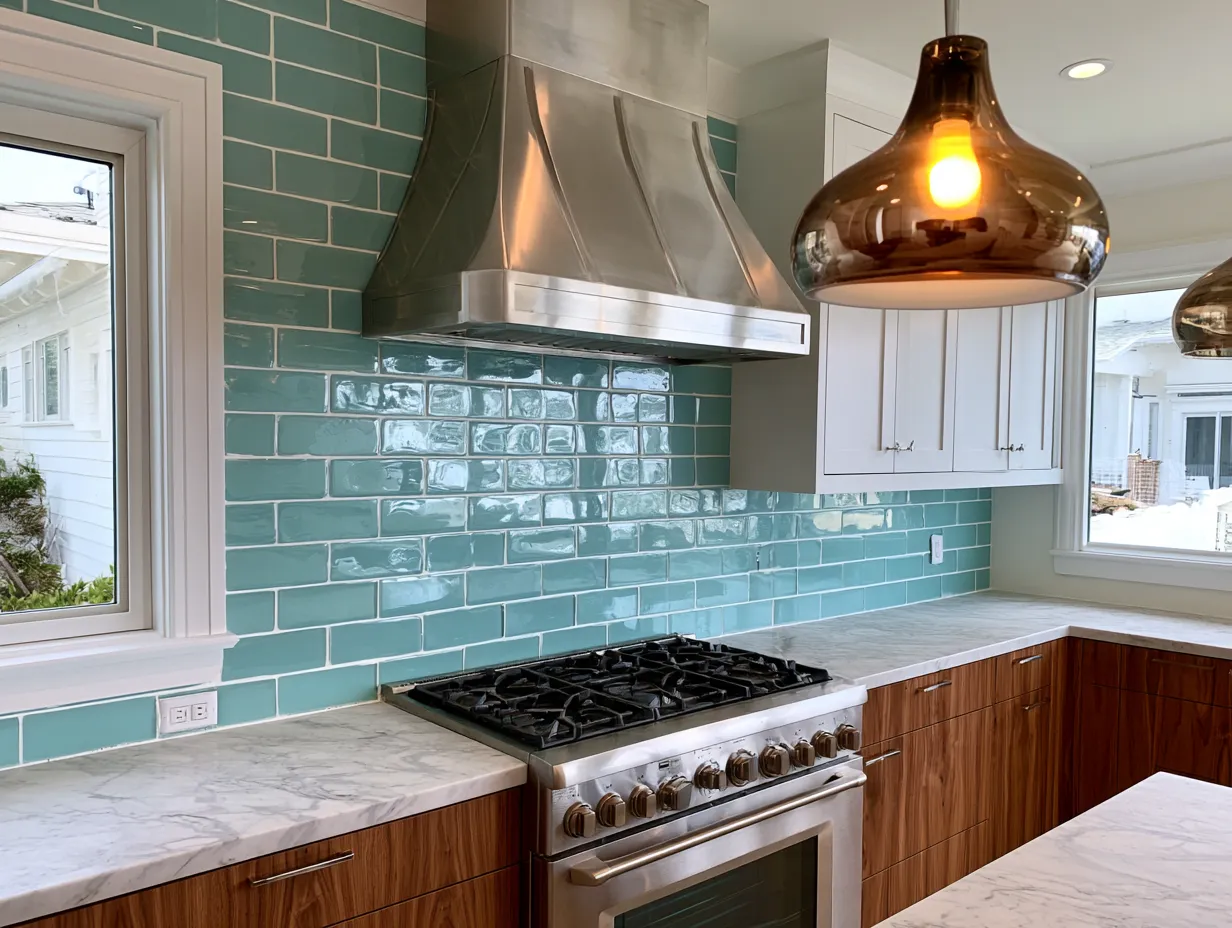
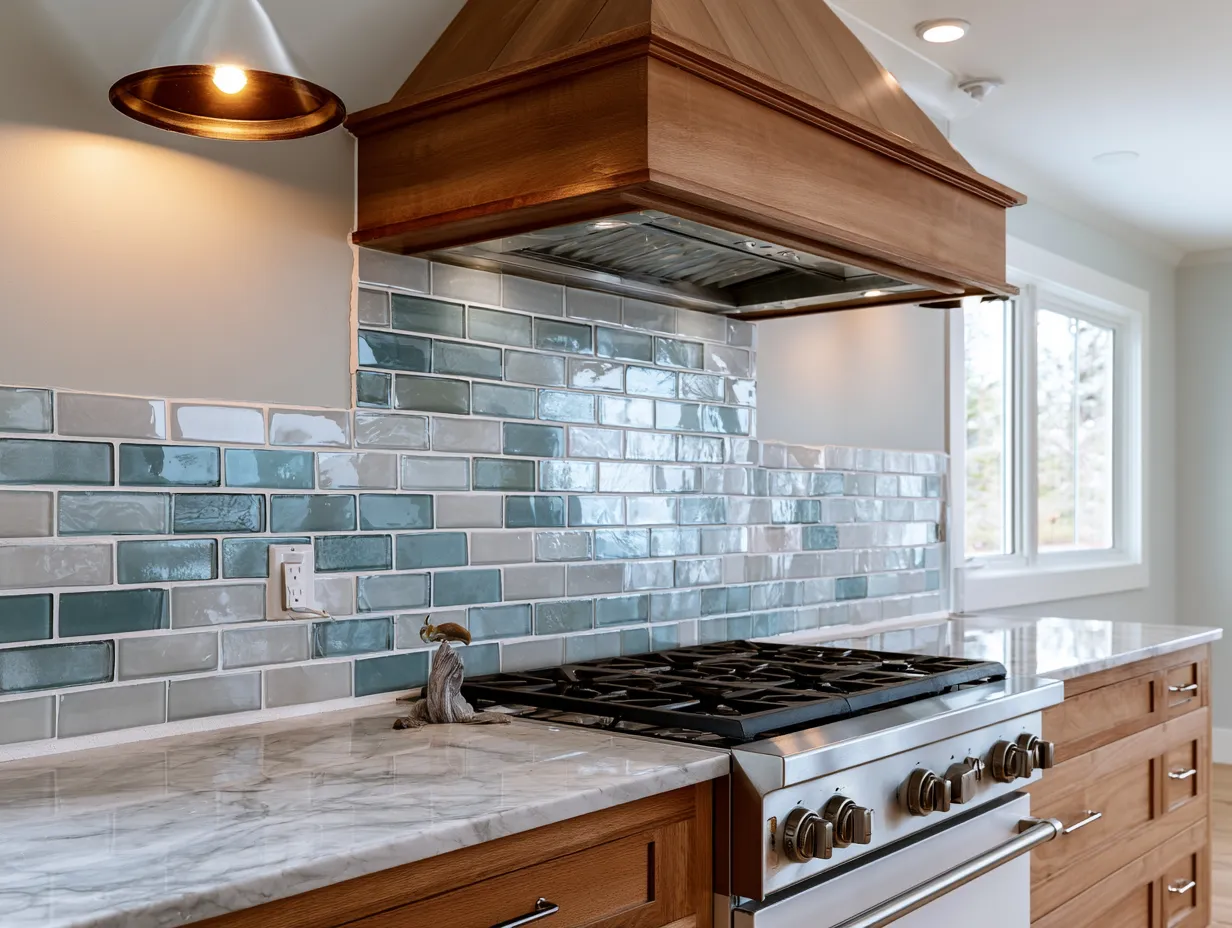
Grout selection is the second critical decision. Unsanded grout is mandatory for joints under 1/8 inch, which most glass mosaic formats use. Sanded grout scratches polished glass surfaces during the wiping process — scratches that catch light permanently and cannot be buffed out. For Fireclay’s Debris series or any Mineral Tiles mosaic format, confirm your grout width before purchasing. Most recycled glass mosaic sheets are factory-set at 1/16 inch joints, which falls firmly in unsanded territory.
How long does a recycled glass backsplash installation actually take for a standard kitchen? A 20-square-foot kitchen backsplash typically runs two days for a skilled DIYer: one full day for thinset application and tile placement, a 24-hour cure, and then a second day for grouting and cleanup. Professional installers with glass tile experience can compress that to a single day. The cure time is non-negotiable regardless of who is doing the work.
Backerboard selection matters more with glass than with ceramic. Glass tile transmits structural movement rather than absorbing it, so any flex in the substrate telegraphs directly to the surface as cracking. Cement board or fiber-cement backerboard is essential — drywall, even moisture-resistant drywall, flexes too much for a glass tile installation in a kitchen or bathroom environment. This is especially true around a stove, where thermal cycling adds another movement variable. Solid substrate is not optional.
One renovation timing note relevant to May 2026: summer humidity in most US regions peaks between late June and August, which extends thinset and grout cure times by up to 30%. If you are planning a late May or early June installation, you are in the optimal window. Do not rush a glass tile installation into peak humidity season expecting standard cure times. Check your regional humidity forecast and build the schedule around it, not around a contractor’s preferred booking date.
Do not seal recycled glass tiles with a topical sealer designed for natural stone. Glass is non-porous and does not need penetrating or topical sealer — applying one leaves a hazy residue that dulls the reflective surface permanently. The grout lines, not the tile face, are what need sealer attention. Use a penetrating grout sealer applied carefully with a narrow brush or applicator bottle, keeping the product off the glass face entirely. Precision here protects the finish you paid for.
FAQ
Is recycled glass tile more expensive than ceramic?
Entry-level recycled glass tile starts at around $24 per square foot with Fireclay's Debris series, compared to standard ceramic which can run $5–$15 per square foot. The price premium reflects material sourcing, factory energy savings passed through as production complexity, and in many cases documented eco certifications. For a standard 20-square-foot backsplash, the total material cost difference is often under $400.
Can recycled glass tile be used on a kitchen floor?
Most recycled glass tile formats are not rated for floor use due to slip risk and compressive load limitations. The exception is some larger format glass tiles with textured or matte surfaces that carry a slip-resistance rating — always check the COF (coefficient of friction) rating on the product sheet before specifying glass tile for any floor application. For backsplash and wall use, standard glass tile performs without restriction.
How do I clean a recycled glass tile backsplash without damaging the surface?
Use a pH-neutral cleaner and a soft microfiber cloth — no abrasive scrubbers, no vinegar-based cleaners, and no ammonia-based glass cleaners near the grout lines. The glass face itself is essentially impervious to staining, but the grout is porous and acidic cleaners degrade grout sealant over time. A weekly wipe with warm water and dish soap is sufficient for most kitchen backsplash applications.
Does recycled glass tile qualify for LEED credits?
Yes, recycled glass tile can contribute to LEED v4 credits under Materials and Resources, specifically the Building Product Disclosure and Optimization credit for recycled content. To qualify, you need documented certified recycled content percentages from an Environmental Product Declaration or third-party certification. Fireclay Tile and Oceanside Glasstile both provide product-level EPDs on request — ask for them before purchase rather than after.
What grout color works best with recycled glass tile?
Matching grout color closely to the dominant tile tone makes the surface read as a continuous field of color and maximizes the light-reflection effect. High-contrast grout — white tile with dark grout — accentuates the grid pattern, which works well for geometric installations but can feel busy in small kitchens. For translucent or multi-tone recycled glass tiles, a neutral medium gray grout tends to recede without competing with the color variation in the glass.
How long does recycled glass tile last compared to ceramic?
Properly installed recycled glass tile is essentially permanent — glass does not absorb moisture, does not fade, and does not degrade from household cleaning chemicals the way some ceramic glazes can over decades. The limiting factor is grout condition, not tile condition. Resealing grout every two to three years and addressing any cracked grout lines promptly keeps the installation in original condition indefinitely.
Save this
Recycled Glass Tile Backsplash Earns Every Wall It Covers in 2026
A recycled glass tile backsplash is one of the few renovation decisions that delivers visual drama, verified sustainability credentials, and real energy-saving production data in a single material choice. From BELK Tile's 98% recycled glass mosaics to Fireclay's factory-direct Debris series, the 2026 market has removed every excuse for settling on conventional ceramic when the same budget gets you something better.
The installation rules are specific but learnable — white thinset, unsanded grout, cement backerboard, and a May or early June timeline to beat humidity season. Get those variables right and the surface pays you back in refracted light every single morning. Save this post.
📌 Save to Pinterest