Quick Scan
- White oak suits bright, south-facing kitchens; walnut needs contrast countertops to avoid looking dark and muddy
- Brushed or unlacquered brass hardware from brands like Rocky Mountain Hardware or Rejuvenation is the most compatible finish for warm wood cabinets in 2026
- Two-tone layouts — warm wood lowers, matte white uppers — are the most-saved kitchen configuration on Pinterest this spring
- Under-cabinet LED strips at 3000K warm white do more to prevent a wood kitchen from feeling cave-dark than any overhead fixture change
- Leathered quartzite and zellige tile backsplash is the countertop-backsplash pairing driving the most engagement across the organic-modern kitchen category
Warm wood cabinet kitchen design has officially crossed the tipping point — according to Houzz’s 2026 Kitchen Trends Study, wood cabinets have surpassed white for the first time in years, and the momentum is not slowing down. Medium-toned white oak, honey-hued maple, and deep walnut are replacing sterile painted finishes in homes from Brooklyn brownstones to California bungalows. The result is a kitchen that feels lived-in without looking messy, and natural without leaning rustic.
White Oak and Walnut Are Not the Same Wood — Pick the Right One for Your Light
The biggest mistake people make when choosing a warm wood cabinet kitchen tone is treating all light-to-medium woods as interchangeable. White oak and walnut sit on opposite ends of the warm spectrum, and the difference becomes obvious the moment your afternoon sun hits the cabinets. White oak reads cooler and more linear with its tight, consistent grain — ideal for kitchens with south or west-facing windows where strong light could wash out a darker wood. Walnut, by contrast, pulls chocolate and violet undertones that deepen dramatically under warm incandescent lighting.
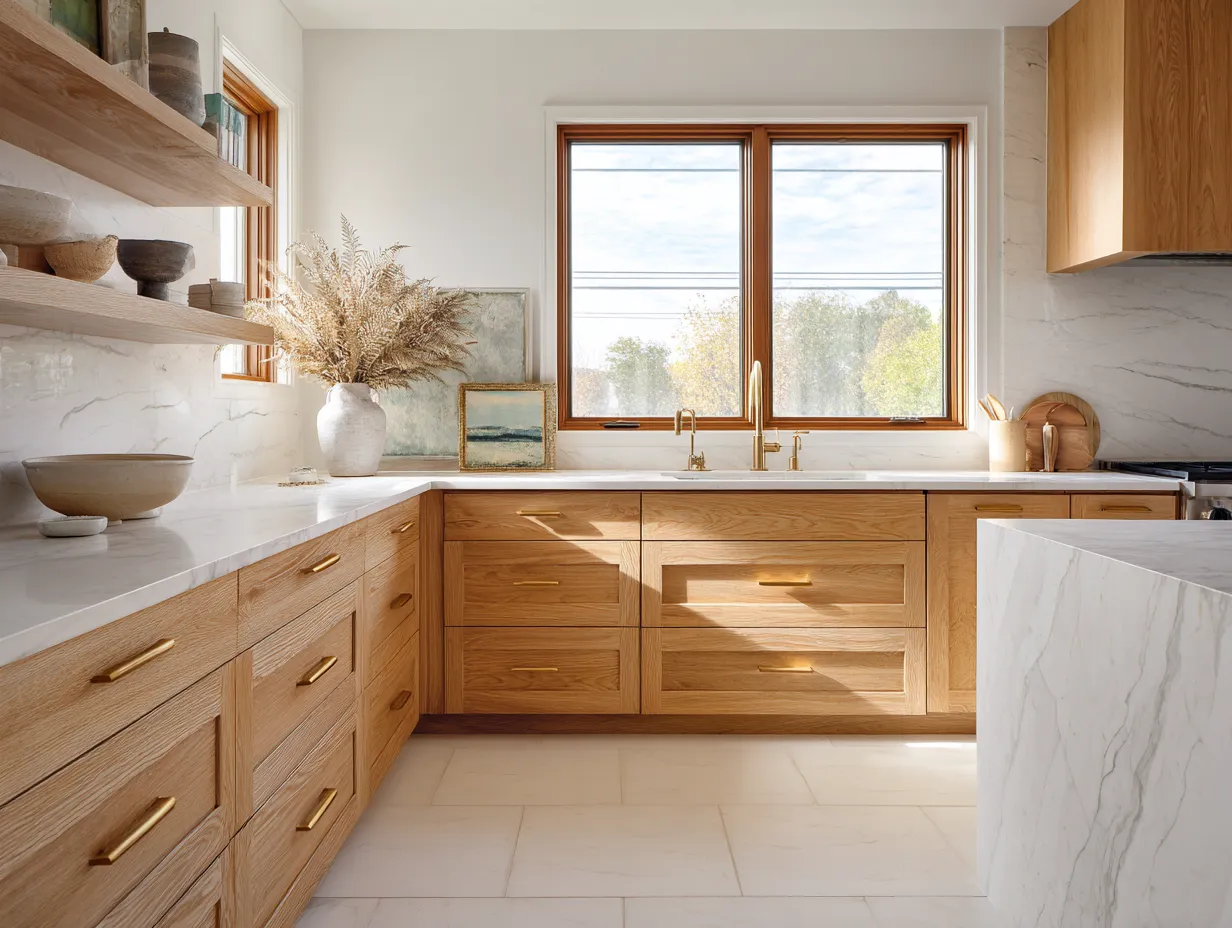
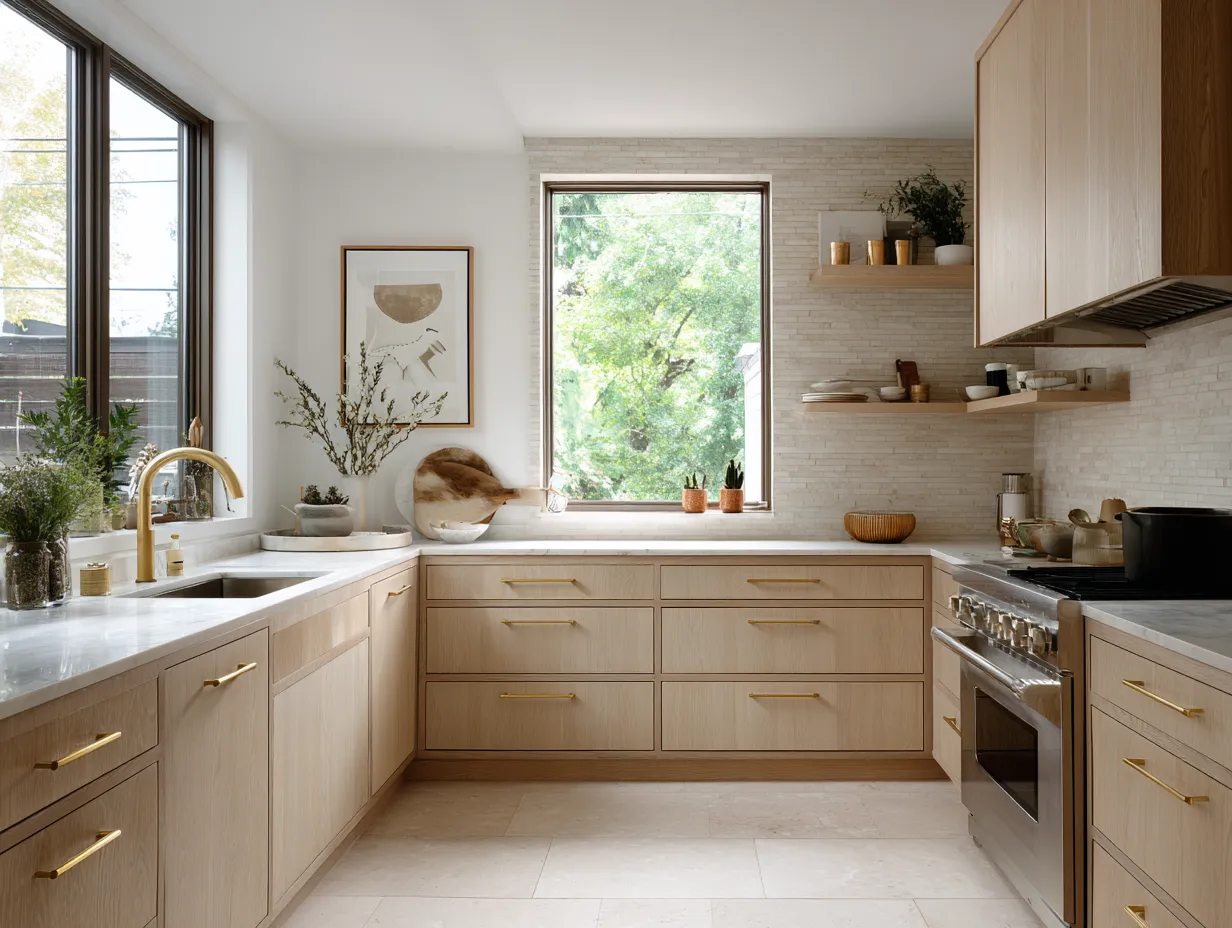
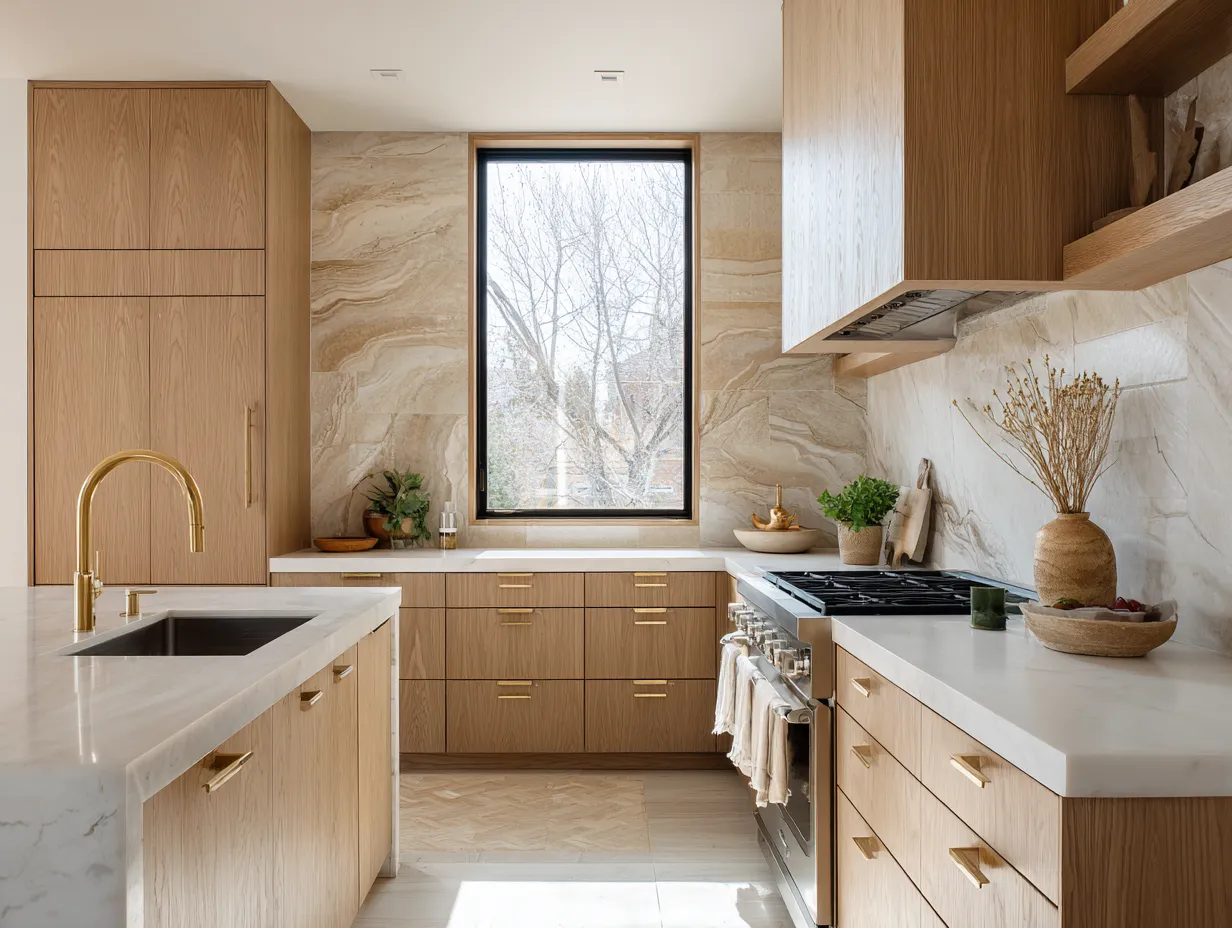
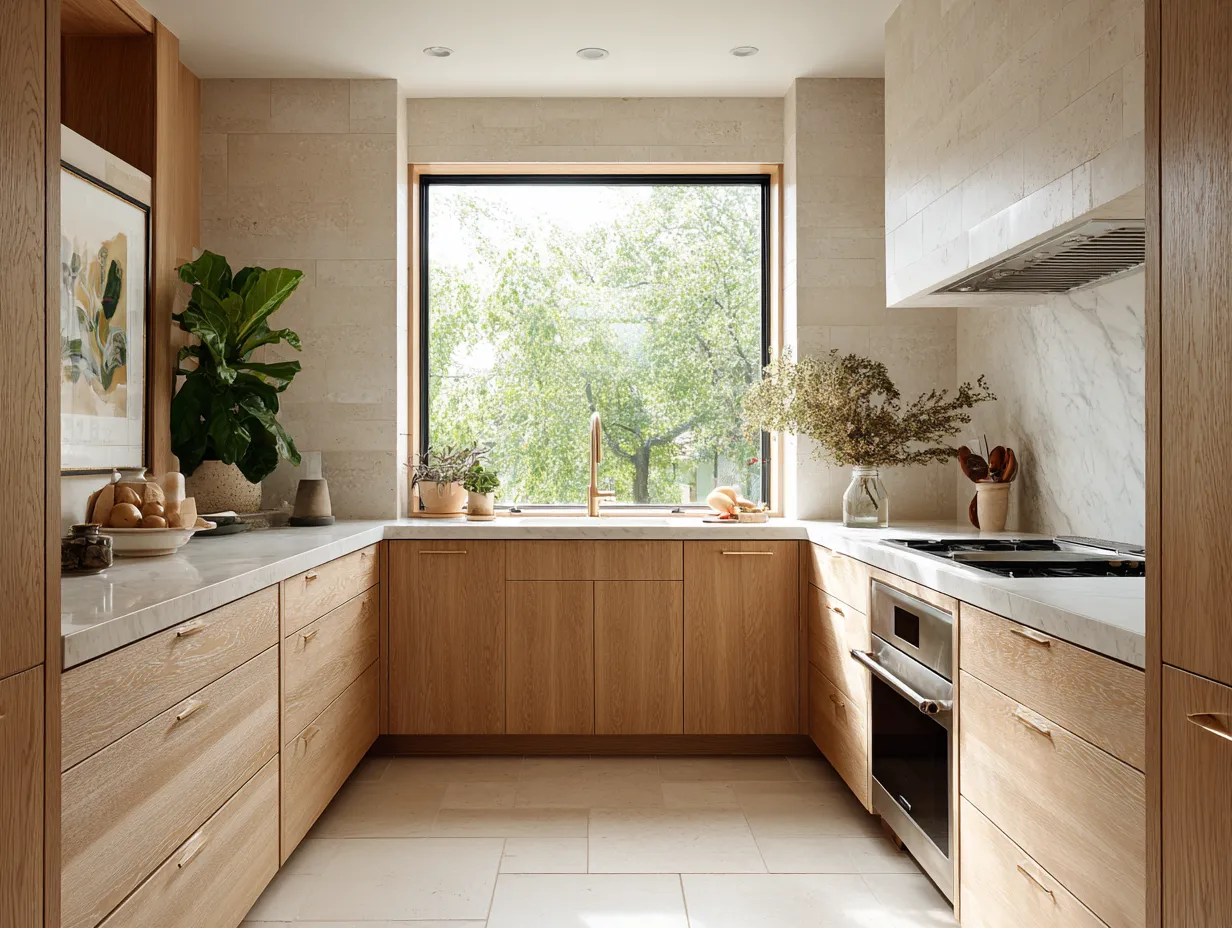
IKEA’s AXSTAD cabinet fronts in light beige-brown wood effect retail for around $85–$180 per front panel and mimic the look of white oak at a fraction of the cost of custom millwork. For true solid wood, Semihandmade’s white oak flat-front doors fit IKEA cabinet boxes and run approximately $200–$350 per door — a mid-range investment that delivers real material depth. If budget allows, companies like Reform and Plykea offer European white oak veneered fronts starting at $280 per panel that photograph exceptionally well for those planning to list their home.
What wood grain direction does to a kitchen surprises most people. Vertical grain creates height in low-ceiling spaces; horizontal grain emphasizes width and works beautifully in galley layouts. Do not choose a wood front based solely on a 4×4 inch sample chip — request a full door sample or visit a showroom, because the grain pattern at scale changes everything about the room’s visual weight. If you can only afford samples, IKEA’s KALLARP and BJÖRKUDDEN collections both offer returnable 30-day sample doors for under $40.
Pairing your warm wood cabinet kitchen with the right countertop material seals the tonal story. White oak cabinets with honed Calacatta marble (starting around $90 per sq ft fabricated) stay light and airy. Walnut cabinets demand a contrasting countertop — Silestone’s Eternal Calacatta Gold in quartz ($75–$110 per sq ft installed) provides enough brightness to keep walnut from going cave-dark. You can also pair with a complementary stone element — The Secret To Using Reclaimed Stone For A Modern Kitchen Island explores exactly how natural stone and organic wood finishes create layered texture without competing. Do not pair walnut cabinets with beige or cream countertops — the warmth-on-warmth effect collapses visual contrast and the kitchen reads muddy in photos and in person.
Don't Do This
- Do not match walnut cabinets with beige or cream countertops — the warmth-on-warmth effect kills contrast and the kitchen reads muddy in person and in photos
- Do not choose cabinet fronts from a small sample chip alone — always request a full door sample because grain pattern at scale changes the entire visual weight of the room
- Do not add a colorful backsplash tile like terracotta or sage behind warm wood cabinets — saturated color competes with wood grain and creates visual chaos rather than warmth
- Do not install warm wood cabinets floor-to-ceiling without a visual break — a continuous medium-toned wood surface creates a tunnel effect, especially in kitchens under 9 feet tall
Hardware Choices That Make a Warm Wood Cabinet Kitchen Look Intentional, Not Generic
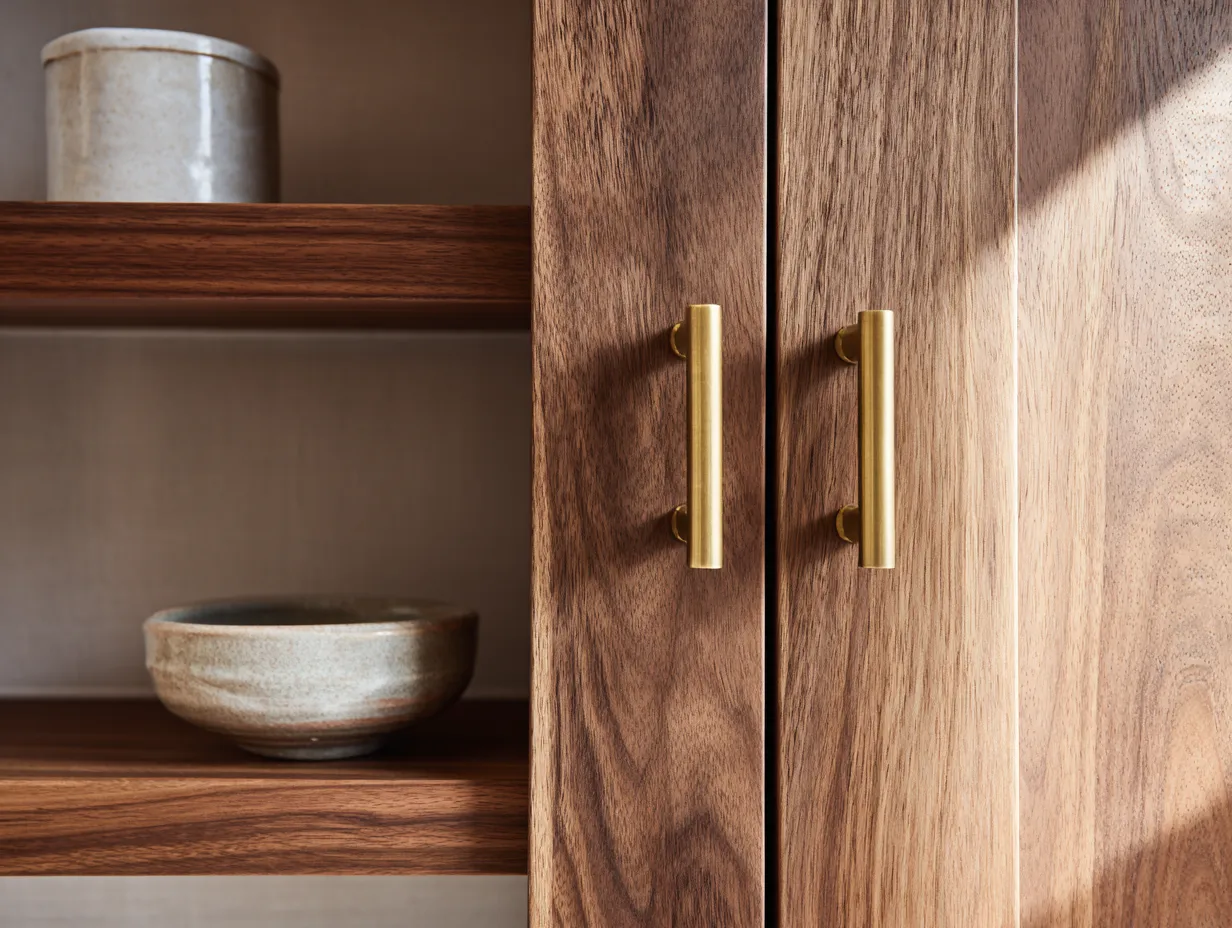
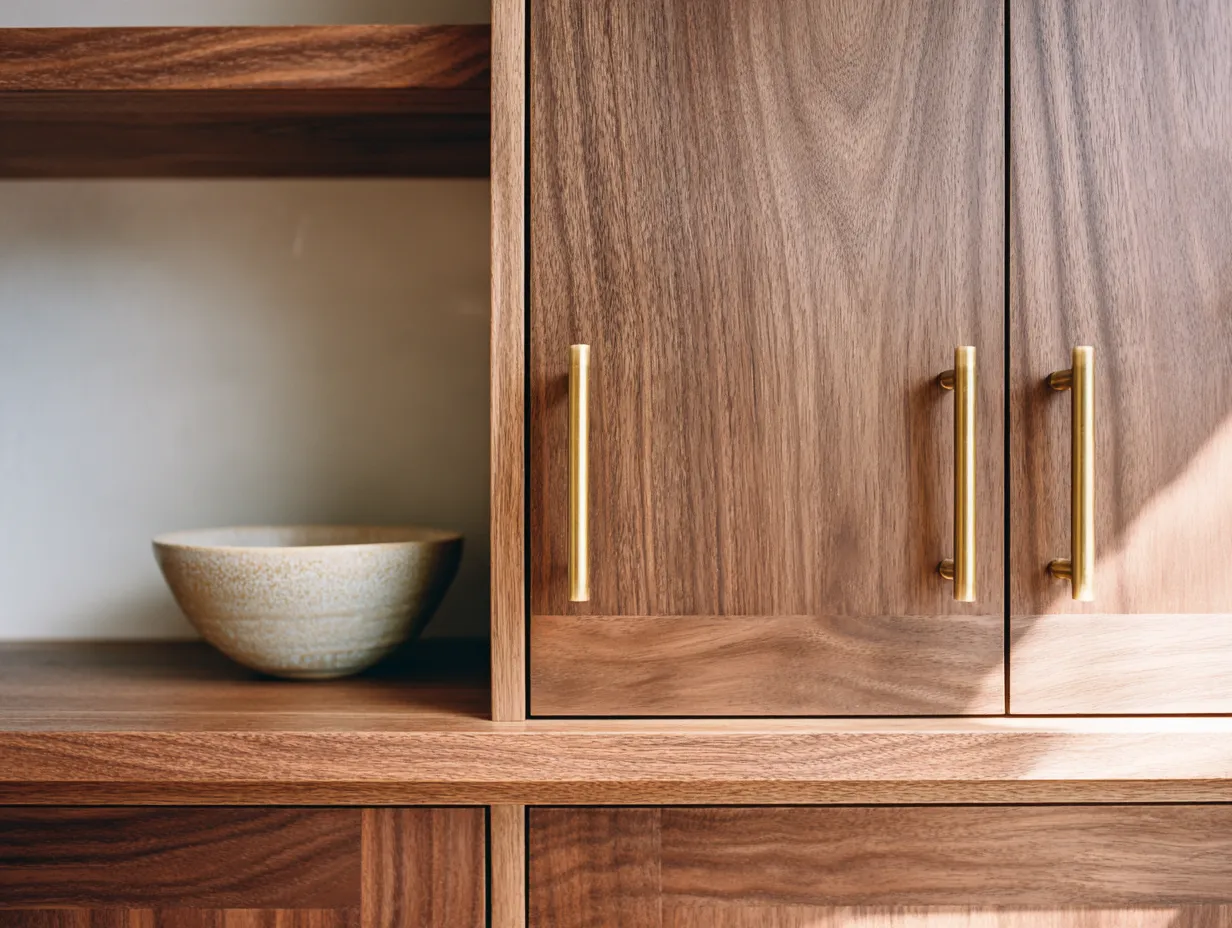
Hardware is where a warm wood cabinet kitchen either gains personality or disappears into a Pinterest cliché. Brushed brass remains the dominant finish pairing in 2026 — Visual Comfort’s Signature pulls in satin brass ($18–$32 each) complement white oak without reading as costume-y. But unlacquered brass, which patinas over time, is gaining fast — Rocky Mountain Hardware offers unlacquered brass bar pulls starting at $45 each, and the living finish develops uniquely based on your kitchen’s humidity and use patterns. That lived-in quality is the entire point of this trend.
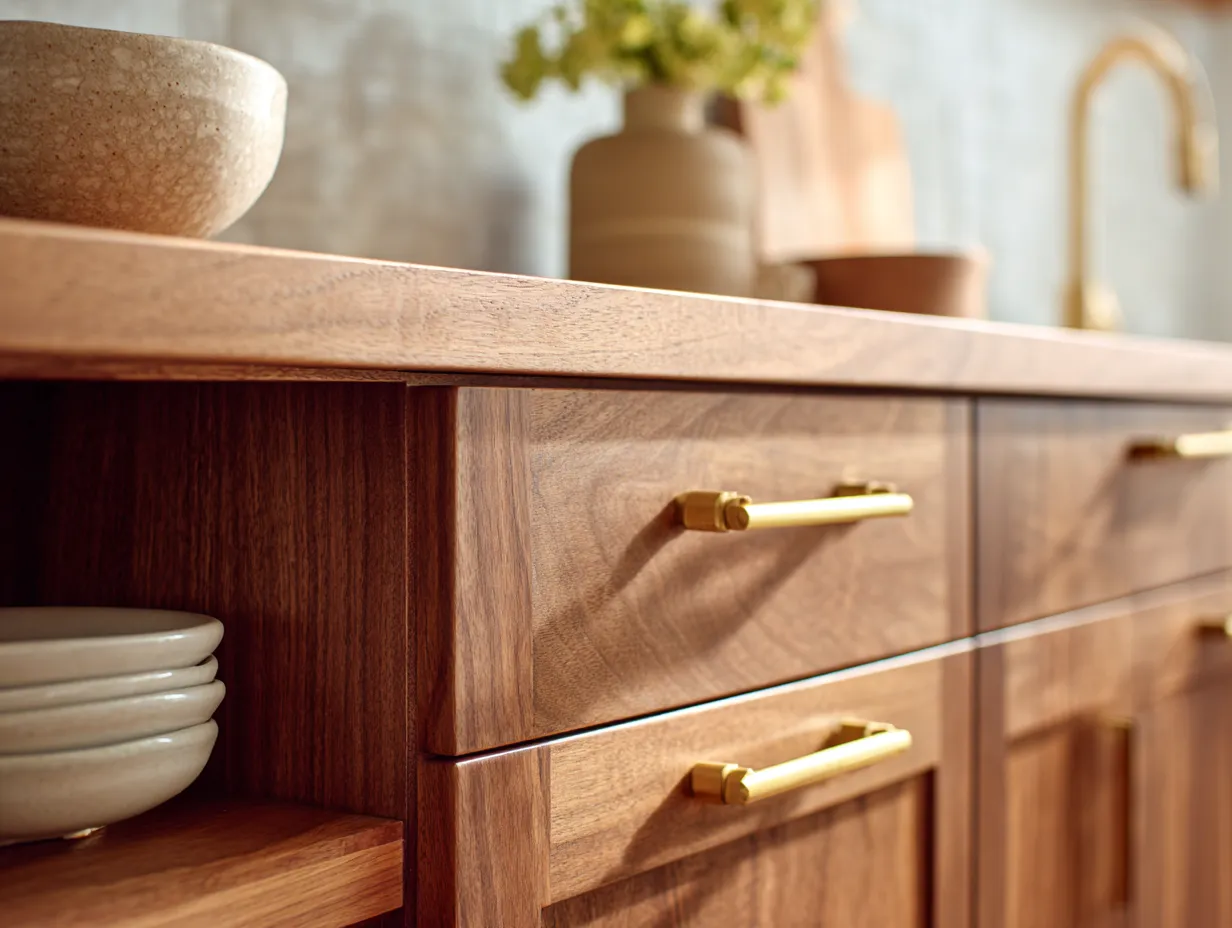
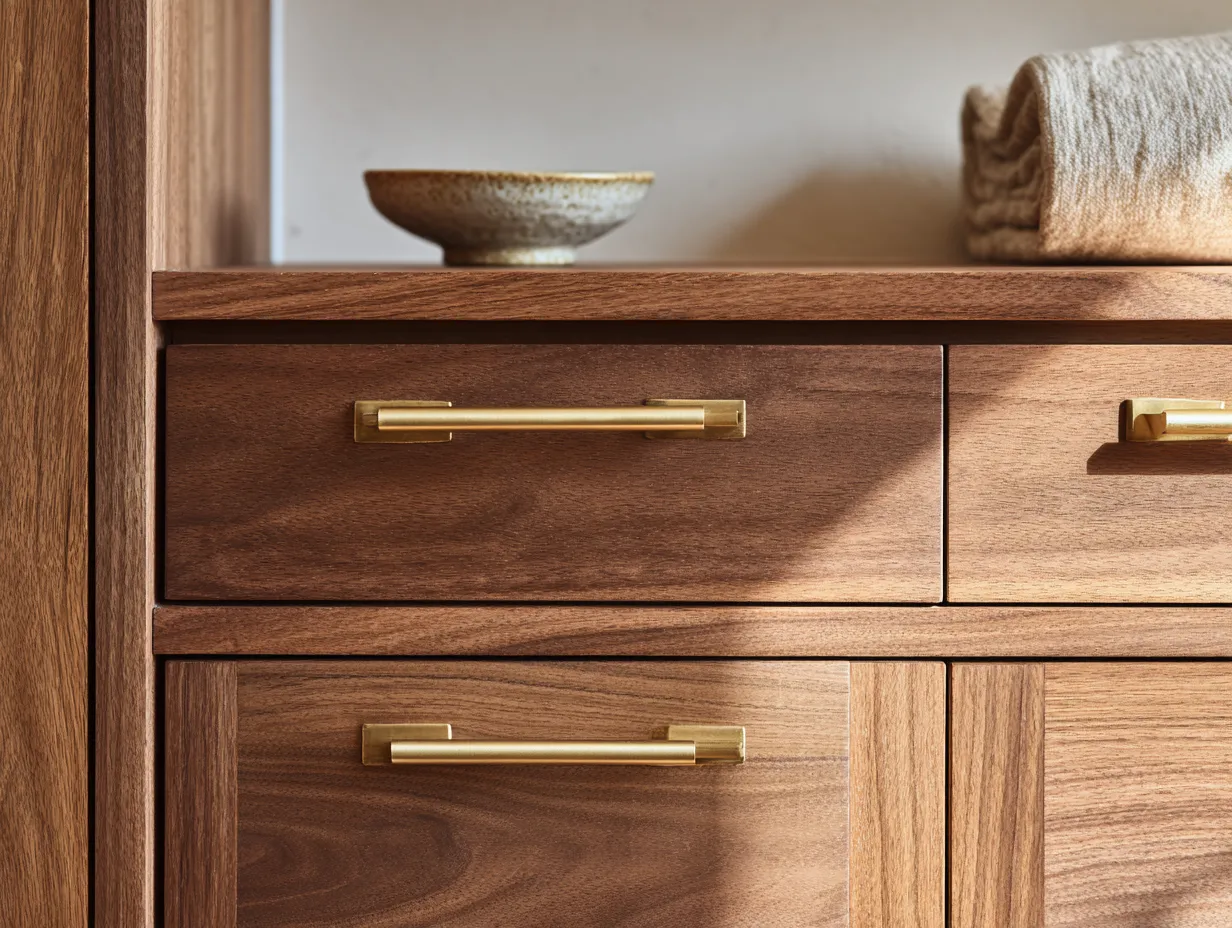
Matte black hardware on warm wood deserves more credit than it gets. The contrast between a dark walnut cabinet and a matte black pull from Rejuvenation’s Corbett series ($22–$38 each) creates a sharper, more contemporary result than brass on walnut, which can lean Danish-farmhouse if you are not careful. Black hardware also photographs better for social media — the definition between cabinet face and pull reads crisply even in lower light. This matters if you are renovating partly to increase resale value, since listing photos drive buyer perception before any in-person visit.
What about integrated finger pulls with no visible hardware? This approach — routed grooves along the top or bottom of a flat-front door — is cleaner but adds $15–$40 per door in custom millwork cost and requires extremely precise cabinet alignment to look right. IKEA’s AXSTAD line offers a push-open version that eliminates hardware entirely, but the mechanism adds wear points that can loosen over 3–5 years of heavy use in a family kitchen. Save the handleless look for upper cabinets or a pantry wall where the doors open less frequently.
Renter-friendly approaches also allow you to explore warm wood hardware effects without committing to a full renovation. Peel-and-stick wood-look contact paper from brands like d-c-fix ($18–$35 per roll) can transform white laminate cabinet fronts convincingly enough for rental photography. For a more structural approach, Renter Friendly Kitchen Room Design Hacks That Look Permanent covers how to swap hardware and add contact-paper fronts without voiding a lease. Do not use gold-toned hardware from budget brands that use zinc alloy — the coating chips within months on cabinet pulls that are touched dozens of times a day, and peeling gold hardware undermines the entire warm organic aesthetic you are building.
| Wood Type | Best Kitchen Light | Ideal Countertop Pair |
|---|---|---|
| White Oak | South or west-facing, bright | Honed Calacatta marble or light quartzite |
| Walnut | North-facing or supplemented by task lighting | White quartz (Caesarstone Empira White) or bright marble |
| Maple | Any orientation — most forgiving tone | Leathered quartzite (Taj Mahal) or warm quartz |
| Bamboo / Light Ash | East-facing or low natural light kitchens | Concrete, soapstone, or matte white quartz |
| Smoked / Fumed Oak | Large open-plan spaces with high ceilings | Bleached or white terrazzo, pale limestone |
The Countertop and Backsplash Combinations That Anchor a Wood Tone Kitchen
A warm wood cabinet kitchen lives or dies on what sits above and behind those cabinets. The countertop sets the foundational tone; the backsplash either amplifies it or neutralizes it. Right now, the most-saved combination on Pinterest pairs white oak or maple cabinets with a leathered quartzite countertop — MSI’s Taj Mahal quartzite in a leathered finish runs $95–$135 per sq ft installed and reads simultaneously warm and mineral, bridging the organic quality of the wood without mimicking it. The texture contrast between matte cabinet fronts and a leathered stone surface is what creates the layered richness that makes these kitchens feel expensive.
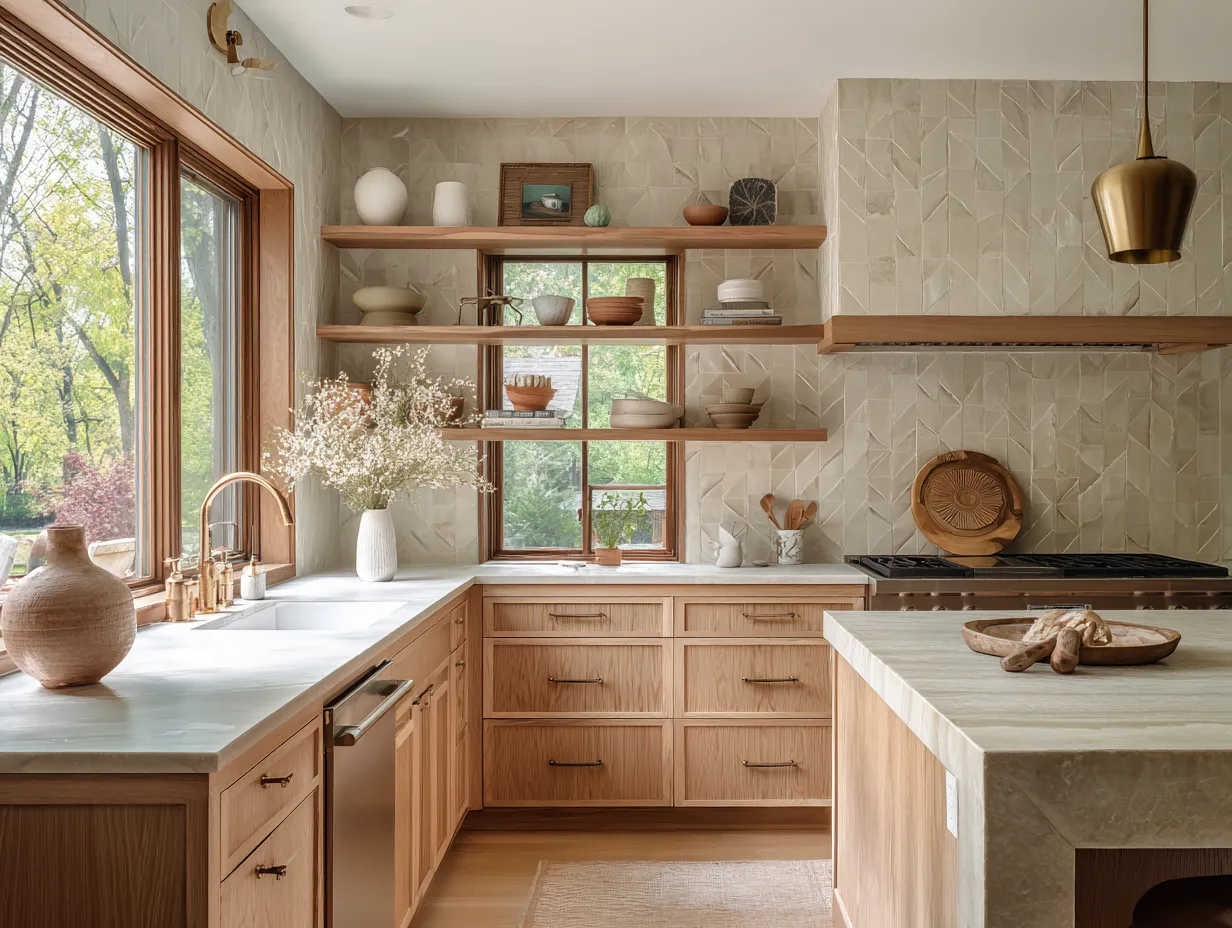
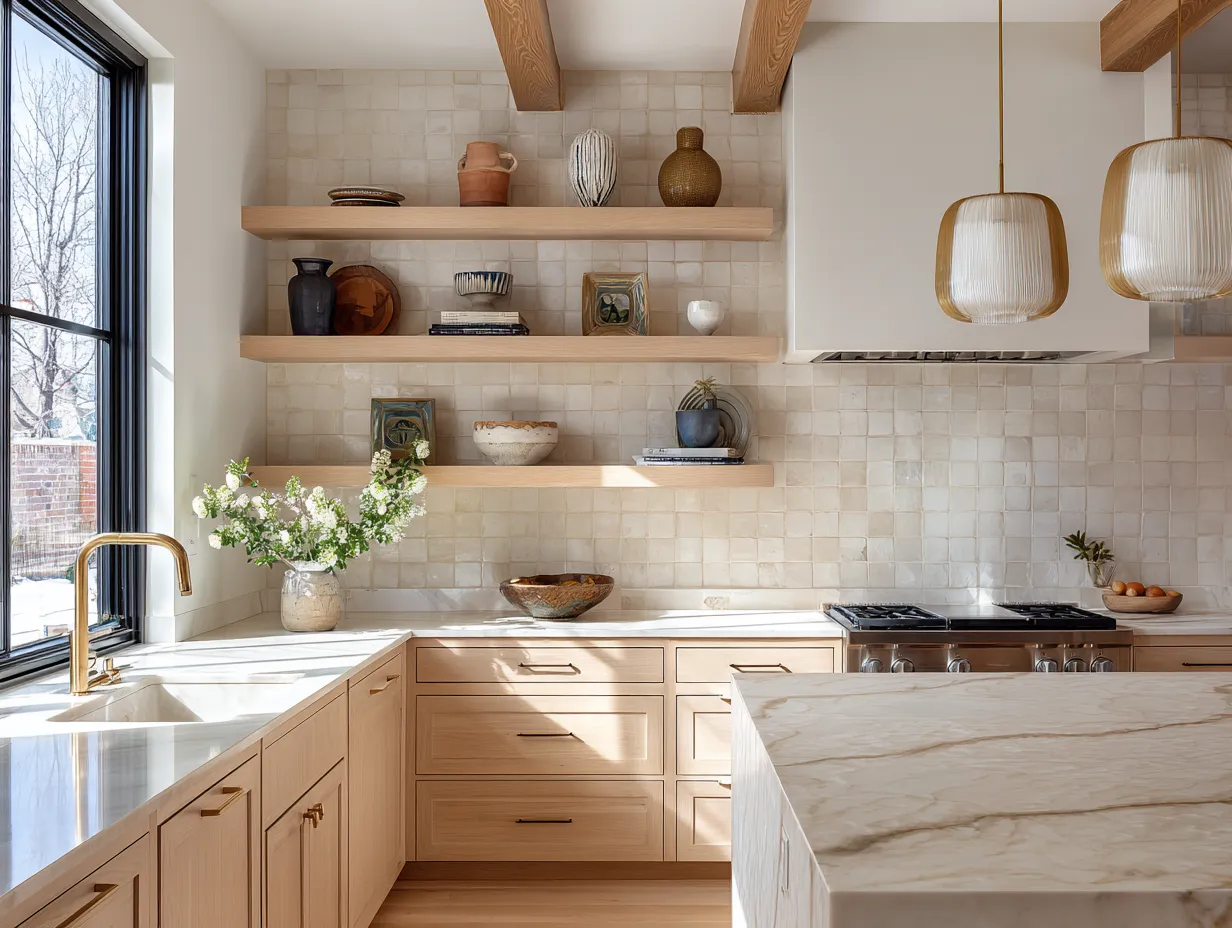
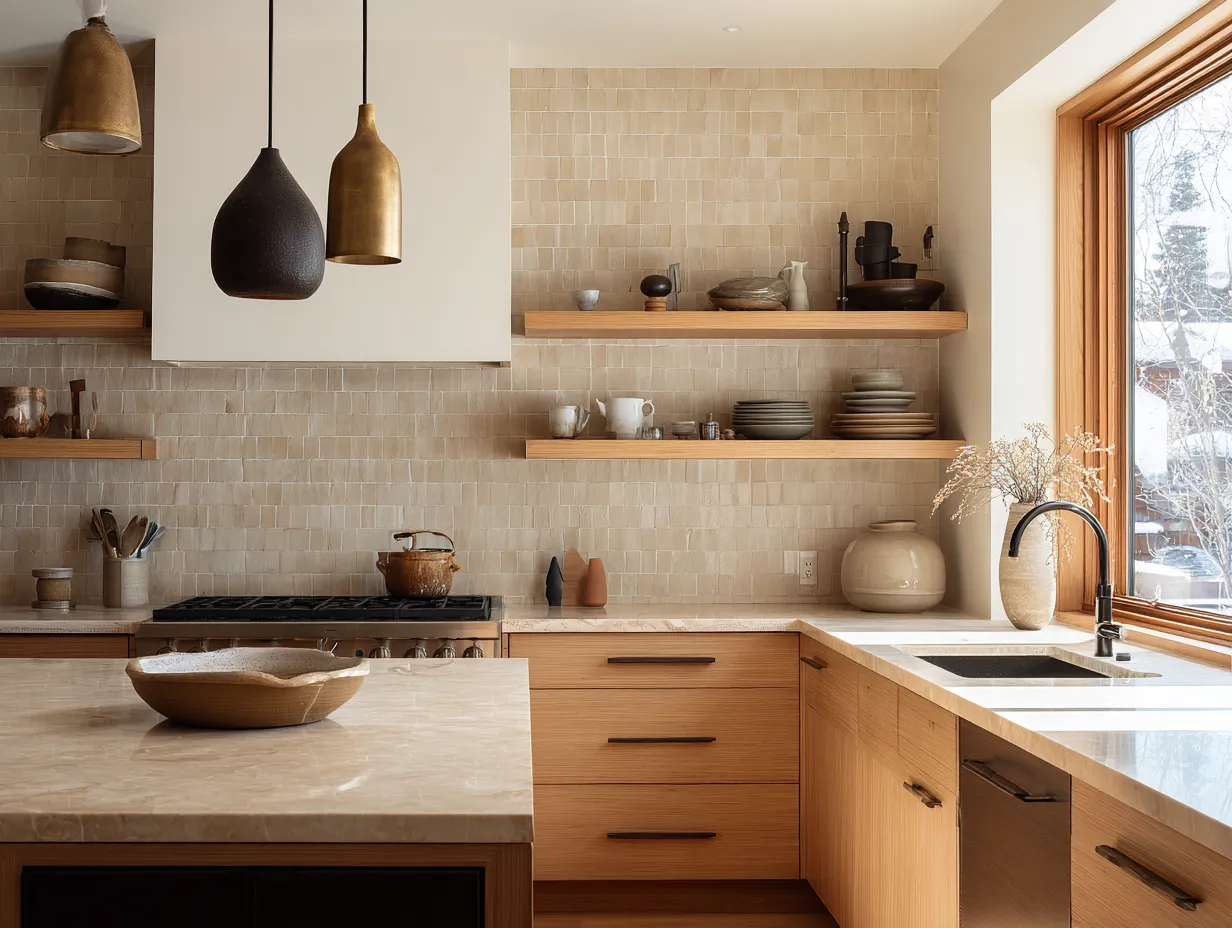
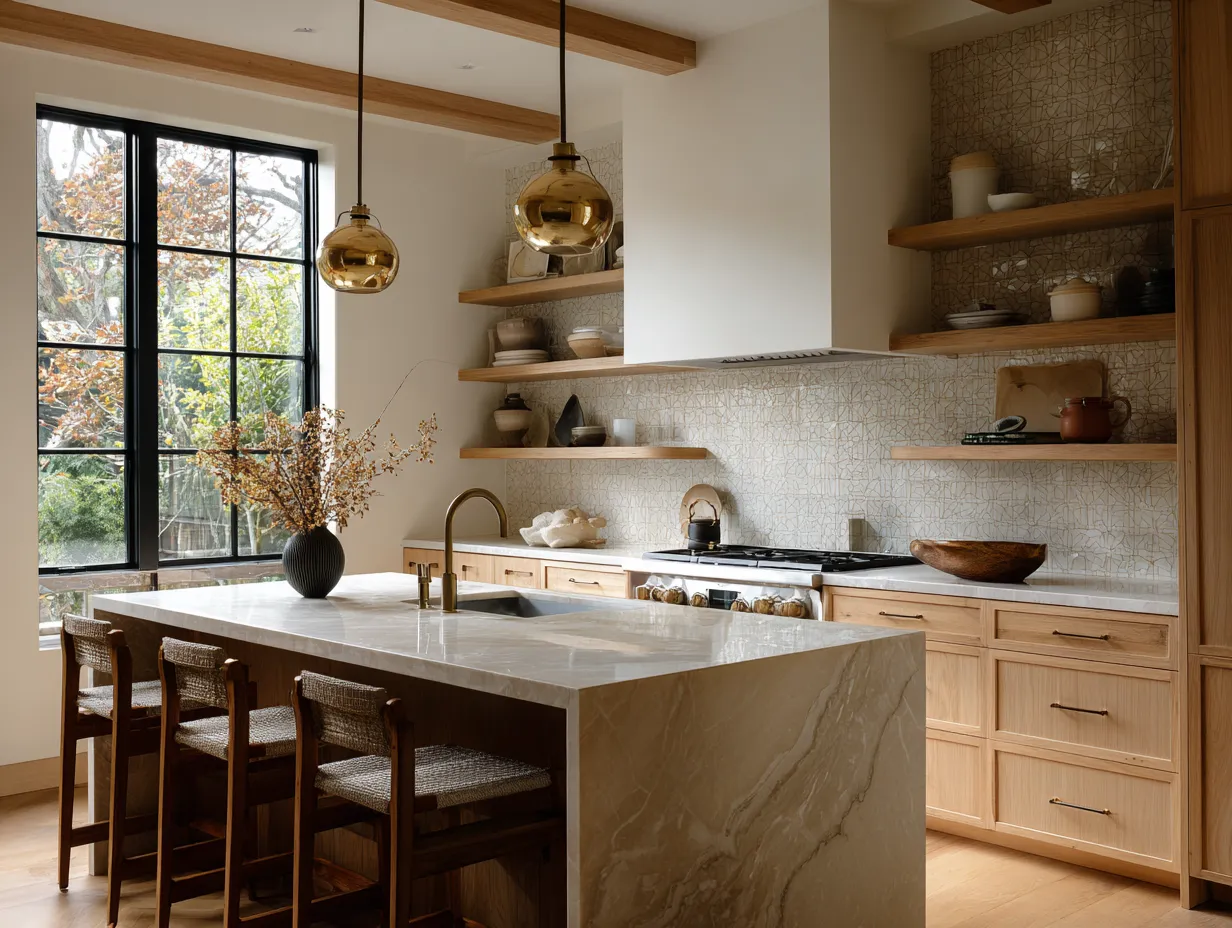
For backsplash, zellige tile is having a moment that shows no sign of stopping. Clé Tile’s handmade zellige in Blanc or Crème ($28–$48 per sq ft) brings slight variation and a handcrafted imperfection that pairs naturally with wood grain. The key is keeping the grout color close to the tile color — a warm white grout on off-white zellige disappears into a continuous texture rather than gridding out the wall. Subway tile in a warm wood kitchen can feel like a step backward if chosen in the standard bright white glossy format — if you love subway, use a longer format like a 3×9 in satin or matte finish instead.
Is quartz or natural stone better for a wood cabinet kitchen? Quartz wins on durability and maintenance — Caesarstone’s Empira White ($70–$100 per sq ft installed) and Cambria’s Brittanicca Warm ($85–$115 per sq ft) offer natural stone movement without the sealing requirements. But for homes that skew toward authentic materials, the slight imperfection of honed marble or quartzite reads more cohesively with the organic-modern direction of this trend. It is a maintenance trade-off, not a visual one — both can look equally strong with warm wood.
Do not introduce a colorful backsplash tile in terracotta or sage green thinking it will add warmth to a wood kitchen — it typically competes rather than complements. Warm wood already carries significant visual weight, and adding a saturated tile color creates a busy layered effect that reads chaotic rather than curated. If you want color, introduce it through textiles — Fog Linen Work dish towels in muted earthy tones ($22–$28 each) or a ceramic fruit bowl from East Fork Pottery in their Butterscotch glaze ($65–$90) bring color that can be swapped seasonally without a commitment.
Lighting and Layout Moves That Keep a Wood-Heavy Kitchen From Feeling Dark
The single most common fear people voice before committing to a warm wood cabinet kitchen is that the space will feel dark. It is a legitimate concern — and the answer is not to add more overhead lighting. It is to control the light layers. Under-cabinet task lighting does more work per dollar than any other lighting addition in a wood kitchen. Kichler’s LED under-cabinet strip lights in 3000K warm white ($45–$90 per strip) eliminate the shadow zone that makes wood cabinets look heavier than they are. Running continuous strips from one end of your upper cabinets to the other creates a floating effect that lifts the visual weight off the lower cabinets dramatically.
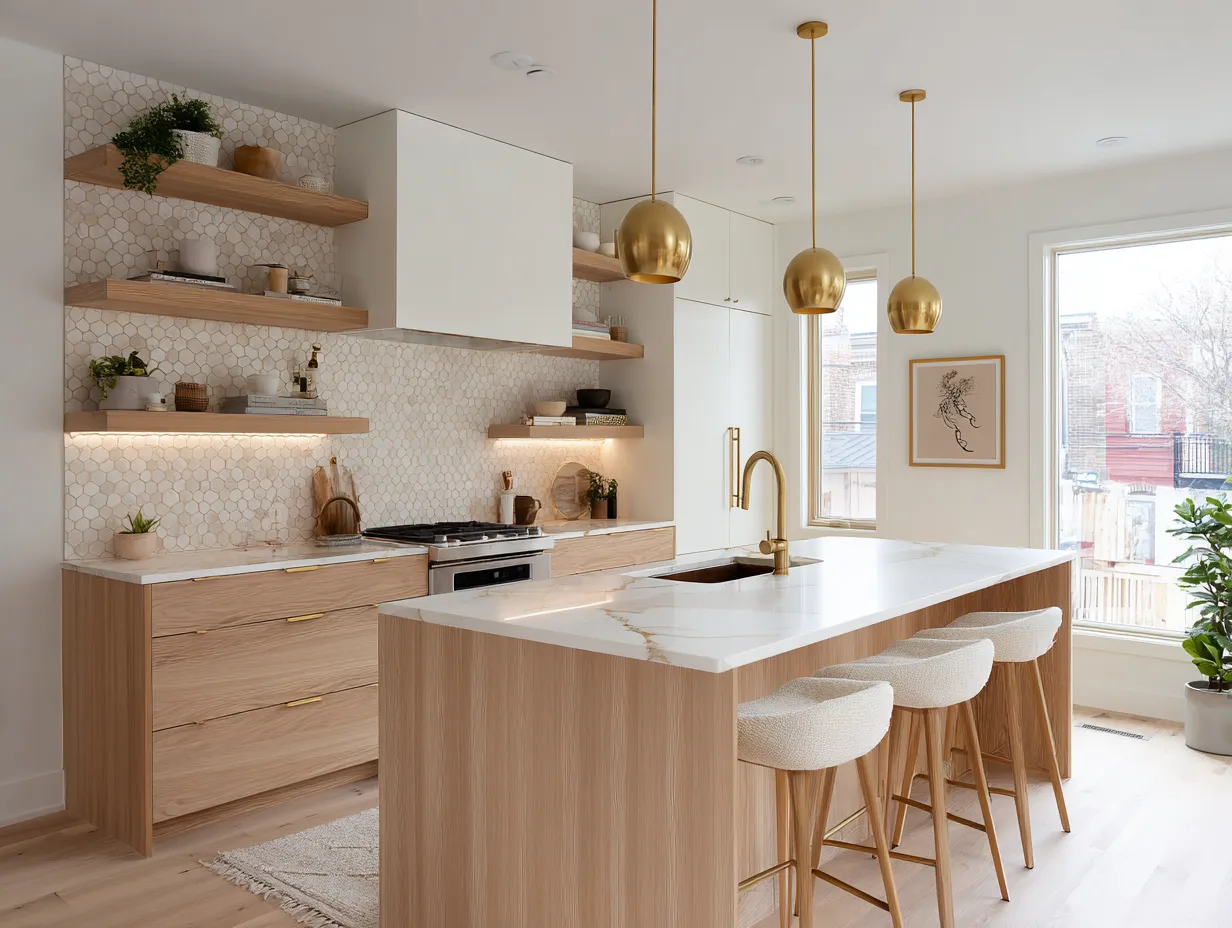
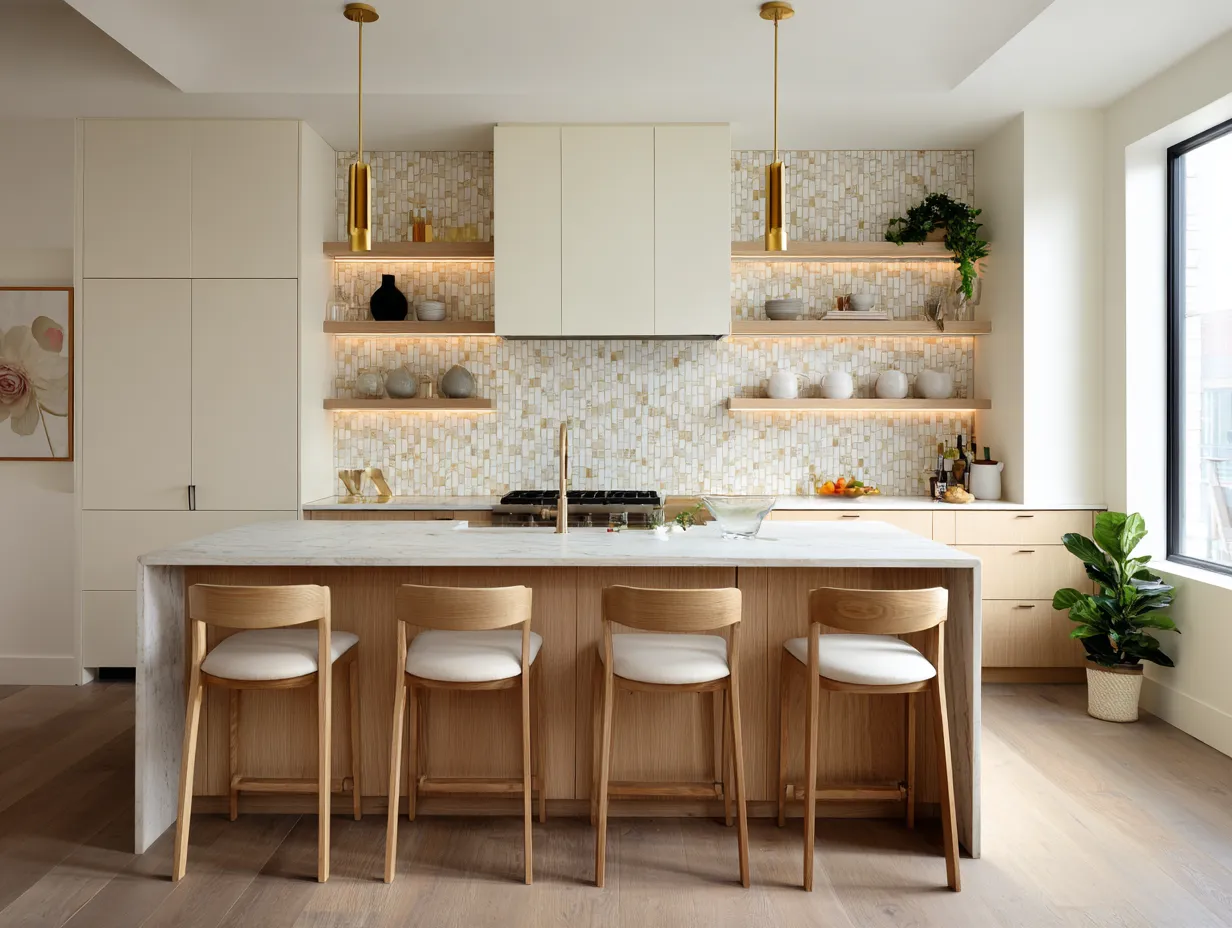
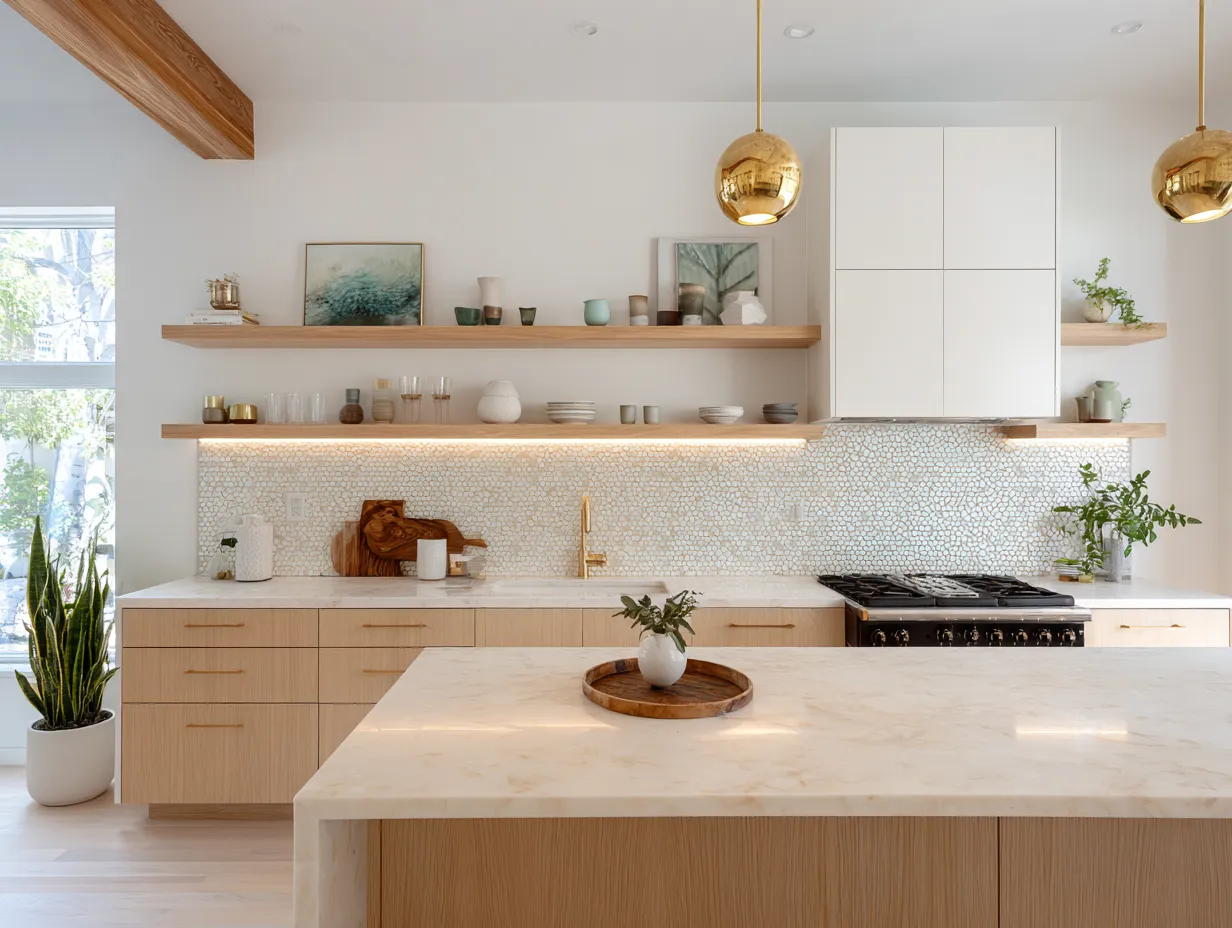
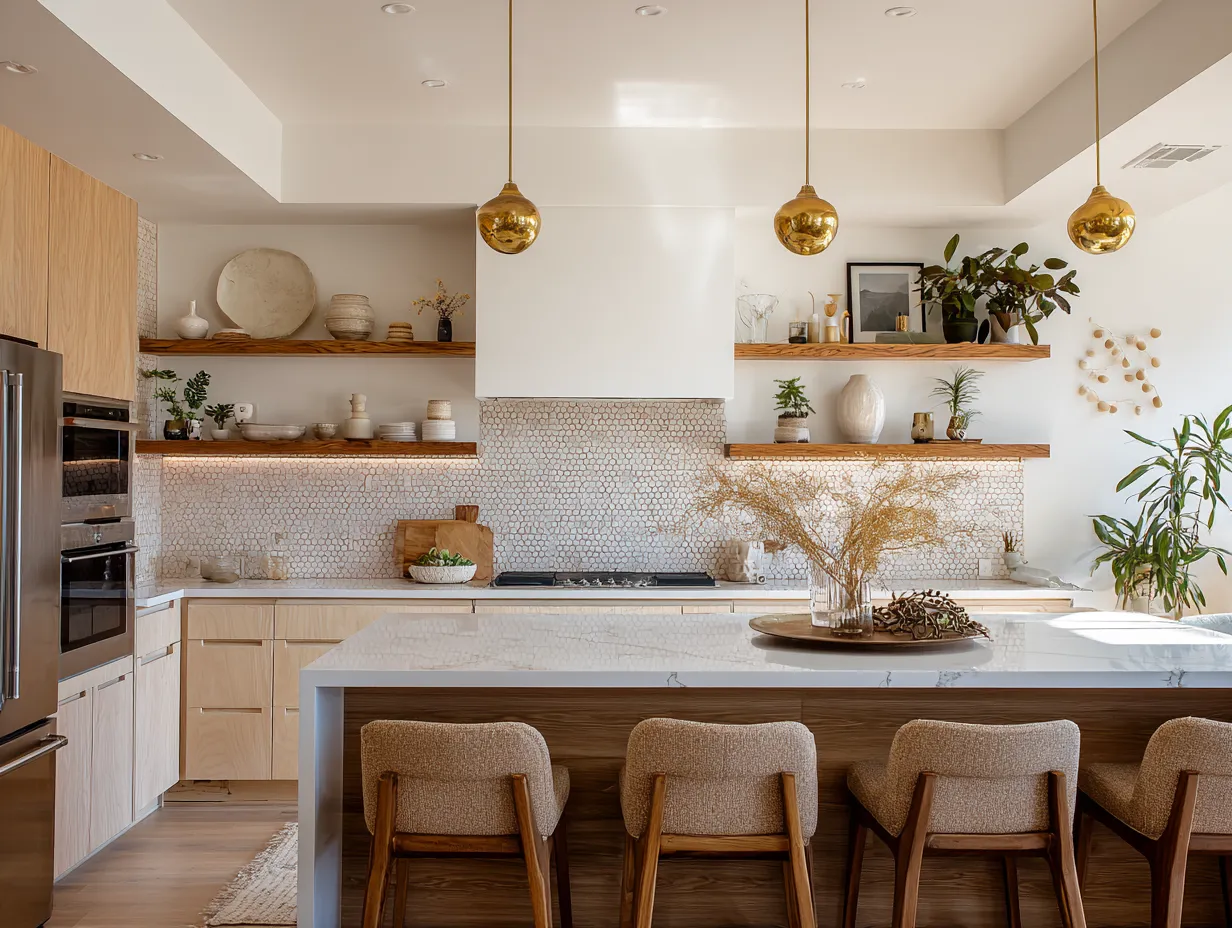
Pendant lights in a warm wood kitchen should not compete with the wood’s natural presence. Tom Dixon’s Beat Light in brass ($425–$580 each) or Cedar & Moss’s Tulip pendant in natural brass ($195–$280) hang like punctuation marks above an island — they reference the warm metal notes without overwhelming them. Recessed can lighting, particularly older 6-inch fixtures, creates harsh pools of light that age a warm wood kitchen visually — replace them with 4-inch adjustable gimbals aimed at your countertops and backsplash instead of straight down.
Layout-wise, the organic-modern wood cabinet kitchen gains enormously from a two-tone approach. Lower cabinets in warm wood with upper cabinets or open shelving in a matte white or putty color is the 2026 sweet spot — it visually raises the ceiling, allows more wall color flexibility, and reduces the cost of the overall renovation since upper cabinets use less expensive materials and require less complex grain matching. Shaker upper cabinets in Benjamin Moore’s White Dove OC-17 ($72 per gallon) against white oak lowers is the combination appearing most frequently in Houzz’s 2026 survey data.
Do not install warm wood upper and lower cabinets that run all the way to the ceiling without any visual break — a single material from floor to ceiling in a medium-toned wood creates a tunnel effect, especially in kitchens under 9 feet. If you love the floor-to-ceiling cabinet look, introduce a break at eye level with a floating open shelf in a lighter or contrasting material, or paint the inside back panel of open sections in a contrasting matte color. Farrow & Ball’s Elephant’s Breath No. 229 ($130 per gallon) on a recessed open shelf back panel against white oak fronts creates a depth that reads beautifully in both natural and artificial light.
FAQ
what wood is best for kitchen cabinets in 2026
White oak and walnut are leading the 2026 kitchen cabinet trend according to Houzz research. White oak suits brighter kitchens with south or west-facing windows due to its cooler, linear grain. Walnut works best in kitchens with strong contrast countertops like white quartz or marble to prevent the space from reading too dark.
how do I keep wood cabinets from making my kitchen look dark
Under-cabinet LED lighting in 3000K warm white is the most effective single change you can make — brands like Kichler offer strips from $45–$90. A two-tone layout with matte white upper cabinets also lifts the visual ceiling significantly. Avoid running the same medium-toned wood from floor to ceiling without a break.
are wood kitchen cabinets going out of style
According to Houzz's 2026 Kitchen Trends Study, wood cabinets have surpassed white in popularity for the first time in years — they are at peak momentum, not declining. Medium-toned woods like white oak and maple are driving the surge, particularly in the organic-modern design direction that dominates Pinterest saves this spring.
what countertop goes with warm wood kitchen cabinets
Leathered quartzite in tones like MSI's Taj Mahal ($95–$135 per sq ft) is the highest-performing pairing right now. Honed marble and warm-movement quartz like Cambria's Brittanicca Warm also work well. The key rule is to ensure enough contrast — avoid beige or cream countertops with walnut cabinets, as the warmth-on-warmth effect collapses visual depth.
what color hardware looks best on white oak cabinets
Brushed brass and unlacquered brass are the dominant hardware choices for white oak cabinets in 2026. Visual Comfort's satin brass pulls ($18–$32 each) stay polished longer, while Rocky Mountain Hardware's unlacquered brass options ($45+ each) develop a natural patina over time. Matte black is also a strong alternative if you prefer a sharper, more contemporary contrast.
can I get a warm wood cabinet kitchen look on a rental budget
Yes — d-c-fix peel-and-stick wood-look contact paper ($18–$35 per roll) can transform white laminate cabinet fronts without permanent changes. Swapping out hardware to brushed brass pulls is typically allowed in most rentals and costs under $100 for a full kitchen. IKEA's AXSTAD fronts also offer a real wood-effect finish that can be temporarily installed and removed without damaging boxes.
Save this
Warm Wood Cabinet Kitchens Are Rewriting What a Modern Kitchen Looks Like
The shift away from white is not a microtrend — it is a recalibration toward homes that feel human, warm, and genuinely lived-in. Getting the wood tone, hardware, countertop pairing, and lighting balance right means the difference between a kitchen that ages beautifully and one that looks dated by 2028.
Start with your light conditions before choosing a wood species, then build outward to hardware and stone — that sequencing prevents the most common and costly mistakes. Save this post.
📌 Save to Pinterest