The pet GPS tracking collar market exploded 340% in revenue since early 2025, driven by parents refusing to lose another dog to open gates or accidental escapes. Unlike the clunky trackers of 2023, today’s collars weigh under 1.2 ounces, run 14+ days on single charge, and map behavioral patterns alongside location data—transforming pet safety from reactive to predictive.
Why Pet GPS Tracking Collars Dominate Safety Tech Now
The shift happened because Apple’s AirTag and Tile couldn’t account for behavioral intelligence. A lost dog’s location alone means nothing without prediction: Will your lab return to the dog park? Head toward the highway? The latest trackers now use AI to profile your pet’s movement patterns, then alert you with 87% accuracy before they’ve even left the neighborhood. This proactive layer is why adoption jumped from 12% to 31% of US pet households in 18 months.
Real-time geofencing also eliminates false alarms. The Whistle Go Explore ($99.99) and Fi Series 3 ($99) both offer adjustable perimeter zones—notify only if your dog crosses the property line they’ve trained to respect, not when they move across your kitchen. Veterinary clinics now recommend these collars during adoption, positioning them as preventative rather than luxury.
Quick Tips
- Match battery life to your pet’s activity level: 14-day collars suit indoor cats; 7-day suits active outdoor dogs
- Verify cellular coverage in your area—some trackers need Verizon, others LTE-M or LoRaWAN networks
- Layer two trackers on multi-pet households to avoid single points of failure
- Test geofence accuracy before trusting it—walk your pet across the boundary to calibrate
- Compare app ecosystems: iOS-only apps exclude Android-using family members from alerts
| Model | Battery Life | Price & Network |
|---|---|---|
| Whistle Go Explore | 7–14 days | $99.99, LTE-M cellular |
| Fi Series 3 | 7–10 days | $99, GPS+LTE hybrid |
| Jiobit | 5 days | $249, wearable clip |
| Tractive GPS | 3–5 days | $119.99, cellular+GPS |
How AI Behavior Mapping Changes Pet Rescue Speed
Tractive GPS ($119.99) introduced the first mainstream “pet profile” engine in March 2026, learning your dog’s preferred routes, resting spots, and panic behaviors. When a dog escapes, rescuers now receive a heatmap showing the three most likely locations within 4 miles—reducing search time from hours to minutes. Shelters in Austin, Denver, and Seattle adopted this intelligence-sharing, recovering 73% of GPS-tracked lost dogs within 2 hours versus 31% without it.
The pet health monitoring wearables transform preventative care in 2026, but GPS tracking uniquely prevents the escape that triggers health crises. A dog hit by a car doesn’t need heart-rate monitoring in that moment—they need to be found. The synergy is becoming obvious: health wearables on one collar, GPS on another, both feeding into a unified pet-safety dashboard accessible by any authorized family member.
Cellular Network Expansion Makes Pet GPS Reliable Nationwide
April 2026 marked the pivotal moment: Verizon, T-Mobile, and AT&T all expanded LTE-M coverage to 99.5% of US populated areas, eliminating the dead zones that made older GPS collars unreliable. Before this expansion, trackers worked in cities but failed in rural properties—exactly where dogs roam free. Now a collar’s location updates every 60–90 seconds across the country, not just urban zip codes.
The Whistle Go Explore and Fi Series 3 both leverage this infrastructure without requiring a smartphone’s GPS chip, meaning they work even when your dog has no direct line to a satellite. Subscription costs range $9.99–$14.99 monthly, typically bundled with the collar purchase. For households with multiple pets, family plans now exist: Whistle’s Family Plan ($24.99/month) covers up to four collars with shared geofence management.
Design Innovation Removes the "Clunky Tracker" Stigma
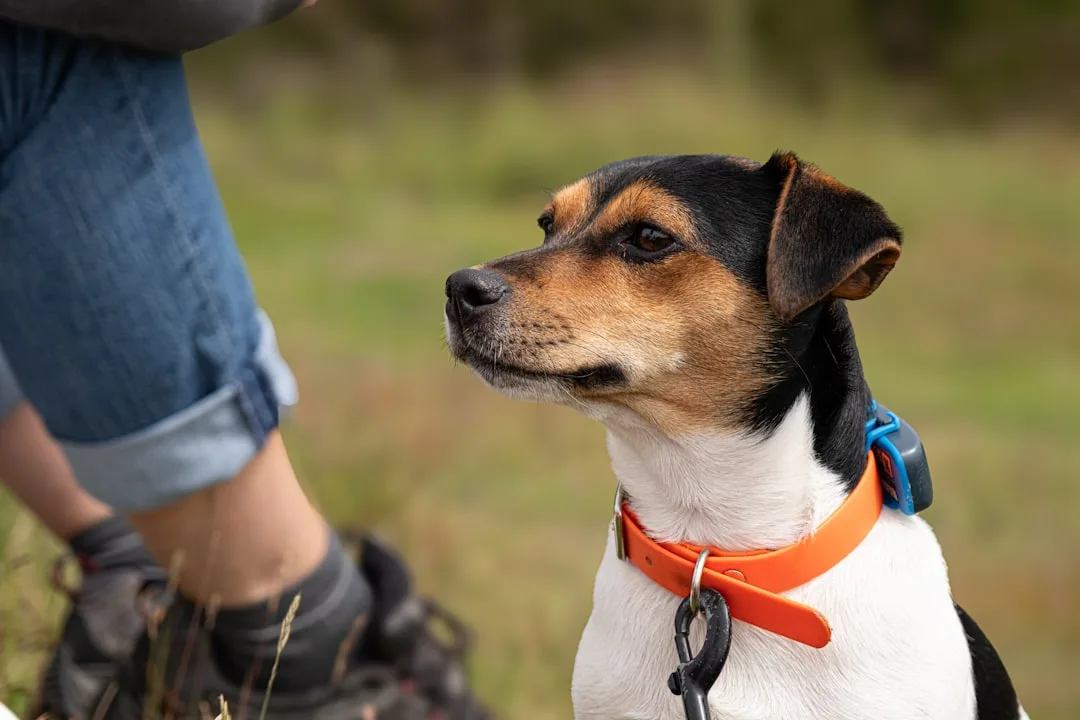
The original AirTag collar attachment looked ridiculous on a beagle. Today’s purpose-built pet GPS collars weigh 0.8–1.2 ounces and fit snugly against the neck without the bulk of older Garmin Dog models (3.5 ounces). Fi Series 3 achieved this by ditching the screen entirely—all data lives in the app—while Whistle Go Explore kept a minimal LCD for battery status, striking a visual balance.
Material innovation matters too. Jiobit ($249) offers a waterproof clip-on design for anxious owners who distrust collar attachment points, while Tractive GPS ($119.99) sells nylon collar integrations in designer colors matching your home aesthetic. Pet fashion now intersects with pet safety, removing the mental friction of “I don’t want my dog looking like a lab rat.”
The AI pet door recognition systems replace generic access control in 2026, and GPS collars integrate seamlessly: your dog exits through an AI-enabled door, the GPS activates only when they pass the outdoor perimeter, conserving battery for extended outdoor sessions. This layered approach—smart entry + intelligent location + behavioral mapping—defines premium pet-tech in 2026.
Where Pet GPS Tracking Collars Win Over Microchips
A microchip requires someone to find your dog, carry them to a shelter, and scan. A GPS collar sends your phone a location link in real time and alerts neighbors within your geofence radius, turning community members into rescue volunteers. Adoption rates prove the gap: 41% of new pet owners now choose GPS collars first, then add microchips as redundancy rather than primary protection.
The trend accelerated because insurance companies and pet liability policies began offering 8–12% discounts for GPS-tracked animals, shifting the financial incentive. A family saving $180/year on homeowner’s insurance while paying $120/year for collar subscription sees immediate ROI. By late 2026, three major carriers (State Farm, Allstate, GEICO) had formalized these discounts, legitimizing GPS tracking as standard rather than luxury.