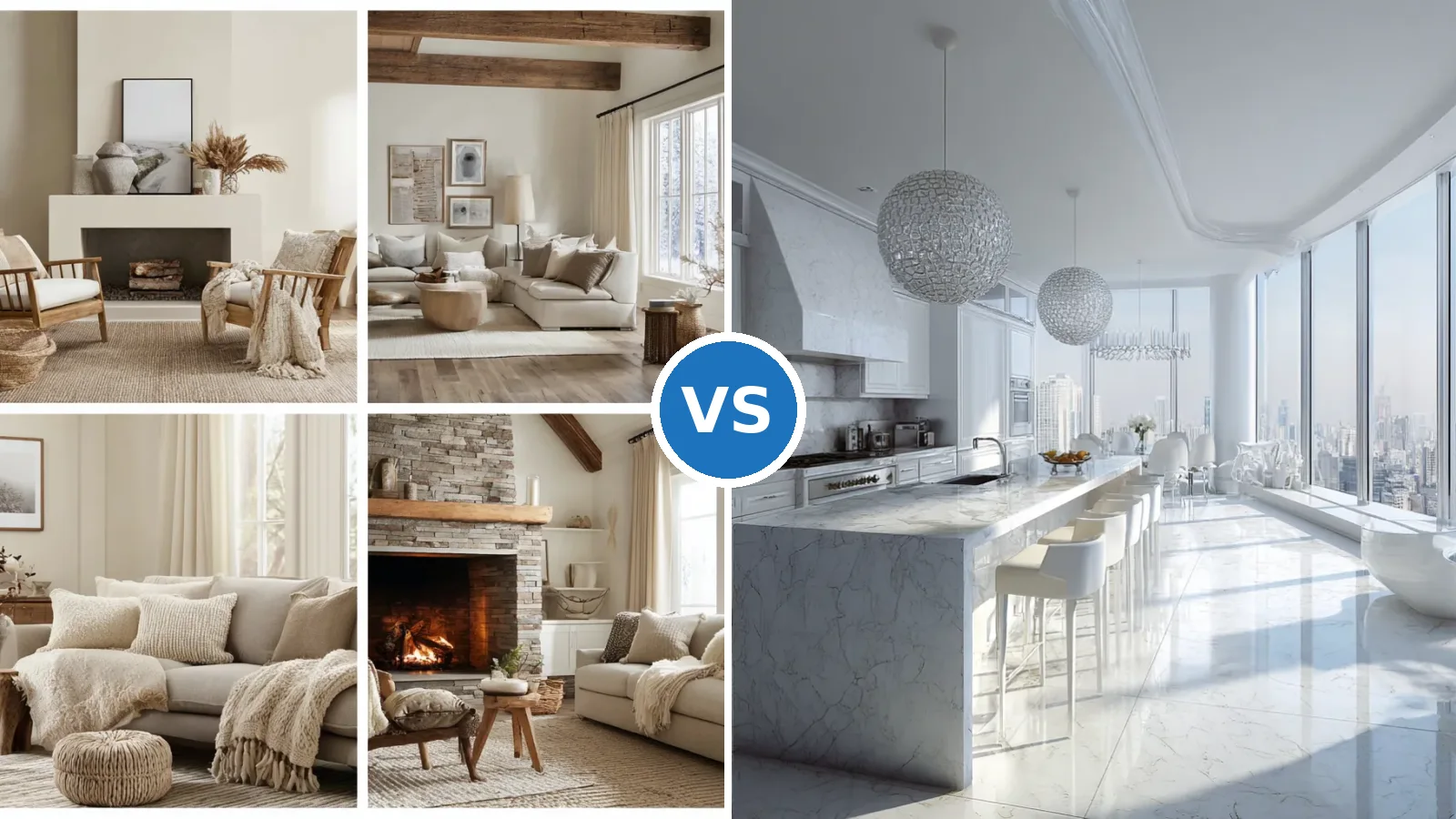
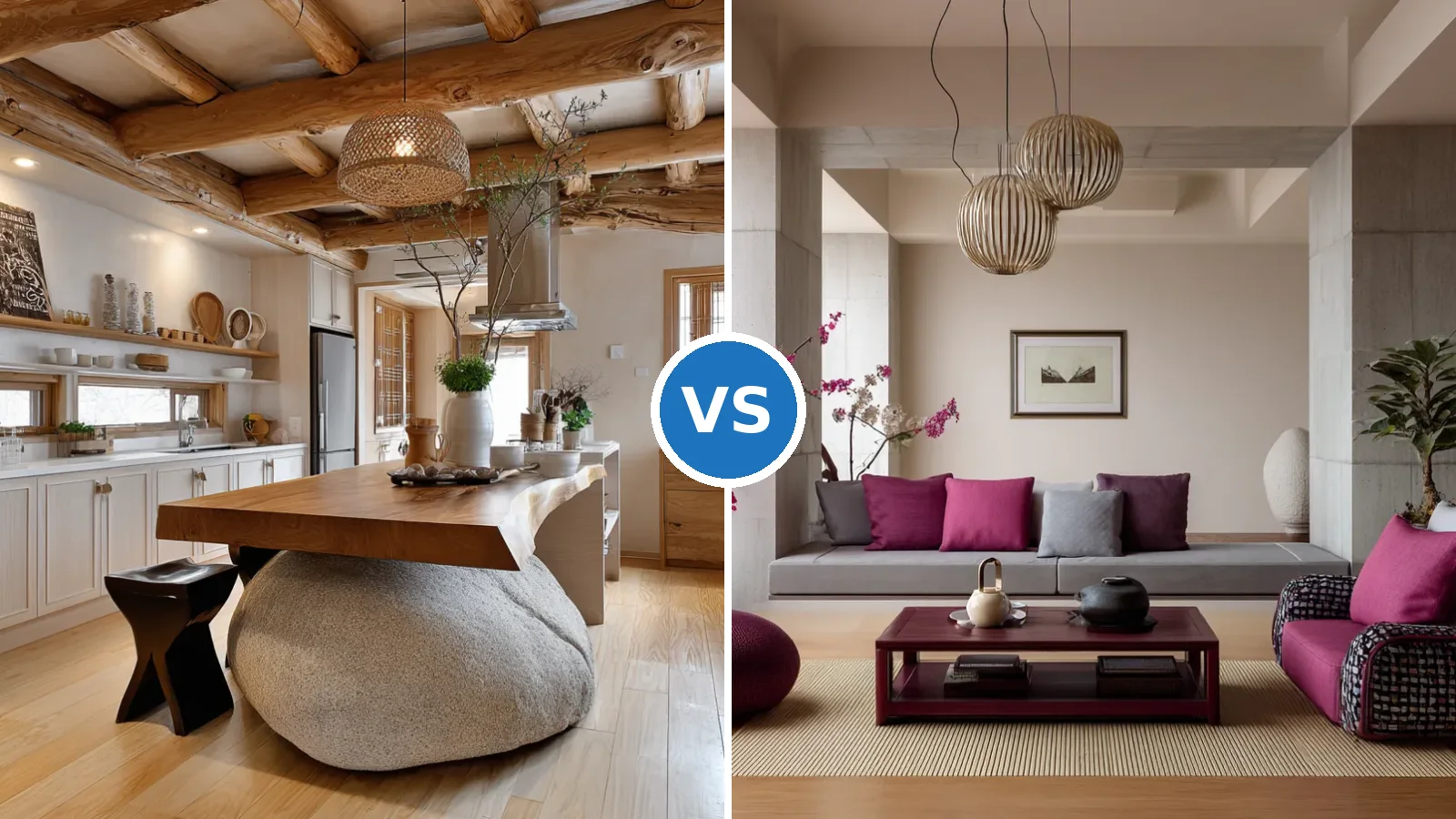
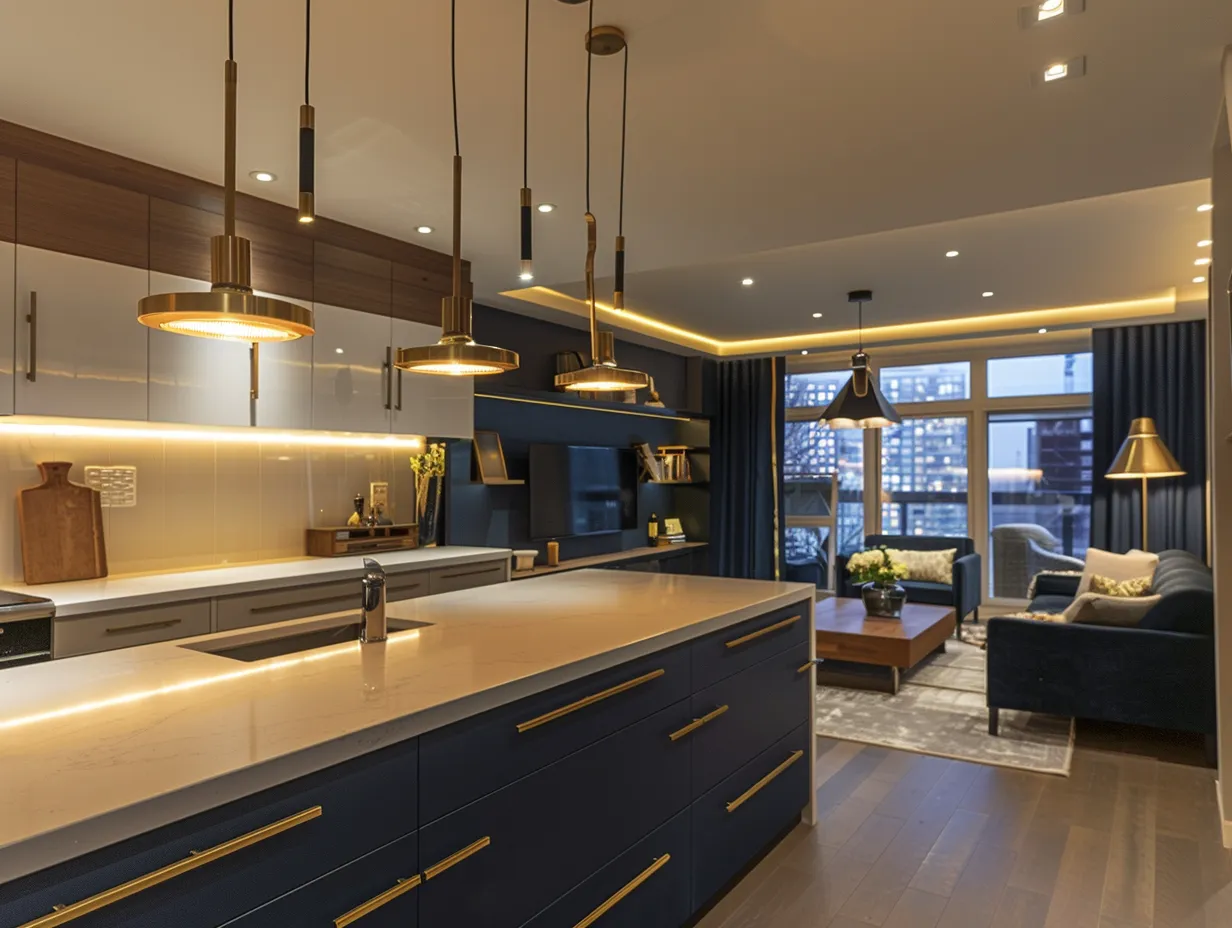
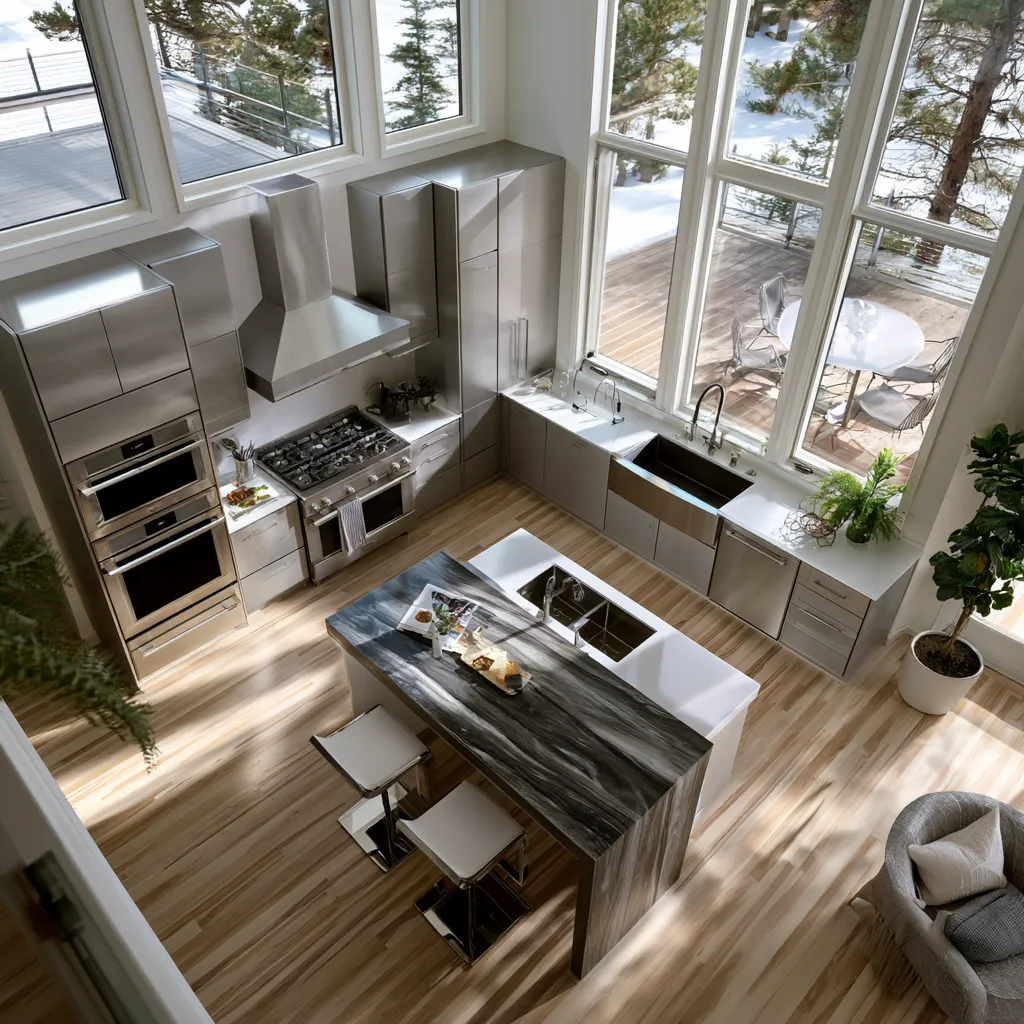
Neutral kitchen ideas dominate Pinterest boards and design magazines for one concrete reason: they age better than any trend-driven color or material choice. A palette built around soft beige, warm greige, or muted taupe doesn’t just photograph well — it compounds in value the longer you live with it. Sherwin-Williams data consistently places Accessible Beige SW 7036 and Agreeable Gray SW 7029 among the most reordered interior colors precisely because homeowners find these shades work across lighting conditions and cabinet finishes without demanding replacement.
The trap most people fall into is treating neutral as a synonym for boring. Texture, material weight, and surface finish do what color contrast does in bolder schemes. A matte lacquer cabinet next to a honed quartz countertop creates a layered reading even when both surfaces share a near-identical tone. The difference between a flat neutral kitchen and a considered one is almost never about adding color — it’s about varying material register.
This article breaks down three distinct approaches to the neutral kitchen: the pared-back minimalist version, the warmer rustic-modern hybrid, and the sleek continuous-surface execution. Each handles the core challenge differently, and each suits a different budget and lifestyle. Quartz countertops run $50–$150 per square foot installed, stock cabinetry starts around $100–$300 per linear foot, and refinished solid-wood cabinetry professionally done lasts 10–15 years — so the numbers here are real starting points, not decoration.
- Neutral kitchen ideas split into three distinct design modes: minimalist, rustic-modern, and sleek continuous-surface.
- Warm greiges (Sherwin-Williams Accessible Beige SW 7036, Agreeable Gray SW 7029) outperform cool grays in most real-world kitchen lighting.
- Stock cabinets cost $100–$300 per linear foot installed; semi-custom runs $150–$650. Material tier matters more than color selection.
- Quartz countertops — the neutral-kitchen workhorse — install for $50–$150 per square foot and require zero sealing.
- Each approach here demands a different commitment: minimalist needs ruthless editing, rustic-modern needs texture discipline, sleek needs continuity across every surface.
Flat Panels and Empty Counters Define Minimalist Neutral Kitchen Design
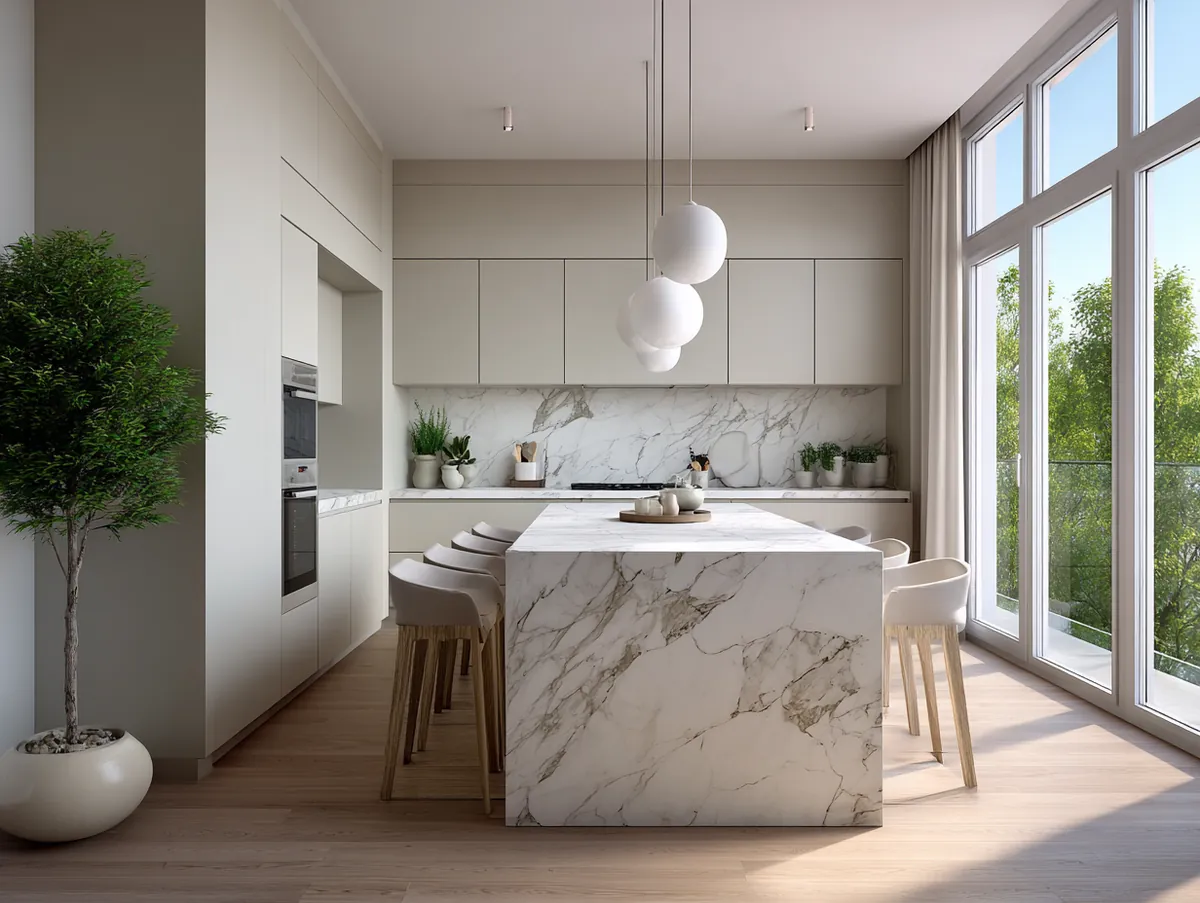
Neutral kitchen design done in the minimalist register works on a single operating principle: every surface earns its presence. Flat-panel slab-door cabinetry in matte lacquer — typically $180–$320 per linear foot installed — removes the visual noise of frame-and-panel profiles, leaving only the color to read across the room. Sherwin-Williams Repose Gray SW 7015, a warm gray with LRV 58, sits in the sweet spot: neither cold enough to fight wood floors nor pale enough to disappear under artificial light. Stylists recommend testing it at 7am and again at 9pm before committing, because the LRV difference between morning and evening lighting shifts its reading noticeably toward greige after dark.
What does minimalism cost in practical terms? Cabinetry without ornate hardware means every fingerprint lands on a flat surface — touch-latch mechanisms from Blum run about $28–$35 per door and solve this without visible hardware. The countertop in a minimalist neutral kitchen almost always lands on honed quartz rather than polished: honed surfaces don’t telegraph water rings between wipes and don’t create competing visual highlights when recessed LEDs skim across them. Caesarstone’s Cloudburst Concrete or Silestone’s Eternal Calacatta both sit in the $70–$100 per square foot installed range and deliver the visual weight a flat-panel run needs.
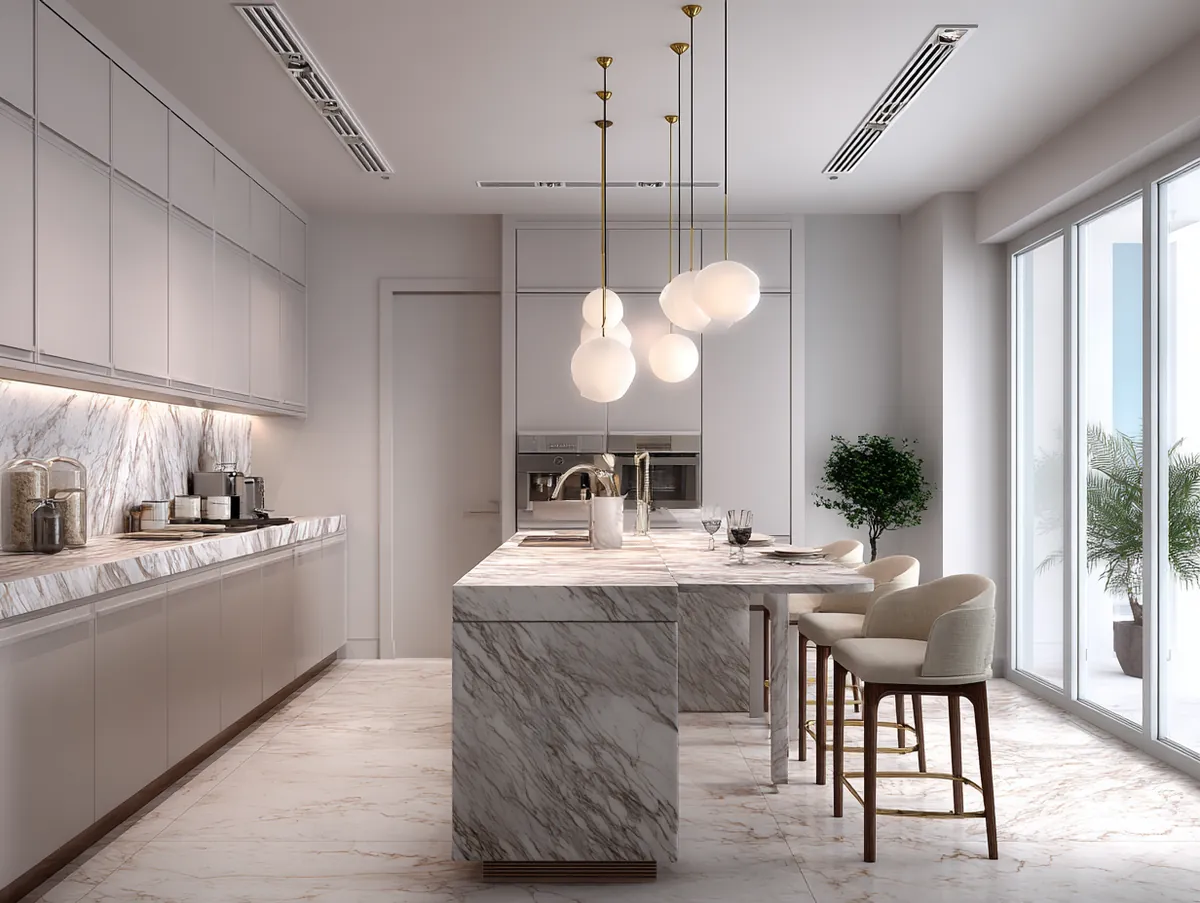
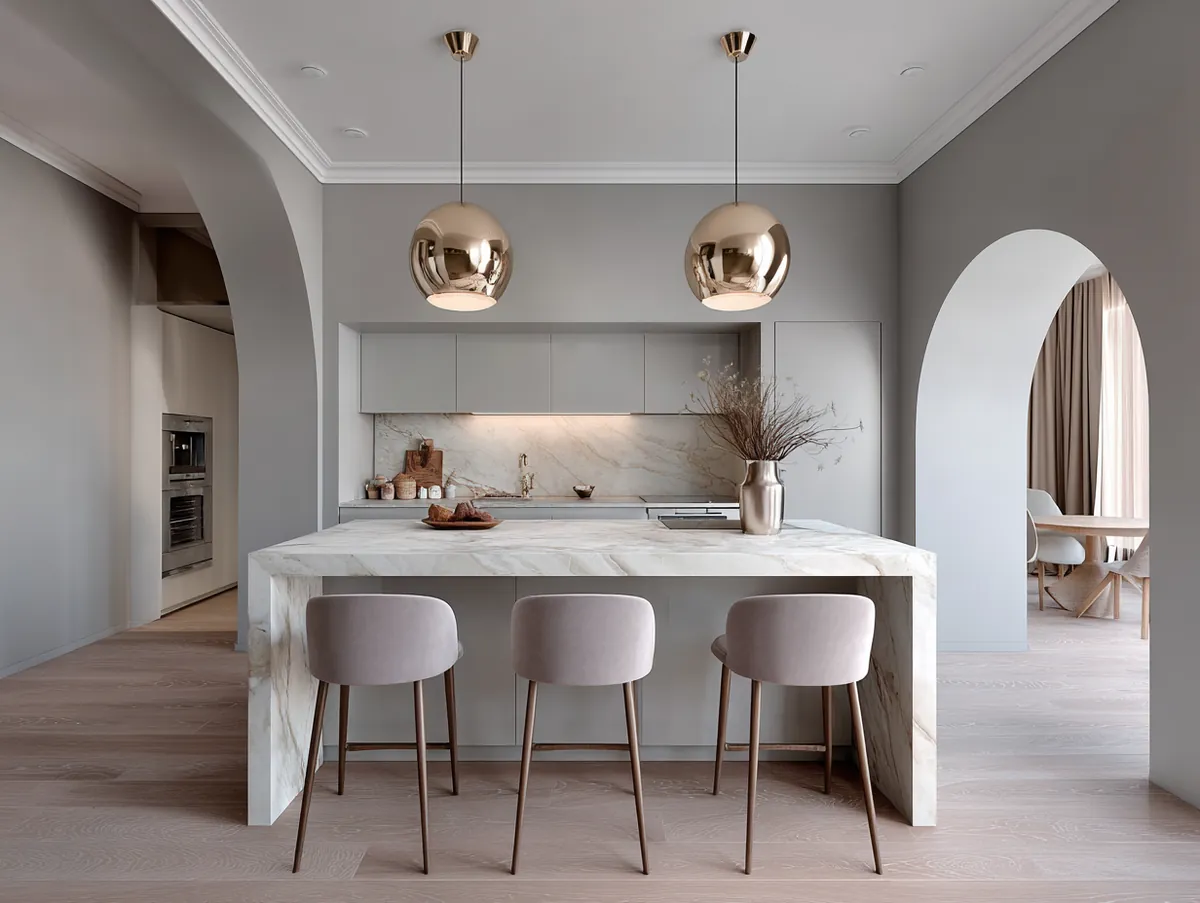
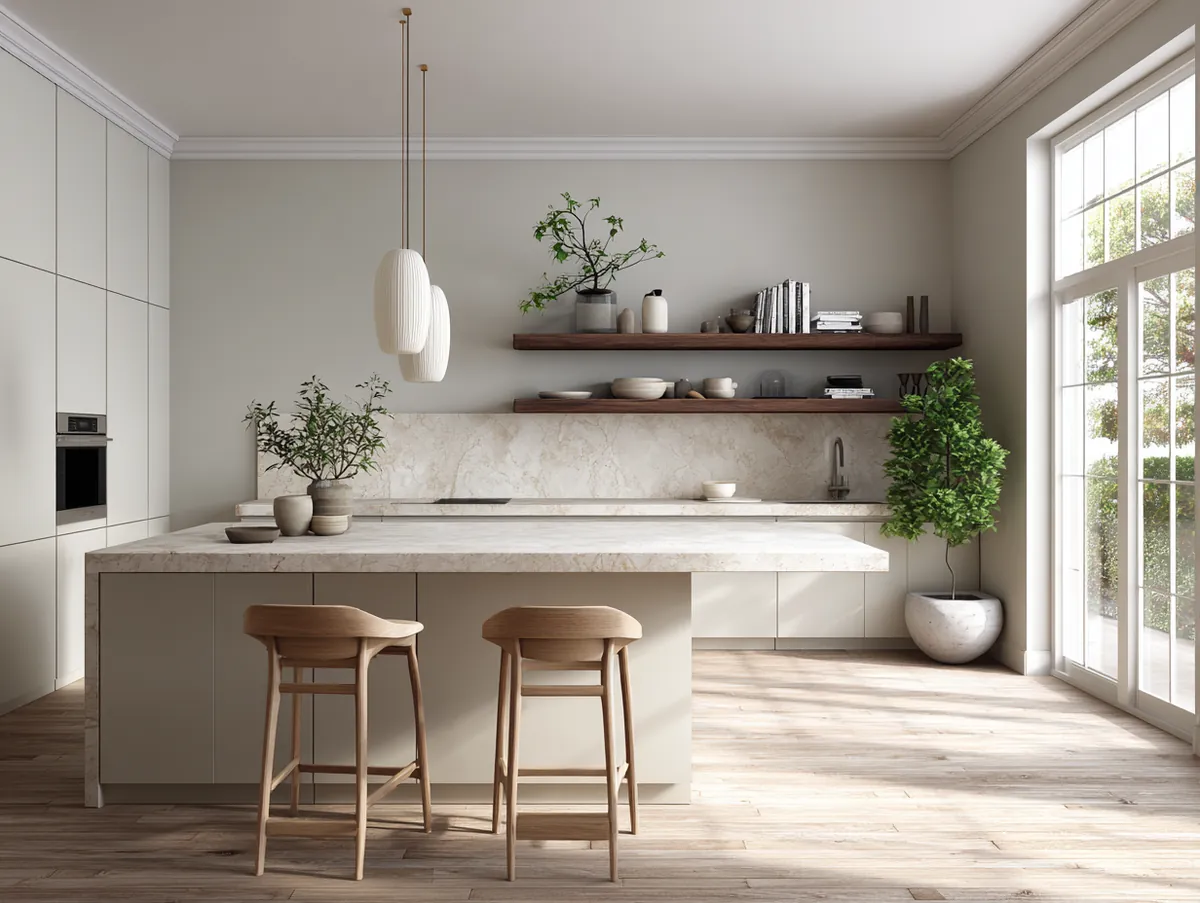
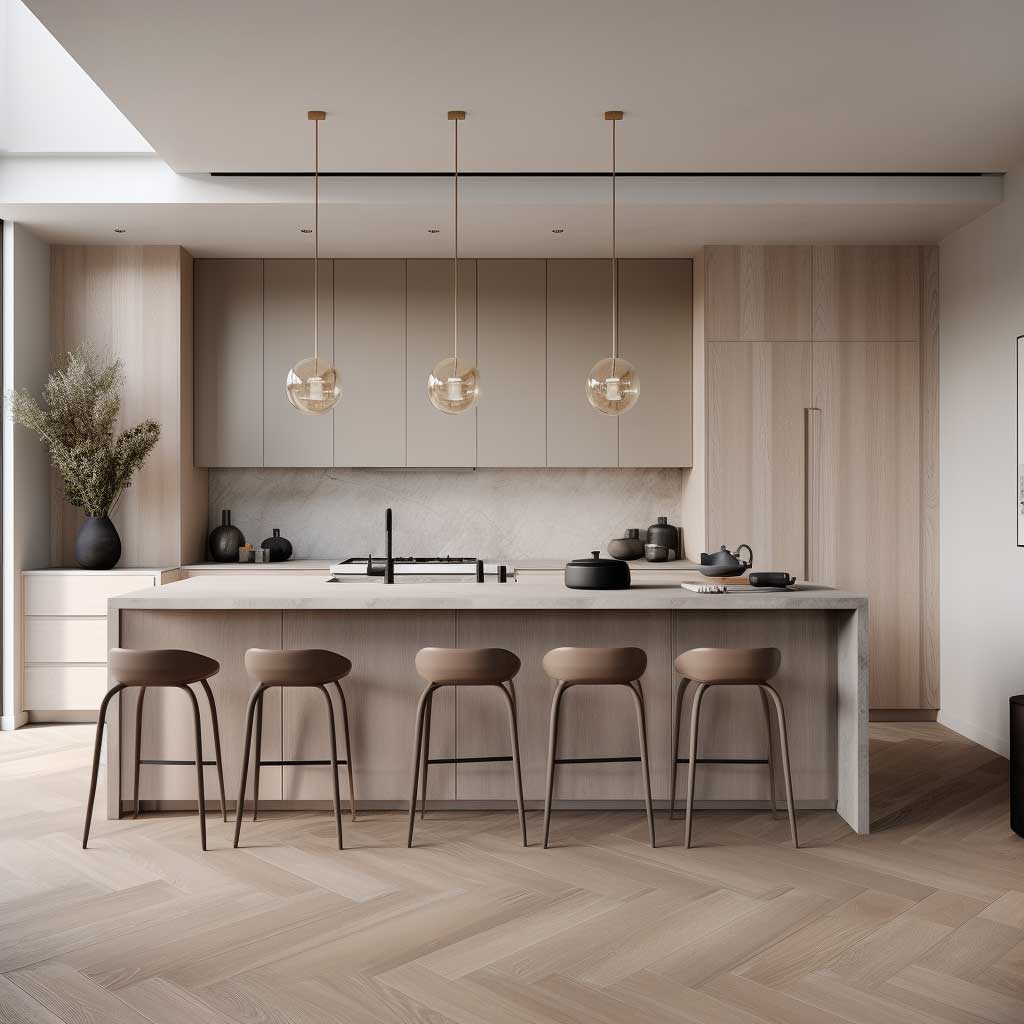
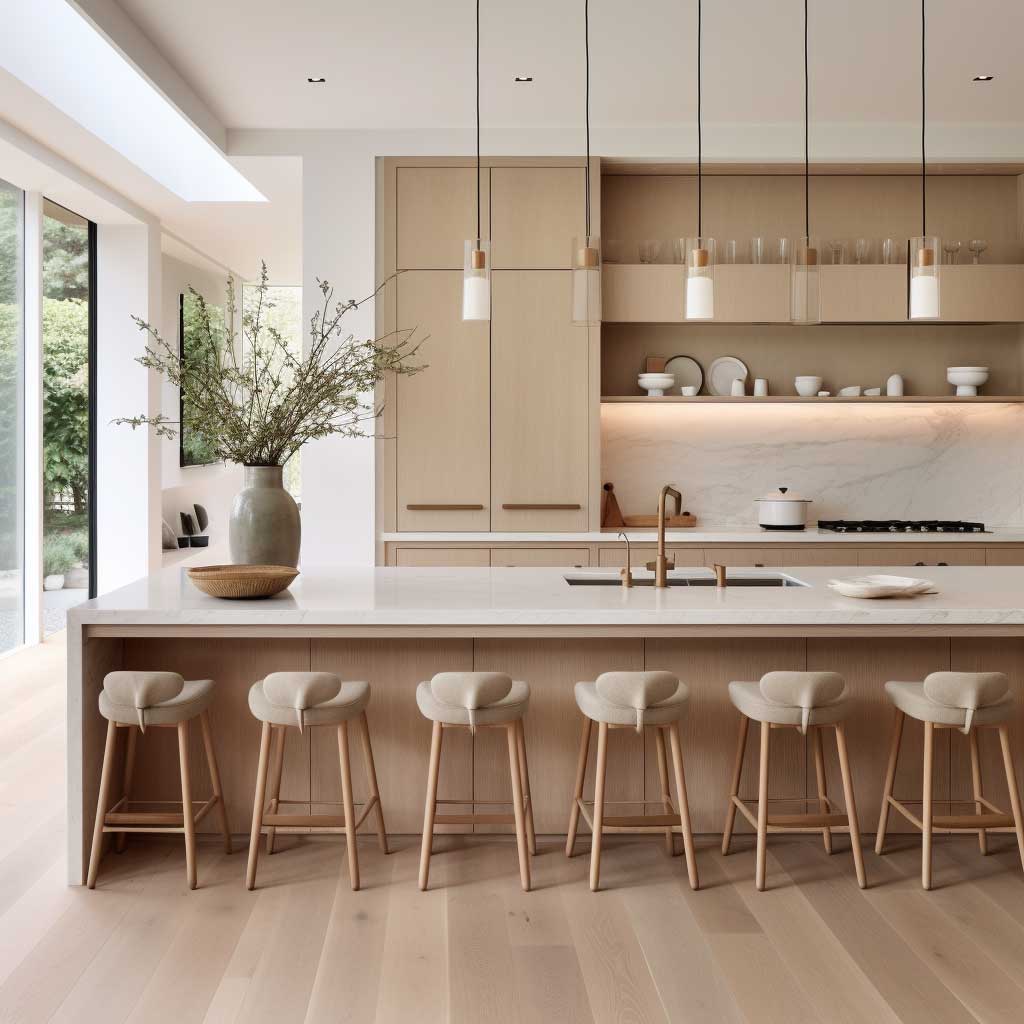
Open shelving on one wall of an otherwise closed minimalist kitchen is one of the most common ways this look fails. Designers note that open shelving requires active curation to maintain — cooking grease settles on whatever you leave there within weeks, and most shelves drift from styled to cluttered by month two. The trick here is using a recessed niche with integrated LED strip lighting instead: the visual interest without the maintenance liability. If open shelving appears in the original design plan, ask whether a pull-out pantry column provides equivalent accessibility with far less visual noise.
A detail worth knowing: not all matte cabinet finishes age equally. Thermofoil laminate in matte finishes tends to peel at corners within 5–8 years in high-humidity kitchen environments. Solid-wood doors with a conversion-varnish matte topcoat hold 10–15 years with standard use. That lifespan difference justifies a $50–$100 per linear foot premium on the material tier when you’re building a kitchen meant to last. For a deeper look at flat-panel cabinet specs and integrated appliance choices, modern minimalist kitchen design breaks down the exact product decisions that make this approach work beyond the photography.
Matching every surface to the same neutral tone — cabinet, countertop, backsplash, and wall — doesn’t read as cohesive. It reads as flat. Contrast in a neutral kitchen comes from finish variation: matte cabinet against polished stone, or a rough-texture tile backsplash against a smooth countertop. When everything shares the same sheen level and the same approximate tone, the eye has nothing to anchor on and the room feels unfinished rather than calm. Add at least one surface with a different finish register — it’s the difference between a designed neutral kitchen and a paint-by-number one.
Warmth Holds When Rustic Materials Meet Neutral Kitchen Decor
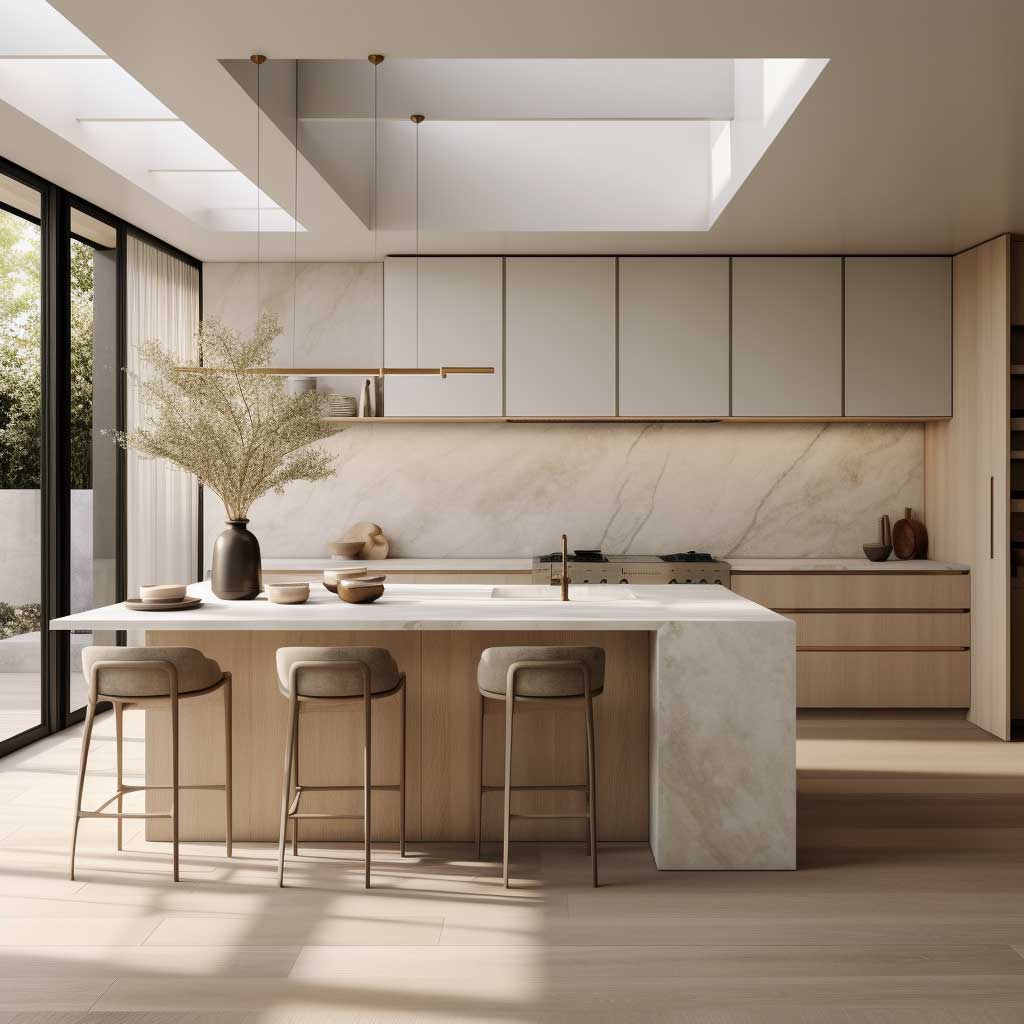
Neutral kitchen decor built around natural wood and stone — the rustic-modern register — works because raw material texture does what pattern and color do in louder kitchens. The cabinetry here typically runs solid oak, maple, or walnut with a lightly brushed or oiled finish rather than a paint or lacquer coat. Professionally refinished solid-wood cabinetry lasts 10–15 years, which means a well-constructed rustic kitchen cabinet run bought used or salvaged, cleaned, and refinished ($2,000–$4,500 for a full kitchen) can outlast a stock-cabinet renovation costing three times as much.
The question designers get most often about rustic neutral kitchens: does the wood make the space feel dark? Only if the countertop and wall tone aren’t warm enough to match the wood’s undertone. Sherwin-Williams Accessible Beige SW 7036 — a perennial top-seller — carries a yellow-warm undertone that harmonizes with honey oak and medium walnut without sliding into yellow. Pair it with a quartz countertop in a vein pattern rather than solid — Silestone’s Eternal Serena or similar at $65–$90 per square foot installed — and the material layering reads as intentional richness rather than noise.
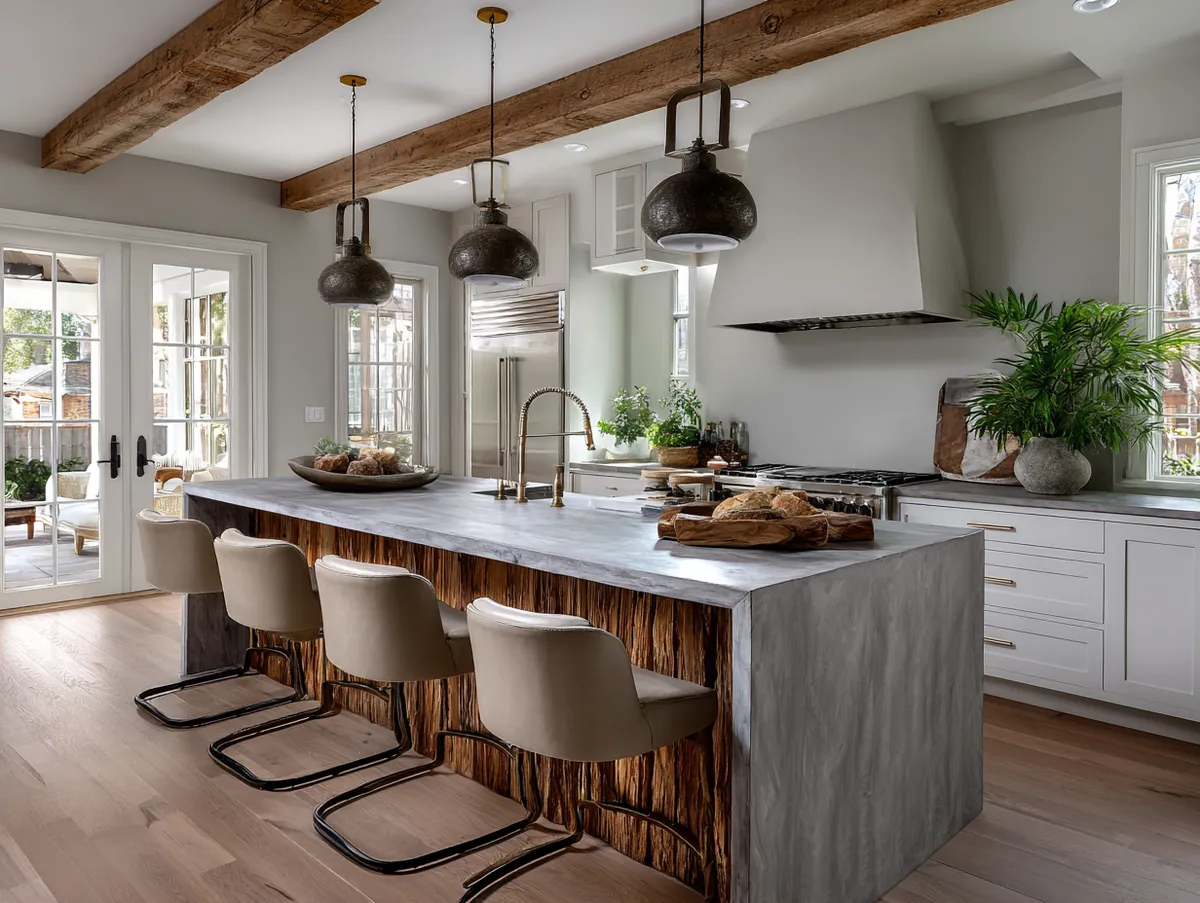
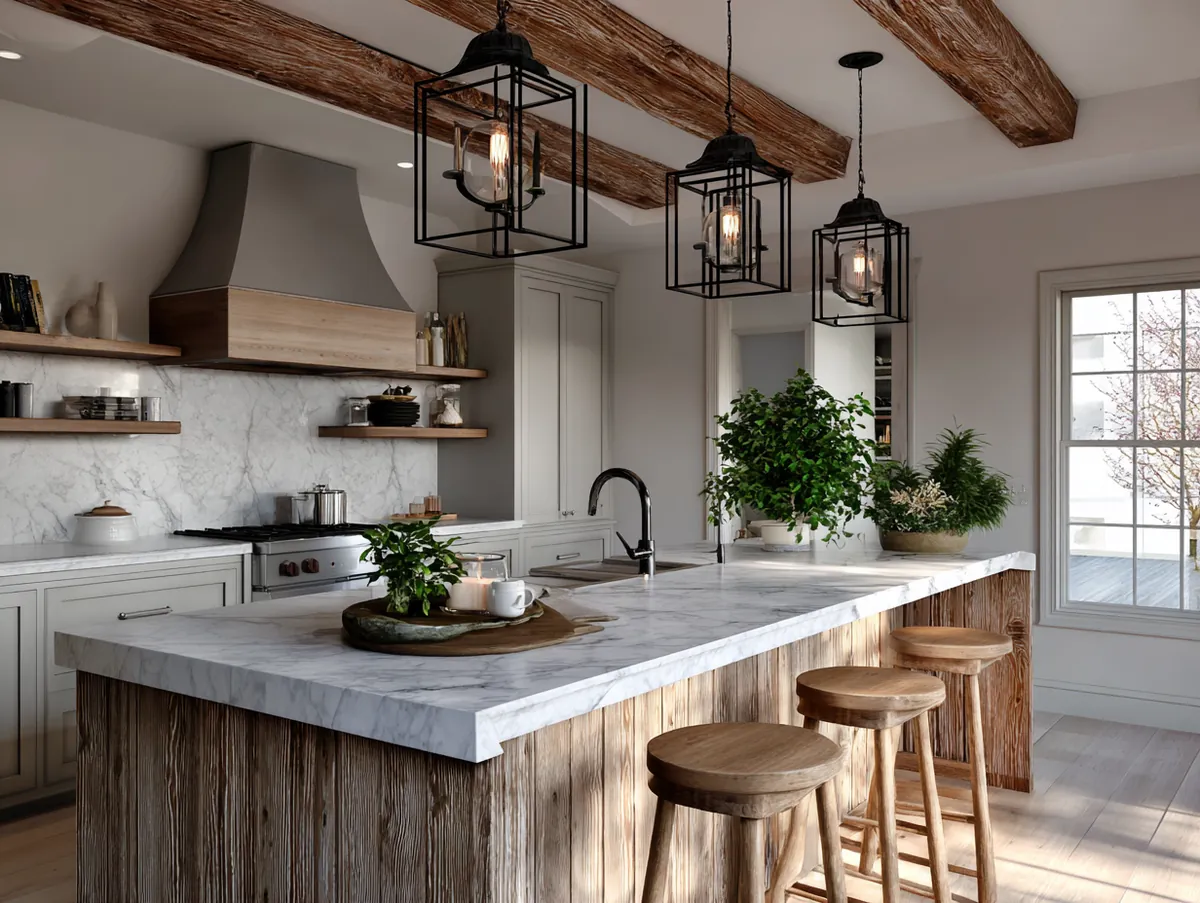
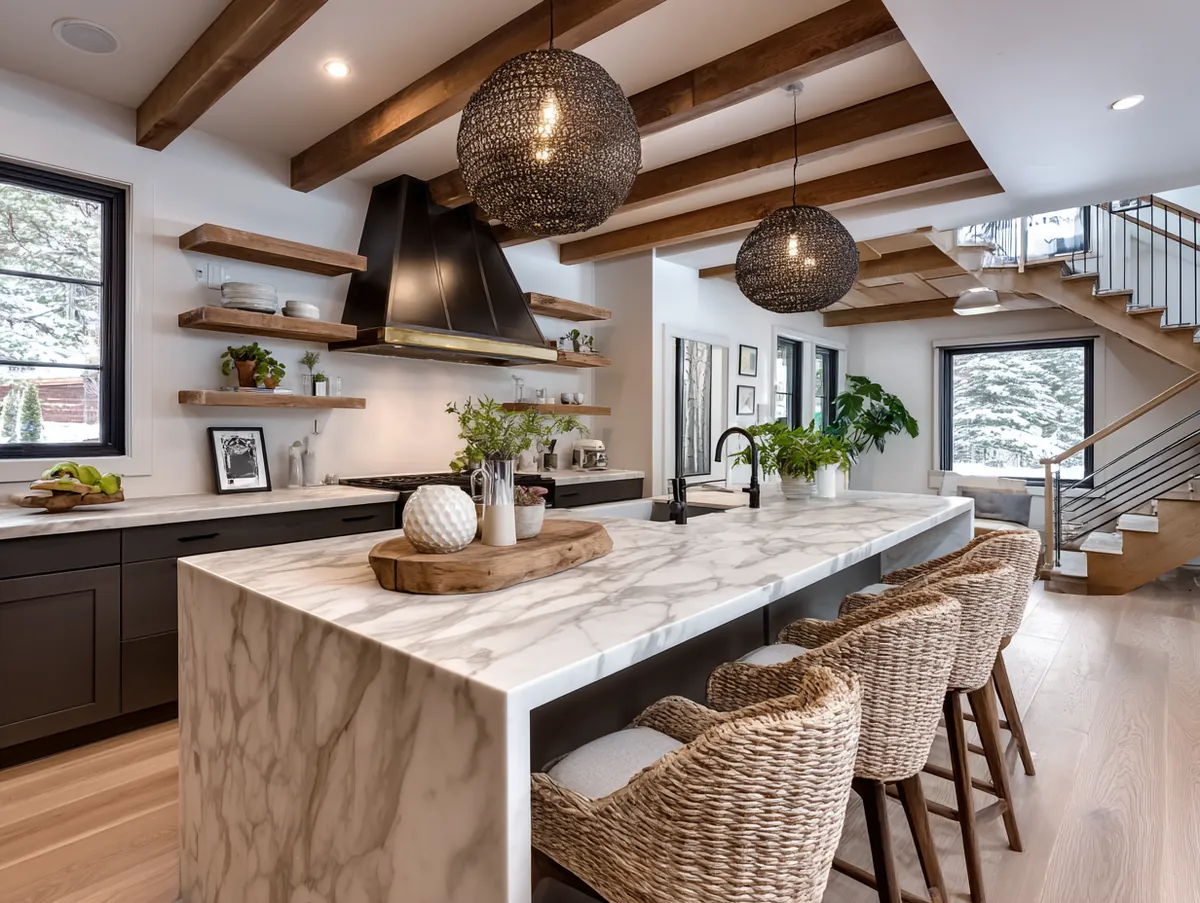
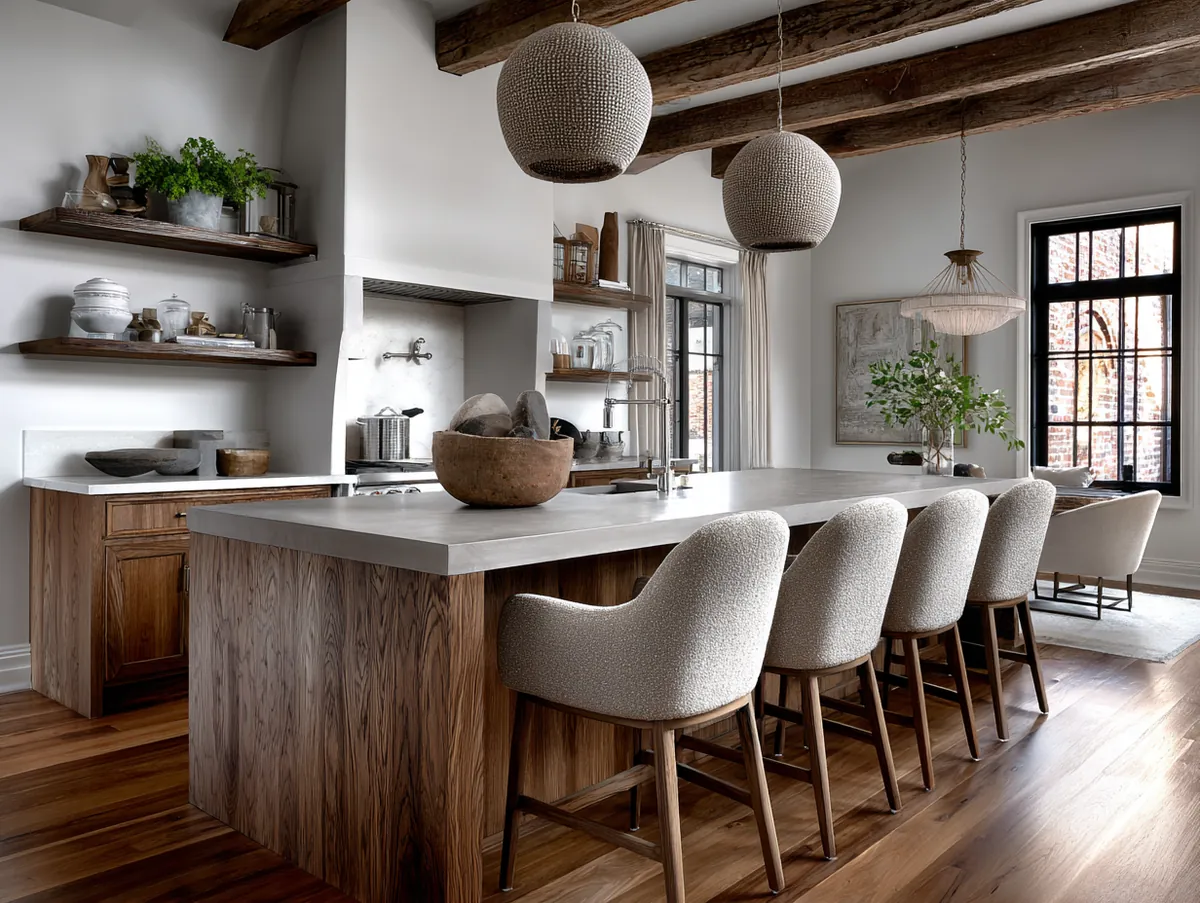
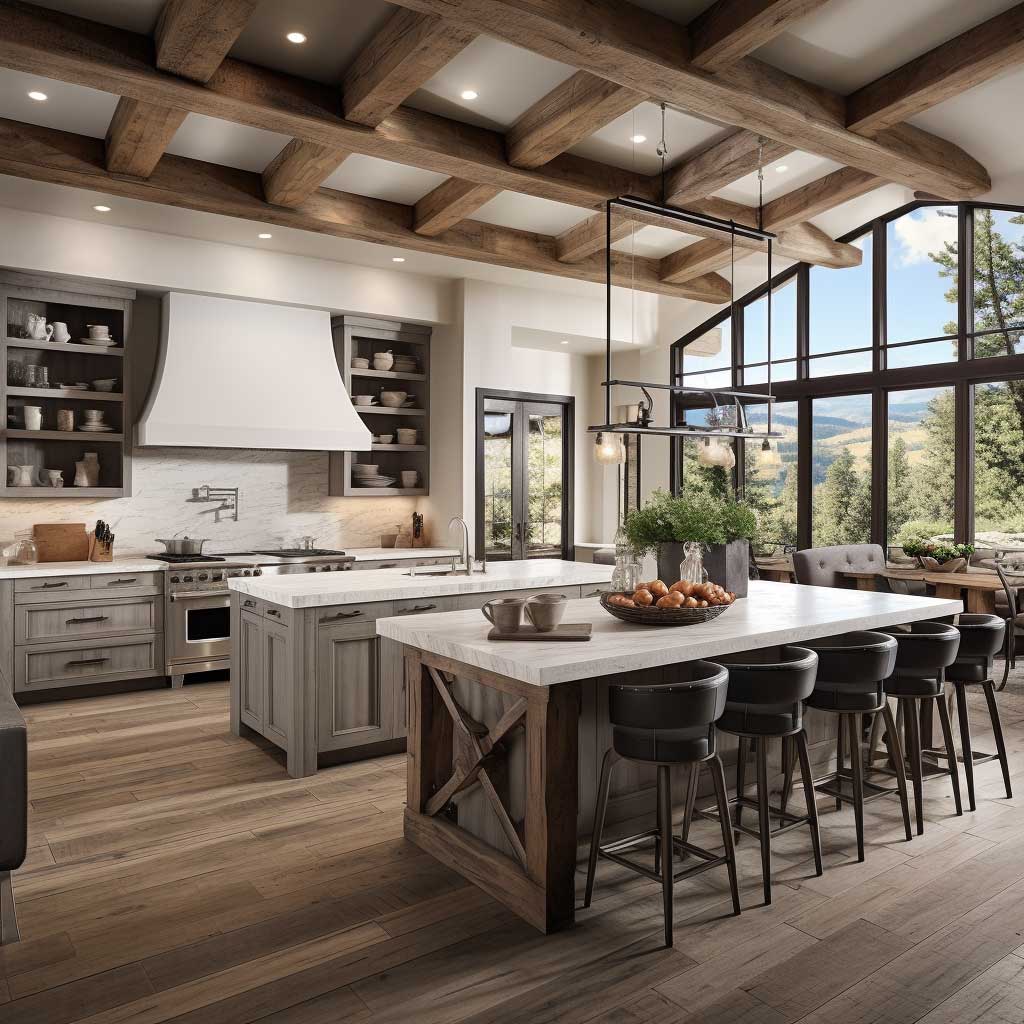
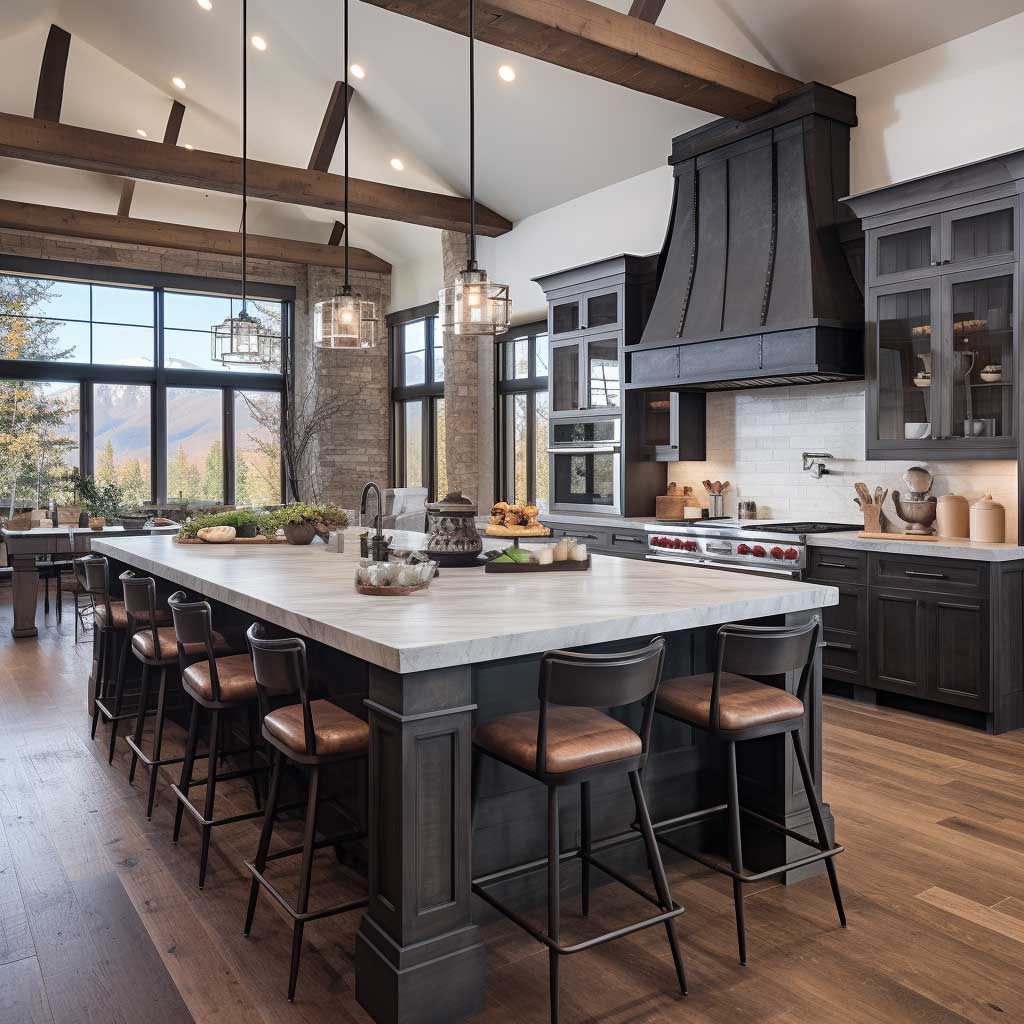
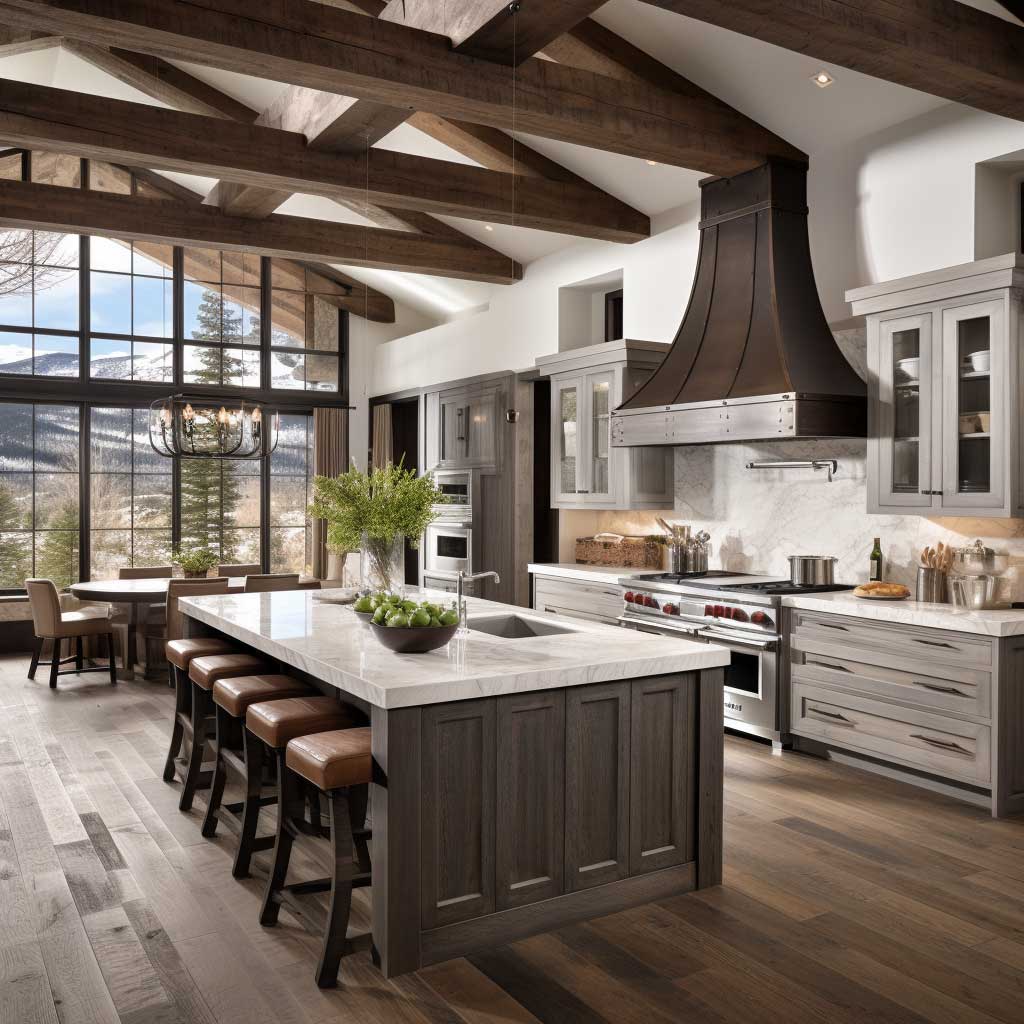
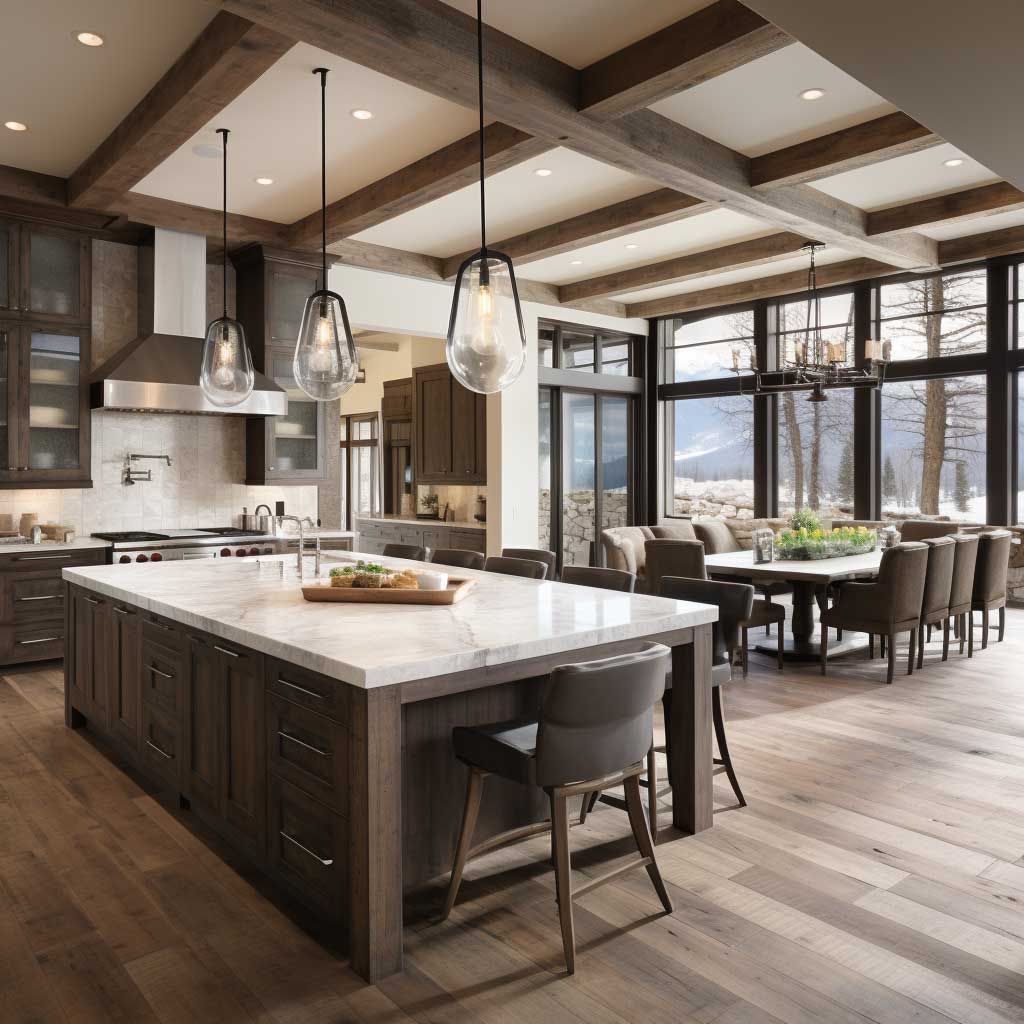
Hardware is where rustic neutral kitchens either hold together or fall apart. Brushed brass and unlacquered brass pulls age into the kitchen’s patina over time — that’s the point. Chrome and polished nickel fight the natural wood grain rather than reading alongside it. Think of hardware the way you’d think of a leather watchband against a linen suit: the whole point is that both materials age in the same direction. Cabinet knobs and pulls represent the lowest-cost correction if the first choice misses — individual pulls typically run $3–$25 each, so recorrecting hardware on a 30-door kitchen is a $90–$750 fix, not a renovation.
Stone backsplash tile in a rustic neutral kitchen works well in a subway or stacked-stone format, but the grout color determines the outcome more than the tile itself. Light grout on a textured tile reads busy from across the kitchen because every joint catches the eye separately. Tone-matched grout — within two shades of the tile — collapses the grid into a single surface read and lets the material texture do the work instead. That’s how a $4–$8 per square foot subway tile installation can look twice as expensive: grout color, not tile price.
For anyone choosing between wall paint shades to bring the rustic wood and stone together, kitchen wall paint ideas covers the specific greige and warm-beige options — including Benjamin Moore Hush AF-95 and Farrow & Ball Elephant’s Breath No. 229 — that work alongside natural wood cabinets without pulling the room cold.
Continuity Across Every Surface Is How Neutral Kitchen Ideas Become Sleek
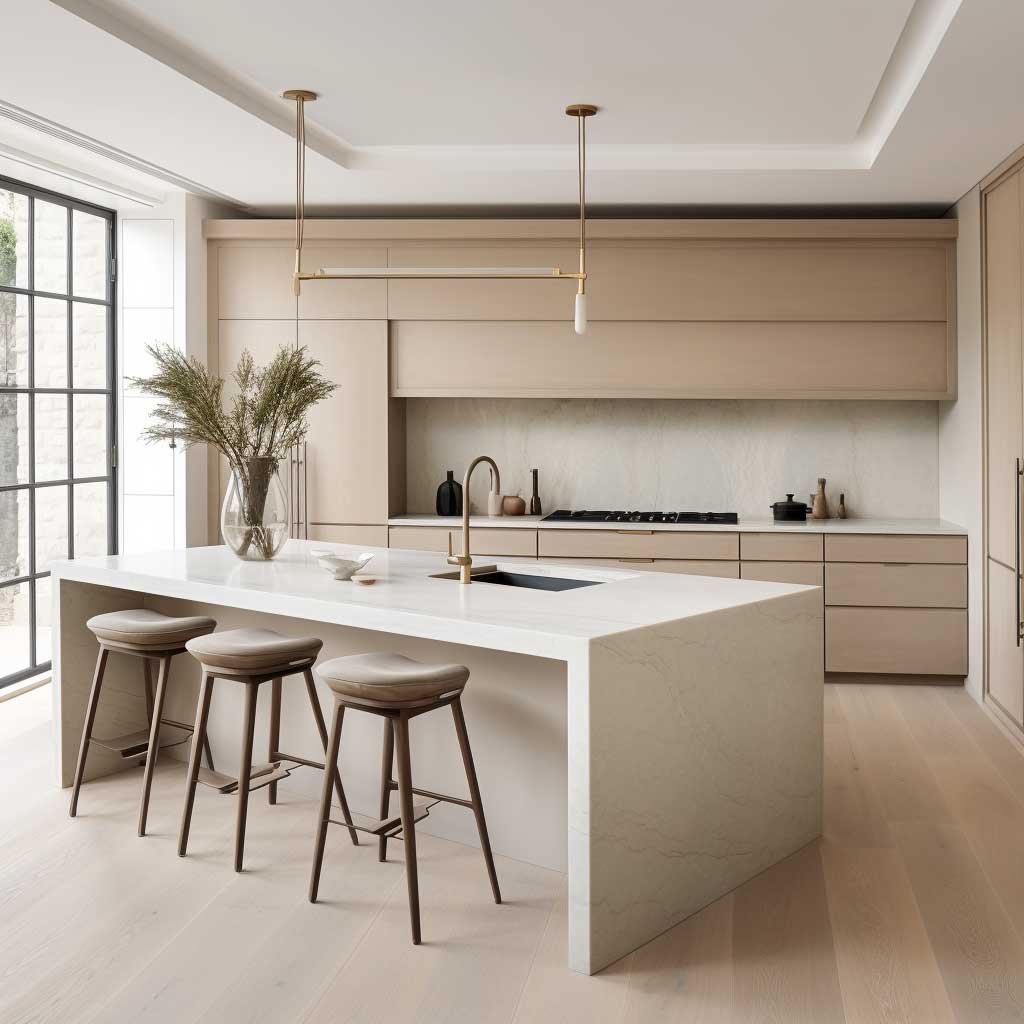
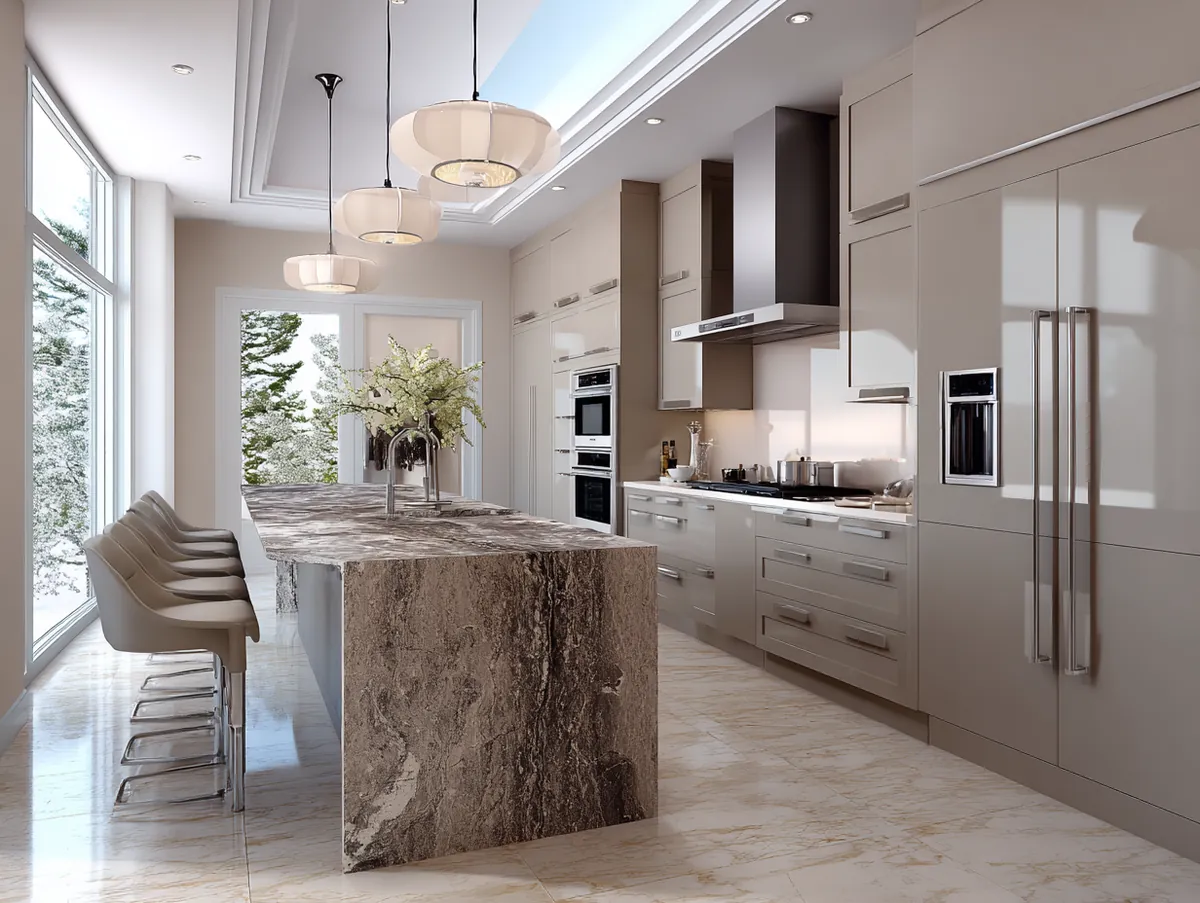
Modern neutral kitchens in the sleek register are built on a single material logic: the eye should travel from wall to countertop to floor without a hard stop anywhere. This requires more planning than it looks — a continuous countertop run at the same height across island and perimeter, a backsplash in the same material family as the countertop, and flooring in a warm neutral large enough in format to read as a surface rather than a grid. Interior designers specify 24×24-inch or 32×32-inch porcelain tile in most sleek neutral kitchens: anything smaller introduces so many grout lines that the floor competes with the rest of the room rather than receding beneath it.
Sherwin-Williams 2026 Color of the Year, Universal Khaki SW 6150, has become a reference point for this sleek-neutral execution on cabinet fronts — it’s a warm sandy tone that reads differently under cool and warm light, which is exactly the ambiguity a well-designed neutral needs. Applied as a cabinet color against a Calacatta quartz countertop ($70–$100 per square foot installed) and a large-format porcelain floor in an adjacent warm tone, Universal Khaki reads deliberate without calling attention to the color itself. The goal is that visitors notice how the kitchen feels before they notice what color anything is.
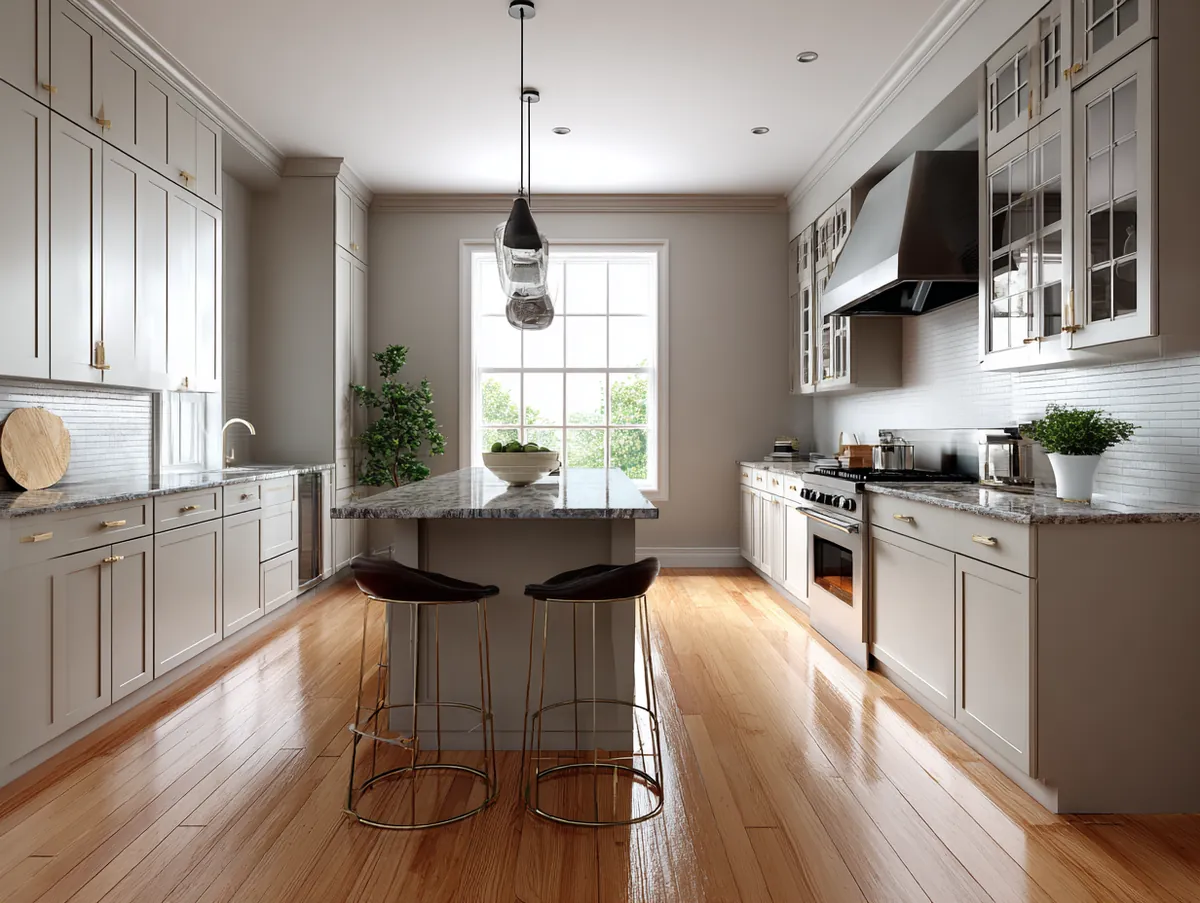
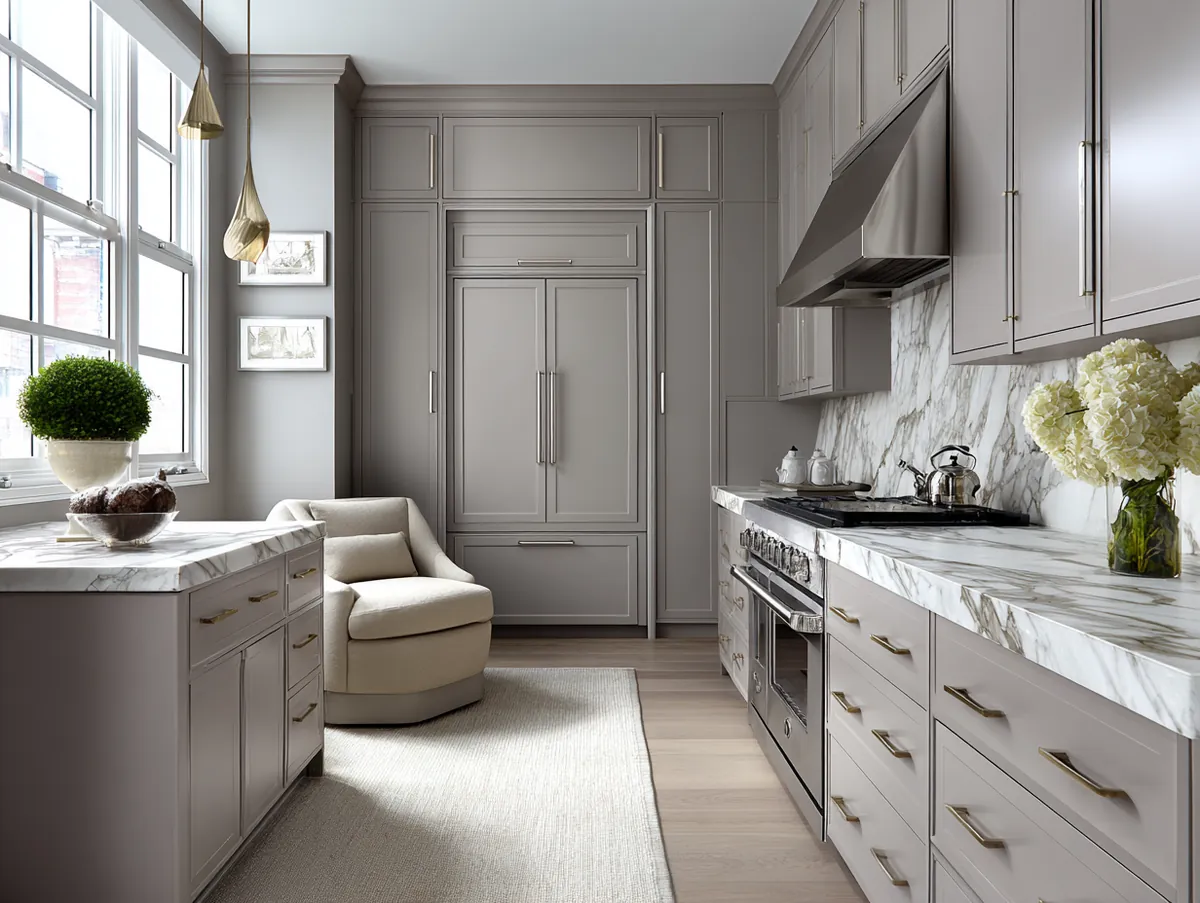
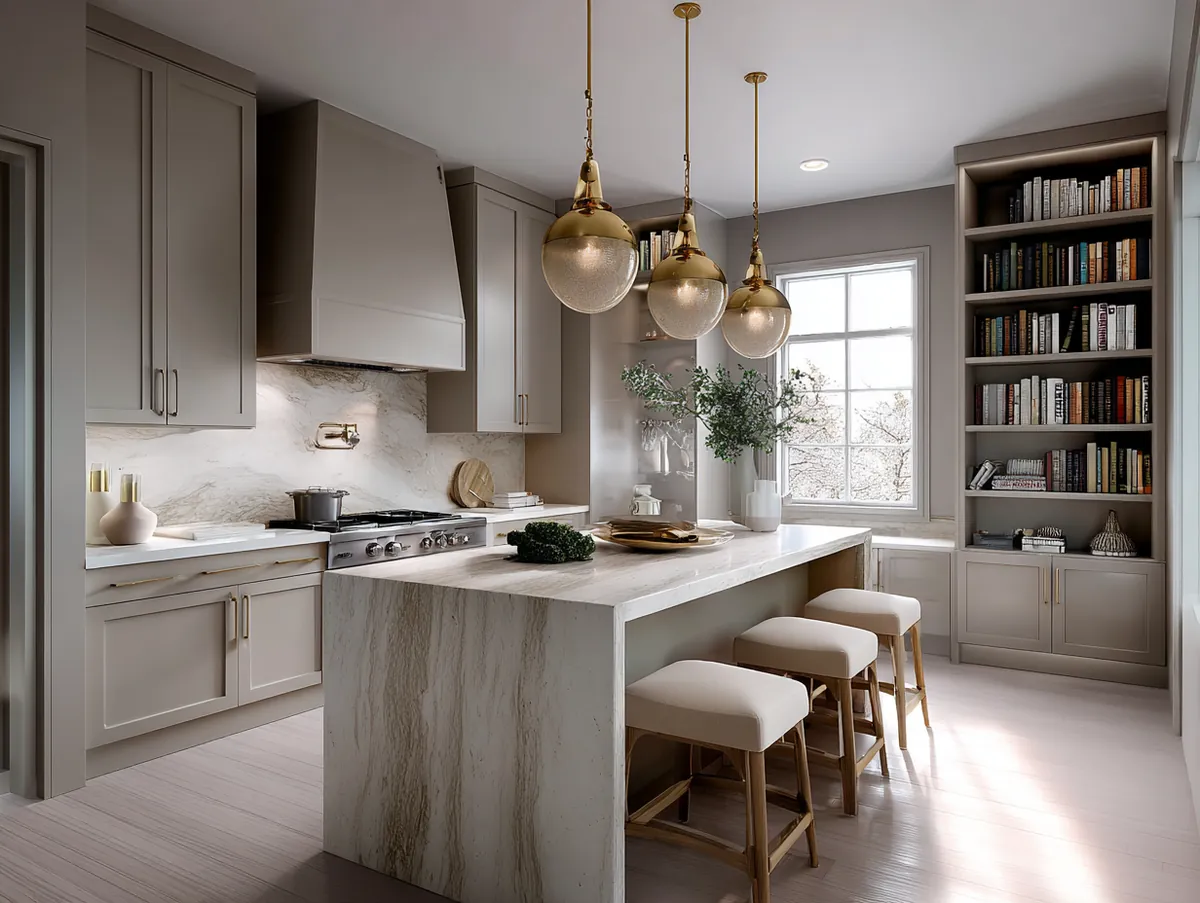
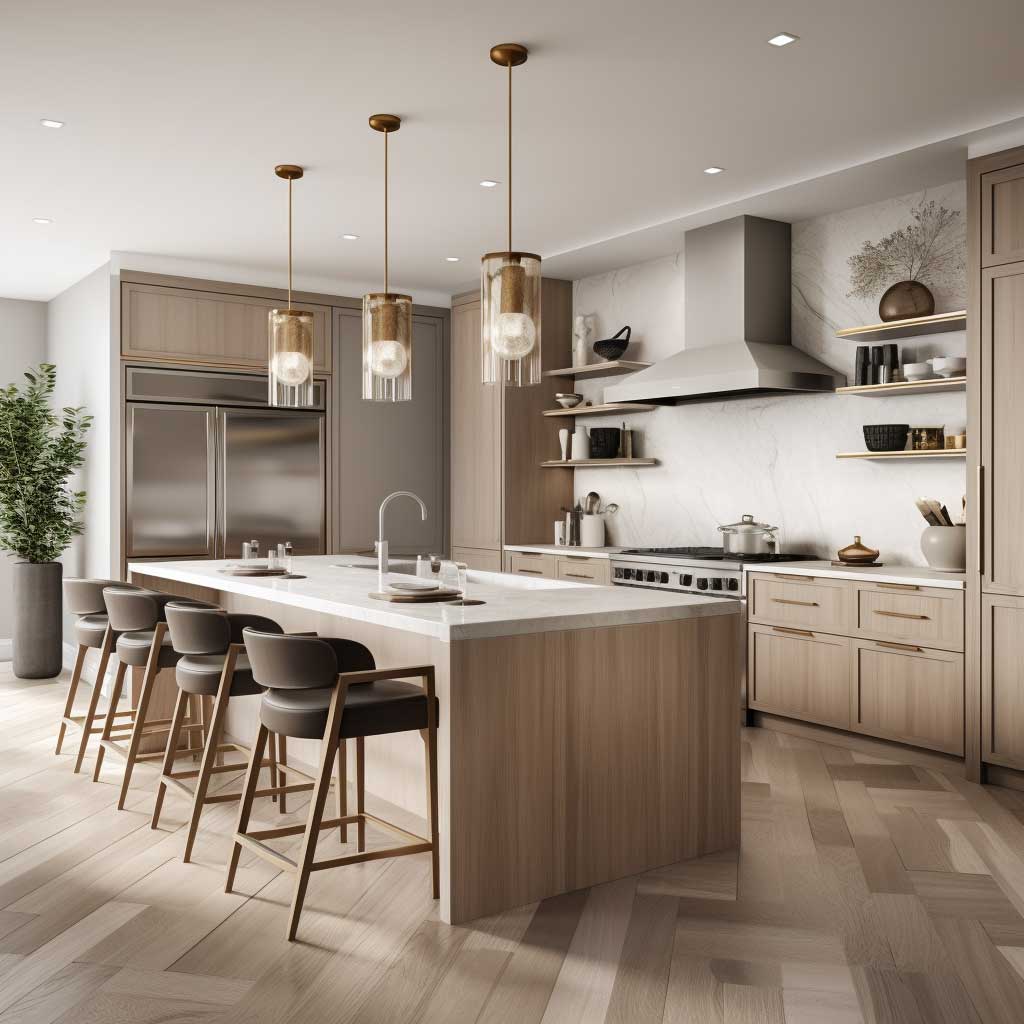
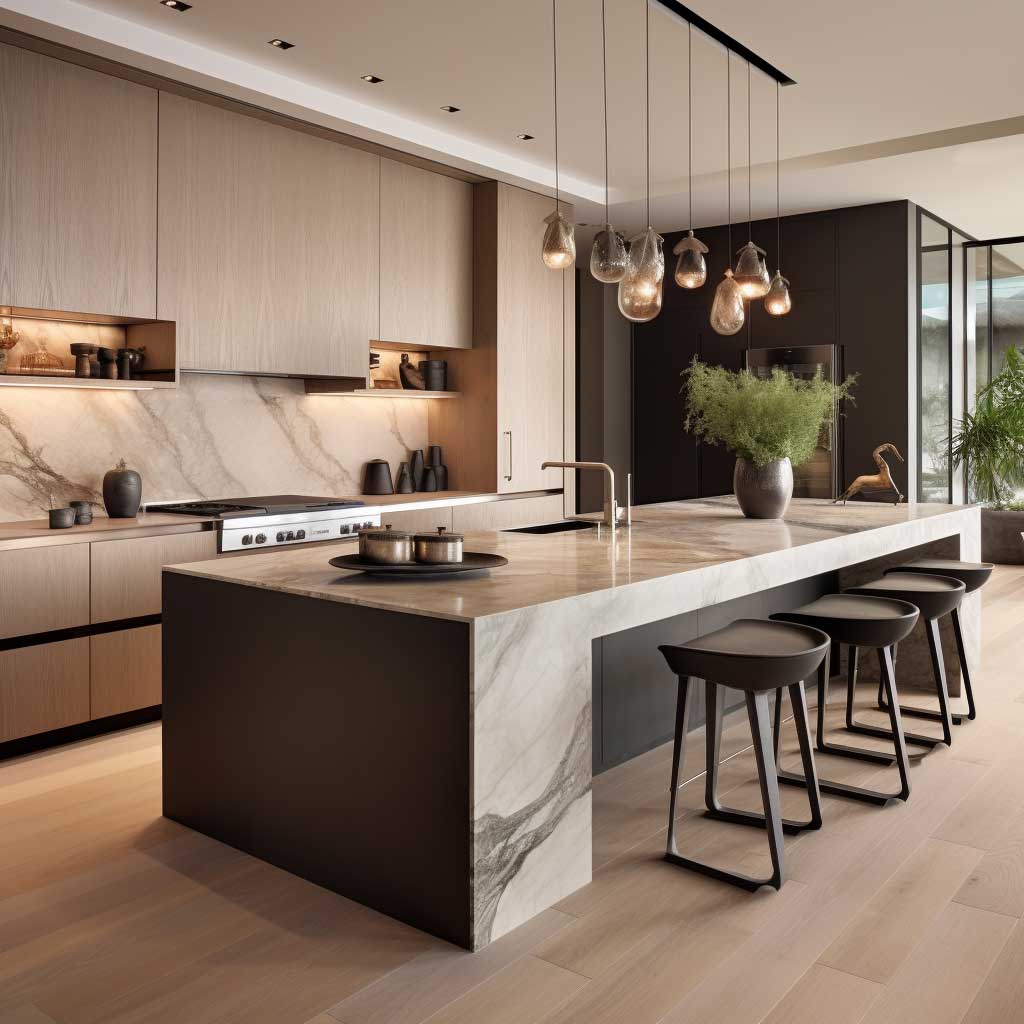
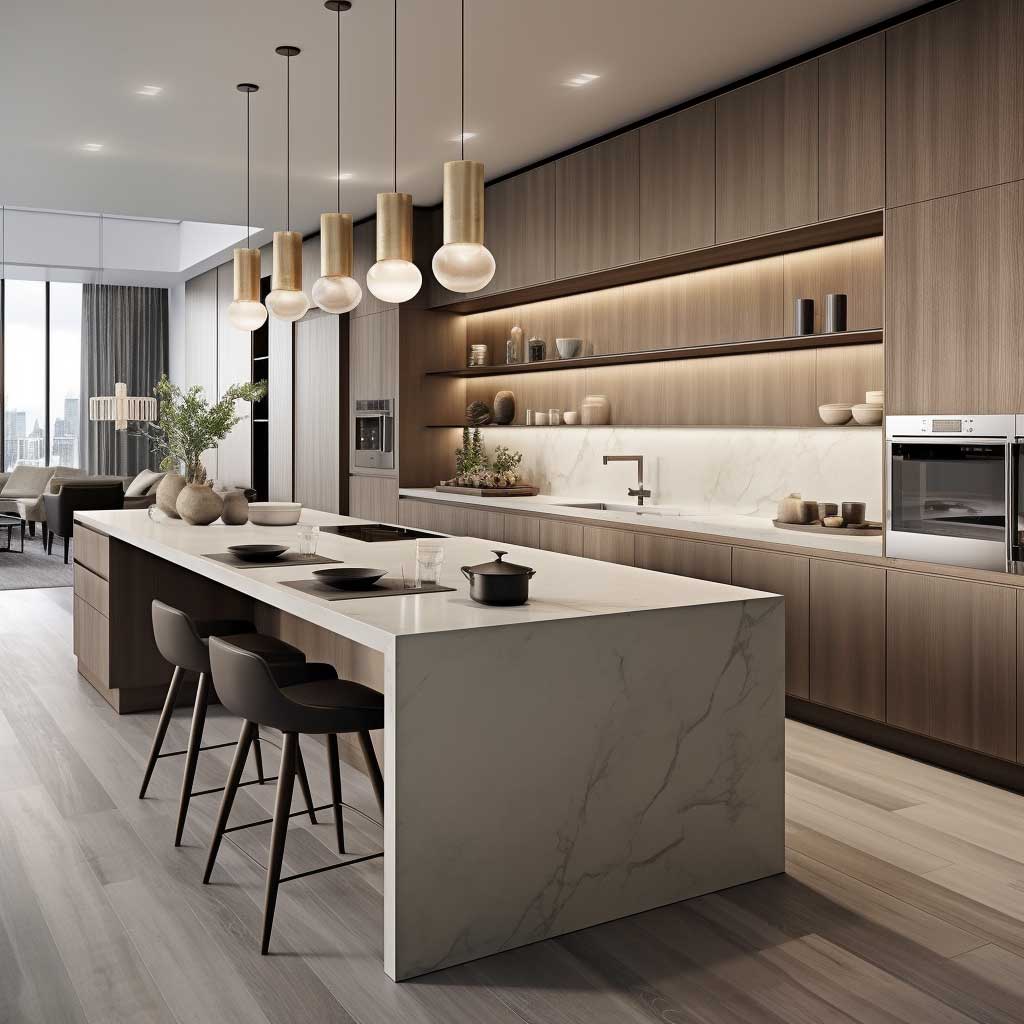
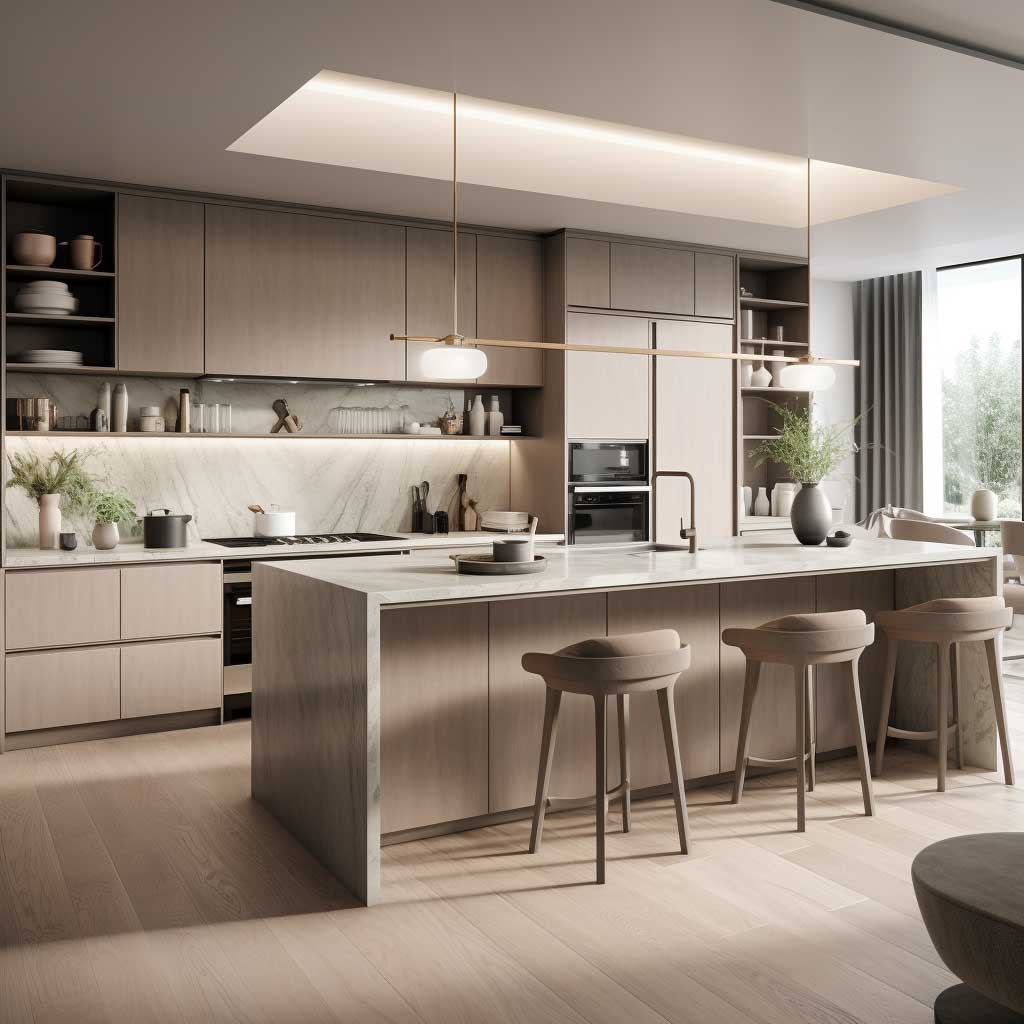
What undermines continuity most in this style is inconsistent cabinet height. Upper cabinets that terminate before the ceiling create a gap that collects visual noise — dust, shadow, and stored-item clutter. The standard solution is ceiling-height cabinetry with a floating reveal at the top, or a valance detail in the same material as the cabinet door. Either option costs more upfront but eliminates the need to maintain a “styled” gap above the cabinet line indefinitely. A common approach is specifying a single tall cabinet run on one wall and leaving the perpendicular wall open — it creates the breathing room of no upper cabinets without losing total storage volume.
Integrated appliances — panel-ready refrigerator, flush-mounted induction cooktop, oven built into the cabinetry stack at eye level — are not a budget option. Panel-ready appliances typically add $2,000–$4,000 above standard appliance cost for the millwork and installation. That number is worth carrying for anyone building a kitchen meant to last 15+ years, because the visual reward is permanent: the kitchen reads as a room rather than a utility space. Sherwin-Williams notes on their neutral kitchen guidance that darker neutral accents like Iron Ore SW 7069 work well paired with lighter cabinet runs for depth — a small neutral island in a deeper shade costs a fraction of a full-kitchen refinish and anchors the room. The Sherwin-Williams neutral color collection, available at sherwin-williams.com, offers a useful LRV-guided reference for matching neutrals to specific lighting conditions before purchase.
| Style | Cabinet Finish | Best Countertop | Key Risk |
|---|---|---|---|
| Minimalist Neutral | Matte lacquer, flat-panel | Honed quartz, no veining | Same sheen everywhere reads flat |
| Rustic-Modern Neutral | Oiled or brushed solid wood | Vein-pattern quartz or stone | Chrome hardware fights the wood |
| Sleek Neutral | Painted or wrapped, handleless | Calacatta quartz, continuous run | Mismatched cabinet heights break flow |
Neutral Kitchen Takeaway
Neutral doesn’t mean safe — it means deliberate in every other direction.
Minimalist neutral kitchens need finish variation, not color, to avoid reading as empty. Rustic-modern versions live or die on hardware tone and grout color — details that cost almost nothing to get right the first time. Sleek executions demand continuity across cabinet height, floor format, and countertop run, and that planning happens before a single material is purchased.
Quartz at $50–$150 per square foot and stock cabinetry at $100–$300 per linear foot mean a considered neutral kitchen is achievable at almost any budget tier. The material selections here are the variable — not the color palette itself.
Save this post before your next showroom visit — the finish decisions are easier when you know which register you’re building in.