Quick Scan
- Neo Deco was validated at Salone del Mobile 2026 by Armani Casa, Promemoria, and Ralph Lauren Home — this is a confirmed trend, not a forecast.
- The five core Neo Deco materials are fluted wood, high-gloss lacquer, burl veneer, brushed brass, and velvet — pick two or three per room, not all five.
- Jewel-tone velvet sofas (emerald, sapphire, ruby) with channel tufting and brass legs are the highest-save Neo Deco furniture category on Pinterest right now.
- Build the spatial mood in layers: wall treatment and lighting first, anchor sofa second, rug third, accessories last.
- Neo Deco's staying power is backed by investment-quality material logic — rising costs are pushing buyers toward craftsmanship-forward, non-disposable pieces.
Neo Deco living room decor is not a mood board phase anymore. Pinterest’s 2026 Predicts report named it a top home trend, and when Salone del Mobile opened in Milan this May, brands like Armani Casa, Promemoria, and Ralph Lauren Home filled their showrooms with fluted wood, brushed brass, and jewel-toned velvet — converting a forecast into a fully confirmed movement. The numbers follow: searches for ‘brass aesthetic’ and ‘leather banquette’ are each up 35% year-over-year on Pinterest alone. This is the living room direction that Gen X and Millennials are actively saving, planning, and buying into right now.
Neo Deco Material Palette Starts With Texture, Not Color
The reason Neo Deco reads differently from classic Art Deco is that it earns its richness through material behavior, not ornamental excess. At Salone 2026, designers kept returning to five materials: fluted wood, high-gloss lacquer, burl veneer, brushed brass, and velvet. What connects them is how they hold light — each surface creates depth by catching and diffusing light differently, so a room feels layered even before a single accessory is placed. Start here before you pick a sofa color.
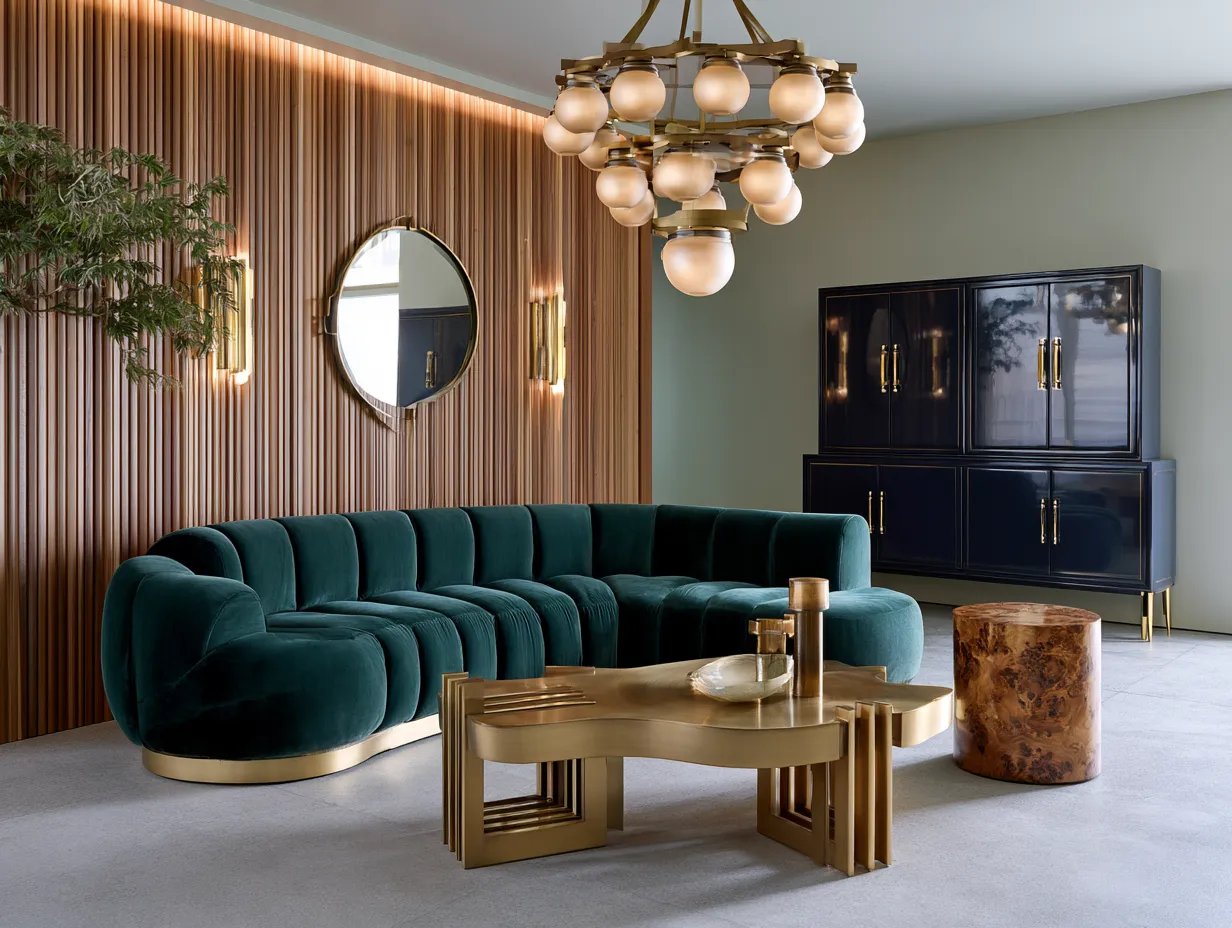
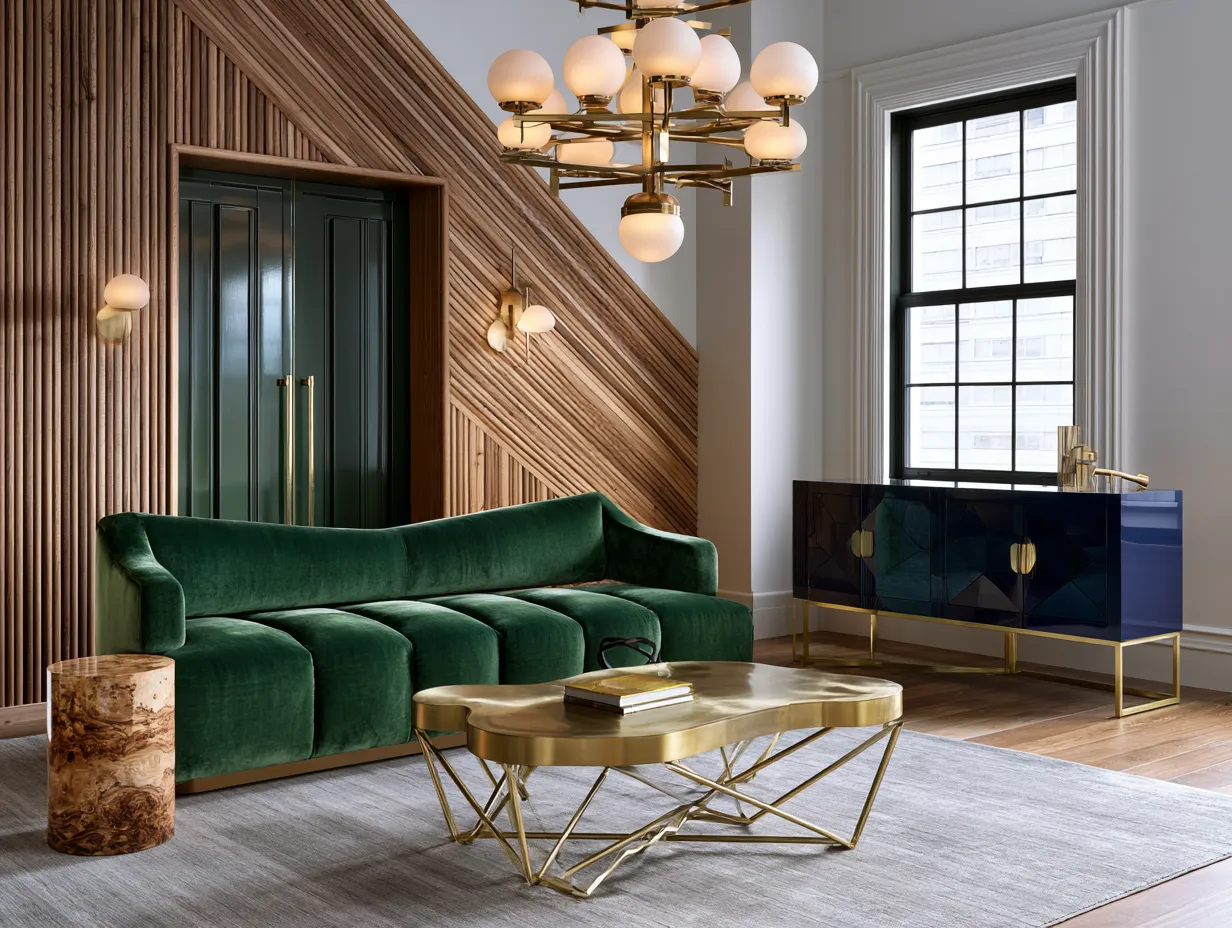
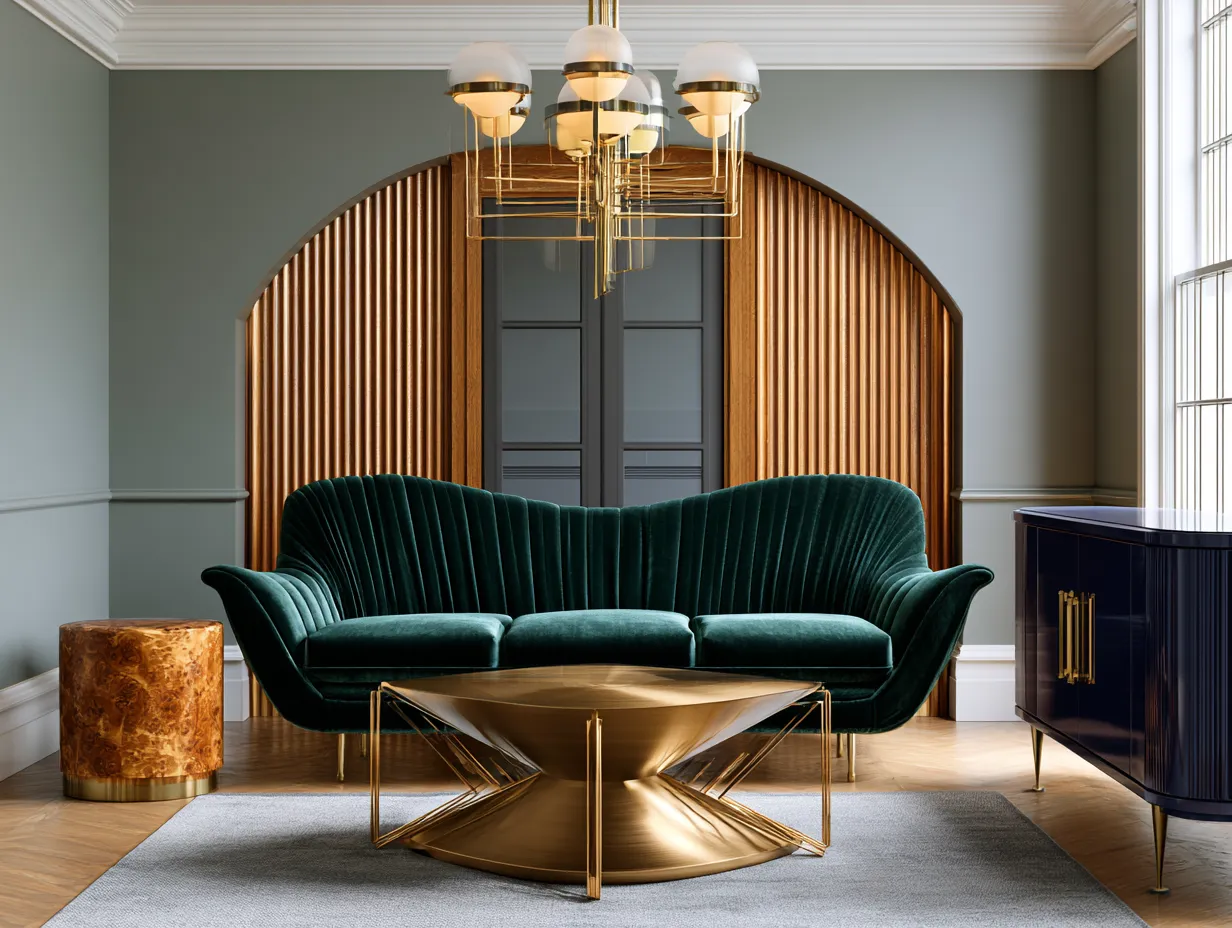
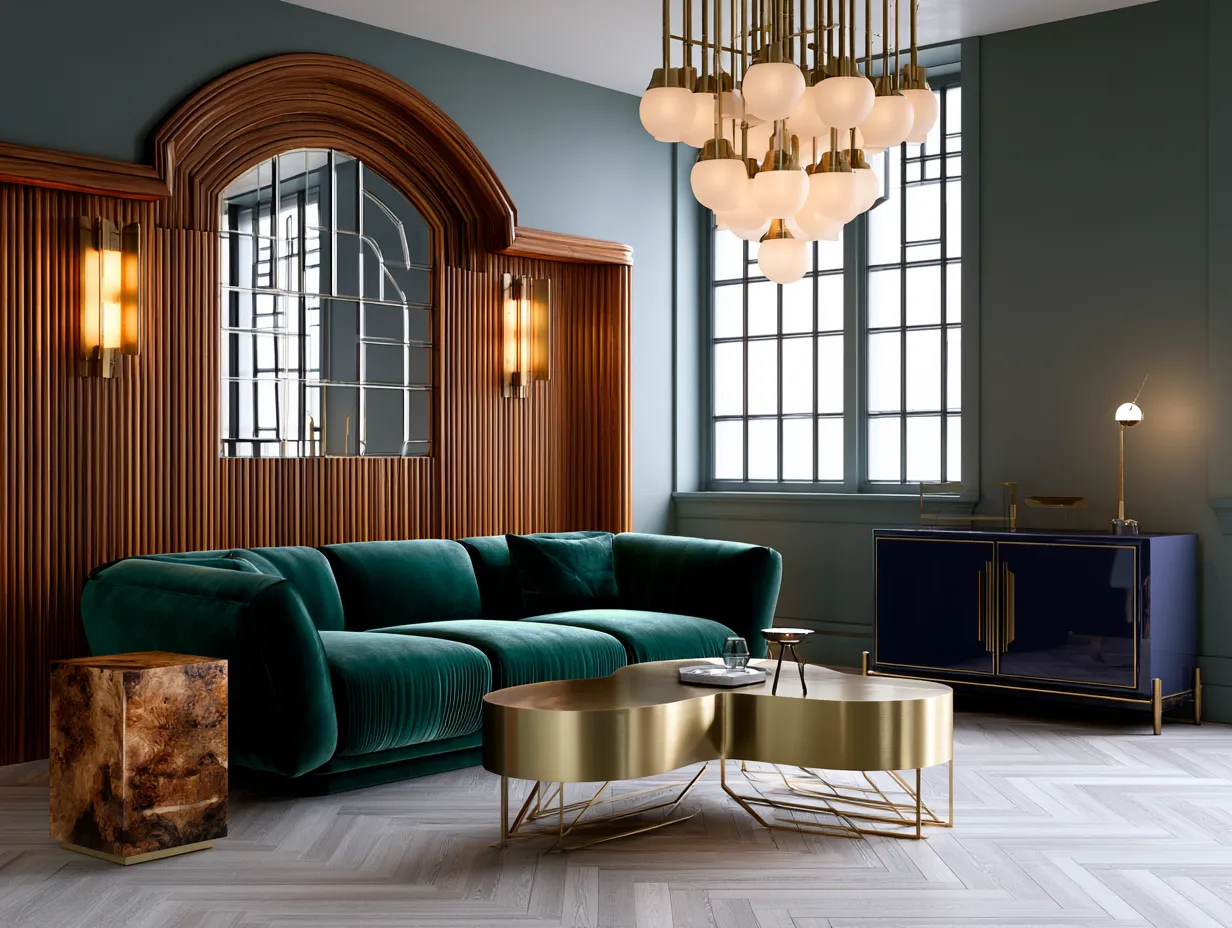
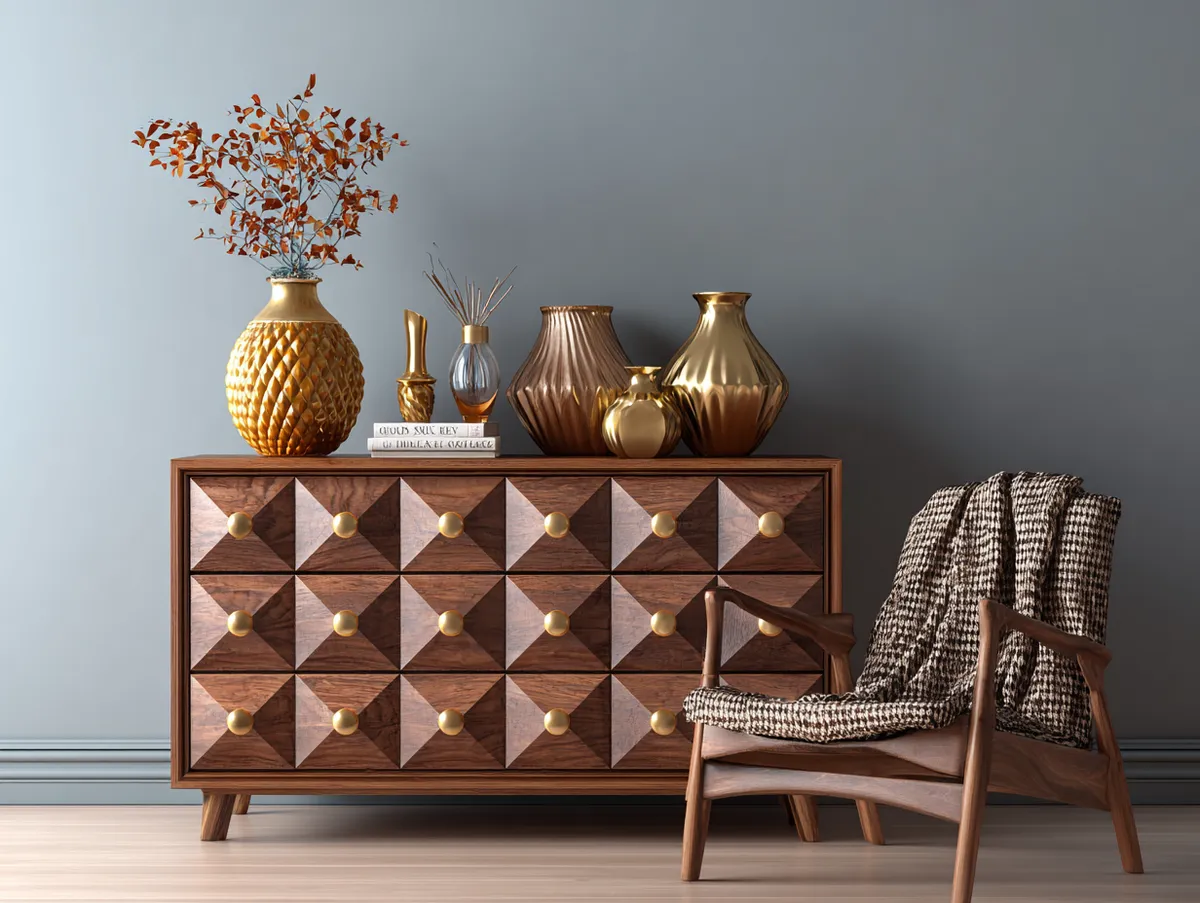
Fluted wood panels are the most accessible entry point. Applied to a single accent wall or used as cabinet fronts, they introduce the rhythmic geometry that defines Neo Deco without requiring a full renovation. Promemoria’s Delfi Madia Cabinet, shown at Milan this year, is a precise example: fluted surfaces paired with lacquered interiors, the contrast doing all the visual work. You can approximate that logic at a fraction of the price by pairing a fluted sideboard from CB2 (their Arched Fluted sideboard retails around $1,299) with a high-gloss lacquered surface in deep navy or forest green nearby. For more ideas on how transformable and sculptural furniture pieces carry spatial weight, see Innovating Home Decor with Transformable Furniture Masterpieces.
Burl veneer deserves more attention than it gets in mainstream decor conversations. It was a signature material of original 1920s–30s Deco interiors, and its return at Salone 2026 was deliberate — designers cited its organic grain pattern as a direct counterweight to the flatness of Scandi oak that dominated the 2019–2023 period. A burl veneer coffee table or side table introduces warmth and visual complexity that no painted surface can replicate. West Elm’s Foundations collection offers burl-effect side tables starting around $399, which gives you the texture signature without the antique-market price tag.
What not to do: don’t layer all five Neo Deco materials at once. Velvet sofa plus burl veneer table plus fluted wall plus lacquered cabinet plus brass lighting in one room becomes visual noise, not atmosphere. Pick two or three material moments and let them breathe against a neutral — plaster white, warm greige, or deep charcoal all work as Neo Deco backdrops. The constraint is what makes the materials read as intentional rather than collected.
Brushed brass is the material that ties Neo Deco compositions together. It appears in hardware, lighting frames, table legs, and cabinet pulls — small in scale but high in cumulative effect. Ralph Lauren Home’s Beacon bar cabinet, presented at Milan in oak with brass detailing, illustrates exactly how brass functions as a structural accent rather than a decorative afterthought. At a more accessible price, Rejuvenation’s brushed brass cabinet hardware (around $18–$32 per pull) can reframe an existing piece of furniture into something that reads as part of a deliberate Neo Deco scheme.
Don’t Do This
- Don't layer all five Neo Deco materials at once — fluted wood, burl veneer, lacquer, velvet, and brass in a single room creates visual noise rather than atmosphere. Pick two or three and let them breathe against a neutral backdrop.
- Don't add one brass hardware piece and consider the look done — Neo Deco requires the geometry-material-contrast logic to appear in at least three distinct elements for the spatial mood to read as intentional.
- Don't use recessed lighting as the primary light source in a Neo Deco room — it flattens surfaces, which is the opposite of what fluted wood, velvet, and burl veneer need to perform.
- Don't treat the area rug as an afterthought — in Neo Deco, the rug's geometric patterning is structural, not decorative, and a neutral filler rug will undercut the entire composition.
Signature Neo Deco Furniture Pieces That Anchor the Room
Neo Deco living room decor has a clear hierarchy of furniture decisions. The sofa sets the tone first. Velvet in jewel tones — emerald, sapphire, ruby — is the category that Pinterest users are saving at the highest rate right now, and those saves are increasingly appearing in boards tagged with full room compositions rather than isolated product shots. That shift matters: it tells you buyers are no longer treating the velvet sofa as an accent, they’re treating it as the anchor around which the rest of the room is built. That’s the right instinct.
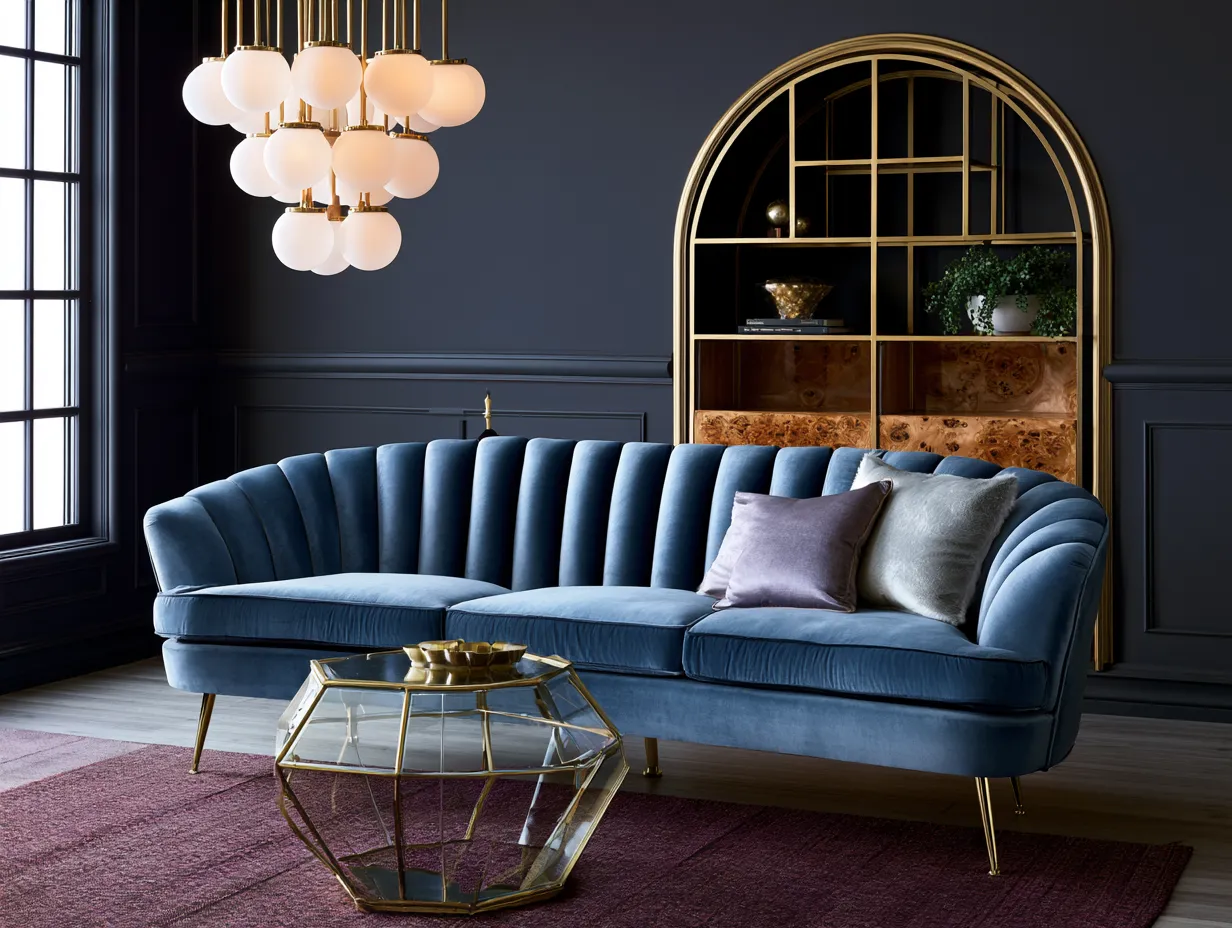
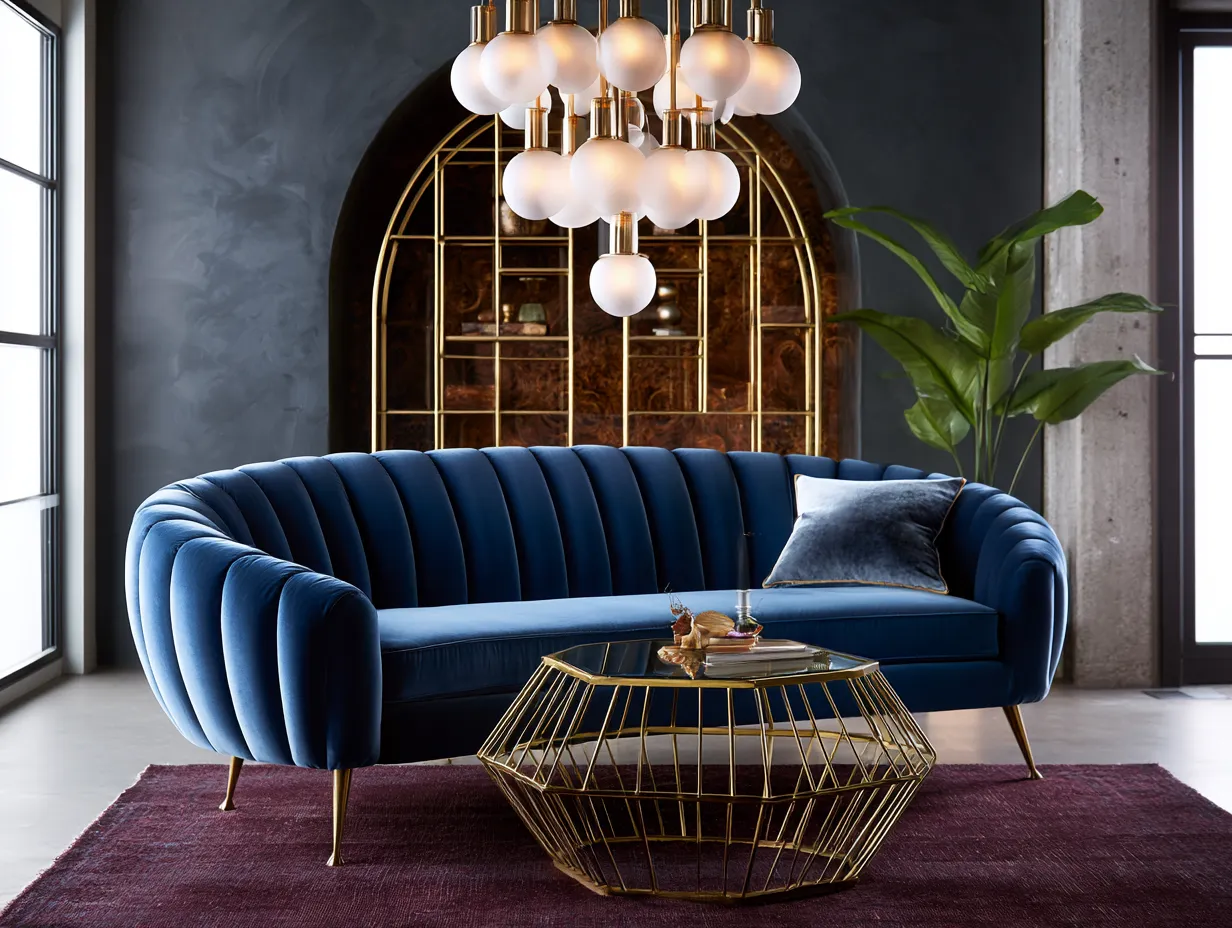
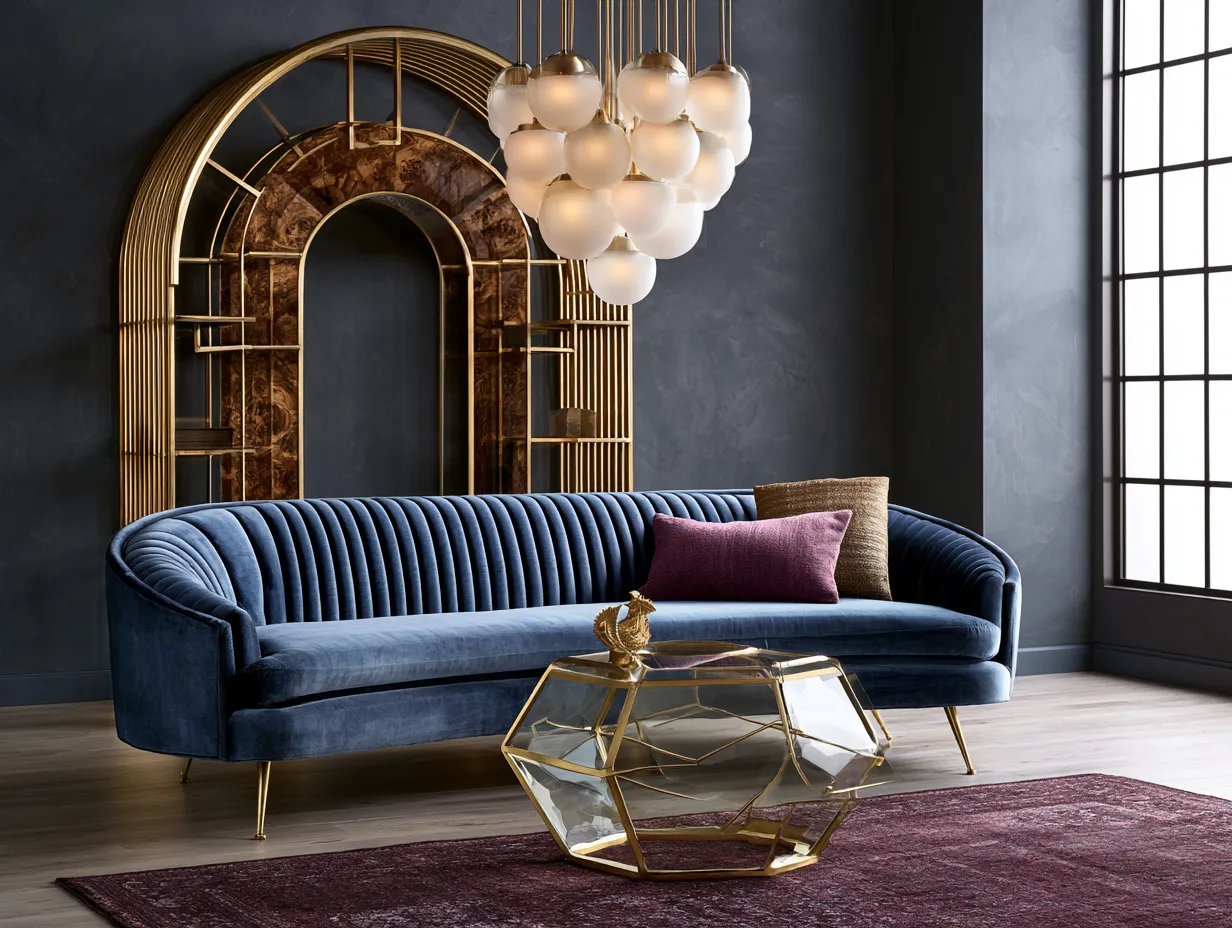
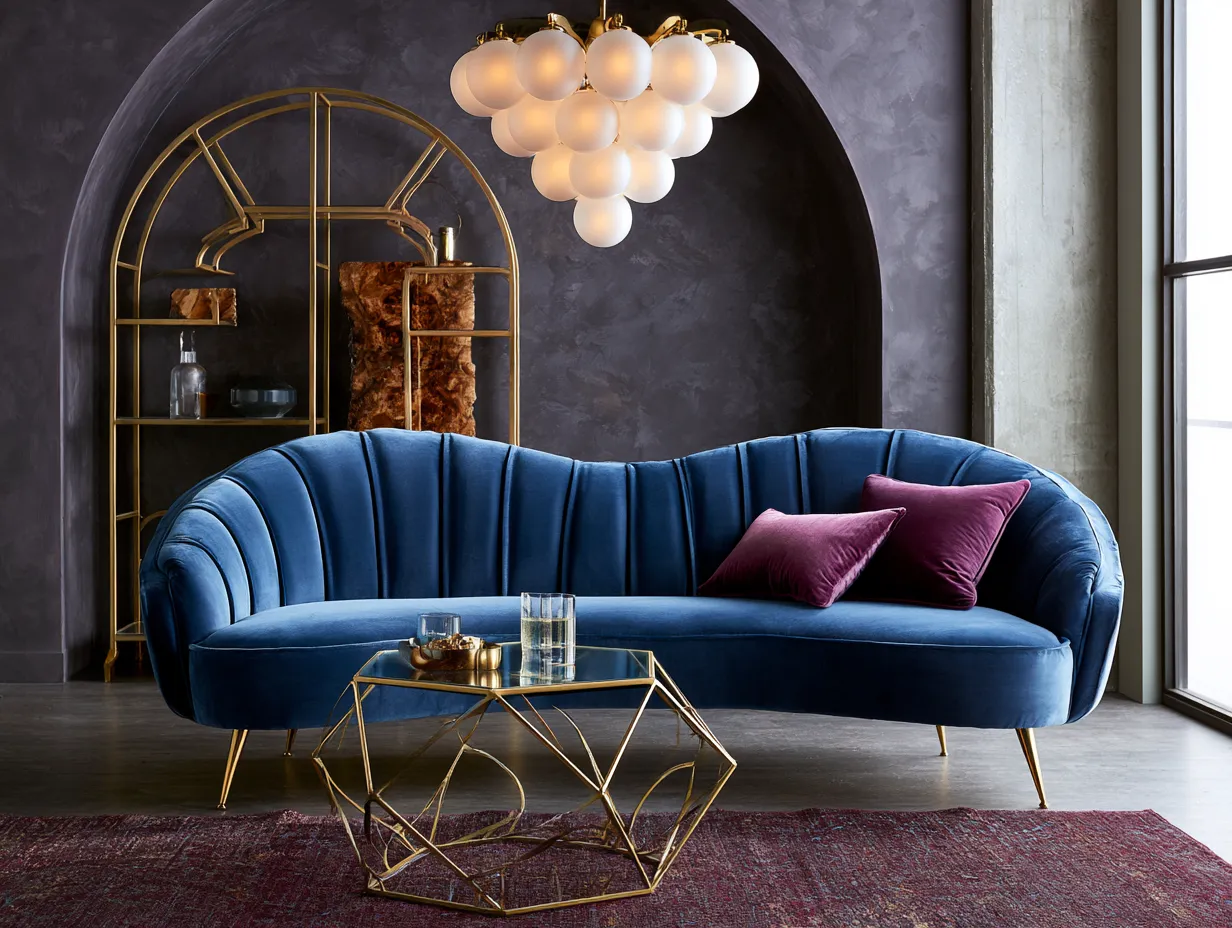
What makes a velvet sofa read as Neo Deco rather than simply maximalist is silhouette. Channel-tufted upholstery, curved arms with a slight architectural flare, and tapered brass or lacquered legs are the specific details that connect the piece to the Deco lineage. Anthropologie’s Gia sofa in deep sapphire velvet (around $2,800) hits the silhouette correctly. At a higher investment level, Jonathan Adler’s Bacharach sofa (starting around $4,200) brings channel tufting and brass leg detailing that reads as a direct Salone 2026 reference. The investment framing matters: one of the quiet drivers behind Neo Deco’s mainstream surge is tariff-driven consumer appetite for non-disposable, craftsmanship-forward pieces. Buyers want furniture with traceable origins and material integrity — Neo Deco’s core value proposition. For a different take on furniture investment logic in smaller spaces, the thinking in 5+ Stylish Small Bedroom Furniture Ideas in Bamboo for Eco-Friendly Decor applies to any room where material choice defines the space.
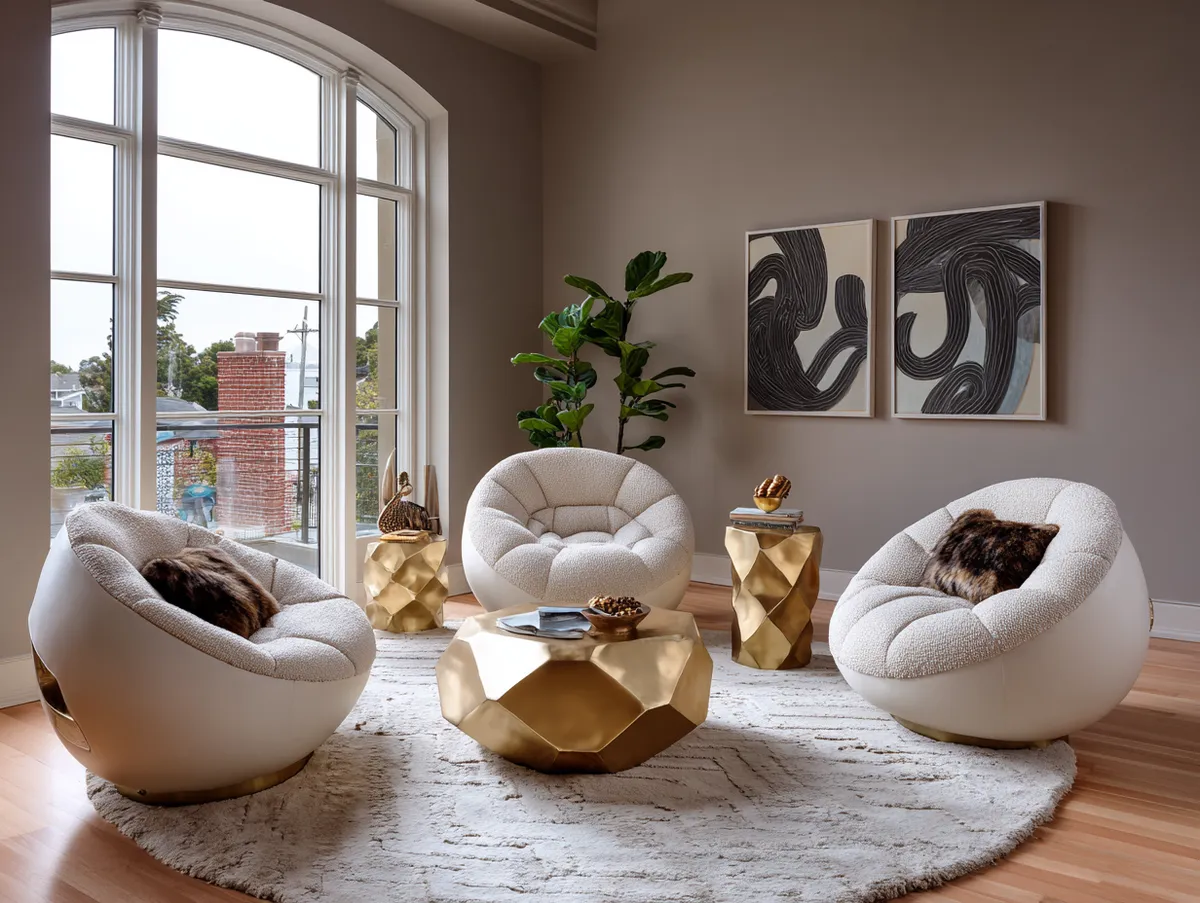
The sculptural brass coffee table is the second anchor. What distinguishes a Neo Deco brass coffee table from a generic metallic accent is geometric intentionality — hexagonal frames, tiered disc forms, faceted bases. CB2’s Arched Brass coffee table (around $899) and West Elm’s Terrace brass-and-glass table (around $699) are both current market options that carry the silhouette logic. The glass top is a useful Neo Deco detail because it lets the brass structure remain the visual subject rather than competing with a solid tabletop surface.
Is a tiered chandelier with frosted glass globes actually necessary, or is it just a Pinterest cliché? It’s not a cliché when it’s the room’s primary architectural statement. Neo Deco lighting at Salone 2026 was consistently tiered, consistently geometric, and consistently frosted rather than clear — the frosted glass diffuses the brass frame’s light without hiding the structure. Arteriors’ Delancey chandelier (around $1,400) and Mitzi’s Chloe tiered pendant (around $780) both fit within the validated Salone aesthetic. Don’t install recessed lighting as the primary source in a Neo Deco room. Recessed lighting flattens surfaces — the exact opposite of what fluted wood, velvet, and burl veneer need to perform.
Arched forms appear across Neo Deco furniture in ways that go beyond the arch-mirror trend of 2022. At Milan 2026, arched openings in shelving units, arched cabinet doors, and arched sofa backs were presented as part of unified architectural statements — spatial moods rather than individual pieces. A freestanding arched bookcase or display unit (CB2’s Arched Metal shelving, around $549) can introduce this language without structural intervention, and it positions the living room as a composed interior rather than a furnished room.
| Element | Accessible Pick | Investment Pick |
|---|---|---|
| Velvet Sofa | Anthropologie Gia Sofa ~$2,800 | Jonathan Adler Bacharach ~$4,200 |
| Brass Coffee Table | West Elm Terrace ~$699 | CB2 Arched Brass ~$899 |
| Chandelier | Mitzi Chloe Pendant ~$780 | Arteriors Delancey ~$1,400 |
| Geometric Rug | Ruggable Art Deco Series ~$249–$499 | Loloi Cielo Collection ~$400–$900 |
Building a Full Neo Deco Spatial Mood Without Starting Over
The most significant thing Pinterest’s 2026 search data reveals about Neo Deco is how users are now engaging with it. Early in 2025, saves were product-focused — a brass lamp here, a velvet cushion there. By spring 2026, saves are compositional: full room shots, layered material arrangements, unified architectural statements. That behavioral shift means the trend has cleared the early-adopter phase and entered mainstream spatial thinking. You don’t need to buy everything new to participate in it. You need to make what you already have read as intentional.
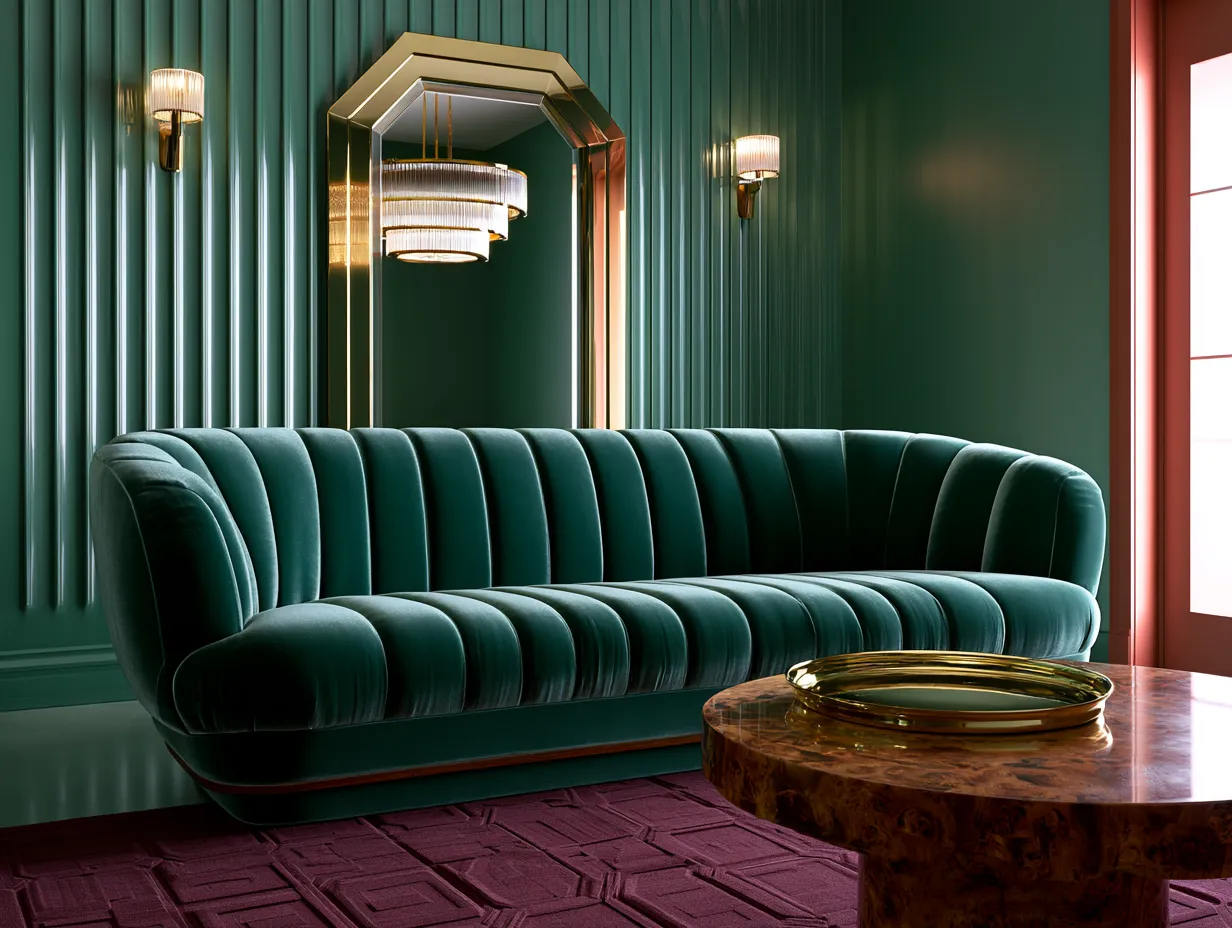
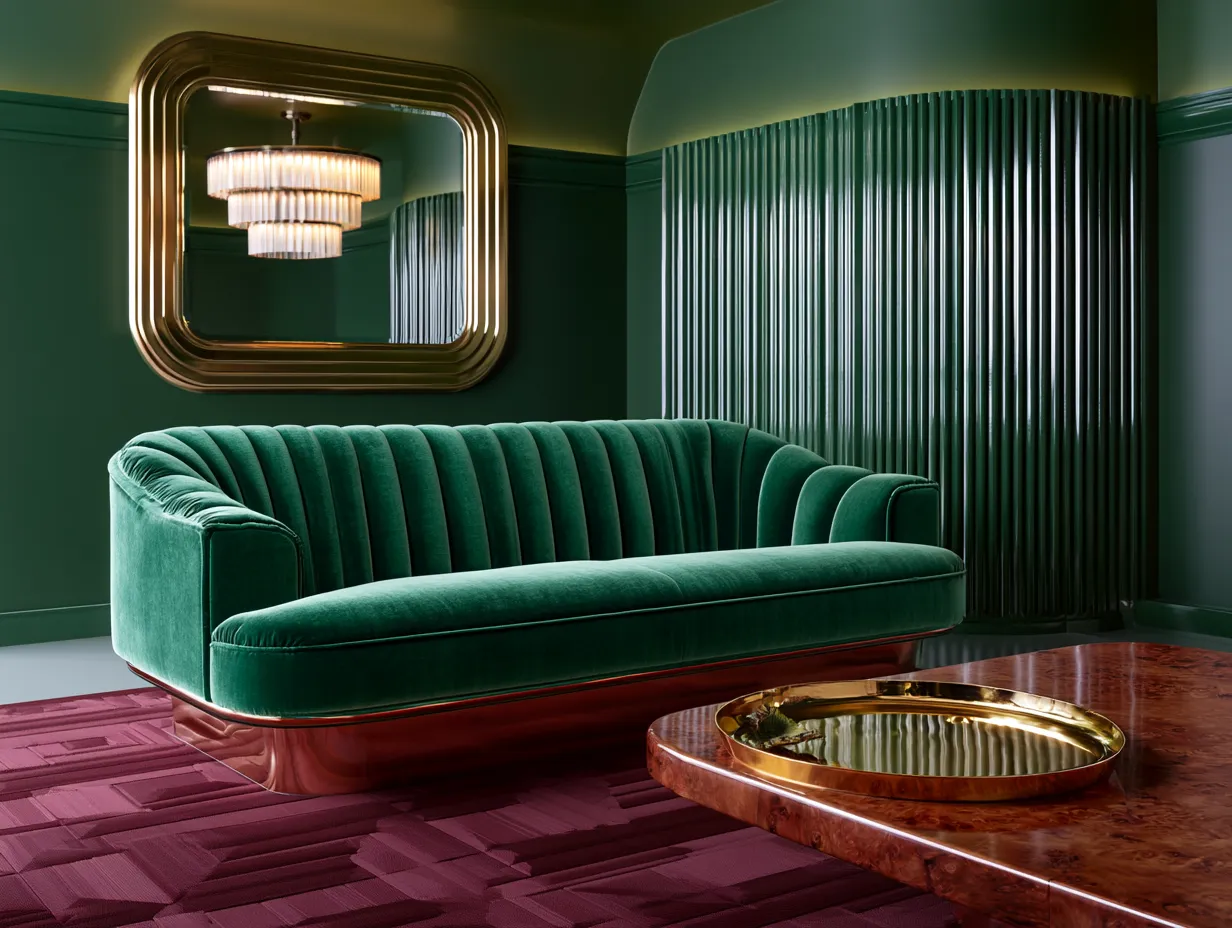
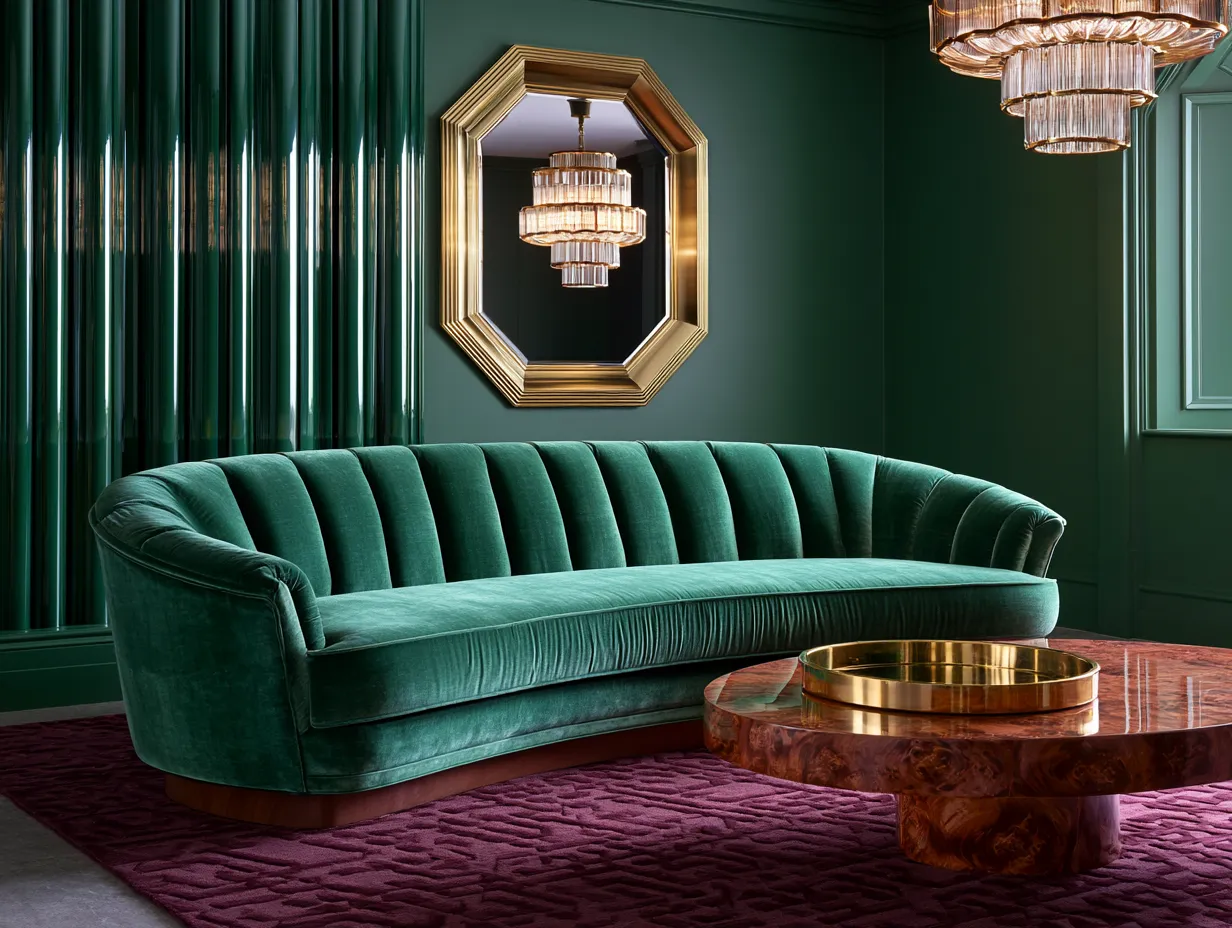
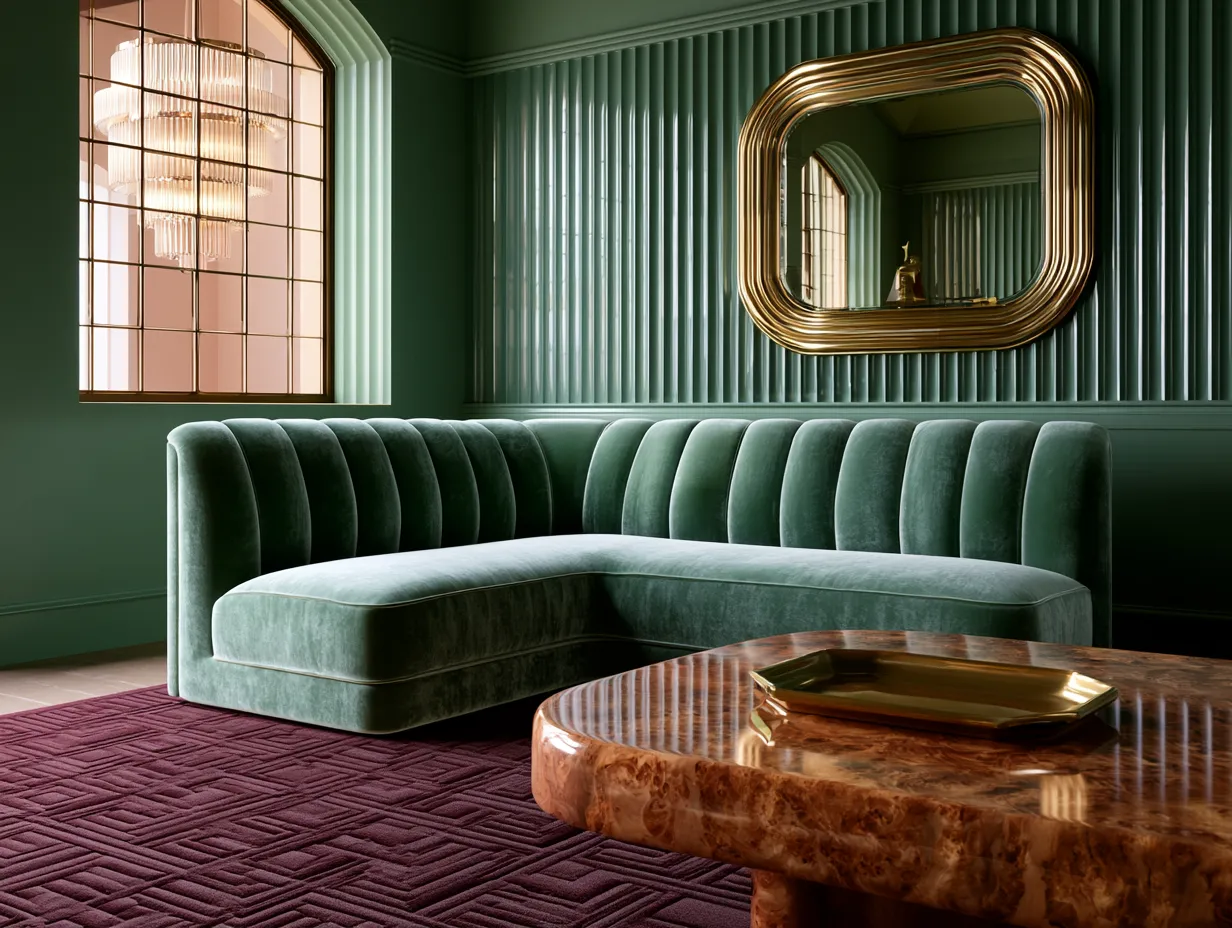
Start with the wall treatment. A Neo Deco living room needs one architectural anchor surface, and the wall is the most cost-effective place to create it. Peel-and-stick fluted panel systems — brands like Stikwood and Walcraft Cabinetry offer fluted MDF panels in the $8–$14 per square foot range — give you the rhythmic geometry without permanent installation. Paint them in a high-gloss finish rather than matte: gloss lacquer behavior on architectural surfaces is a Neo Deco signature that costs nothing extra but reads significantly differently under light.
The area rug is underused as a Neo Deco tool. Most people choose rugs after furniture, treating them as filler rather than structure. In a Neo Deco room, the rug should have geometric patterning — medallion forms, chevron borders, stepped diamond grids — that references the Deco vocabulary without replicating it literally. Loloi’s Cielo collection (around $400–$900 depending on size) and Ruggable’s Art Deco geometric series (around $249–$499 in washable format) both carry the right language. A ruby or deep burgundy rug grounds jewel-tone velvet seating in a way that a neutral rug cannot.
What not to do: don’t add brass hardware and call it Neo Deco. Brass accent pieces in isolation don’t create the trend — they just create a metal moment. The spatial mood requires the geometry-material-contrast logic to be present in at least three distinct elements: a textured surface, a sculptural furniture piece, and a lighting form. When all three speak the same Deco language, the room coheres. When only one does, it reads as an unfinished Pinterest experiment.
The Scandi minimalism counter-reaction that’s driving Neo Deco is real and documented. Since 2024, designers have consistently cited ‘structure, contrast, and material presence’ as the corrective to years of soft oak and muted tones — and the Salone 2026 collections confirmed that this recalibration is now industry-wide, not just a niche preference. That context matters for buyers who are nervous about committing to jewel tones and brass: this is not a short-cycle micro-trend. The investment logic holds. A sapphire velvet sofa with brass legs bought in 2026 will not look dated in 2028 the way a blush linen sofa with hairpin legs looked dated by 2022.
Layer the room in stages rather than all at once. Begin with the wall treatment and lighting — these establish the architectural mood at the lowest relative cost. Add the anchor sofa next, then the coffee table, then the rug. Accessories — brass candleholders, lacquered trays, geometric mirrors with beveled brass frames — come last and at the smallest spend. West Elm’s beveled brass mirror (around $299) and CB2’s lacquered brass tray (around $79) are both current options that close out a Neo Deco composition without overspending. The room should feel considered, not decorated.
FAQ
What is Neo Deco style in interior design?
Neo Deco is a contemporary revival of Art Deco aesthetics that prioritizes material richness over ornamental decoration. It uses fluted wood, brushed brass, high-gloss lacquer, burl veneer, and velvet to create rooms that feel structured, layered, and architecturally intentional. Unlike maximalism, it relies on material contrast rather than pattern overload.
How is Neo Deco different from classic Art Deco?
Classic Art Deco leaned heavily on gilded ornament, exotic inlays, and highly symmetrical architectural detail. Neo Deco strips back the ornament and focuses on how materials behave — how velvet holds light differently from lacquer, how fluted wood creates rhythm without decoration. The result is a cleaner, more livable version of the original vocabulary.
What colors work best for a Neo Deco living room?
Jewel tones are the Neo Deco color signature: emerald green, sapphire blue, and ruby red are the highest-save categories on Pinterest. These work best against neutral architectural backdrops — warm greige, plaster white, or deep charcoal — so the material surfaces and furniture silhouettes remain the visual subject. Avoid pale pastels, which dilute the contrast logic.
Is Neo Deco a good choice for a small living room?
Yes, but with discipline. In a small room, choose one statement material surface — a fluted wall panel or a high-gloss lacquered cabinet — rather than layering multiple textures. A single jewel-tone velvet accent chair with brass legs reads as Neo Deco without overwhelming a compact space. Scale down the chandelier to a single-tier pendant with frosted glass rather than a multi-tiered form.
What budget do I need to start a Neo Deco living room?
You can establish the material logic for under $1,500 by combining peel-and-stick fluted panels ($8–$14 per square foot), a brass coffee table from West Elm or CB2 ($699–$899), and a Ruggable geometric rug ($249–$499). The velvet sofa is the largest investment — expect $2,800–$4,200 for a piece with correct silhouette and construction quality. Lighting from Mitzi or Arteriors runs $780–$1,400.
Will Neo Deco still look relevant in a few years?
The material and craft foundation of Neo Deco gives it longer staying power than surface-finish micro-trends. Designers at Salone 2026 explicitly positioned it as a response to a decade of disposable minimalism — and the investment-quality buyer behavior behind it reinforces that this is a considered aesthetic commitment rather than a seasonal color story. The jewel tones and brass language have a documented 2–3 year runway at minimum based on current search trajectory.
Save this
Neo Deco Living Room Decor Rewards Material Commitment Over Quick Accents
Neo Deco living room decor is the rare trend where the investment case and the aesthetic case point in the same direction. Salone del Mobile 2026 confirmed the material language. Pinterest's search data confirms the mainstream appetite. And the counter-reaction to a decade of Scandi minimalism confirms the cultural momentum behind it.
You don't need to rebuild the room from scratch. A fluted wall treatment, a jewel-tone velvet sofa, a geometric brass coffee table, and a tiered frosted glass chandelier are enough to establish the full spatial mood — if they're chosen to speak the same Deco language rather than assembled randomly. Save this post.
📌 Save to Pinterest