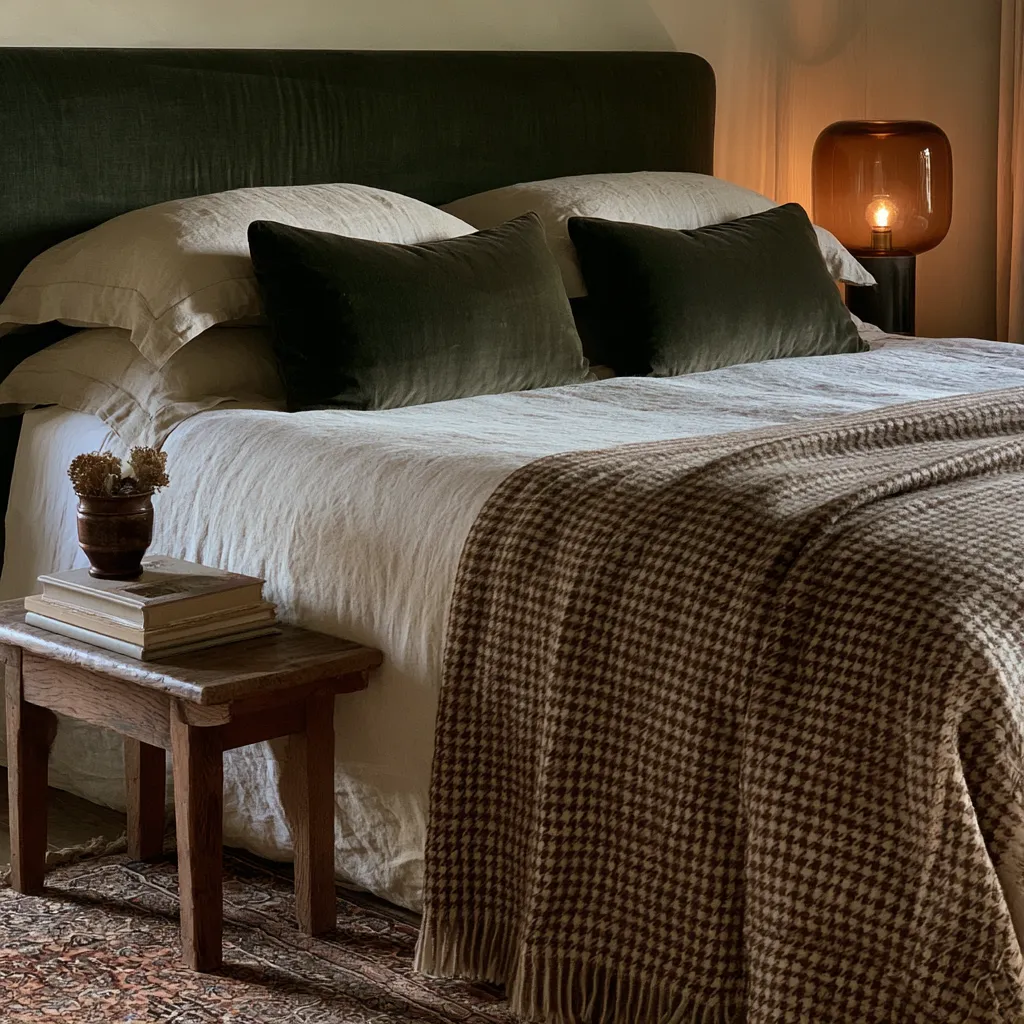
Simple Indian bedroom interior design ideas get misread constantly. People see the earthy palette and carved wood and assume the result handles itself. It doesn’t. The rooms that actually feel right — calm, grounded, culturally specific without tipping into a souvenir-shop aesthetic — are built on deliberate restraint. I’ve pulled apart dozens of these spaces and the pattern is always the same: one strong material, one textile with pattern, one lighting source with character. Everything else is neutral. You’ll notice the best examples land somewhere between a Rajasthani haveli and a Scandi studio, and that tension is exactly the point.
Indian bedroom design in its simplified form draws from village vernacular — low beds, handmade textiles, lantern-scale lighting — not from Bollywood maximalism. Miss that distinction and the room ends up looking like a costume. Nail it and the space reads as considered, warm, and genuinely rooted.
Quick Scan
- Target palette: warm terracotta, muted saffron, raw linen — never all three at full saturation
- Key furniture pieces: low-lying teak or sheesham bed, woven charpai for seating, carved wooden chest
- Lighting rule: one lantern-style pendant, not recessed grids — warm bulbs only
- Textile strategy: one block-print or embroidered accent, balanced by plain white or oatmeal linen
- Wall rule: one focal piece of Indian art or tapestry, the other three walls neutral plaster or limewash
- Avoid: mixing more than two regional craft traditions in one room — it reads as jumbled, not layered
Earthy Tones Work in an Indian Bedroom Because Soil Is Already a Neutral
Warm browns and muted saffron are the default palette for a reason — they mirror the pigments in traditional Indian handloom and terracotta pottery without competing with them. My go-to move for a simple Indian bedroom is raw linen bedding at $40–$80 per set (Pottery Barn’s Emery Linen line holds colour well) against a wall painted in Farrow & Ball’s Dead Salmon or Jaipur Pink. The combination reads warm without reading orange. You’ll notice the room photographs warmer under evening light than it looks in the morning, which is actually the right call for a sleep space.
Don’t make the mistake of pulling in too many saturated tones at once. I tried layering deep teal cushions against a terracotta wall with ochre curtains in one project — the room looked like a festival stall, not a bedroom. One saturated colour. The rest earthy neutrals. That’s the formula.


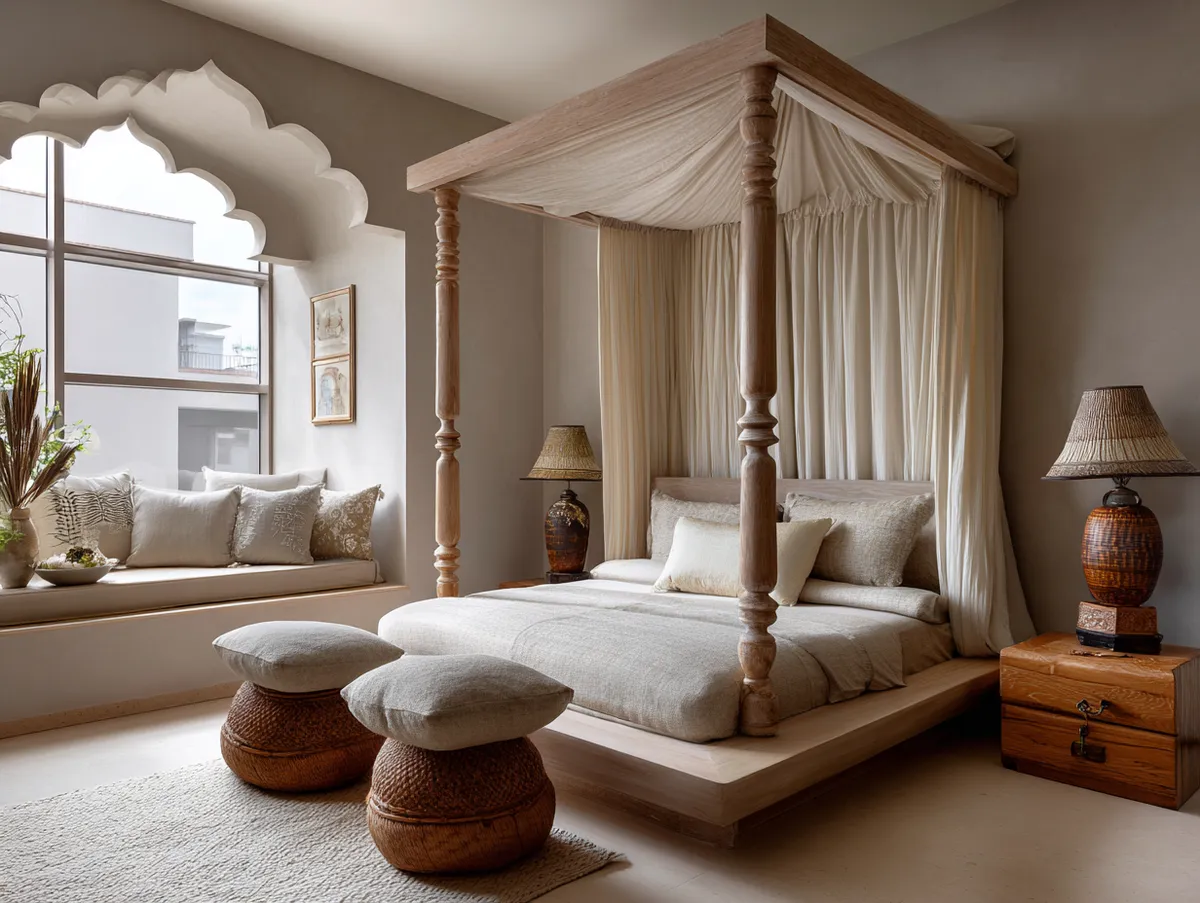

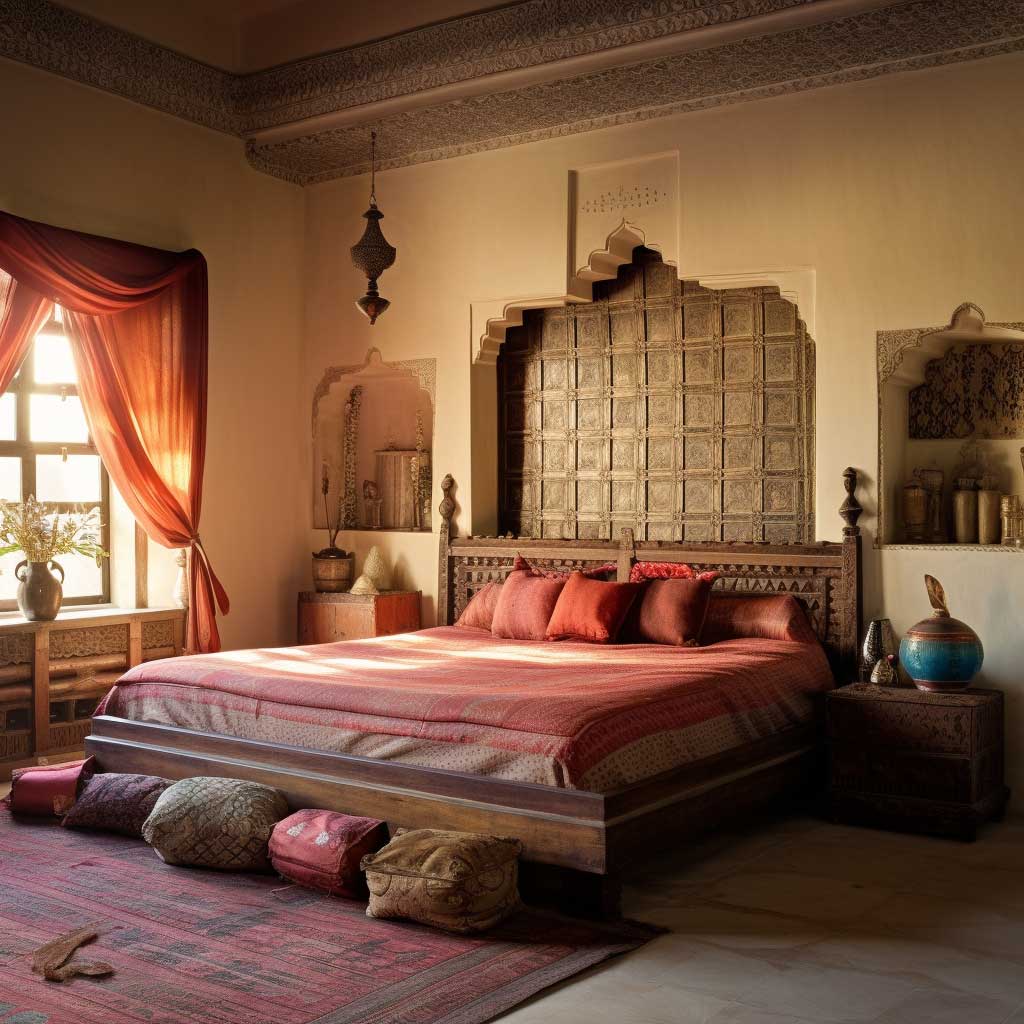
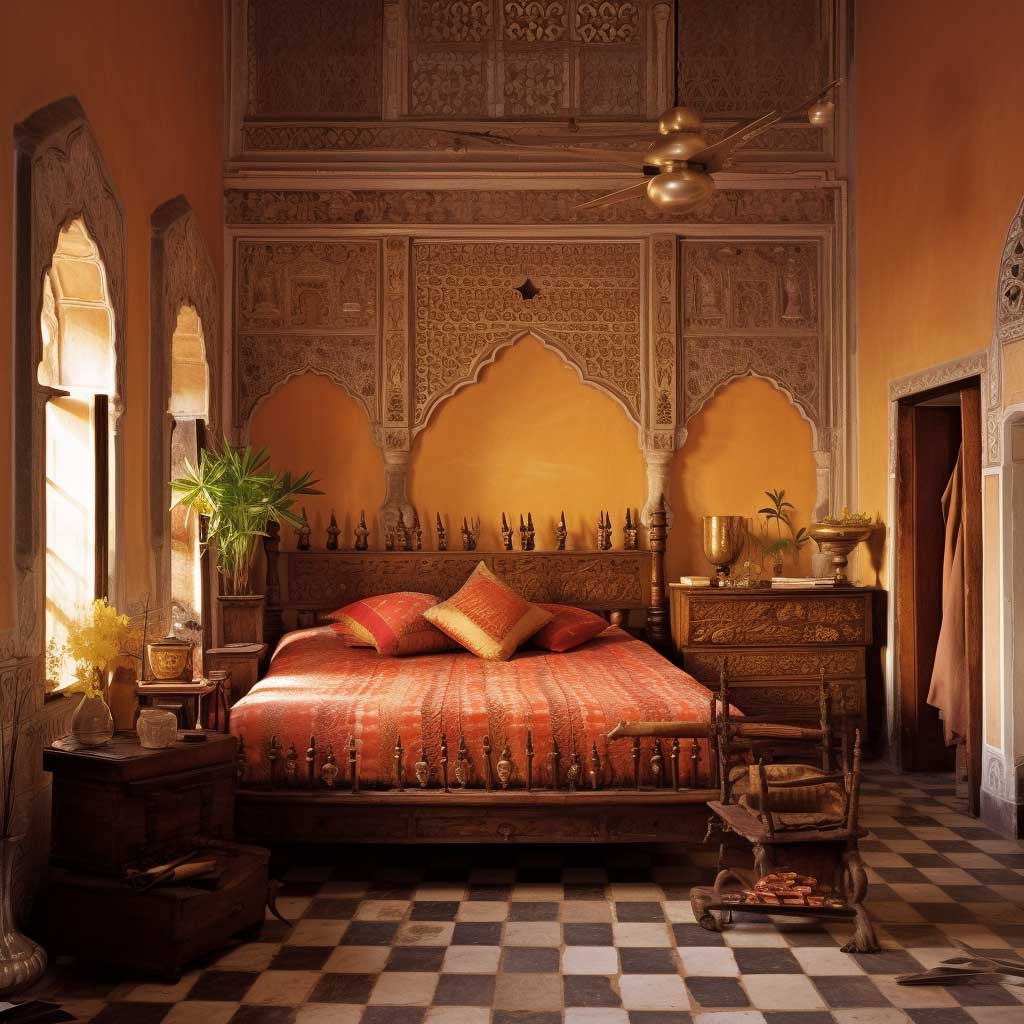
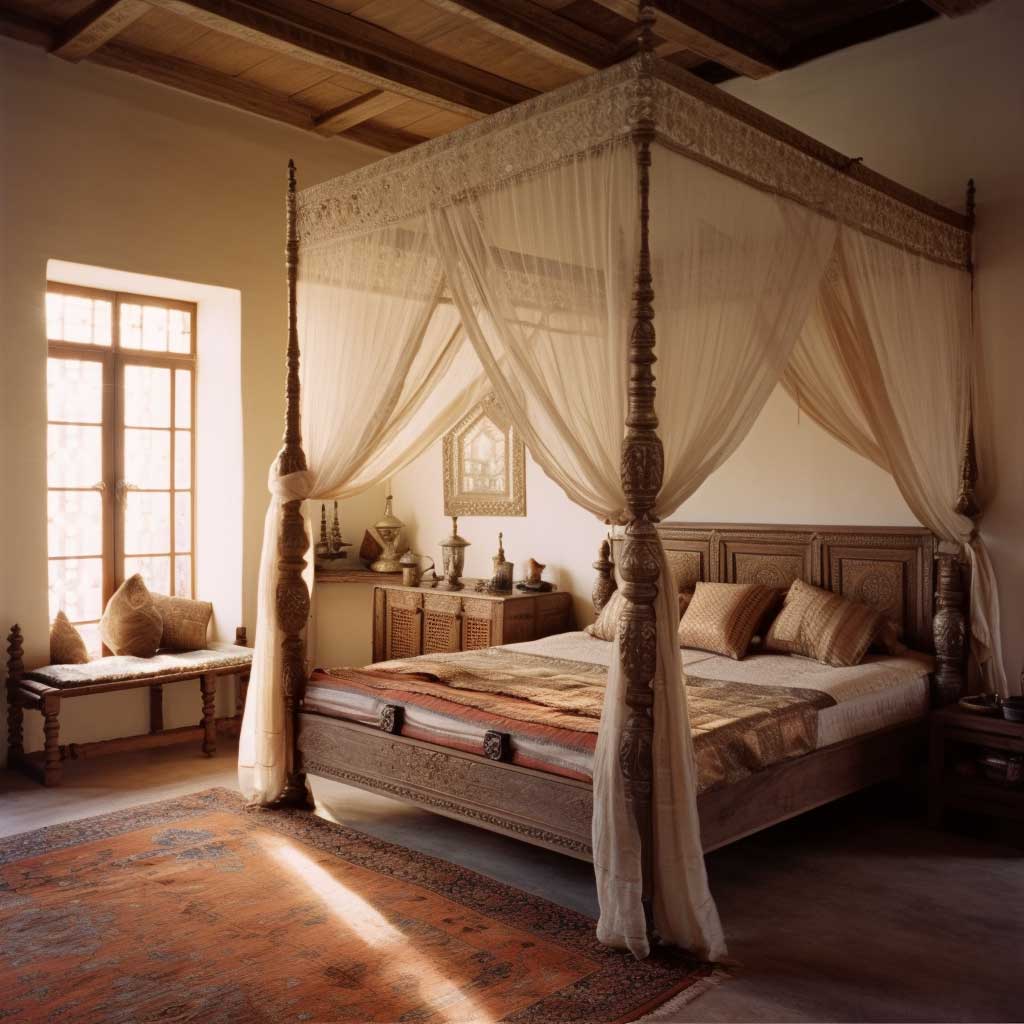
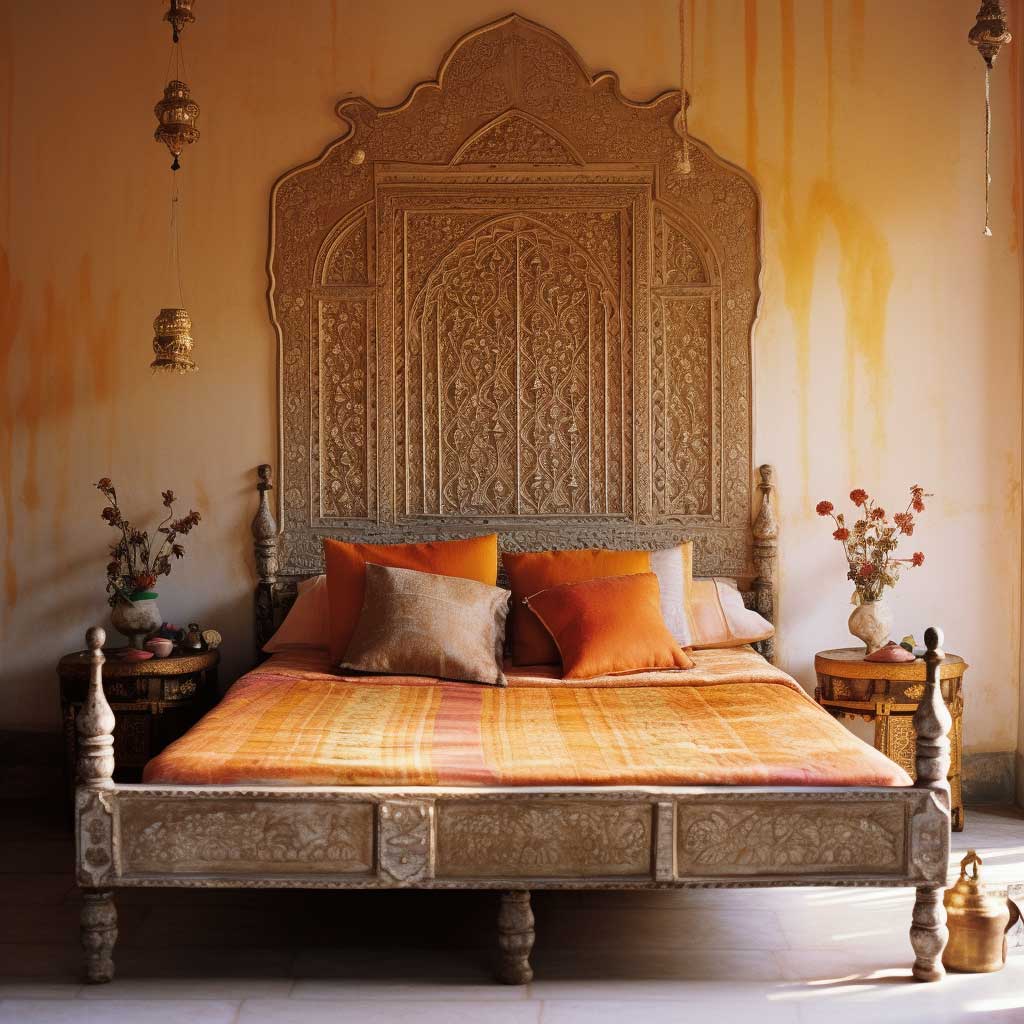
Handcrafted wooden furniture is the backbone of this room type and it’s one area where price actually matters. A factory-pressed MDF side table painted to look like teak ruins the room. Sheesham wood is the right material — I’ve sourced good pieces from Urban Ladder (India) and from Etsy sellers shipping reclaimed teak, averaging $120–$280 for a bedside unit. A classically carved wooden chest at the foot of the bed costs between $200 and $500 depending on region and artisanship. It’s not just decorative — it’s one of the few furniture pieces that does both jobs without looking like it’s trying.
The charpai — a woven rope or jute bed traditionally used as everyday seating in Indian homes — is the single most underused element in modern Indian bedroom interior design. Placed against one wall, it costs around $80–$150 and instantly grounds the room in a cultural vernacular that no $900 upholstered bench can replicate. Against a neutral wall, with a single cushion in block-print cotton, it reads as intentional. It reads as Indian without announcing it.
A tapestry or wall textile should pick up one colour already in the room, not introduce a fourth. Sarang or Fab India both carry hand-block-printed wall hangings in the $35–$90 range. Position it on the wall facing the bed so it’s the first thing you see when you lie down. That’s the focal point. Don’t put art on every wall.
Lighting in a simple Indian bedroom should feel like firelight. Lantern-style pendants — I’ve used the Kiran pendant from CB2 ($129) and a locally sourced brass lantern from an import store — change the room’s character after dark completely. Avoid warm-white LED strips under the bed or along the ceiling edge. That’s a hotel trick and it makes an Indian bedroom look like a spa lounge. One hanging source. One bedside source with a dimmer. Done.
Modern Indian Bedroom Design Needs One Rule Broken on Purpose
The rooms that get called “modern Indian” and actually work are the ones where one element deliberately breaks the contemporary register. A clean-lined platform bed in white linen — modern. A headboard covered in hand-embroidered silk — Indian. That friction is the design. I own a bed frame from Article ($649 for a queen) paired with a custom headboard I had upholstered locally in a Rajasthani mirror-work fabric for about $180. The combination reads neither as generic Scandi nor as pastiche Indian. It holds both.
What doesn’t work: buying a “bohemian” floor lamp from Target and calling it Indian because the shade has a geometric print. Modern Indian bedroom design is specific. Block-print is from Rajasthan and Bagru. Ikat weave is from Odisha and Telangana. Kantha stitch is from West Bengal. Using the wrong regional craft in a room that’s otherwise referencing Kerala architecture is the design equivalent of a Scottish kilt in a Moroccan riad. It’s not charming. It’s just uninformed.
Don’t Do This
Avoid these common mistakes in Indian bedroom design
- Mixing three or more regional craft traditions — Rajasthani, Bengali, and Kerala craft in one room creates chaos, not eclecticism
- Choosing machine-printed “Indian pattern” bedding — the repeat is too perfect, the colour too saturated; it reads as a costume
- Over-accessorising with brass — one or two brass accents (a diya holder, a small figurine) work; a room full of shiny brass reads as a temple gift shop
- Picking a terracotta paint colour without testing it in evening light — terracotta turns brown-orange under warm bulbs; always live with a swatch for 48 hours before committing
- Skipping the rug — bare tiles or hardwood under an Indian-style bed always looks unfinished; a flat-woven dhurrie at $60–$200 solves it immediately




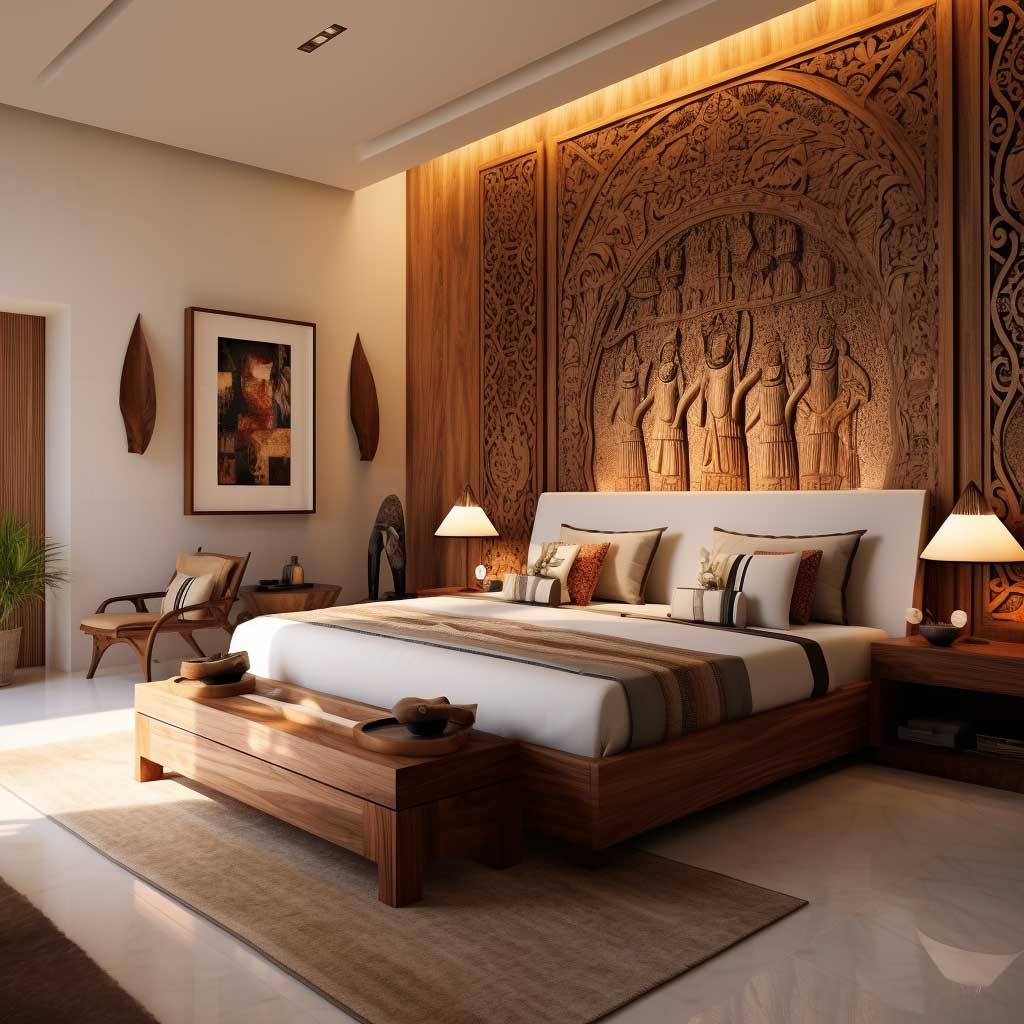
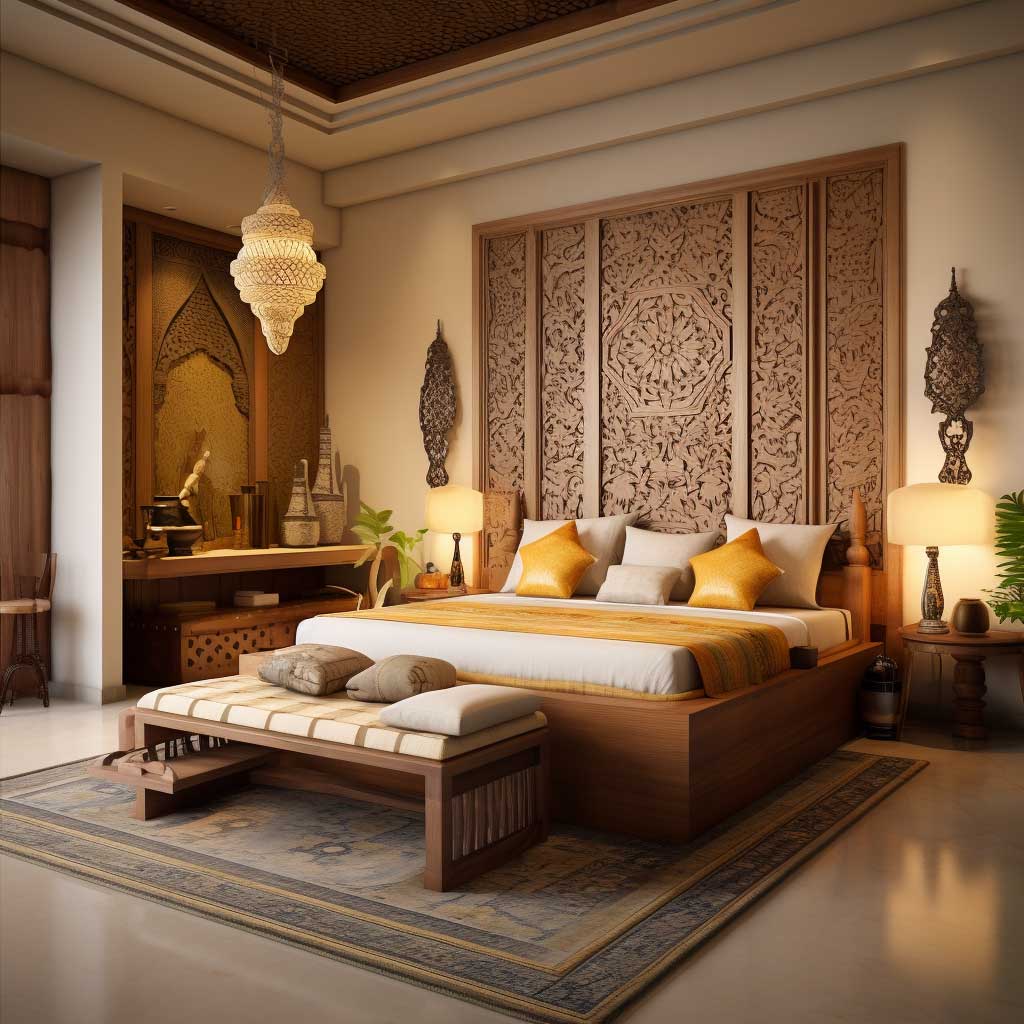
A hand-woven dhurrie rug is the single fastest fix for a bedroom that looks undone. Jaipur Rugs’ Flatweave Collection starts at around $95 for a 4×6 and ships internationally. The geometric patterns read as culturally grounded without being heavy — they’re the dhurrie’s original design language, not a modern interpretation of it. I stole this trick from a Delhi-based interior stylist: buy the rug first, then build the rest of the room’s palette from its two or three colours. You can’t go wrong starting from the floor.
Neutral walls are not optional in a modern Indian bedroom — they’re structural. The art, the textile, the furniture need a quiet backdrop to register properly. Four walls of strong colour compete with every handmade object in the room. Paint three walls in a plaster-finish off-white or warm greige, and let one accent wall carry a limewash in pale terracotta. That’s it. If you want more detail on how warm neutrals behave with South Asian craft pieces, the AND Academy’s overview of Indian interior design principles is worth 10 minutes of your time.
A Minimalist Indian Bedroom Where Fewer Objects Do More Work
The platform bed is the structural anchor of any minimalist Indian bedroom and getting it wrong costs the whole room. Low-profile frames in natural teak or sheesham — not painted MDF, not upholstered linen — carry the weight of the design decision. I’ve recommended the Pepperfry Solidwood Platform Bed ($380–$520 range) to three clients who wanted the look without commissioning custom work. It holds its proportions well in a standard 12×14 foot room, which is the most common bedroom footprint in Indian urban apartments. Your bedroom probably fits this category.
White linen on a dark wood frame is a design move that’s as reliable as compound interest. The contrast is structural — it’s not a style preference. Against an off-white wall, a dark teak bed frame with crisp white bedding creates the kind of visual hierarchy that lets everything else in the room breathe. Don’t add a decorative runner across the foot of the bed if the rest of the room is already patterned. Pick one place for pattern and commit. For more on how minimalist furniture choices behave in bedroom spaces, this breakdown of minimalist bedroom design covers the logic behind low-profile platform frames.


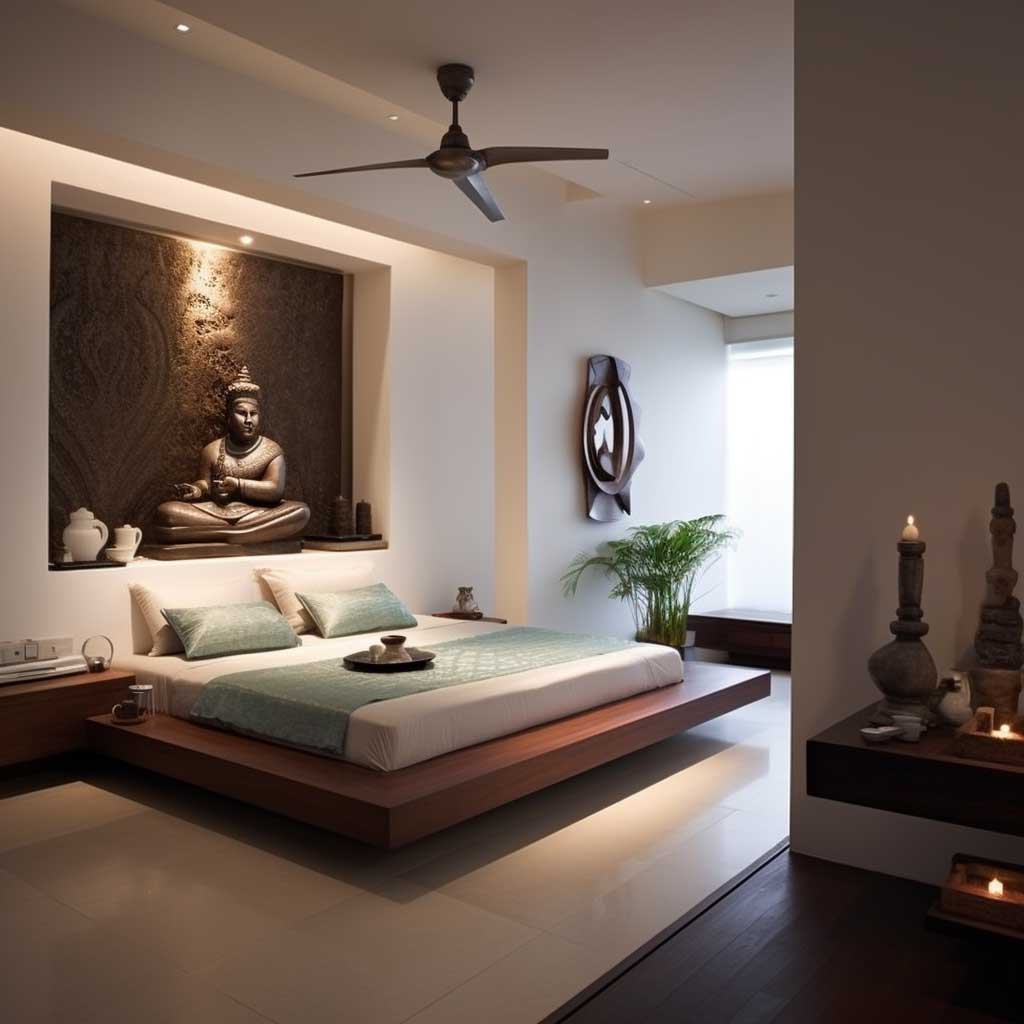
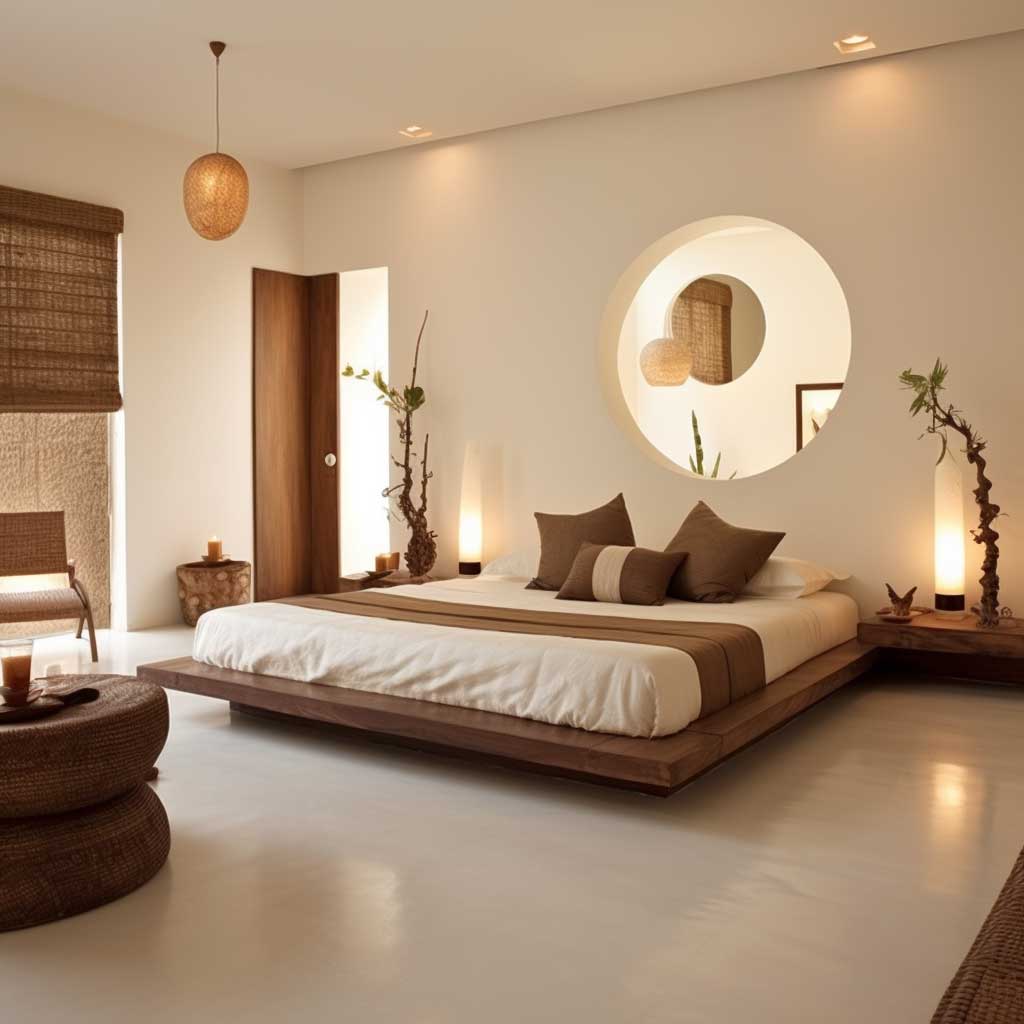
Natural elements are doing serious structural work in a minimalist Indian bedroom — this is not decoration, it’s climate control for the room’s mood. A single large-leafed indoor plant (a monstera or a peace lily, both available at nurseries for $15–$35) introduces scale contrast that no piece of furniture can replicate. Think of it like a full stop in a paragraph — without it, the room runs on. A bamboo curtain at the window costs under $40 at most import or home stores, filters afternoon light into something diffuse and warm, and adds a textural contrast to smooth plaster walls that a fabric curtain simply doesn’t deliver.
One art piece. Not a gallery wall. A serene portrait — a Buddha, a classical Tanjore painting detail, or a simple botanical print on handmade paper — positioned at eye level on the wall opposite the bed. The frame matters: natural wood or unfinished brass, never black plastic. Nilufar Gallery and Bombay Duck India both carry framed Indian art prints in the $50–$120 range. If the room has a single piece of meaningful art, you’ll never feel the space is missing something. If it has five, you’ll always feel that one more thing needs adding.
A low, streamlined wooden cabinet — inspired by the storage units common in Indian village homes — pulls double duty as both a dresser and a display surface. Keep the top surface to three objects maximum. A small brass diya, a folded textile, a single stem in a clay vase. More than that and the minimalist frame collapses. The cabinet itself should sit no higher than 30 inches — at that height, it stays below the room’s visual horizon and doesn’t compete with the bed for dominance. For additional inspiration on how warm-toned bohemian and Indian-adjacent aesthetics work together in bedroom spaces, the warm orange bohemian bedroom post covers a close overlap in palette and material logic.
Final Word
Simple Indian Bedroom Interior Design Is a Subtraction Problem, Not an Addition One
Most rooms fail because they try to include everything Indian at once. The craft traditions, the colour palette, the furniture forms, the textiles. Real restraint means choosing two or three elements that work together and editing the rest out completely.
The terracotta palette, the handcrafted wood, the lantern light — they’re not decorative choices. They’re a structural argument for how the room should feel at 10pm on a Tuesday. Get those three right and nothing else needs to work hard.
Save this post — you’ll want it when you’re standing in a furniture store trying to remember why the teak chest matters more than the upholstered headboard.