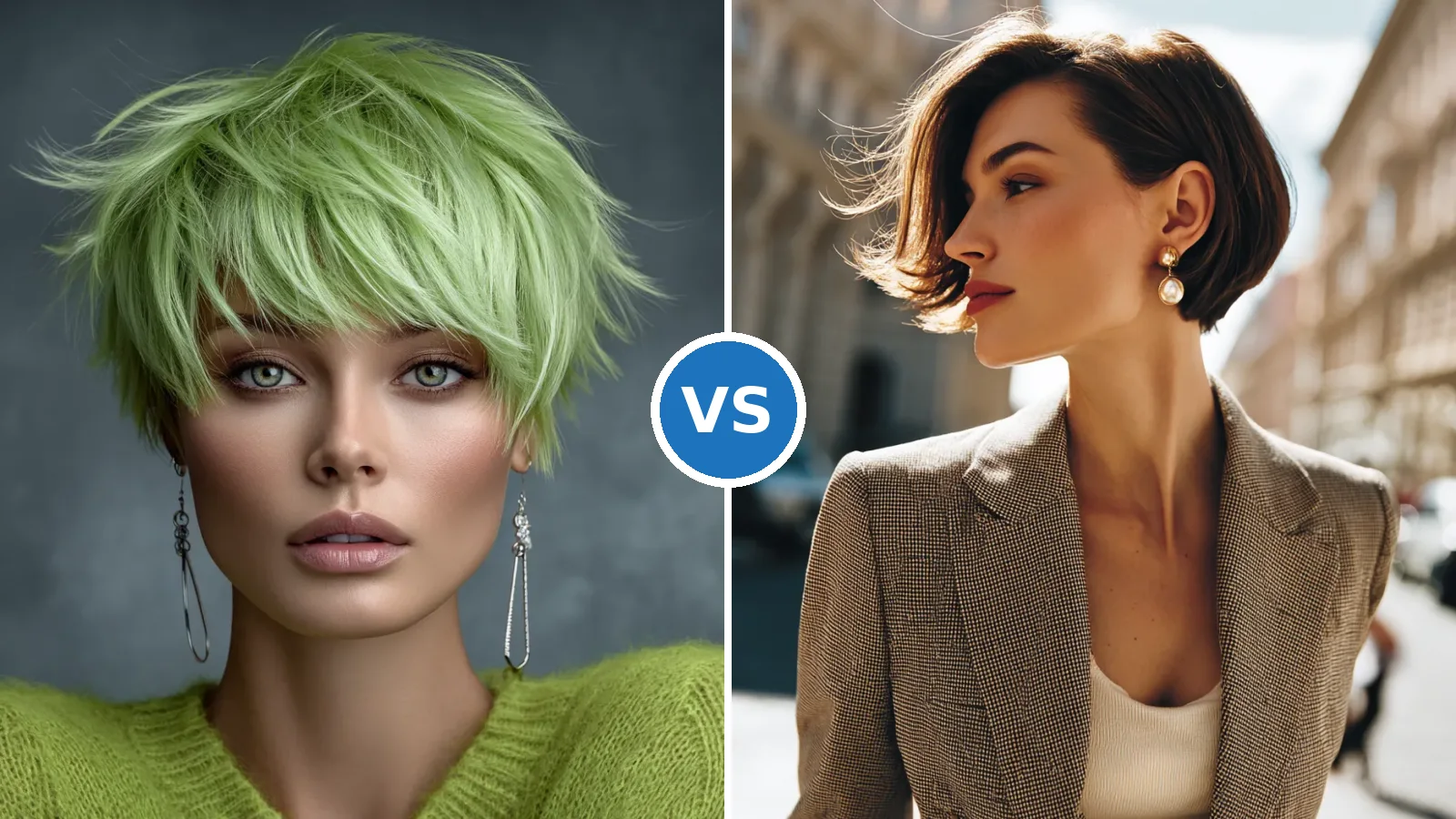
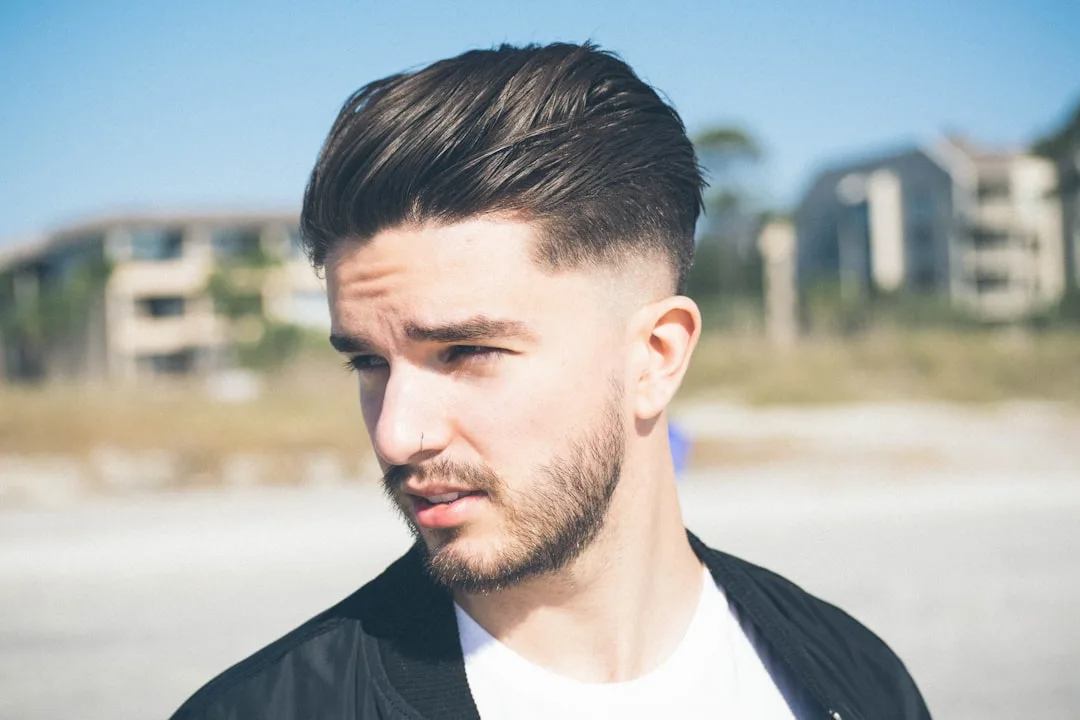
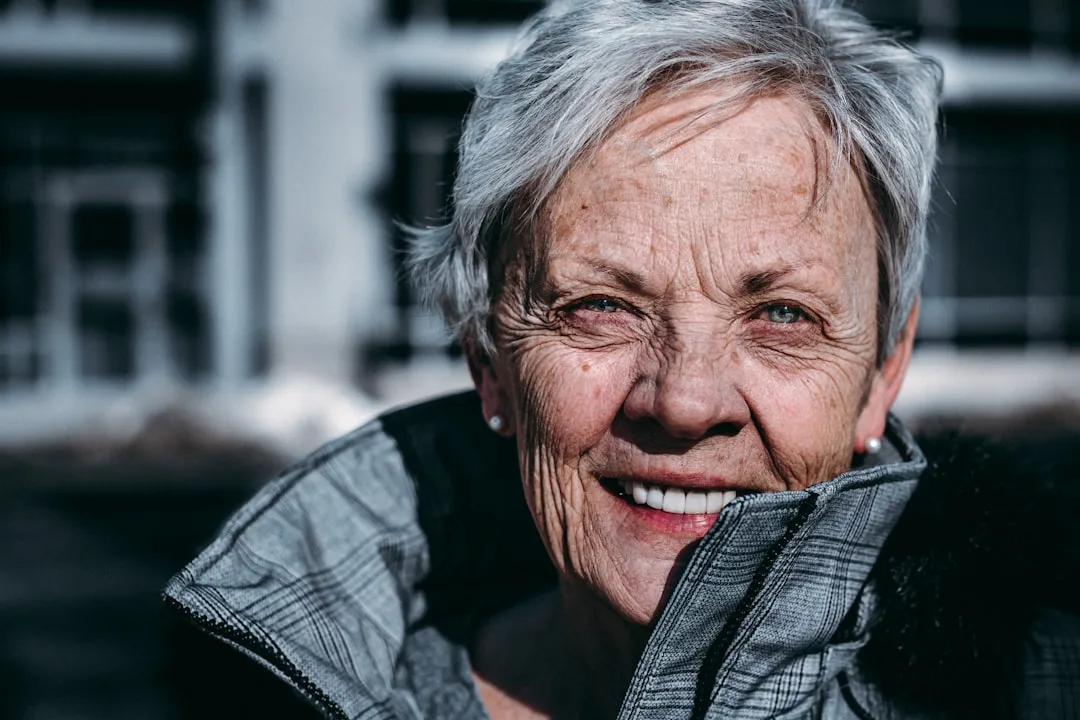
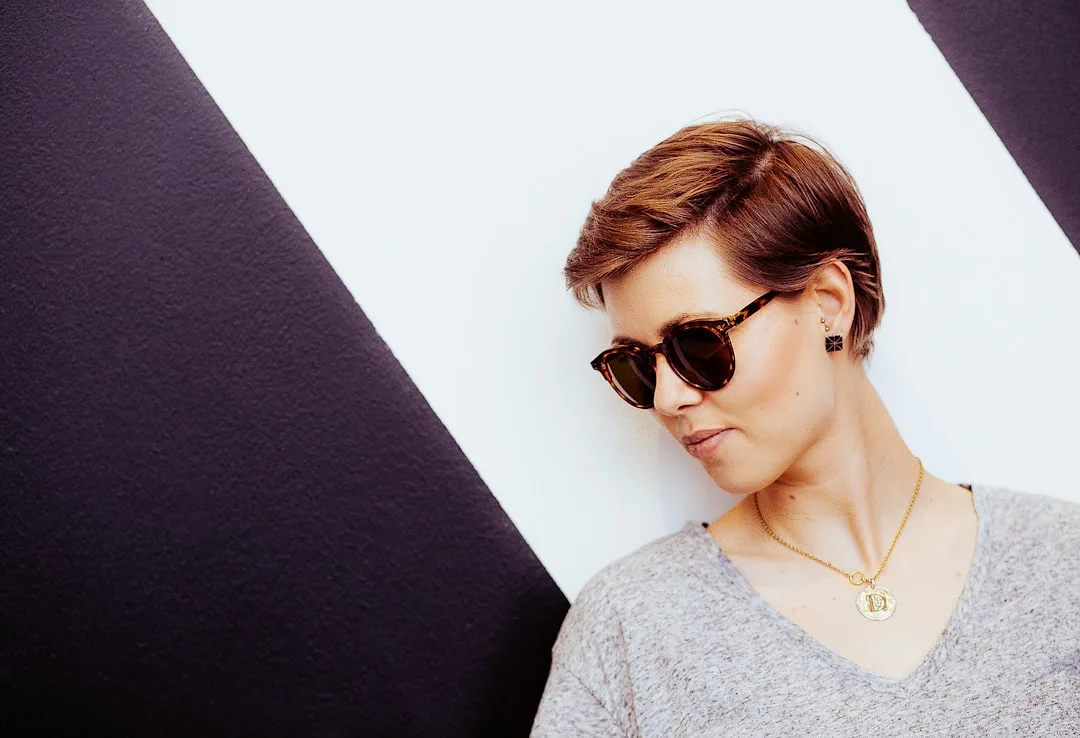
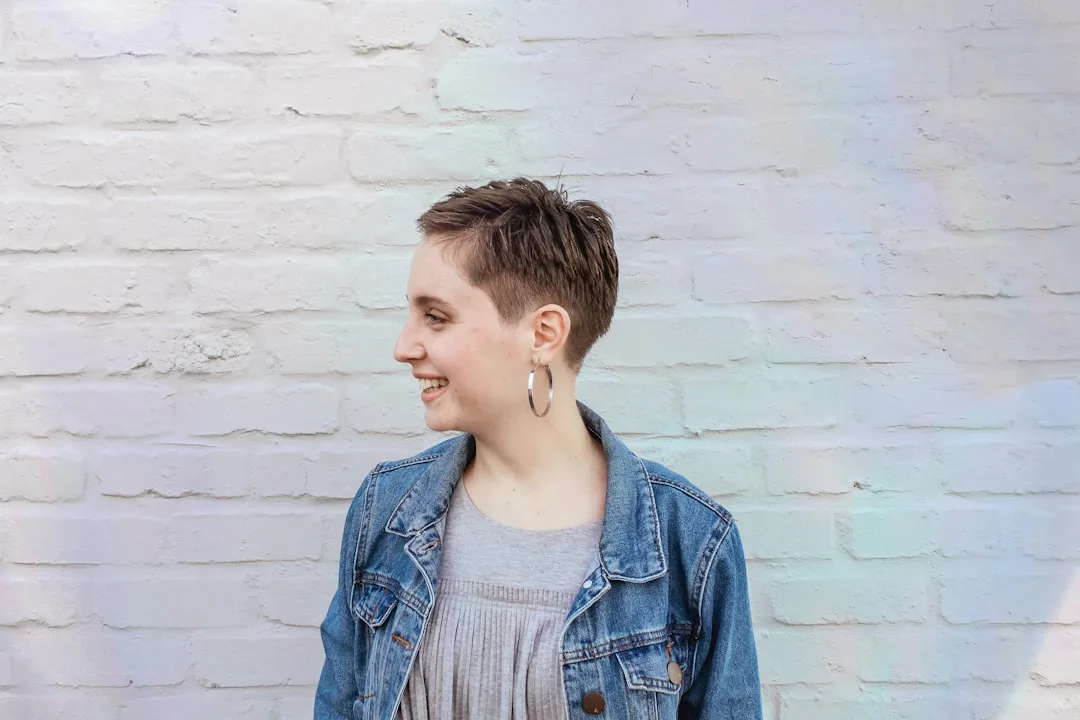
A shag haircut for oval face women is the one cut that doesn’t need to compensate for anything — no tricks, no illusion layers, no corrective angles. You’ve got the symmetry. The shag just has to not waste it. I’ve sat in enough salon chairs to know that “any style works on an oval face” is the advice that gets women into the most boring cuts of their lives. The right shag for your face shape isn’t random. It’s about where the layers start, how the crown sits, and whether the ends do something or just hang there.
You’ll notice that each version below — shoulder-length, layered, short — reads completely differently on camera, even when the base cut is technically similar. That’s the layer placement. Get that wrong and the whole thing collapses into a frizzy triangle. Get it right and it photographs like you have a stylist on retainer. The good news is that for an oval face, the margin for error is actually small — there are only a few things that genuinely don’t work, and I’ll flag every single one.
Quick Scan: Shag Haircut for Oval Face
- Shoulder-length shag — blended layers from chin down, lightweight, easy to style with or without heat
- Layered shag — short layers at crown for lift, longer layers for movement; add balayage to make layers read clearly in photos
- Short shag — choppy feathered layers, lifted crown, low maintenance; best for women who actually mean “low maintenance”
- Avoid — one-length cuts with a single blunt trim at the ends; they flatten oval faces rather than frame them
- Product picks — Living Proof Full Thickening Mousse ($29), Ouai Texturizing Hair Spray ($30), Bumble and bumble Surf Spray ($33)
The Shoulder-Length Shag Sits Right Where Oval Faces Need the Weight
Shoulder-length is the sweet spot for a shag haircut on an oval face — and I mean that in the most literal sense. The ends land right at the collarbone, which is exactly where you want visual weight when your face has natural length to it. I’ve watched women with oval faces get chin-length shags that read as round and blunt, and long shags that pull everything downward. This middle length avoids both mistakes. It’s not the “safe” choice — it’s the geometrically correct one.
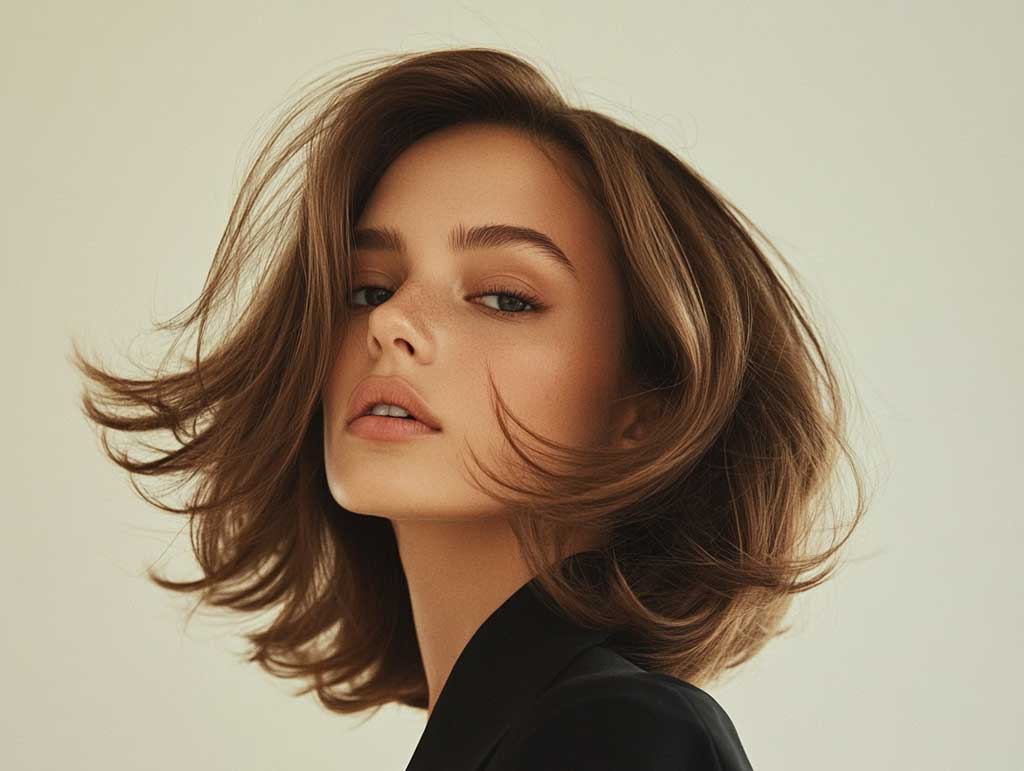
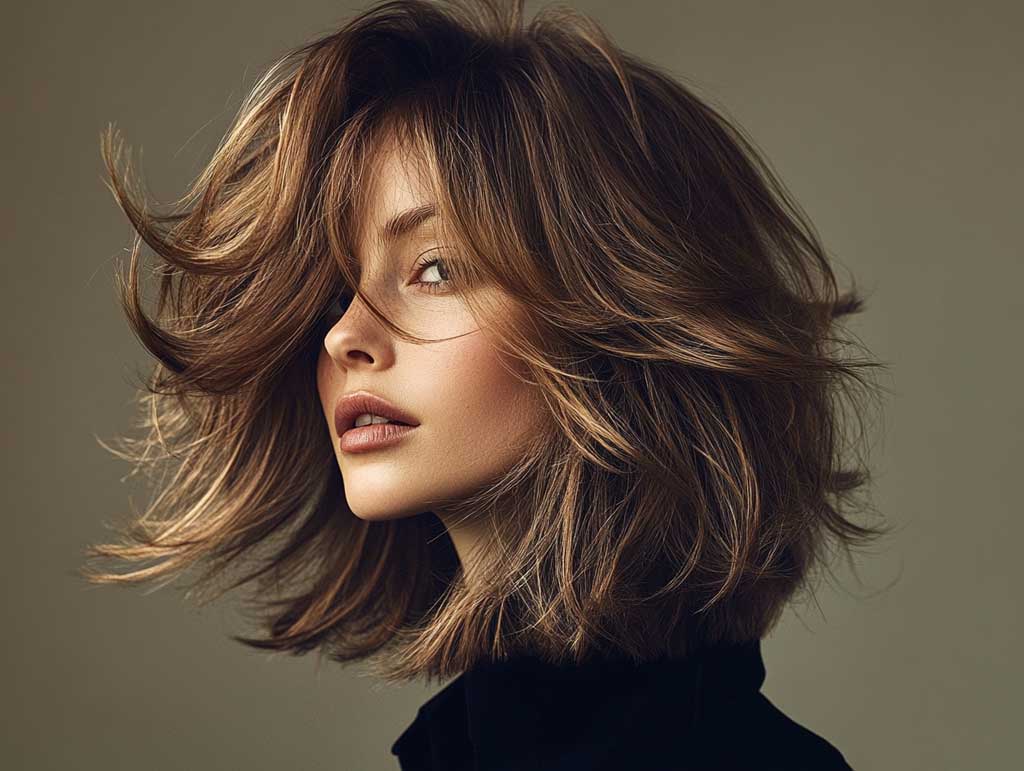
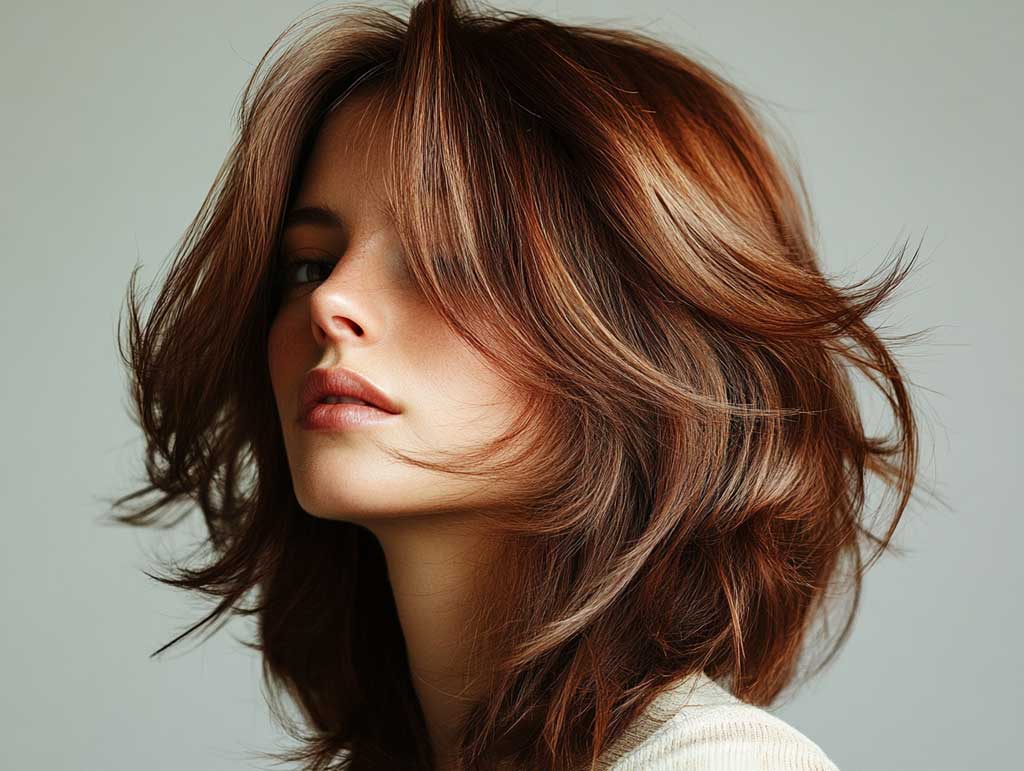
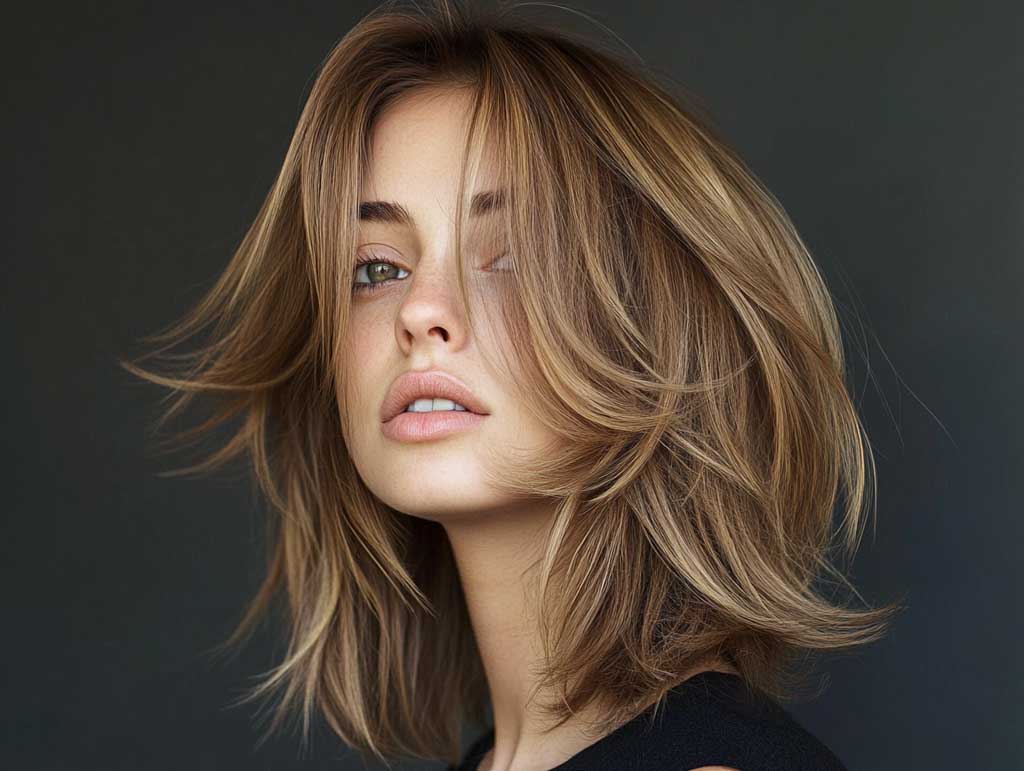
The defining characteristic of this cut is blended layering that starts at the chin and opens up gradually toward the shoulders. Ask your stylist specifically for that — “chin-start layering” — because some will default to layering from the crown down, which creates a completely different silhouette that reads more bob than shag. What does this mean for you? More movement at the ends, less volume at the sides, and zero risk of the triangle shape that wrecks shags on oval faces. Don’t skip this conversation at the salon.
Styling this cut is one of two moves. Option one: Ouai Texturizing Hair Spray ($30) on damp hair, then air dry. Option two: round brush blowout with a 1.5″ barrel — add one pass with a curling wand on the ends for that slight bend that keeps the layers falling correctly. I’ve used both depending on the day, and the air-dry version actually photographs better because the texture reads as intentional rather than styled. What doesn’t work? A flat iron on the full length — it kills the layered silhouette and you’re left with a very expensive blowout that looks like hair that just needs a cut.
Fine hair wins especially hard with this length. The layers lift the ends without demanding product, and you won’t need a second round of dry shampoo by noon. Thick hair needs a bit more thinning at the ends — tell your stylist to point-cut rather than blunt-cut to keep the silhouette from bloating. Either way, the shoulder-length shag for oval faces is the one style that cleans up for a work presentation and still looks good the next morning with zero effort. That’s not an accident. It’s the geometry working for you.
Layered Shag for Oval Faces Wins or Loses at the Crown
A layered shag haircut for oval face women lives and dies at the crown. That’s the one thing I wish someone had told me before I walked out of a salon with a layered cut that sat flat on top and poofy on the sides — the exact opposite of what any shag should do. The crown layers should be short enough to create lift, but not so short that they stick up like they’re fighting gravity. On an oval face, crown height creates the right visual proportion. Without it, the cut reads heavy. Wrong. Dowdy.
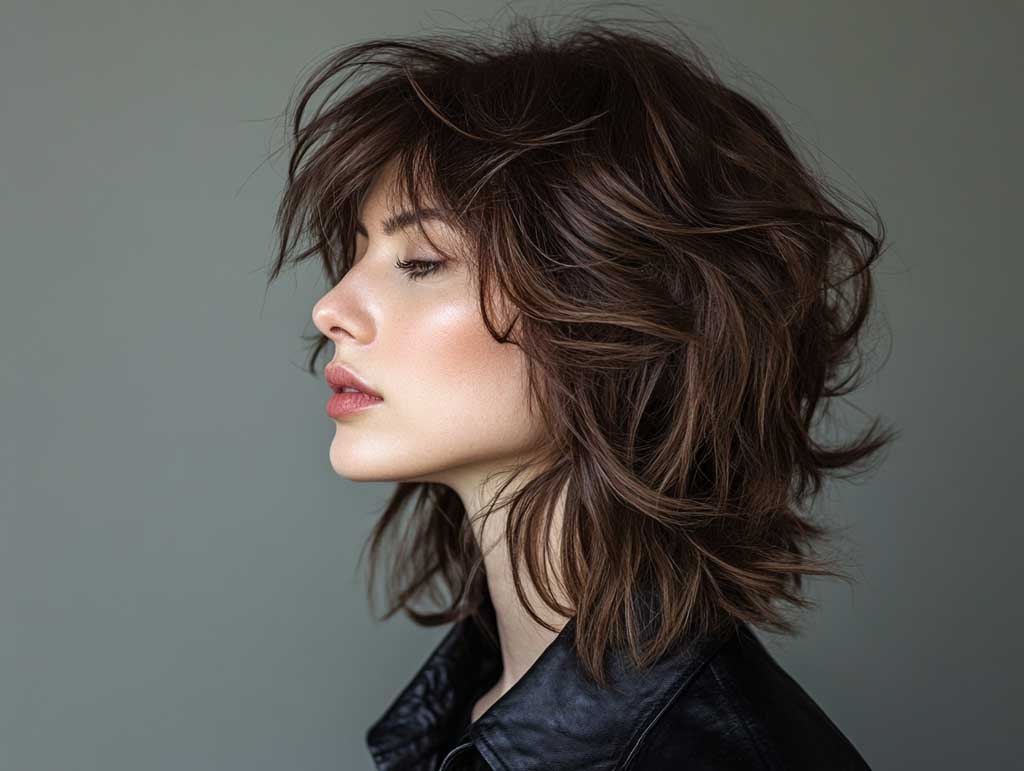
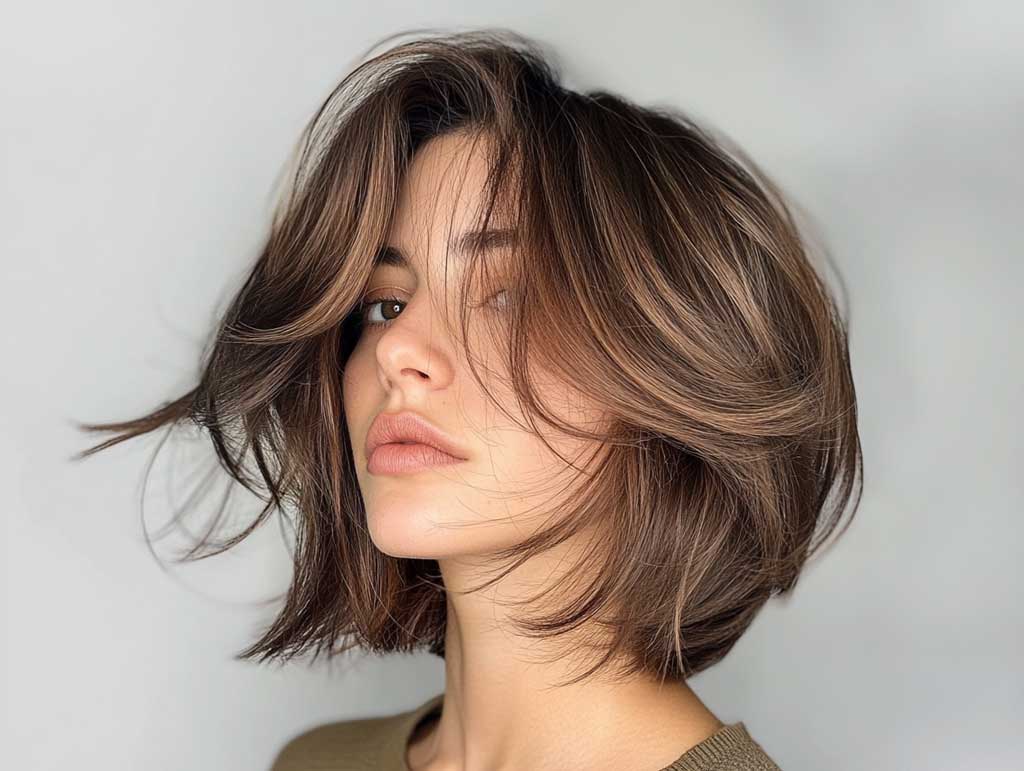
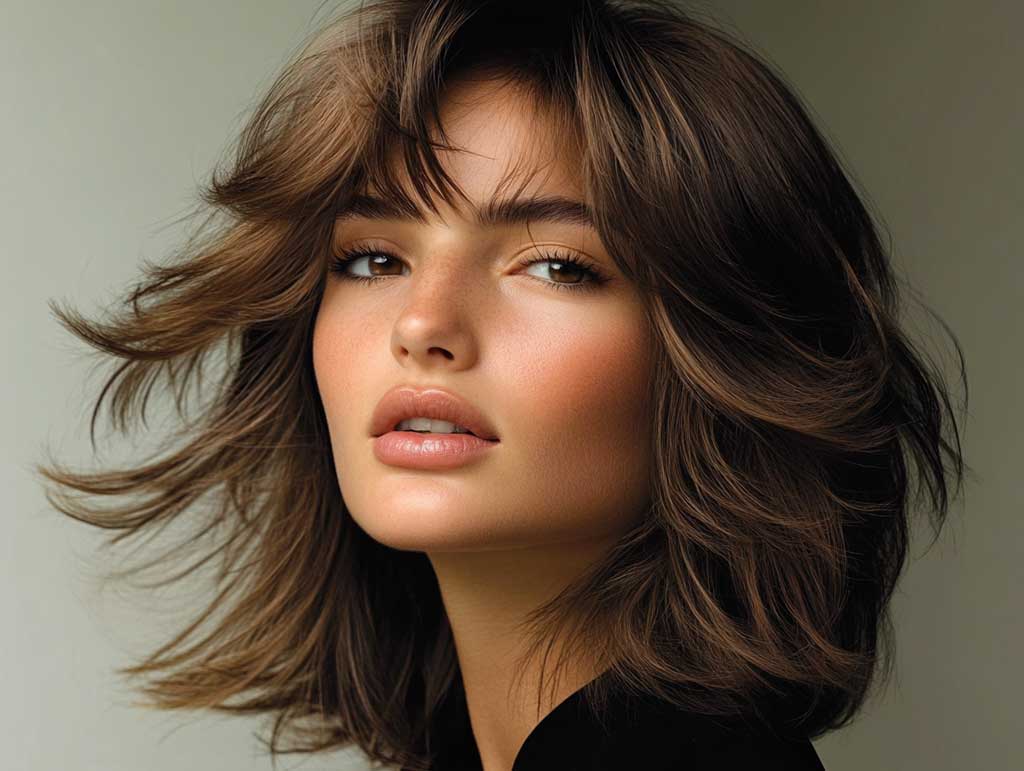
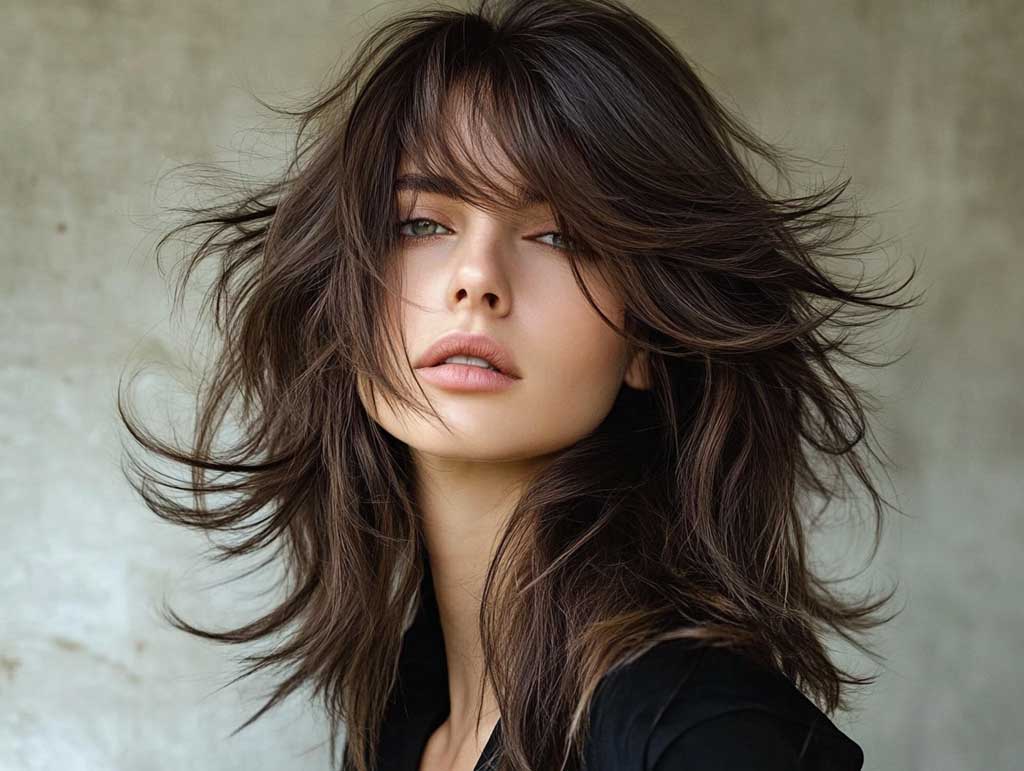
The combination that actually works is this: shorter crown layers for height, longer face-framing sections for cheekbone definition, and a middle-length base that lets everything move. Want to know why this reads so well on oval faces specifically? Because the crown lift extends the face’s natural vertical line without distorting it — a round face would look elongated, a square face would look top-heavy, but an oval face just looks right. You’re borrowing the architecture of a face shape that stylists spend years trying to fake for other people. Use it.
Balayage makes the layered shag work harder for you. I stole this trick from my colorist: highlights placed specifically on the crown layers and the face-framing pieces make the movement of the cut visible in any lighting, including the fluorescent horror of office meetings. Without color contrast, fine layered shags can look like one-dimensional straight hair that just didn’t get trimmed right. A Bumble and bumble Surf Spray ($33) on damp hair before air-drying is the other upgrade — it accelerates the texture and makes the shag look like you spend twenty minutes on it when you spent three. If your hair is naturally wavy, scrunch the ends after applying. Do not brush it after. Ever.
For naturally straight hair, a lightweight mousse like Living Proof Full Thickening Mousse ($29) before a round brush blowout does the same job as natural wave — it builds the memory into the ends so the layers hold their position without becoming crunchy. Thick hair can carry more dramatic layering and looks incredible with disconnected sections rather than blended ones. Ask for “disconnected layering” at the consultation if you want that editorial shag look rather than the soft lifestyle-magazine version. Both are right. They are not the same cut.
Don’t Do This with a Layered Shag on an Oval Face
- Don’t add heavy one-length bangs. Blunt fringe on a layered shag cuts the vertical line of an oval face in half and makes the whole cut look stubby. Curtain bangs or wispy face-framing pieces are the alternative — they complement the layers rather than interrupting them.
- Don’t brush a layered shag when it’s dry. Brushing collapses the layers into a single plane. Use a wide-tooth comb only when the hair is wet, and use fingers to separate sections once it’s dry.
- Don’t ask for “lots of layers” without specifying where. Generic layering instructions get generic results. Tell your stylist which sections should be short (crown) and which should stay long (sides, face-framing). Bring photos. Non-negotiable.
Short Shag for Oval Faces Rewards Women Who Commit
A short shag haircut for oval face women is the cut that looks effortless on the right person and chaotic on the wrong stylist. The good news: oval faces are the right person, every time. The structure is there. The symmetry holds. Short means the ends sit above the shoulder — some versions go as high as jaw-length, which is genuinely bold — and the crown layers are choppy enough to create real height rather than a suggestion of it. You either want this kind of haircut or you don’t. There’s no half-commitment version.
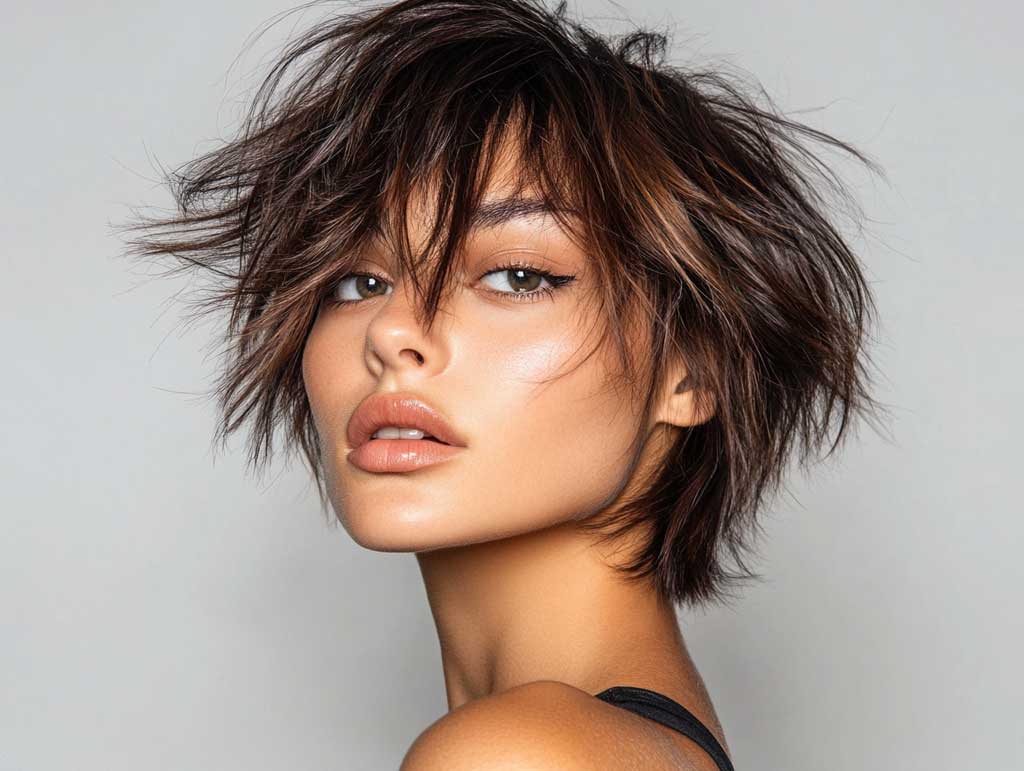
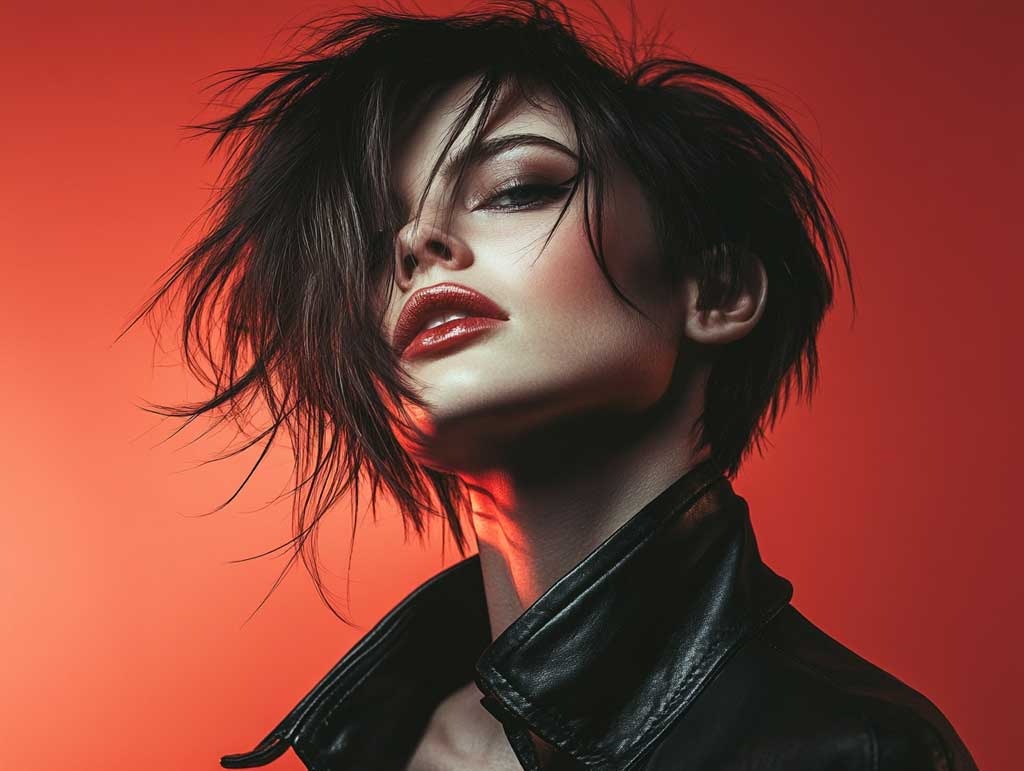


The feathered, choppy layers at the ends are what make this a shag rather than a short bob with attitude. Your stylist should be point-cutting throughout and razor-cutting at the ends — not scissor-trimming a flat edge. Point-cutting removes bulk while preserving length variation, which is what gives the ends that lived-in, piecey finish. I own two short shags that went wrong because the stylist used a straight scissor cut at the ends: both looked like mushroom-shaped bobs within two weeks of the initial cut. The razor and point-cut finish holds its shape through the grow-out.
Styling the short shag comes down to two products and one rule. Texturizing cream — Oribe Dry Texturizing Spray ($46) or the cheaper Batiste Dry Shampoo as a substitute — scrunch into dry hair at the roots and ends. That’s it. The rule: don’t touch it for five minutes after applying. The product needs to set before your hands move the hair around, or you’re just redistributing the product without building the texture. A flat iron on the ends for a slight inward bend takes the short shag from morning-after to deliberately styled in four minutes flat. Don’t flat-iron the roots — you’ll collapse the crown lift that makes the whole cut work.
All hair types work here, but fine hair gets the most disproportionate return. Short layers on fine hair create the illusion of density that no product can replicate. Thick hair needs more internal thinning — ask for thinning shears through the mid-lengths, not at the ends — or the short shag will sit like a helmet. For women with natural wave or curl texture, this cut is close to self-styling. Air-dry it, hit the crown with your fingers in the morning, done. Short shaggy cuts work across different face shapes too — but the oval face is the one where the short shag doesn’t require any adjustments to the standard cut.
Modern Shag for Oval Faces Means Understanding What “Modern” Actually Changed
Modern shag haircut styling landed differently from the 1970s original, and the difference matters for oval faces specifically. The vintage shag — think Farrah Fawcett — had heavy wings, hard feathering lines, and a very deliberate directional blow-dry that took twenty minutes minimum. The modern version, as Maxine Salon creative director Amy Abramite describes it, uses “diffused layers throughout” to get rid of extra weight and create an airy effect. What does that mean practically? The layers blend rather than stack. The silhouette is softer. The styling time drops to under ten minutes.
For an oval face, the modern approach is almost always the right one. The blended layering preserves the face’s natural symmetry without adding artificial structure, and the airy finish photographs cleanly in both natural and artificial light. I’ve tried the vintage version twice and hated it both times — the hard feathering lines made my face look wider at the cheekbones than it actually is, which is the one thing an oval face doesn’t need. The modern shag sidesteps that entirely by keeping the face-framing pieces soft and slightly tapered rather than flicked outward.
The shaggy bob that falls at the chin is one modern variant that L’Oréal Paris stylists specifically recommend for oval faces who want something shorter without committing to the full short shag. It pairs well with a pomade through the ends for piece-y definition. If you want a longer version, the modern shag lob — hitting somewhere between chin and shoulder — is the current salon request I see most often, and for good reason: it grows out cleanly for 12 to 14 weeks without looking unkempt, which is the actual test of any cut’s quality. If it looks rough at 10 weeks, the layering was wrong to begin with.
Ask for a “modern shag” explicitly at your next consultation and follow up with specifics: blended layers, not stacked; airy at the ends, not blunt; crown lift without hard directional feathering. Face-framing haircuts for oval faces have their own logic that goes beyond the shag, and knowing the vocabulary gives you control over the result rather than hoping your stylist guesses correctly. Bring three photos. Show two you like and one you don’t. The one you don’t like tells a stylist more than the ones you do.
The Takeaway
An Oval Face Doesn’t Need a Corrective Shag. It Needs One That Doesn’t Waste the Advantage.
The shag haircut for oval face women works because it brings movement to a structure that’s already balanced. The only way to get it wrong is to go one-length, blunt-ended, or heavy at the crown — all three of which are easy mistakes when you’re not specific at the consultation.
Choose your length based on how much styling time you actually have, not how much you plan to have. The shoulder-length shag is the most forgiving. The short shag is the most rewarding if you commit. The layered version is the most photogenic when paired with balayage highlights.
Save this post before your next salon appointment — or send it to your stylist as a brief instead of texting “something like a shag maybe?”