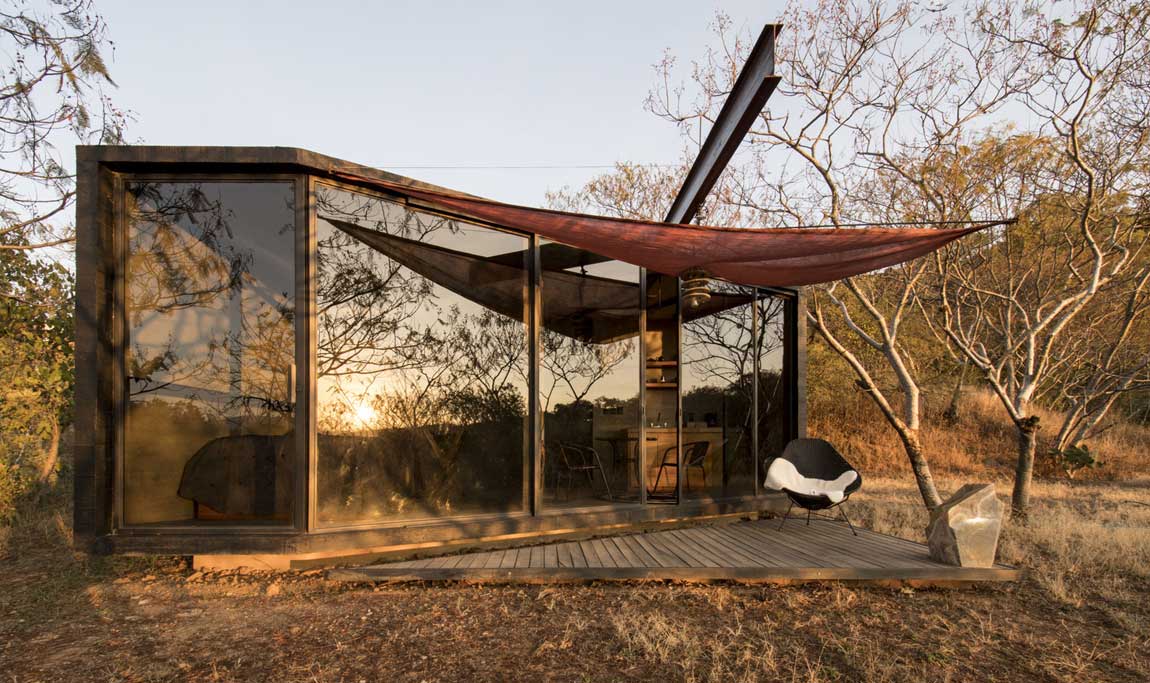
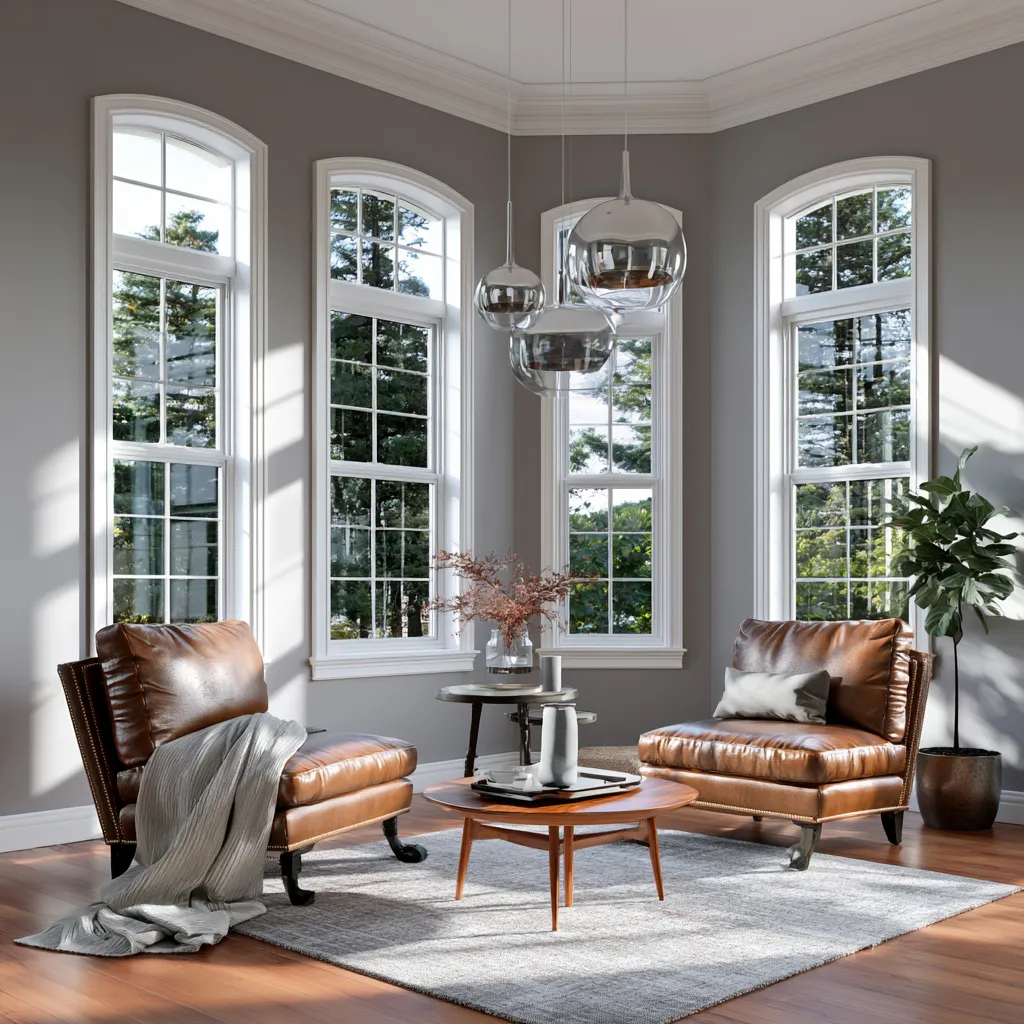
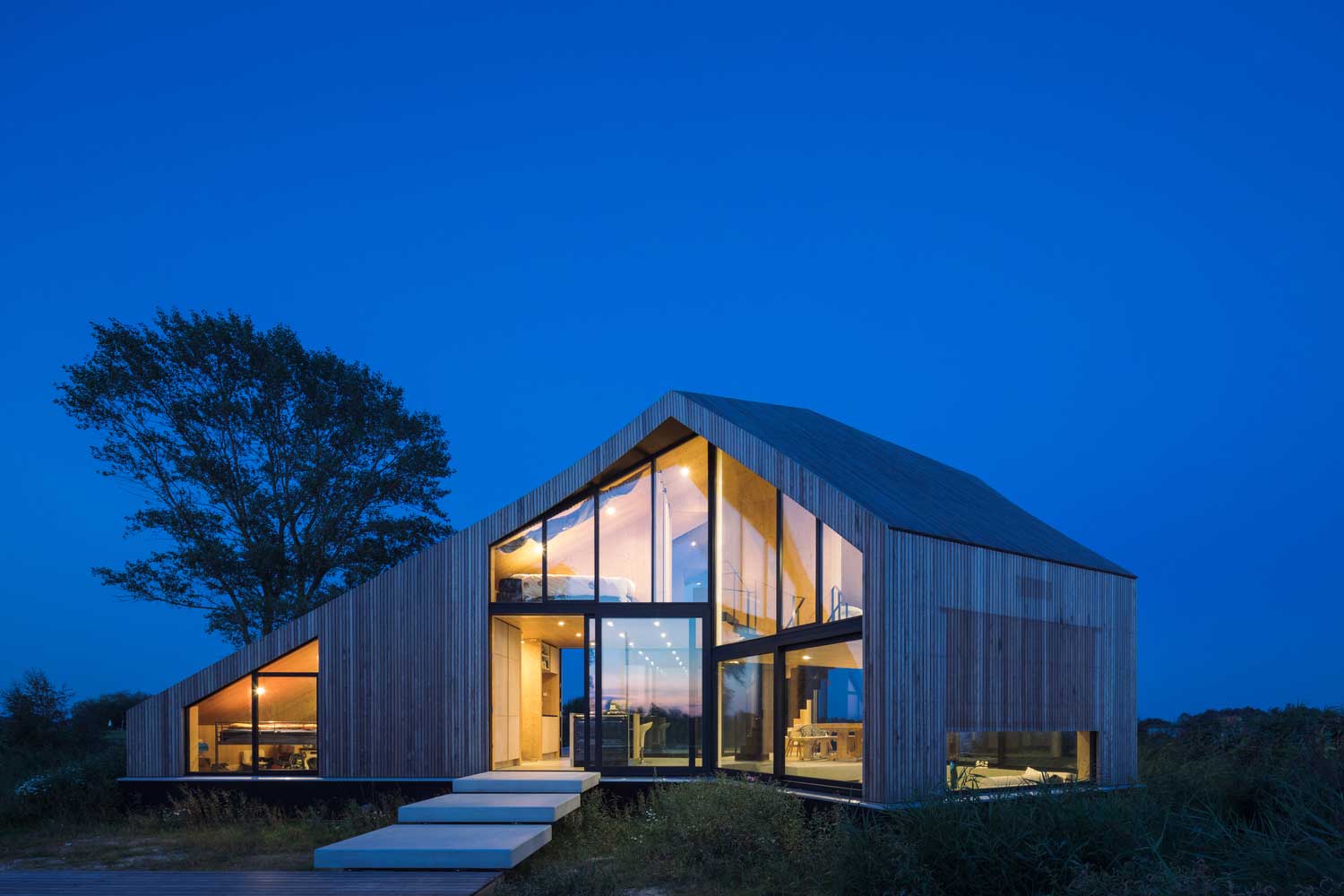
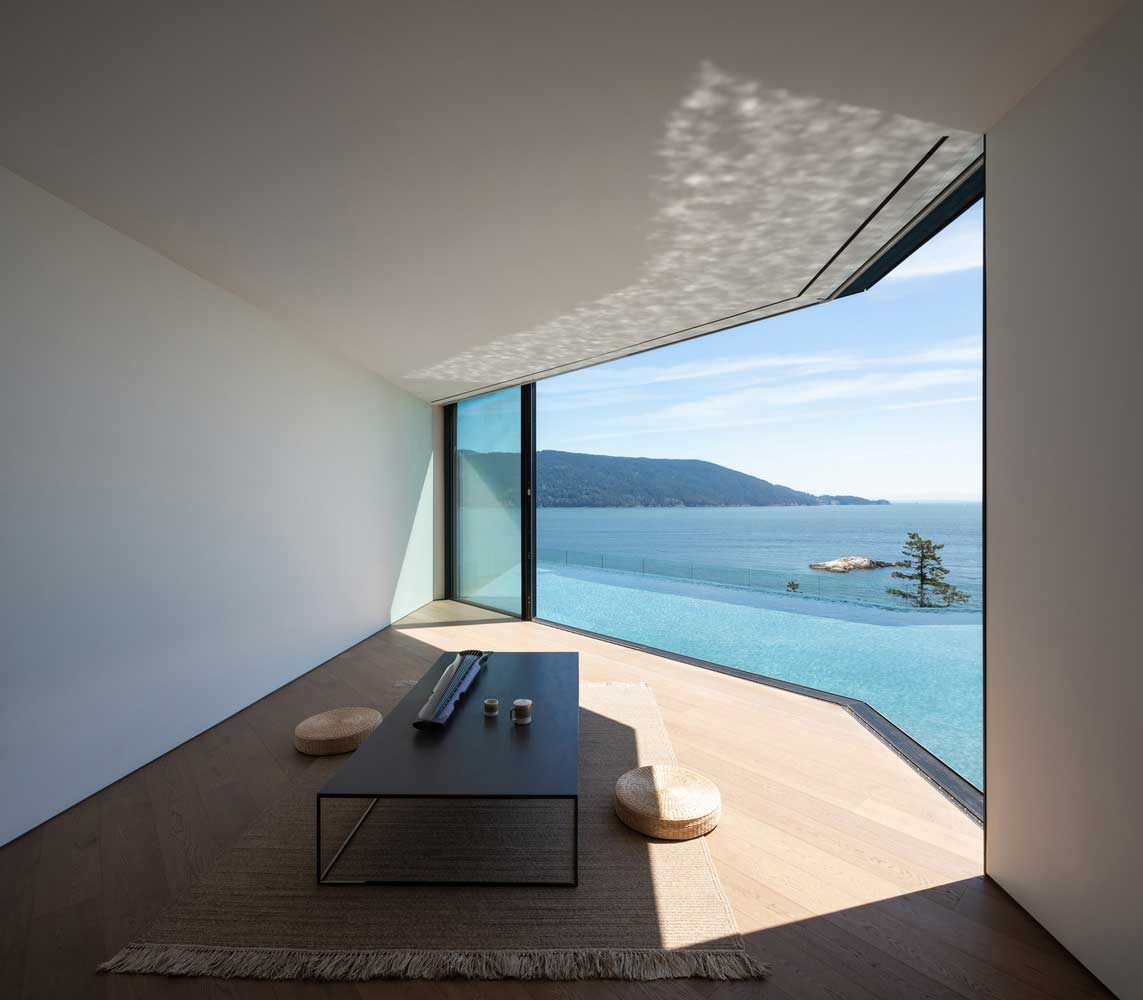
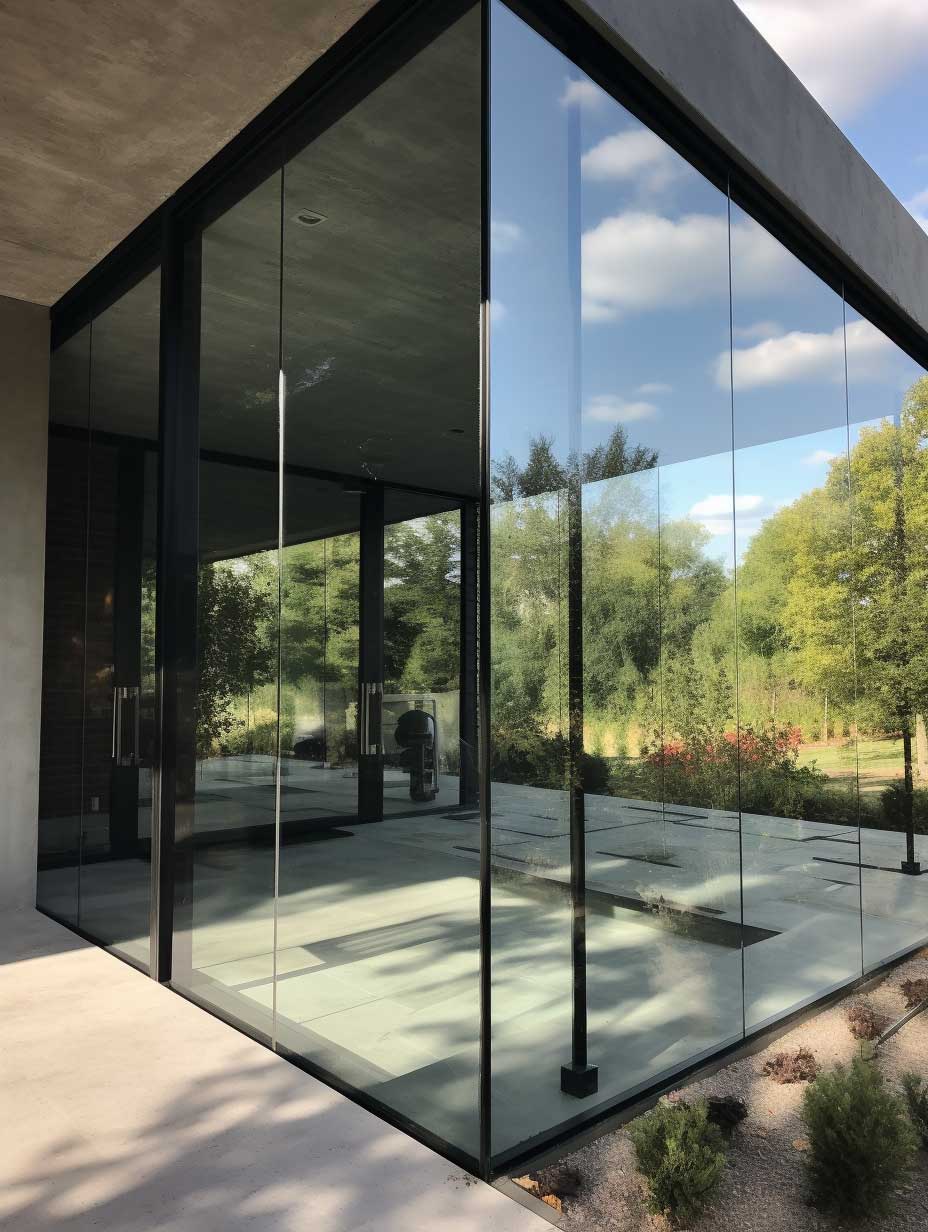
Exterior glass walls are the single fastest way to change how a house feels — not just how it looks. When the glazing spans floor to ceiling and the framing disappears, the room stops being a room and starts being a viewpoint. I’ve photographed dozens of these homes and the ones that land well share a common trait: the glass does nothing flashy. It just makes everything outside look deliberate. You’ll notice within the first sixty seconds whether your exterior glass wall design is working or fighting the house.
The mistake most people make is treating glass walls like oversized windows — scaling up without thinking about what’s outside the frame. A backyard glass wall pointed at a neighbor’s fence is just an expensive problem. The view is the product. Get the orientation right before you spec a single pane.
What you’ll find on this page:
- Floor-to-ceiling glass walls and how to choose the right glazing type
- Sliding exterior glass walls for backyard access — brands, pricing, frame options
- Enclosed glass courtyards and how to keep them from overheating
- Atriums, curved walls, and greenhouse applications
- Sunrooms, rooftop terraces, indoor-outdoor pools, home offices, wine cellars
- FAQ covering privacy, maintenance, costs, and retrofitting
Floor-to-Ceiling Exterior Glass Walls Erase the Wall Entirely
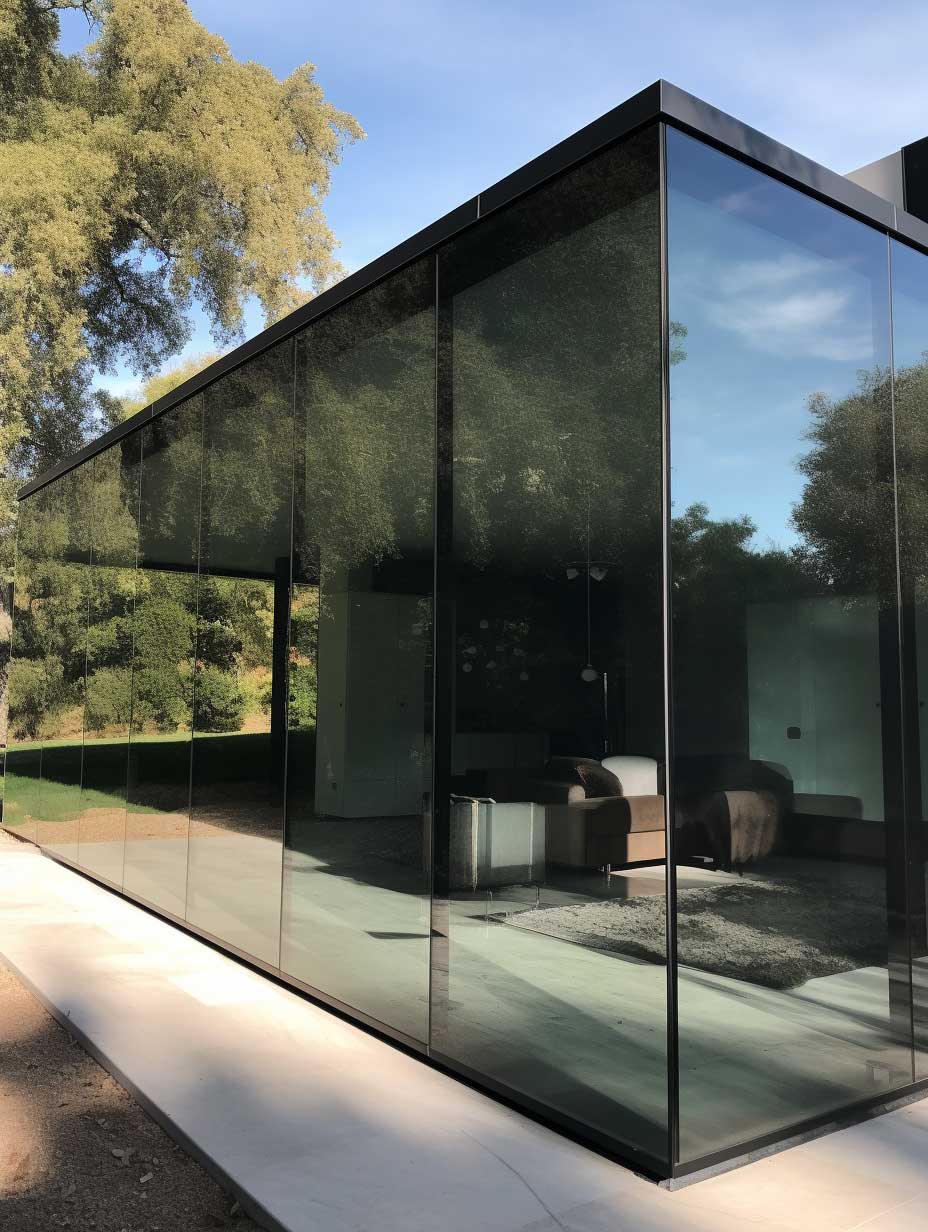
Full-height exterior glass walls are the closest thing architecture has to pressing delete on a wall. The floor continues visually into the garden, the ceiling tracks the sky, and the room doubles in perceived size without adding a square foot. I’ve stood in living rooms with this treatment and genuinely lost my sense of where inside ended. That effect is the whole point.
Glass choice matters more here than anywhere else. Double-glazed low-E glass — the Pilkington Optitherm range runs $18–$28 per square foot installed — handles thermal performance adequately in most climates. Triple-glazed units push that cost to $35–$50 per square foot but are worth it for cold-weather builds where you want actual thermal comfort near the glass in January. Don’t go with single-pane here. I’ve seen single-pane floor-to-ceiling walls in mild-climate renovations turn into condensation problems by November, and the aesthetics suffer immediately.
Privacy is the real conversation nobody wants to have. Tinted or fritted glass solves it partially but changes the light quality — you get a slightly dimmer, cooler interior even on bright days. Motorized interior blinds from Lutron or Somfy are the cleaner answer: you get full transparency when you want it and full privacy on a switch. My go-to recommendation is specifying the glass clear and handling privacy with landscape screening or internal shading rather than baking it into the glazing permanently.



Sliding Exterior Glass Walls Make Backyard Living Possible Year-Round
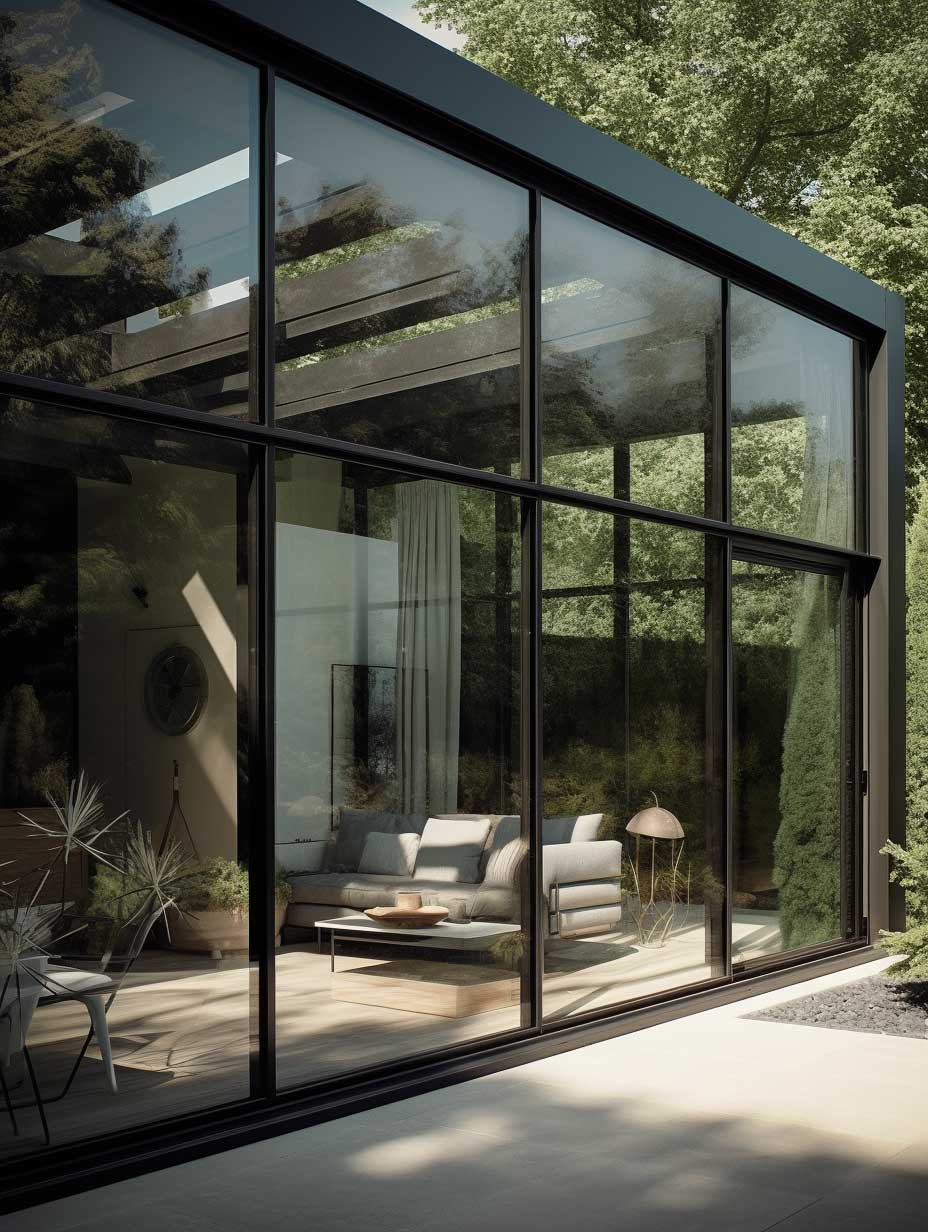
Sliding exterior glass walls are the version that actually gets used every day. Open them in the morning and your living room grows by whatever your terrace measures. Close them when the temperature drops and you’re back to a sealed, insulated interior. The best systems disappear into pocket walls when fully open — LaCantina and NanaWall both offer stacking multi-slide doors that fold to one side cleanly, with panel widths up to 12 feet and total opening spans up to 65 feet. That is a lot of air on a Saturday evening.
Frame material changes everything here. Aluminum is the standard — NanaWall’s aluminum folding systems start around $1,200–$1,800 per linear foot installed, depending on glass spec and hardware. Aluminum-wood hybrids cost 20–30% more but bring genuine warmth to the interior face without sacrificing exterior durability. I’d skip pure wood on anything exposed to weather in a wet climate — the maintenance cycle catches up with you within three years. You’ll notice the frames swelling slightly and the operation getting sticky by year two if you’re not fanatical about sealing.
What’s the one thing people miss when specifying sliding glass walls for their backyard? The threshold. A flush threshold looks cleaner but requires careful waterproofing detailing. A raised weather-resistant threshold — NanaWall’s AluClad line uses a 20mm aluminum sill — is less photogenic but genuinely keeps rain out. For uncovered exterior applications, the raised threshold is not optional. It’s the spec I always push for, regardless of how much the client wants that seamless floor line. Dwell’s breakdown of retractable glass wall systems covers the material options and threshold considerations in useful depth.


Glass Wall Courtyards Protect the Outdoor Room Without Closing It Off
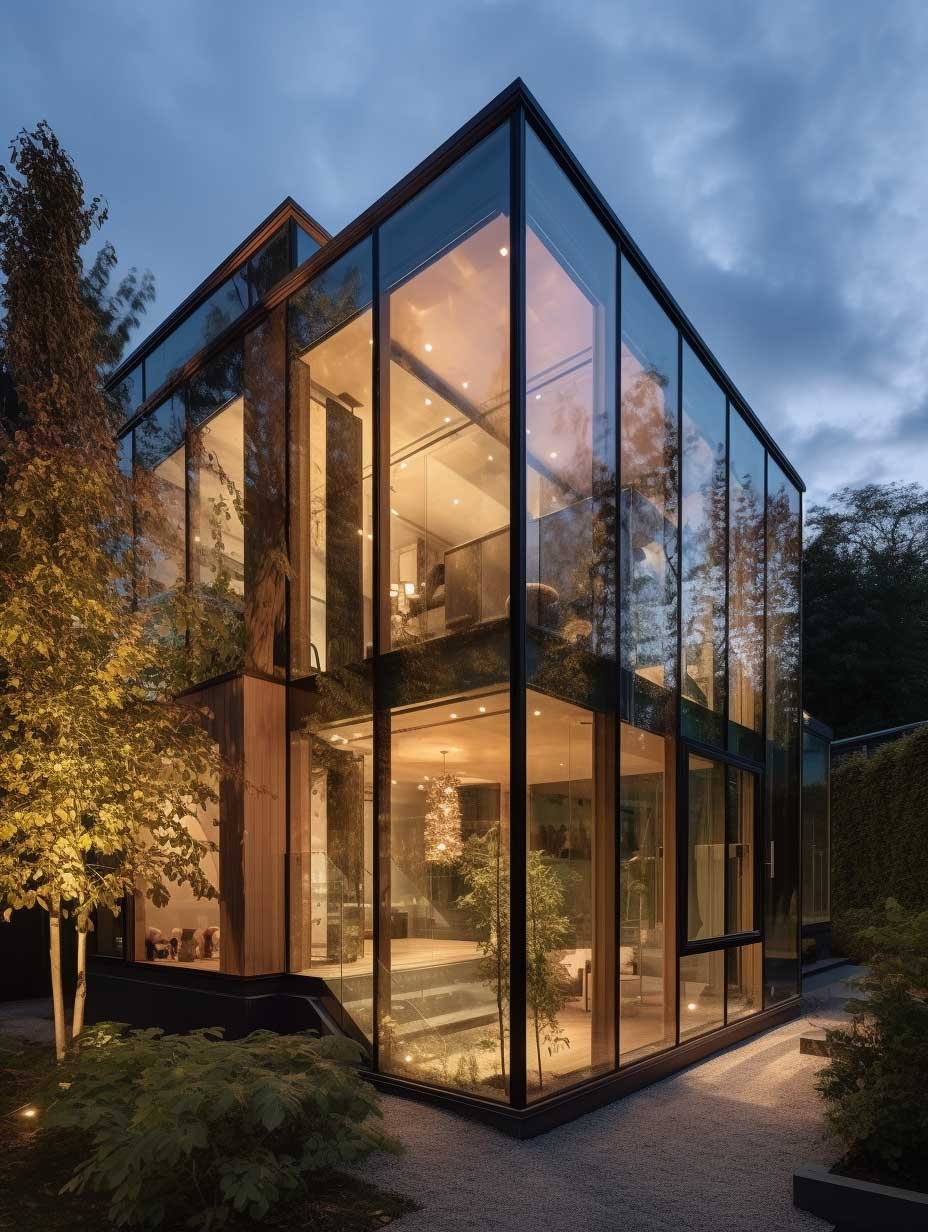
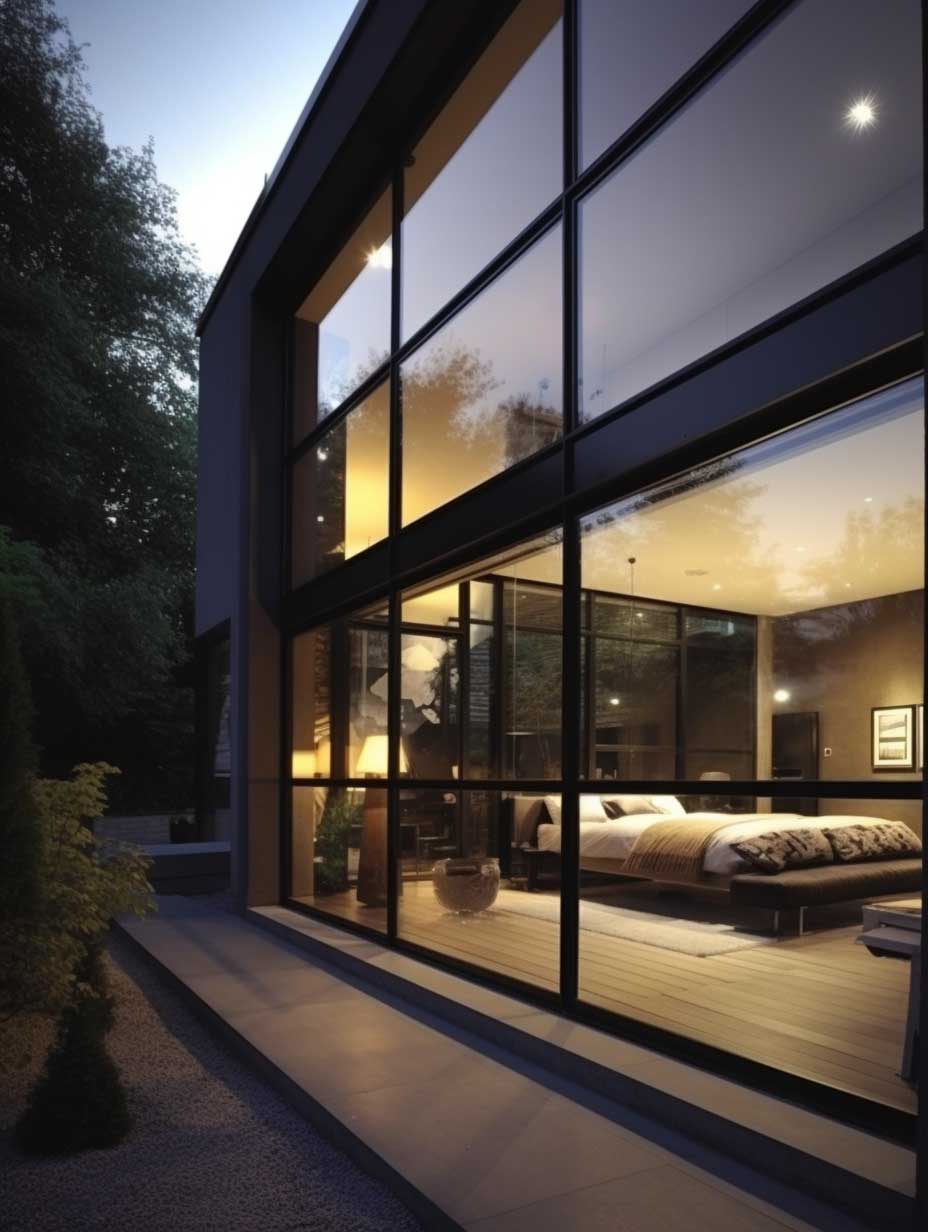
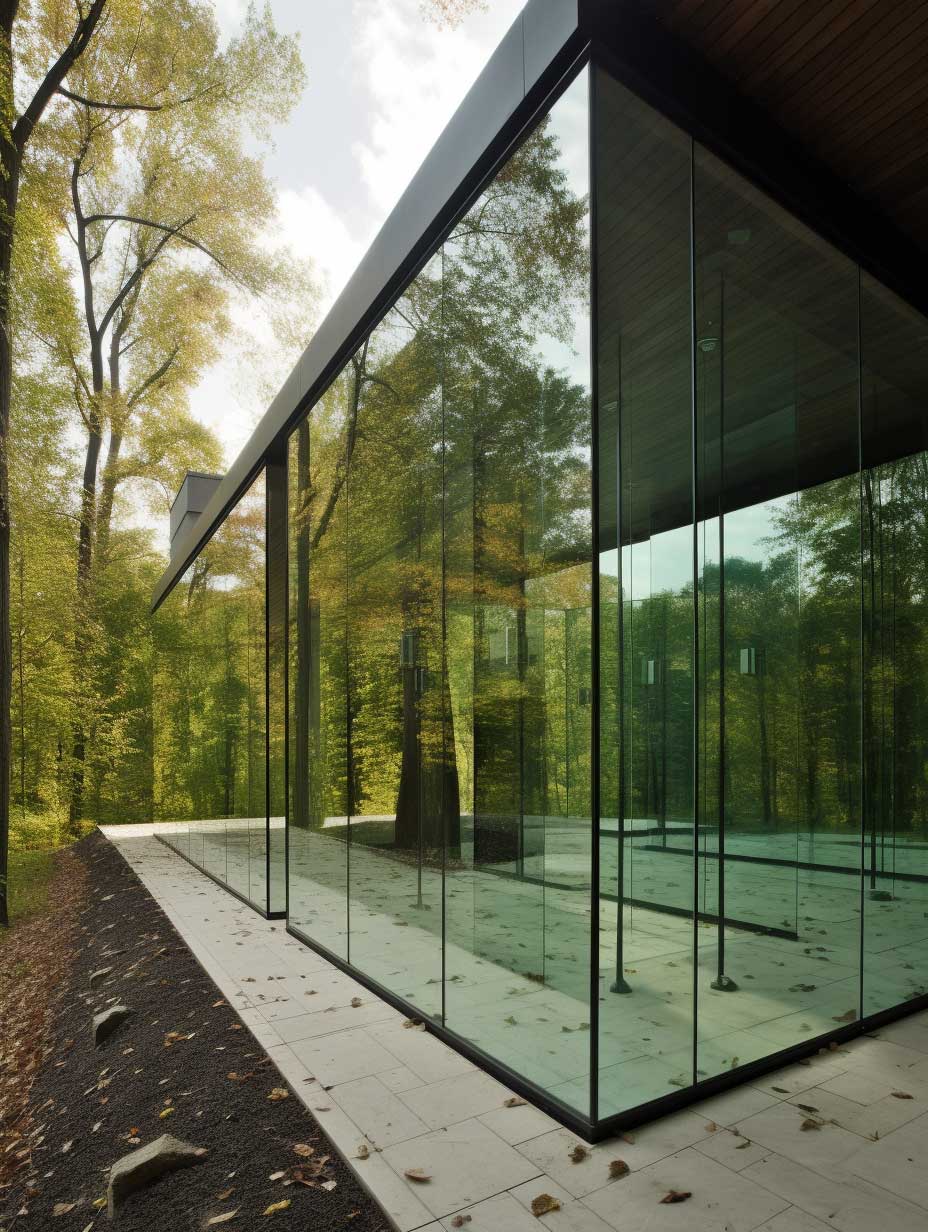
Enclosing a courtyard with exterior glass walls is the architectural equivalent of having your cake — you get outside light and greenery on all sides, with actual weather protection. Rain, wind, even urban noise drops significantly behind a properly sealed glass perimeter. The courtyard becomes a livable room that happens to have a sky for a ceiling. I’ve seen this done in homes as small as 1,400 square feet and it transforms every room that borders it.
The thermal trap is the real problem nobody mentions at the design stage. A fully glazed courtyard in a south-facing orientation can hit 104°F on a July afternoon with no mechanical relief. Operable skylights or ridge vents are not optional — they’re structural to making the space usable. The passive stack effect pulls hot air up and out if you design the vent height correctly; get an engineer to calculate the vent area at 15–20% of the floor area as a starting point. Shading from deciduous planting around the perimeter handles the summer heat while allowing winter sun through after leaf drop.
Water features and compact dining furniture work well inside glass courtyards — both lower the perceived temperature through evaporation and visual psychology. Skip large planters with irrigation lines unless you’ve planned for drainage from day one. A courtyard that turns into a puddle after a storm is just a very expensive problem in glass.

Atriums Built with Exterior Glass Walls Pull Light Through the Whole House
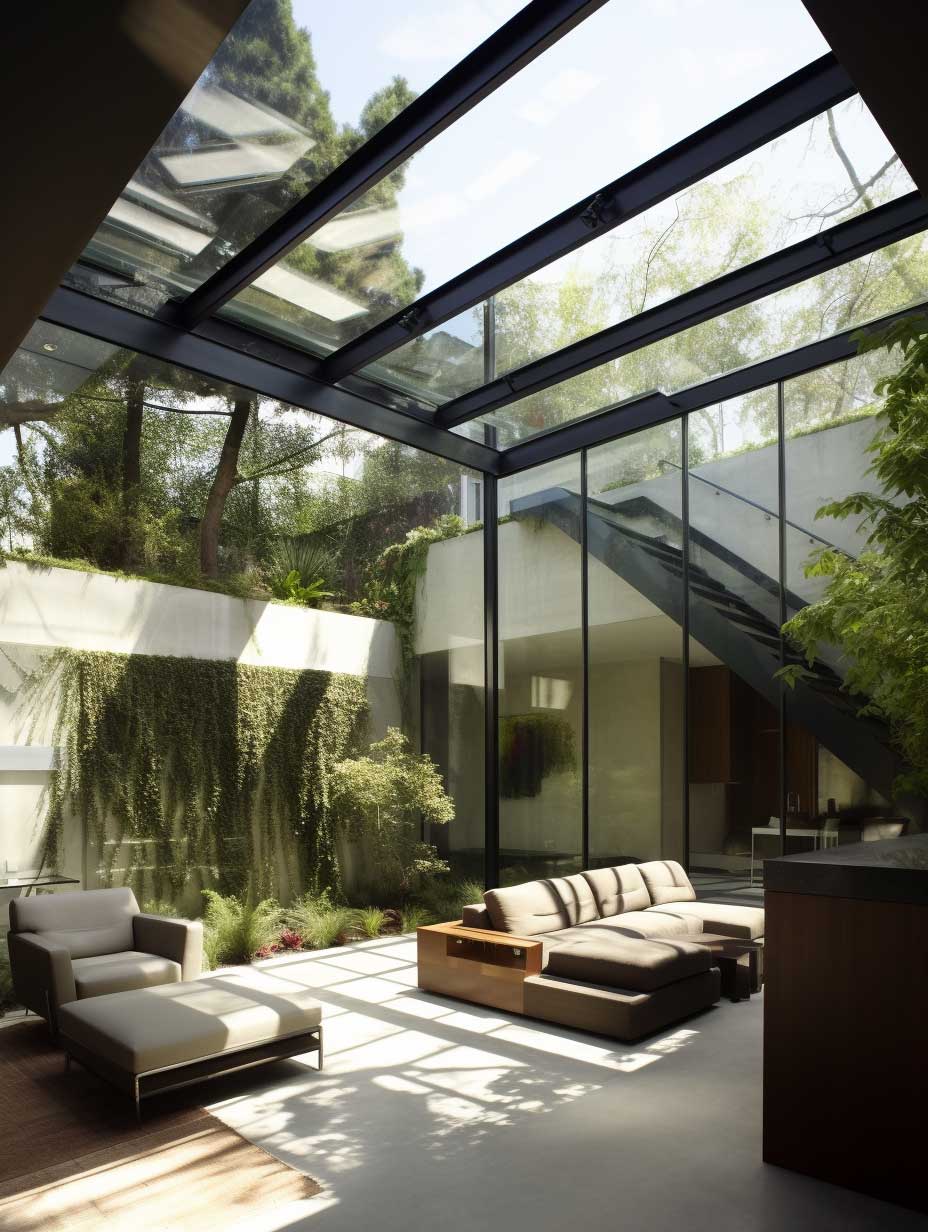
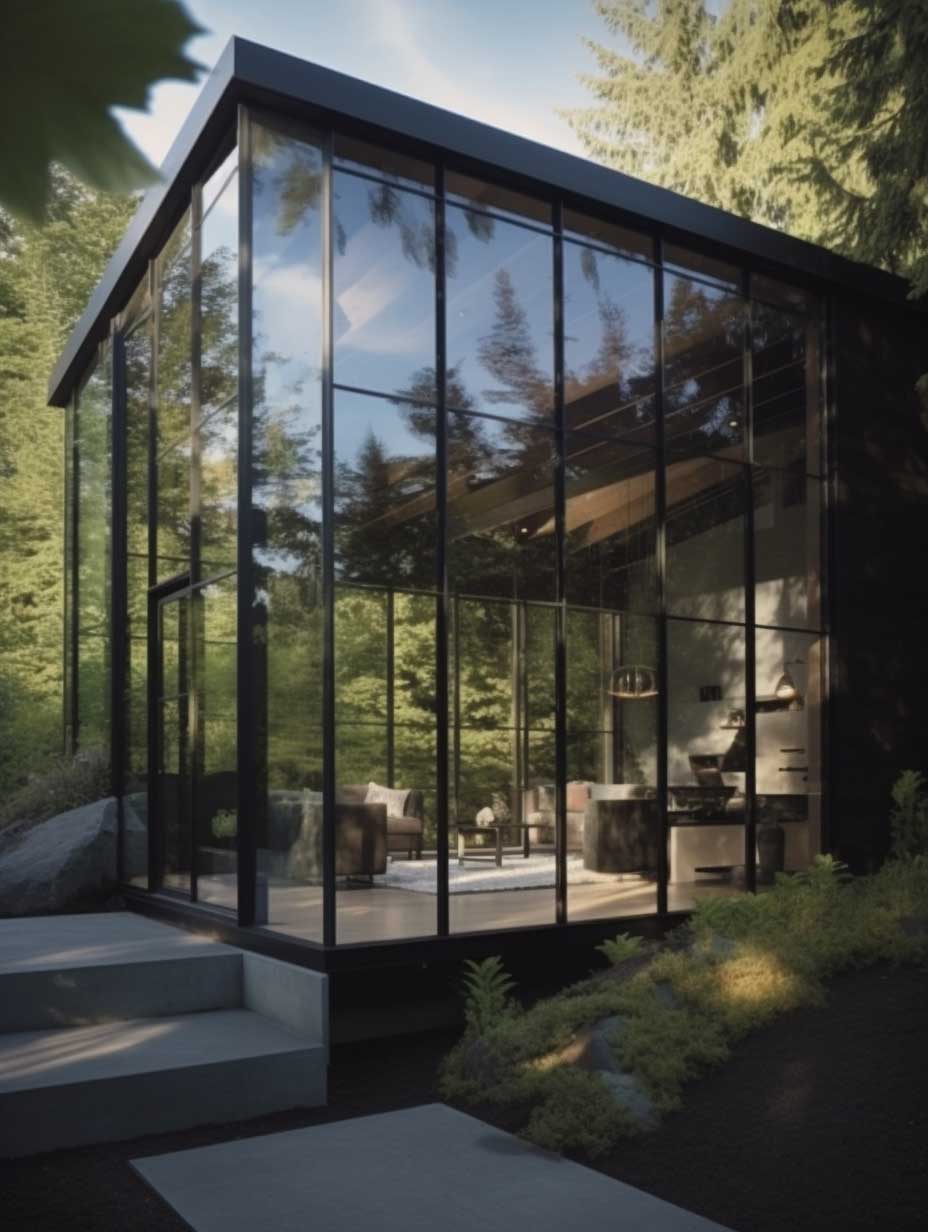
A glass atrium is essentially a vertical light shaft — and the difference it makes to rooms that would otherwise be interior and dark is dramatic. You’re not just lighting a central space; you’re borrowing daylight for everything around it. In narrow urban rowhouses, a rear atrium extension with glass walls can bring midday sunlight to a kitchen that hasn’t seen direct sun in twenty years. That’s not a renovation — that’s a different house.
Size range for residential atriums is genuinely wide. A modest central lightwell might be 6×6 feet in plan — enough to illuminate a stairwell and create a vertical focal point. A full multi-story atrium spanning the building height with structural glass walls is a $150,000+ element before you add finishes. The structural glass itself — frameless systems from Cantifix or Sedak — typically runs $400–$700 per square meter at the glass face, with the steelwork and foundations carrying additional cost. Don’t let a contractor talk you into a cheaper framed system if the visual goal is maximum transparency; the frame becomes the whole aesthetic.
Ventilation in atriums gets ignored until someone uses the space in August. Automated ridge vents with rain sensors — FAKRO’s FTT U8 roof windows work well in atrium applications — cost $800–$1,400 per unit and save you from a greenhouse situation. Cross-reference your spec with the building’s orientation before fixing vent positions. A north-facing atrium needs different treatment than one that catches south sun all afternoon.

Curved Exterior Glass Walls Need the Frame to Vanish or the Whole Thing Falls Flat
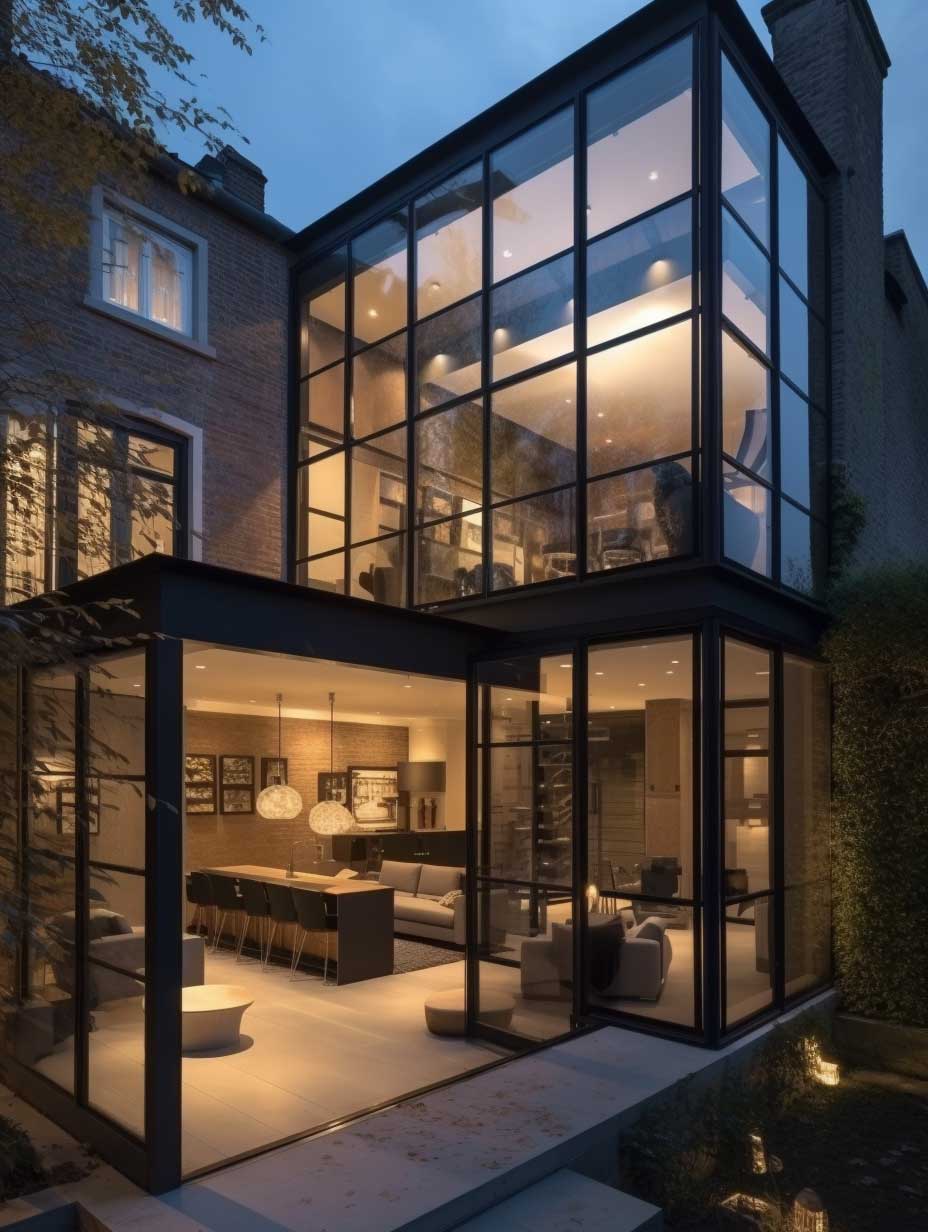
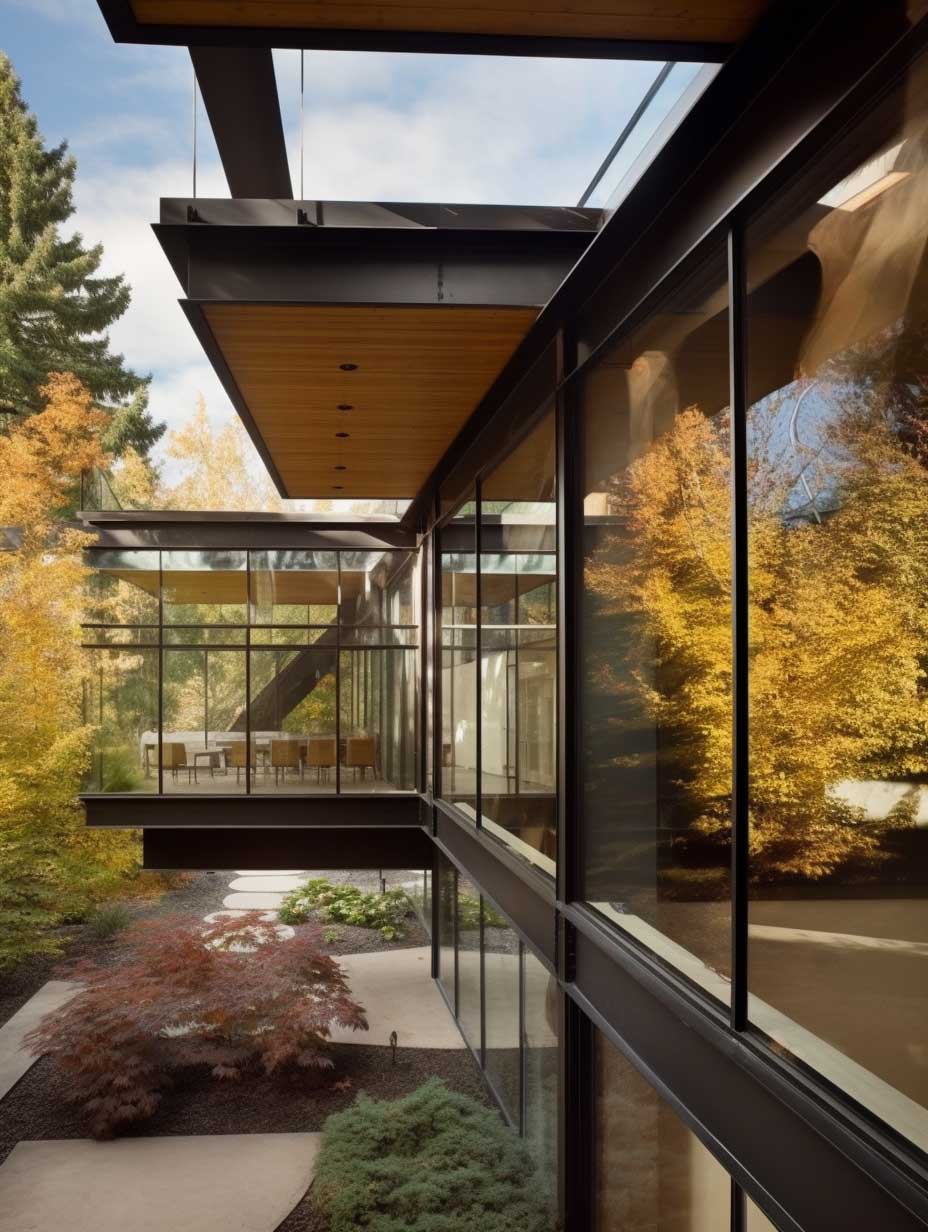
Curved glass walls are the hardest thing to do badly without it looking immediately wrong. A curve in glass is the architectural equivalent of a bold italic — it demands commitment. Half-hearted curves with heavy frames look like a 1990s hotel lobby remodel. Done right, with minimal structural glass fins or a bent aluminum system that nearly disappears, the result is something that genuinely photographs differently from every angle. I stole this observation from a photographer friend who shoots architecture for a living: curved walls never have a bad angle.
Structural glass systems from companies like Pilkington Planar or Cricursa can form gentle curves without conventional framing. Cold-bent glass — where a flat pane is mechanically curved during installation rather than heat-formed — keeps costs more manageable: typically $200–$400 per square meter versus $600+ for hot-bent panels. The radius matters; cold-bent glass tolerates curves to roughly 1:200 aspect ratios before optical distortion becomes a problem. Sharper curves require hot-bent glass and significantly more budget.
Thermal performance on curved exterior glass walls requires more attention than flat applications. The curvature affects how solar gain accumulates across the surface through the day, and a convex south-facing curve can concentrate heat load in unexpected ways. Specify low-E coatings on the outer pane regardless of climate. Skip untreated curved glass in hot regions — I’ve seen dining rooms behind a curved south-facing glass wall become genuinely unusable between noon and 4pm in summer without any solar control.


What consistently goes wrong with exterior glass walls
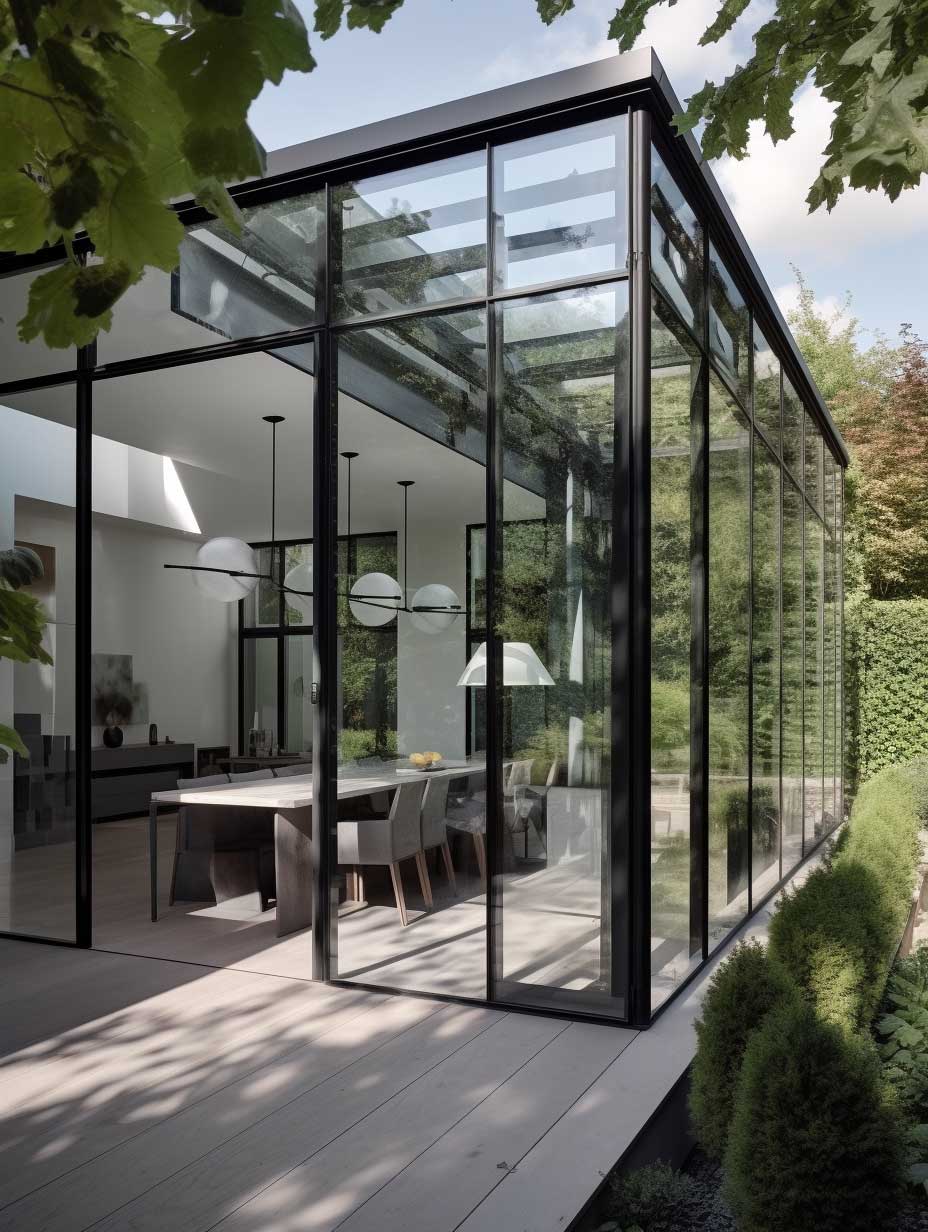
- Wrong orientation first: Placing a full glass wall on a south-facing elevation with no overhang or shading strategy. The room becomes uninhabitable in summer regardless of how beautiful the glazing is.
- Skipping the structural engineer early: Glass walls transfer loads differently than conventional walls. Discovering this after the design is fixed adds $15,000–$40,000 in remedial steelwork.
- Cheap frame profiles: Wide aluminum frames that eat 20–30% of the glass area undermine the transparency effect completely. If the frame is the first thing you see, the system has failed.
- No integrated drainage at the base: Rain and condensation need a path out. Builders who skip the drainage channel create water ingress problems within the first winter.
- Over-tinting for privacy: Heavily tinted glass makes the interior feel permanently overcast. Handle privacy with landscaping, motorized blinds, or smart glass — not permanent tint.
Glass Wall Greenhouses Attached to the House Change How You Garden in January
An attached glass wall greenhouse is not the same thing as a freestanding garden shed with glass panels. When the greenhouse shares a wall with the house — usually through a sliding or folding glass system — the growing space becomes part of daily life rather than a weekend destination. You can water herbs in slippers. That accessibility is what converts casual gardeners into year-round growers.
Ventilation is the critical spec. A closed glass greenhouse without adequate ridge and side venting reaches temperatures that kill most edibles before noon on a clear June day. The standard calculation is vent area equal to 20% of the floor area — so a 120-square-foot greenhouse needs 24 square feet of operable vent. Automated vent openers from Bayliss or Autovent activate at a preset temperature (typically 60°F) and cost $35–$85 per unit. Install at least two, one high and one low, for proper cross-flow. This is the single thing I wish someone had told me before my first greenhouse project.
Glass selection for greenhouses differs from standard exterior walls. Horticultural glass is cheap and transmits high UV — good for plants but poor for the adjacent living space if you’re looking through it. Toughened safety glass with a selective wavelength coating lets visible light through while reducing UV and heat — Pilkington Activ Blue is worth looking at for residential greenhouse applications around $35–$55 per square meter. For a cold-climate attached greenhouse, add a thermal break between the house wall and the glass structure to prevent condensation forming on the interior house wall.

Sunrooms with Exterior Glass Walls Earn Their Square Footage in October
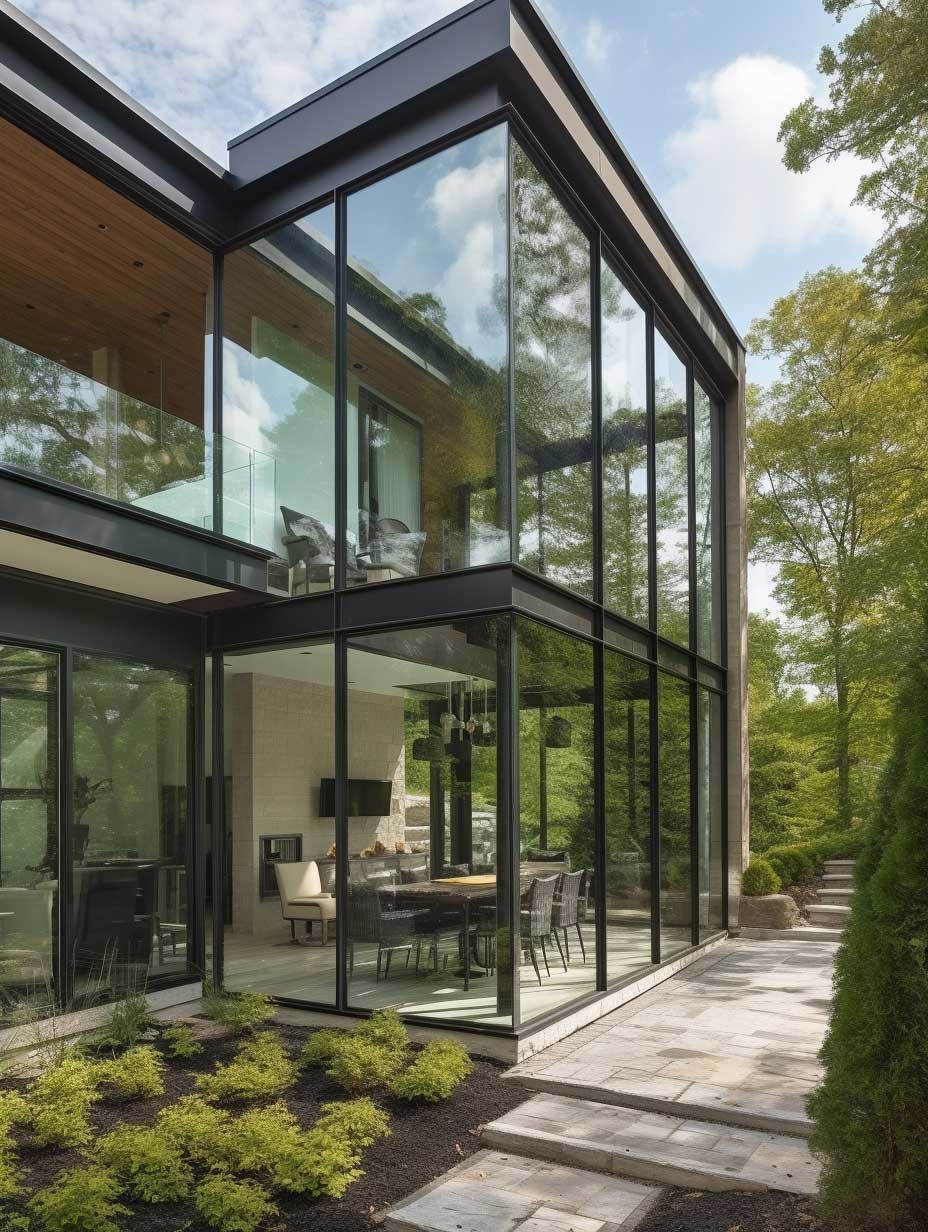
A glass wall sunroom is where the return on investment becomes most legible for a typical homeowner. You’re adding a room that functions as a buffer zone between the heated house and the cold outdoors — which means the rooms adjacent to it stay warmer without the heating system working harder. Passive solar gain does real thermal work in a well-oriented sunroom: south-facing exposure with a thermal mass floor (polished concrete or slate, both around $6–$12 per square foot installed) stores daytime heat and releases it in the evening.
Orientation is not decorative here. A south-facing sunroom in a northern hemisphere location gets useful solar gain nine months of the year. An east-facing one gets great morning light and cool afternoons — fine for a breakfast room but not a thermal asset. West-facing sunrooms overheat in summer afternoons unless you specify solar control glass and significant external shading. I’d push back on any architect who places a sunroom on the north elevation purely for view without explaining the thermal tradeoffs.
Furnishing a glass sunroom requires thinking about UV exposure and temperature swing. Fabric fades faster near uncoated glass — go with Sunbrella or a similar solution-dyed acrylic for cushions. Rattan and powder-coated aluminum handle the temperature range better than upholstered wood furniture. Transparent Living on ArtFasad covers the broader glass house design principles that apply directly to sunroom planning.


Rooftop Terraces Gain a Whole Season When You Add Exterior Glass Walls
Glass windbreaks on a rooftop terrace are one of those additions that feels unnecessary until the first autumn evening you actually use the terrace because of them. Exposed rooftop conditions — wind, temperature differential, urban noise — all compress the usable season to about four months without some kind of glass perimeter. Add structural glass balustrades or low glass wind screens and the season stretches to eight or nine months in most temperate climates. That’s the math that justifies the spend.
Structural glass for rooftop applications needs to meet different standards than ground-floor exterior walls. Impact resistance, wind load calculations at elevation, and UV stability all demand laminated safety glass — typically two layers of toughened glass with a PVB interlayer. AGC’s Stratobel or Pilkington Optifloat laminated variants meet the structural requirements and are available in low-iron versions (around $95–$140 per square meter) that significantly reduce the green tint that standard float glass carries at the edge.
Drainage on rooftop terraces is non-negotiable and often under-specified. Glass walls create new water channeling patterns — rain that would previously blow off the terrace now collects at the base of the glass perimeter. Specify linear drains at every glass base and make sure the waterproofing membrane turns up 150mm behind the glass frame. Contractors who skip this create leak paths into the floor below within the first year. My standard advice: get a roofing specialist to review the drainage design independently before the glass contractor starts work.


Indoor-Outdoor Pool Enclosures in Glass Need Laminated Panels, Not Standard Float
Adding exterior glass walls to a pool enclosure is the luxury application with the longest payback — you extend the swimming season by months, control humidity and chloramine off-gassing, and create a space that photographs extraordinarily well. Retractable glass wall systems — NanaWall’s FoldFlat and GLASSWALL’s SL45 are the two I’ve seen specified most often for pool enclosures — allow the walls to open fully on warm days so the space functions as a true outdoor pool. Close them in October and you’re swimming in November with a glass room around you. That shift in seasonality is the actual product.
Glass specification here is not the place to value-engineer. Chlorinated pool air is corrosive — aluminum frames need marine-grade powder coating or anodized finishes, not standard architectural anodizing. Standard glass sealants degrade in pool environments within two years; specify Dow Corning 995 or a silicone rated for pool chemical exposure. The glass itself should be laminated safety glass throughout — a broken pane falling into a pool is a serious injury risk, and tempered glass alone shatters into fragments rather than holding in place when cracked.
Humidity management inside a pool enclosure gets complicated fast. A vapor barrier behind the glass framing and active dehumidification — Calorex pool dehumidifiers are industry standard, running $3,000–$8,000 depending on pool size — prevents condensation damage to adjacent structures. Skip the dehumidification and your ceiling joists are wet within six months. Not a maybe. A definite.


Glass Wall Home Offices Work Because the Sky Replaces the Screen Saver
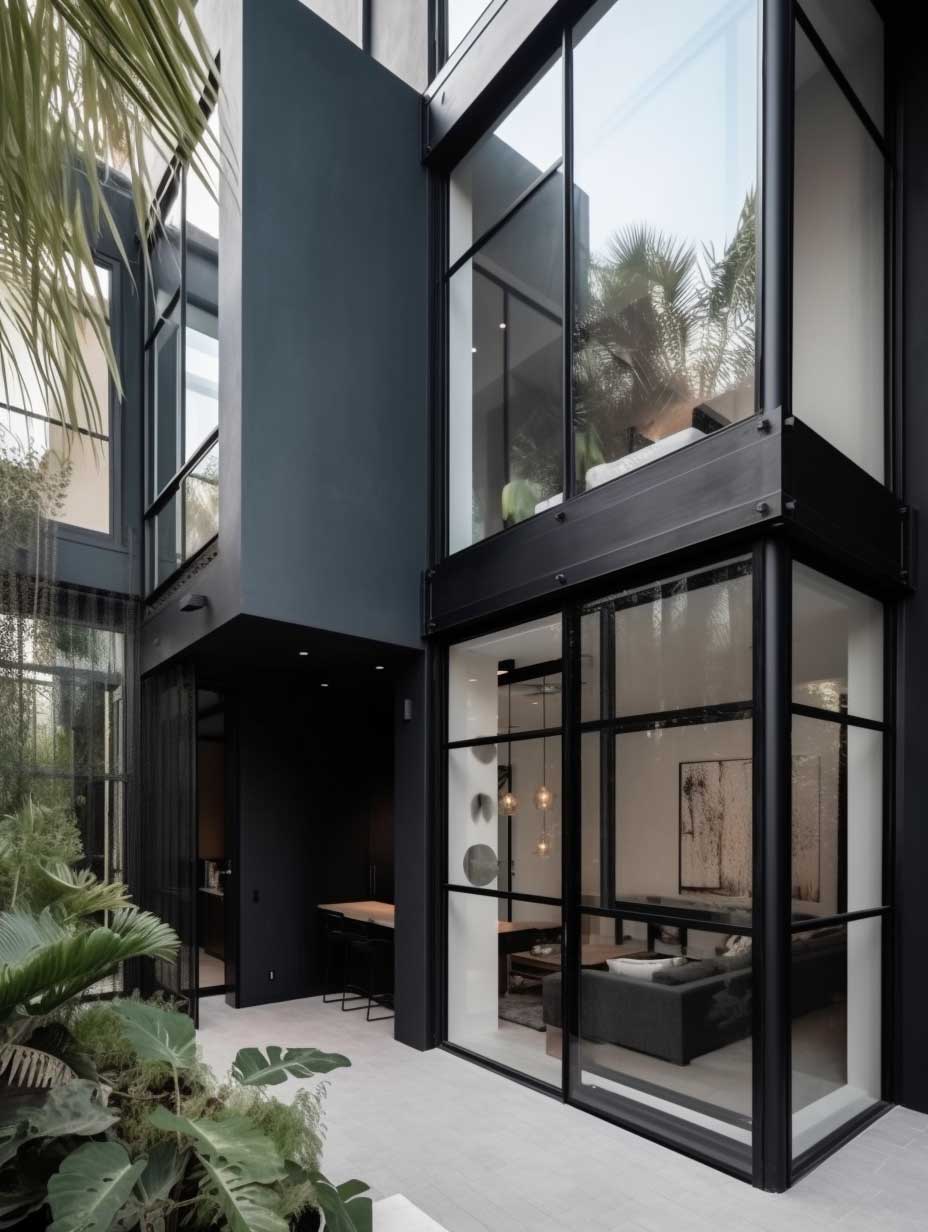
A home office with exterior glass walls changes the quality of the workday in a way that’s hard to quantify until you’ve experienced it. The visual rest that comes from looking at actual distance — trees, sky, changing light — rather than a second monitor is physiologically real. I’ve worked from glass-walled offices and generic interior offices, and the afternoon energy crash hits differently when the room isn’t sealed off from daylight. This isn’t interior design sentiment — it’s how human vision responds to depth and light variation.
Glare management is the technical problem. A glass wall behind a monitor means late-afternoon sun is blasting you in the face while your screen becomes invisible. The fix is either deliberate desk orientation — perpendicular to the glass face, not facing it — or external horizontal louvers that cut direct sun without blocking the view. Warema’s external venetian blind systems mount externally and retract in high winds; they cost $600–$1,400 per window but solve the glare problem permanently. Internal blinds are cheaper but fail to stop solar heat gain because the heat is already inside the room by the time it hits the blind.
Sound insulation matters in a home office in a way it doesn’t for a living room. Double-glazed units with asymmetric pane thicknesses — say 6mm outer and 10mm inner — perform significantly better acoustically than matching thicknesses at the same total weight. The acoustic glass specification from Pilkington (Optiphon range) achieves Rw 42–52 dB depending on the unit spec, which is enough to drop a busy street to background level. You’ll notice this on the first call you take near the glass without needing to explain the road noise to whoever you’re speaking with. Privacy strategies for glass-walled homes covers additional acoustic and visual screening approaches worth combining with office glazing specs.


Glass Wine Cellars Require UV Protection That Most Glaziers Won’t Mention First
A glass wall wine cellar is the display application where looking good and protecting your collection are directly at odds — unless you spec the glass correctly. Visible light is harmless to wine. UV is not. A standard clear glass wall transmits roughly 75% of incoming UV, which will damage a serious collection over months. Low-iron glass with a UV-blocking laminate interlayer — Solutia’s Saflex UV-absorbing PVB blocks 99.9% of UV — solves this without making the glass look tinted. It’s $15–$25 per square meter more than standard laminated glass. For a collection worth $5,000 or more, this is not a line item to negotiate away.
Temperature and humidity are the two specs that actually preserve wine. The glass wall itself contributes nothing to climate control — it’s decoration. What matters is the refrigeration unit behind it. Eurocave’s Modulocave and WhisperKool split systems are the two specs I see in serious residential cellars. Eurocave’s climate modules maintain 55°F at ±1°F variance, which is what serious wine storage requires — not the ±5°F tolerance that cheaper units deliver. Expect $3,000–$8,000 for a properly sized unit. The glass gets the photographs. The climate unit protects the bottles.
Lighting design inside a glass cellar wall makes or breaks the visual impact. LED strips behind the racks — cool white renders the glass and bottles cleanly, warm white creates ambiance but muddles the transparency effect. My go-to is 2700K warm white at the floor and 4000K neutral on accent strips at the rack edges. Avoid halogen entirely: heat output from halogen close to bottles creates micro-climate variation that undoes your expensive climate control. Custom racking from Genuwine Cellars or Vigilant starts around $150–$250 per linear foot and is worth the price if the collection is the focal point of the room.


The Takeaway
Exterior Glass Walls Fail the Same Way Every Time — Wrong Orientation, Wrong Frame, No Drainage Plan
Every application in this piece — from backyard glass walls to pool enclosures to rooftop terraces — succeeds or fails on three decisions made before a single panel is ordered: which direction the glass faces, how visible the frame is, and where the water goes.
Get those three right and the glass does everything else for you. The light enters, the view lands, the room changes. Get them wrong and no amount of beautiful glazing covers the gap.
Save this post before you meet with your architect — the spec details and brand references here are the questions you want to ask in that first meeting.
Related Topics