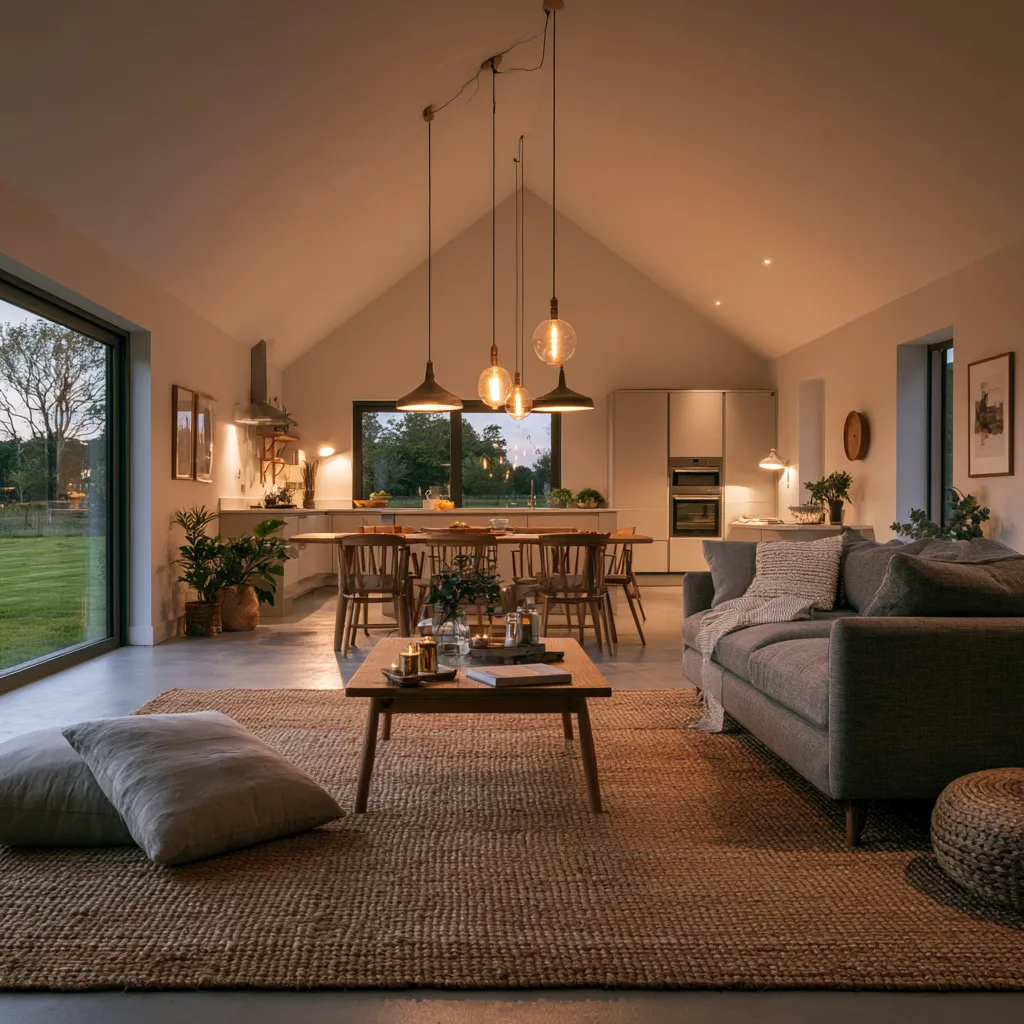
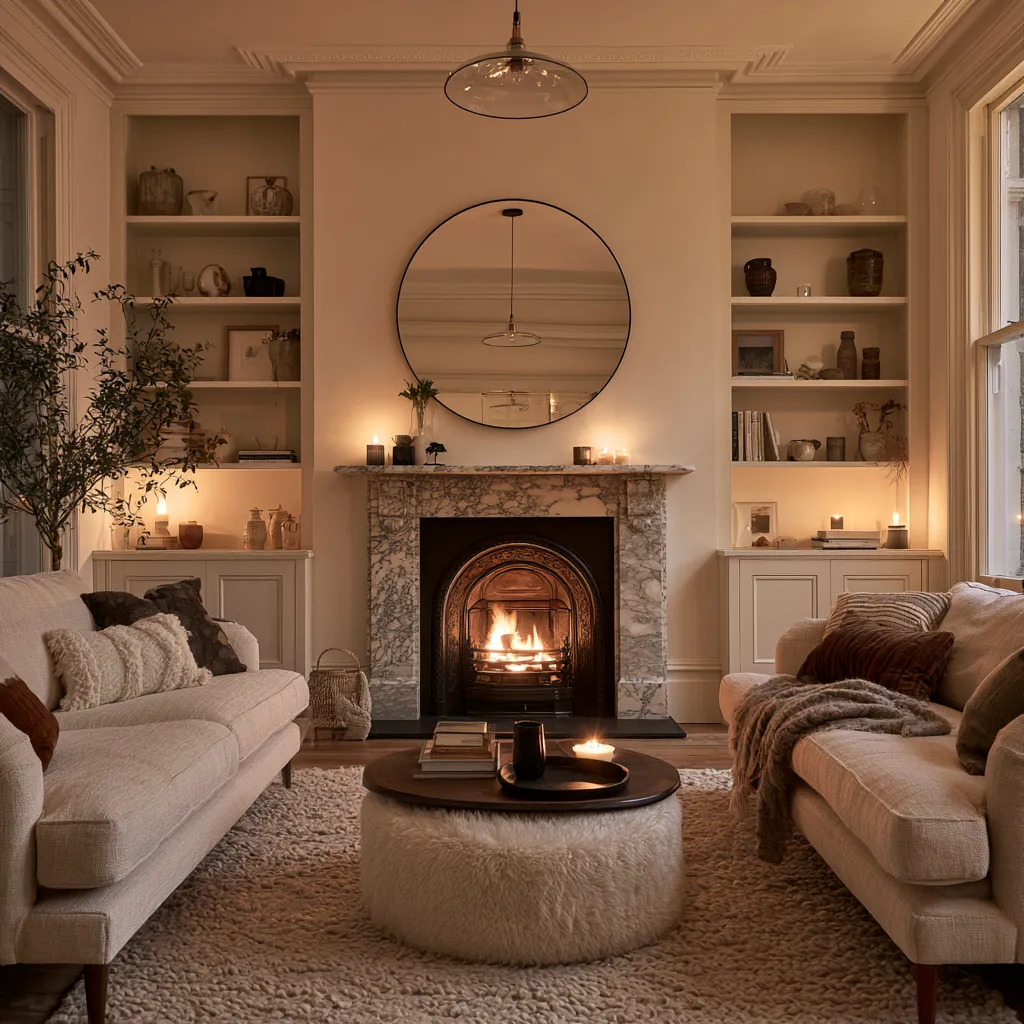
Asian paints colour trends for living rooms have moved well past safe beige — the 2025 shade card is pushing Sky Blue, Smoky Grey (code 9458), Olive Green, and Mustard Yellow as primary wall choices for halls and drawing rooms. I’ve tested swatches of all four under both Indian afternoon sun and evening LED, and the difference in mood is not subtle. Picking the wrong one for your room’s orientation costs you money and a weekend. Pick the right one and your living room feels 30 percent bigger — or cozier, depending on what you’re after.
The queries I see most often land on one real question: which Asian Paints colour combination actually works for my hall, not just in a studio photograph. This post covers four shade families with specific pairing codes, a Morning Glory (0765) combination breakdown, and the grey mistake I see in nearly every drawing room I visit.
What this post covers
- Sky Blue Serenity for living rooms — when it works and when it flattens
- Smoky Grey (9458) — the hall colour that most people apply wrong
- Olive Green — the one Asian Paints shade that pairs with both wood and metal
- Mustard Yellow (Mastard Yellow) — how to use it without the room looking like a kitchen
- Morning Glory (0765) colour combination for the drawing room
- Colour combination codes for hall and bedroom walls
- FAQ covering real GSC queries: shade cards, UAE trends, bedroom combos
Sky Blue on Living Room Walls Works Until You Get the Undertone Wrong
Sky Blue Serenity from Asian Paints reads completely differently in a north-facing hall versus a south-facing one. I learned this by painting my own drawing room in it and hating the result until I added warm-white trim — the blue went from clinical to coastal in one afternoon. The shade pulls cool in low light and opens up dramatically when sunlight hits it directly. If your hall gets good morning light from the east, this is your best colour for living room walls, full stop.
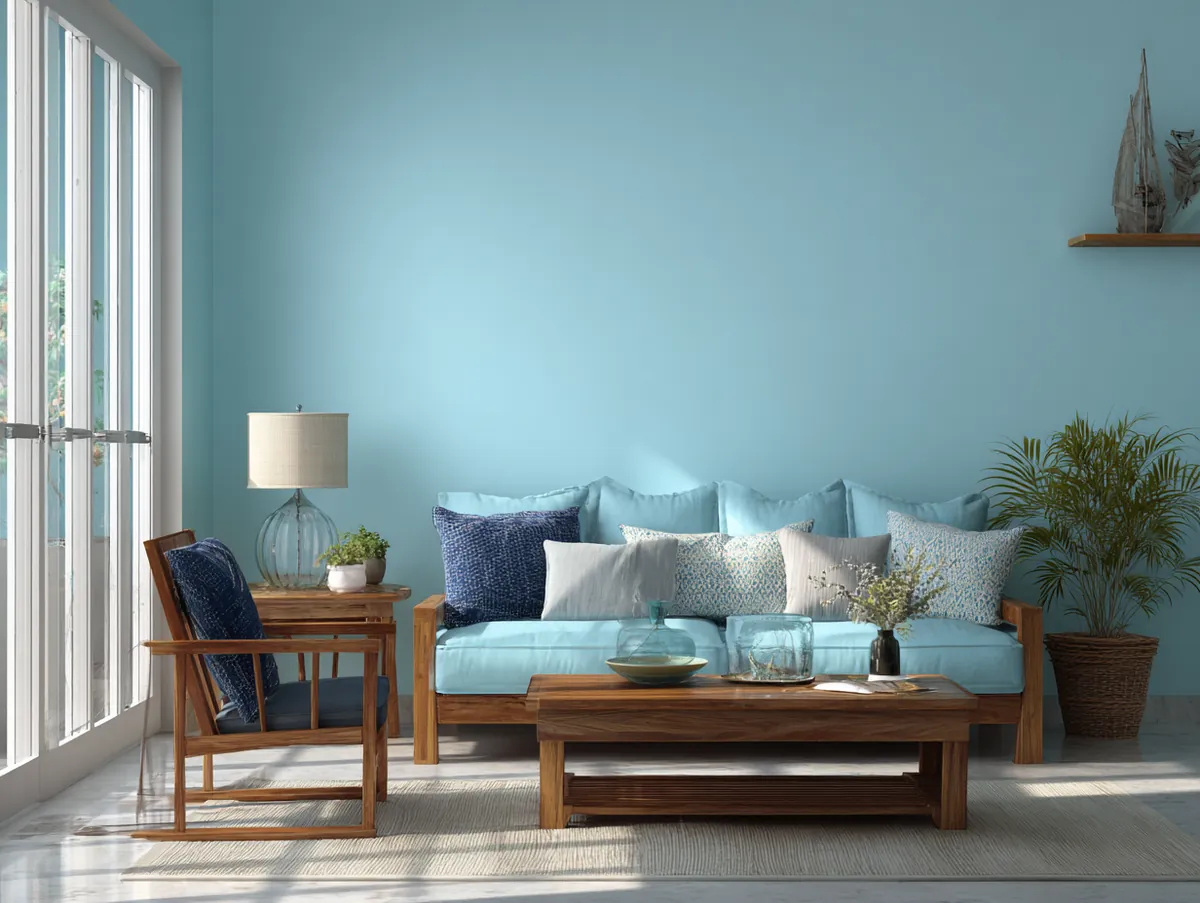
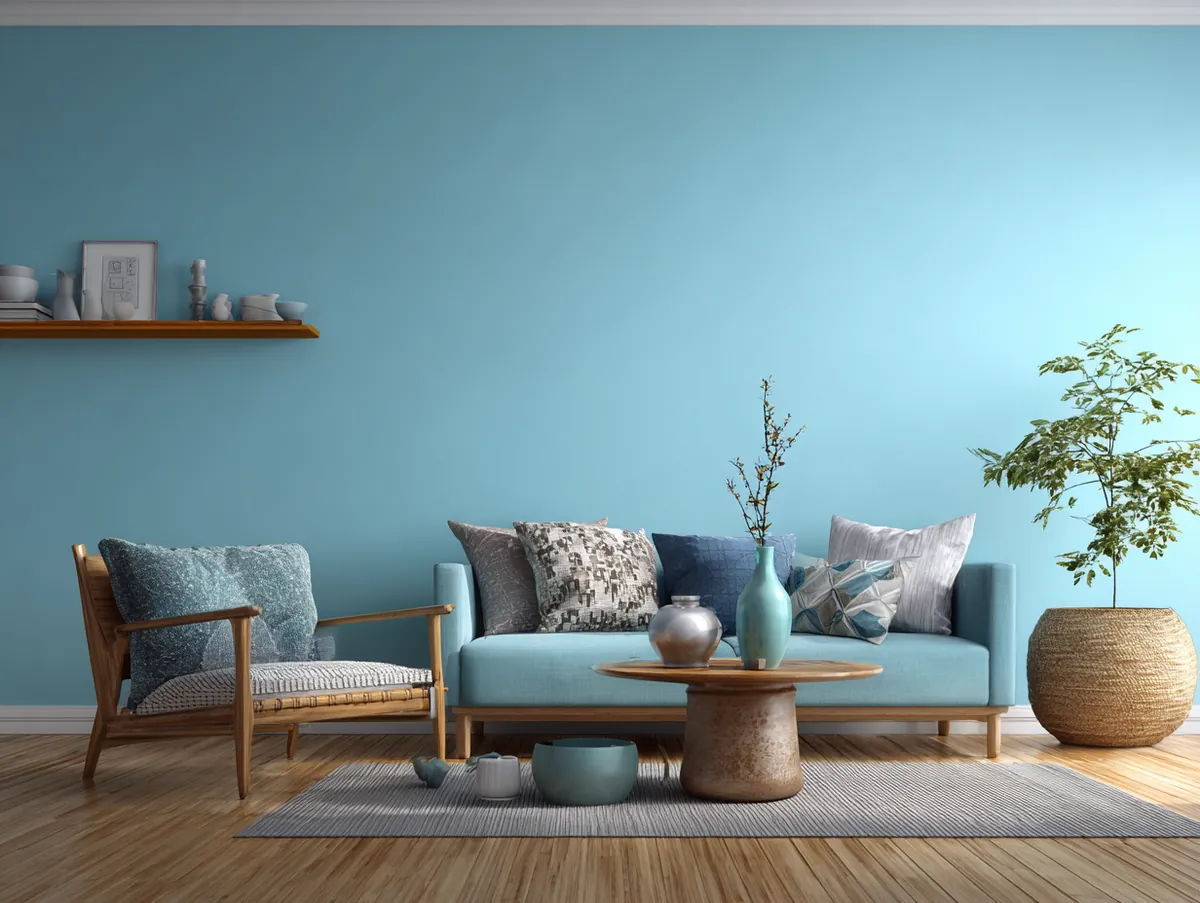
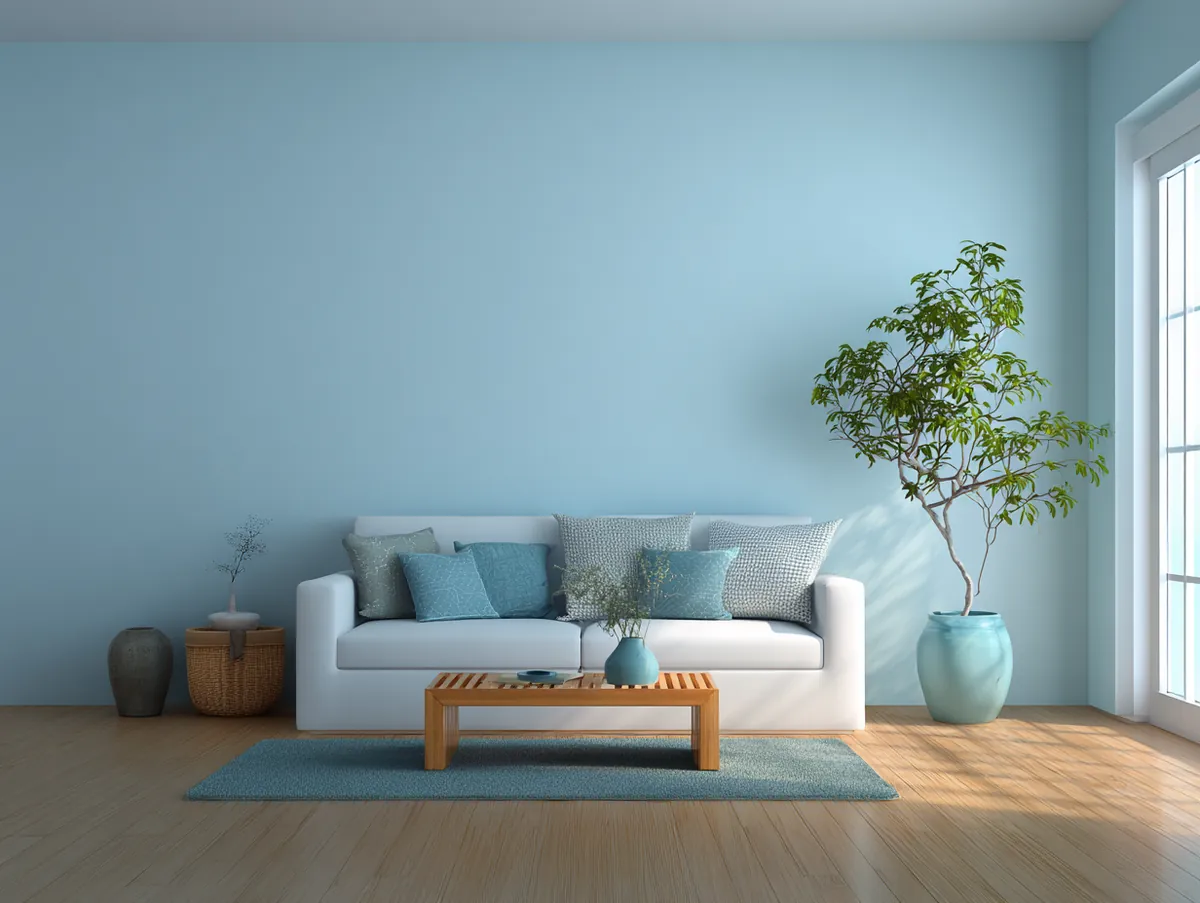
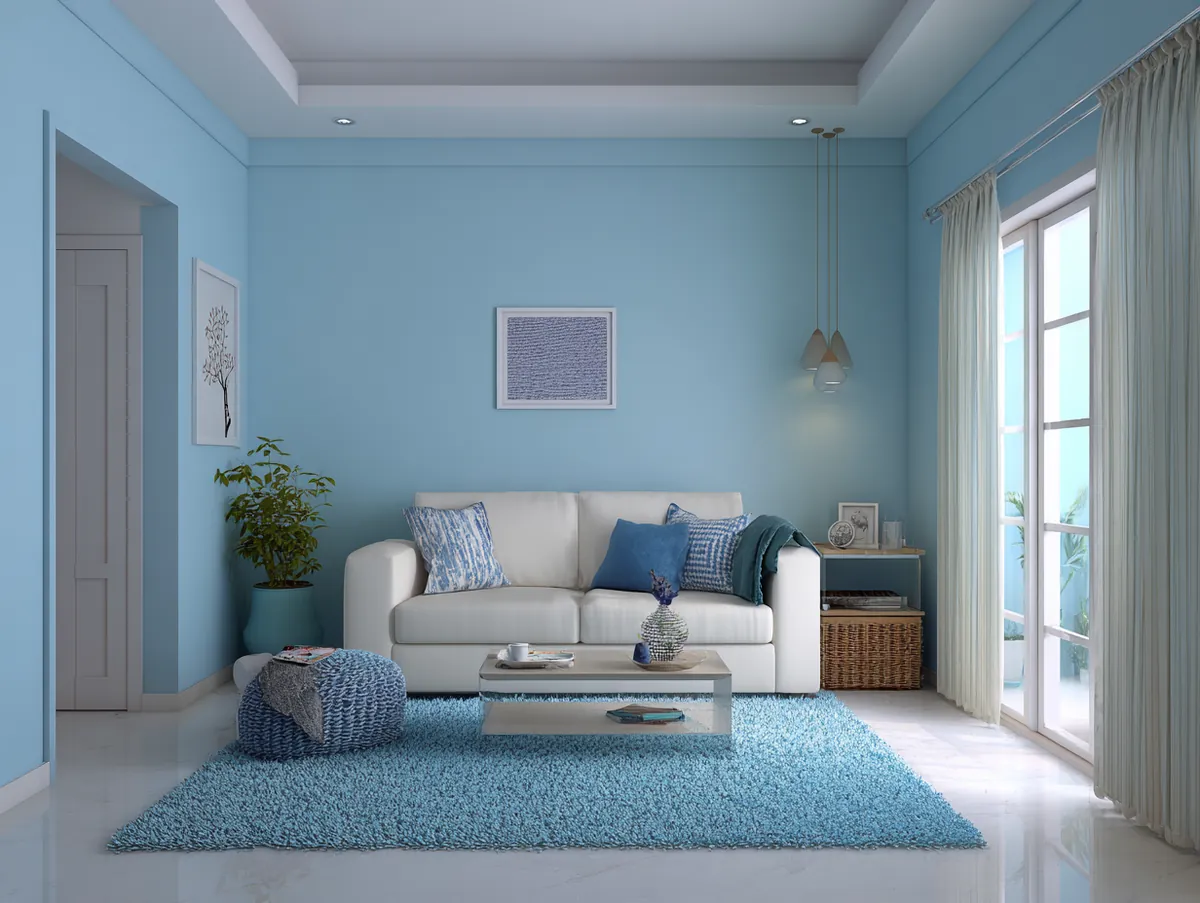
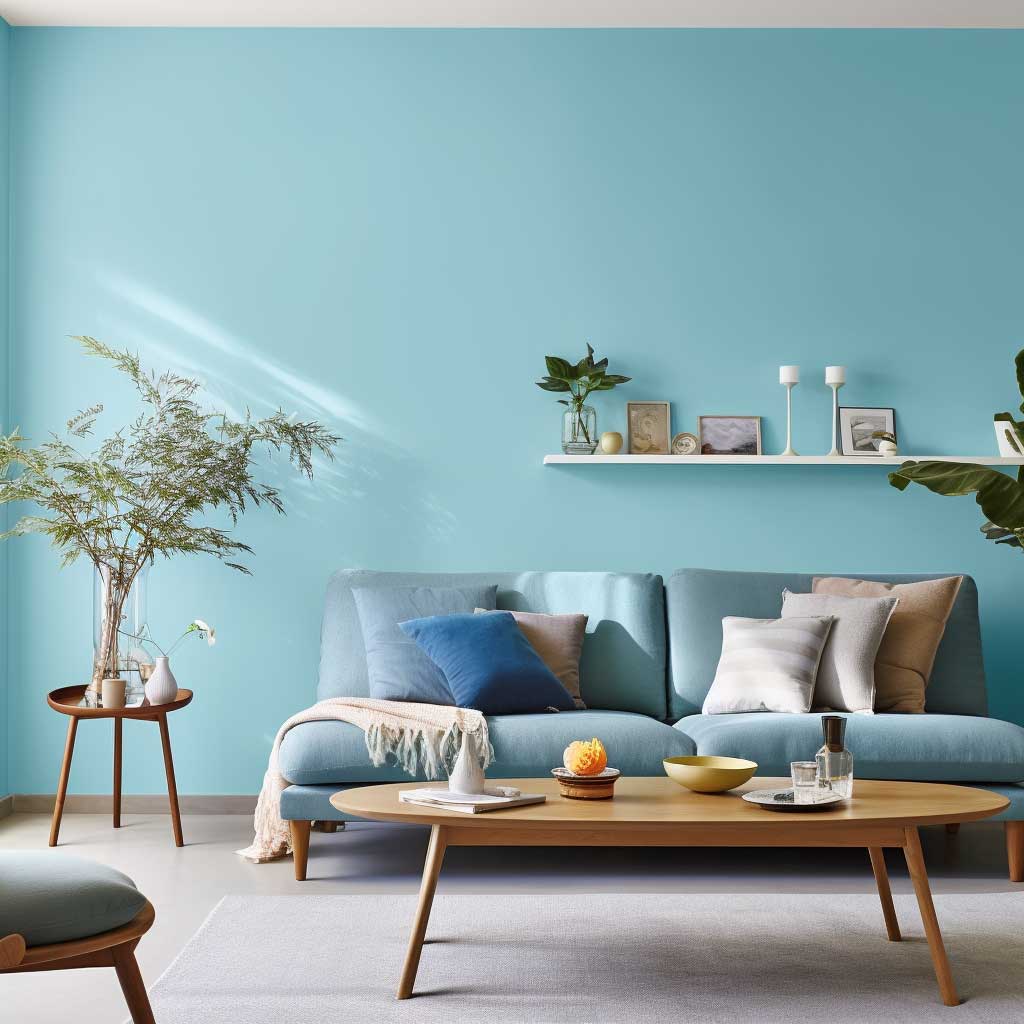


Pair it with white or off-white furniture (IKEA KIVIK in beige works perfectly, around $600 for a three-seater) and you get the coastal look without trying too hard. Navy or charcoal throw cushions add depth rather than clash. The mistake I see constantly: combining Sky Blue Serenity with cool grey accessories. The room ends up looking like a dental clinic. Bring in one warm wood element — a teak side table, a woven rattan pendant — and the whole scheme warms up without losing the airy quality.
You need at least two coats of Royale Aspira for this shade to pop properly. Single-coat applications go streaky and the blue looks washed out under artificial evening lighting. Asian Paints Royale Aspira retails around ₹250–₹330 per litre in a 20-litre pack — factor that into your budget before you fall in love with the shade. For a standard 12×14 hall, you’re looking at roughly ₹4,000–₹5,500 for two coats including ceiling trim.
What doesn’t work: sky blue on all four walls in a room under 120 sq ft. I tried this. It felt like the inside of a swimming pool. Do one accent wall behind the sofa and keep the remaining three in Morning Glory (0765) or a warm white. That single wall carries all the colour payoff without the claustrophobia.
Smoky Grey (9458) for the Hall — the Shade That Reads Completely Different by 7 PM
Smoky Grey (shade code 9458) is the Asian Paints colour I recommend most often for drawing rooms and halls, and also the one people apply most incorrectly. During the day, under natural light, it reads as a sophisticated warm taupe-grey. After 7 PM under warm LEDs, it shifts to something close to sand — which is not a bad thing if you’ve planned for it. The problem is that most people pair it with cool-white furniture and then wonder why the room feels muddy at night.
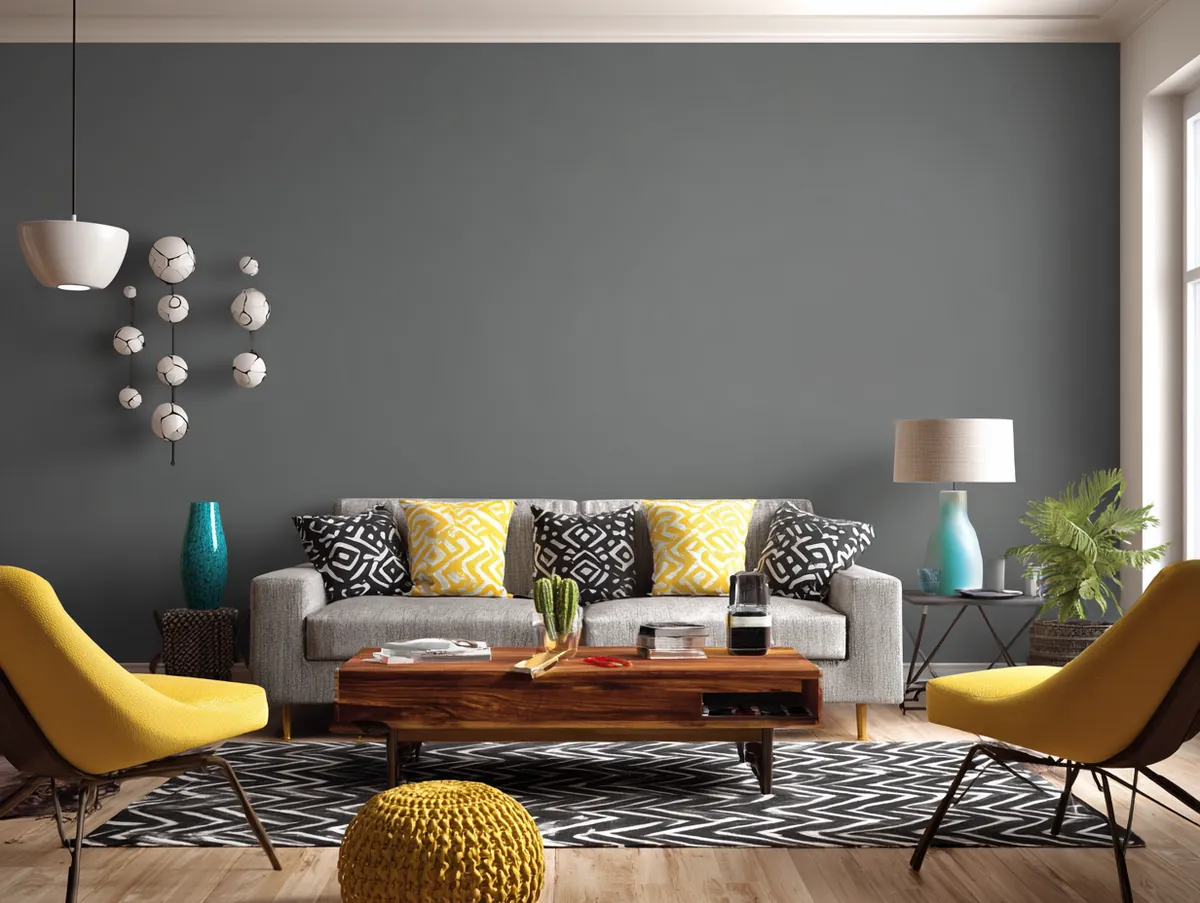
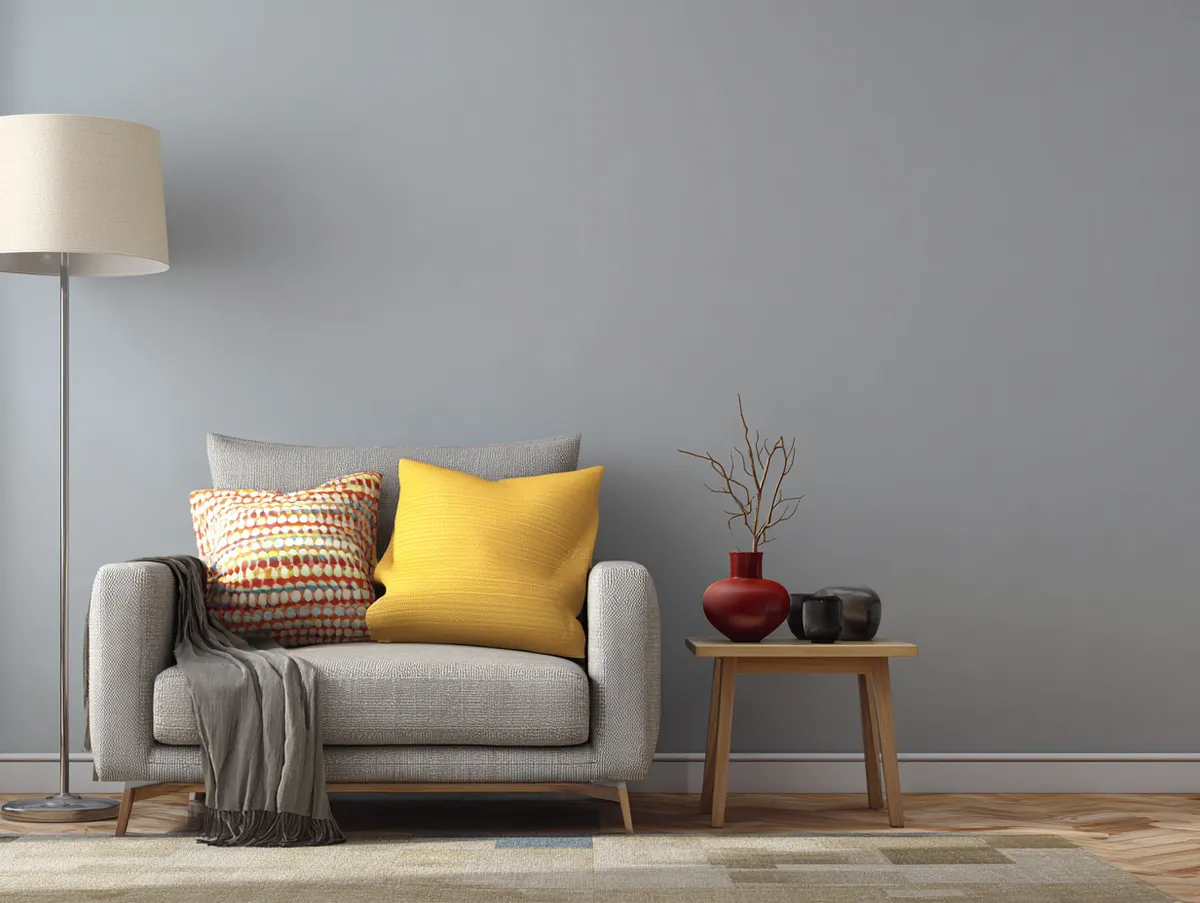
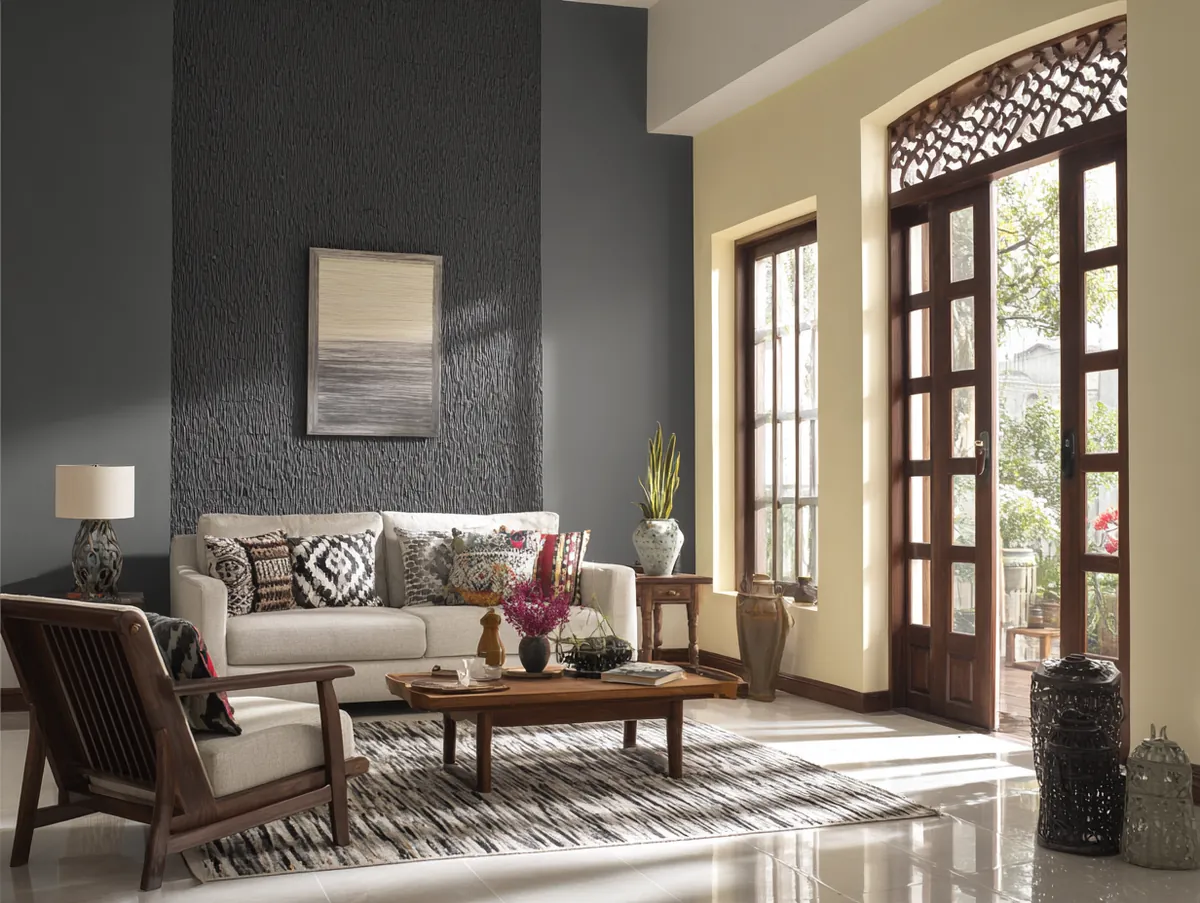
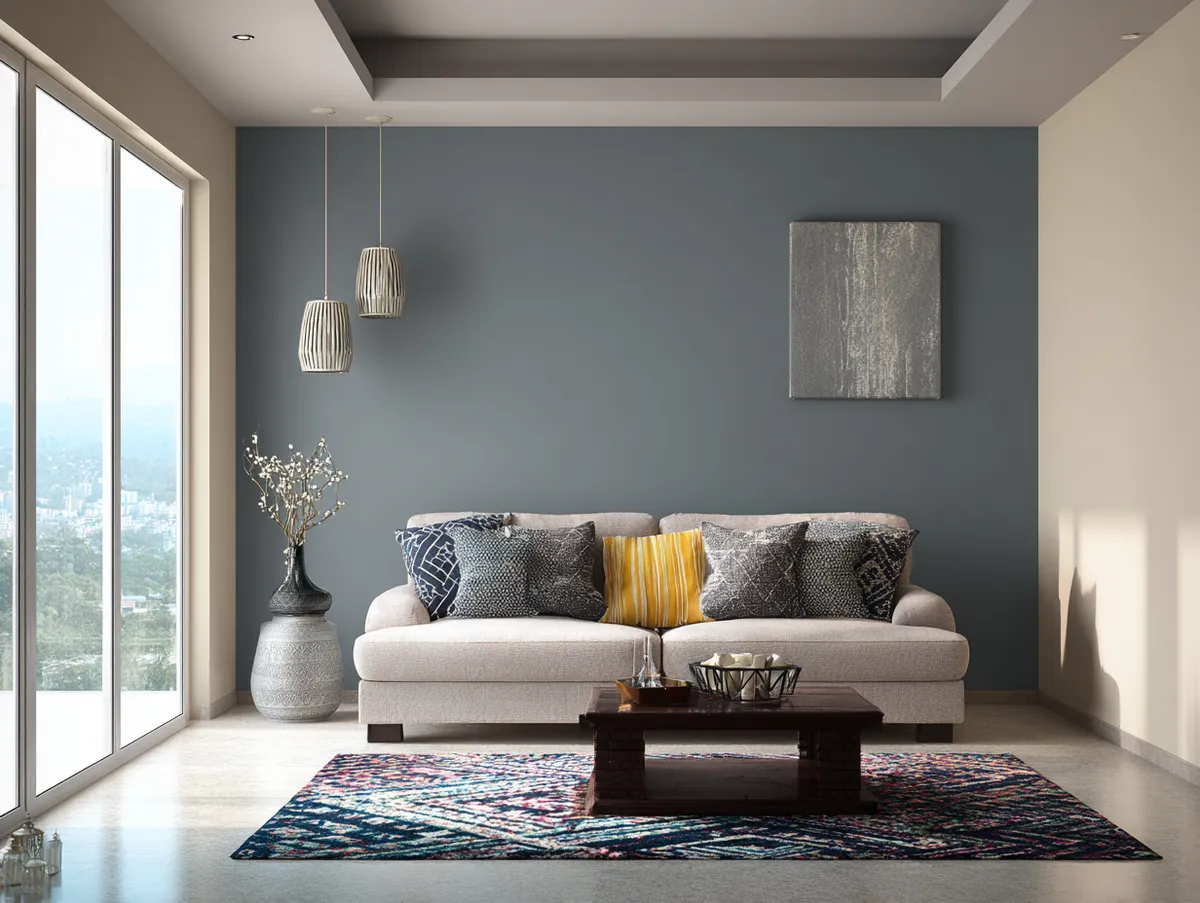

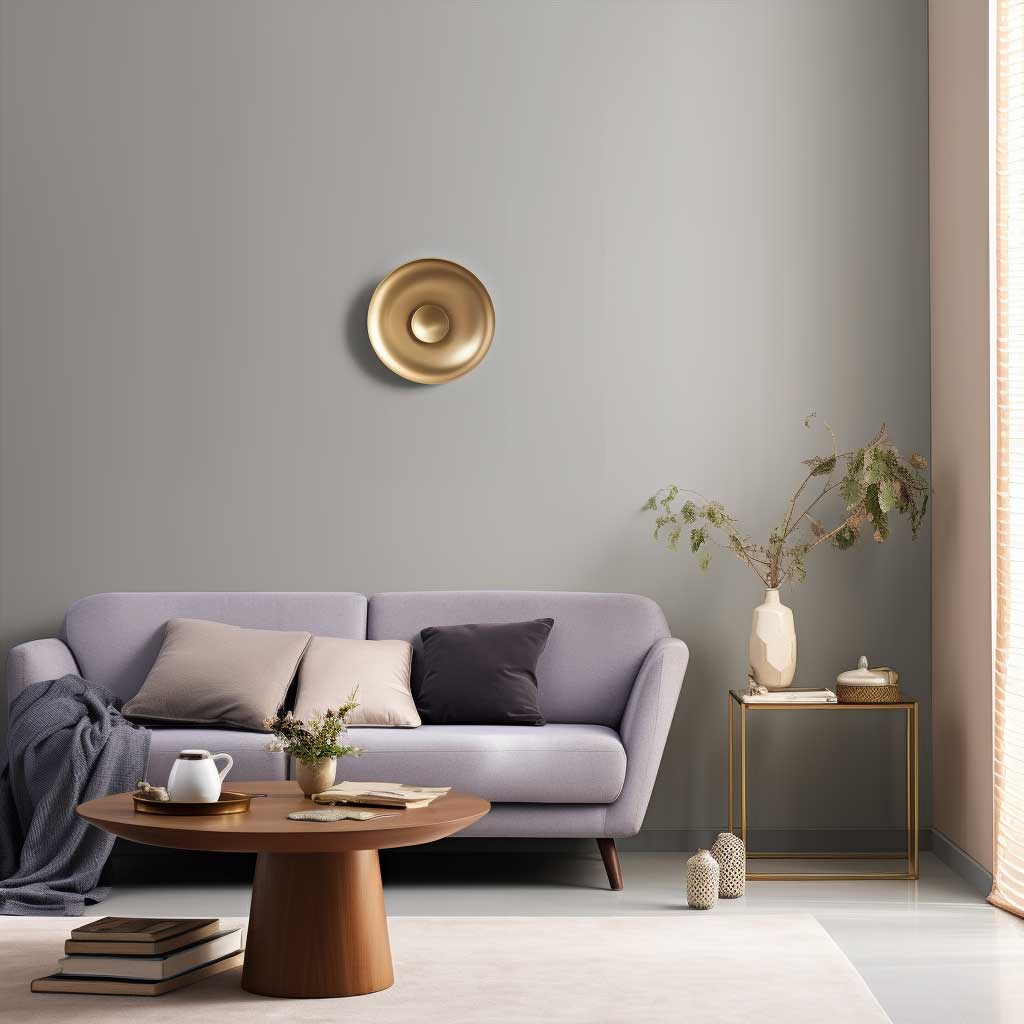
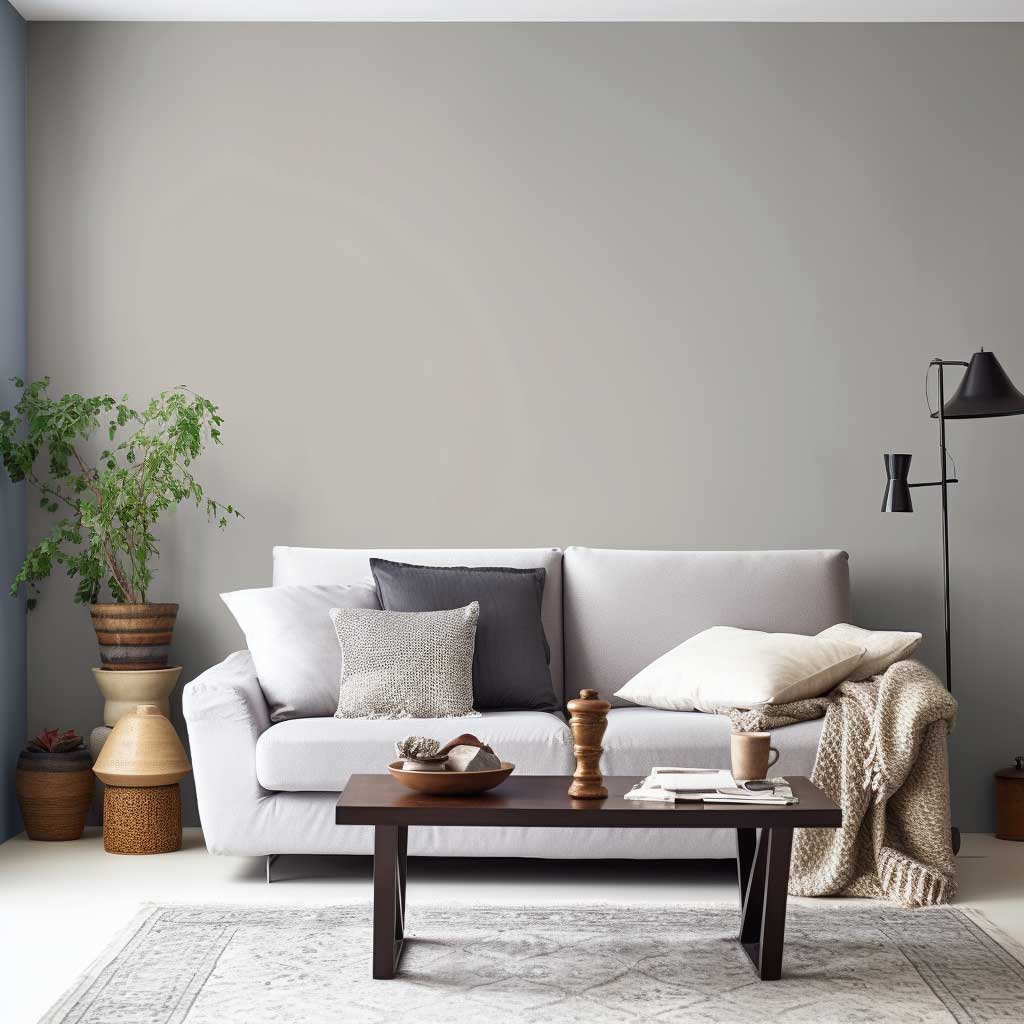
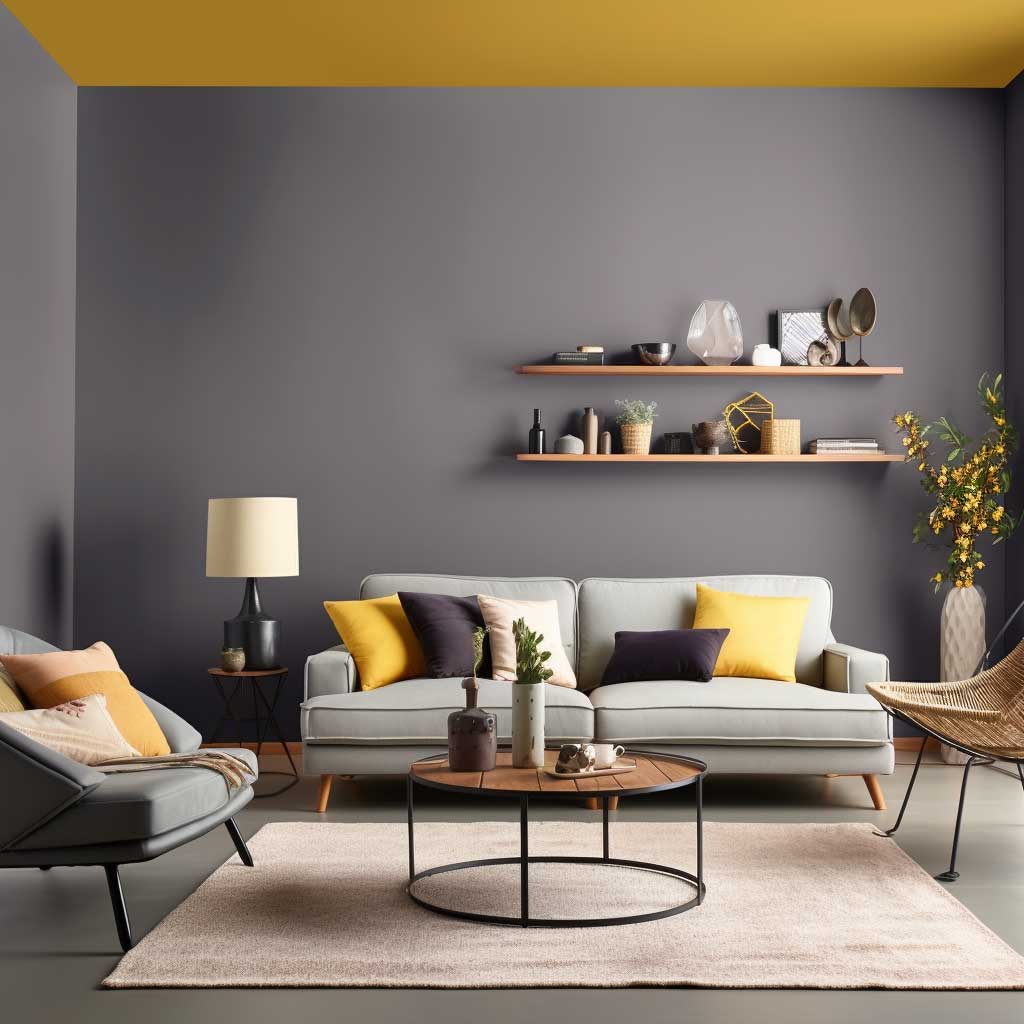
My go-to combination for Smoky Grey walls: walnut or teak furniture, a mustard or rust-orange throw, and matte black hardware on any cabinet doors. This formula works because the grey’s warm undertone connects to the wood, and the mustard bridges the grey and the wood without feeling forced. Avoid pairing with bright yellow or mint green — both kill the grey’s natural warmth and make the room look like a fast-food interior. See how grey holds up against other modern living room shades in this comparison.
Grey for the bedroom works on exactly the same logic. Asian Paints Smoky Grey in a bedroom pairs well with cream or ivory bed linen — I own a Treca Paris set in ecru that looked absolutely right the moment I moved it into a grey room. The trap is adding too many dark accents. One black element is interesting. Three black elements look like a mistake. The grey shade Asian Paints recommends for bedrooms specifically is Elegant Grey (code 8232), which runs slightly cooler and handles artificial light better than 9458 in sleeping spaces.
Don’t Do This with Grey
Don’t paint all four walls in Smoky Grey and then add a feature wall in a second grey shade. I’ve seen this in three different renovation projects and it always reads as an accident rather than a design decision. The two greys fight each other under changing light and the room ends up looking unfinished. If you want a feature wall, go bold — mustard, olive, or terracotta — and keep the remaining three walls in your grey. The contrast gives the grey somewhere to breathe.
Olive Green Holds the Room Together When Every Other Colour Pulls in a Different Direction
Olive Green is not a trend colour. It’s a soil colour — earthy, grounded, and almost neutral in its ability to absorb other shades without argument. I’ve used it in three living room projects and it behaves like a slightly opinionated beige: it has a point of view, but it doesn’t bully. The shade Asian Paints produces in this family sits firmly in the warm-yellow-green zone, which means it reads differently on north-facing versus south-facing walls — something worth verifying with a swatch before committing to a full room.
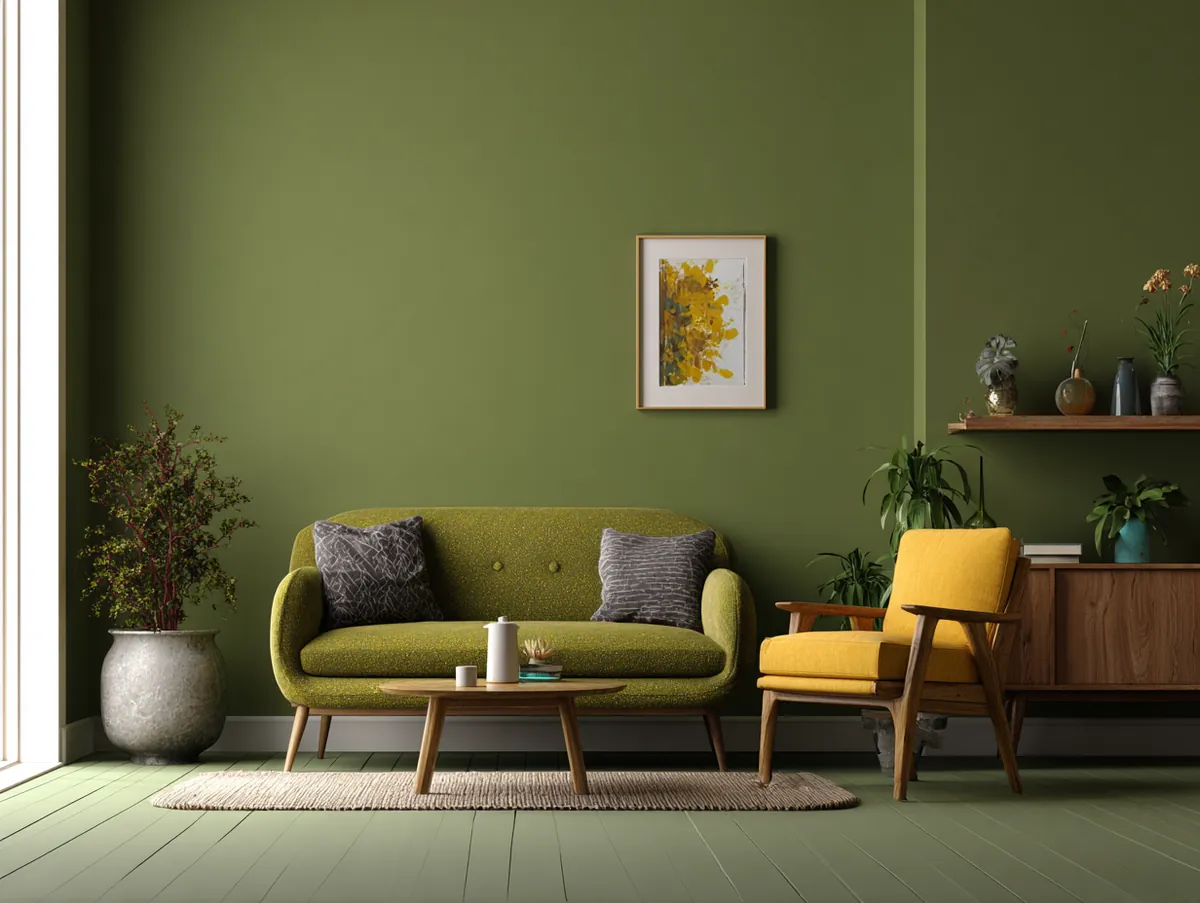
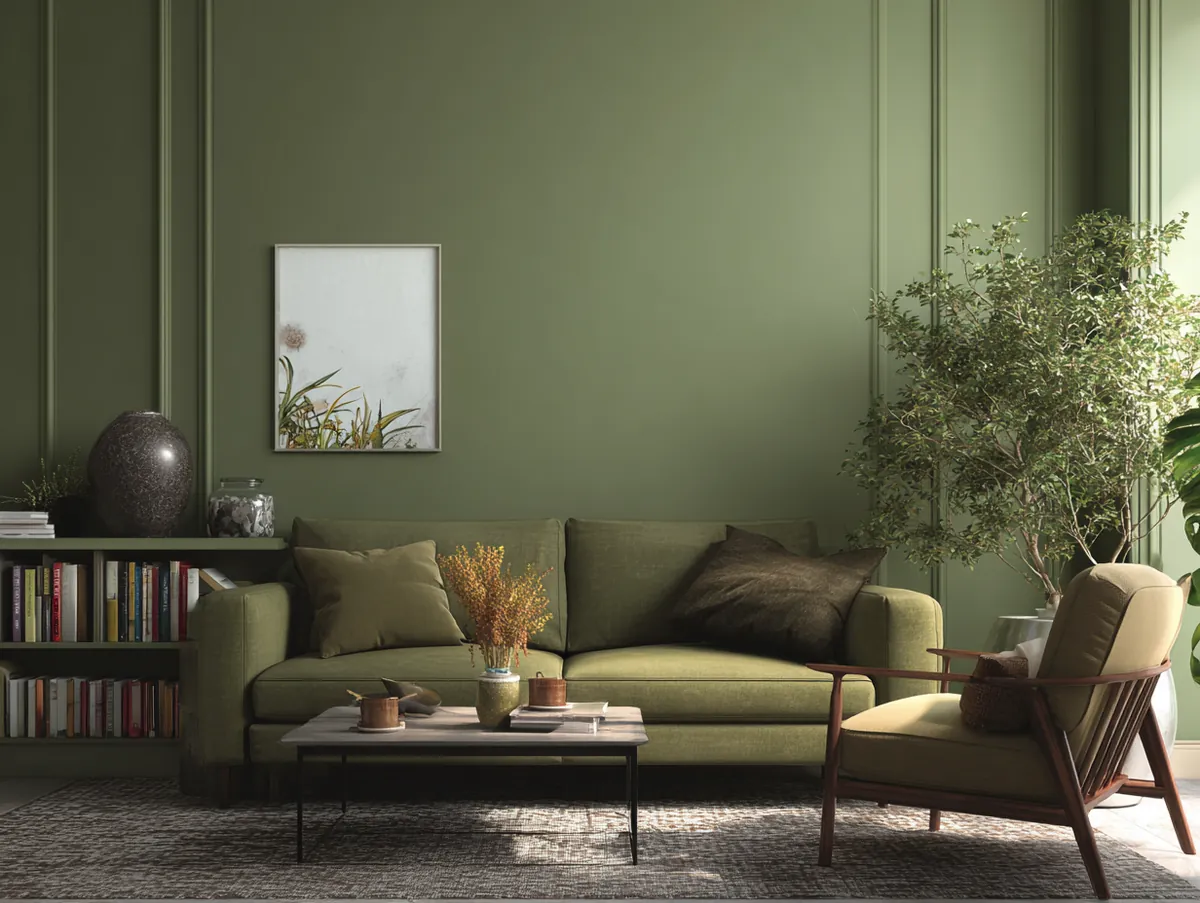
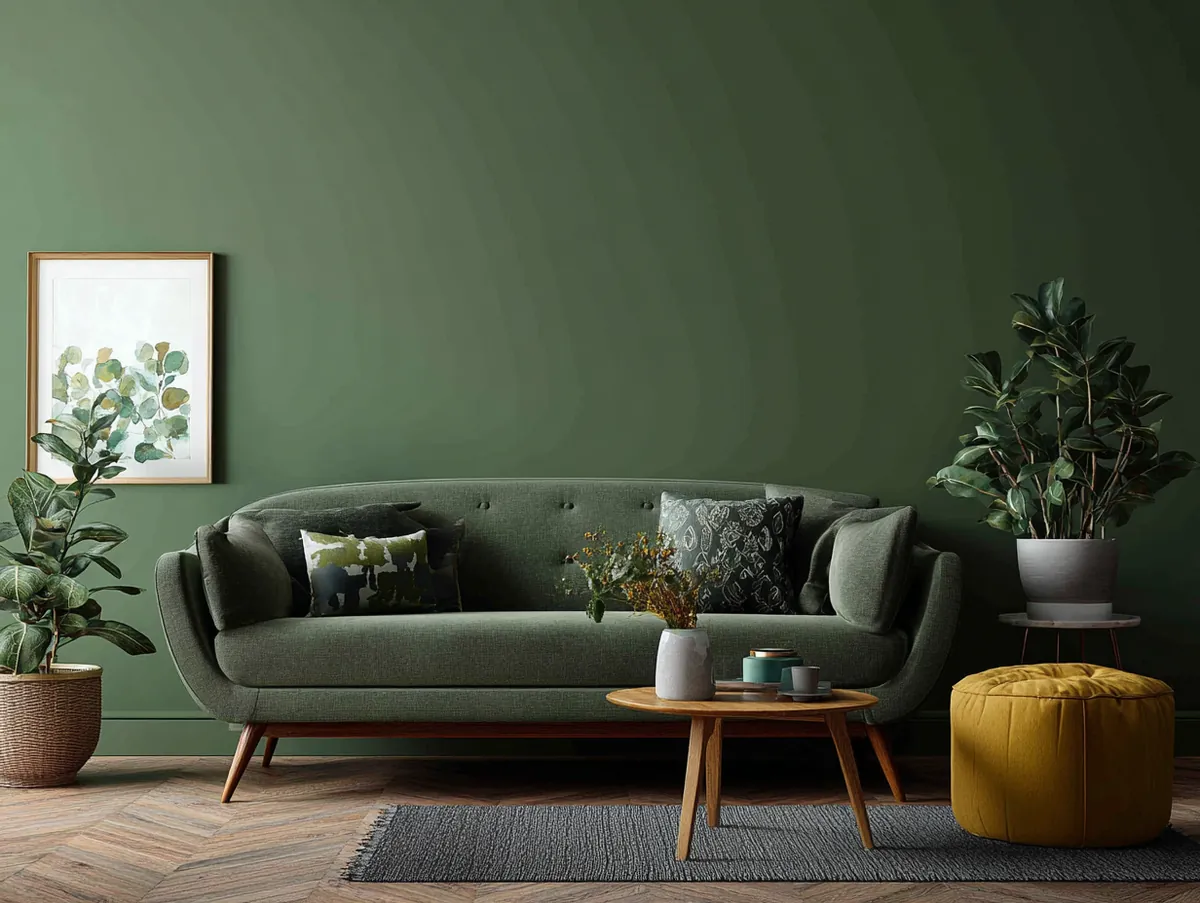
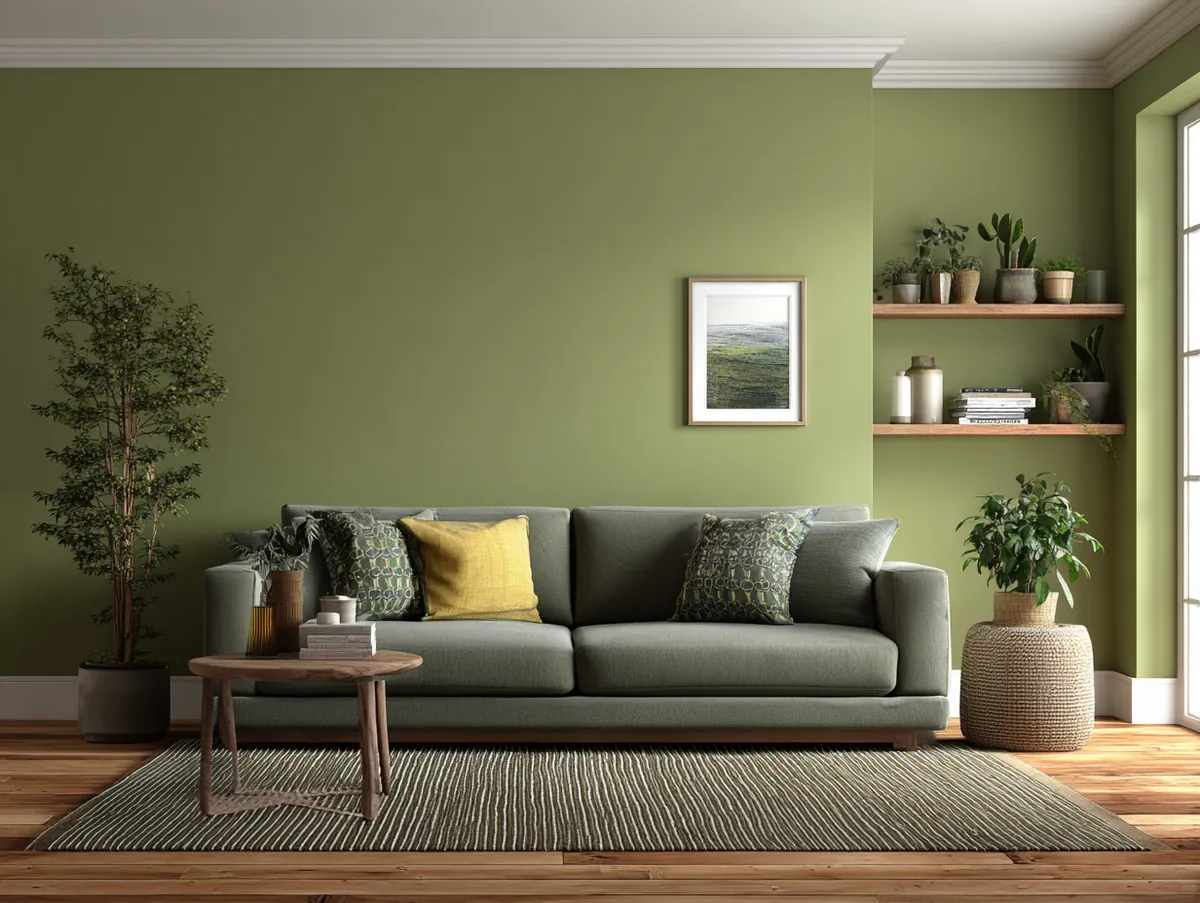
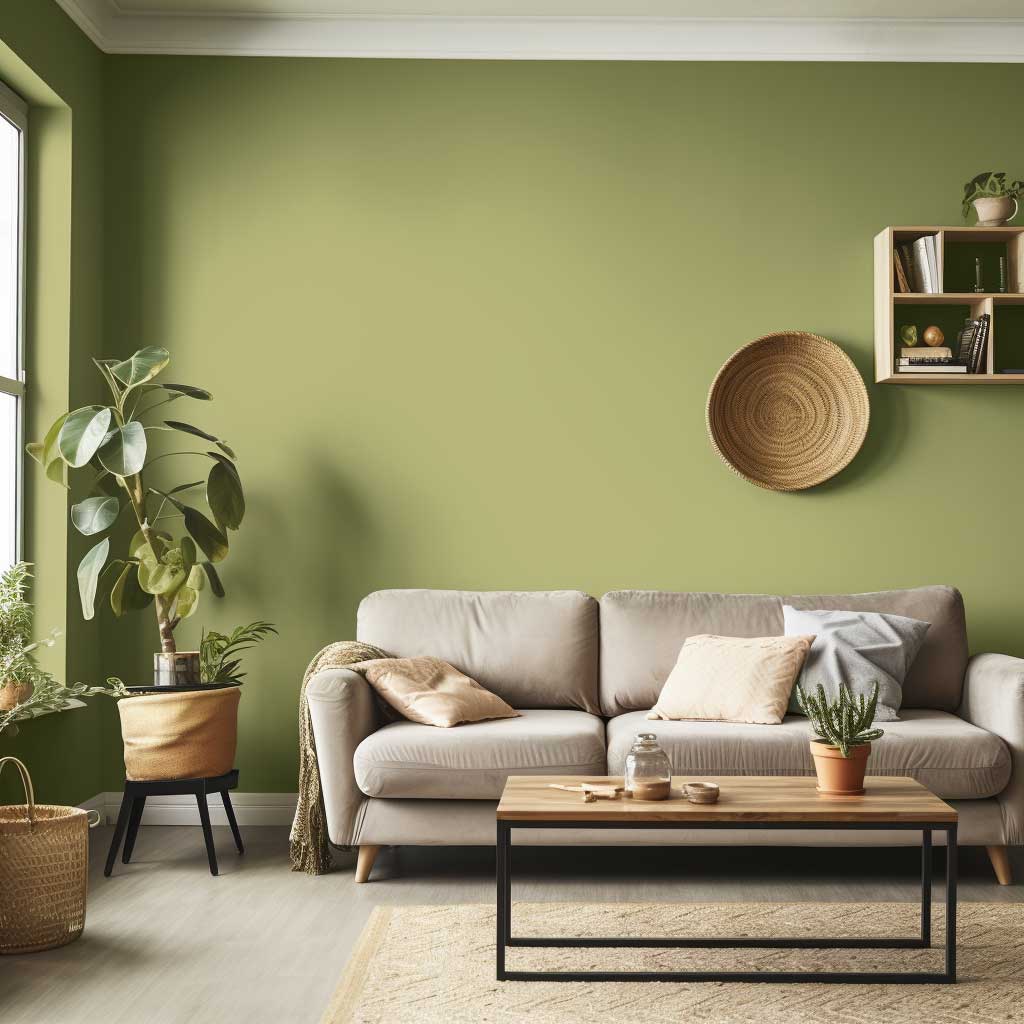
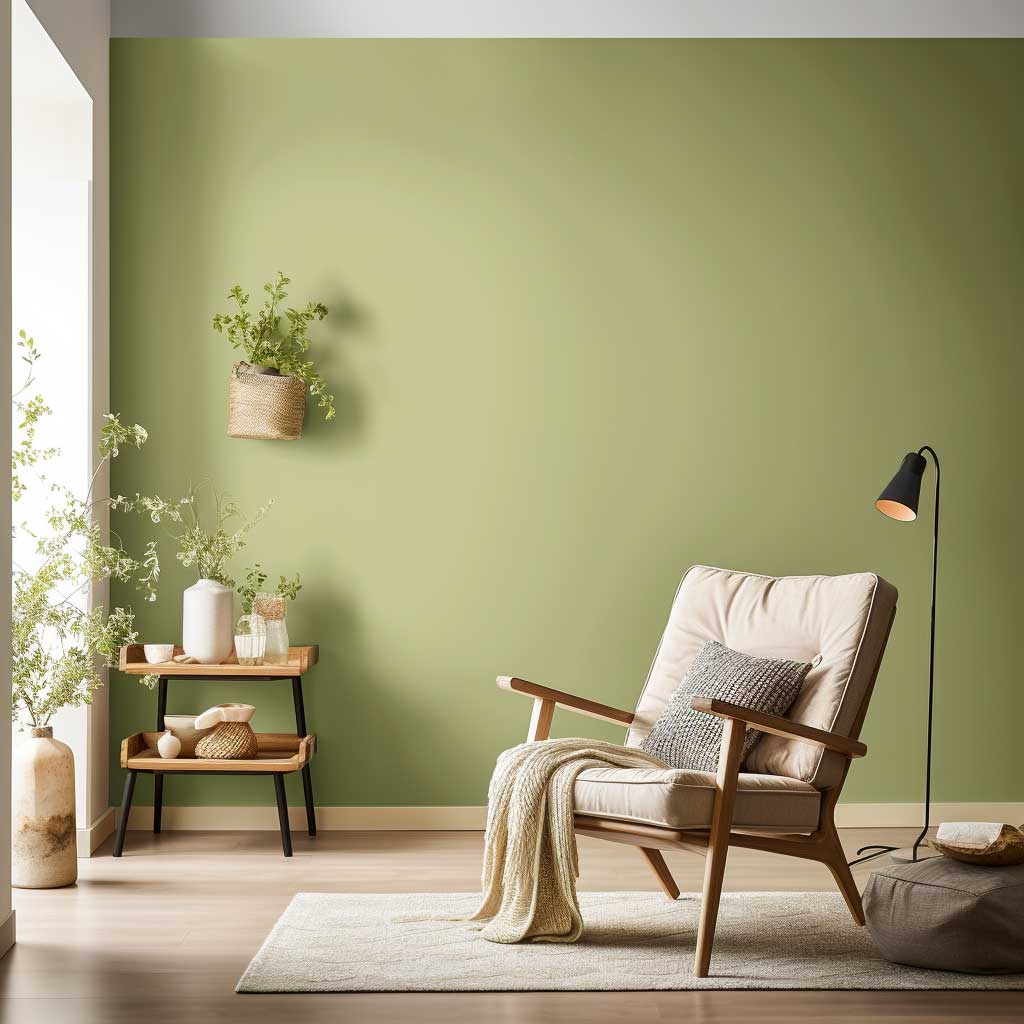


For a rustic setup, pair olive walls with dark teak furniture and woven jute rugs — the combination lands somewhere between a Kerala heritage home and a Tuscan farmhouse, which is exactly where Pinterest wants to be right now. For a more urban feel, swap the jute for a geometric low-pile rug in cream and black, add a brushed-gold floor lamp ($80–$130 at most home stores), and the same wall colour suddenly reads contemporary. Texture matters enormously here: a flat eggshell finish on olive green looks flat and chalky, whereas a Royale satin finish gives the colour depth and catches light the way a matte finish never will.
What doesn’t work: olive green paired with burgundy or deep red. I’ve seen this combination recommended online and it is categorically wrong. The two warm-toned colours compete rather than complement, and the room ends up feeling dense and oppressive by evening. Stay within the earthy-neutral family for secondary colours — cream, camel, raw linen, or a dusty terracotta for cushions. Deep blue (think navy or indigo) is the only genuinely bold pairing that works alongside olive without a fight. Hall colour combination principles that apply directly to olive green schemes are covered here.
Lighting and olive green have a specific relationship. Natural daylight makes olive pop and appear vivid — almost lime-adjacent in direct sun. Warm amber LEDs at 2700K push it toward brown-green, which is actually cosier than it sounds. Avoid cool daylight bulbs (5000K or above) in an olive room; the colour goes flat and slightly sickly. I use 3000K warm-white LEDs in any green-painted room and the results are consistent across seasons.
Mustard Yellow in the Living Room — Four Walls Is Too Much, One Wall Is Exactly Enough
Mustard yellow (often searched as “mastard yellow”) is the Asian Paints shade that photographs well and sometimes exhausts the eye in real life. I’ve lived with a full mustard yellow hall for eight months. The first two weeks were energising. By month three, it was the first wall I repainted. The colour works perfectly as an accent or feature wall — bold enough to carry visual weight behind a sofa or against a fireplace, warm enough to add genuine heat to a north-facing room. Four walls, however, turns the room into a spice cabinet.
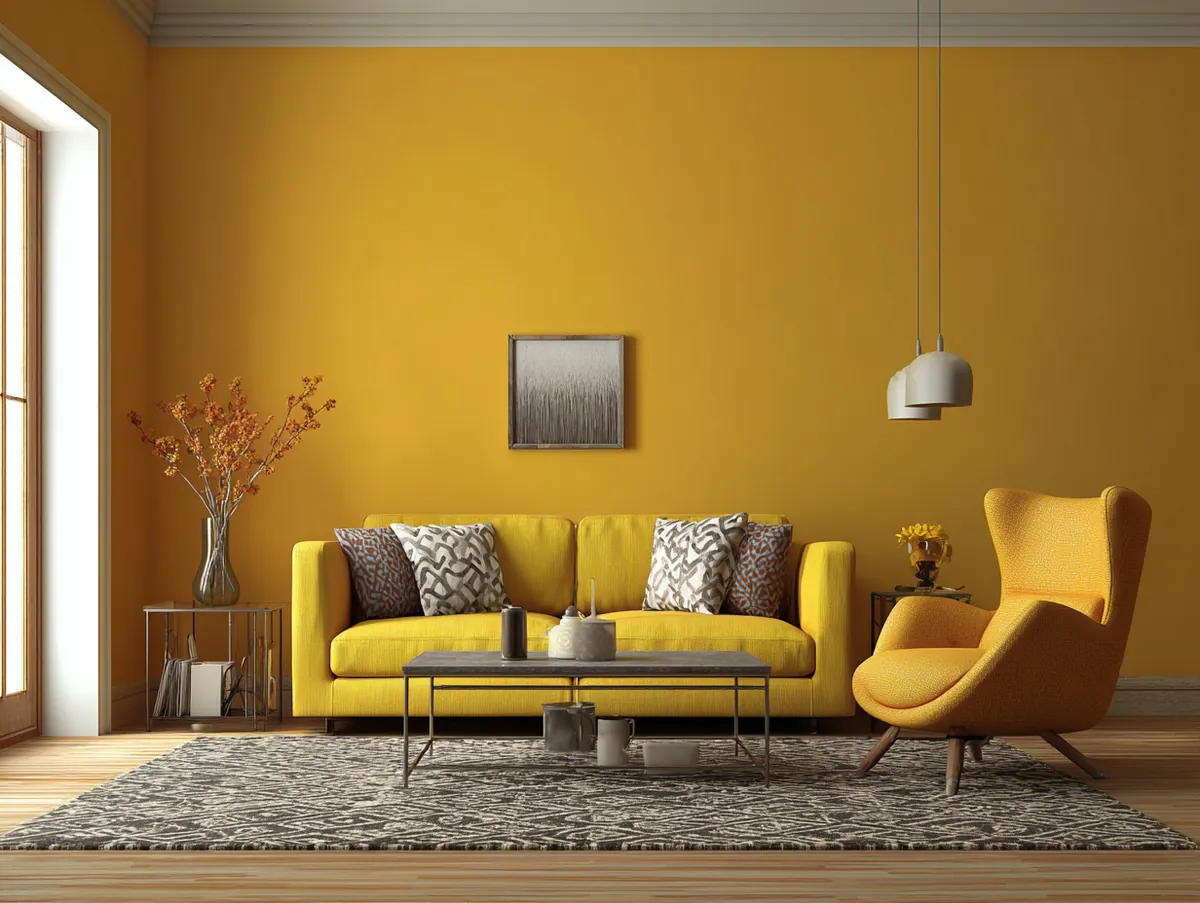
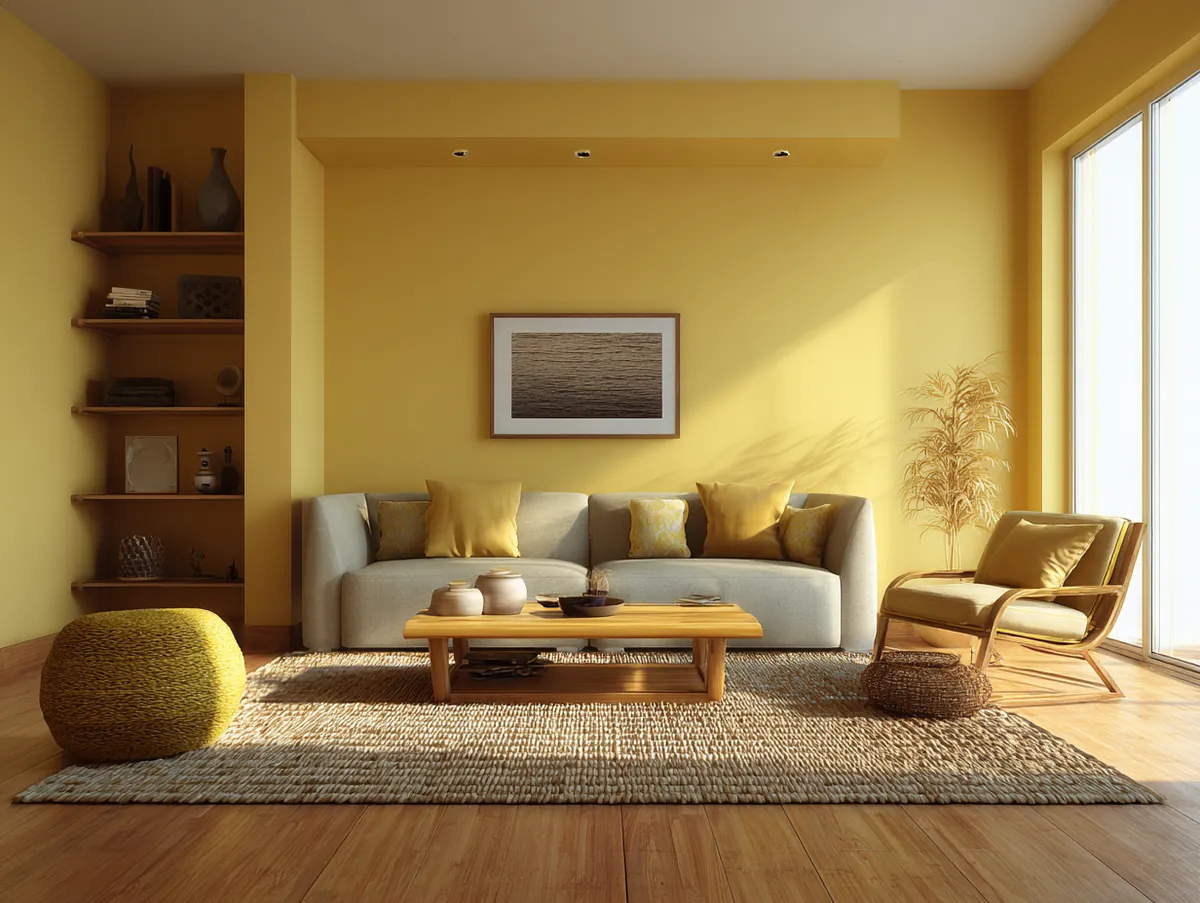
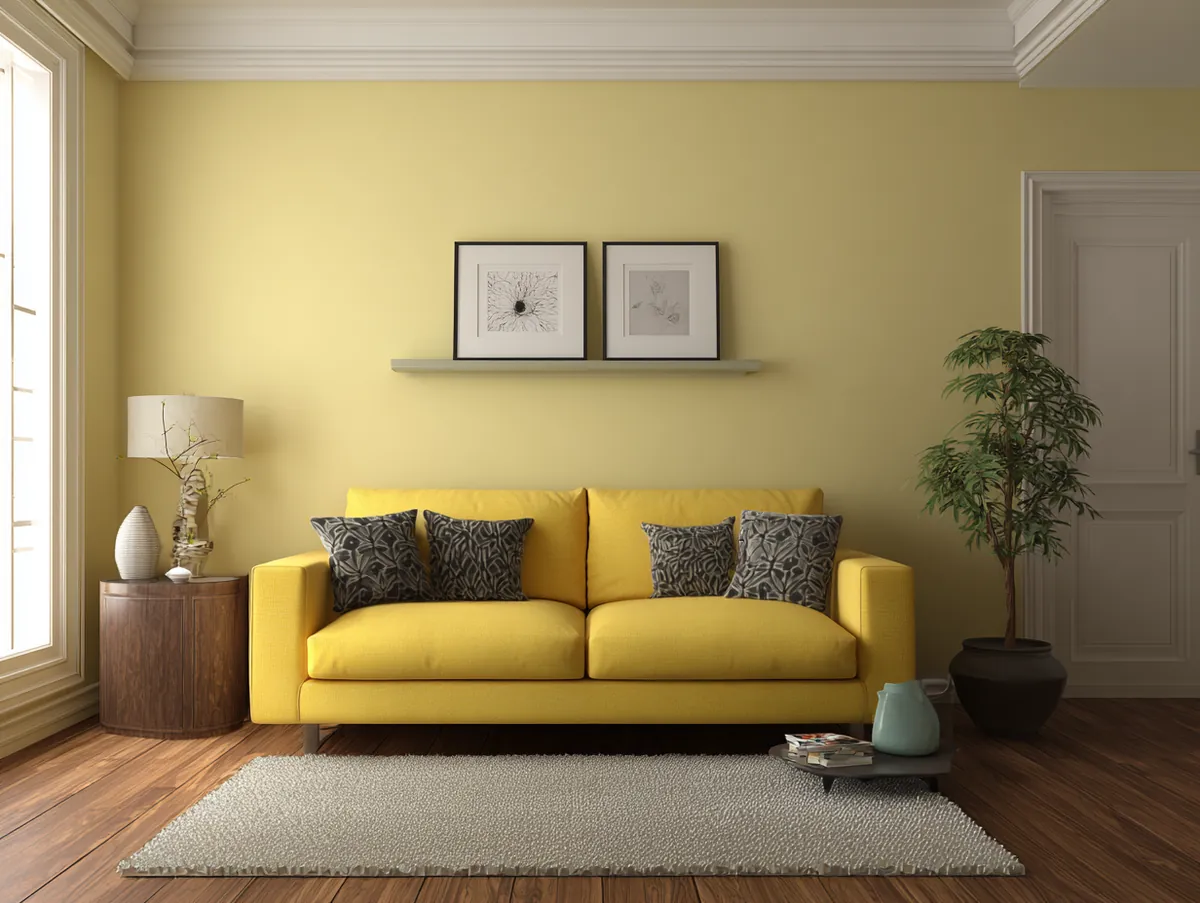
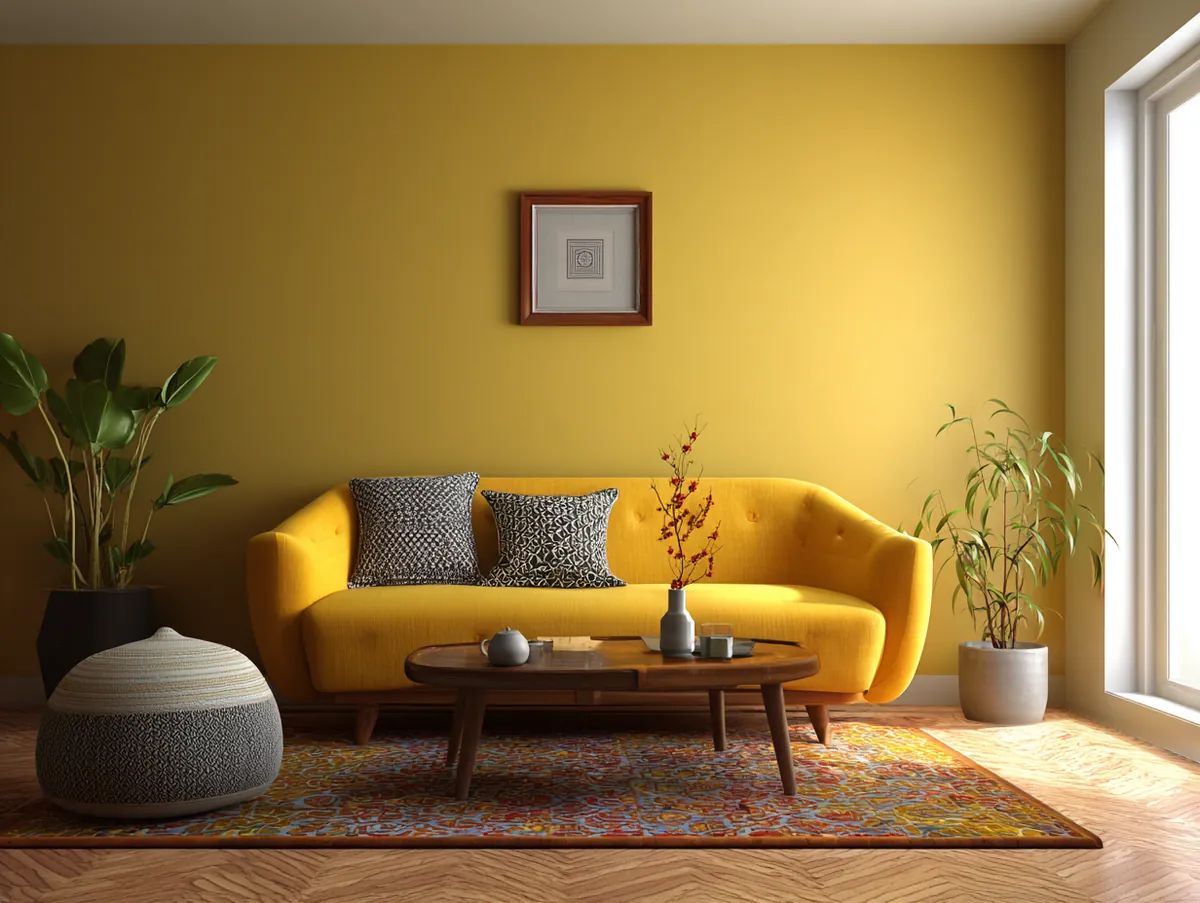
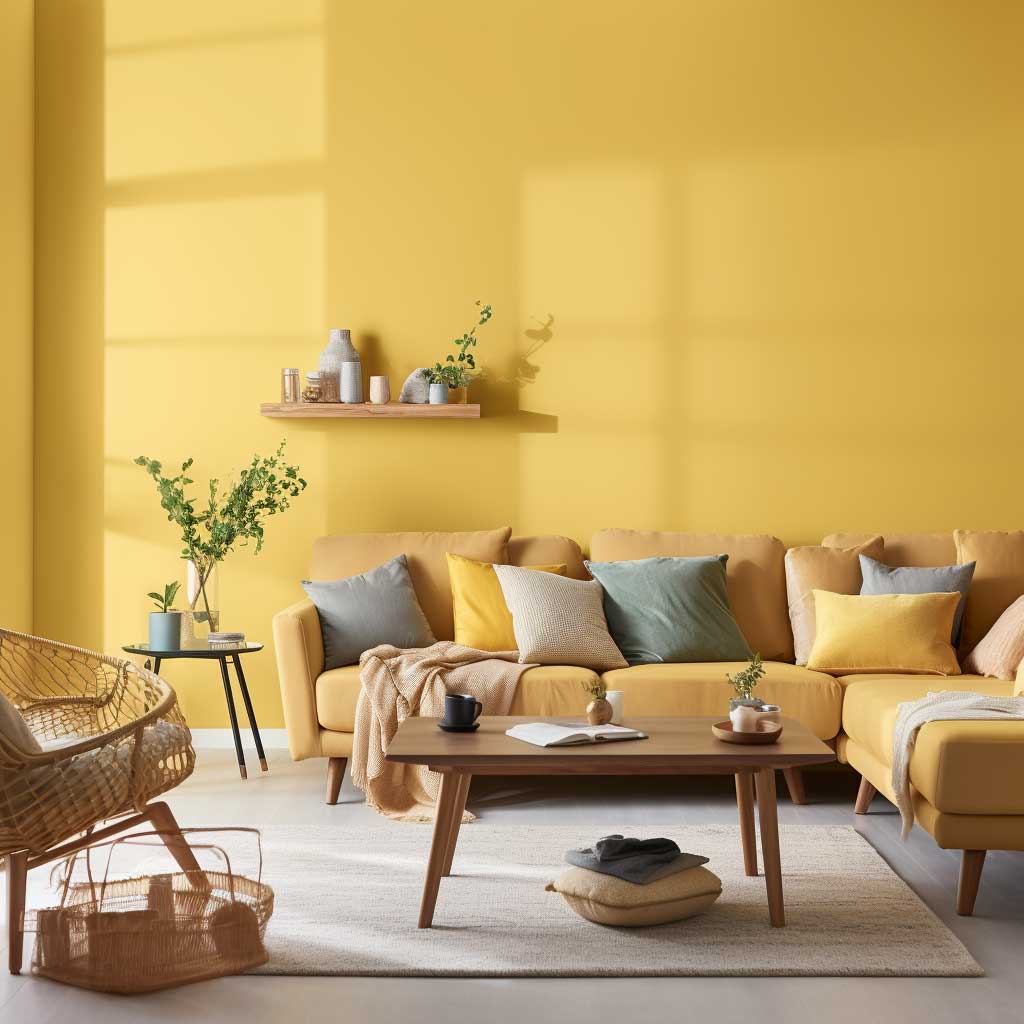


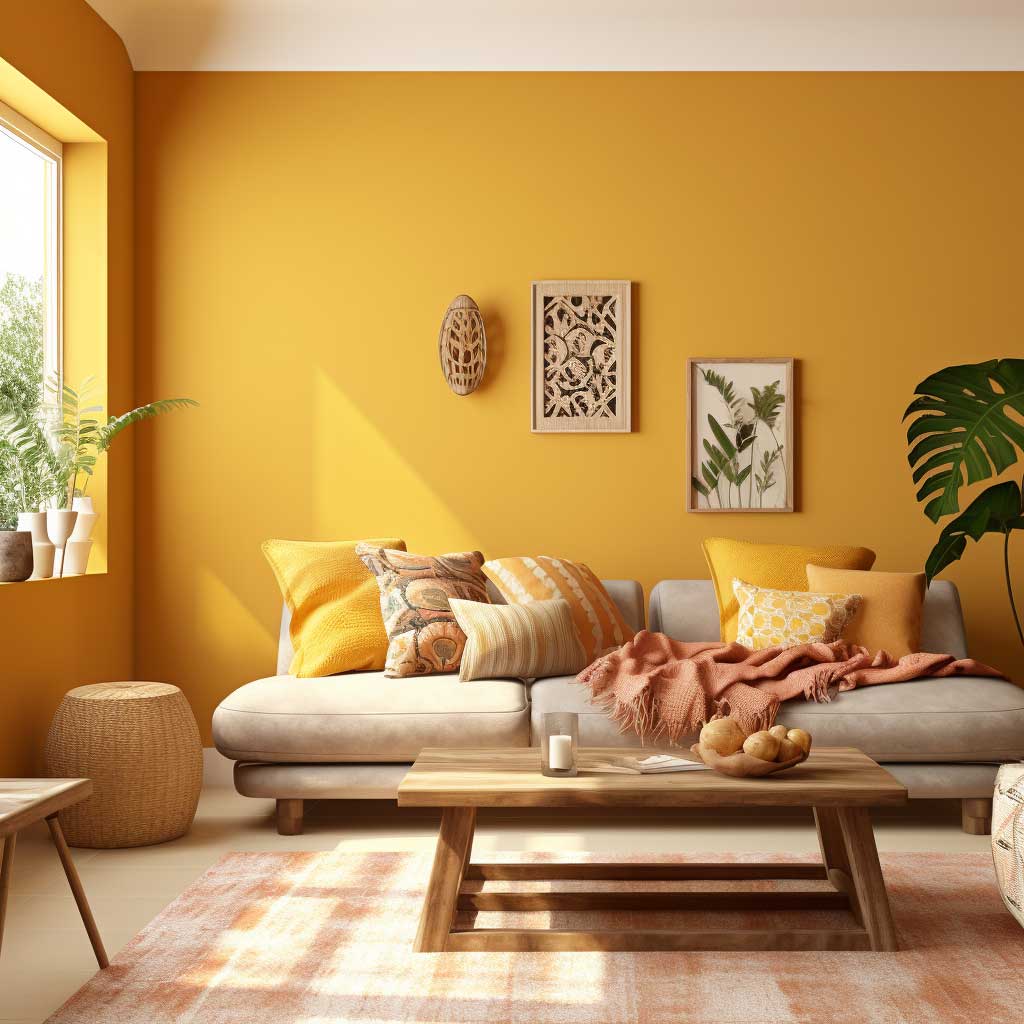
The styling formula that works: one mustard accent wall, three remaining walls in Smoky Grey (9458) or Morning Glory (0765), grey linen sofa, two dark wooden side tables, and a patterned rug that pulls both yellow and grey through its design. This is essentially the formula I stole from a styling shoot I saw in a Mumbai apartment last year, and it works in every hall size I’ve tested it in. The mustard carries the personality; the grey does the heavy lifting of making the space feel polished. Bohemian setups work too — pair mustard with deep purple cushions and earthy brown throws for a layered, eclectic feel that earns its complexity.
Morning Glory (code 0765) from Asian Paints is a soft, warm off-white that pairs as a neutral companion to mustard on the remaining walls. Priced around ₹300–₹600 per litre, it reads as clean without being stark and handles both the warm daytime palette and evening lamp lighting without shifting dramatically in hue. It’s become my default recommendation for the non-accent walls in any bold-colour scheme — better than pure white because it doesn’t highlight uneven plaster, and better than cream because it doesn’t yellow under incandescent light. The Morning Glory and mustard combination is one I’d specifically recommend for the colour combination for hall searches because it balances energy and calm without picking sides. Asian Paints’ full Smoke Grey catalogue page shows complementary pairing options that also work alongside mustard feature walls.
Asian Paints Colour Combination Comparison for Living Room and Hall
| Shade | Code | Best Pairing | Avoid | Room Type |
|---|---|---|---|---|
| Sky Blue Serenity | — | White trim, warm wood, navy cushions | Cool grey accessories | East/south-facing hall |
| Smoky Grey | 9458 | Walnut furniture, mustard throws, matte black | Bright yellow, mint green | Hall, drawing room, bedroom |
| Olive Green | — | Cream, camel, navy, brass accents | Burgundy, deep red | Hall, living room feature wall |
| Mustard Yellow | — | Smoky Grey, Morning Glory (0765), dark wood | Four walls; cool white pairing | Feature wall, drawing room |
| Morning Glory | 0765 | Any bold accent wall, blue, mustard | Cool-white trim (clashes undertone) | All rooms, all orientations |
For bedroom colour combinations specifically, Asian Paints Smoky Grey (9458) paired with off-white bedding and a single brass pendant lamp is a formula that’s hard to get wrong. The bedroom queries in the GSC data confirm that people want the same sophisticated grey they see in drawing rooms to carry into sleeping spaces — and 9458 does that without the bedroom feeling cold. These five trending living room wall colours include grey combinations directly applicable to bedroom use.
Bottom Line
Asian Paints Has the Shades. The Code Is in How You Apply Them.
Sky Blue and Olive Green demand natural light to look their best — verify with a physical swatch on your actual wall before committing. Smoky Grey (9458) and Morning Glory (0765) are the two safest all-conditions shades for halls, drawing rooms, and bedrooms in the entire Asian Paints catalogue.
The real cost in any paint project is not the paint — it’s the repainting. Order a swatch, live with it for 48 hours across both morning and evening light, then buy your full tins.
Save this post before your next hardware store visit.