
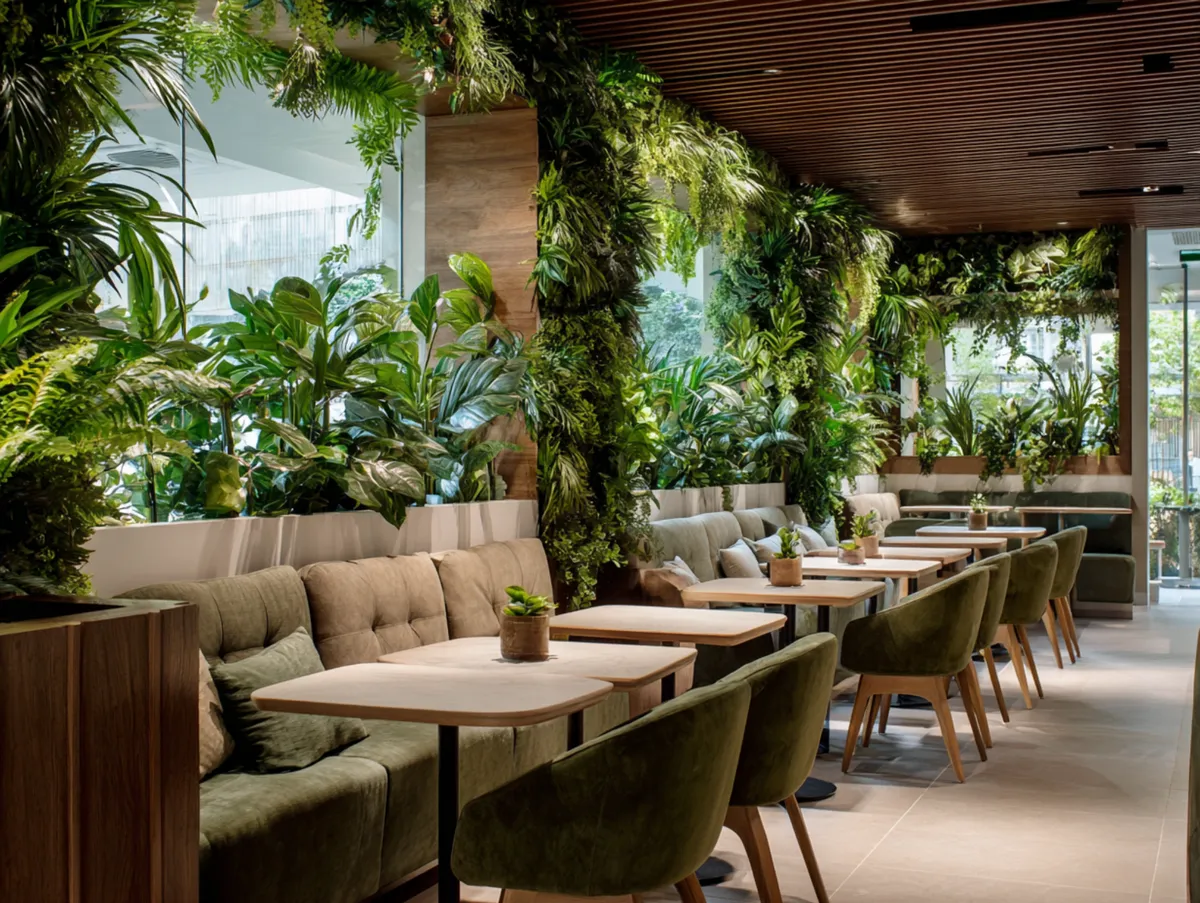
For brands operating across multiple locations—hotels, offices, retail chains, showrooms, or hospitality venues—interior consistency is essential. A space in Copenhagen should feel just as intentional and on-brand as one in London or New York. One of the most effective ways to achieve this is by using high-quality faux greenery as a standardized design element.
Instead of struggling with plant survival, lighting conditions, or different maintenance teams, many companies now rely on artificial greenery to maintain the same visual expression everywhere.
Why interior consistency matters for growing brands
Customers notice inconsistencies, even when they can’t quite name them. A beautifully styled reception area in one location and tired-looking plants in another can subtly weaken brand perception. That’s why many international companies choose to work with a single artificial plants supplier that can support a consistent look across all spaces.
Using faux plants allows design teams to lock in specific plant styles, sizes, and placements—ensuring that every location reflects the same design DNA from day one.
Faux greenery as a long-term design solution
Today’s premium artificial plants are designed with realism in mind. From natural color gradients to lifelike leaf textures, modern faux greenery blends seamlessly into contemporary interiors. As a result, designers no longer view artificial plants as a compromise, but as a practical and aesthetic solution.
Brands working with Faux Natural often use faux greenery to create interiors that are visually rich, low-maintenance, and easy to replicate. Whether it’s statement pieces or subtle accents, artificial plants help maintain a uniform look across locations without ongoing upkeep challenges.
You can see examples of these solutions directly on fauxnatural.com, where collections are curated specifically for interior and commercial use.
Scaling interior styling across multiple locations
Once an interior concept is defined, faux plants make scaling simple. The same plant selections can be rolled out across offices, retail stores, hotels, or restaurants—regardless of climate or available daylight.
Common applications include:
- Reception areas featuring artificial trees for interiors
- Retail chains using identical planters and greenery layouts in every store
- Hospitality spaces maintaining the same atmosphere across cities and countries
Because artificial plants are not affected by environmental changes, each location retains the same polished appearance long after opening day.
Strengthening brand identity with green elements
Greenery is often used to soften architecture, guide movement, or frame key brand elements. Many companies integrate faux green wall solutions into their interiors to highlight logos, create feature walls, or add depth to large spaces—without worrying about irrigation or plant health.
By sourcing these elements from a single supplier, brands ensure that textures, tones, and proportions remain consistent across every installation. Many design teams start by selecting core products via fauxnatural.com and building a repeatable styling framework around them.
A reliable approach to consistent interiors
Maintaining consistent interiors across locations doesn’t have to mean higher costs or constant maintenance. Faux plants offer a controlled, scalable solution that supports brand identity while reducing operational complexity.
By partnering with Faux Natural, businesses can create interiors that look cohesive, intentional, and professional—no matter how many locations they operate. Artificial greenery has become a strategic tool for brands that value consistency just as much as design.
You Might Also Like
Related Topics