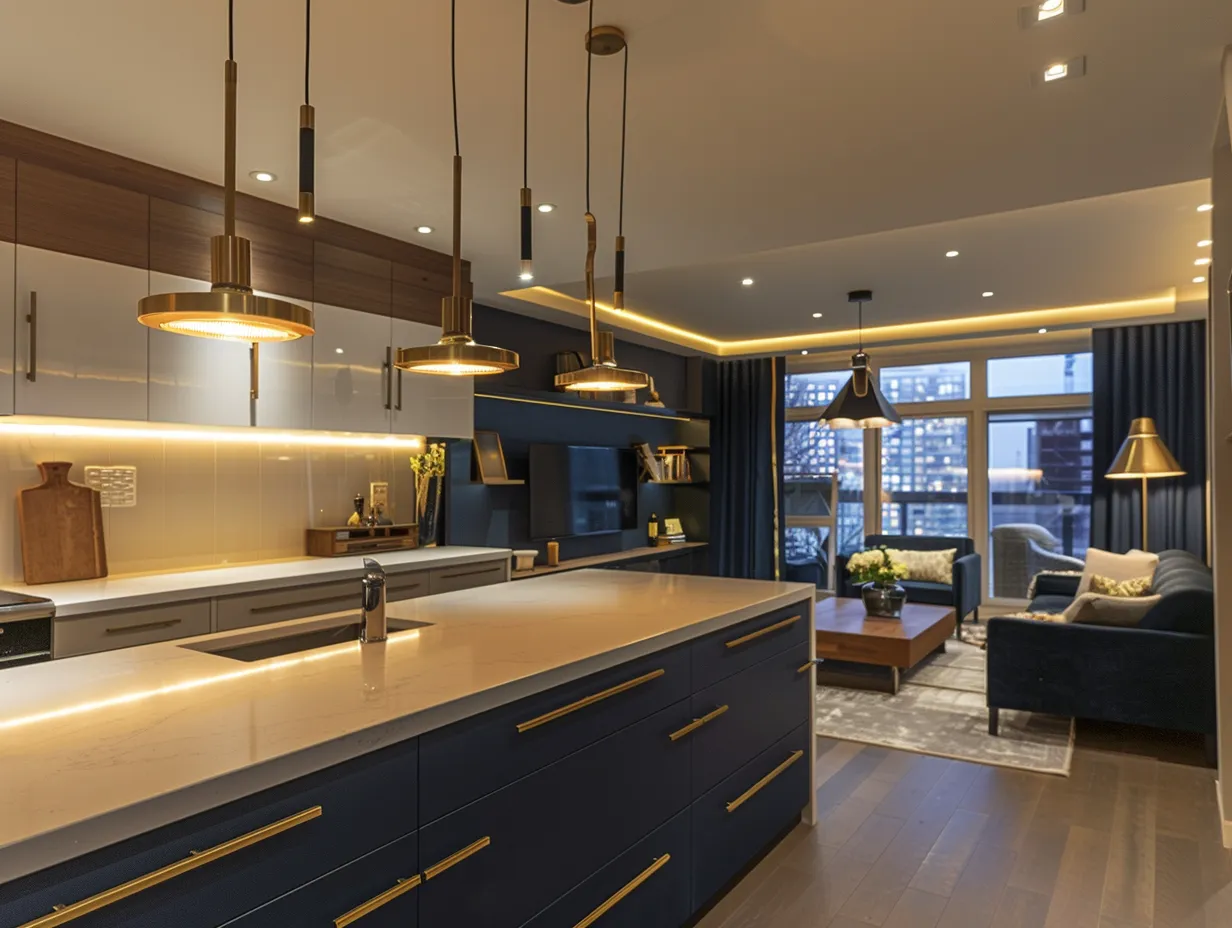
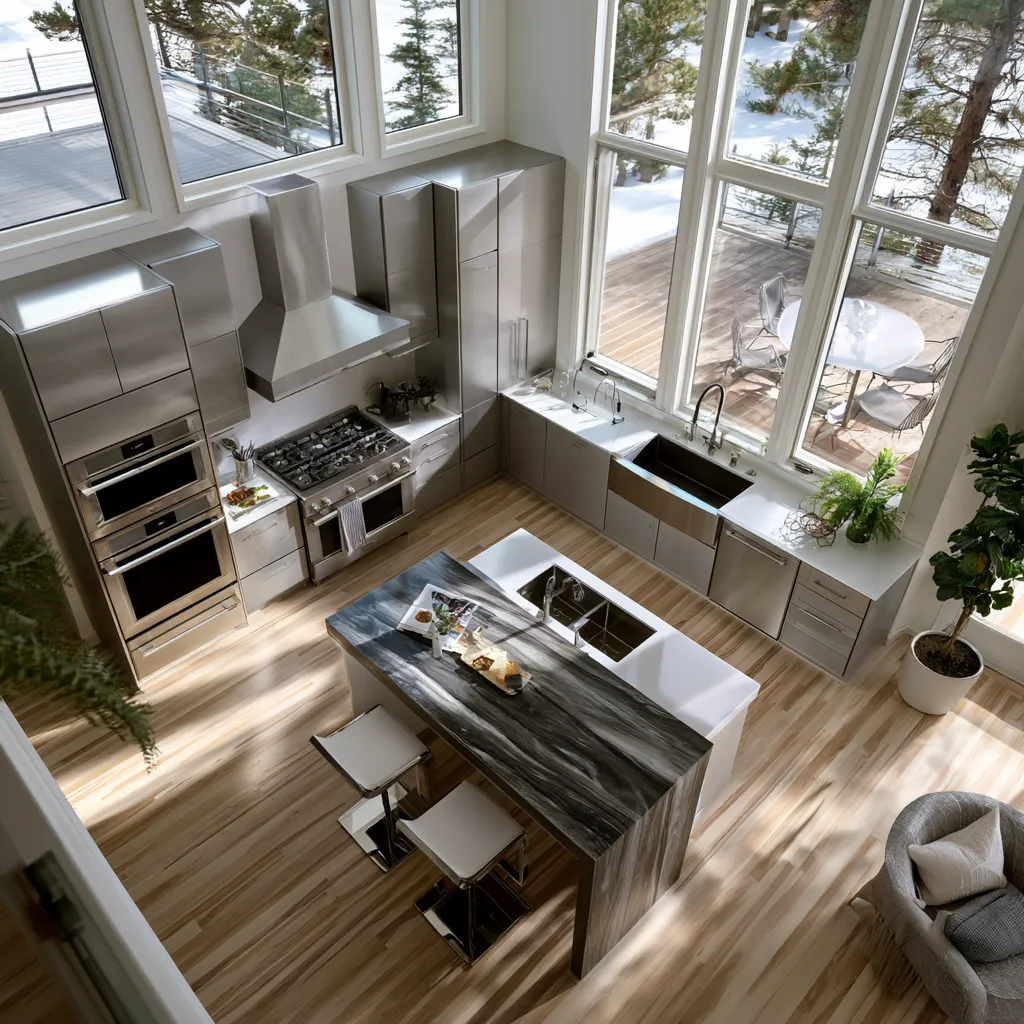
L shape modular kitchen design gets the corner wrong more often than any other layout decision. I’ve watched homeowners spend $12,000–$18,000 on custom cabinetry and lose 30% of their usable counter run to a dead blind corner that collects baking sheets nobody can reach. The L is the most forgiving kitchen shape for small and medium rooms — two perpendicular walls, an open center, a natural work triangle — but the modular units have to be configured deliberately, not just dropped in. Get the corner storage right and the whole kitchen opens up.
Modular kitchens have one real advantage over carpenter-built kitchens: the units rearrange. If the cooktop leg feels short next year, you add a module. The L shape extends that logic — each arm of the L can scale independently, which is why it works for rooms from 8×10 feet to 14×16 feet. You’ll notice the difference the moment you stop treating the corner as a liability and start using it as an anchor.
Quick Scan — What’s Covered Here
- Corner storage solutions that actually work (magic corners, pull-out carousels)
- Countertop material choices: granite vs quartz vs high-gloss laminate, with prices
- Work triangle setup for the L layout — where the sink, stove and fridge go
- Lighting layers: under-cabinet LEDs, pendants, recessed cans
- The Dont Do This mistake most L kitchen remodels make
- FAQ: modular kitchen design cost, island add-ons, color schemes
Corner Storage in an L Shape Kitchen Layout Decides Everything
My go-to for any L shape modular kitchen design project is sorting the corner before choosing cabinet doors, countertop stone, or pendant fixtures. The corner is where two cabinet runs collide at 90 degrees, and a standard blind corner base wastes roughly 15–18 inches of depth on each side. Hafele’s Kesseböhmer LeMans II pull-out carousel runs about $320–$380 fitted, and it recovers every inch — two kidney-shaped shelves that swing out on a single pull. That is the kind of ROI a cabinet knob upgrade cannot buy.
The alternative is the “magic corner” drawer system, which IKEA calls the UTRUSTA corner fitting ($85 fitted inside a PAX-style base). It gives you two pull-out trays on a hinged arm — one follows the other out automatically. Cheaper. Not quite as smooth. Still infinitely better than a fixed lazy Susan that only spins 270 degrees and drops things behind the post.
Don’t do this: skip the corner hardware and install a deep fixed shelf instead. I’ve seen it sold as a rustic “pantry corner,” but in practice nobody reaches past the first 10 inches. The back half of that cabinet becomes a graveyard for rice cookers purchased in 2019.
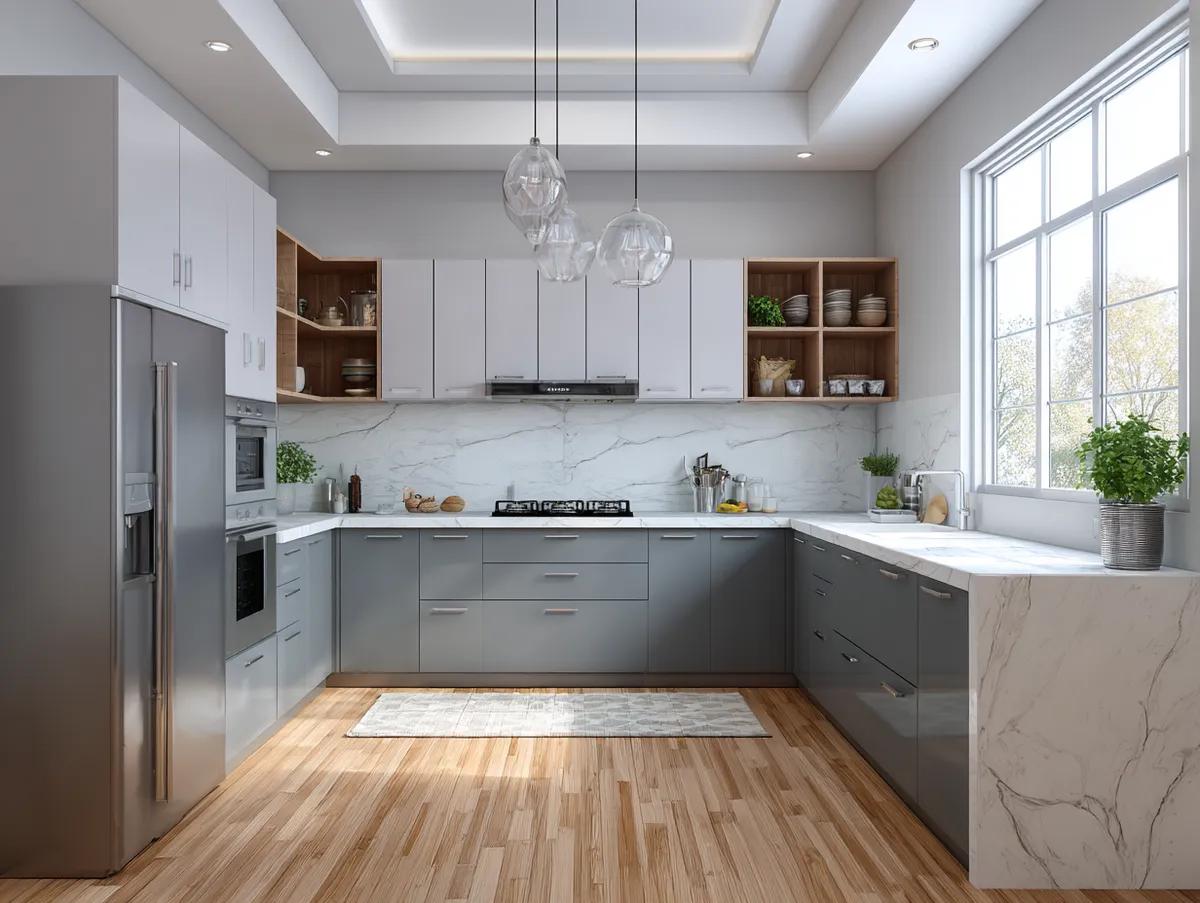
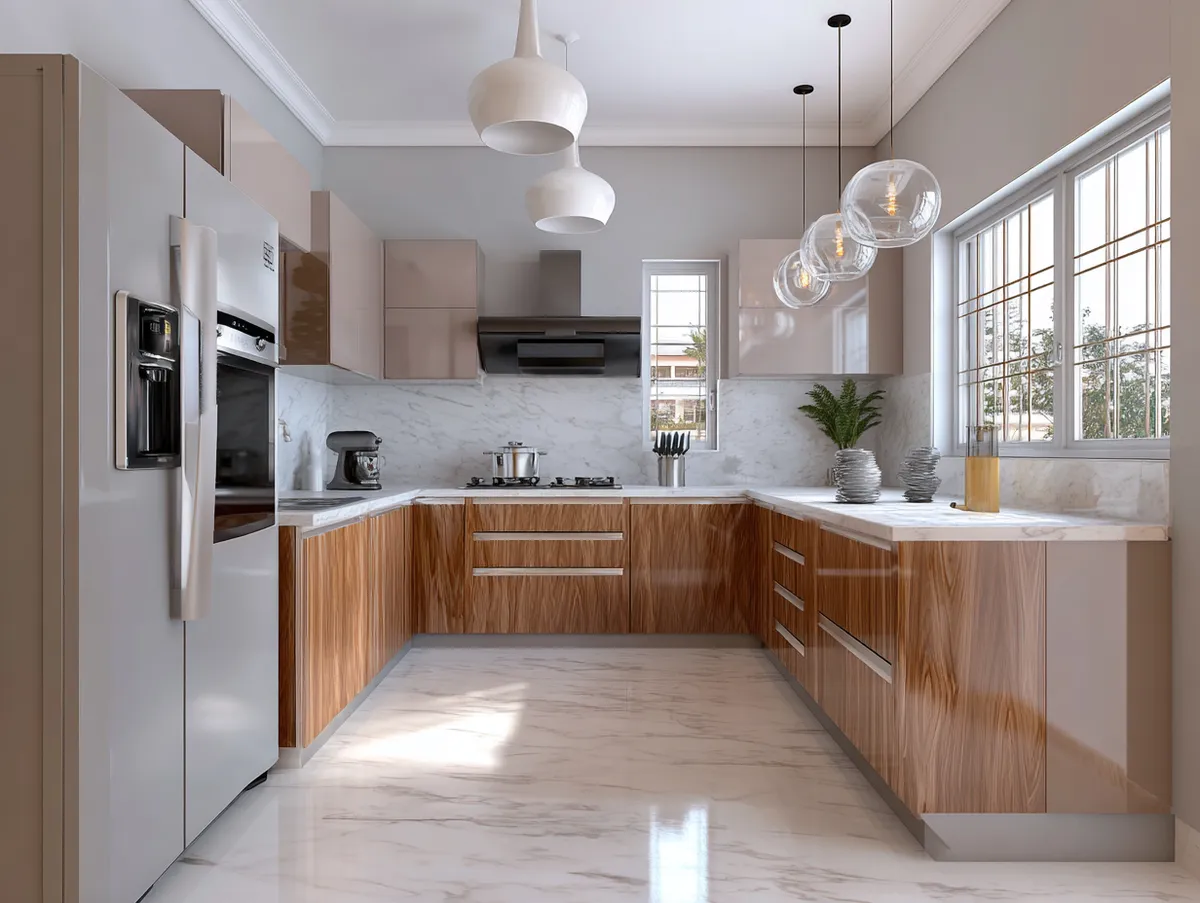
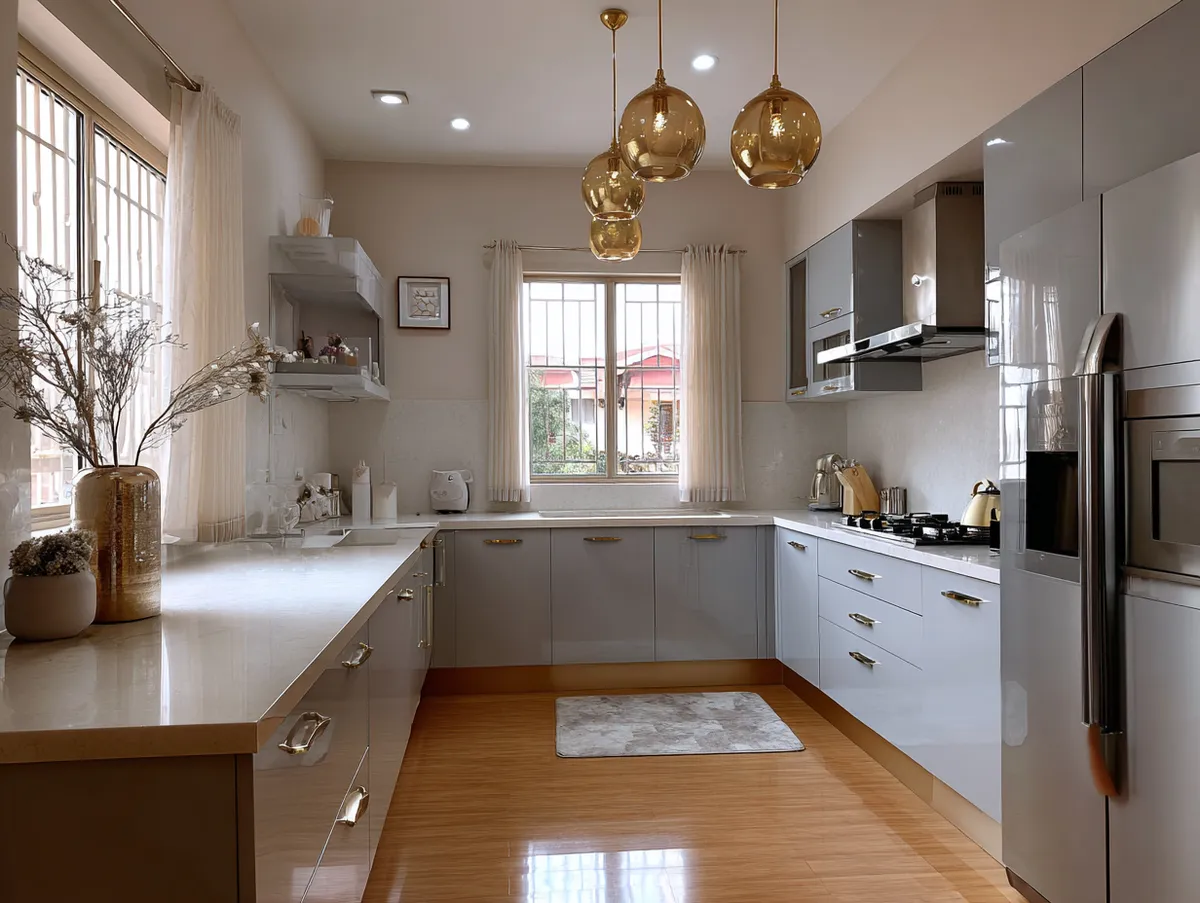
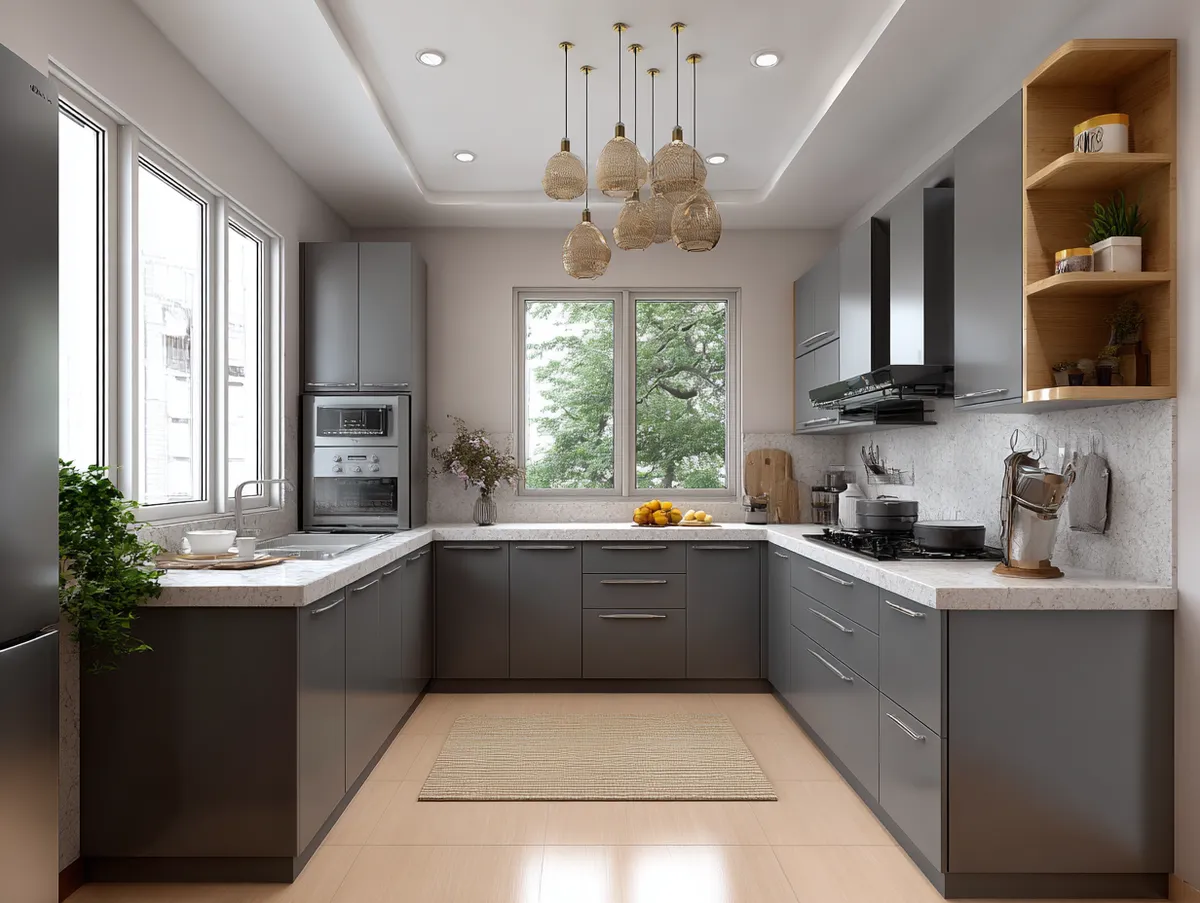


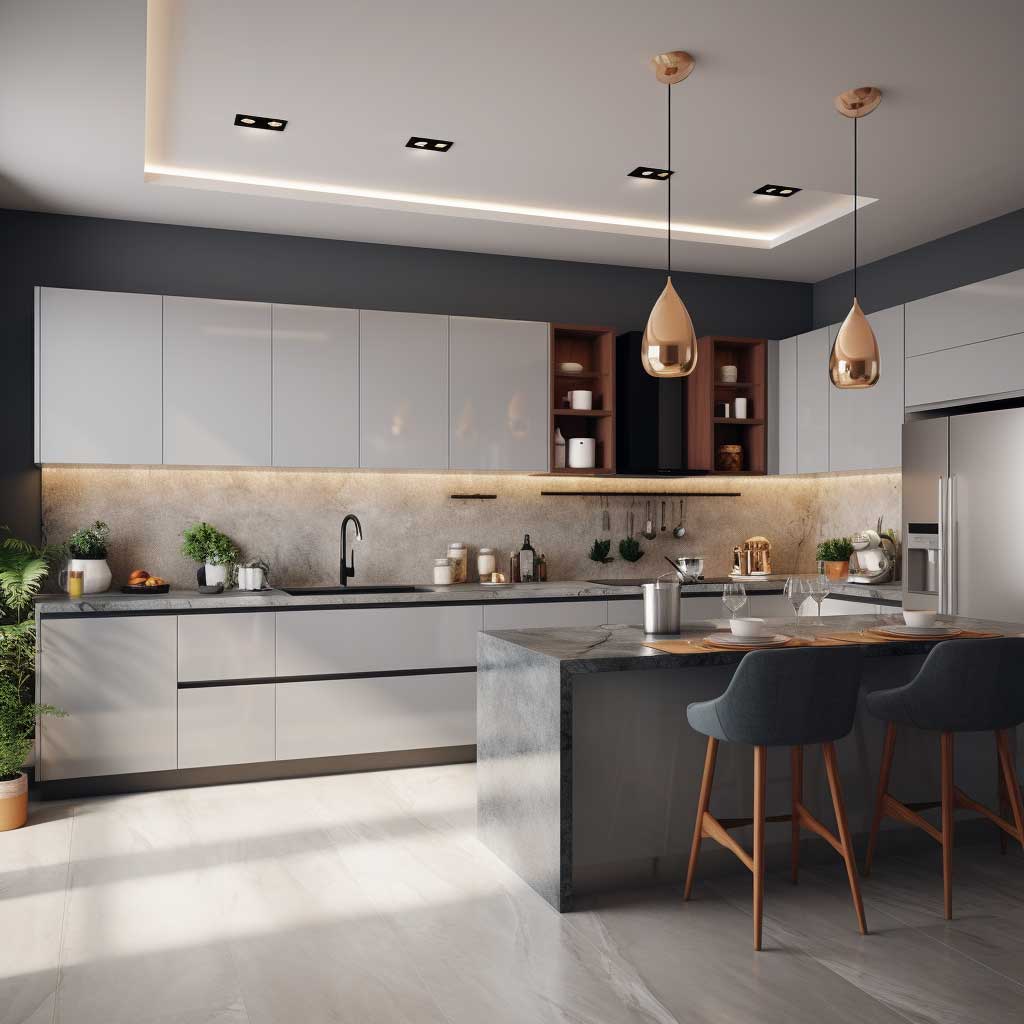
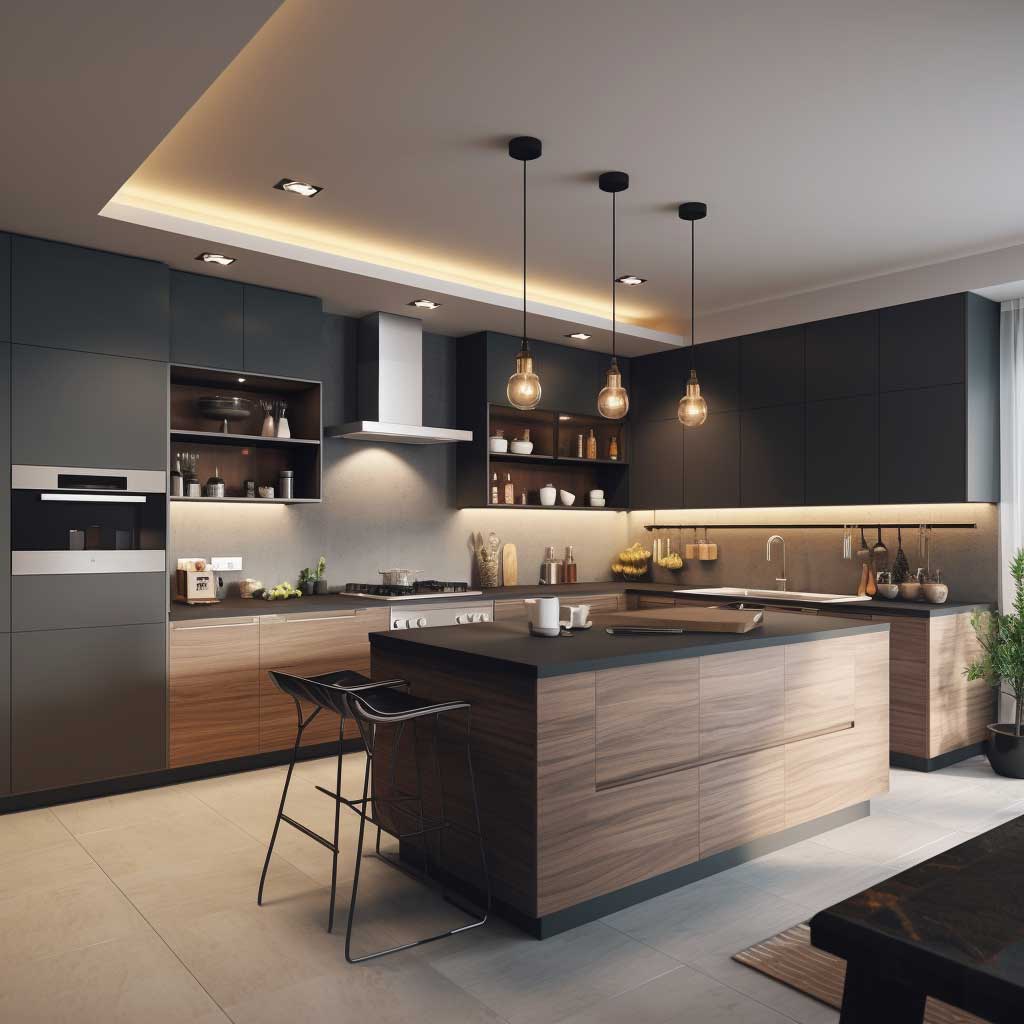
Wall cabinets matter just as much as base storage. I own two kitchens with floor-to-ceiling uppers on one leg of the L — one Livspace build at around $9,500 total, one Godrej Interio at $7,200 — and both feel twice as large as the lower-cabinet-only versions I’ve worked with. The vertical run draws the eye up, makes ceilings feel taller, and puts seasonal items on the top shelf where they belong: out of the way but findable. For the artfasad community looking at how L shaped kitchens evolve in modern design, floor-to-ceiling cabinetry on one arm is the single most impactful upgrade per dollar.
Countertop Material Sets the Kitchen’s Maintenance Contract
Granite was the answer for two decades. Now I’d push back on it for most L shape modular kitchen builds — not because it looks bad, but because the sealing obligation is real. Granite needs resealing every 12–18 months or it starts absorbing turmeric, beet juice and every other thing you didn’t think was a stain risk. Quartz (engineered stone) skips that entirely. Caesarstone Calacatta Nuvo runs $65–$85 per square foot installed; Silestone Eternal Calacatta Gold is closer to $70–$90. Both are non-porous, both photograph warm, neither requires a maintenance calendar.
High-gloss acrylic laminate is the underrated option for modular builds on a tighter budget. Merino Laminates and Greenlam both offer 1mm kitchen-grade acrylic at $8–$12 per square foot for the sheet, installed for $18–$28 total depending on edge profile. Scratches? Yes. Visibly? Less than you’d expect if you choose a matte version rather than mirror-gloss. The mirror-gloss version shows every cup ring by hour two. I stole this trick from a Bengaluru-based kitchen designer — spec the satin finish, not the high gloss, and you lose none of the brightness.
What doesn’t work: ceramic tile countertops. The grout lines collect grease, discolor within six months and are nearly impossible to restore without full re-grouting. Every kitchen I’ve seen with tile countertops eventually gets replaced. Skip it.
Don’t Do This — Common L Kitchen Design Mistakes
- Matching cabinet color to countertop exactly. Tone-on-tone with no contrast makes the whole run look like one flat surface. Pull the countertop one step lighter or darker than the uppers.
- Installing only overhead lighting. A single ceiling fixture creates shadows directly on the countertop where you’re cutting. Under-cabinet LEDs aren’t optional in a working kitchen.
- Placing the refrigerator at the corner. Opening a fridge door into the turn blocks the entire workspace on both legs. Put the fridge at one of the open ends of the L.
- Skipping the kickboard gap. Modular units without a 4-inch toe kick gap look like furniture dropped onto the floor. Every professional install uses the gap — it’s also where you vacuum.
Placing the Work Triangle Across Both Arms of the L
The work triangle — fridge, sink, cooktop — is where the L shape modular kitchen design formula either clicks or breaks. The rule Home Depot’s kitchen planners use: no single leg of the triangle should exceed 9 feet, and the total perimeter should stay between 13 and 26 feet. In an L layout, the sink and cooktop go on separate arms of the L, and the fridge anchors one of the open ends. That keeps the path between all three stations short and unobstructed.
You’ll notice immediately if the triangle is too tight — less than 4 feet between any two points and you’re bumping elbows with yourself when you turn from the stove to the sink. Too loose (9+ feet) and you’re walking laps while water boils. I measure my own kitchen every time I renovate: the sweet spot is 5.5–7 feet per leg, which is achievable in most L configurations starting at around 10×10 feet of kitchen space.
Placing the refrigerator on the longer arm of the L, closest to the kitchen entrance, also solves a social problem: family members grabbing drinks don’t have to walk through the cooking zone. It’s the same reason hotel room minibars are always near the door, not next to the bathroom. U-shaped modular kitchen layouts extend this principle with a third wall — useful context if you’re planning a larger remodel.
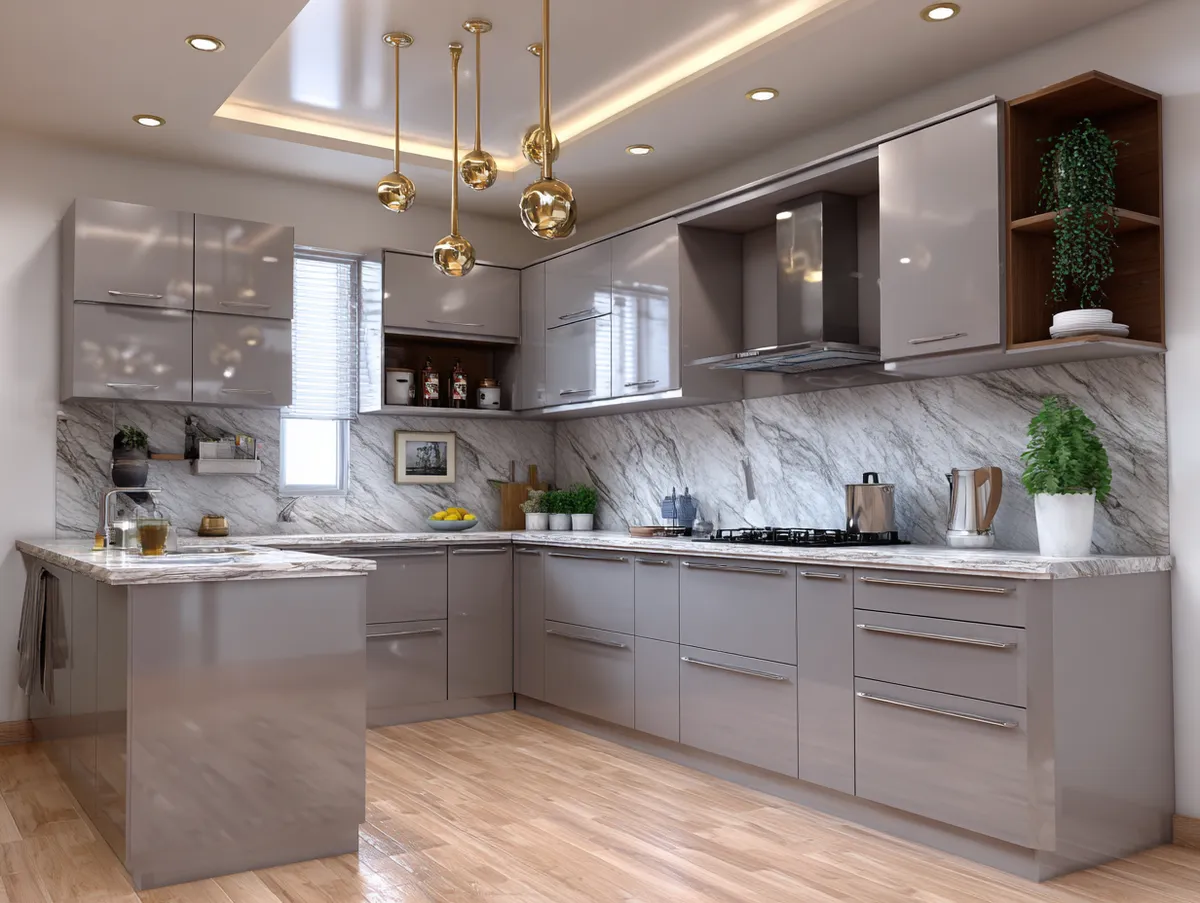
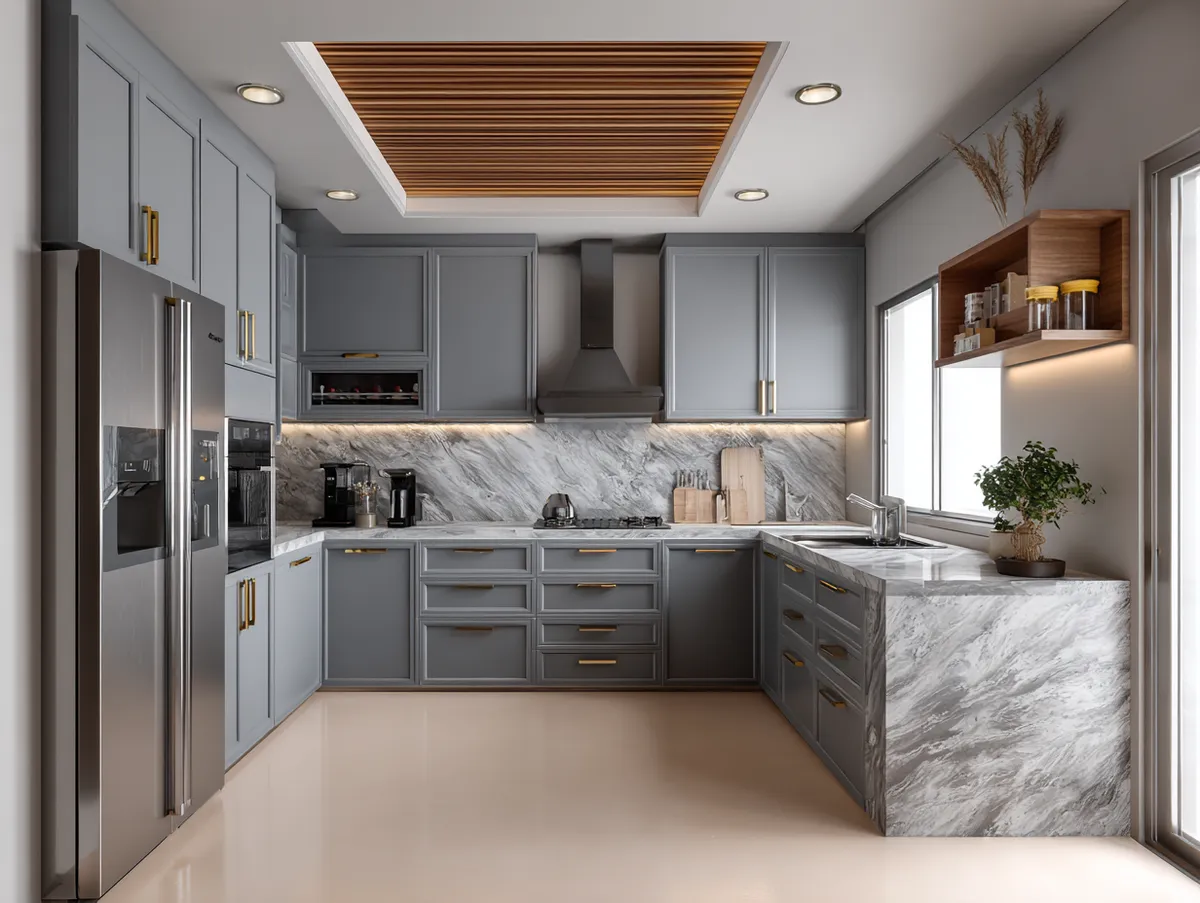
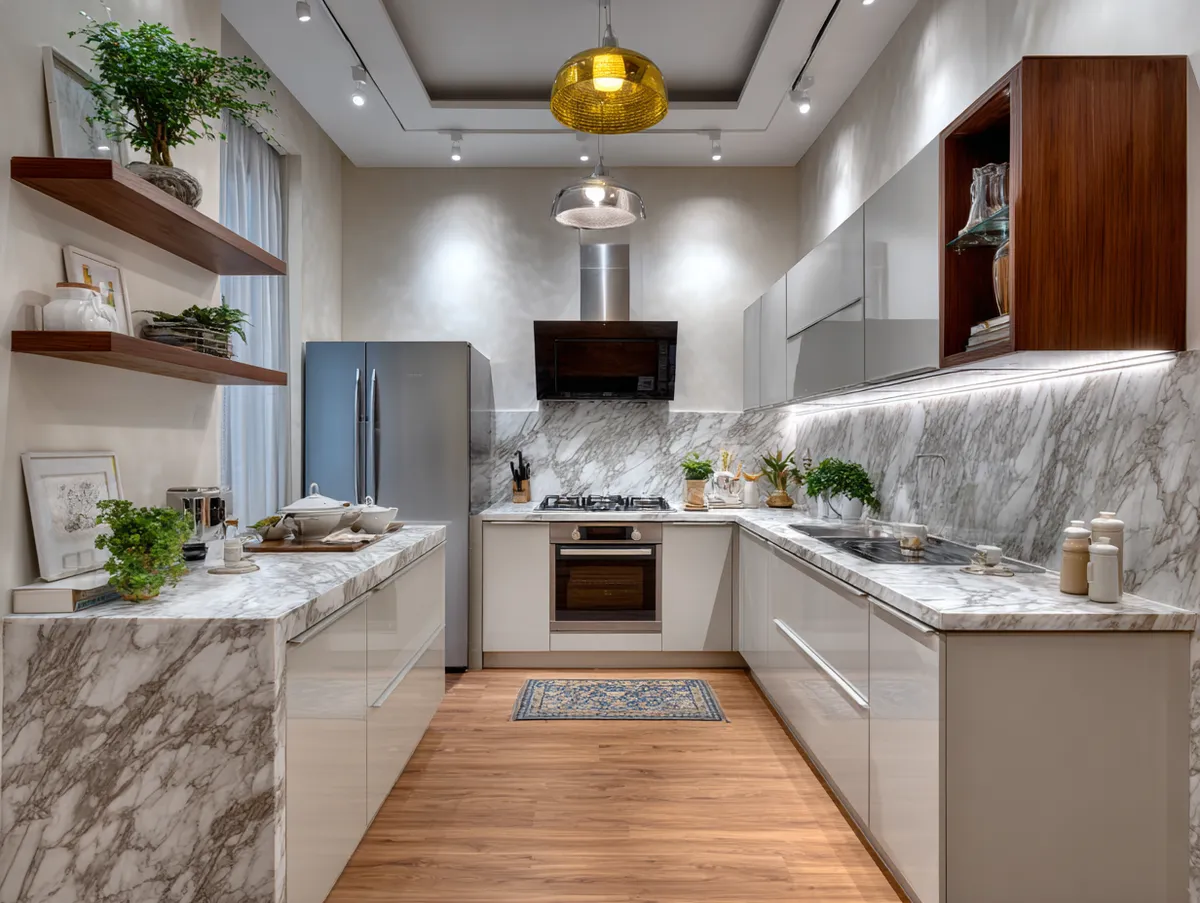
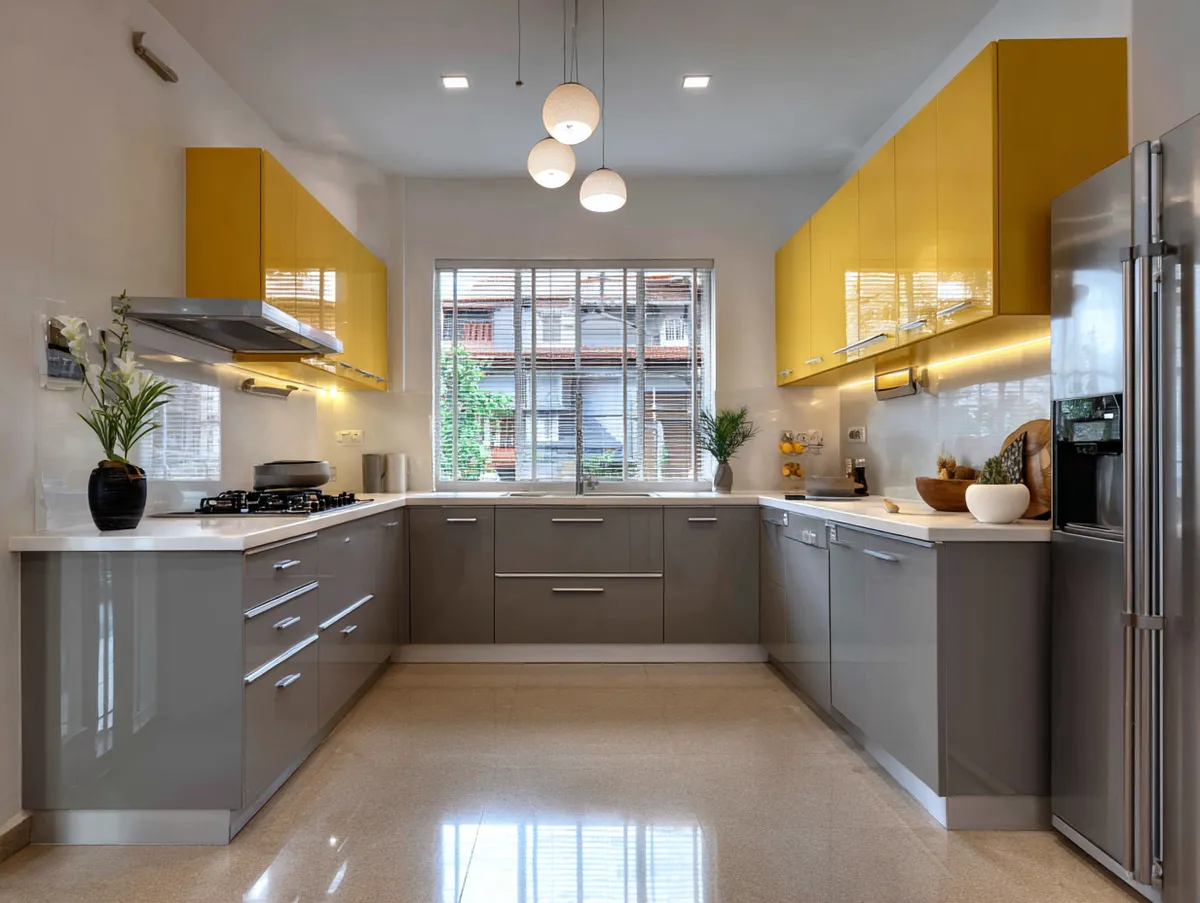
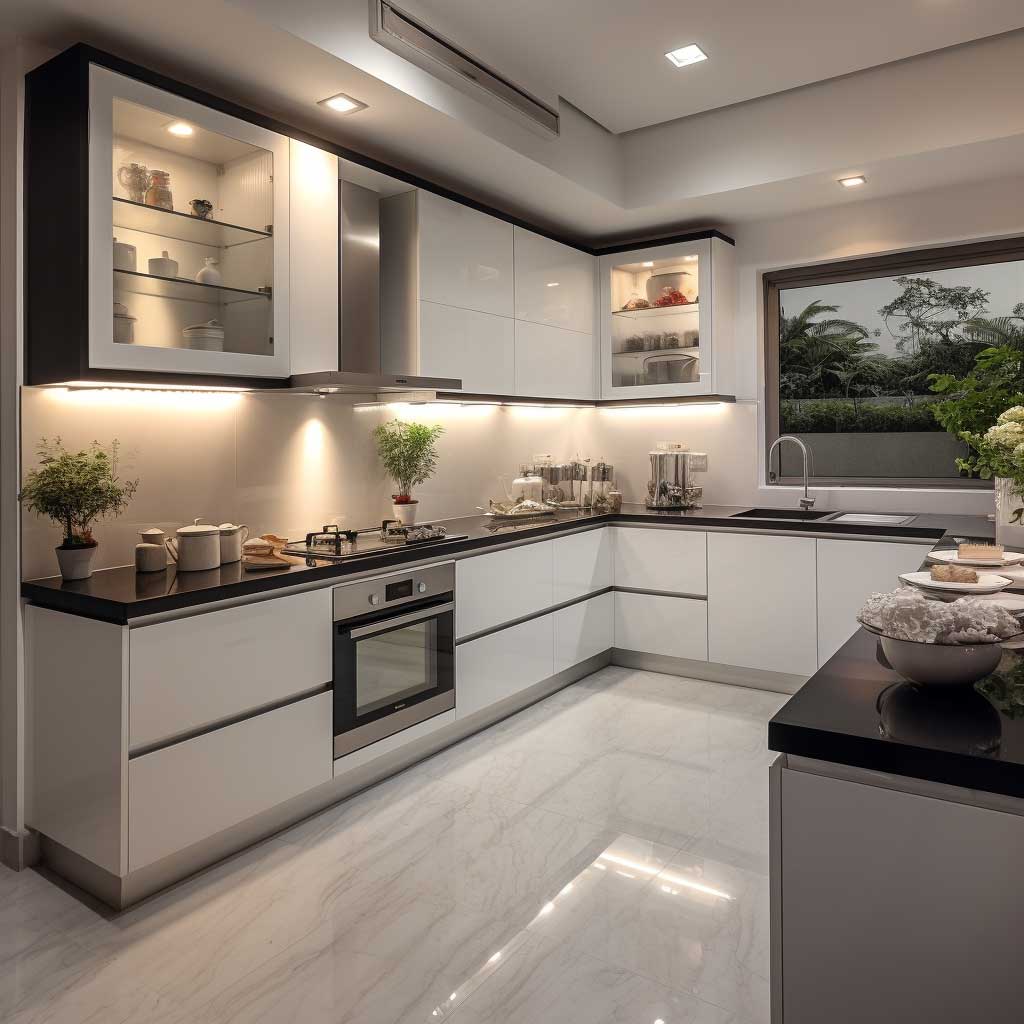
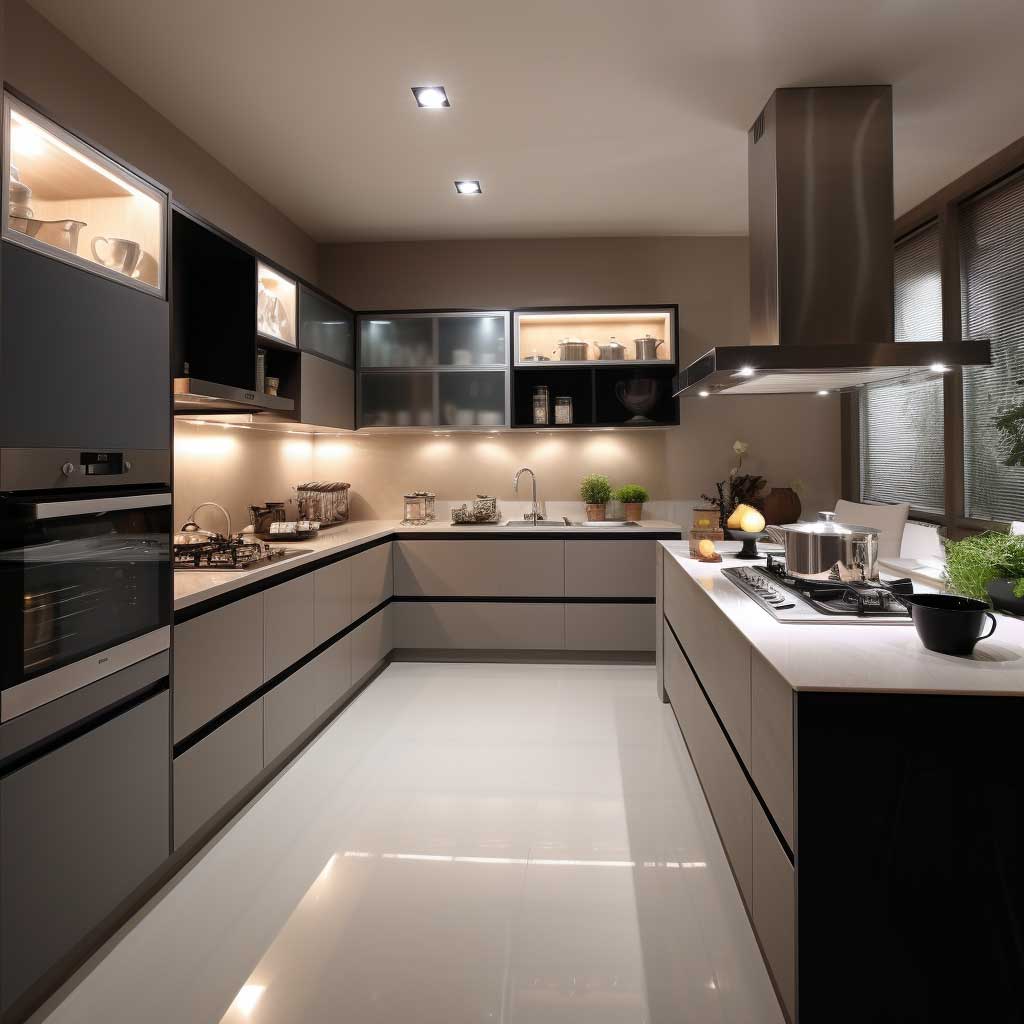

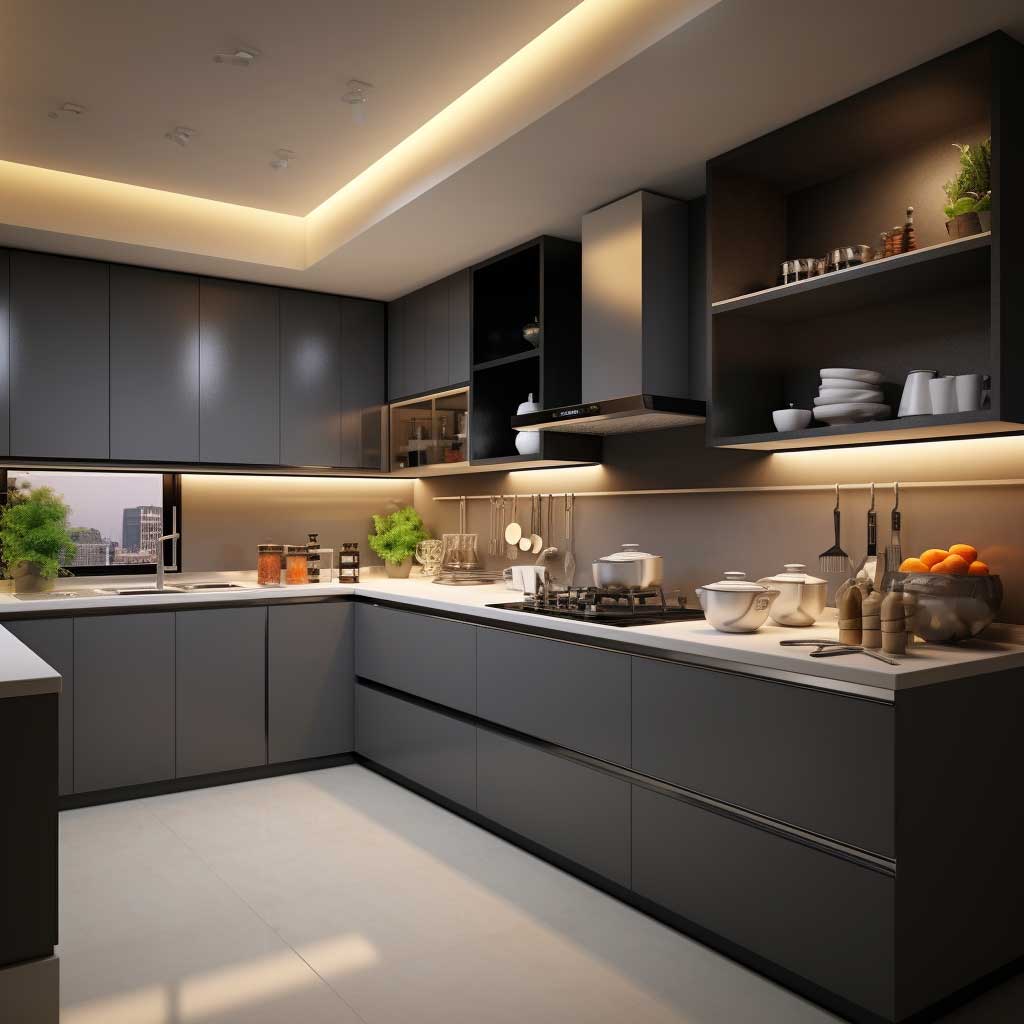
The modular advantage here is real: if a plumber moved the sink rough-in two feet to the left during a previous renovation, you can adjust the base unit run without custom carpentry. That flexibility costs nothing extra in most modular systems — you’re just reconfiguring cabinet widths in 100mm increments. A carpenter-built kitchen would bill $400–$800 for the same adjustment.
Lighting an L Shaped Kitchen Without a Single Dead Zone
Three layers. That’s the only lighting formula worth remembering for an L shape kitchen design. Task lighting goes under the wall cabinets — Philips Hue Gradient light strips ($119 for 2m) or a simpler Govee 2700K warm white strip ($29 for 5m) both work. Ambient lighting comes from recessed cans in the ceiling, ideally on a dimmer so the kitchen shifts from prep mode to dining mode without you thinking about it. Accent lighting is optional but effective: a pair of Arhaus Contour pendants ($280 each) over the longer counter run creates a focal point and tells guests where the kitchen center is.
Most L shape modular kitchen builds get task lighting wrong by placing it at the front edge of the wall cabinet instead of the back. Light from the front edge throws a shadow exactly where your knife is. Mount the strip 2–3 inches from the back of the cabinet underside and the light hits the counter at the right angle. It took me three installations to figure that out — now it’s the first thing I check on any kitchen lighting spec.
Natural light changes the equation. A window at the end of the longer L arm — above the sink in the classic configuration — pulls daylight across both counter runs simultaneously. Don’t cover it with tall upper cabinets. One thing I’ve seen repeatedly: a designer installs a 36-inch upper right up to the window frame, and suddenly the kitchen that photographed beautifully in a showroom looks like a cave at noon.
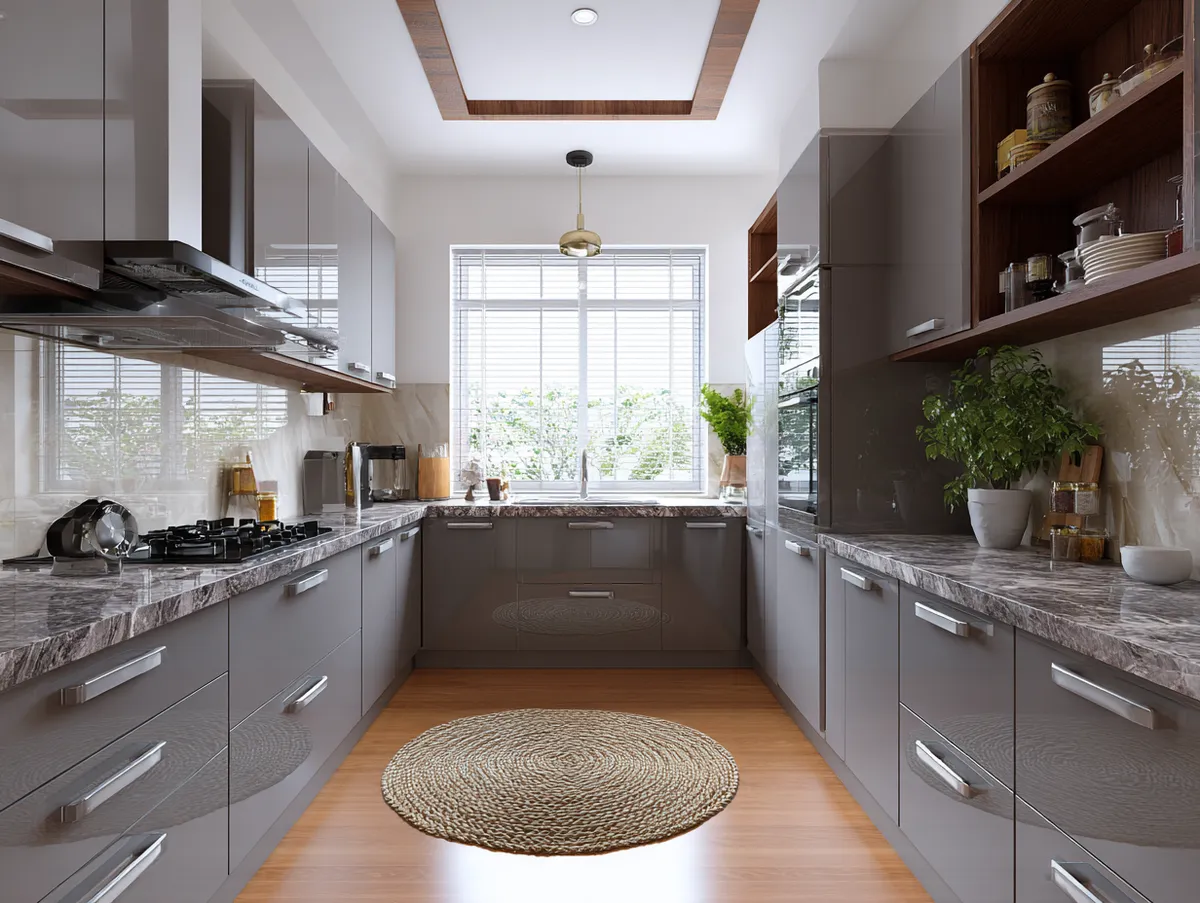
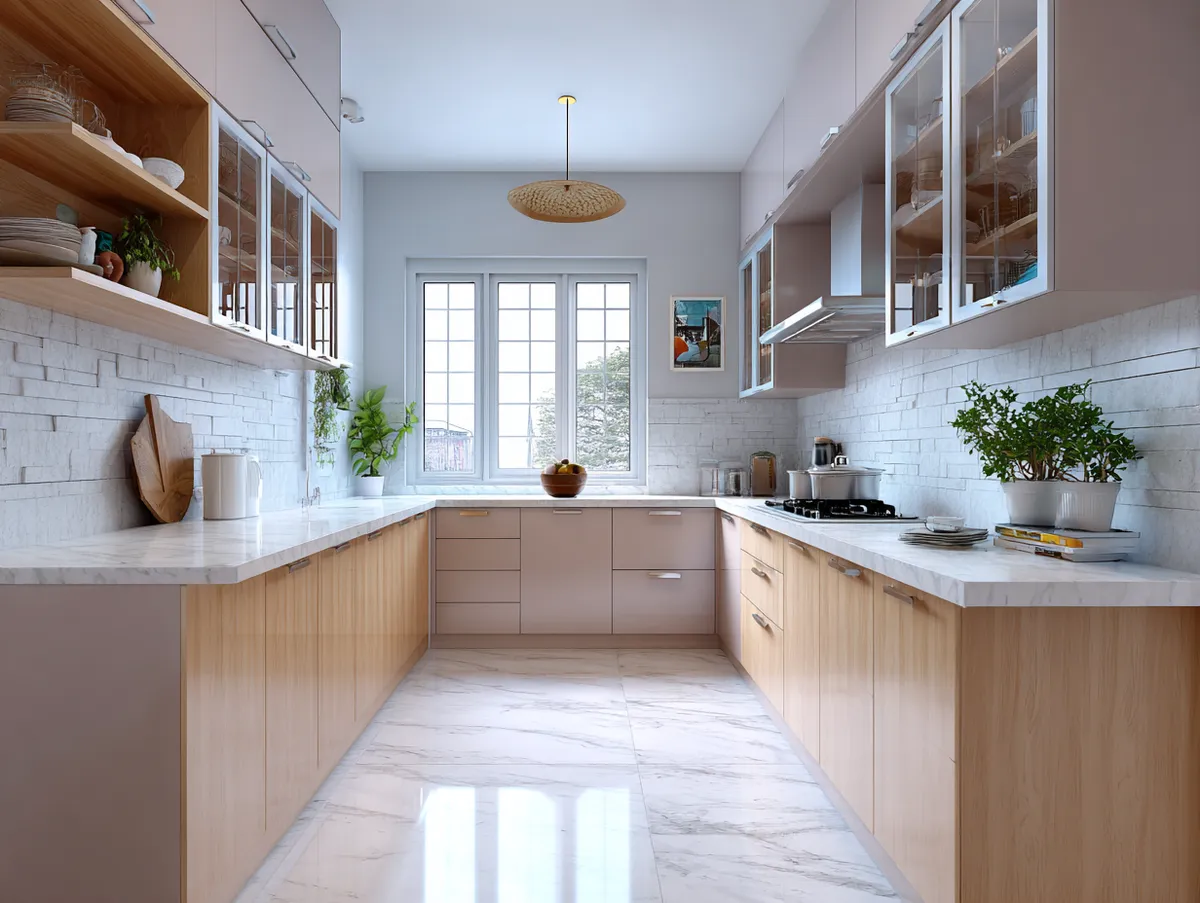
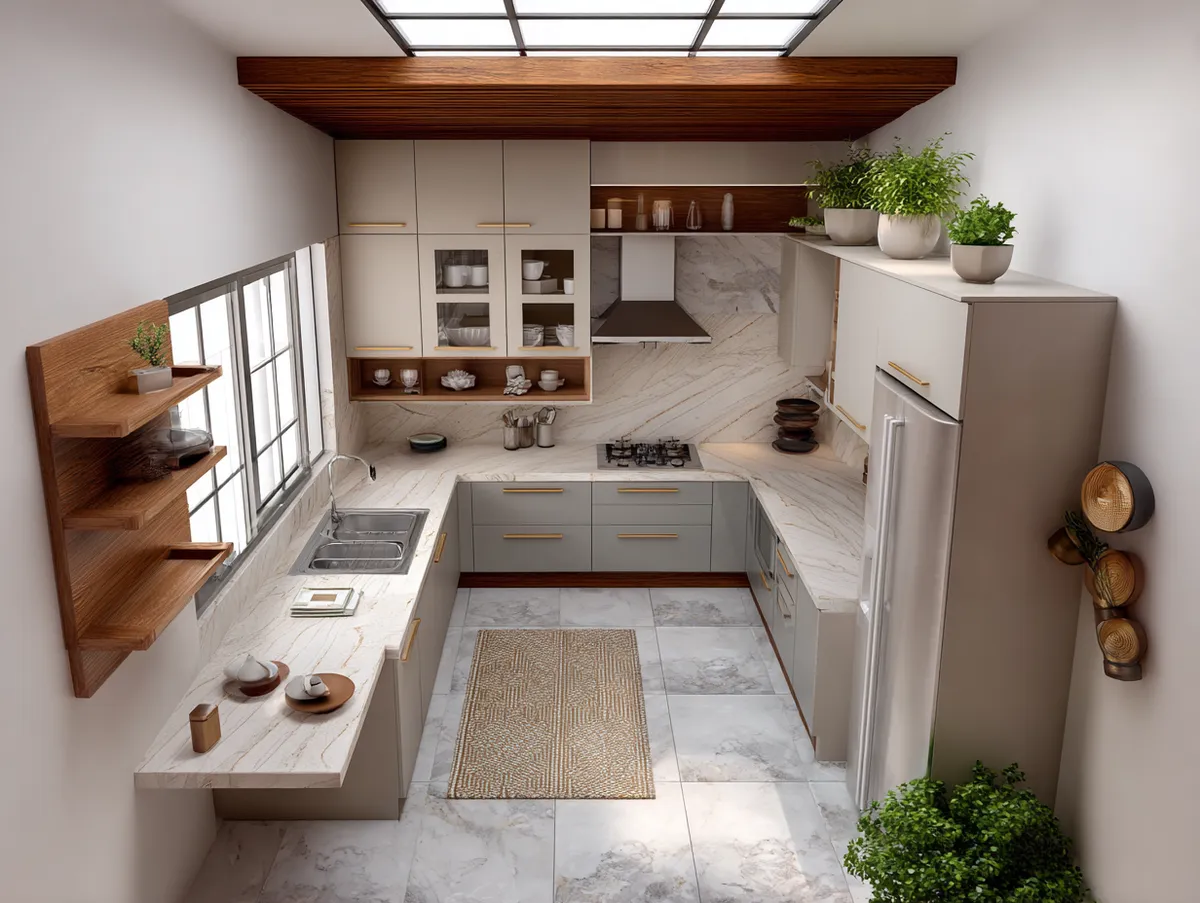
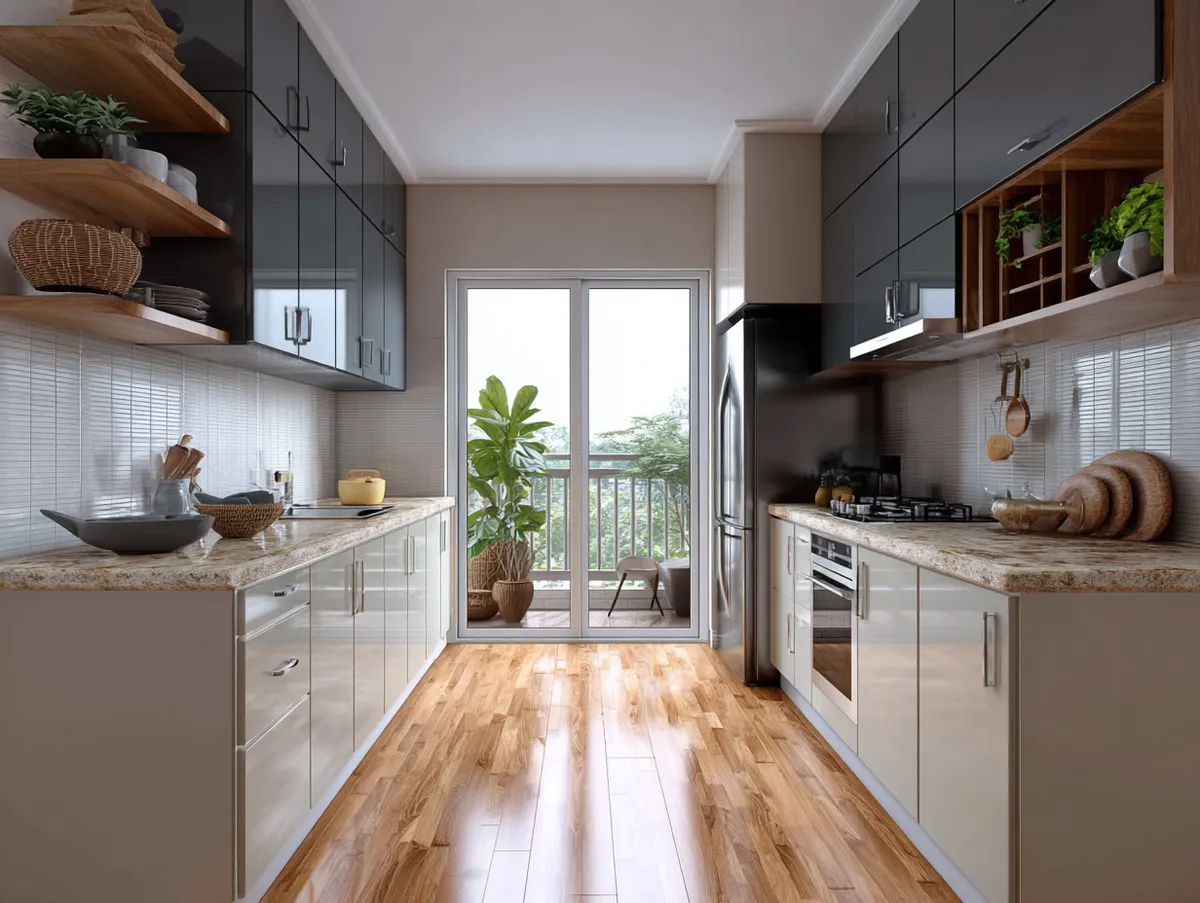

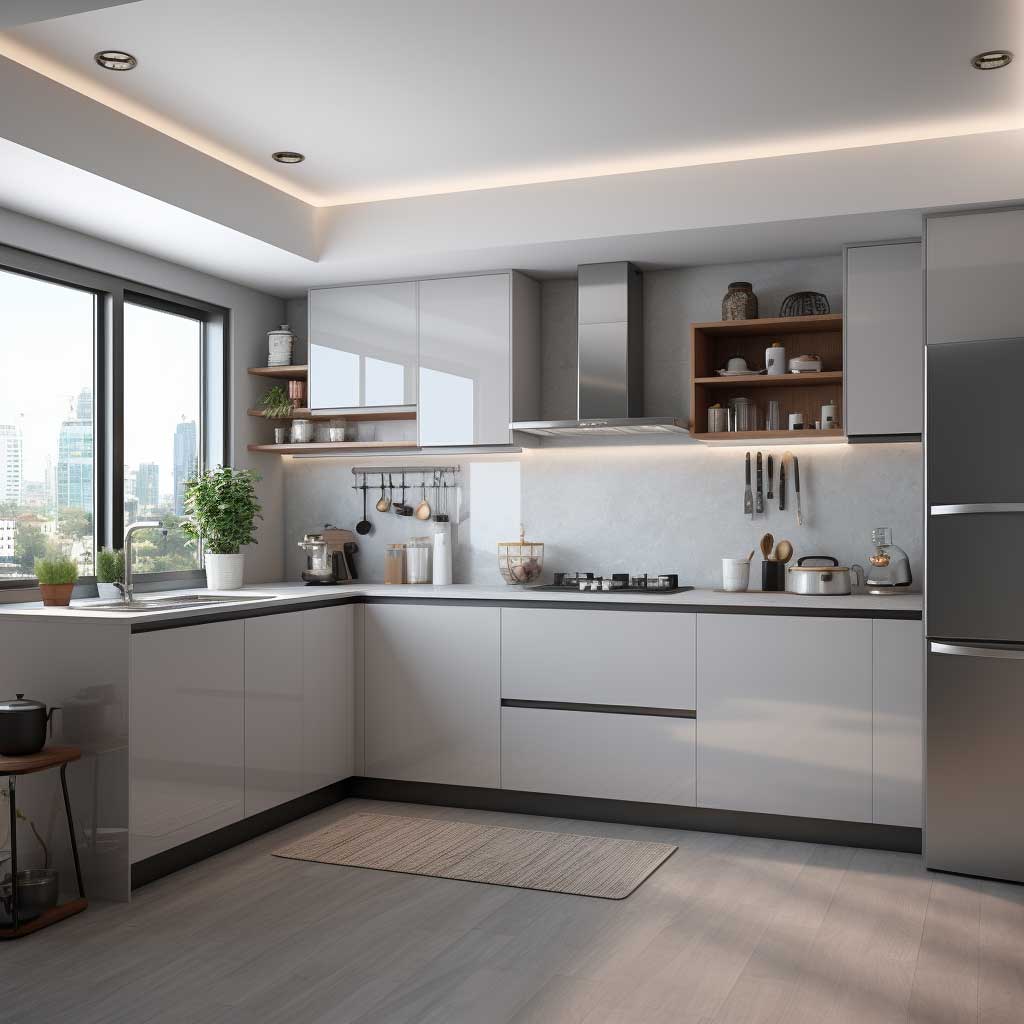
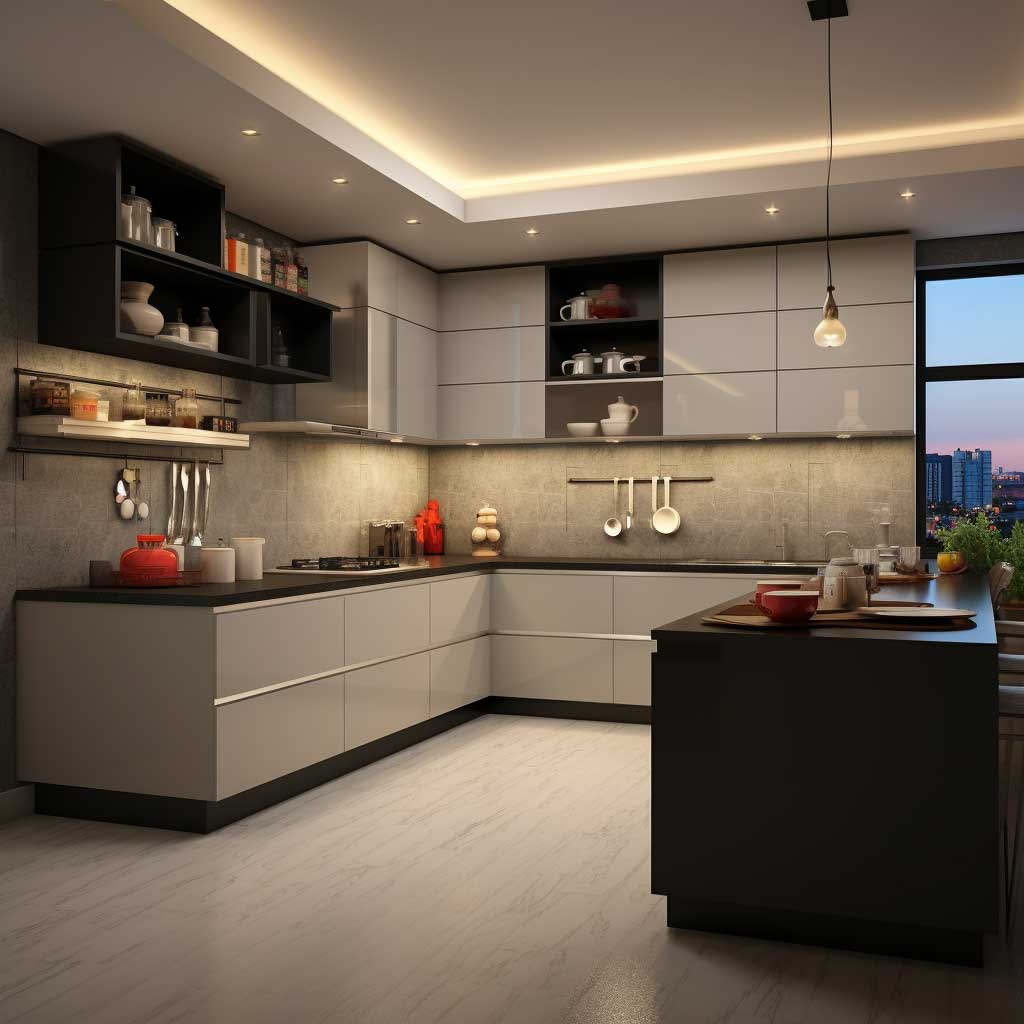
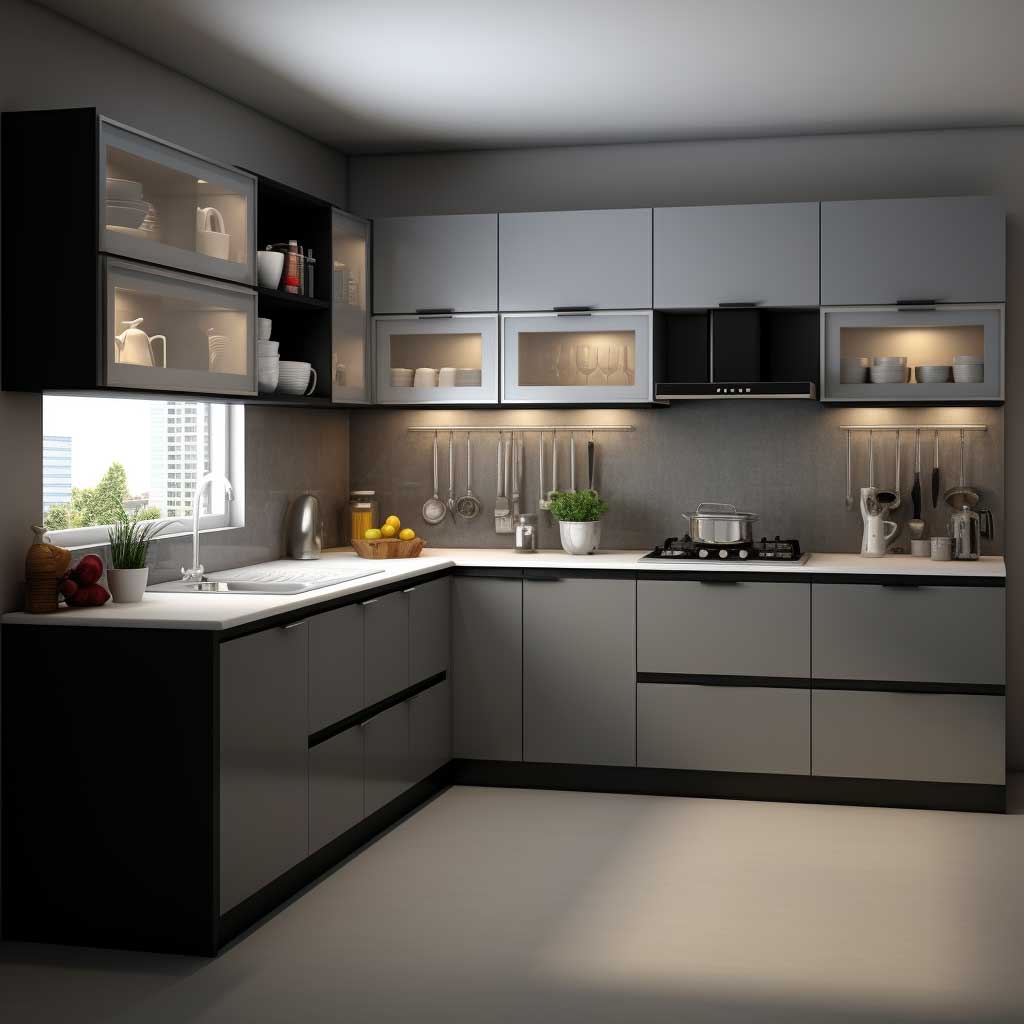
Pull-out drawers beat cabinet doors in the base units — full stop. Häfele’s Tandem Plus Blumotion drawer system runs about $85–$110 per drawer installed, and you access the full depth of the cabinet from a single pull at any height. Deep corner drawers, pull-out spice racks at 150mm width next to the cooktop, and a dedicated utensil drawer at counter height are my three non-negotiables in every modular L kitchen build. For more color-specific L kitchen design references, the orange and black L shaped kitchen ideas article on this site shows how contrast cabinets work at scale.
L Shape Modular Kitchen — Countertop & Cabinet Material Comparison
| Material | Cost Installed (per sq ft) | Maintenance | Best For |
|---|---|---|---|
| Granite | $45–$65 | Seal every 12–18 months | Traditional look, large kitchens |
| Quartz (Caesarstone/Silestone) | $65–$90 | None — non-porous | Modern L kitchens, families with kids |
| High-gloss acrylic laminate | $18–$28 | Avoid abrasive cleaners | Budget modular builds, rentals |
| Compact HPL (Fenix/Arpa) | $35–$55 | Wipe clean, self-healing matt | Matte modern kitchens, fingerprint resistance |
| Ceramic tile | $20–$35 | Grout stains, re-grout every 3–5 yrs | Not recommended for countertops |
Final Take
The L Shape Modular Kitchen Is Only As Good As Its Corner and Its Triangle
Fix the corner storage first — pull-out carousel or magic corner drawer, never a fixed shelf — and you recover space that every other kitchen design decision depends on.
Set the work triangle correctly: sink and cooktop on separate arms, fridge at one open end, 5–7 feet per leg. Everything else is finishing.
Quartz countertops, three-layer lighting, and floor-to-ceiling uppers on one arm are the details that separate a modular kitchen that photographs well from one that actually works for a decade. Save this post.
FAQ
How much does a modular kitchen design in L shape cost?
What is the best color scheme for an L shaped modular kitchen?
Can I add an island to an L shaped modular kitchen?
Where should the sink go in an L shaped kitchen design?
How do I choose the right modular kitchen design for a small L shaped kitchen?
What is the ideal kitchen design for a modular L shape layout with a dining area?
Complete guide
Every Modern Kitchen Design Idea Worth Stealing Right Now
Layout, cabinets, islands, materials, color, lighting — all in one place