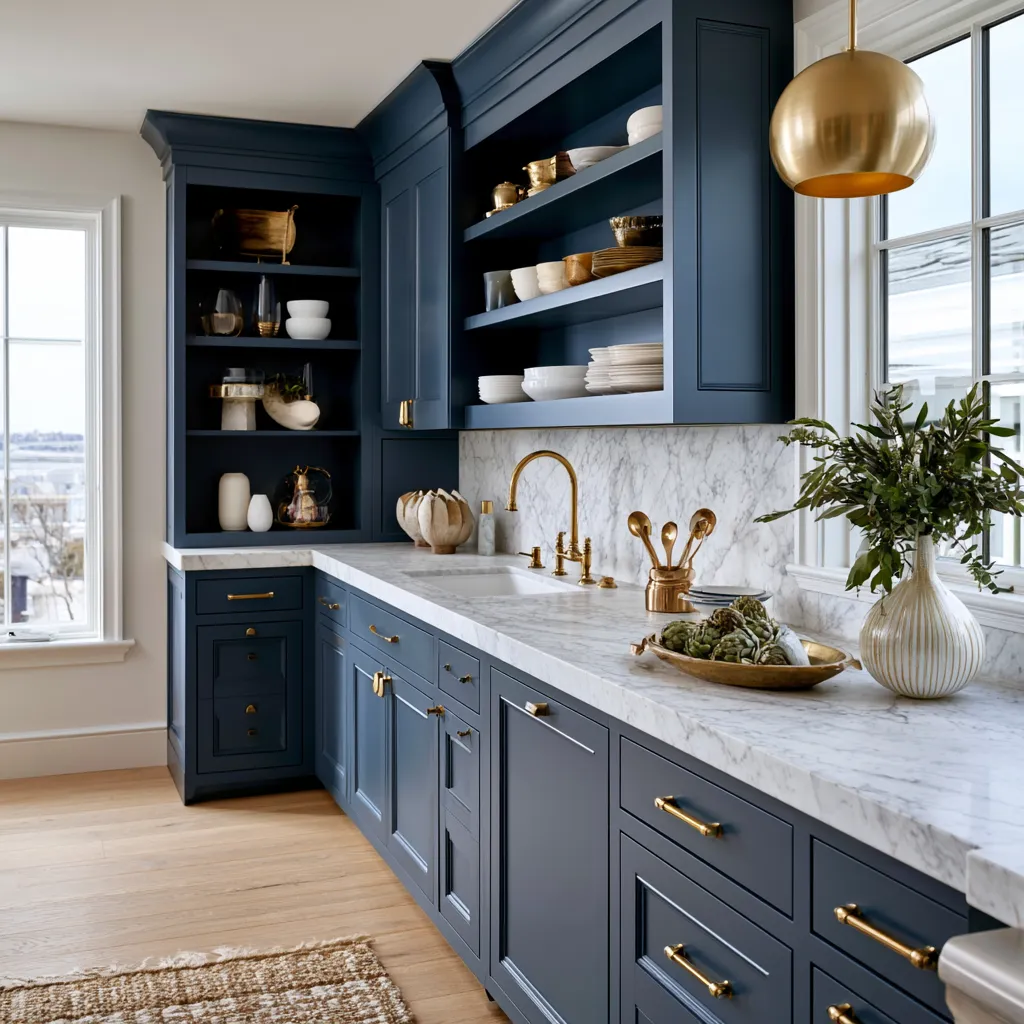
Quick Scan
- Bottom shelf should sit 54 to 60 inches from the floor to clear countertop appliances cleanly.
- Solid wood or plywood-core shelves are the only materials that hold up to kitchen humidity long-term — avoid MDF.
- Keep 70 percent of shelf contents in daily use so the arrangement maintains itself naturally.
- Dedicate a recessed puck or LED strip light per shelf — even 200 lumens turns storage into display.
- French cleat systems rated for 200-plus pounds are the correct anchor for shelves carrying ceramics or cast iron.
Open shelving has outlasted every prediction of its death. Designers kept saying closed cabinets would come back, but walk through any kitchen renovation published this year and you will find at least one wall of exposed shelves, usually in wood or blackened steel, usually styled within an inch of its life. The problem is not the trend itself. The problem is that most people copy the finished photograph without understanding what made it work.
The difference between a kitchen that looks like a lifestyle editorial and one that looks like a cluttered garage shelf comes down to three things: where you place the shelves, what materials you choose, and how brutally you edit what sits on them. Get those three things right and open shelving stops being a risk and becomes the most characterful feature in your home.
Shelf Placement Controls Everything Before You Buy a Single Bracket
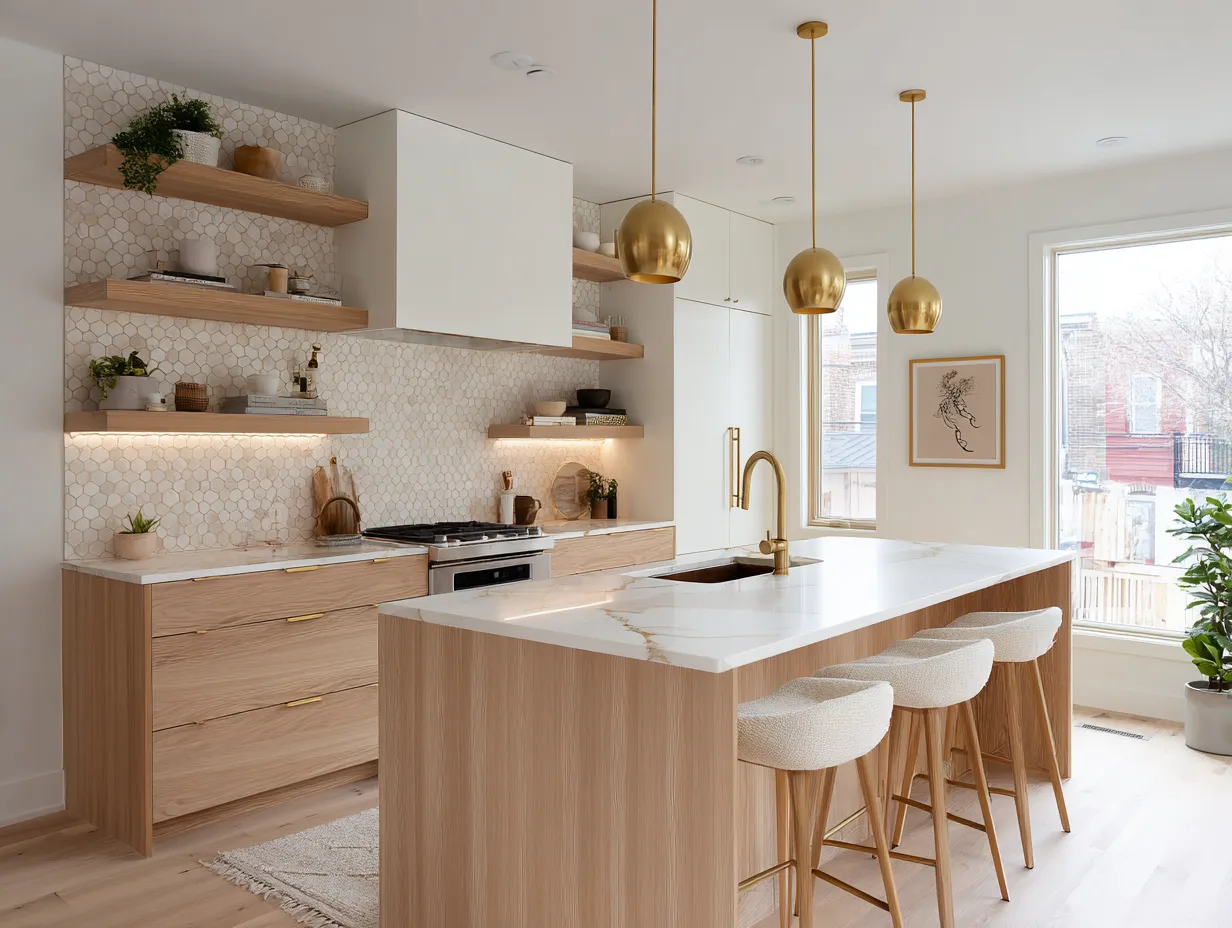
Most people measure shelf height based on what fits, not what reads well visually. That is the first mistake. The sweet spot for the bottom shelf in an open kitchen system is between 54 and 60 inches from the floor — high enough to clear countertop appliances, low enough to reach without a stool. Anything lower starts competing with your workspace. Anything higher becomes dead storage you photograph once and never touch again.
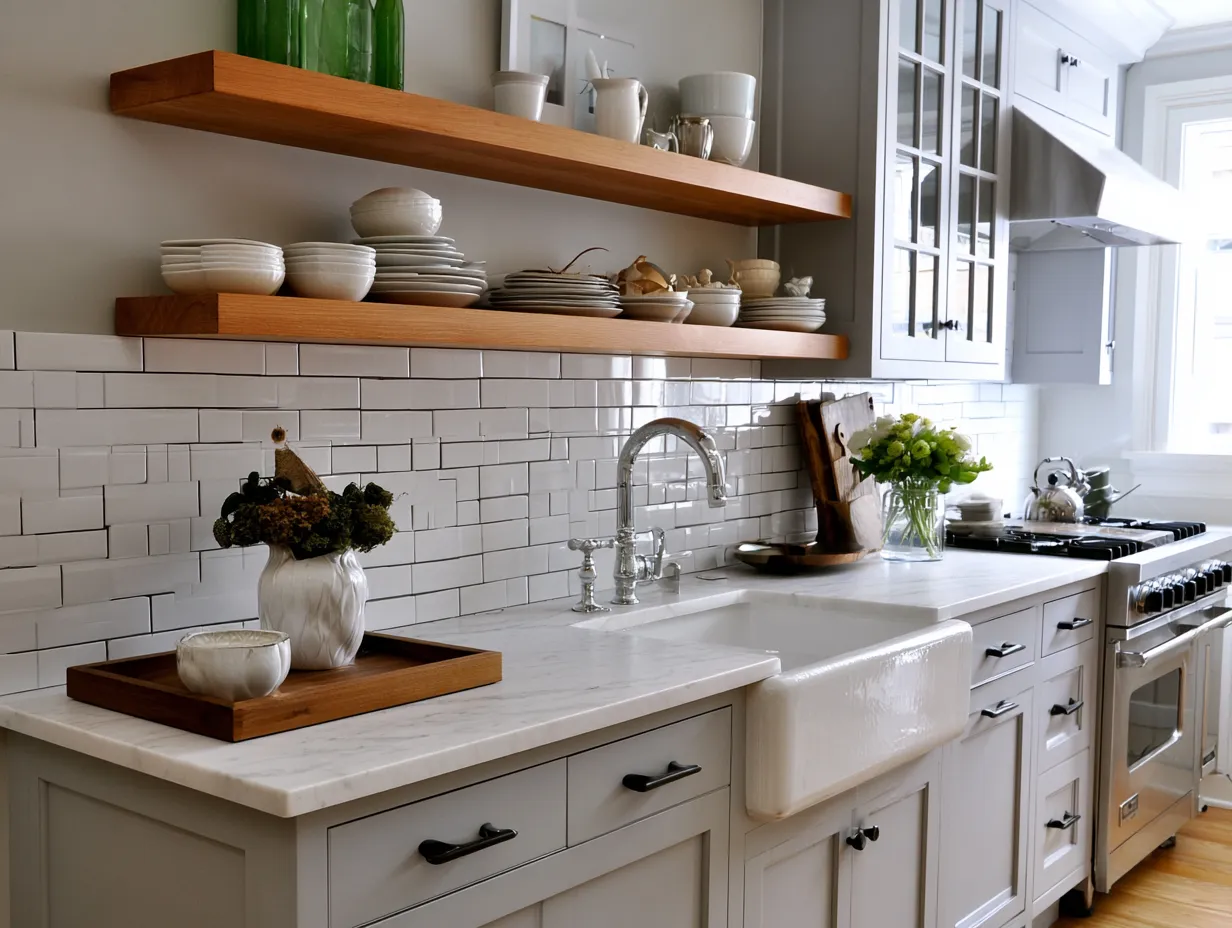
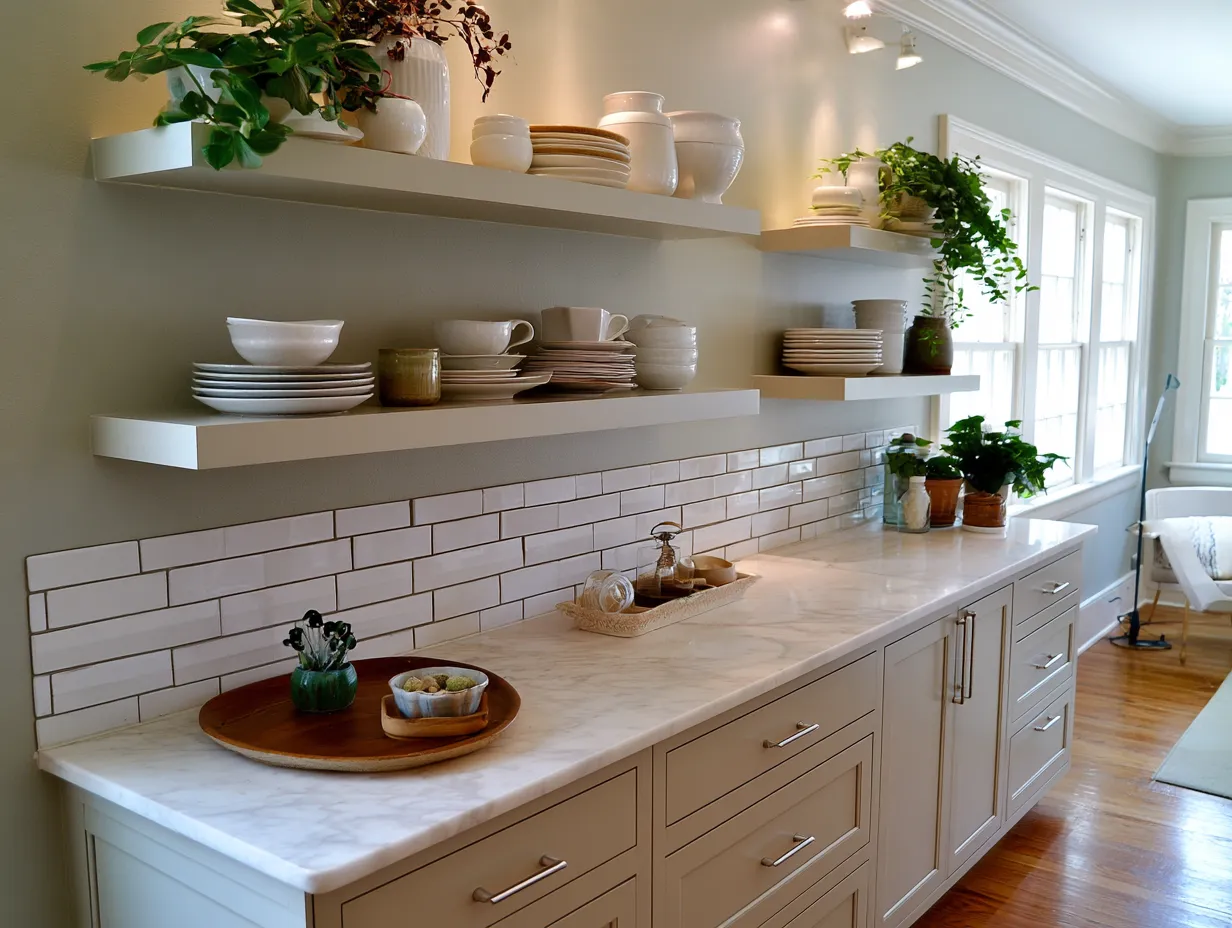
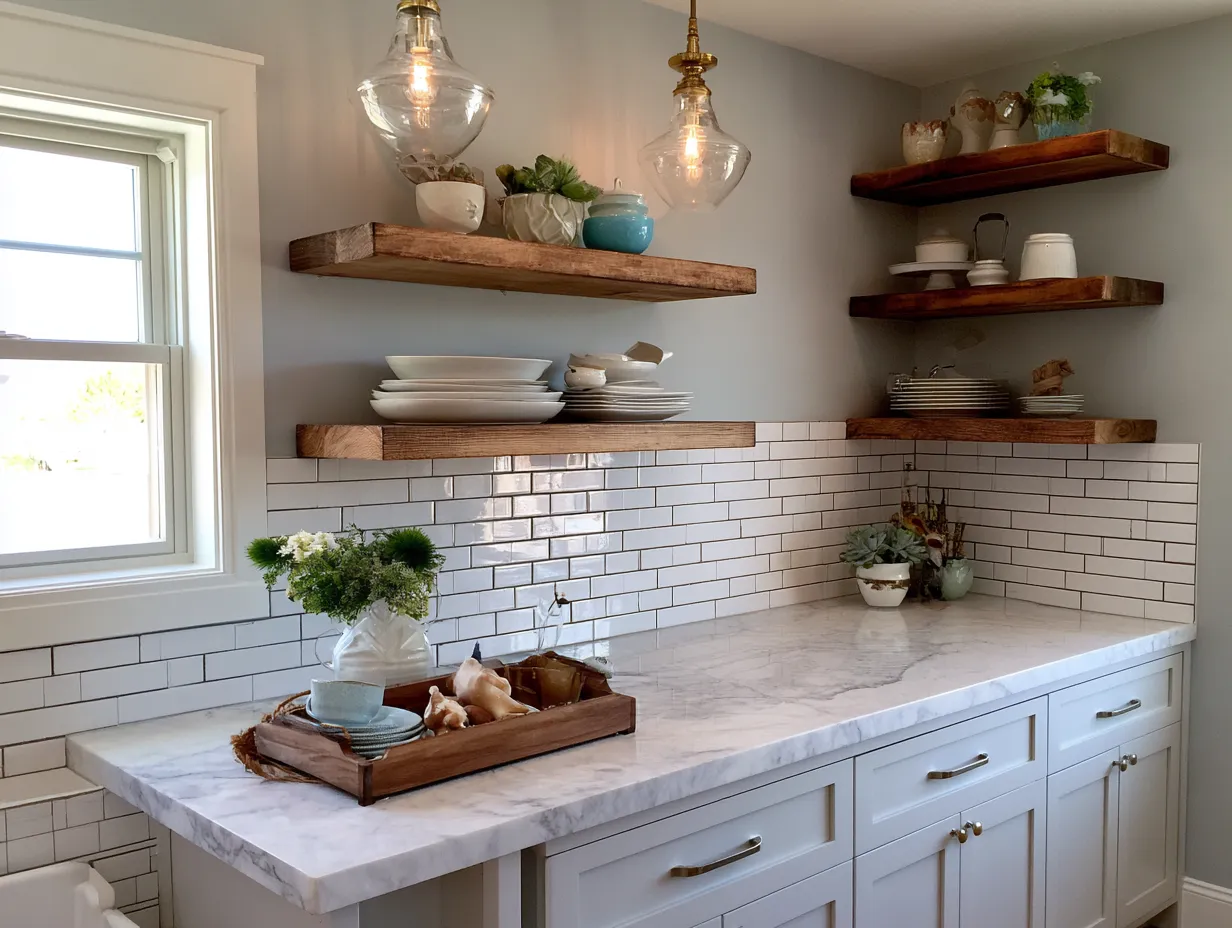
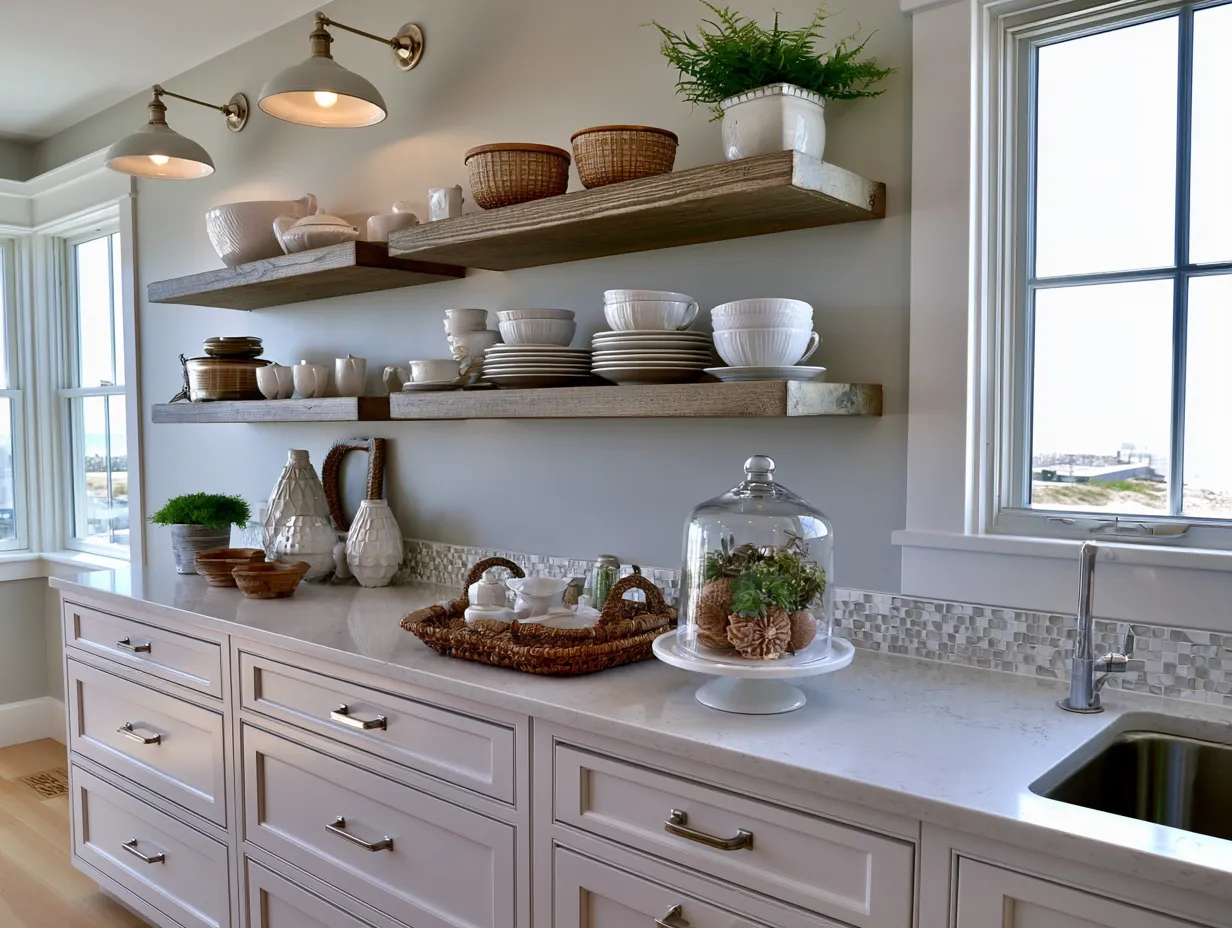
Spacing between shelves matters more than total shelf count. A 14-inch gap between shelves accommodates standard dinner plates stood upright and most everyday glasses without crowding. Tighter than 12 inches and the shelf starts to look like a filing cabinet. Wider than 18 inches and the proportions go slack — the wall reads as empty rather than open. You want the eye to move upward in rhythm, not stall.
Wall anchoring is the structural point most DIY installations get wrong. A shelf holding ceramics, cast iron, or stacked cookbooks can weigh 40 to 60 pounds per linear foot when fully loaded. Standard drywall anchors are not enough. For shelves over 36 inches wide, you need to hit studs or use a French cleat system rated for at least 200 pounds, which products like the Häfele Vario shelf rail system (around $85 per meter) are built to handle. If your walls are plaster over brick, that changes the hardware entirely — consult a fixer before you hang anything heavy.
If you want to understand how shelf rhythm integrates into a full room atmosphere, the approach in Discovering Japandi Bedroom Design for Zen Interiors applies directly here: negative space is not wasted space, it is structural breathing room. The same logic governs a well-placed kitchen shelf. Do not fill every inch. The gaps are part of the composition.
What not to do: never install open shelves directly above a gas range or heavy steam source. The heat and grease particulate will coat everything on those shelves within weeks, and no amount of styling recovers a shelf of oily ceramics. Vent-facing shelves are the fastest way to ruin both the look and the objects on display.
Don’t Do This
- Never install open shelves directly above a gas range or steam source — grease particulate coats objects within weeks and ruins both the look and the items.
- Do not use MDF shelves in a kitchen — humidity causes edge swelling and veneer bubbling within 18 months.
- Do not fill open shelves with only decorative objects you never touch — the shelf will read as theater, not kitchen.
- Avoid placing wood shelves within 6 inches of a refrigerator side — heat output from the unit dries and cracks wood and ceramic over time.
Material Choice Determines Whether Shelves Look Intentional or Accidental
Solid wood is the default choice for a reason: it ages, it warms, and it reads as deliberate even when the styling is minimal. White oak is the dominant material right now — Caesarstone and Benchmark Woodworks both offer pre-finished white oak floating shelf blanks starting around $120 for a 36-inch piece. The grain is fine enough to feel refined rather than rustic, but warm enough to contrast against painted or tiled walls without looking cold.
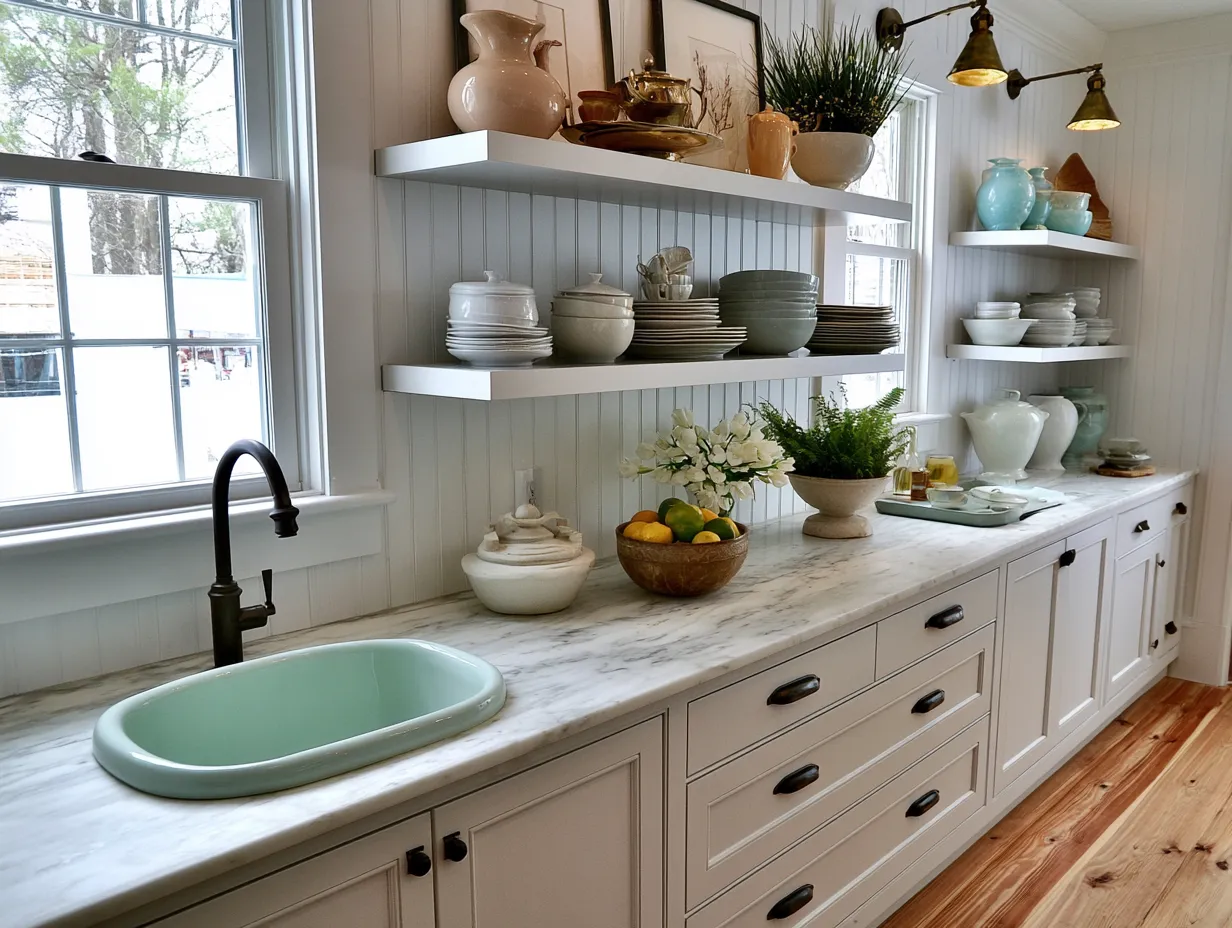
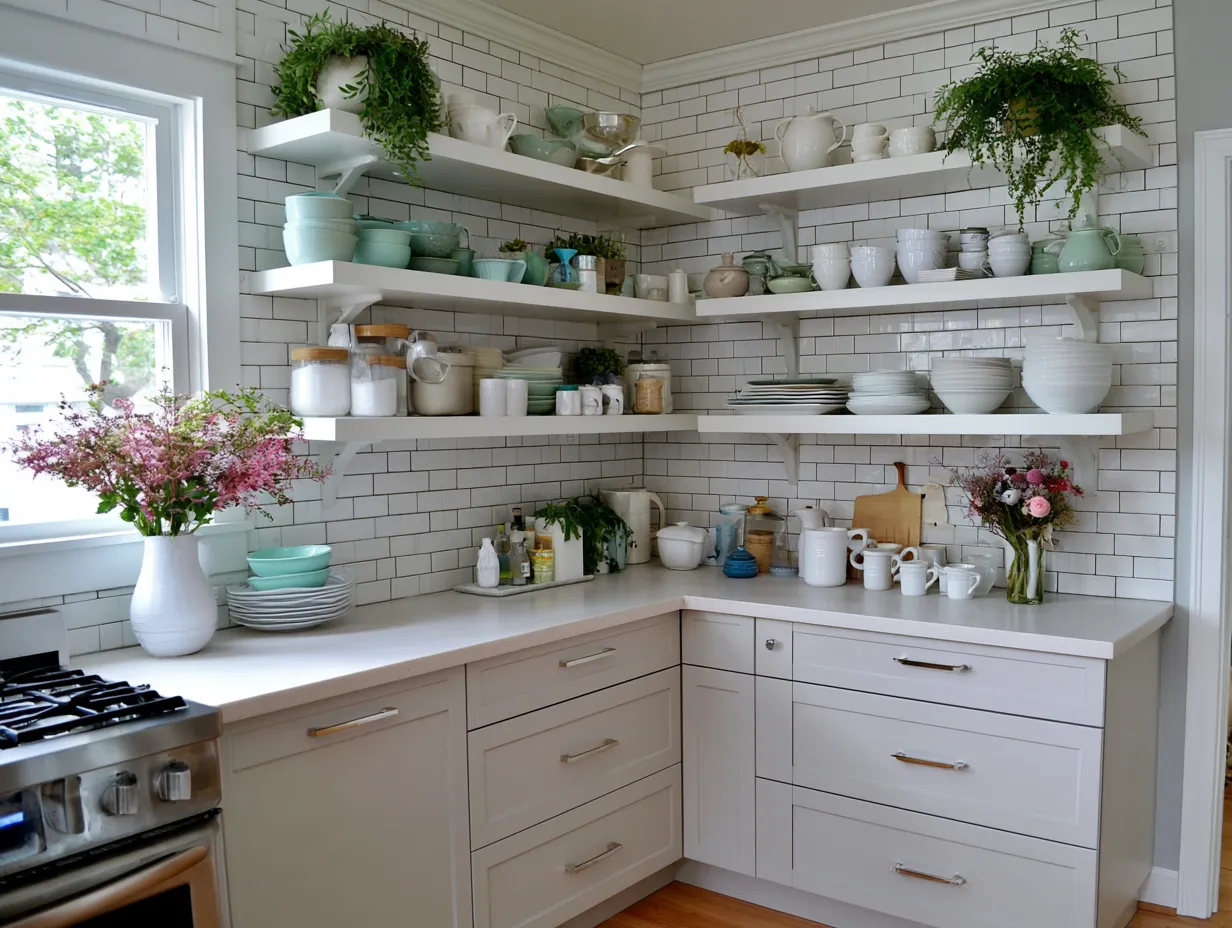
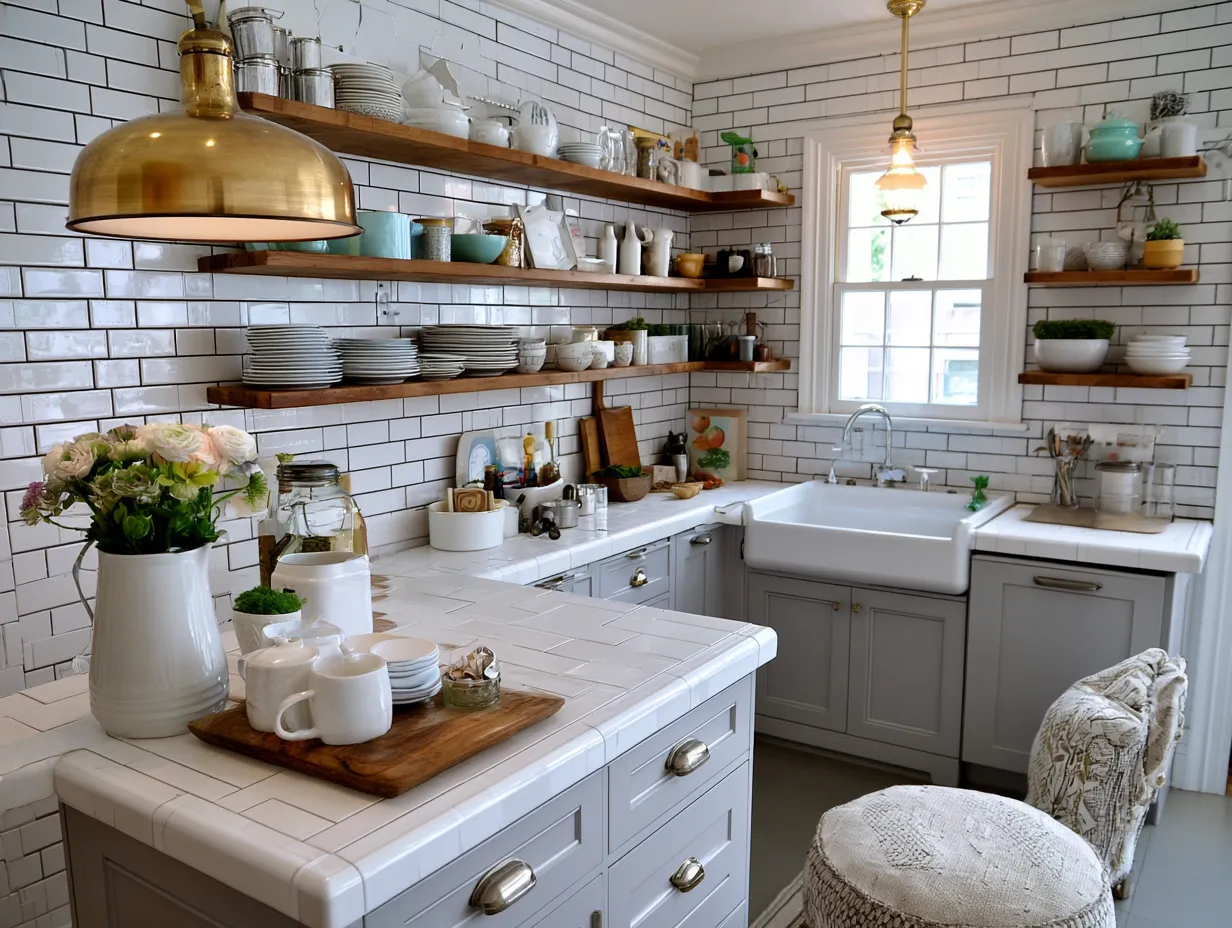
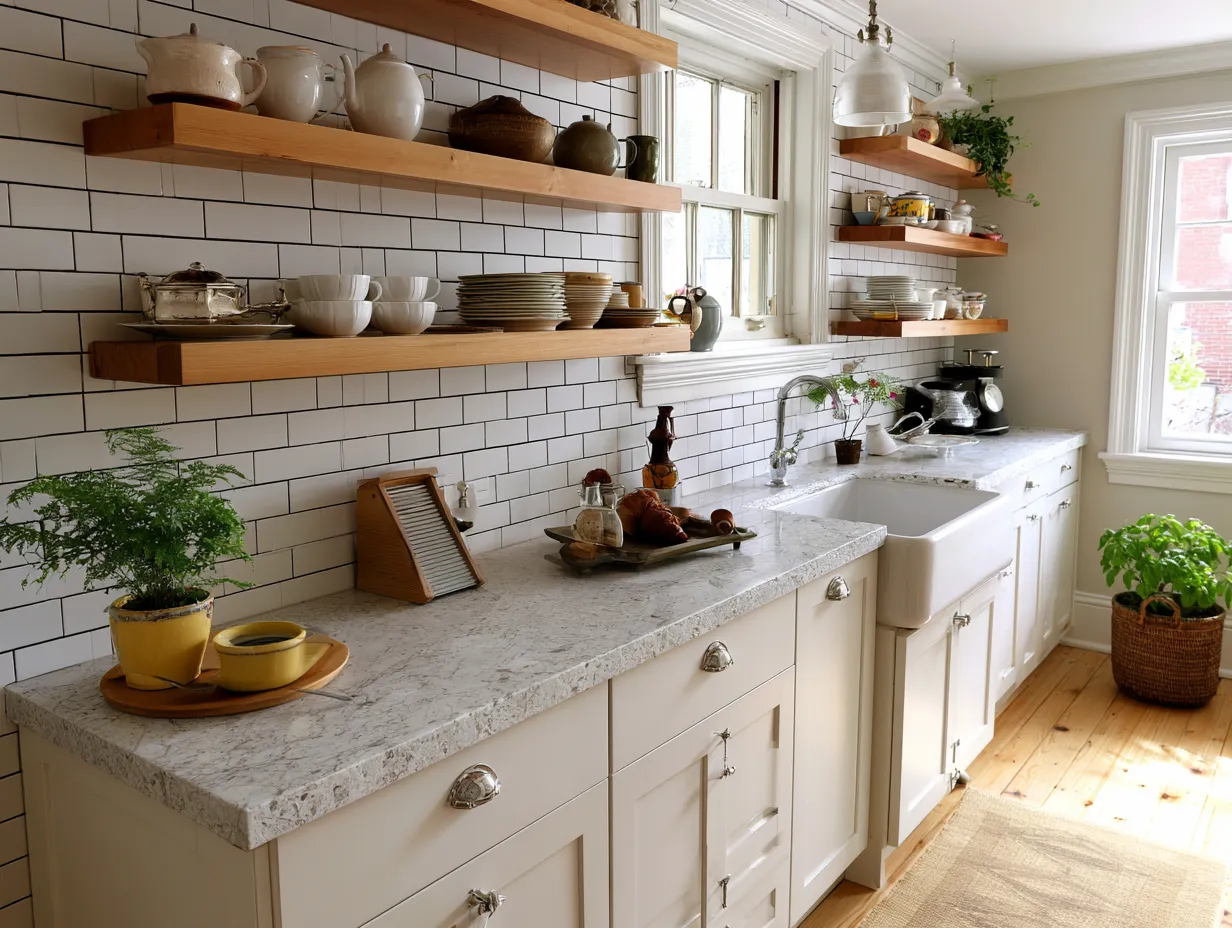
Blackened steel brackets have become so common that they are starting to feel formulaic. That does not mean they are wrong — it means you need to commit harder to the rest of the room if you use them. The bracket should feel like a decision, not a default. If your kitchen hardware is brushed brass or unlacquered bronze, carry that through to the shelf bracket. Mixing metal finishes on open shelving looks accidental in a way that mixing them on cabinet hardware does not, because shelves are at eye level and every detail is exposed.
Floating shelves versus bracket-mounted shelves solve different visual problems. Floating shelves — where the bracket is hidden inside the shelf body — create a cleaner line but have weight limits typically around 50 to 75 pounds depending on the anchor system. Bracket-mounted shelves can handle significantly more load and make the structural honesty of the shelf part of its character. Neither is better. They communicate different things about the kitchen’s personality.
Stone shelves are gaining traction in higher-end renovations. Honed Calacatta marble or leathered quartzite shelves — fabricated by shops like Stone Center of Indiana or similar regional fabricators at roughly $300 to $600 per linear foot — create a shelf that functions as a material feature rather than just storage infrastructure. The weight requires proper structural backing, but the result integrates with the rest of a stone-forward kitchen in a way wood cannot replicate. For kitchens that already have stone countertops, matching or contrasting the shelf slab to the counter is one of the more considered moves available right now.
If the material palette feels disconnected from the broader home, the approach in 16 Inspiring Log Home Interiors You Need to See is a useful reference — it shows how raw material consistency across rooms creates cohesion that no amount of styling can manufacture after the fact. Material first, objects second. Always.
What not to do: do not use MDF floating shelves in a kitchen with any humidity exposure. MDF swells at the edges when moisture reaches it, the paint or veneer starts to bubble, and the shelf begins to look degraded within 18 months. Solid wood or plywood-core shelves are worth the extra cost in a kitchen environment, full stop.
| Shelf Material | Price Range (36 inch) | Best For |
|---|---|---|
| White oak solid wood | $120 – $180 | Warm transitional or Japandi kitchens |
| Blackened steel | $90 – $160 | Industrial or loft-style kitchens |
| Honed stone slab | $300 – $600 per linear ft | High-end stone-forward kitchens |
| Plywood with veneer | $60 – $100 | Budget renovations needing humidity resistance |
Styling Open Shelves Without Making Them Look Like a Still Life You Cannot Touch
The biggest fear with open shelving is that it will look like a staged photograph — beautiful in the image, impossible to maintain in daily use. That fear is valid but solvable. The key is building your shelf arrangement around the things you actually reach for, not the things that photograph best. If your everyday glasses are stored in a closed cabinet while your open shelves hold only decorative ceramics you never touch, the shelf becomes theater rather than kitchen. People will feel that. It will read as performative even if they cannot name why.
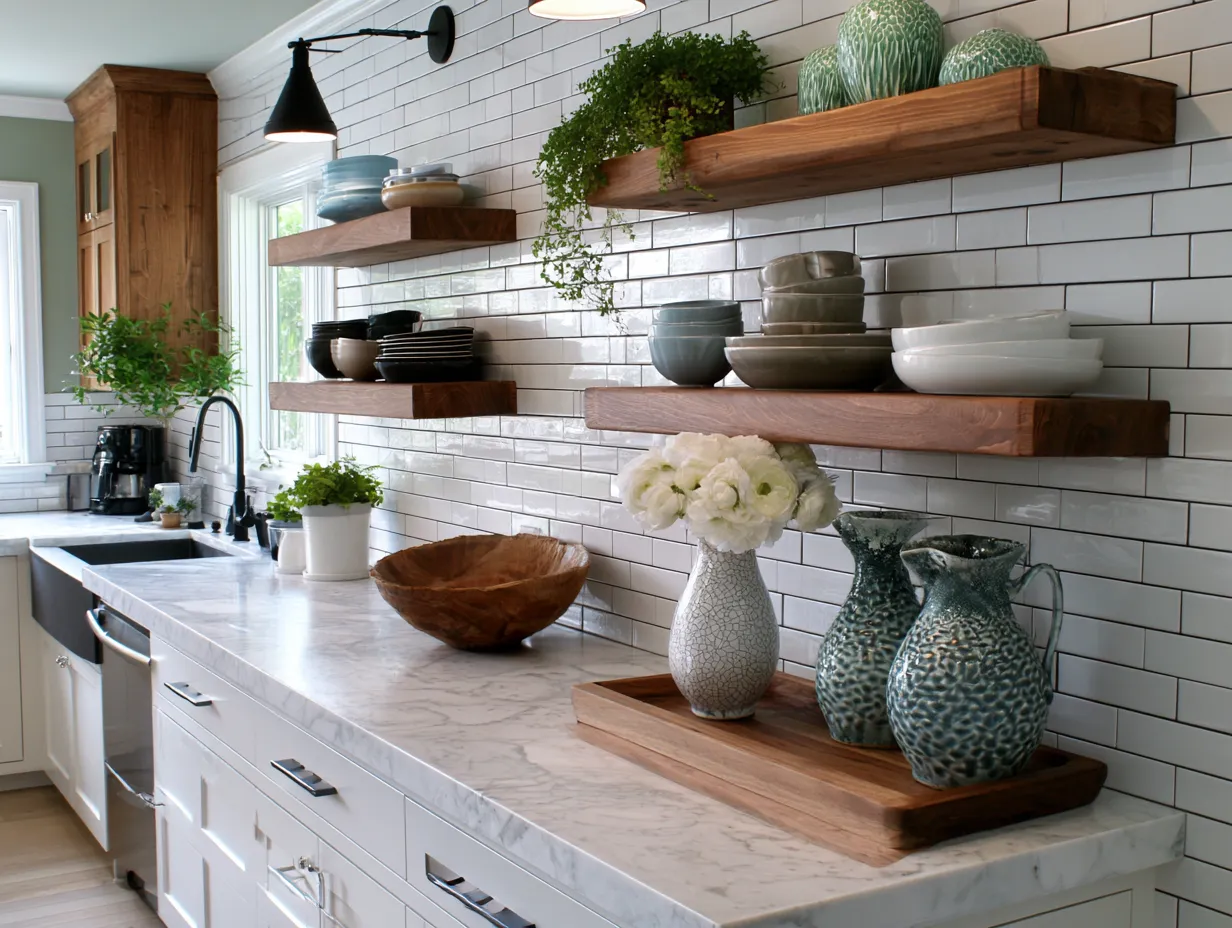
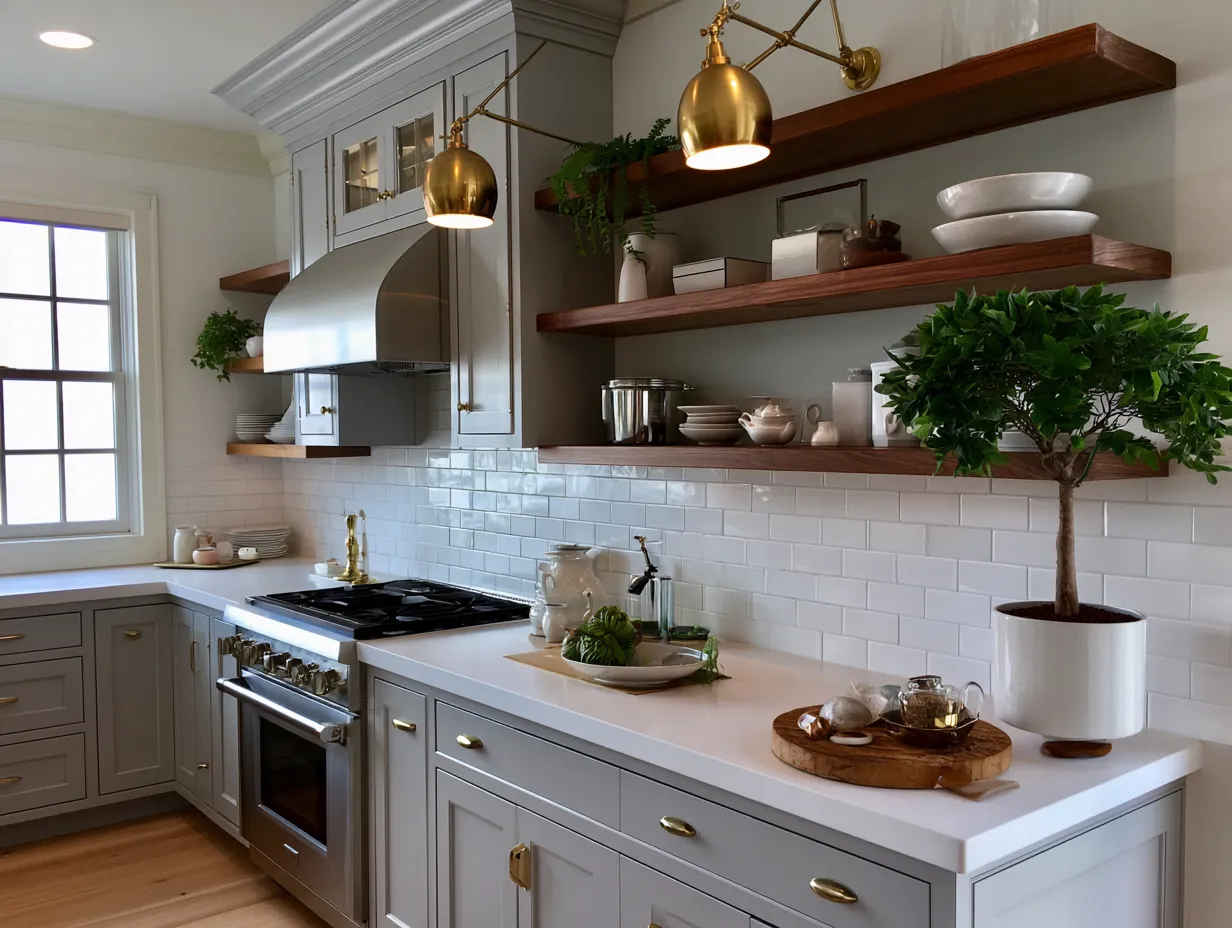
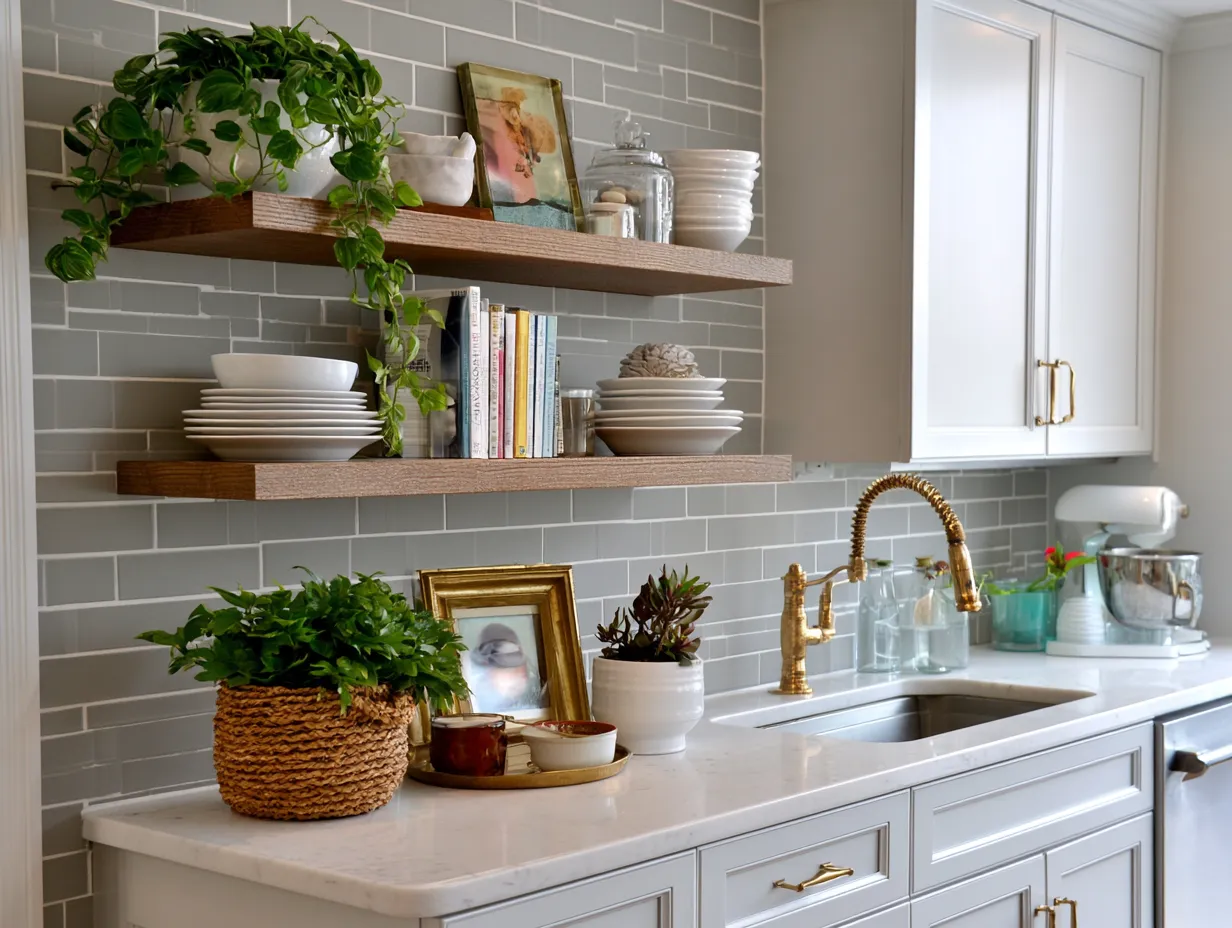
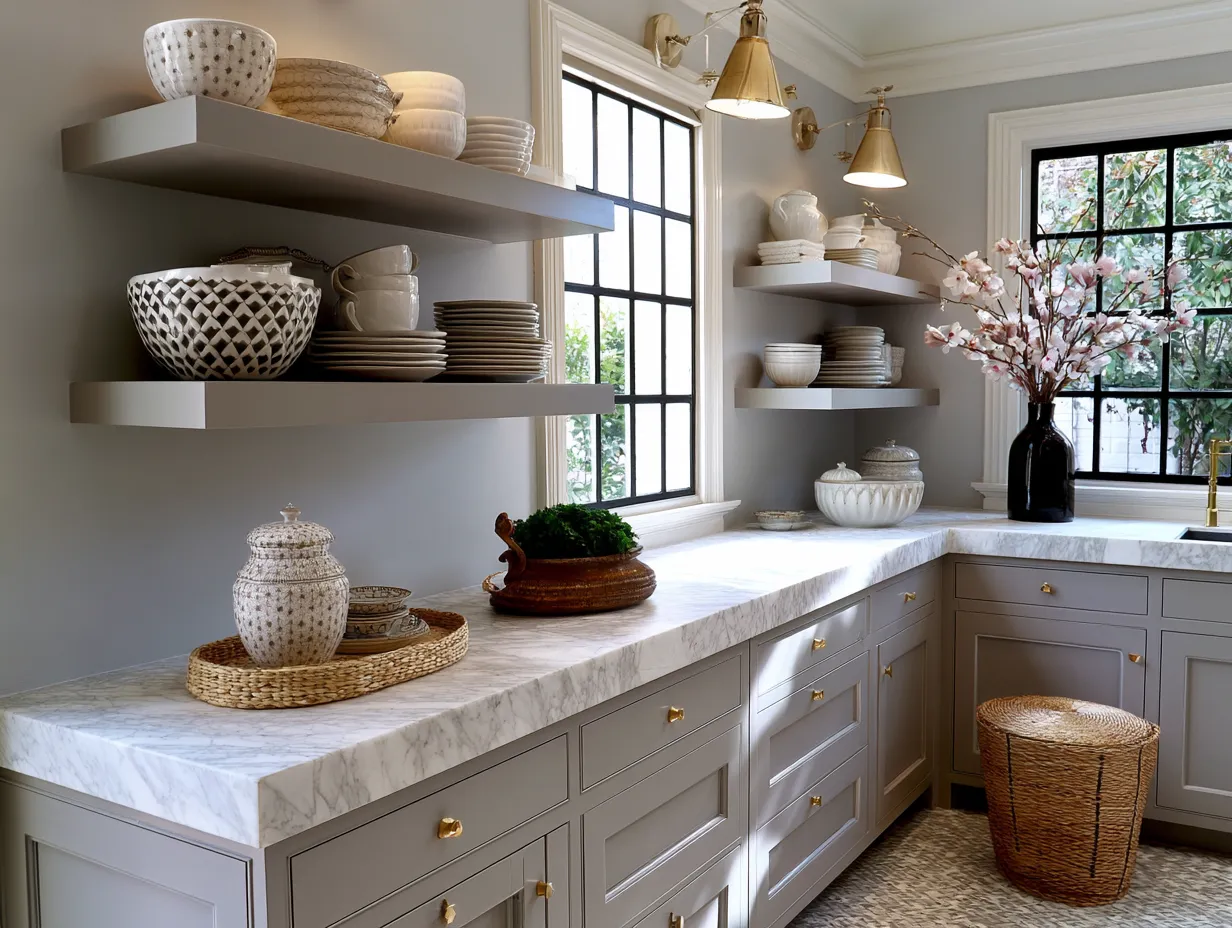
A functional open shelf has a ratio. Roughly 70 percent of what sits on it should be in daily rotation — dishes, glasses, small appliances you use at least three times a week. The remaining 30 percent can be aesthetic anchors: a wooden bowl, a plant, a stack of cookbooks with spines that coordinate. That 70/30 ratio keeps the shelf honest. It also means you are maintaining it naturally through use rather than having to consciously re-style it after every dinner party.
Color editing is where most people lose control. Does every object on the shelf need to match? No. Should there be a logic to the color distribution? Yes. The simplest approach is to work within a three-color constraint: the natural material of the shelf itself counts as one color, neutrals (white, cream, natural wood tones) count as two, and you get one accent color — sage, terracotta, navy, whatever suits the room. Brands like Hasami Porcelain, East Fork Pottery, and Jono Pandolfi all produce tableware lines where individual pieces already relate to each other, which makes building a shelf arrangement significantly easier than sourcing from multiple unrelated collections.
What is the right number of objects per shelf? For a 36-inch shelf, seven to nine objects is the functional ceiling before density starts working against the open feeling the shelf was installed to create. Fewer than five objects on that length starts to look sparse unless the objects themselves have strong visual presence. Count your pieces before you finalize the arrangement.
Lighting changes what open shelving communicates more than almost any other variable. A shelf without dedicated lighting looks like storage. A shelf with a recessed puck light or a thin LED strip mounted to the underside of the shelf above — something like the Kichler Modular LED Under Cabinet system at around $45 to $90 per section — reads as intentional display. The light does not need to be bright. It needs to exist. Even 200 lumens focused on a shelf changes how the eye processes what is sitting on it.
What not to do: do not place open shelves directly beside a refrigerator without planning for the temperature differential. Refrigerators emit heat at the back and sides, and over time that heat dries out wooden shelves faster than normal, can crack unglazed ceramics, and creates a warm zone that turns fresh herbs or oils stored nearby rancid quickly. Leave at least 6 inches of clearance or choose a non-organic material for any shelf in that zone.
FAQ
how deep should open kitchen shelves be
For everyday dishes and glasses, 10 to 12 inches of shelf depth handles most objects without things falling forward. If you plan to store larger serving pieces or small appliances, 14 inches is more practical. Going deeper than 14 inches on an open shelf tends to create a dead zone at the back that collects dust and rarely gets used.
are open kitchen shelves hard to keep clean
In a kitchen with a gas range or heavy cooking, open shelves require a wipe-down roughly once a week — grease and dust settle on horizontal surfaces faster than most people expect. Electric or induction kitchens are significantly more forgiving. The maintenance burden is real but manageable if you place shelves away from the primary cooking zone.
what should I put on open kitchen shelves
The most successful arrangements combine everyday functional items — dishes, glasses, mugs — with a smaller number of anchoring objects like a wooden bowl, a plant, or cookbooks with coordinated spines. The 70/30 rule keeps it honest: 70 percent in daily use, 30 percent aesthetic. Avoid anything that spoils at room temperature, like oils or fresh produce.
do open shelves make a small kitchen look bigger or smaller
Open shelves generally make a small kitchen feel larger than upper cabinets do because they do not block sightlines or create visual mass on the wall. The effect depends on restraint — an overstuffed open shelf reads as clutter and has the opposite effect. Keeping shelves at or below 60 percent visual density preserves the open feeling.
what wood is best for open kitchen shelves
White oak is the most popular choice right now for its fine grain and warm tone that works across both modern and transitional kitchens. Hard maple is a slightly less expensive alternative with similar durability. Avoid softwoods like pine for kitchen shelving — they dent, scratch, and absorb moisture in ways that show quickly under kitchen conditions.
can you mix open and closed storage in a kitchen
Mixing works well when there is a clear logic behind what is open versus closed. A common approach is open shelving for display and daily-reach items at upper levels, with closed base cabinets handling bulk storage and anything you do not want visible. The mix reduces the styling maintenance burden while keeping the visual openness of exposed shelving.
Save this
Open shelving kitchen design rewards placement logic more than perfect styling
Every kitchen editorial that makes open shelving look effortless is hiding a set of structural decisions made before a single ceramic was placed: bracket rating, shelf height, material selection, lighting direction. When those foundations are correct, styling becomes easy because the shelf already has the right proportions and the right context.
Start with one shelf at the correct height, anchor it properly, choose a material that connects to the rest of the room, and edit ruthlessly to the 70/30 functional rule. That one shelf will teach you more about the look than any amount of scrolling. Save this post.
📌 Save to PinterestComplete guide
Every Modern Kitchen Design Idea Worth Stealing Right Now
Layout, cabinets, islands, materials, color, lighting — all in one place
Complete guide
The Minimalist Style Guide That Covers Every Room, Surface and Outfit
Interiors, exteriors, kitchens, bedrooms, fashion, hair — all in one place
Complete guide
Farmhouse Style Ideas for Every Room and Outdoor Space
Kitchens, bathrooms, bedrooms, exteriors, decor, outdoor — all in one place